
Crystals are living beings at the beginning of creation.
~ Nikola Tesla
Croning My Way Through Life
Crystals are living beings at the beginning of creation.
~ Nikola Tesla
I..forgot..my..computer..cord….
(do not bother to respond….)
INSPIRATION ►INTENTION ►OPPORTUNITY ►RESULT
This is the way our personal growth should go.
*Get inspired to do something.
*Set out a plan to get it done.
*Find the opportunity to work on this something.
*Finish project — getter done.
This is the way I hope to get things done through the end of the week.
But I know me.
Get inspired to do something. All the time. Over inspired and over excited. Set out a plan to get it done. I outline, research, strategize. Got it figured out. Find the opportunity. Five days at a cabin, being by myself all five days as the men go fishing every day. Finish project. After I go for a walk, read a few chapters of a book, reread the plan, reread the previous written books (if necessary), take a nap, read my Facebook, text a few friends, flip through a magazine, make a sandwich, color a mandala, and check my email.
Is this ever you?
A perfectly planned day/few days/week of finally getting your artistic inspiration off the ground and up into the stratosphere. You’ve got your material, your paints, your sketches. Your storyline. Your collage materials. Your wood.
And now the time has come.
You get distracted. And keep getting distracted. And before you know it you’ve wasted a half day or more doing everything but your heart’s desire.
What’s the matter with us?
Or is it only me?
I’m going away for a few days with “the boys.” The boys plan on fishing all day and watching stupid movies all night. The perfect atmosphere for me to take advantage of. I don’t want to stay home by myself — I don’t want to hang around someplace where there are a dozen housekeeping tasks waiting just for me.
We don’t have TV or Internet at the cabin. I have a hard drive full of great music, a computer full of research, a kitchen full of healthy snacks, and two dogs to keep me company.
The perfect atmosphere to write.
But I’m weak when it comes to distraction.
Not every moment is filled with distraction — there are many times I’m lost in the creative moment. I love it. But there are always bread crumbs — or maybe cookie crumbs — that beckon me to follow. To waste time. To lead me astray.
Let’s hope that I get some real writing time in this week. My fortitude is not what it used to be. Words are just a little harder to come by these days; I know that not too long in the distant future the words might even fail me. There’s a few more stories I’d like to tell before the words fade away.
I’d hate to waste that precious time surfing the Net for kitty pictures….
Yin and Yang everywhere you look. All you have to do is look.
Take a few moments and read….

4:33 a.m., or so. You are so damn precise with your clock. I pulled into the Cove Island Park parking lot, my headlights illuminated her…sleeping. Hold that thought. It’s been 770 consecutive (almost) days on my daybreak walk. Like in a row. I was going to share a different story. A running story. I page […]
Walking. With Moment that Sticks. — Live & Learn
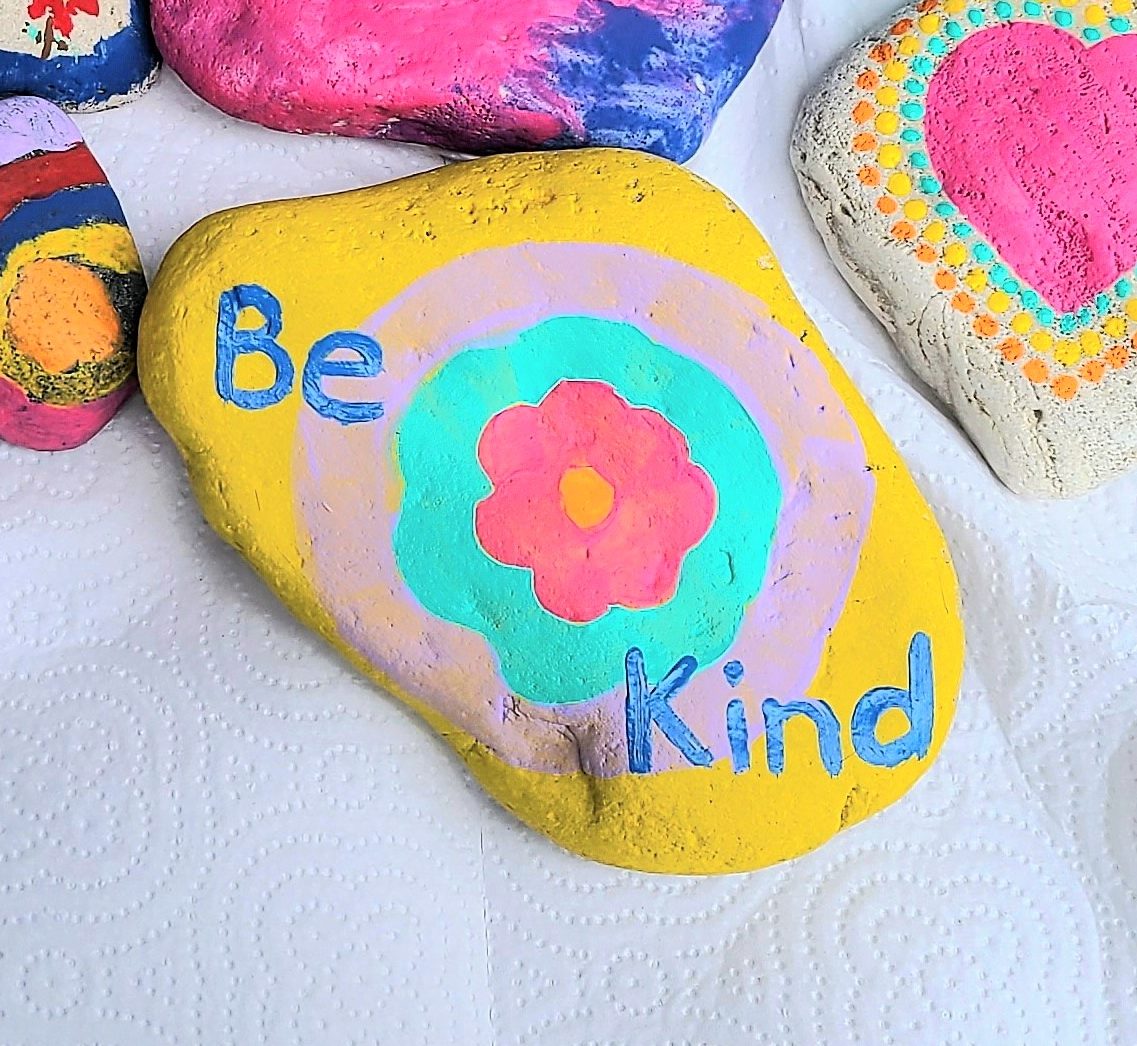
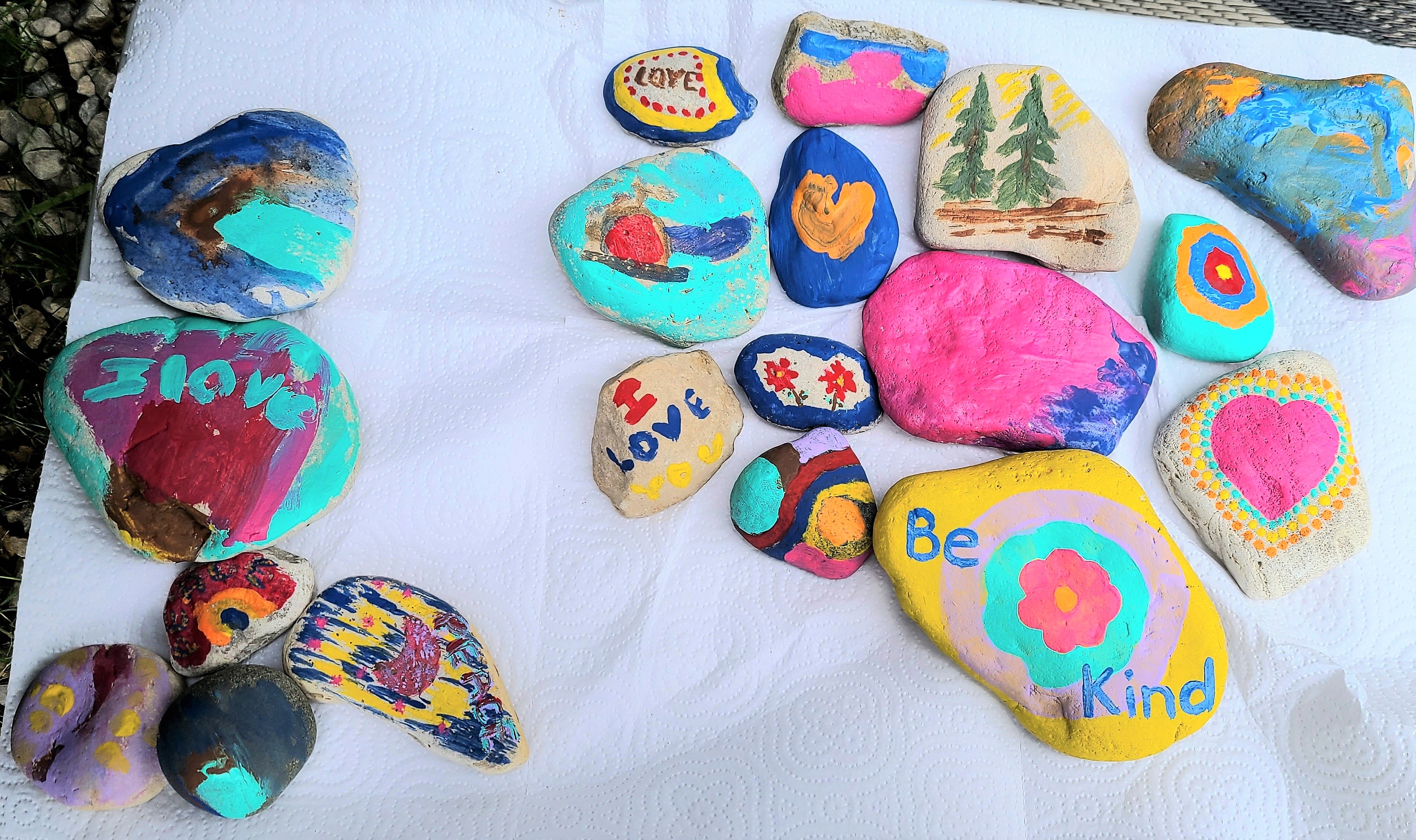 My family went camping this weekend, and my little six-year-old grandson found a Friendship Rock at the campsite playground. For those of you who might not know, a Friendship Rock is just a (usually) flat rock that someone has painted and left behind for someone else to find.
Friendship rocks can have words on them, scenery, abstract designs — anything. They are so fun to find — you feel like a faerie has left her work behind for you someplace.
So the next day we bought some acrylic paints and found a handful of flat rocks throughout the campground and had a paint fest. All ages joined — four-year-olds through 70-ish flower children. Some of us wrote a message, others made abstract designs.
It was a come-together moment for all of us.
Our little group.
Painting the words “Peace” and “I Love You” for someone else to find. To make someone else’s day.
Life is made of small moments like this. Moments of gratitude, of comradery and friendship and pockets of love. Not doing anything special but sending friendship up into the atmosphere and into the rocks we were painting.
Sometimes the answers are so simple. The solutions to mankind’s woes can be found in small brush strokes or made up songs or making stained glass out of construction paper.
No war was fought. No shootings. No shouting matches.
Everyone got to express their inner thoughts with paint and rocks.
The next day we drove around and left our little gifts for others to find. Down by the beach, on a rock near the walking path. We hoped that the next person who found them would smile and feel good and share that feeling with others.
Find your own peace through Art. It will make you feel better.
The article “The Fascination with Food in Art History” by Elena Martinique at Whitewalls states that, as a cornerstone of our very existence, food has always played a significant part in our social and cultural lifestyles. Thus, it is no wonder that the depiction of food in art spans across cultures and all of recorded human history.
Just as majestic as any portrait or landscape, the depiction of food through painting is an arduous and creative talent.
As we sit and enjoy our Sunday dinners, let us wander through the world of food artistry and enjoy some of the more famous interpretations of the sight and taste of food.


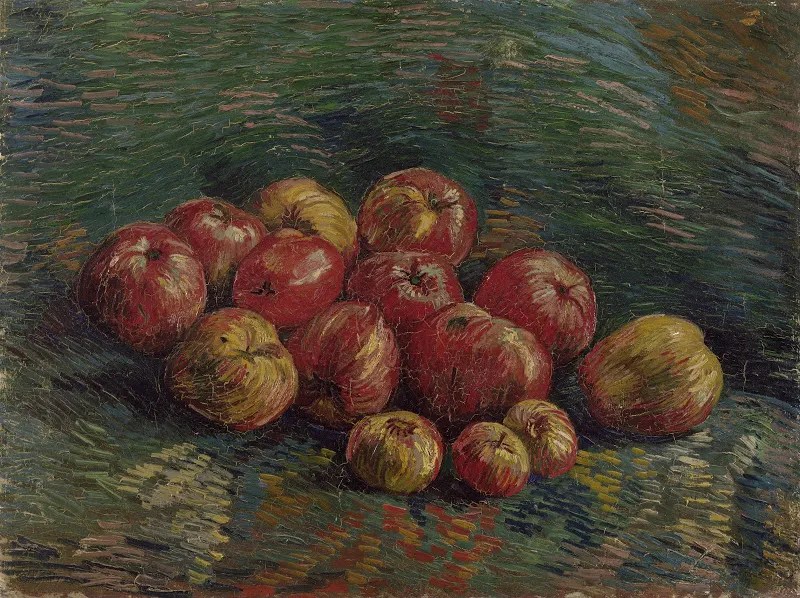


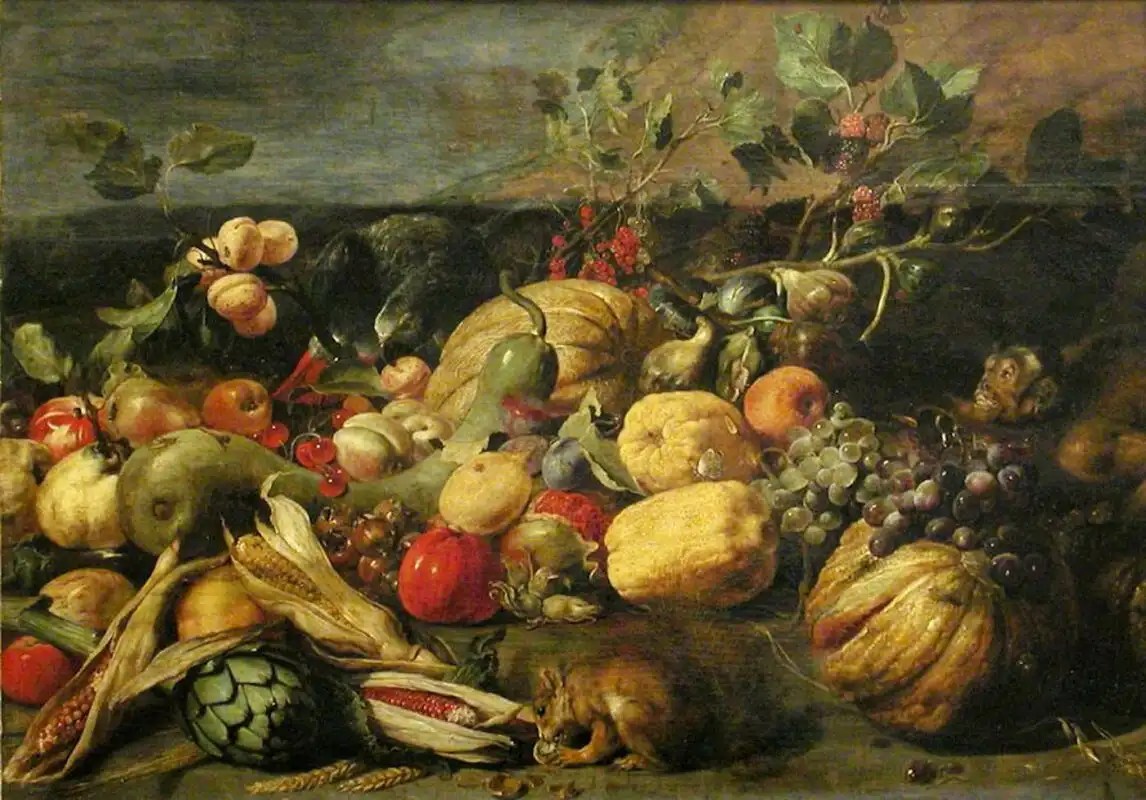

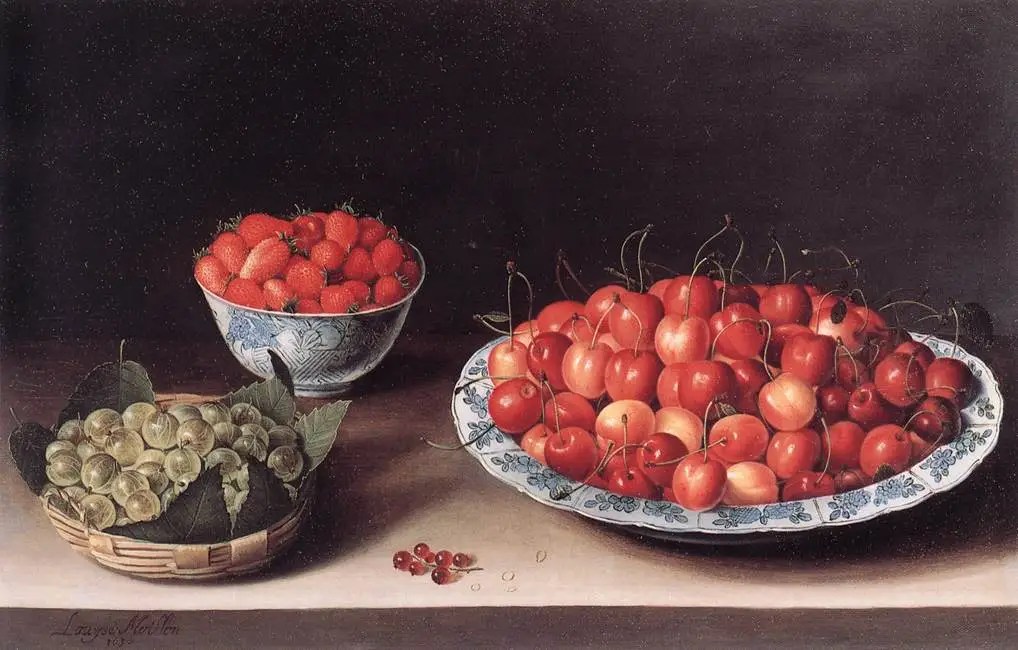
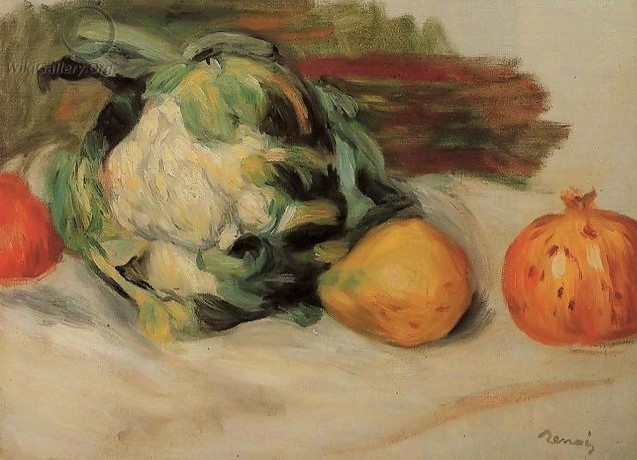
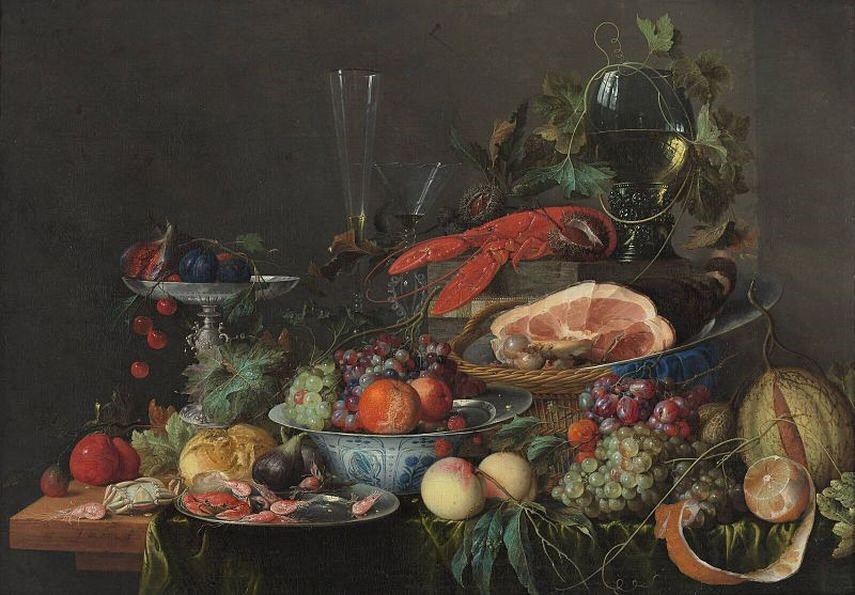
 Since (at the moment) I am hanging around the campground, trying to relax after running back to town to watch my (four-year-old) grand daughter’s dance recital, I thought I would share a few amazing and fantastic Galleries I’ve shared in the past.
Maybe hold on till evening — grab a goblet of wine or chocolate milk — and have a tour! Love you all!


Mézesmanna — Judit Czinkné Poór

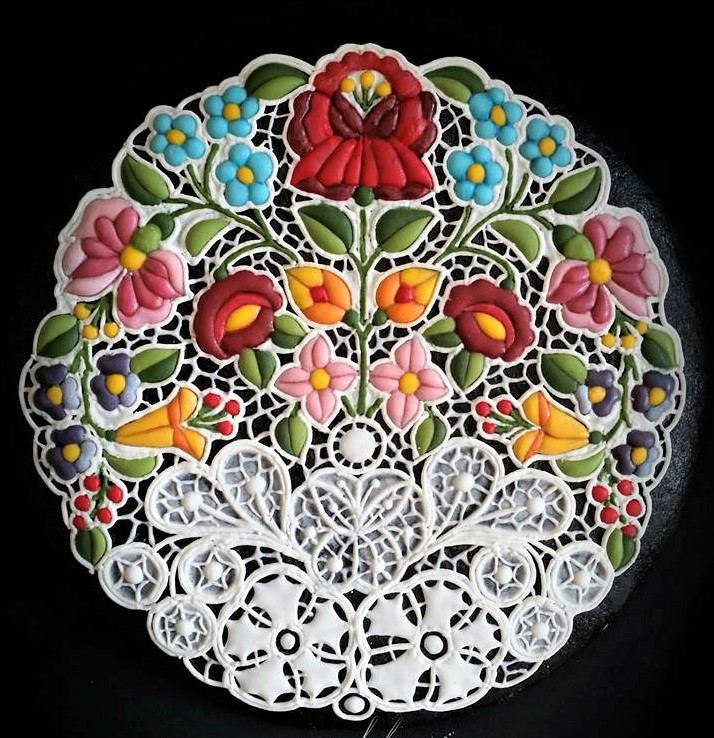
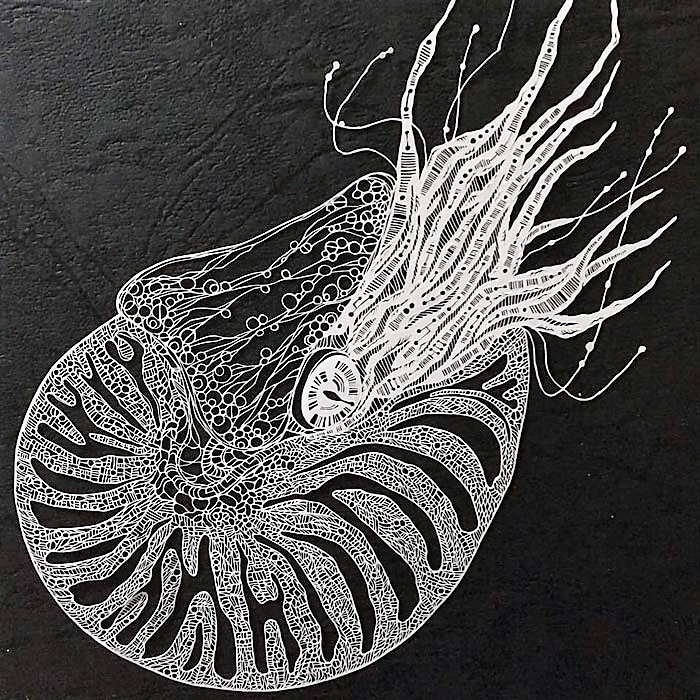

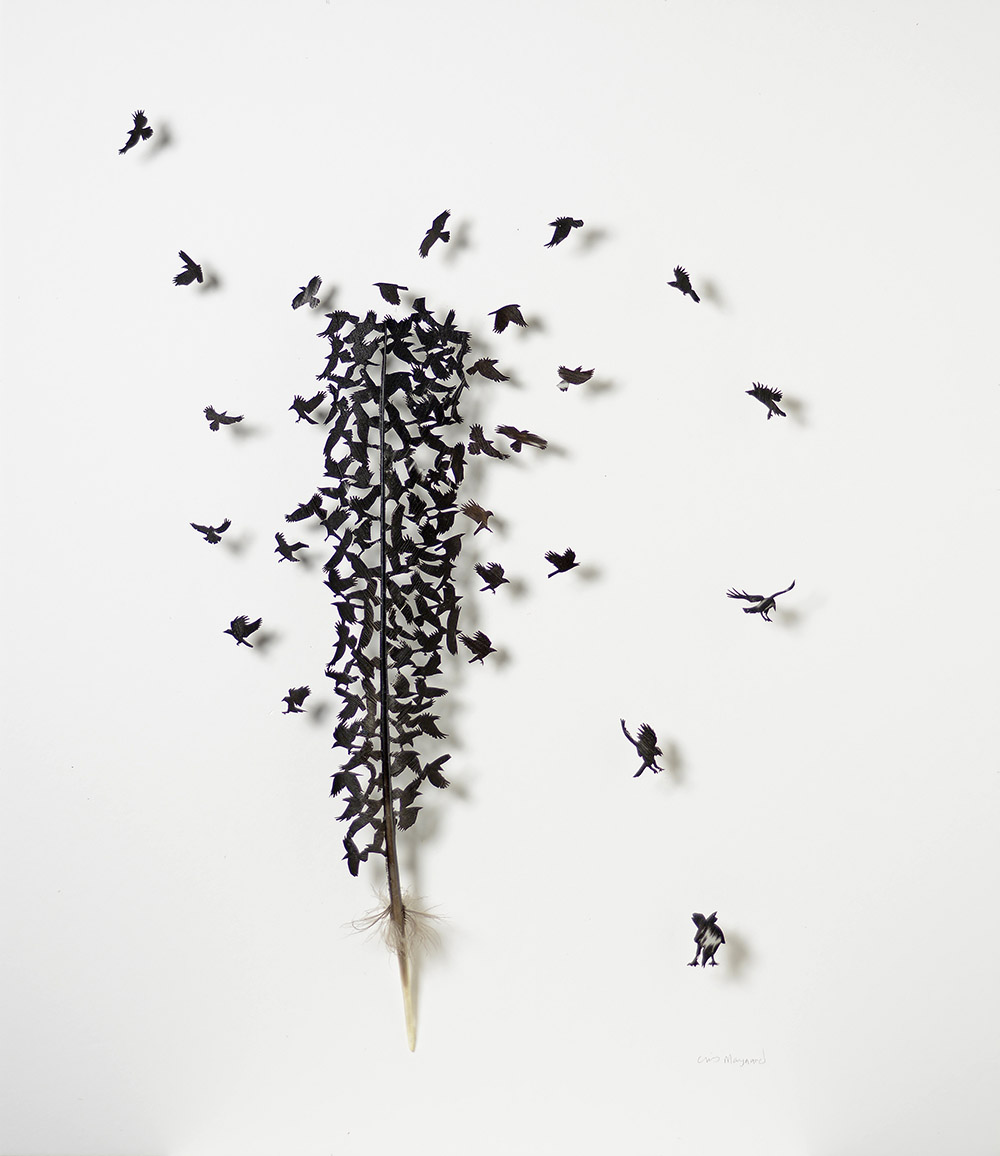
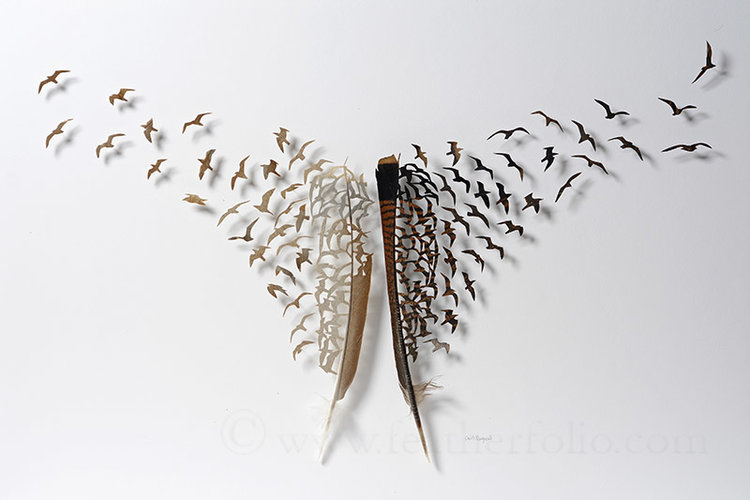
Valeriya Kutsan and Alexander Khokhlov

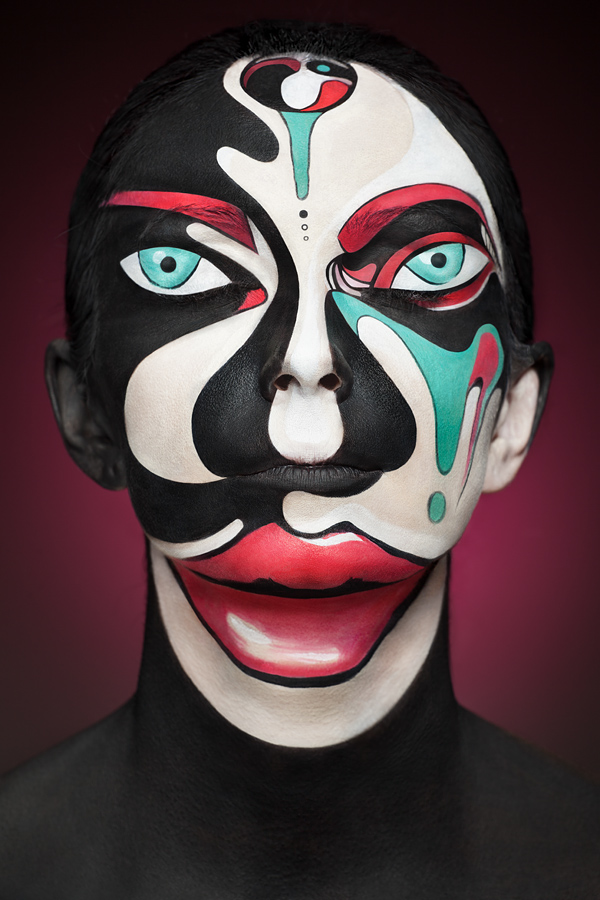
Faerie Trails
Pearlescent sponge-painted hues
Pink and blue and grey
Reflect the morning sunrise
Down the dew-covered path
Rose-colored diamonds
Sparkle on blades of green
Plodding steps
Announce my arrival
Into her delicate sphere
Fairy prints
Blushes of pixie dust
Tinge the edge of the leaves
Marks of a carefree spirit
Dancing through the woods
Her laughter is reflected
In the tinkle of wind chimes
The dawn’s breath quickens
Bending strands of leaves
And delicate flowers
Guarding the edge of the field
Dissipating her scent
Into the wind
In the arms of emerald green
I glimpse the sparkle of wings
And the glitter of freedom
My leaden steps follow
Tiny prints on velvet green
Wind chimes choir in the distance
Musk and earth and pine
Mask the scent of her passing
The morning sun spikes
Between the trees
Blocking my view of forbidden realms
Leaves tremble yet remain steadfast
She is gone
Protected by the world beyond
Leaving me to wonder
If the rose-colored diamonds
Were hers at all
Claudia ~ 2011
Richard Royal is recognized internationally as one of the most skilled and talented glassblowers in the studio glass movement. 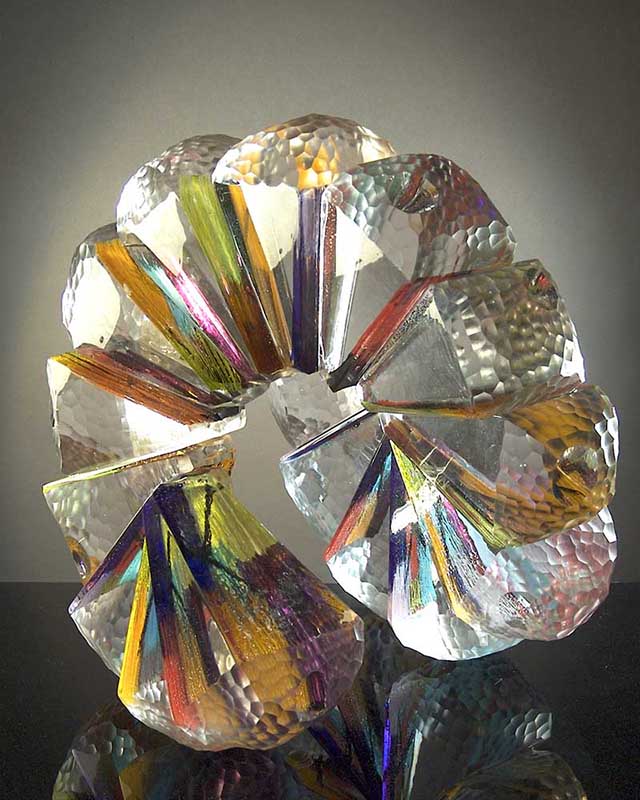 Having spent his early years as a ceramicist, he began working as a glass sculptor in 1978 at the Pilchuck Glass School.
  The birth of this new and exciting artistic movement appealed to the young artist.
 Royal worked his way through the ranks to become one of Dale Chihuly’s main gaffers.
 This relationship lasted several years and consequently led to Royal’s emergence in the art market in the 1980’s.
 Royal’s explorations delve into the theory that all things have a geometric significance or a mathematical sequence.
  Royal’s vision is to create organic sculptures using rigid components to portray this concept of growth and clarity in form.
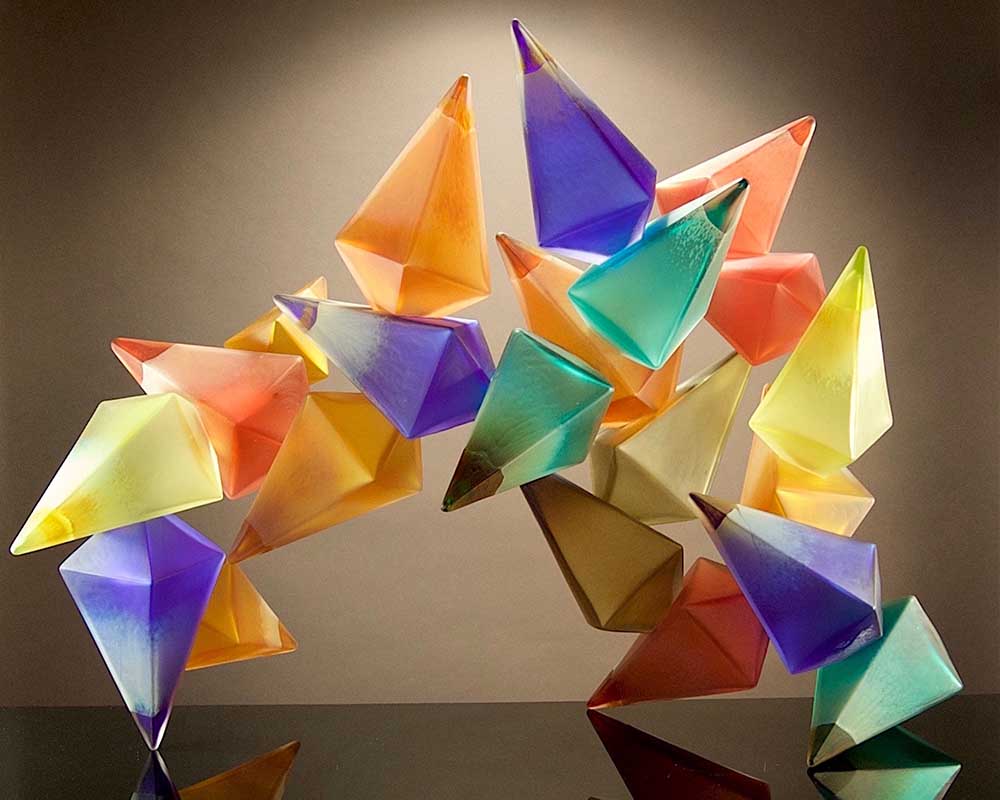 His shapes are unusual, striking, and bright, just as glass should be.
 More of Richard Royal’s geometric masterpieces can be found at https://richardroyalstudio.com/.

The world is full of magic things, patiently waiting for our senses to grow sharper. ~
 Let’s be brief.
The world out there is messed up. Mass shootings at grade schools, graduation parties, and outside of bars. The horror of death is everywhere.
It seems like the world has gone mad. It certainly has tinted our view of the future.
Yet….
I went to one of my youngest son’s bestie’s wedding Saturday. It was a lovely affair.
You know that my son was killed in February by a mad gunman. Sitting in the church before the wedding, I kept thinking that the bride and groom should have been my son and lady.
But I digress.
Before, during, and after the celebration I was surrounded by the love and support of his friends and friends’ wives and parents and friends of friends. It was phenomenal.
I tried to keep the emotions in check — after all, this was a friend’s wedding, not a memorial. My husband and I were honored to be invited. I mean, we’re parents of someone else’s kid.
The point of this blog is that the world is not going to hell. Individuals may be, but not the world as a whole.
There are wonderful people all around you. People who love openly, who fear death and love life just like us. And they are there for you and me.
A wedding cannot bring back what has happened, but it can bring together people who love and remember. There is no better support group. I will always love these guys.
Give the world another chance.
The Dutch collective We Make Carpets has spent the past decade transforming everyday objects and materials into site-specific installations, and has taken the world by storm since its formation in 2009.

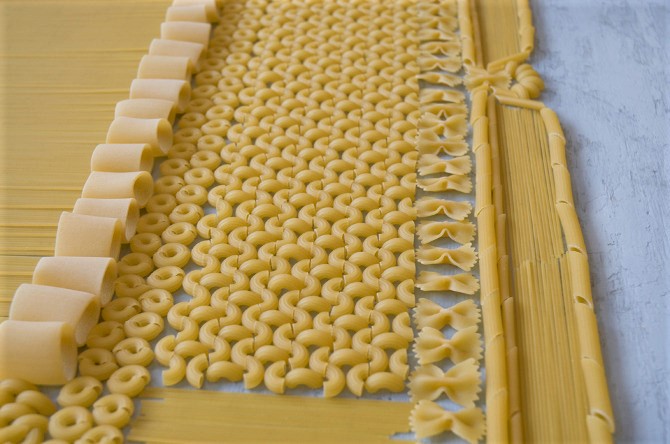
The trio has exhibited their work at reputable museums from Australia to the United States, in continuous pursuit of new forms and possibilities. Cup Carpet

They are guided by a simple belief: that mass-produced objects and materials lose their exceptional beauty due to their sheer quantity and availability and the carelessness with which they are used and thrown away.

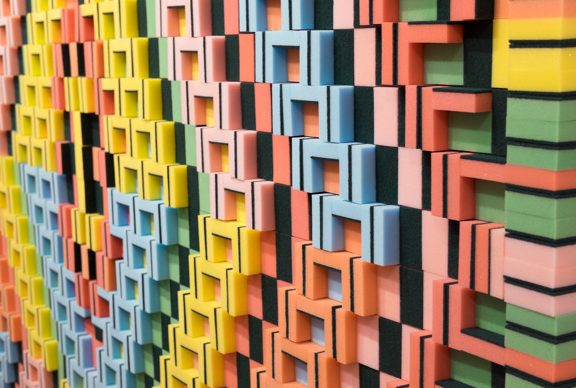
Even if they take a close look at something like a simple scouring sponge, a chip fork or a clothes peg, it’s hard to identify their quality, technical ingenuity and colors.


We Make Carpets works patiently and diligently for days to create a pattern and ultimately a fragile carpet never intended for anyone to walk on.

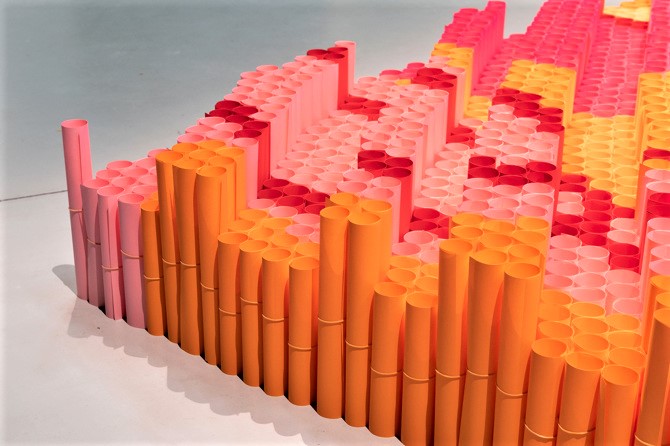
The carpets are temporary, made on the spot with no thought out plans or sketches beforehand.


The three artists cast each other a knowing look when the first patterns begin to emerge, seemingly out of nowhere (the only real preparation is buying the product in bulk and getting a feel for the space).
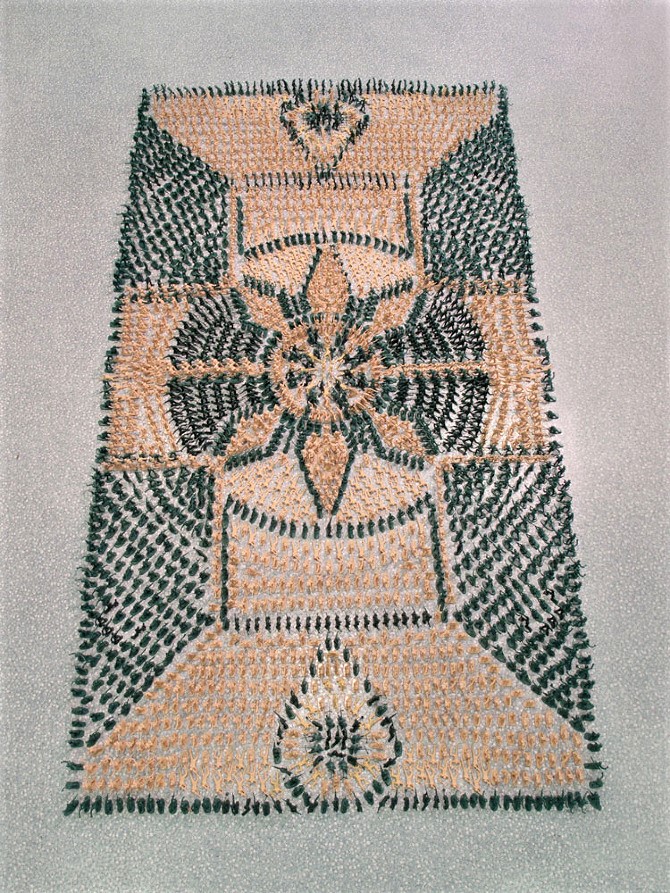
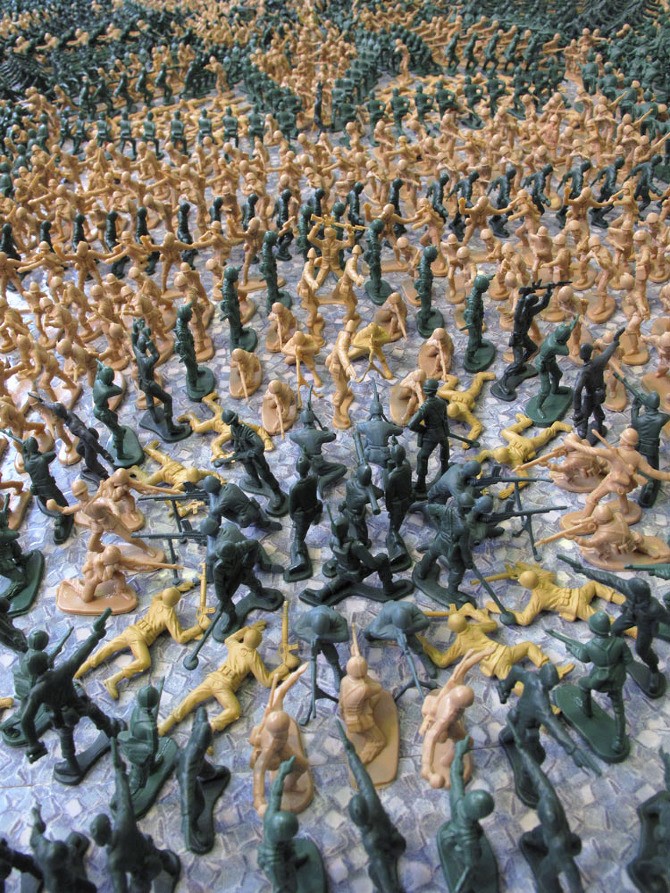
Eventually, a work of art starts to materialize on the floor; a transient and vulnerable carpet made from items in the same product family: chip forks, scouring sponges, clothes pegs or countless other disposable items.
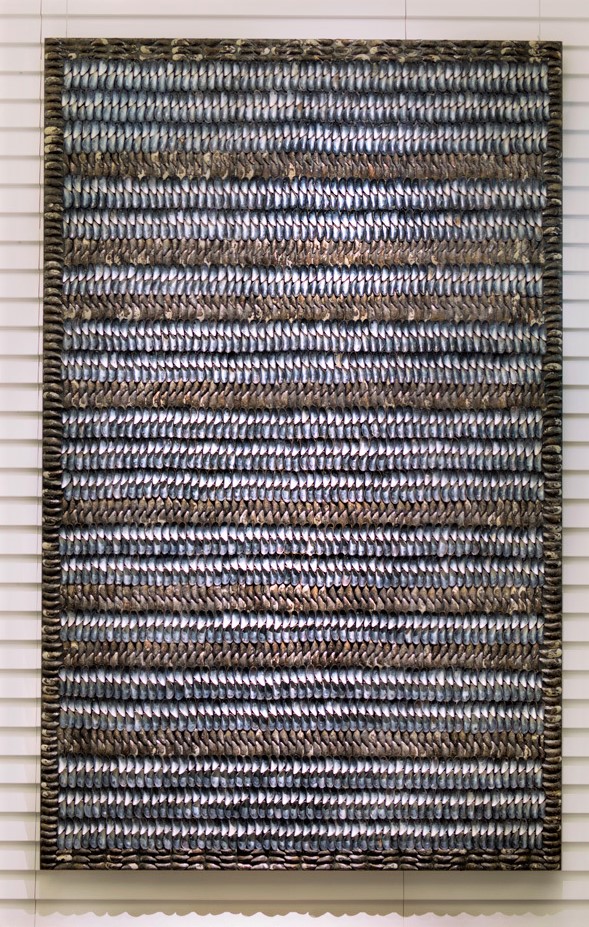

The hard work and the meticulous placement of identical materials or objects in ever-changing patterns and directions generates unexpected results.


The stunning patterns, the breath-taking colors, or the austerity of black and white suddenly raises questions about usage, disposal, and longevity.
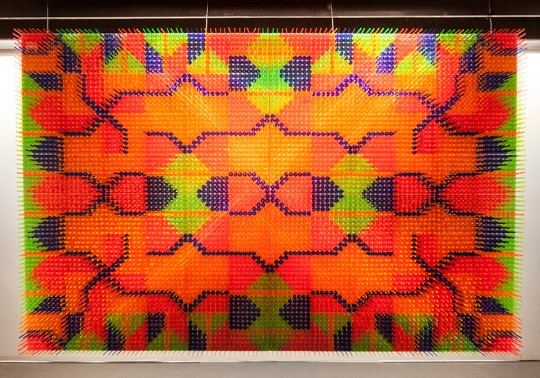

More of We Make Carpets can be found at http://wemakecarpets.nl/.

Colors fade, temples crumble, empires fall, but wise words endure.
—Edward Thorndike
 Occasionally I find myself suffering from mindyourownbizitis.
Has this affliction ever affected you?
It starts almost unnoticed. Someone asks your opinion, and you give it. Someone else asks for your advice, and you give it.
After a while you find yourself offering your thoughts when someone else is conversing. Sharing your ideas even if the discussion has nothing to do with you or what you’re doing.
Before you know it you’re telling people what to do, how to deal with their problems (and non-problems), and how to think. How they can do better, feel better, how they can free themselves from whatever it is you think they’re suffering from.
It doesn’t take long to turn from innocent helper to know-it-all busy bee.
I think I fall into the latter category more that I should.
I find myself sharing my opinions even when I’m not asked. Advising friends and family members who never really asked for help. They’re letting off steam; I’m opinionating.
Now, having an opinion is fine and dandy. That’s what makes us human. Citizens of the Earth and all. Sharing your opinion is fine and dandy as well. People should know who you are and what you stand for.
Telling someone else how to raise their children or deal with their job or their extended family members is not the way to go. Especially if you’ve never had their kind of job or their kind of kids.
We all try not to do it. But we all do it.
We are all asked to help, advise, listen, and share. And we all want to help, advise, listen, and share.
But we have to realize that our opinion is our opinion. That we are neither right nor wrong but just an opinion. We don’t know what others are going through. We don’t know their secrets, their background stories, their small triumphs and minor setbacks.
All we know is what others want us to know.
We have to be smarter than our old selves. We need to understand when we are being asked for an opinion and when we are being asked to be a sounding board. We have to learn to share without pushing. Give our thoughts without proselytizing. Offer our support without trying to change lives.
We cannot change someone else’s life — we can only support them when they decide to change it themselves.
We can all use someone else’s thoughts, point of view, love and support. But in the end we don’t want someone else to tell us what to do.
Especially if that somebody else is a know-it-all busy bee.
Christina Bothwell (born 1960), is an American contemporary fine arts glass maker. Bothwell is known for glass, ceramic, and mixed media sculptures that portray the processes of birth, death, and renewal.
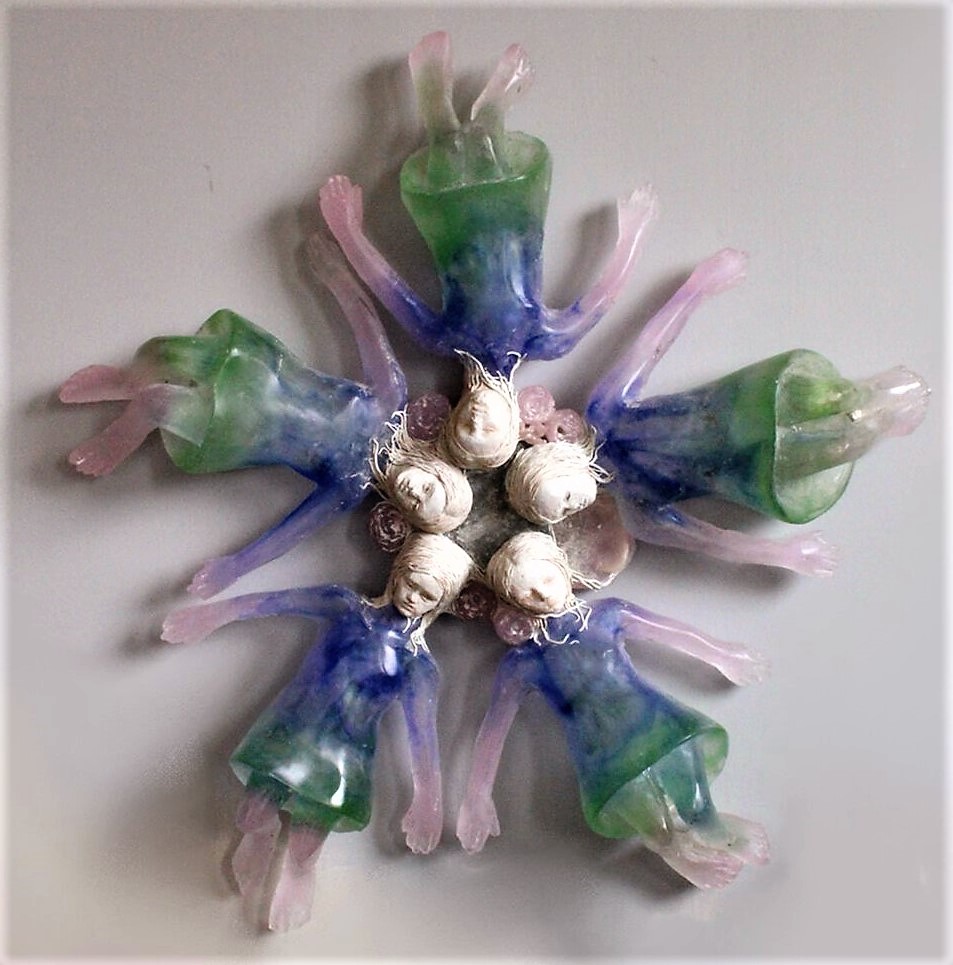 She studied painting under Will Barnett at the Pennsylvania Academy of Fine Arts, but gradually moved to working three-dimensionally using ceramics and cast glass as well as antique toys, taxidermy animals or small furniture parts.
 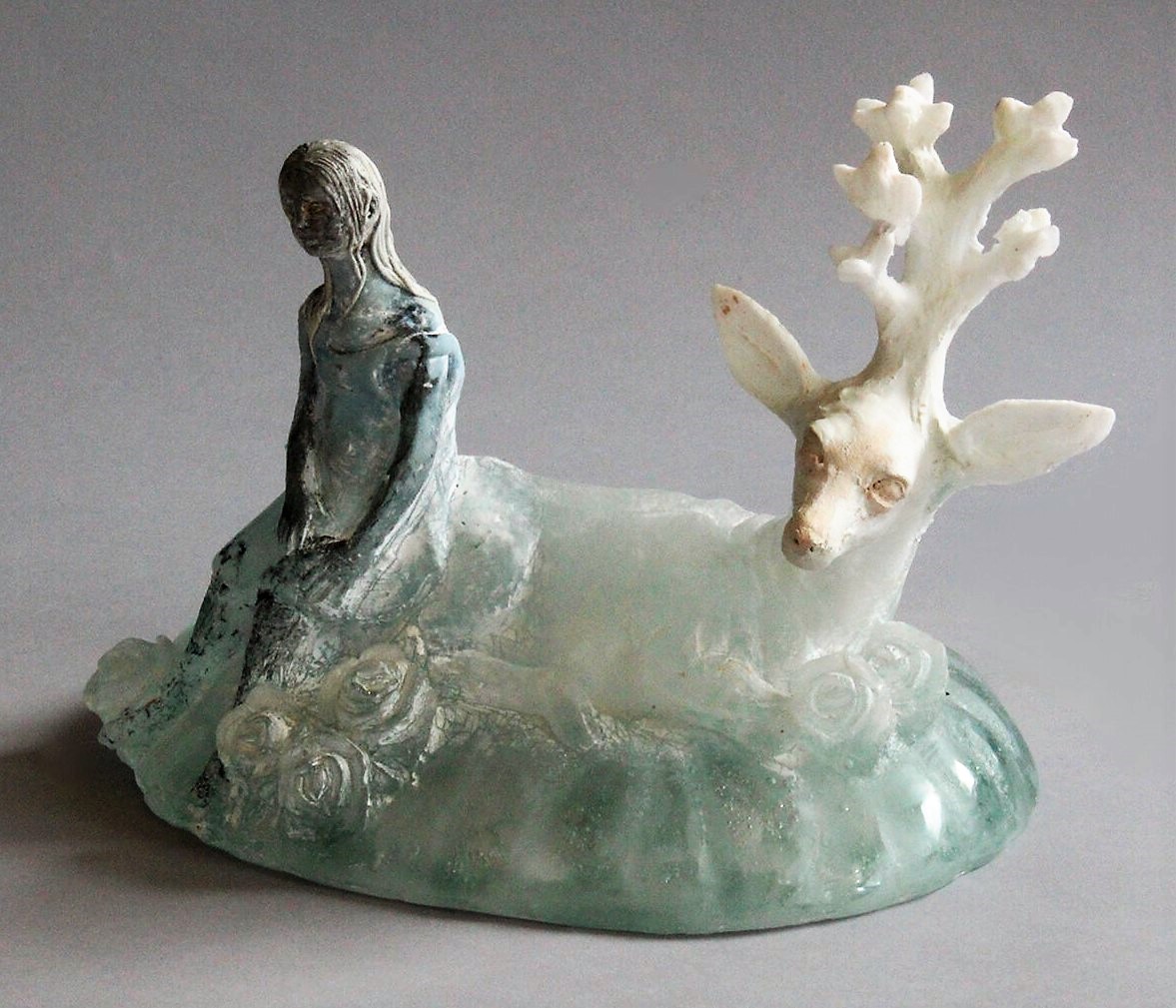 Increasingly drawing on animals and the natural world around her, she saw the potential for combining glass with the materials she was already using to bring lightness and delicacy to her work.
 Bothwell’s pieces are often a union between her own mythology and lucid dreams.
 She challenges herself to portray the soul, inner awareness, and the connections between life and nature through her art.
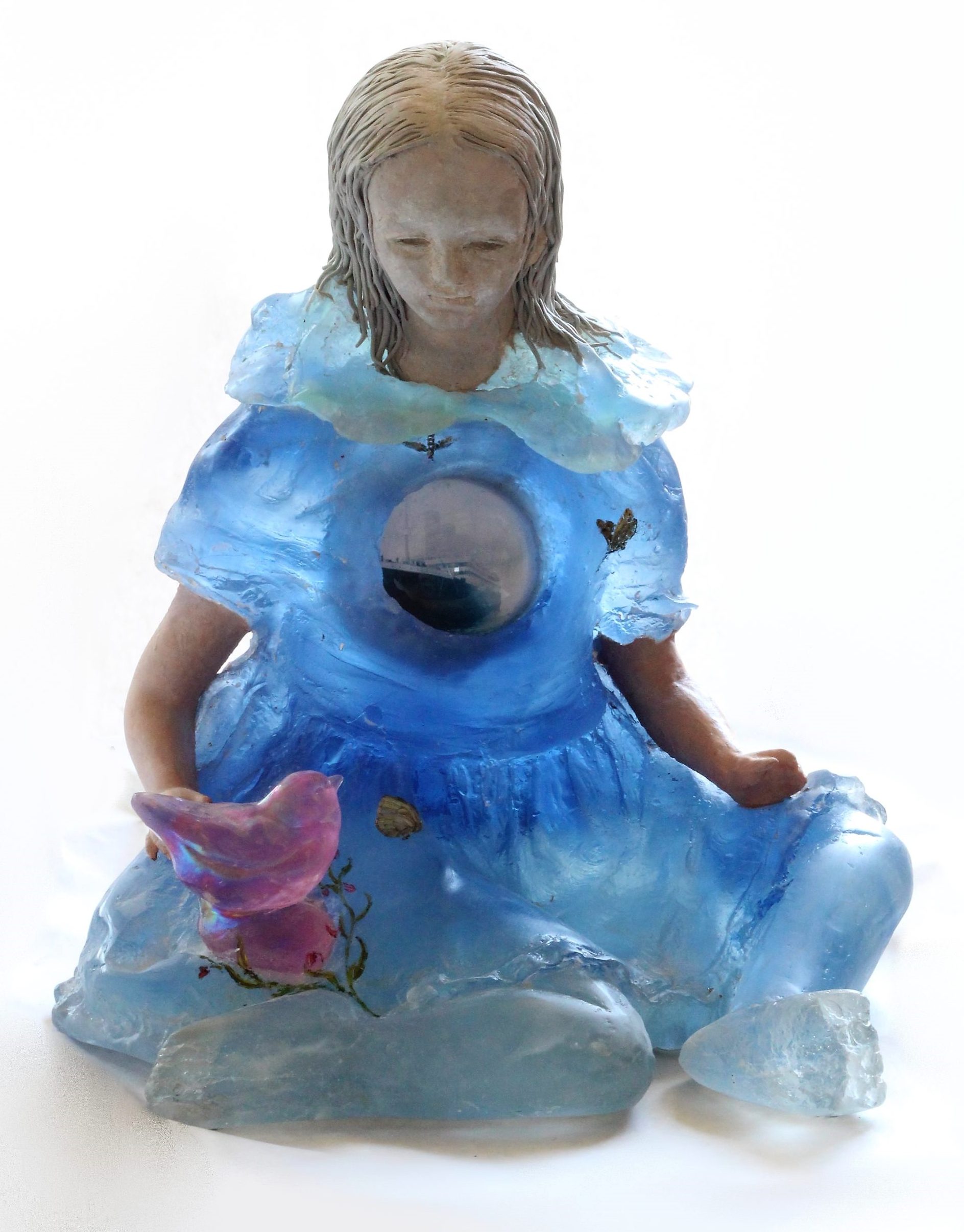 “Art has always been a form of retreat for me,” Boswell shares. “I view my studio time as an anchor, a compass that orients me toward the things in life that feel good and bring me joy.”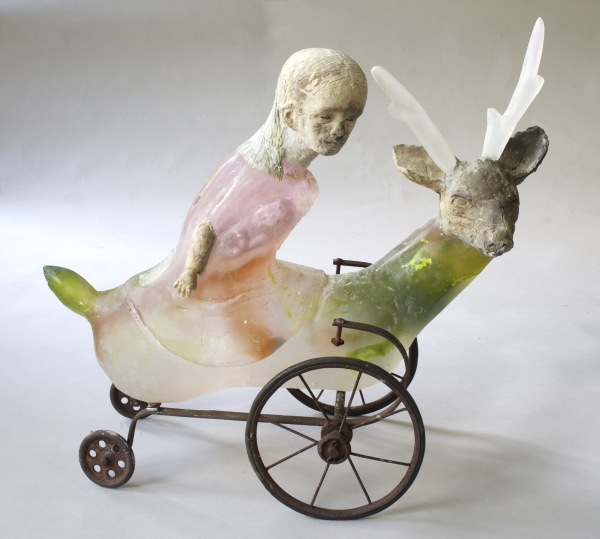
More of Christina Bothwell‘s art can be found at https://christinabothwell.com and https://www.hellergallery.com/christina-bothwell/.
Copied from the Dogington Press

MEET SERGEANT STUBBY: THE MOST DECORATED WAR DOG IN HISTORY
Before he became the most decorated war dog in American history, Sergeant Stubby was homeless: unwanted, unwashed, unloved, and scrounging for scraps on the streets of Connecticut.
For his valorous actions, Stubby is recognized as the most-decorated dog in American history. But before he was a hero, he was homeless: unwanted, unwashed, unloved, scrounging for scraps on the streets of New Haven, Connecticut in 1917. His fortunes changed, however, when he ran into a young Soldier training on the grounds of Yale University – Private First Class Robert Conroy of the 102nd Infantry Regiment – who adopted the scrappy little stray and named him Stubby for his short stature and tail.
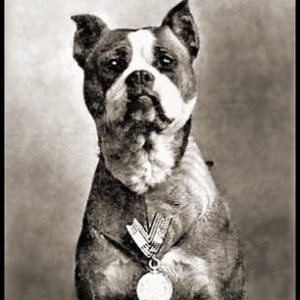
The U.S. military didn’t have an official “military working dog” program at that time, but Stubby’s natural survival instincts and devotion to his adoptive family quickly made him an invaluable addition to the men of the 102nd. He received only one piece of formal training from Conroy and his buddies. When their commanding officer demanded to know why there was a dog in the ranks, Stubby raised his right paw to salute, rendering the officer speechless and ensuring Stubby’s place as the official mascot of the Yankee Division.
When the Yankee Division arrived in France, Stubby was given special orders to accompany them to the front lines and saw action in four offensives and 17 battles, serving for 18 months on the western front. He located wounded Soldiers in “No Man’s Land” and – since he could hear the whine of incoming artillery shells before humans – became adept at warning his new family when to take cover. His keen sense of smell gave him the ability to detect incoming mustard gas attacks, once saving an entire company by alerting the men to don their gasmasks.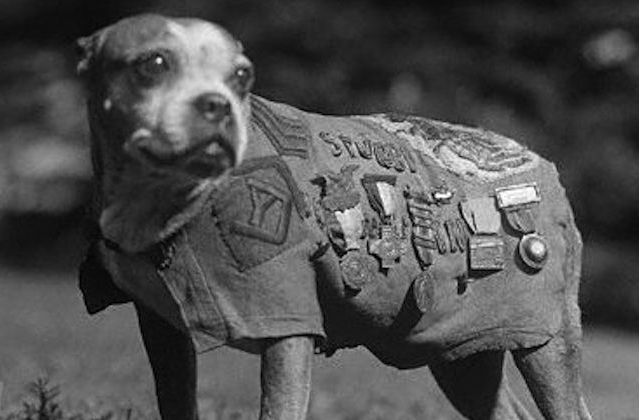
Following the retaking of Chateau-Thierry by the U.S., the women of the town made Stubby a chamois coat on which were pinned his many medals. Able to differentiate between English and German, he was promoted to the rank of Sergeant after catching a German spy and became the most decorated war dog in history. Following the war, Stubby returned home to a hero’s welcome, touring the country leading victory parades, meeting three sitting U.S. presidents (Woodrow Wilson, Warren G. Harding and Calvin Coolidge), appearing on Vaudevillian stages and serving as the mascot for Georgetown University, where Conroy was studying law.
On March 16, 1926, Stubby passed away peacefully in his sleep, in the arms of Robert Conroy. On April 4th, 1926, the New York Times published the heroic pup’s obituary. You can read the full text here: http://ow.ly/KqXo50E0h29.
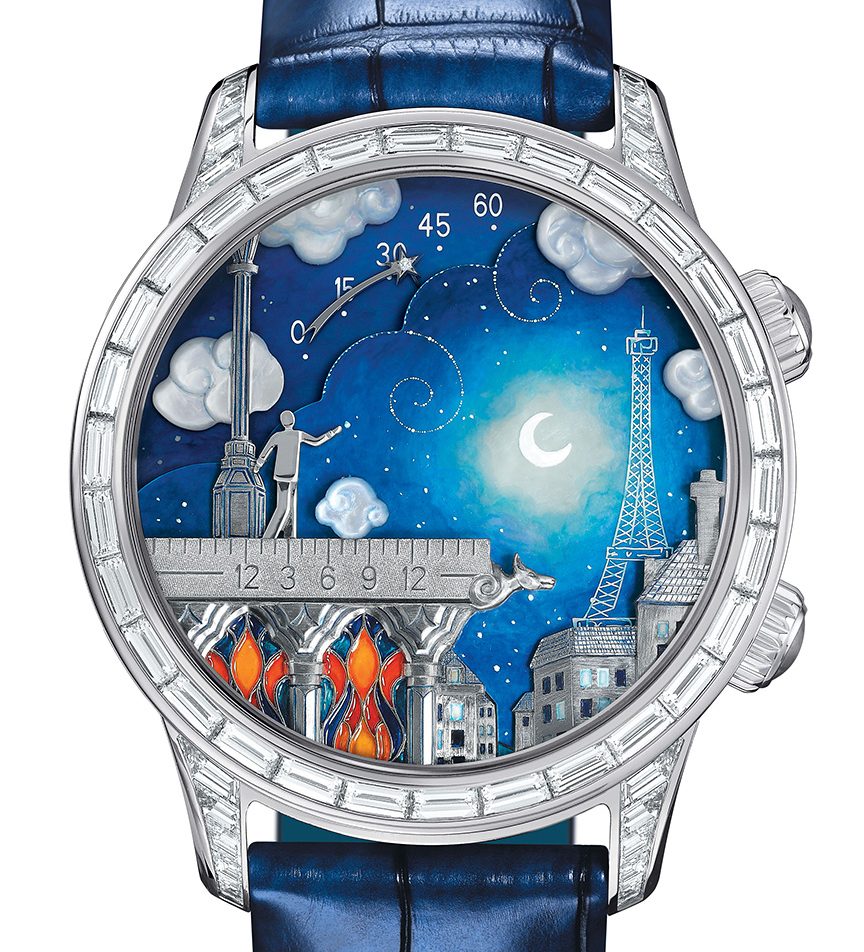
Unfortunately, the clock is ticking, the hours are going by. The past increases, the future recedes. Possibilities decreasing, regrets mounting.
~ Haruki Murakami
You can wear an expensive watch and still be late.
~
 Nsquare Snake Queen Automatic Watch
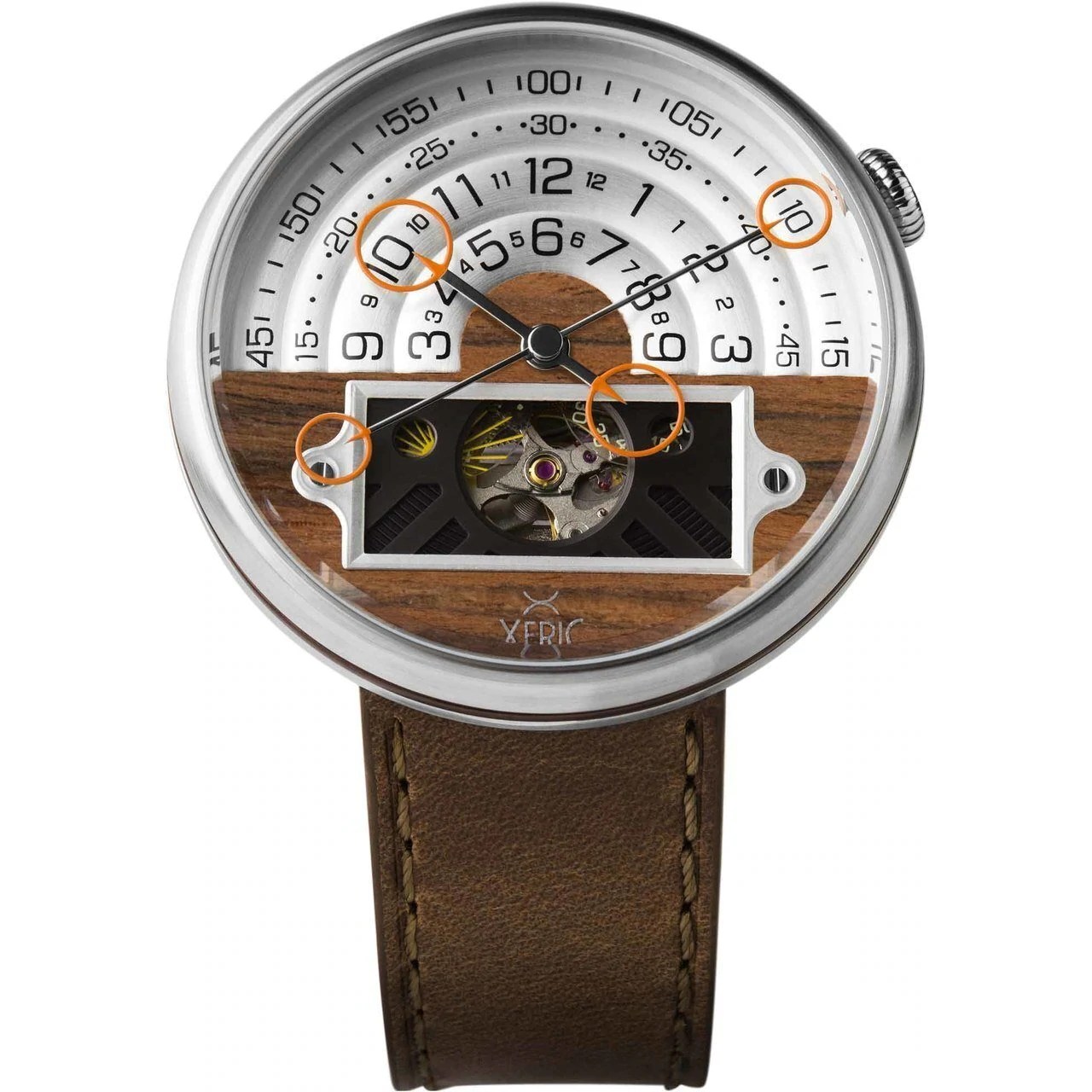 Xeric Halograph II Automatic Rosewood Limited Edition
 Jacob and Co. Billionaire Watch
 Space Invaders Watch
 Hublot Spirit of Big Bang Tourbillon Watch
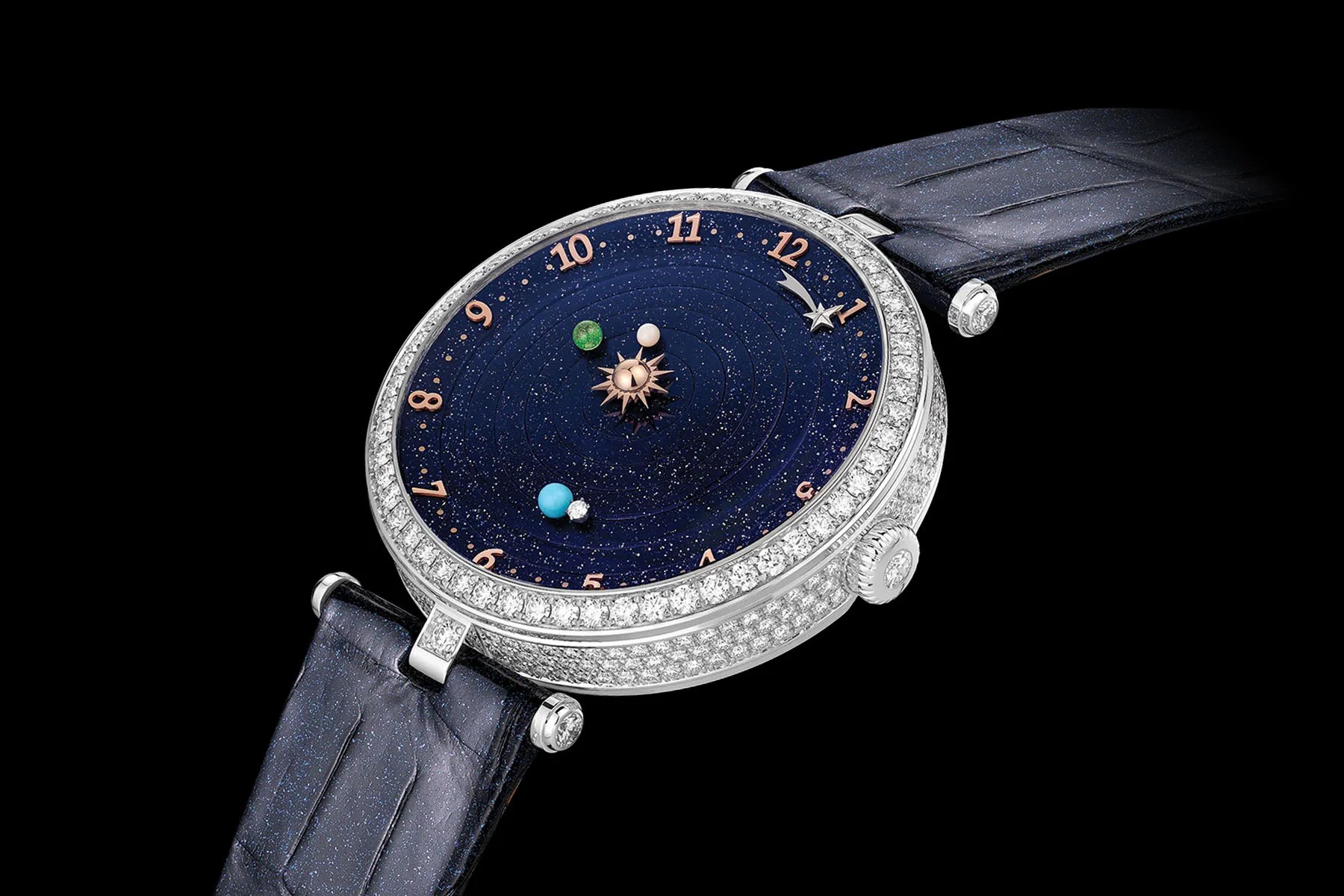 Lady Arpels Planetarium Watch
 Devon Tread-1 Watch
 Code 11.59 by Audemars Piguet
 Bird Repeater Watch
 Xeric Trappist-1 Automatic NASA Edition Blue Supernova Watch
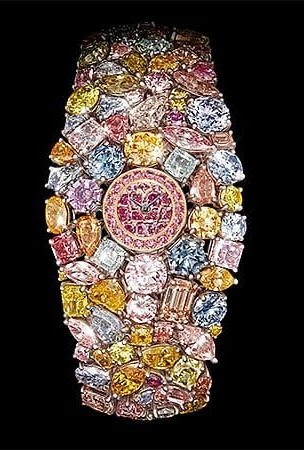 Graff Diamonds Hallucination Watch

. Be brave enough to live life creatively. The creative is the place where no one else has ever been. You have to leave the city of your comfort and go into the wilderness of your intuition. What you’ll discover will be wonderful. What you’ll discover will be yourself. ~ Alan Alda 💚 Text and […]
Be brave enough to live life creatively — Purplerays
 I made some resolutions earlier this year.
Not New Year’s Resolutions nor Solstice Resolutions nor Mother’s Day Resolutions. Just some Creativity Resolutions.
The first one comes due next Saturday. My first Art Show of the Season.
Am I ready? Is anyone ever ready for their next step into the world of creativity?
Making Angel Tears is one thing. Painting plates is one thing. Crocheting hangers on kitchen towels is one thing.
Showing them to the public is another.
I keep telling myself I’m too old for this $hit. That to be afraid of who I am at nearly 70 years old is ridiculous. I mean, how can I be any more off-center than I already am?
So anyway, my first art show is this Saturday. I’m doing the final count, the final packing, the final polishing. I swore I’d be done way before this weekend, but guest what — life got in the way.
Good and Bad.
So I’m taking my wares and my gauzy summer dress and my hat with lots of strings of tears that didn’t turn out so I wrapped them around the band and a new sparkly tablecloth and making my way up north. I’m going to play some instrumental medieval tavern music softly in the background and hang up my sparklers and do what I was born to do.
Sell Creativity.
I’m going to talk about Tears and Art Fairs and friends who are crafters. I am going to watch sparkles across the pavement and sneak away during the slow time and check out the other artists who are hanging around and down the main street with me.
Once I get back I hope to start working on my second Creative Resolution.
Offer one of my earliest books for free on my website.
Why not? I can’t share the magic if I don’t share the magic. I’m not up to making money on my writing — I just want to share (what I think) is some great writing.
Next I’m going to do some research and send out some of my short stories and poetry to publications and see if anyone is interested in a woman who is forever driving through a cornfield or someone who is chatting on their computer with someone who may or may not be right in their vicinity or a little girl who made friends with a dwarf.
If I sit in the background for the rest of my life that’s where I will be when I pass on to the next level.
In the background.
And I will not have shared my excitement about my world and my craft and creativity and the beauty of love and life to anyone.
What a shame that would be.
Korean artist Yeesookyung received her MFA in Painting, at Seoul National University, Seoul, Korea, in 1989. The artist creates sculptures by combining discarded shards of porcelain, assembling them to make new forms and fusing them with gold leaf.
 The resulting works are often organic in shape, resembling soap bubbles or other biomorphic forms.
 Her series titled “Translated Vase,” was first inspired by the Korean artisan tradition of destroying porcelain works that are not deemed pristine, and she has continued to make the fused pieces since 2001.
 Intrigued by these tossed aside works and shards, Yeesookyung began saving fragmented tea cups and pots rejected by contemporary masters.
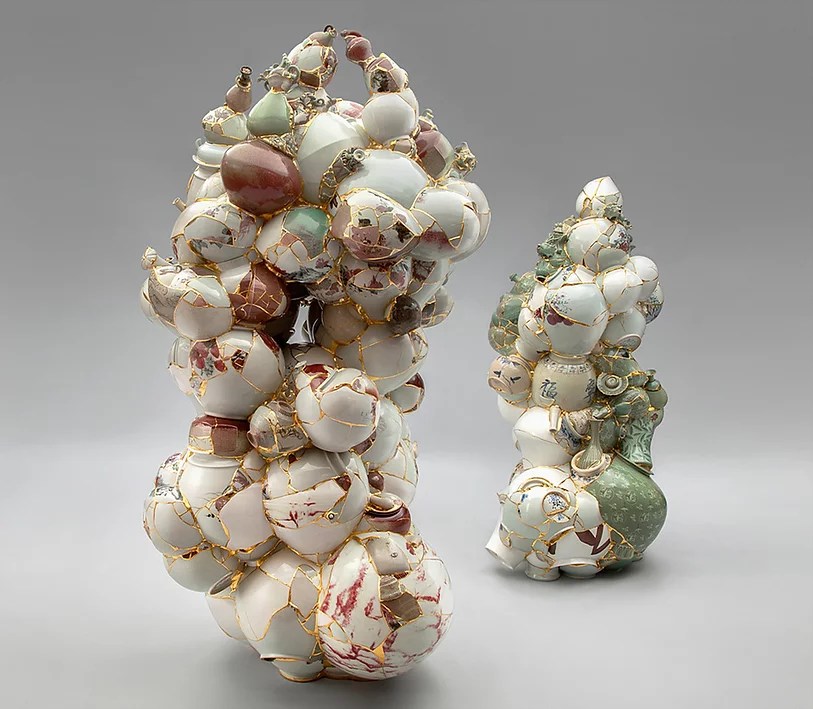 The artist collected broken shards from artisans who worked in Korea replicating historical vessels from the Goryeo (918–1392) and Joseon (1392–1897) dynasties.
 Honoring the works’ dismantled states, she traces each crevice in 24-karat gold leaf in the style of Japanese kintsugi, merging the unwanted works together in a way that heightens the beauty of their distress.
 By ‘translating’ these porcelain elements, Yeesookyung highlights the fragility and imperfections of human existence as well as the inevitable failure of any attempt to construct historic continuity.
 More of Yeesookyung‘s wonderful creations can be found at https://www.yeesookyung.com/ and https://www.instagram.com/yeesookyung_/.
 Ah, you can talk about the pit, barbecue
The band was jumpin’, the people too
Ah, mess around
They doin’ the mess around
They doin’ the mess around,
Everybody doin’ the mess around
Ray Charles
That’s me. That’s my life lately.
Not quite hanging around the BBQ, but Mess Around. Messing Around. Messing Up.
The other day I must have pushed a wrong button or wrong file button and everything was being filed on my One Drive. Since I don’t use One Drive and didn’t know what it was, I freaked out. I stopped it half way through whatever it was doing and deleted the files it was transferring and wound up deleting a good portion of my art files for my Gallery. Both the new artists and the file with the ones I needed to put on the ACTUAL Gallery.
I also lost some other stuff. I found some stuff later, but that’s not the point.
Now, my writing and research is backed up on a flash drive. Back it Up. Back it Up. You would think I would have been smart enough to back up future gallery work too.
They doin’ the mess around
They doin’ the mess around,
Everybody doin’ the mess around
THIS is what happens when you are too smart for your britches. Too cool for school. Too sly for an art guy (rather girl). This is what happens when you only do a partial.
So why am I grumbling to you this fine day?
All the time. Every day. Don’t leave it for tomorrow or the weekend or when you get enough work done to make it worth saving.
Also…
Don’t be dumb. Learn your computer’s programs. You don’t need to be a computer programmer to learn what One Drive or Microsoft 365 or Google Photos are. Don’t cut something off in the middle of its function.
Stop Messin’ Around.
The beauty of Creativity is that it comes in all sizes, all colors, all realms.
Creativity just makes you feel better. Just ask my friend, the Textile Ranger.
Check her work out!


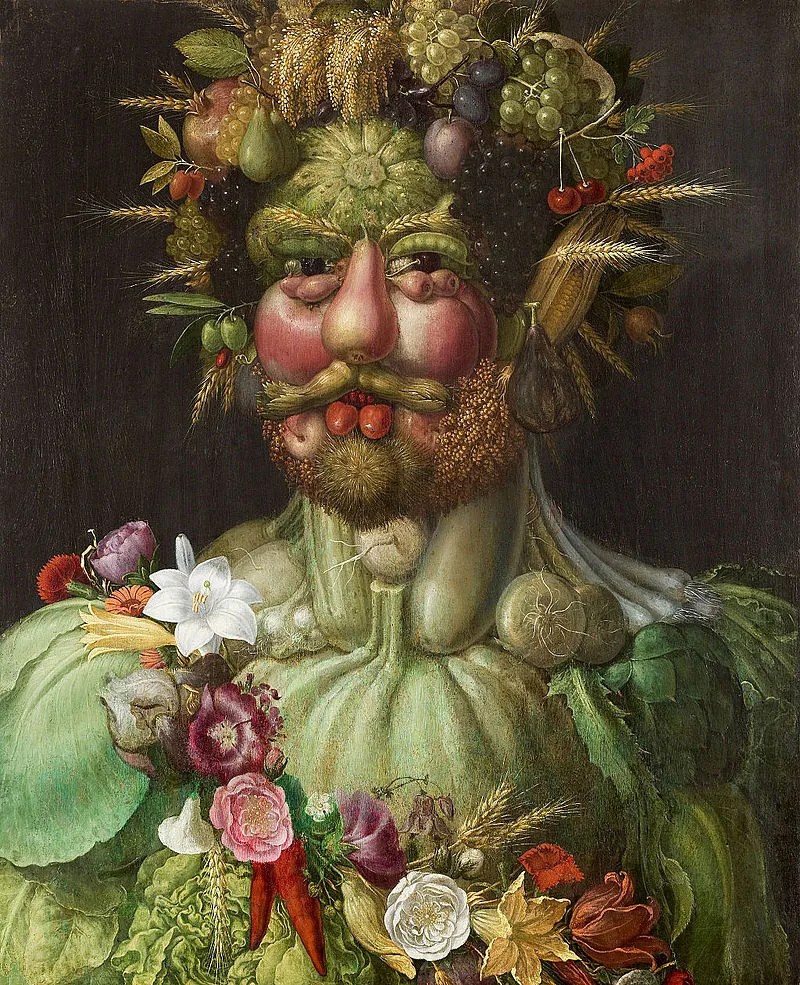
What is an optical illusion? Optical illusions, more appropriately known as visual illusions, involves visual deception.
 Due to the arrangement of images, the effect of colors, the impact of light source and other variables, a wide range of misleading visual effects can be seen.
 Optical Illusions can use color, light and patterns to create images that can be deceptive or misleading to our brains.
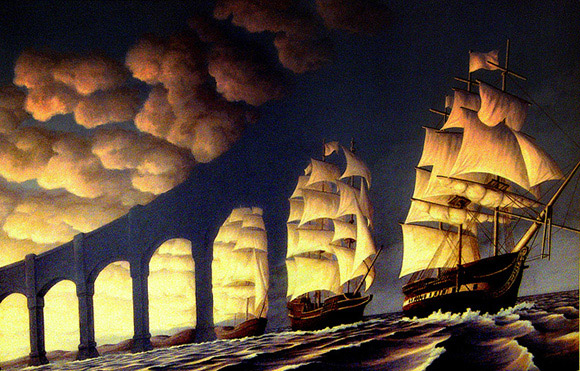 The information gathered by the eye is processed by the brain, creating a perception that in reality, does not match the true image.

That’s why some optical illusions seem to move when in reality they don’t, or can look like a face and a background at the same time.
 Perception refers to the interpretation of what we take in through our eyes.
Optical illusions occur because our brain is trying to interpret what we see while making sense of the world around us. Optical Illusions are dizzying, mystifying, intricate and interesting.
When people say “I can’t believe my eyes!” now you know why.
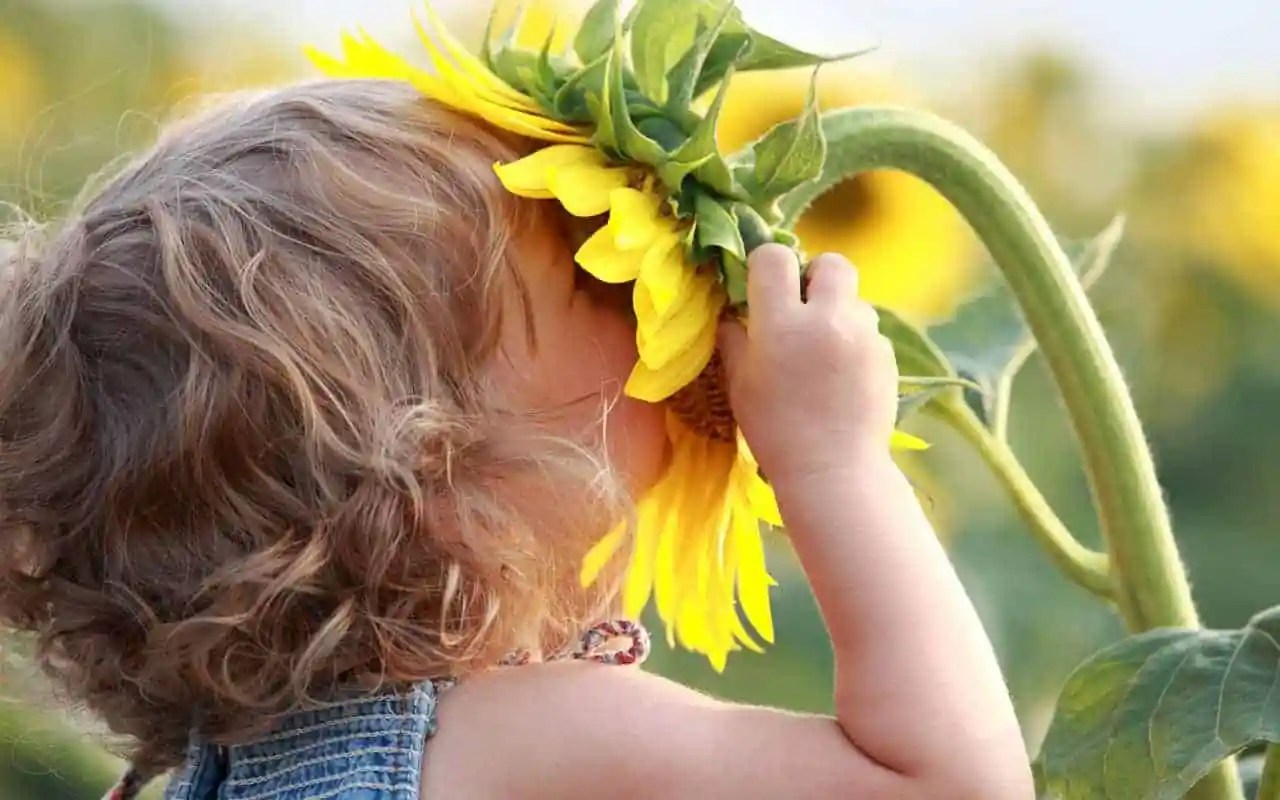
Just living is not enough … one must have sunshine, freedom, and a little flower. ~ Hans Christian Andersen
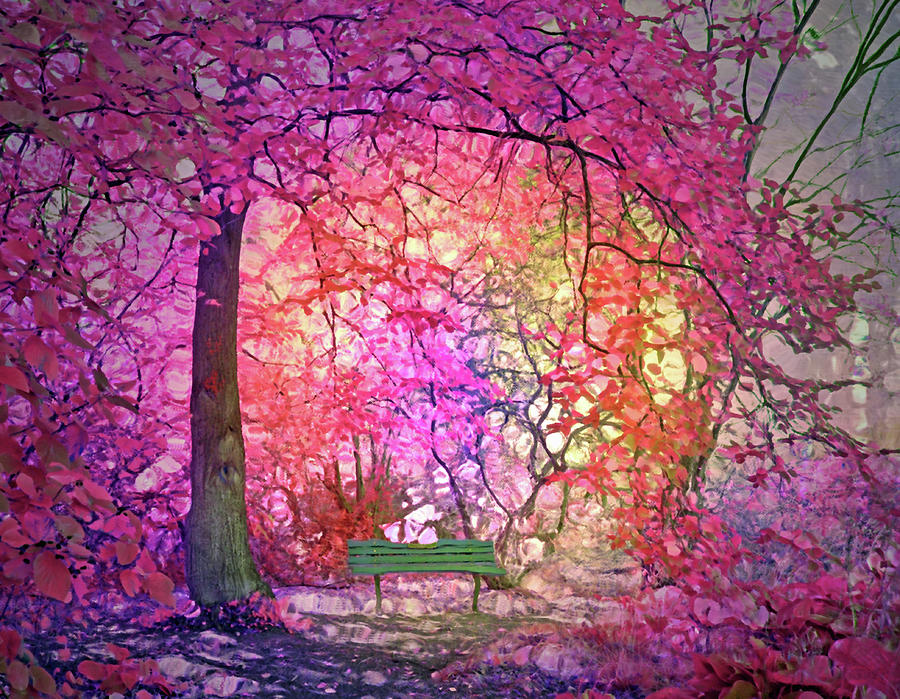
Tara Turner
When the moon is full (last night was the Super Flower Blood Moon total lunar eclipse) and Mercury is in retrograde (until June 2nd), it is time to get creative. (The beautiful evening outside my door doesn’t hurt, either!)
As I was multitasking last evening (as I often am) I started thinking about “What If?” again. I wrote a blog about What If back in 2018 about keeping your What If’s going; writing them down, painting them, growing them. Later that year I wrote another blog called Let “What If” Guide Your Story about letting your mind wander into various “What If “worlds until you found one that appealed to you.
I seem to often talk about letting your creativity take you to new worlds, new thoughts, new possibilities.
Not everyone cares to participate in the speculation of the future. After all, we have enough trouble handling the speculation of today.
But with full moons and retrograding and any other excuse you can make up, this is the time to change your wardrobe and try on something new. Something wild and different. Something stern and conservative.
Something different from the same old you.
I have lost faith in a lot of movies lately; they are the samO samO plots, language, and emptiness. Like many books, paintings, stories, music, guitar solos and such that have come before, we have heard it all.
But now and then I come across a movie that is stark, interesting, and different. Twists I didn’t see coming, emotions that came out of somewhere deep and unpredictable, endings that surprise everyone.
When being creative, don’t you sometimes want to do the same?
Surprise your readers? Paint a scene that was at the edge of what is real? Fire a bowl or vase that is unique all onto itself? Take a picture at an angle that most people never consider?
Sometimes What If’s don’t work quite right. If I What If‘d a realistic park scene with pink trees, unless my genre was pop art or Abstract Expressionism, it wouldn’t work.
But what if I did decide to paint a landscape with pink trees? What if I decided to make water yellow and plants purple?
If I could actually pull it off, how wonderfully creative that would be! If I used my understanding of color and shading and texture and make everything look real, what difference would the colors make?
That’s what What If is all about.
Taking the familiar and making it do unfamiliar things.
It’s the what-if-you-were-standing-outside-looking-around-and-suddenly-you-see-a-gigantic-spider-climbing-over-the-trees-towards-you sort of moment.
Something you’re not likely to see in this lifetime, yet, if you did ….
I hope you are working on your What If moments.
Growing up in a small town on the Colorado River in Arizona, Jenny Foster gravitated toward art at an early age.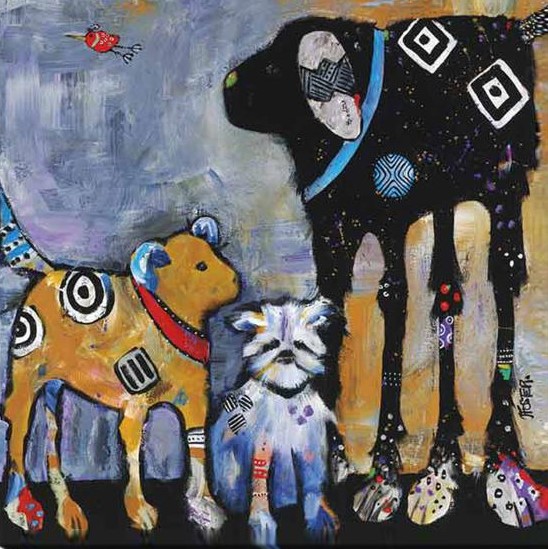 Foster studied fine art at Arizona State University and graduated with a degree in graphic design.
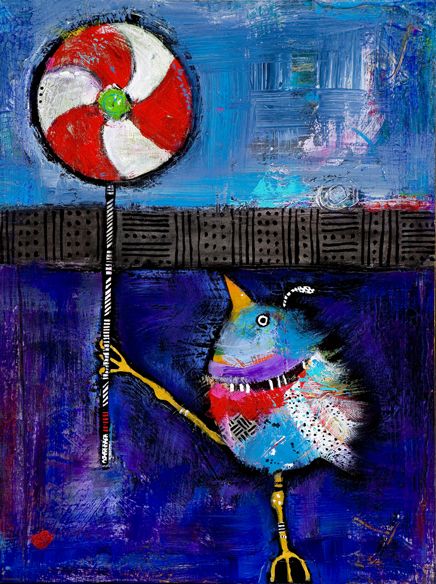 Her style is both primitive and contemporary, and she delivers it with a combination of abstract shapes and happy colors and symbols.
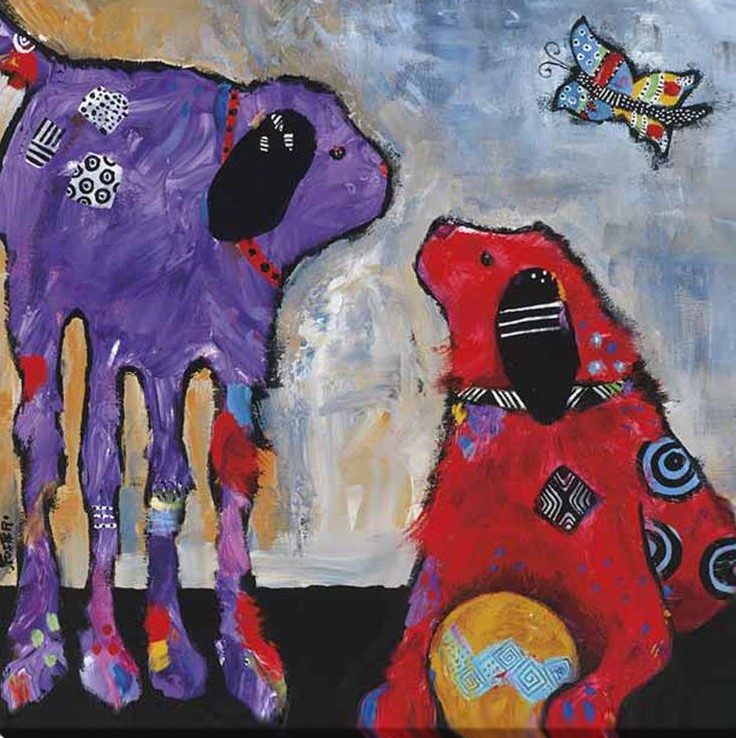 To many artists, it is a great challenge to express feelings of personality in their art without injecting some realism.
 But Foster has mastered the art enough to do this through symbols and abstract forms.
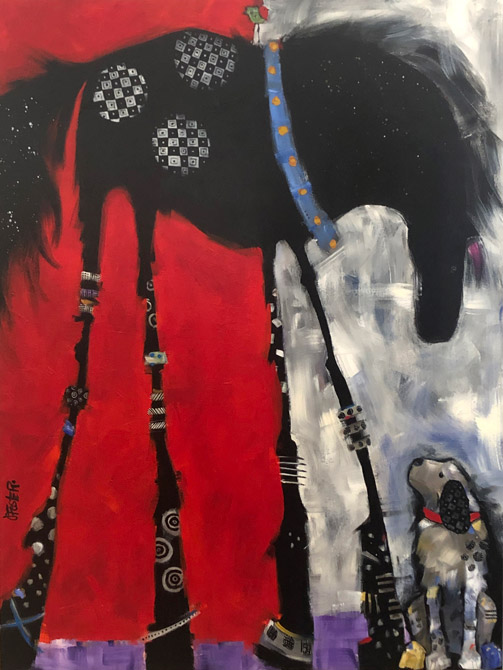 Foster’s works are inspired by her appreciation of nature, happy colors, and the spirit of life.
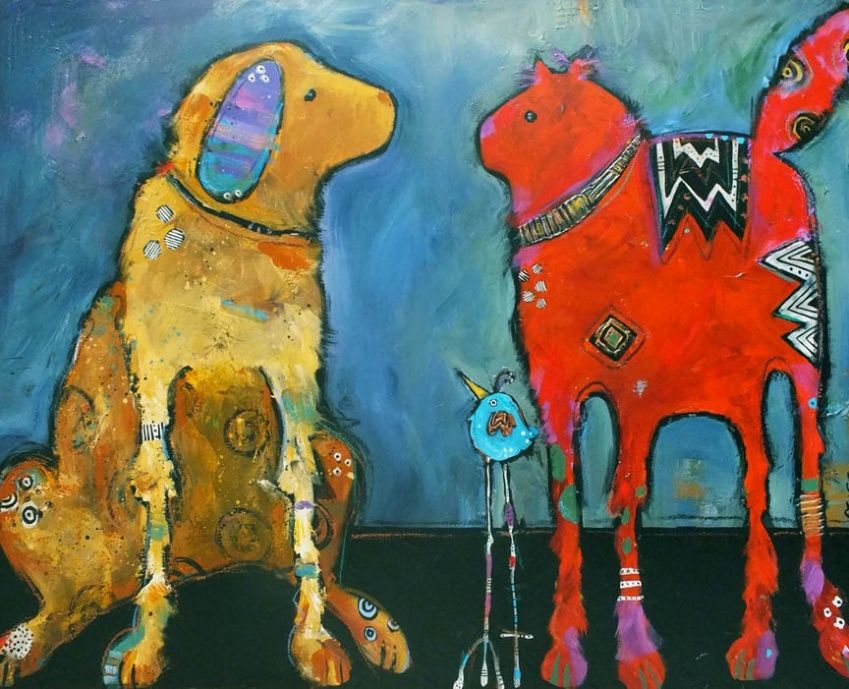 The artist lets her palette and brush express her imagination.
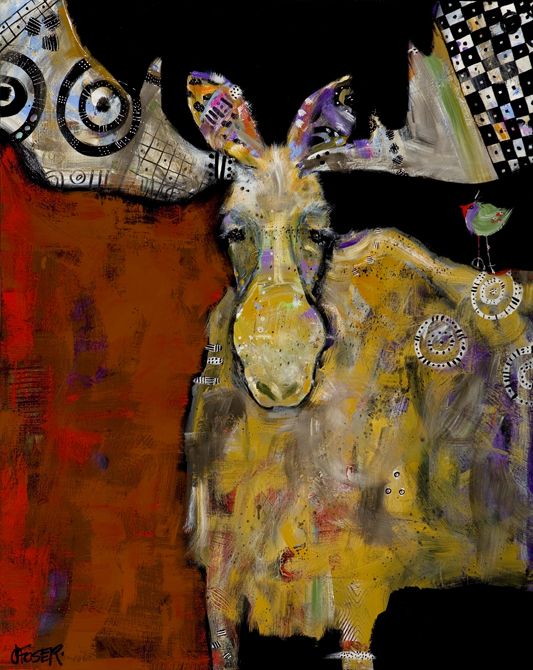 She prefers to achieve quality without adding too much detail or sophistication, keeping everything simple and fresh.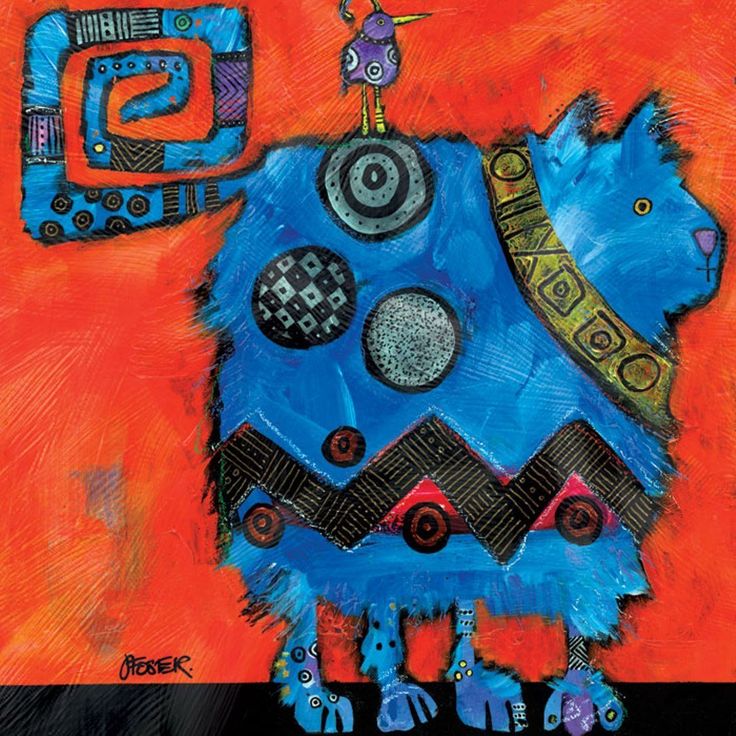
More of Jenny Foster’s inspirational artwork can be found at http://jennyfoster.com/.
Something about those chicklets — they get to me every time —
Meet a few of them!

Hi My name is Margie the chicklet in the air is named Lavender she’s one of the ones who refuses to believe that chicklets can’t fly she says that they can and she’s proving it right now but we know that flying on a wire is not the same thing as using one’s wings still […]
Henry, Margie, Devin and Flying Lavender…poems — Rethinking Life
How could anything be more beautiful? The world is FULL of magic! Just open your eyes!
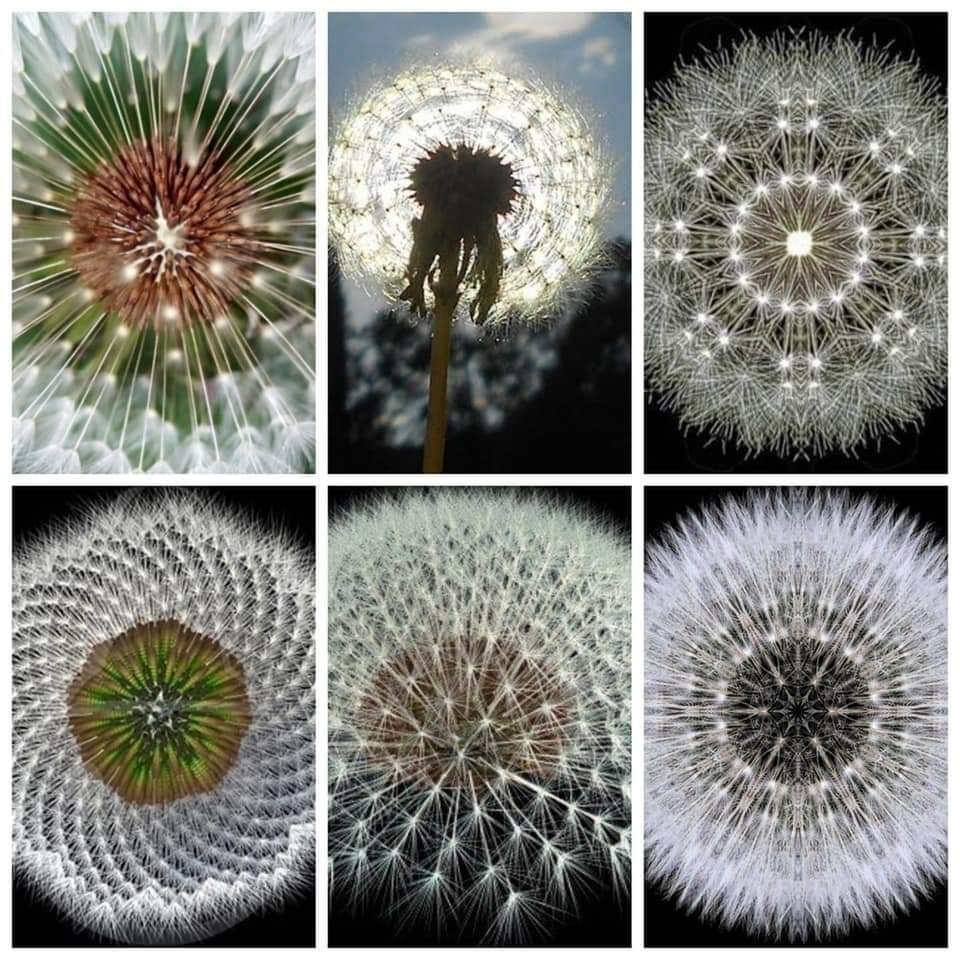
.The beautiful sacred geometry of Dandelions.
Text and image source: Soul Alchemy https://www.facebook.com/186012608273340/posts/1915783641962886/
Thunderhead: The upper portion of a cumulus cloud characterized by dense, sharply defined, cauliflowerlike upper parts and sometimes by great verticality. ~ Dictionary.com
Thunderhead: The swollen upper portion of a thundercloud, usually only recognized by people who enjoy having great breadth, but little depth of knowledge. ~ Joe, Urbandictionary.com






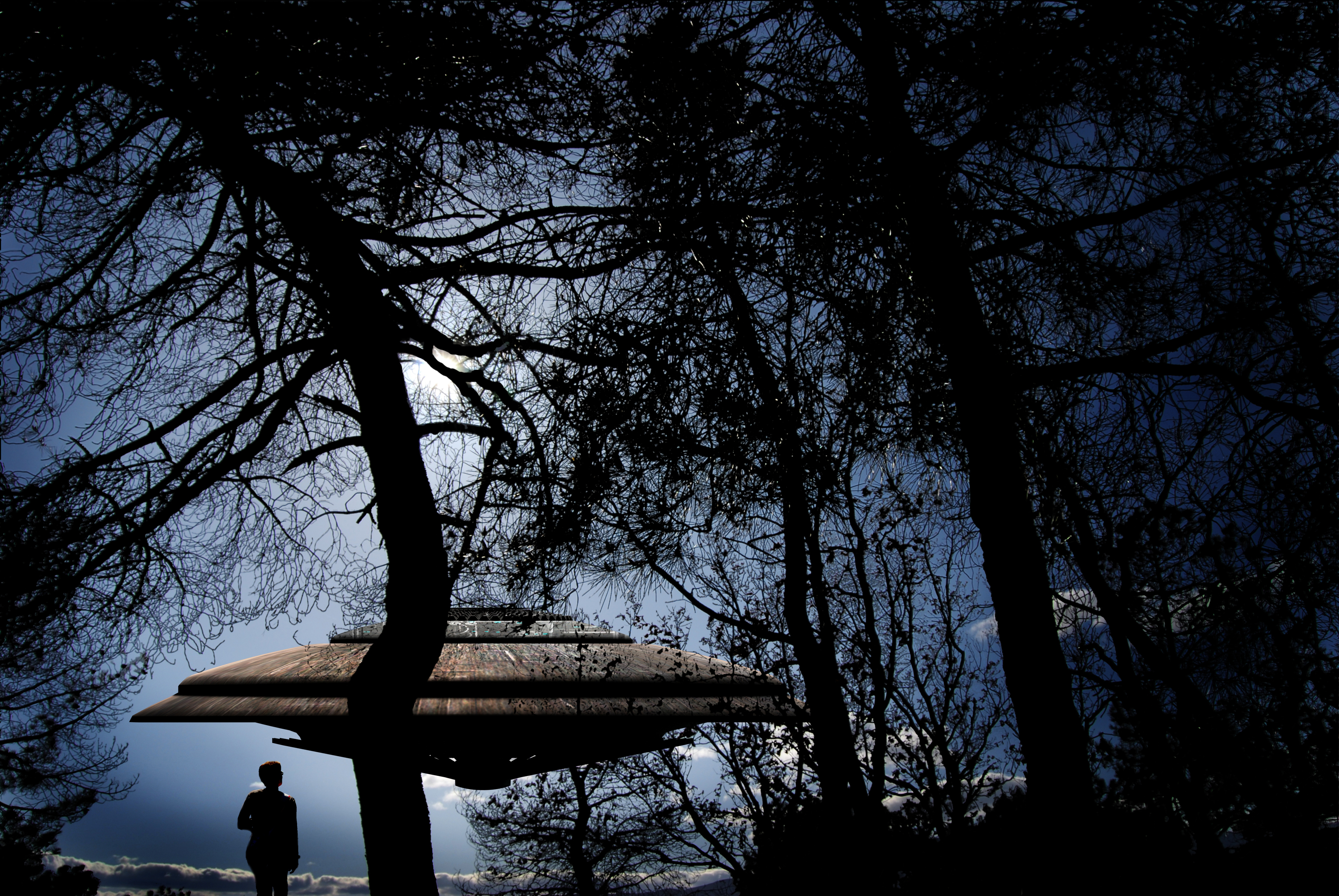
You know the greatest danger facing us is ourselves, an irrational fear of the unknown. But there’s no such thing as the unknown — only things temporarily hidden, temporarily not understood.
~James T. Kirk
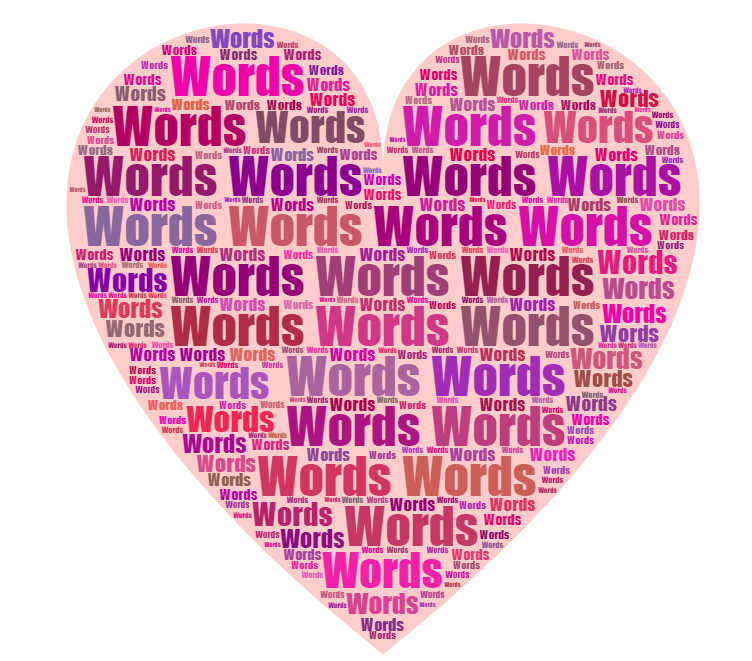 What do you think of when you hear the word…..
BUSY
NICE
EVIL
STUPID
Words are what make the world’s languages understandable. Gestures add to that understanding when possible, but we all have preconceived notions of basic words that may or may not be the same as others.
Skipping various degrees of emotion, we all know what someone means when they say the word LOVE. We understand the word HOT and SLEEPY and HUNGRY. We all pretty much picture love as a good feeling between two (or more) people; hot means high temperature; sleepy means a need for rest; hungry means… well… breakfast, lunch or dinner time.
But what about more nebulous words like EVIL or BUSY?
Nebulous, you ask? What’s “in the form of a cloud or haze; hazy” about being busy? Or being evil?
We all have different ideas when it comes to certain words.
EVIL may mean murderers, psychos, or oppressors. It’s a negative word that conjures up monsters, dictators, and torturers.
What about BUSY? Like “Sorry, I’m busy tonight.”
Busy can be maddingly over your head in schoolwork or job work. It can be too many steps in the instructions or too many thoughts in your head. It can be a sign of importance, organization or overscheduling.
Then there’s words like STUPID and NICE.
STUPID is a word that conjures up visions of forgetfulness and worse. It can be as light as forgetting to close the door behind you to forgetting your name or where you live. Stupid connotates a negative image of not knowing or not caring. It can be used to describe the mentally challenged, the old, animals and those prone to act before they think.
Or Nice.
NICE is one of those generic words that can be interchanged with many other words like pleasant, bland, and okay. Nice, with it’s positive notation, can be used to describe flavors, personalities, the weather, interactions, and views. There is no threat behind that word; no highs or lows in the complement, no color. Just a positive wave of feel good.
So what’s the point of all this nonsense today?
Mostly it’s that words, simple as they are in our minds, can dictate the world. Can be misunderstood by those who have a different interpretation or experience of life. And your meaning can be misconstrued with one utterance.
BUSY can also be interpreted as I don’t want to, I’m too important to be bothered, or find someone else.
EVIL can be extended to people taking a stand, a different point of view, or those who make life difficult.
HUNGRY can slip into wanting more, the need to dominate, or starvation instead of sustaining.
To some, NICE is not caring enough to do more, not challenging enough, being bland, lazy, and safe.
STUPID has been interchanged with retarded, foolish, low class, and lazy. It easily slips off the tongue as condescending, bullish and dismissive.
Just sayin’ … be aware of the words you use to describe not only your life but the lives of others. How you put certain words in sentences, both in person and online, can be taken differently by those on the other end.
Change your vernacular. Choose your words, your tone, carefully. Chill on the negative words like STUPID and EVIL. People are indeed evil, hungry, and stupid. But they are also complicated. Emotional. Not grounded.
People evoke the worst emotions from people. And the best.
Do what you can with those you label negatively: help where you can, let go where you have to. You cannot change the world — you can only influence it now and then by your own attitude.
You only get one chance to attitude it through life. Make it a positive word. Not a negative one.
Today is ONE of 365 days that we celebrate mothers — all kinds, all sizes, all species. To be a mom is a tough gig. Happy, sad, melancholy, sentimental, pissed off — all moms of all kinds have felt it all.
In past Mother’s Day salutes I’ve saluted Famous People’s Mothers, More Famous Peoples’ Mothers, Mother Idioms, and, way back in 2016, an almost-Mother’s-Day-Salute Holy Mother and Child.
Being the creative sprite I am, I was trying to think of other ways to celebrate being a mother/grandmother/mother’s friend/auntie/great grandma.
That’s big shoes to fill.
I thought I might try “bad” (see the quotes?) mothers, but people might get the wrong idea. (There’s actually websites like 13 Worst Celebrity Mothers Alive on This Planet and Bad Women in the Bible!)
So this year, how about — Famous Mother Female Rulers?
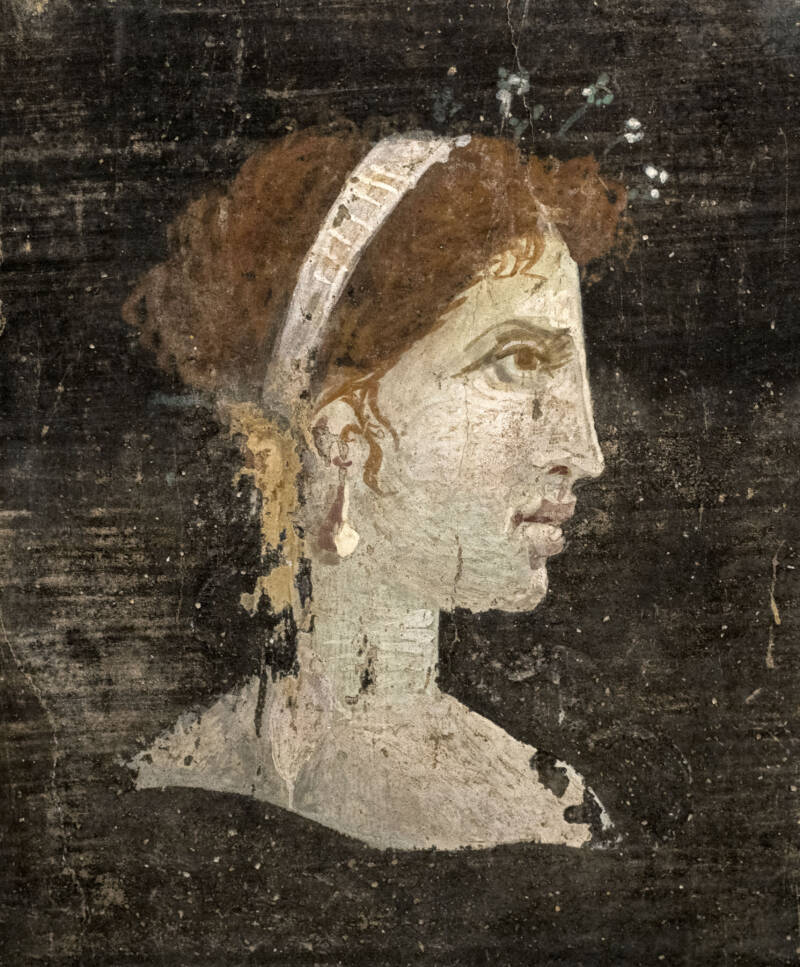
Cleopatra VII Philopator (69 BC–10 August 30 BC) was Queen of the Ptolemaic Kingdom of Egypt from 51 to 30 BC, and its last active ruler. She was also a maritime pioneer, linguist, and healer. She studied math, logic, debating, and science, and spoke no less than nine languages. Cleopatra had four children.
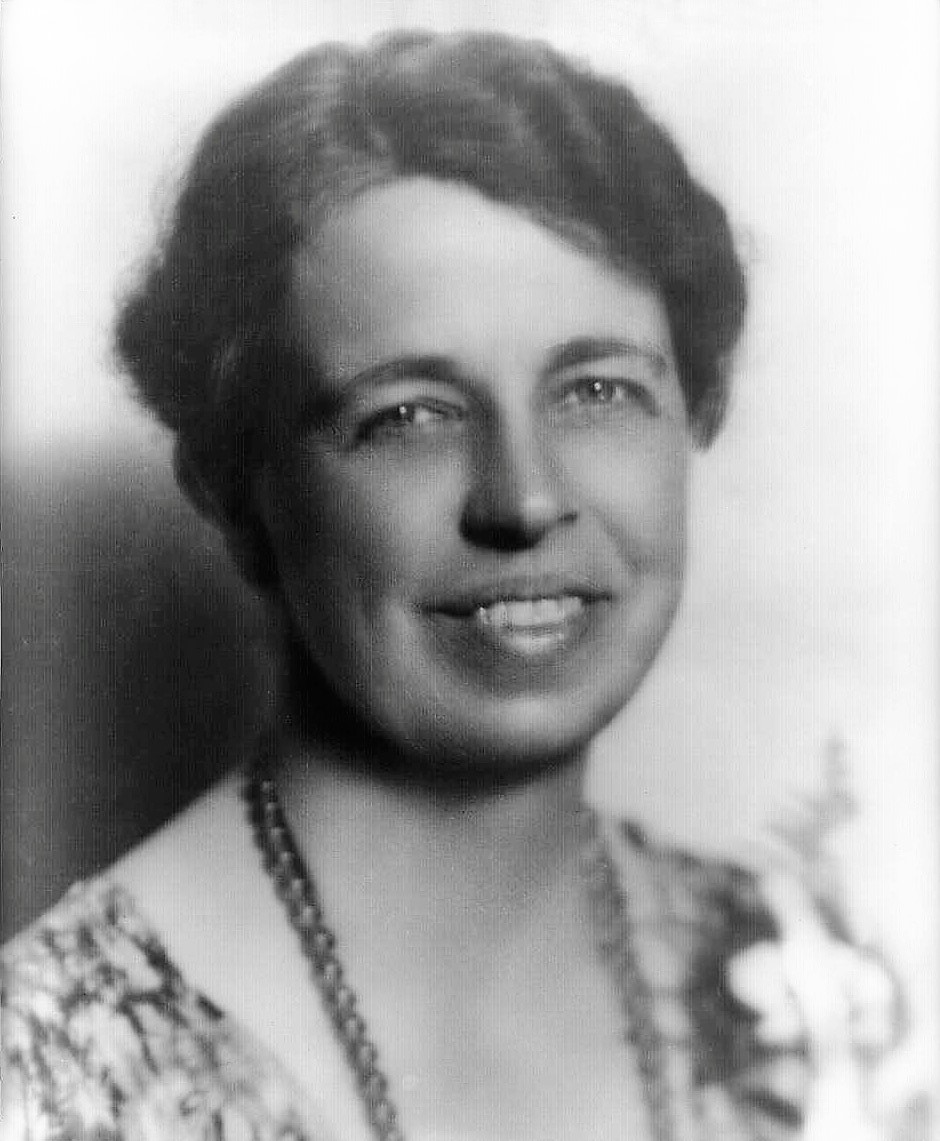
Anna Eleanor Roosevelt (1884 – 1962) was an American political figure, diplomat, and activist. She served as the first lady of the United States from 1933 to 1945. She was an early advocate of civil rights, independent and outspoken on the rights of women and African-Americans. She pressed the United States to join and support the United Nations, and became its first delegate. She served as the first chair of the UN Commission on Human Rights, and oversaw the drafting of the Universal Declaration of Human Rights. She had six children.
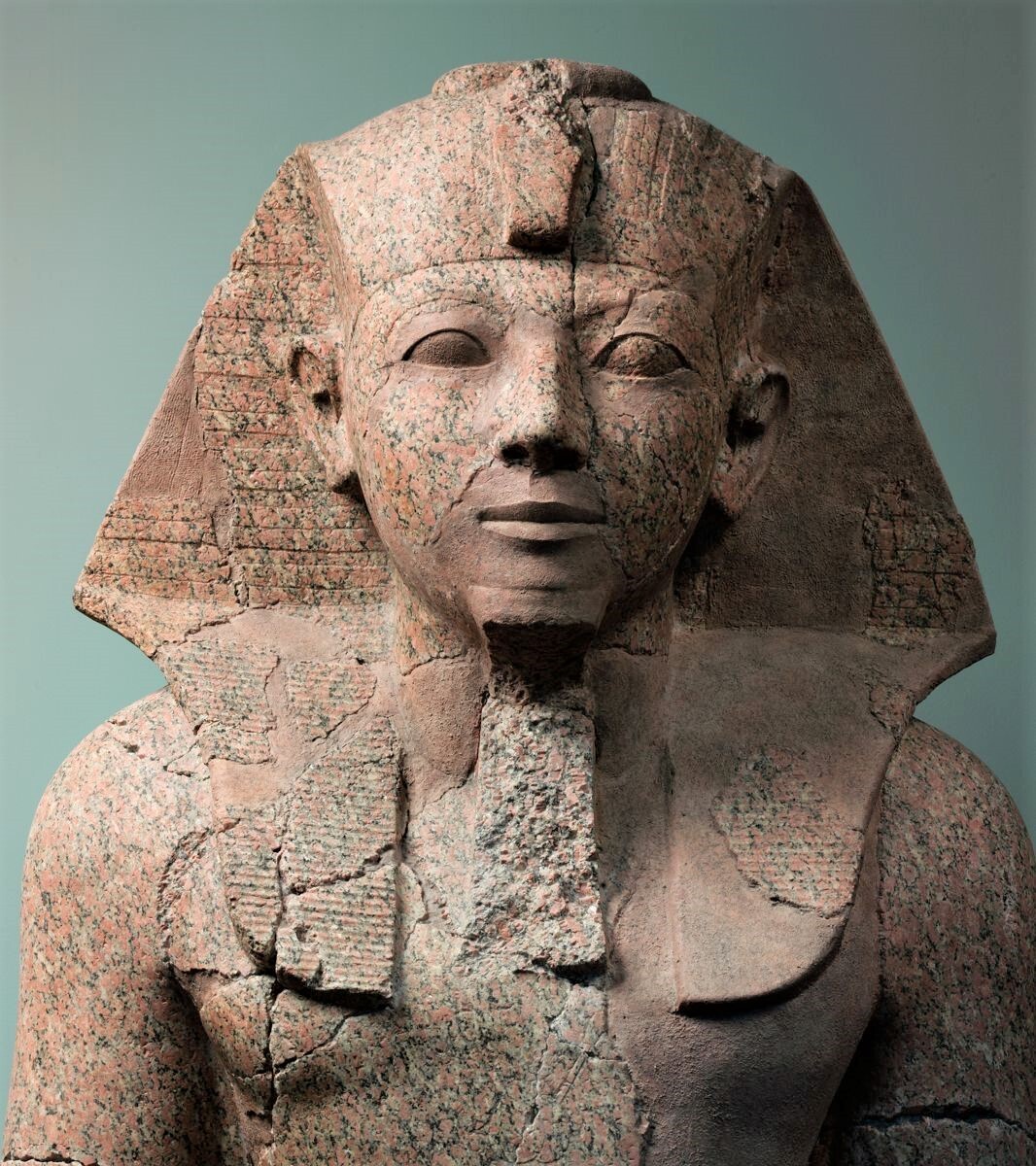
Hatshepsut (1507 BC–1458 BC) was the fifth pharaoh of the Eighteenth Dynasty of Egypt, the second historically confirmed female pharaoh. Hatshepsut was one of the most prolific builders in Ancient Egypt, commissioning hundreds of construction projects throughout both Upper Egypt and Lower Egypt. She also improved the country’s infrastructure. She had one daughter and one adopted son.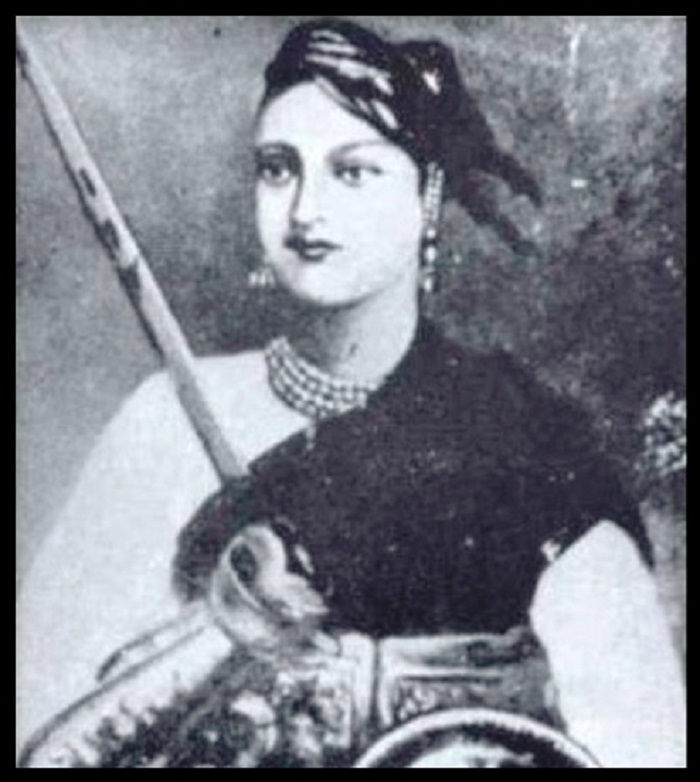
Rani Lakshmibai, (1828 – 1858) famously known as ‘Jhansi Ki Rani’, was one of the leading warriors in India’s First War of Independence. Also known as the Rani of Jhansi, she died fighting British colonial rulers near Gwalior in a place known as Kotah-ki-Serai. She was one of the first women freedom fighters of India who revolted against the British in 1857. She had two children.
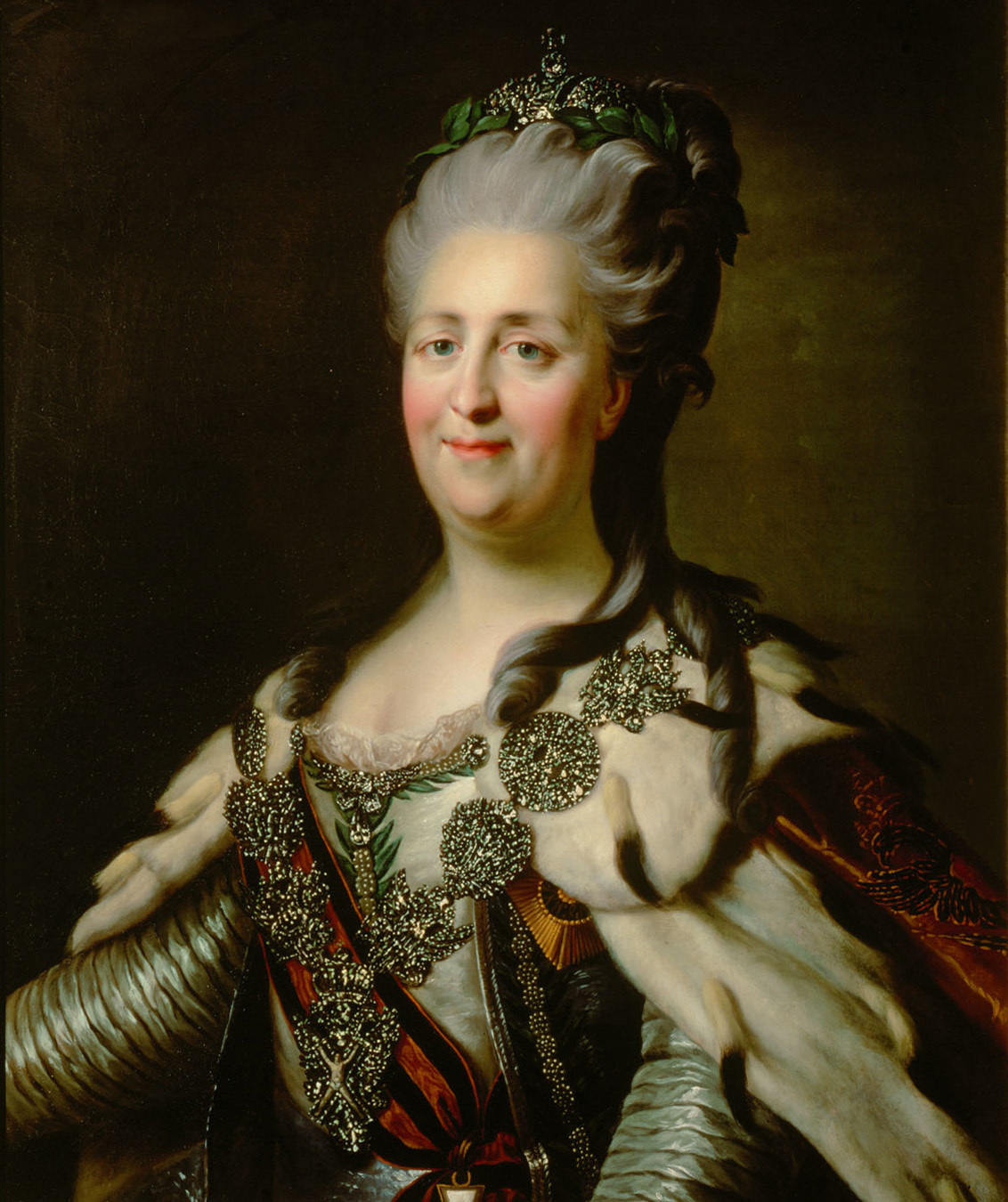
Catherine II, most commonly known as Catherine the Great (1728 – 1796), was the last reigning Empress of Russia and the country’s longest-ruling female leader. She was a patron of the arts, literature, and education. Under her long reign, she led her country into full participation in the political and cultural life of Europe. She championed the arts and reorganized the Russian law code. She also significantly expanded Russian territory. She had two children.
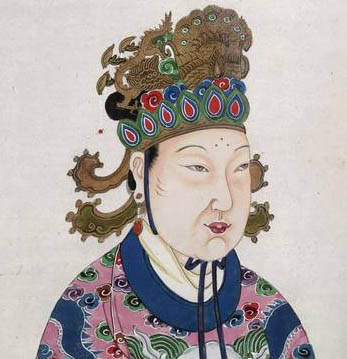
Empress Wu Zetian (624 CE – 705 CE) was the only female emperor of Imperial China. She reigned during the Tang Dynasty and was one of the most effective and controversial monarchs in China’s history. She broadened the system of civil service exams, elevated the status of Buddhism in Chinese society, and waged a series of wars that saw China’s empire expand further West than ever before. She had four children.
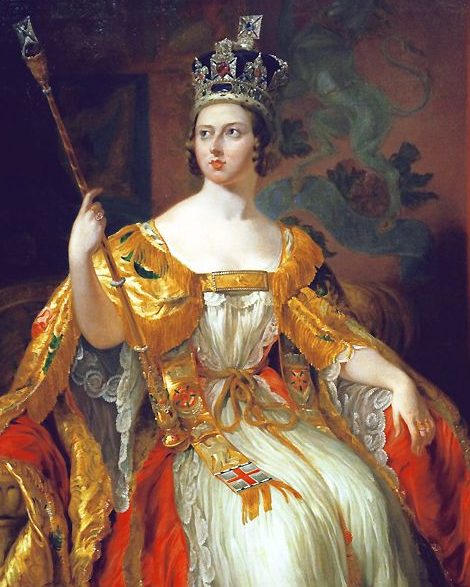 Queen Victoria (1819-1901) was queen of the United Kingdom of Great Britain and Ireland for 63 years. Her “Victorian era” saw the United Kingdom evolve scientifically, politically, culturally, and industrially. She expanded the British Empire to include territories all across Asia and Africa, and democratized the country, including the establishment of the secret ballot, easing of voting requirements, and enacting of wage increases for the working class. She had nine children.

Empress Suiko is known as the first reigning empress of Japan in recorded history (rather than an empress consort), reigning for 35 years. She established Buddhism as the main religion in Japan, and initiated steps to centralize the state under imperial rule. The most famous of her accomplishments was the Seventeen-article Constitution, Japan’s first constitution focused on the morals and virtues of government officials. She had seven children.
After all the heavy metal of the past few posts, it’s time to smile again. Here are some of my past blogs that may tickle your funny bone. Follow the links for more.
Always make room for a smile.
Silence is not the absence of something but the presence of everything.
~ Gordon Hempton
Frank Moth creates digital collage art – mainly human-centered – from a distant but at the same time familiar future.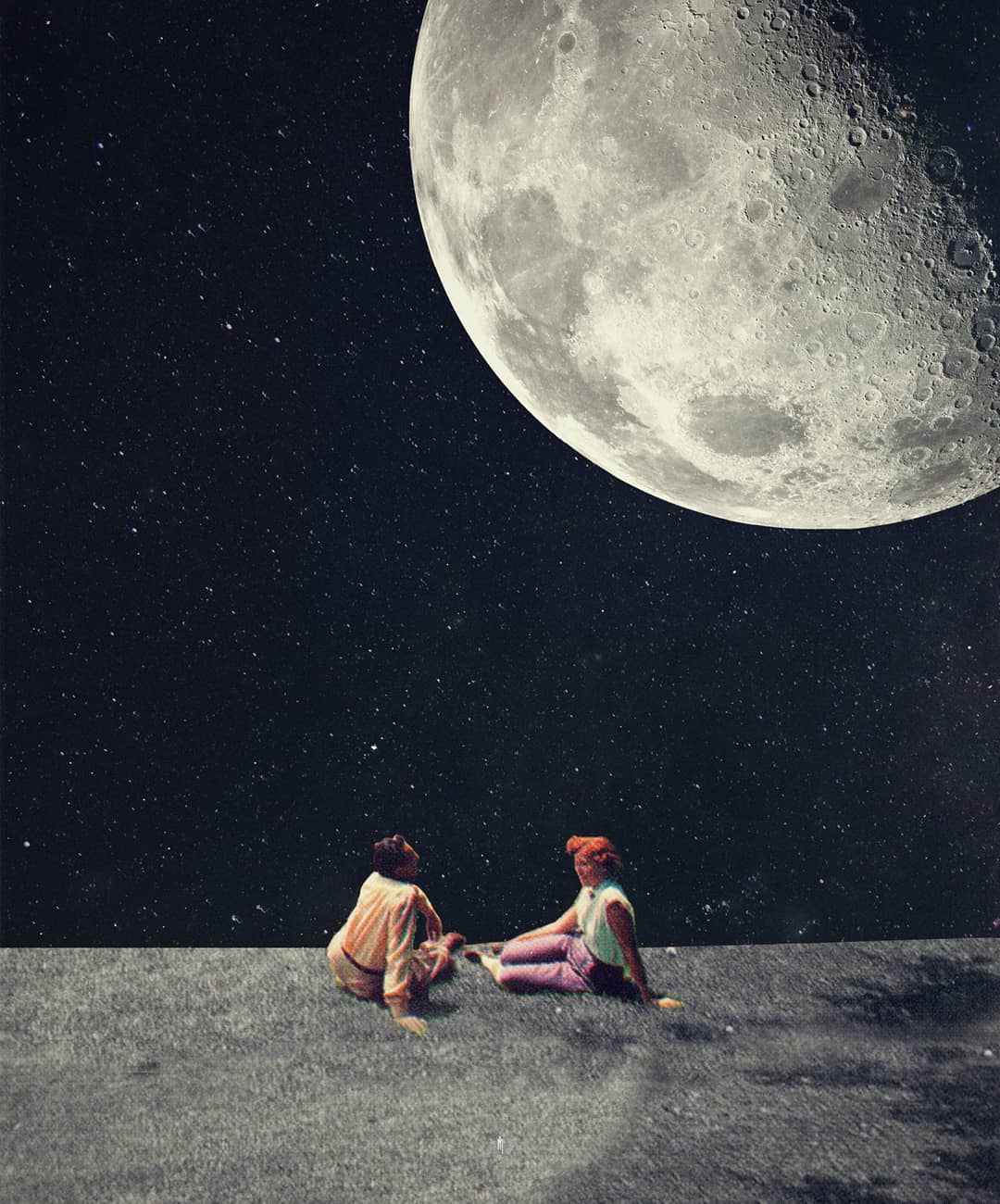 Moth makes digital collages and compositions with specific, distinctive color palettes, in a critically acclaimed style that is immediately recognizable.
 Frank Moth is actually two people: a soon-to-be doctor and a former editor.
 The main person behind Frank Moth has been designing for several years as a hobby and under another name.
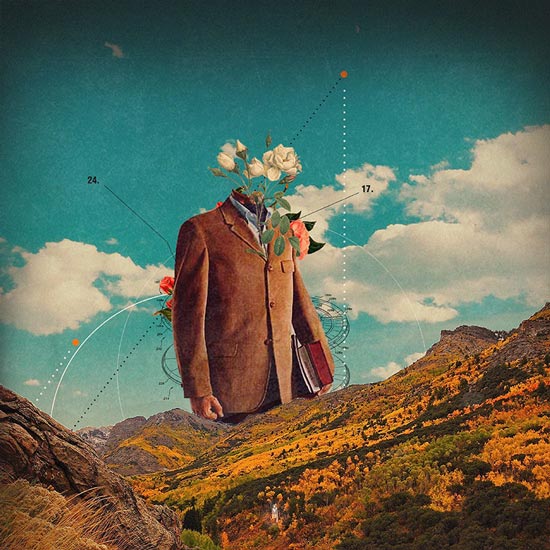 This enigmatic duo creates magical collages, balancing between what’s real and unreal, to give us a true feast for the eyes.
 Calling their art nostalgic postcards from the future, they create dreamlike compositions with a hint of romance and a touch of 60s vibes.
 Their art creates dialogues between different, distant worlds, irreconcilable styles, and unthinkable ideas.
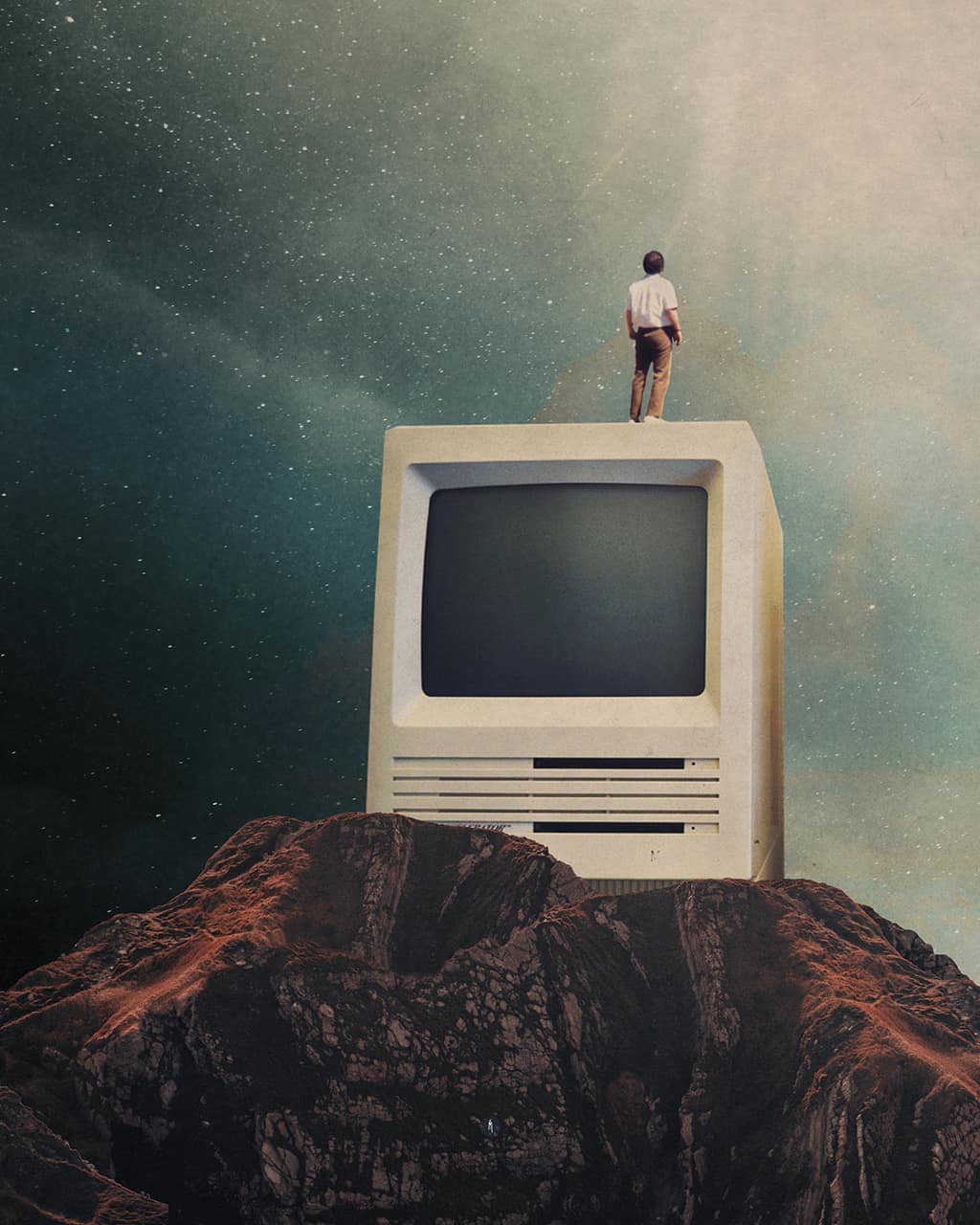 Their art is creative, fun, and imaginative. Even if one is really two.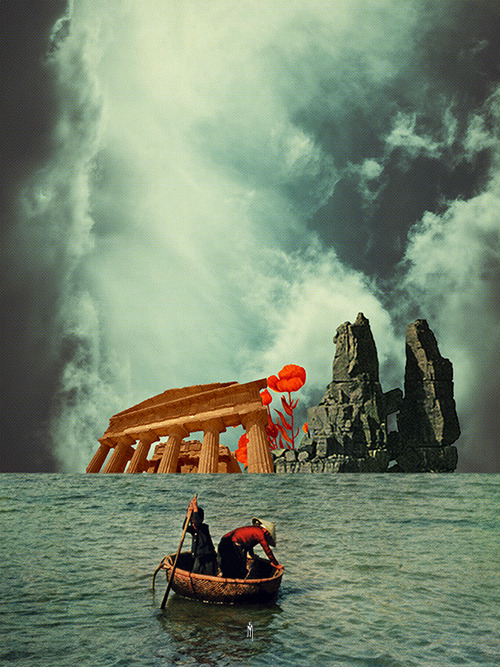
More of Frank Moth‘s creative art can be found at https://frankmoth.com/.

Back where I come from there are men who do nothing all day but good deeds. They are called phila… er, phila… er, yes, er, Good Deed Doers.
~ Wizard of Oz






If you are always trying to be normal, you will never know how amazing you can be.
~ Maya Angelou
Emily Kame Kngwarreye (or Emily Kam Ngwarray) (1910 – 1996) was an Aboriginal Australian artist from the Utopia community in the Northern Territory of Australia.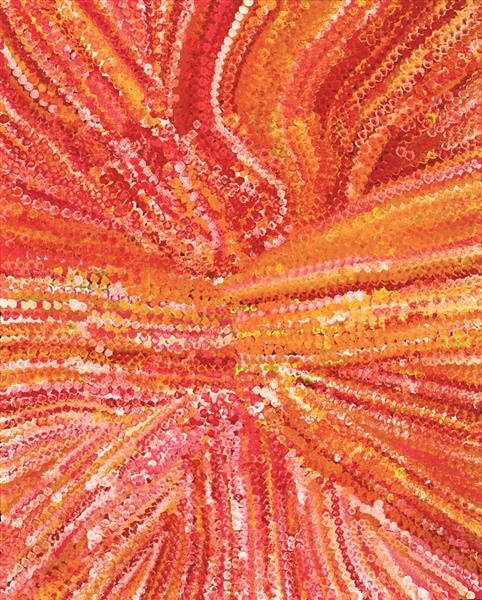 She is one of the most prominent and successful artists in the history of Australian art.
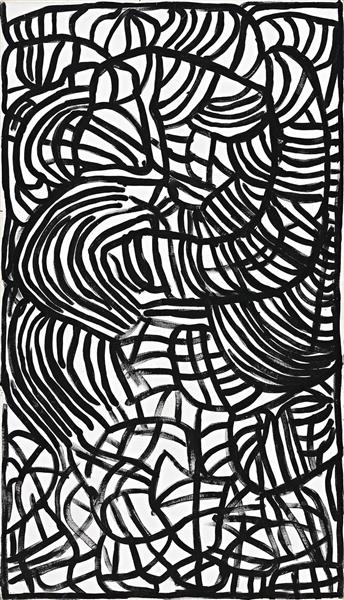 Her remarkable work was inspired by her cultural life as an Anmatyerre elder, and her lifelong custodianship of the women’s Dreaming sites in her clan Country, Alhalkere.
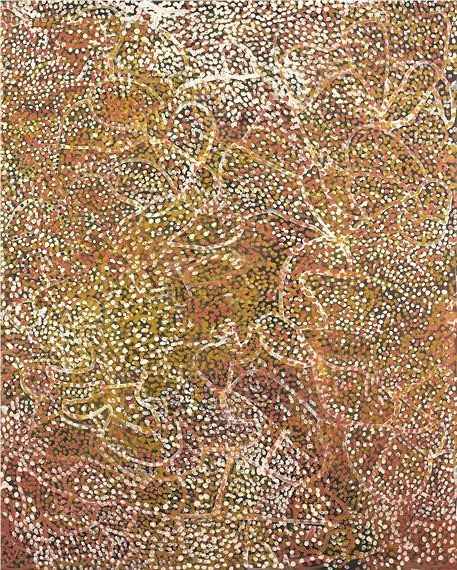 Kngwarreye began painting on canvas in her late seventies after decades of ritual artistic activity and batik fabric painting.
 Unlike most desert painters at the time, Kngwarreye did not use stylized representations of animal tracks or concentric circles in her designs.
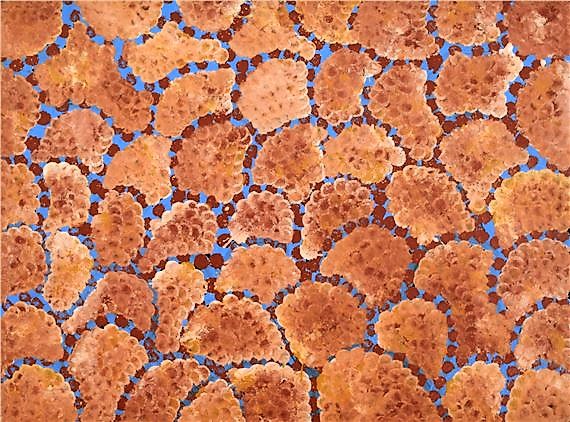 Instead, she employed richly layered brushstrokes or dabs throughout her abstract compositions.
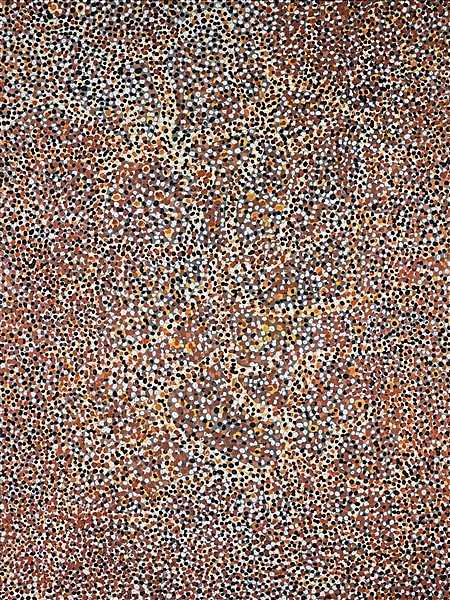 Her free handling of paint using various implements, keen sense of color, and dynamic compositions earned her international fame.
 It was in Alhalkere that the essence of her being resided, and it was her Dreaming that was the source of the creative power, of her knowledge.
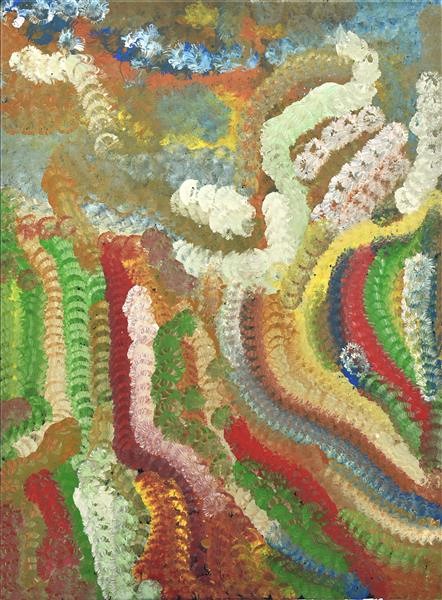 So profound was her identification with Alhalkere that it infused her life and her belief system, and governed her kinship relations and connections with other people.
 More of Emily Kame Kngwarreye‘s amazing original works can be found at https://www.wikiart.org/en/emily-kame-kngwarreye and https://artguide.com.au/art-plus/emily-kame-kngwarreye/.
 I wrote a poem the other night.
A painful one.
I wrote it in here, in my blog space. Out of the blue. Out of the black.
I didn’t know if I was going to post it — I still don’t. It’s not the kind of melody most followers and friends want to hear.
According to verywellmind, “People who have experienced emotional trauma, physical violence, domestic abuse, anxiety, depression, and other psychological issues can benefit from expressing themselves creatively.
“People do not need to have artistic ability or special talent to participate in art therapy, and people of all ages including children, teens, and adults can benefit from it. Some research suggests that just the presence of art can play a part in boosting mental health.”
I do believe in the Arts as therapy. Therapy for loss, for pain, for confusion. In more severe cases, Art Therapy should be under the care of a trained professional, for there may be deeper issues than just sadness or loss.
But for me — for most of you — an endless doodle or coloring in an adult coloring book (gel pens and books or some great ones online) is just the therapy we need.
We all need to vent. To unfocus. To focus. To let go. To hold on.
Oh, it’s all so confusing.
I don’t know if I’ll post my poem in the future, but I know it’s here. Waiting. Thinking. Debating whether or not it should be shared with people I hardly know.
Tomorrow is another day. Another chance.
Another poem.
Stephanie Law‘s images dance along the boundary between dream and reality. She delves into the delicate language of allegory, exploring mythology in watercolors and inks.
 Early on, Law’s career moved through the illustration and the gaming world, but in recent decades she has focused more on her own delicate and yet intricate paintings.
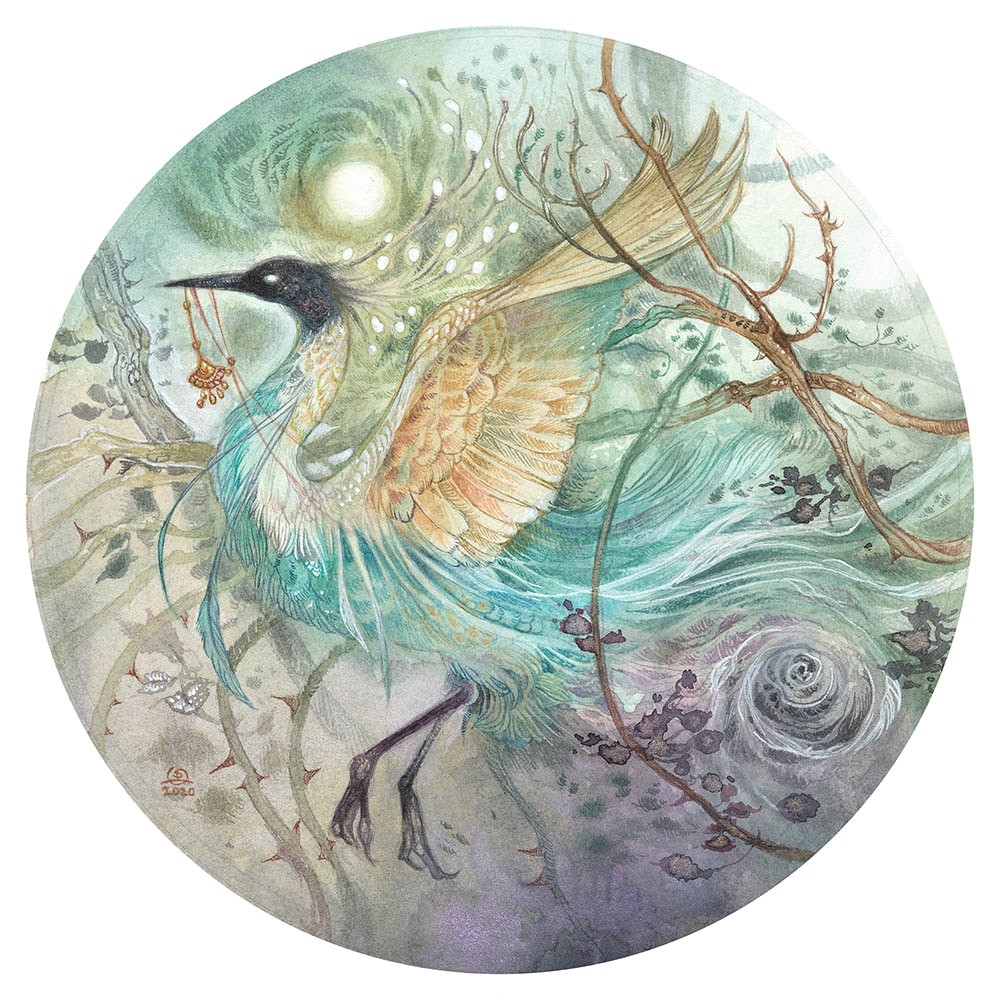 She interweaves texture, watercolor, gold and silver leaf, and ink to create intricate layered pieces with resin and custom designed frames.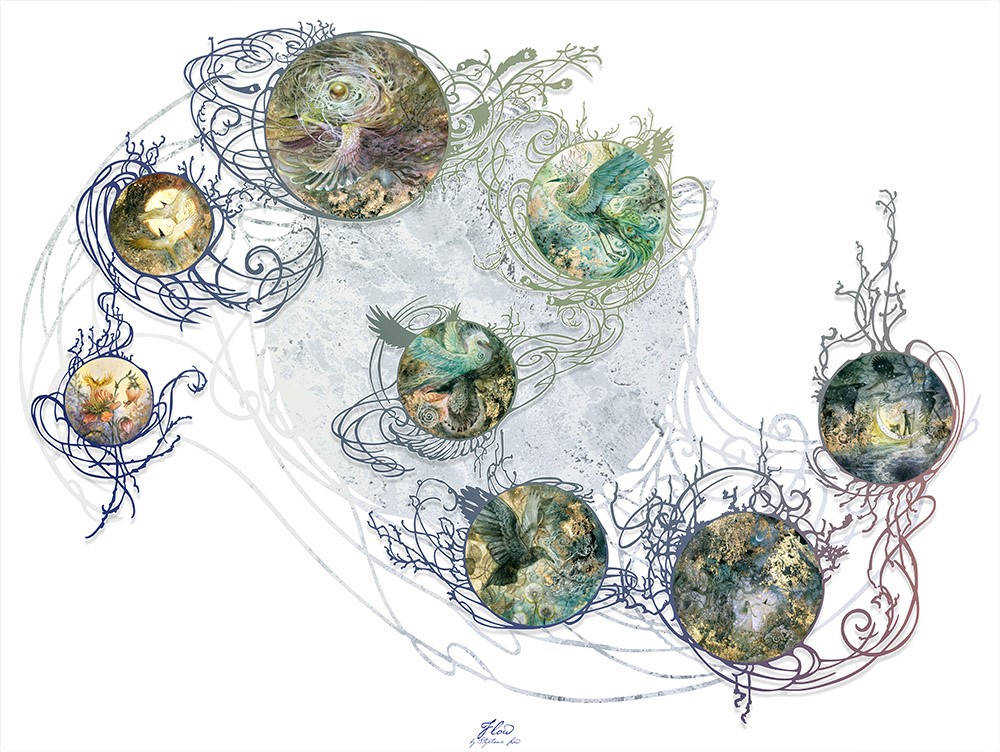
Her art journeys through surreal other worlds, populated by dreamlike figures, masked creatures, and winged shadows. Her paintings are delicate and soft, full of magic and mystery and simple representations.
 Law has been a dancer for almost two decades, and her experience of how the human body moves and emotes connects to her art in the most basic of ways.
 Look close and find fairies, birds, cats, dragonflies, and all kinds of mystical creatures in her soft pastel colors.
 More of Stephanie Law‘s magical artwork can be found at https://shadowscapes.com/.
20 years from now, you will be more disappointed by the things you didn’t do than by the ones you did do. So throw off the bowlines. Sail away from the safe harbour. Catch the trade winds in your sail. Explore. Dream. Discover. ~Mark Twain
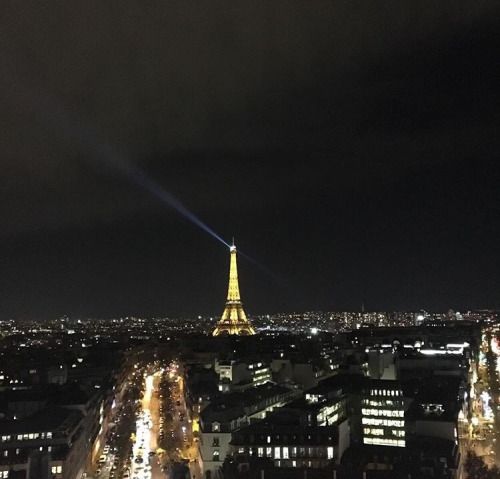 Last night and again this morning I started doing research for my second book on “visiting” Paris.
I have written the outline, the general story, and now it’s a matter of researching where (physically) to start and where (physically) to end my story.
It’s not as easy as closing your eyes and pointing to a city on a map.
I want the story to make sense. I want the story to sound real. I mean, no one would wonder if I drove a car from A to B, or landed in A and drove to B, but I know me. I wouldn’t drive from A to B nor is there an airport in A or B.
Plus — I want to suspend belief until I start chatting with Colette or Alexander Dumas (or someone just as ghostly).
I just don’t remember the research being this hard the last time around.
Do you do research for your projects? No matter if it’s painting, writing a story, or building a garden, do you do your homework first? I find I have to — I hate projects that are all baloney and no substance.
I find that the more you “know” what you’re talking about, the more you can turn reality into fiction and back again. Only when you know how things work or where things are can you adapt the truth to your own version of reality.
My problem is multifold.
I want to go to Paris one day, but even if I did visit the city of love it wouldn’t be the way my character is visiting it. So it’s hard to go to places she would go rather than places ~I ~ would go or places I would actually go with a partner.
I love the idea of these mini chats with famous dead Parisians, but I like to take direction of the conversation from real quotes from the ghost in charge. But what if there are no quotes available for famous Frenchmen? Am I being too picky?
I often get headaches of I spend too much time on the computer. My eyes need a break. But how can I write, how can I do research, without my eyes?
The answer to all these dilemmas is to just take my time. Research one thing at a time. Write one section of the story at a time. Stop worrying about the story’s next day and next day and next day. Pay attention to where I’m at at the time and give it my all.
Isn’t that how you create?
We often bite off more than we can chew. And nobody can understand us with a mouthful of mush.
Take your time. Plan. Organize. Then go crazy. Then stop. Breathe. Repeat.
And, if you need to, get a new pair of glasses.
The best things in life are free. The second-best things are very, very expensive.
~ Coco Chanel
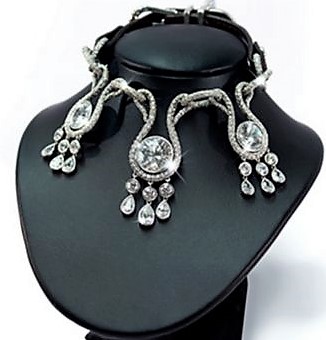
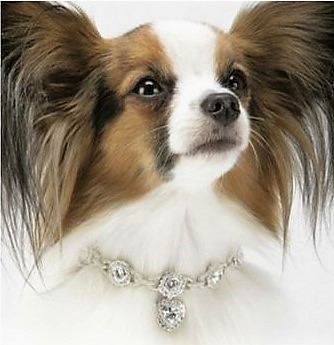
Amour Amour Dog Collar, 7-carat, D-IF, brilliant-shaped center diamond, 1,600 hand-set diamonds, 18-carat white gold, crocodile leather, *$3.2 million
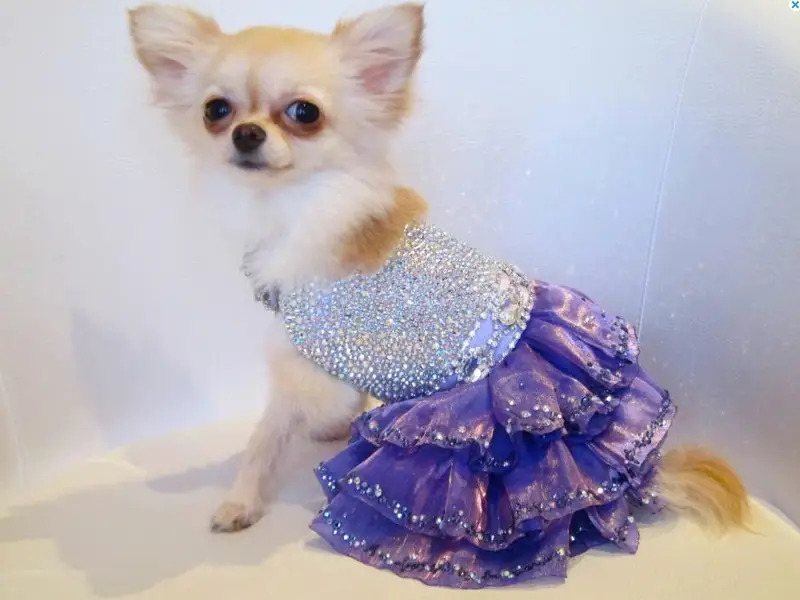
KO-Couture Dog Tutu, hand made, 4,000 Swarovski crystals, *$6,000
 Swarovski Crystal Dog Bath, 19th-Century clawfoot style, hand set crystals, *$6,995
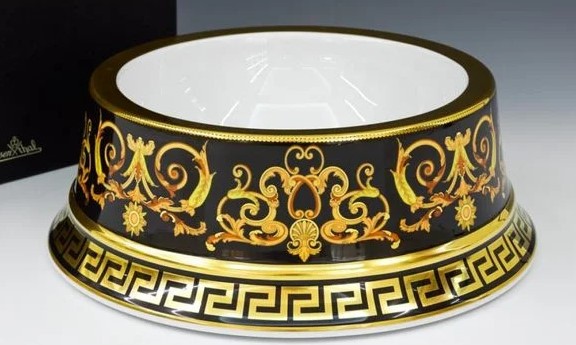
Gianni Versace Barocco Pet Bowl, fine porcelain, ornate gold and black scrollwork, 22 carat gold leaf edging and accents, *$754
 Hello Kitty Crystal Pet House, 7,600 crystal beads, cushion/pillow in the shape of Hello Kitty’s face, *$31,660
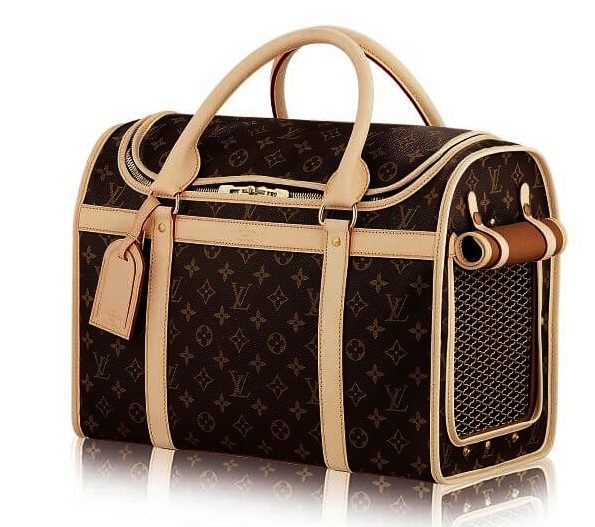 Louis Vuitton Dog Carrier, signature monogram canvas, brass S-lock, natural leather handles, zinc dish for food or water, air vents, and space specially reserved for pet owner’s photograph, *$58,000

Jonathan Adler Acrylic and Brass Dog Bowl Set, acrylic with polished brass corners, *$600

Roberto Cavalli Track Suit, *$1,200
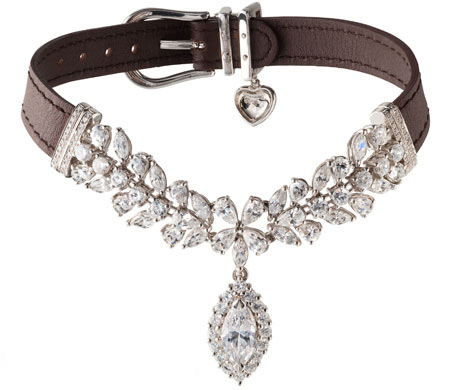 La Jeune Tulipe Dog Collar, 1.52-carat marquise-cut diamond, marquise-, pear-, and brilliant-shaped smaller diamonds, *$150,000
 The Couture Domed Pavilion Dog Bed, fine imitation crocodile skin on the outside and handmade, embroidered silk on the interior linens, *3,900
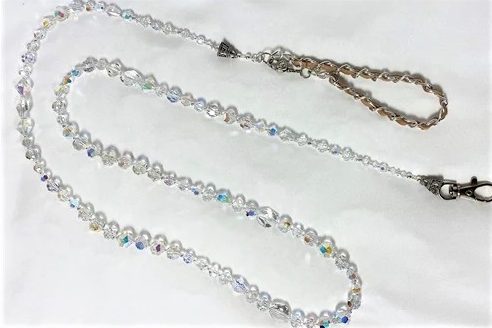 Crystal Aurora Borealis Leash, Swarovski precision-cut faceted crystal beads, platinum tone electroplated brass chain handle, woven genuine leather, *$495
* Prices are approximate.
 You all know that I absolutely LOVE my Sunday Evening Art Gallery. Through the years I have found one fantastic artist after another, one fantastic movement after another, and one interesting interpretation after another. I truly hope you get as much enjoyment perusing through the Galleries as I do creating them.
But, you may ask … after posting unique and surreal art every week, what are your favorites?
I’m so glad you asked!
Here, for your art walk pleasure, are some of my favorite items (in no particular order) from some of my favorite Galleries over at the Gallery itself (and, mind you, this is the most difficult thing I’ve done all week!)
It was amazingly difficult to choose so few of my favorites. Every artist was chosen because they are my favorite. Take time and wander through the gallery some time. Tell you friends! Your groups! Your best friend’s cousin’s friend!
Love you all …
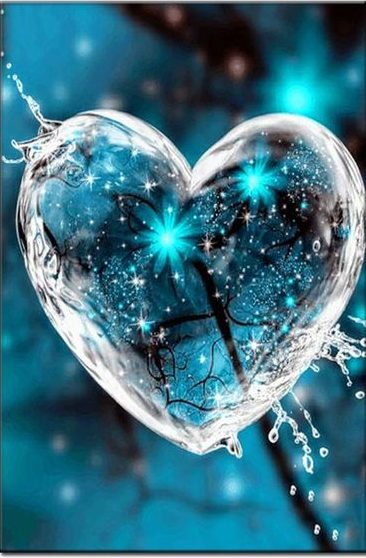
In a way, you are poetry material; You are full of cloudy subtleties I am willing to spend a lifetime figuring out. Words burst in your essence and you carry their dust in the pores of your ethereal individuality.
~ Franz Kafka
Japanese artist Naoto Hattori imagines small fluffy animals with healthy doses of fantasy and some unnatural hybridization. The painted creatures often feature round heads and disproportionately large and reflective eyes.
At once adorable and unnervingly surreal, the fantastical creatures seamlessly meld the myriad textures and colors found in nature into unusual hybrids. They’re often fluffy, equipped with horns in surprising spots, and bear eyes so inordinately large and glassy that they reflect full-scale landscapes.
 These acrylic paintings are small, typically measuring less than 3 inches by 3 inches when unframed.
 The artist’s style has been labeled as pop surrealist, but Hattori says it’s just what he sees in his mind.
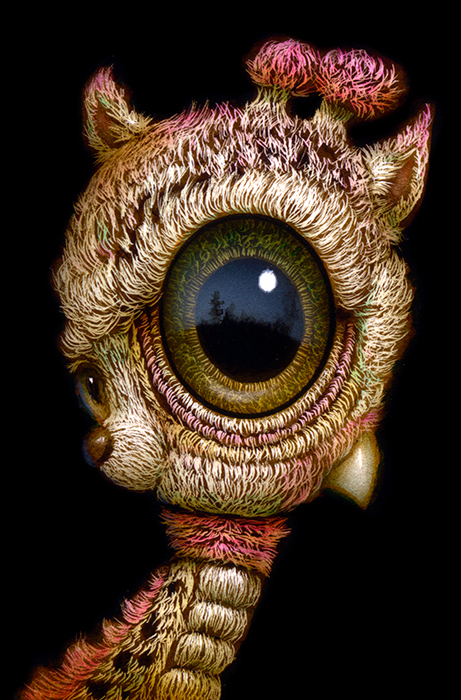 Of his work, he says: “My vision is like a dream, whether it’s a sweet dream, a nightmare, or just a trippy dream. I try to see what’s really going on in my mind, and that’s a practice to increase my awareness in stream-of-consciousness creativity.
  “The creatures in the paintings are avatars for entering the world of my imagination. The eyes feel like an entrance to the world of visionary memories.
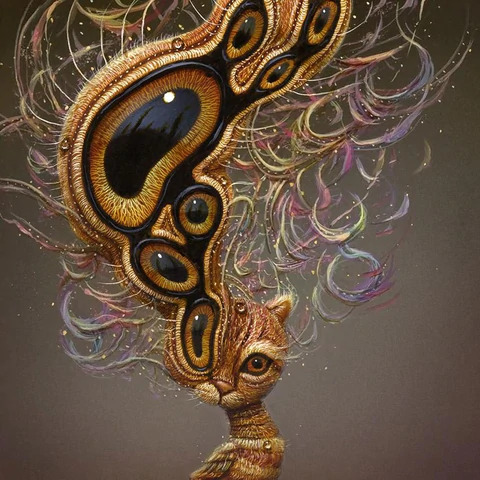 “I often paint a piece which visualizes myself as a hybrid creature entering the visionary world,” Hattori explains.
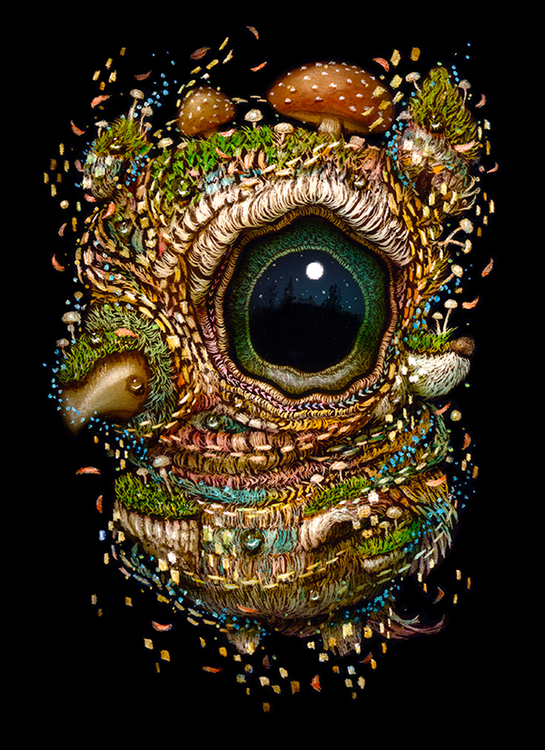 More of Naoto Hattori’s wonderful surrealistic artworks can be found at https://www.naotohattori.com/.
 S-A-T-U-R-D-A-Y night!
S-A-T-U-R-D-A-Y night!
Gonna keep on dancing
To the rock and roll
On Saturday night, Saturday night
Dancin’ to the rhythm
In our heart and soul
On Saturday night, Saturday night
Bay City Rollers, 1973
Today’s thoughts in the clouds are more of a shake, rattle, and roll of the brain in general and memory in particular.
I was wondering — how important was Saturday night to you? Moreover, how important was Saturday night to you when you were 16, 17 years old?
I heard this song on an oldies station the other night. I happened to be driving home, the sunset orangy and red and beautiful, the weather on the tip of being warm. And I thought about how special Saturday Night was once upon a time. Especially to young dreamy girls. (Maybe guys too — I never asked!)
The generation 10 years before me sighed and danced to All I Have to Do is Dream by The Everly Brothers and hoped and prayed someone would ask them out on a date to a soda shop or drive-in or record shop. Having a date on Saturday night was very important to one’s ego and status back in 1958.
Back then, the ultimate proof of a successful Saturday night was “going steady.” Tokens of that depth of commitment were getting pinned, wearing your boyfriend’s letterman sweater, or exchanging school rings.
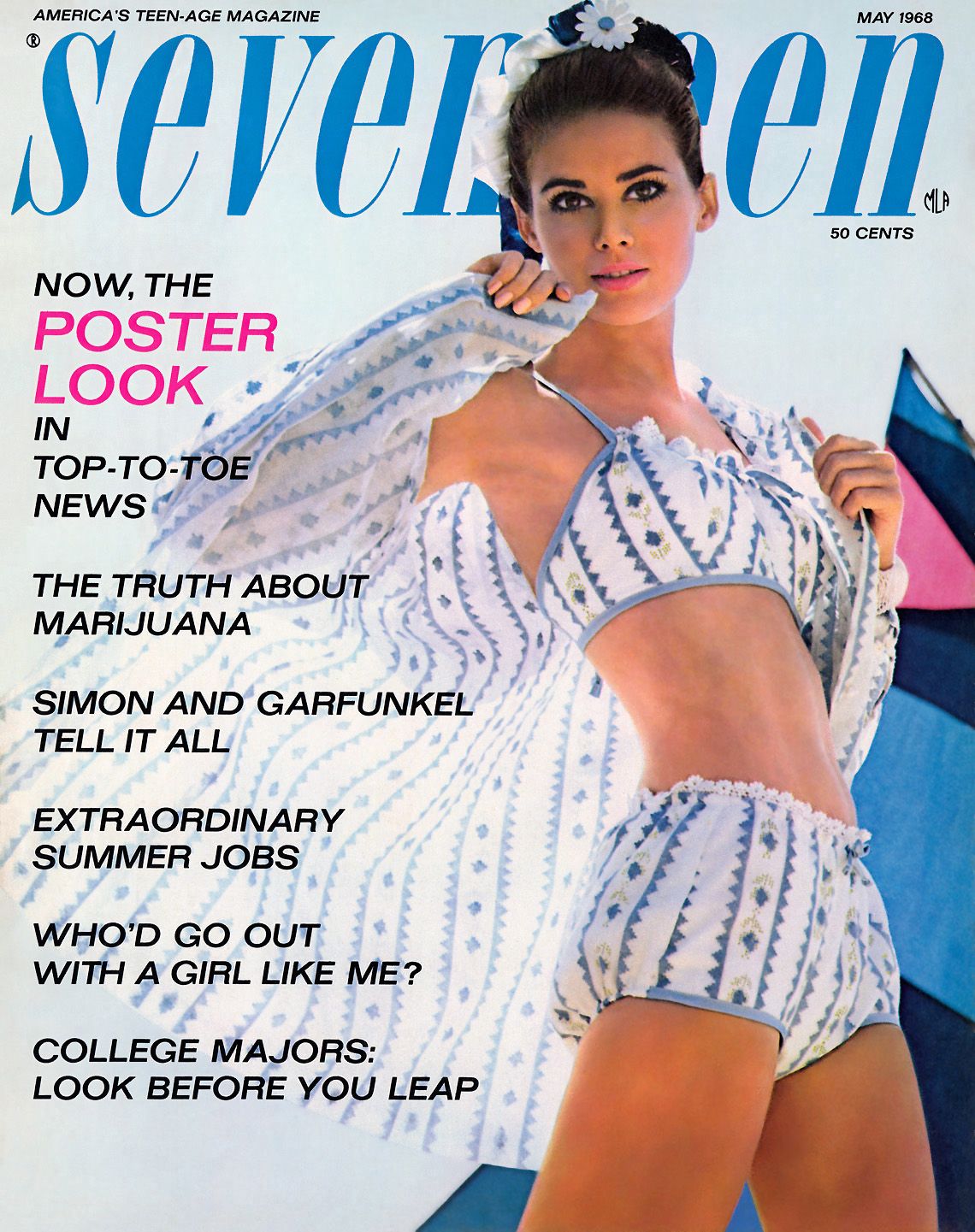
My generation of 1968 was not much different. Being pinned or exchanging high school rings was still important. I remember going steady during part of my high school life, and always needing to do something on Saturday nights. I was dreamy eyed listening to Love is Blue by Paul Mauriat and spent hours either talking on my pink princess phone to girlfriends or reading Modern Bride or Seventeen magazines.
This song got me to thinking. The Bay City Rollers were sooooo excited to go out on S-A-T-U-R-D-A-Y night. Even in 1973 that was the highlight of the week! The ultimate goal! The pièce de résistance!
Time moves forward. Things change. Times change. Girls and women change. And I wondered what dating life was like for girls 16-17 years old back in 1988. Or 1998. Or even 2008.
I dunno — even though my late high school days were an emotional mess, I miss having a special date night of the week to plan for and to look forward to. Not that I still don’t go out on Saturday nights — maybe I just miss the innocent anticipation.
Was Saturday night a big deal to you? Is it a big deal these days?
I would love to hear your stories. Your experiences. Your thoughts.
♪♪ Blue, blue, my world is blue …. Blue is my world now I’m without you ♪♪♪
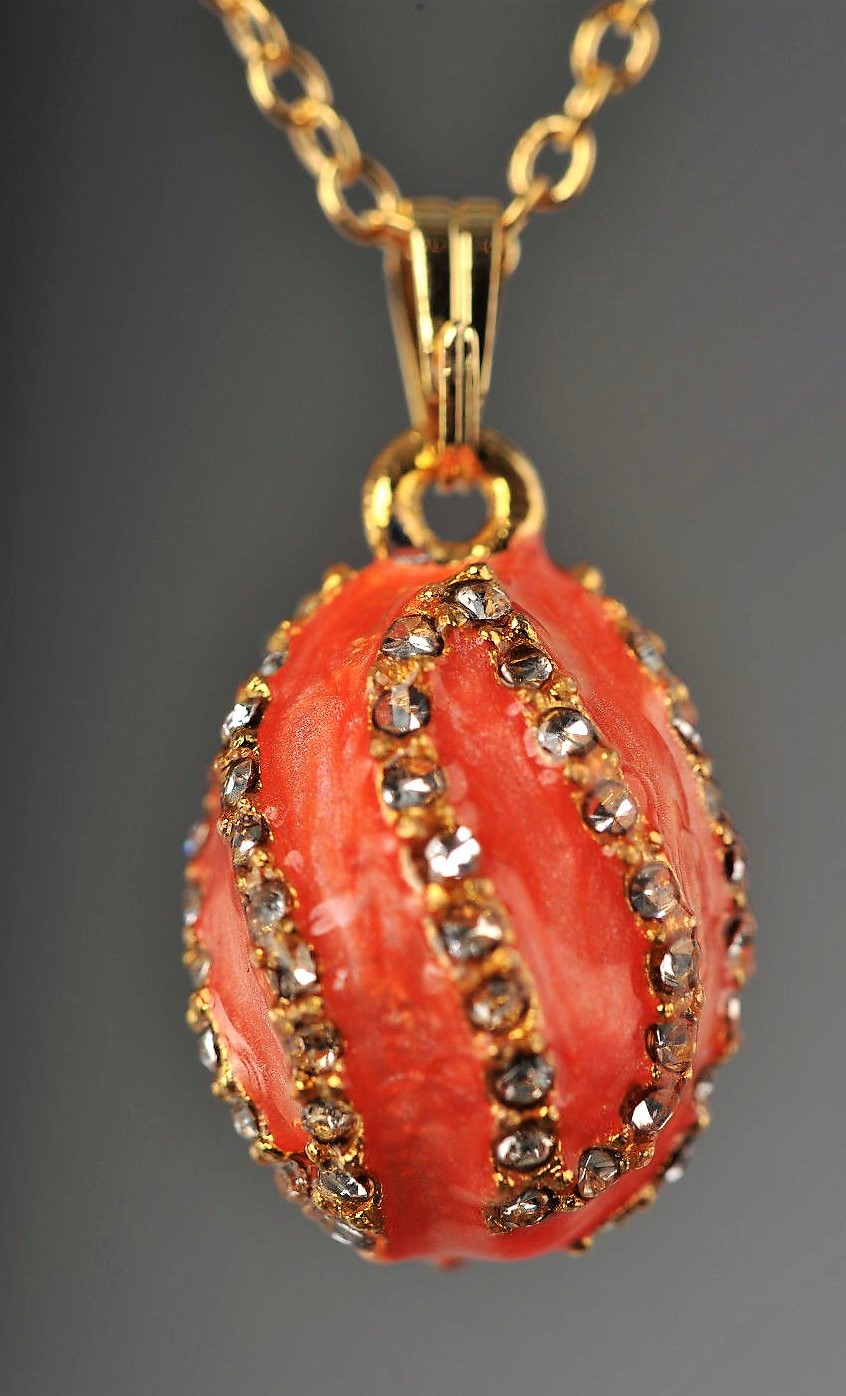
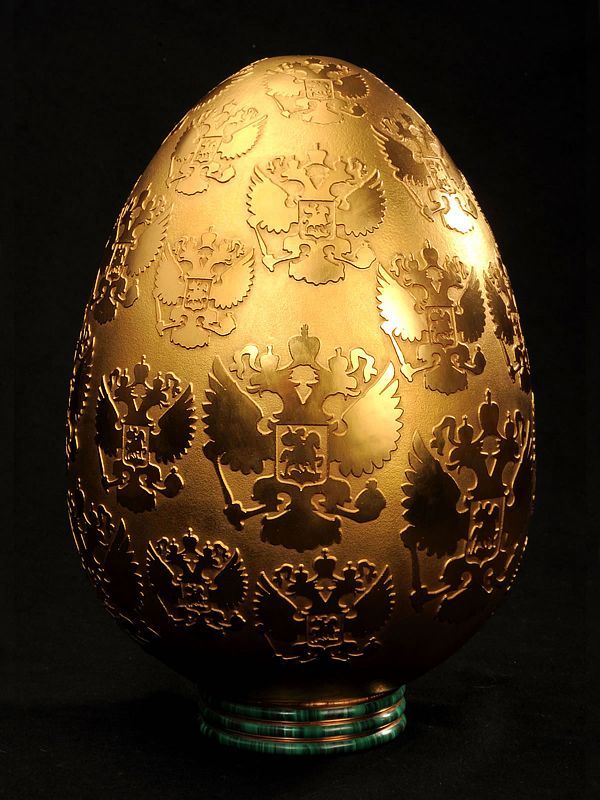
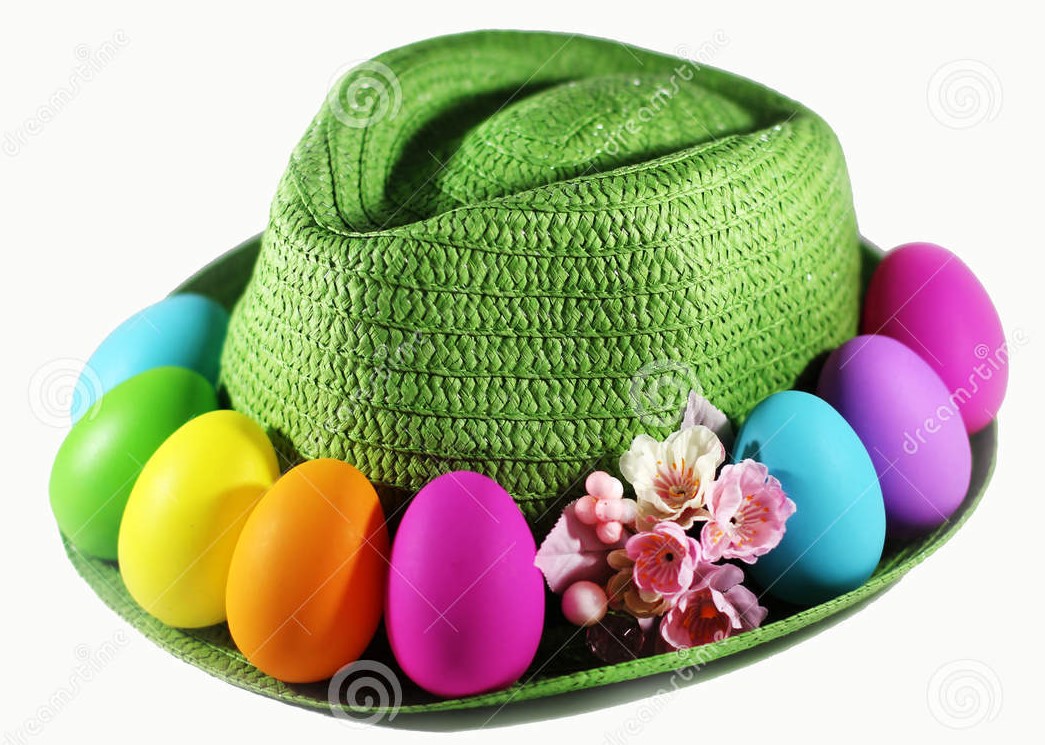
The world is full of hopeful analogies and handsome, dubious eggs, called possibilities. ~ George Eliot








Sometimes there is no darker place than our thoughts, the moonless midnight of the mind.
~ Dean Koonz
 Okay. Okay okay okay.
I haven’t written anything on my latest novel. I have barely made any Angel Tears. I haven’t read much of my book about the Titanic nor started my sparkly bead tapestry.
I’ve actually been busy redirecting, rearranging, repainting and re-carpeting my bathroom, closet, and bedroom.
That’s not a big deal.
Well, it is.
Everything I own from two of those rooms are in three big plastic containers or in a big huge snow-like pile in another room.
Twenty-some years of clothes, jewelry, unicorns, jewelry boxes, hats, colognes, TV remotes, cards, beads, used football tickets, and more.
Now that I have brand new carpeting, a new shower and cabinets in the bathroom, closet shelves, black-out blinds, and two less pieces of furniture, I’m lost.
I am fortunate. Of this I have no doubt. This is my hubby and my last hurrah before he retires in a year. What will be here will be it. My retirement in paradise will be parenthesized by what we are able to do these months.
But these are new colors for me. New style. Sanded and re-stained furniture. Even plants in the bathroom.
What am I supposed to do with all these leftovers?
I already reorganized my bathroom drawers. Got rid of tons of stuff, bought little clear bins to organize, even learned how to fold bath towels a new way so they’d fit in the new cabinet.
But the things in these bins.
Like the things still lurking in my breakfront in the livingroom and on the shelves in my work room downstairs.
Memories, souvenirs. Slips and scraps of the past I’ve kept all these years. Chicago Bears tickets, games I went to with my sons. Jewelry I wore when I worked. Cards from my grandkids. Hair clips and party beads and little green tiaras and a sun hat with bling I made 15 years ago because it was “the” thing.
Unicorn statues out the gazoo. A unicorn rug my late mother in law made for me to hang on the wall. A cool street painting from Las Vegas we picked up 25 years ago. A bell ringing tapestry from the Renaissance Faire when I used to go.
So many things that bring back so many memories.
Yet I’m doing my best to downsize.
I have done a lot of that throughout my house this past year as I’ve remodeled and repainted rooms. I have cleaned out three hoarder houses in my life and do not want my kids to have to go through that with my junk.
How do I decide what to keep?
How do I decide what to give away?
How do I decide what to give to Good Will?
A bunch of said items came from Good Will once upon a time. That world is a treasure trove of helpful items, wall paintings, water pitchers and plates for under plants and wrought iron planters.
But I digress.
This will be the hardest thing I’ve had to do in a while. And memories are a sensitive subject in my life at the moment, too, if you remember. Make them, keep them, I always say.
I have told myself that I should give a few things to the girl grandbaby, but not too many. She doesn’t need an old granny’s junk in her bedroom at four years old. I should ask a few people I know if they would like this or that, knowing that they would.
The remainder?
Send them with love and kiss back into the world so they can bring joy to others. I mean, who couldn’t use New Orleans party beads or pretty bling bracelets and earrings?
Okay — that takes care of three things —
Armando Mariño is a renowned painter, sculptor and installation artist, and one of the most popular Cuban contemporary artists. Born in Santiago de Cuba, living and working in the U.S., Mariño received his art education at the Pedagogical Institute of Arts from Havana, and the prestigious Rijksakademie van Beeldende Kunsten in Amsterdam.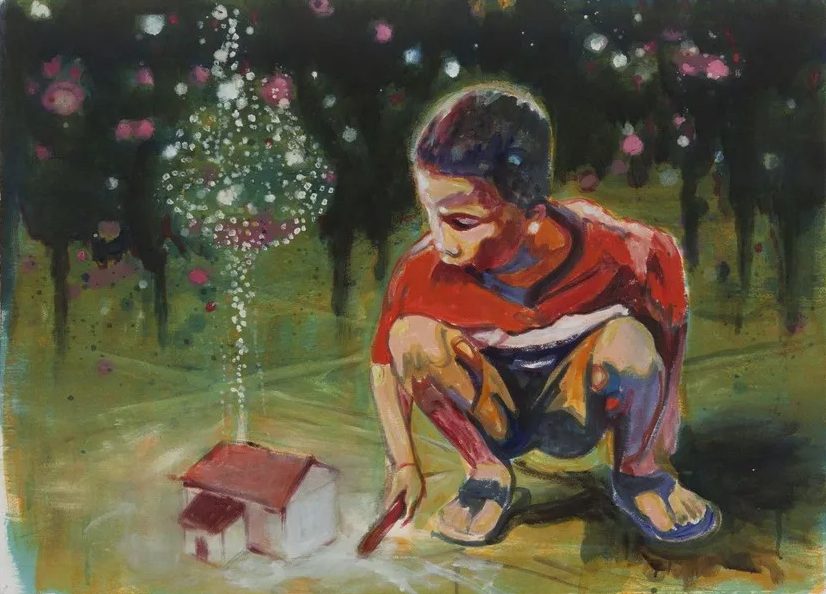
He is widely praised for his mesmerizing works that offer a unique and sarcastic approach to art as a space of power and exclusion.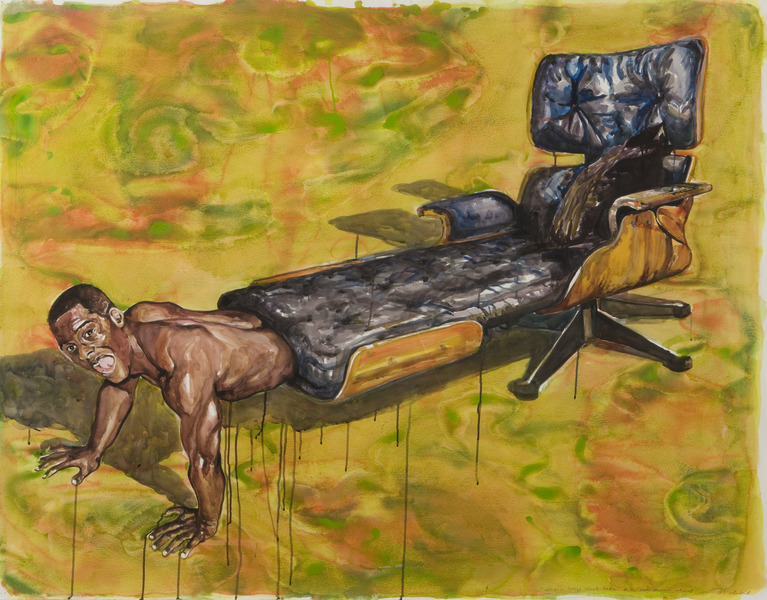 The imagery in Mariño ’s work is usually part of media reports about everyday social issues like refugees, war, economy crisis, and ecology that he incorporates in his art.
Mariño’s paintings are characterized by his distinctive and highly saturated color palette – bright pinks, oranges, greens and yellows that are offset by deep, dark shadows.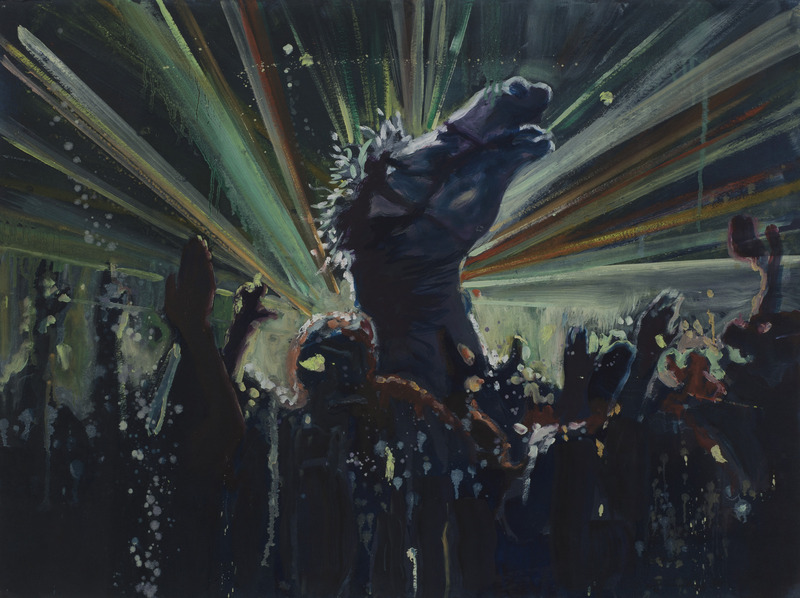
Influenced by periods of time living in the varied landscapes of Cuba, the Netherlands, France and New York’s Hudson Valley, the artist’s large-scale works explore relationships between the figure and the natural environment.
Each of his paintings is build up with multiple layers of a strong, vivid, intense, and fluorescent palette of oil or watercolors.
Indeed, Mariño has described painting as an idea that uses color in order to think.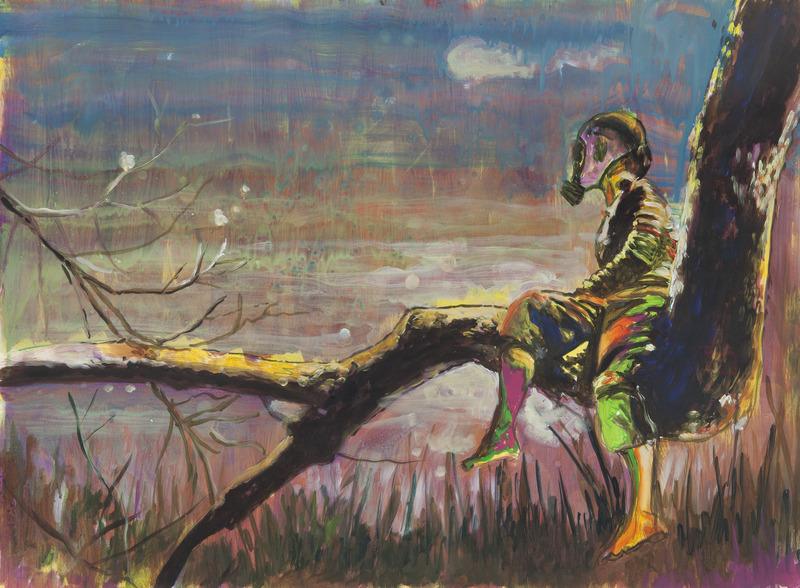
More of Armando Mariño‘s colorful artwork can be found at http://armandomarino.com/ and https://www.widewalls.ch/artists/armando-marino.

I know everything. Just like the Genie. Just Ask Me.
“You know nothing, John Snow.”
Truth is, we all know what we need to survive and that’s about it.
Now survival is a big category. It’s life and death and everything in-between. We know how to wash dishes to get the germs off the plates and water plants so they don’t die in your window. We know how to fix scratches and cuts on little ones’ toes and elbows, and know how to hug someone who just needs a hug.
The rest of the world in-between is all… what’s that phrase … catch-as-catch-can. (This phrase is so old I had to look it up [1833] — I thought it was catcher’s cat can.)
The world can’t be controlled, masterminded, cleaned up, or understood. All we can do is the best we can for ourselves, our families and friends, our neighborhoods, and our little section of the planet.
So back to the beginning nonsense.
I know what works in my world. And many worlds around me. And I’m here this morning to share this knowledge with you.
Most of you, my friends, already know what I’m going to say. I say it all the time.
GET YOUR CREATIVE MOJEY GOING!
Get that Creativity out there!
I hear the gears grinding. Monday mornings are good for that. I myself am going to go take a shower then work on some suncatchers. I have a book about returning to France that I’m really wanting to start writing, and some plants to repot to turn my home into a garden paradise. Oh yeah … and those bulbs and lavender need planting…and the bead art my daughter-in-law gave me …
I hear YOUR gears grinding too. Get started today!
“You do know something, Jon Snow!”
Ivan Khlebnikov (1819–1881) was born in St. Petersburg, Russia, a son of a diamond and jewelry merchant. Khlebnikov’s remarkable career began in 1867, when he opened his own jewelry firm, Ivan Khlebnikov Sons and Co. in St Petersburg.
 His factory of diamond, gold and silver jewelry was well equipped with the latest technology for all kinds of work, and its products were considered one of the best in Russia.
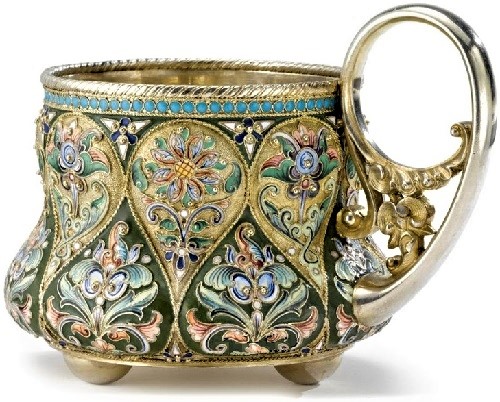 His work reinvented traditional Russian style and folk art through originality and a colorful palette.
 Khlebnikov became known at the World Exhibition in Vienna in 1873, where by the serious consideration of experts, he earned two medals.
 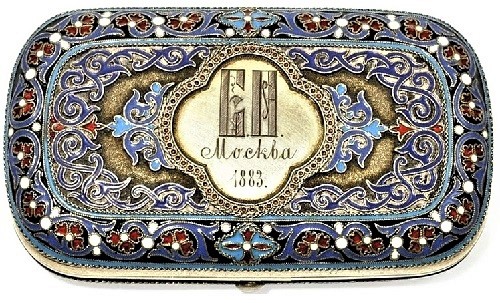 By 1882, around two hundred artisans were employed at the firm, and Khlebnikov also established an in-house school of design and sculpture for students.
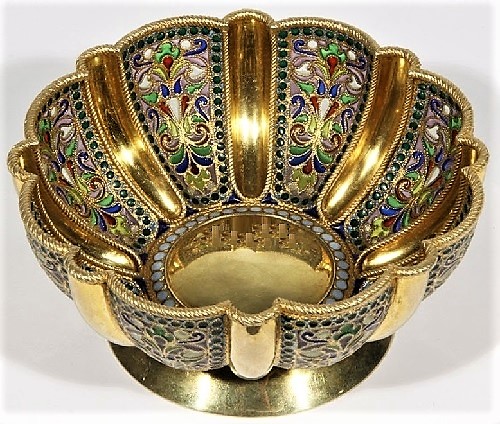 Two of Khlebnikov’s most significant projects were the renovation of the Palace silver dinner sets, and the decoration of Christ the Savior, for which his firm produced nearly fifty religious objects such as chalices, incense burners, icon lamps and more.
 Khlebnikov’s more commercial work for the mass market centered largely around dinnerware and jewelry.
 More of Ivan Khlebnikov’s amazing work can be found at .https://vsemart.com/russian-jeweler-ivan-khlebnikov/ and other sites across the Internet.

This is what Creativity is all about.
This is what friendship is all about.
Graphic Design Artist and Photographer John Lemke has been a friend of mine since I started my last job 19 years ago. He was a catalog artist, I was a catalog coordinator. Between us (and a bunch of other people) we made catalog magic. He laid out the pages, I proofread the pages.
Both of us have gone on to bigger and better things.
This includes Art.
I highlighted John’s graphic artworks back in 2015 and his photography in 2021. I also published a boatload of his work in the Gallery in August 2015 and December 2021.
John is a friend but also a phenomenal artist. His work touches spots deep inside that have no description, no explanation. His photography makes me feel good.
And this is what today’s blog is about.
Practice your Craft.
Promote your Craft.
Promote your friend’s craft.
Spread the word of how phenomenal creativity can be.
Here are a few more of John’s photographs:





She creates grace in her own image, brings
Heaven to earth in one movement of her hand.
~ Edmond Rostand, Cyrano de Bergerac










 Well, the Internet Police got me. Let me clarify. My Internet Provider got me.
I’ve done run our Internet time down so low I’m already in the lower speed bracket. Five days until back to zero. Five days of out-of-pocket misery.
Why should that bother a sparkling tiara like me?
Can’t write blogs. Can’t look for new Gallery artists. Can’t clean up old blogs. Can’t do any research on France in general and Givenchy in particular. Can’t send any emails. Can’t watch cute puppy and kitty gifs! Can’t Can’t Can’t …
So here I am, sneaking in and posting several blogs ahead for the next five days.
How do I know what to talk about five days from now?
The Earth could have a big meteor hole in one side of it!
The Great Pyramid of Khufu could have collapsed!
Aliens could have landed in Texas and taken over the Kroger grocery store!
The Kardashians could have actually contributed something to society!
How could I possibly share this news and/or a commentary on these topics if I’ve run out of Internet time?
Ah, the perils of being an author. As much as we like to write about reality, fantasy just keeps popping in. There’s always something bigger, better, and stranger in the world than our own lives. And that’s awesome.
We have enough drama in our lives. Enough rules. Enough results. We need more out-of-the-box weirdness to enlighten us. To guide us. To encourage us. We need to sidestep death and surgeries and Covid-19 and murders and brutality for a while.
It has to be more interesting than reality grabbing us every time we turn around. All that grabbing hurts.
So I’ll sneak in a couple blogs in all at the same time and pretend three days from now is today.
Or is it the other way around?
Wow — an out-of-body experience…..
Lovely colors, lovely mood, lovely painting.
From small shells and Amazonian beads, Brazilian-Mexican artist Fefe Talavera strings together elaborate masks that fuse ancient mythologies and contemporary urban culture.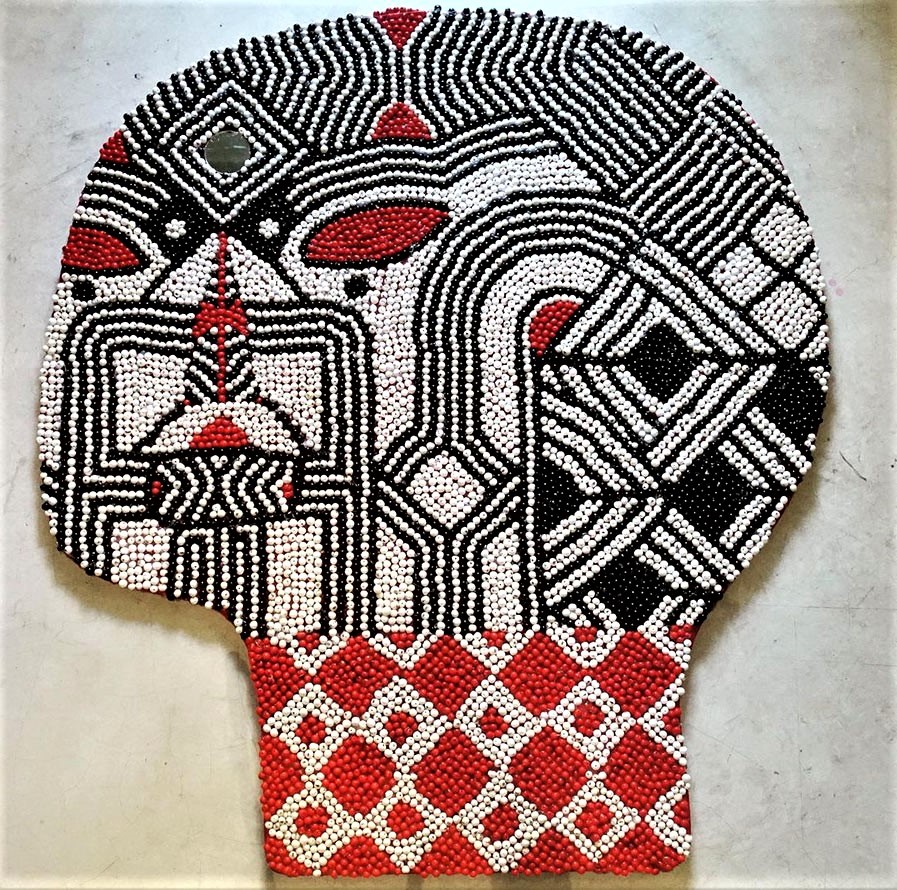
Born in 1979, Talavera was brought up as a native half Mexican, half Brazilian in São Paulo.
Interested in all kind of “underground” movements, the typical and unique stylistic freedom of the internationally renowned Street Art and Graffiti scene of her hometown made an important impression on the artist.
Talavera is also influenced by Mayan or Aztec mythologies and her Mexican heritage
Her raw creative energy thus found much more correspondence in the angled, tribal‐like style she developed. Talavera is also well known for her vibrant silhouettes painted in acrylic and her large-scale murals that embellish expressive faces with stripes, symmetries, and various geometric patterns.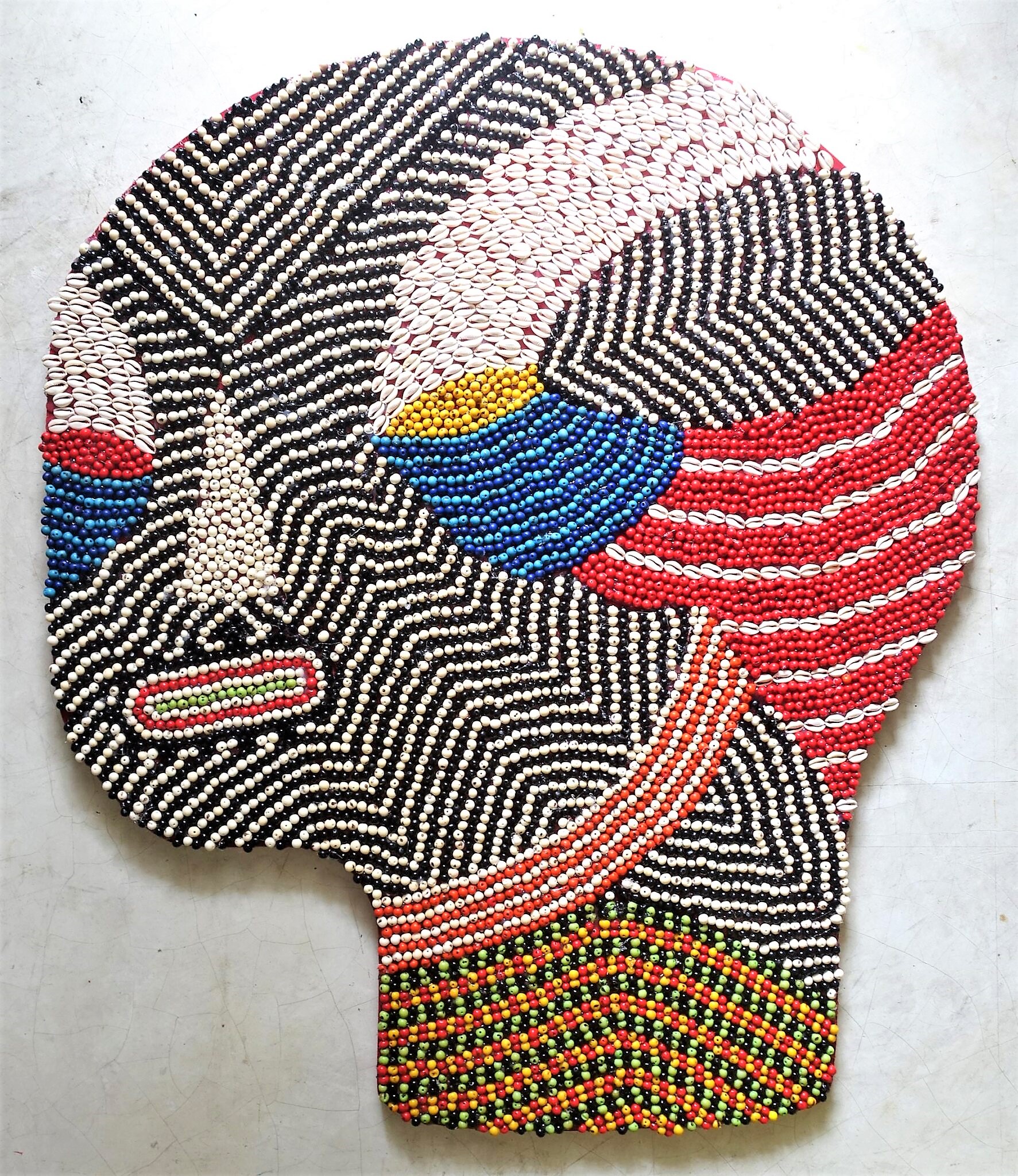
But for today’s gallery, it is her intricate beadwork that leads us to find out more about her fresh style.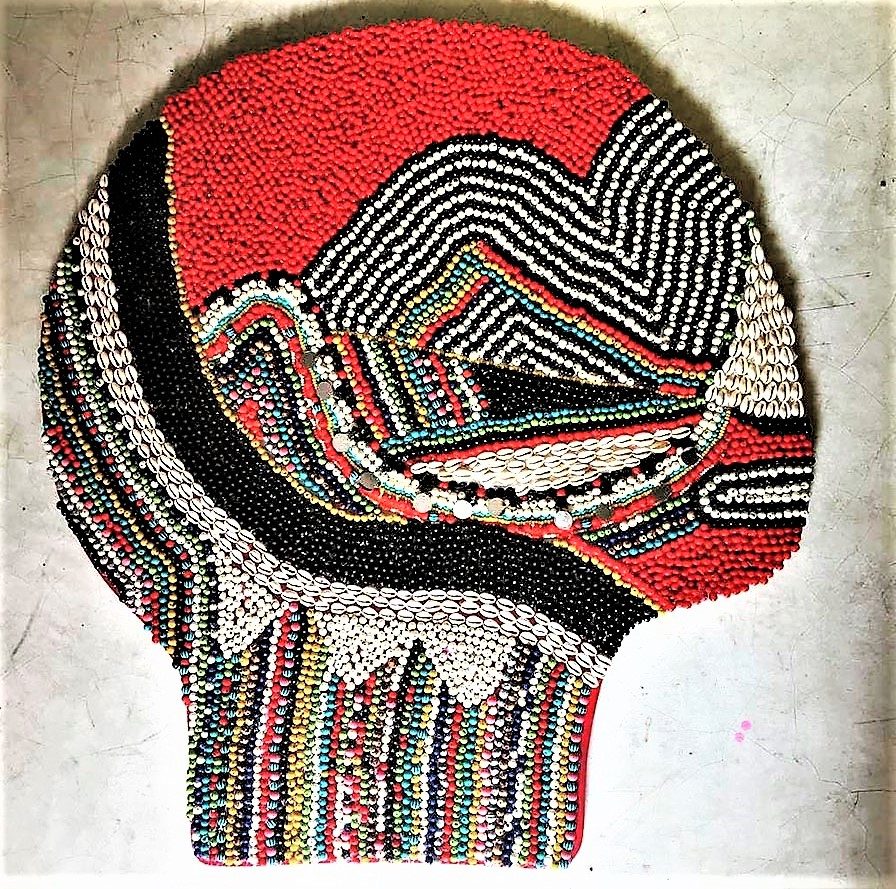
Her masks are an amalgam of color, motif, and material that blur cultural boundaries and the tenuous distinction between humanity and nature.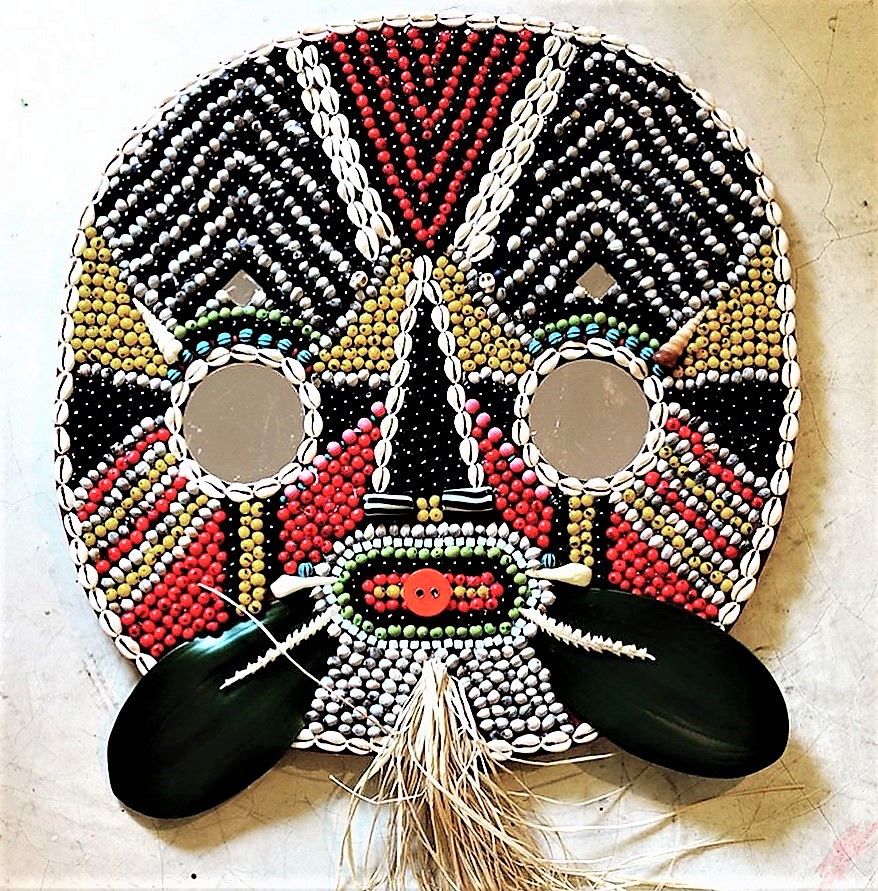
More of Fefe Talavera‘s intricate and bright artwork can be found at https://www.fefetalavera.net and https://www.instagram.com/fefetalavera/.

Don’t force your children into your ways, for they were created for a time different from your own.
 I don’t want help.
I can do it myself.
I could use a little help.
But I want to do it myself.
I need help.
But I want to do it myself.
How many times does this conversation go through your head?
Family, social media, books all teach you to be independent. Do it yourself. Dont rely on others to get where you need to go.
But we are also encouraged to help others. Help others that can’t help themselves.
But often those who need help don’t want help. They want to move, function, do things themselves. By themselves. FOR themselves.
That over rated sense of self. Of ME. Of .. I am a person and enjoy the personal satisfaction of doing and achieving something BY MYSELF.
We all know we are never “by ourselves.” If we are a fairly normal human being there is always someone around you to be your companion, sounding board, and helper.
Yes, helper.
This becomes more apparent the older you get, the sicker you get, the more immobile you get. That sense of self gets in the way of letting someone else help you out.
A family member of mine needs a lot of help. Walking around, taking his blood sugar, bending over and picking things up and hearing and seeing. He has never been Mr. Independent, but he has lived by himself for a number of years. He needs others’ help.
Infirmity has taken its toll.
He needs help getting in and out of cars. Reading labels. Hearing the TV. Giving himself an insulin shot.
Yet he still tries to do it himself. Even if the movement, the action, puts him in more danger. In more pain.
I understand that feeling. Getting older I’m more prone to forget, drop, ache, move slower, not understand instructions. I still move around okay and am active in family and projects and crafts and reading and movies. So I’m okay.
For now.
But I feel that resentment when someone comes around and says “Let me help you.”
Like — I’ve done this thing all my life — it’s never been a big deal — why do I suddenly need help?
I admit now that I’m no longer that stubborn where I won’t ask for help. Resistant? Sometimes. Honest? More so. Can’t open a jar? Can’t reach something on the second shelf? Can’t lift a big bag of dog food? Okay. I ask for help.
But most things I can do on my own.
Until one day I won’t be able to. Like my friend.
I hope that we all are aware of our ego and pride standing in the way of making ourselves better. Pride never helped anyone pick up a fork off the floor when your body is in pain. Ego never lent a hand helping you pour juice with a shaky hand or helped you put something together because you didn’t get the instructions.
Everyone wanted to help me when I lost my son. I learned very quickly that they did it out of love, out of desperation, out of guilt and out of honesty. I thought I didn’t need anyone’s help getting out of the cloud.
But I did.
And still do.
No man — or woman — is an island (John Donne or Simon and Garfunkel?).
Let someone else help.

Not all doors are closed by accident.
~ Anonymous
Vinnie Sutherland is a metalworking artist living in western Michigan. After receiving a BFA from Wayne State University in Detroit, Sutherland did a year of post graduate work focusing on Cliche-Verre, a photo-printmaking process.
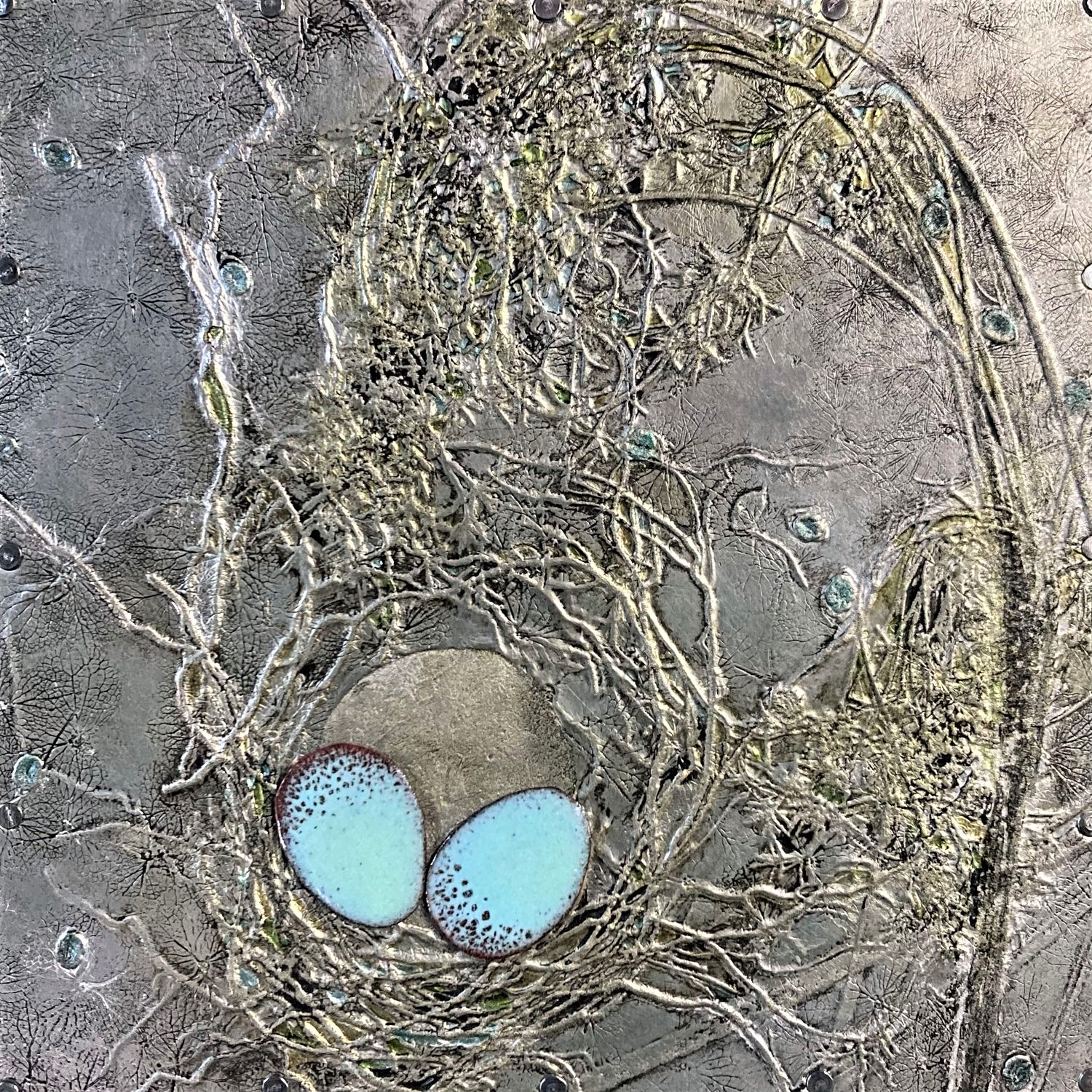 For the next 16 years or so she worked hand drawn, nature themed designs into various metals until the purchase of her first etching press in 2019.
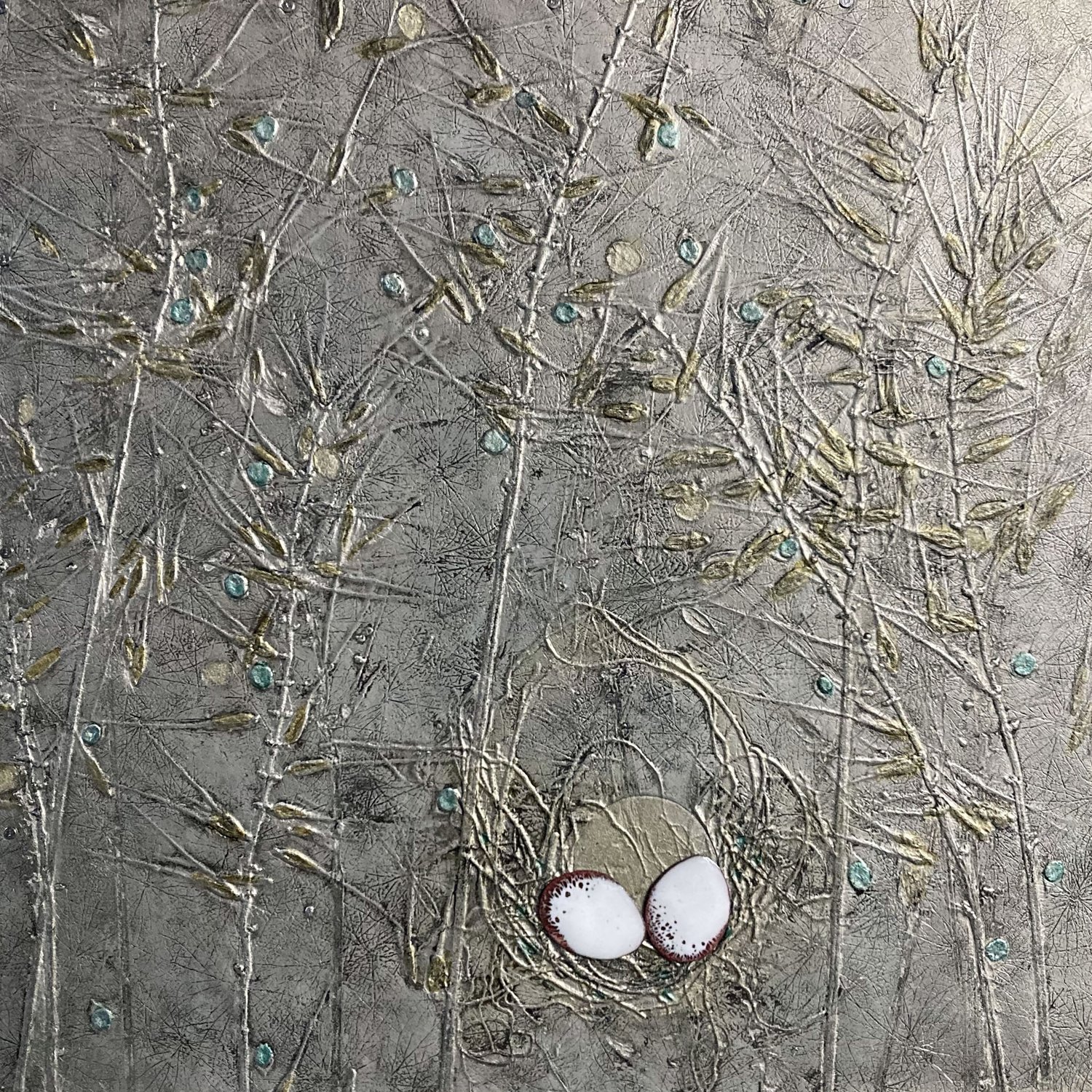 Sutherland’s art is created out of a sheet of pewter, which is manually rolled through an etching press layered with petals, seeds, and wildflowers.
 Each pass through the press allows for the additional layering in of the background.
 She often works with aluminum and copper as well, and always incorporates enameled copper tiles into her compositions.
 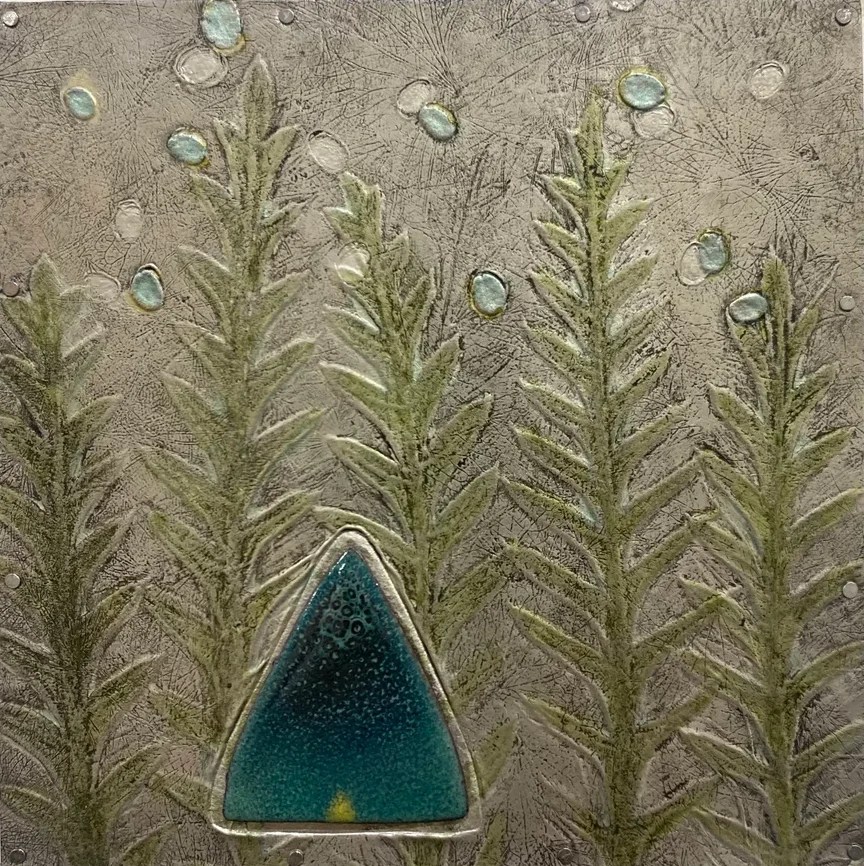 After being embossed, the pewter is rubbed with black paint and various inks, and preserved with a museum grade wax.
 “I am amazed and inspired on a daily basis by the natural world that surrounds me,” the artist shares.
 “While I endeavor to explore this world even more intensely through my art, I keep in mind the vision expounded by the artisans of the Arts and Crafts movement — that moral and spiritual uplift will come with the creation of art by hand.”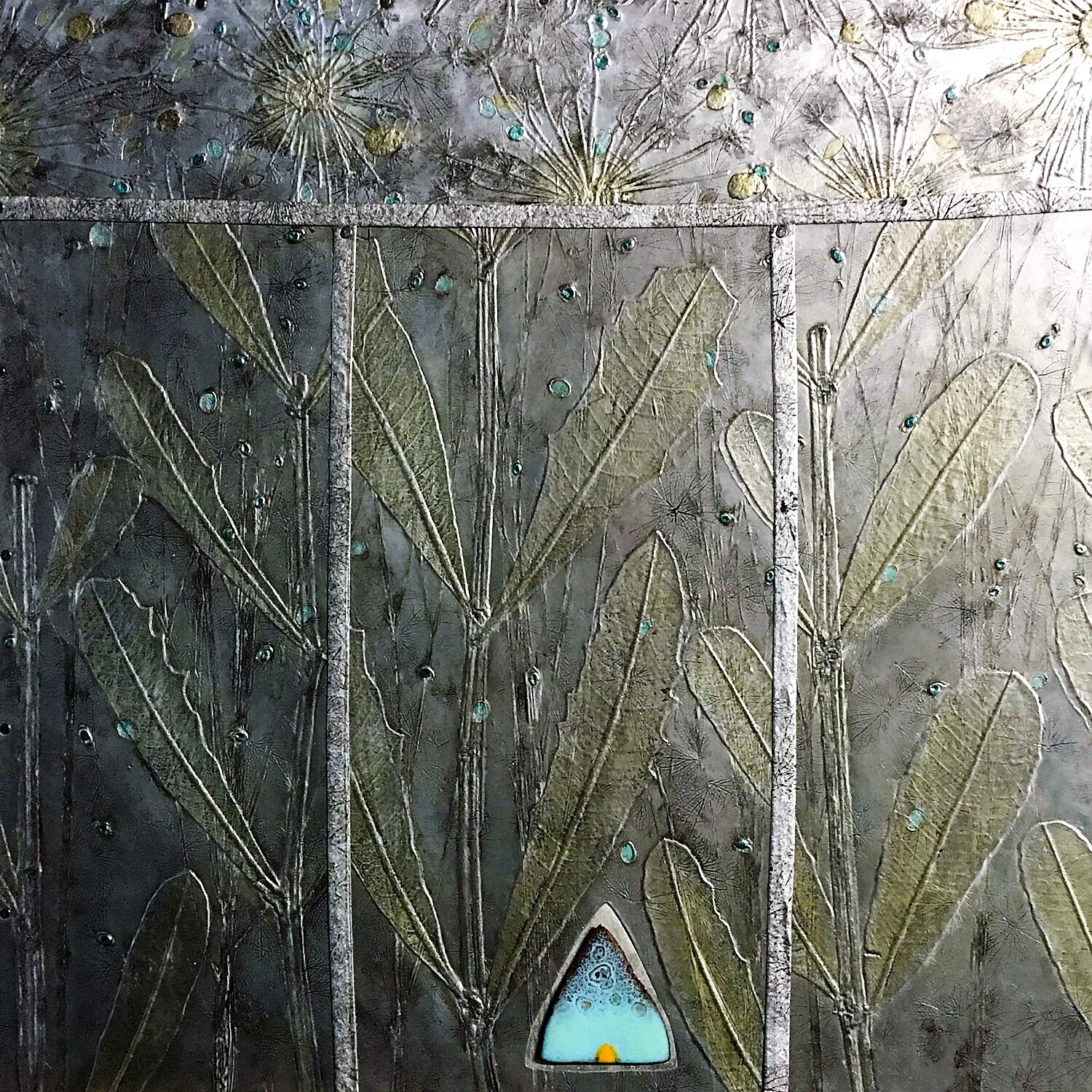
More of Vinnie Sutherland‘s marvelous metalwork can be found at https://www.vinniesutherland.com/

As we had warm and sunny weather lately, the garden came to live again, earlier than usual, it was unusually warm for March. But the good weather is about to end and Mr Frost will be back. We urgently need rain as everything is bone dry, despite all the rain we had during Winter. I […]

RECENT PICTURES FROM THE GARDEN. — GWENNIESGARDENWORLD
 If Saturdays are the beginning of your playday, Mondays are usually the beginning of your work week.
For me they are also the beginning of my creative week. I always start off wanting to write, craft, paint, and research. Quite a busy start to a retiree’s week.
Yesterday I took the (not so big) step of signing up for Peacock, the NBC version of Hulu or Netflix. A majority of shows are free, but it’s not because I was in need of something to watch. I came across what I was looking for:
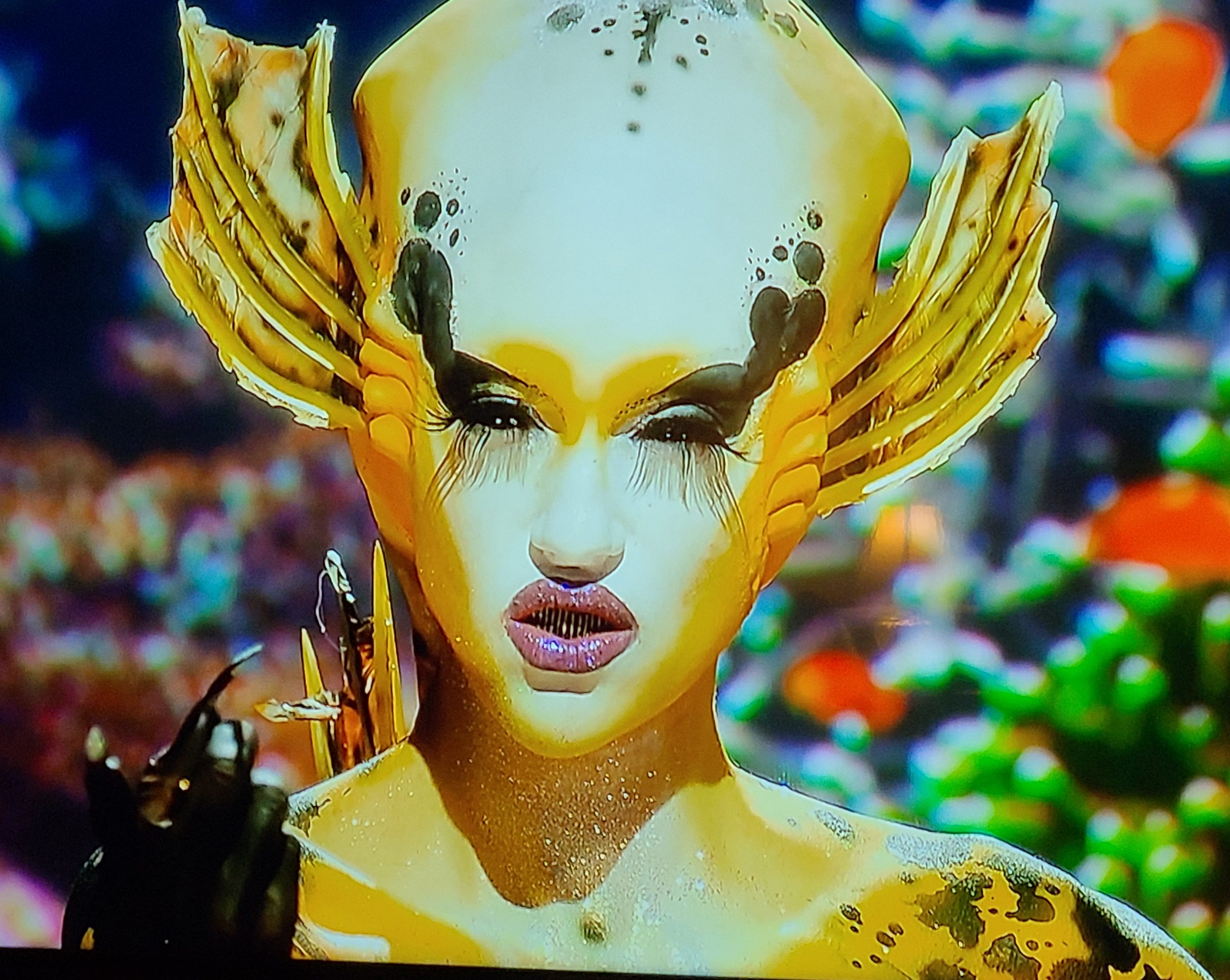
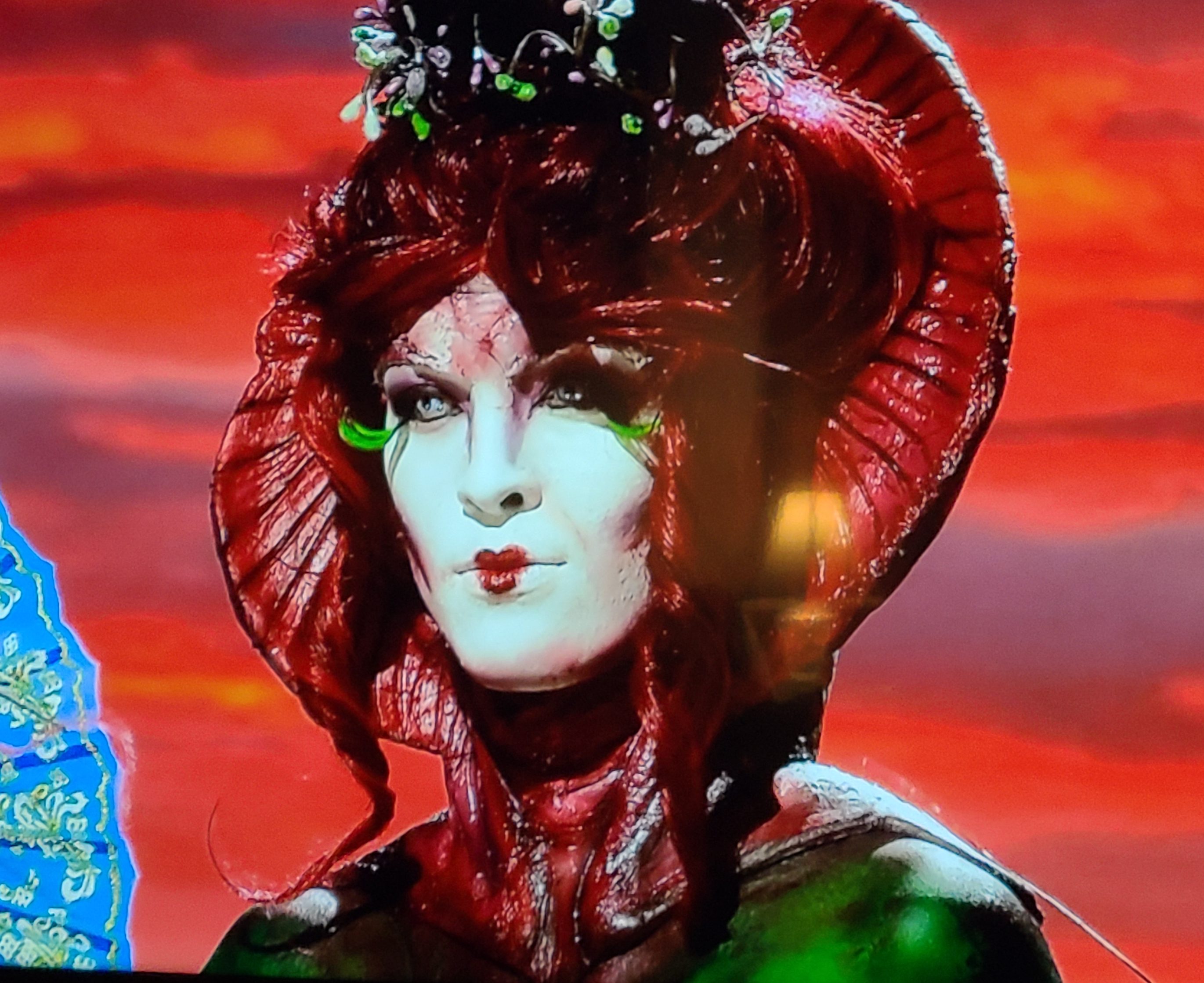
Face Off.
Five season’s worth.
I happen to LOVE that TV series. Every week a group of artists create masks and faces and outfits based on the weekly challenge theme.
The things these “ameteurs” come up with are amazing.
I realize they are experts in their field. I’m sure you know someone — yourself, even — that could come up with a short story, a quilting pattern, knit a scarf, or paint a painting or a calligraphy sign in competition time. That’s how good you are.
But it’s just the process — the intuitive, inventive way their mind thinks that gets me going.
I get the same feeling watching cooking competition shows. How could these average “Joes” and “JoAnns” cook something like that in less than an hour?
The first and most important reason is because they love doing what they do. They all may be auto mechanics or beauticians or grade school teachers in their “other” life but they are artists in this one. They may even be full-time creators.
I come back from these shows with a new sense of energy and purpose. And I try and share it.
I have one friend thinking of starting to write a book on her and her father’s experiences. So exciting! Another friend went to a quilting seminar this week for a few days. How great! One of my good friends went on a scrapbooking weekend not long ago. Nothing but talking and scrapbooking. How can you lose? Another of my friends is coming to my state (not far from me, it seems) to do some sort of crafting seminar/conference/get together. How great is that?
I’ve done an art gallery on Face Off, and could probably do a dozen more. So it is with you that do ceramics or computer design or photography. My good friend from my old work is a photographer AND graphic designer — what great things he comes up with!
Find something that fuels your passion and go for it. Let someone else’s work inspire you — not to be them, not to do what they do, but let their work encourage you do try new things and go new directions.
Make practice fun. Make mistakes fun. Make success even MORE fun.
Let me know what you are working on so I can continue to get pumped up in the Art World.
Feels Good! You ought to try it!
Diana Rosa is an established Cuban painter based in Canada, whose works have featured in prizes, publications and exhibitions across North America, the UK and Asia. Influenced by her festive Cuban childhood spent surrounded by an abundance of creative energies, Rosa creates works that reflect her distinctive use of rich exoticism of tropical vegetation.
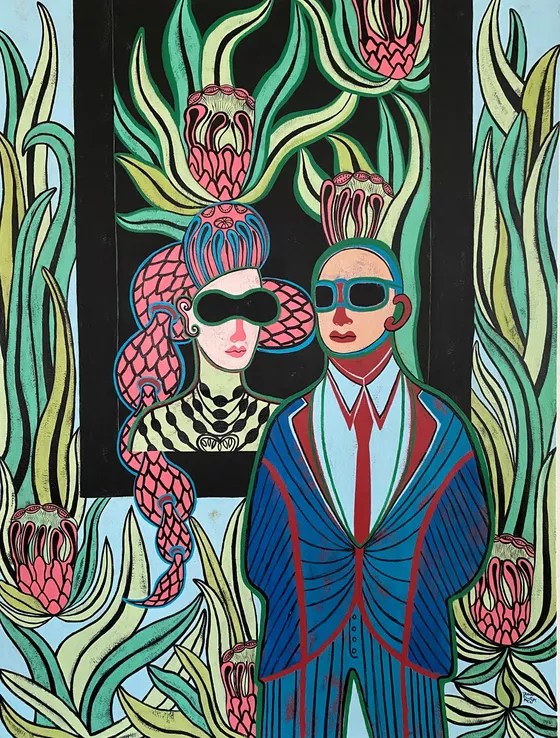 She employs a Naïve Folk-Art style, along with elements of Cubist and Surrealist schools, to explore questions of identity, love, relationship and environment in our society.
 The artist aims to show our relationship to the world around us through the versatile medium of acrylic paint.

She uses sharp brush strokes, contrasting textures, and a variety of acrylic mediums, commenting on our human emotions, mixed realism with fantasy.
Bright and whimsical images with a touch of modernism, Rosa’s art brings to life thoughts and impressions dancing with imagery.
 “I am always fascinated with the human story that all of us are living — often untold, sometimes unrecognized, but always significant,” Rosa shares.
 “My paintings reflect the natural beauty of human emotions.
 “They are a bridge from my imagination to theirs, and although the story I mean to tell may differ from what the viewer ultimately takes away, what is most important is that we have shared the tale.”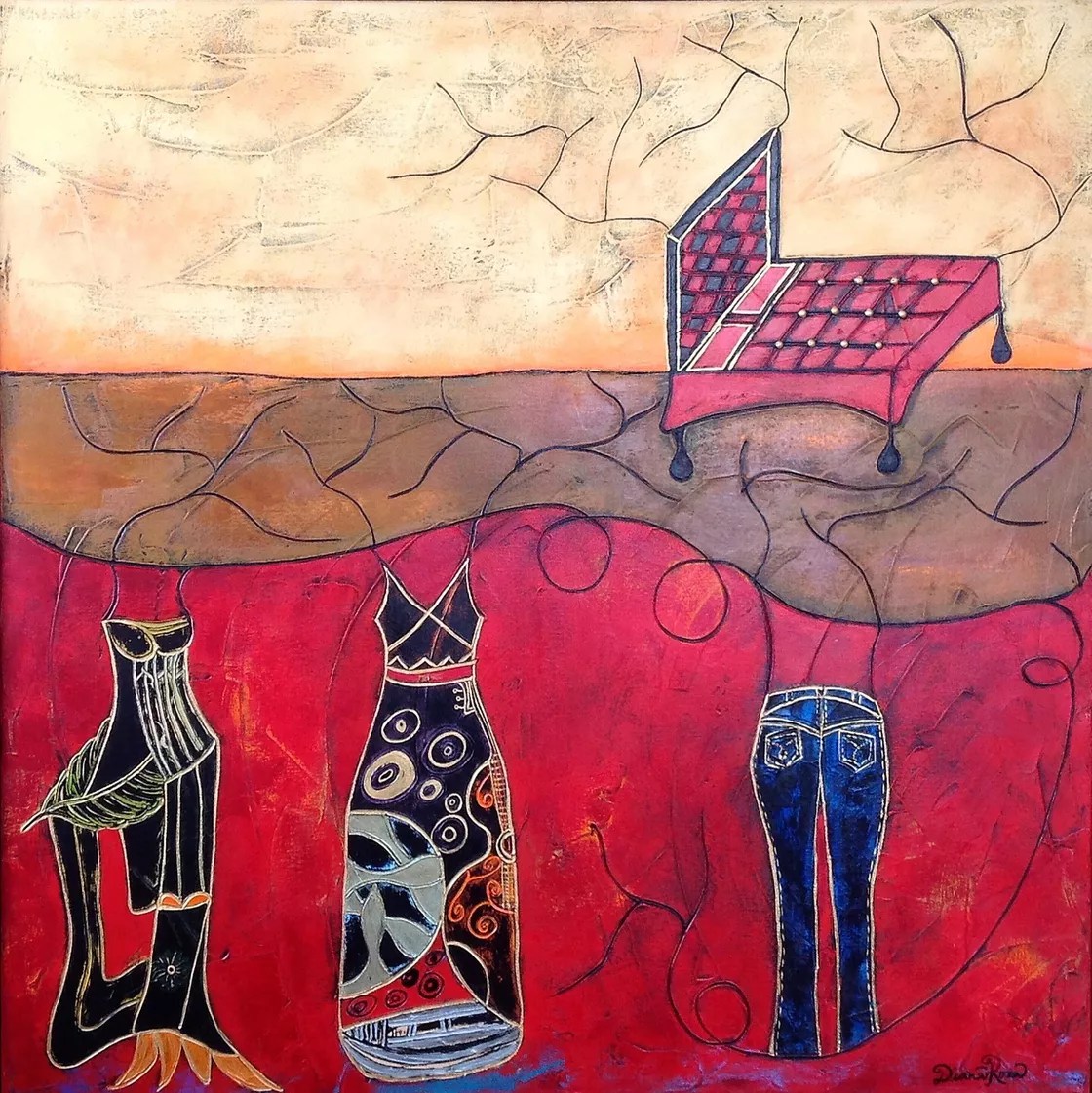
More of Diana Rosa’s delightful art can be found at https://www.artfinder.com/artist/diana-rosa and https://www.singulart.com/en/artist/diana-rosa-3851.
John Singer Sargent (January 12, 1856 – April 14, 1925) was the most successful Impressionist painter of his era, as well as a gifted landscape painter and watercolorist. Born in Florence to expatriate American parents, Sargent received his first formal art instruction at Rome in 1868, and then sporadically attended the Accademia delle Belle Arti in Florence between 1870 and 1873.
 In 1874 he was accepted at the Paris atelier of the portraitist Emile Auguste Carolus-Duran, and attended drawing classes at the Ecole des Beaux-Arts.
 Throughout the 1880s, he regularly participated in the Paris Salon — most often, his works were full-length portraits of women, which generally received positively.
 Sargent’s best portraits expertly reveal the individuality and personality of his sitters.
 This ability set him apart from others portrait painters of his time—he made the sitter shine on the canvas while capturing the essence of their being.
 Noted for his dazzling technical virtuosity and painterly technique, he influenced an entire generation of American portraitists.
  By the turn of the century Sargent was recognized as the most acclaimed international society portraitist of the Edwardian era, and his clientele consisted of the most affluent, aristocratic, and fashionable people of his time.
 Around 1906 he abandoned portraiture and worked primarily in watercolor, a medium in which he was extraordinarily gifted.
 More of John Singer Sargent‘s paintings can be found at https://www.johnsingersargent.org/.












 Humoring the Goddess