She uses colors
To brighten the sun lit sky
And leaves heaven alone


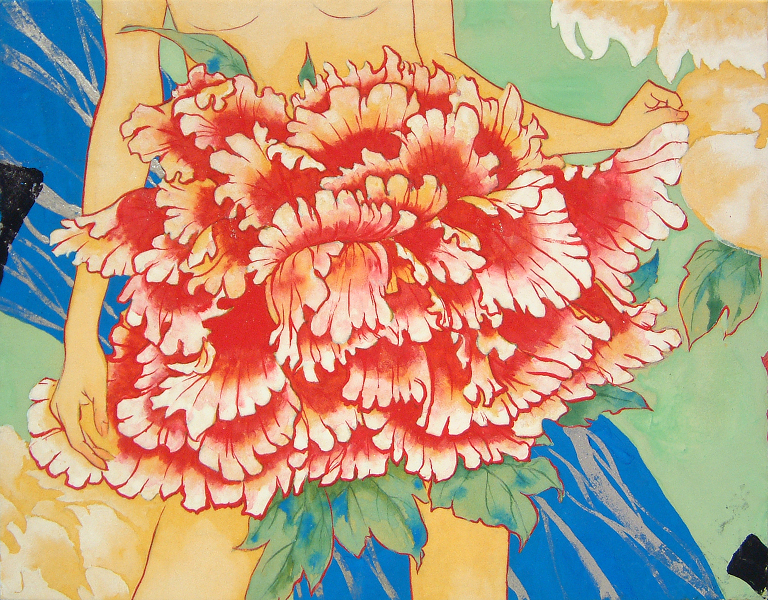

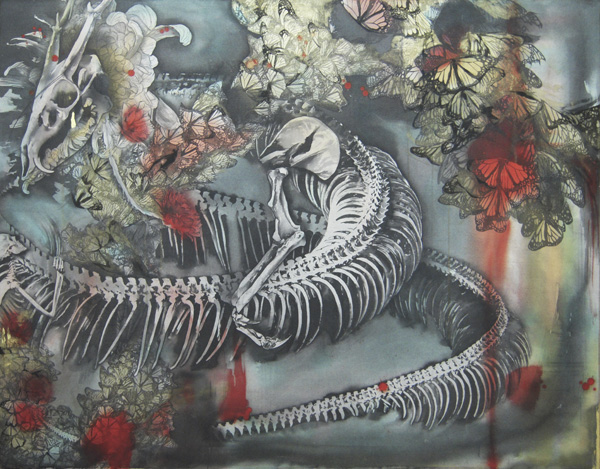

More of Aso Shiho’s work can be found at Aso Shiho or https://twitter.com/ShihoAso
Croning My Way Through Life
She uses colors
To brighten the sun lit sky
And leaves heaven alone
More of Aso Shiho’s work can be found at Aso Shiho or https://twitter.com/ShihoAso
 The other day a friend asked me why I didn’t put my Sunday Evening Art Gallery on Pinterest. After all, there is a larger audience, and it would get better coverage.
This is probably true. When one writes something, one hopes a lot of people will read it and like it and share it. It’s true. It’s the same when you write a book, or paint a painting. You want people to see what you see, feel what you feel.
But what you wrap your creativity in says a lot about you, too. The colors you choose, the things you sketch, all showcase your views on love, life — everything that makes us human.
We all have dreams of how we want our world to be. Most times we fall short. Not a big deal. We all can’t live in our dreams. But we can create our dreams. We can create atmosphere, characters, life, death, love — anything we want. Any way we want.
When I think of art galleries I think of the Art Institute in Chicago, or Blue Spiral 1 Gallery in Asheville, NC I visited last August. I think of the special care galleries take to showcase their artists. The way they display collections and single pieces. Pottery, sketchings, paintings, steel work — all stand out on their own because of the way they are wrapped in creativity.
That’s why I created the Sunday Evening Art Gallery.
I created a space that feels classic and comfortable and is open 24 hours a day. You can have a cup of coffee in the morning and wander through one of the galleries, or a glass of wine in the evening and catch three or four.
The art is unique. Amazing. Styles most people have never seen.
Why post it side-by-side with dozens of other posters? Why let the beauty, the fun, the uniqueness get lost in everyone else’s shadow?
The same is true for whatever you create. Don’t use the colors everyone else uses; don’t make the same shapes, the same poetry that everyone else does. Not unless you love what everyone else does. Put your own spin on your dreams. Color and paint the world the way you see it — the way you want others to see it. Do it your way!
And let me know where to find you and your dreams. I’m always looking forward to learning, seeing, discovering something — and someone — new!
P.S. Do stop by the Gallery — bring a glass of chocolate milk with you and stay a while!


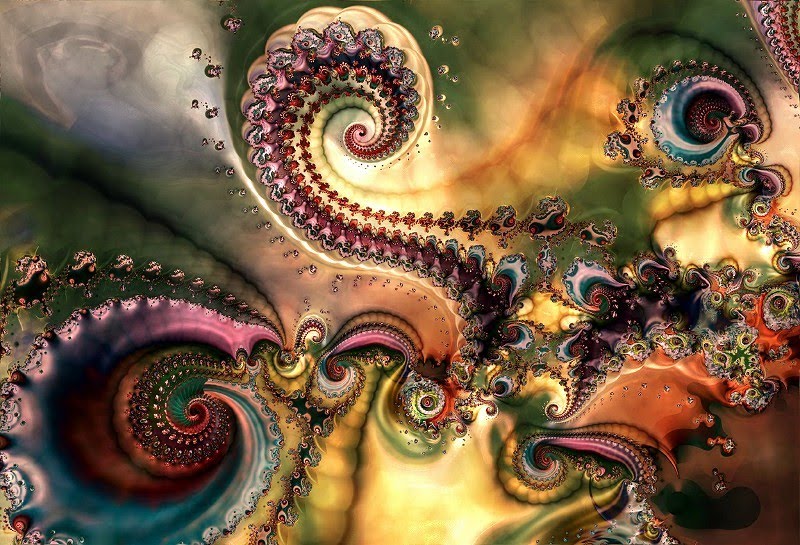
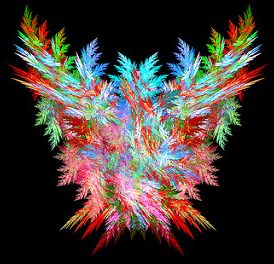
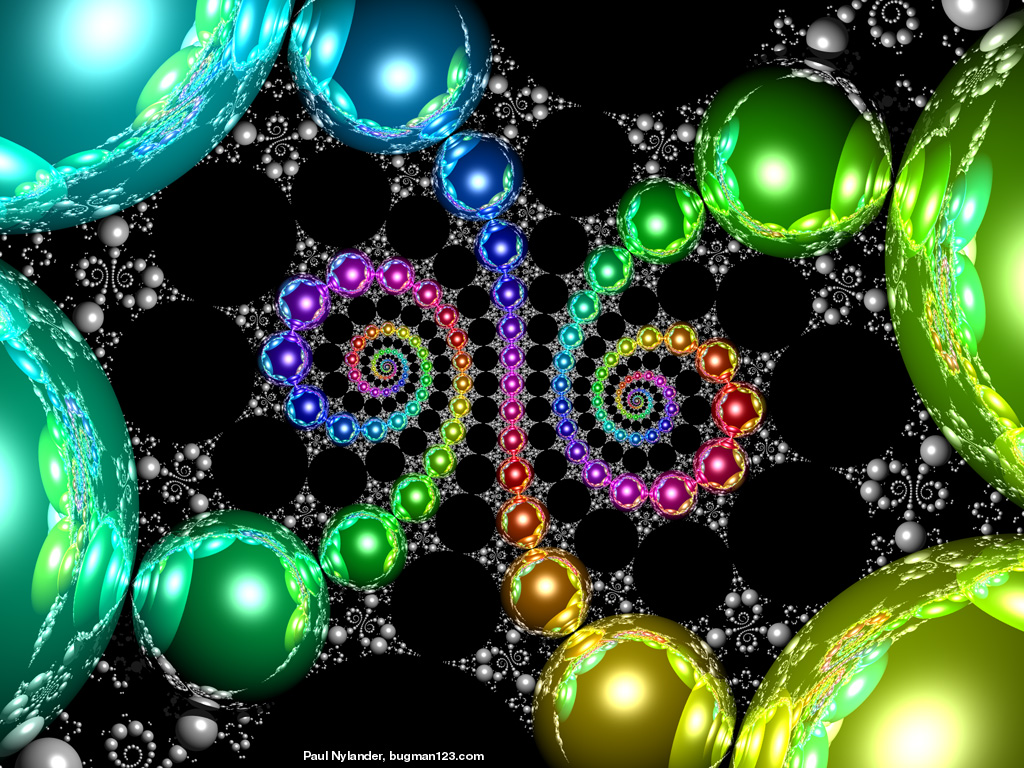
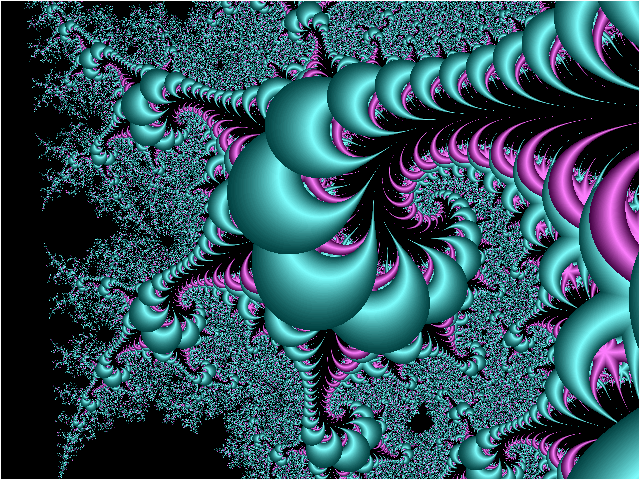
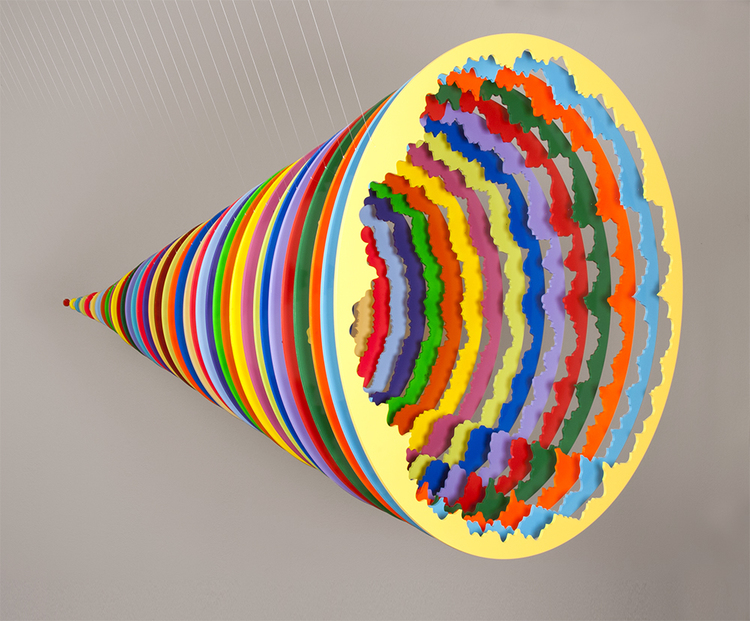
Jen Stark (1983 -) is a contemporary artist whose majority of work involves creating paper sculptures.
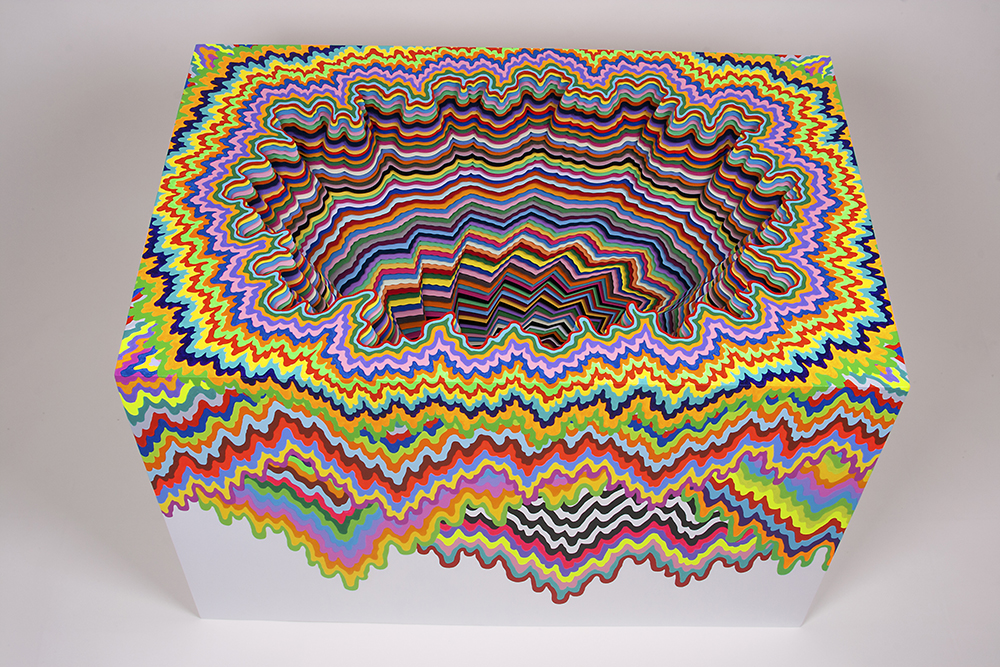
Her artwork mimics intricate patterns and colors found in nature while exploring ideas of replication and infinity.

Stark takes construction or acid-free colored paper and intricately cuts each sheet with an X-acto knife, layering the paper into a topographical landscape of color and bold shapes.
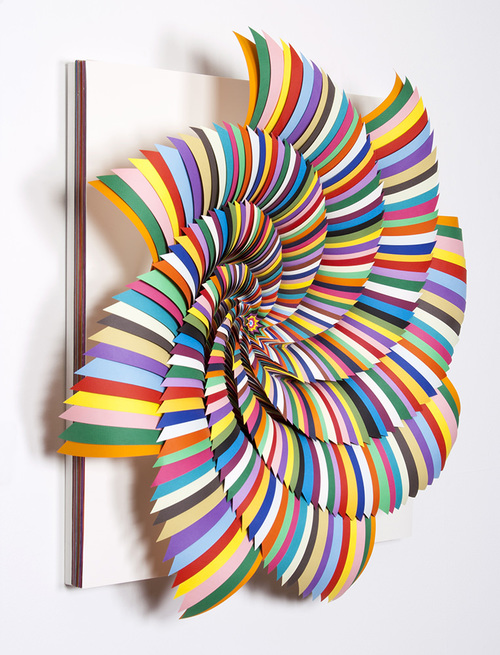
Stark’s works have been inspired by many things around the natural world such as infinity, topographical maps, fractals, designs in nature, microscopic patterns, wormholes and sliced anatomy.
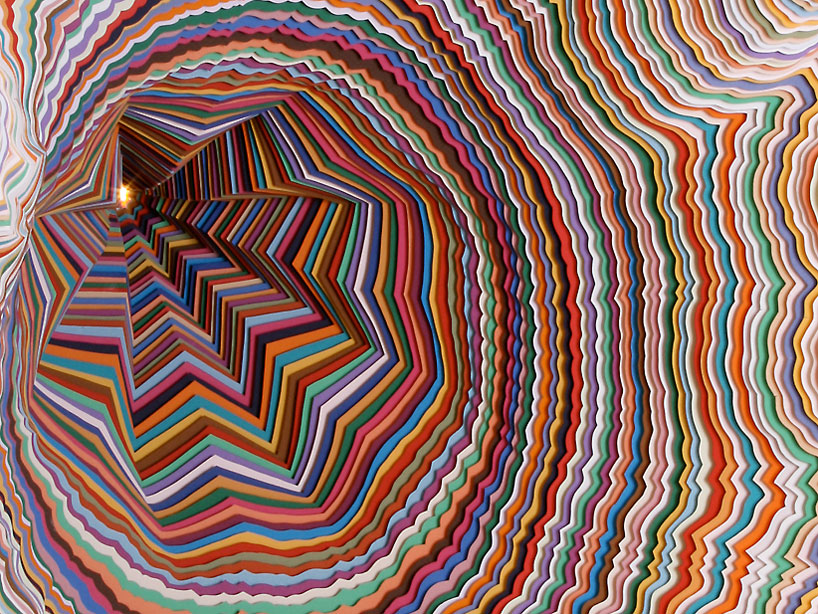
In her own words, “I love thinking about how enormous shapes out in the universe can have the same patterns as tiny microorganisms under a microscope.”
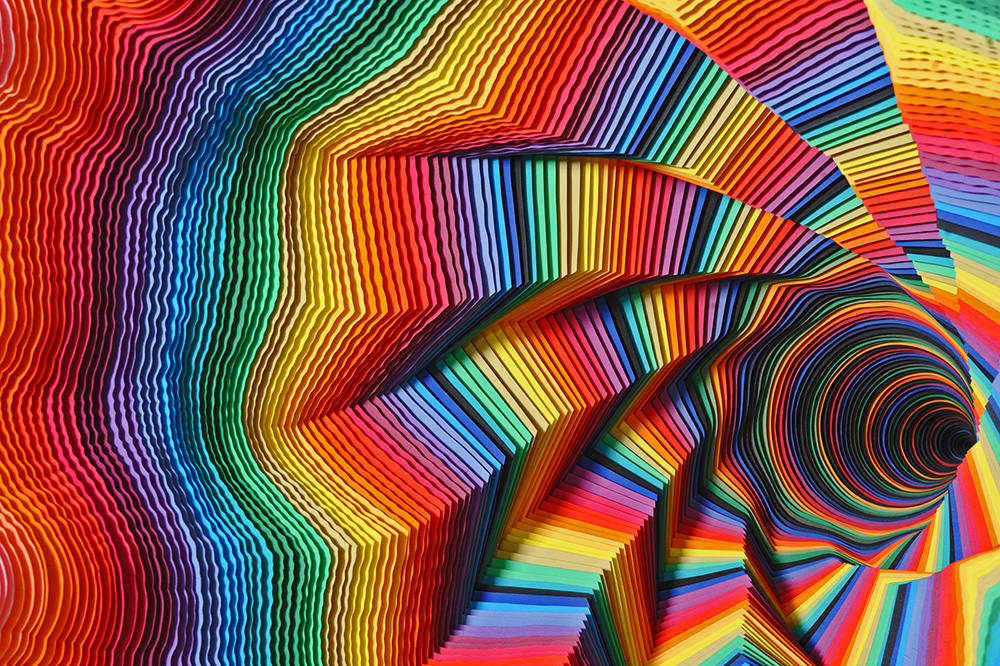
“How geometric shapes and certain spiraling patterns apply to designs in nature big and small.”
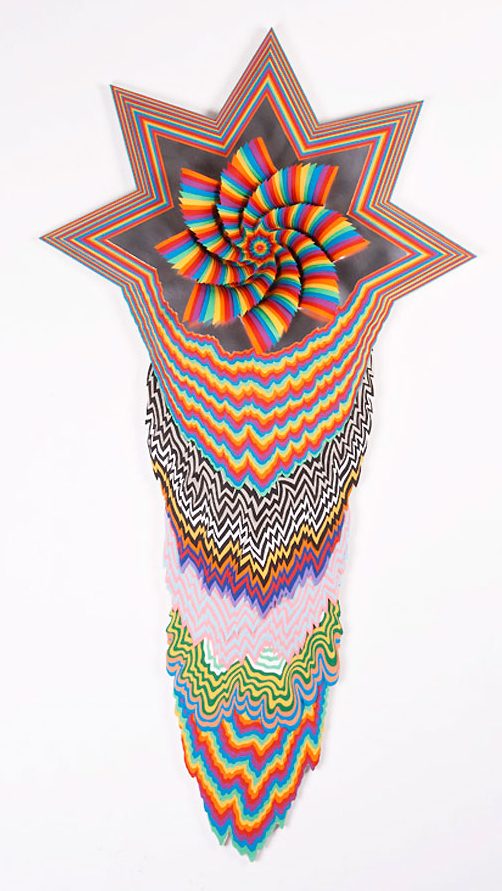
More of Jen Stark‘s work can be found at http://www.jenstark.com/.
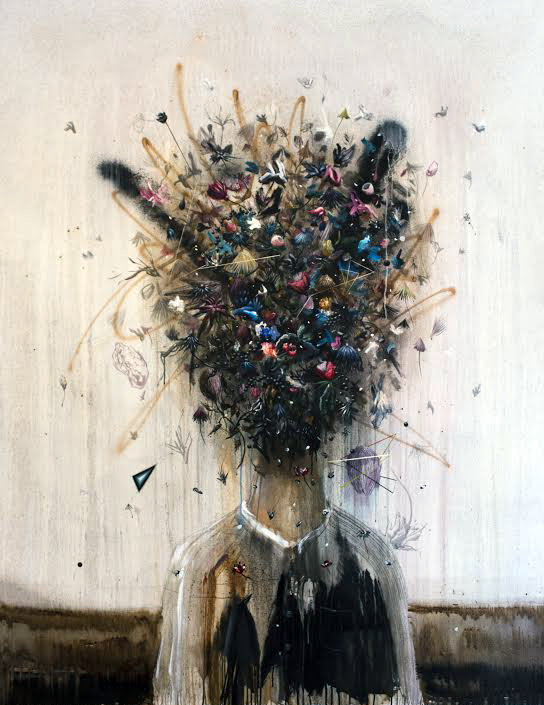
Collin van der Sluijs is a renowned painter and illustrator from Maastricht, The Netherlands.

After graduation from the art academy at St. Joost in 2004, Collin moved to the south of the Netherlands where he now lives and works on exhibitions and projects.
 His work can be described as personal pleasures and struggles in daily life.

Working without sketches or notes, the artist dives into each artwork with spray paint, acrylics, and ink as ideas take hold and images slowly emerge.
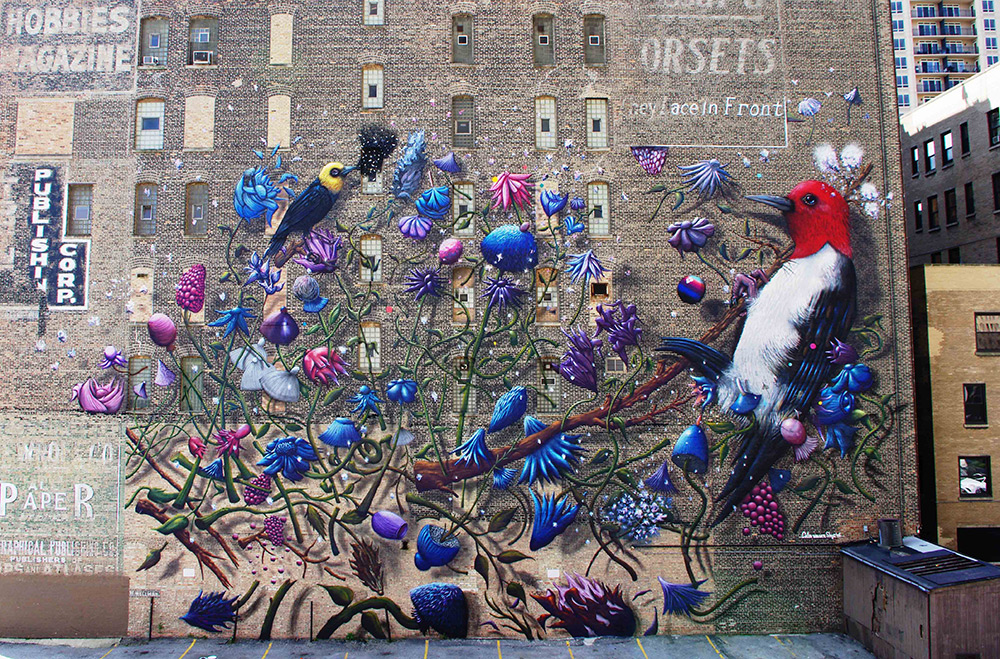
Collin’s art also includes fascinating wall murals.
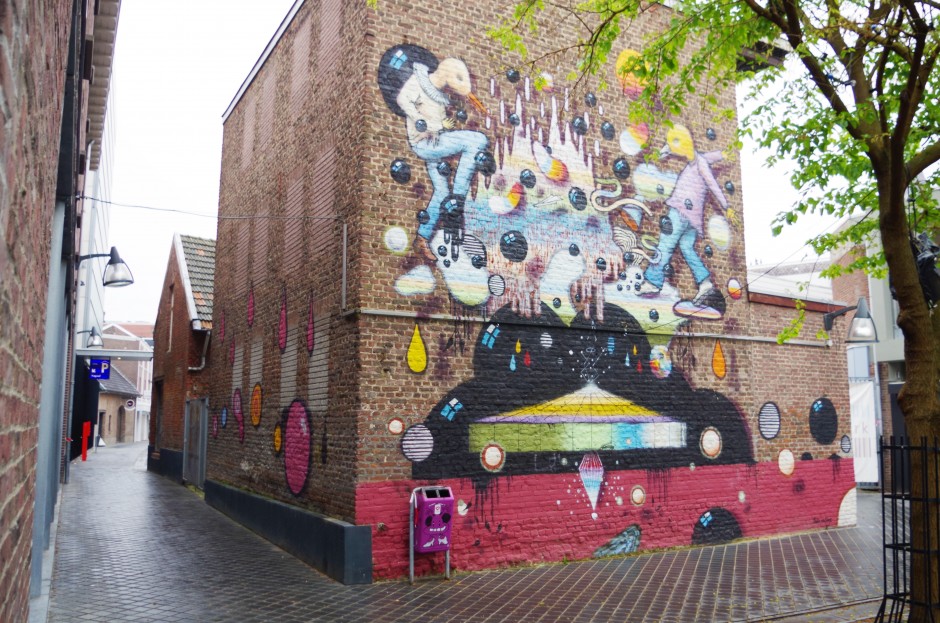 He frequently examines themes of the natural world such as the cycle of life, the depictions of various species of birds, and the psychology of beings both human and animalistic.

More of Collin van der Sluijs’ art can be found at Collosal or at his website Collin van der Sluijs .
Snowed in this weekend?
Need a break from writing your novel?
Bored with TV? Radio?
Come take a break at the Sunday Evening Art Gallery!
A number of galleries have recently been updated, bringing you more of the extraordinary art that makes the Gallery a popular stop-by gallery.
Here are a few examples of unusual and fascinating art:

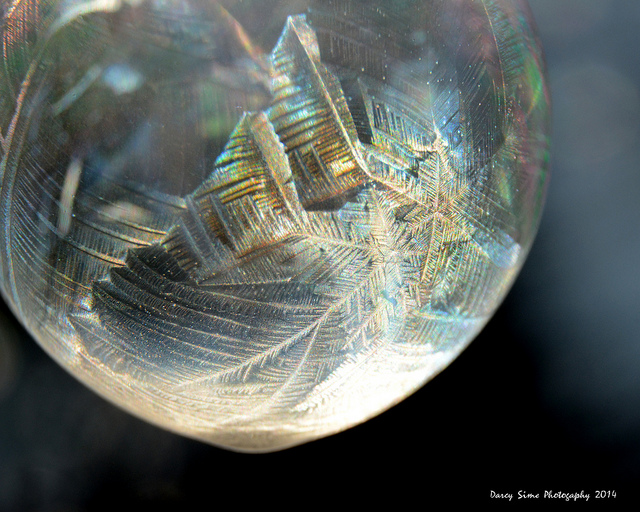


It’s the kind of world you can visit again and again. There are images there for inspiration, for daydreams, and for sharing with friends.
Stay warm — fill a goblet with wine or chocolate milk, put some easy-listening music on in the background, and stroll through the magic of the Sunday Evening Art Gallery.
Talented and unique artist Marina Printseva was born in 1949 in the city of Pskov, Russia.
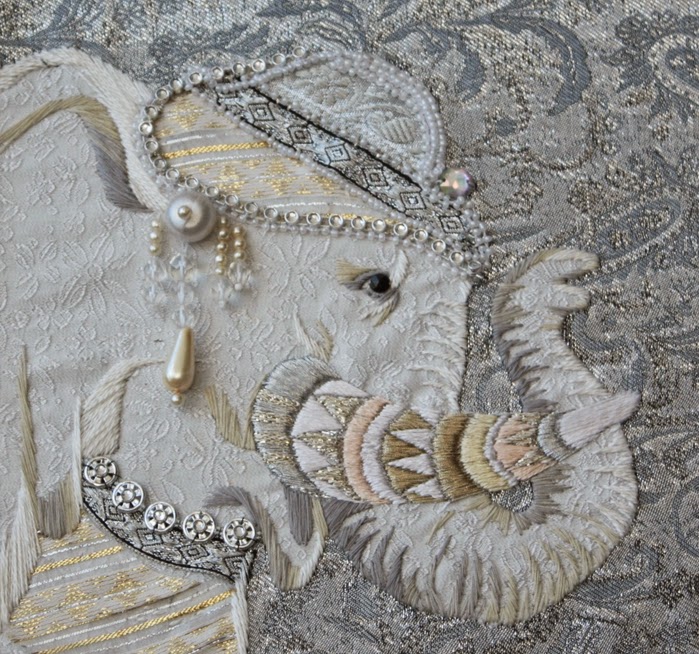
She is a member of the Union of Artists of Russia, and a member of the International design and textiles Association.

Her technique is a brilliant mixture of embroidery, painting and application.
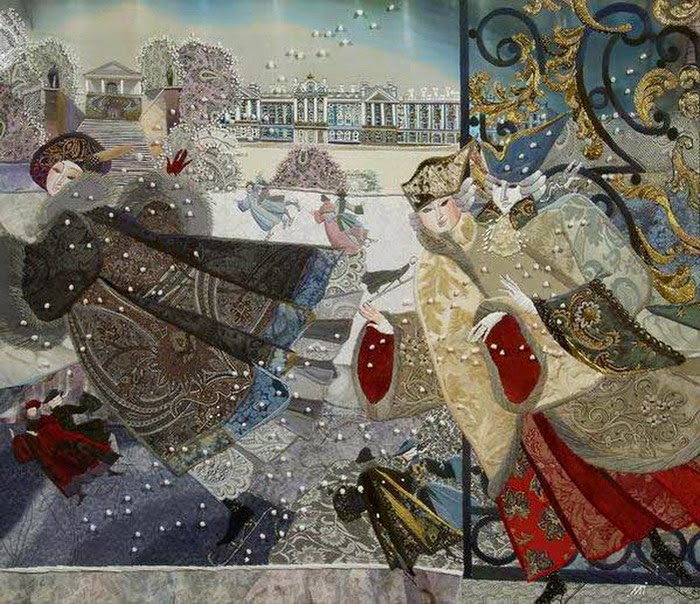
Marina created a special world filled with poetic images and metaphors influenced by Old World St. Petersburg

Her work is populated by visions and shadows from the past.
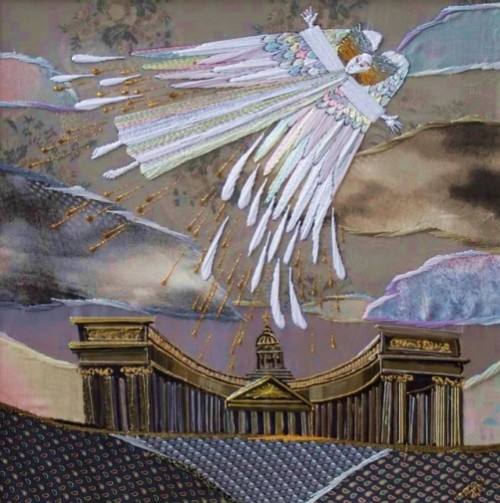
You can tell by the delicate work and mixed media that her visions are intricate and true.
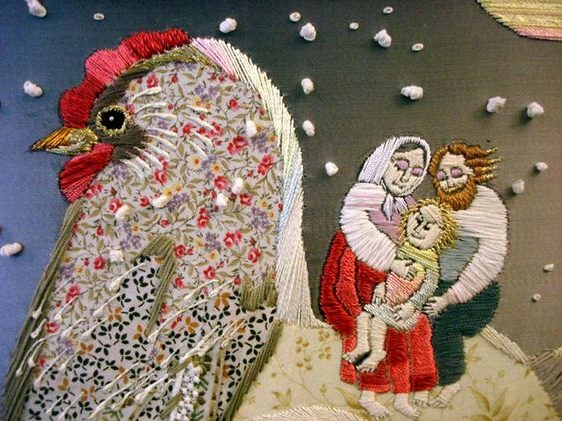
You can find more of Marina Printseva‘s inspirational work at Marina Printseva and unique-art-by-marina-printseva.
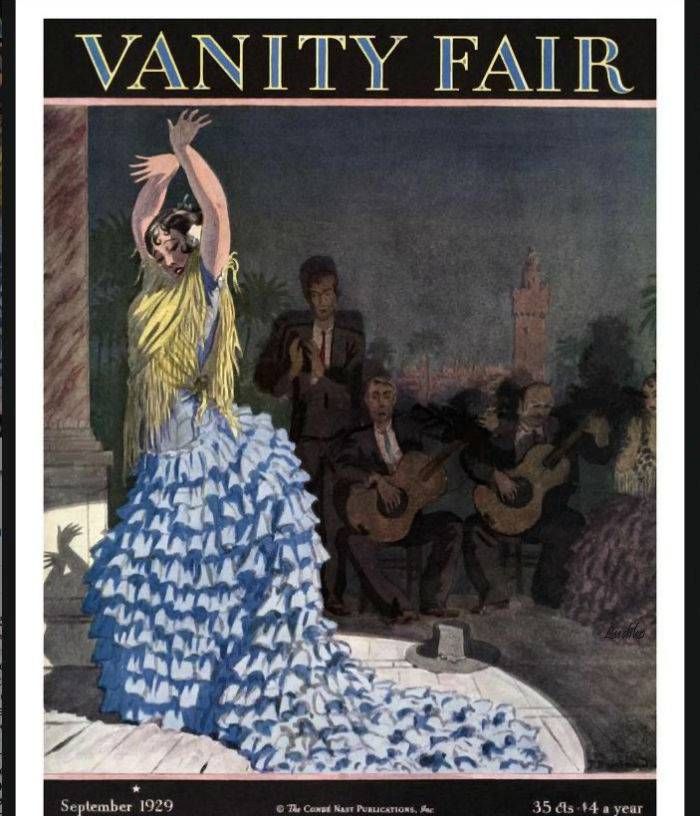
Pierre Brissaud (1885- 1964) was a French illustrator, painter, and a prominent figure of French Art Deco.
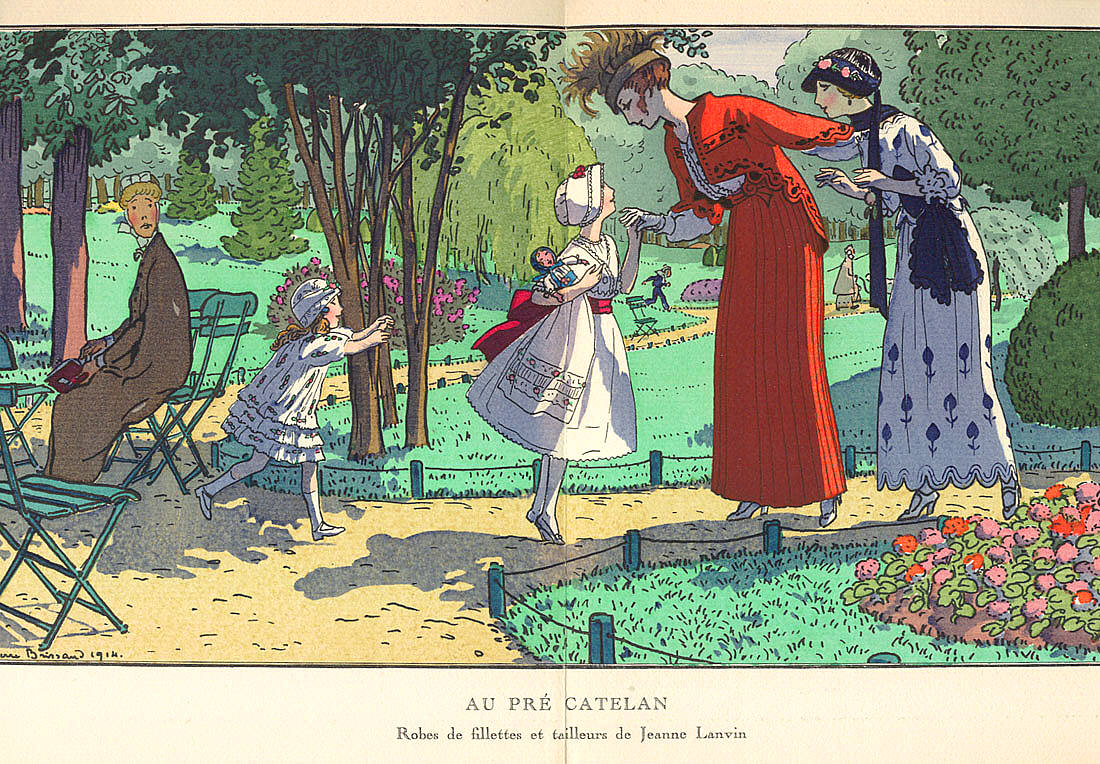
He created illustrations for publications Les Feuillets d’Art, La Gazette du Bon Ton, Fortune, House & Garden, Vanity Fair, and Vogue.
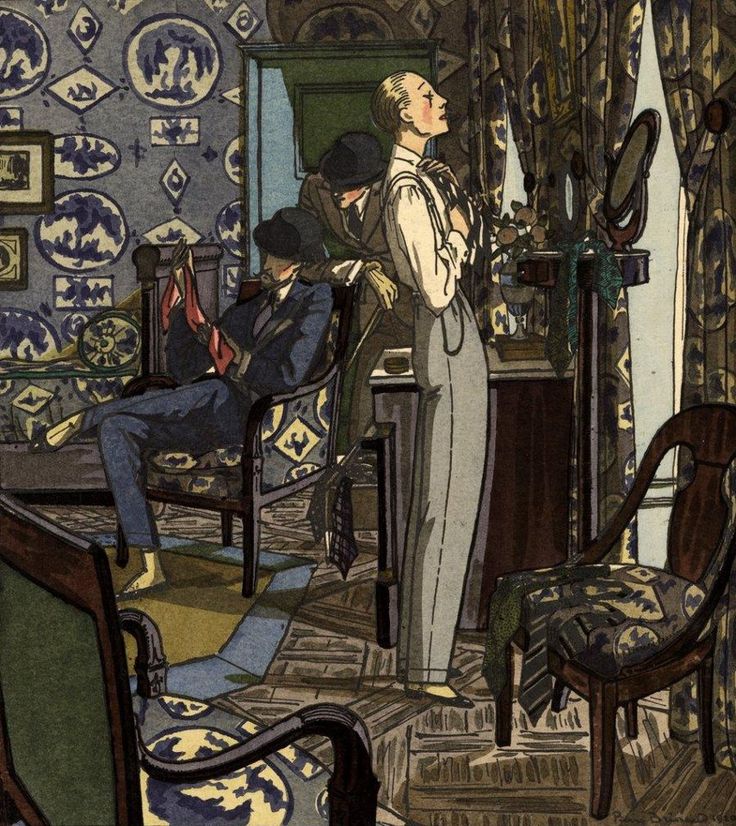
Many of his illustrations are realistic leisure scenes of the well-to-do.
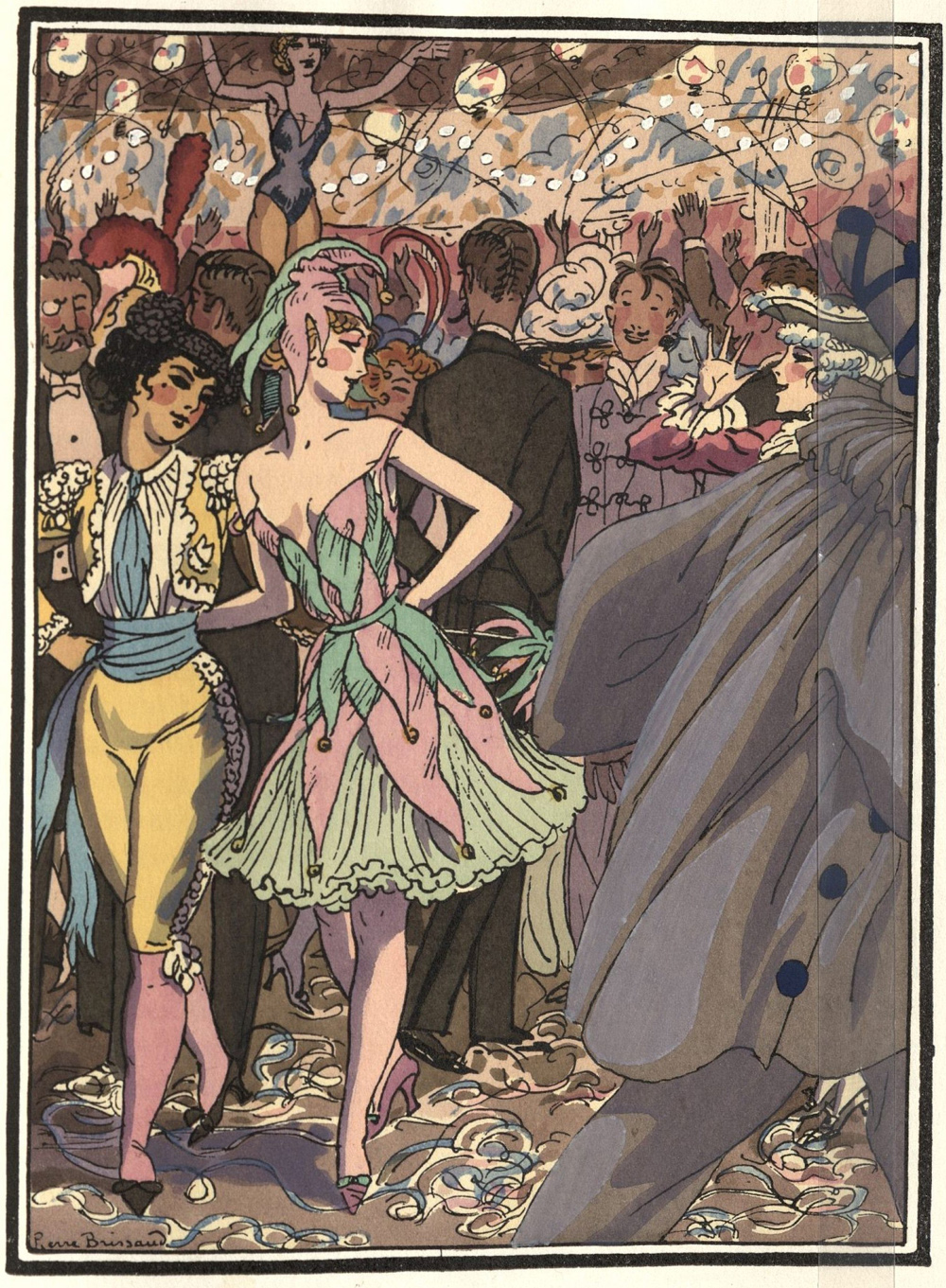
From the mid-1920 to the early 1930’s, Pierre Brissaud was known for his stencil prints meant for magazine covers and advertising.
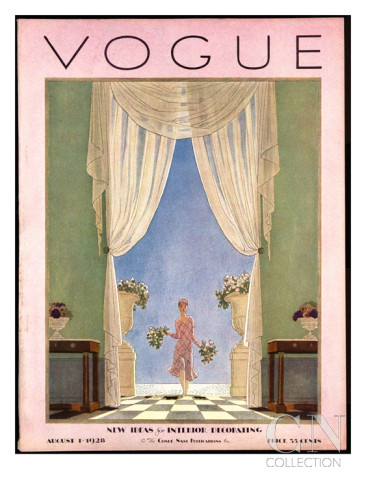
Not only did Brissaud created prints and posters for fashion houses, but he also did book illustrations including Manon Lescaut, Two Gentlemen of Verona, and Madame Bovary.
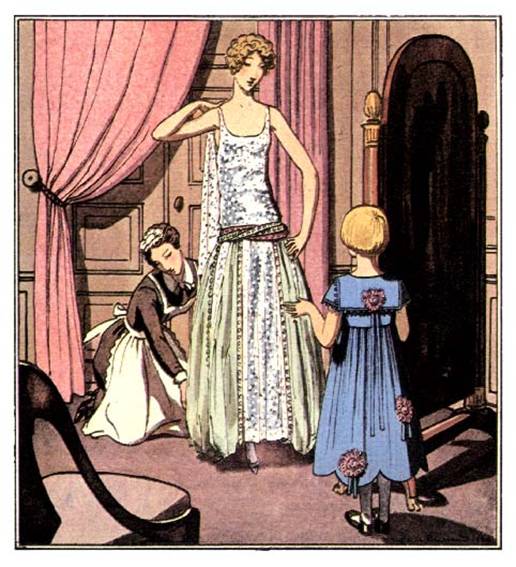
It is through his creative artistry that the reflections of elegance of days gone by are preserved.
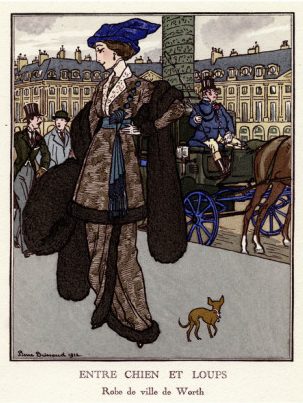
More about Pierre Brissaud can be found at http://bestarts.org/artist/pierre-brissaud/
A pysanka, or Pysanky Egg, is a Ukrainian Easter Egg decorated with traditional Ukrainian folk designs.

The word pysanka comes from the verb pysaty, “to write”, as the designs are not painted on, but written with beeswax.
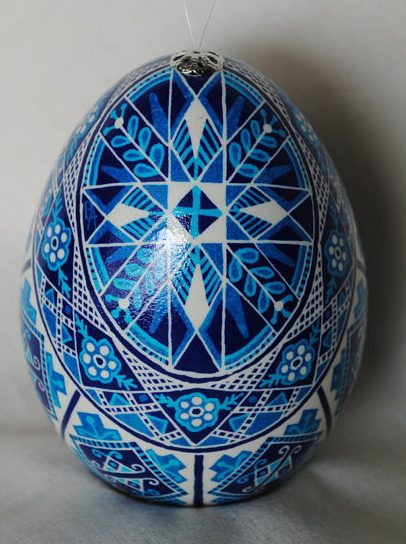
Ukrainians have been decorating eggs, creating these miniature jewels, for countless generations.
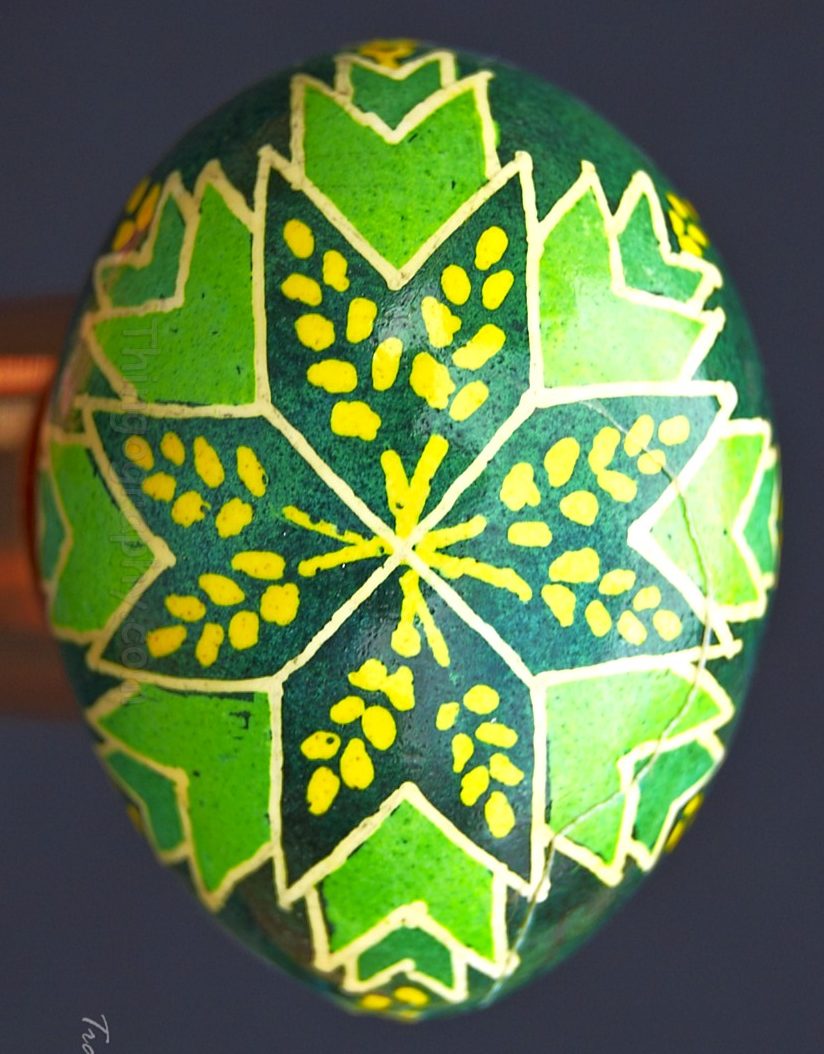
There is a ritualistic element involved, magical thinking, a calling out to the gods and goddesses for health, fertility, love, and wealth.
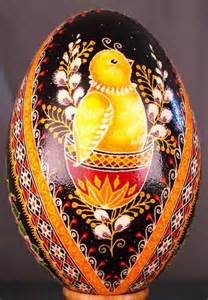
The pysanky was believed to possess an enormous power not only in the egg itself, which harbored the nucleus of life, but also in the symbolic designs and colors which were drawn upon the egg in a specific manner.
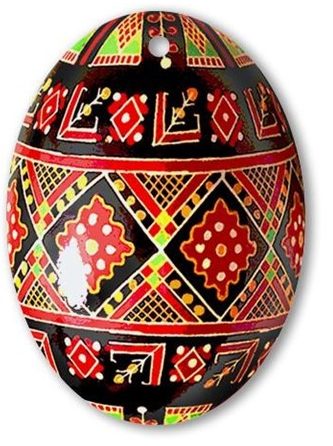
The symbolic ornamentation of the pysanky consists of geometric motifs, with some animal and plant elements.
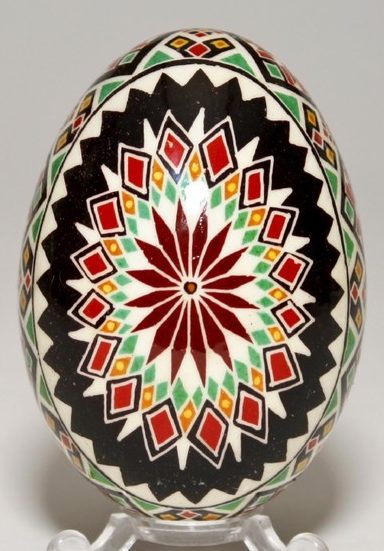
The intricately colored eggs were used for various social and religious occasions and were considered to be a talisman, a protector against evil, as well as harbingers of good.
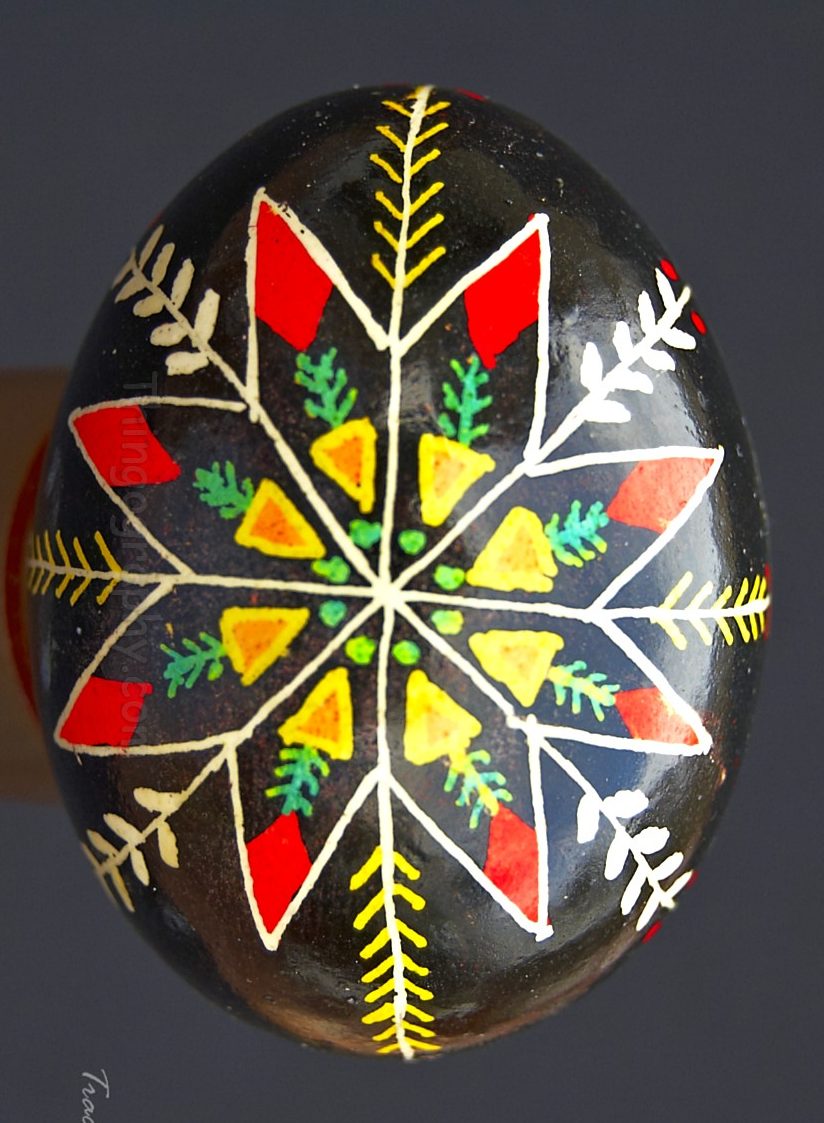
This magical craft has brought the world another dimension of beauty, creativity, and fine art.

Chemistry Cat, also known as Science Cat, is a series of puns and science jokes appearing as captions around a cat behind some chemistry glassware wearing black rimmed glasses and a red bow tie.

While the source of the image remains a mystery, it is likely a stock photograph, possibly of Russian origin.

This wonderfully serious cat with a quick wit has changed the face of Chemistry.

Chemistry Cat puts a smile on scientists and non-scientists alike.

And isn’t that the purpose of Art?

To bring enjoyment and a smile into your life?


I saw the angel in the marble and carved until I set him free. ~Michelangelo Buonarroti
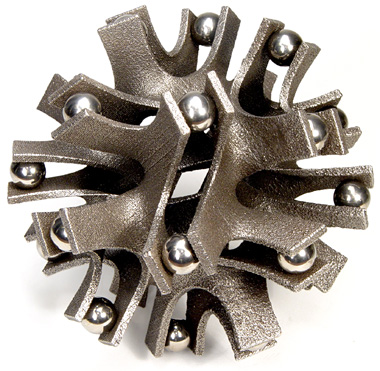
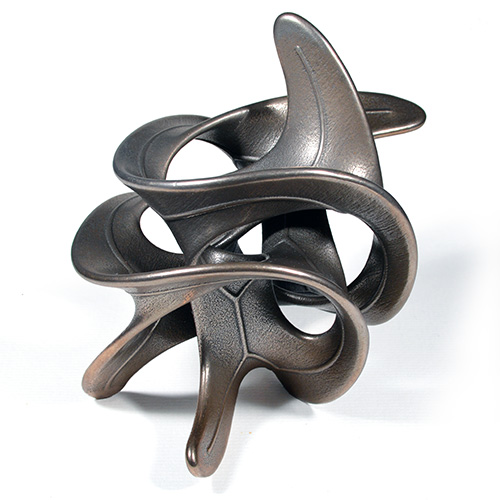
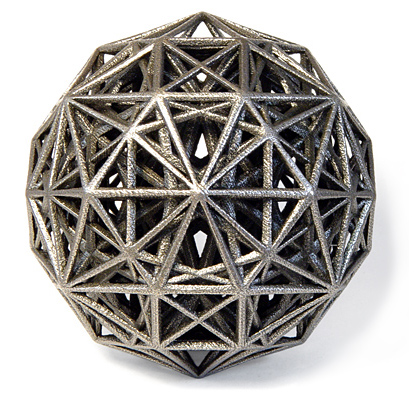
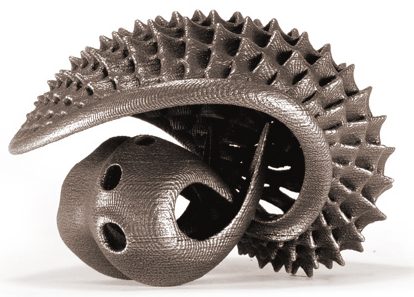

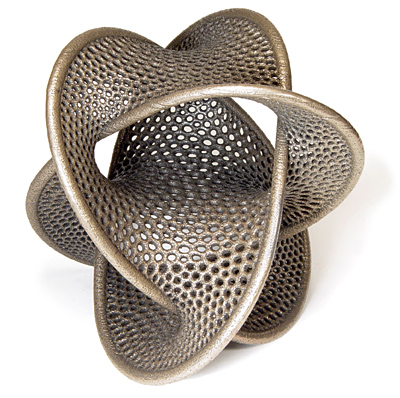
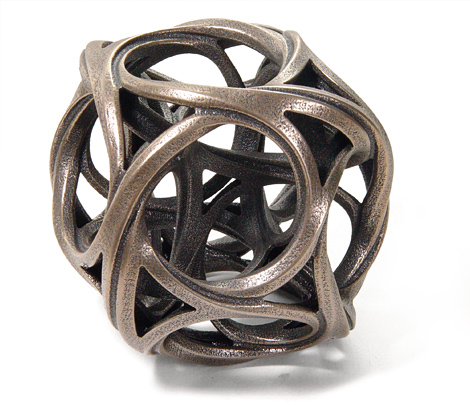

More of Bathsheba’s fantastic steel sculptures can be found at http://www.bathsheba.com/
It’s a beautiful Fall day outside today — cool temperatures, bright sunshine, the falling leaves whispering a sigh of sleep as they fall in a pile at the bottom of their trees. It’s a perfect day to be out and about, or sitting and writing, as long as life and sunshine are abundant.
I thought you might enjoy visiting some sparkles at the Sunday Evening Art Gallery this afternoon or this evening as well, so here are a few links and their sparkling companions.


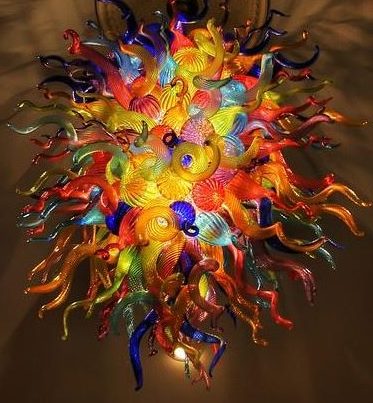

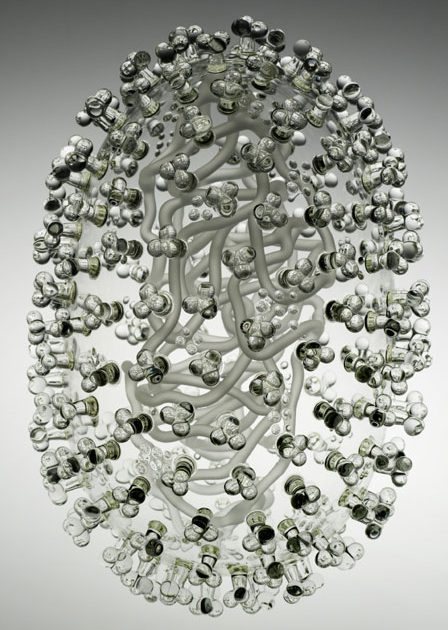
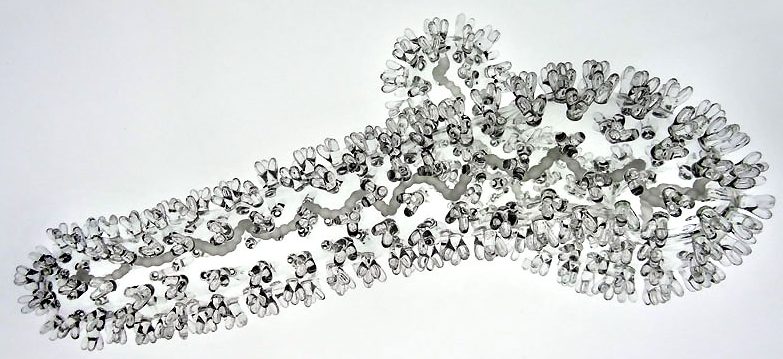
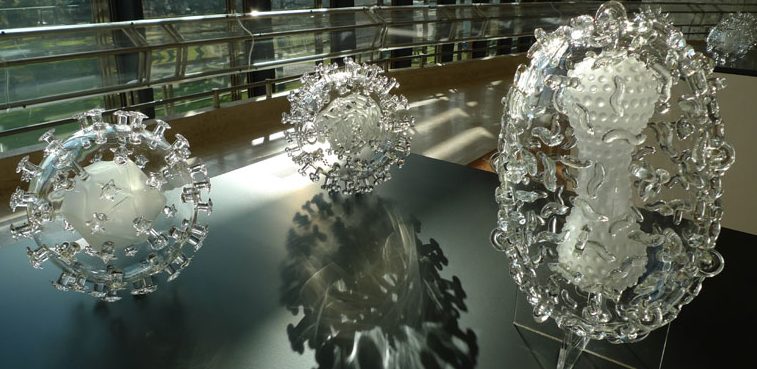


There are times when an artist’s view of reality is frightening.
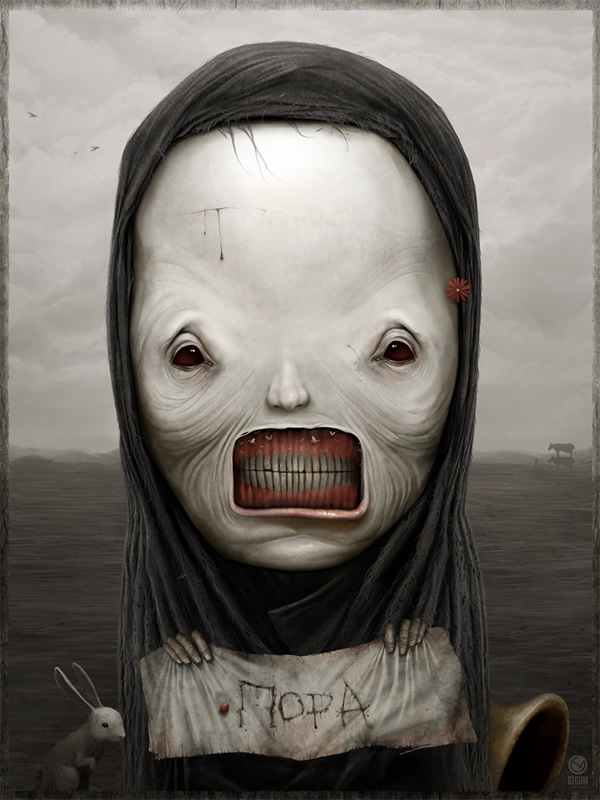
Anton Semenov is a 28-year-old digital painter and graphic designer born and raised in Bratsk, Russia.
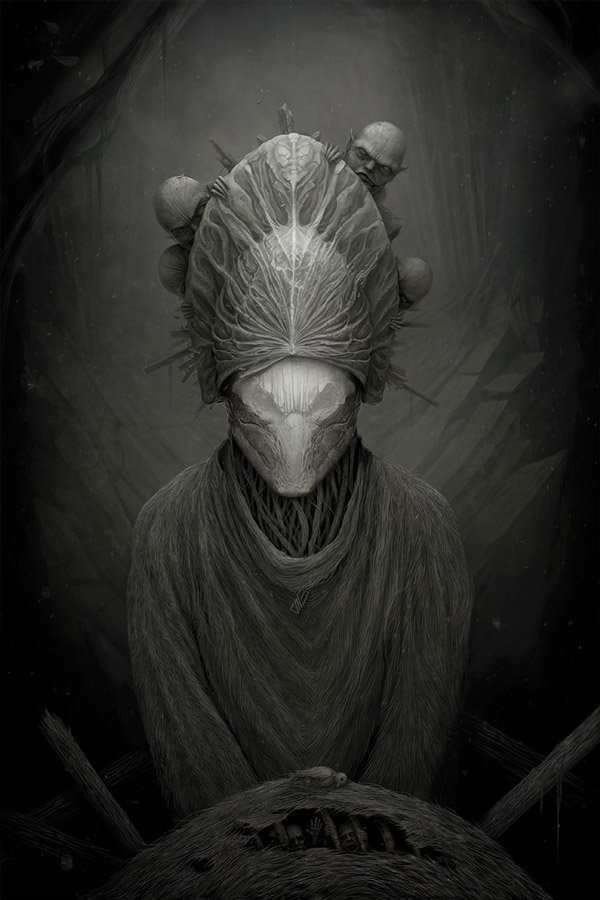
He is a digital painter, graphic designer, and, according to some, bringer of nightmares.
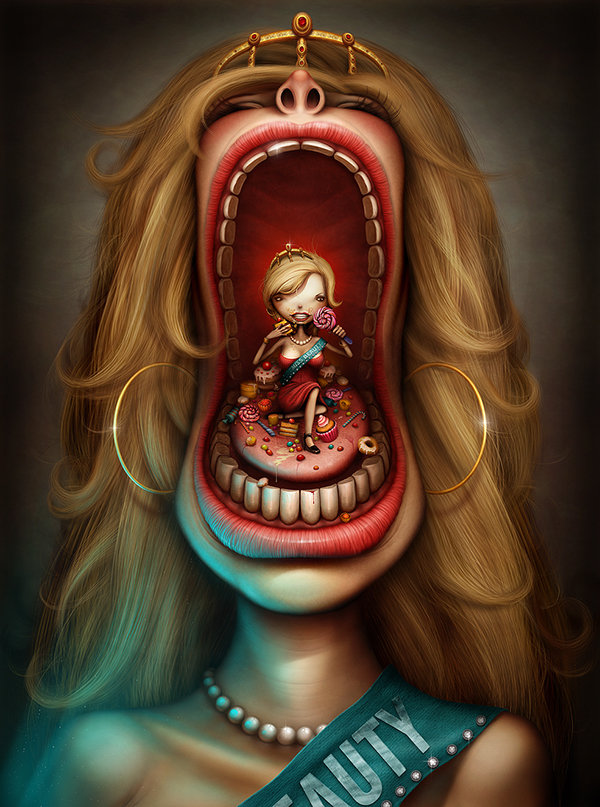
His unique surrealistic style and phenomenal attention to detail and preciseness has crafted his technique into truly his own dark vision of the world around us.
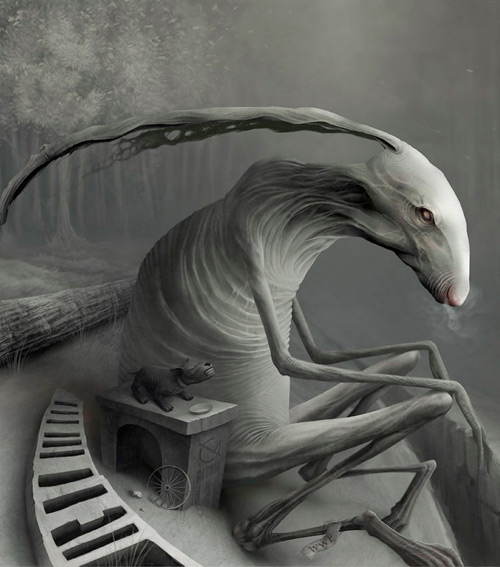
As in all nightmares, there is something fascinating about the way his mind wraps around the darkness and breathes life into it, bringing them into the daylight.
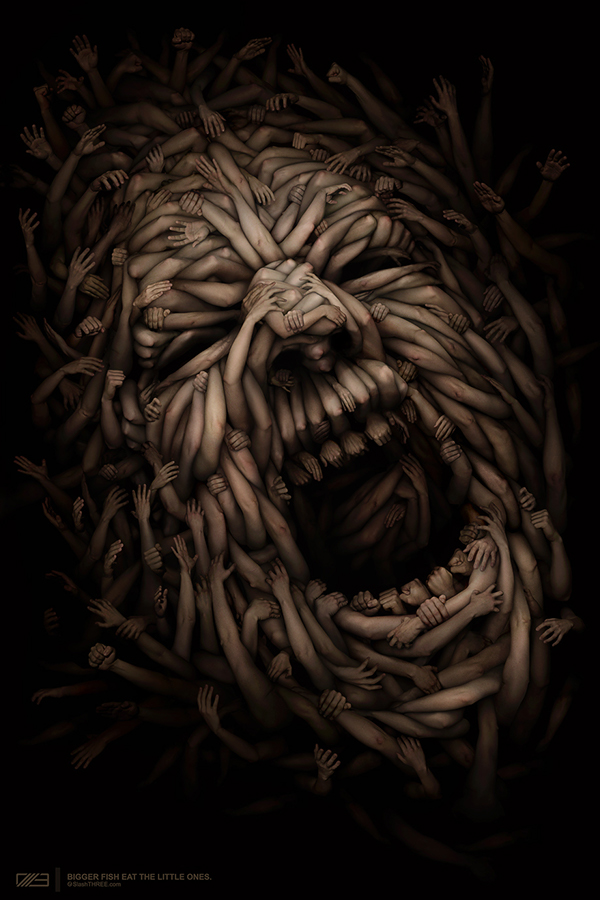
His works feature unique interpretations of the subconscious world.

We might not always feel comfortable with his interpretations, but we are thankful he is able to create that which we fear to share.
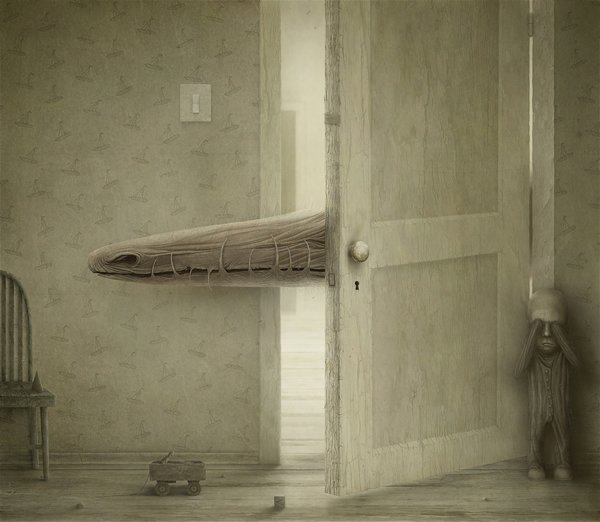
More of Anton Semenov’s work can be found at http://www.awwwards.com/anton-semenov-disturbing-and-frightening-illustrations.html and http://gloom82.livejournal.com/.

DREAM CATCHERS

An ancient Chippewa tradition
The dream net has been made

For many generations
Where spirit dreams have played.
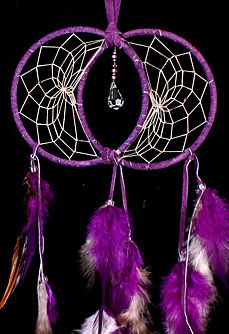
Hung above the cradle board,
Or in the lodge up high,
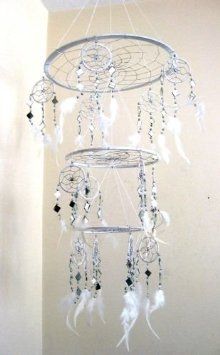
The dream net catches bad dreams,
While good dreams slip on by.

Bad dreams become entangled
Among the sinew thread.
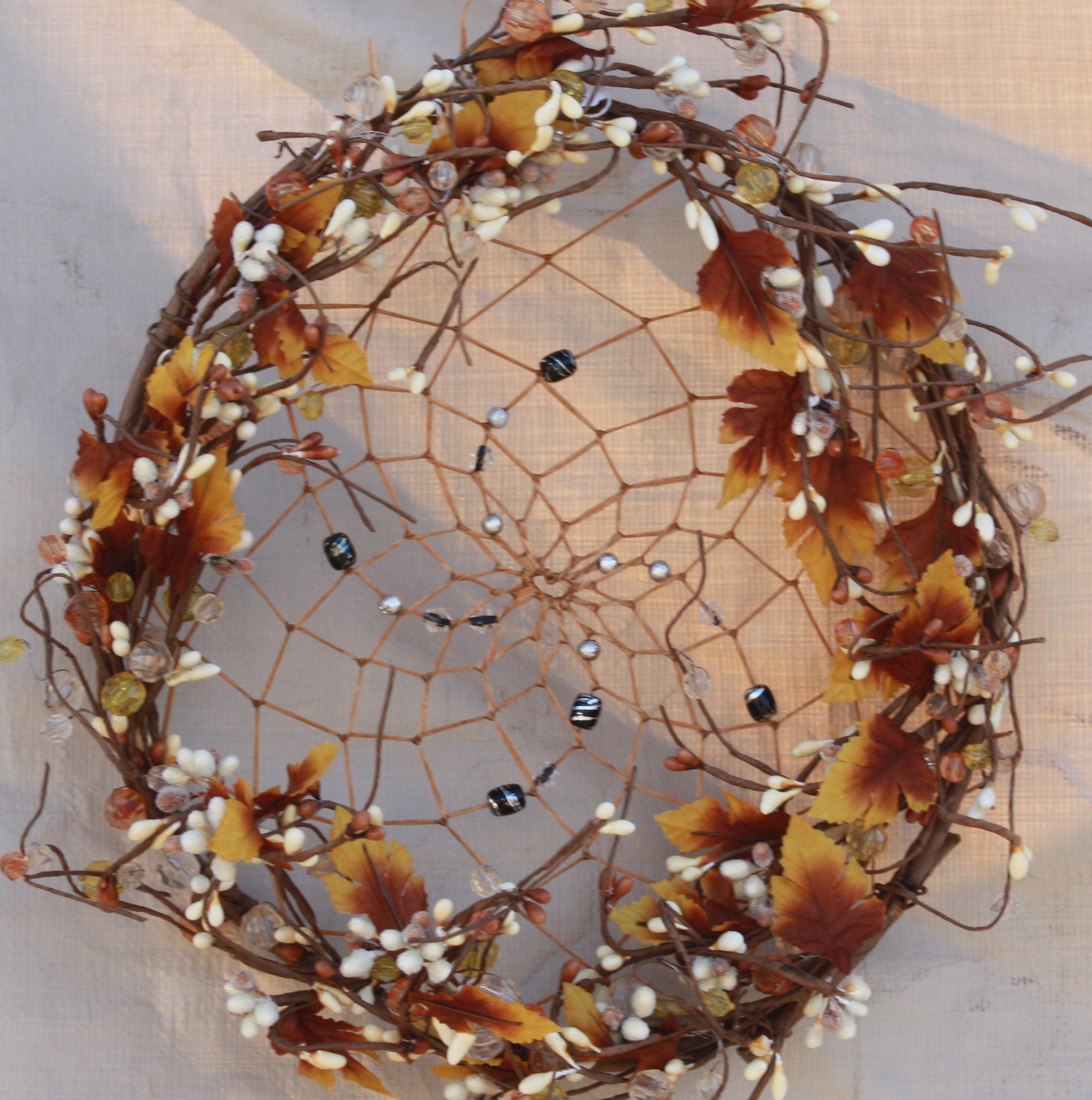
Good dreams slip through the center hole,
While you dream upon your bed.
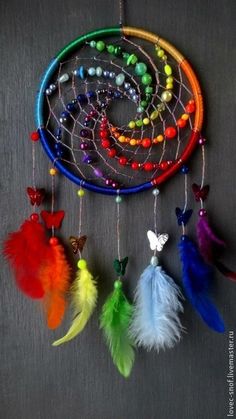
This is an ancient legend,
Since dreams will never cease,

Hang this dream net above your bed,
Dream on, and be at peace.

Riusuke Fukahori is known best for his resin-based studies of Japanese goldfish.

Riusuke Fukahori does it so realistically you never imagine that this is just his 3D art form of goldfish, captured as if time stood still.

Fukahori alternates between pouring resin into a vessel and painting goldfish with acrylic paint, giving the resulting work a three-dimensional optical effect.
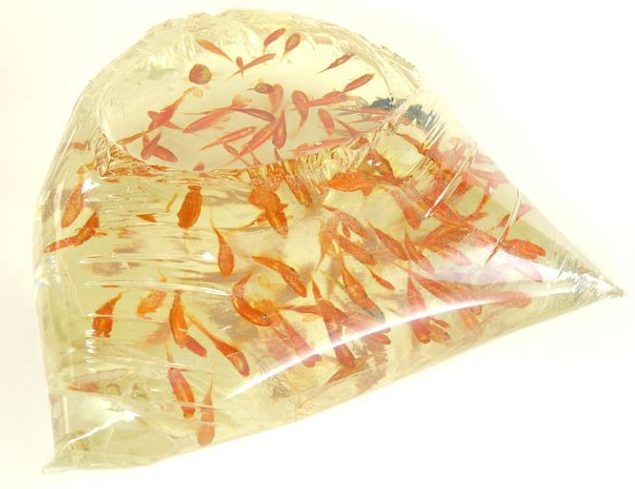
Most of his works are contained in conventional household items, such as cups and bowls.
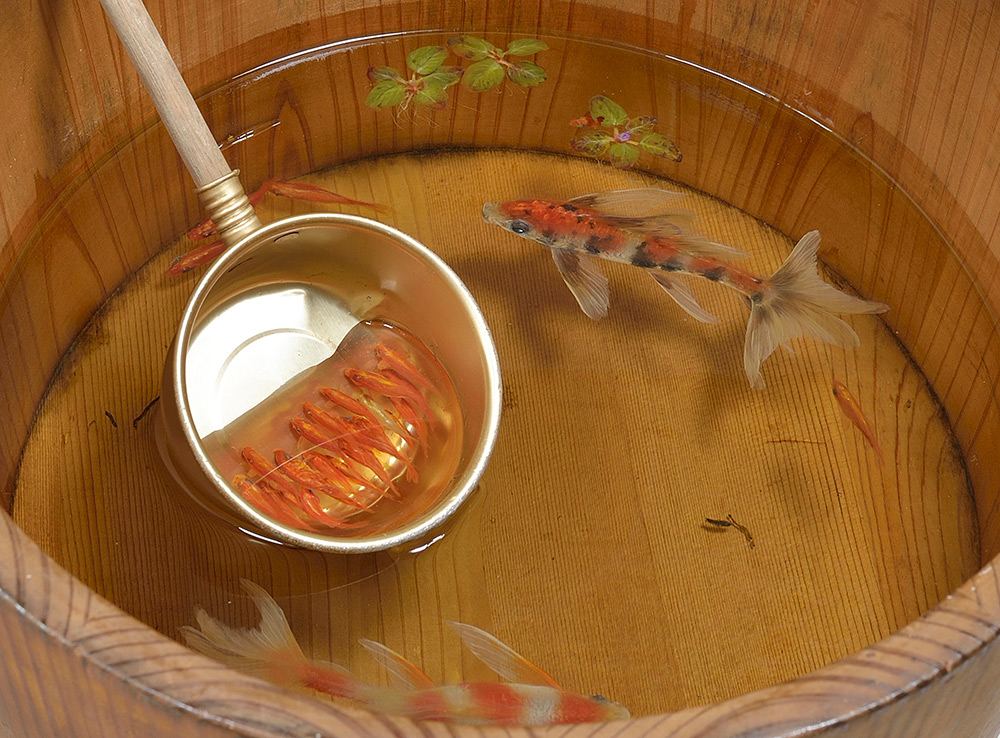
The artist was initially attracted to his goldfish because he admired them and viewed their domestication as a metaphor for the stifling conditions of modern life.
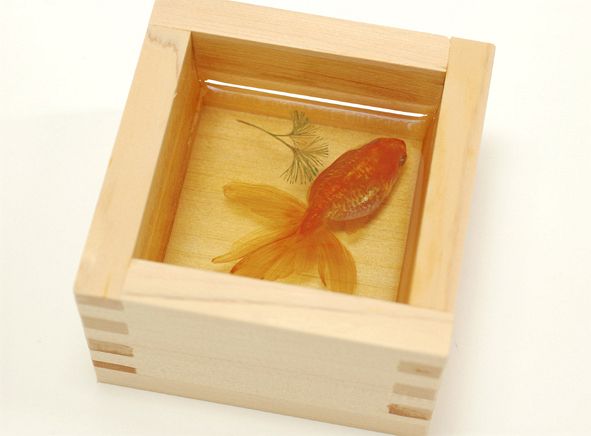
Though he infamously keeps dozens of fish around his studio for observation, Fukahori prefers to execute his works from his impressions and memories, and depicts both existing species of fish and invented hybrids.
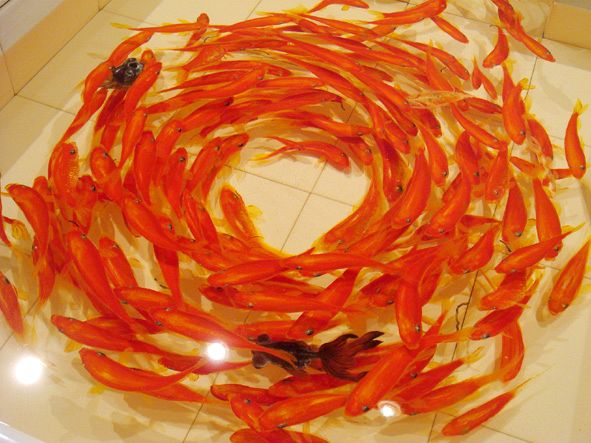
As Fukahori states, “I didn’t invent resin and not the first to use resin. I am not a resin artist. I am a goldfish artist.”
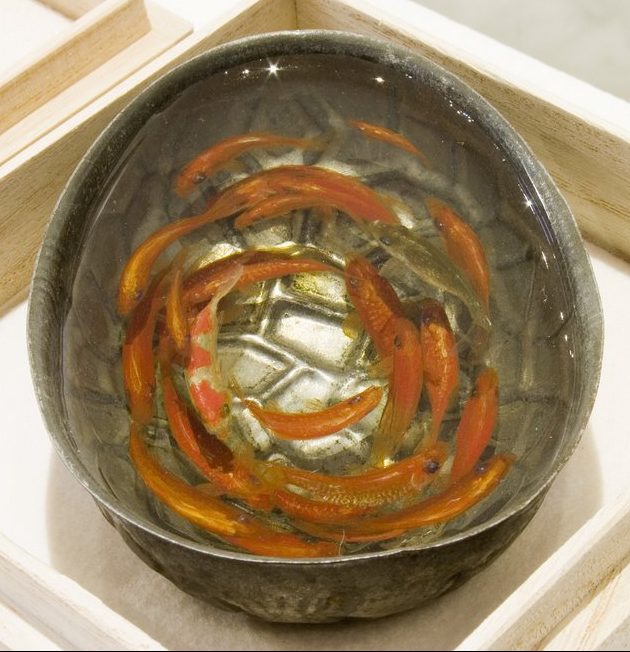
And as one can see, Riusuke Fukahori does so in exquisite beauty and detail.
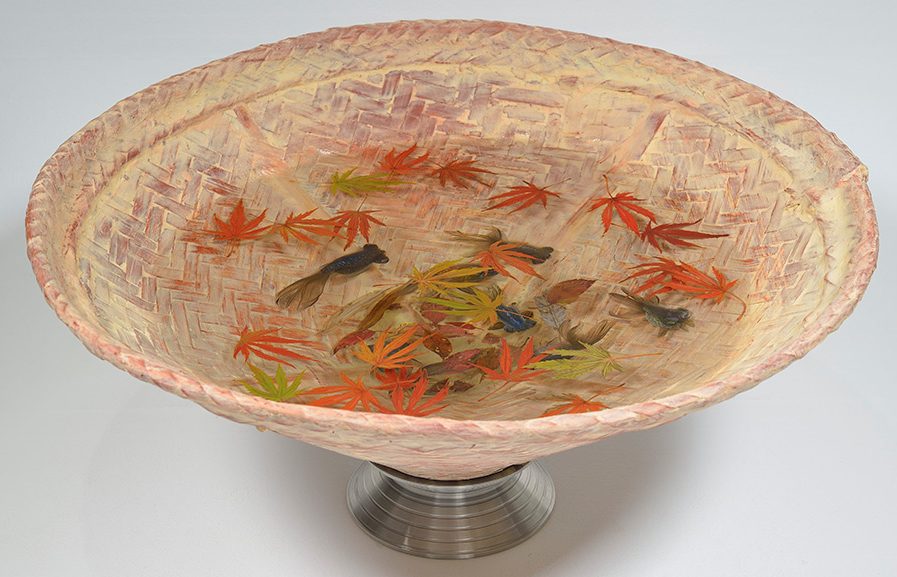
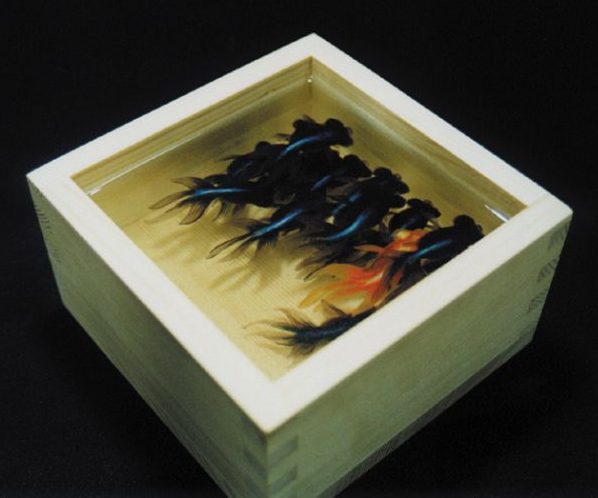
More fantastic art by Riusuke Fukahori can be found on his Facebook page, https://www.facebook.com/RiusukeFukahori. A fantastic video of Riusuke performing his art can be found at Riusuke Fukahori.
The Harp that once through Tara’s halls
The soul of music shed,
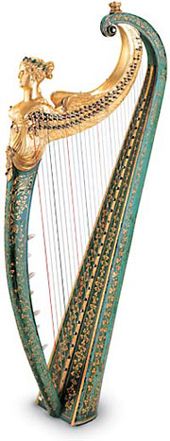
Now hangs as mute on Tara’s walls
As if that soul were fled.
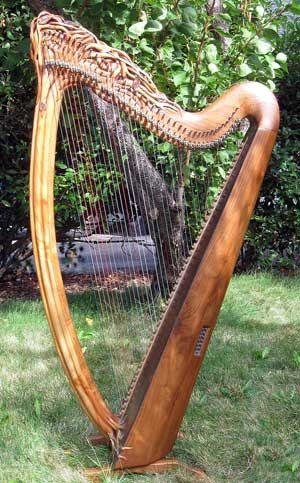
So sleeps the pride of former days,
So glory’s thrill is o’er,

And hearts, that once beat high for praise,
Now feel that pulse no more.
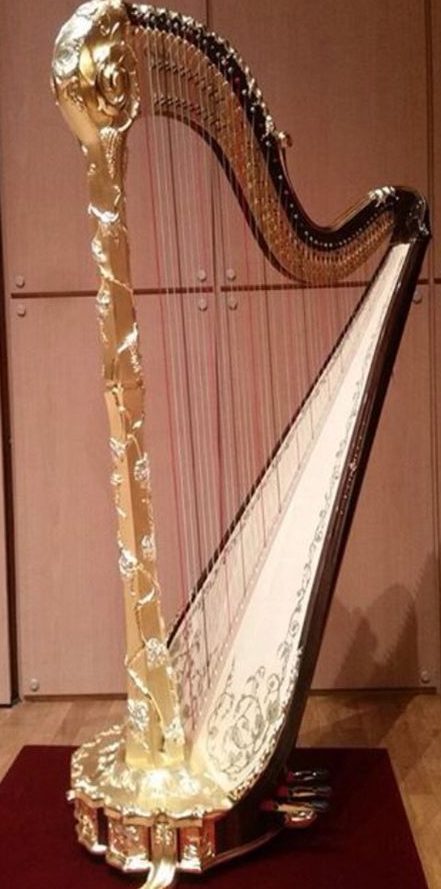
No more to chiefs and ladies bright
The harp of Tara swells:
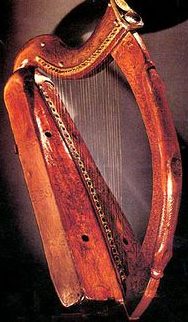
The chord alone, that breaks at night,
Its tale of ruin tells.
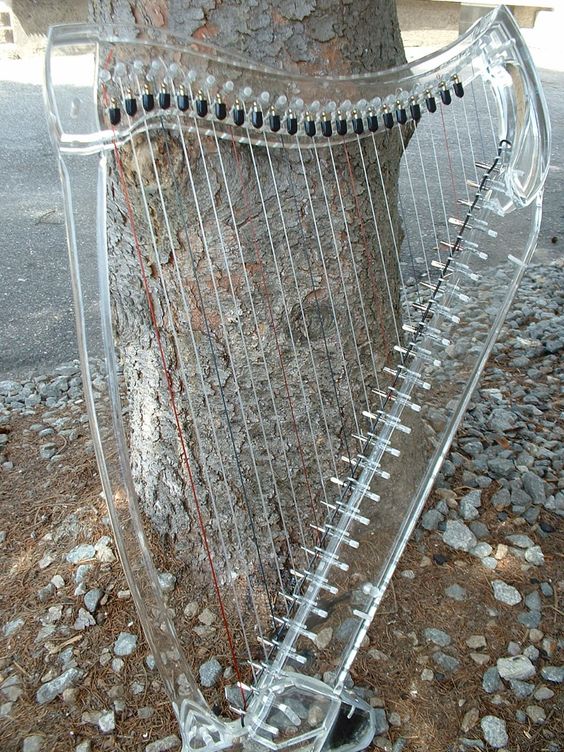
Thus Freedom now so seldom wakes,
The only throb she gives,
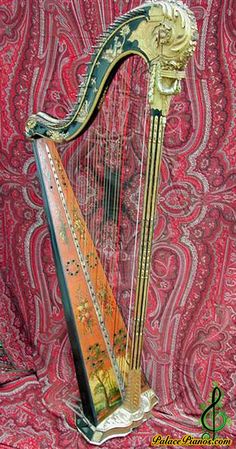
Is when some heart indignant breaks,
To show that still she lives.
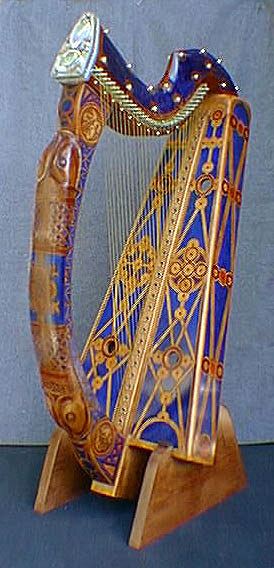
Thomas Moore (1779–1852)
Gustav Klimt (1862-1918) was the leading figure of the so-called Vienna Secession, an art movement that rebelled against the established art concepts and introduced a new style similar to Art Nouveau.
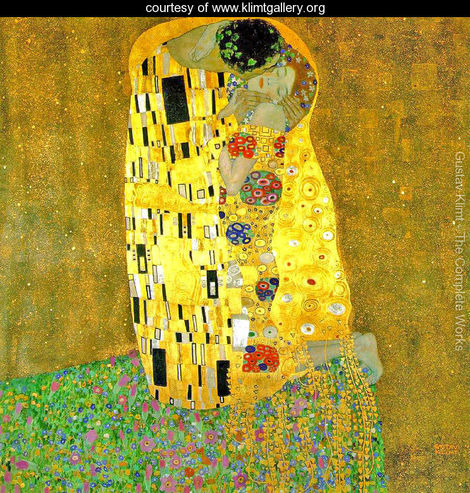
To bring more abstract and purer forms to the designs of buildings and furniture, glass and metalwork, the group gave birth to another form of modernism in the visual arts and they named their own new movement: Secession.

Klimt was seen as an artist who was far ahead of his time.
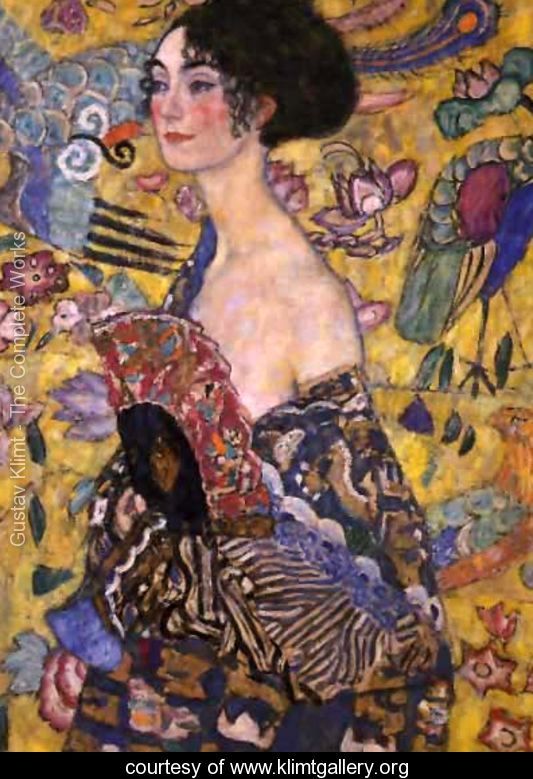
Much of the work that was produced during the Austrian born artist’s career, however, was seen as controversial.

Although symbolism was used in many of his art forms, it was not at all subtle, and it went far beyond what the imagination during the time frame accepted.
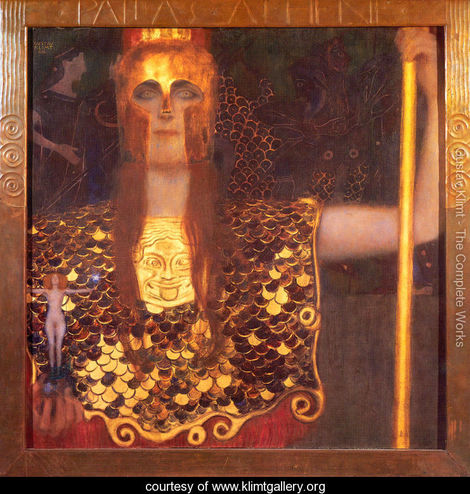
Klimt’s primary subject was the female body, and his works bordered on eroticism.
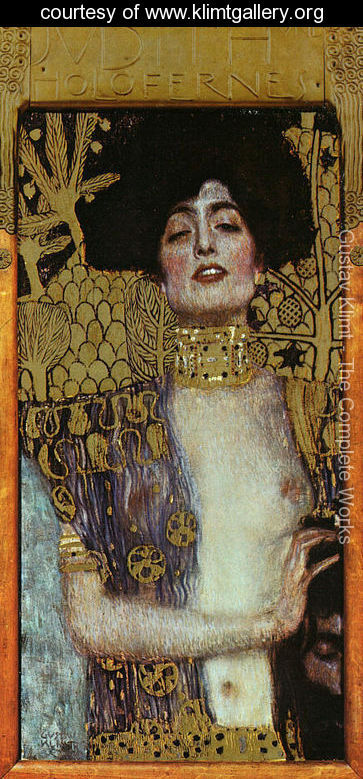
Although his work was not widely accepted during his time, some of the pieces that Gustav Klimt did create during his career are today seen as some of the most important and influential pieces to come out of Austria.

More of Gustav Klimt’s work can be found at http://www.klimtgallery.org and http://www.gustav-klimt.com.
As we head into the “Last Vacation Weekend of the Summer”, I want to show off a couple of new Sunday Evening Galleries I’ve added recently. I have to admit the images are stunning, the artwork remarkable. Please go check them out if you get time!

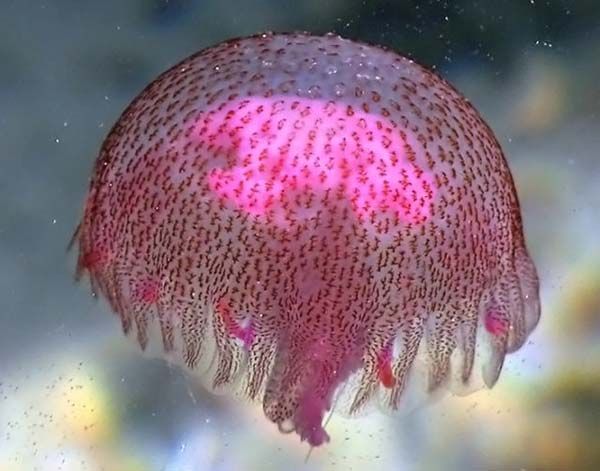


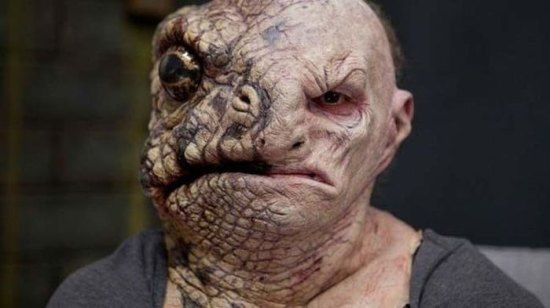

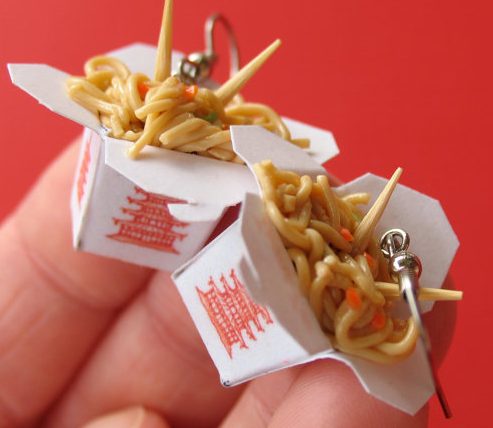
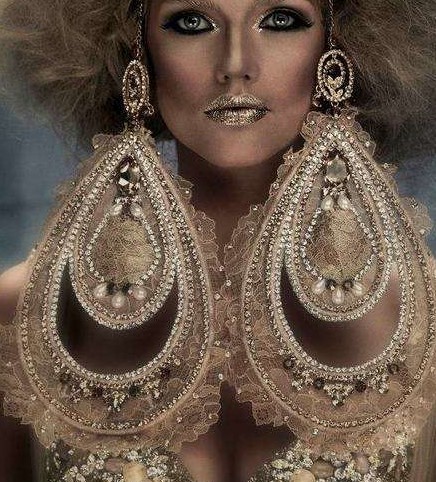


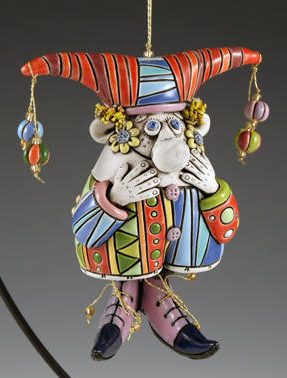
See you on the other side of Reality!
Talented Canadian artist Richard Preston has been experimenting with textures and shapes all his life.
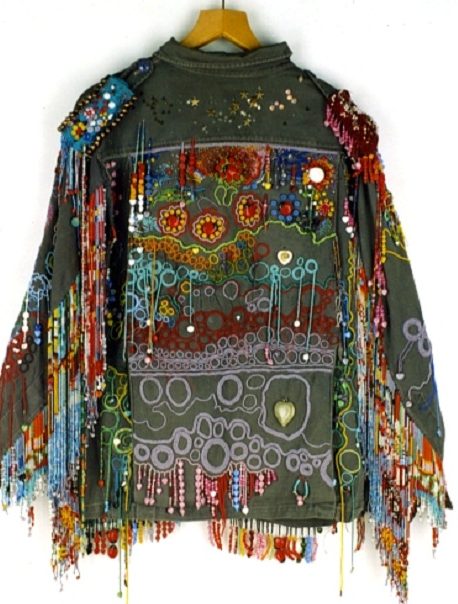
In 1979 Preston began to establish West Coast Jacket – the first in a series of military jackets.
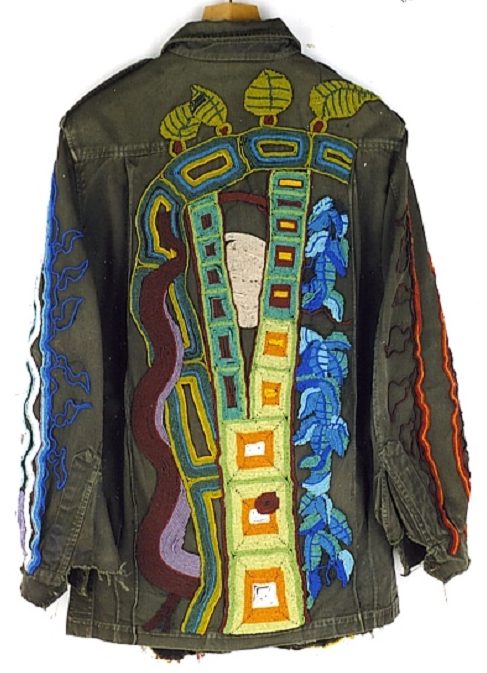
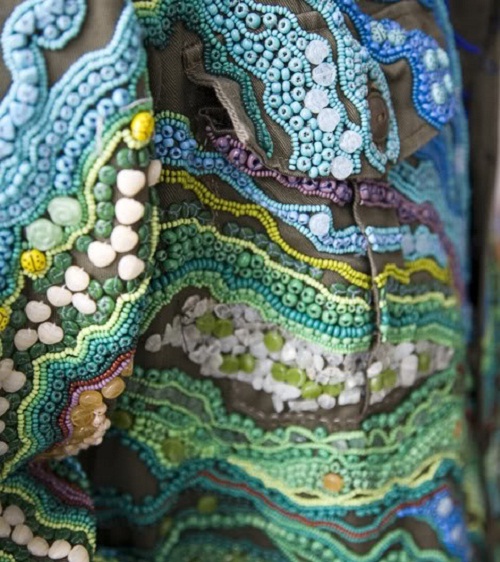
Beading or embroidering them, he creates a different story or on every jacket.
Army clothing embroidered with the sun, clouds, scattering stars, river flows, flowers (including a lush pink wreath on the head of the skeleton symbolizing death), and designs with a touch of psychedelic aesthetics, makes a strong and rather contradictory impression, turning each jacket – originally impersonal thing – in a unique and truly conceptual object.
Preston, working with new material, draws attention to global problems, in particular, demilitarization.

Preston does not limit himself by the narrow direction in art, trying himself as a painter, sculptor, designer, photographer, writer, actor, and musician.

One of his hobbies was working with beads, and for nearly thirty years he made original creations, filled with real ethnic motifs and vibrant energies of the author.

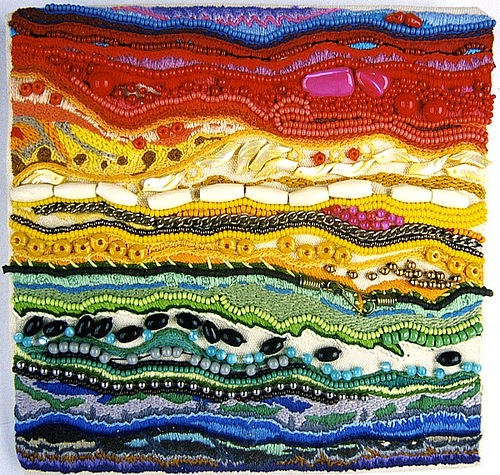
A series “stratigraphy” is devoted to geology. With ribbons, threads and beads, the artist tried to show different periods of his work, as well as layers of different rocks of the earth tells the story of its formation.
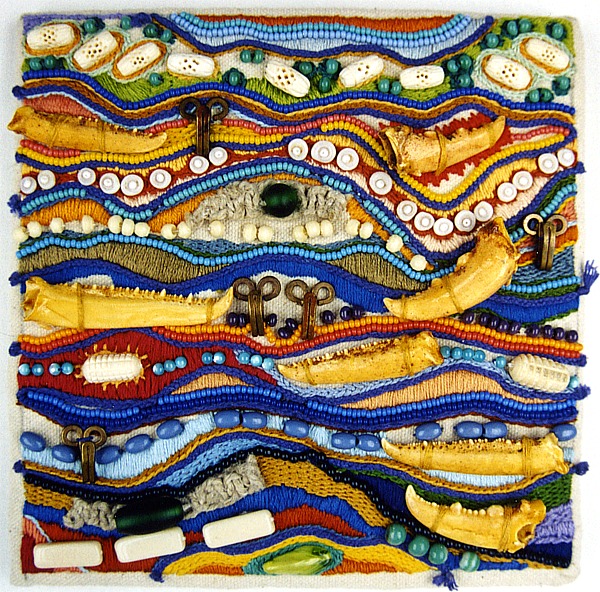
More of Richard Preston’s work can be found at http://viola.bz/richard-prestons-textile-art/ and at http://www.prestvilleartsite.com/.
*

George Vanderbilt’s 250-room French Renaissance chateau is a true marvel, the largest undertaking in residential architecture. Over a six-year period, an entire community of craftsmen came together to create America’s premier home and the environmental wonderland that surrounded it.

…original art by Pierre-Auguste Renoir and John Singer Sargent..magnificent 16th century tapestries, a Library with 10,000 volumes, a Banquet Hall with a 70-foot ceiling, 35 bedrooms, an indoor pool, and a bowling alley. Almost all of the priceless objects that you see throughout the house are from George and Edith Vanderbilt’s original collection. ~~ Biltmore Estate History

Can you imagine a world where you could wander room to room and constantly be dazzled by antique furniture, paintings, tapestries, crystal, and more?

Can you imagine a world where servants attend your every need?

Flowers burgeoning from every garden, fires crackling from 65 different fireplaces, and lavish dinners on the Vanderbilts’ burgundy-and-gold-bordered china made in England by Minton and Spode Copeland, silver flatware featuring an engraved Old English pattern from Frances Higgins, London, 1894, and delicate, feather-light crystal from Baccarat. (~~A Very Biltmore Thanksgiving).
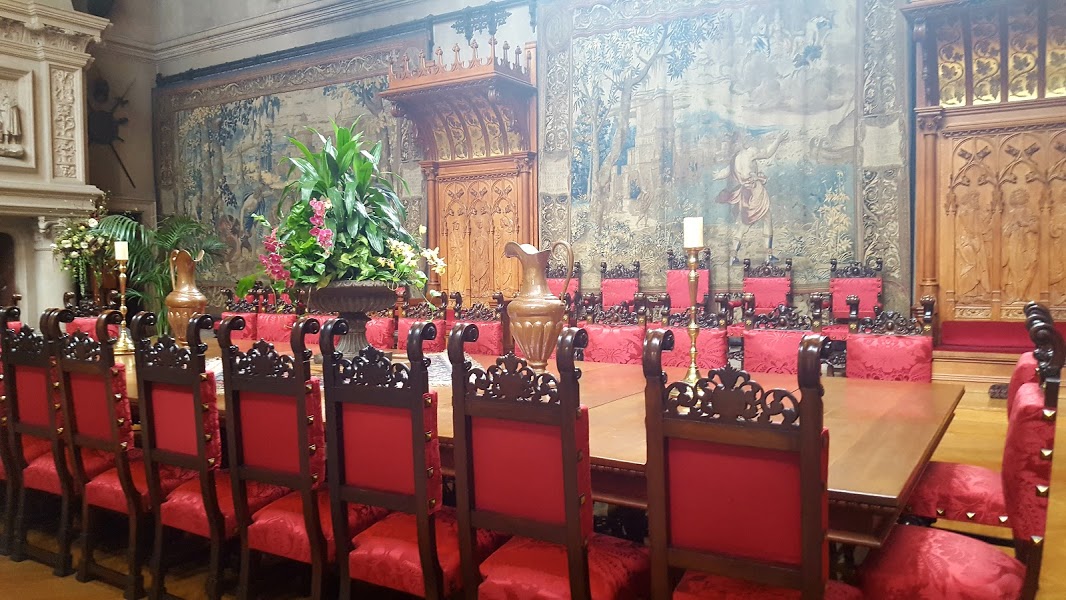
It was a different time, a different world, far removed from the air and light we breathe today.

Everyone should visit a castle once in their lifetime.

We may not want to live there, but we can, for a brief moment, experience the opulance of days gone by.

*
All photographs were taken by Claudia Anderson,© 2016.
*
Read all about the Biltmore Estate at http://www.biltmore.com/
We should consider every day lost on which we have not danced at least once.
― Friedrich Nietzsche

Karina Llergo works to find fresh ways to evoke energy through human motion by turning human figures into fluid art.

Dance, air and water are big influences her work.
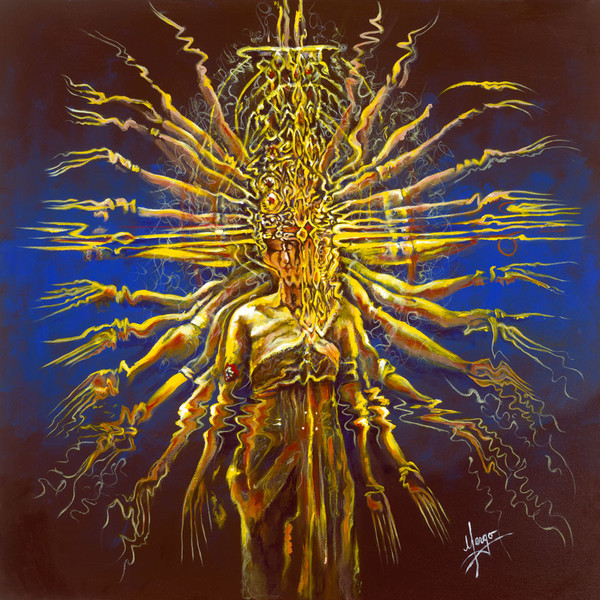
According to Karina, “From dancers I take the beautiful mobility of their bodies, from air, its provoking rhythmic motion and from water, its captivating deconstructed reflections.”

“I know a piece is completed when I close my eyes and feel its rhythm of dance, water and air singing in harmony.”
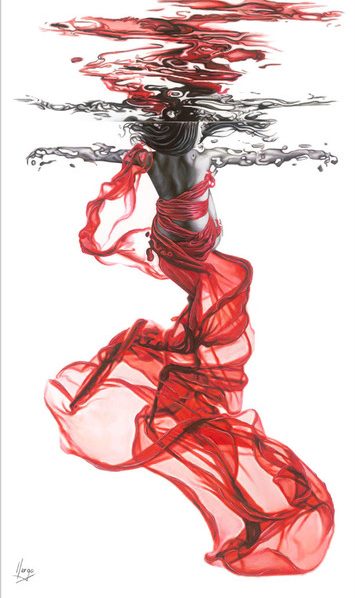
As a lifelong dancer, competitive swimmer and avid skydiver, she found herself drawn to depicting on canvas the palpable energy of the human body in motion.
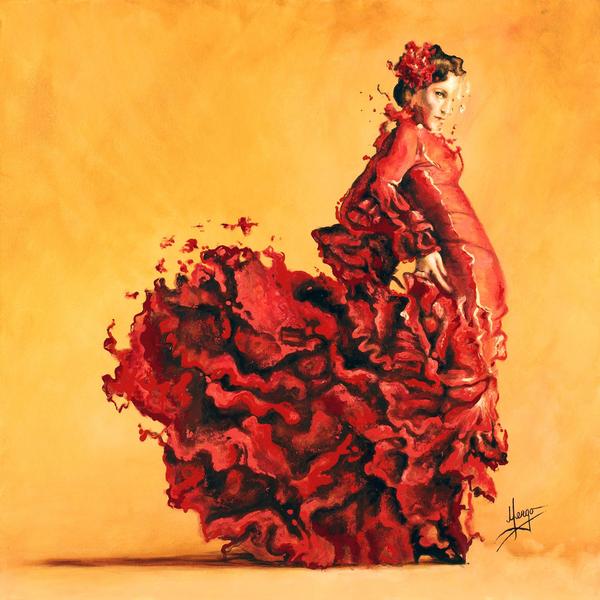
Of Mexican, Armenian and Spanish descent, Karina’s diverse background influences her life in every way, as does her insatiable passion for the creative arts.

More of Karina Llergo‘s gorgeous artwork can be found at her website http://karinallergosalto.com/
You can also find Karina on Facebook www.facebook.com/KarinaLlergoSalto and
Instagram instagram.com/karinallergosalto#
*
Jacek Yerka was born in Toruń, Poland, in 1952.
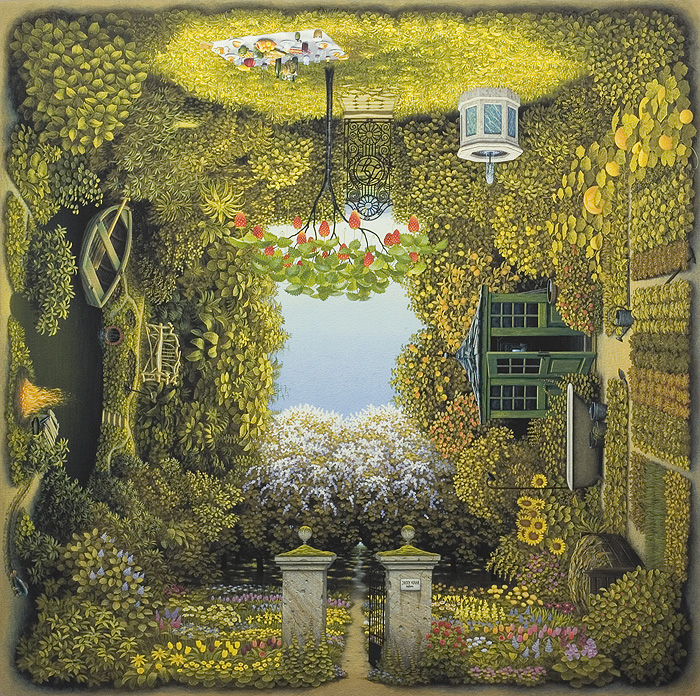
Yerka studied fine art and graphics prior to becoming a full-time artist in 1980.

As a child, Yerka loved to draw and make sculptures. He hated playing outside, and preferred to sit down with a pencil, creating and exploring his own world.

Yerka resisted pressures of his instructors to adopt the less detailed techniques of contemporary art and continued to work in the classic, meticulous Flemish style he still favors to this day.

He creates surrealistic compositions Based on precise painting techniques, taking pattern from former masters like Jan van Eyck or Hieronymus Bosch.

Like many artists, Yerka pulls on thoughts and memories of his past to create these marvelous artworks.

Yerka’s carefully rendered paintings (acrylics on canvas) are filled with images from the artist’s childhood, one heavily influenced by the surroundings of his home during the 1950’s, and his grandmother’s kitchen, where he spent much of his time.

According to Yerka, “My greatest source of inspiration is always (and I bet will be) my childhood souvenirs – that places, remembered feelings, fragrances and technique of 1950s .”

More of Jacek Yerka‘s wonderful art can be found at the Morpheus Gallery and at his website http://www.yerkaland.com/.
 I’m sure you’ve seen these posts on Facebook that show a wonderfully huge mansion in the woods/on the water/at the edge of the mountains, and the post says, “If you could live without WiFi and a phone and TV, etc., would you live here?”
Having spent the last five days up Nort’ , I think I can answer a solid “No.”
It wasn’t a mansion; it was a little house we call “The Cabin.” No TV, no Dish/Direct TV, no WiFi, just a DVD/8 Track Player and a radio. For getaway purposes it was ideal. But the times I tried to go online to do some Art Gallering, the signal from my phone was 烂摊子. A mess. So my wildly popular (I love adding my own adjectives) Sunday Evening Art Gallery had to take a Sunday night break.
I also wanted to spend some free time looking for unique artists, following a few leads from friends and followers (I’m always open for suggestions!). Grandkids were out playing, men fishing, cool breeze in the window, quiet except for the sounds of nature, it was a perfect Art Moment.
Yet I could not load any page other than the main one I landed on. No pictures, no links. And I felt like those people who can’t go to the bathroom without their cell phone. I felt helpless. And more than that — pathetic.
During this contemplation time I had a few revelations, too. I think we all get messages from the beyond…all get an idea which direction we should go. But we don’t listen. We — our ego — knows better. So we butt our heads against the wall and keep trying to recast the same pot.
What works for you? What feels right? What feels out-of-sorts? Are you happy with your blog? Are you happy with your craft? Would you sometimes rather do B than A? K rather than E?
I have found a new love affair with Unique Art. There are so many wonderful, unique, unusual artists sharing their work with the world that I’ve never heard of, never seen, never imagined until these past few years. And the thrill I get out of sharing them with you is the same thrill I get when I’ve written something good.
I can feel that same energy when I talk with people who are hooked into some sort of creativity. Their eyes glow, their breath shortens, and their dreams spill out through their words.
I want you to have that glow, too. I want you to sparkle like the fireworks on the 4th of July every time you think of your craft. You will crash and burn and agonize and think and dance and fly. But you will grow and learn and sparkle, too.
I suppose I will wait to introduce a new artist to the Sunday Evening Art Gallery. No need to rush amazement, is there? But because I can’t go long without sharing some kind of art, I will publish a new Gallery.
Don’t go too long without doing your creative thing, too!
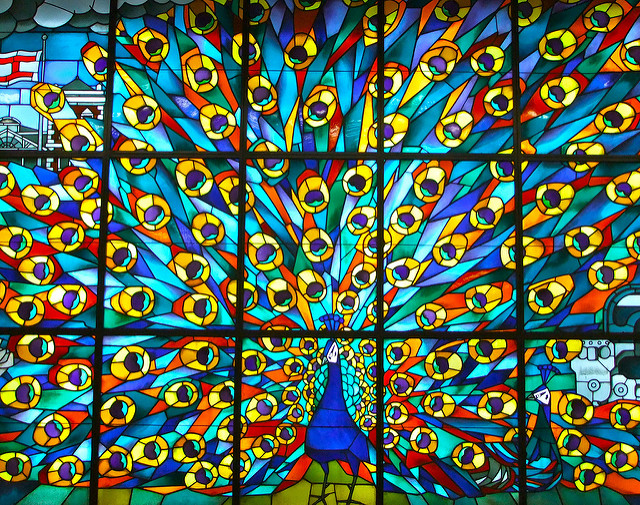
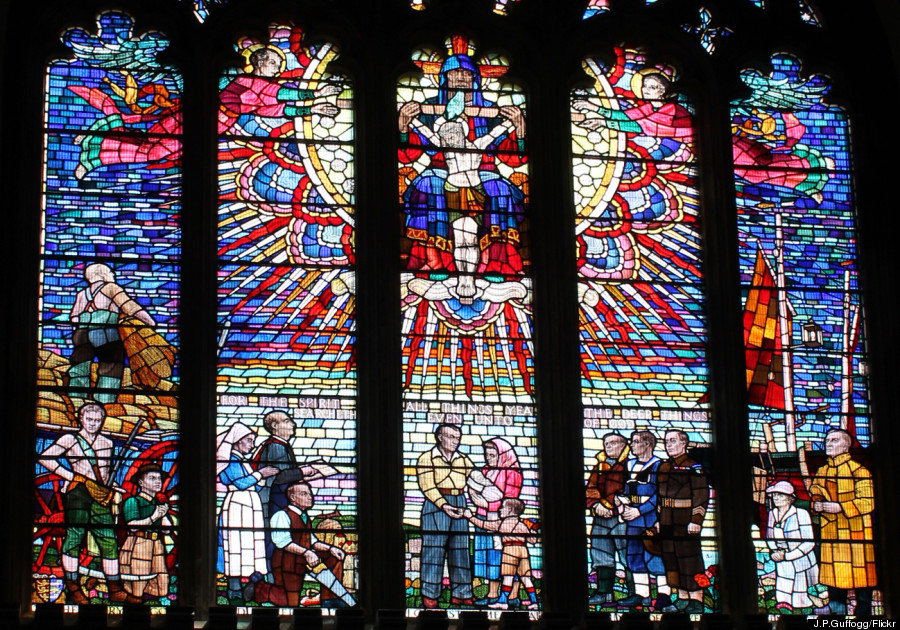
“…I’m innocent still — inside me are stained glass windows that have never been broken — and when I see your light it stains my soul with color …”
John Geddes, A Familiar Rain
*
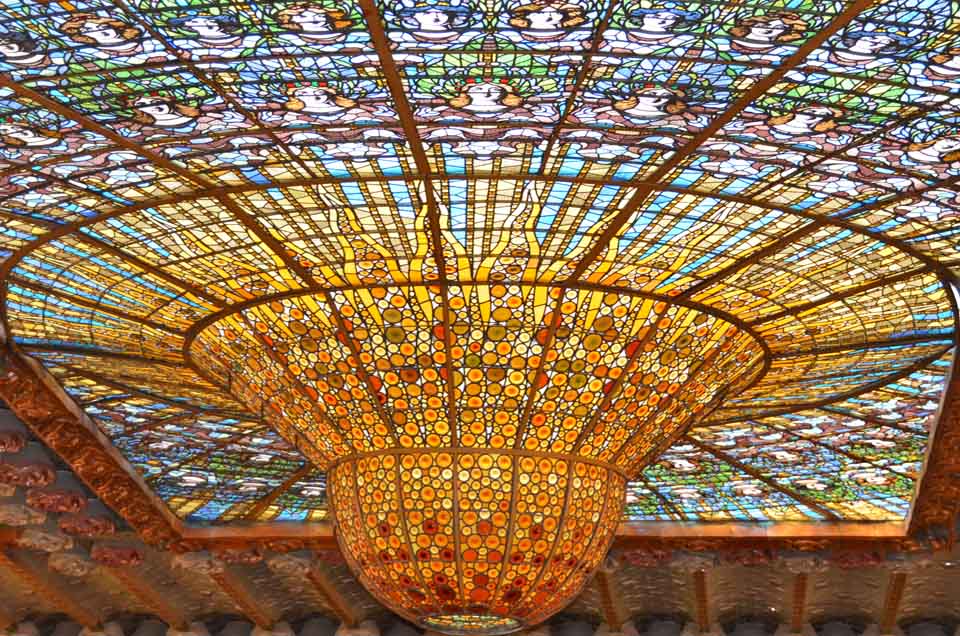
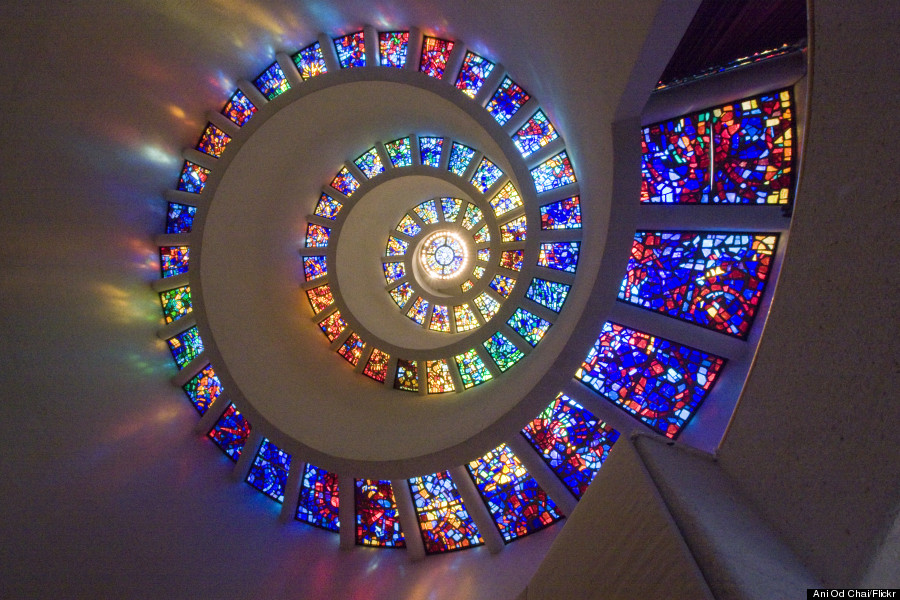

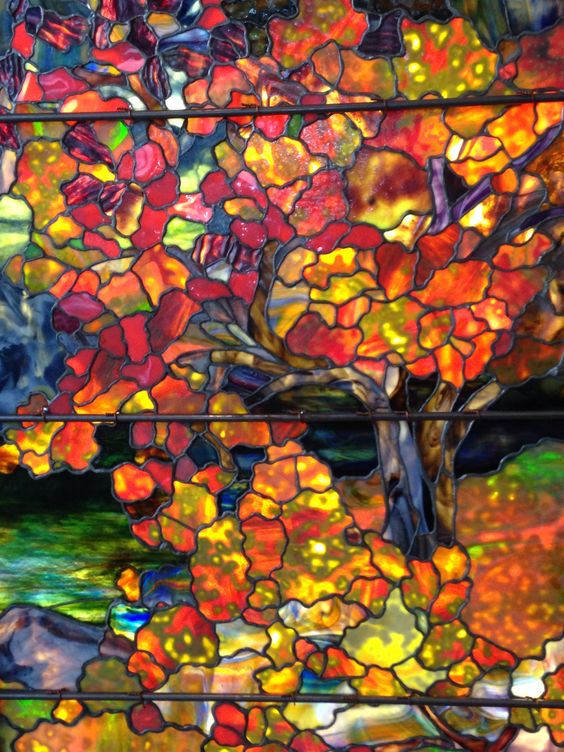
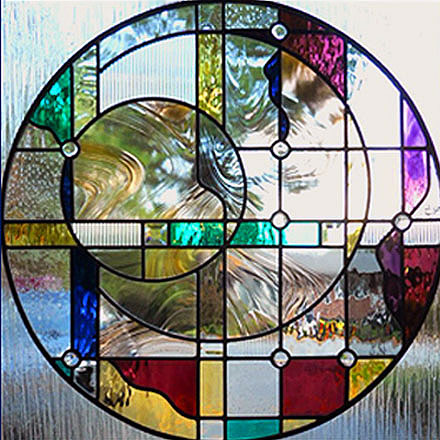


While pursuing a degree in molecular biology and masters in biomedical illustration, Sue Benner created her vision of the microscopic universe in painted and quilted textile constructions.
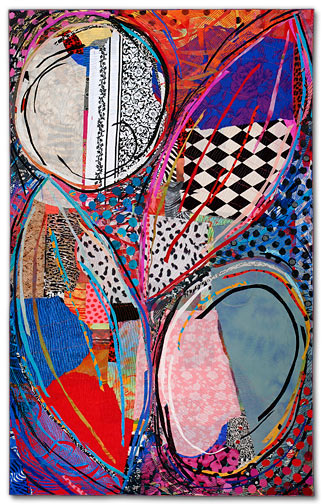
She creates her richly layered quilt canvases by collaging her dye-painted and printed silks with recycled textiles to form wonderful works of art.
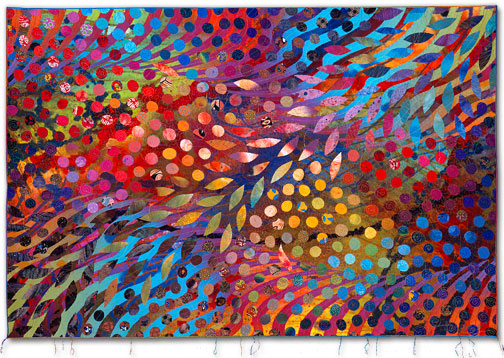
Sue is a recognized innovator in her field, having developed new techniques in fused quilt construction to further the expression of her ideas.

According to Benner, “My love affair with fabric began with my first memories of the clothes my mother made me, recalling exact hue, fiber content, and weave. In the ensuing years, my mother taught me to sew, carefully and creatively. “

“I see a direct connection between the concept of quilt and the assembly of units to make a larger whole.”

“I revel in the simple act of placing one fabric next to another.”
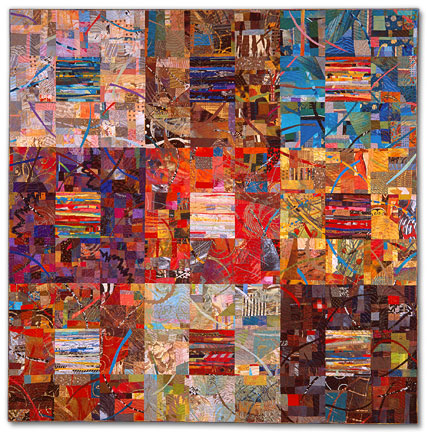
More of Sue Benner’s fantastic creations can be found on her website http://www.suebenner.com/
Bořek Šípek (June 14, 1949 – February 13, 2016) was a Czech architect and designer.
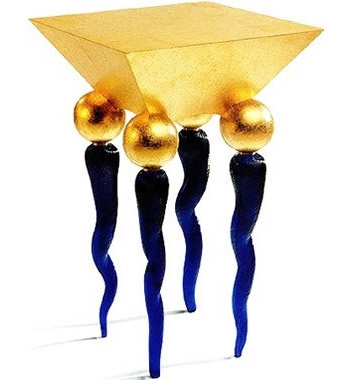
After studying furniture design at the Art School in Prague, architecture at the Art School in Hamburg, and philosophy in Stuttgart, Šípek finished his doctorate in architecture.
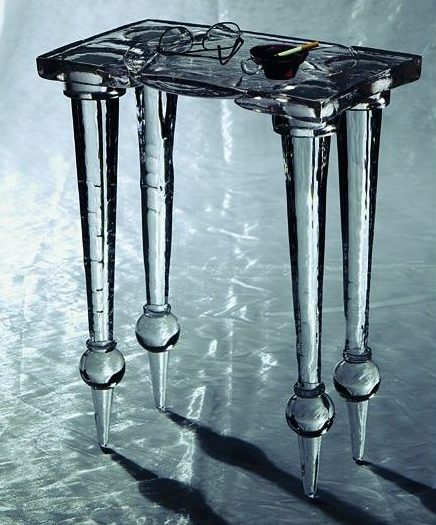
He taught industrial design and architecture, then started his own studio for design and architecture in Amsterdam and Prague.
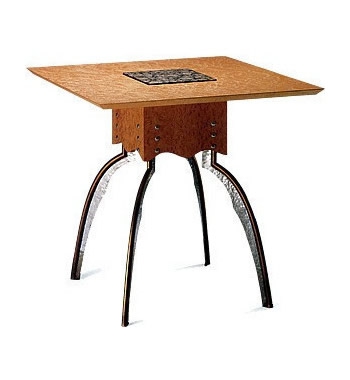
Bořek Šípek has always felt like an architect more than a designer.
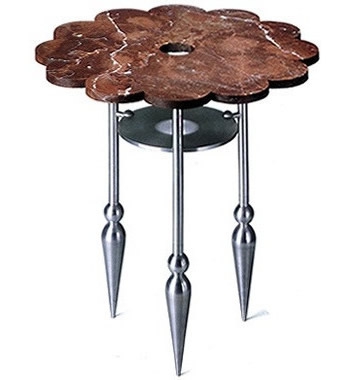
Šípek explains, “I try to interpret new contexts in a new way. It is much closer to me to newly explain something that has roots than to experiment.”
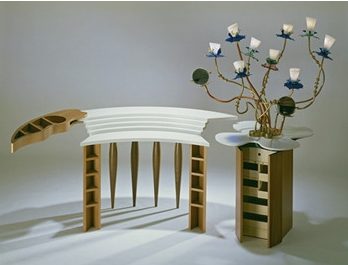
His fantastic works can be found in important museums in Europe, Japan and America, among others.
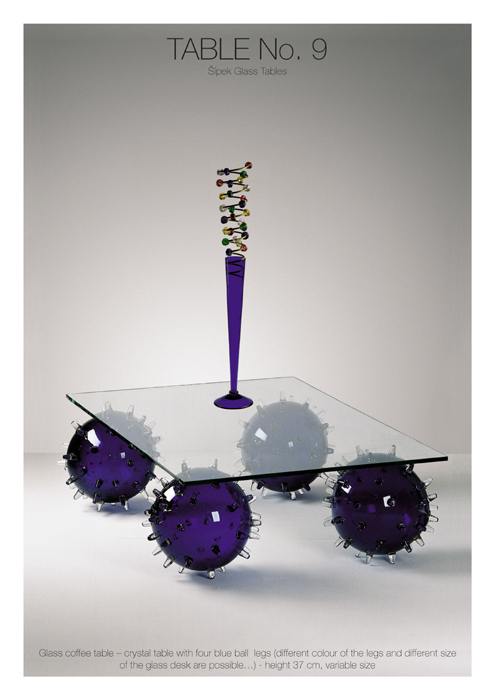
Bořek Šípek is a master of glass, chandeliers, lamps, carafes, wall hangings, all manners of creative art.
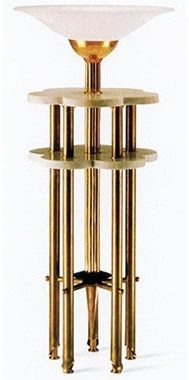
But for this round, I treat you with his tables.
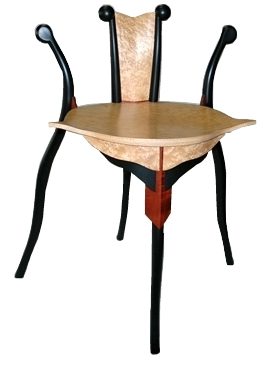
More of Bořek Šípek‘s beautiful work can be found at http://www.sipek.com and http://www.borek-sipek-design.com.
*
Spring Bling
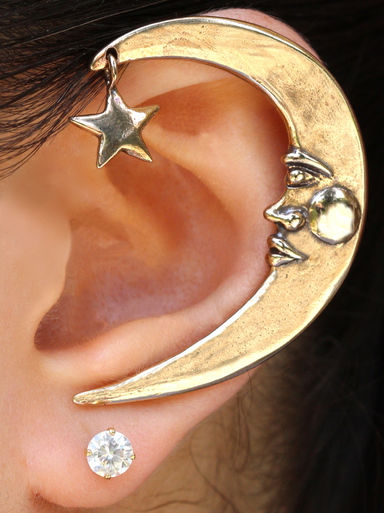
Summer Fling

Need a New
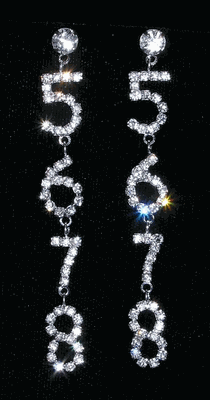
Earring

Have some fun

With just one
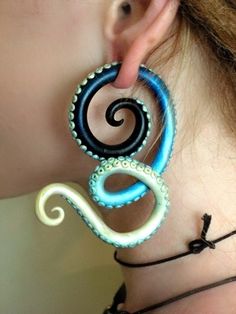
Or a pair

Earrings

Show your ear
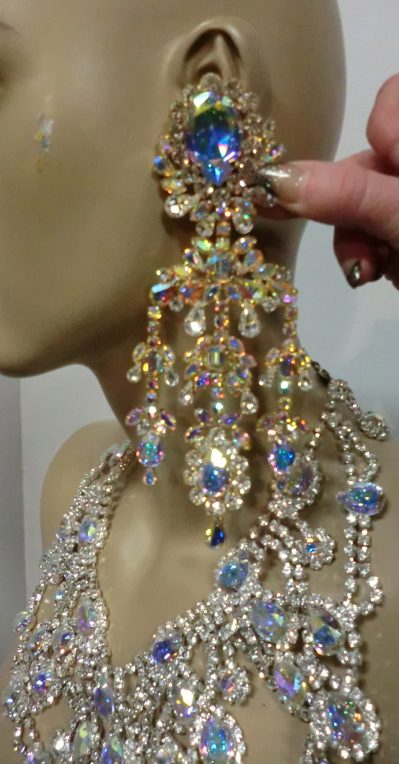
To those who hear
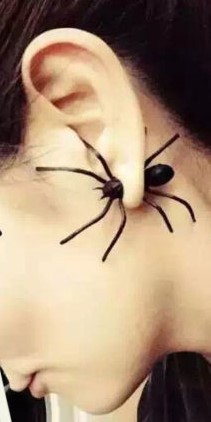
The song that says

I’m here
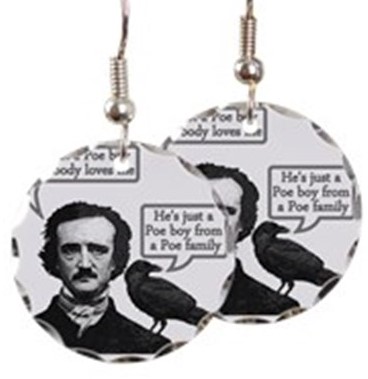
Spring Bling

Summer Fling

Need a New
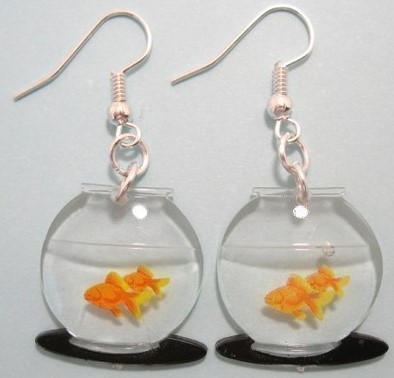
Earring

The unique blend of Realism and the formal discipline of Color Field painting sets the work of Wolf Kahn (1927-) apart.
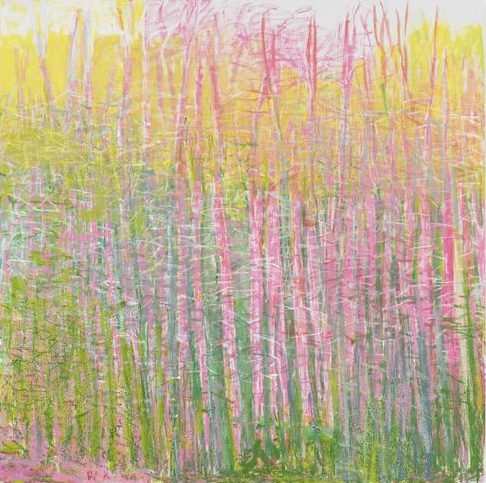
His convergence of light and color has been described as combining pictorial landscapes and painterly abstraction.

It is precisely Kahn’s fusion of color, spontaneity and representation that has produced such a rich and expressive body of work.
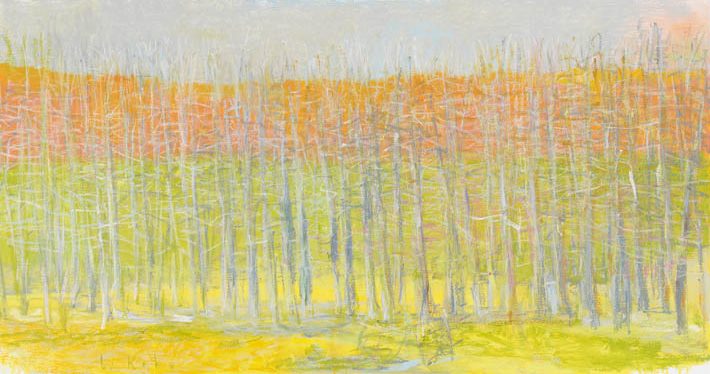
Splitting his time between his studios in New York and Vermont, Kahn renders his pastoral surroundings with a mixture of abstraction and representation and with a keen attentiveness to light and color.

These lush, vibrant, oil-on-canvas paintings read as studies of form and color as much as meditations on the landscapes he has come to understand so well—and has helped others to know, too.
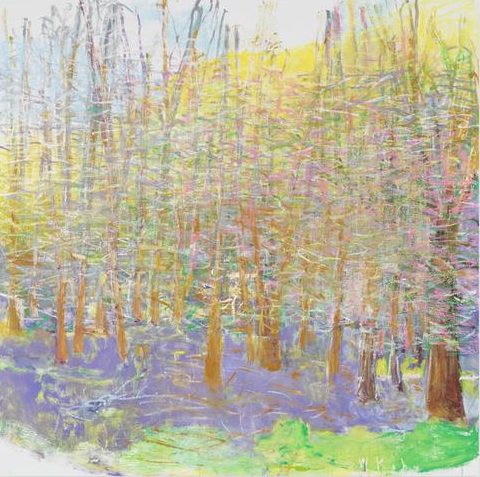
Kahn offers some advice that, perhaps, might be of value to a younger generation of painters. “In order to make a living as an artist, you’ve got to be one of two things: A very nice guy, or a bad egg.”

From the deft touch of his paintings, Wolf Kahn is definitely the first.
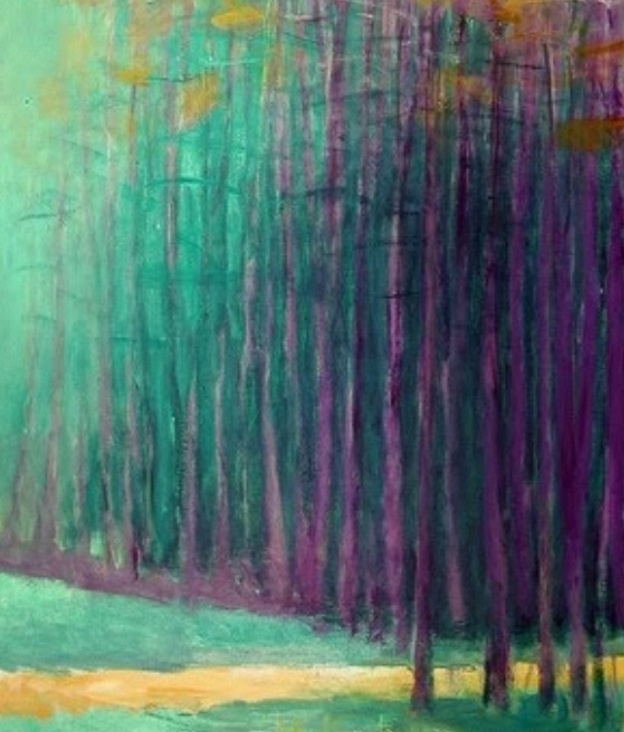
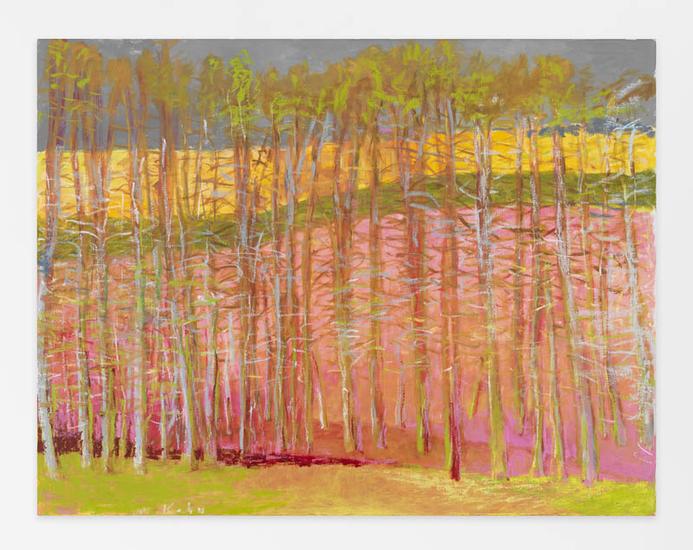
Wolf Kahn’s amazing art can be found at http://www.wolfkahn.com/
Szymon Klimek was born in Poznań, Poland in 1954 of a family blessed with artistic abilities.
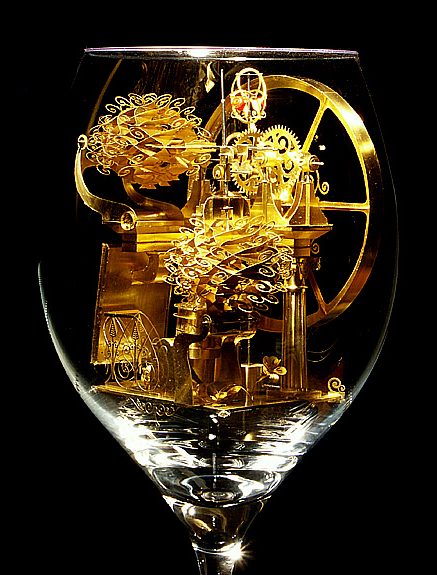
Szymon’s creations are fully functional machines, not bits and pieces tossed together to look like machines.
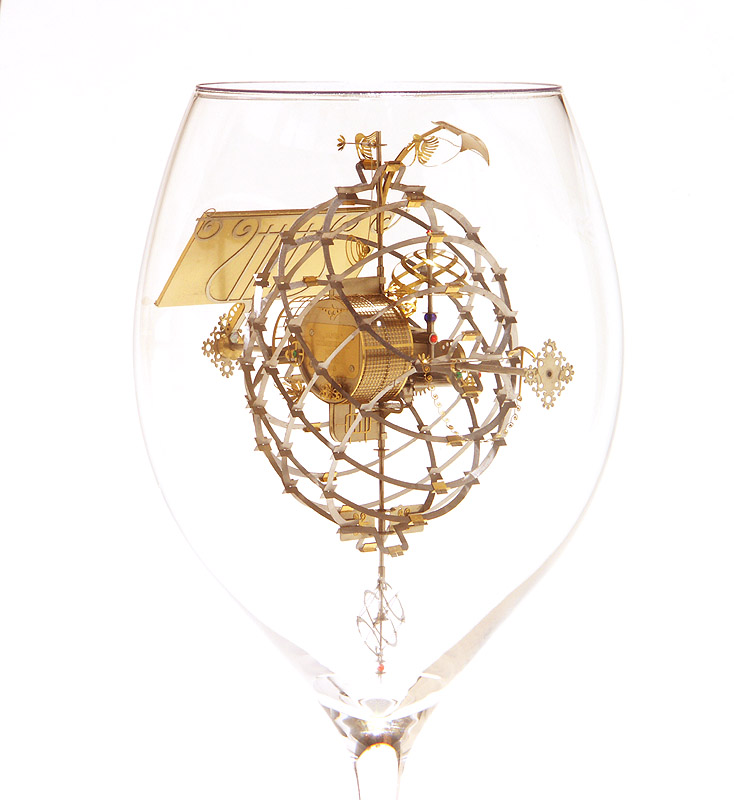
Made from 0.1 millimeter sheets of brass and bronze, Klimek’s miniature machines dance effortlessly in wine glass enclosures than measure little more than 4 inches across.
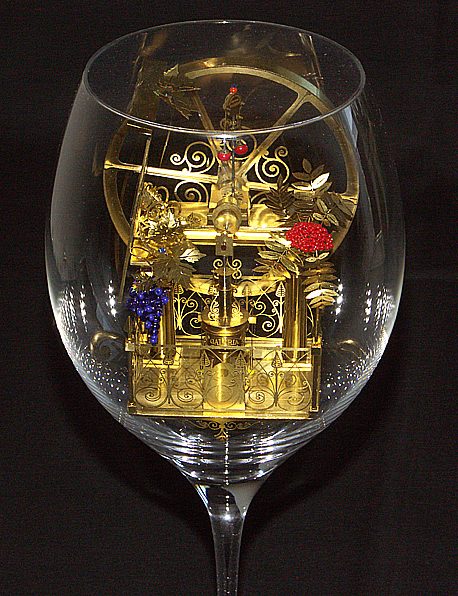
A typical miniature requires two or three months of work from starting the drawings to finishing the device.
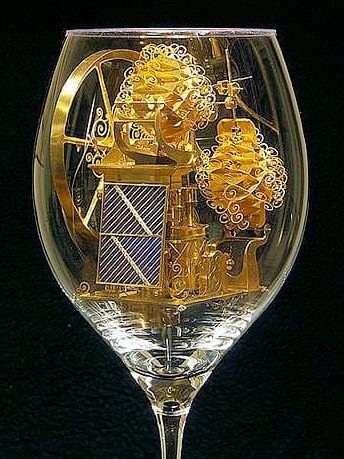
But the most difficult step, according to Klimek, is installation of the miniature into a glass goblet.
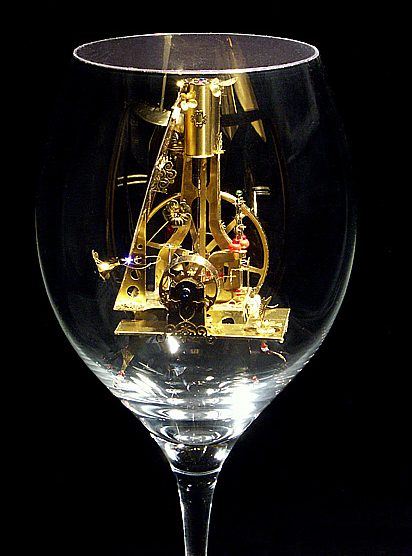
From the start, the miniatures are designed to fit within a spherical glass goblet having an inside diameter of 112 mm (4.4 in), a height of 142 mm (5.6 in), and a mouth opening of 86 mm (3.4 in).
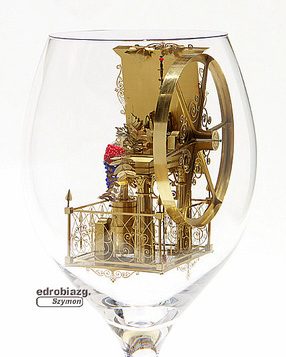
He manually forms the shapes (no fancy machine tools) and glues them together before applying a clear lacquer finish.
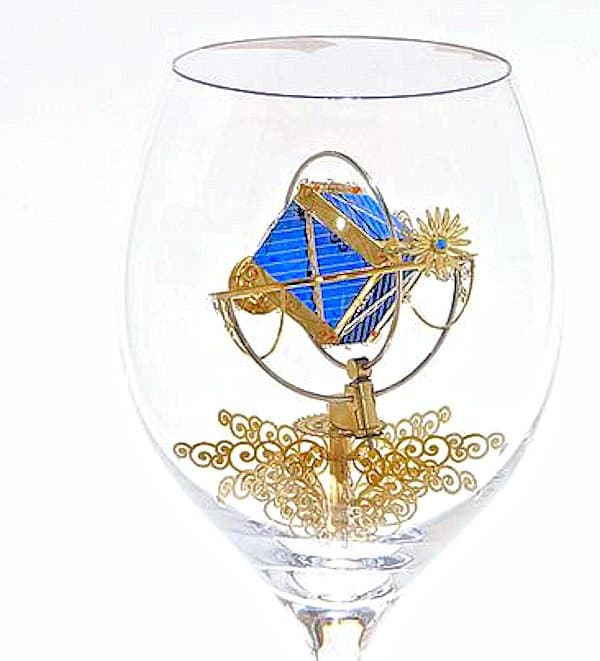
More of Szymon Klimek‘s fantastic machine work can be found at http://www.craftsmanshipmuseum.com/Klimek.htm and at his website http://edrobiazg.com.pl/.
Waste not the smallest thing created, for grains of sand make mountains, and atomies infinity.~~ Eric Knight
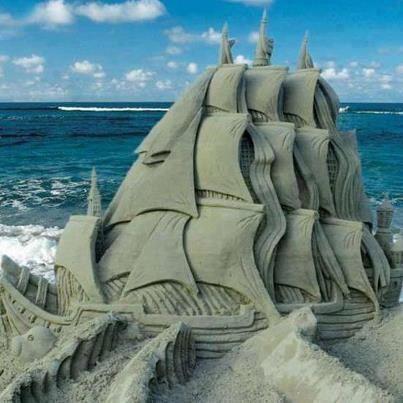
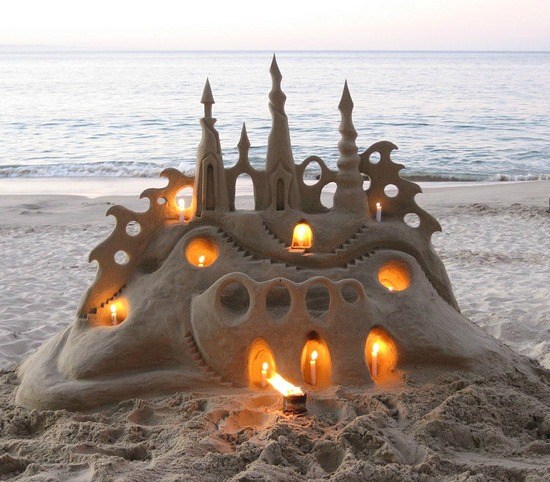
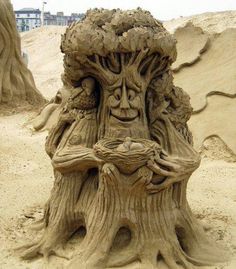
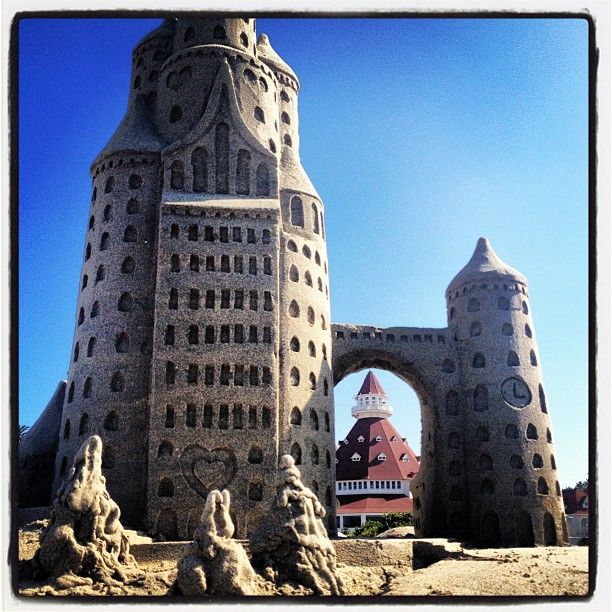
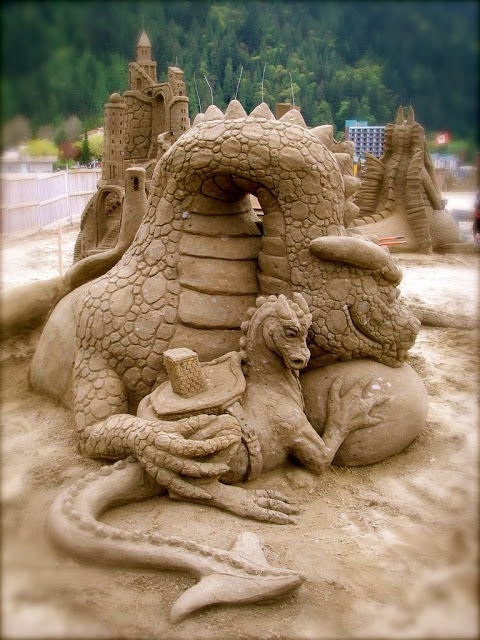
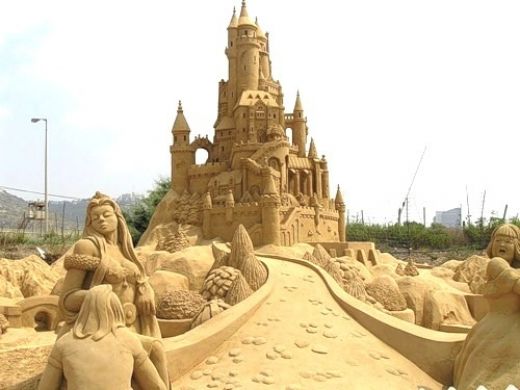
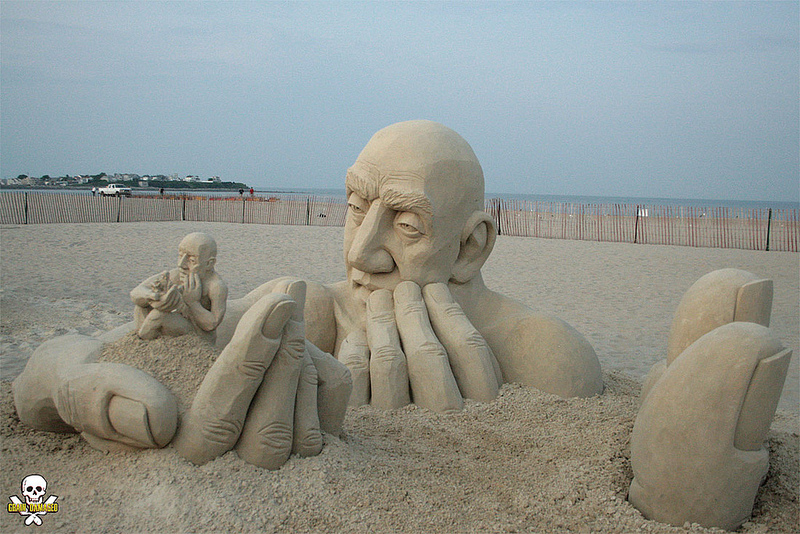
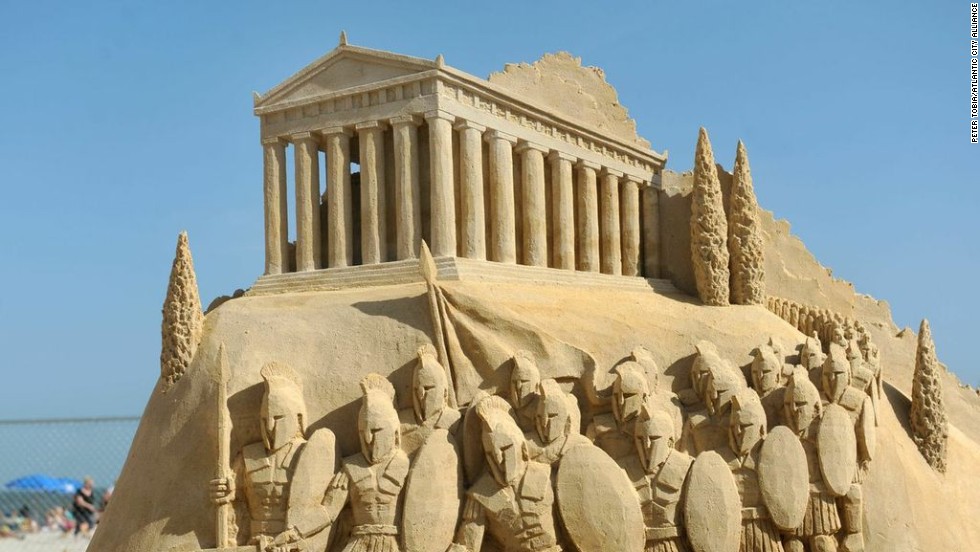
When is a cookie not a cookie?

When it is an amazing creation by Judit Czinkné Poór.

Chef Judit Czinkné Poór is the mastermind behind Hungarian cake decorating shop Mézesmanna, a small studio with a giant social media presence because of the incredible photos and videos they share of their decorative confections.
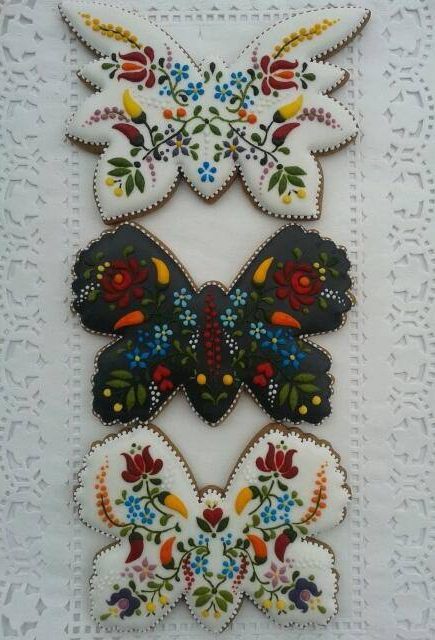
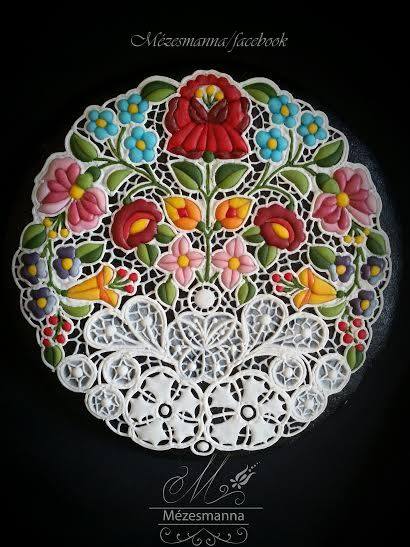
Each cookie is hand painted, the patterns often traditional patterns from folk costumes and embroideries from her native Hungary.
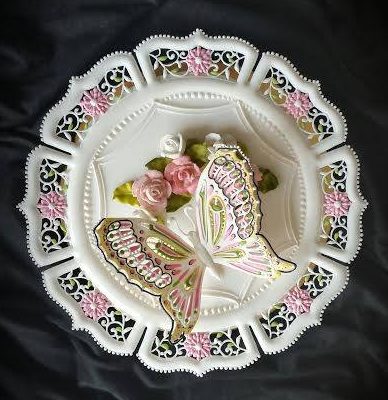

Judit’s deft touch makes edible creations that are almost too beautiful to eat.
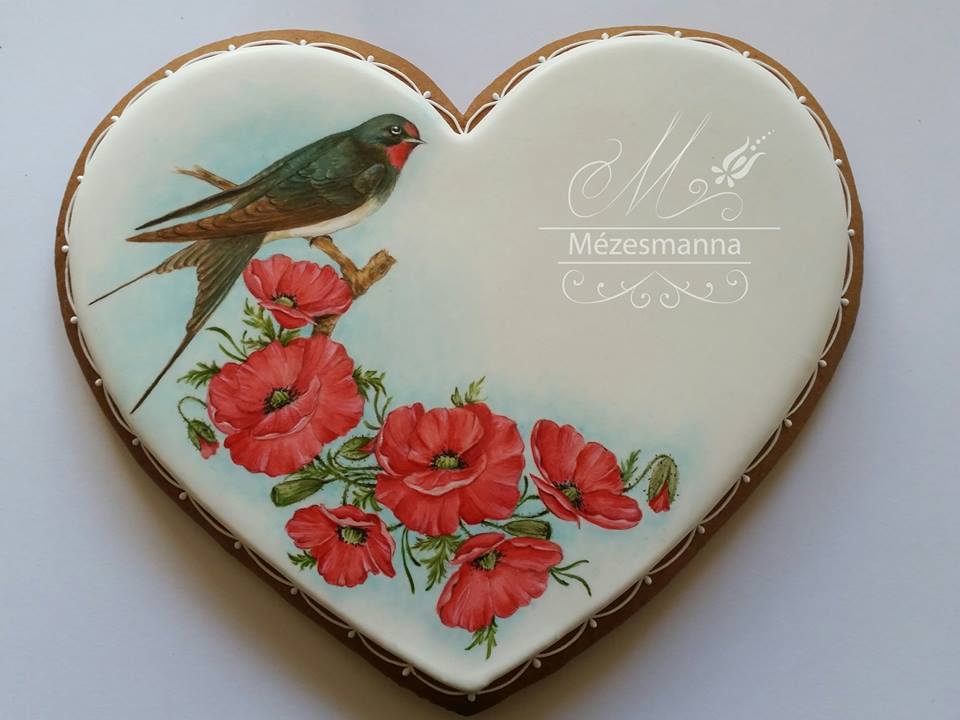
Her embroidery style touches on portraiture, animals, intricate lacework, winter holidays, and floral patterns.
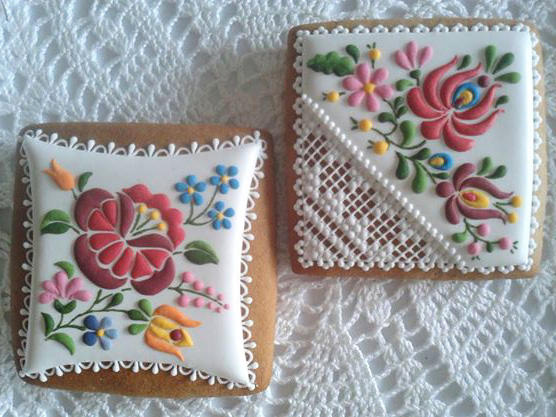
In addition to the folk art-inspired cookies, Poór also decorates cookies with portraits and 3D images.

A true artist, Judit Czinkné Poór and her magic can be found on her Facebook page, https://www.facebook.com/Mezesmanna/, and one of many feature interviews, http://aplus.com/a/judit-czinkne-poor-decorated-cookies.
English artist Richard Stainthorp captures the beautiful energy and fluidity of the human body using wire.

Wire is not automatically what one would consider as a ‘material’ for creating solid, three dimensional sculptures.

But Stainthorp has been making wire sculptures since 1996.

The life-sized sculptures feature both figures in motion and at rest, expressed in the form of large-gauged strands that are densely wrapped around and through one another.
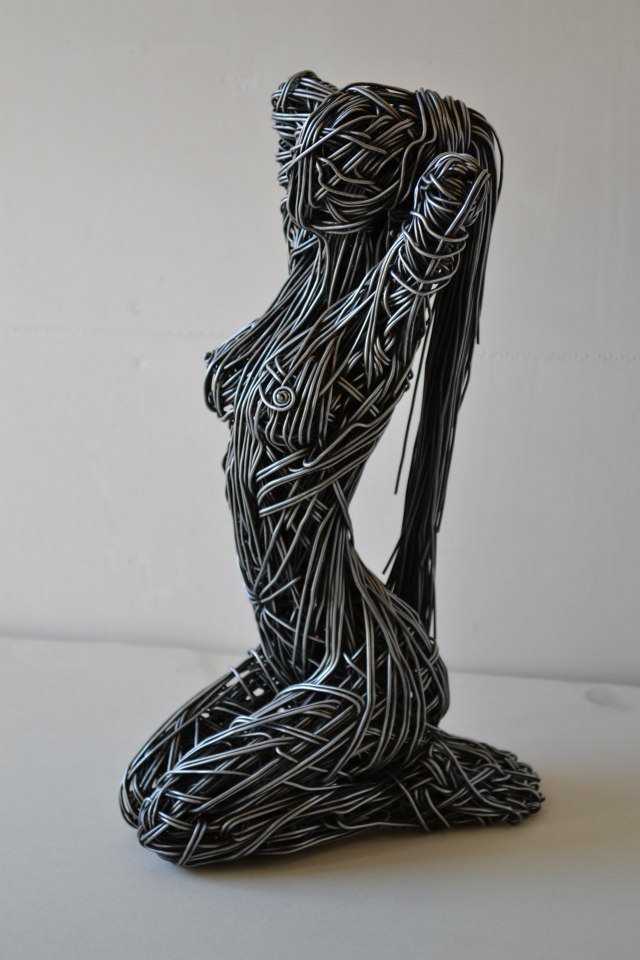
Stainthorp also allows the bent wires to shine by keeping their metallic appearance free from any obvious painting or additions.
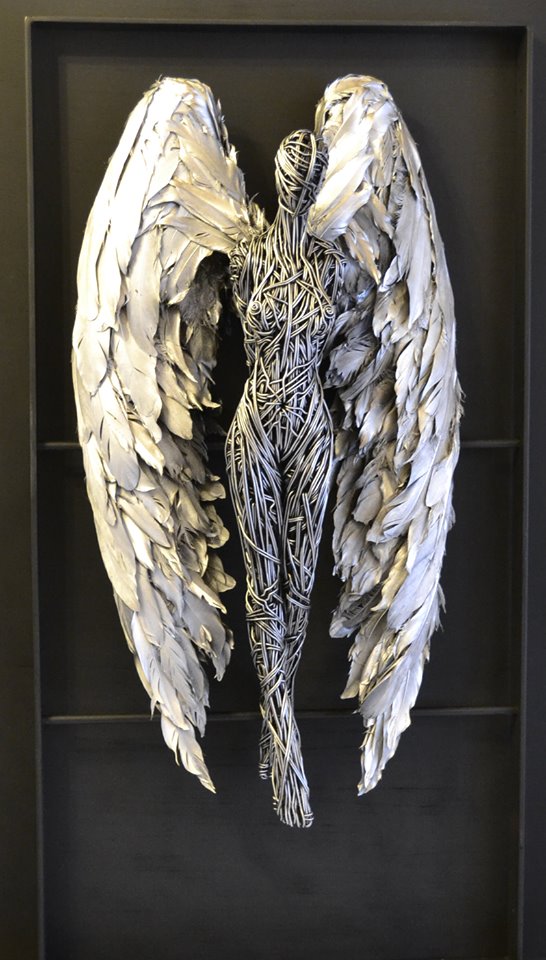
The breathtaking spirals add a depth to these structures made of thick-gauged strands that are densely wrapped around and through one another.
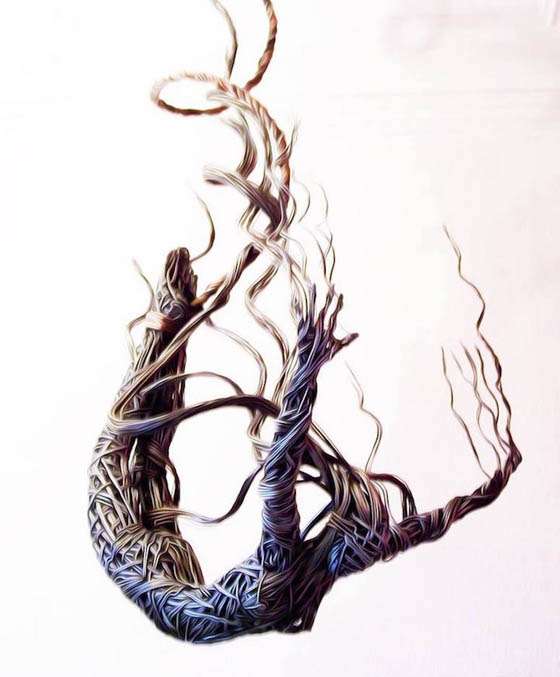
More of Richard Stainthorp’s wonderful wire sculptures can be found at
http://www.stainthorp-sculpture.com/, and http://www.mymodernmet.com/profiles/blogs/richard-stainthorp-wire-sculptures
Like Houdini and his magic, Einstein and his physics
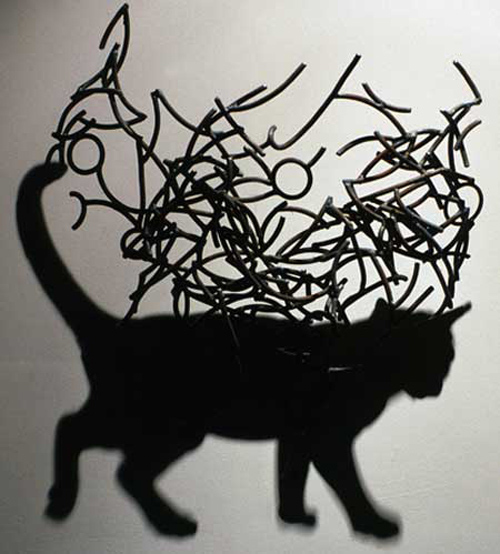
There is nothing more amazing than saying
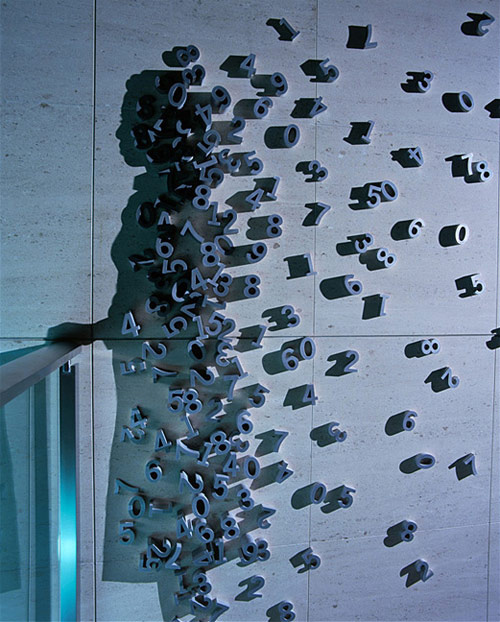
How do they do that?
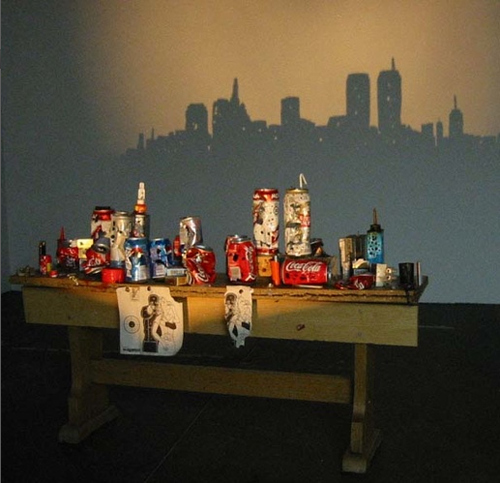
By the assembly of seemingly random objects
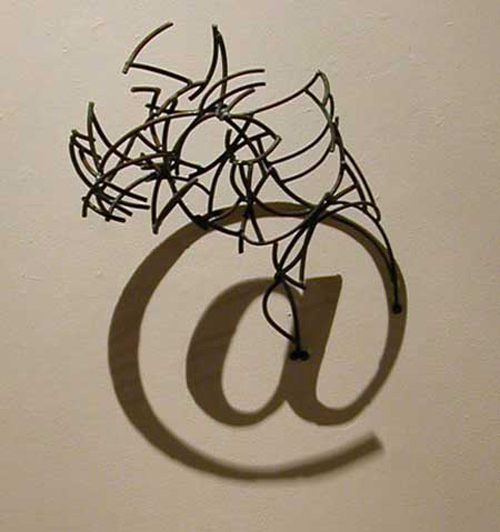
and a few squiggles here and there
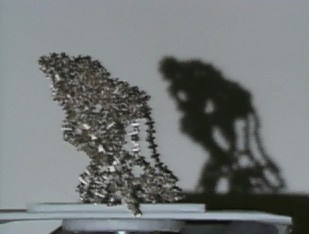
An art form is born.
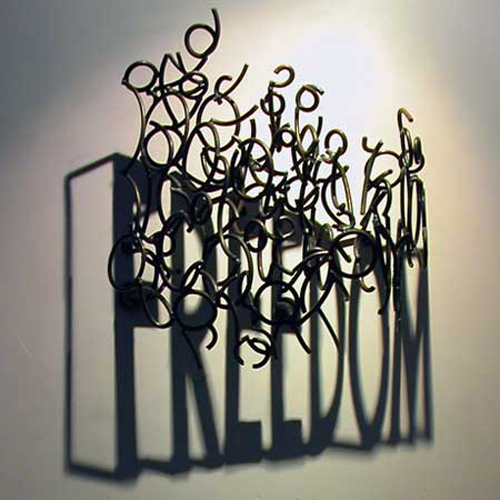
Called SHADOW ART, true form is made from true nonsense.
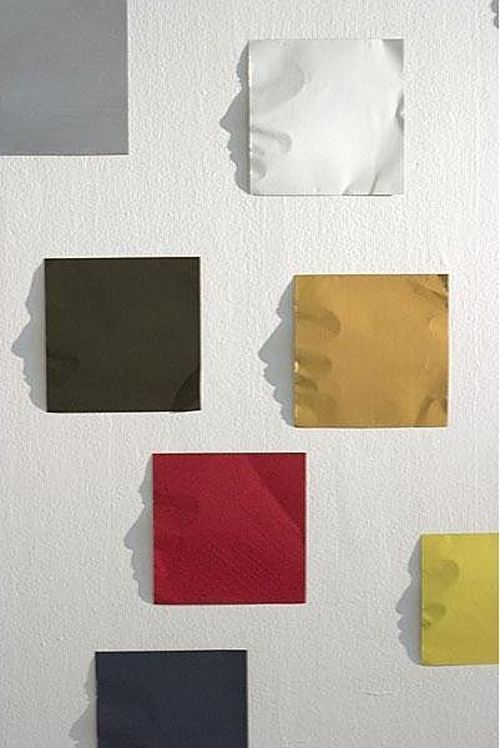
And once you experience it
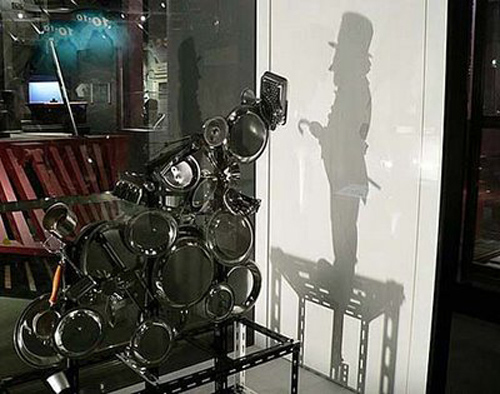
The shadows will never look the same.
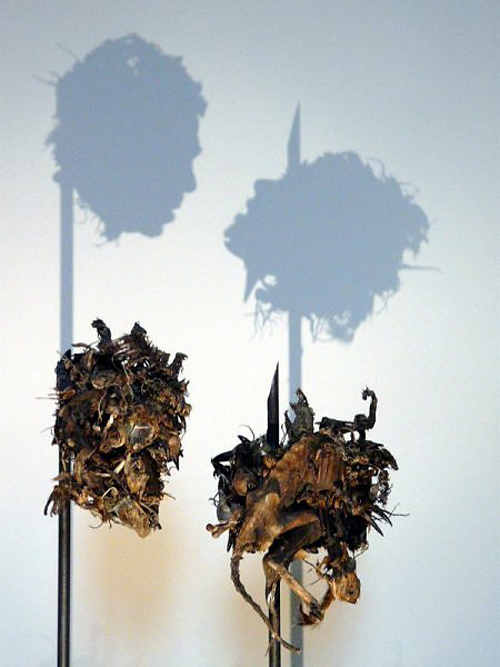
You use a glass mirror to see your face; you use works of art to see your soul. ~ George Bernard Shaw
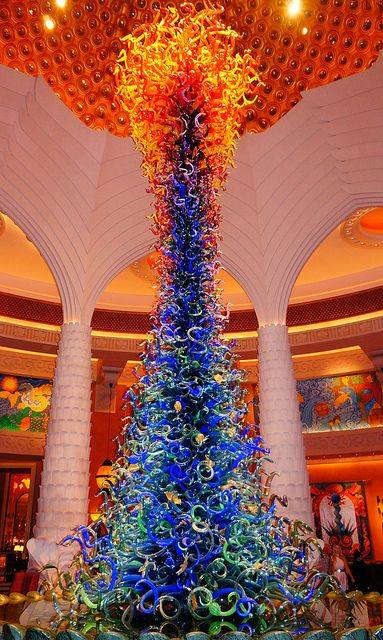
Dale Chihuly (born September 20, 1941), is an American glass sculptor whose work in glass led to a resurgence of interest in that spectacular medium.
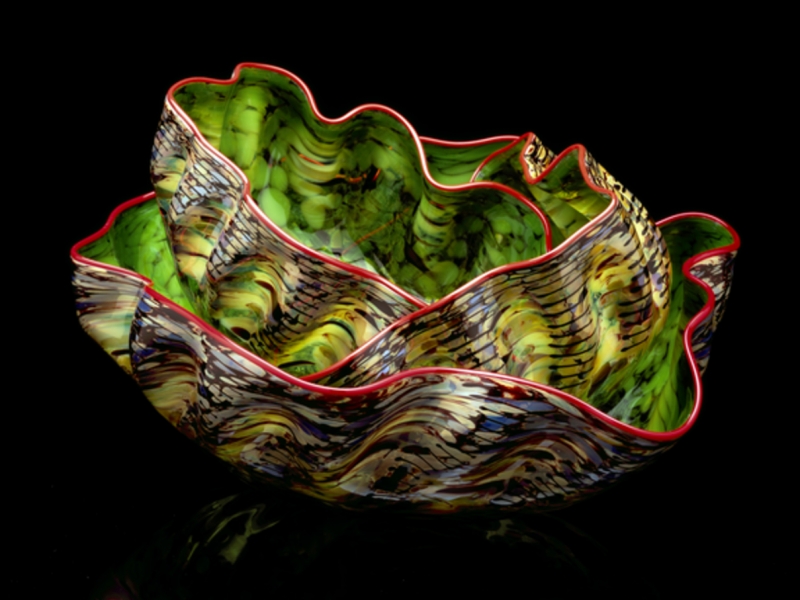
Chiluly graduated in 1965 from the University of Washington where he first was introduced to glass while studying interior design, then an M.S. in sculpture in 1967 from the University of Wisconsin, where he studied glassblowing with Harvey Littleton.
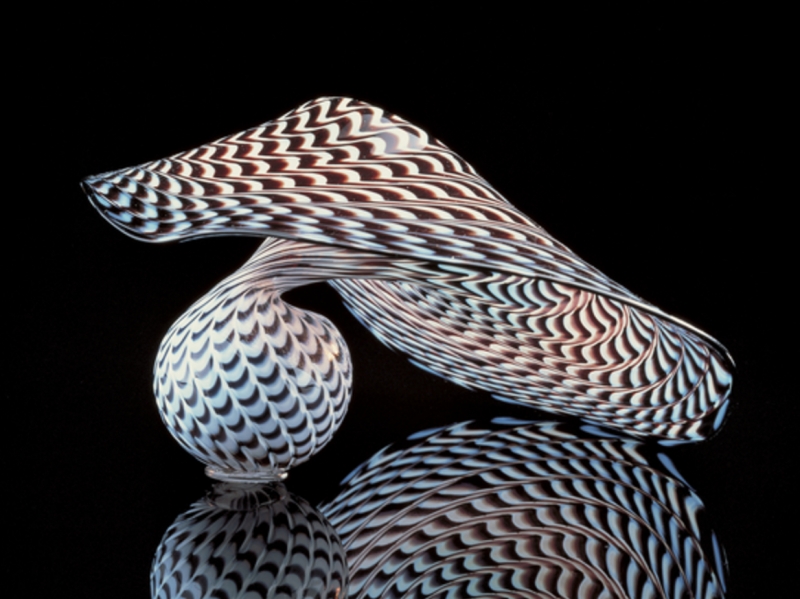
He received an MFA from the Rhode Island School of Design, then worked at a renowned glassblowing workshop in Italy where he observed the team approach to blowing glass, which is critical to the way he works today.
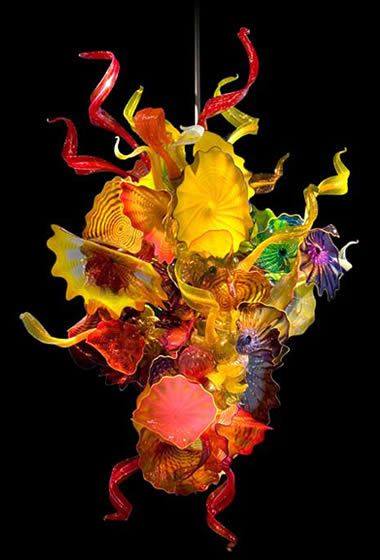
In 1971, Dale Chihuly cofounded Pilchuck Glass School in Washington State.
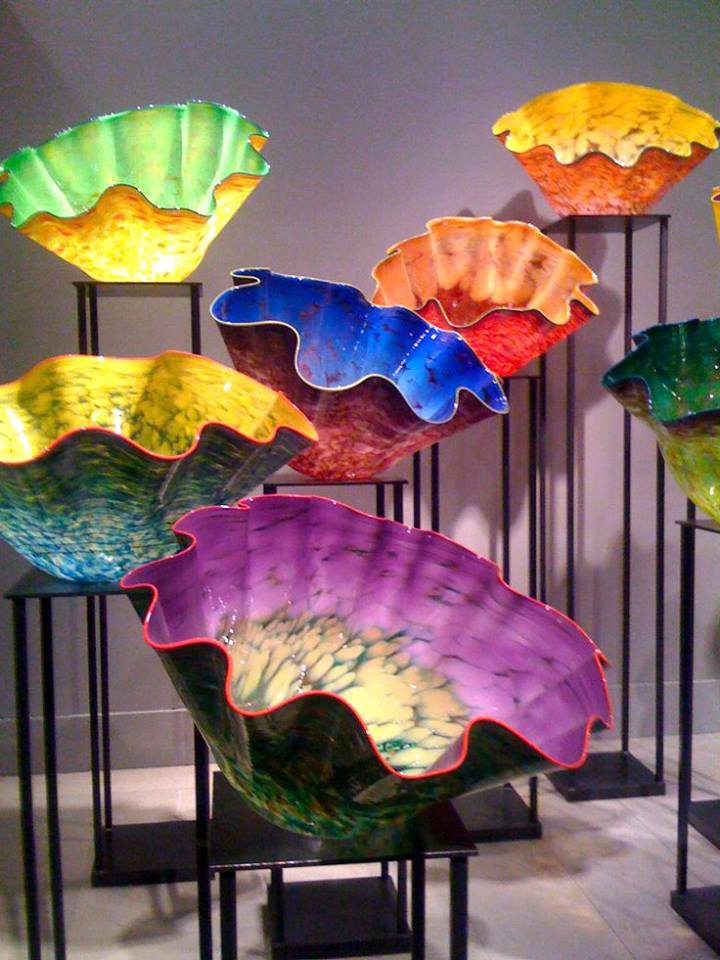
The technical difficulties of working with glass forms are considerable, yet Chihuly uses it as the primary medium for installations and environmental artwork.
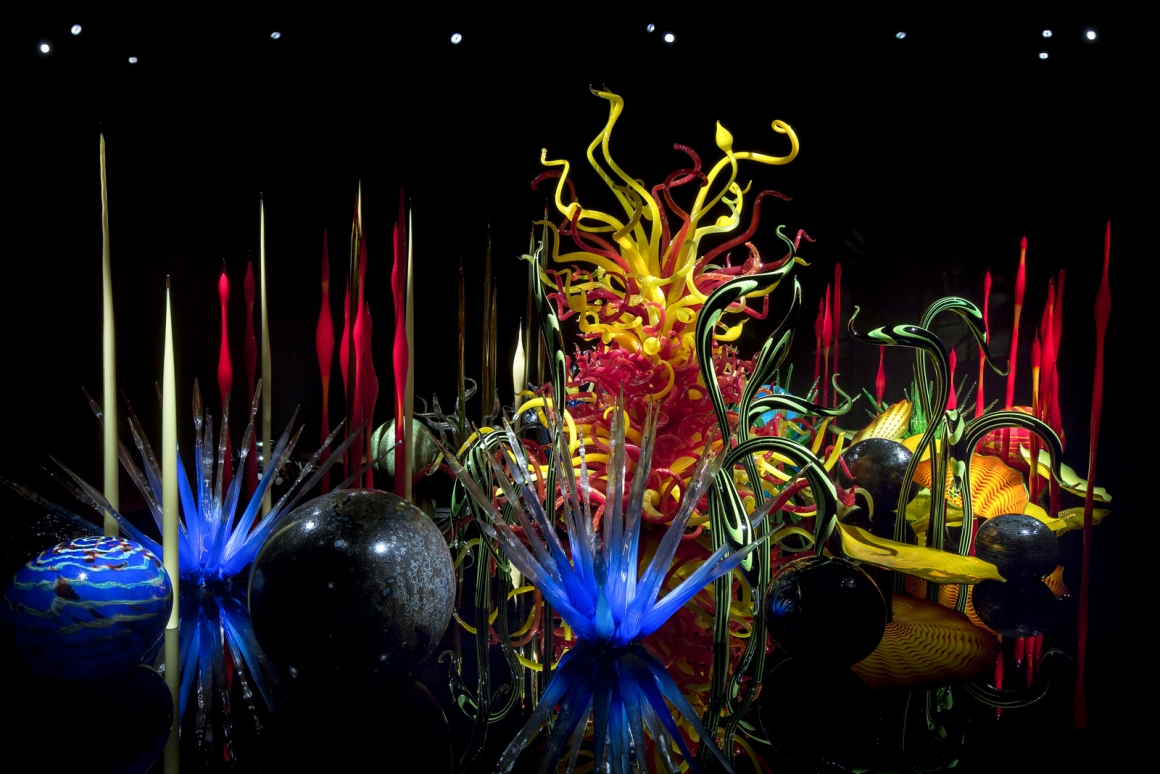
Although Chihuly lost the use of his left eye in a car accident in 1976, his work with assistants has been nothing short of phenominal.
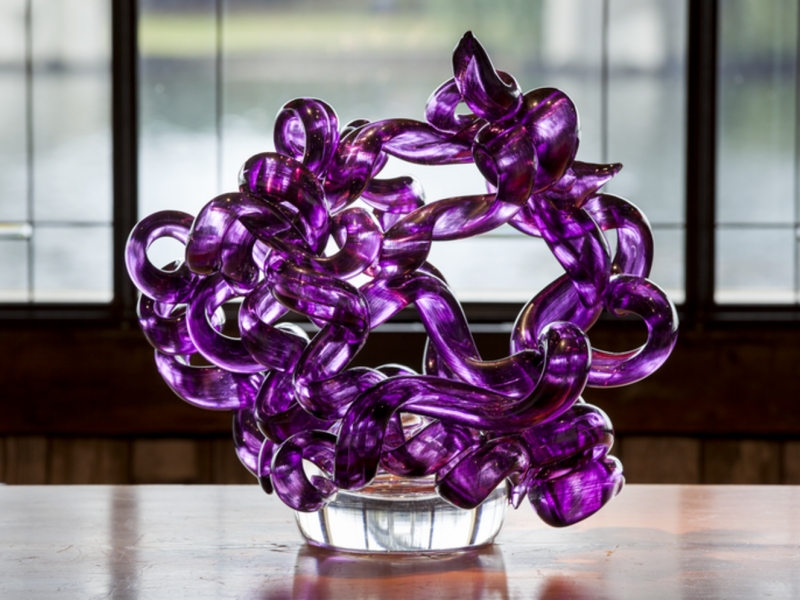
The artist professed, “Once I stepped back, I liked the view,” and pointed out that it allowed him to see the work from more perspectives and enabled him to anticipate problems faster.
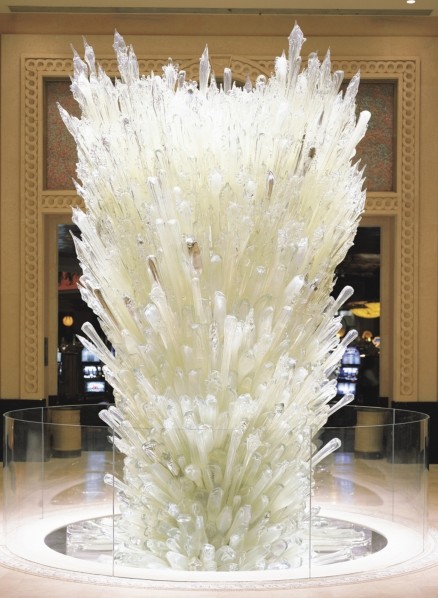
More of Dale Chihuly‘s fantastic glassworks can be found at http://www.chihuly.com.
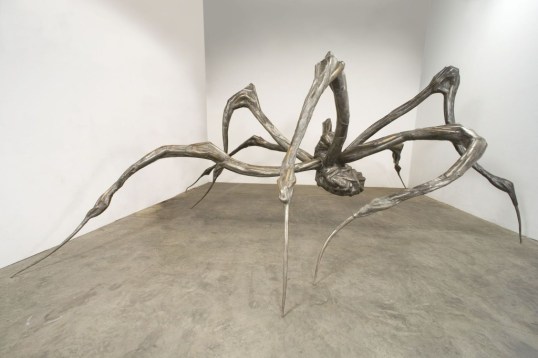


Dozens of images that will tickle your fancy, spark your imagination, and test your belief system.
Come Visit Anytime!
An image seen on a hundred different walls, on placemats, screensavers, postcards.

And yet the incredible history of the artist Katsushika Hokusai (1760-1849) is a magical tale of its own.
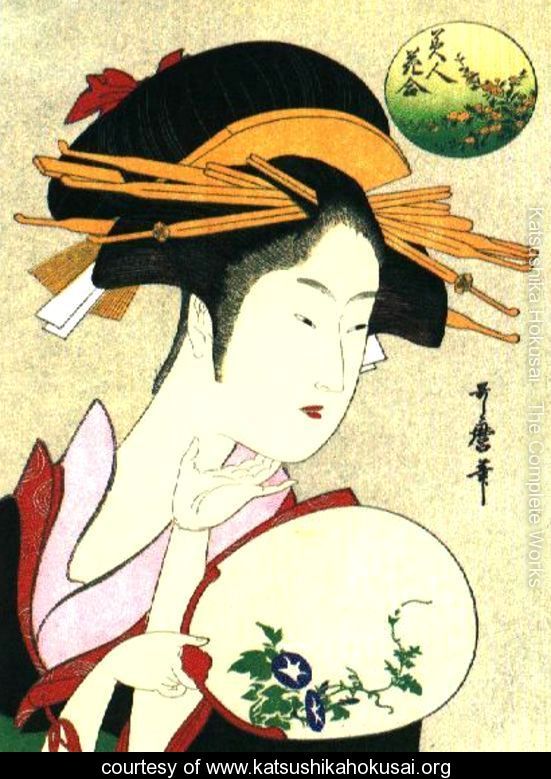
Hokusai was born on the 23rd day of 9th month of the 10th year of the Hōreki period (October or November 1760) to an artisan family, in the Katsushika district of Edo, Japan.

Hokusai was a Japanese master artist and printmaker of ukkiyo-e, a style of wood block prints and paintings.
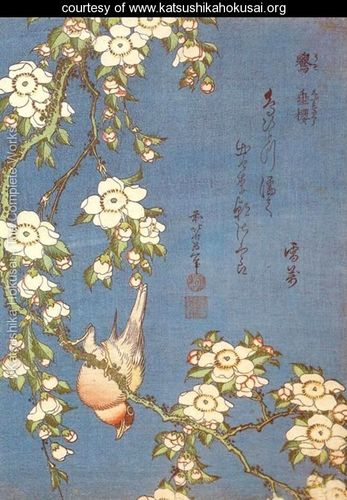
Hokusai is best-known as author of the woodblock print series Thirty-six Views of Mount Fuji (c. 1831) which includes the iconic and internationally recognized print, The Great Wave off Kanagawa, created during the 1820s (first image above).

Hokusai was known by a dozen different names through his lifetime, most likely reflecting the different artistic manifestations he went through.

It is this restlessness, this thirst for life and art, that inspired countless other artesians on this continent and others.
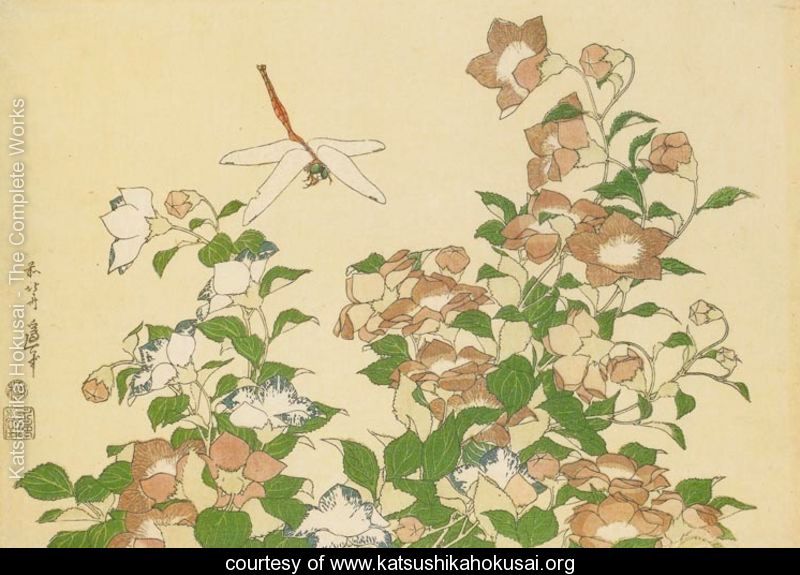
And it is this quiet beauty that has withstood the winds of time.

You can see all of Katsushika Hokusai‘s art at his website http://www.katsushikahokusai.org/.
Sarah Kaufman is a Nashville, Tennessee-based artist who creates magical, textural mixed media paintings that explore aspects of the human experience “through the lens of surreal and ethereal narratives.”
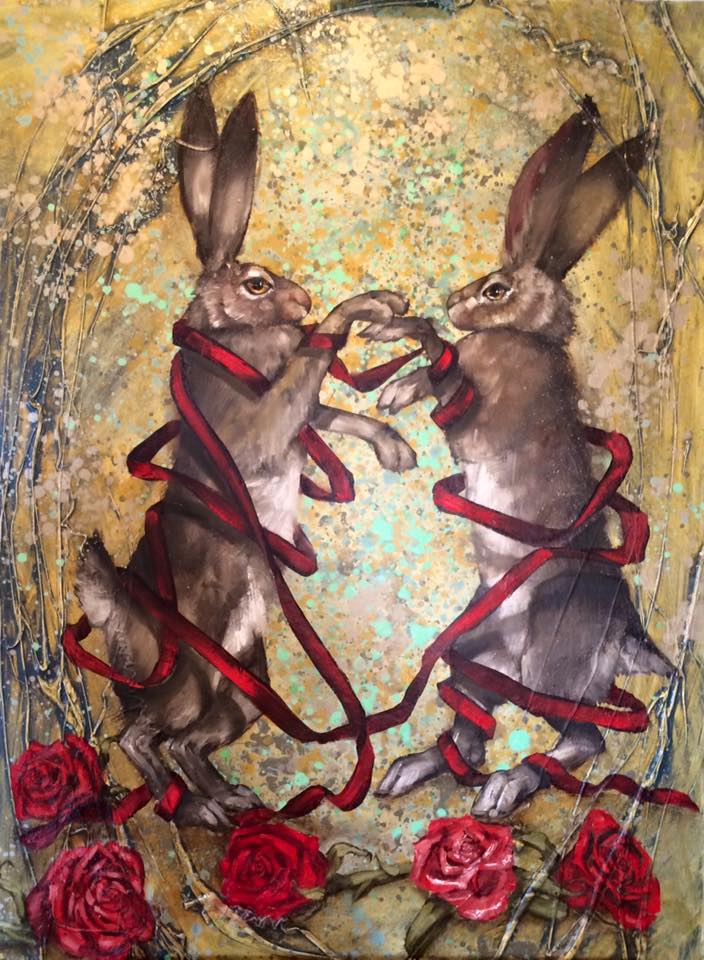
Starting with a with a blank canvas, Sarah smears, drizzles, and splatters it with venetian plaster and gesso to create texture, then seals it with layers of translucent acrylic paint.
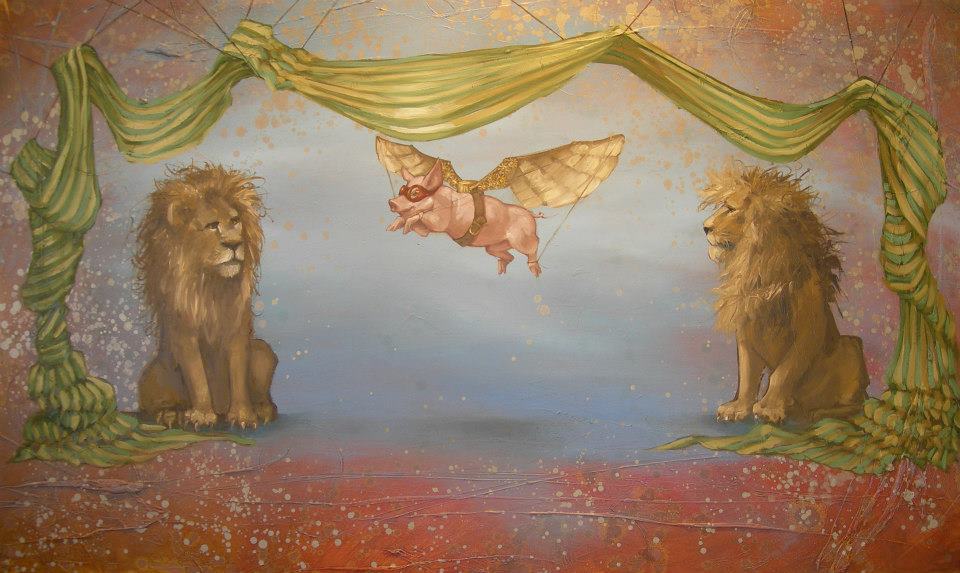
Once the base of the painting has settled, she paints her idea brings it to life with oil paint.

Sarah’s paintings are often soft and bright, yet sparkling with ethereal feelings.

According to Sarah, “The idea of being separate and distinct from the world around us is an illusion…”

“…we are simply a collection of energy for the moment. The houses represent our concept of self, with energy swirling around us in the sky, ground, trees and animals.”
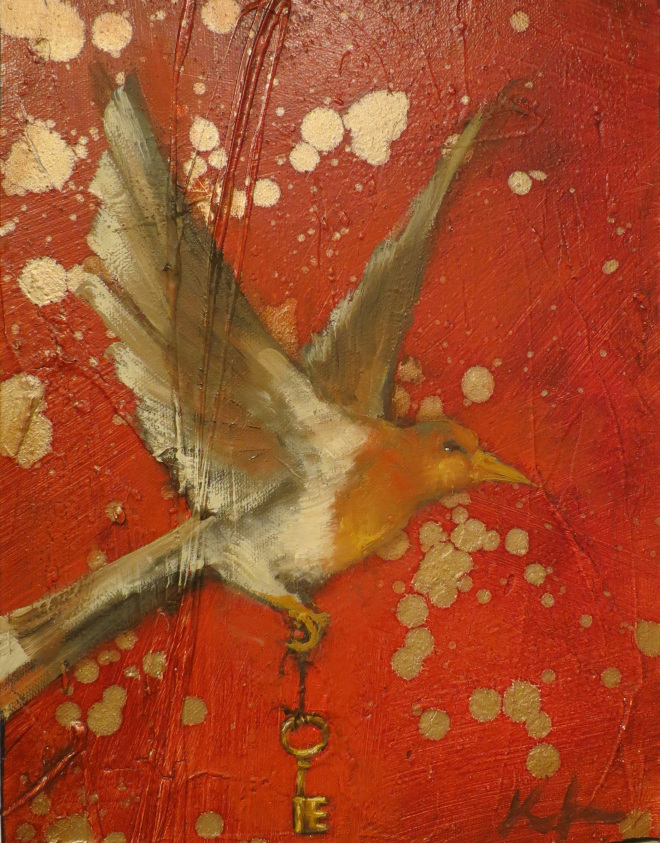
More of Sarah Kaufman‘s lovely art can be found at http://www.sarahkaufmanart.com
https://artandinventiongallery.wordpress.com/art-artists/artwork/sarah-kaufman, http://www.larkandkey.com/artists/sarah-kaufman/, and can be found on Facebook at https://www.facebook.com/sarah.kaufman.14.
A busy weekend has taken me far away from my Artful meanderings. Taking care of family has superceded strolling down the softly-lit backstreet of the Sunday Evening Art Gallery.
So please sip your wine, your tea, your milk-in-in-a-wine-glass, and come peek at past Gallery surprises!
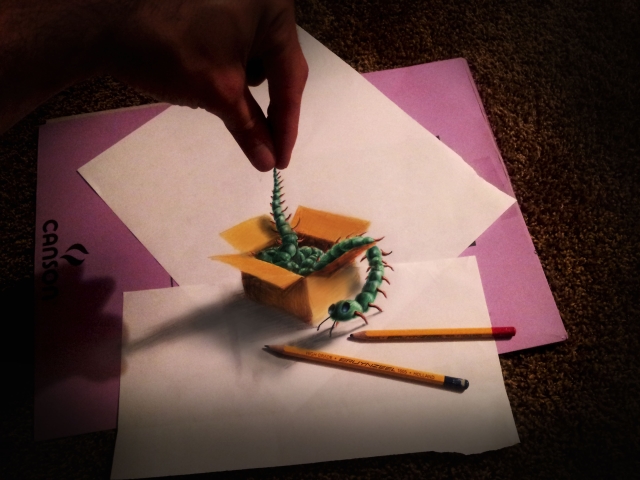
Raymond Bruin
Optical Illusionism

*
*
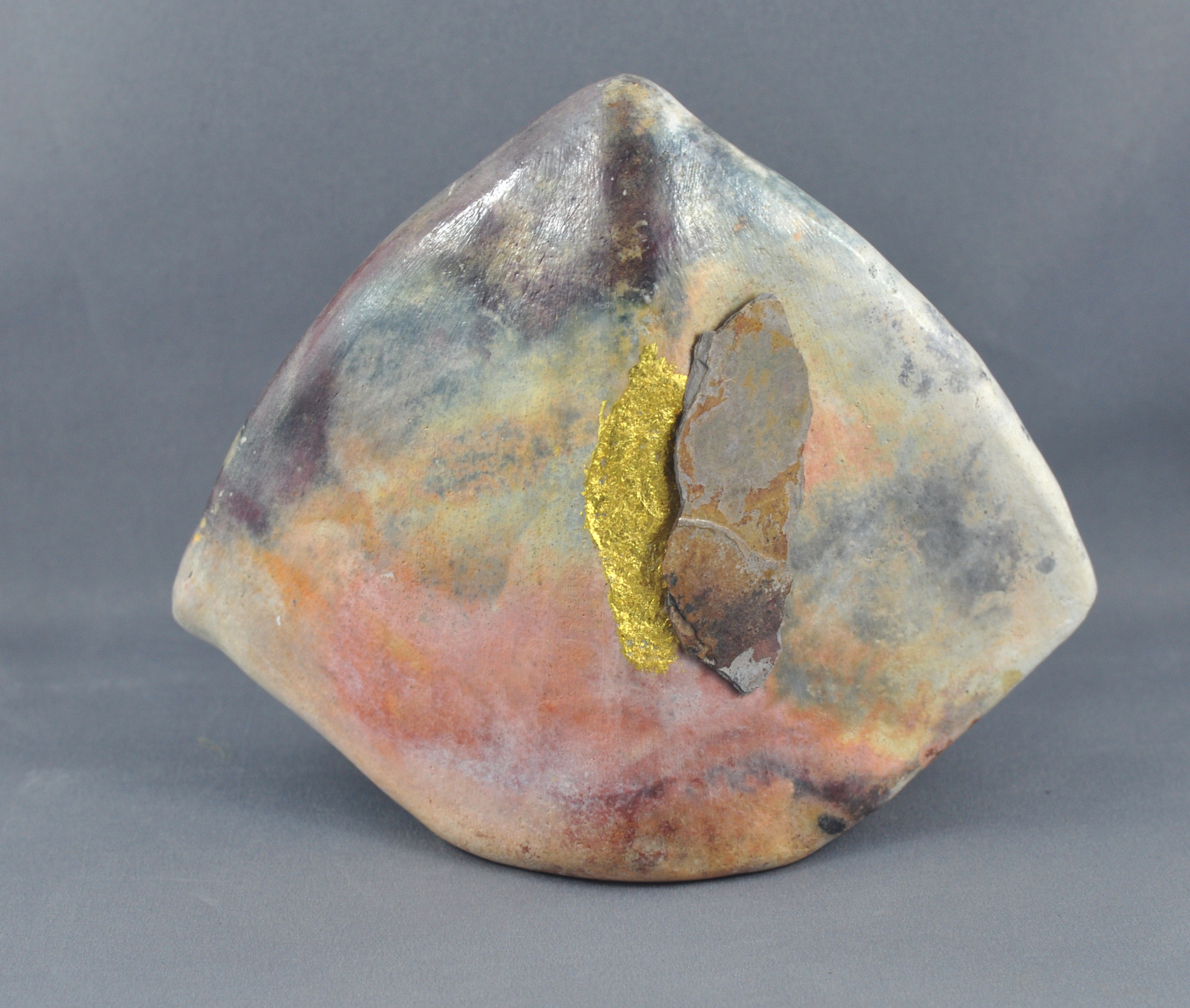
Dawn Whitehand
Sculptor

*
*
Abandoned Cars
Photography


*
*
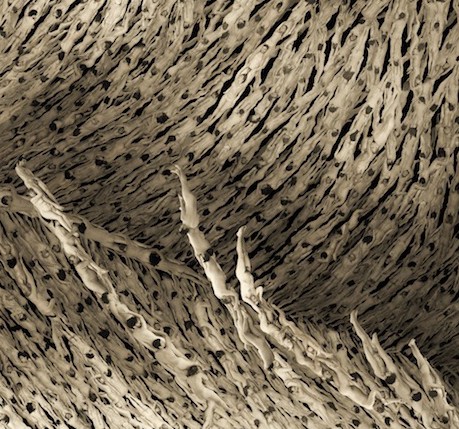
Angelo Musco
Photography

*
*
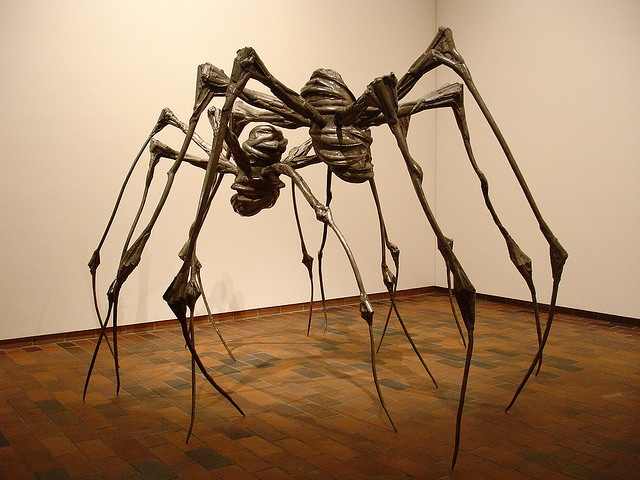
Louise Bourgeois
Sculptor

Alexandre Duret-Lutz, a Paris-born photographer, uses a Pentax K10D with fisheye lens to focus on spherical panoramas and Escheresque spirals.

Expressed in technical terms, Alexandre calls his images “stereographic projections of equirectangular panoramas”.
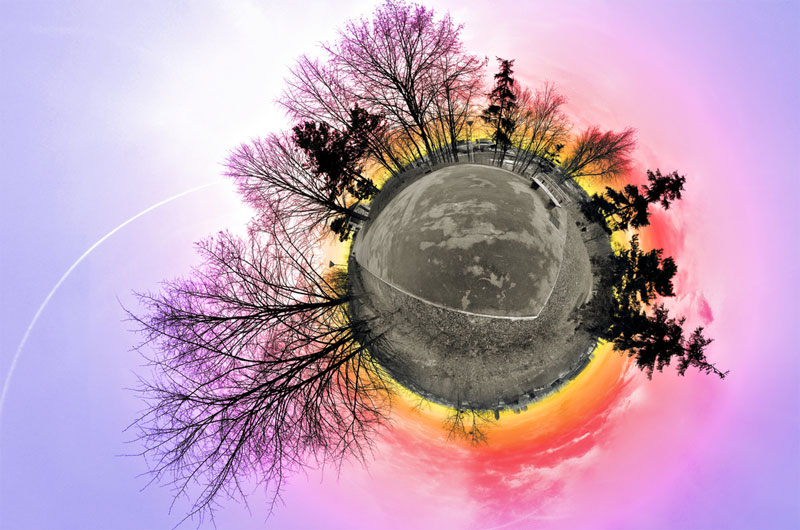
Using a sophisticated transformation process, Alexandre first builds a 360-degree x 180-degree panorama, then projects it to look like a small planet.

His perspective makes his work beautiful and dizzying.

His website Wee Planets reflect his fascination with curvature and panoramas.
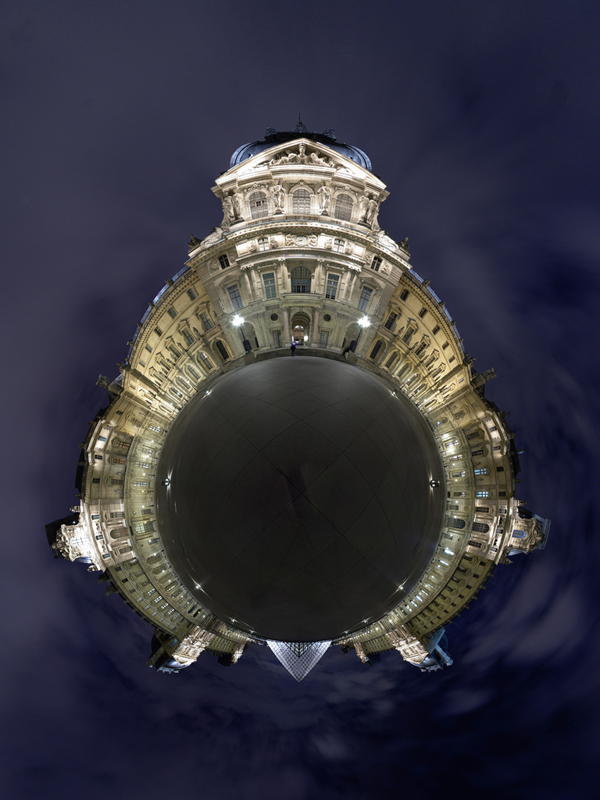
More of Alexandre Duret-Lutz‘s photography can be found at the following sites:
https://www.flickr.com/photos/gadl/sets/72157594279945875/
http://www.creativetempest.com/phototrends/alexandre-duret-lutz/
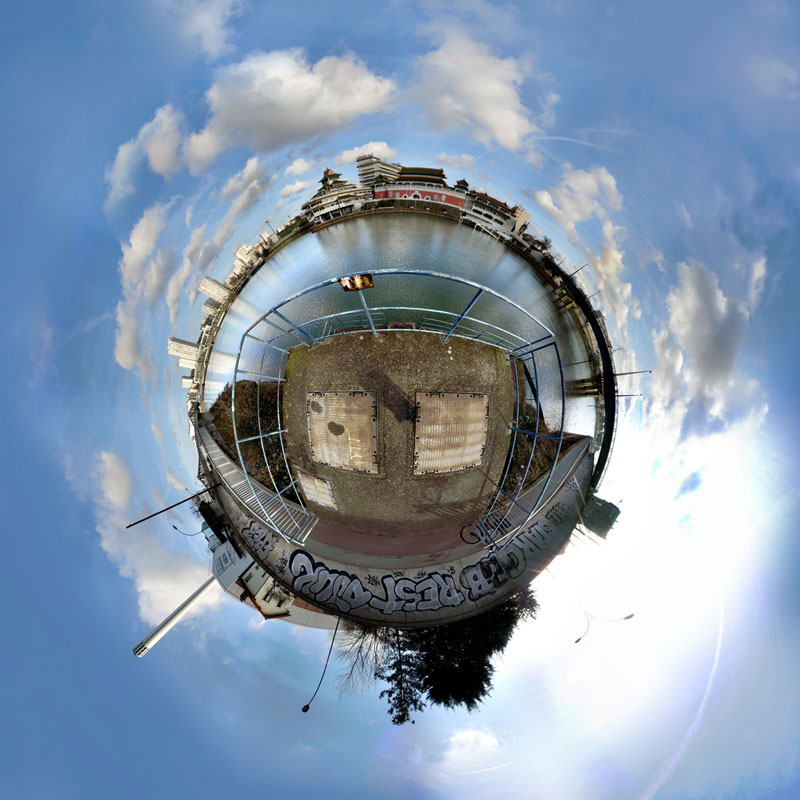
Be sure to go and take a whirl at his photography!

Jewish paper cutting is a traditional form of Jewish folk art made by cutting figures and sentences in paper or parchment.

It is connected with various customs and ceremonies, and associated with holidays and family life.

Paper cuts often decorated ketubbot (marriage contracts), Mizrahs, and ornaments for festive occasions, and works of art.
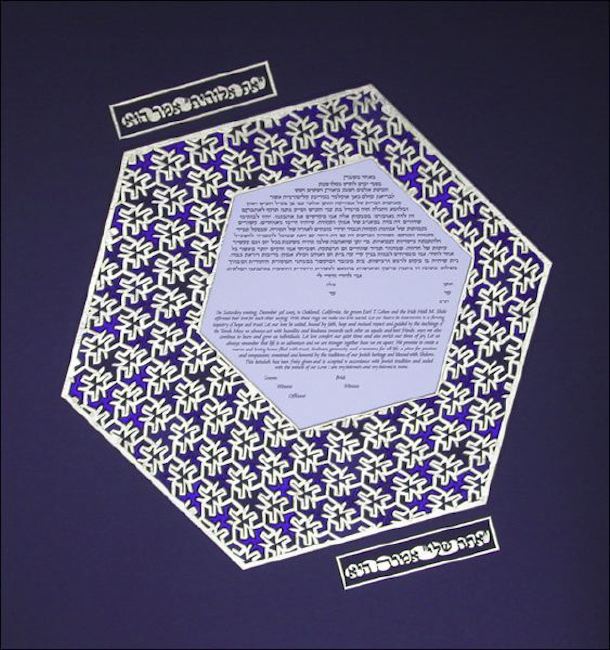
Paper cutting was practiced by Jewish communities in both Eastern Europe and North Africa and the Middle East for centuries and has seen a revival in modern times in Israel and elsewhere.
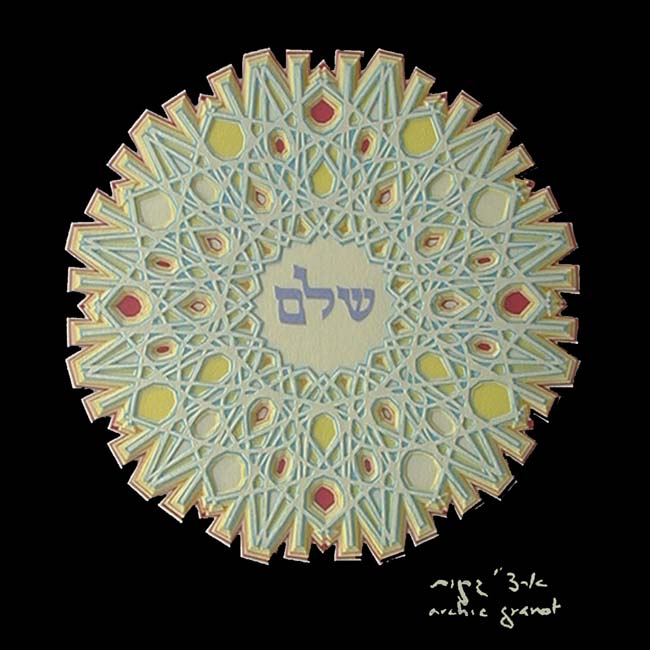
Today, Jewish papercut art has grown in popularity beyond ritual items to art and expressions of Jewish faith, not only in Israel but worldwide.
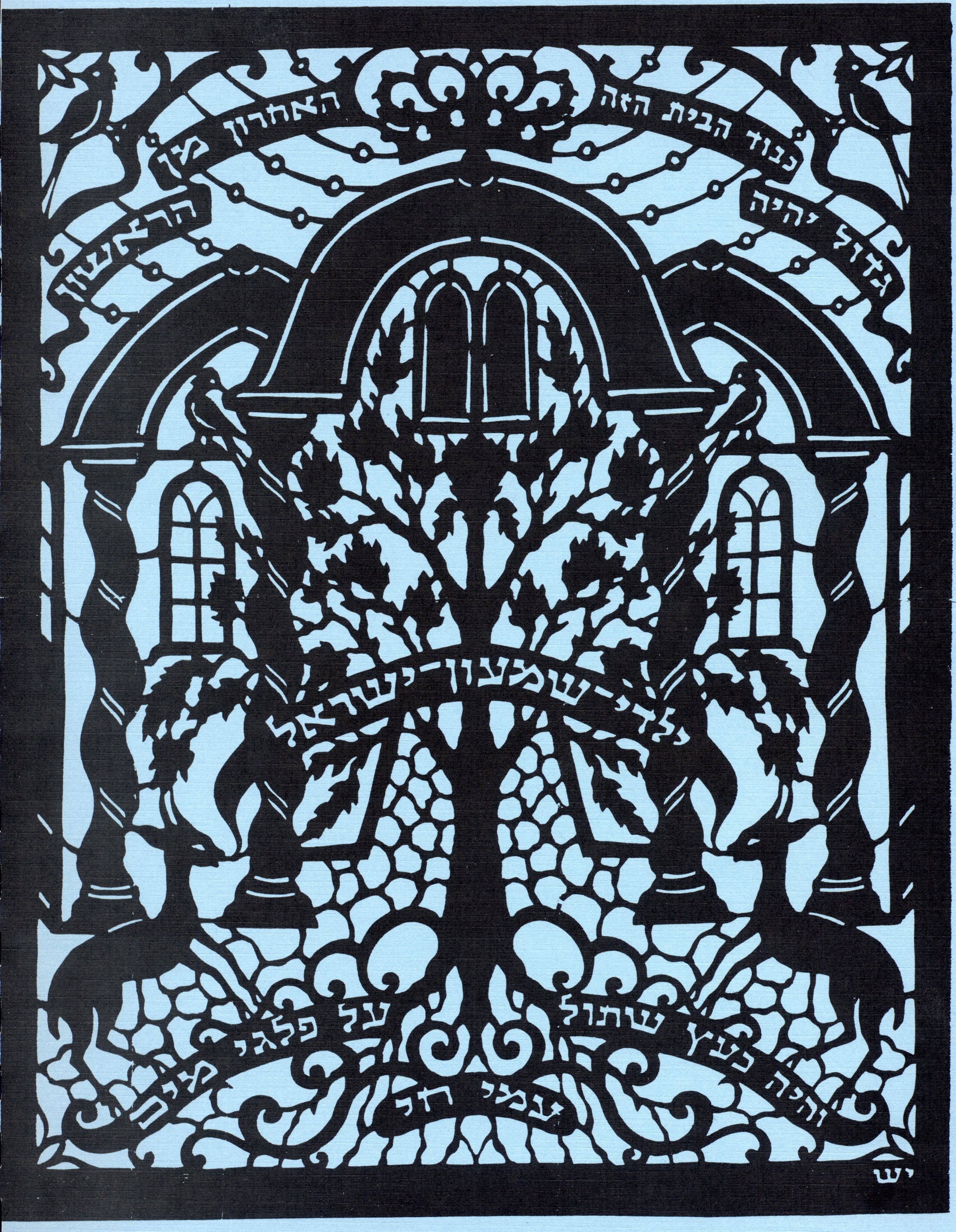
The sacredness of this ancient art is evident in the precise drawing and cutting of each piece.
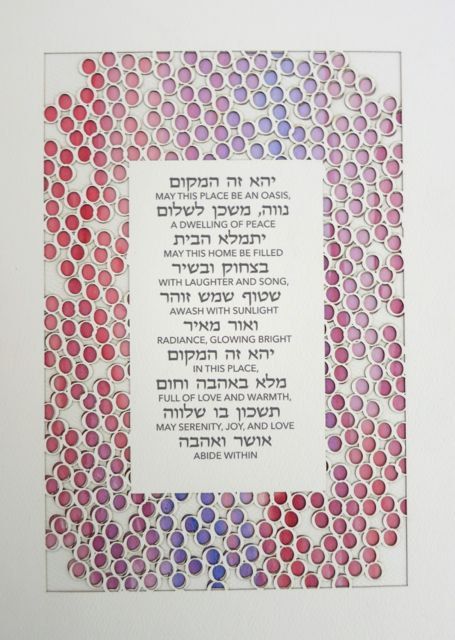
It was truly an exquisite form of art even the poor could do.
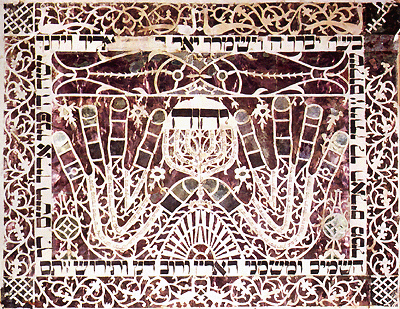
though in the past few decades the art form has seen a veritable renaissance in Israel, with artists really pushing the medium to its thematic and technical limits.
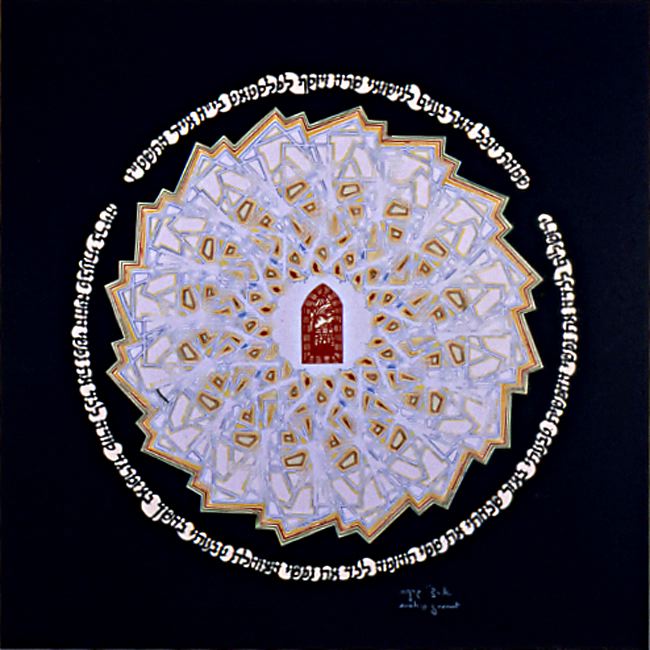
Examples of this fantastic hand-cut art can be found at http://www.judaicpapercuts.com/,
http://www.papercutjudaica.com/ and http://www.nanrubin.net/, among others.
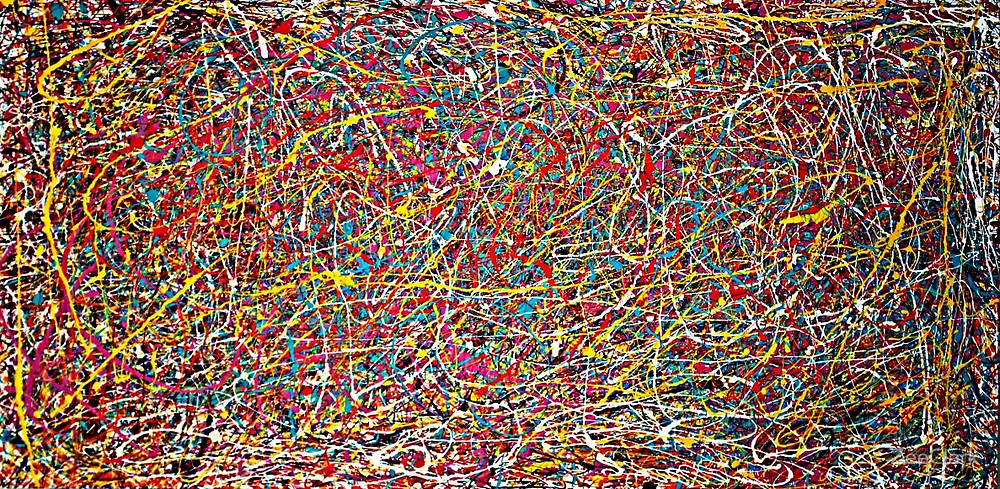
I knew the name Jackson Pollock before I knew of Jackson Pollock.

Paul Jackson Pollock (January 28, 1912-August 11, 1956), known professionally at Jackson Pollock, was well known for his unique style of drip painting.

His name is synonymous with abstract expressionism.
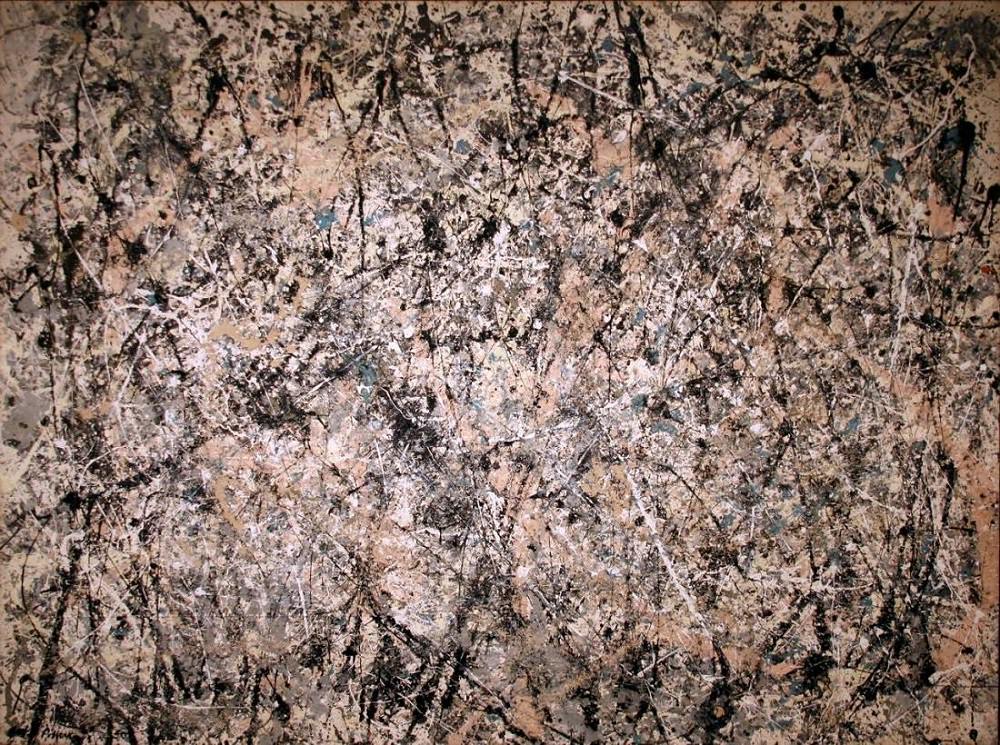
Instead of using the traditional easel, Pollock affixed his canvas to the floor or the wall and poured and dripped his paint from a can; instead of using brushes he manipulated it with ‘sticks, trowels or knives’ (to use his own words), sometimes obtaining a heavy impasto by an admixture of sand, broken glass or other foreign matter.
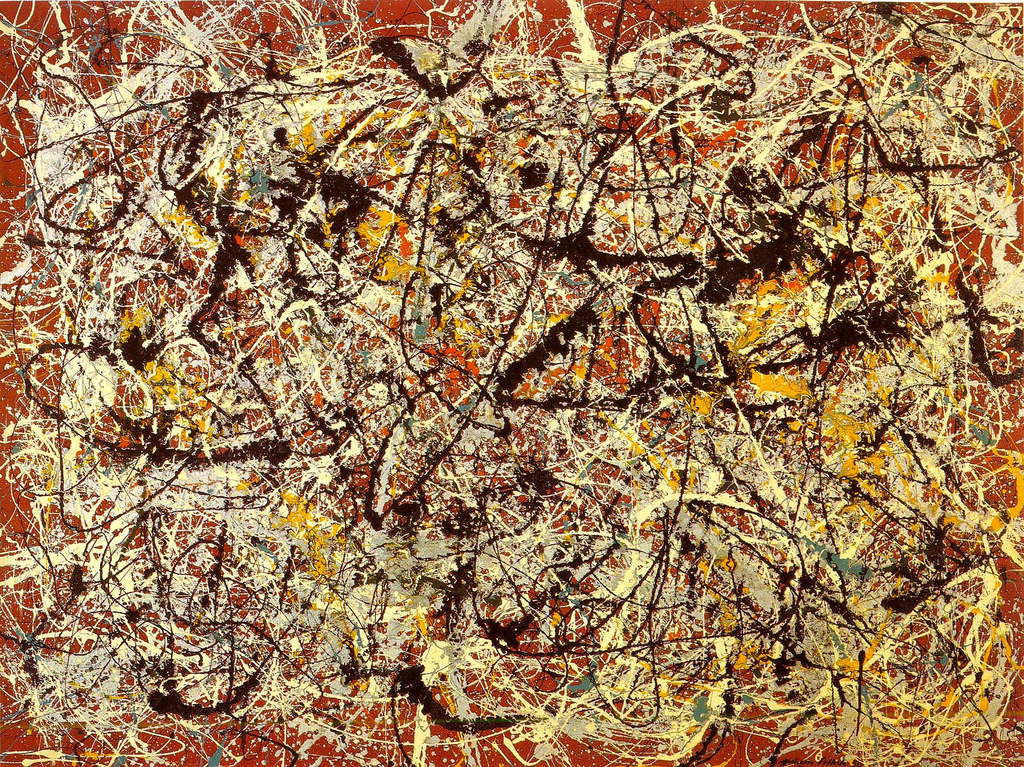
His art is not only 2D, but 3D, with textures that jump out at you.
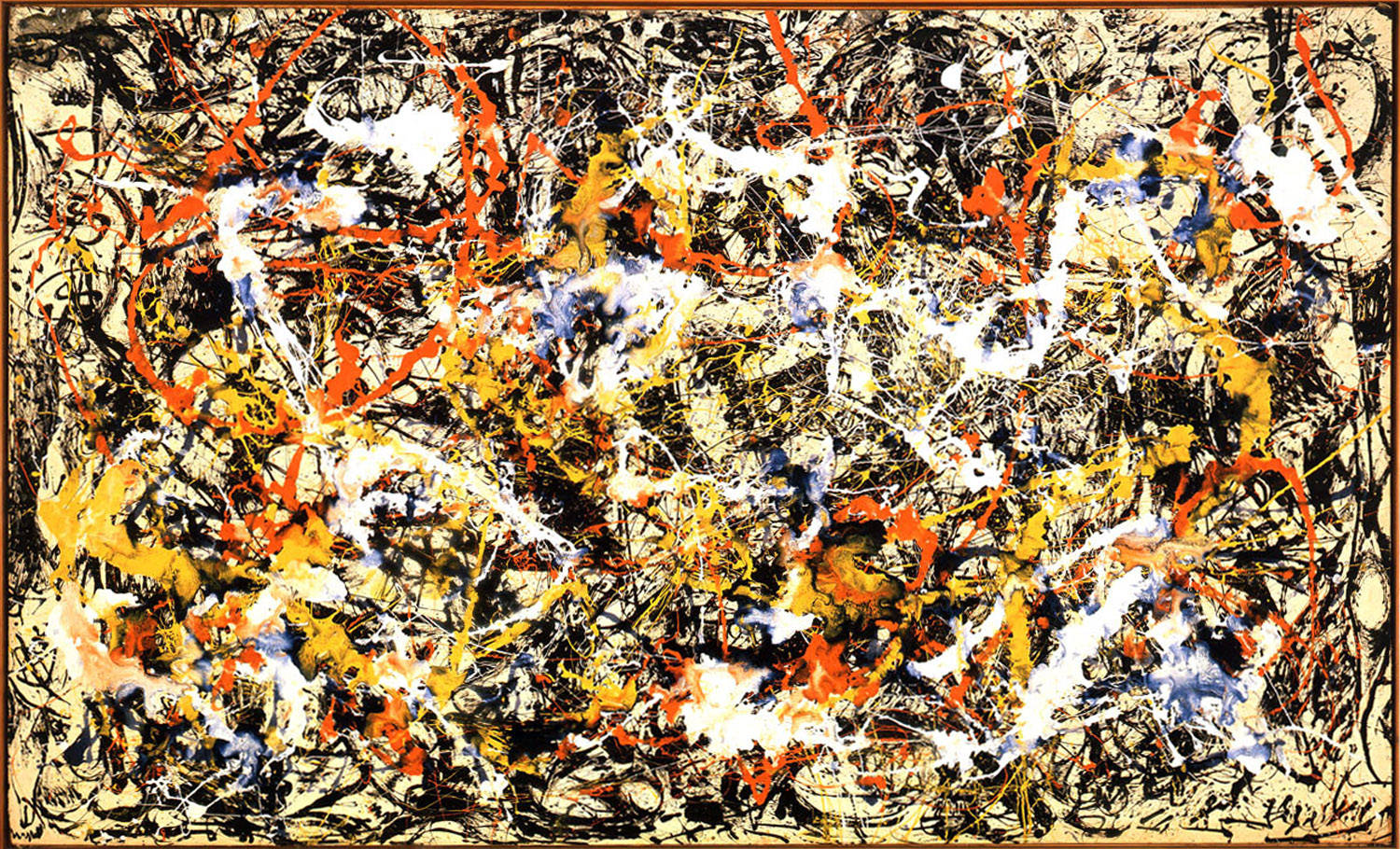
He was strongly supported by advanced critics, but was also subject to much abuse and sarcasm as the leader of a still little comprehended style; in 1956 Time magazine called him “Jack the Dripper”.

Although his problematic life ended early, his style is one that impresses us to this day.

More of Jackson Pollock’s art can be found at http://www.jackson-pollock.org/
and in the larger Sunday Evening Art Gallery
Restless? Wandering? Don’t know where to go? Snow or Rain gotcha down?
How about an art gallery or two to chase the blues away?
My Sunday Evening Art Gallery has creativity of all sizes and colors for you to wander through.
.
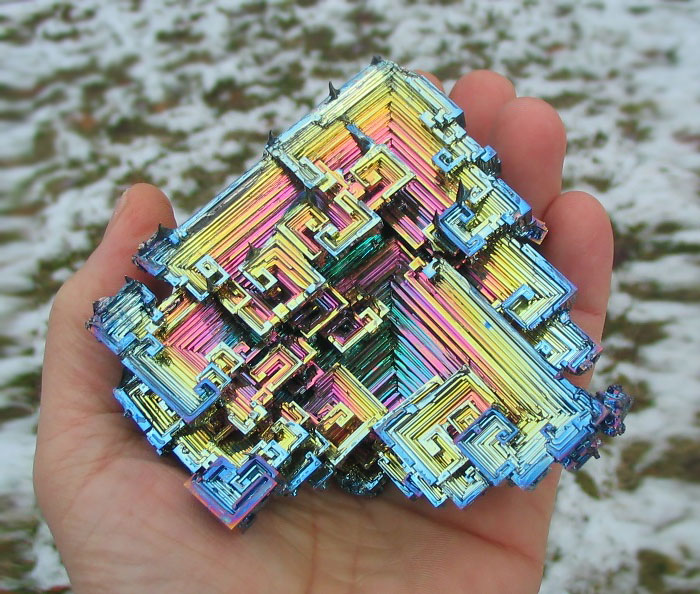
Who Knew the world was so Sparkling?
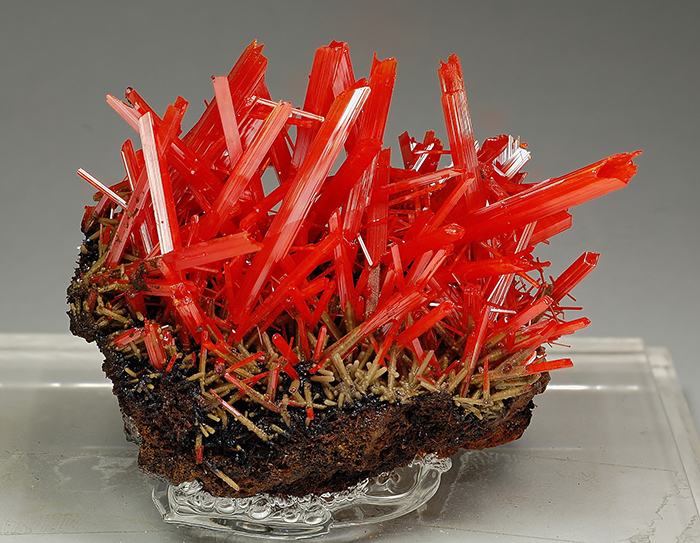
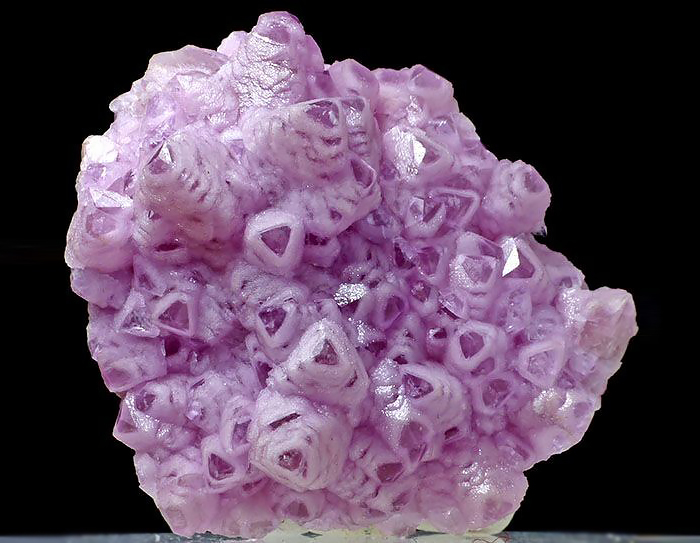
.
Add a little Snazz to your Pizzazz!
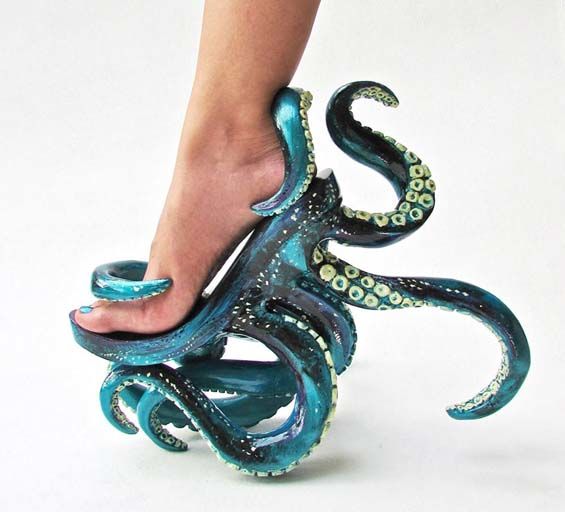

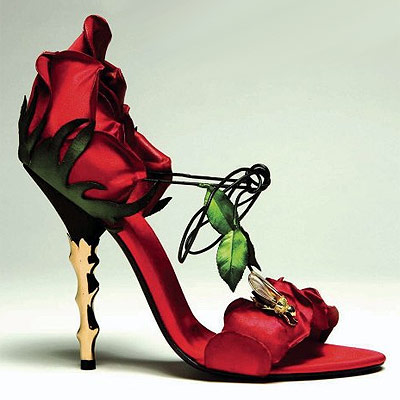
.
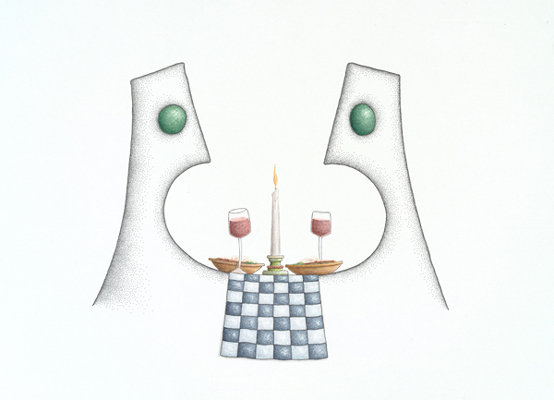
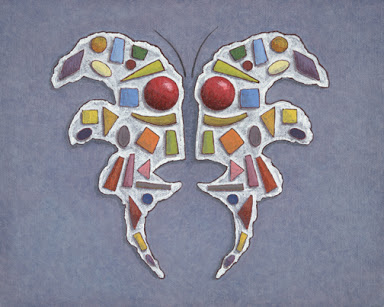
Whimsical Abstraction at its Finest!
.
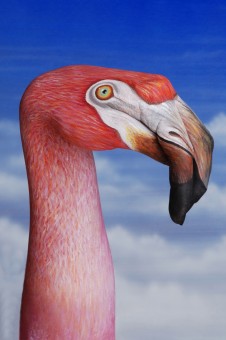
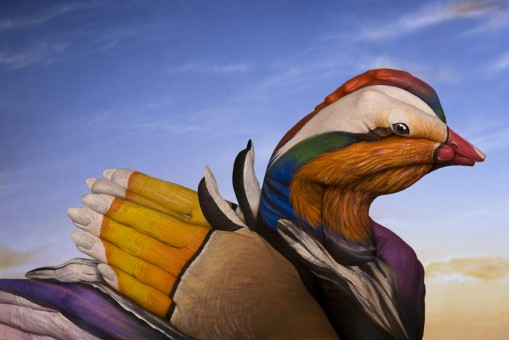
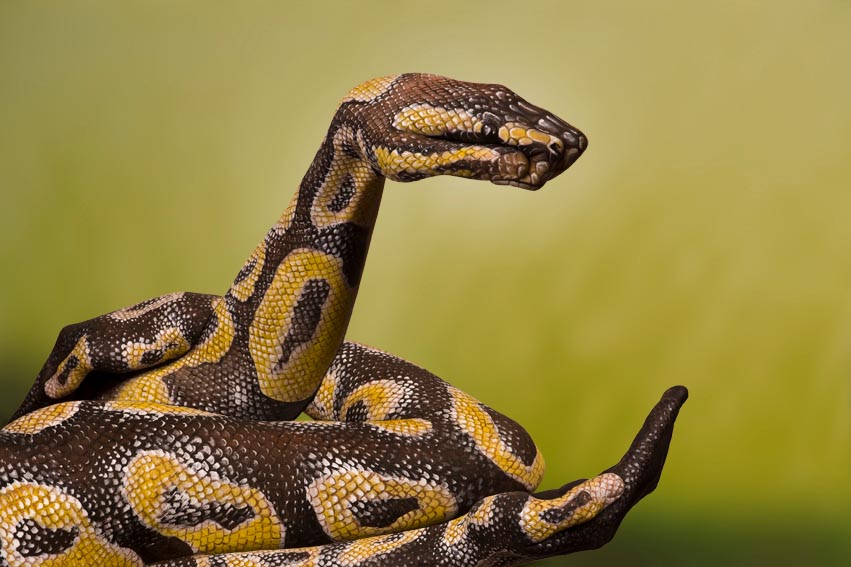
I Want to Hold Your Hand…
.
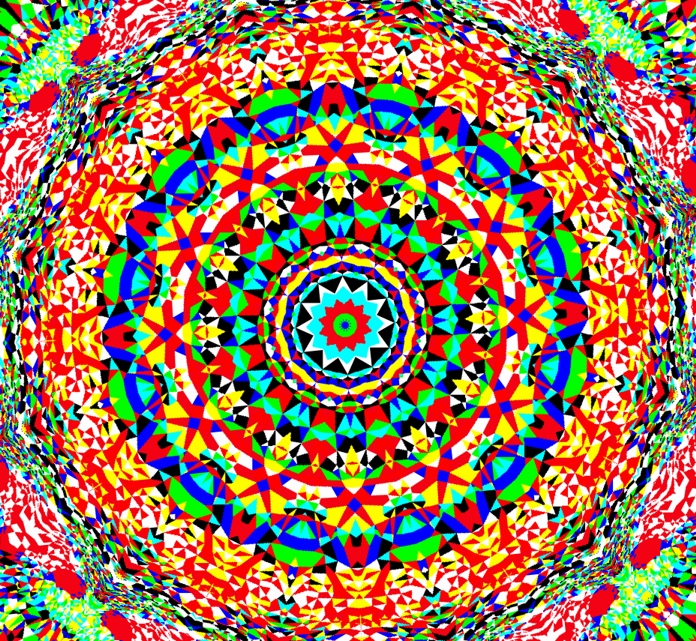
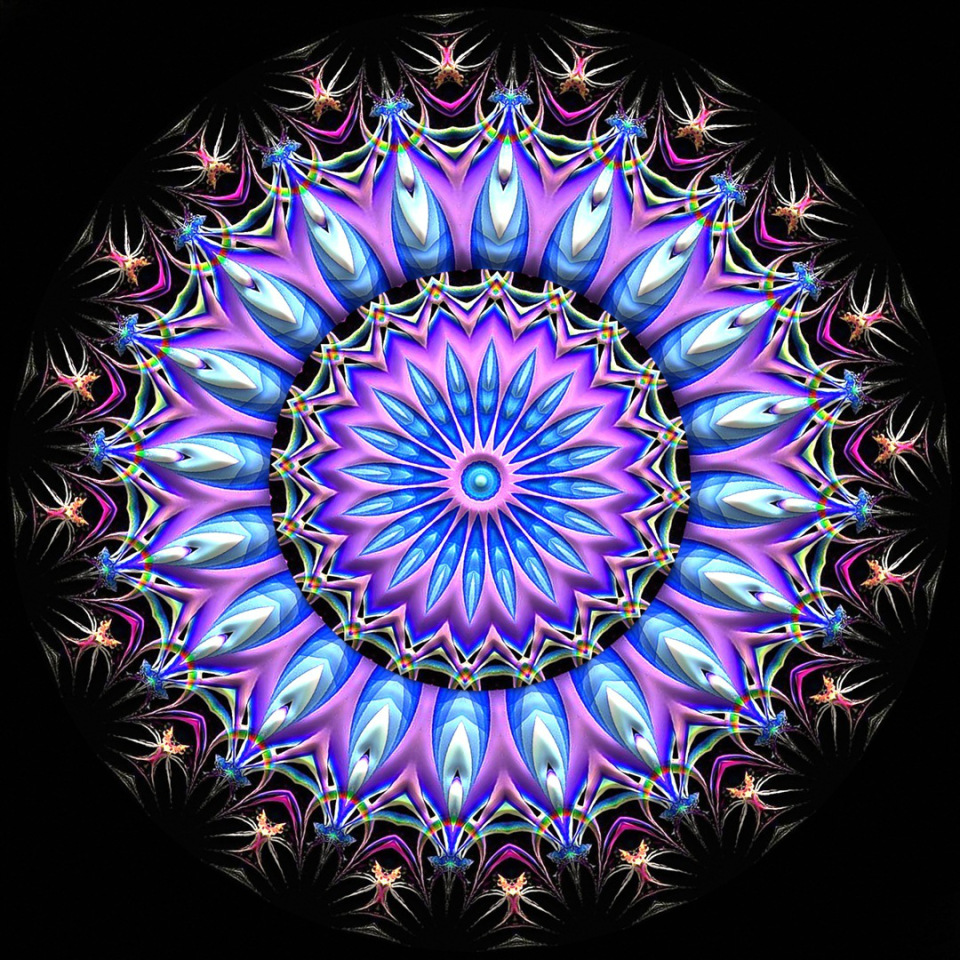
You Mesmerize Me!
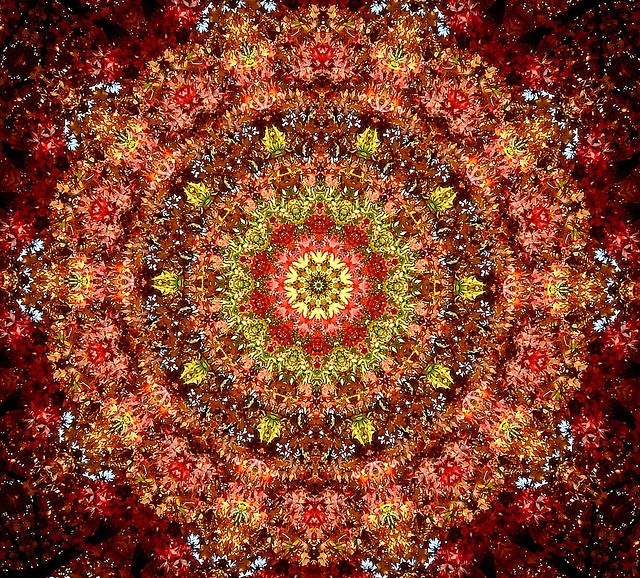
.
Amazing Stairs Winding to the Stars
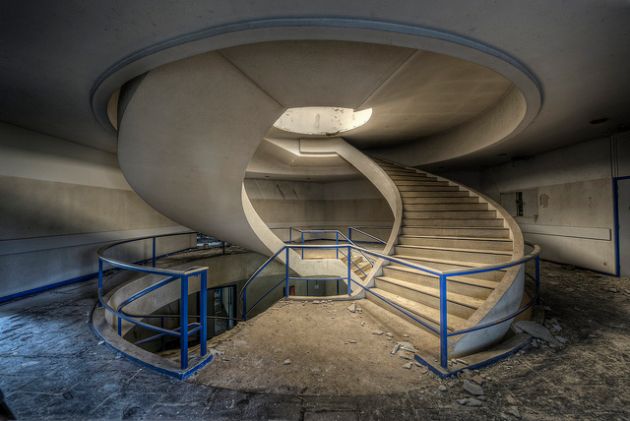
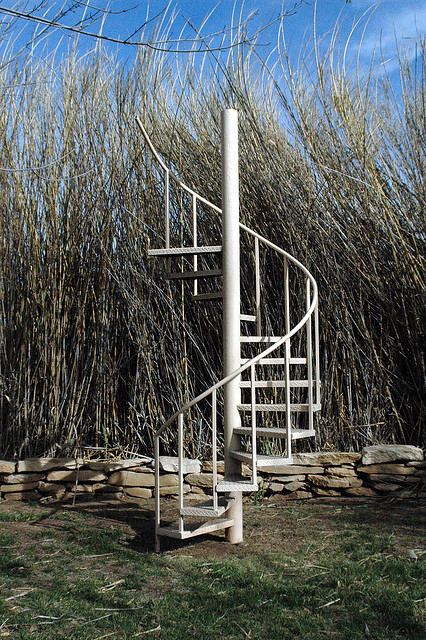
Come On — you know you want to — a little voyeurism never hurt anyone! And New Galleries are being added every week! Come take a peek!
Boring will be Boring no more….
Loïs Mailou Jones (1905 – 1998) decided early in her career that she would become a recognized artist—no easy path for an African American girl born at the beginning of the twentieth century.

After two years in North Carolina where she experienced the frustrations and indignities of segregation first-hand, Jones left Palmer Memorial and joined the faculty of the Fine Arts Department at Howard University in Washington, D.C.

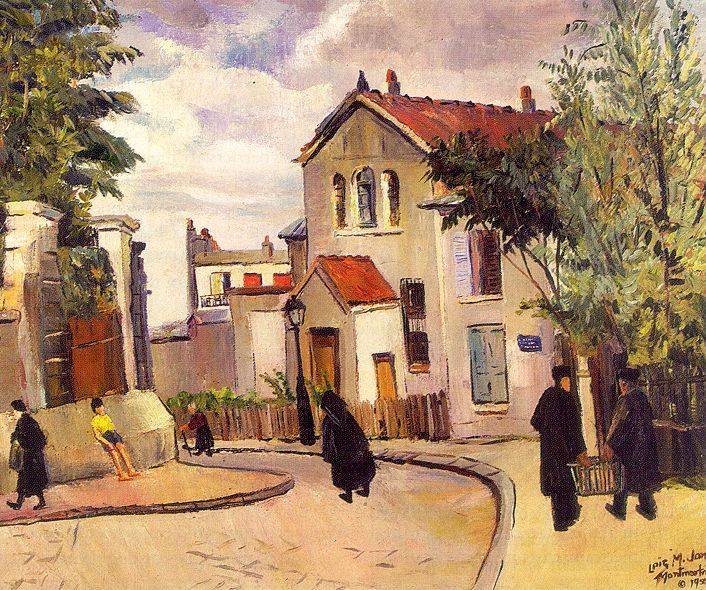
Jones’s long career may be divided into four phases: the African-inspired works of the early 1930s, French landscapes, cityscapes, and figure studies from 1937 to 1951, Haitian scenes of the 1950s and 1960s, and the works of the past several decades that reflect a return to African themes.
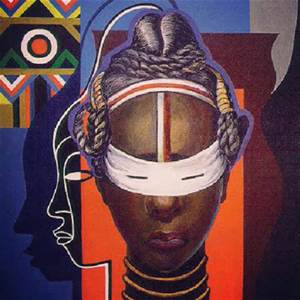
Loïs was the first and only African American to break the segregation barrier denying African Americans the right to display visual art at public and private galleries and museums in the United States.

Throughout her 60 year career as an artist and educator, Loïs Mailou Jones broke down barriers with quiet determination during a time when inequality, racial discrimination, and segregation hindered her from gaining the acknowledgement and prestige she deserved as a talented artist.
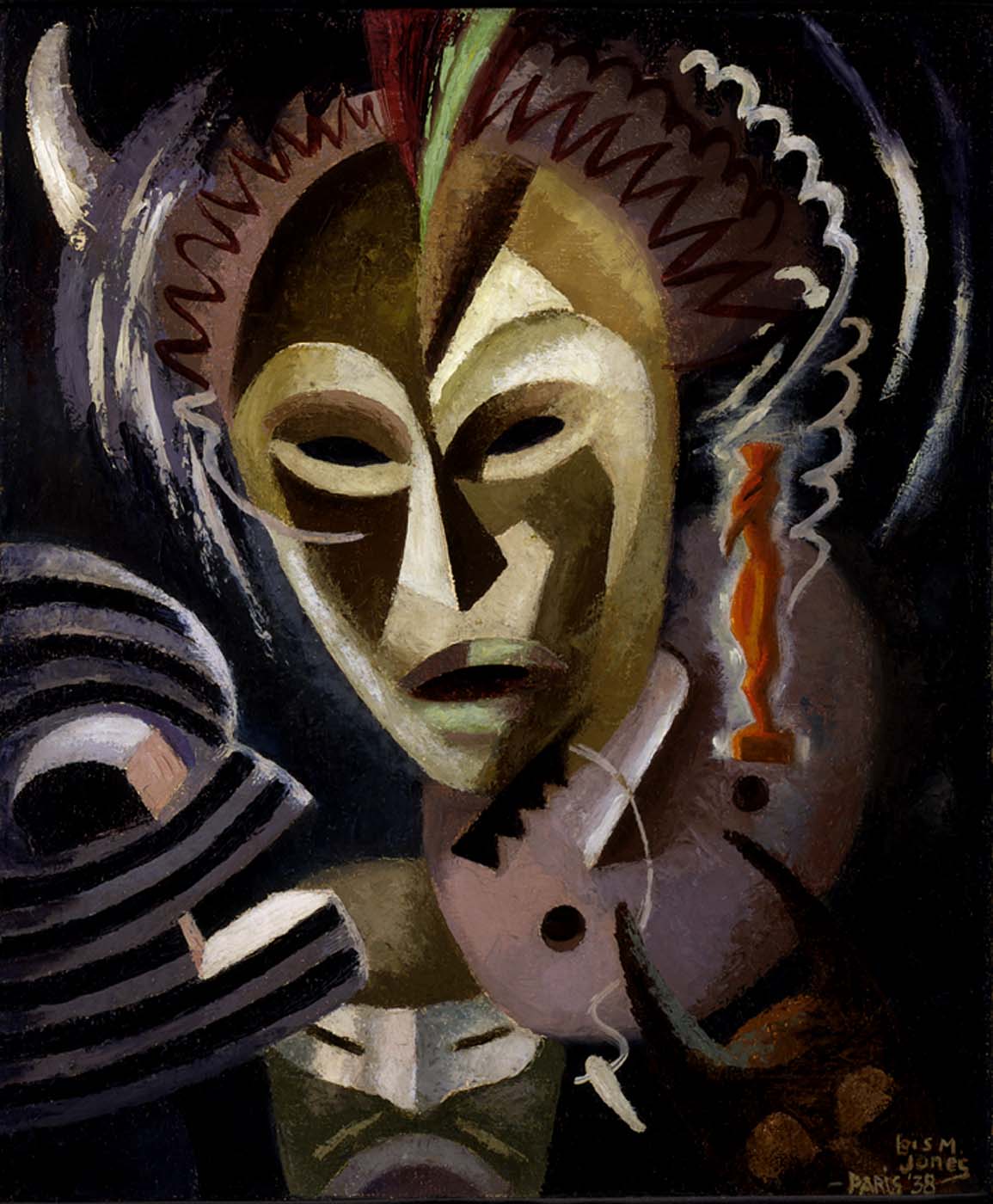
Skillfully integrating aspects of African masks, figures, and textiles into her vibrant paintings, Jones continued to produce exciting new works at an astonishing rate of speed, even in her late eighties.
Loïs Mailou Jones was not only an artist, but a movement, inspiring the Harlem Renaissance and the future of all artists struggling to be heard.
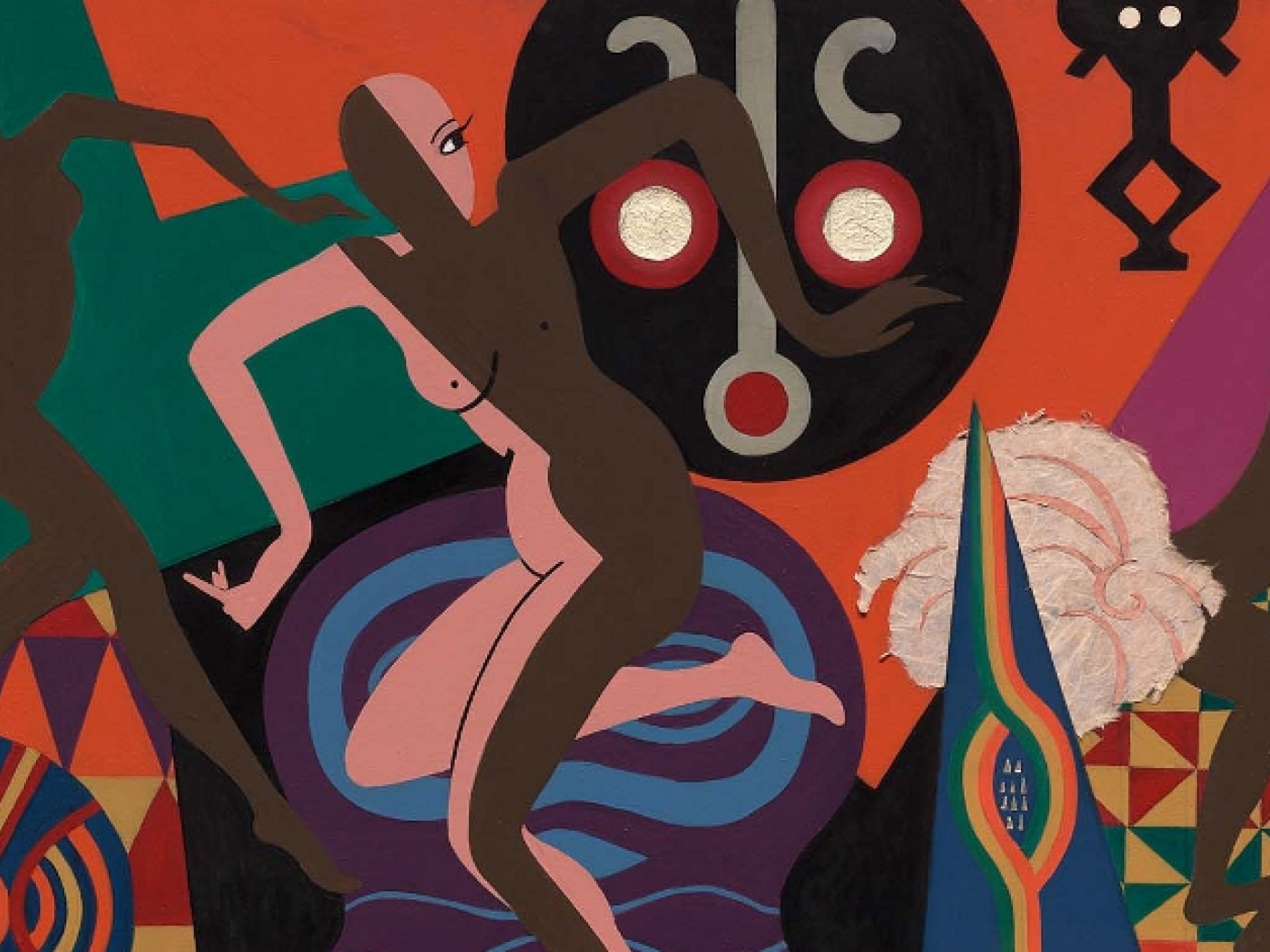
Lois’s lucious art can be found at http://loismailoujones.com/ and at http://nmwa.org/explore/artist-profiles/lo%C3%AFs-mailou-jones.
Some people are magic, and others are just the illusion of it.
― Beau Taplin
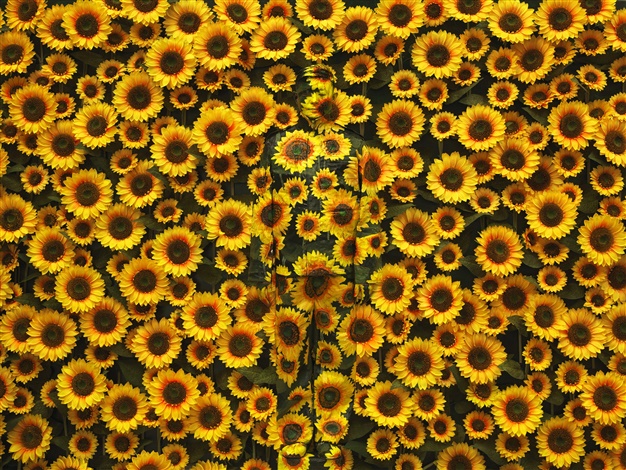
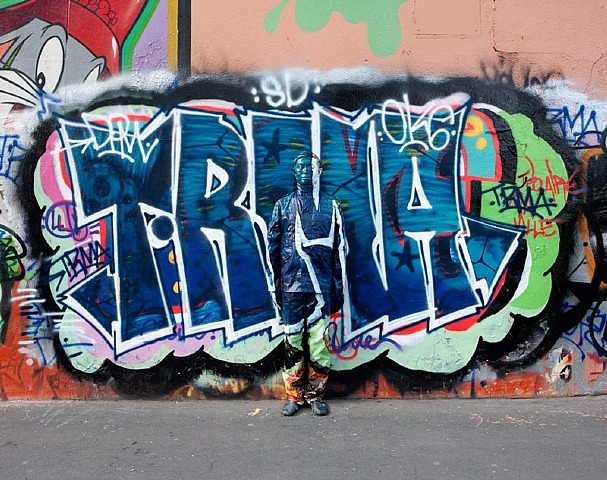
Calling Liu Bolon Master of Illusion is putting it lightly.
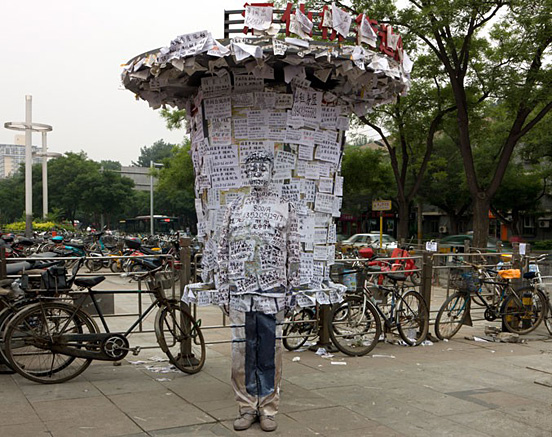
Using his own body as a canvas, painting himself into the background, Bolin creates scenes that are statements about our relationship to our surroundings.
Liu Bolin was born in 1973 in Shandong, China and studied sculpture at the Central Academy of Fine Arts in Beijing, graduating with an MFA in 2001.
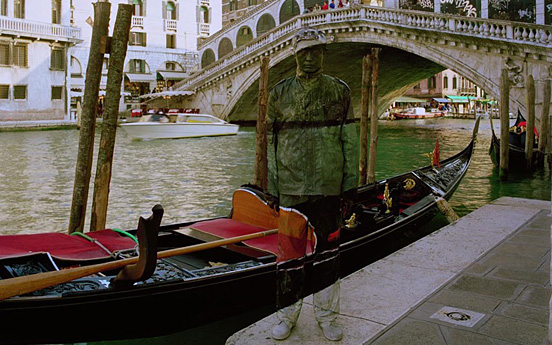
He discusses the social concerns of his home country through his artistic practice, most prominently through his ‘camouflage’ installations.
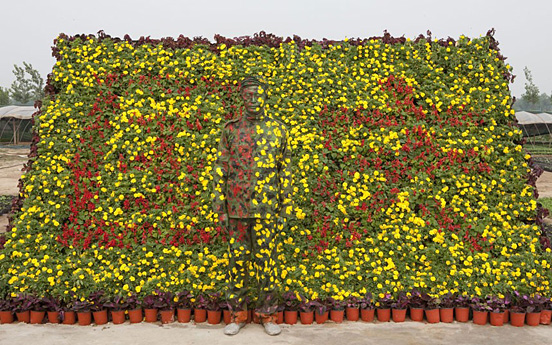
Blending in with the world around you is not as easy as it seems
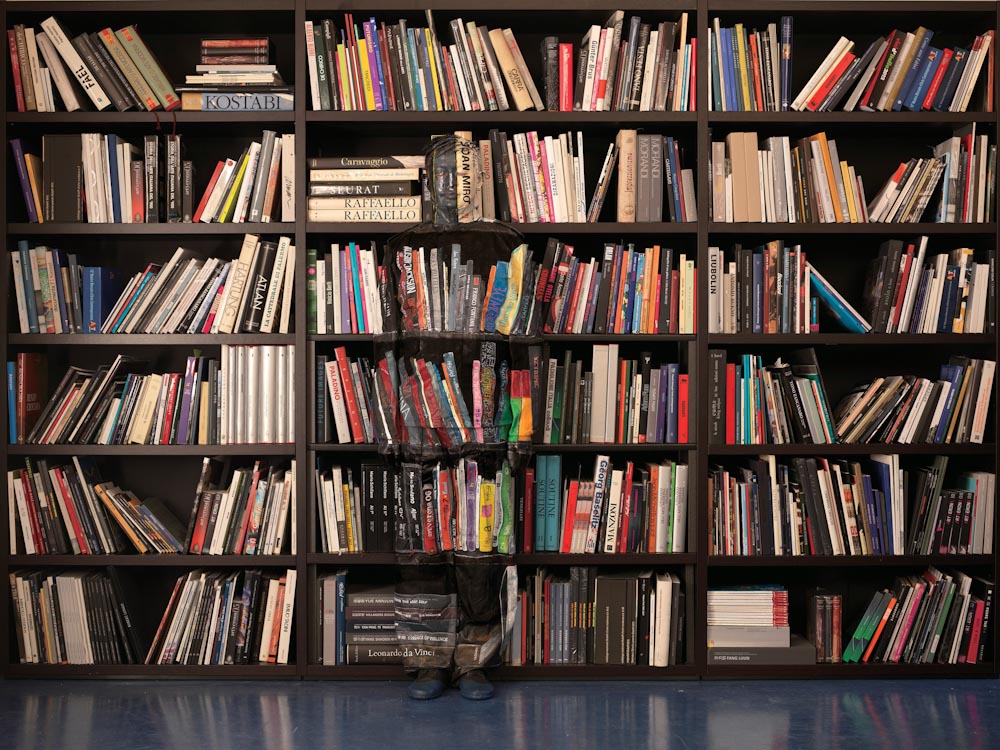
But with the imagination and creativity of Liu Bolon, it becomes seamless.
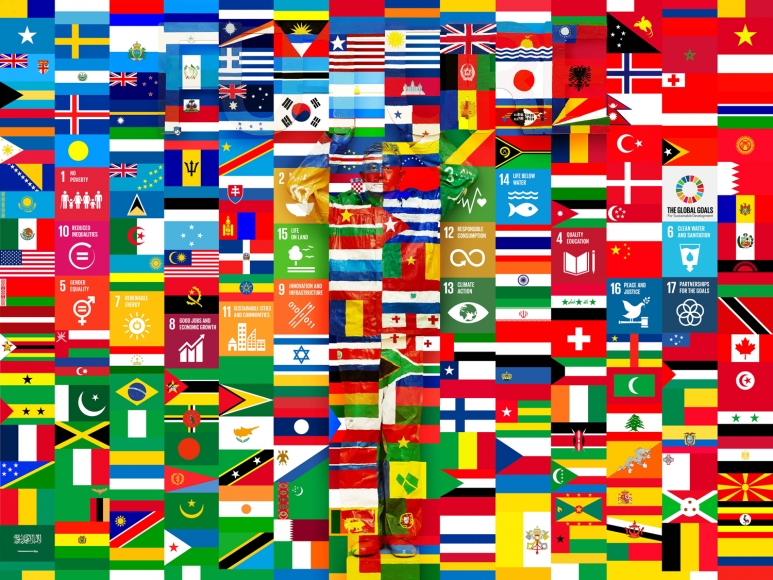
More of Liu Bolon‘s amazing art can be found at
http://www.kleinsungallery.com/artists/liu-bolin, http://www.artnet.com/artists/liu-bolin/
and a great article written by the The Telegraph in the UK: http://liubolon .
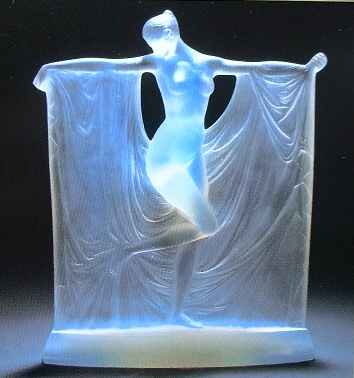
René Lalique (April 6, 1860 – May 5, 1945) was a master jeweller and glass designer during the Art Nouveau period.

His superior talent and creativity evolved over time and he developed his style to such an extent that he was able to dominate the Art Deco jewelry and glass market as well.

He designed an array of beautiful pieces — glass perfume bottles, jewelry, vases, tableware, bottles, lighting, figurines, and in his later years, car hood ornaments.
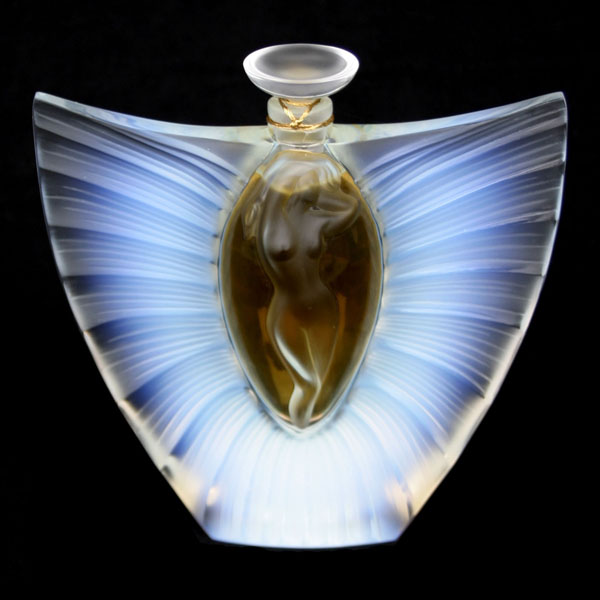
In the 1920s , his style morphed from the Art Nouveau nature-inspired forms, to more streamlined pieces to suit the Art Deco aesthetic.

Lalique’s glass pieces became more opalescent, produced by adding phosphates, fluorine and aluminum oxide to glass in order to make it opaque, and by adding tiny amounts of cobalt to produce an internal blue tint.
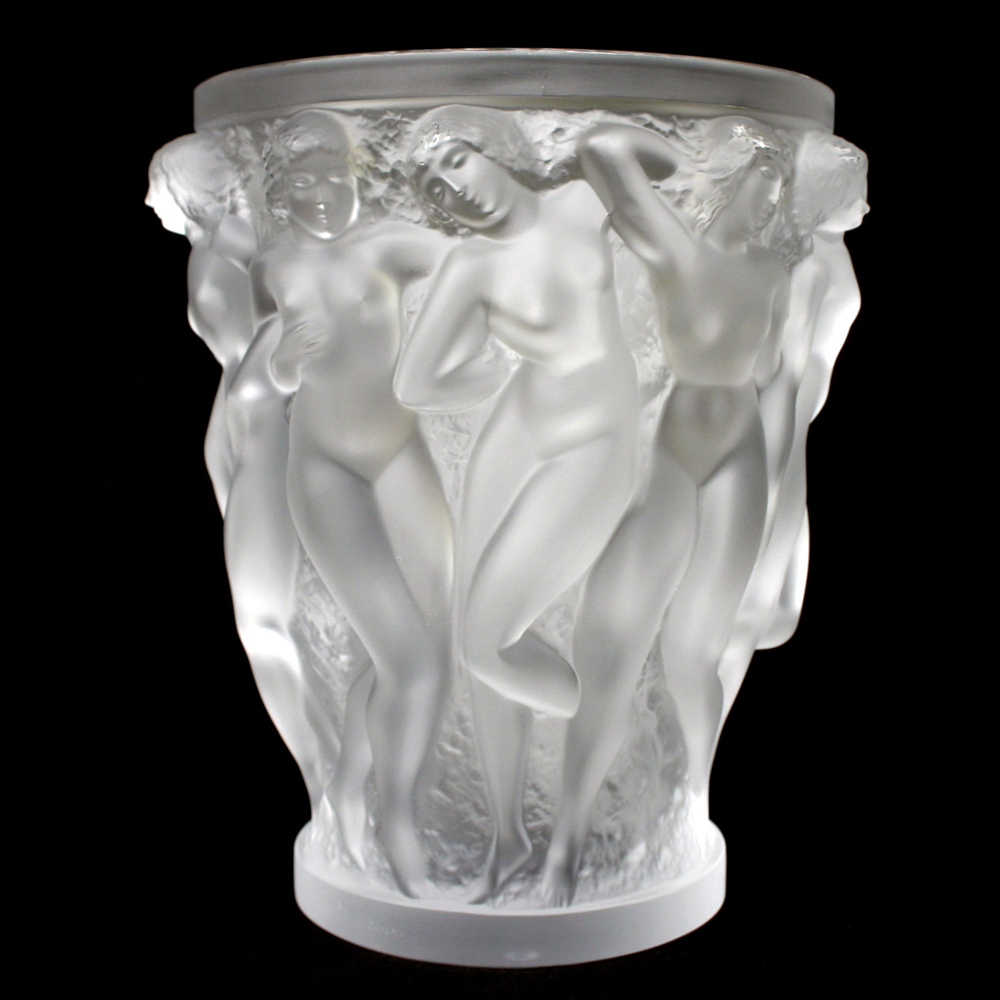
His work passes the level of everyday to rare and extraordinary.

More of René Lalique‘s exquisite glassworks can be found at http://www.renelalique.com.
Dear Friends, 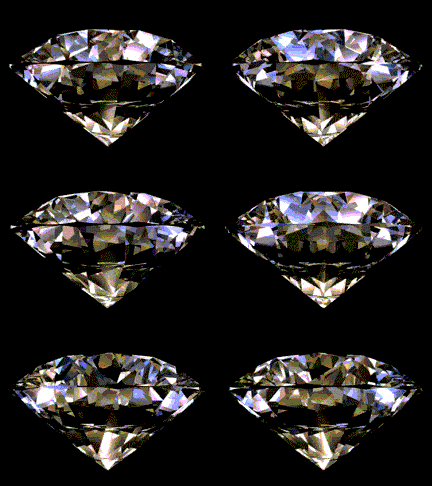
I don’t do this often — you know — really sparkle my own diamond. I love to write my blogs, I love the discoveries I’m making in my art gallery.
I know the people who follow me do so because they get a kick out of what I’m saying and/or showing. And I hope to entertain myself — oh! and you — for quite a while into the nebulous future.
So here comes the sales pitch.
If you could share my Humoring the Goddess blog (www.humoringthegoddess.com) or my Sunday Evening Art Gallery blog (www.sundayeveningartgallery.com) with just ONE friend, it might just open a new world for them — and me. They might bring a smile or smirk to someone else’s face, or eyes of wonder as they look at the incredible art I find around the world.
My Facebook page (https://www.facebook.com/sundayeveningartgallery/) could also use a few followers — the sole purpose of this account is to share unique art to those who can’t always go through the galleries.
Either way, I’m done selling for today. Hoping you continue to grow, to dream, and to have fun. We only go one way in this life — let’s make it real.
Where’s the nachos?
Love,
Claudia
A #2 pencil and a dream can take you anywhere ~~ Joyce A. Myers
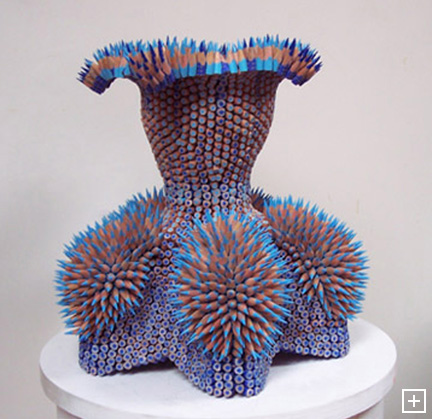
Sculpture artist Jennifer Maestre, born 1959 in Johannesburg, South Africa, is a Massachusetts-based artist, internationally known for her unique pencil sculptures.
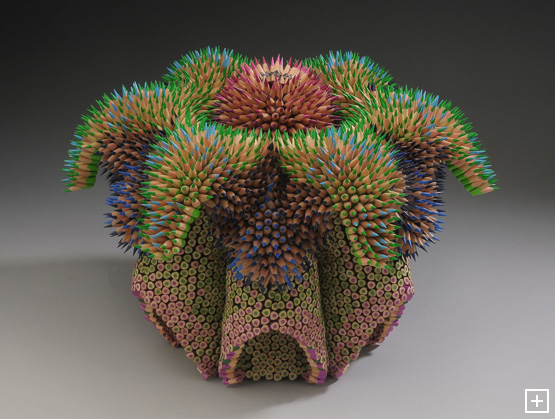
Her sculptures were originally inspired by the form and function of the sea urchin.

The spines of the urchin, so dangerous yet beautiful, serve as an explicit warning against contact.
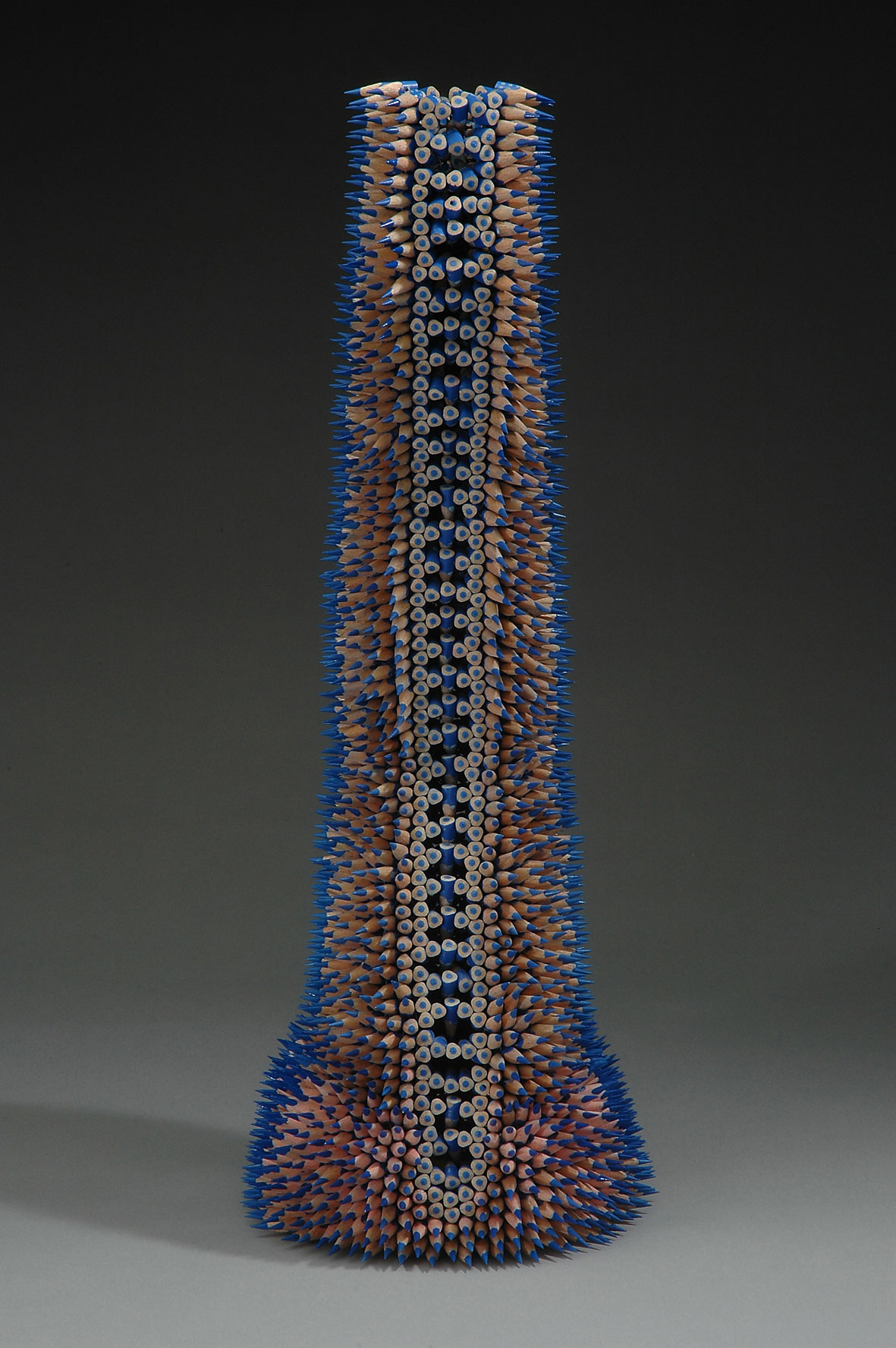
According to Maestre, there is true a fragility to the sometimes brutal aspect of the sculptures, vulnerability that is belied by the fearsome texture.
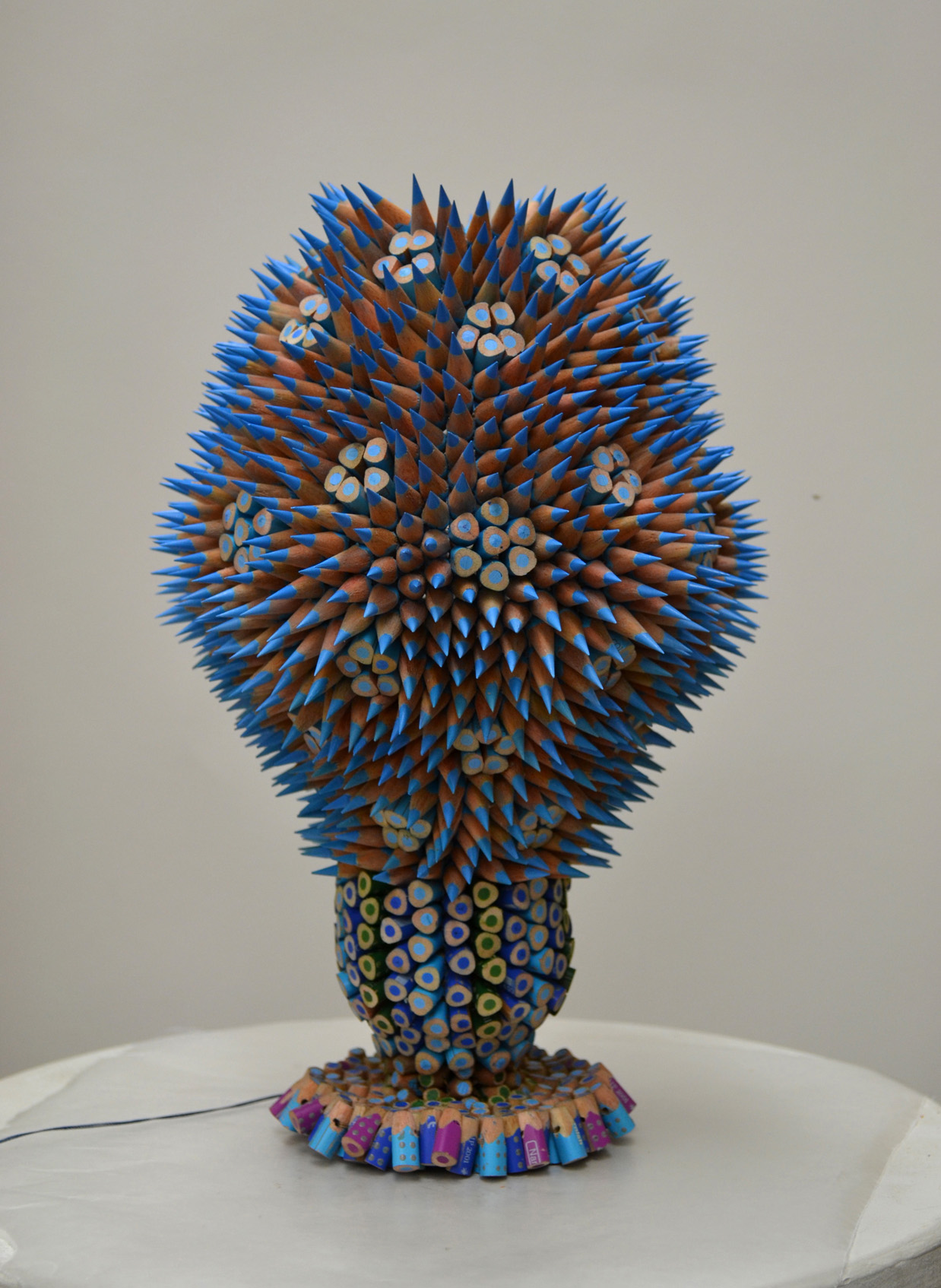
To make the pencil sculptures, Jennifer take hundreds of pencils, cut them into 1-inch sections, drills a hole in each section (to turn them into beads), sharpens them all and sews them together.
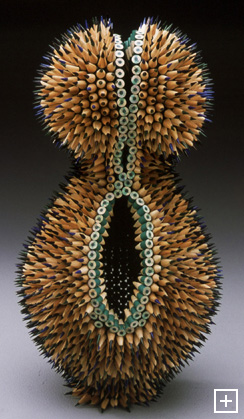
Jennifer Meastre’s fantastic art is a tribute to her eye for nature, its fragile state, and the magical way it protects itself.

Jennifer Maestre’s sculptures can be found at http://www.jennifermaestre.com/.
Once Upon A Time

I came across an image
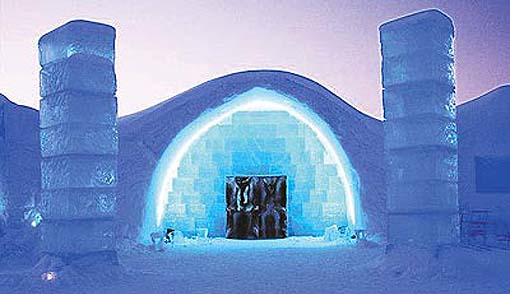
of an odd-shaped hotel. And I wondered…

Could there be more?

The more I wandered, the more I found

Oddities beyond compare

And I wondered still
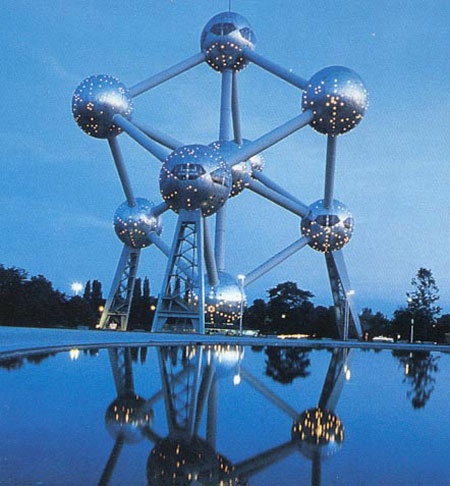
Are these hotels?

Imagination truly has run amok
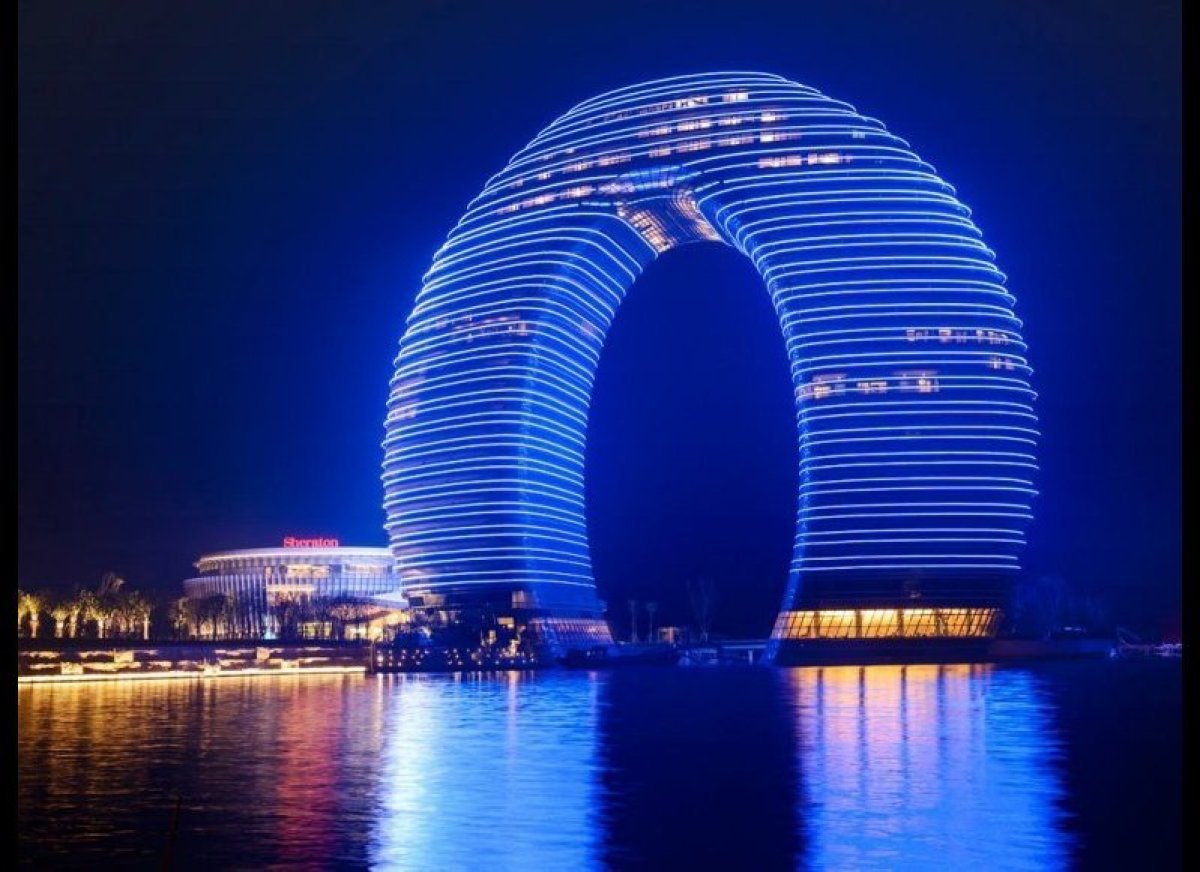
And if you can dream it, and can afford it

You can Build It
Creativity is a flower blooming from the heart. Every one of us can do it.

Every One Of Us.

All we need to to is find a way to open that connection.

As a visual artist, Roza has always drawn most of her inspiration from the natural world around her.

With its diverse, stunning nature, Australia presented Roza with a profusion of ideas and influences; and it was in 2011 that Roza and her partner Afshin launched Shovava, a line of women’s clothing based on her hand drawn paintings and prints of the natural world.

All her designs are hand drawn and then digitally printed on very fine fabrics which she sources herself on her globe-trotting adventures.
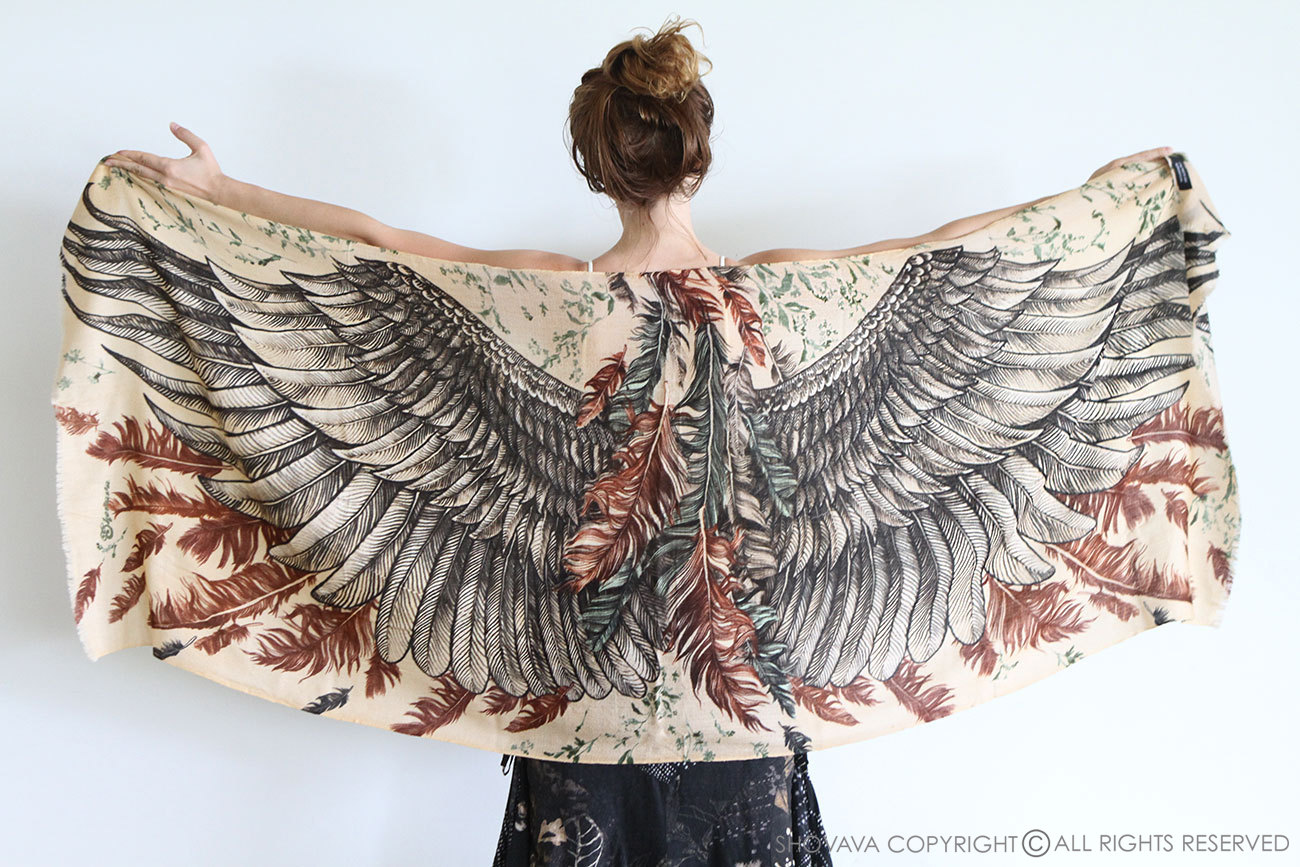
In describing her creative process, Roza says, “I observe nature and find inspiration in the smallest details. Maybe it’s a butterfly’s wing or the patterned cell structure of a leaf. Maybe it’s a feather or a raven perched on a tree limb. I take in what I see in the nature and then create my pieces.”
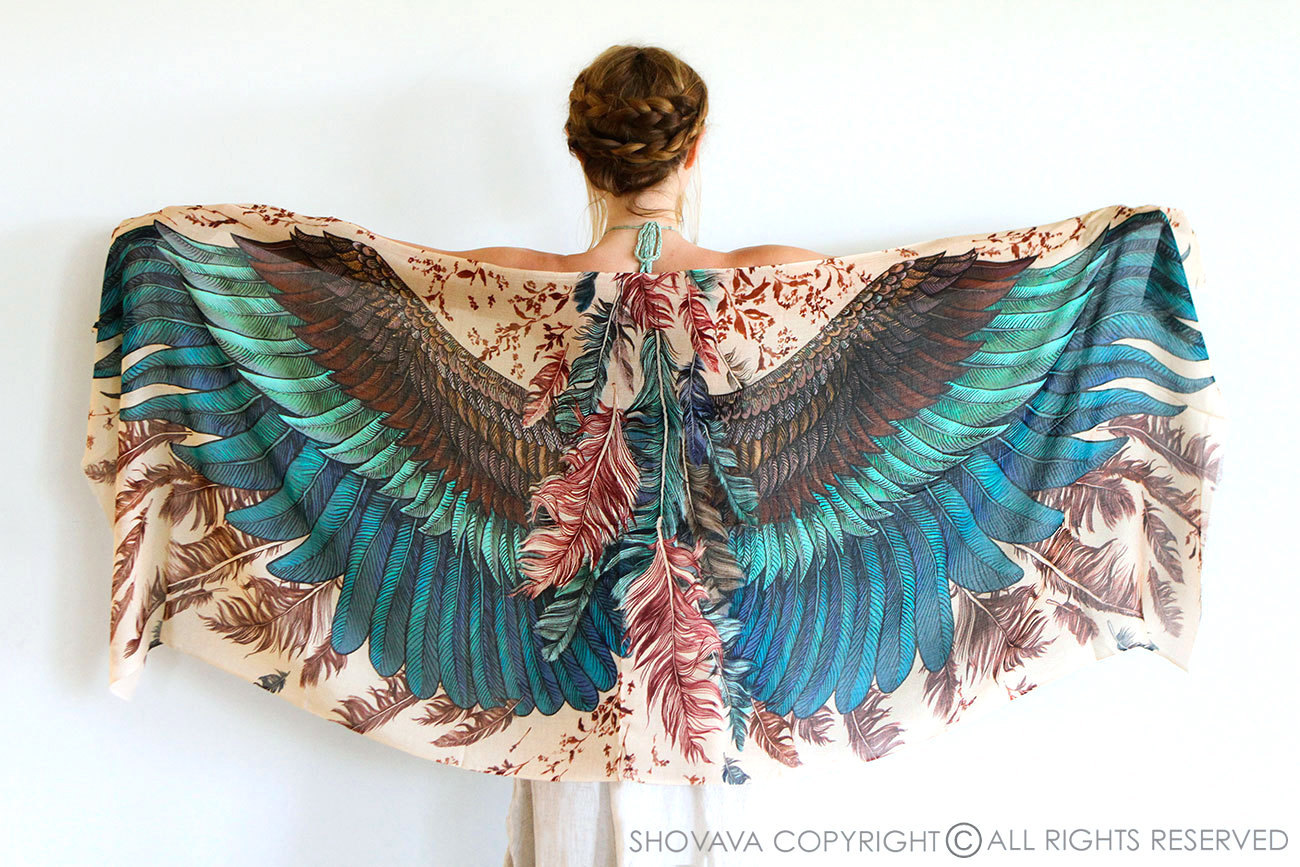
Shovava‘s wonderfully creative works can be found at https://www.shovava.com/
Also, you can find another great article about Roza and Shovava at
http://www.boredpanda.com/wearable-art-takes-flight/
Their work is also on their Facebook page: facebook.com/shovavaclothing
Happy Holidays my favorite readers!
On this day-bef0re-Sunday-Evening-Art-Gallery-blog-Day, I thought I’d drop off a few gifts for a Saturday afternoon.
Two more luscious galleries have been added to the expanded SEAG blog:
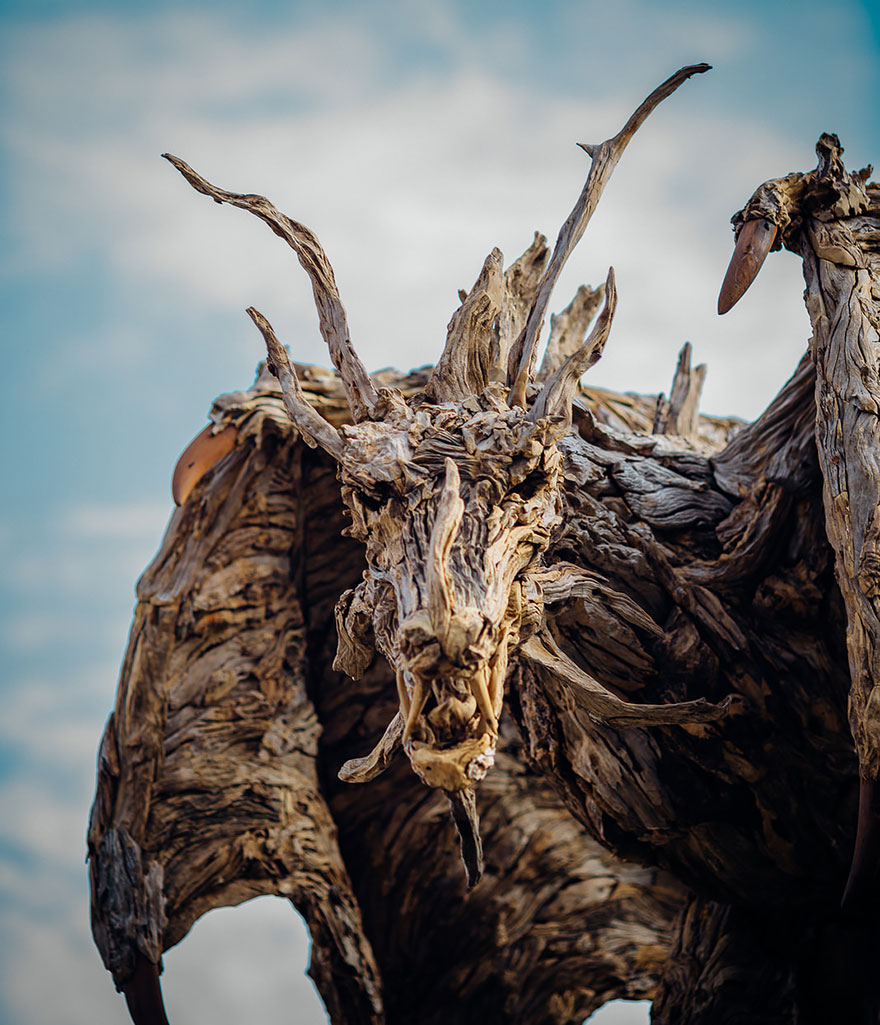
The outstanding driftwood sculptures of James Doran Webb (http://wp.me/p5LGaO-uE)
and the ultra colorful contemporary art of Janet Fish (http://wp.me/p5LGaO-uX)

If you’d like a bit of amazing Mother Nature, I can also recommend the incredible Universe (http://wp.me/p5LGaO-ov)

Or Snowflakes ( http://wp.me/p5LGaO-31).

Enjoy the Season, the Gallery, and your Life. For after all……All we are is Dust in the Wind (thanks to Kansas).
See You Soon!
Christmas is Magic

Christmas is what you make it
It is delight, it is memories, it is sadness
It is shooting stars and deep sea glow worms
It is sacred, it is jovial, it is silly
Say Merry Christmas or Happy Holidays to a stranger
Kiss your sweetheart and hug your kids
Call your sister or visit a friend
Christmas is what you make it
Today and Every Day
See you Sunday with another amazing artist Sunday at the Sunday Evening Art Gallery
I went to the woods because I wished to live deliberately, to front only the essential facts of life, and see if I could not learn what it had to teach, and not, when I came to die, discover that I had not lived. ~~ Henry David Thoreau
~
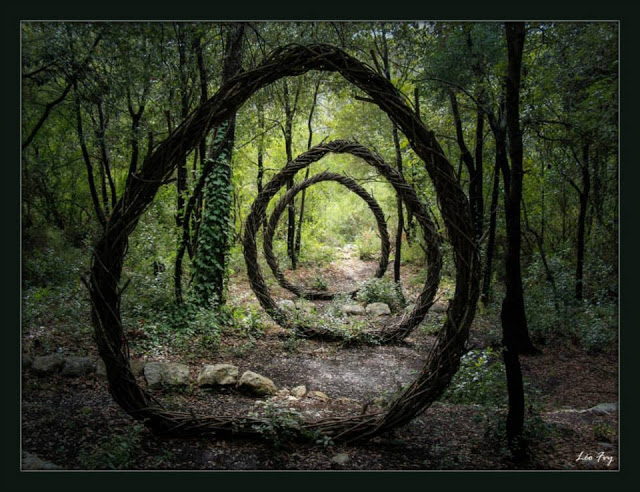
Sculptural artist Spencer Byles spent a year creating beautiful sculptures out of natural and found materials throughout the unmanaged forests of La Colle Sur Loup, Villeneuve Loubet and Mougins, France.
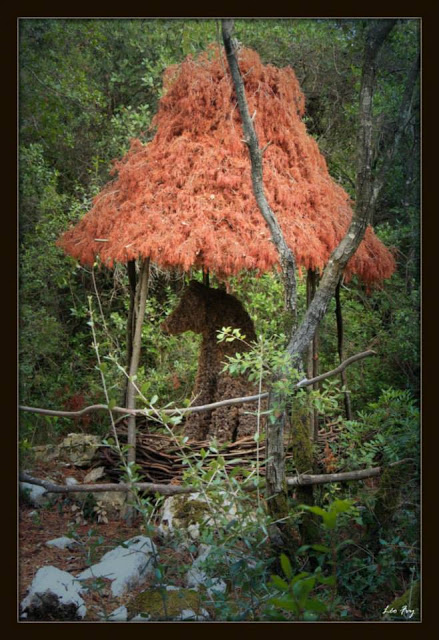
Surrounded by flora and fauna, Spencer used only cables and natural, found materials to create his stunning, large-scale works of art.

One of the most beautiful things about his work is its temporary nature.

The pieces were not intended to last — as life itself, each sculpture will eventually be reclaimed by the natural environment that helped Byles shape it.
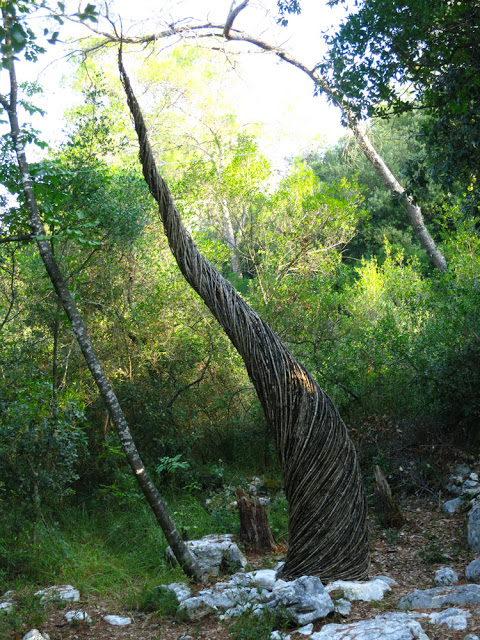
Spencer says, “The temporary nature of my sculptures is an important aspect of my experiences and understanding. I feel my sculptures are only really completed when nature begins to take hold again and gradually weave its way back into the materials. At this point it slowly becomes part of nature again and less a part of me.”
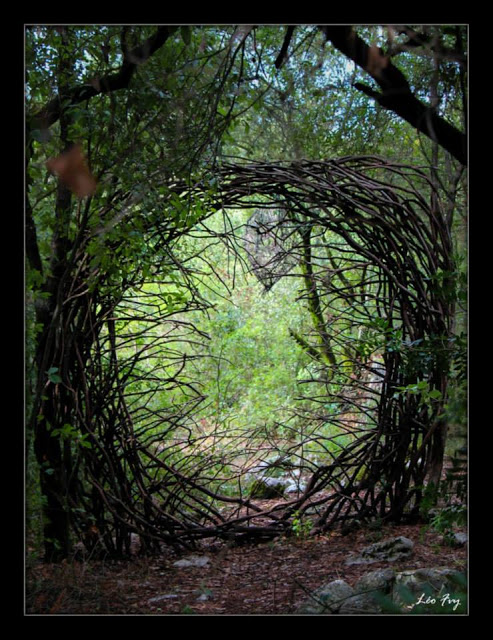
More about Spencer Byles and his fantastic forest art can be found at:
http://frenchforestsculptures.blogspot.com
http://www.viralnova.com/spencer-byles/
http://www.boredpanda.com/forest-land-art-nature-spencer-byles/
Natalya Sots is an artist originally from Pavlodar, Kazakhstan but has lived in Chicago’s suburb of Schaumburg since 2002.

Natalya got started as an artist in high school when she worked at a ceramics factory where she decorated the dishes before they were glazed and fired.
Prior to graduation from college, Natalya started working as an art teacher at a private art school in Pavlodar.
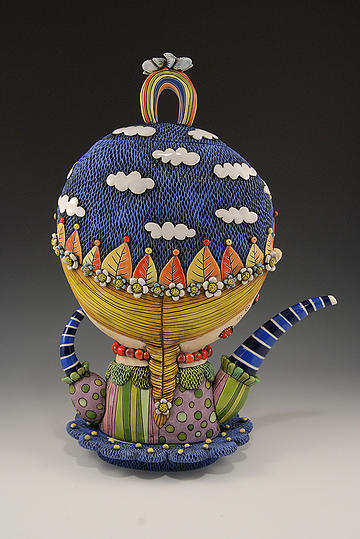
She was given a course in ceramics as the medium to introduce these children to the wonderful world of art, and was asked to develop a program for it.

She developed her technique and style while working on the program for kids.

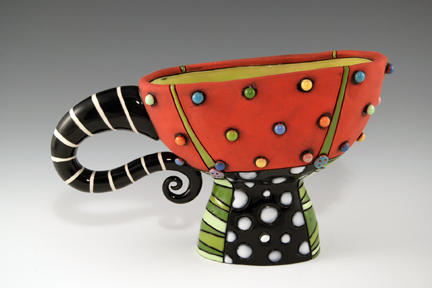
Natalya’s whimsical ways have turned her love of art into a cornicopia of lucious ceramics, bright and intricate.
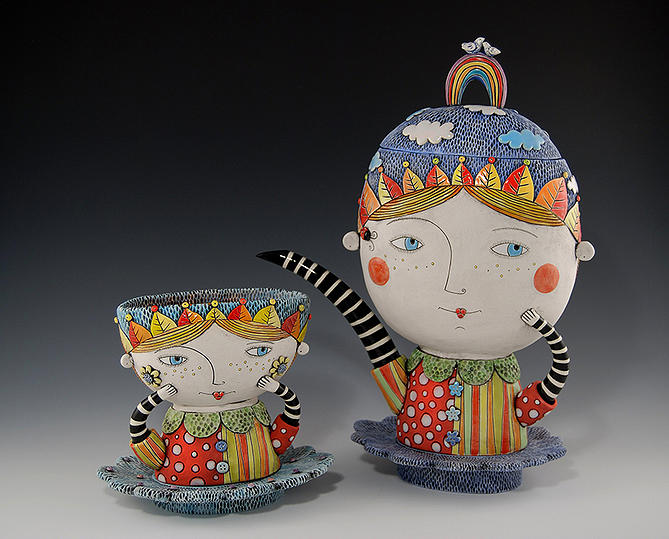
From butter dishes to cups and teapots, Natalya Sots colorful creations can be found at http://www.natalyasots.com/
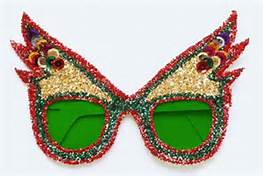
When you wake up in the morning and the light is hurt your head
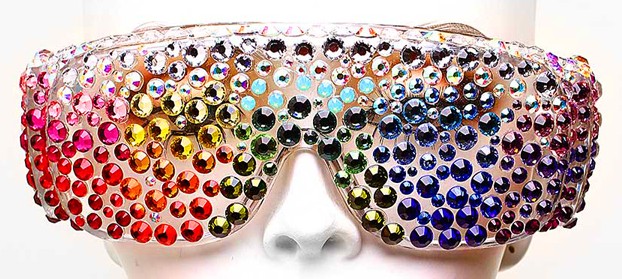
The first thing you do when you get up out of bed

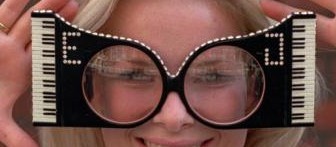
Is hit that streets a-runnin’ and try to beat the masses

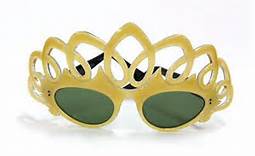
And go get yourself some cheap sunglasses

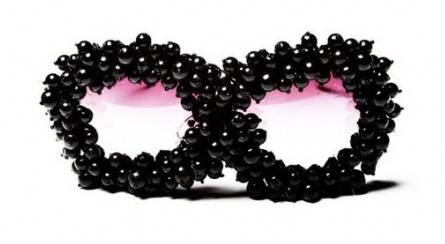
Now go out and get yourself some big black frames
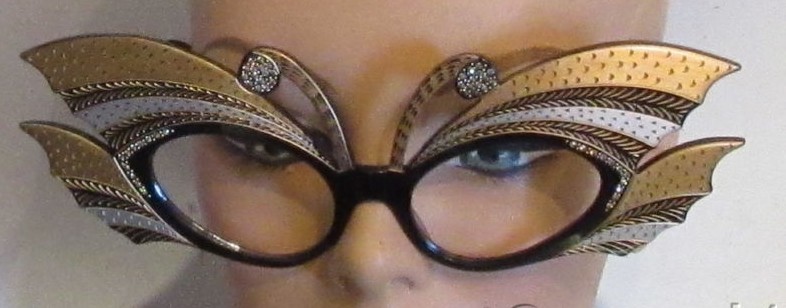
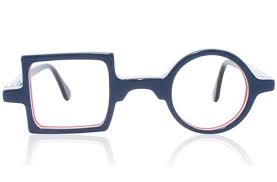
With the glass so dark thay won’t even know your name


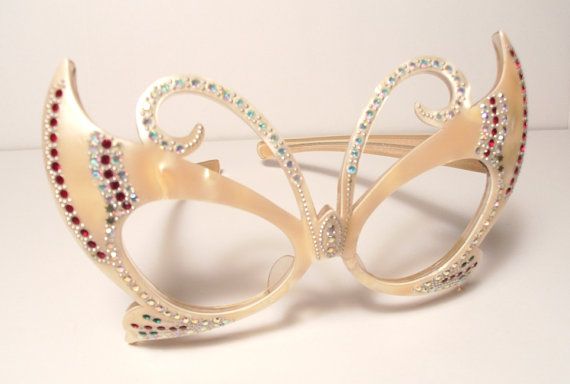
And the choice is up to you cause they come in two classes:
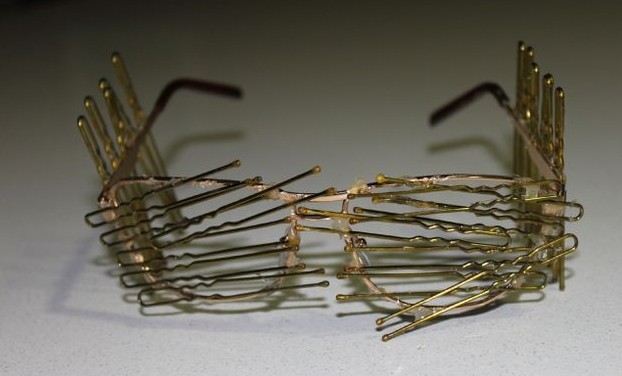
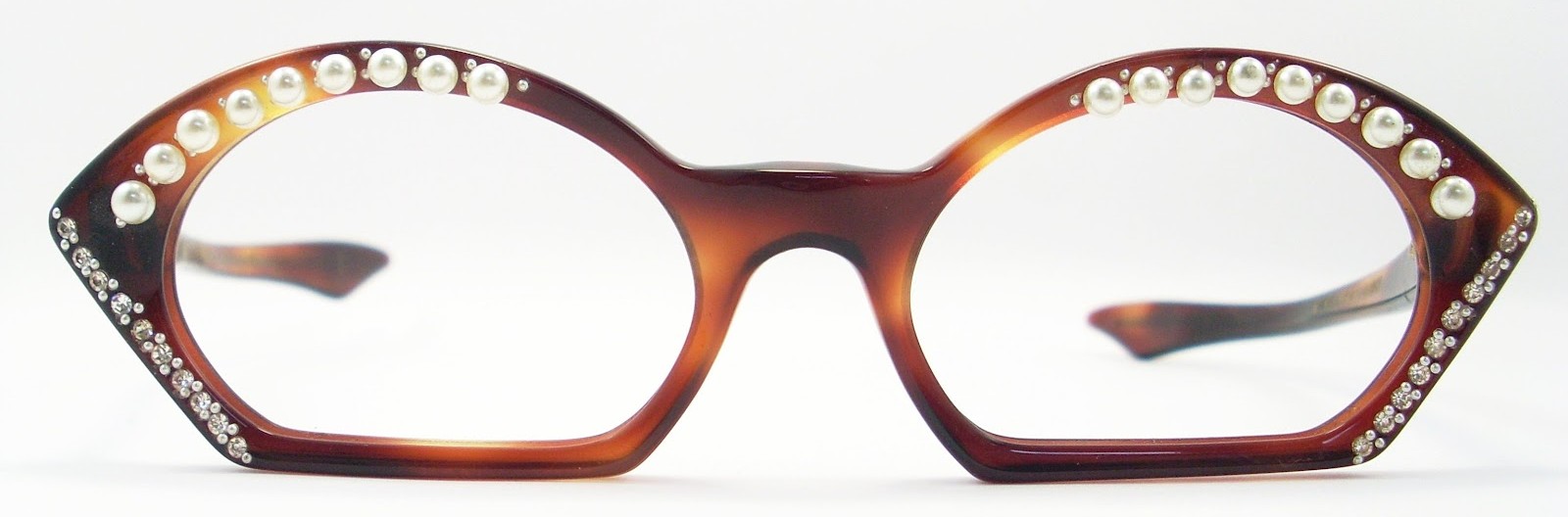
Rhinestone shades or cheap sunglasses
~~Z Z Top
If the dream is a translation of waking life, waking life is also a translation of the dream. ”
– Rene Magritte

René François Ghislain Magritte (November 21, 1898 – August 15, 1967) was a Belgian surrealist artist best known for his witty and thought-provoking images and his use of simple graphics and everyday imagery.
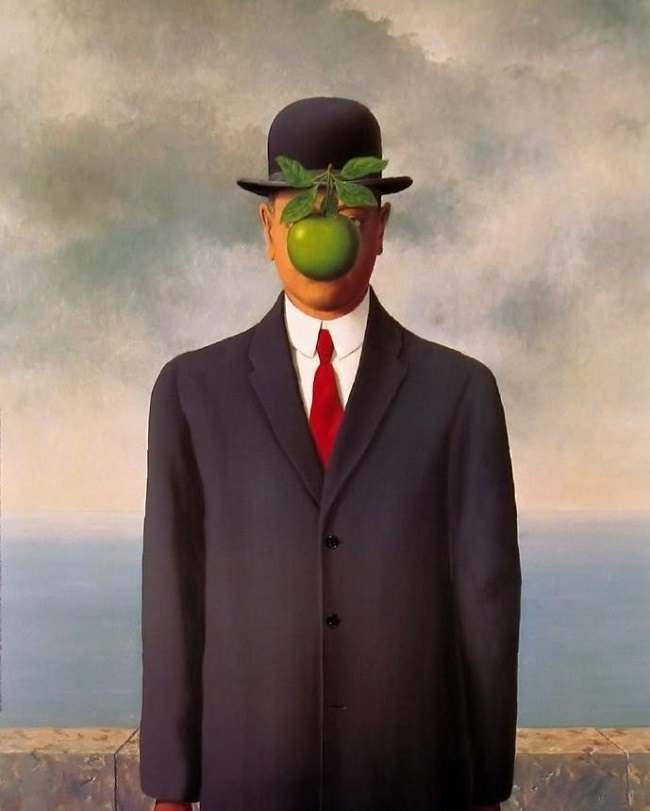
We all have seen a few of these images throughout our life, but often we don’t remember where or when.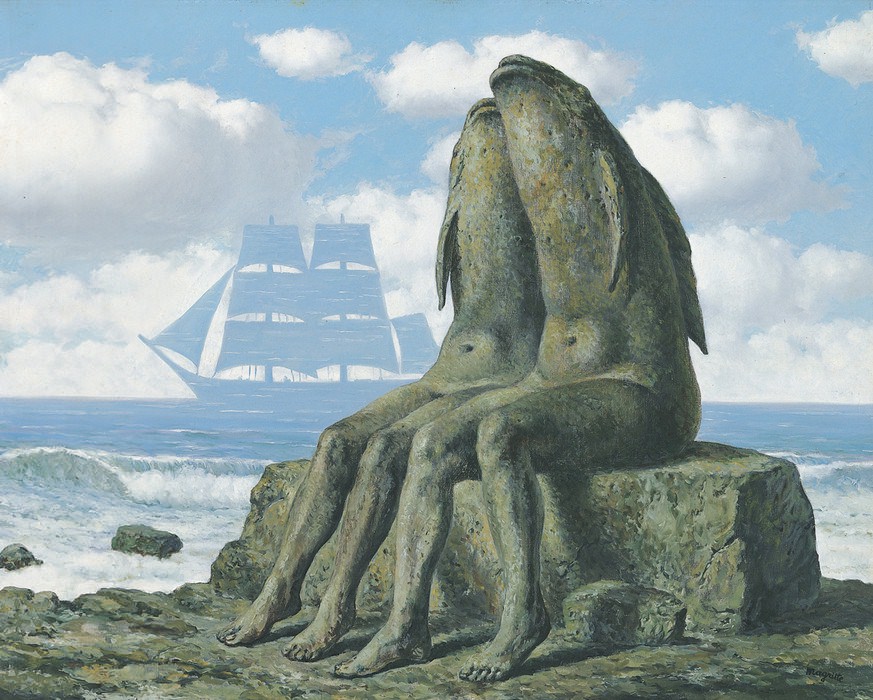
Magritte’s work frequently displays a collection of ordinary objects in an unusual context, giving new meanings to familiar things, challenging observers’ preconditioned perceptions of reality.
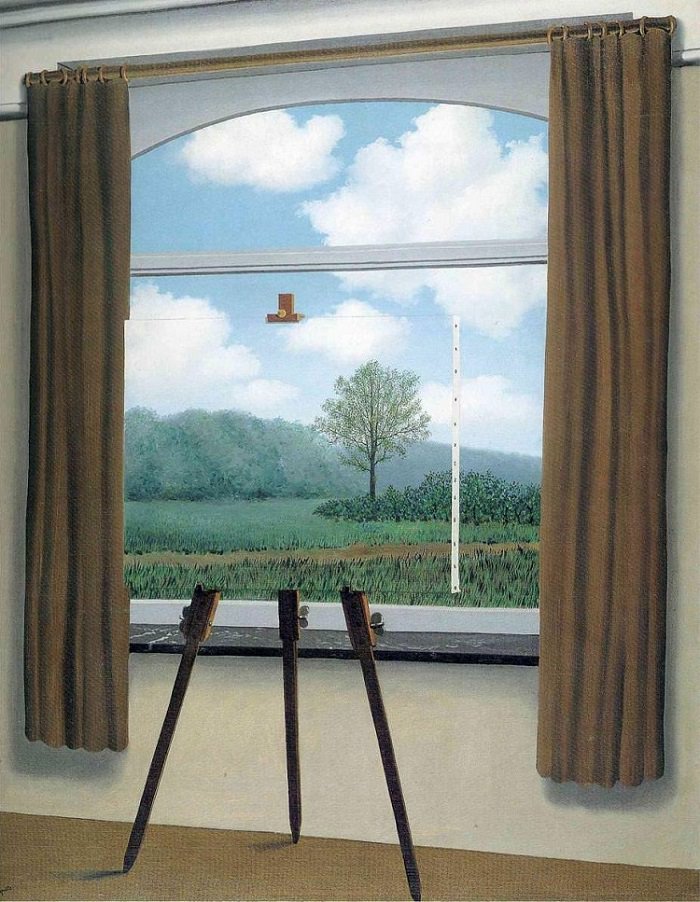
To Magritte, what is concealed is more important than what is open to view: this was true both of his own fears and of his manner of depicting the mysterious.

A meticulous, skillful technician, he is noted for works that contain an extraordinary juxtaposition of ordinary objects or an unusual context that gives new meaning to familiar things.
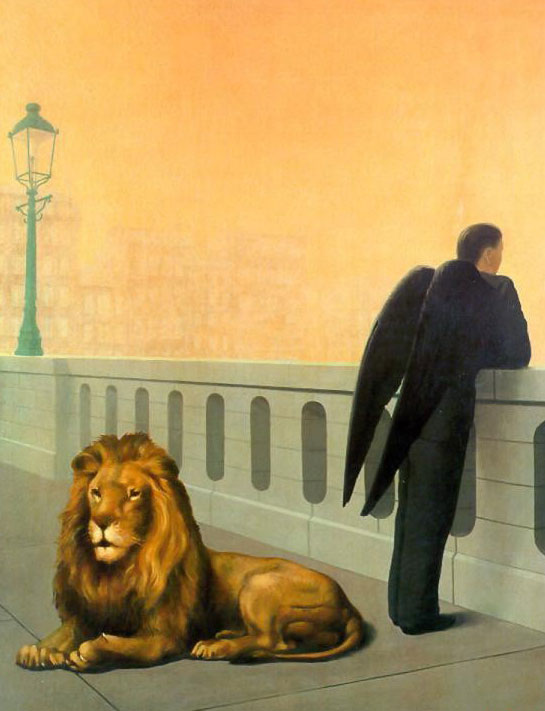
Not only were a number of artists intrigued by, and influenced by the work Rene Magritte created, but popular culture, and the art world in general, were extremely influenced by his creative, unique ability to take something ordinary and make viewers see something completely different.
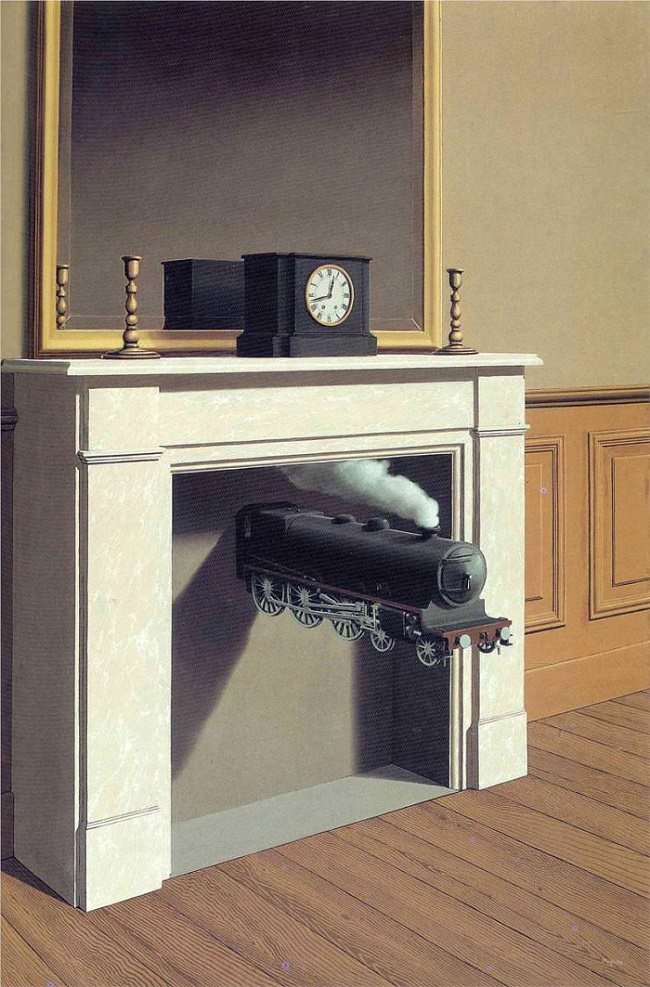
Magritte‘s art has been so popular that it has been copied in posters, ads, and other commercial venues. Perhaps that’s why it feels so familiar.

You can find more of René Magritte‘s art at http://www.renemagritte.org/ http://www.abcgallery.com/M/magritte/magritte.html, or http://www.theartstory.org/artist-magritte-rene.htm.
www.sundayeveningartgallery.com
*
This quiet evening I thought I would introduce you to world you may not know exists
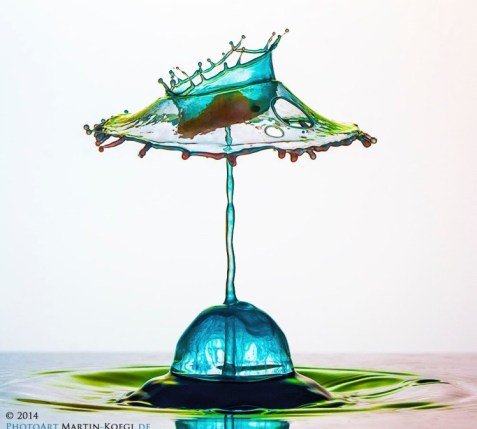
A world filled with even more views of creative inspiration

If you have enjoyed sitting back on Sunday Evenings

enjoying the discoveries of creative artists of all genres

Then you will love the full version of my Sunday Evening Art Gallery

Click on any of these images and see more magic

Explore more creations by these amazing artists, these amazing minds

Art that is limited only by the artist’s imagination and talent

I have collected dozens of extra images that could not fit on my Goddess blog

Images that deserved their own gallery

I add new galleries every week — I collect so many images on each journey my arms and blog cannot hold them all

So please come and visit a world of unique images and unique artists
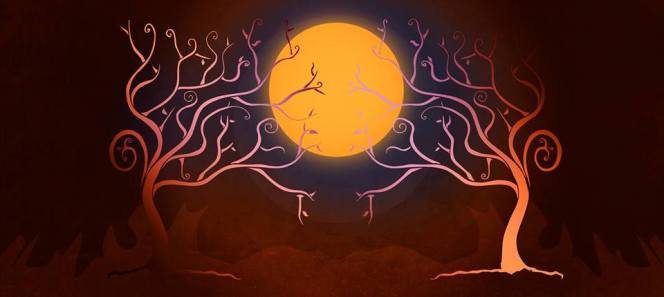
Come see what creativity is really all about
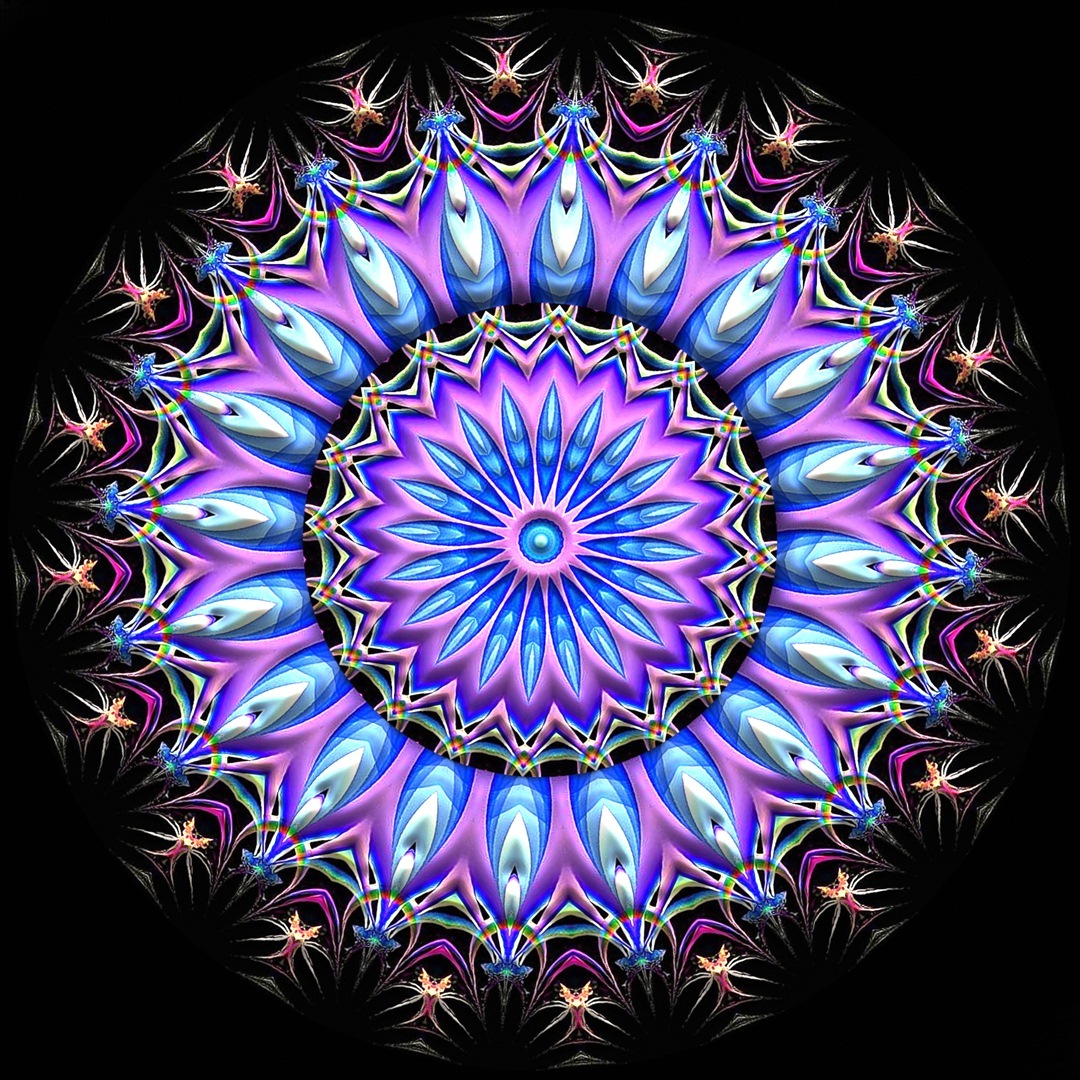
And if you like what you see, come back often.
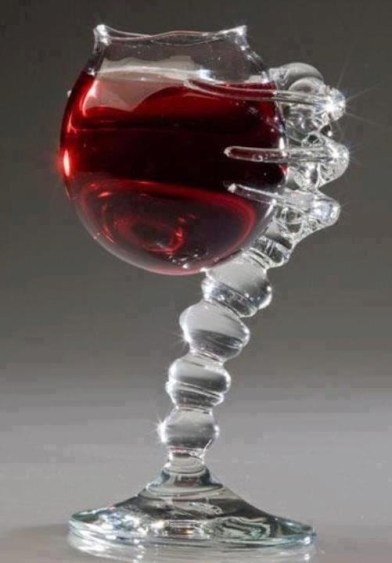
And please — tell your friends what a world you have discovered!
*
Wild horses…couldn’t drag me away….
Rolling Stones

The amazing power of life and freedom has been captured perfectly in sculptor James Doran-Webb’s breathtaking driftwood sculptures.
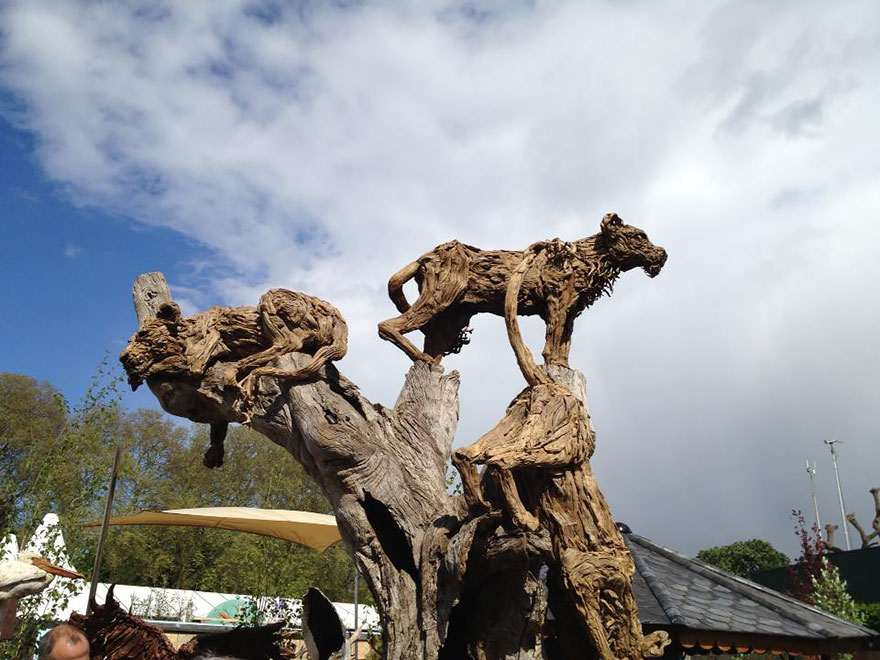
The driftwood’s seemingly unique forms lend themselves perfectly to figures such as wolves and horses and dragons.

Working together with a team of craftsmen, it can take 1,000 to 3,000 hours to make a life size sculpture, depending upon the complexities of the armature and anatomy.
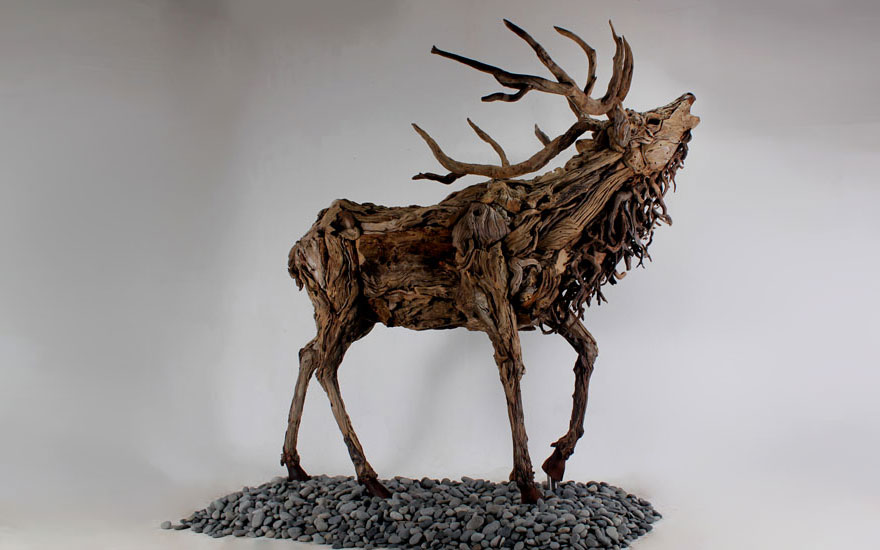
James started to design driftwood furniture in the early 2000’s and it was while playing with the various natural forms that he was drawn to experiment with his first driftwood animal sculpture.

His large supply of wood has made it possible for him to find the pieces which most lend themselves to the natural form and shape needed to give his animals the movement and reality he strives to obtain in every piece he creates.

James Doran-Webb believes that his art is meant to promote environmental consciousness.

“If I could make one person a little more aware of nature and the impact of nature on their lives I would be happy. I am a firm believer in our need to practice sustainable living in order to give future generations a better chance of survival.”

James Doran-Webb‘s fantastic driftwood sculptures can be found at his website, http://jamesdoranwebb.com; a great article also can be found at http://www.boredpanda.com/driftwood-dragon-sculptures-james-doran-webb/.
Most have heard of Oragami, but have you heard of Kirigami?
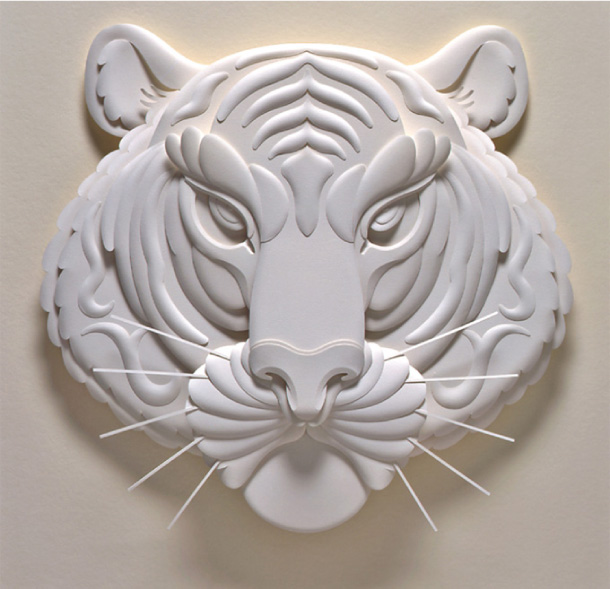
The major difference between the two is that, in origami, you fold paper, whereas in kirigami, you fold and cut paper.
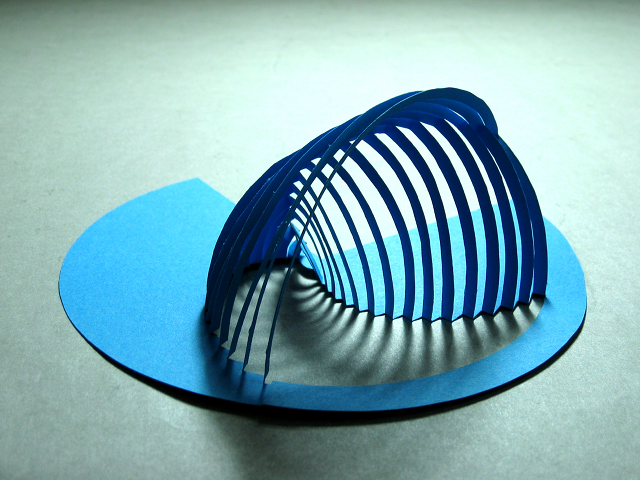
Typically, kirigami starts with a folded base, which is then cut;

cuts are then opened and flattened to make the finished kirigami.
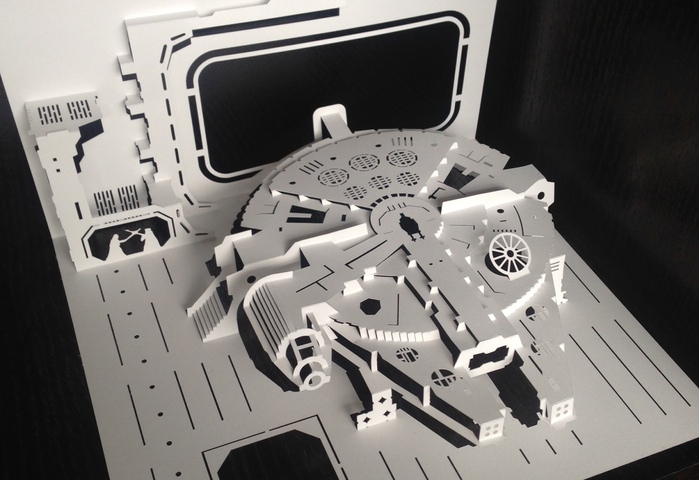
A difference between kirigami and the art of “pop-up” is that kirigami is made out of a single piece of paper that has been cut into a design.

Kirigami are usually symmetrical, such as pentagrams and snowflakes.
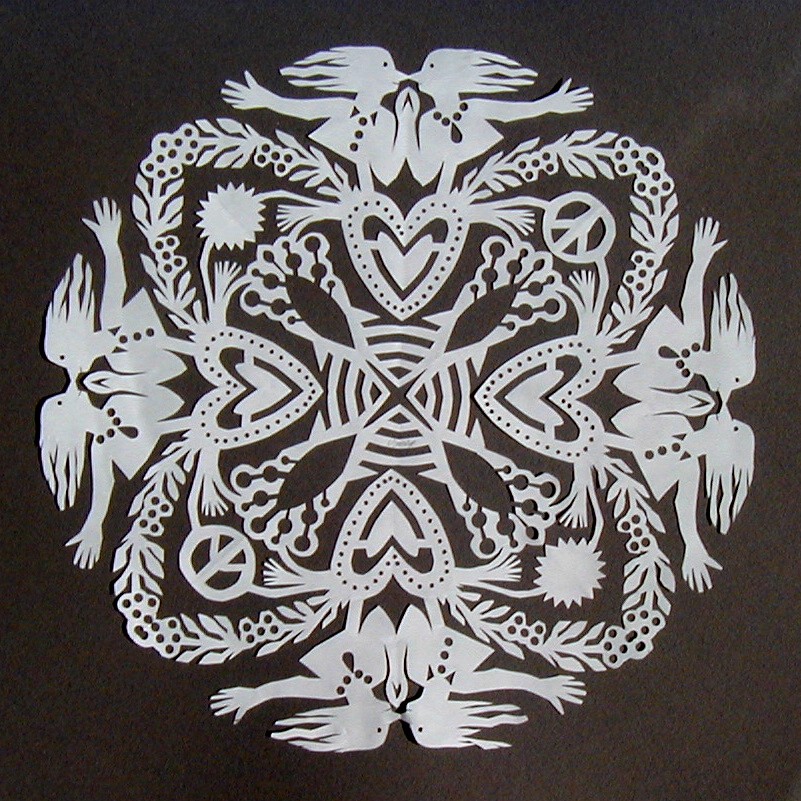
It is an art that takes a true plan, a steady hand, and a piece of paper.
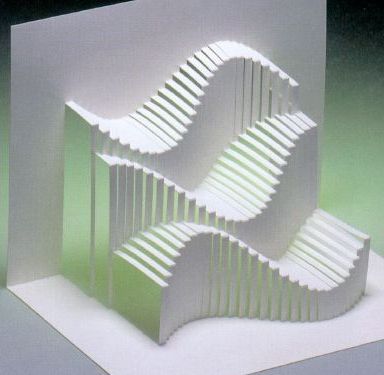
Not to mention … imagination.

Kirigami artists and clubs can be found throughout the Internet.
The Age of Faberge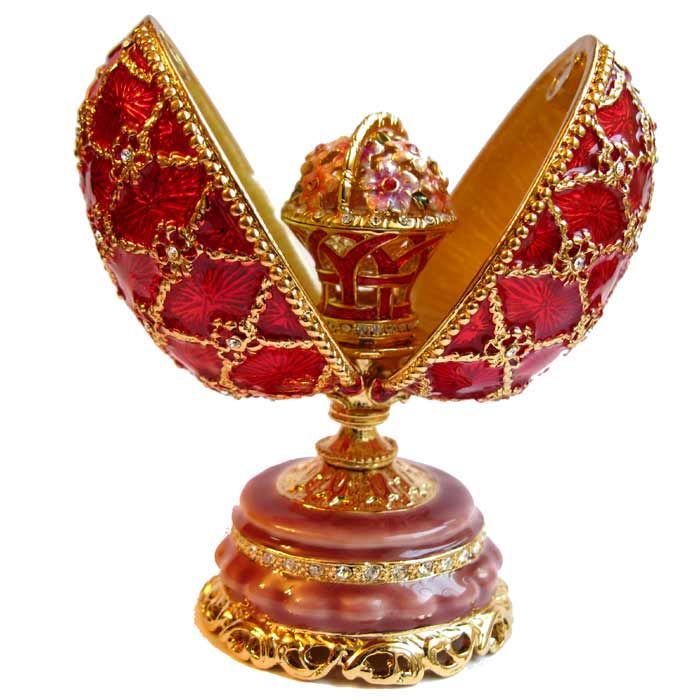
The age of elegance, of decadence
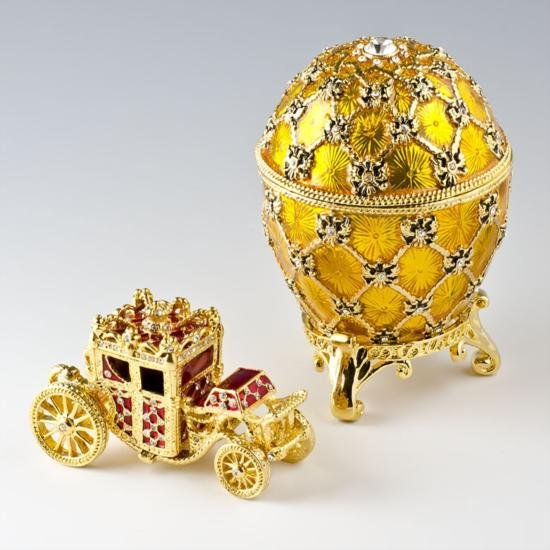
The series of exquisite eggs shaped by Faberge for the Imperial Russian family between 1885 and 1916, is considered as the artist-goldsmith’s ultimate and most long-term achievement.
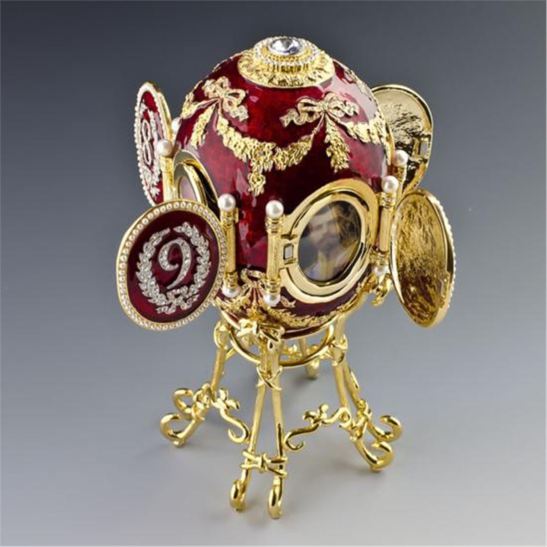
Gold, diamonds, rubies, enamel, all decorate the over-the-top gifts to the Russian Tsars Alexander III and Nicholas II as Easter gifts for their wives and mothers.

These are often referred to as the ‘Imperial’ Fabergé eggs.
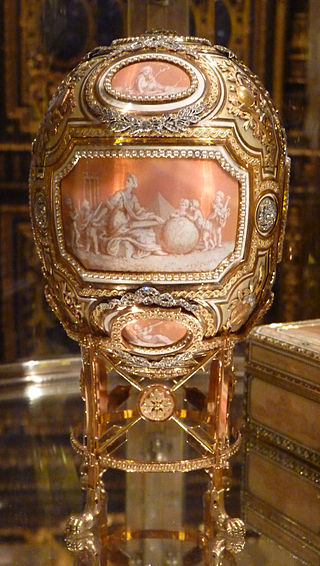
The House of Fabergé made about 50 eggs, of which 43 have survived.
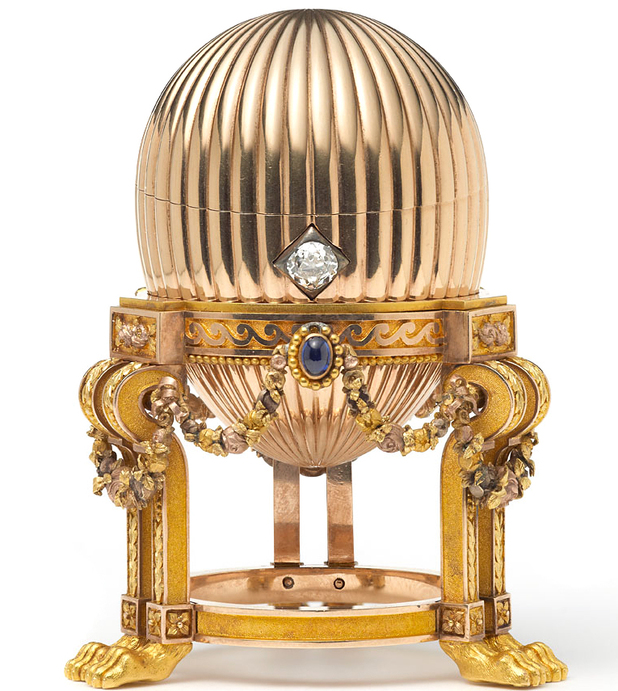
Two more were planned for Easter 1918, but were not delivered, due to the Russian Revolution.
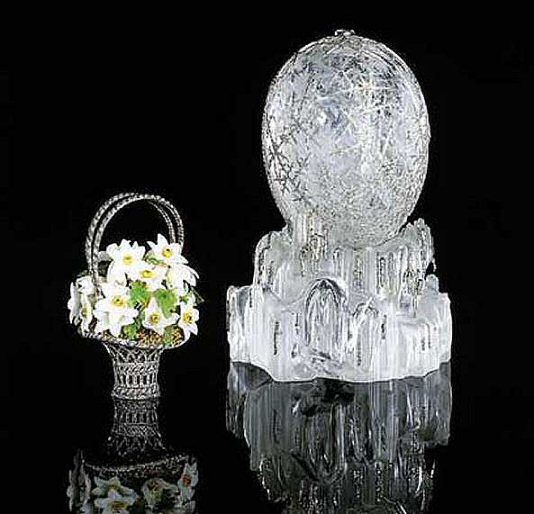
It was a time of rarity; of riches beyond compare, and poverty unimagined.
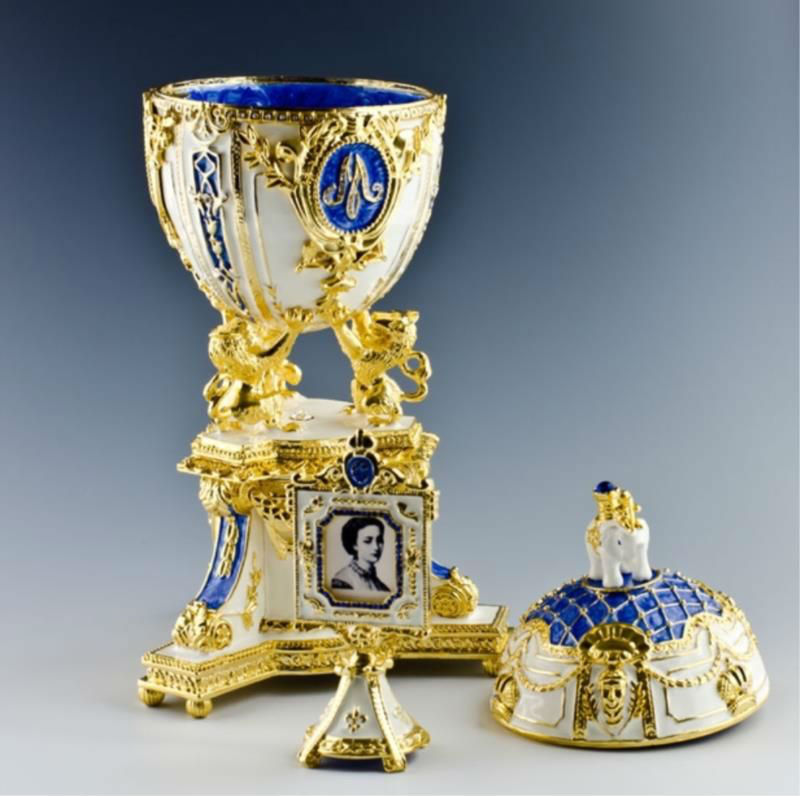
And from those Easter gifts created long ago, a name, a heritage, was born.

Fabergé.
A silent sentinel stands guard
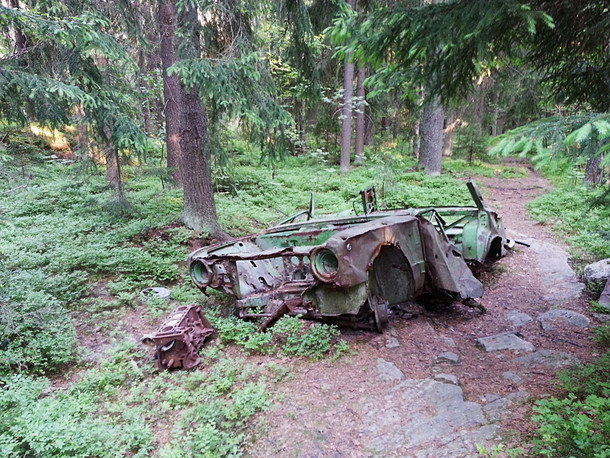
Over abandoned fields and woods

Their glory now only their failing memory

Did I once carry children?

Did I go to the prom?
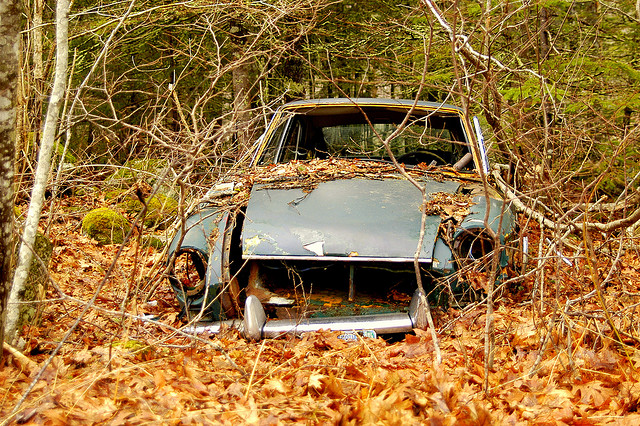
Did someone die here?
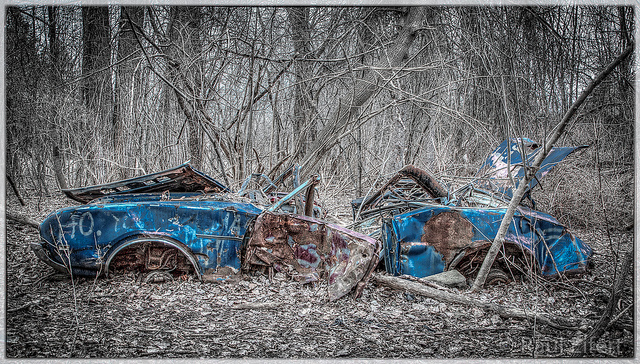
Memory rots as their steel turns to rust

Their framework as abandoned as their dreams
Their stories known only to the winds of the past
****
****
Just popping in to share some fun, amazing stuff this Finally Friday!
First — there is a new Gallery open at Sunday Evening Art Gallery! Amazing images, Amazing inspiration…
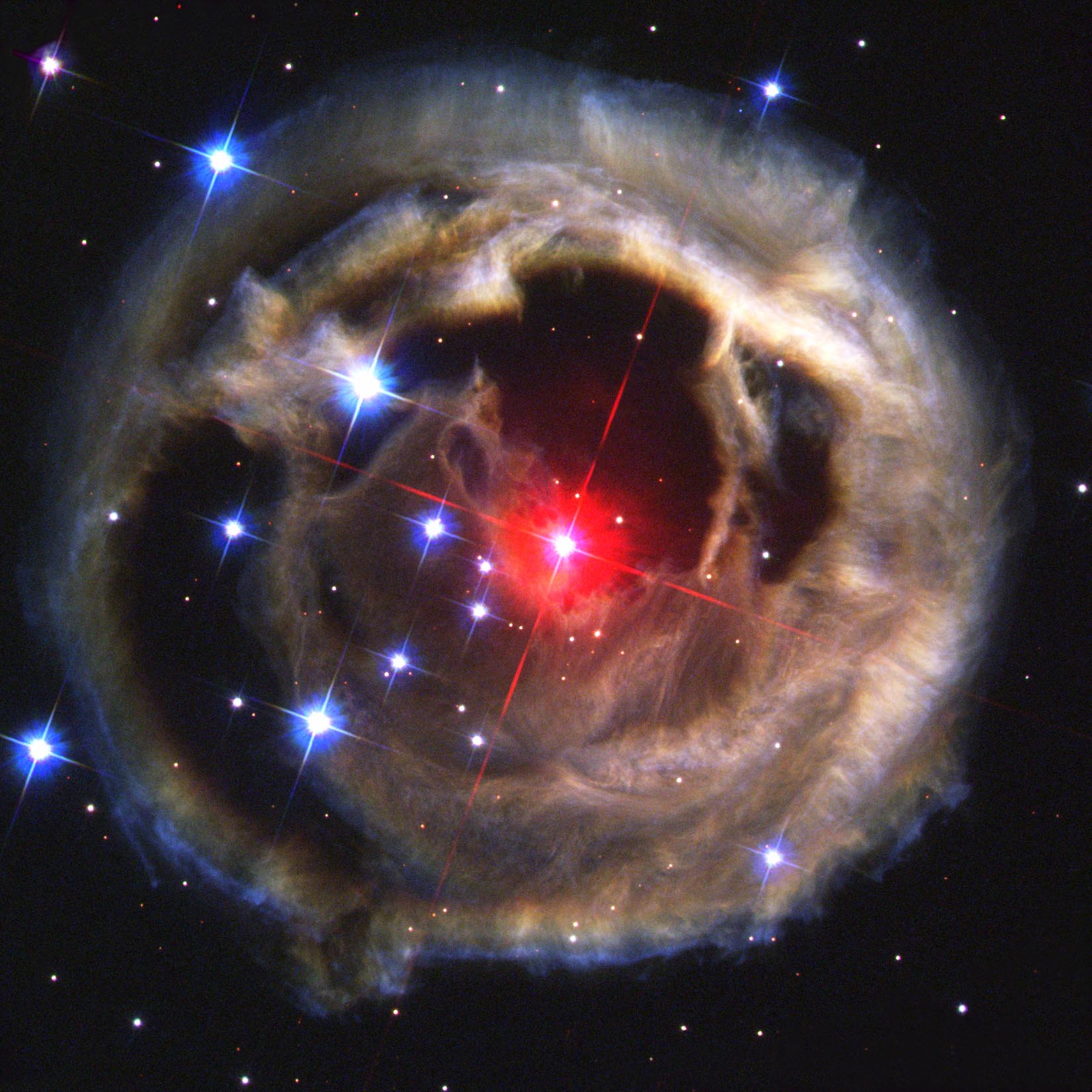
Goddess Blog: http://wp.me/p1pIBL-16Q
Website: http://hubblesite.org
Of course, once you get to the front page, check out the OTHER galleries! Awesome, unique Art.
****
And, once you are done flying through the Universe, there are other ways to celebrate, as today is …
Hug a Vegetarian Day
International Ataxia Awareness Day
Love Note Day
Math Storytelling Day
National Comic Book Day
National Crab Meat Newburg Day
National Food Service Employees Day
National One-Hit Wonder Day
National Psychotherapy Day
Native American Day
Save the Koala Day
World Dream Day
World Pharmacist Day
National Research Administrator Day
National Tune-Up Day
National Lobster Day
So tip your food service employee extra today, while you eat lobster and read a comic book…
In a Wonderland they lie, Dreaming as the days go by, Dreaming as the summers die: Ever drifting down the stream — Lingering in the golden gleam — Life, what is it but a dream?
~~Lewis Carroll
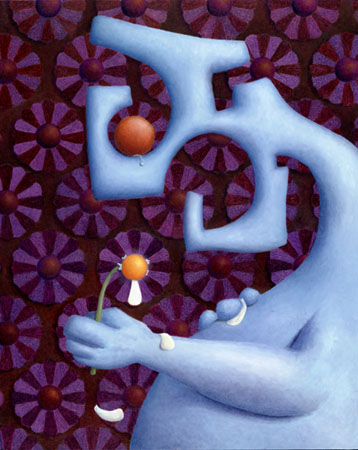
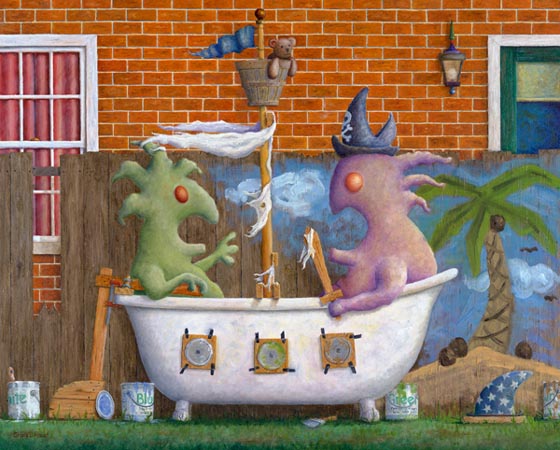
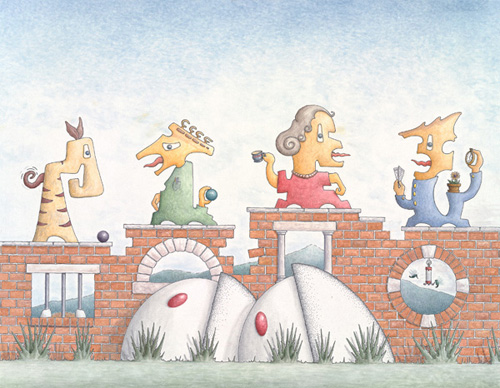
Craig L Haupt is a Maryland based artist who works with Pen & Ink, watercolor, color pencil, and acrylics to create whimsical abstract images.
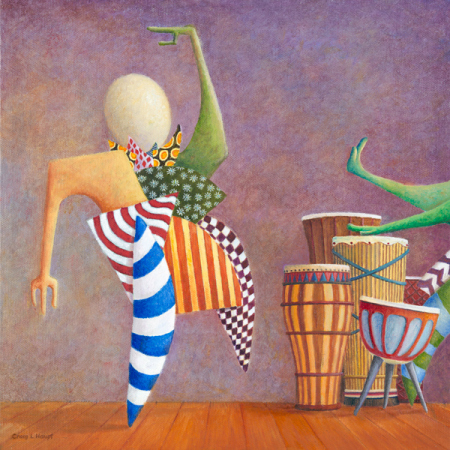
The words of artist Craig L. Haupt are as honest as his works.
“Though having earned an Art Education degree in 1999 (at 50 years old) and taking the required art courses, I am for the most part self-taught.”
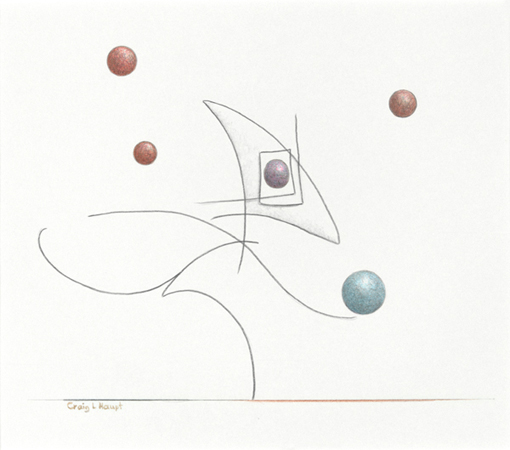
“During my professional career, the early and latter part has been mechanical drawing/drafting. From childhood to present, I have been surrounded by my doodles and countless stick figures that have never left me.”
“Over time, they all have been unintentionally blending to create a menagerie of different subjects.”
Craig’s artwork can be found in several spots around the galaxy — his blog is www.craiglhaupt.com, his website is http://www.clhaupt.com, and his FaceBook Art Page is Craig L Haupt.

Take some time and explore his works. You will enjoy them as I do.
A native of Brooklyn, New York, Dean Russo draws inspiration from urban landscapes and his love for dogs to create truly unique artwork known for its brilliant colors and bold abstract designs of mesmerizing shapes and symbols.
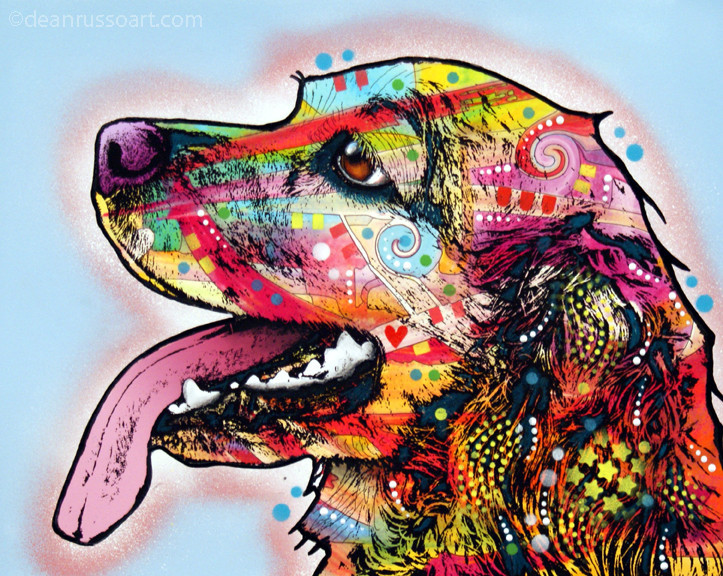
To create these one of a kind images he uses a minimum of ten mediums per painting including pastels, ink, oils, pencils, wax, charcoal and spray paint.

“I used to paint portraits of rock icons and Hollywood stars for so many years with my dogs by my side. Till one day I thought, why not paint my two favorite subjects?” says Russo.
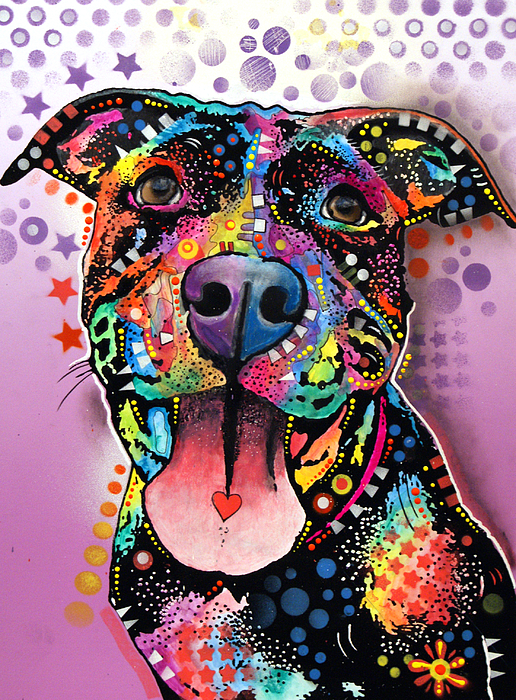
Initially inspired by his two cocker spaniels, Dean began working with rescue centers to raise awareness and donate his work.
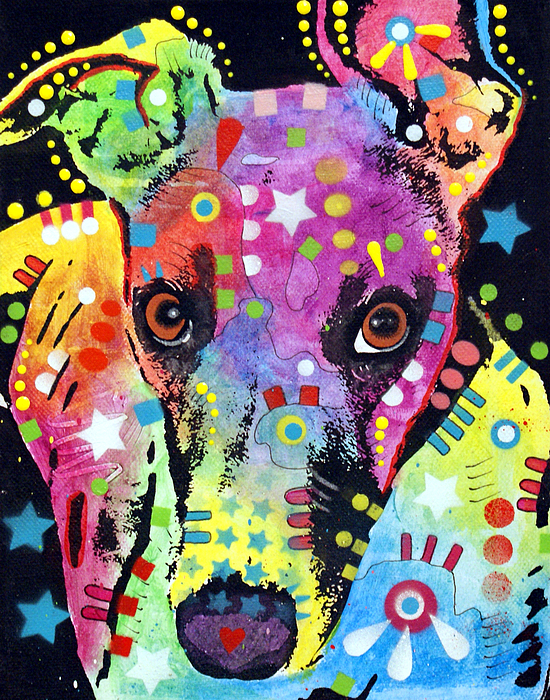
Dean strives to communicate a message that encourages people to choose adoption, to acknowledge the world-wide failure of breed specific legislation and to combat dog fighting around the world.
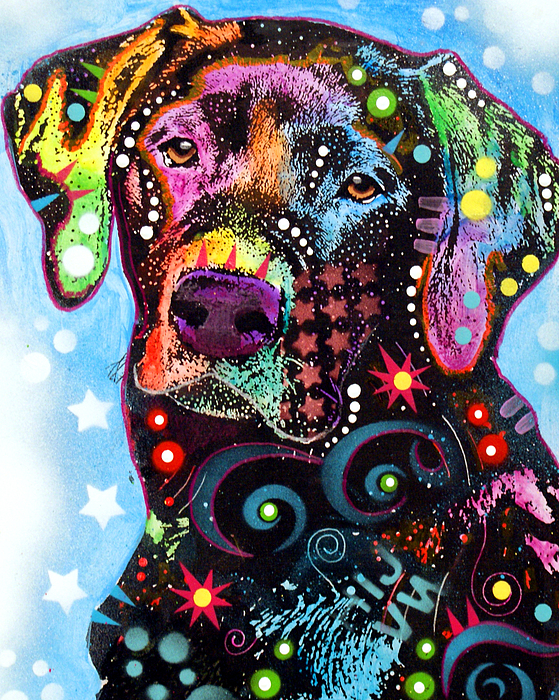
“When a child sees, hears and acts upon my message, I feel successful. Anytime someone puts a message of love or respect towards people or animals into the universe it builds like a ripple. I hope I live long enough to see my ripples come back to me. That will make me smile.”
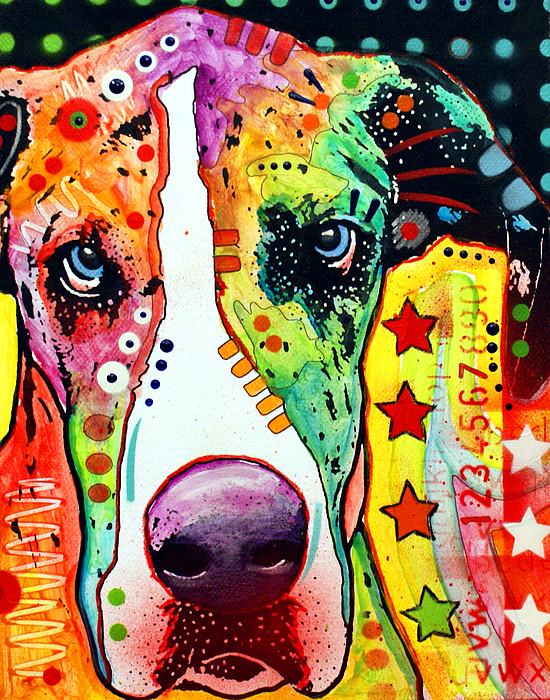
Dean Russo’s designs can be found on t-shirts, posters, tote bags and framed art. His creations of dogs fills the world with magic — and love.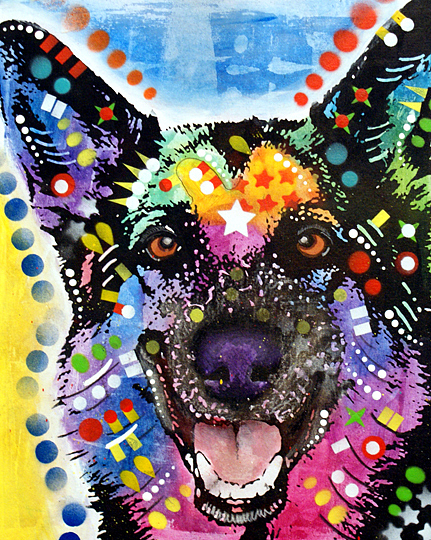
You can fulfill your love of Dean Russo‘s art and dogs at :
http://deanrussoart2.myshopify.com and http://dean-russo.artistwebsites.com,
I used to like to walk the straight and narrow line
I used to think that everything was fine
Sometimes I’d like to sit and gaze for days through sleepless dreams
All alone and trapped in time
All alone and trapped in time
I wonder what tomorrow has in mind for me
Or am I even in it’s mind at all
Perhaps I’ll get a chance to look ahead and see
Soon as I find myself a crystal ball
Soon as I find myself a crystal ball
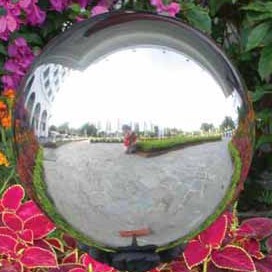
Tell me, tell me where I’m going
I don’t know where I’ve been
Tell me, tell me, won’t you tell me
And then tell me again
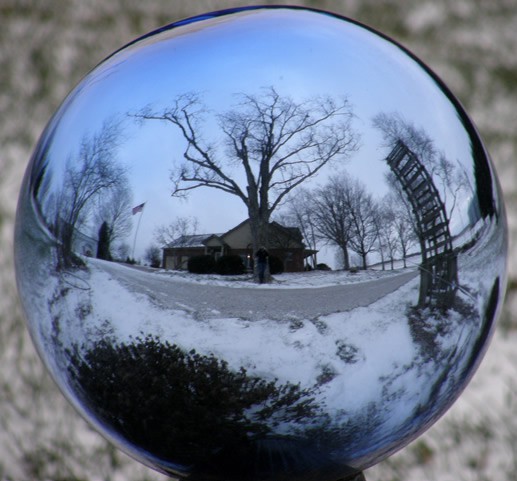
My heart is breaking, my body’s aching
And I don’t know where to go
Tell me, tell me, won’t you tell me
I’ve just got to know
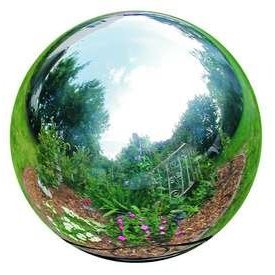
Crystal ball
There’s so many things I need to know
Crystal ball
There’s so many things I’ve got to know
Crystal ball
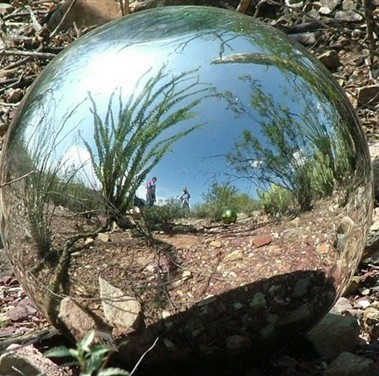
If you should see me walking
Through your dreams at night
Would you please direct me
Where I ought to be

I’ve been looking for a crystal ball
To shed the light
To find a future in me
To find a future in me

Crystal ball
There’s so many things I need to know
Crystal ball
There’s so many things I’ve got to know

A room without books is like a body without a soul.
— Marcus Tullius Cicero

Su Blackwell is an artist working predominantly within the realm of paper.
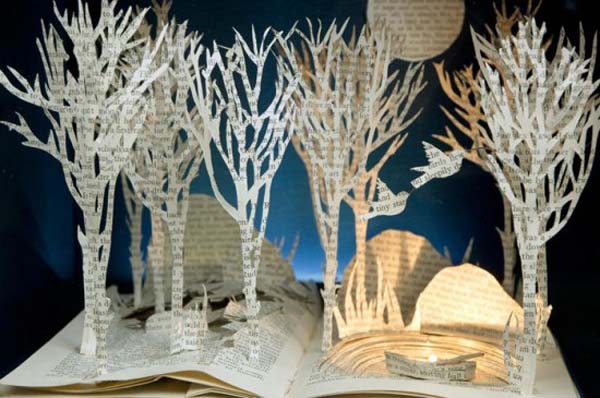
She is a British artist best known for constructing delicate sculptures from the pages of books.
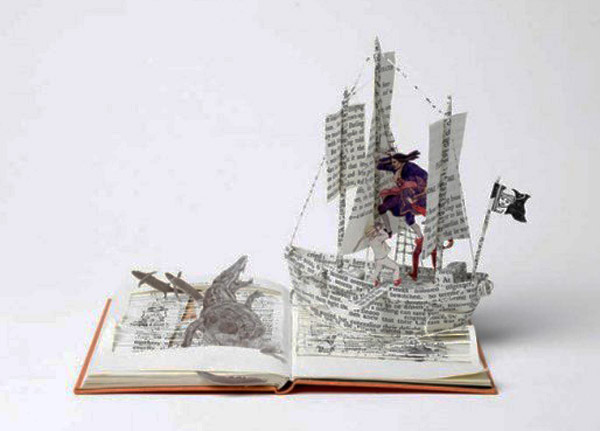
Su creates tranquil unique landscapes from cutting up pages of old books.

“I always read the book first, at least once or twice, and then I begin to create the work, cutting out, adding details.”
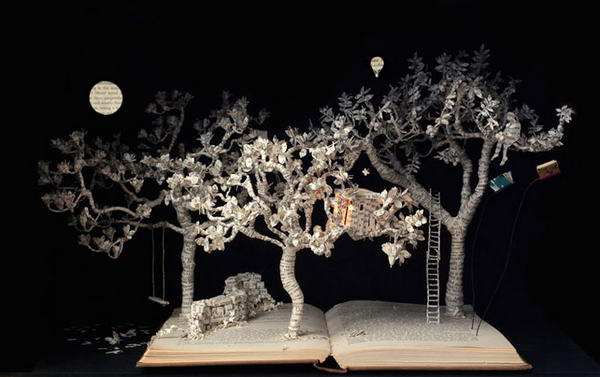
“The detail is what brings it all together, the magic element.”
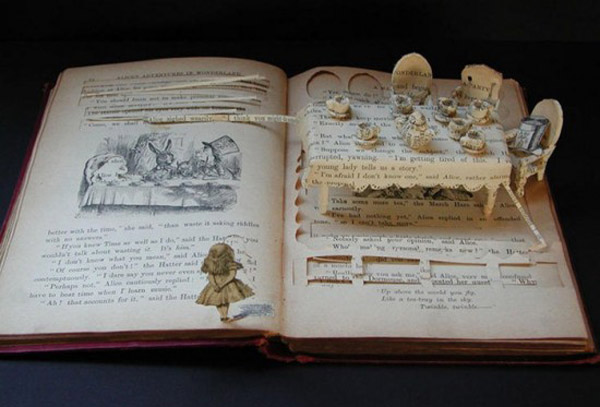
Su Blackwell’s art is delicate, intricate, and personal.

She brings the magic of books into this dimension.
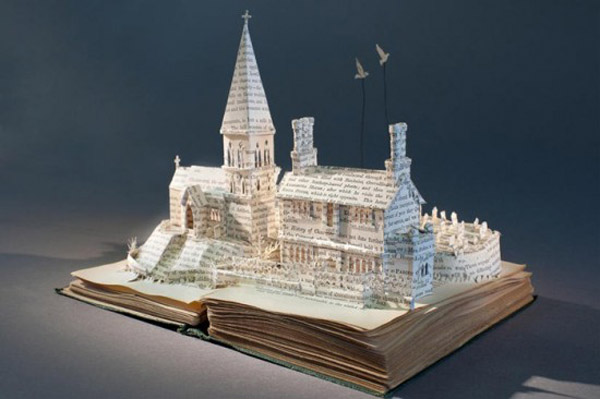
More of Su’s fantastic paper art work can be found at www.sublackwell.co.uk.
Do take time to visit her worlds.
What the eyes see and the ears hear, the mind believes.
Harry Houdini
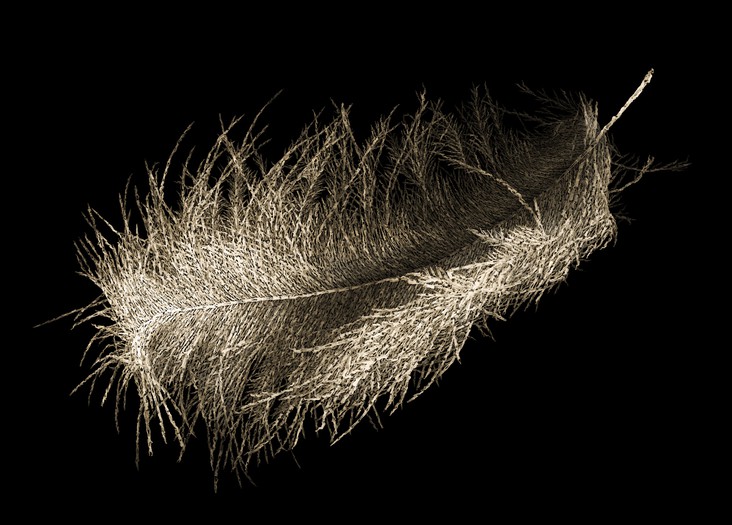
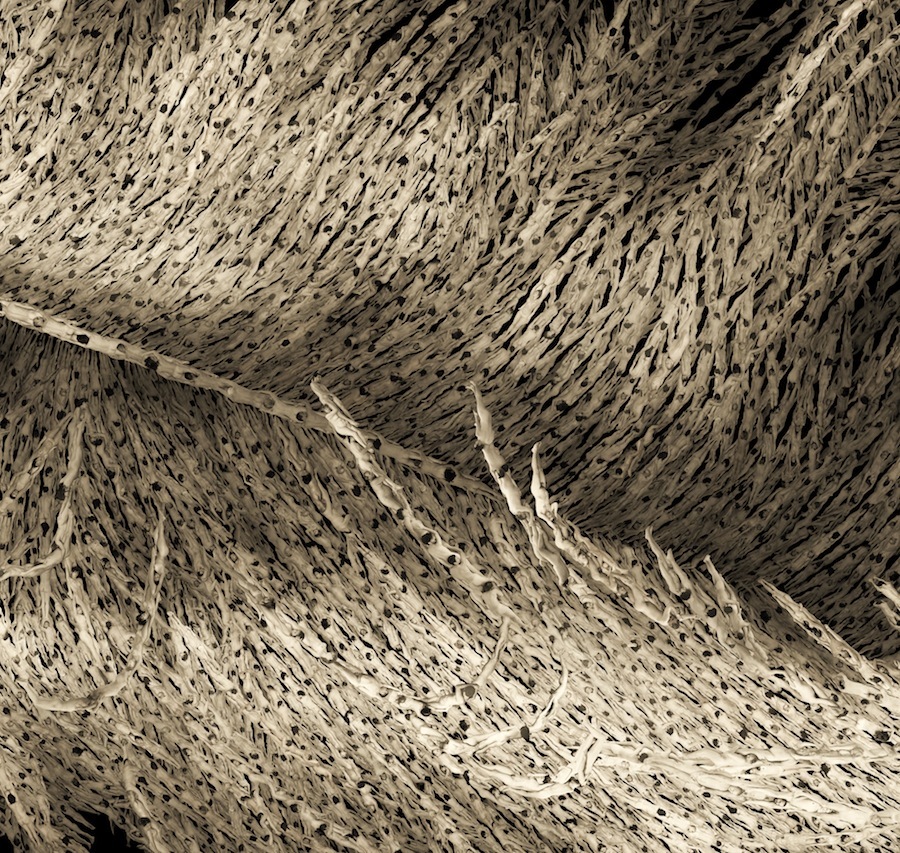
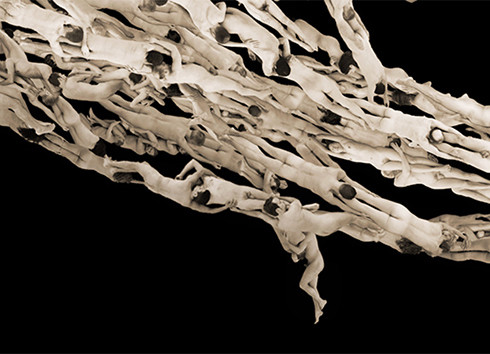
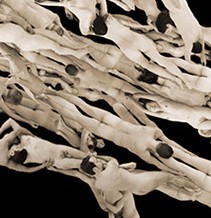
Artist Angelo Musco‘s painting of an elegant white floating feather is actually a digital photo made out of tens of thousands of naked bodies weaved together using Photoshop. He created this image by first photographing dozens of live models in pre-planned poses, then adjusted the size and color of each body and put them together to form the realistic-looking textured feather.
More of Angelo Musco’s incredible photography can be found at his website http://www.angelomusco.com.
His other artwork is just as magical as these feathers.
From the moment paper was invented, there was a need for paperweights.
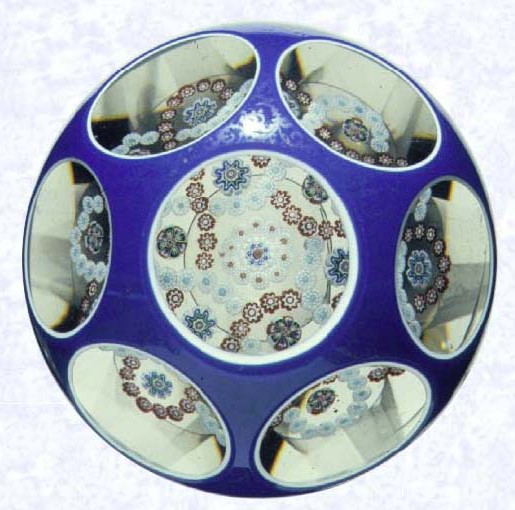
Many objects were used to weigh flyaway papers down.
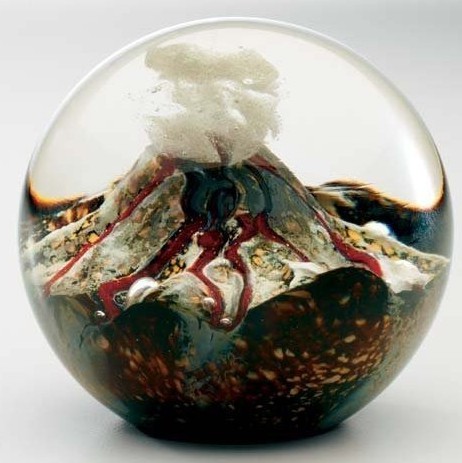
Obviously, rocks, bricks, and tree branches didn’t work.
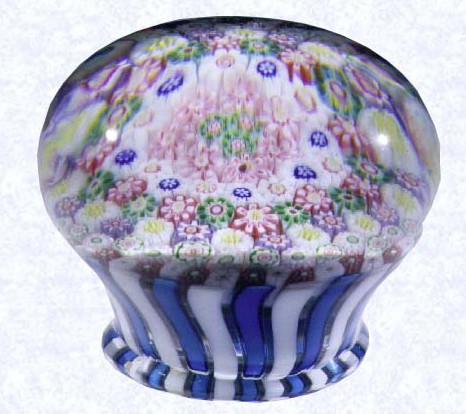
So glass paperweights were created.
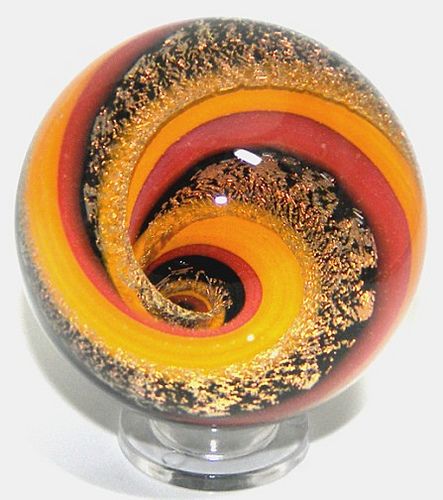
Some of the earliest paperweights were made in Venice in the 1840s.
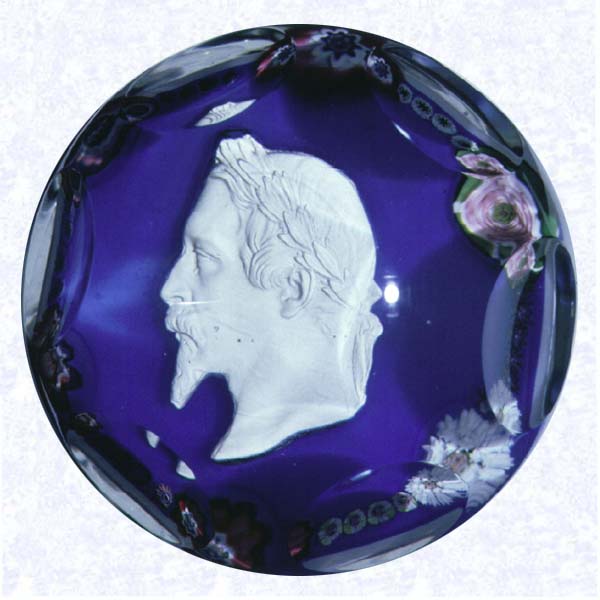
The Bohemians improved upon the techniques of the Venetians, and also incorporated the aristry of the French, who really brought the art of the paperweight into full flower.

Baccarat is unquestionably the most famous and renowned paperweight producer.

Other paperweight manufacturers included New England Glass Company, Tiffany, Ysart Brothers, Vasart, and Strathearn.

No matter who created the beautiful works of art, each paperweight brings its own magic into the world.

The beauty of a moment reflected in the center of glass
 Suspended in an eternal moment of color and breath

Gaze into the center of a paperweight and see your past — your future
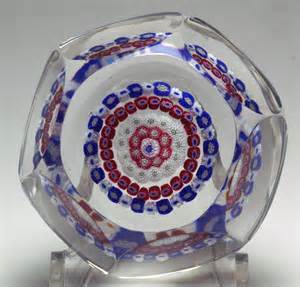
You can find more works of beauty and light at:
Collectors Weekly http://www.collectorsweekly.com/art-glass/paperweights
Richard Mores Paperweight Photo Album http://strathearn.smugmug.com/,
and other places across the Internet.
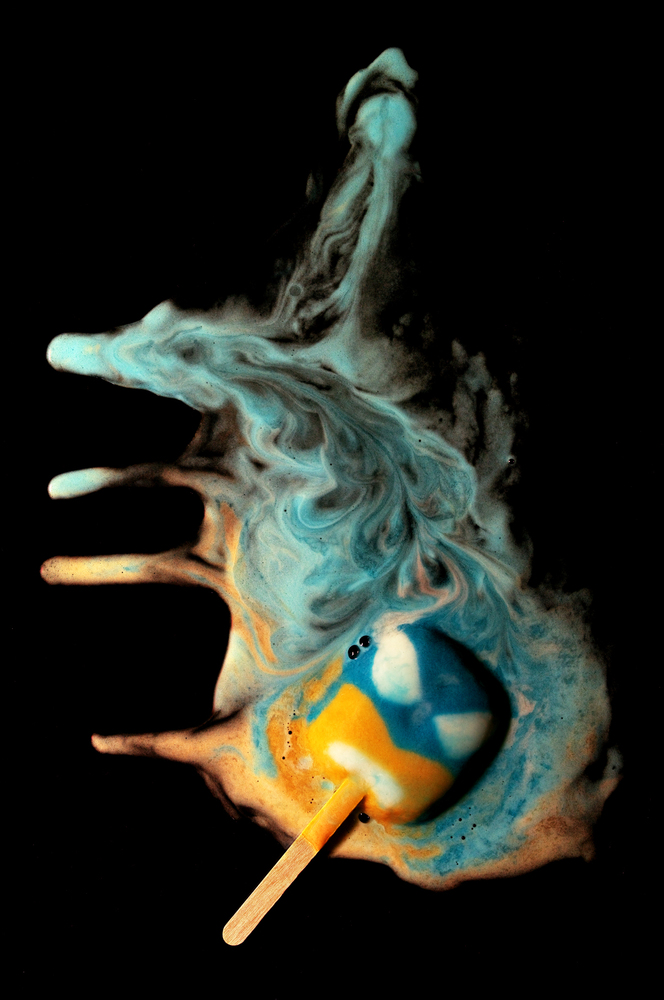
Michael Massaia’s photography evokes unusual, yet sentimental, emotions.

Bugs Bunny
To create his images, collected together under the series title “Transmogrify,” Massaia spent some time experimenting with the aesthetic possibilities of melted ice cream.
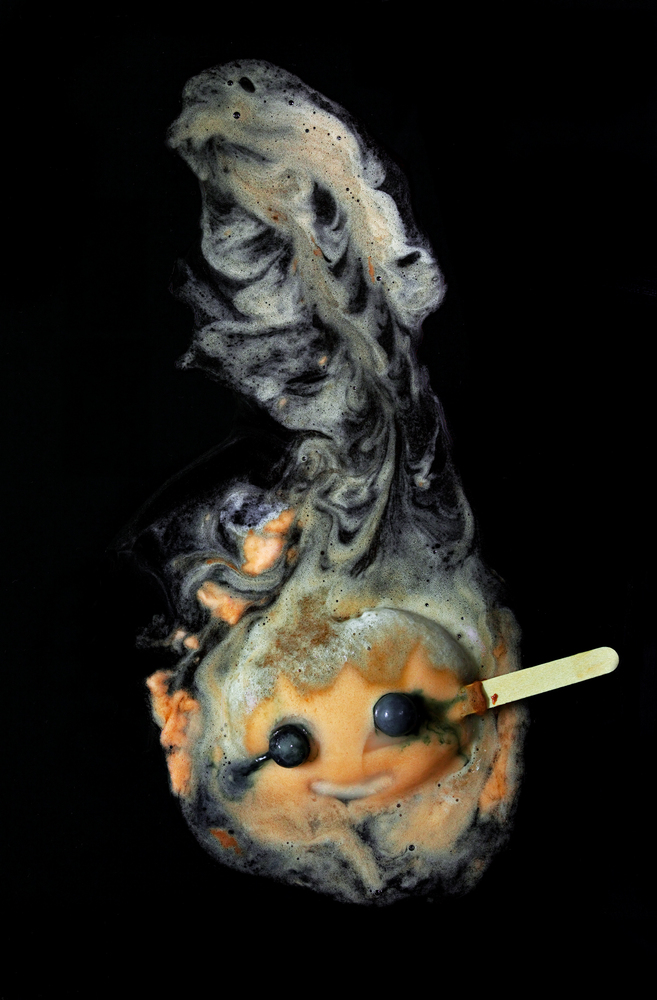
Dora the Explorer
His long-exposure images capture a subject matter familiar to most — he frames the frozen treats most people’s summer memories are made of.
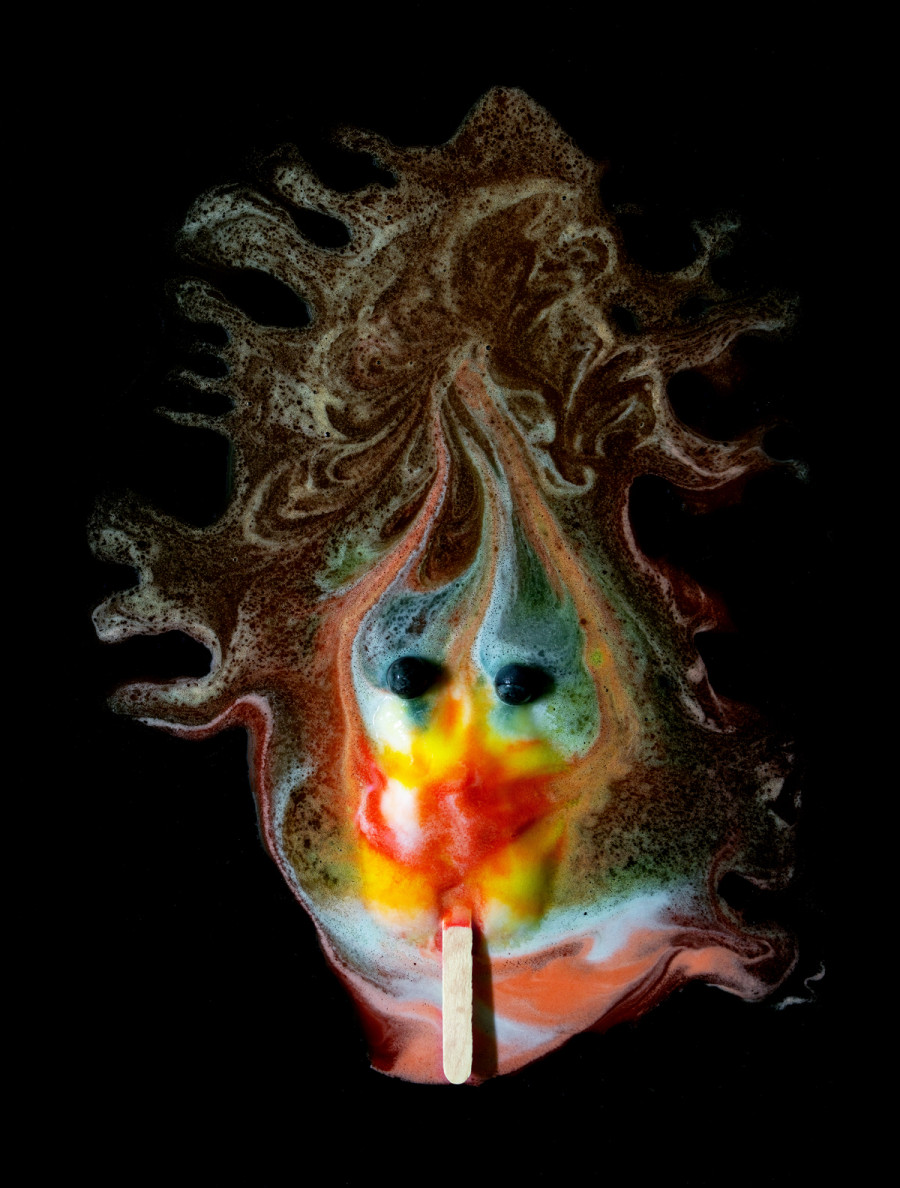
According to Katherine Brooks (http://www.huffingtonpost.com/katherine-brooks/), he distorts the childhood favorites by melting them before his lens, until the pops resemble ominous pools of paint or celestial snapshots.

Powerpuff Girls
Ice cream? Or something more … surrealistic?
Batman
A great article on Michael’s art can be found at http://www.huffingtonpost.com/2015/04/15/michael-massaia-transmogrify_n_7067284.html by Katherine Brooks.
More of Michael Massaia’s creative photography can be found at http://www.michaelmassaia.com/. And, of course, a more extensive collection of MIC (Melted Ice Cream) can be found at www.sundayeveningartgallery .
 Even when I am well-intentioned, I tend to screw up. I don’t know if it’s that I don’t think things through, or I don’t know how things work so I don’t know what the outcome will really be — it could be a thousand things. But I always wind up having egg on my face.
I had waited a long time to relaunch my Sunday Evening Art Gallery. I’d added images, found the right theme, cropped the images so they were all pretty much the same size — it was going to be a GO. And it was.
But I didn’t realize that every time I re-posted a blog, or actually posted it for the first time, it would hit the airwaves like a newborn child. Every new blog blew away the one previous, acting like it was the only flash in the pan.
It overtook my Humoring the Goddess Sunday Evening gig with new artist John Lemke; readers didn’t know whether to read A or B or Z. My zealousness almost caused me readers.
I suppose I could blame it on adult-onset A.D.D. I know I’ve been antsy all my life, but only in the last few years have I found a name for it. Not being able to sit still has caused me all kinds of problems, the least of which was almost my job. Now that I’m older it causes me loss of sleep, anxiety, restless leg syndrome — the whole gamut.
It also tends to put my cart waaayyyy before the horse. I have so many projects, so many ideas, so many things in my head that I sometimes think I have hail pounding me on the head. I tell myself to slow down 10 times a day. But most of the time it’s too late.
So to you that were bombarded with Sunday Evening Galleries, forgive me. I more want you to enjoy John and his work, then move along to the next collection, and the next. I put 4-5 images in my HtG blog, then three times as many on the Sunday Evening site. That was the whole purpose behind the SEAG. I’m catching on…it just will take a while.
I hope you will visit both sites more often, and if you have any suggestions for slowing down my pretzelly condition, I’ll take those too.
In celebration of the re-opening of the Sunday Evening Art Gallery we present…
“But I find that for myself, without exception, the more I deal with the work as something that is my own, as something that is personal, the more successful it is.”
Marian Bantjes, Canadian designer, artist, illustrator, typographer and writer
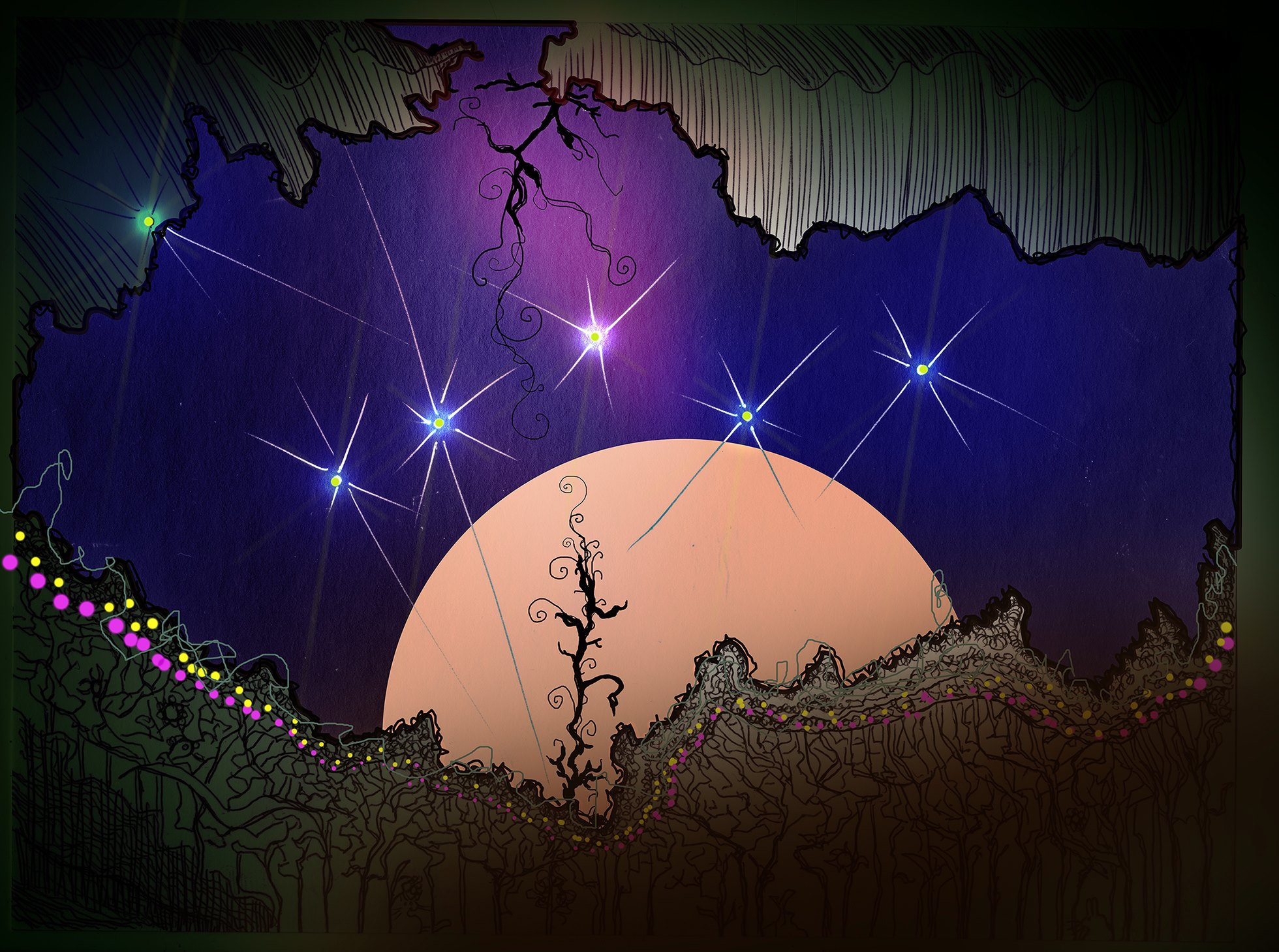
Artist and graphic designer John Lemke starts in various media: pen & ink, charcoal, acrylics, electronics, transforming the basic doodle or painting into something quite different.

He takes his creation to the next level, adding detailed depth through different media, enhancing the basic piece while tranforming it.

As a Senior Graphic Designer, John constantly comes across a number of ideas that beg to be enhanced.

John believes anyone can find inspiration for art. All you need to do is go outside and open your eyes. There is cool stuff everywhere.

And I do mean cool stuff.
John Lemke’s art can be found at http://johnsconsin.deviantart.com/
and at the Sunday Evening Art Gallery

 Humoring the Goddess