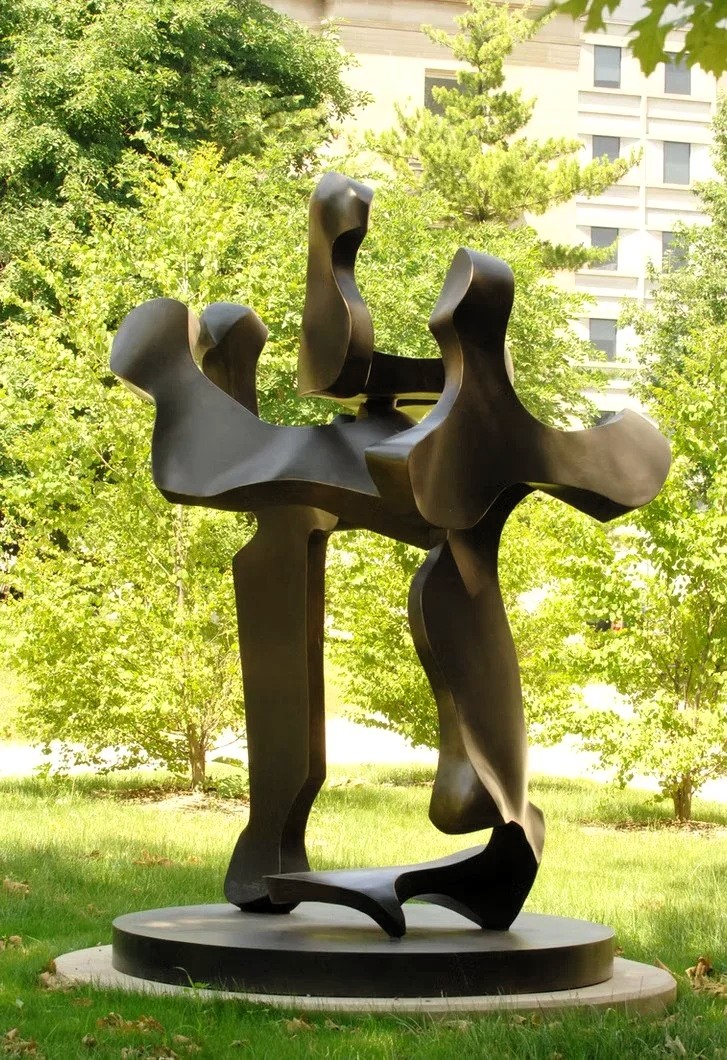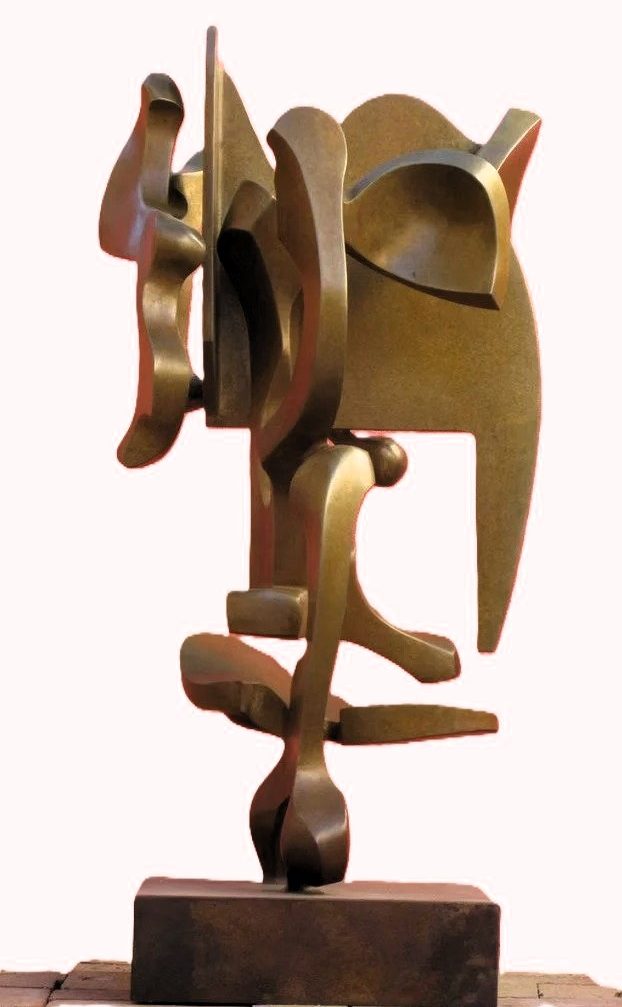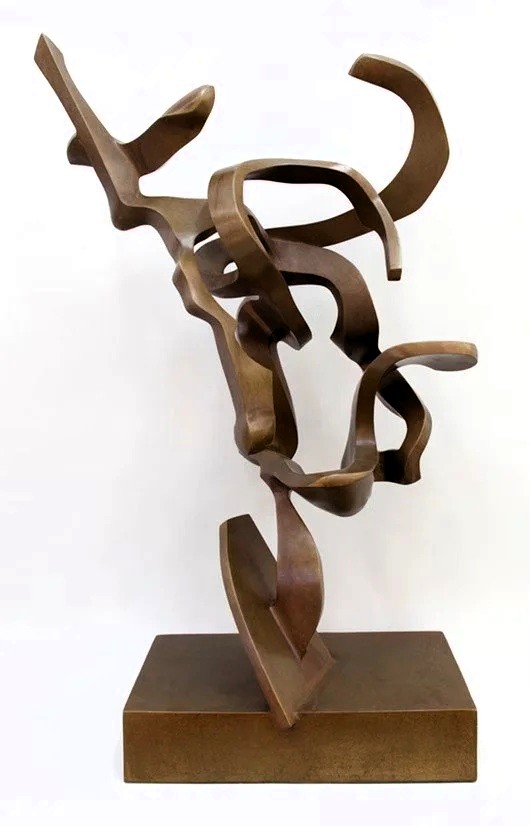
Sunday Evening Art Gallery — Maggie Vandewalle

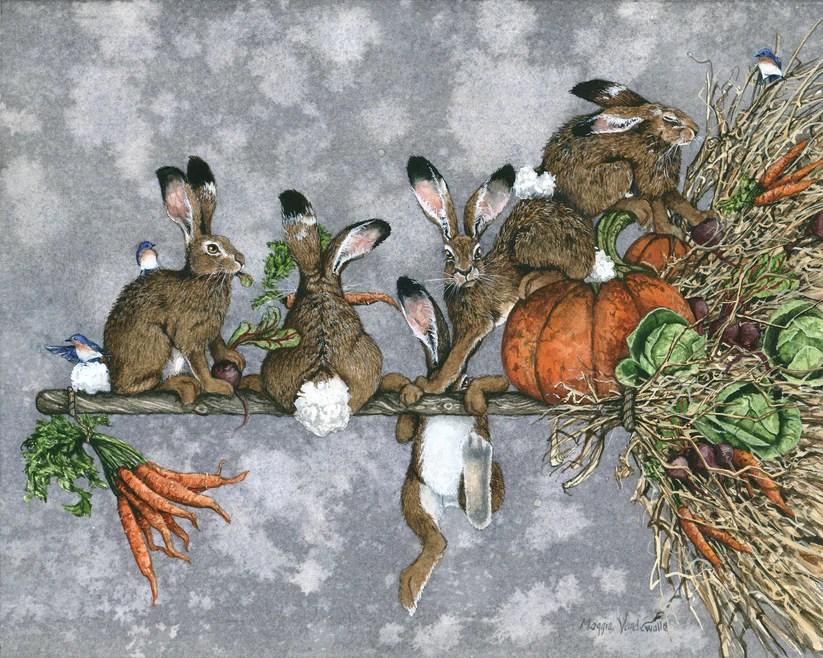
Maggie Vandewalle was born and raised just outside of Iowa City, Iowa, in a rural setting.She received an art scholarship to the University of Iowa, where she worked towards a BFA in printmaking.After several years she took a break from college to explore life,  determined that art most definitely would in the form of drawing.Vandewalle’s drawings are whimsical and precise, showing a wonderful talent for detail.She is a master of watercolor whimsy whose paintings transport us to a world where the ordinary becomes extraordinary, and the impossible seems just within reach.Vandewalle’s clever composition transforms our interpretation from aesthetic appreciation to ecological observation, reminding us with a wink that beauty in nature often serves a practical purpose.

More of Maggie Vandewalle’s amazing art can be found at https://maggievandewalle.com/.


Sunday Evening Art Gallery — Crystal Wagner

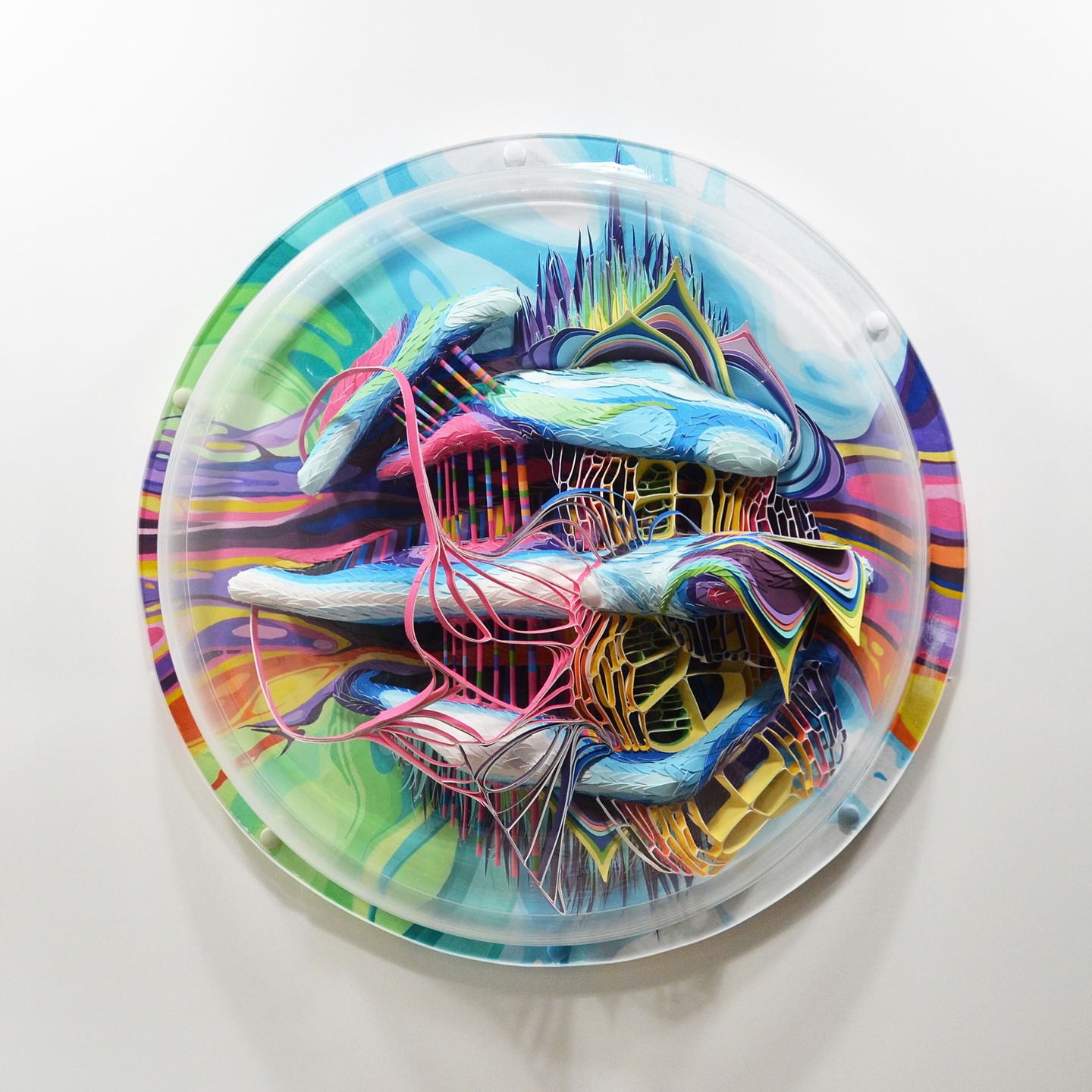
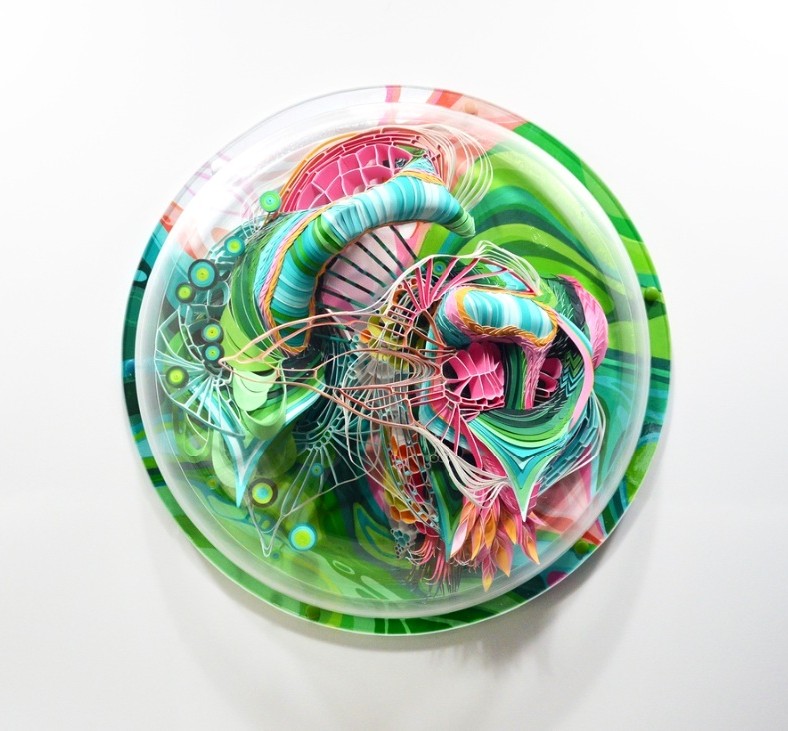
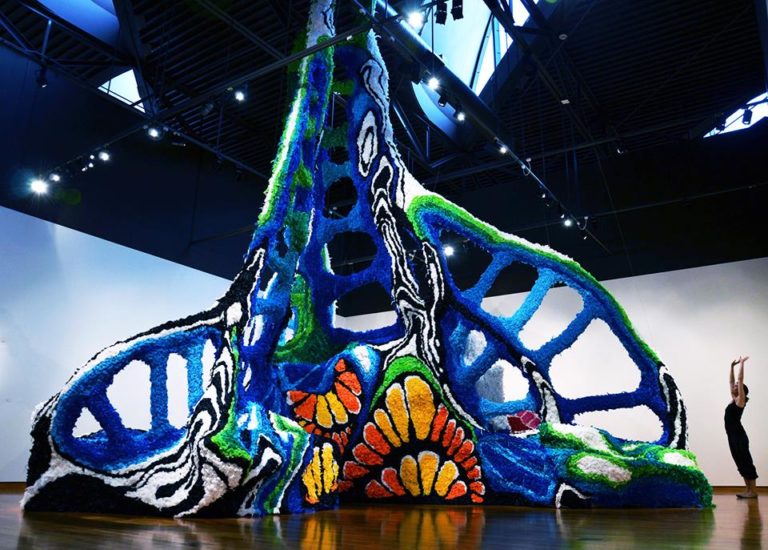
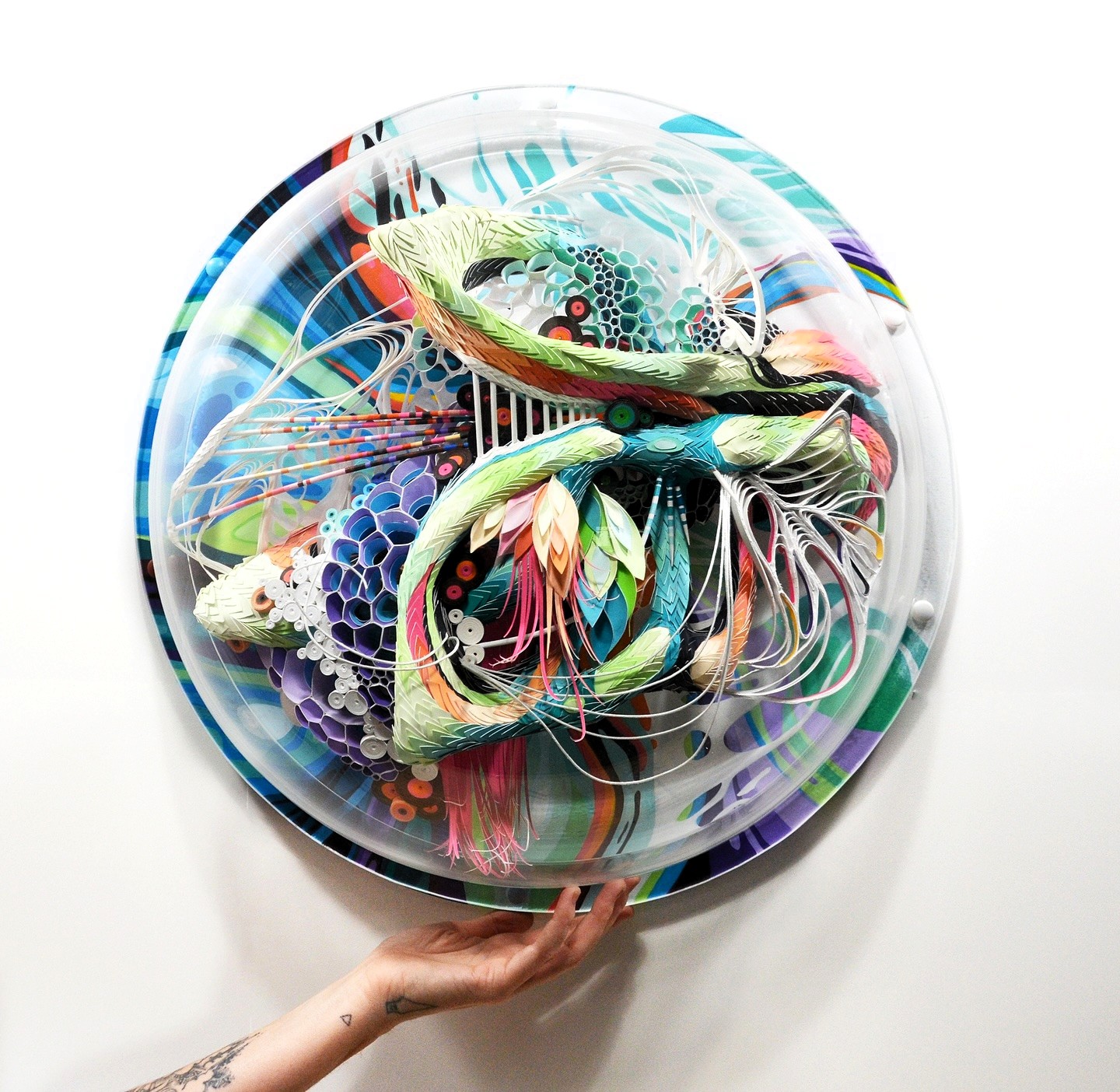
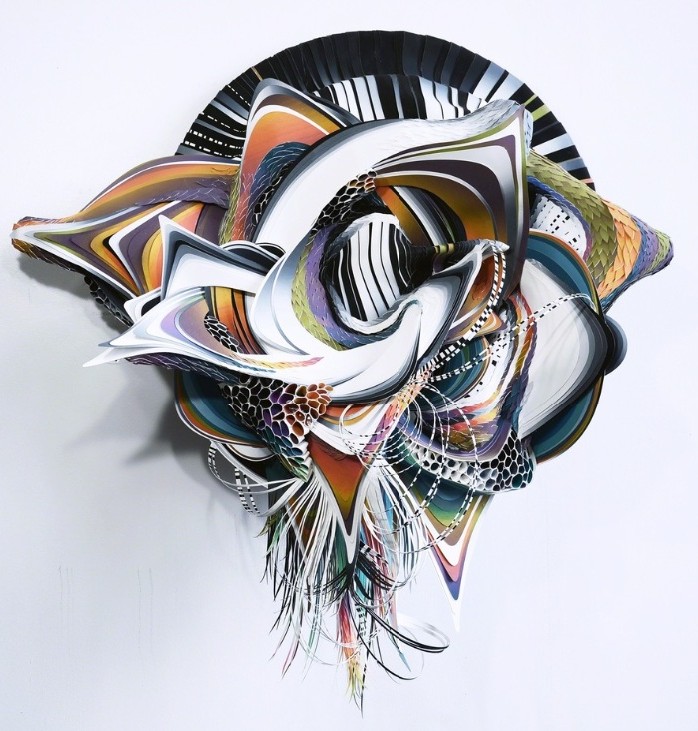
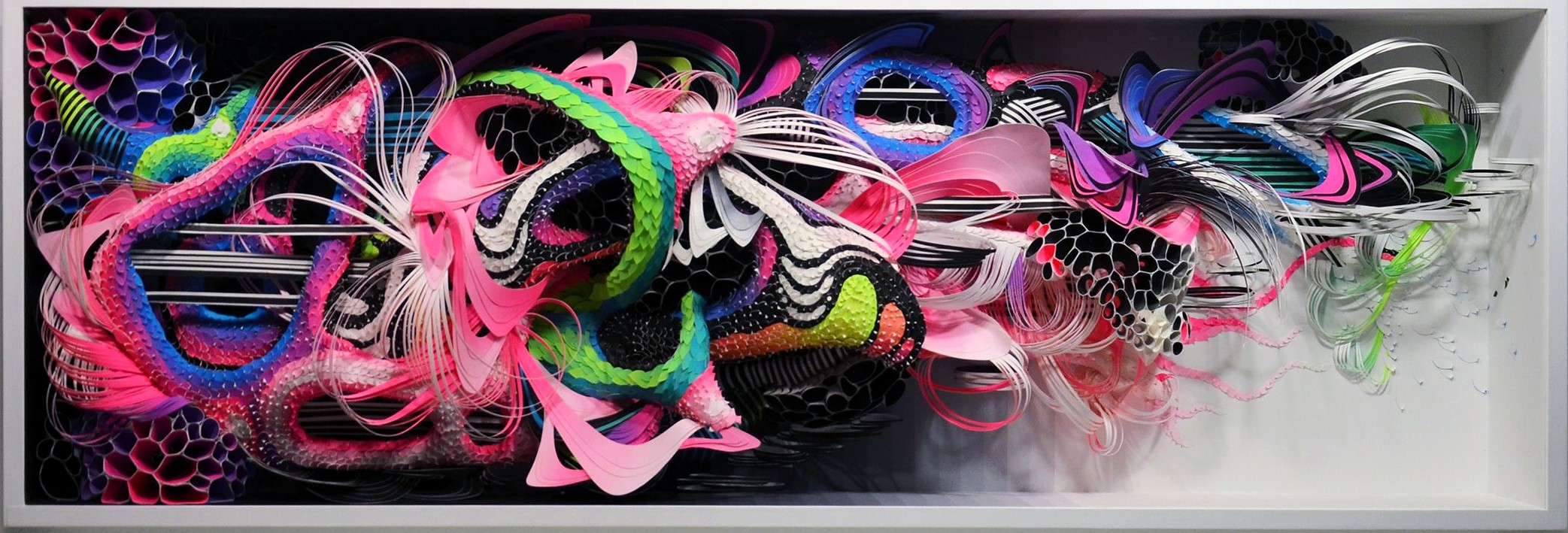
Crystal Wagner (-1982)  is a printmaker, a drawer and an installation artist from Baltimore, Maryland.Wagner attended Keystone College, a private liberal arts school in La Plume Pennsylvania where she earned her Associate Degree in Fine Art, receiving awards for both her prose/fiction writing and also her work as an artist. In May 2008, Crystal completed her MFA at The University of Tennessee.The artist is known for hand-cut wall-mounted paper forms and immersive, site-specific sculptures.Swirling maelstroms of color and texture are formed from quotidian objects: Plastic dollar store items like cheap tablecloths and straws.Wagner weaves them onto a wire armature where they take on a life of their ownThey evolve from their own mundane beginnings to mimic the natural world as they creep, stretch and grow in, around and through their environments.

She utilizes such humble materials as plastic tablecloths stretched over chicken wire to uncanny effect.Her intricately constructed biomorphic works conjure a feeling of wonder from everyday materials and suggest new possibilities for mass-produced, disposable materials.

More of Crystal Wagner‘s wonderful sculptures can be found at https://www.artsy.net/artist/crystal-wagner and https://www.instagram.com/artistcrystalwagner/?hl=en.


Sunday Evening Art Gallery — Haejin Lee

Haejin Lee has been a ceramic artist in Seoul, South Korea for over 15 years.

She was graduated from Hong-Ik University in Korea, received Master degree in Ceramic Art.

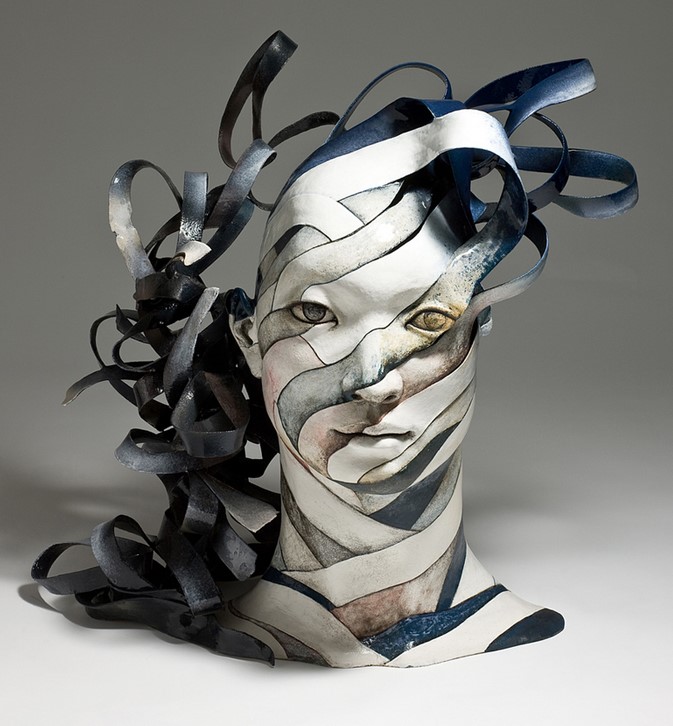
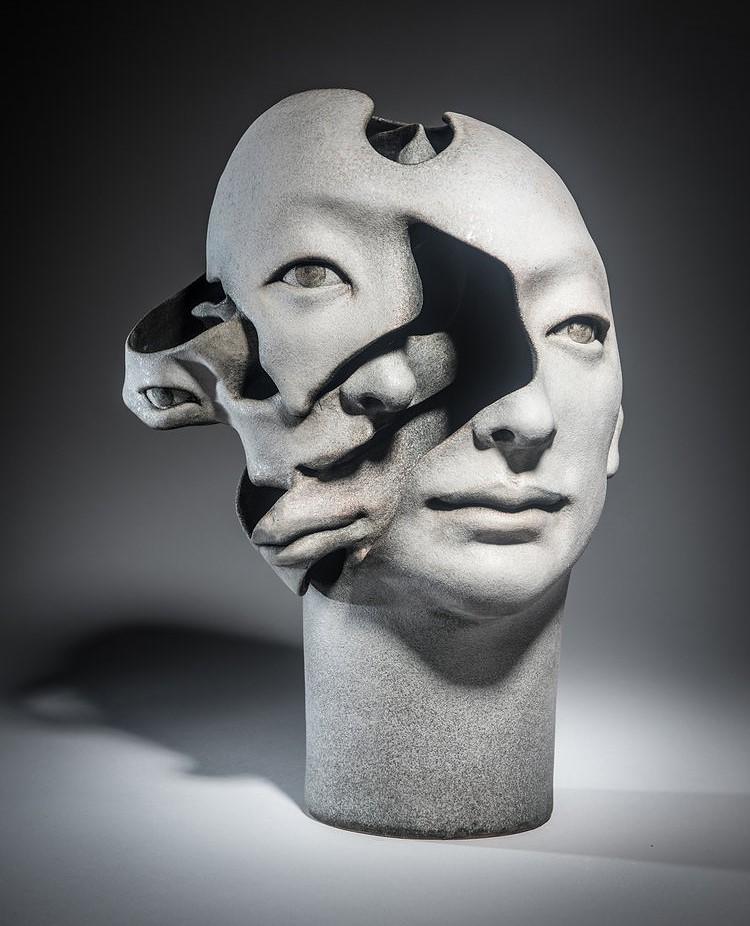
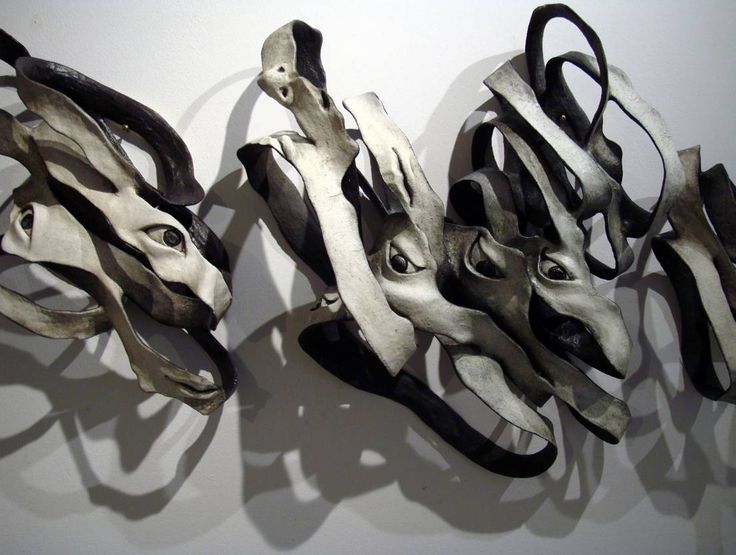
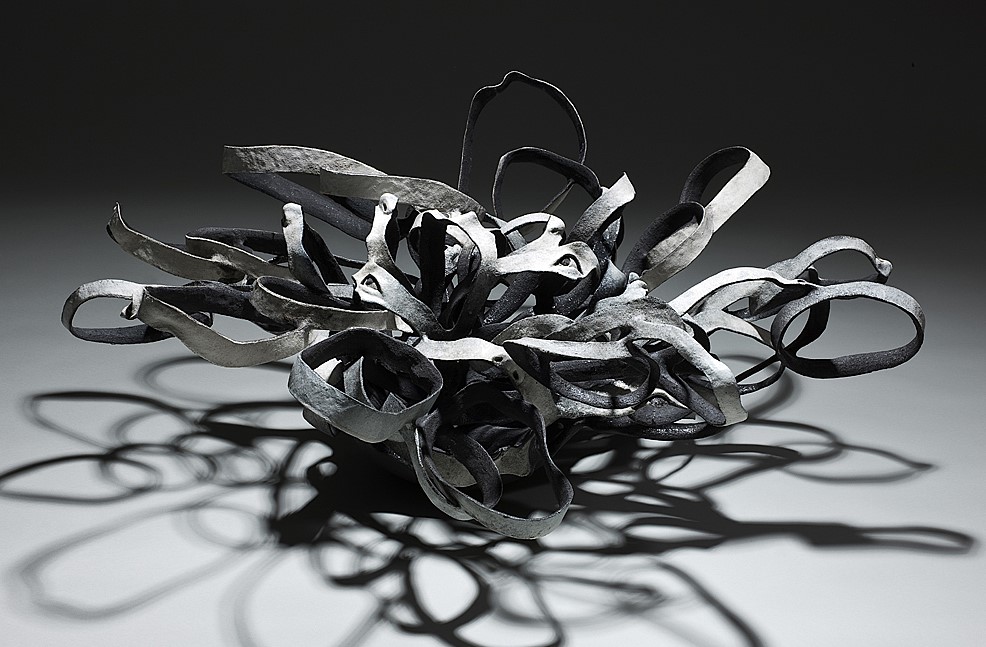
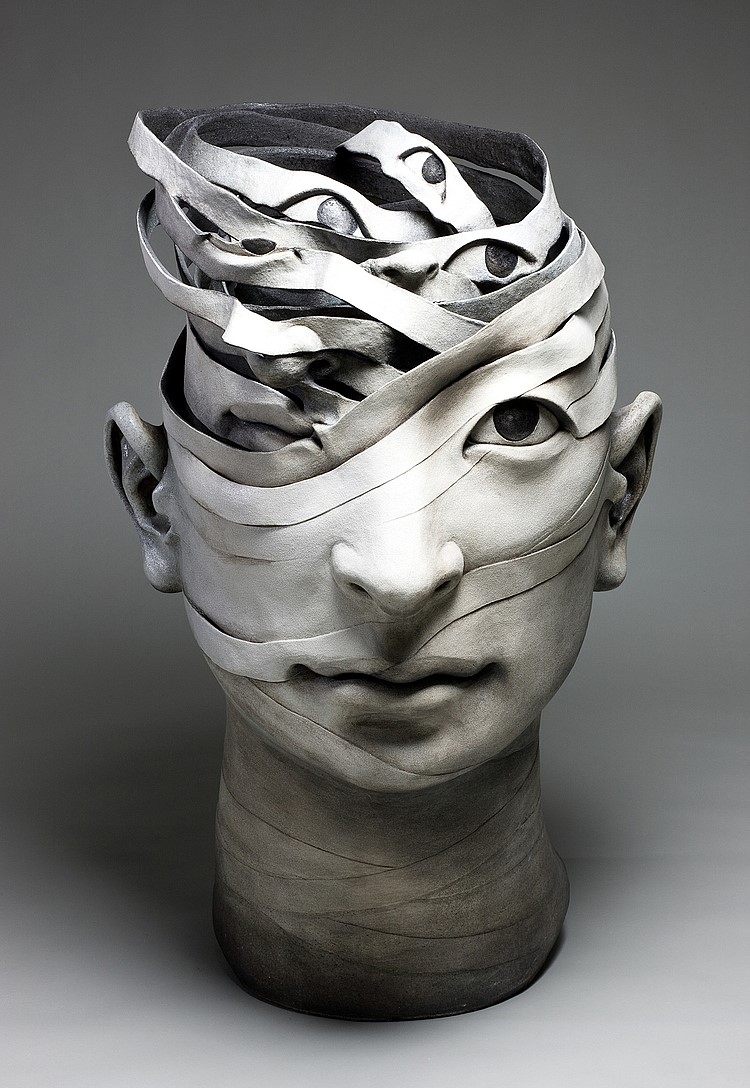
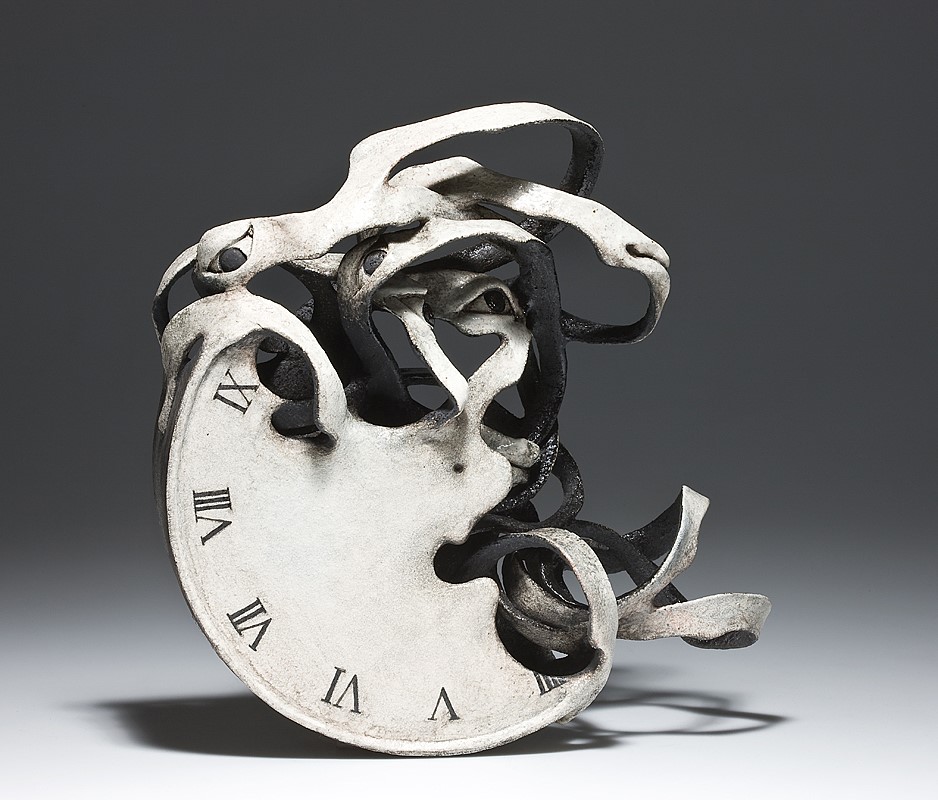
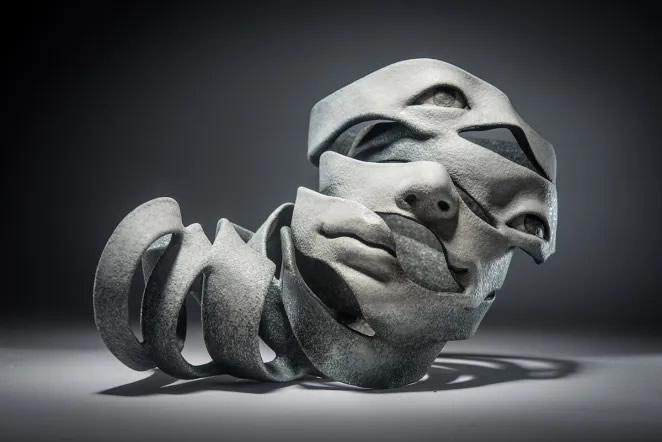
Lee creates ceramic works that look as though they’ll unravel at any moment.

Concentrating primarily on the human body, the sculptor fashions heads and feet that look mostly whole, but have ribbon-like strands rippling from the top of each piece.

They appear in various stages of disarray, with facial features that have been twisted and multiplied, which adds another facet of eeriness to the already-surreal works.

I like to decompose a finished shape and then reassemble the parts into a different presentation,” the artist shares.

“The new creations that are getting rebuilt in the process, are sometimes expressed in a form of rhythmical composition of ribbons or various objects or deformed faces.”

More of Haejin Lee’s artwork can be found at https://haejinlee-ceramics.com/


Sunday Evening Art Gallery — Paul Stone

 Paul Stone specializes in traditional still life compositions, often with a contemporary twist.

Painting in oils, in the style of classical realism, Stone employs an accomplished use of light and shade to create a sense of texture and atmosphere in his work. 

After graduating in professional fine art practice in 2008, Stone made the decision to become a full time oil painter, and has since established a reputation in still life excellence, winning numerous national awards and building a growing base of appreciative collectors.

Having grown up on the coast of Suffolk, the artist initially studied design at Lowestoft College, then spent many years in various professions, including teaching children with special needs, before discovering his love of art history, and his devotion to still life painting.

His focus is on showing the beauty of natural design in organic objects, with simple, elegant compositions, enhanced by dramatic lighting and studied detail.

The result is works showcasing traditional oil painting techniques, with a contemporary feel and presentation.

 More of Paul Stone’s wonderful paintings can be found at https://paulstoneart.com/

Sunday Evening Art Gallery — Lindzeanne

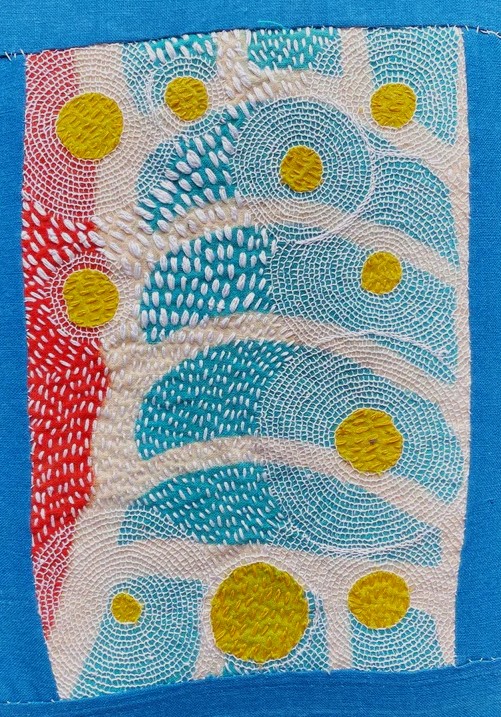
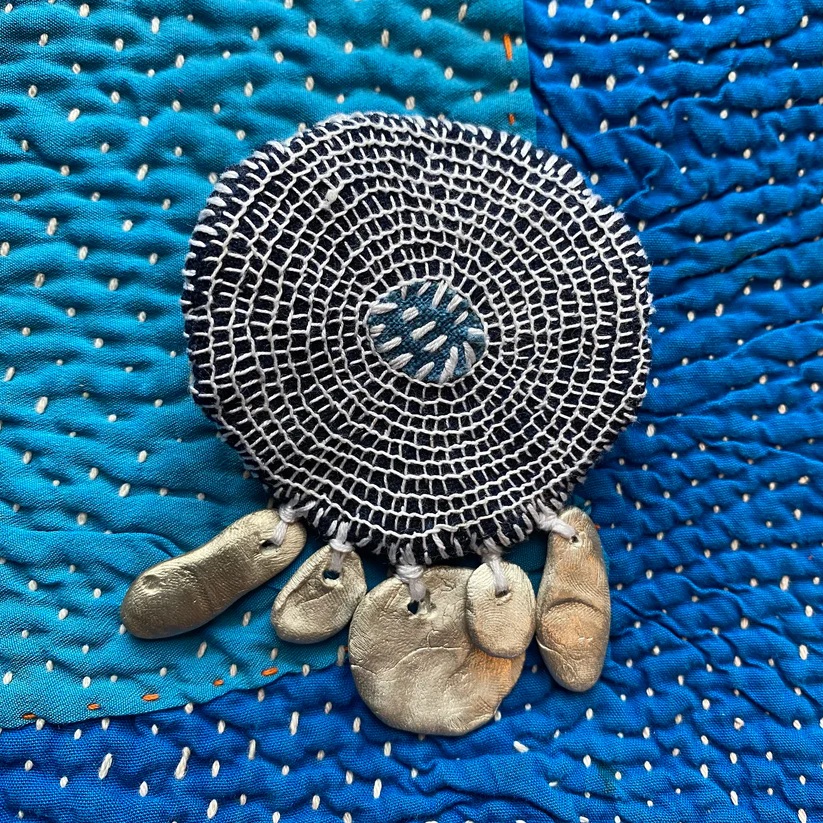
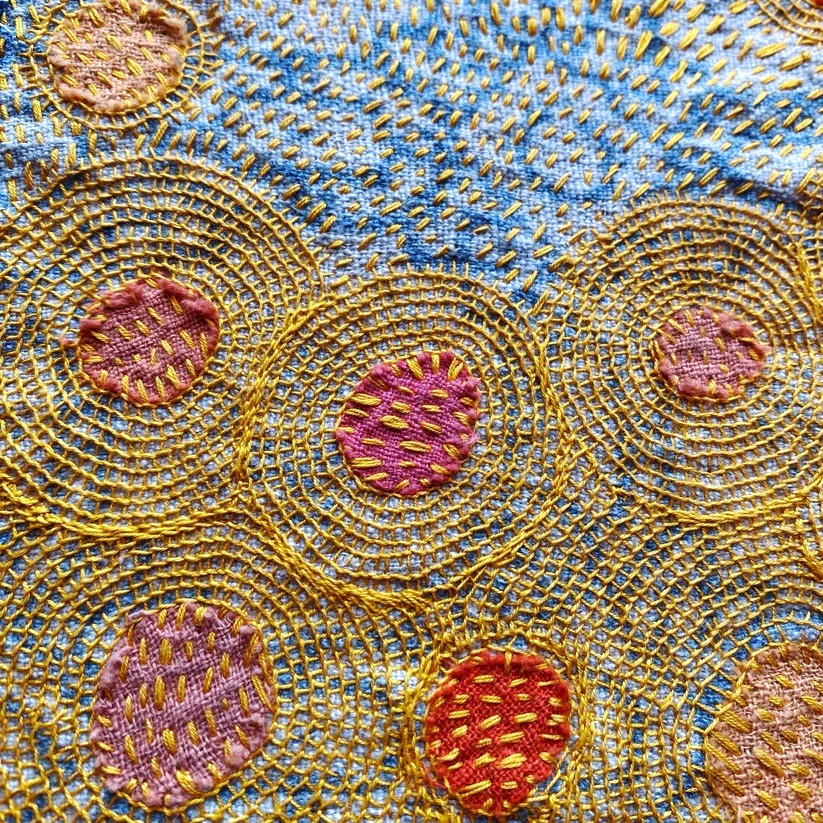
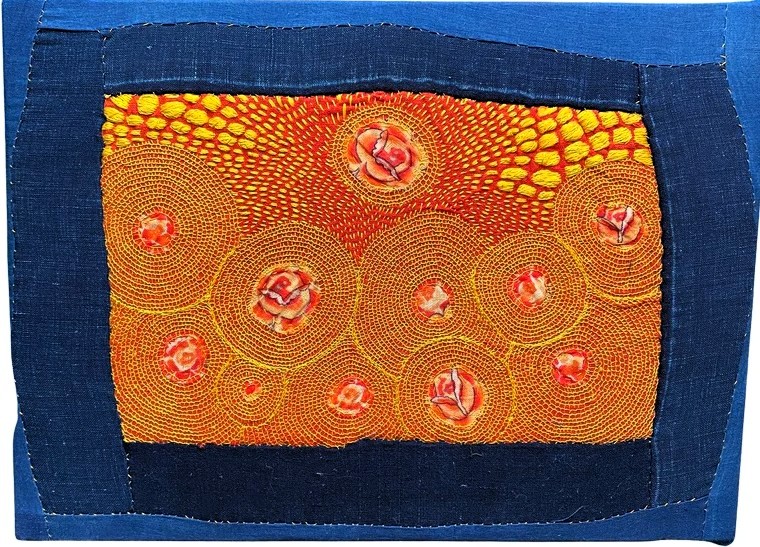
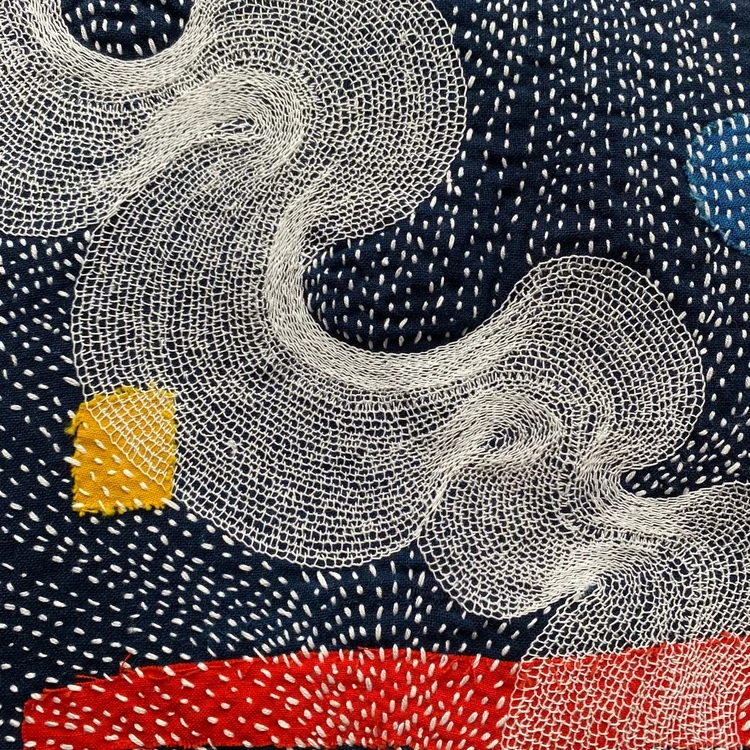
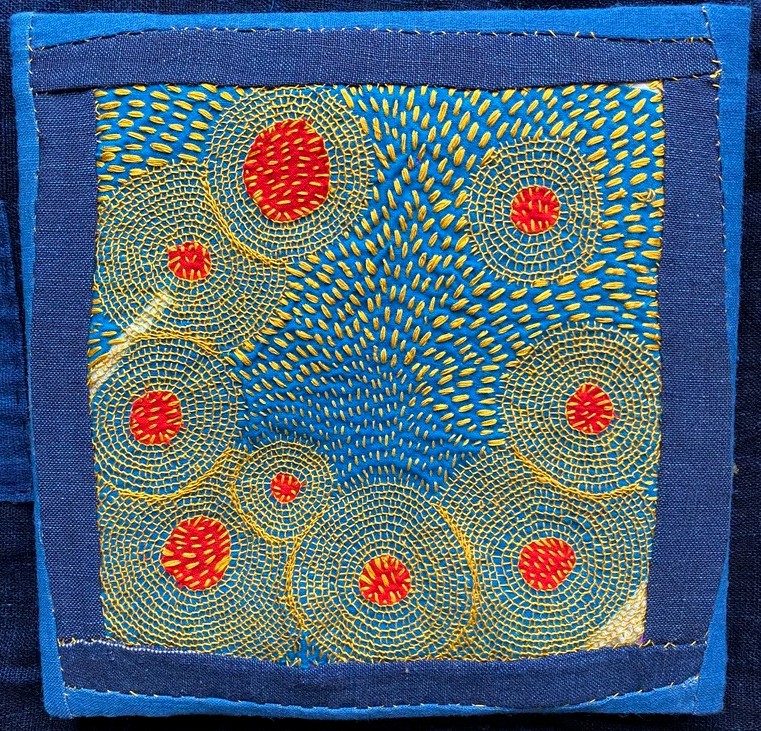
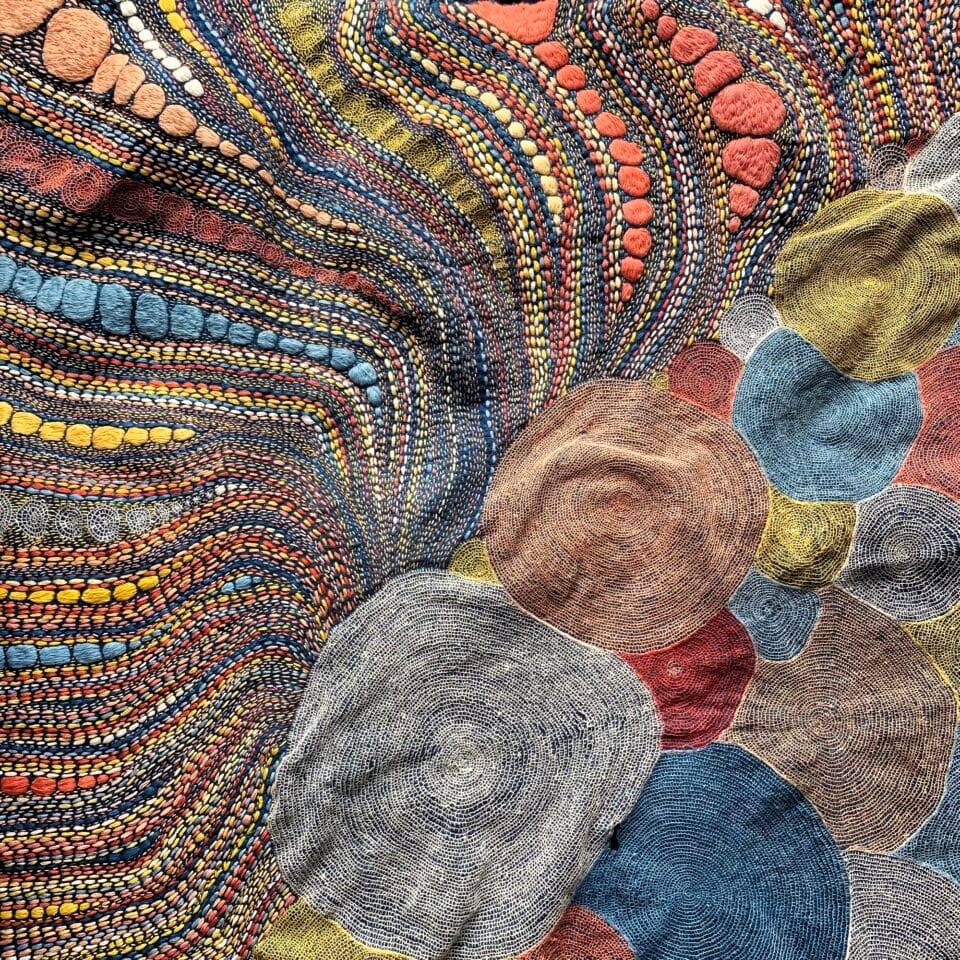
Lindzeanne (Lindsey) is an embroidery artist based in Tokyo, Japan.

Her work is inspired by traditional Japanese textile traditions such as sashiko, indigo dying, and the concept of “mottainai” or “waste nothing”.

 Lindzeanne’s work uses only second-hand or vintage textiles to create colourful, vibrant, highly textural hand-stitched pieces.

Through her work, the artist aims to catalogue the passage of time and investigate the relationship between color and form by making the unseen seen with simple needle and thread.

Lindzeanne began stitching in order to upcycle clothing, a practical hobby that quickly became more of a drawing practice.

Embroidery floss isn’t common in Japan, so the artist instead picked up basic hand-sewing and traditional sashiko threads that she stitches into second fabrics.

The resulting works are rife with patterns.

“To me, colors have a personality to them, and shapes have a weight and character to them, so when I’m thinking of a piece in my mind, or sitting down to cut fabric, I’m always imagining the push and pull, or the gravity that certain shapes and colors have with one another,” Lindzeanne says.

More of Lindzeanne’s intricate stitchery can be found at lindzeanne.com/

Sunday Evening Art Gallery — David Johnson

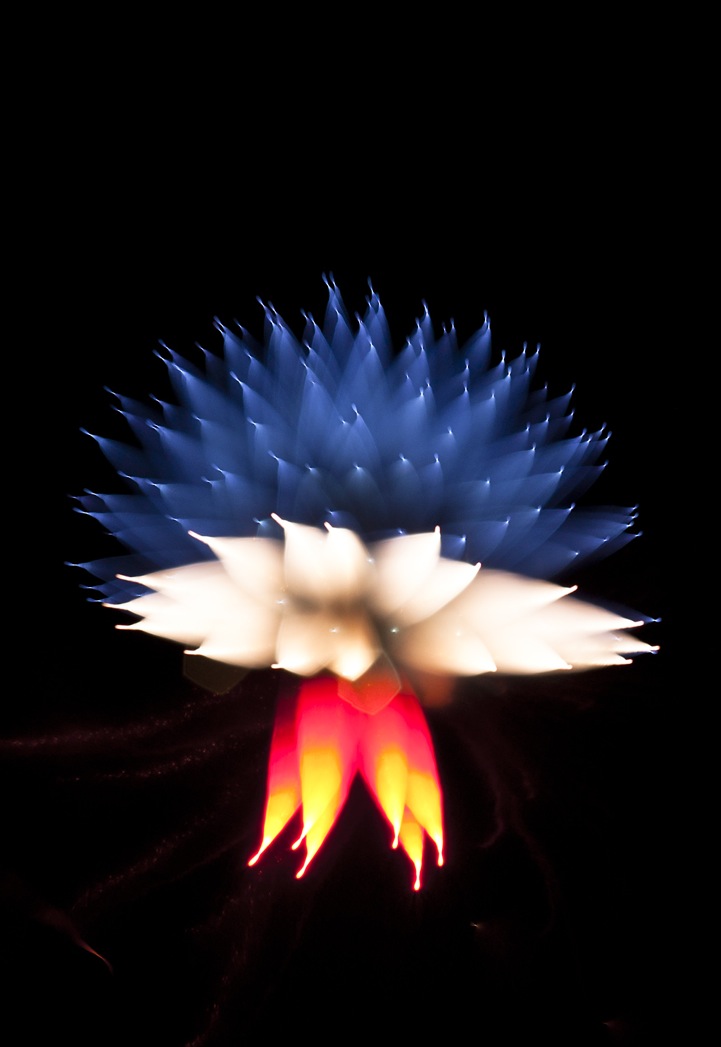
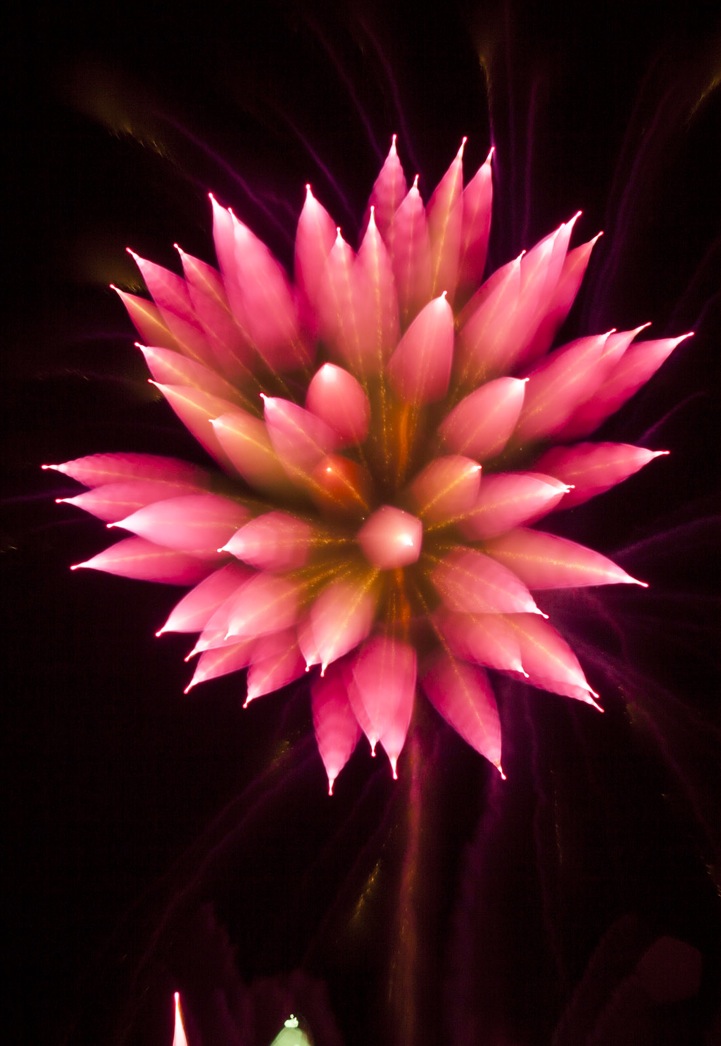
While attending the International Fireworks Show in Ottawa, Canada, photographer David Johnson had his camera in hand to document the night.When Spain’s entry into the competition began he decided to try something a little different.The technique he used was a simple refocus during the 1-2 second-long exposureTo produce these images, Johnson started out of focus, and when he heard the explosion he quickly refocused.The captured abstract beams were transformed into a series of unusual, striking shapes.By shifting the focus of his camera, Johnson delivered both hazy and evidently detailed pictures.“The shapes are quite bizarre, ” Johnson says.“Some of them I was pleasantly surprised with.”

More of David Johnson’s marvelous photography can be found at https://www.flickr.com/photos/daveyjphoto/ and https://mymodernmet.com/david-johnson-fireworks-photography/.


.


Sunday Evening Art Gallery — Heath Satow

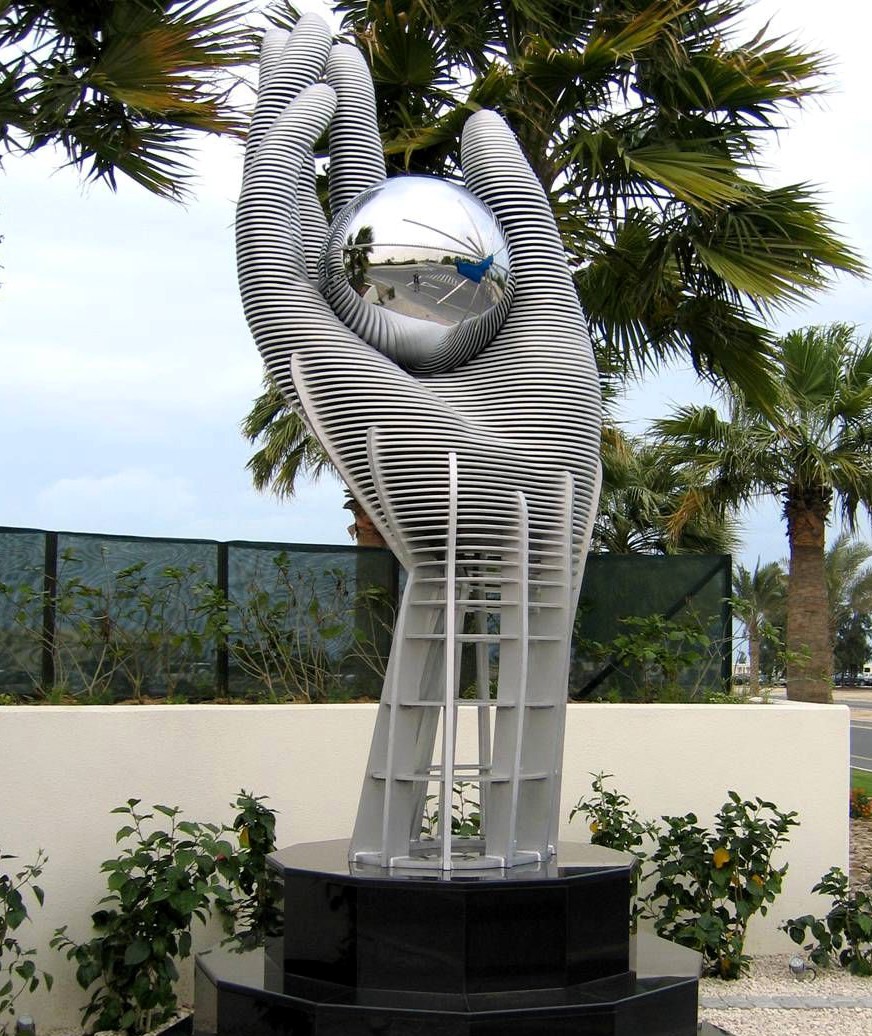
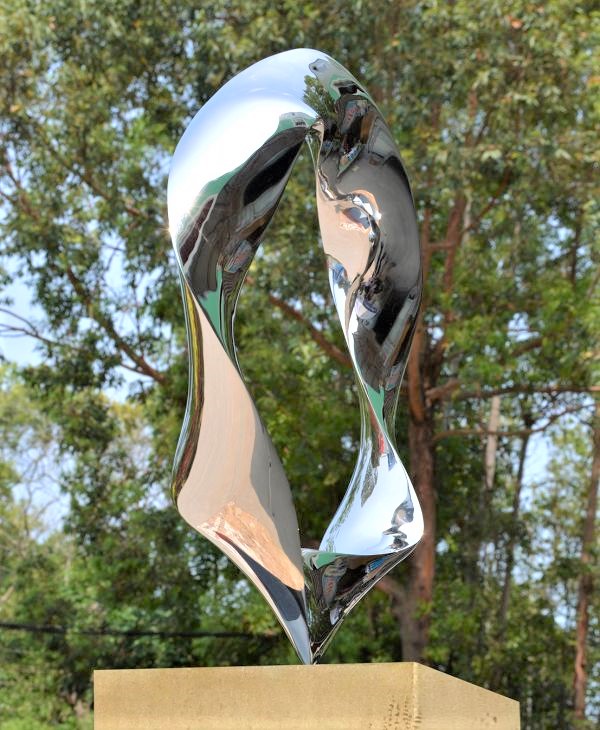
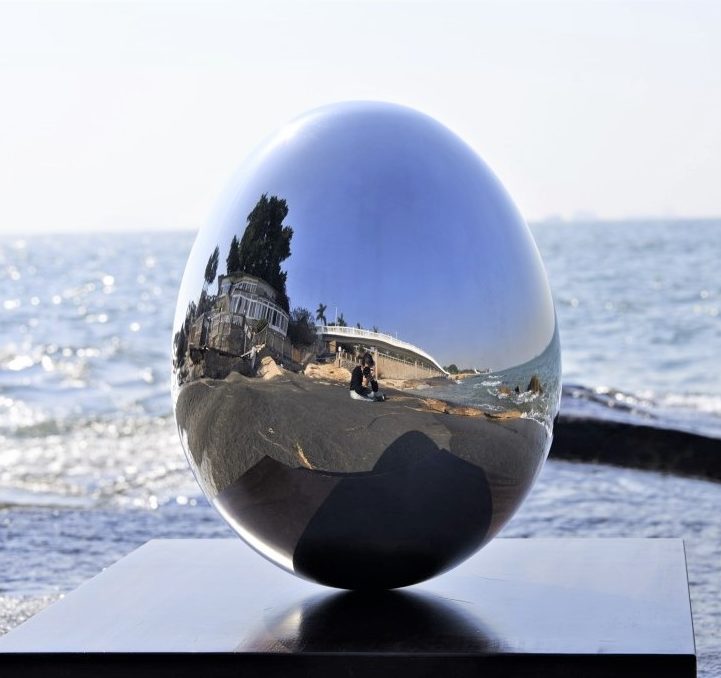
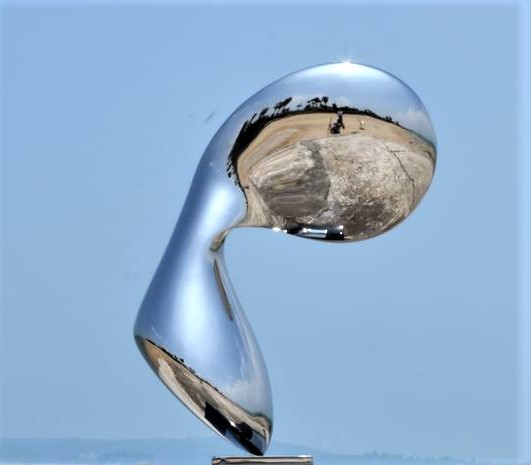
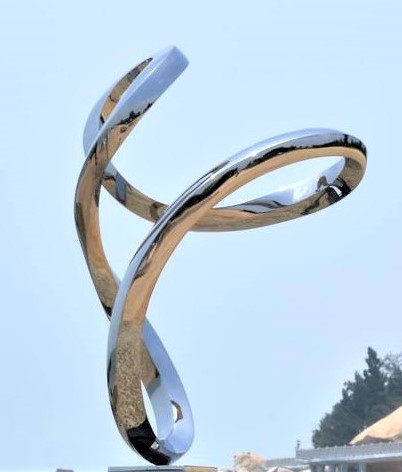
Heath Satow (-1969) is an American artist who works in fabricated metals. Satow attended North Carolina State University School of Design where he graduated with honors with a concentration in sculpture.The curved facets of his sculptural surfaces pull apart our visual surroundings, distort and re-order them in unexpected ways, creating a new interpretation of the world we usually tune out and take for granted.Satow’s intention with these pieces is to tune us back into the world around us.”I work primarily with mirror-polished stainless because of the visual variety it offers daily,” Satow shares.

“As natural light changes, as the colors of the seasons change, even as people’s fashion changes, all these permutations are literally reflected in the work.”More of Heath Satow’s amazing sculptures can be found at https://www.publicsculpture.com/.


Sunday Evening Art Gallery — Marilyn Sunderland

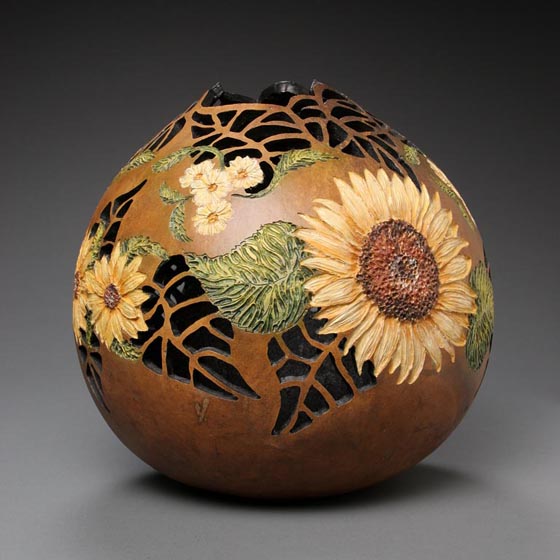
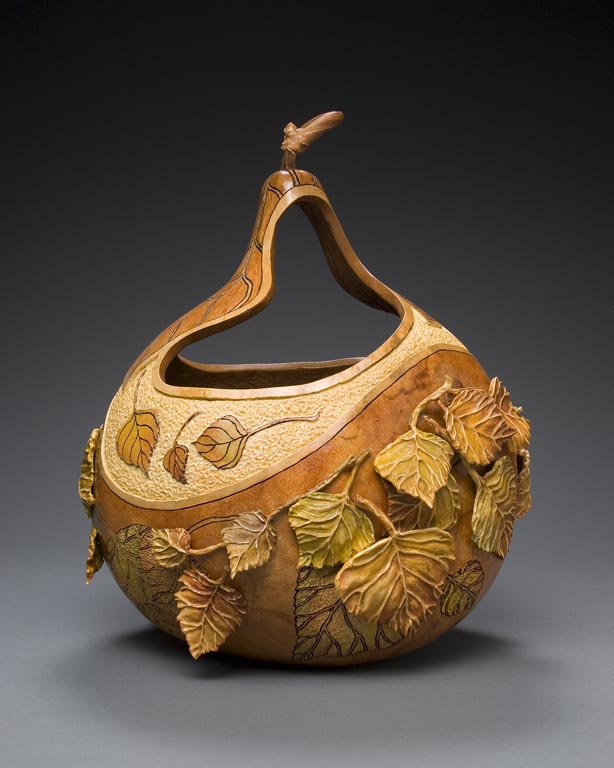
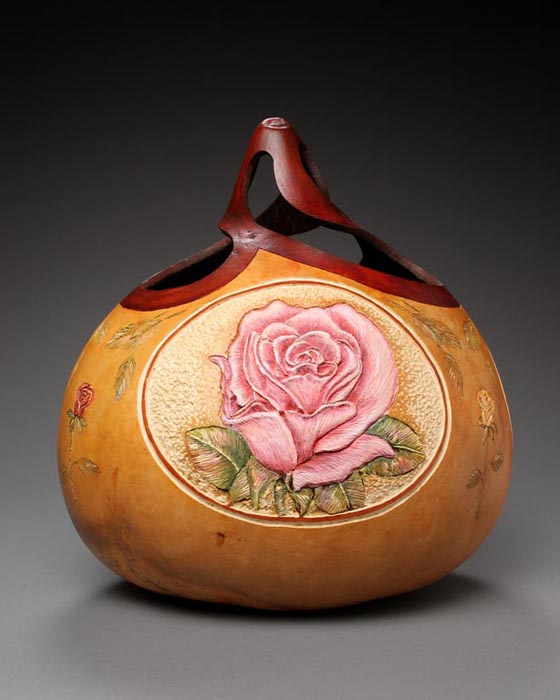
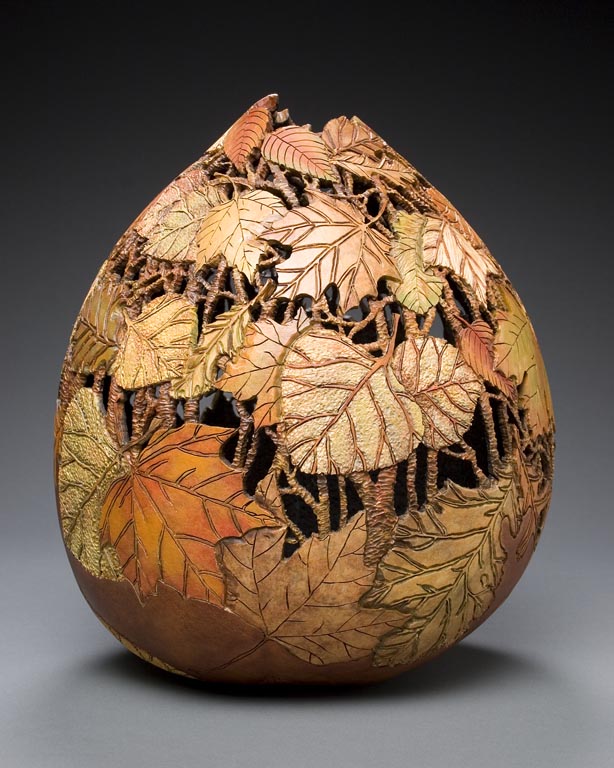
Marilyn Sunderland is an American artist and sculptor who is recognized for her amazing sculptures made from ordinary pumpkins.Sunderland has a Bachelor’s degree in Art Education from the University of Missouri-Columbia, plus a two-year art course from the Art Instruction, Inc. of Minneapolis, Minnesota.Having acquired carving certificates for classes completed in gourd and creative wood carving, Sunderland’s work transforms pumpkins into beautiful pieces of art, featuring blooming flowers, scenic landscapes, and swimming fish.Before starting to work with a pumpkin, she removes the pulp, focusing solely on the walls.She then treats the pumpkin using a special technique and applies layers of acrylic or oil paint.Only after the pumpkin is primed does Marilyn begin carving her whimsical patterns and scenes.She often cuts flowers, leaves, and other elements from other pumpkins and attaches them to her canvas-like pumpkin. The result is three-dimensional and incredibly intricate artwork.More of Marilyn Sunderland’s amazing carvings can be found at https://www.marilynsunderlandstudios.com/.


Sunday Evening Art Gallery — Paul Kaptein

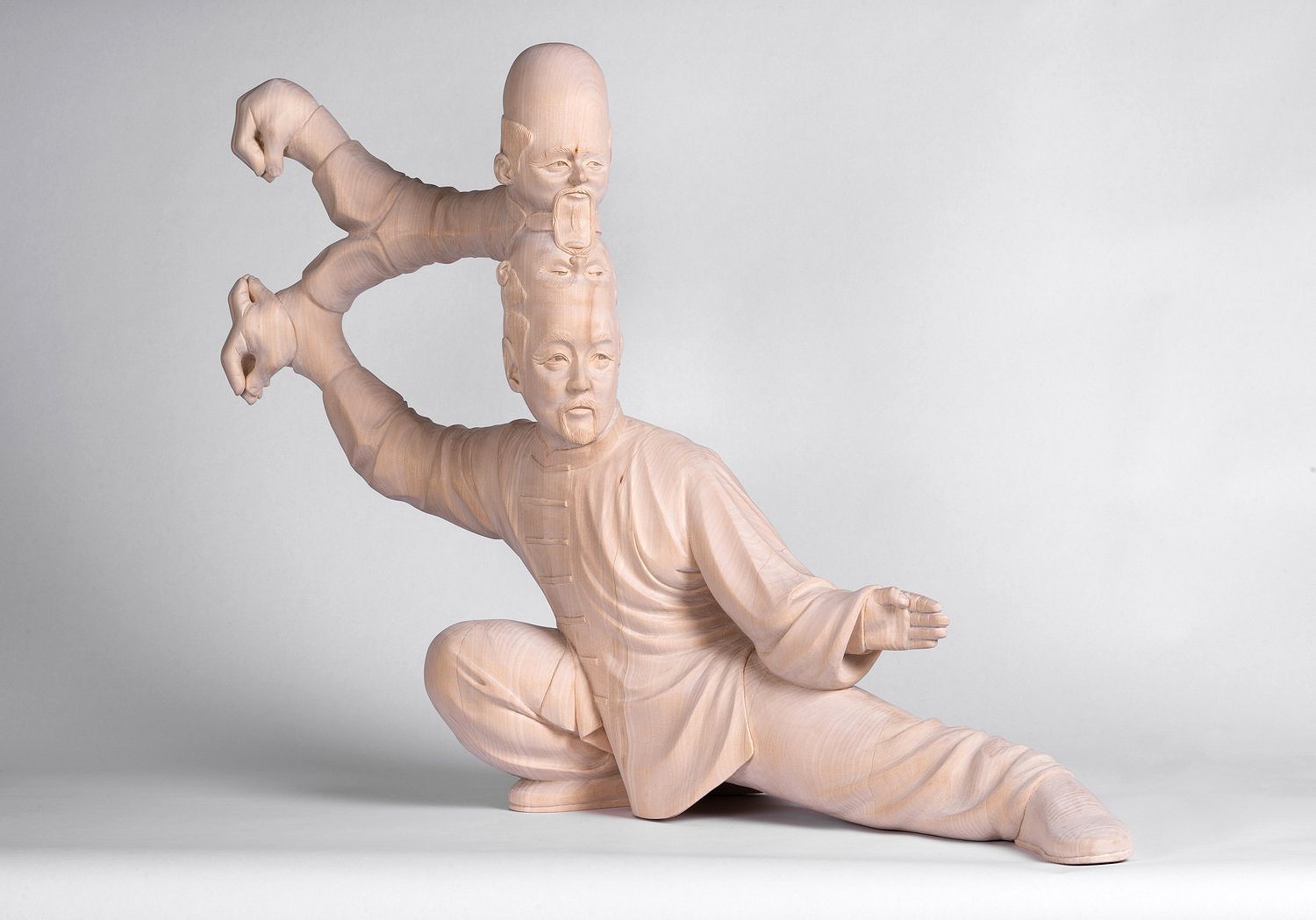
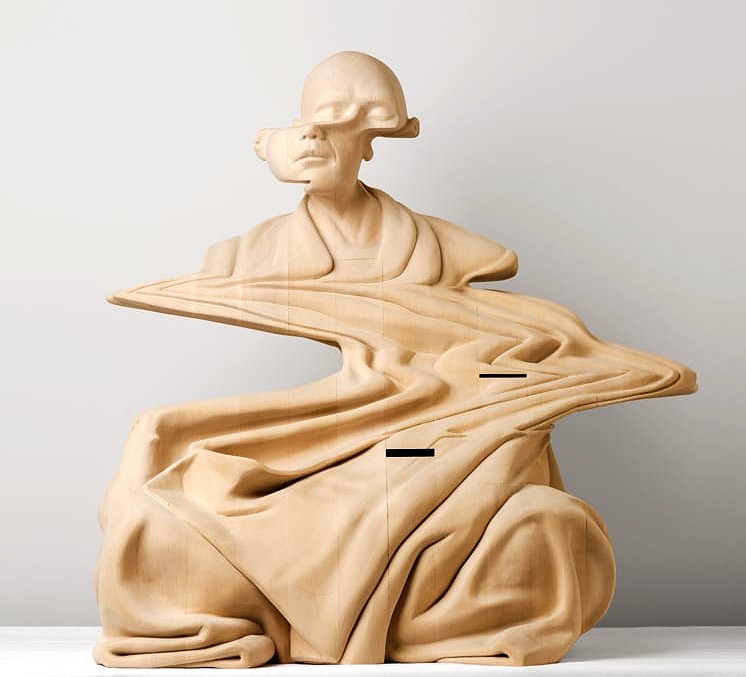
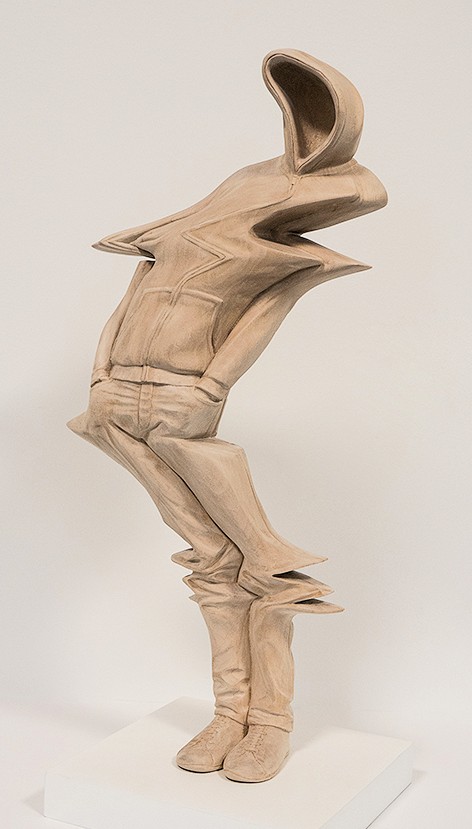
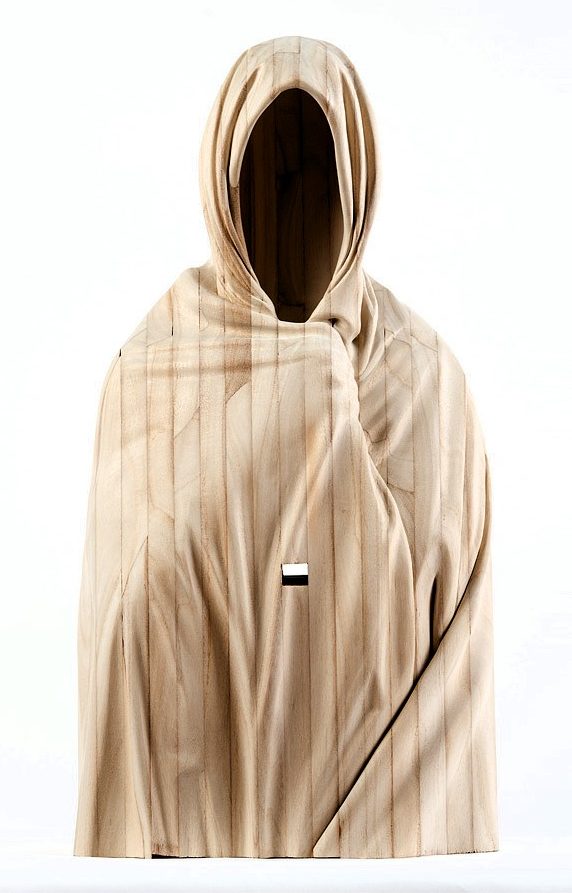
Paul Kaptein is an Australian  artist who specializes in sculpture and drawing.Kaptein graduated with an Advanced Diploma of Art and Design from the Claremont School of Art and a Bachelor of Fine Art from Curtin University.Kaptein works with large blocks of laminated wood to reveal warped and distorted human figures, some pierced with a smattering of holes linked with drawn lines like star constellations.Dramatic contours and warped curves interrupt the traditional human forms, making the sculptures seem as if they been intercepted by a digital software glitch.Depending on the vantage point of the viewer, the figures can change from figurative to abstract, with some angles revealing an almost completely typically human body, while others uncover a striking warped effect.

Most of the Kaptein’s hand carved wooden pieces are in the middle of two modes of being – a stable, static appearance and some kind of mysterious state characterized by flexibility and fluctuation.His hand-carved busts and figurative sculptures are additionally punctuated by gaps formed from the laminating process, creating the impression of digital glitches or images skewed by poor reception.

More of Paul Kaptein’s amazing sculptures can be found at https://www.paulkaptein.com/.


Sunday Evening Art Gallery — Laurent Parcelier

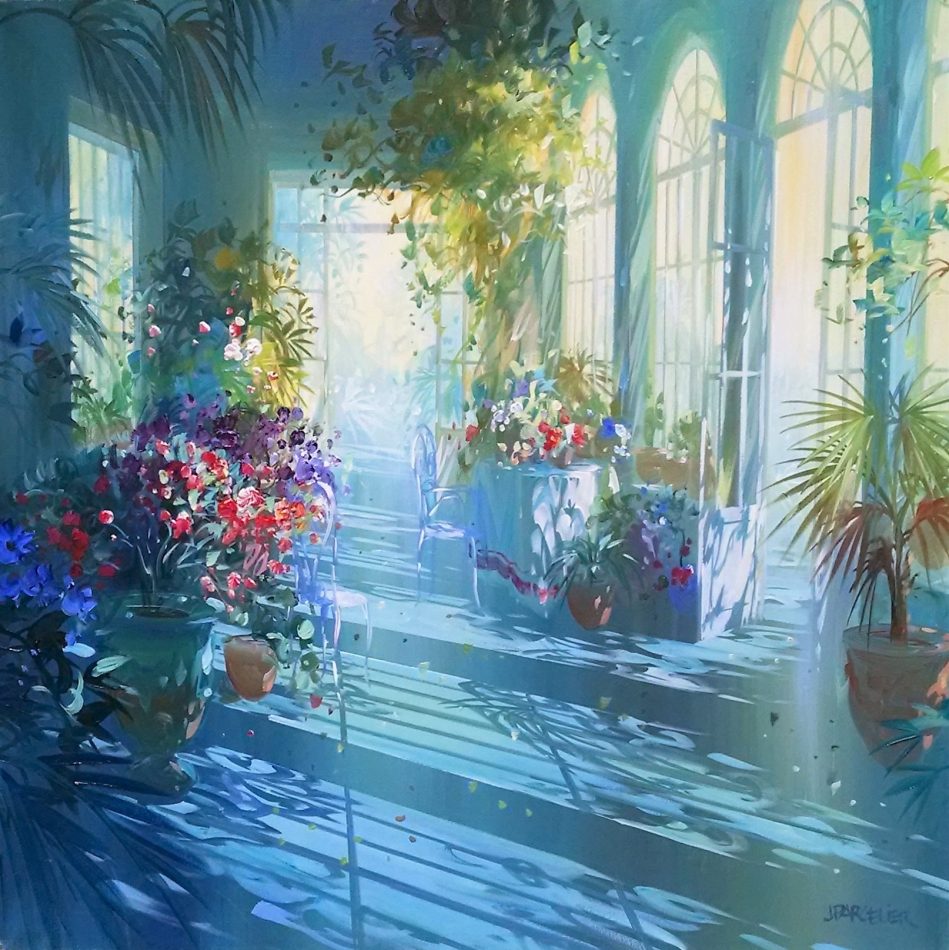
Laurent Parcelier, born in 1962 in Auvergne, France, is a celebrated French painter known for his enchanting exploration of light and color.Parcelier enrolled at the Duperre School of Applied Arts in Paris in 1978.Initially working as an illustrator and comic book author, his journey into painting was sparked by winning first prize in a street painting contest, which led him to fully dedicate himself to this medium​.Parcelier’s work is often described as modern impressionism, characterized by its serene and idyllic portrayal of landscapes and city scenes.The artist paints landscapes and city scenes using oil on canvas.Influenced by his ability as a comic artist, you can see a unique graphic art nature attached to his paintings. Parcelier’s mastery of light creates a dreamlike quality, inviting viewers into a world of calm and poetic beauty​.

More of Laurent Parcelier’s inspirational paintings can be found at https://thegallerist.art/laurent-parcelier.


Sunday Evening Art Gallery — Beate Kuhn

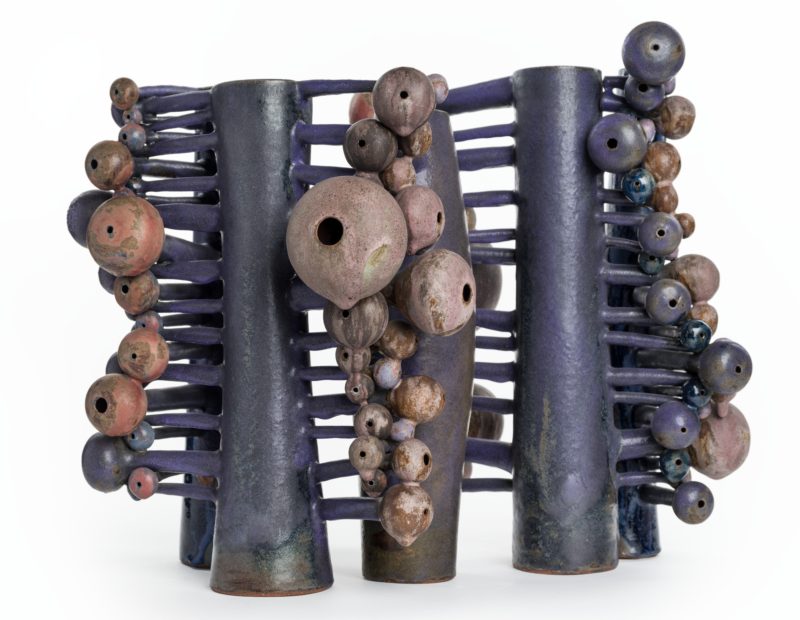
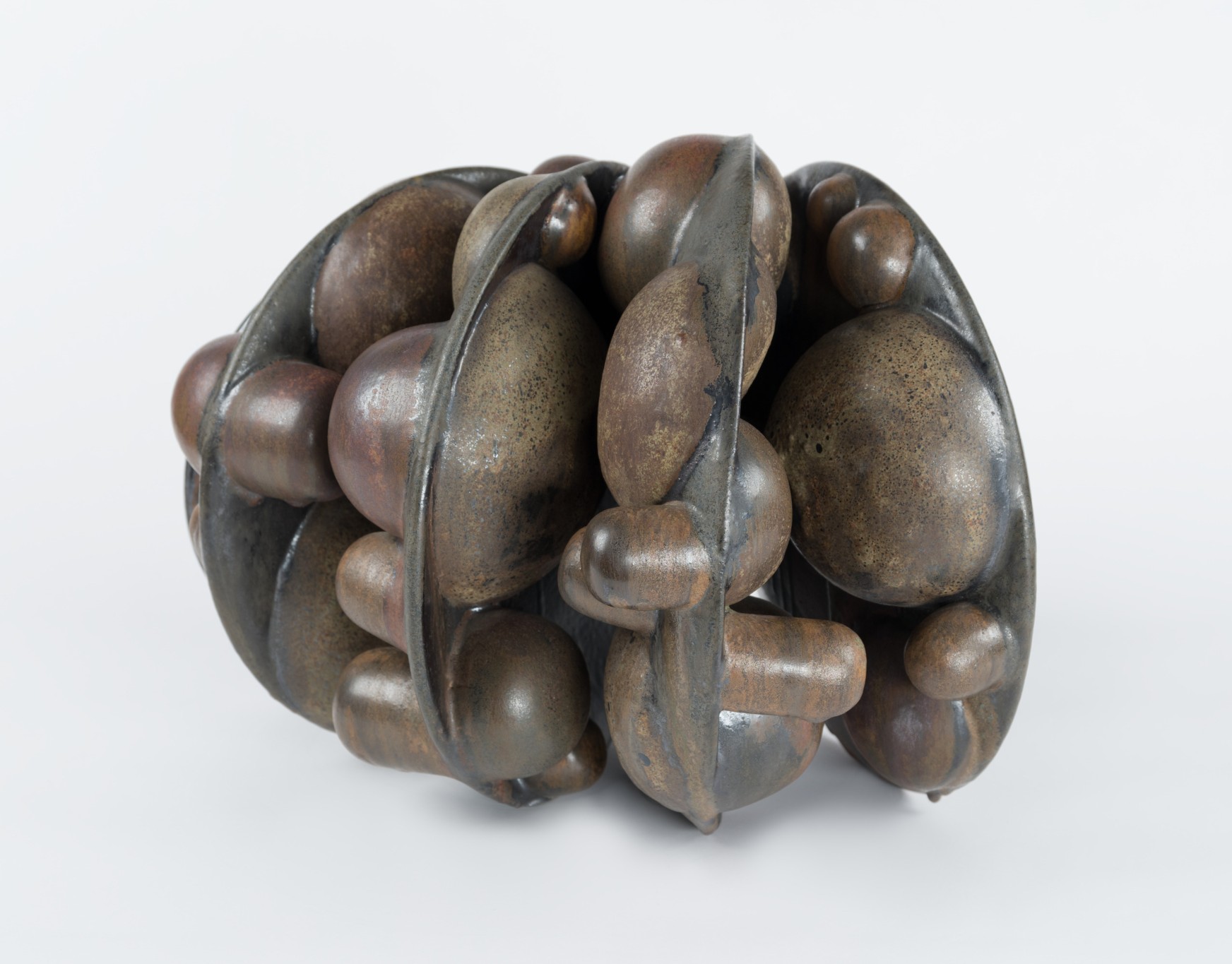
Beate Kuhn (1927–2015) was German ceramicist who created sculptural objects from wheel-thrown elements and glazed stoneware.Over the course of a more than a 60-year career, Kuhn created profound and extraordinarily well-crafted ceramic objects, beginning with functional ceramics, moving to sculpted vessels, and then to sculpture itself.Kuhn learned to throw on the potter’s wheel at the Werkkunstschule (School of Applied Arts) Wiesbaden, then furthered her ceramic education at the Werkkunstschule Darmstadt, where she perfected techniques for mixing and applying clay slips, engobes, and glazes.At the intersection of Modernist painting, sculpture, and studio pottery, Kuhn found creative resonance for her practice.

The beautiful and sublime aspects of nature were another muse as she channeled brilliant assemblages of parts: seed pods, succulents, exoskeletons, fungi, and shells.Throughout her career, Kuhn skillfully played with contrasts in her artworks: shiny and matte, light and dark, convex and concave, stillness and movement, individual and collective, birth, death, and decay.        Her free sculptures were created from single hand-thrown and cut elements, which she assembled into a whole.She transferred this style principle of stringing together geometrical bodies to her designs of large-scale ceramic fountains.More of Beate Kuhn’s amazing sculptures can be found at https://carnegieart.org/exhibition/beate-kuhn/ and Ceramics Monthly.


Sunday Evening Art Gallery — Lisa Agababian

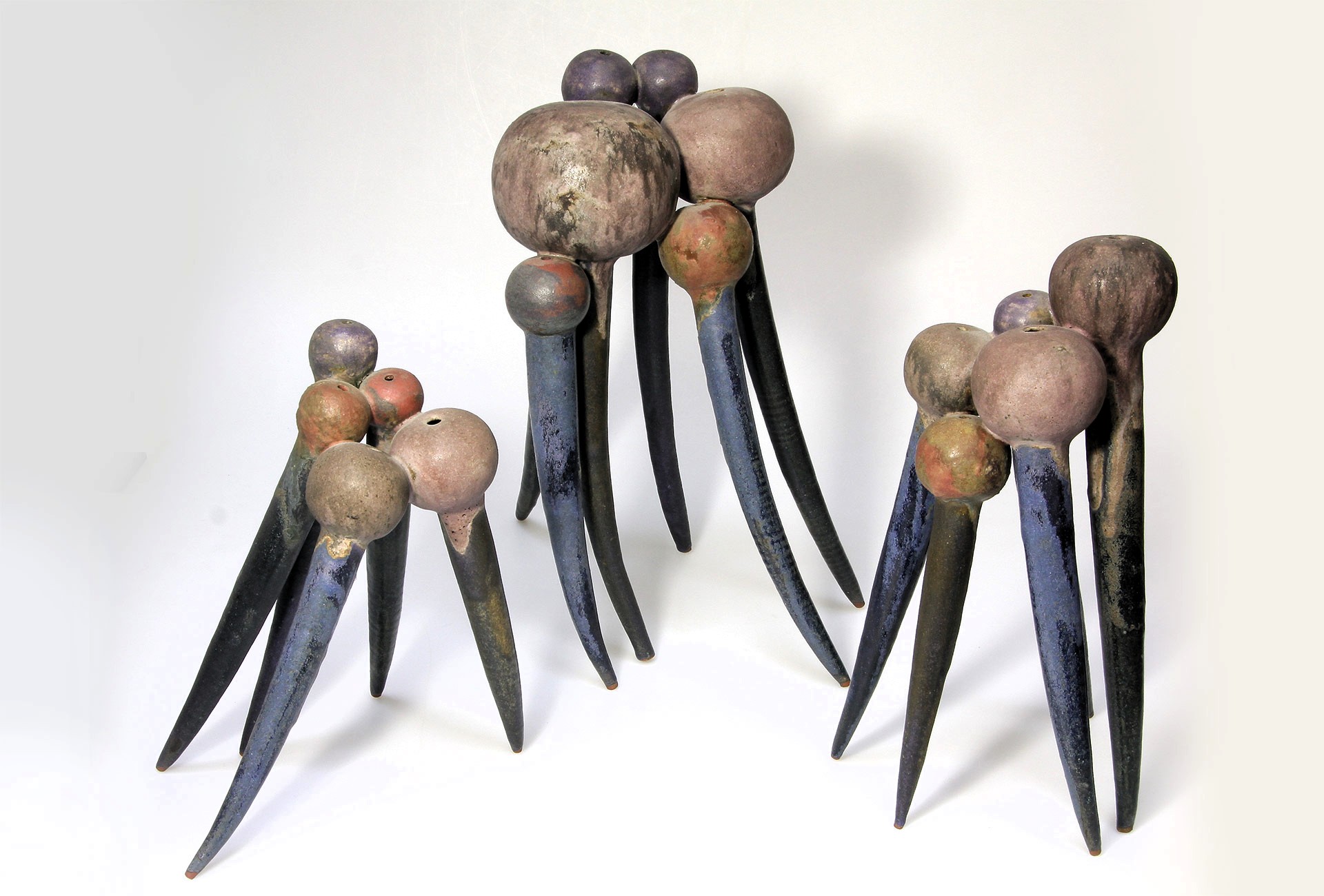
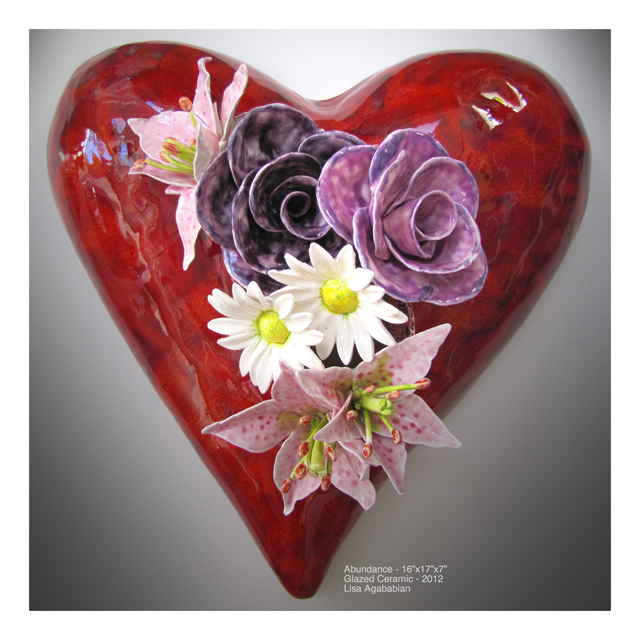
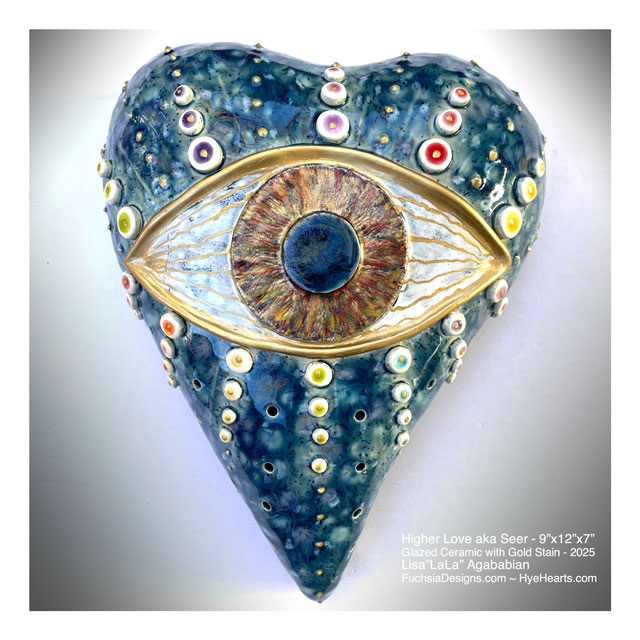
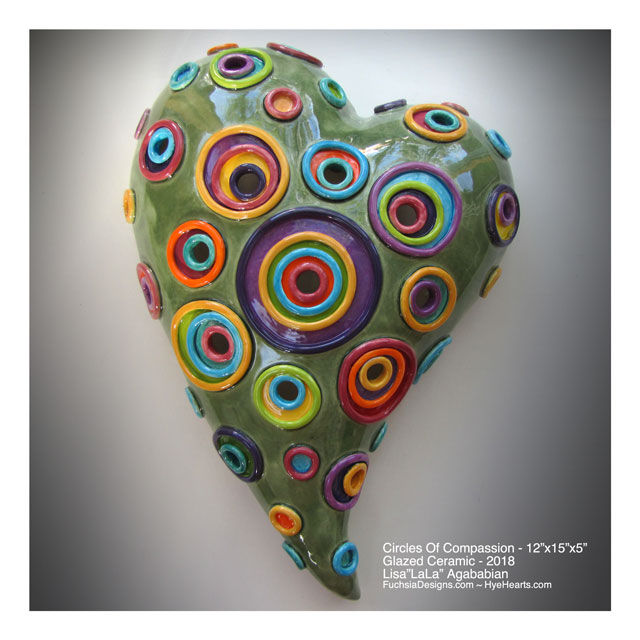
Lisa Agababian, born and raised in New York City, is mostly a self-taught ceramic artist currently creating purposeful art in Tucson, AZ.Although Agababian’s journey with clay was shelved for several years as she gained her formal education in mathematics & computer science, she managed to get back to her passion when she moved to Tucson in 1989.Agababian creates unique, one-of-a-kind, ceramic heart wall sculptures.All of her hearts are designed, hand-built, and painted with low fire colorful glazes, crystal glazes, under-glazes, metallic/luster overgrazes, and anything else she can embellish a piece with to add to the depth, beauty, and uniqueness desiring to be expressed.Low fire earthenware clay is Agababian’s favorite medium to work with, because, as the artist says,  clay not only feels good, but it is a most friendly and forgiving medium to work with before the first firing.Her work is wonderfully three dimensional, her added flair highlighting depth and detail to her vibrant hearts.

More of Lisa Agababian’s wonderful ceramic hearts can be found at https://fuchsiadesigns.com.


Sunday Evening Art Gallery — Kim Clough

By night, Kim Clough from Rochester, Minnesota, is a medical lab scientist.

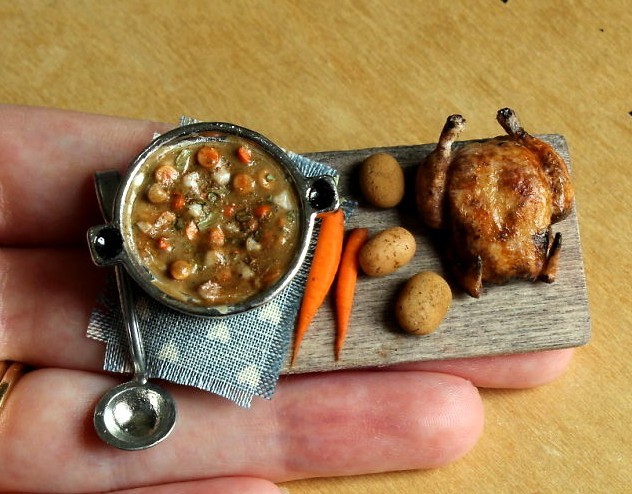
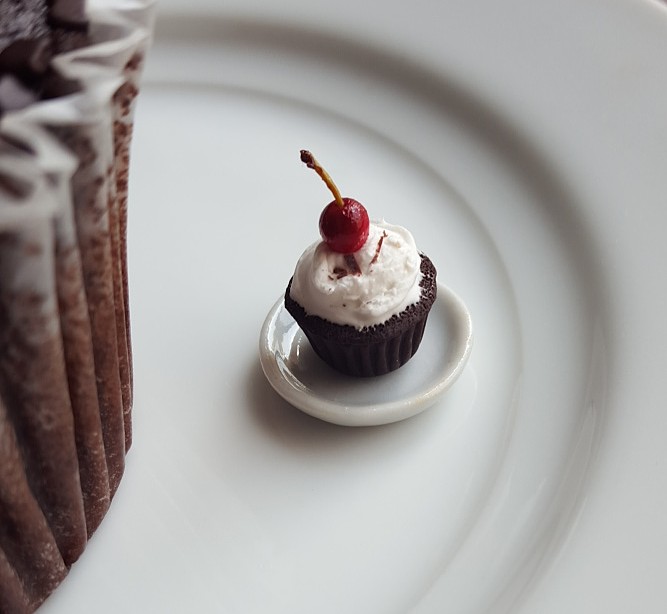
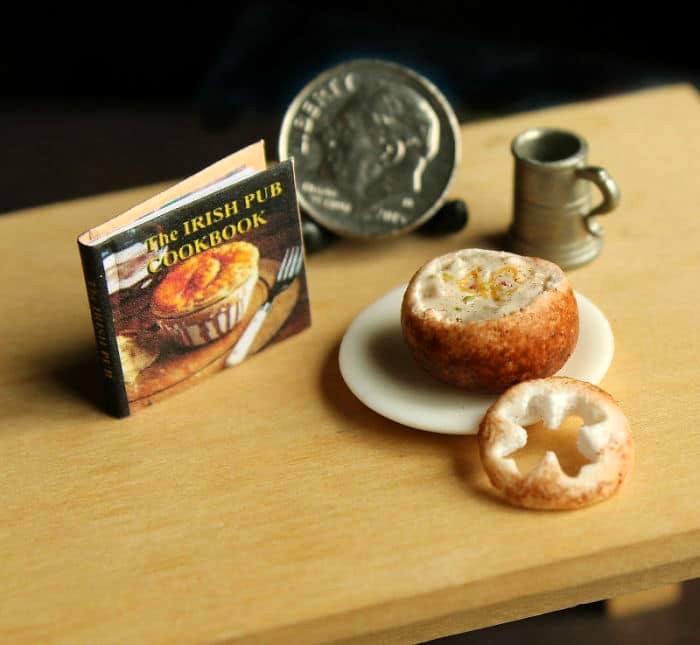
By day however, she’s a miniaturist who creates amazingly detailed miniature foods that can fit right on your fingertip.Clough creates creates miniatures of food — anything from fried chicken to perfect chocolate cakes and other desserts.

The artist uses polymer clay to sculpt her miniatures, and every miniature is no bigger than 1:12 of the size of the actual subject.

When sculpting food in 1:12 scale, where one inch equals 12 inches, Clough  renders clay sculptures with acute attention to detail when representing their real-life counterparts.Clay is an ideal medium since it is easily molded into a rendition of edible cuisine that gives an illusion of being able to bite right into it.Clough’s intricate work is a visual delight, an amazing recreation of everyday foods.You can find more of Kim Clough’s work on her website, as well as on deviantArt and Instagram.


Sunday Evening Art Gallery — Ron Ulicny

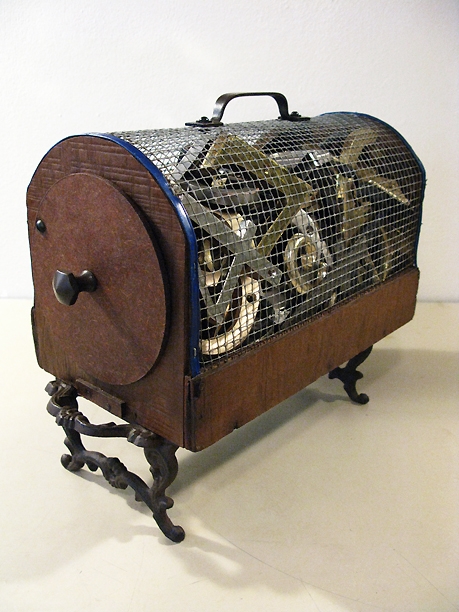
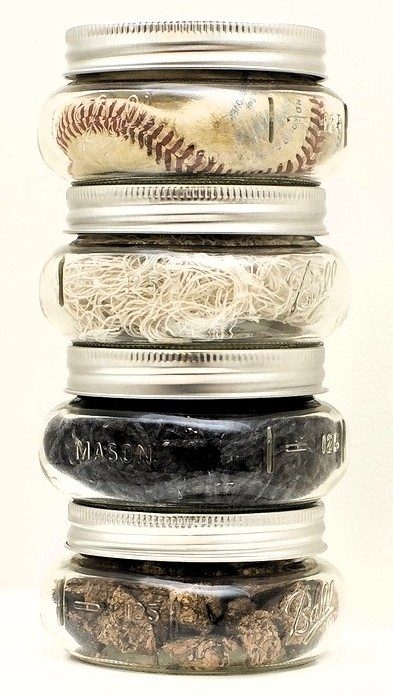
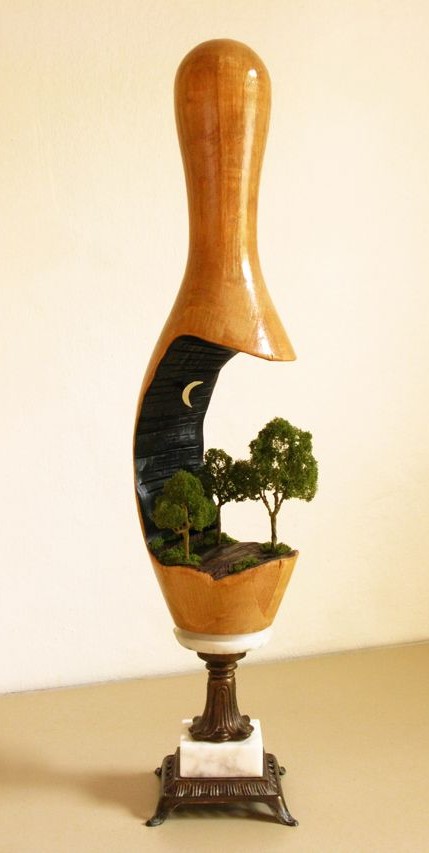
Ron Ulicny is a Portland-based contemporary sculptor and fine artist.His constructs are comprised of various ephemera re-imagined, and re-assembled to create intelligent, witty, and thoughtful new forms.All materials are carefully selected, skillfully crafted, masterfully altered, and presented with passion.

Armed with a keen eye for design and illustration, Ulicny pushes the boundaries of sculptural work that pushes and pulls the viewer with thoughtfulness and humor.The cuts and combinations of the materials are carefully planned out and assembled to make a beautiful and broad visual statement, one that is at the caliber of the heavy hitters in contemporary sculpture.With its visceral constructions, Ulicny challenges our initial perceptions of life, experience, and everyday hazards, creating simple yet stunning effects.“I will use almost anything — and have — if it is appropriate and fits within the the work,” Ulicny shares.“I try not to set any limits for myself or my work. My worst nightmare is being forced to use the same “thing” over and over again. Monotony is not your friend.”

More of Ron Ulciny’s unique sculptures can be found at https://www.ronulicny.com/.

Sunday Evening Art Gallery — Helen Gordon


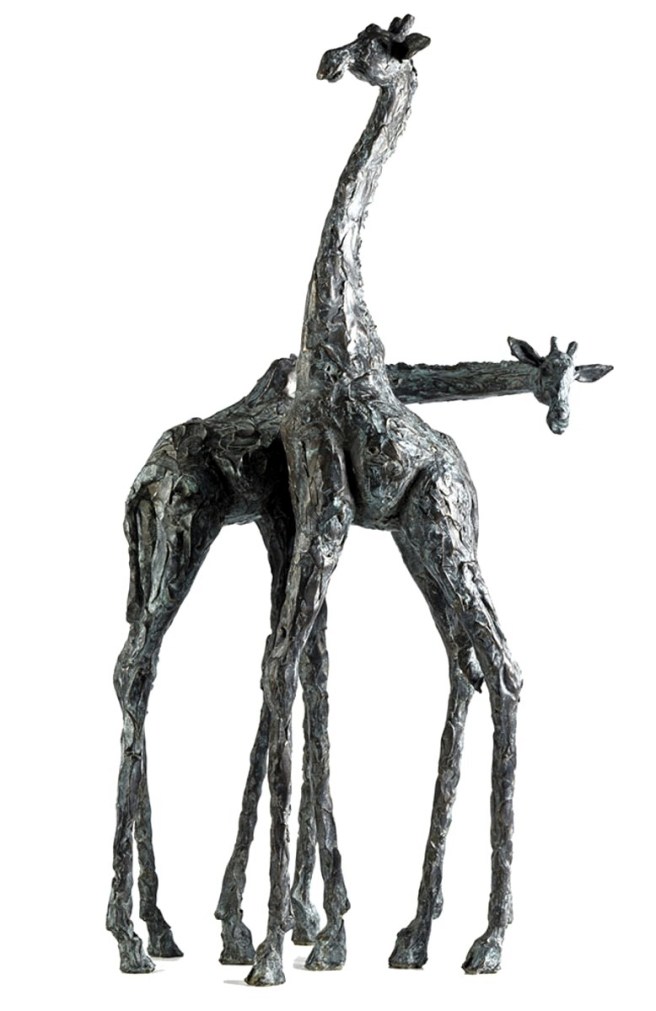
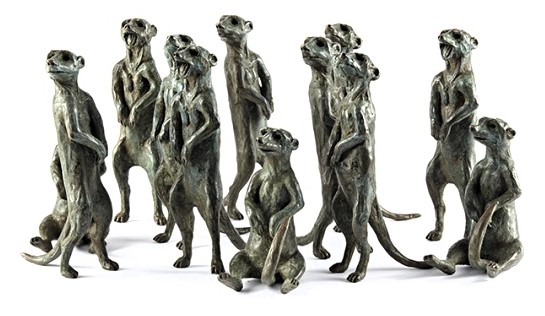
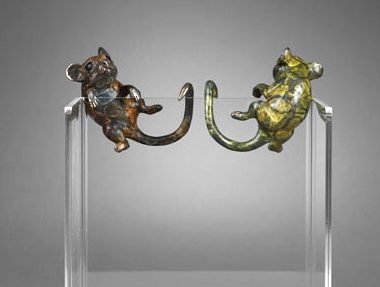
Helen Gordon is a sculptor and painter living and working in Chew Valley, England.Born in Warwickshire, Helen moved to the West Country, firstly to read European Studies at The University of Bath in 1981.Having always led a creative life, whether painting in water colors, interior design or garden design, Gordon’s focus for the past fifteen years  has been sculpting.

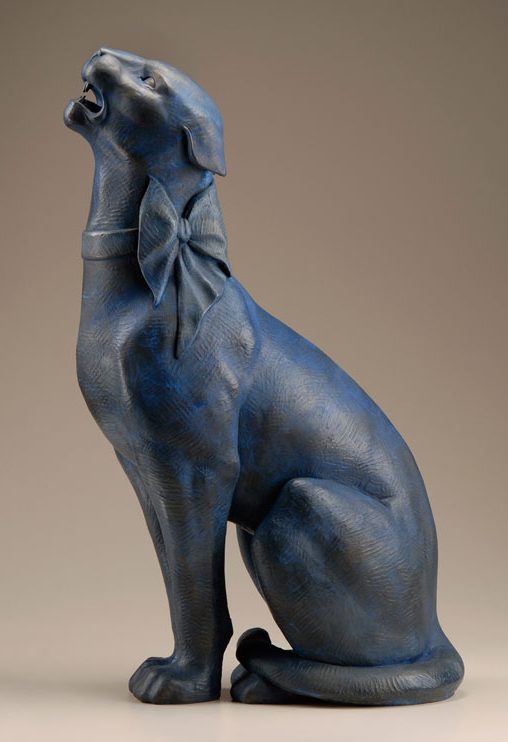
After developing her skills on a ceramics course at The Bristol School of Art, she instantly showed great aptitude, and was hooked.Creating both animal and figurative sculpture, her pieces tend towards being quirky and amusing and certainly eclectic.Helen works primarily in wax and clay and most of her pieces are limited editions and are cast in bronze or cold cast bronze resin.

“If a finished sculpture makes me smile then I am satisfied.” Gordon shares.“If a viewer stops for just one moment to view, reflect and, above all, smile at a piece I have created, then I feel I have succeeded in my work.”More of Helen Gordon’s sculptures can be found at https://www.helengordonsculpture.co.uk/


Sunday Evening Art Gallery — Janna van Hasselt

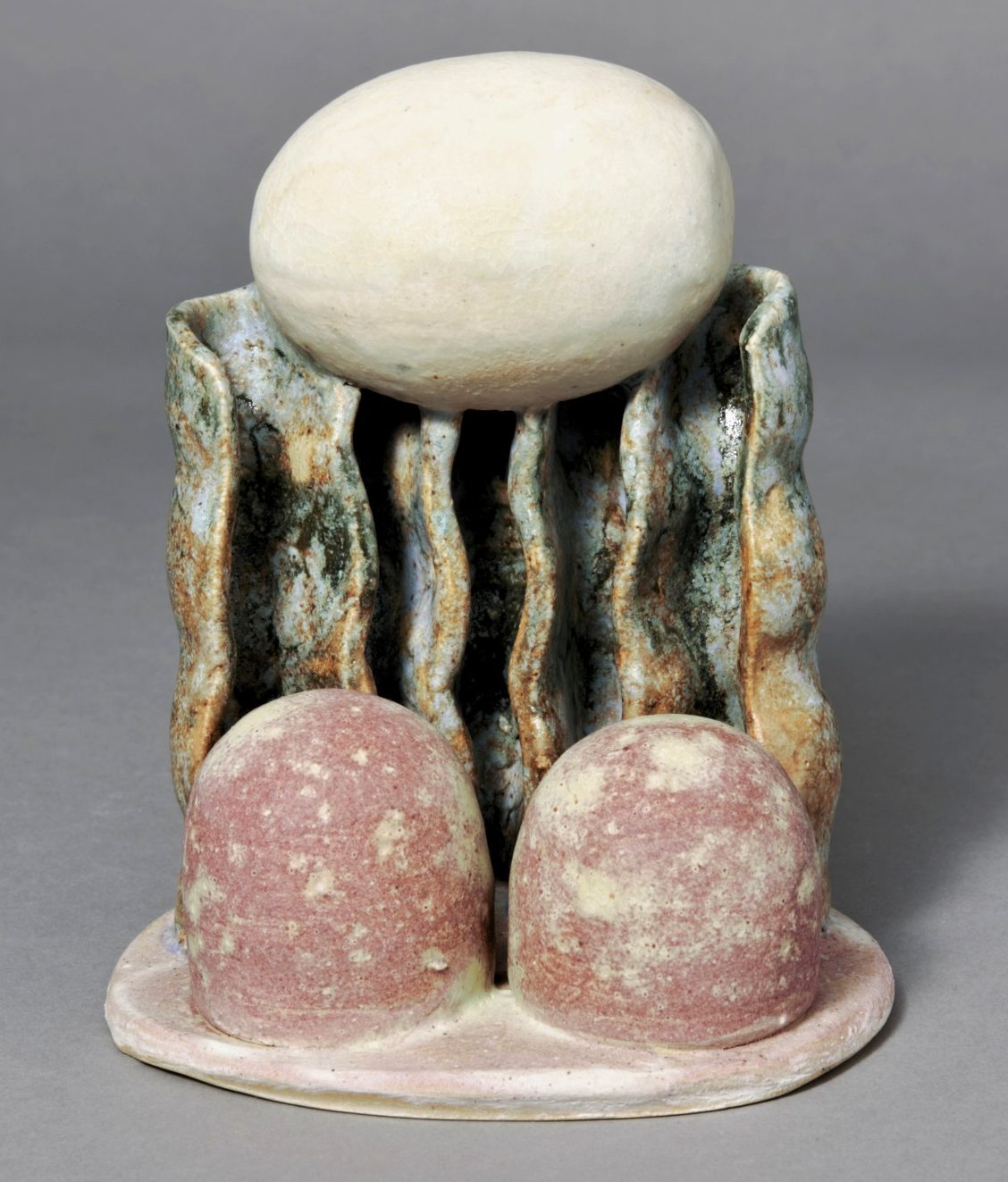
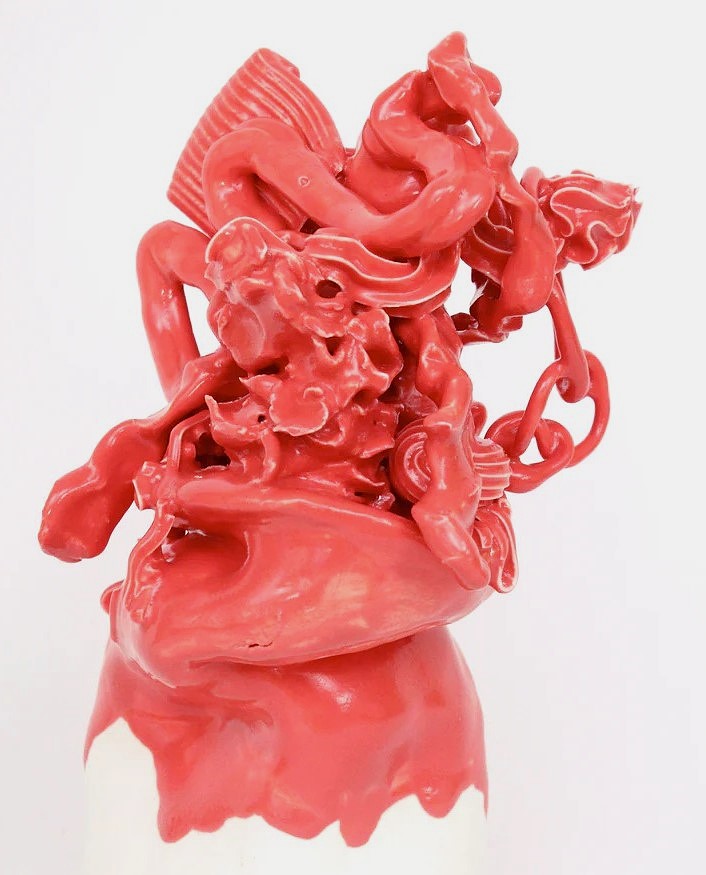
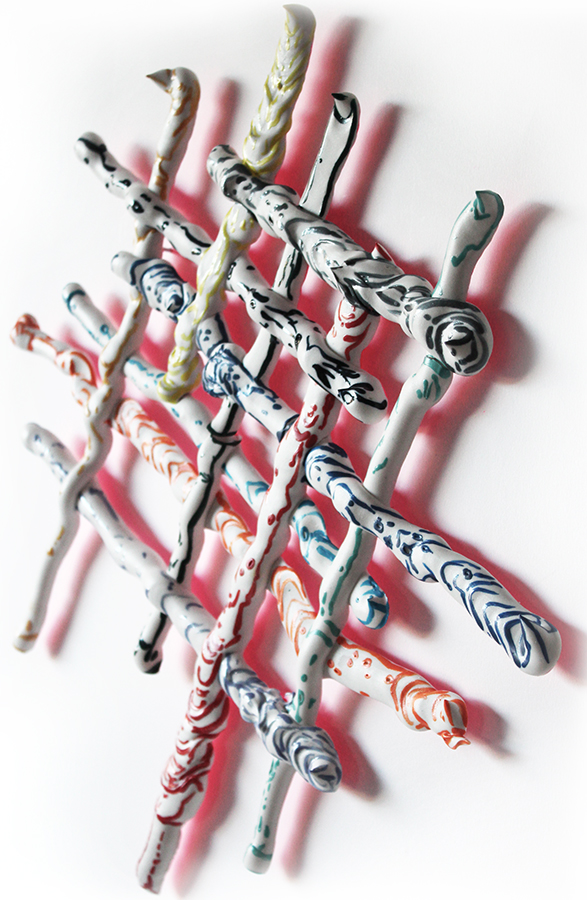
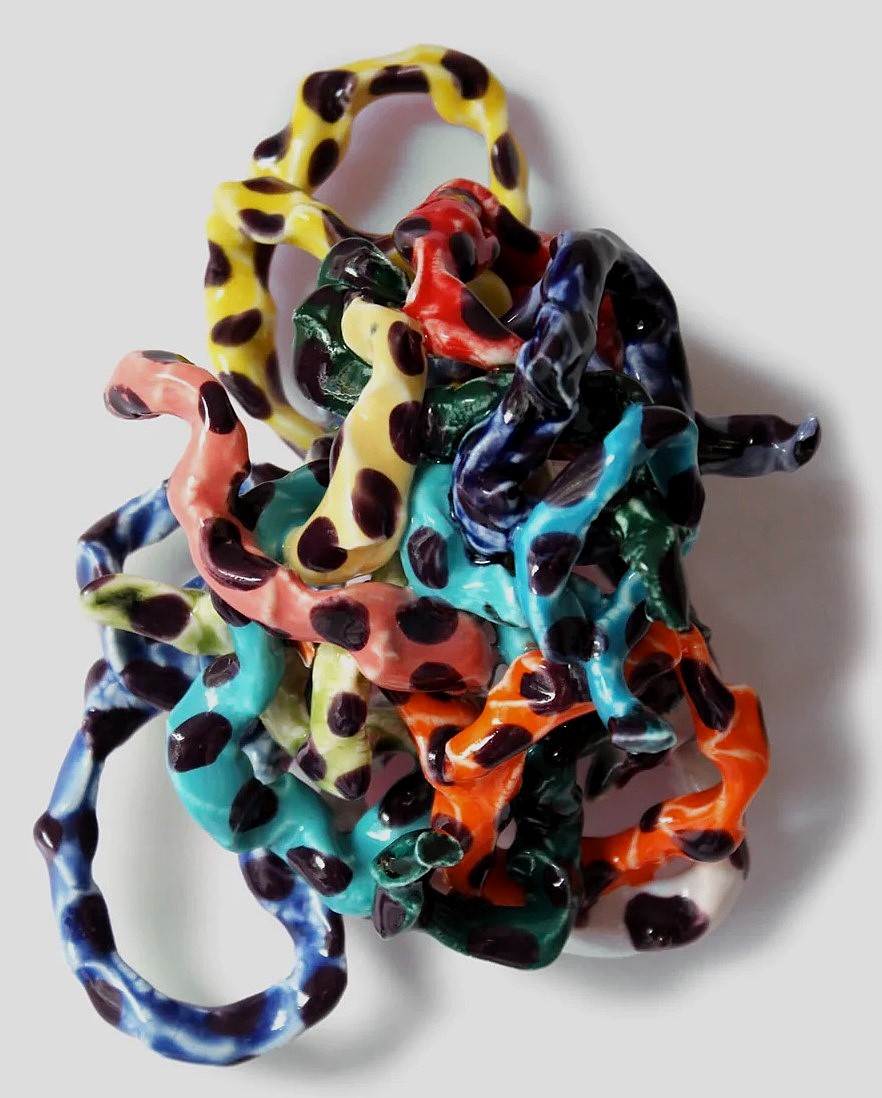
Janna van Hasselt is a ceramic sculptor, born in Ōtepoti Dunedin in 1980 and now resides in Ōtautahi Christchurch, New Zealand.She earned a BFA (printmaking) from Ilam School of Fine Arts, Ōtautahi Christchurch (2004) and, as a recipient of a Fullbright Award an MFA (visual art) from the School of Art Institute of Chicago (2014).van Hasselt’s work is characterized by a pleasure in materials and a strong sense of spontaneity, playfulness and humor.The artist works with media ranging from printed and dyed fabric to puff pigment, ceramics, hot glue and inflatables.Her works often have a feeling of controlled chaos; knots, tubes, folds and stacks are van Hasselt’s forms of choice as she experiments with the tension, stress and gravity of each object made or represented.She also explores the idea of architectural failure, questioning how far her structures can be pushed before they collapse.

“I find inspiration in the everyday; the minutiae of life as a parent,” Van Hasselt shares.“My works are created manipulating clay and slip using varied actions present in basic life tasks – kneading, rolling, stretching, extruding, slicing, stacking, piercing, plaiting and highlighting.”More of Janna van Hasselt’s unique and fun art can be found at https://www.janna.co.nz/ and https://www.seedgallery.co.nz/collections/janna-van-hasselt-sculpture.


Sunday Evening Art Gallery — Giambologna

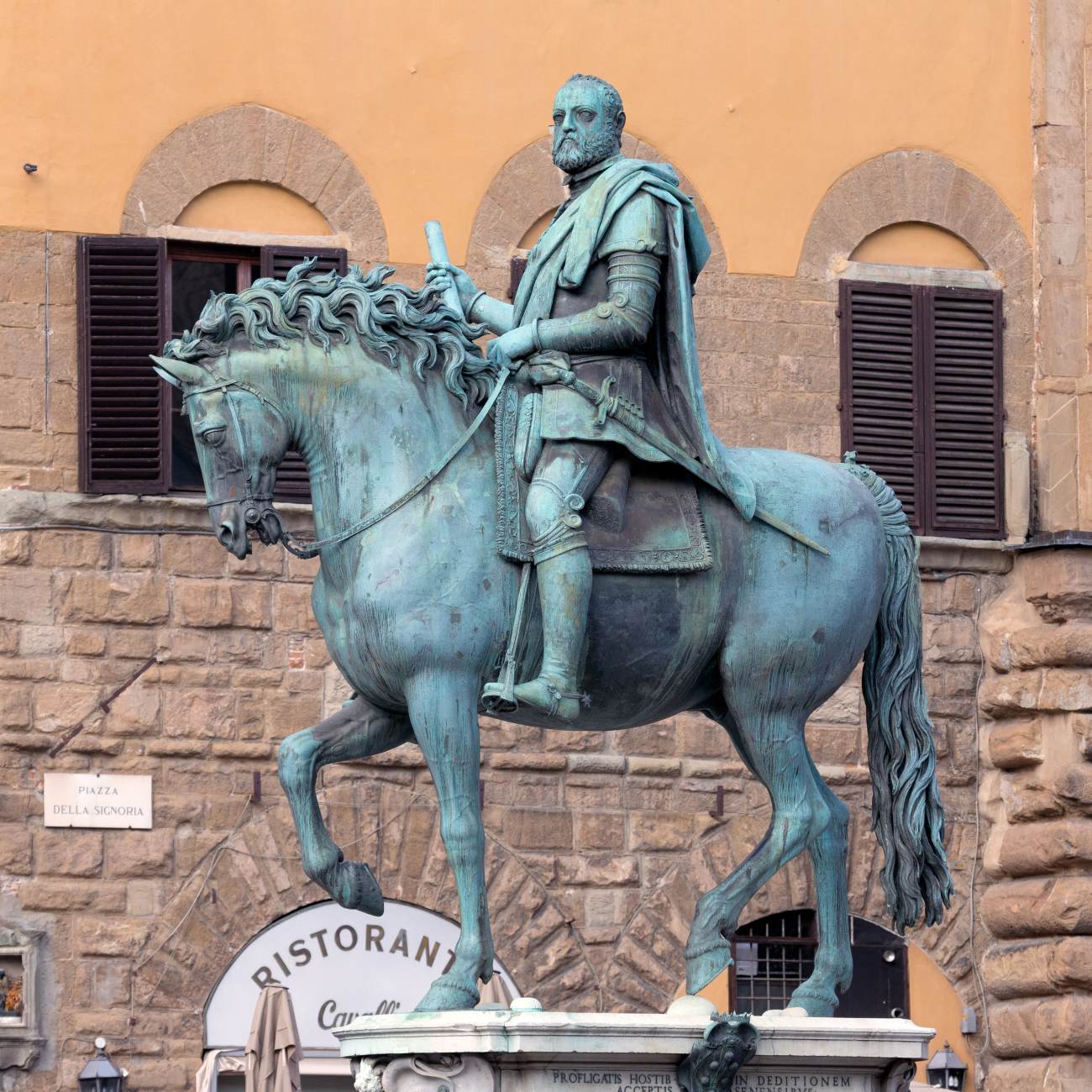
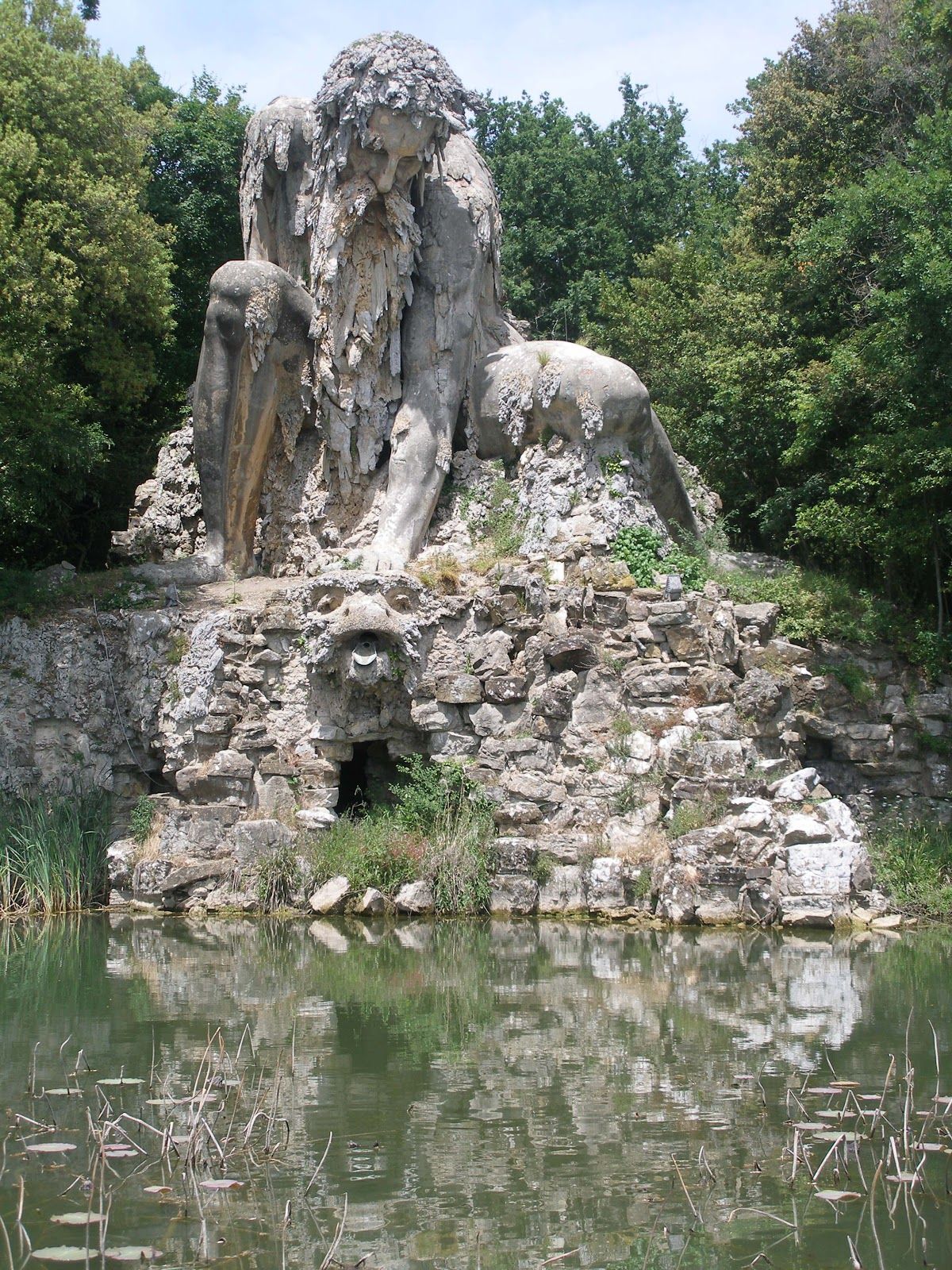
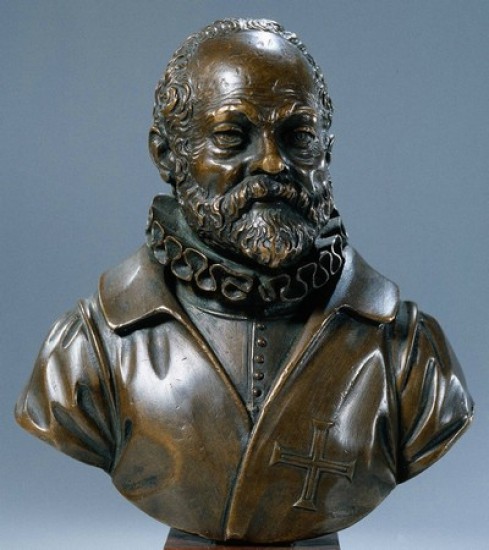
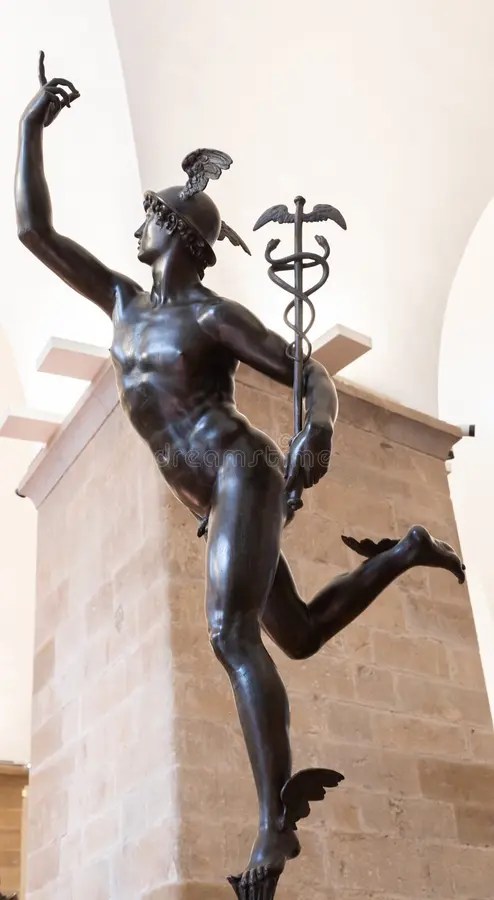
Giambologna (1529 — 1608) — (known also as Jean de Boulogne) — was a Flemish sculptor based in Italy, celebrated for his marble and bronze statuary in a late Renaissance or Mannerist style.

A master of the Italian Mannerist style, he occupies a pivotal position in the timeline of Italian sculpture, providing the link between the periods of the High Renaissance and the Baroque.After youthful studies in Antwerp, Giambologna moved to Italy in 1550 and studied in Rome, making a detailed study of the sculpture of classical antiquity.He was employed as court sculptor by three successive Grand Dukes of the legendary Medici dynasty.Giambologna remains most revered for his dynamic marble portraits, and for the production of exquisite bronze statuettes that were avidly sought by collectors throughout Europe.The artist was invested in the idea of beauty for beauty’s sake and produced works that featured figures composed of sinuous lines, graceful curves, exaggerated poses, and an elegance that delighted the public.He distinguished himself from his esteemed predecessors by accentuating more fully the asymmetrical contrapposto stance of his characters.The graceful, elongated Mannerist contours of his figures had the effect of revitalizing a somewhat stagnant Florentine sculptural scene.

SONY DSC

More of Giambologna‘s amazing sculptures can be found at https://www.wikiart.org/en/giambologna and https://www.theartstory.org/artist/giambologna/.


Sunday Evening Art Gallery — Albert Paley

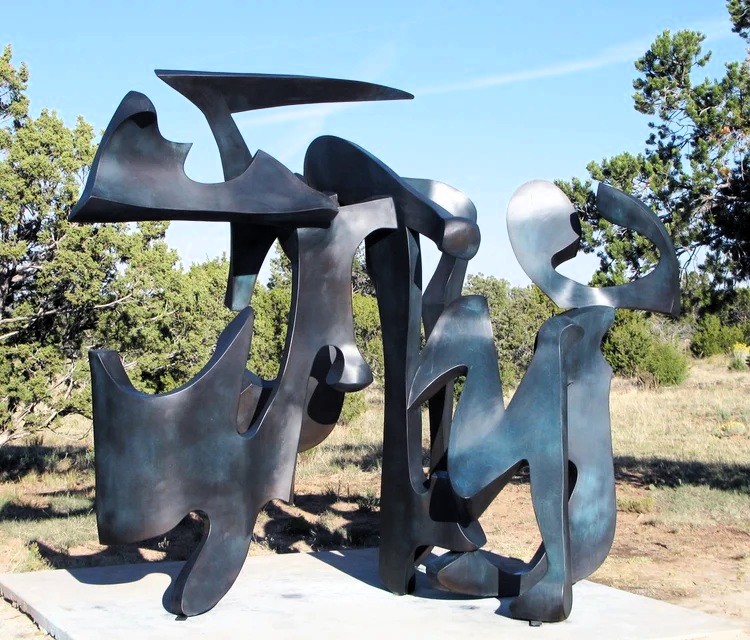
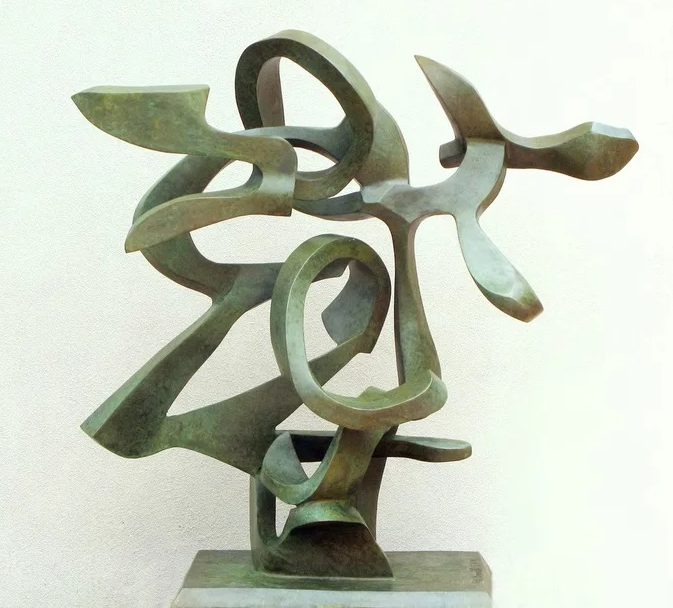
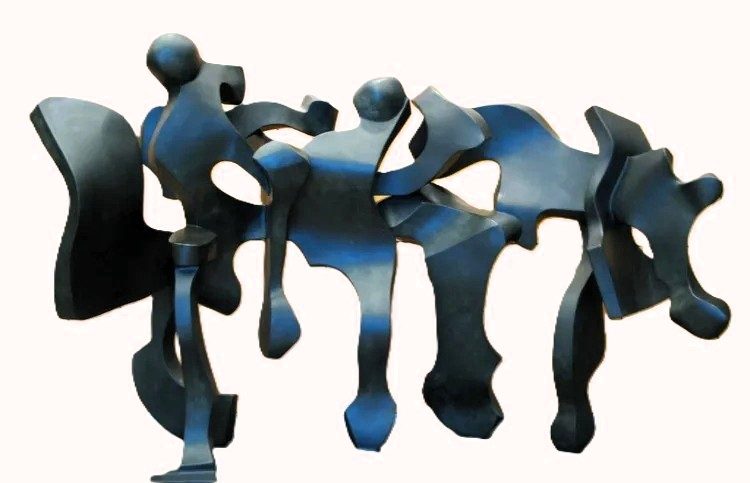
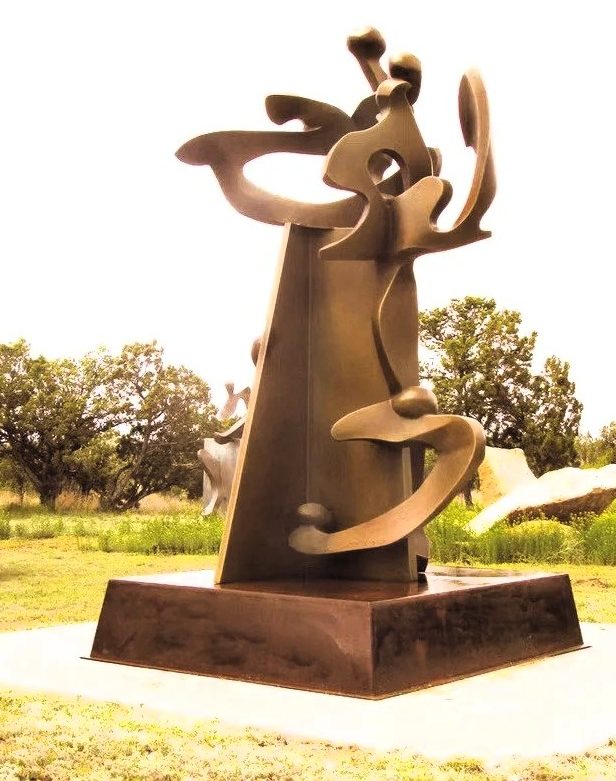
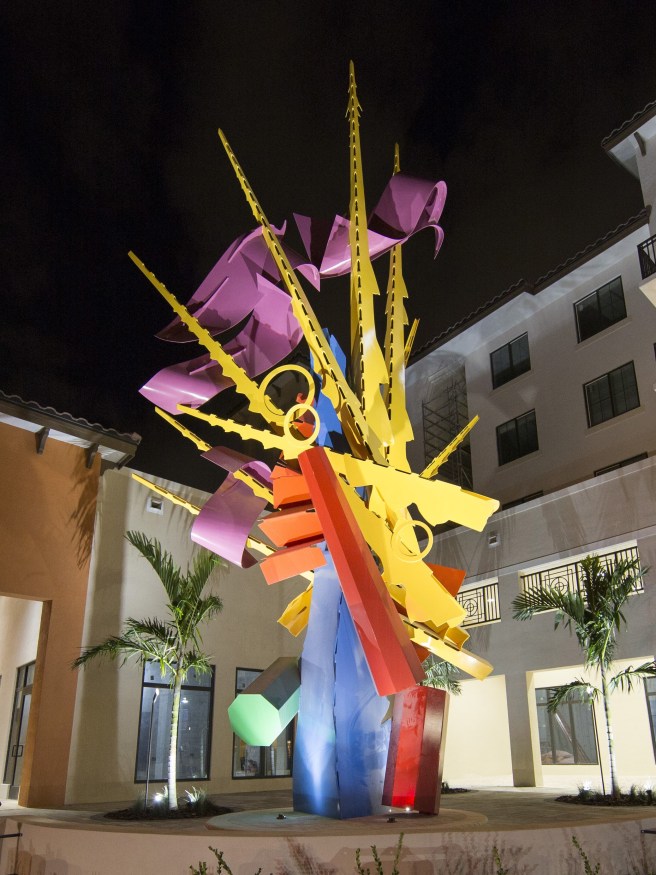
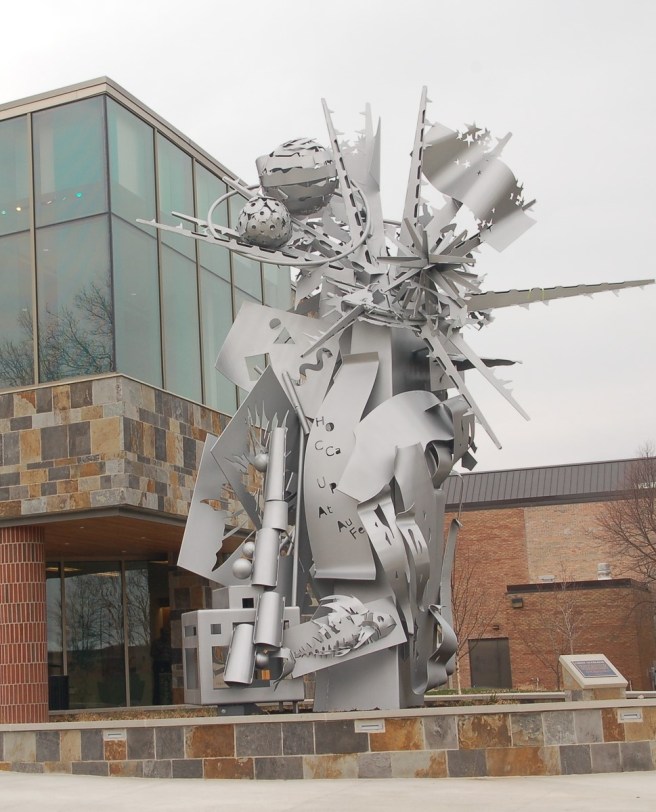
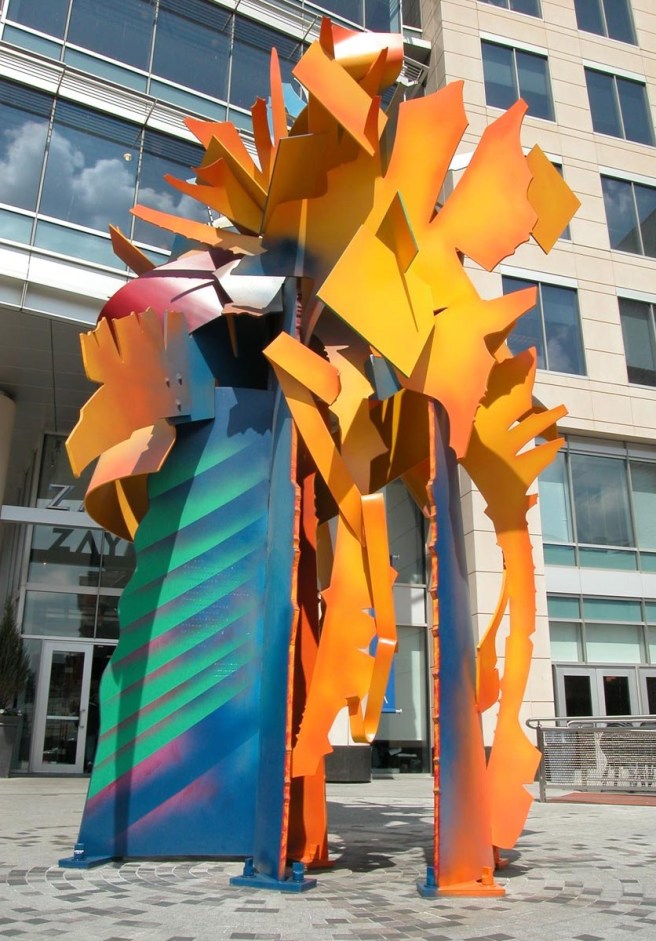
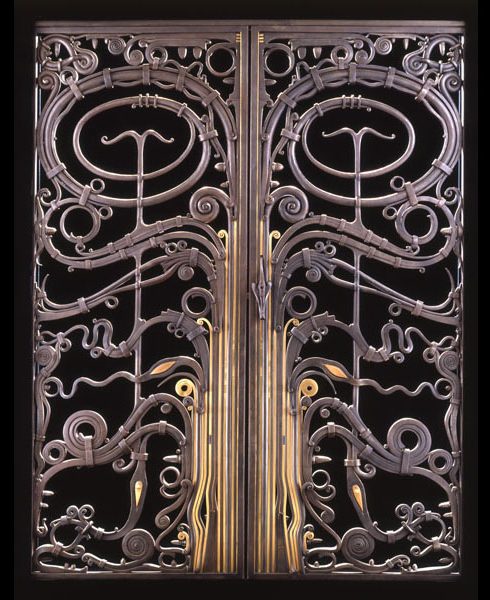
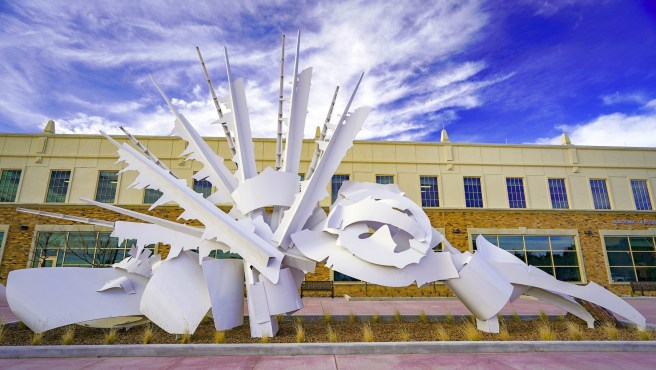
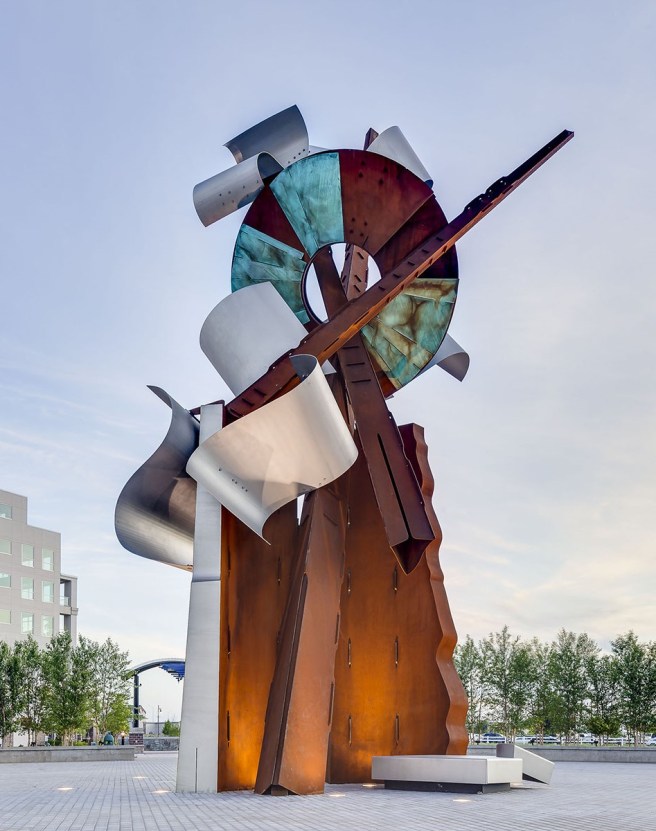
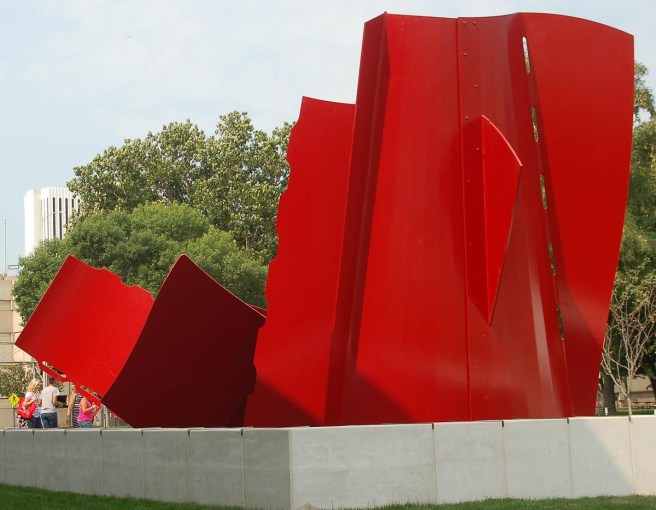
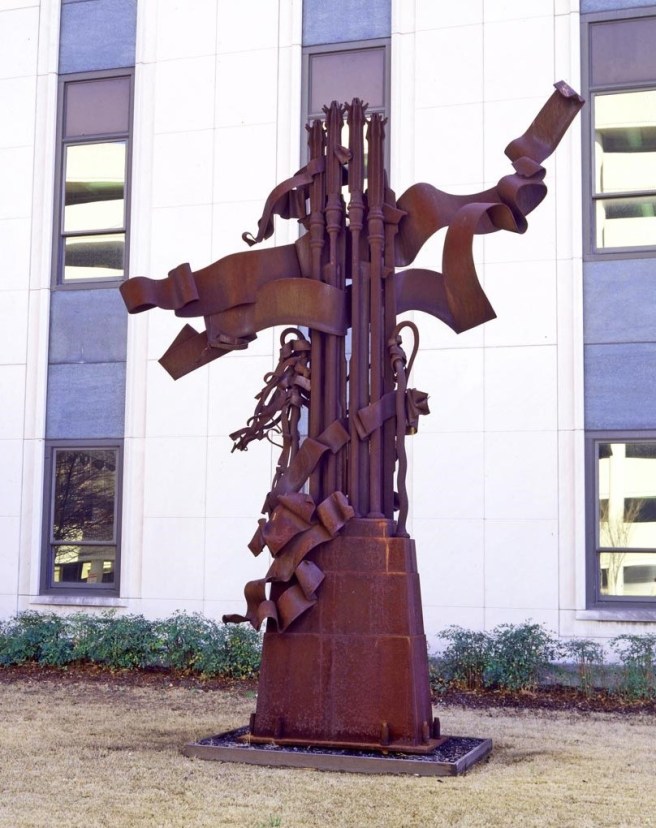
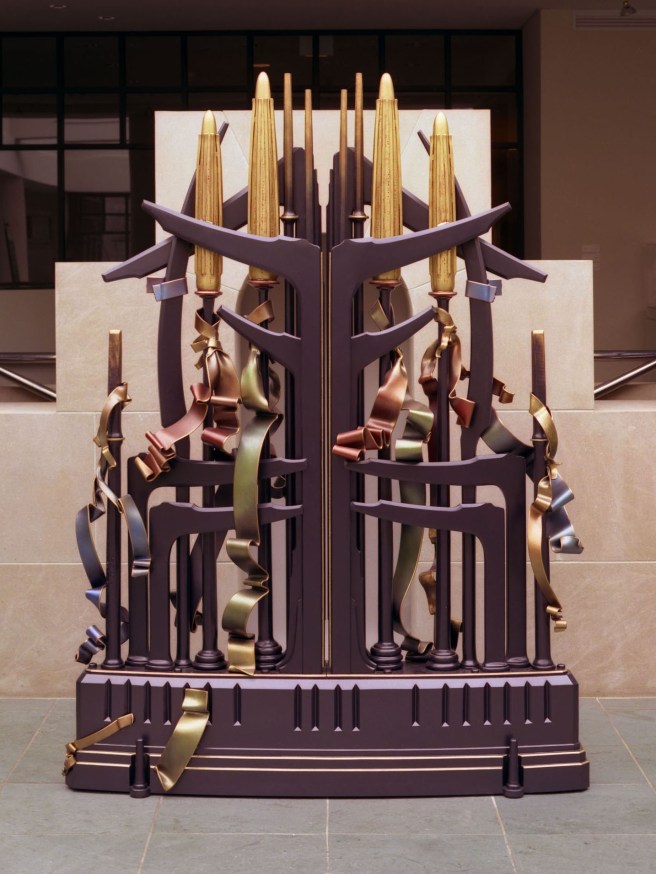
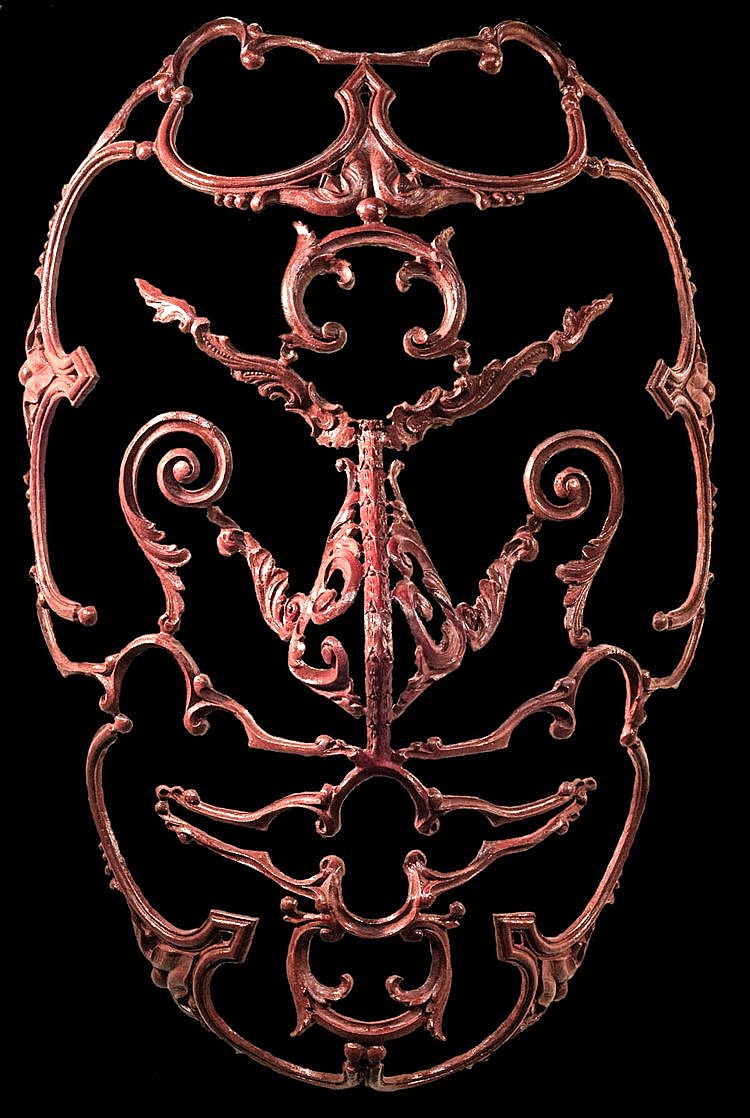
Albert Paley (born 1944) is an American modernist metal sculptor.Initially starting out as a jeweler, Paley has become one of the most distinguished and influential metalsmiths in the world.Albert Paley earned B.F.A. and M.F.A. degrees at Tyler School of Art and Temple University respectively.Paley was a highly successful jewelry artist in 1974 when he won the Renwick Gallery’s national design competition and was awarded the commission to design decorative metalwork doors for the gallery shop.His Portal Gates structure opened the door to a new career for Paley, leading to numerous commissions and world renown for his monumental architectural ironwork and sculpture.

Within each of his works, three foundational elements stay true: the natural environment, the built environment, and the human presence.For Paley, the physicality and the artistry of working in metals come together as a defining aesthetic.“Through the creative process I have developed a personal visual vocabulary fundamentally based in symbolism and metaphor which is implicit in my work,” Paley shares.“With forged iron, I deal with plasticity. I’m dealing with vulnerability. I have no idea of what I’m capable of doing. It’s only through the process and experience that I understand what my possibilities are and what my limitations are.”More of Albert Paley’s impressive sculptures can be found at https://www.albertpaley.com/


Sunday Evening Art Gallery — Adel Abdessemed

Adel Abdessemed (-1971) is an Algerian-French contemporary artist.He fled Algeria after the beginning of the 1992 civil war, taking with him the memory of the war and the range of atrocities.The artist has been educated at the International City of Arts, Paris, National School of Fine Arts of Lyon, France, the higher School of Fine Arts of Algiers, and Regional School of Fine Arts of Batna, Algeria.Abdessemed embraces a wide variety of media, including drawing, sculpture, performance, video and installation. His work often deals with the themes of war, violence and religion and is characterized by brutal imagery that attempts to depict the inherent violence of the contemporary world.

He is known for his strong works, breaking and transforming the flow of images and the tension of today’s world.Abdessemed manipulates familiar materials and images to create provocative and often violent works influenced by his exposure to the Gulf War and its global impact.

More of Adel Abdessemed’s heartfelt artworks can be found at https://www.adelabdessemed.com/.


Sunday Evening Art Gallery — Dale Dunning

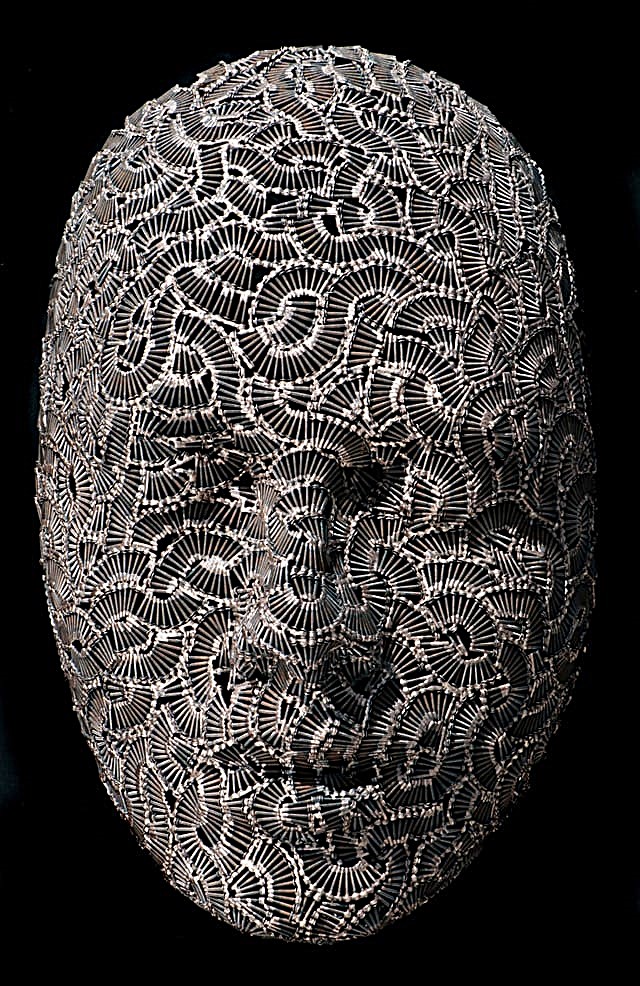
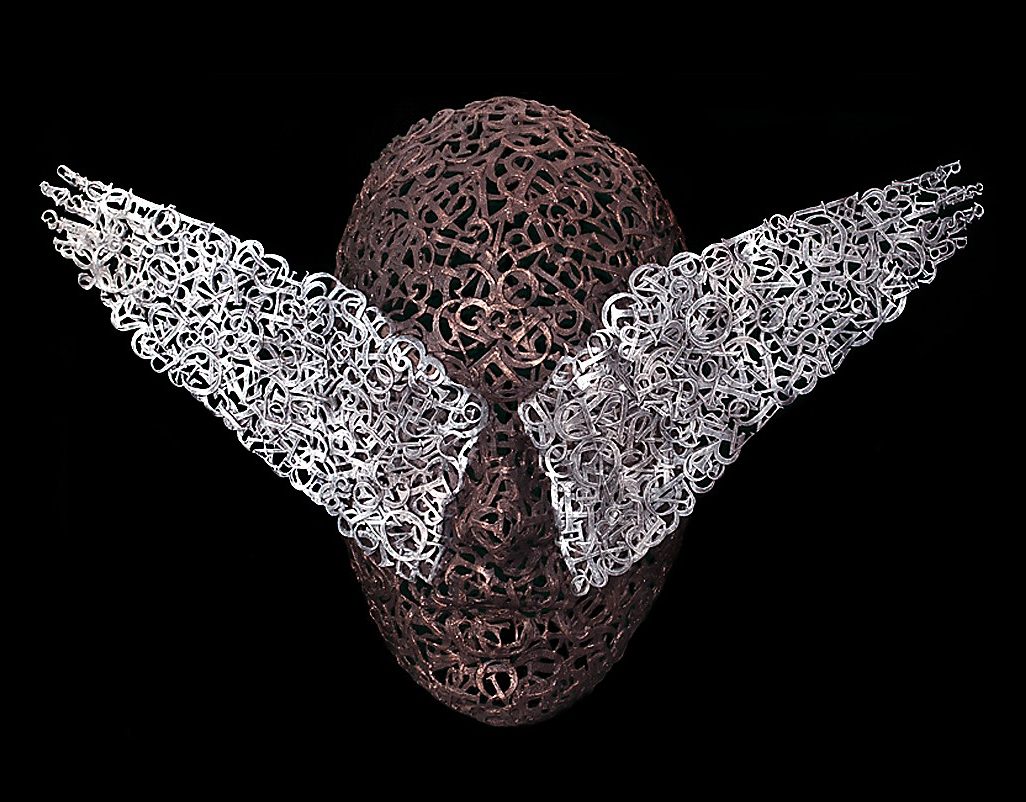
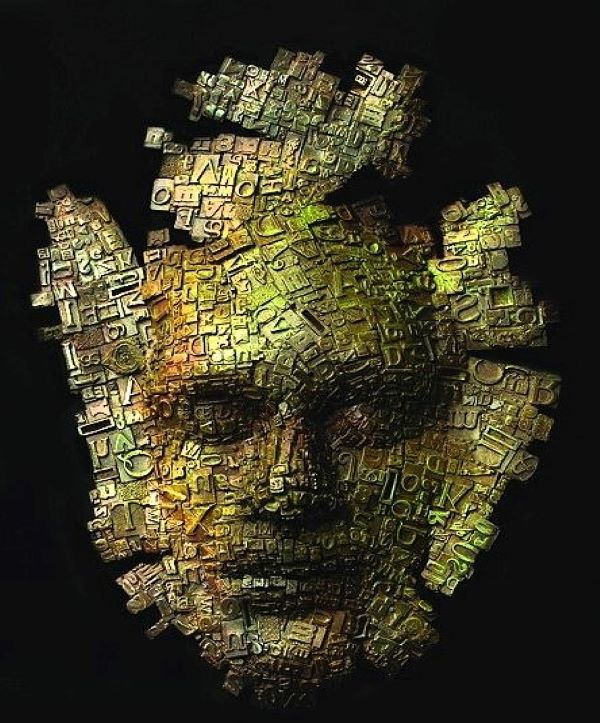
Ontario-based artist Dale Dunning combines typography and sculpting to create his intricately welded bronze and aluminum sculptures.Dunning earned his BFA at Mt. Allison University in New Brunswick and his MFA at Cranbrook Academy of Art in Michigan.The artist explores a variety of materials – bronze and aluminum casting, welded screws and wrenches, typeset, cable – all in the interest of creating the form of a mask.His creations vary in texture, whether they are presenting a grid of fonts or a meld of thousands of bolts, screws, and washers.Dunning focuses on the head without the distraction of limbs and the rest of the body because the head itself is an emblem of the mind.‘The head that I employ in most of my work is generic, non-specific, genderless, egg-like in form and intention,” Dunning shares.“I look on them as a mirror which reflects back the observer’s experience in new combinations and associations. The works are open ended with no didactic intent other than to see new possibilities.”

More of Dale Dunning’s amazing sculptures can be found at https://daledunning.net/.


Sunday Evening Art Gallery — Okuda

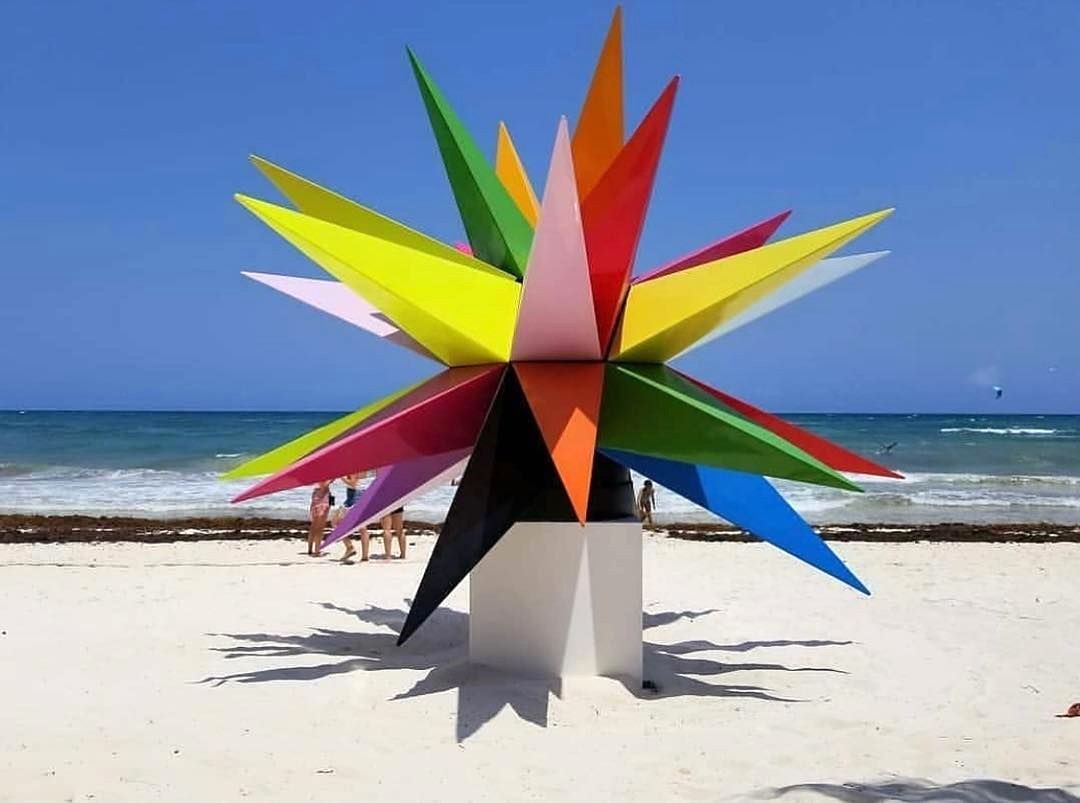
Born Oscar San Miguel Erice in Santander, Spain, Okuda is a painter and sculptor internationally known for his distinctive style.

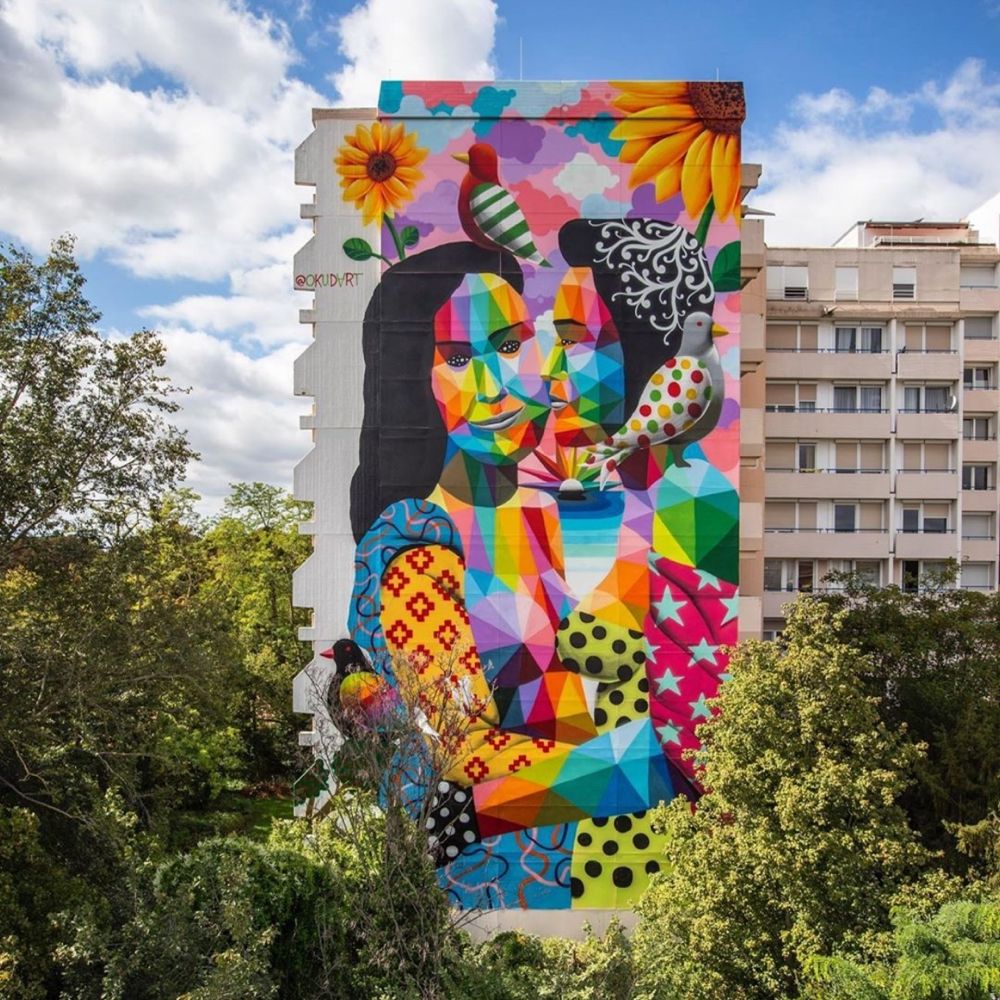
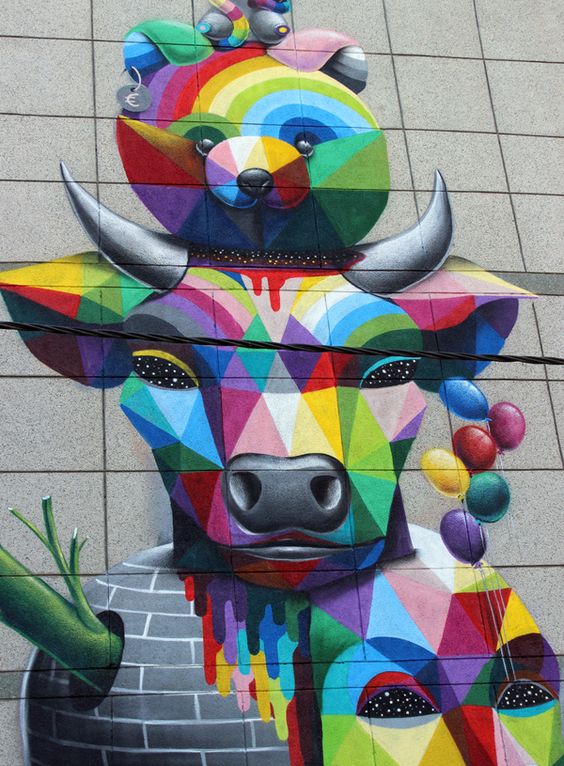
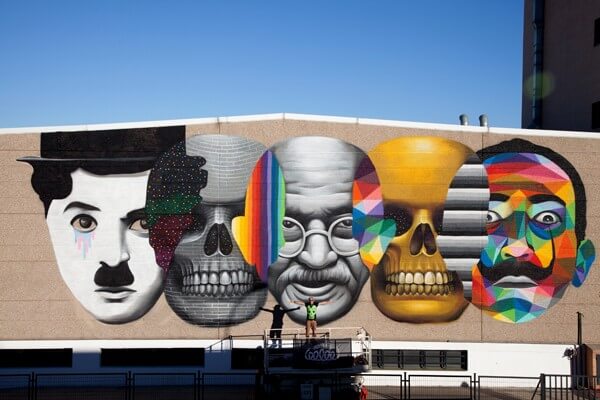
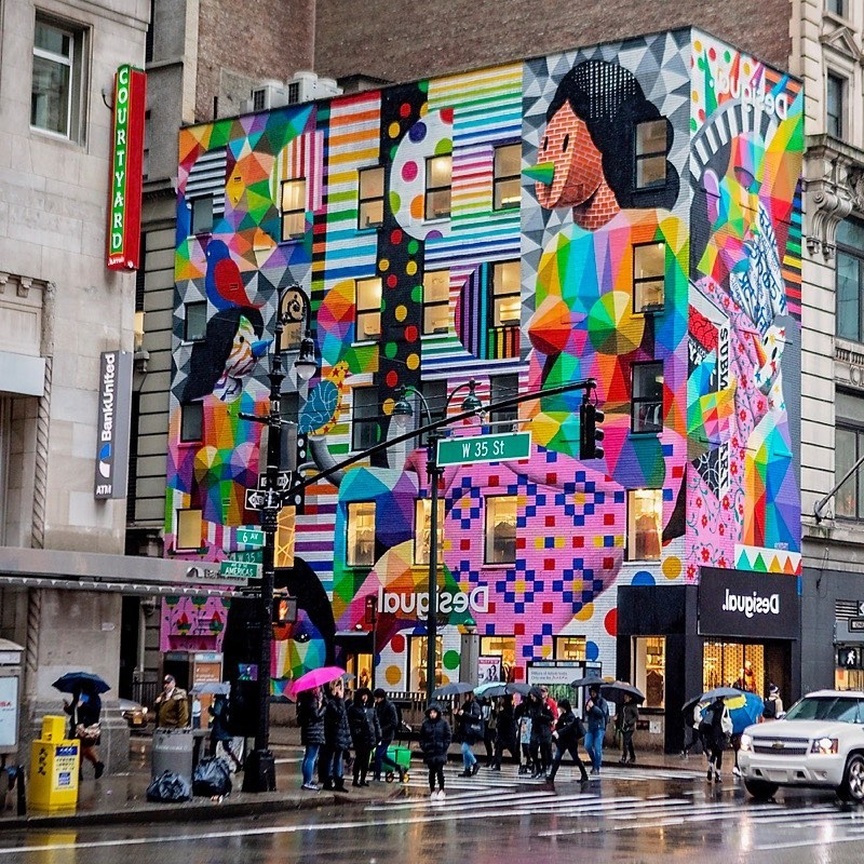
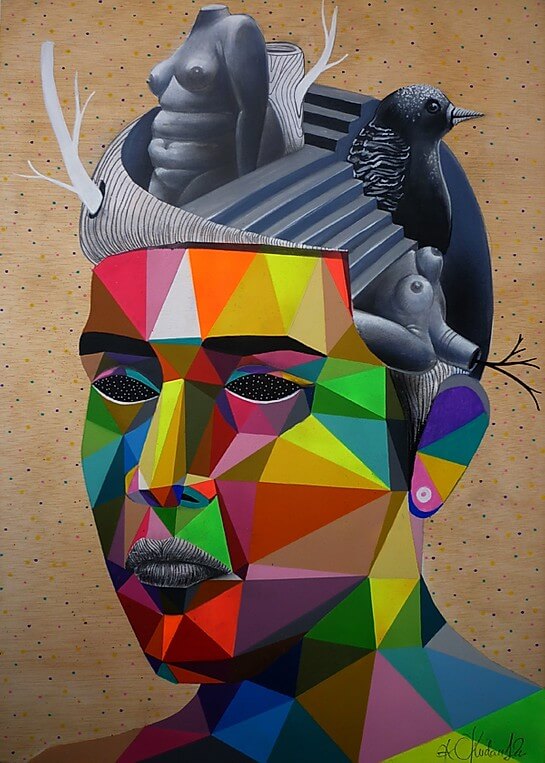
After receiving a Bachelor of Fine Arts from the Complutense University of Madrid in 2007, Okuda began to produce works in his studio, which led to shows in New York, Berlin, London and Paris.Okuda’s work can be classified as pop surrealism with a clear essence of street art or urban art.His art is defined by bold colors, geometric shapes and anonymous bodies coming to life in a vibrant explosion of iconographic imagery.

Okuda is interested in pop art, especially in cinema and fashion, as well as in the light and color of other cultures, which allows him to incorporate all these interests to his style.

The artist started with graffiti on walls and trains, but little by little his style evolved to a major point. Now it is common to see his enormous works in some buildings around all continents, as well as exhibitions in different places.

These pieces of artwork often raise contradictions about existentialism, the universe, the infinite, the meaning of life, and the false freedom of capitalism.

More of Okuda’s eye popping art can be found at https://okudasanmiguel.com/ and https://www.streetartbio.com/artists/about-okuda-biography/.


Sunday Evening Night Gallery — Helen Gordon

Helen Gordon is a sculptor living in Bristol, England.

Born in Warwickshire, Gordon moved to the West Country, first to undertake European Studies at The University of Bath in 1981 and later, in 1994, to set up home with her family in The Chew Valley.

Having always led a creative life, whether painting in water colors, interior design or garden design, Gordon took a ceramics course at The Bristol School of Art, changing her focus more on sculpting.Creating both animal and figurative sculpture, her pieces tend towards being quirky and amusing and certainly eclectic.The artist works primarily in wax and clay and are cast in bronze or cold cast bronze resin.“I like to put a new spin on my work to make it my own,” the artist shares.

“If a viewer stops for just one moment to view, reflect and, above all, smile at a piece I have created, then I feel I have succeeded in my work.”

More of Helen Gordon’s whimsical sculptures can be found at https://www.helengordonsculpture.co.uk/.


Sunday Evening Art Gallery — Michael Boroniec

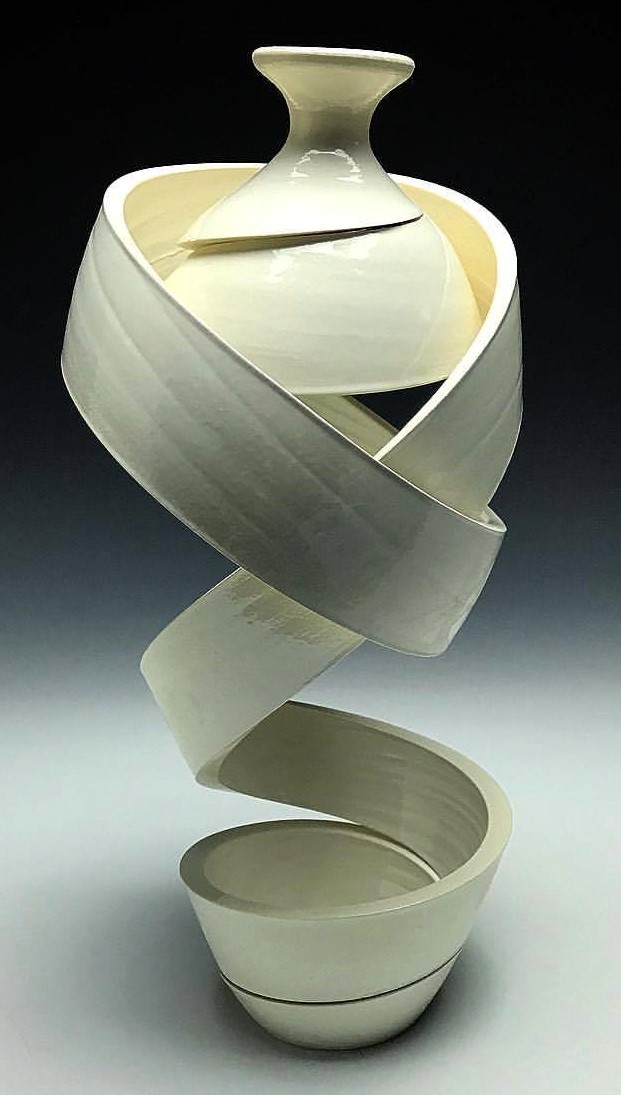
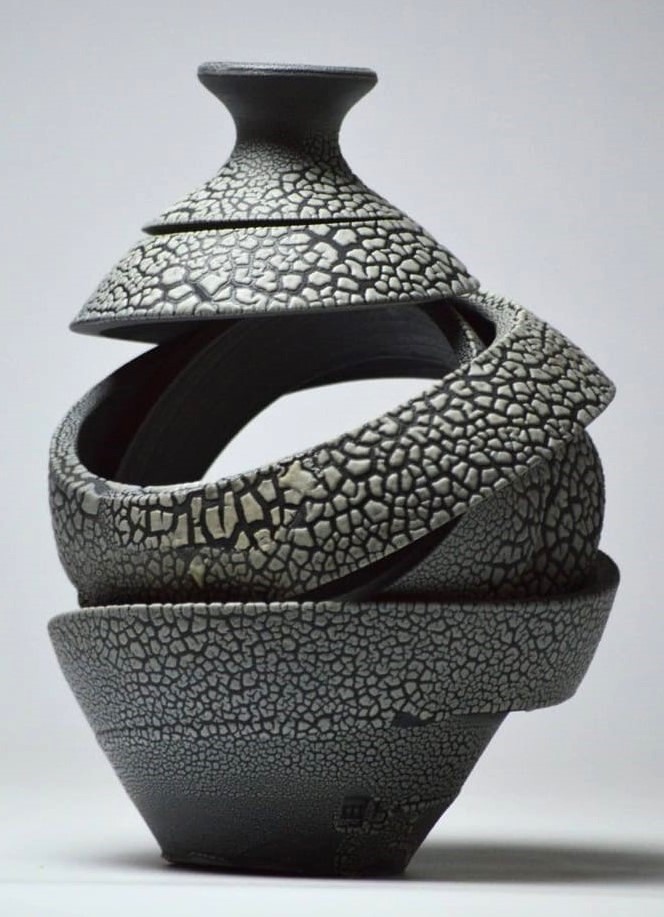
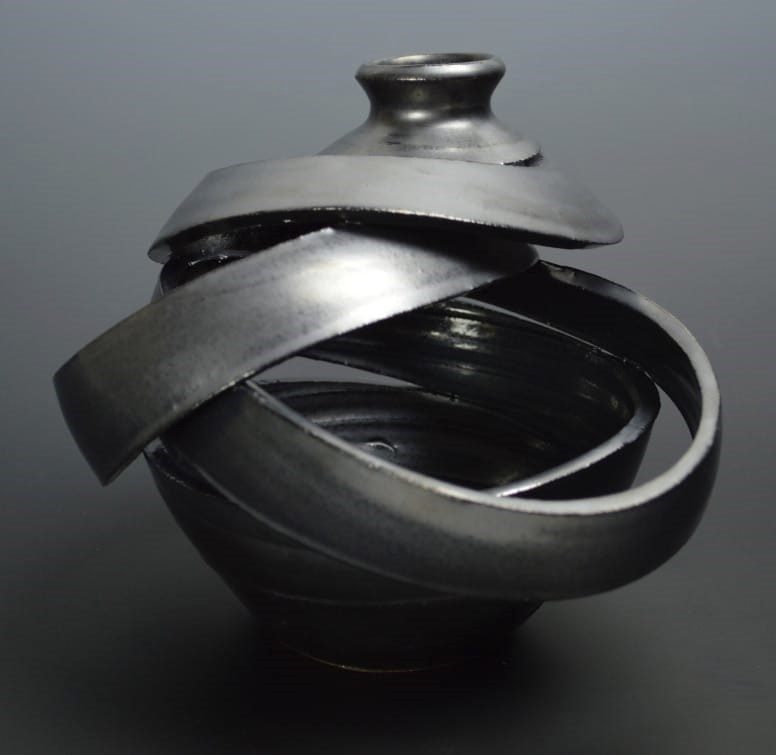
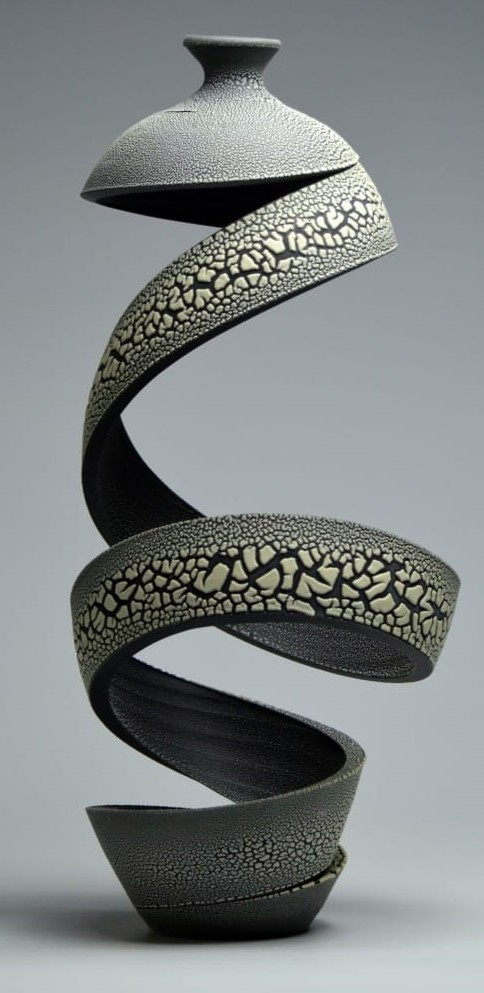
Michael Boroniec (b. 1983) is an American sculptor who resides and works in Berkshire County, Massachusetts.Boroniec received a BFA from Rhode Island School of Design in 2006 with a concentration in ceramic material.

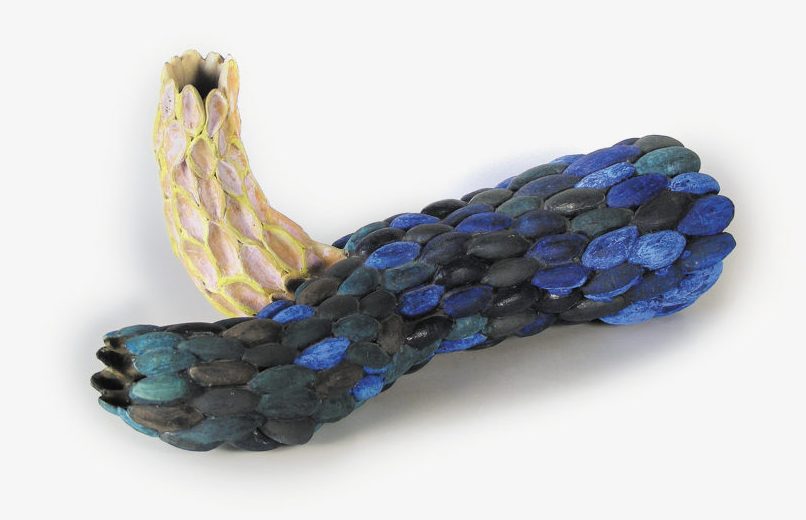
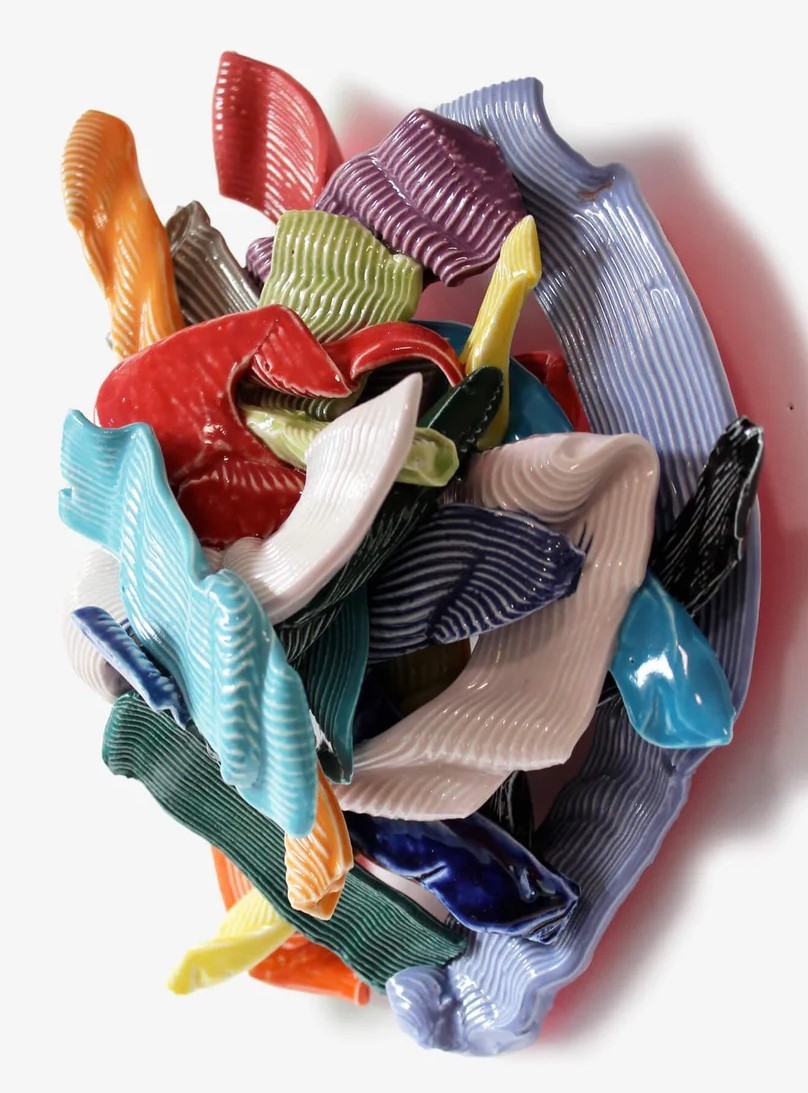
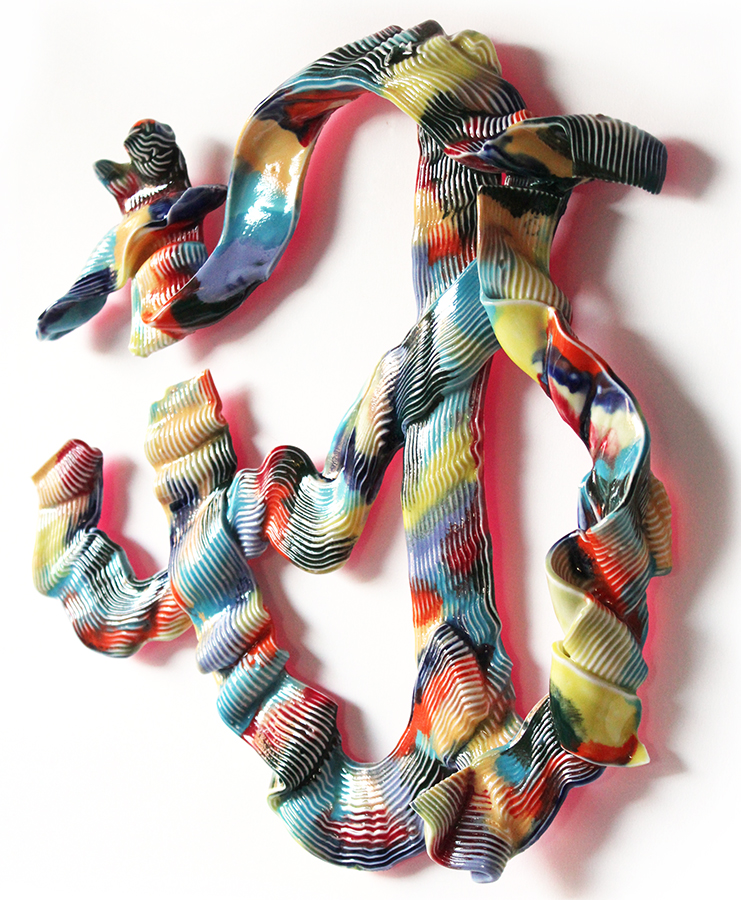
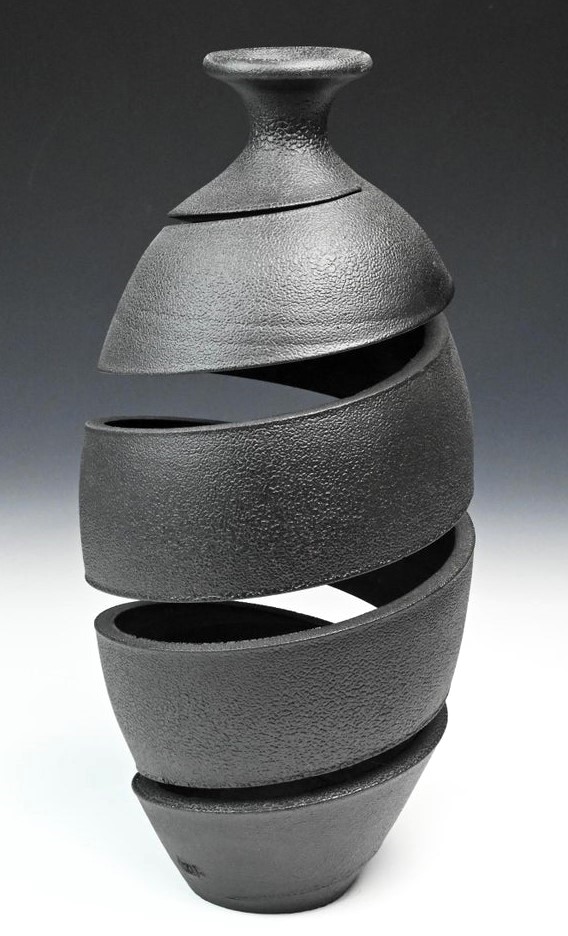
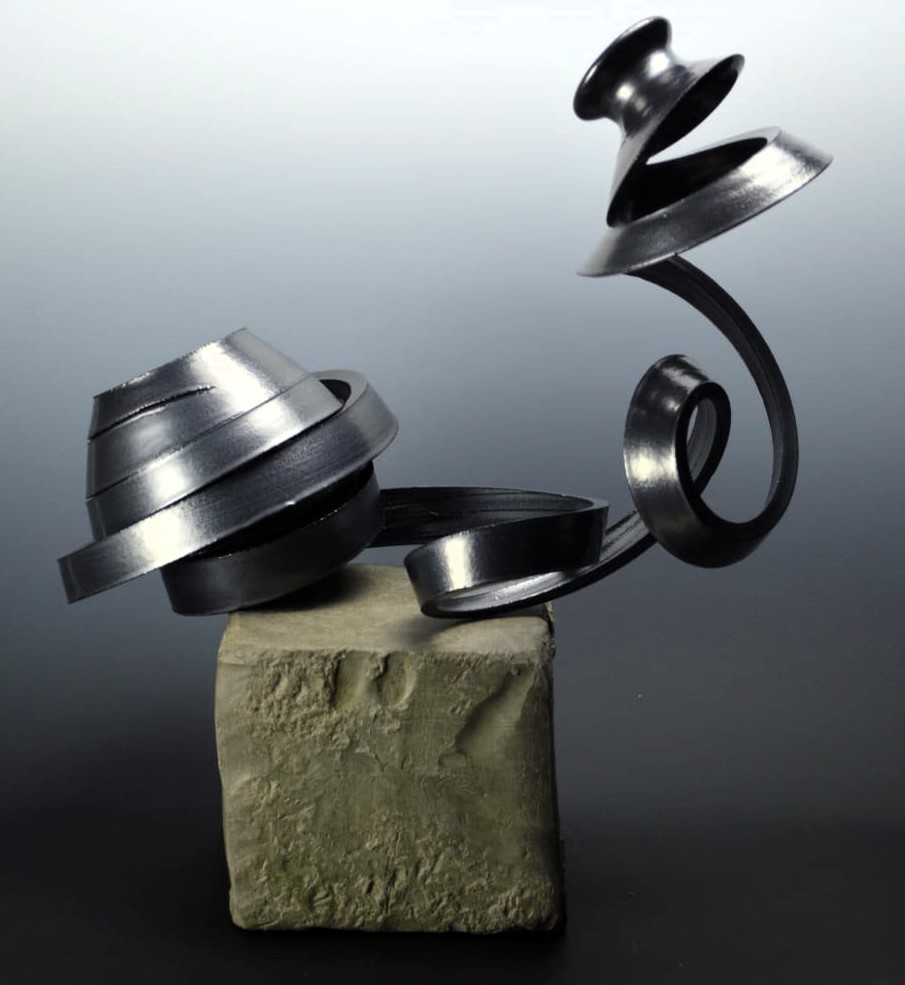
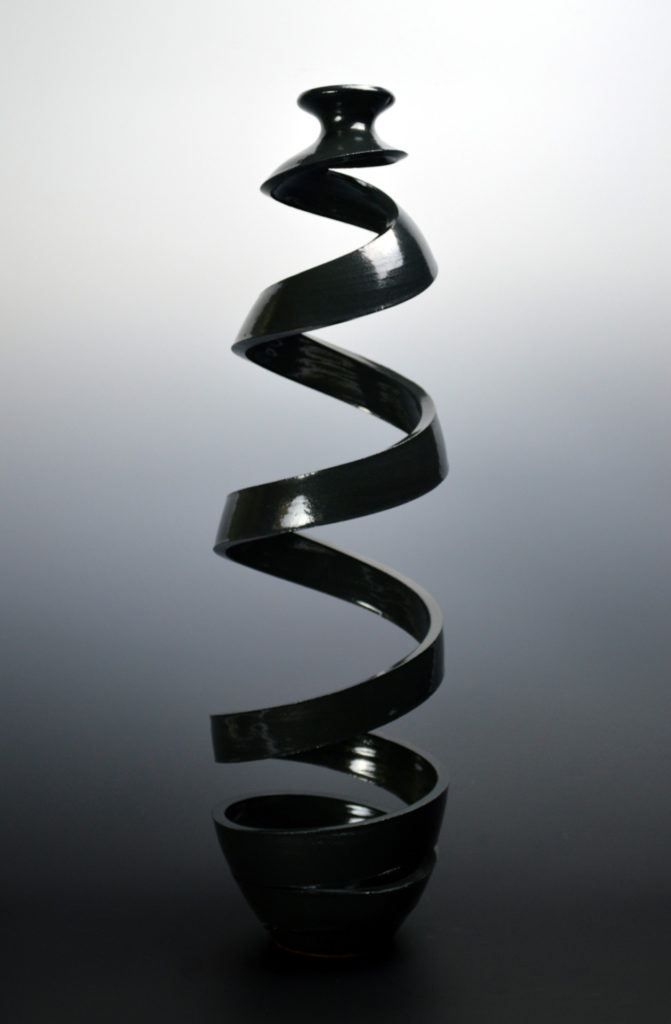
What began with teapots and a single spiral has evolved into a series of vases that vary in form, degree of expansion, and number of coils.

Each vessel is wheel thrown then deconstructed.This process reveals aspects of the vase that most rarely encounter. Within the walls, maker’s marks become evident and contribute to the texture.The resultant ribbon effect, reminiscent of a wheel trimming, lends fragility, elegance, and motion to a medium generally perceived as hard and heavy.“Art is not just an object or a concept,” Boroniec explains.“It is a conversation between a being, an idea, a spectator and a creator, as if it were a universal language that we all speak.”More of Michael Boroniec’s unique pottery can be found at https://mboroniec.com/.


I’m Back!

I’m back!

For those of you who never really noticed, I’m back from two weeks in the beautiful European cities of Paris Rome, and Florence.

A bucket list item to be sure.

I’m full of culture, statues and gelato.

Have I changed?

How can one not change walking through the Villa d’Este, a 16th-century villa  near Rome, famous for its terraced hillside Italian Renaissance garden and  its profusion of fountains?

How can one not change eating dinner on a cruise ship while watching the Eiffel Tower make it’s sparkling sky show once an hour?

I worked all my life to get to this point in my life. I’ve been through raising two children, taking low-paying jobs so I could be home with my kids, working everything from a hosiery saleswoman to a bed and breakfast owner.

It was wonderful to see the work of Michelangelo and Galileo and  Gustave Eiffel up close and personal. To see the sweat and heartache and brilliance of artists of all kinds.

It also was wonderful to see people in other countries living their lives like you and me, too. The little old man who owned the small store-front restaurant in Florence who served us dinner one night. The young, bright tour guide who shared his enthusiasm and knowledge and back stories about pieces in the Louvre. The crazy cab driver who slipped up and down the narrow streets of Florence so fast I thought I might be in the middle of a video game.

These were real people doing real things.

Maybe it wasn’t as big of a deal as sculpting a body out of marble of painting a ceiling, but their attitudes and contributions made for a wonderful memory in the lives of two seniors living in the Midwest.

The only thing is that you might have to endure occasional sharing of 1,262 (give or take) photos I took in two weeks. Blog-worthy pics, I must say.

What would you enjoy? Doors? Weird statues? Painted ceilings? Marble statues?

The world is endless …….


Sunday Evening Art Gallery — Jean Dubuffet

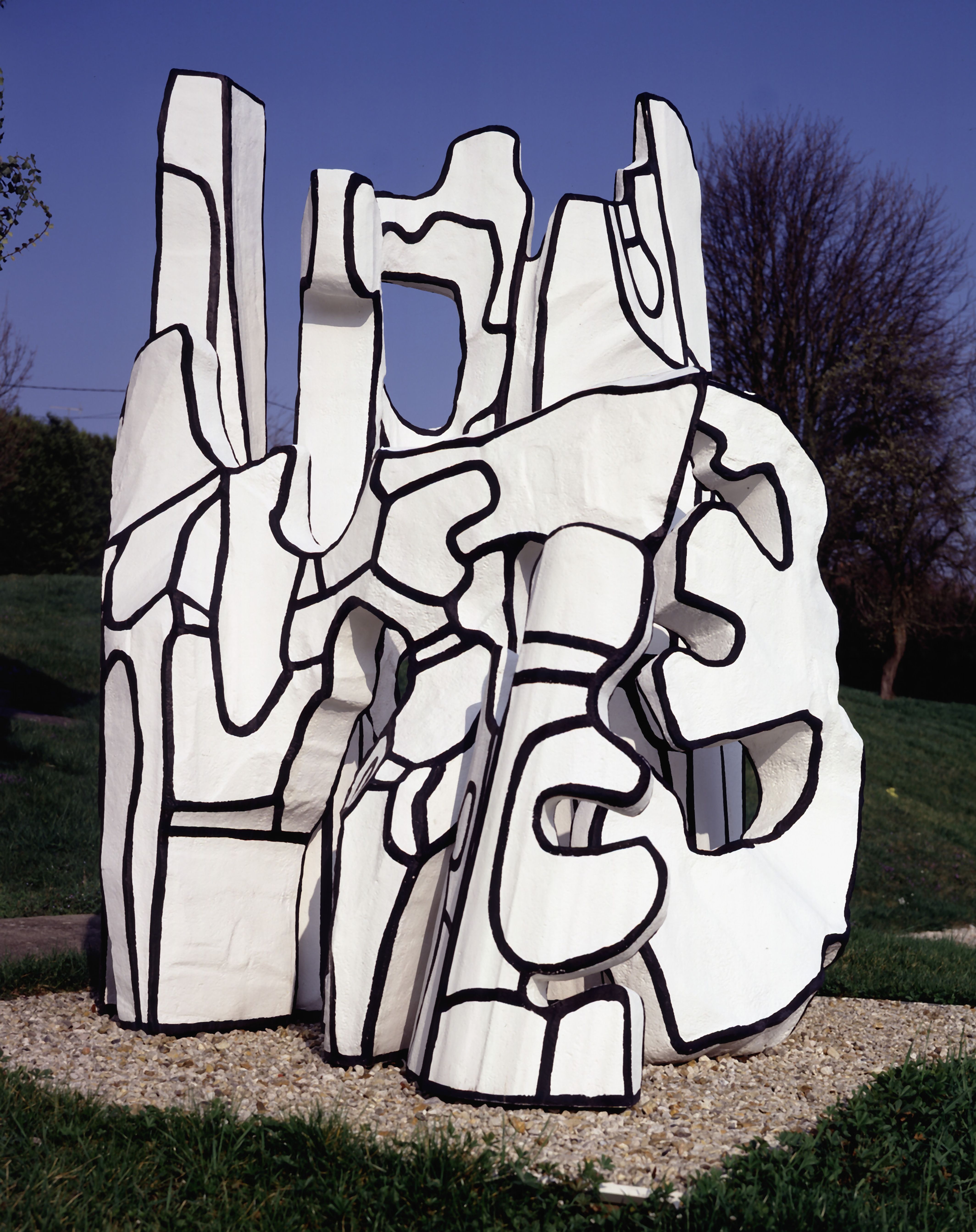
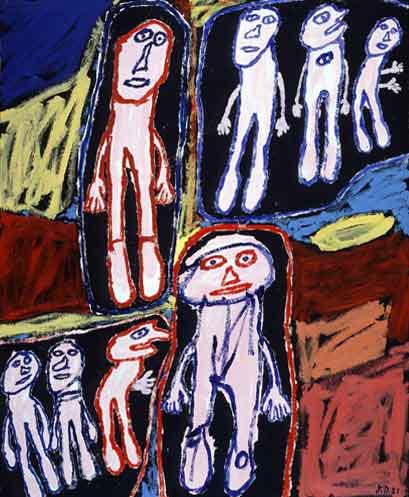
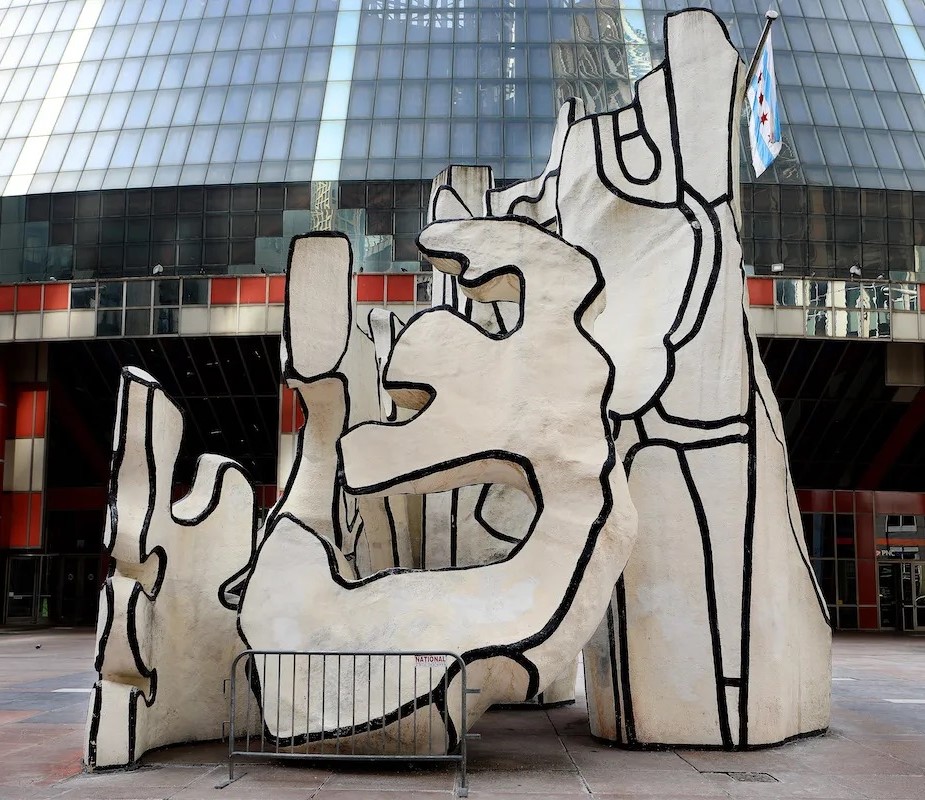
Jean Philippe Arthur Dubuffet (1901 -1985) was a French painter and sculptor.Born in Le Havre, France, the artist did not dedicate himself to his art practice until age 41, having been dismissed from the French meteorological corps and subsequently working as a wine merchant.Dubuffet is perhaps best known for founding the art movement Art Brut (Raw Art), and for the collection of works — Collection de l’art brut — that this movement spawned.Dubuffet looked to the margins of the everyday—the art of prisoners, psychics, the uneducated, and the institutionalized—to liberate his own creativity, coining the term “Art Brut” as a reflection of the creative possibilities outside the conventions of the day.

Dubuffet may be best known for his large-scale sculptures, which resemble masses of white organic forms sharply outlined in black.This artistic period was full of creative triumphs for the artist, who began work on his famed “Hourloupe” cycle, which comprises paintings, drawings, panels, and sculptural and architectural installations featuring undulating black lines and shapes atop white sculptural forms.More of Jean Philippe Arthur Dubuffet‘s unique works can be found at https://www.wikiart.org/en/jean-dubuffet and  https://www.artnews.com/feature/jean-dubuffet-who-is-he-famous-works-1234569877.


Sunday Evening Art Gallery — Christian Verginer

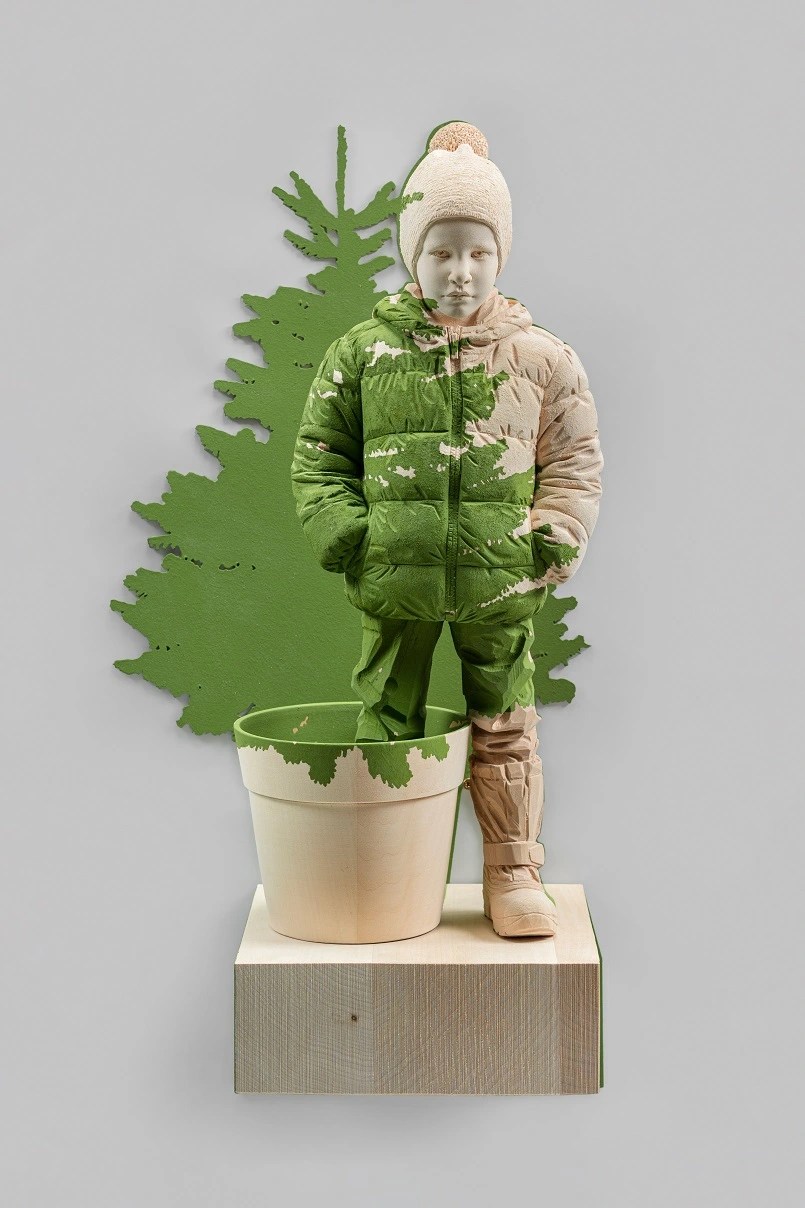
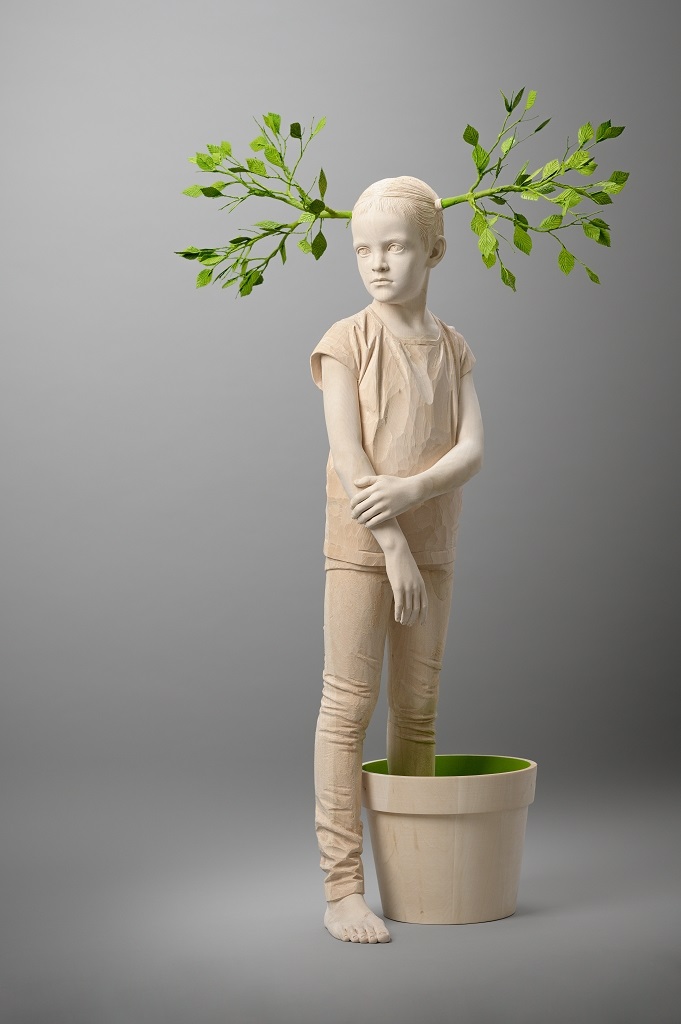
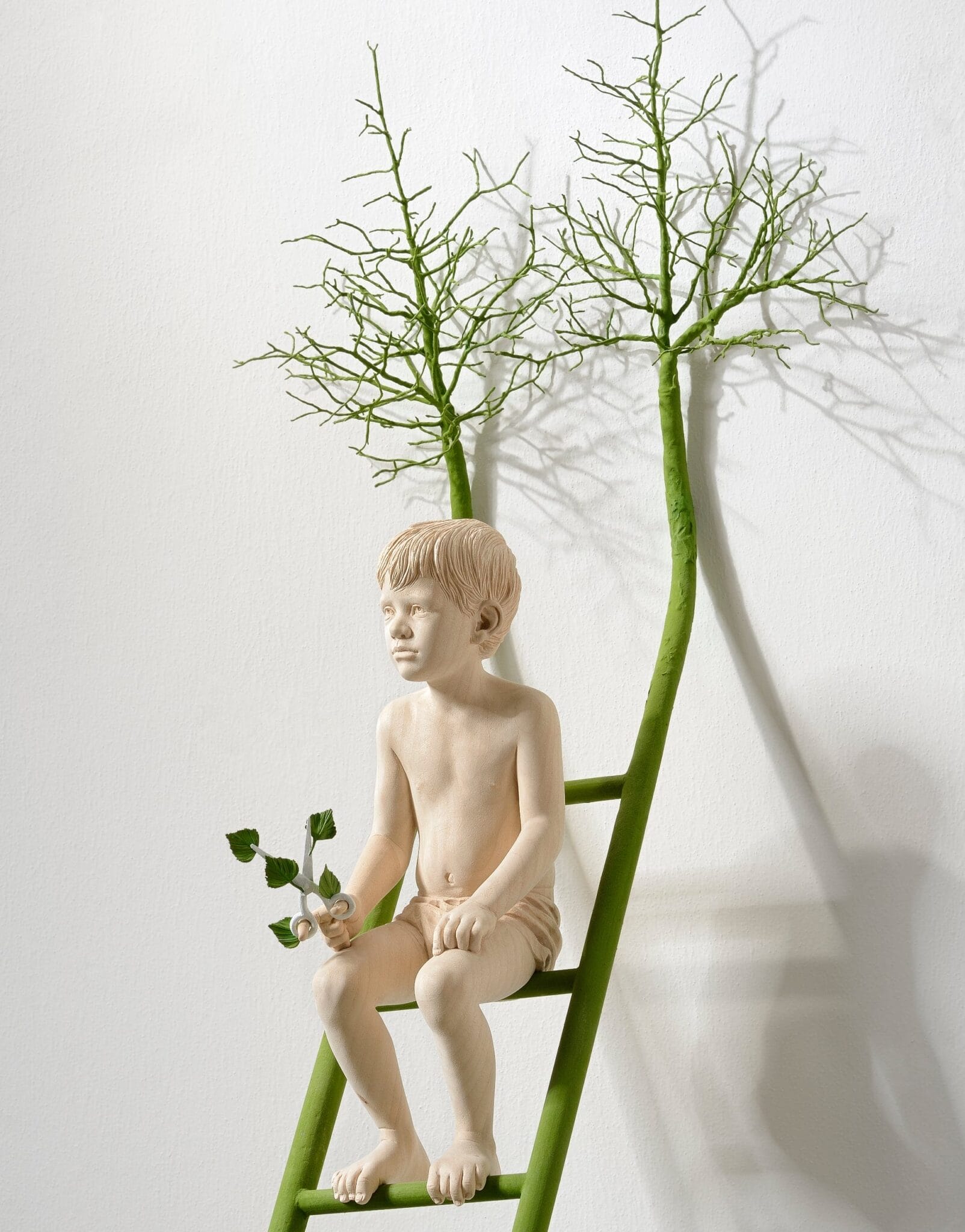
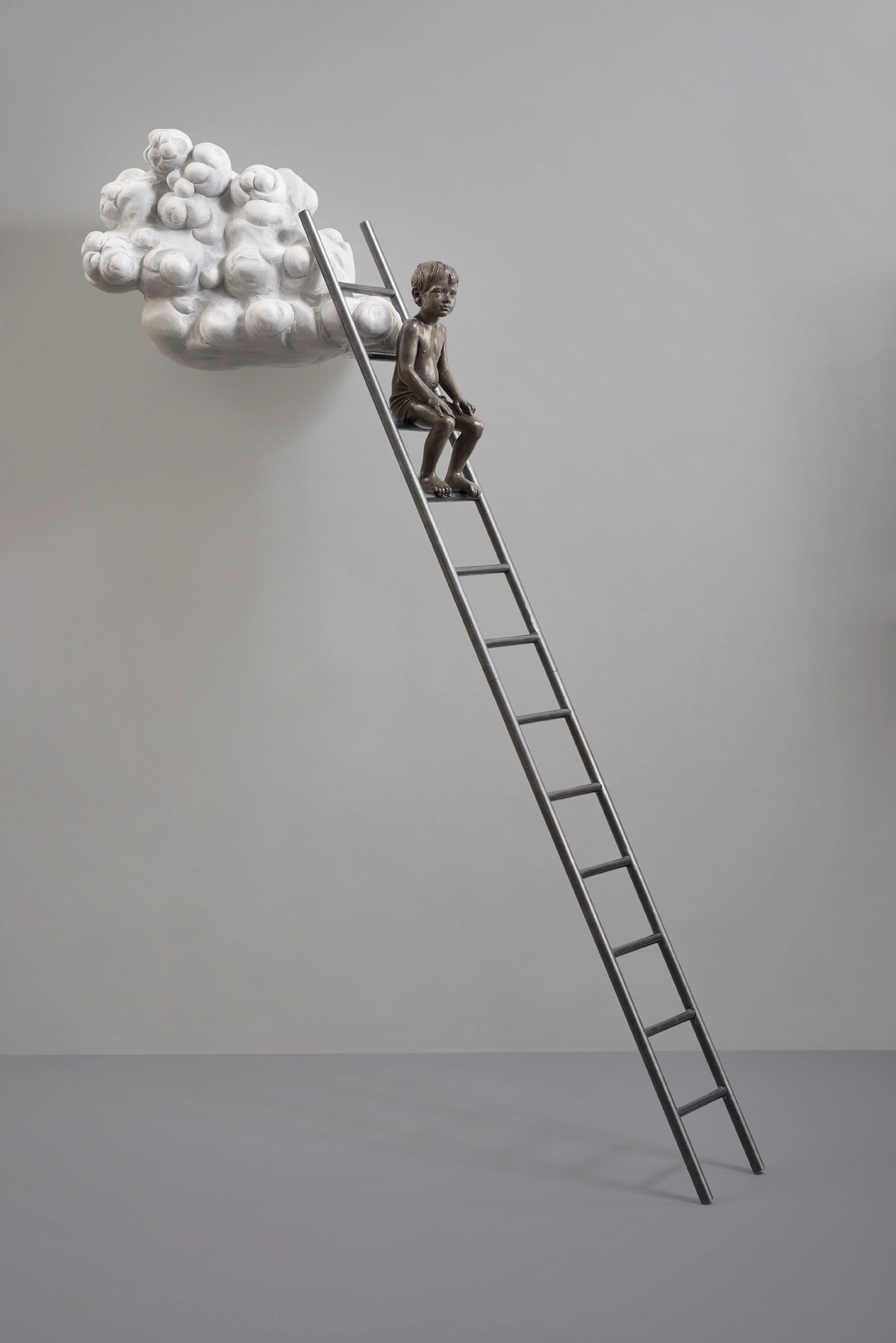
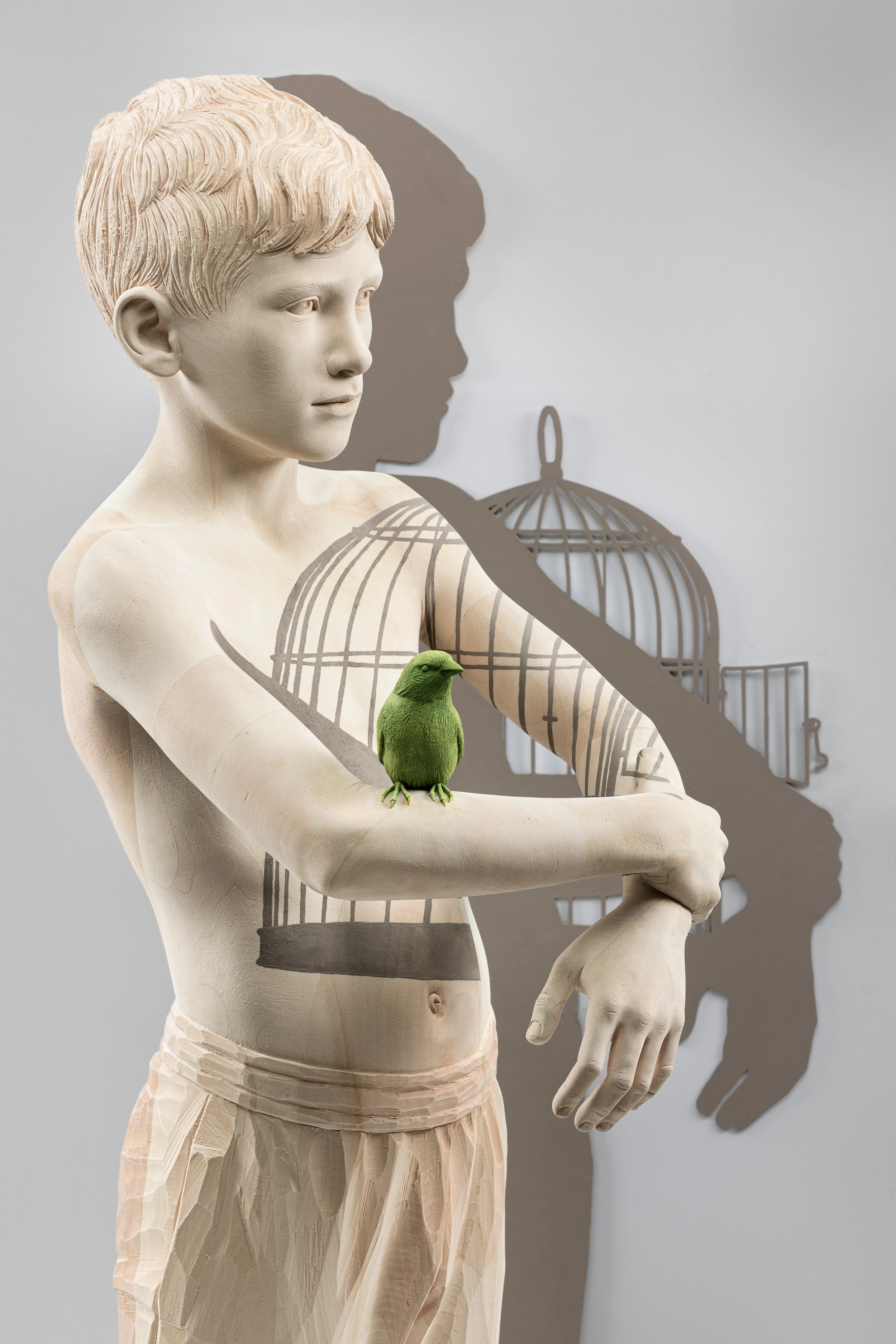
Christian Verginer  is a wood sculptor born in Bressanone, Italy.Verginer is considered one of the most valid and original expressionists in contemporary sculpture carvings.His training began by attending the sculpture department of the art school of Ortisei, and then continued at the Academy of Fine Arts in Carrara.The subject chosen by the artist is the human figure, or rather, the human figure in its relations with other forms of life — animals nature, trees, or various objects of the world.The material used is linden wood, which is left smooth and covered in details by unexpectedly applied acrylic paint.Verginer remains loyal to the skill and precision of wood carving, while introducing modern, and personal subject matter.He subtly combines children’s gazes, expressions, and movements into artworks that not only evoke people’s nostalgia for their own childhood but also awaken their long-forgotten innocence and desire to live in harmony with nature.More of Christian Verginer‘s amazing sculptures can be found at https://verginer.org/ and  https://thursd.com/articles/christian-verginer-master-of-artistic-wooden-sculptures.


Sunday Evening Art Gallery — Stan Bitters

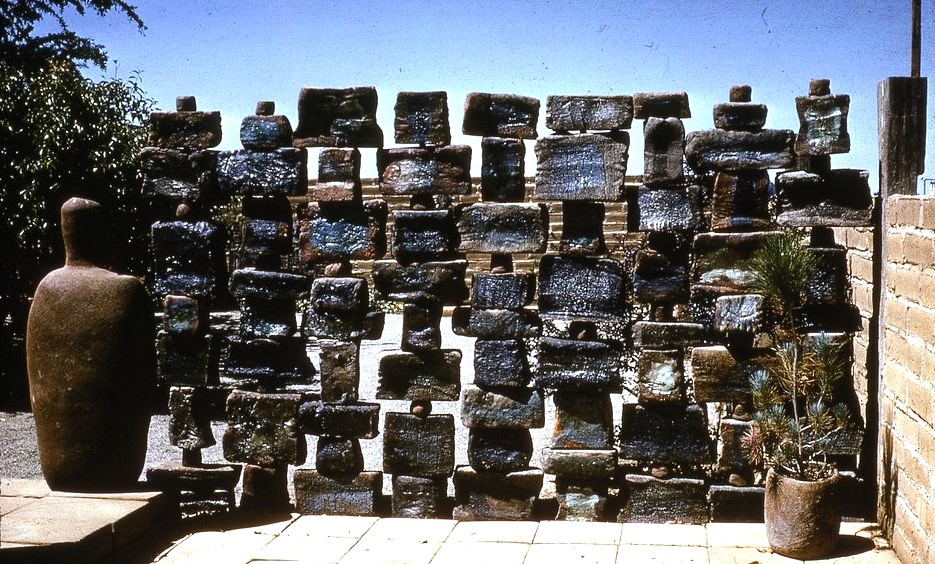
Stan Bitters (1932-2021) was an American sculptor and ceramic artist known for his unique style of creating large-scale, textured, and sculptural ceramic murals, wall sculptures, and pottery.Bitters graduated from UCLA in 1959 with a BA in painting. He also attended San Diego State University, and Otis Art Institute in Los Angeles.. In 1958, immediately after college, he was hired to be the principal artist at Hans Sumpf Company in Madera, California, a company known for inventing a special emulsification process for water-proofing adobe bricks.The company’s main product was adobe, but Mr. Sumpf sought the creative potential of clay as a decorative element in homes.Bitters was the first artist at Hans Sumpf, and his creations —  such as the birdhouse, thumb pot, and other ceramic designs — would provide the company a stylistic imprint and creative identity.In 1963 Bitters  left Hans Sumpf and started his own studio after being commissioned by Garret Eckbo to build fountains for the Fulton Mall.As a pioneer of the organic modernist craft movement in the 1960s, Bitters has been producing rough-hewn ceramic birdhouses, planters, pedestals, mural tiles, totems, boulder walls, and fountains for more than half a century.He is an American ceramic sculptor rooted in the abstract expressionism which is  understood as a modality suited for American ceramic art.

“The power of an object comes from its ability to tell you a story.” Bitters reflects.

“Good sculpture makes you listen.”

More of Stan Bitter’s wonderful sculptures can be found at https://www.stanbitters.com/sculptures.


Sunday Evening Art Gallery — Victor Ekpuk

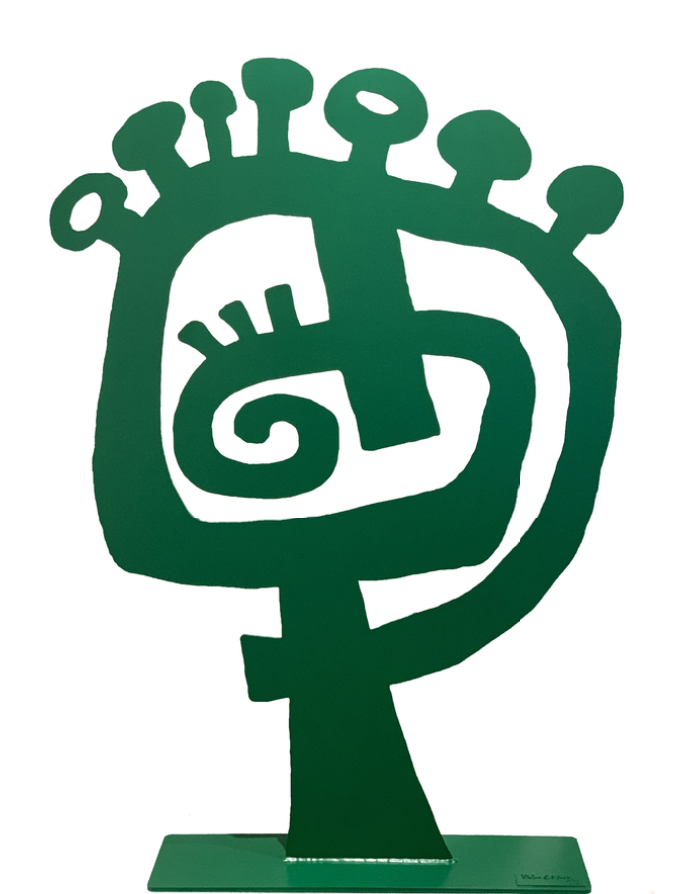
Victor Ekpuk is an internationally-renowned Nigerian-American artist based in Washington, D.C.His paintings, drawings, and sculptures reflect indigenous African philosophies of the Nsibidi and Uli art forms.Ekpuk received his Bachelor of Fine Art degree (BFA), Obafemi Awolowo UniversityIfeNigeria, where he first explored the aesthetic philosophies of Nsibidi (a system of symbols or proto-writing developed by the Ekpe secret society that traversed the southeastern part of Nigeria).His knowledge of nsibidi dates back to his childhood through his grandfather, but it wasn’t until he was an art student that he became fascinated with this form of writing.This led to his adaptation, modification and (re)invention of nsibidi into his own signature “script”, which he humorously describes as his “scribblings”.Ekpuk’s artwork is characterized by intricate, large-scale compositions that merge African writing, knowledge and aesthetics with his own artistic expression.The artist invites us to (re)examine simplistic definitions of calligraphy, the boundaries between architecture, sculpture and script, and the distinctions between writing, graphic writing and art.More of Victor Ekpuk‘s unique sculptured writing forms can be found at https://www.victorekpuk.com/.


Sunday Evening Art Gallery — Stéphanie Kilgast

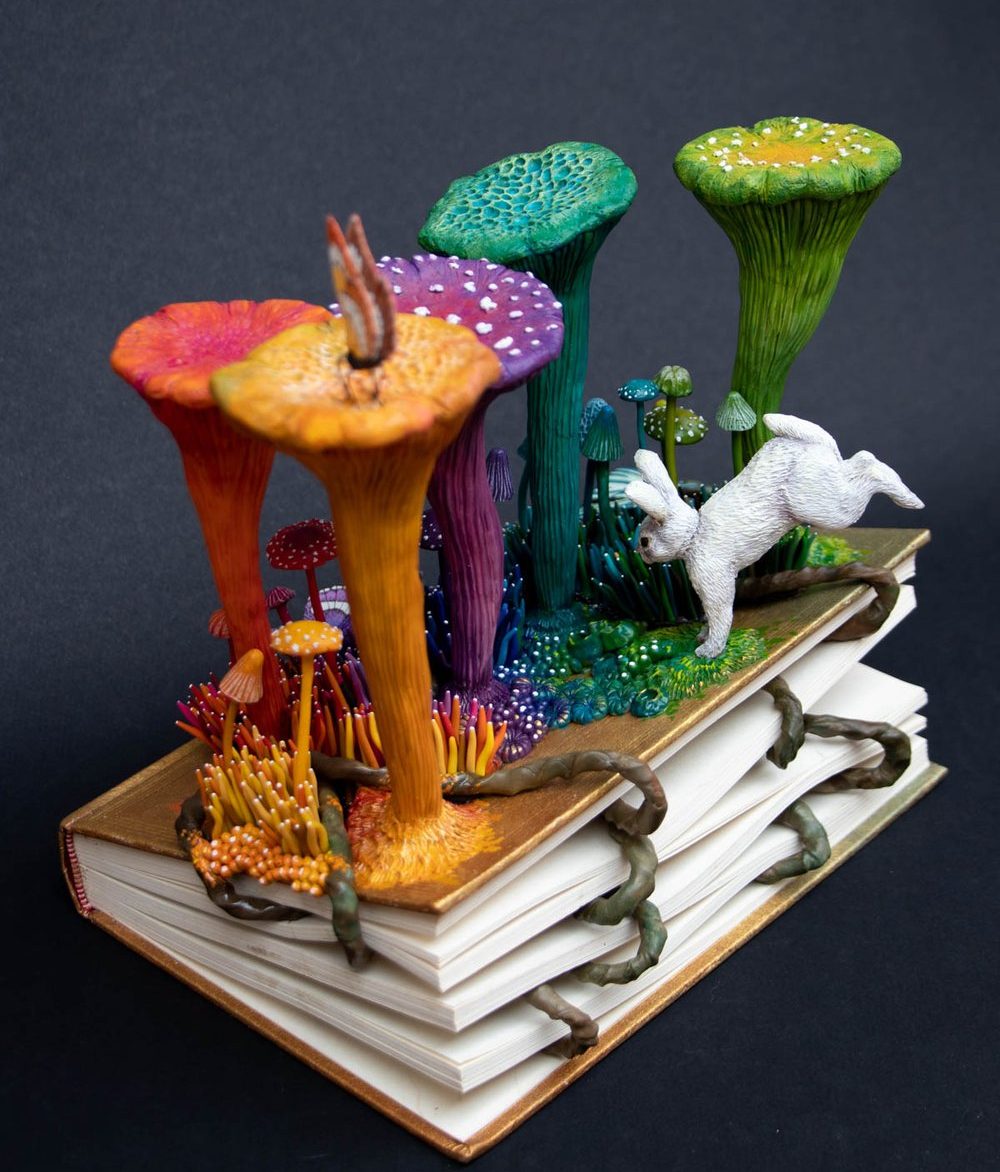
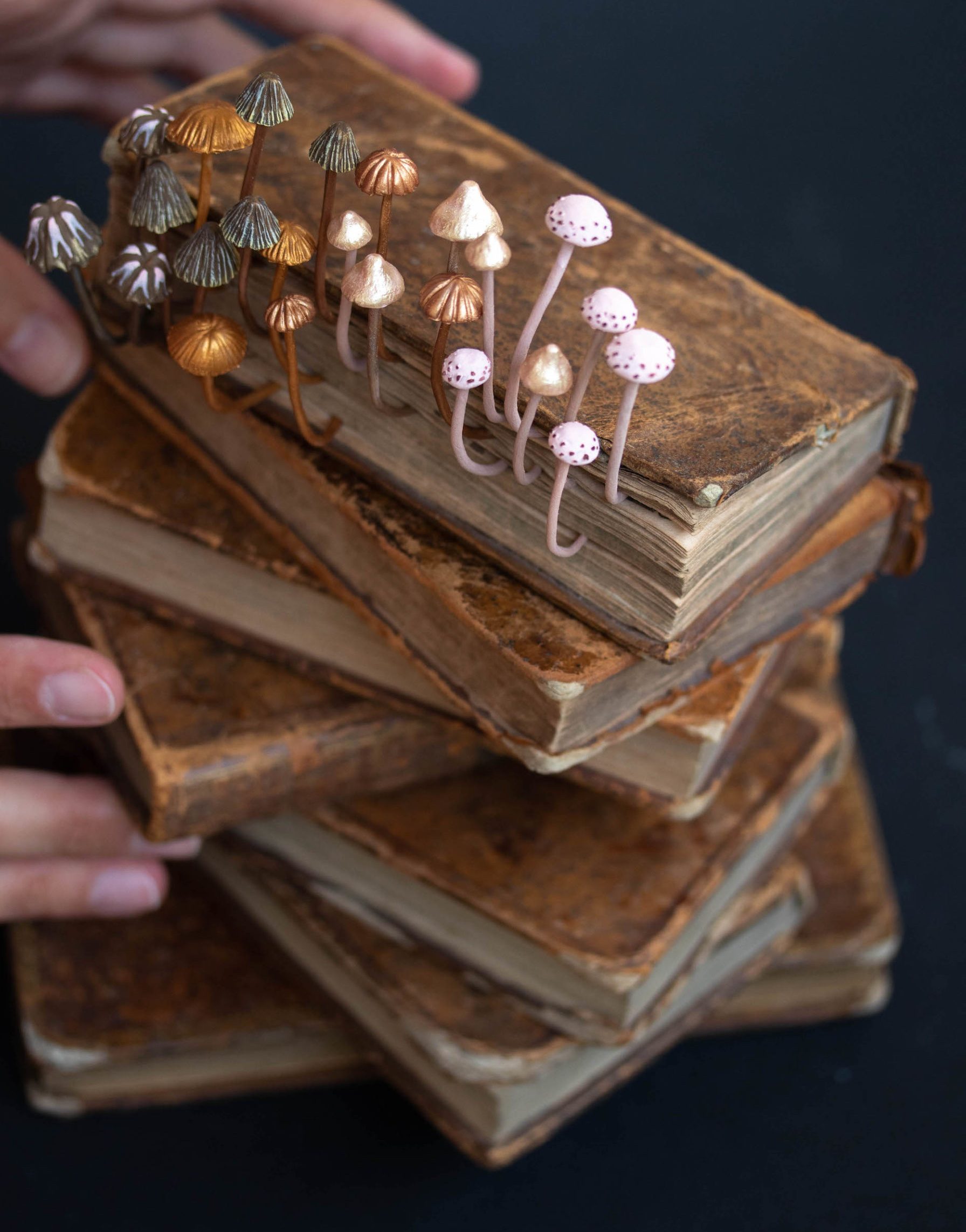
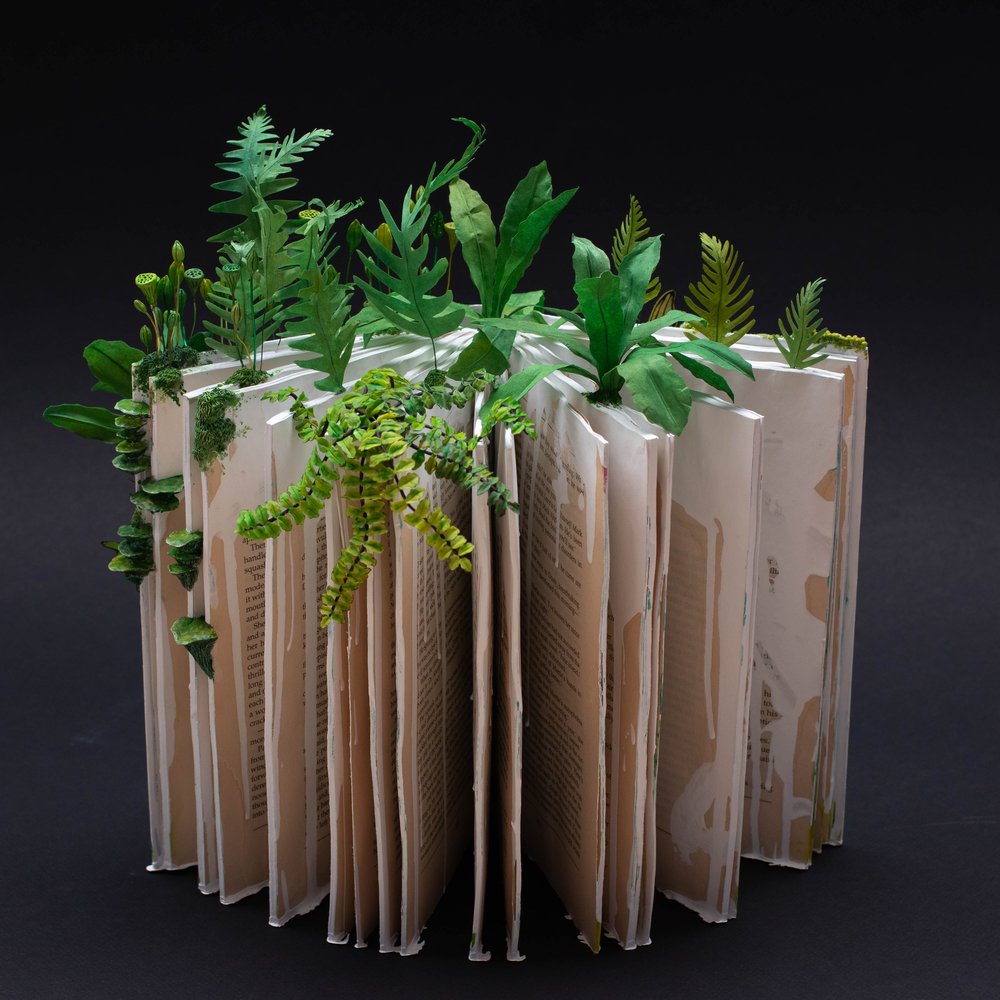
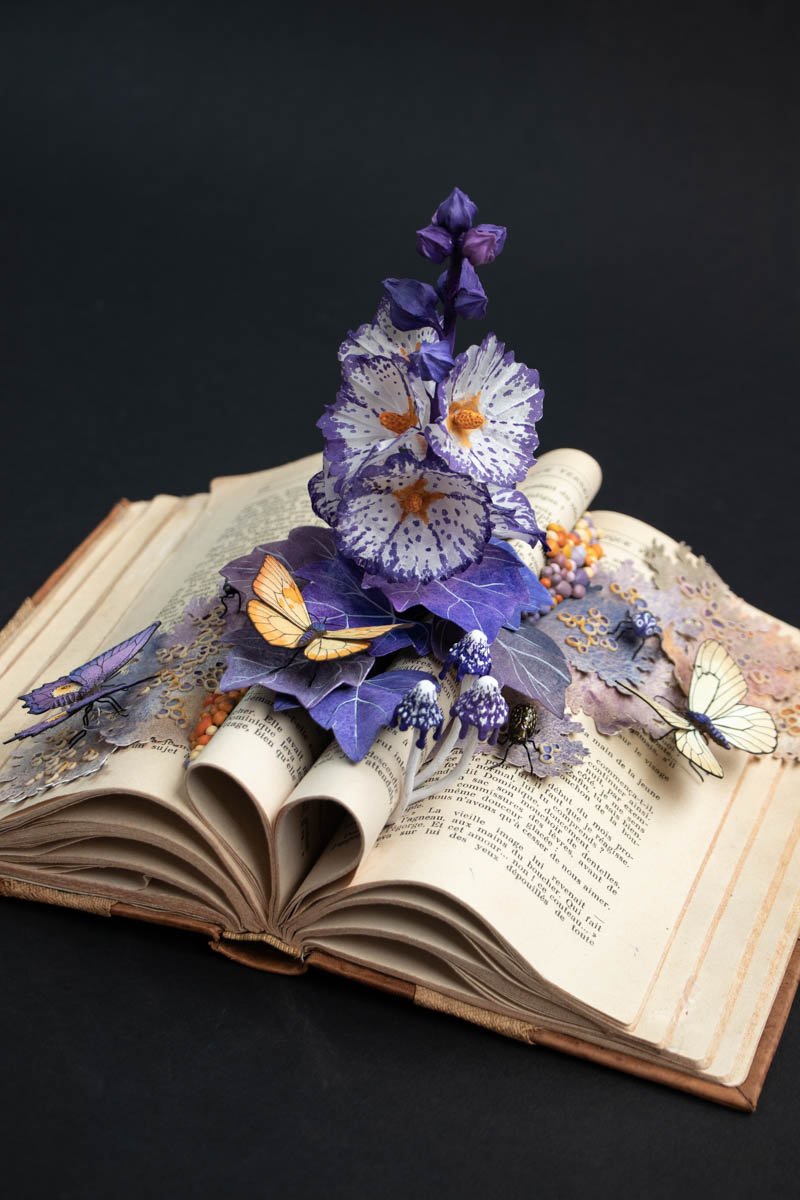
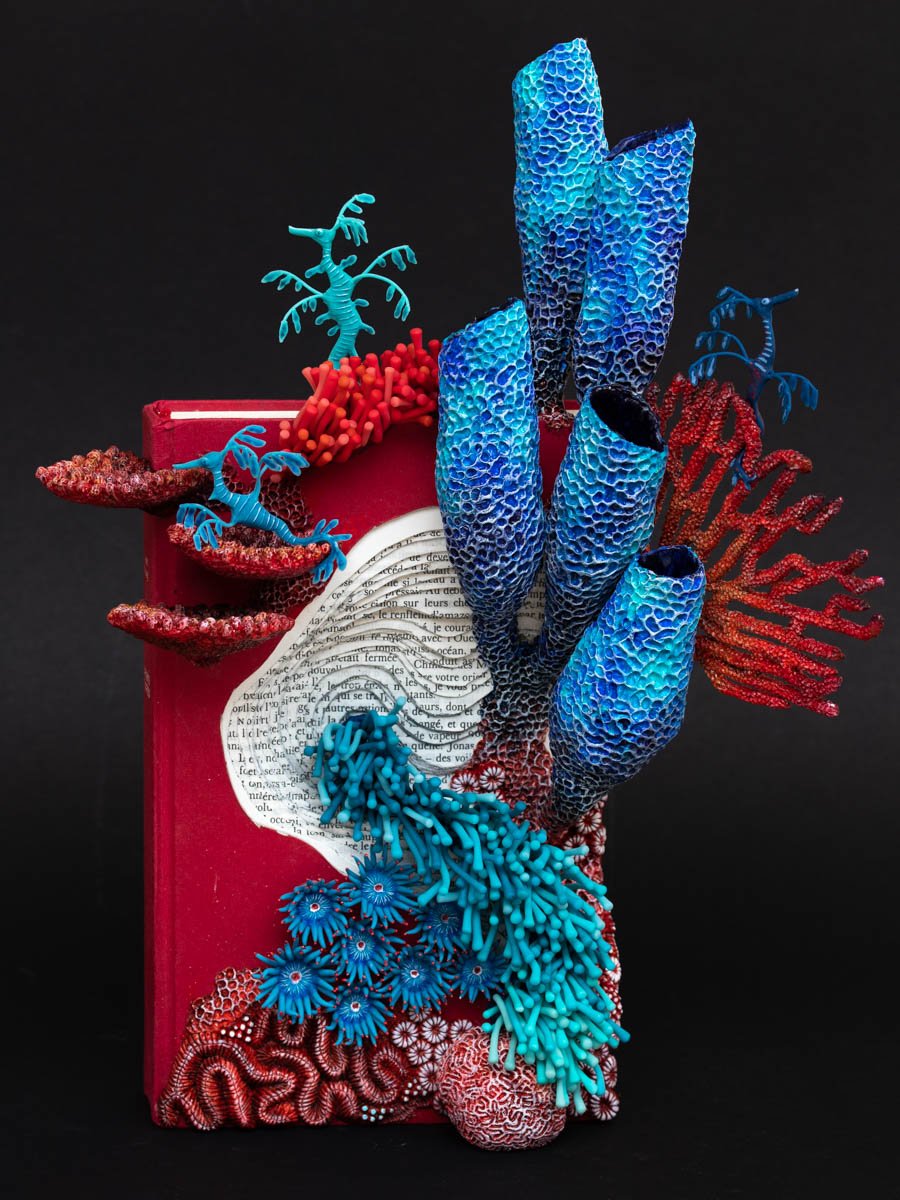
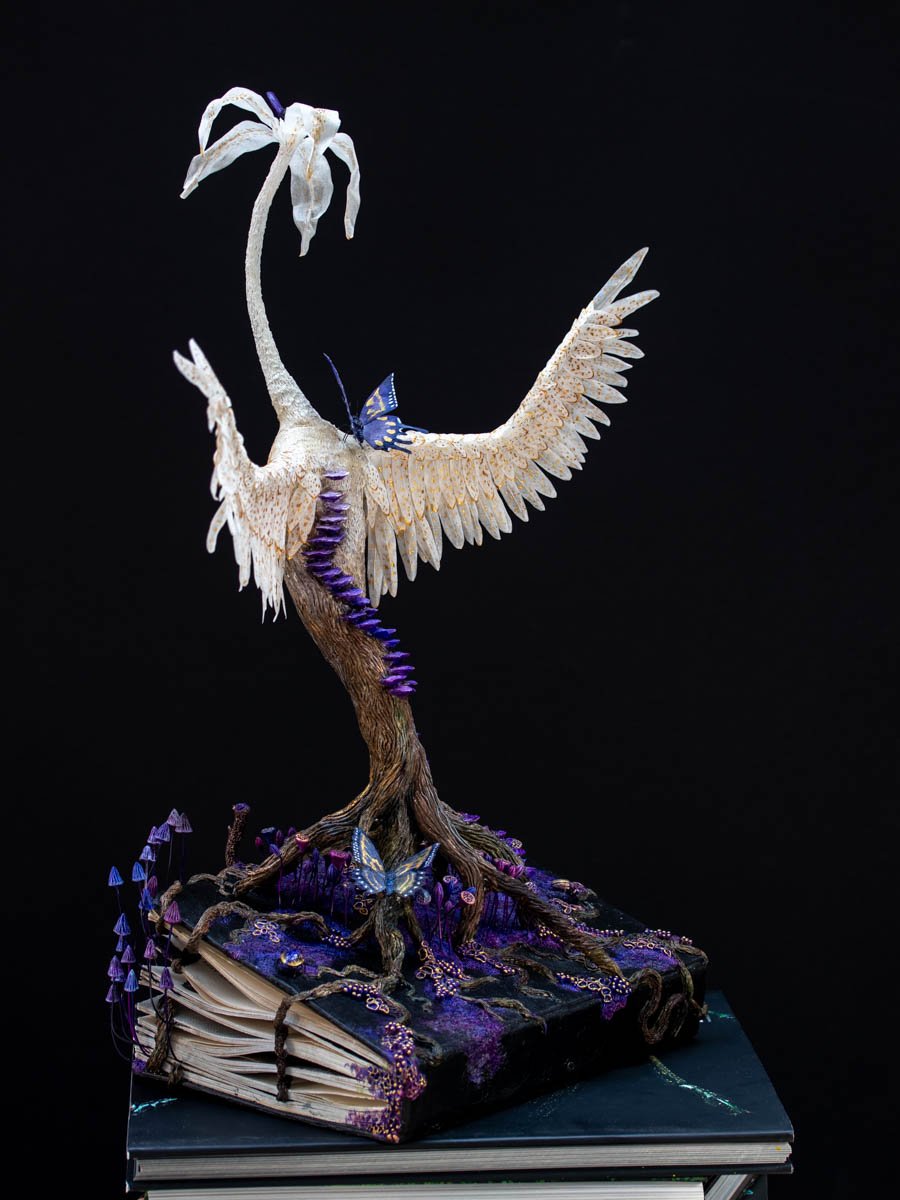
Stéphanie Kilgast is a contemporary French artist known for her intricately detailed works using discarded materials, trash, and, recently books.Born in 1985 in Frankfurt am Main, Germany, the artist currently resides in Vannes, France.Her recent pieces explore incredible biodiversity utilizing books as her canvas.She constructs delicate mushrooms, blooming flowers, and colorful coral in painstakingly detailed miniature environments as a vivid reminder of the impact humans have on the environment and the tenacity of nature.Millions of titles are published each year in the U.S. alone, meaning billions of individual copies—a vast number of which eventually end up in landfills.Kilgast draws attention to these discarded objects by giving vintage editions new life.Inspired by natural forms, Stéphanie Kilgast’s artwork is an ode to nature and its current biodiversity.“With my choice of bold and vibrant colors, I offer a cheerful post-apocalyptic world,” the artist shares.“While I talk about a heavy subject, the disastrous impact of human activities, I also wish that people leave my work with a feeling of happiness and hope, and keep fighting.”More of Stéphanie Kilgast’s delightful creations can be found at https://www.stephaniekilgast.com/.


Sunday Evening Art Gallery — Jennifer Latour

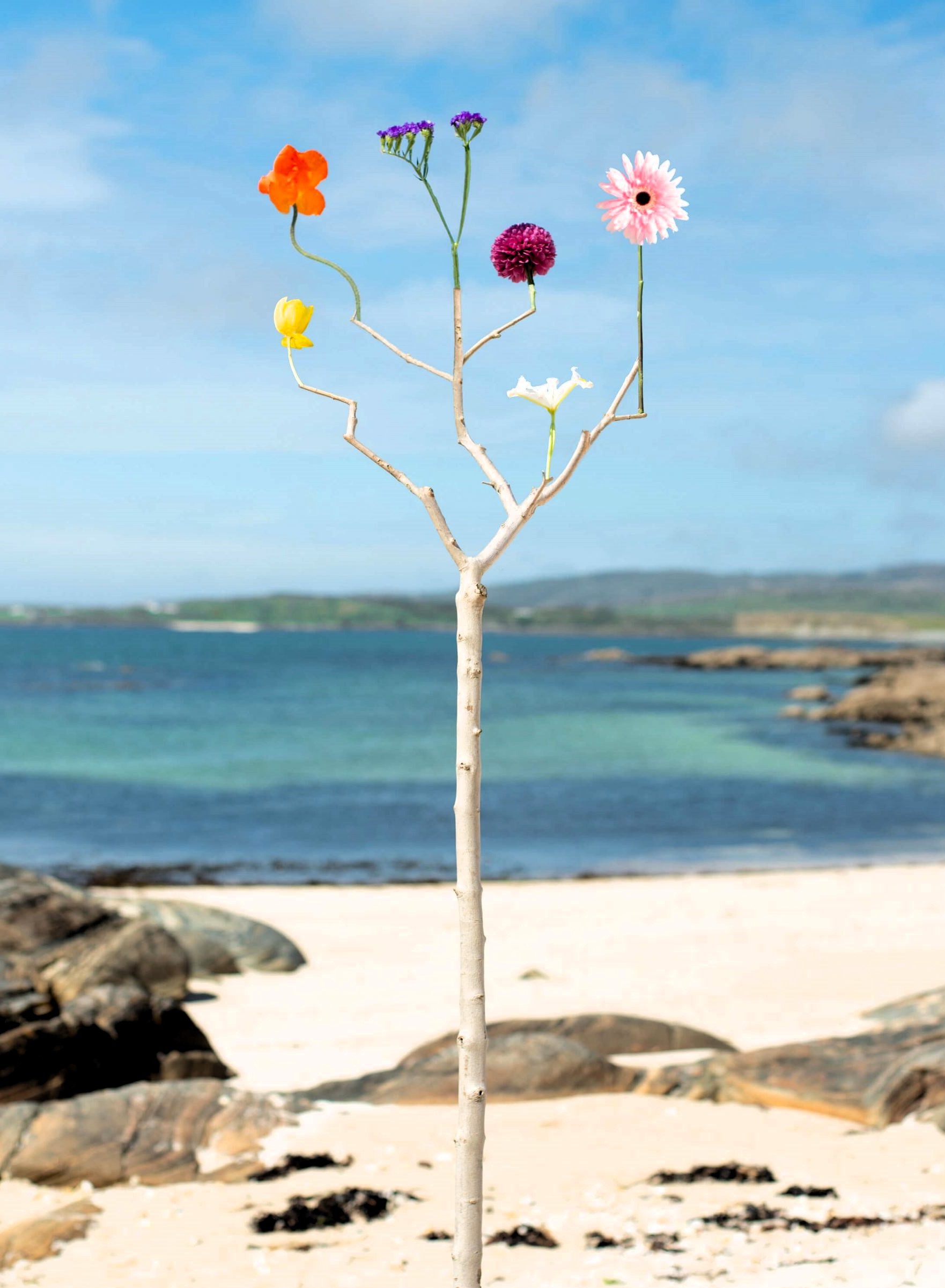
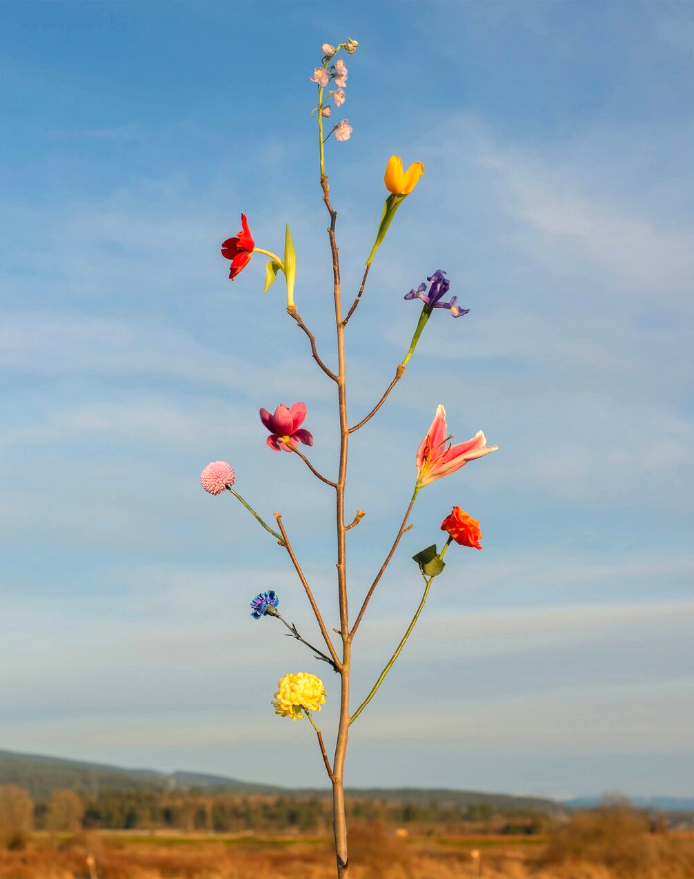
Jennifer Latour was born in Seven Islands, Quebec, but now calls Vancouver, Canada, home.Latour is a self-taught artist who has moved into the world of nature to create delicate, unusual art.

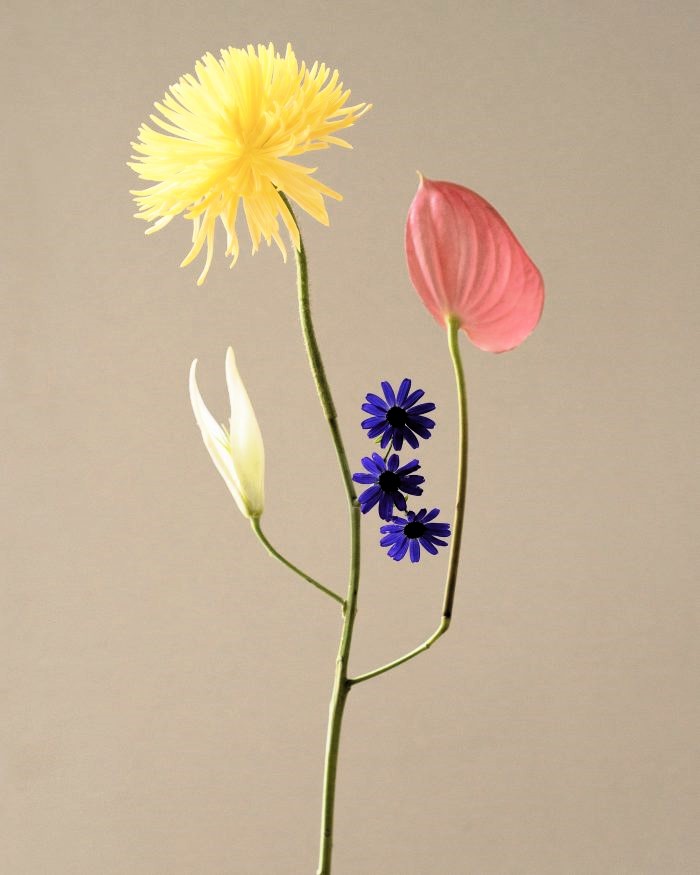
She has developed her love for character creation, sculpture, photography, and cinema into a series that combines a wide variety of fruits and flora into a strange and beautiful real sculpture.

She then photographs these temporary organic sculptures, sometimes even releasing her creations back into the wild.Latour’s eye for color and the allurement of the natural world imprints her photos with a distinct, delicate, and ethereal aesthetic.

While each piece has a unique character and stands on its own, the series as a whole is evocative of the interconnectedness found in nature, and serves as a reminder that all creatures are bound simultaneously by both their similarities and their differences.More of Jennifer Latour’s creative work can be found at https://opendoors.gallery/artists/jennifer-latour.


Sunday Evening Art Gallery — Eva Jospin

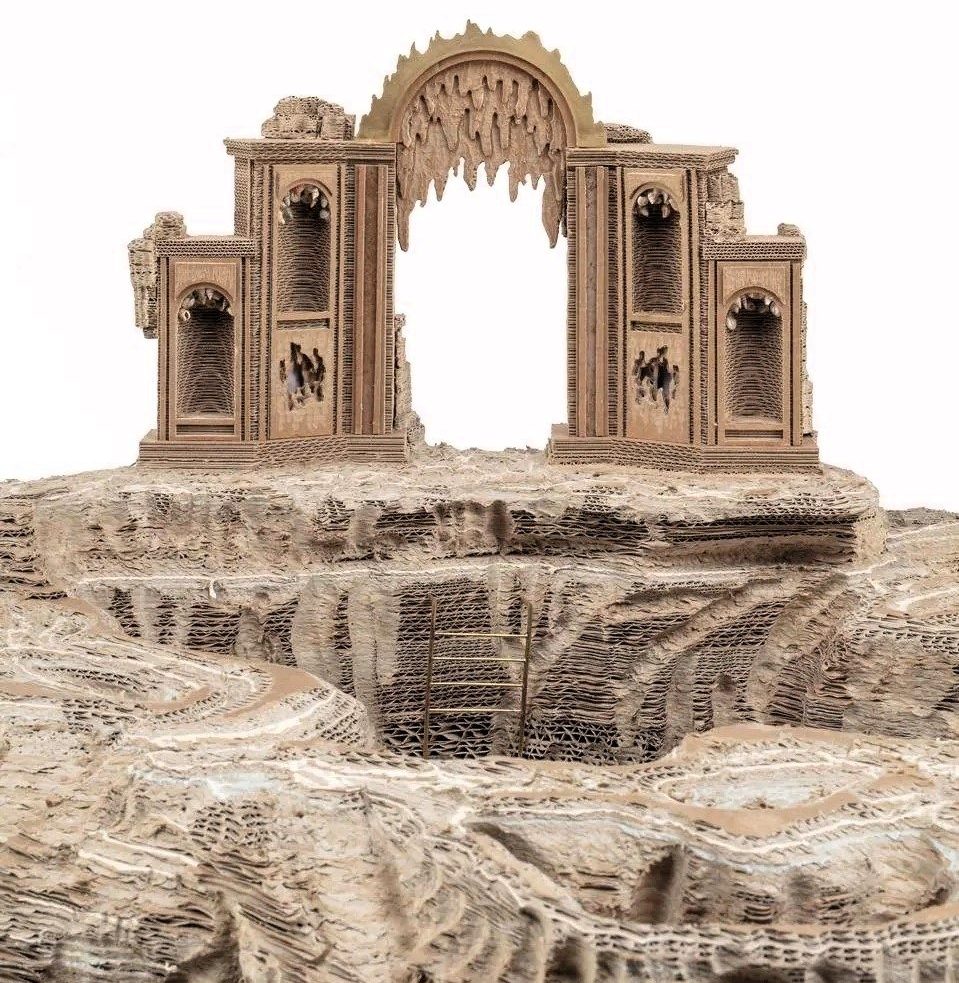
Eva Jospin is a French artist known for her elaborate cardboard sculptures.Born in Paris, Jospin graduated from the École Nationale Supérieure des BeauxArts de Paris.The artist cuts and gules cardboard to craft dense, multi-layered and highly detailed forests with stunning depth of field.For more than a decade, Jospin has explored the possibilities of the corrugated material, layering it to create solid pieces that can be carved to reveal detailed landscapes and interiors.Using cardboard, Jospin crafts detailed architectural sculptures and immersive sets that explore the connection between the natural and built environments.Within her works, gothic towers, arches, and columns blend with cardboard-created geological formations, caves, and vines. Jospin’s sculptures often aim to explore the relationship between nature and culture while challenging our perceptions of materiality.They are displayed in a way that invites the viewer to give them a closer inspection, either by passing through them or by getting close enough to be able to fully appreciate the artist’s craftsmanship.More of Eva Jospin‘s architectural structures can be found at https://www.artsy.net/artist/eva-jospin and https://www.galleriacontinua.com/artists/eva-jospin-320.


Sunday Evening Art Gallery — Kiko Miyares

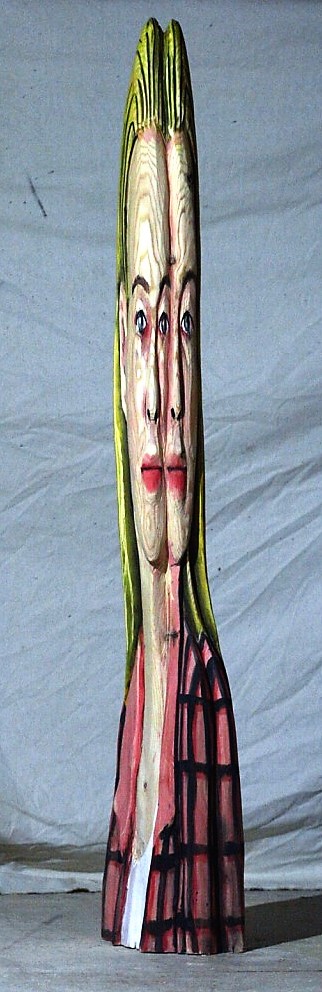
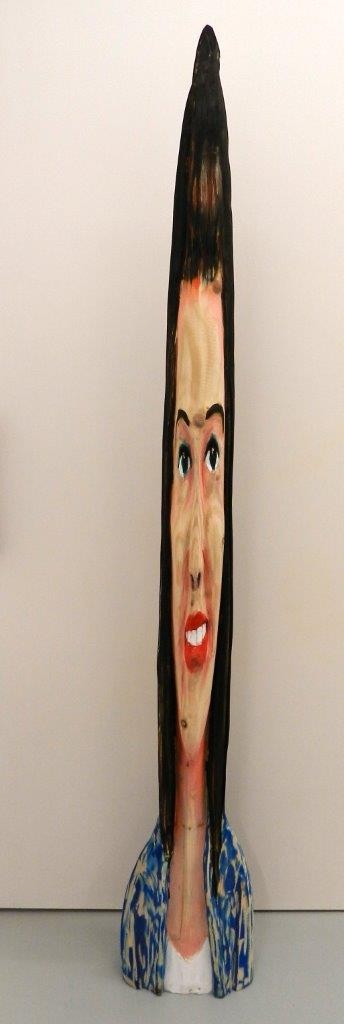
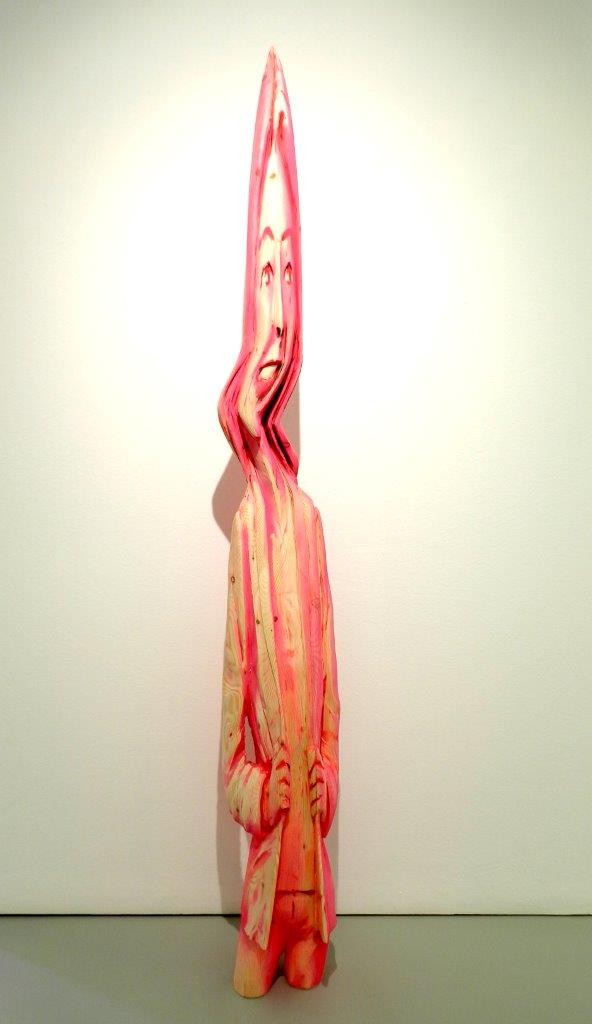
Artist Kiko Miyares carves and colors stretched, distorted sculptures of the human figure.Miyares was born on the April 27 in 1977 in Llanes, in the Asturian Province in Spain.After his studies at the Faculty of Beaux Arts at the ‘Universidad Publica del Païs Vasco’ he started exhibiting his work in Bilbao.The Spanish sculptor often focuses on the head and shoulders of his subjects, with each bust combining realistic renderings of facial feature with a dramatically narrowed shape that makes the works appear to be squeezed or warped.In some works, elements of the elongated sculptures are fractured, creating surreal doubling of torsos, heads, and arms.Miyares often shows his busts in groups, to create striking and perception-altering vignettes.Although the skewed works are best viewed in the round, each photographed angle provides a new and fascinating look into the the artist’s boundary-pushing portraits.More of Kiko Miyares amazing works can be found at http://www.kikomiyares.es/ and https://www.instagram.com/kikomiyares/.


Sunday Evening Art Gallery — Shary Boyle

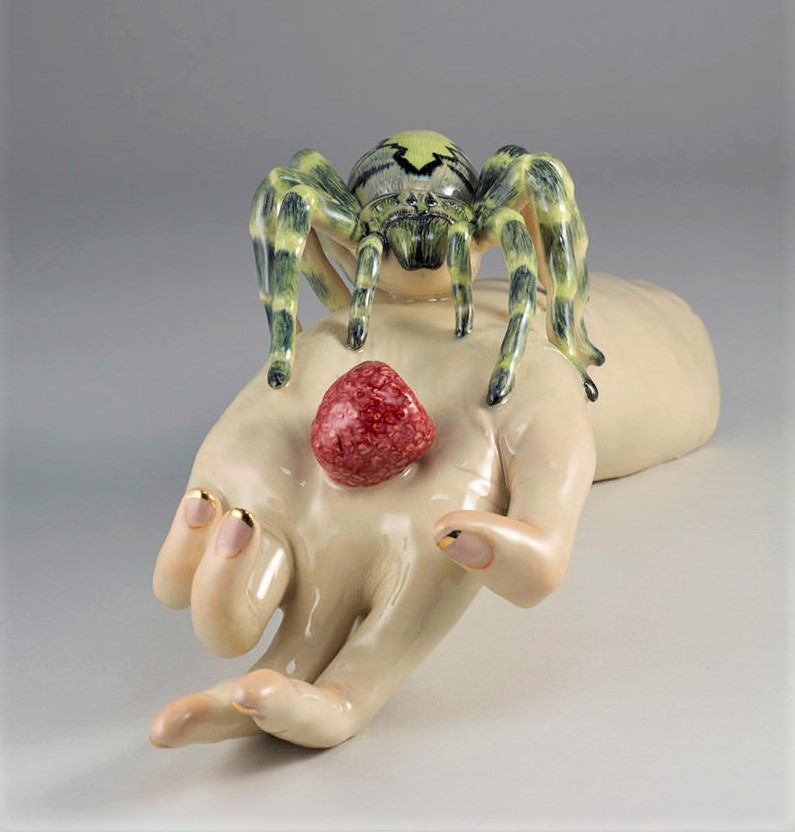
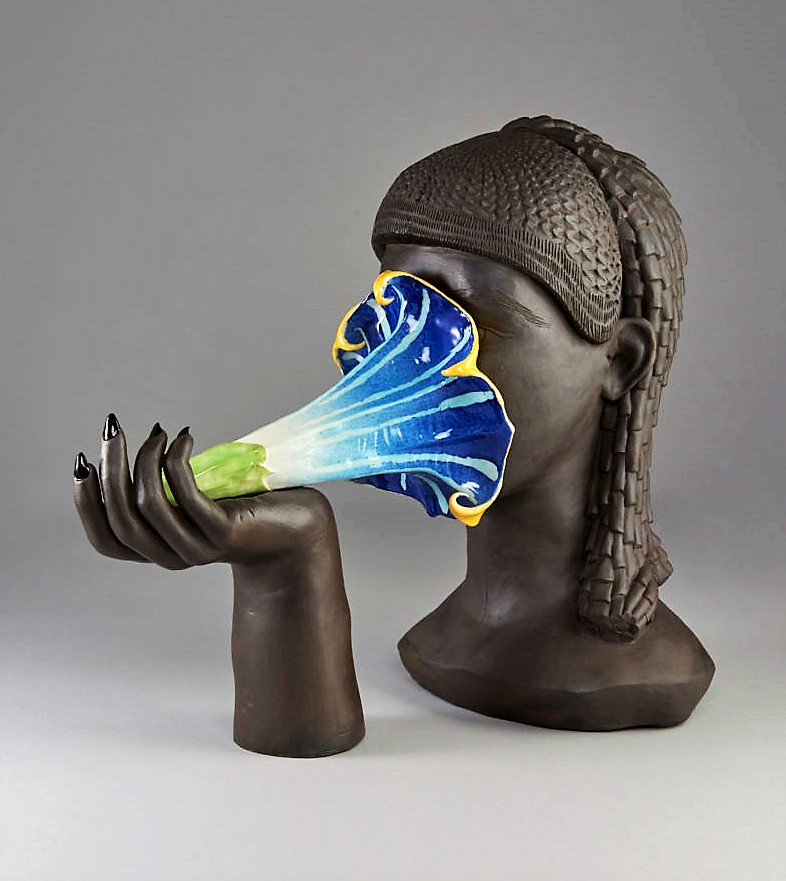
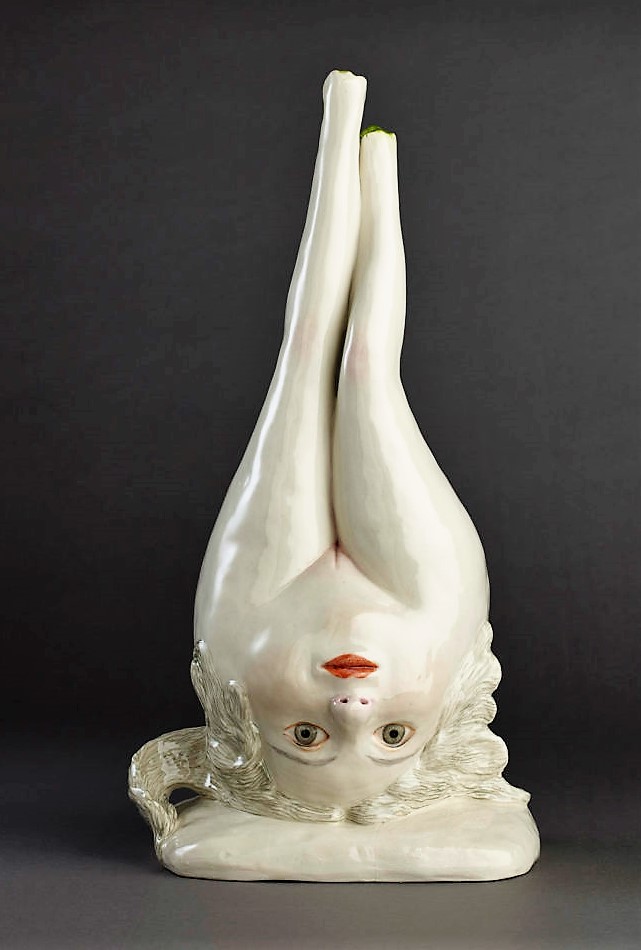
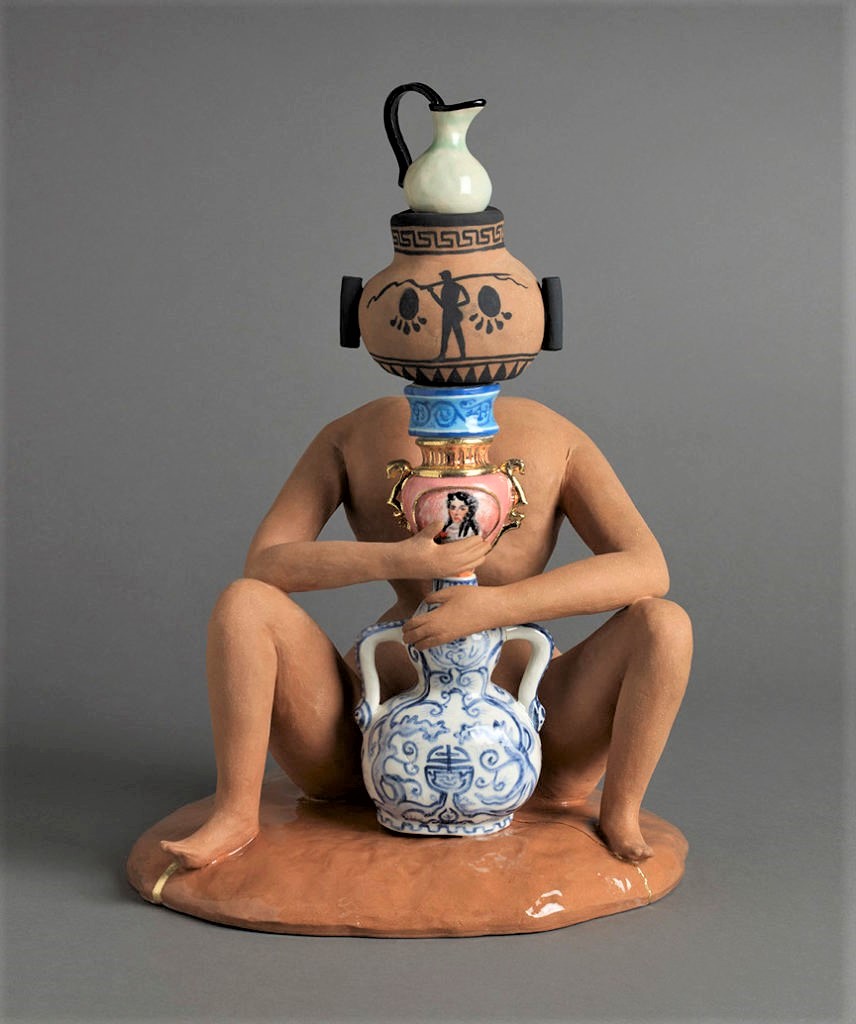
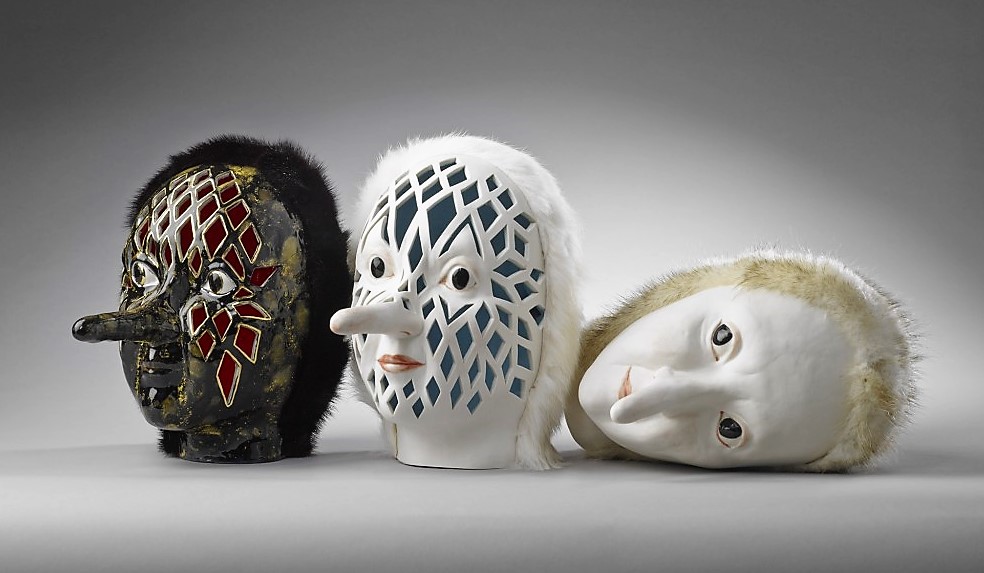
Sculpture can be so many things. So many different shapes. Colors. Meanings.Canadian artist Shary Boyle works across diverse media, including sculpture, drawing, installation and performance.Highly crafted and deeply imaginative, her practice is activated through collaboration and mentorship.While she works in multiple mediums, Boyle is best known for her porcelain figurines.Boyle’s work considers the social history of figurines, spiritual energy mythologies, and folk art forms to create a symbolic diversity uniquely her own.At first look you wonder what it is about these creations that makes you want to look closer.Boyle’s fantastical and frightening characters are indeterminately human and animal, male and female, and each one sends out a unique vibration that makes you appreciate her diversity.More of Shary Boyle‘s wonderfully unique art can be found at https://www.sharyboyle.com/.


Sunday Evening Art Gallery — Colin Richmond

Sometimes Art (with a capital “A”) is more than just paintings hanging on a museum wall or statues in a famous courtyard.

Alpine Steinschaf Sheep

Sometimes Art can be as simple as homemade crafts that have that special something that catches your attention.

Suffolk Sheep

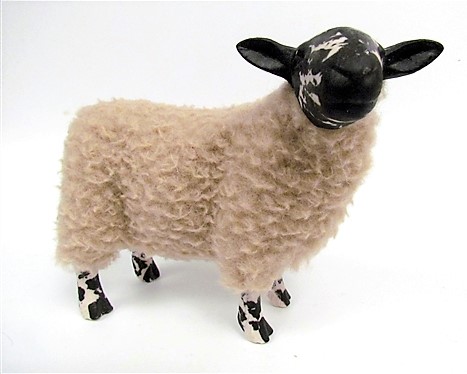
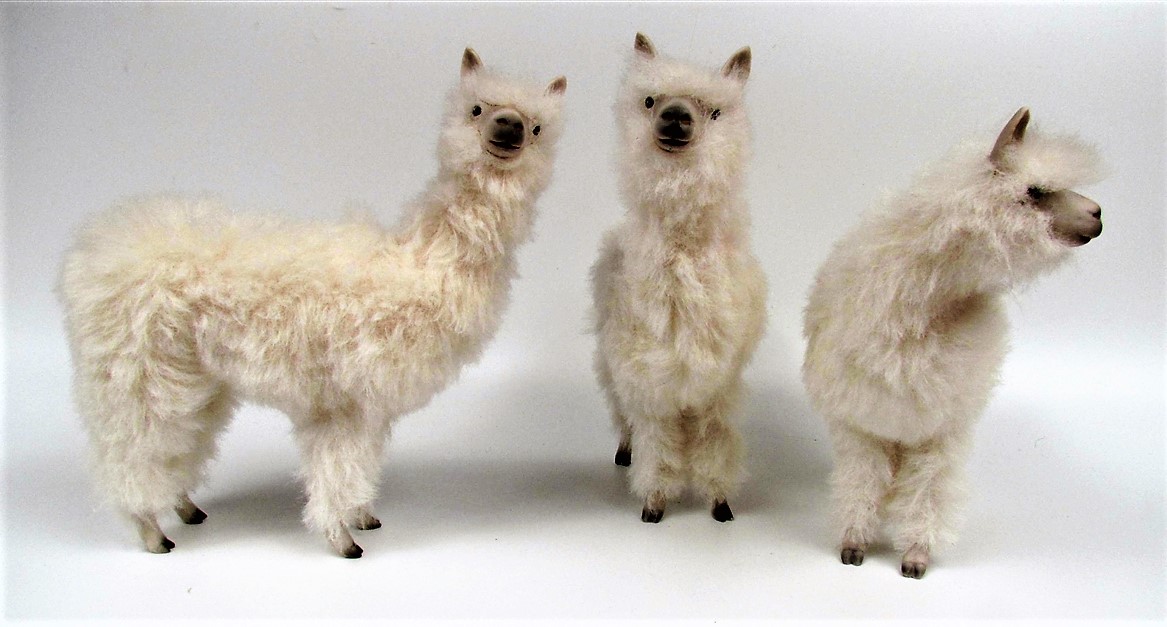
Colin Richmond, an MBA-turned-sculptor, is the artist and creator of Colin’s Creatures in Asheville, North Carolina, started in 1993.

Herdwick Sheep

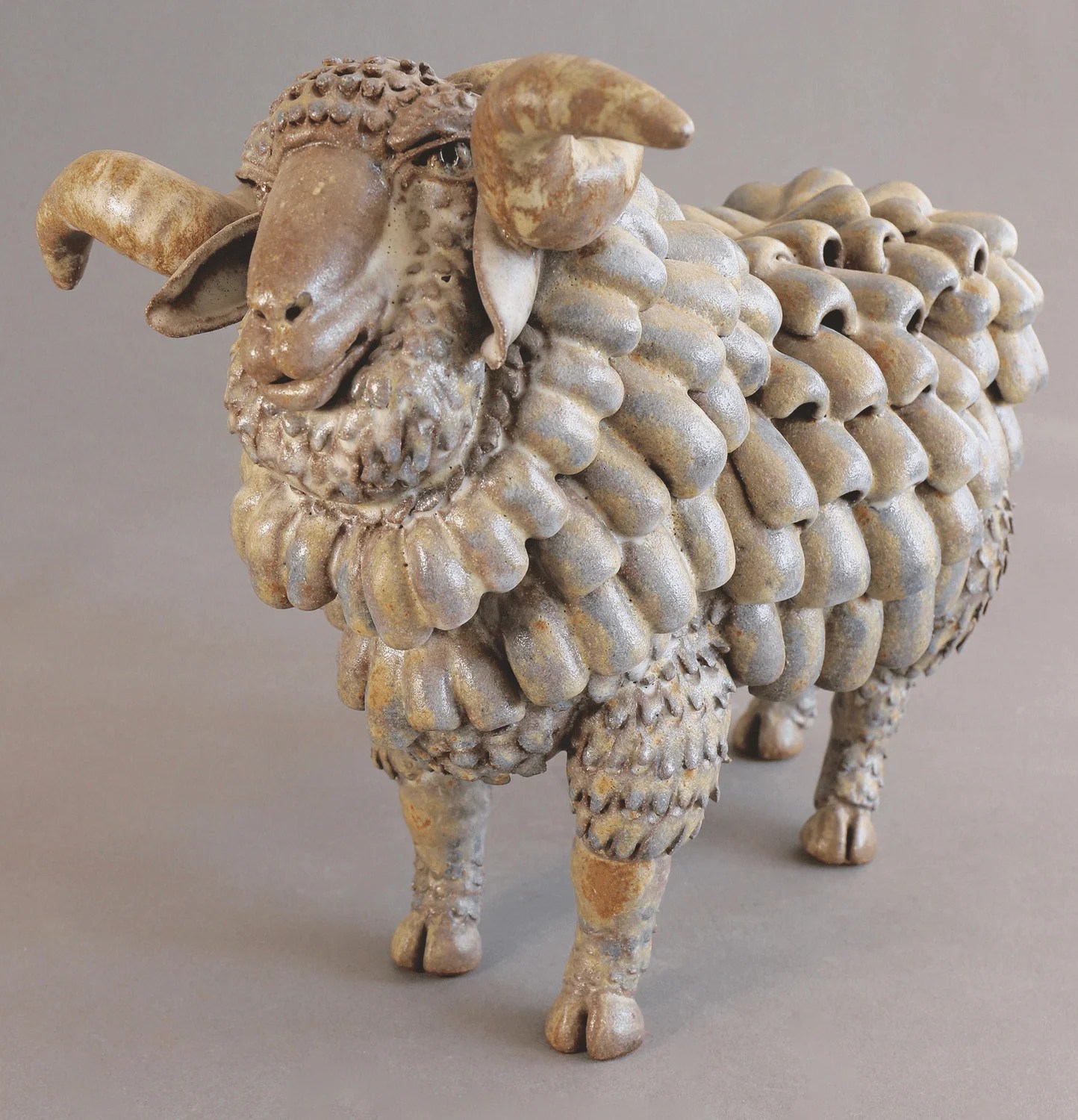
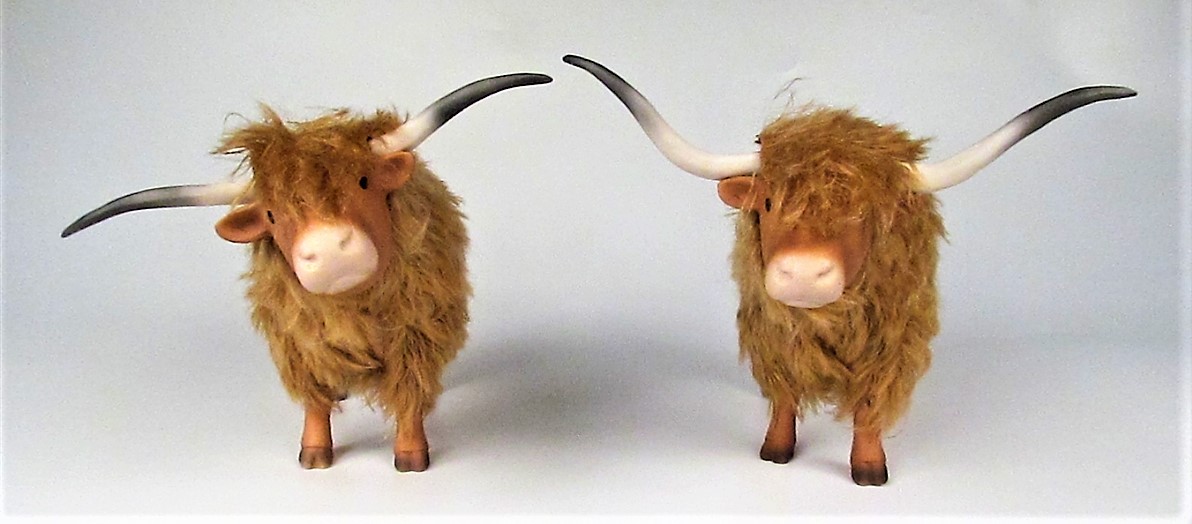
The artist creates handcrafted creatures made from a unique combination of materials including porcelain, castable stone, and imported woven fur, all chosen for their quality and ability to imitate the characteristics of each animal.

Highland Cattle

Richmond initially begins with thorough research of the breed.

Cotswold Ewe

He often travels across the globe to visit heritage farms, attend agricultural shows, and meet with breeders dedicated to the stewardship and conservation of ancient breeds of livestock.

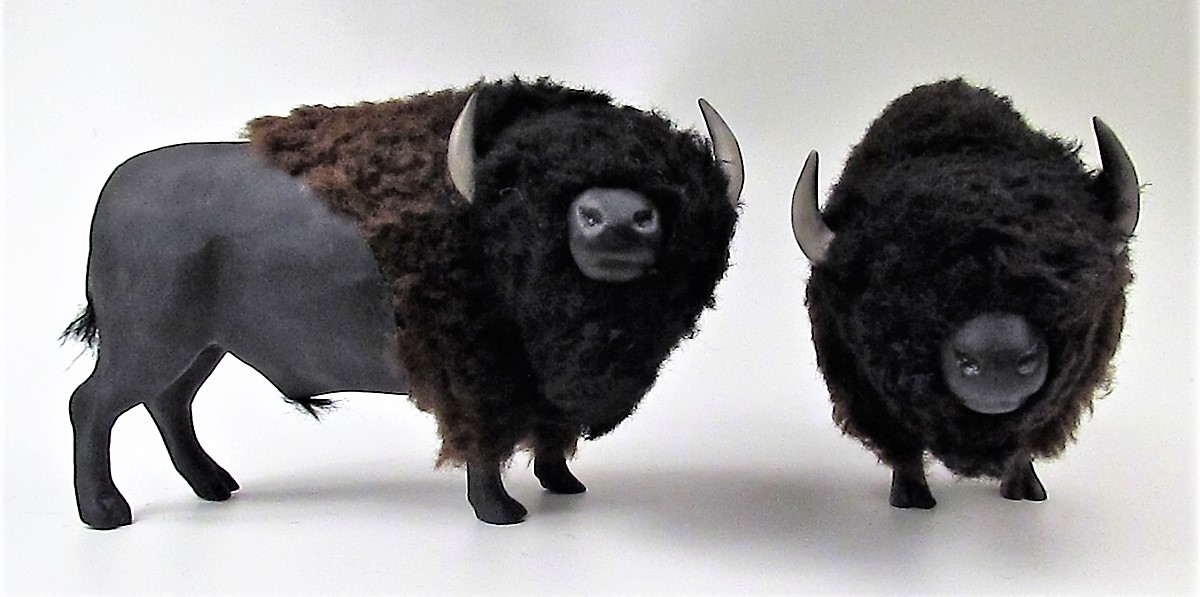
American Bison

Once he feels he has an understanding of an animal and its specific traits and personality, Richmond carves the heads, legs, horns and other parts that will eventually be cast in porcelain.

Beulah Speckledface Sheep

Porcelain is just one of the keys to capturing what he describes as the “expressive nature” of his animals, which have porcelain heads and legs and solid hydrostone bodies.

Blacknose Valais Sheep

Richmond uses hydrostone, the hardest and strongest plaster available, which is chosen for its stability and solid weight in the hand.

Alpaca

He pours the smooth, clay-colored liquid into handmade molds, fastening them together with a large rubber band, and sets a kitchen timer which dings when it’s time to release the creature from its formative binding.

Sarda Sheep

When the creature is formed, he finish it with high-quality imported fur, resulting in a life-like creature with personality and charm.

Border Leicester Sheep

More of Colin Richmond‘s animal creations can be found at Colin’s Creatures, https://www.colinscreatures.com/.


Sunday Evening Art Gallery — Philip Jackson

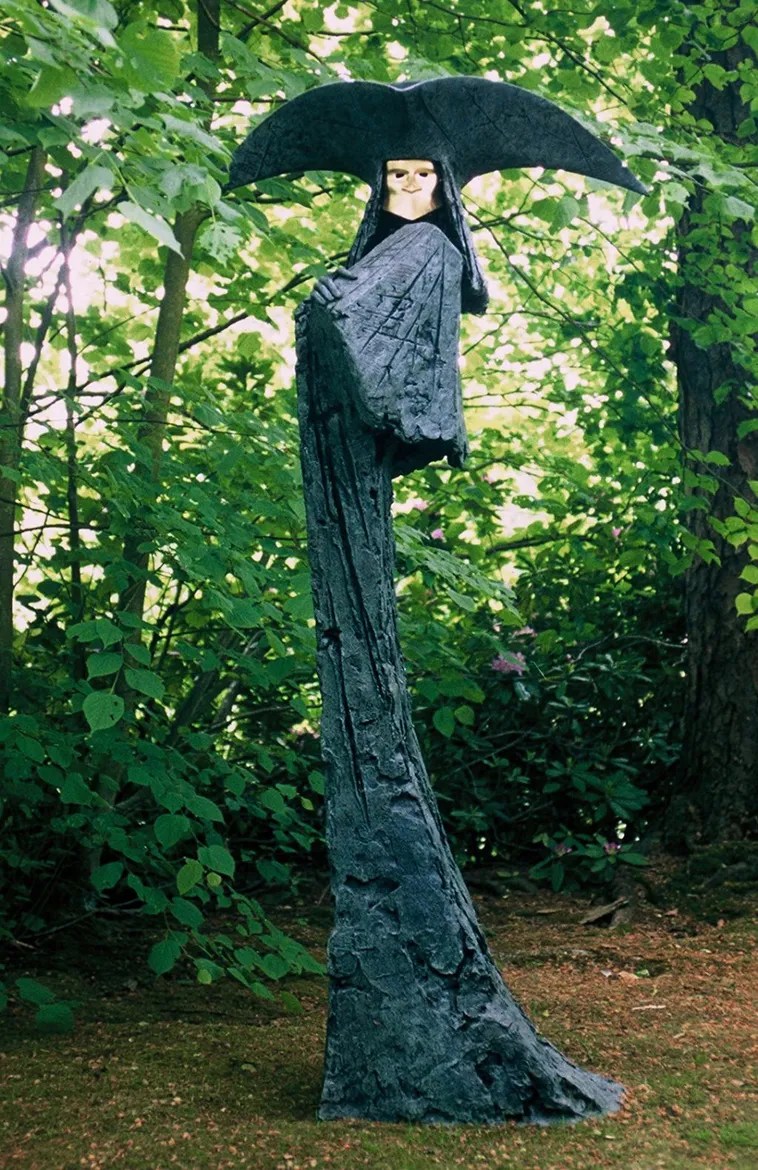
Philip Jackson is a contemporary Scottish artist known for his bronze sculptures depicting life-sized elongated figures.Jackson went to the Farnham School of Art (now the University for the Creative Arts), and a year later joined a design company as a sculptor.Half of his time is spent on commissions and the other half on his gallery sculpture.Jackson creates  figures both imposing and operatic in their narrative and presence, which are recognizable worldwide.Powerful and beautifully sculpted, Jackson’s meticulously precise posturing of each piece creates an overwhelming sense of drama.The figure statues he created are full of mysterious ancient temperament, like characters from a narrative opera.“My sculptures are essentially an impressionistic rendering of the figure,” Jackson says of his work. “As the eye moves up the sculpture, the finish becomes gentler and more delicately worked, culminating in the hands and the mask, both of which are precisely observed and modeled.”

More of Philip Jackson‘s sculptures can be found at https://philipjacksonsculptures.co.uk/.


Sunday Evening Art Gallery — Noah Deledda

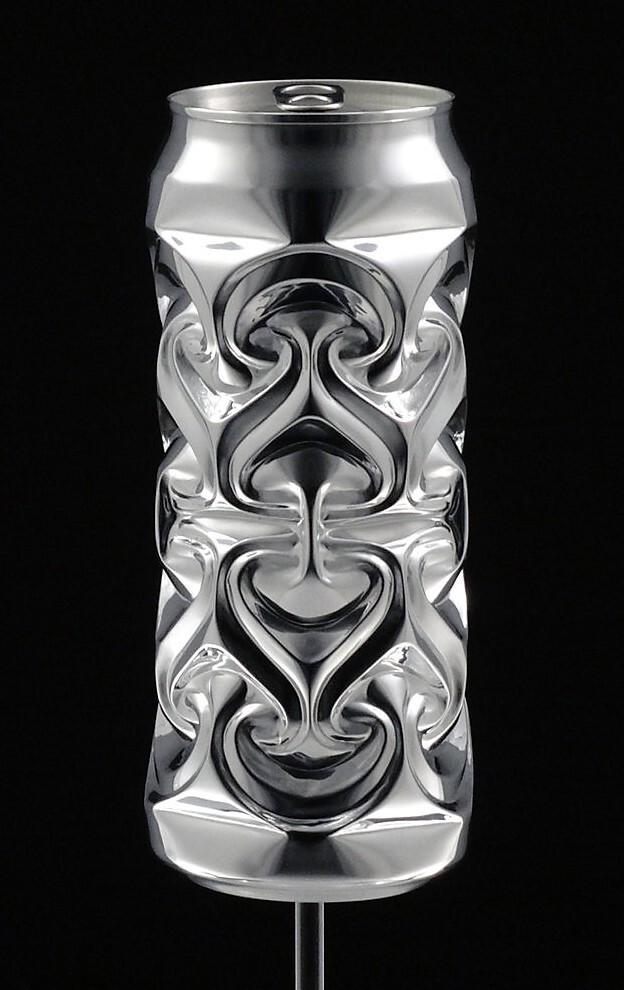
Noah Deledda is an American can sculptor and artist who transforms everyday aluminum cans into works of art using nothing but his fingertips.Despite the absence of a formal art education, Deledda gained notoriety in the 1990s, first as a graffiti artist, and then as a graphic design artist.

Deledda carefully presses and creases intricate geometric patterns into the surface of plain cylindrical cans using carefully placed pressure from his fingers and the edge of his nails.

His blank canvas begins with a simple beverage purchase; it is stripped of its painted exterior using a special acid wash, leaving a shiny silver face for his sculptures.Denting, creasing and crushing is then carried out by hand; a process that is repeated and refined into many different forms.“Through sculpture I try to create something unique out of an ordinary object. In this case, a common disposable object,” the artist explains.“The technique itself also embodies this theme of elevation by implementing the incidental gestures of disposal, the ‘scratch, dent and crease.’ Through artistic principles these actions are re-imagined.” More of Noah Deledda‘s creative art can be found at https://www.noahdeledda.com/. 


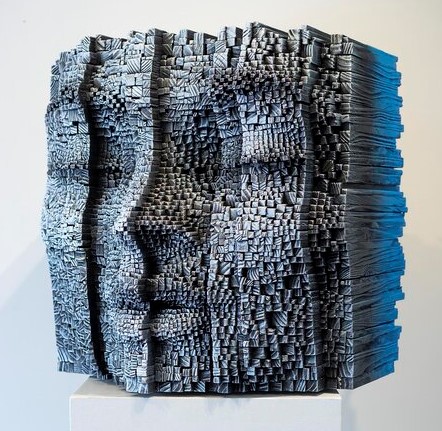
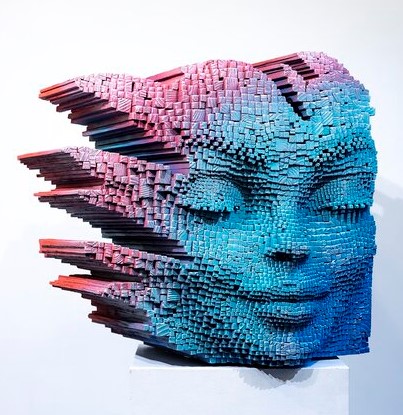
Sunday Evening Art Gallery — Gil Bruvel

Gil Bruvel is a visionary artist, capable of translating complex ideas and fleeting impressions into stunning works of art.

His art emerges from a deep contemplation of images, emotions, and sensations, which he refines continually before he casts them into material form.

Gil Bruvel was born in Australia, but raised in the South of France.

His father, a cabinetmaker by profession, taught him furniture design and wood sculpting. Once he gained these skills, he began his studies at an art restoration workshop in Chateaurenard, France, where he learned the techniques of old and modern masters.

It was here that he got a chance to enhance his knowledge about wood and within no time was crafting portraits in wood.

Bruvel’s work displays a mastery of technique and high-level craftsmanship.

His sculptures in bronze, wood, and stainless steel, as well as his functional furniture and mixed media, all reflect a well-defined move towards three-dimensional representation.

A look at Bruvel’s works makes it evident that this visionary artist is certainly capable of transforming his unique ideas into stunning works of art.

More of Gil Bruvel‘s marvelously creative woodworks can be found at https://www.bruvel.com/ and https://chloefinearts.com/artist/gil-bruvel.


Sunday Evening Art Gallery — Michal Trpák

Michal Trpák was born in 1982 in České Budějovice, Czech Republic. Continue reading “Sunday Evening Art Gallery — Michal Trpák”

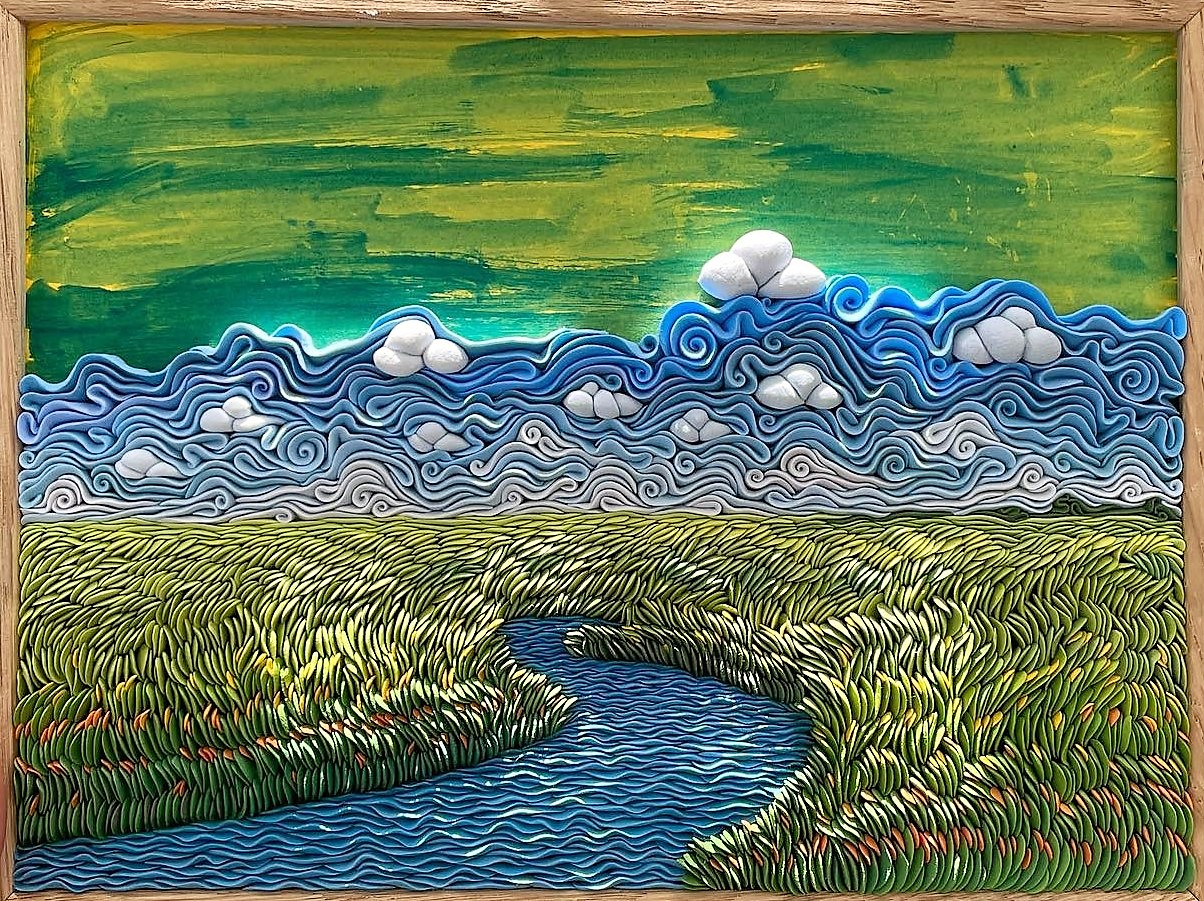
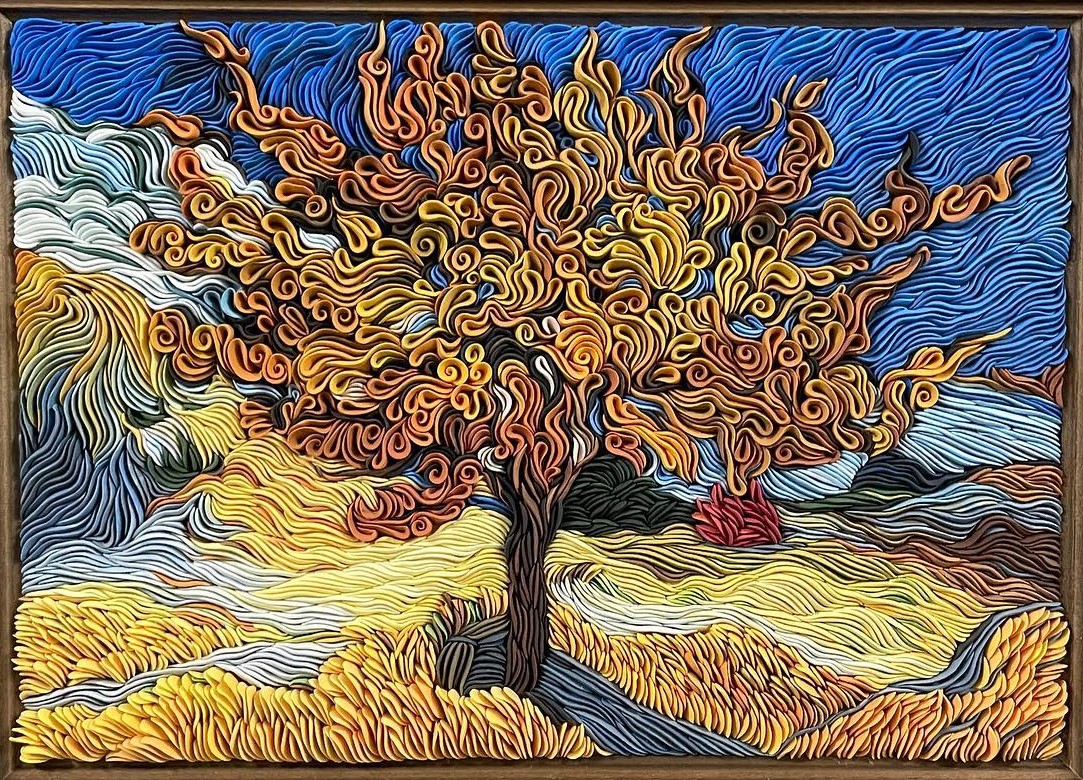
Sunday Evening Art Gallery — Alisa Lariushkina

Russian artist Alisa Lariushkina molds countless coiled ribbons and small twists from air-dry clay to create idyllic scenes brimming with color and texture.

Based in Vilnius, Lithuania, Lariushkina erases the line between painting and sculpture with her mesmerizing polymer clay art.

Instead of paints, this Lithuania-based artist uses these versatile modelling medium to draw the images on a flat canvas.

Thus, she creates tactile paintings that you can both see and feel.

She renders scenic landscapes by sculpting pieces of clay into expressive, swirling shapes that resemble lines.

The individual pieces of clay that make up each artwork are by formed by hand and glued together.

Describing her work, Lariushkina says, “I make figures and framed landscapes of clay. I developed my own style in 2015, using various materials for sculpting: air-dry clay, paper clay, acrylic paints, crystals, and beads.”

“…I can tell you that I came to [clay sculpting] quite spontaneously…Since then, I improved the technology, found the best materials, and made my products more durable and of better quality.”

More of Alisa Lariushkina’s delightful sculptures can be found at https://www.instagram.com/liskaflower and at https://mymodernmet.com/alisa-lariushkina-polymer-clay-art/.


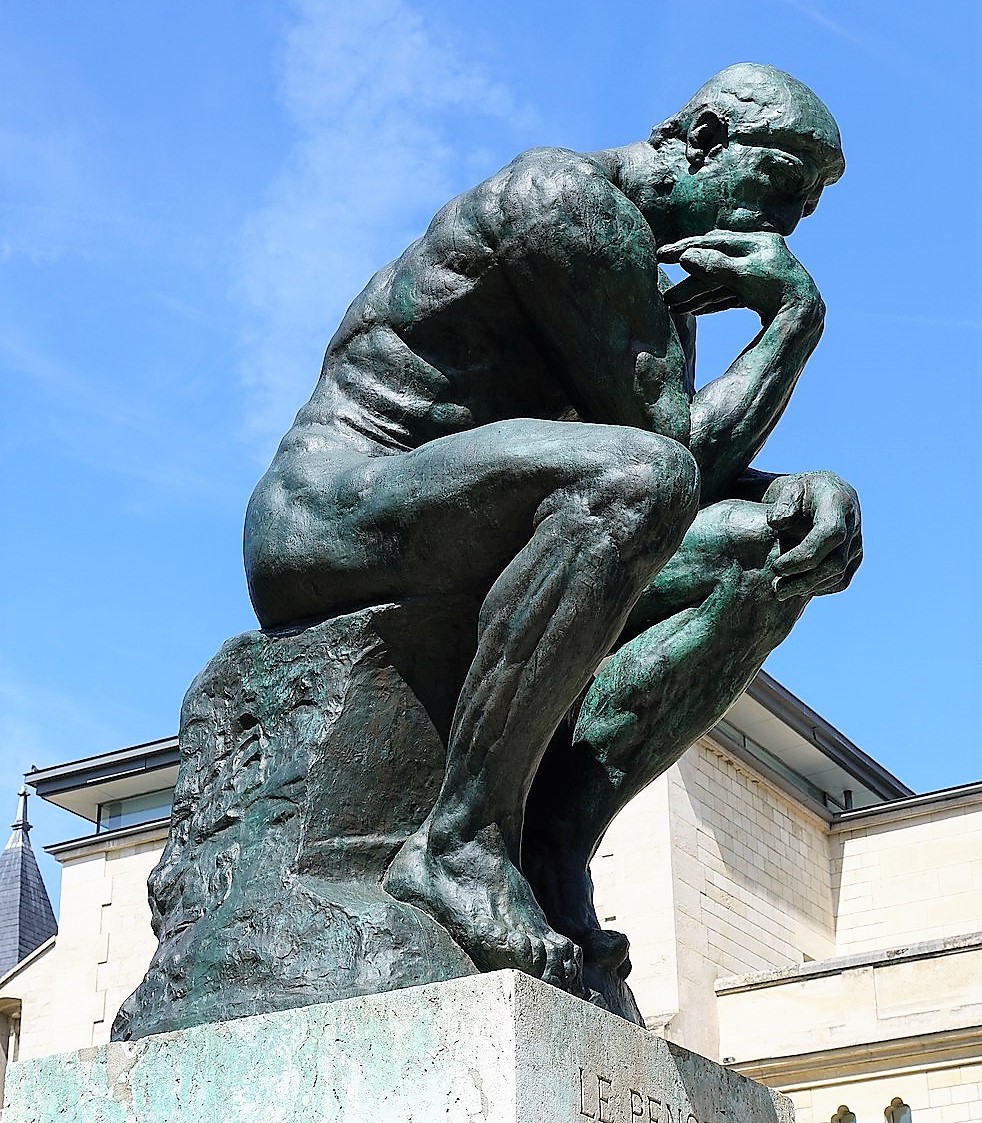
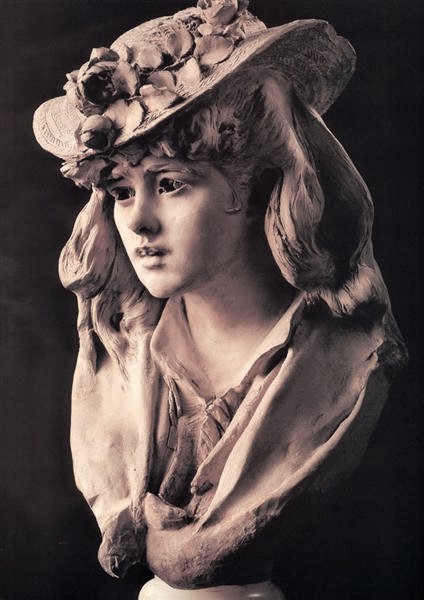
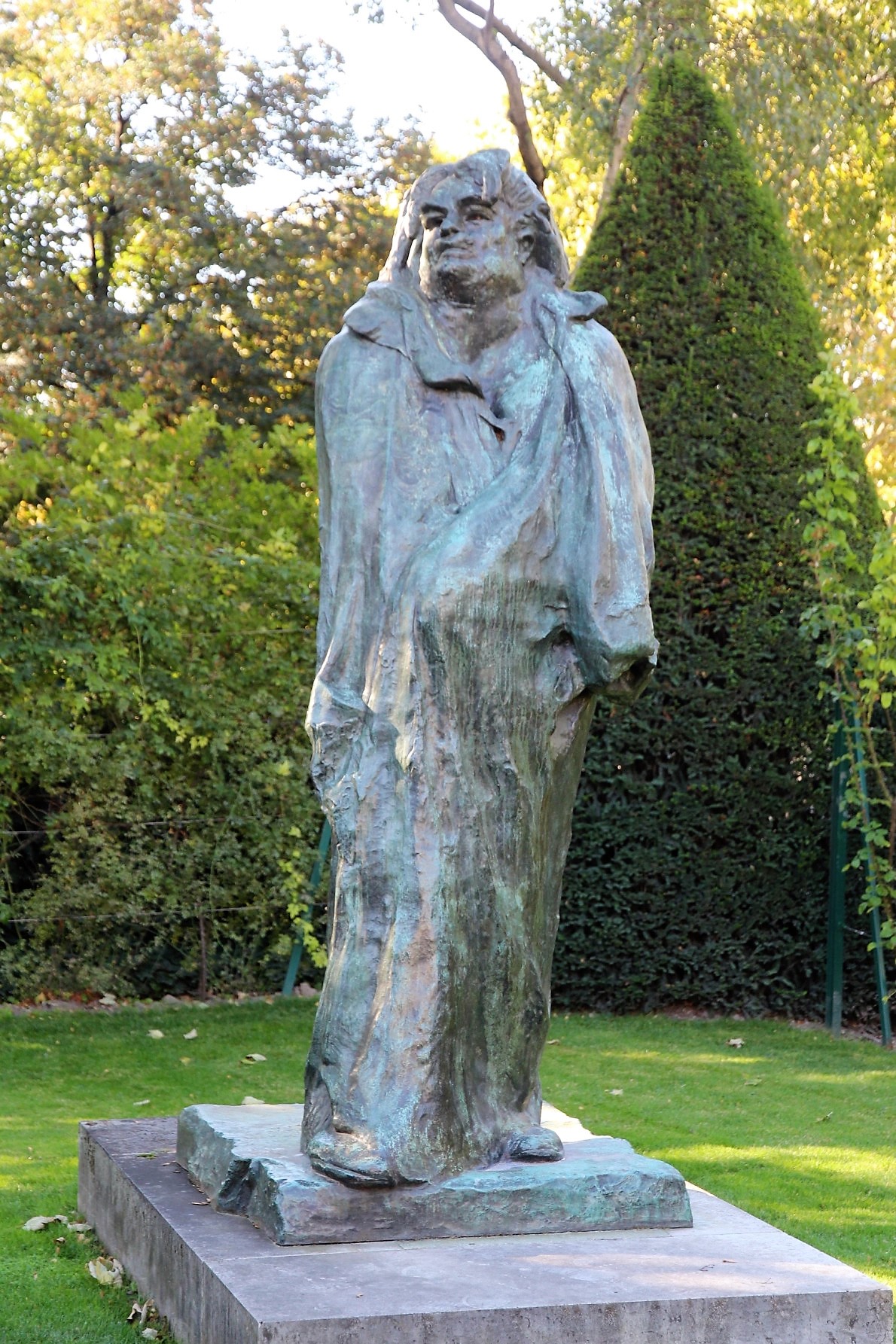
Sunday Evening Art — Auguste Rodin


François Auguste René Rodin (1840 – 1917) was a French sculptor, generally considered the founder of modern sculpture.

The Old Courtesan (La Belle qui fut heaulmière)


Rodin endured a somewhat tumultuous life in his early years that nearly discouraged him from becoming an artist.

The Three Shades


He wanted to attend the prestigious École des Beaux-Arts in his teens, but was denied three times. He worked for decades as a craftsman, but completely abandoned his pursuit to be an artist after the death of his sister in 1862.

The Kiss


Rodin joined a Catholic order that same year, but it was Saint Peter Julian Eymard who noticed Rodin’s incredible talent and encouraged him to resume his life as a sculptor.

The Thinker


A trip to Italy in 1875 sparked his creativity after having studied the sculptures of Donatello and Michelangelo.

Young Girl with Roses on Her Hat


After this, Rodin was inspired to create a number of masterful pieces of sculpture that are considered to this day to be among the greatest works in history.

Monument to Balzac


Rodin stripped away many of the narrative references to classical myth that were still attached to academic sculpture in the late-19th century and placed a new stress on the dignity of simple human moments.

Burghers of Calais


Rodin was a naturalist, less concerned with monumental expression than with character and emotion.

Madame X (Countess Anna-Elizabeth de Noailles)


He dedicated most of the last 40 years of his life to working on an expanse of sculptures that formed what Rodin titled The Gates of Hell.

The Gates of Hell


The pieces associated with this work are considered to be Rodin’s greatest accomplishments.

More of Auguste Rodin’s sculptures can be found at https://www.musee-rodin.fr.https://www.metmuseum.org/toah/hd/rodn/hd_rodn.htm and https://www.artst.org/rodin-sculptures/.


Sunday Evening Art Gallery — Yeesookyung

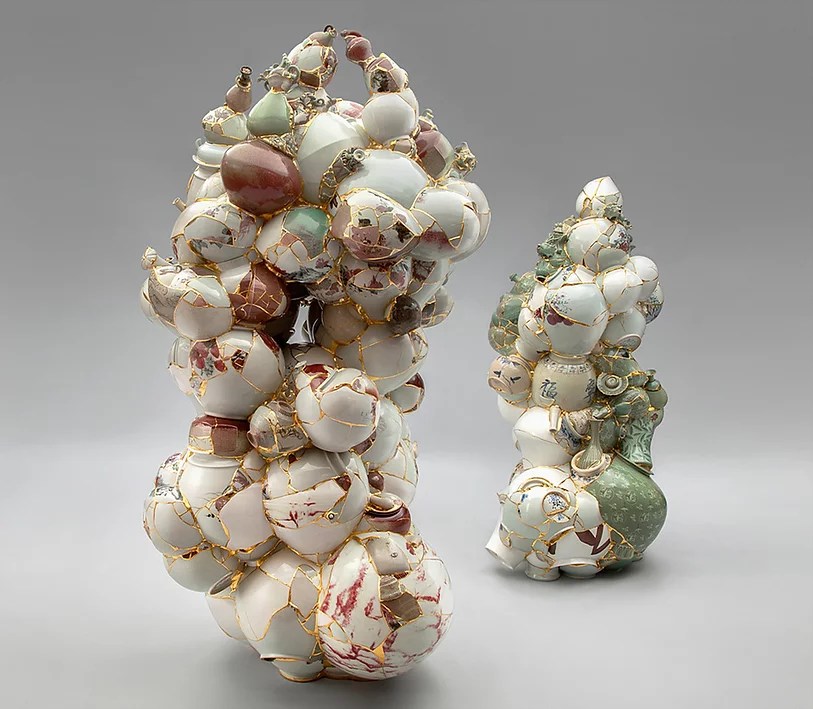
Korean artist Yeesookyung received her MFA in Painting, at Seoul National University, Seoul, Korea, in 1989.The artist creates sculptures by combining discarded shards of porcelain, assembling them to make new forms and fusing them with gold leaf.The resulting works are often organic in shape, resembling soap bubbles or other biomorphic forms.Her series titled “Translated Vase,” was first inspired by the Korean artisan tradition of destroying porcelain works that are not deemed pristine, and she has continued to make the fused pieces since 2001.Intrigued by these tossed aside works and shards, Yeesookyung began saving fragmented tea cups and pots rejected by contemporary masters.The artist collected broken shards from artisans who worked in Korea replicating historical vessels from the Goryeo (918–1392) and Joseon (1392–1897) dynasties.Honoring the works’ dismantled states, she traces each crevice in 24-karat gold leaf in the style of Japanese kintsugi, merging the unwanted works together in a way that heightens the beauty of their distress.By ‘translating’ these porcelain elements, Yeesookyung highlights the fragility and imperfections of human existence as well as the inevitable failure of any attempt to construct historic continuity.More of Yeesookyung‘s wonderful creations can be found at https://www.yeesookyung.com/ and https://www.instagram.com/yeesookyung_/.


Sunday Evening Art Gallery — Bruno Catalano

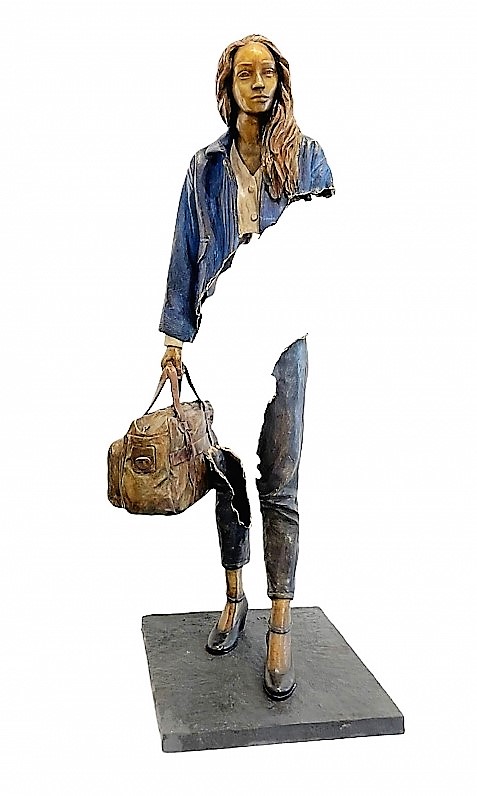
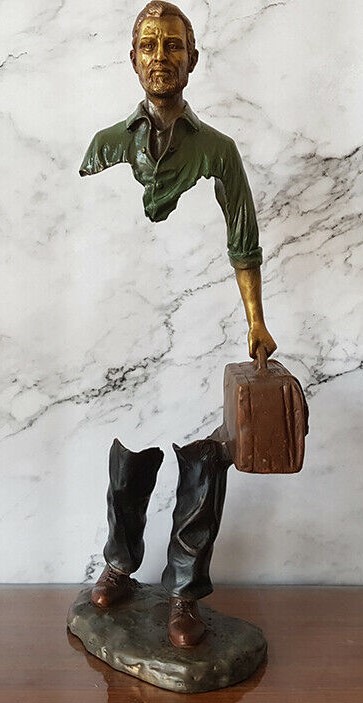
Bruno Catalano was born in 1960 in Khouribga, Morocco, near Casablanca.

His Travelers—or Les Voyageurs—are fractured and fragmented individuals, each on its own path.They are travelers, walking, unruffled, suitcase in hand, except that their bodies are in bits, open to the wind and light.In many, the torso has almost disappeared; there, the arm looks like it was blown off by a shell.

As they are, they look like they’re coming back from far away, worn by centuries of erosion.And yet, each retains his balance and coherence.

Through his statuary Catalano replays the adventure of mankind, always in-between two shores, repelling all the boundaries.More of Bruno Catalano‘s amazing statues can be found at https://brunocatalano.com/.


Sunday Evening Art Gallery — Ellen Jewett

Artist Ellen Jewett refers to her sculptural work as “natural history surrealist sculpture,” a blend of plants, animals, and occasionally human-made structures or objects.Her artwork is deeply informed by an extensive background in anthropology, medical illustration, exotic animal care, and even stop-motion animation, all of which accentuate the biological structure of each piece, while freeing her imagination to pursue more abstract ideas.Over time, Jewett has become more focused on minimizing materials and relying a negative space.

“I find my sculptures are evolving to be of greater emotional presence by using less physical substance,” she shares.In addition, she eschews any potentially toxic mediums like paints, glazes, and finishes, opting to use more natural, locally-sourced materials.“This, unavoidably, excludes most of what is commonly commercially available, and has sent me on a journey of unique material combination and invention.”

By employing these more uncommon materials, and leaving traces of fingerprints and other slight imperfections Jewett hopes her work leaves a more authentic impression.More of Ellen Jewett‘s delightful work can be found at http://www.ellenjewettsculpture.com/.


Sunday Evening Art Gallery — Guy Clement Cohen


Guy Clement Cohen was born in Egypt in 1951 to a French Jewish Father (whose own father was a rabbi) and an Italian mother.

As a university student he graduated in Electrical Engineering.

One of his favorite hang-outs in the heart of Paris were Les Halles where the Centre George Pompidou Museum was created.

He developed some of the earliest Computer-Aided Art and several of his pieces were shown at the opening of the Museum in the early 70’s.

Years later, after a successful career in cutting-edge technology and product design, the engineer with the soul of an artist decided to dedicate himself to his lifetime passion and became a sculptor.In each sculpture, Cohen reveals elements of the creation and oneness.He is an intuitive artist and brings to his art the multi-cultural and multinational flair and experiences to which he has been exposed all his life.

“I am able to remove all undesirable thoughts and tendencies and I project into my sculptures a dimension of my senses and feelings in a very organic way that imbues my art with a remarkable wisdom, wholeness, peace and fulfillment, the sculptor says.

More of Guy Clement Cohen’s works can be found at http://guyclementcohen.com/.


Sunday Evening Art Gallery — Georgie Seccull

Australian sculptor and installation artist Georgie Seccull creates large-scale stainless steel sculptures of animals and other creatures seemingly locked in motion.

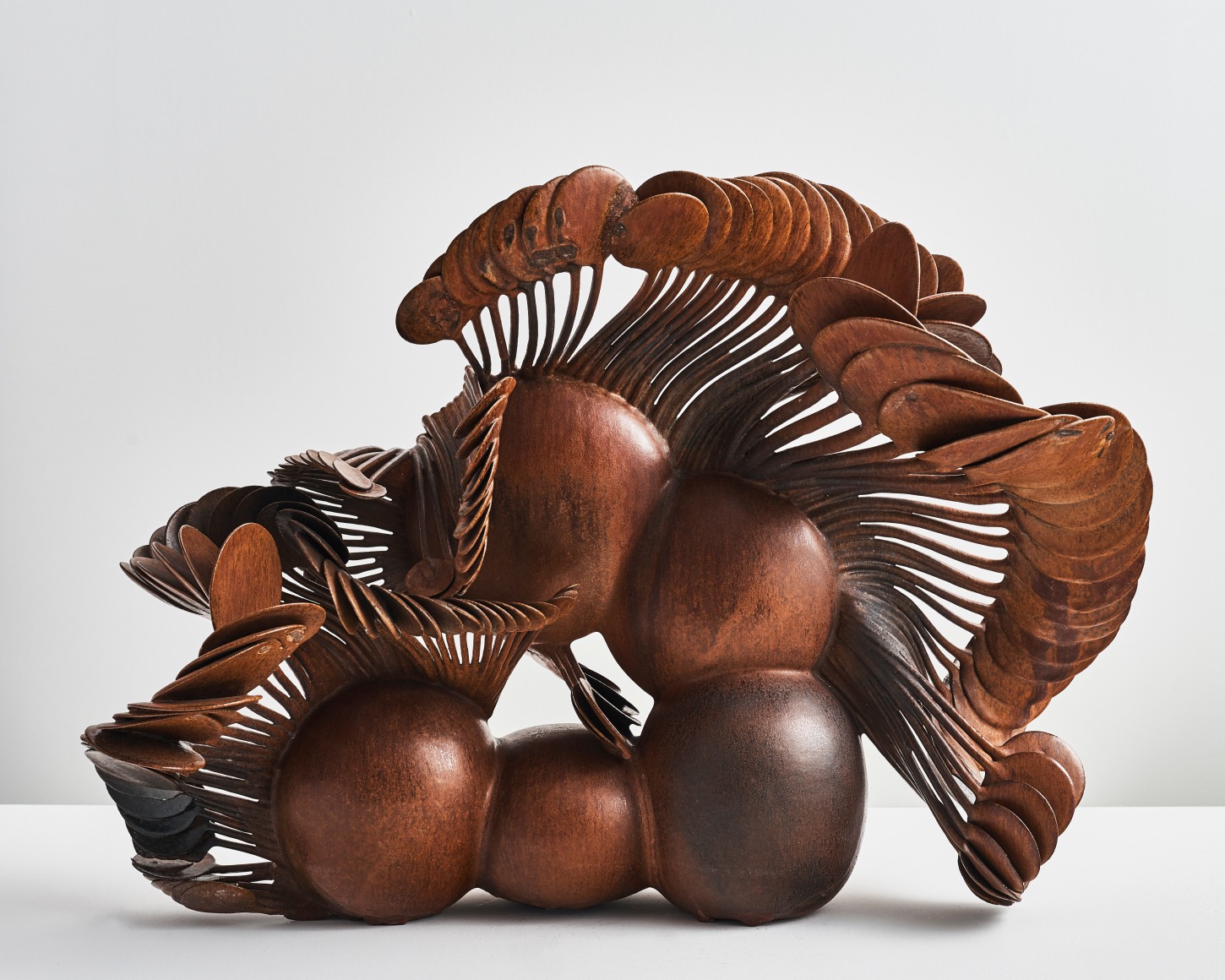
Her work explores our individual and collective perceptions of polarities in existence, and how these observations inform our reality.Comprised of numerous pieces cut from metal sheets, the materials lend themselves to organic forms like feathers, scales, wings, or the armaments of crustaceans.Working meticulously by hand, Seccull transcends hard heavy steel into fluid expressions of life force, each piece an exploration into the delicate aspects of the natural world through paradox in subject matter and use of materials.Seccull’s work scales up dramatically in her installation practice where she’s filled entire rooms and atriums with suspended pieces.

“My process is much the same. I begin with a thousand pieces scattered on the ground, then working almost like a jigsaw puzzle, I pick them up one by one and allow each piece to come together organically and dictate the outcome,” the artist shares in a statement.

More of Georgie Seccull‘s amazing sculptures can be found at https://georgieseccull.com/. and https://www.instagram.com/georgieseccull/.


Sunday Evening Art Gallery — Xavier Puente Vilardell

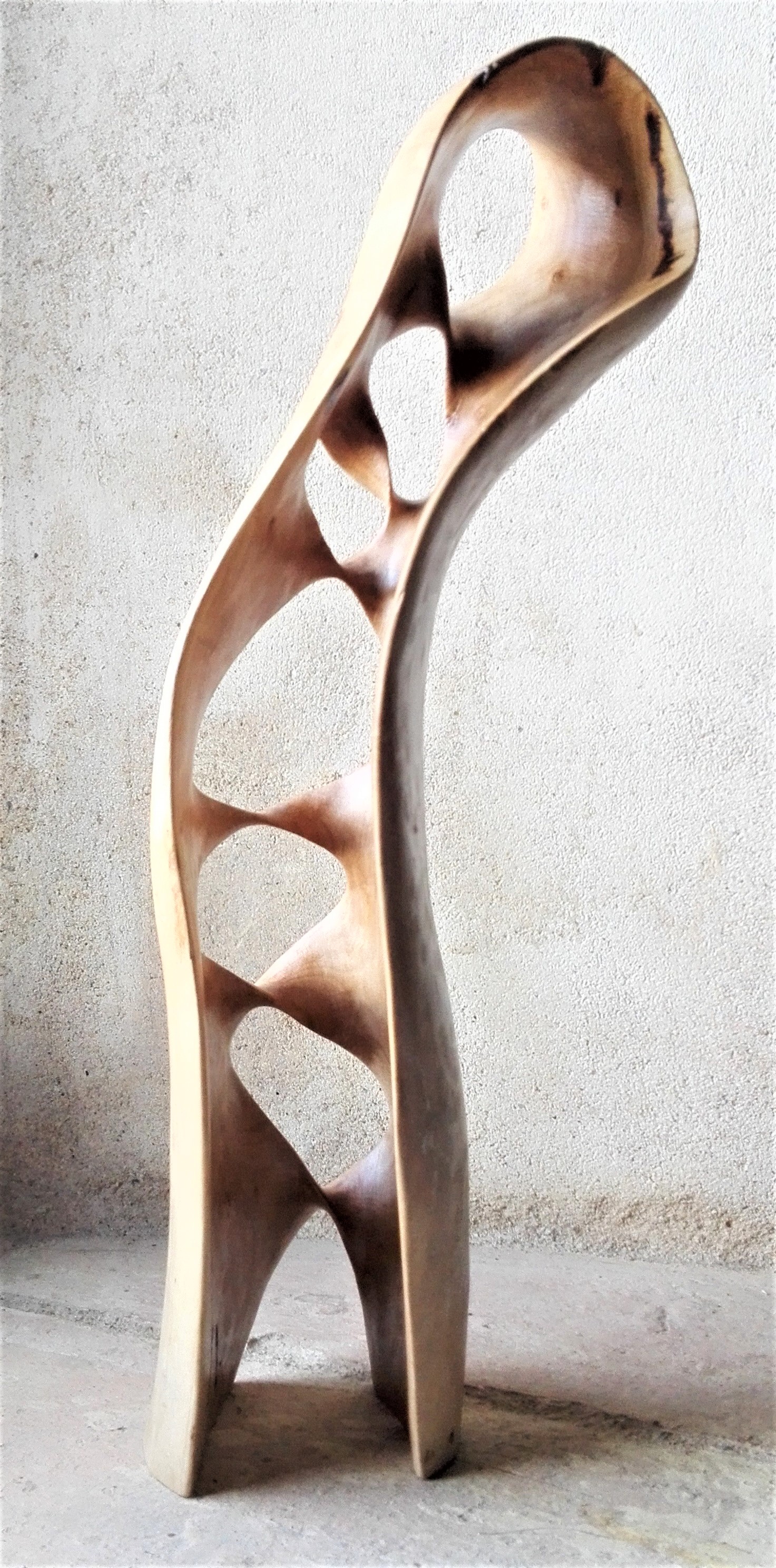
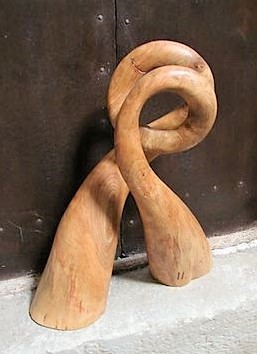
Brussels-based sculptor Xavier Puente Vilardell turns blocks of wood into twisting, curled objects that look more like scrolls of paper or pieces of fabric than lumber.Many of these eye-catching sculptural forms resemble architectural structures and other natural forms shaped by wind, rain, and the sea’s turbulent waves.Vilardell’s series of wood pine sculptures are meticulously carved with unique, elegant features.The artist uses pinewood, a malleable material that enables him to make precise and curved structural forms.To create his sculptures, Vilardell uses traditional cutting tools and crafts each piece by hand.His skill and patience enable him to turn the blocks of wood into sculpted forms that twist in every direction, almost appearing to defy gravity.Vilardell says, “Working with wood requires a deep respect for the living being that is necessary to understand its inner nature and characteristics that give a certain personality.”More of Xavier Puente Vilardell‘s skillful sculptures can be found at https://www.xavipuente.com/.


Sunday Evening Art Gallery (midweek) — Woodrow Nash

Born in the late 40’s in Akron, Ohio, Woodrow Nash is the product of sanctified churches, 1950’s television images, and black inner city neighborhood schools run by predominantly white middle-class educators.

Nash’s consuming passion to elevate the human spirit takes the form of sculptures, building a sense of mystery and charisma into each piece. 

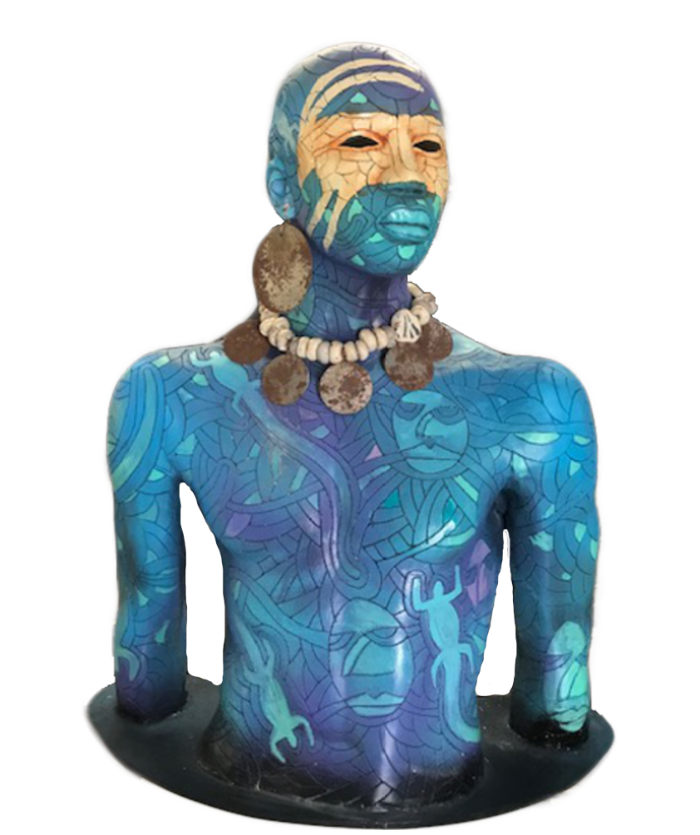
Through his work, Nash achieves his goal of integrating expression, complex symbolism and sophisticated aesthetics to yield striking embodiments of the human soul and sensuality.Examining the contemporary male and female physique, he explores the body’s natural form and mythology.Incorporating various styles and techniques utilizing stoneware, earthenware, terracotta or porcelain, Nash’s work is fired electronically, pit fired or via a “raku” effect – creating an “African Nouveau” trademark that’s solely his own.While the images are African, in general, the concept is 15th century Benin with the graceful, slender proportions and long, undulating lines of 18th century Art Nouveau.More of Woodrow Nash’s colorful sculptures can be found at https://woodrownashstudios.com/. 


Sunday Evening Art Gallery — Wenqin Chen

Wenqin Chen studied at the Art & Design School of Fuzhou University 1995-1999.

 Since 2000’s, Chen has used Chinese calligraphy, sculpture and installation to explore the relationship between life, art and their diversity.

The being of life, the wonder of the human experience, and tensions in our living environment are intrinsic to and evident in his work.

As a source of inspiration and research, Chen studied extensively the human body, various scientific journals and statements, real life examples, and countless images.Working in mostly stainless steel, Chen’s sculpting is a process of comprehending and elaborating on the vastness of life.

“Everything has life, life is everywhere,” is the truth he consistently explores in his work.He  has successfully combined his art and pursuit of academia with ancient Chinese culture and contemporary western art.

More of Wenqin Chen‘s work can be found at http://wenqinchen.com/.

Sunday Evening Art Gallery — Peter Jansen

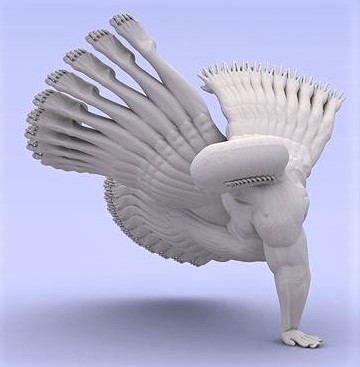
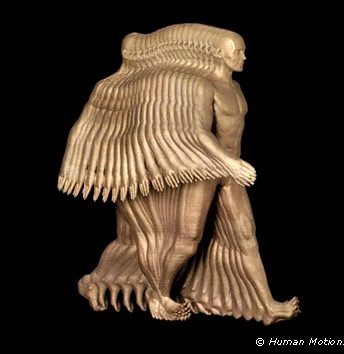
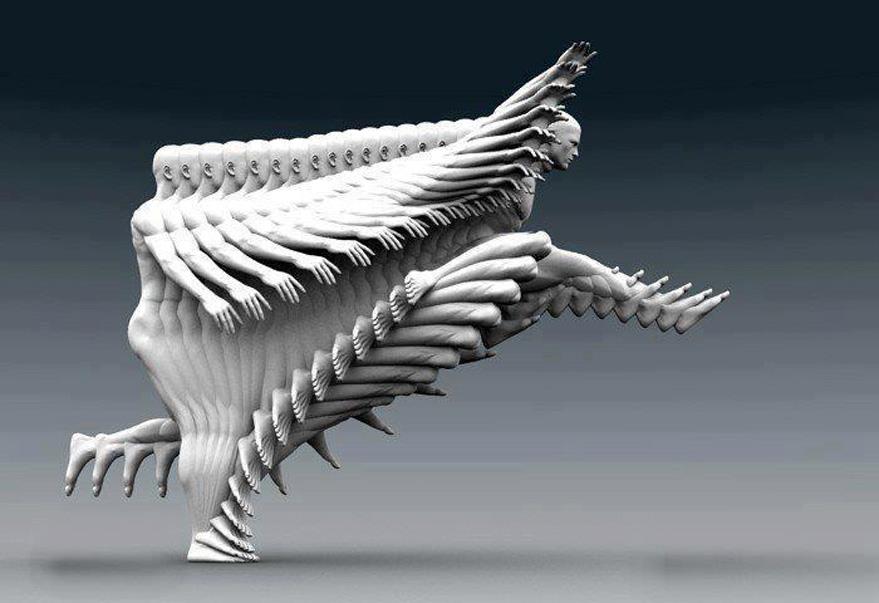
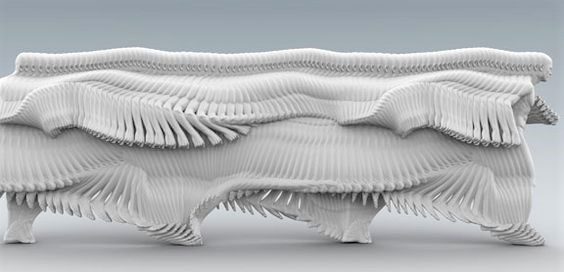
Peter Jansen (1956) studied Physics and Philosophy at the university.For a number of years he worked as a guide, accompanying groups on survival and canoe trips, after which he dedicated his live entirely to the arts.Based on his ideas on transposition and movement the artist uses shapes of the human body to create energetic spaces.In his earlier works he focused on open spaces, created almost free of matter and weight.In his recent sculptures he captures sequences of human movements in space and time, in a single frame.

More of Peter Jansen‘s amazing sculptures can be found across the Internet.


Sunday Evening Art Gallery — Johnson Tsang

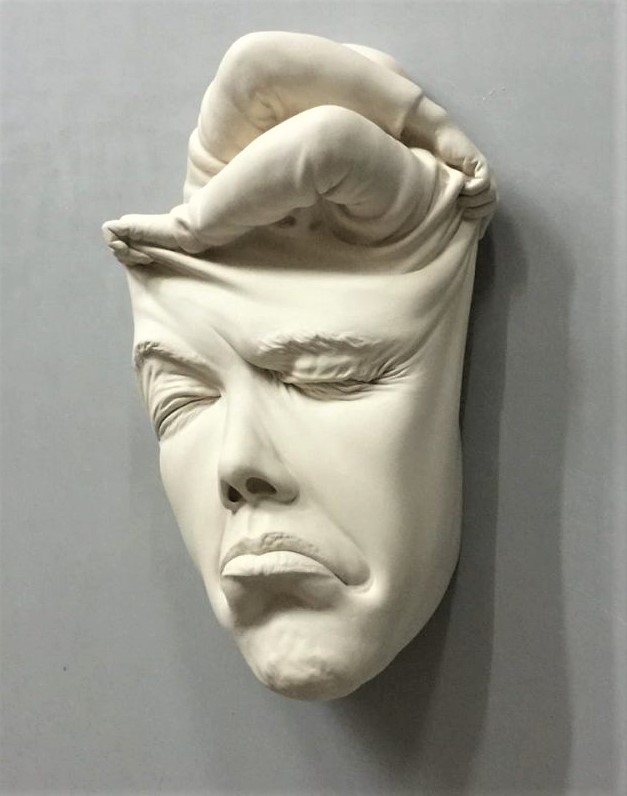
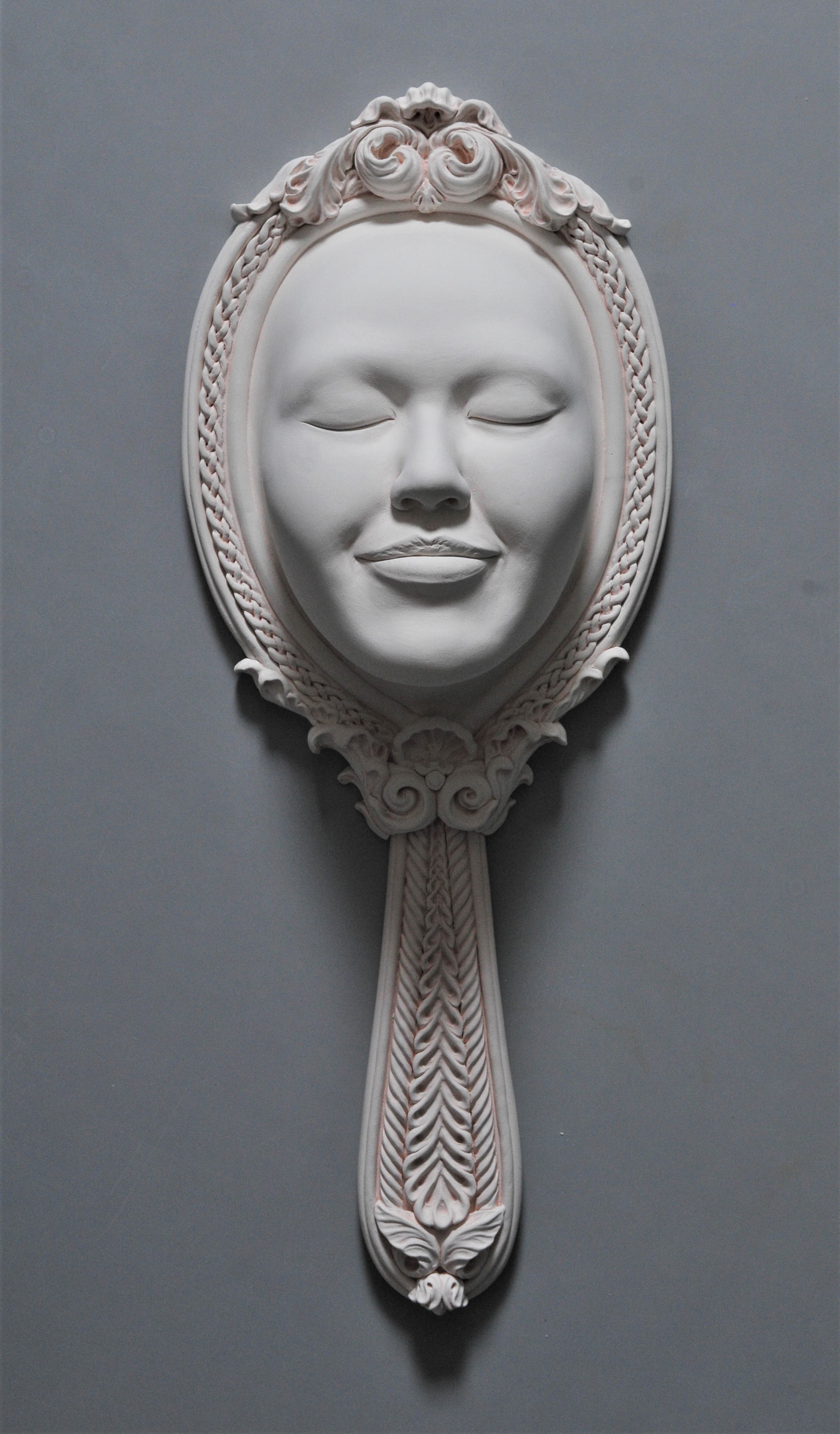
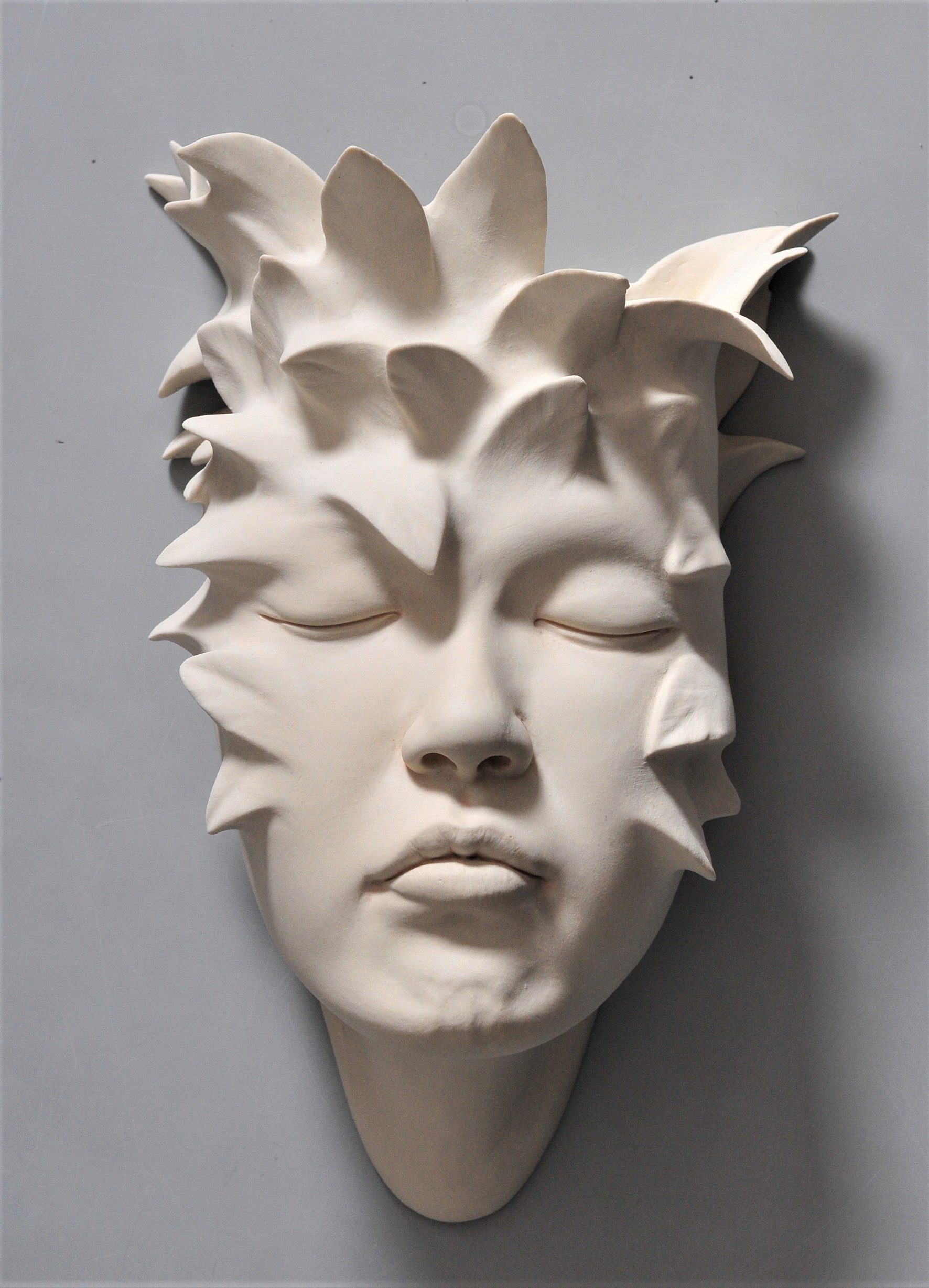
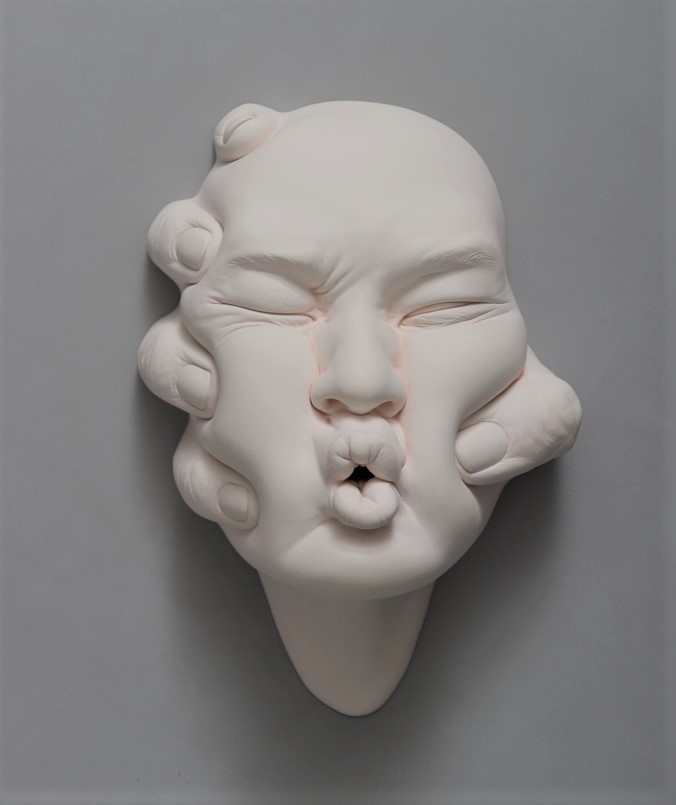
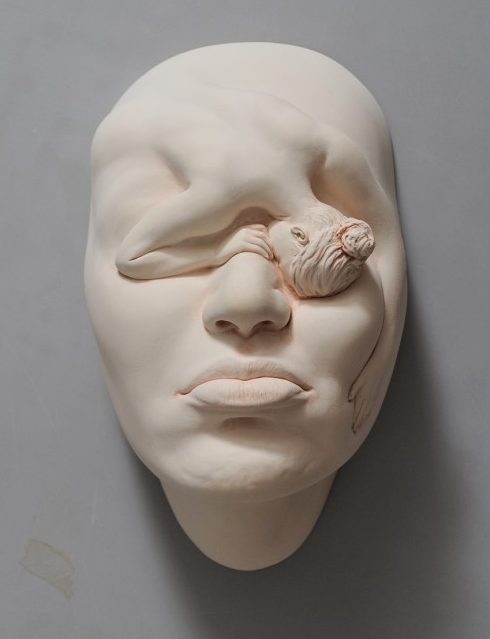
Sculptor Johnson Tsang pushes realism’s boundaries in his sculptures of faces that are stretched and opened up in surreal ways.

The Hong Kong-based artist’s work features surreal contortions that squish, wring, melt, and stretch.

His creativeness suggests an exploration of the limited space between the conscious and subconscious.

Between the self and other.

Tsang uses plain, unglazed clay, letting go of such typical details such as hair and skin color to focus the viewer’s attention on the expressions of his imagined subjects.

Although Tsang grew up poor and worked both in the trades and as a policeman, he says he has always been in love with art.

“The clay seemed so friendly to me, it listened to every single word in my mind and did exactly I was expecting. Every touch was so soothing. I feel like I was touching human skin.”

More of Johnson Tsang‘s wonderfully imaginative art can be found across the Internet including Instagram and Red Seas Gallery.    


Sunday Evening Art Gallery — Sam Shendi

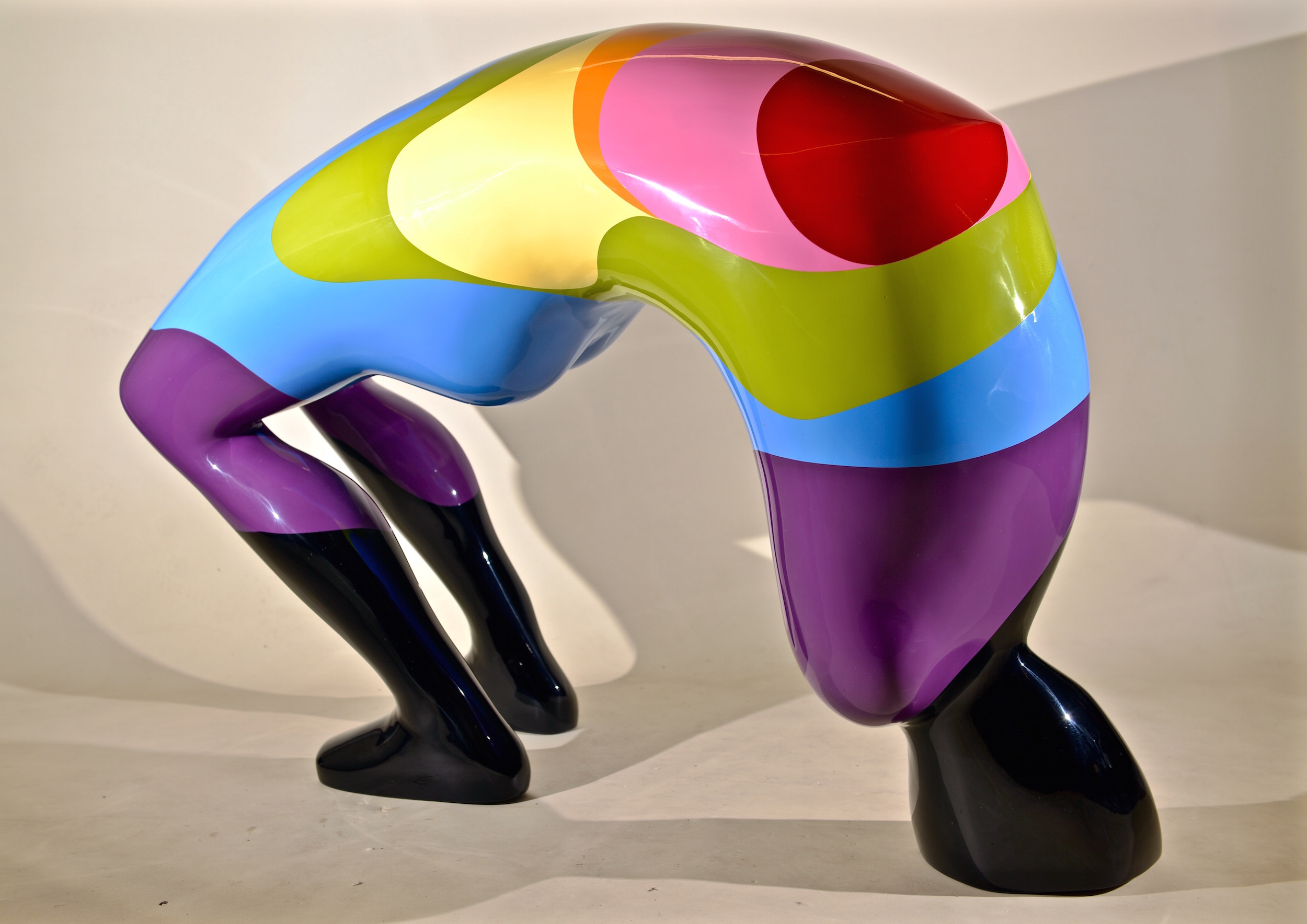
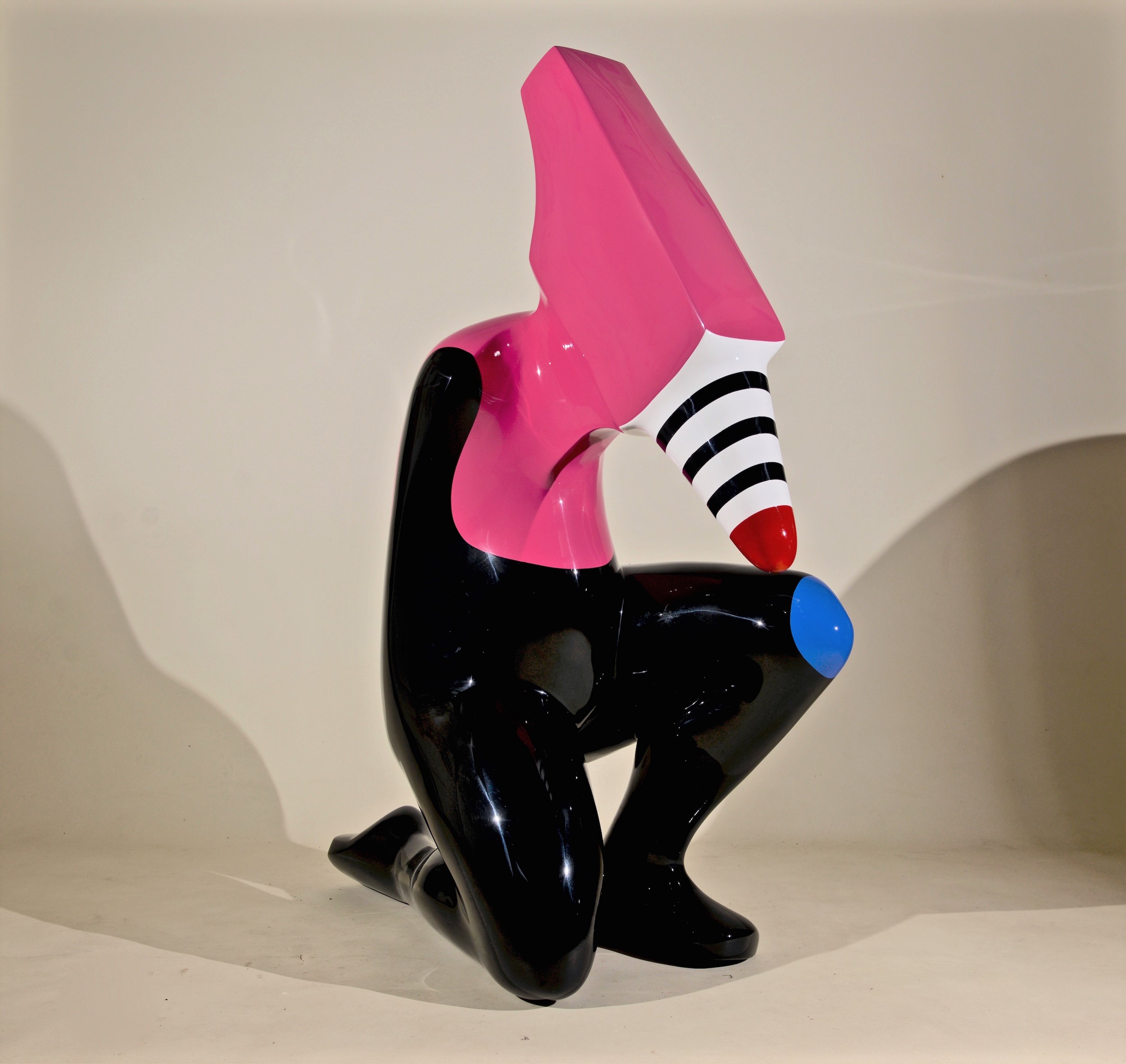
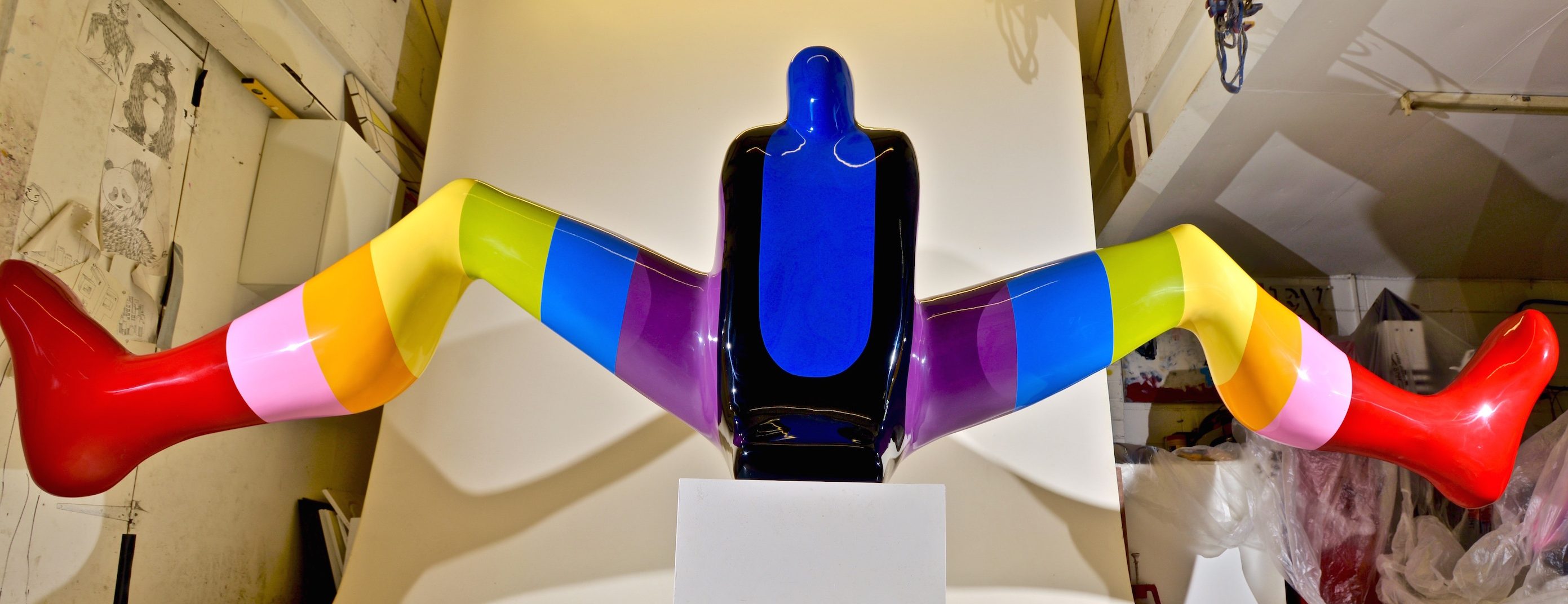
Sam Shendi is an Egyptian-born British sculptor. He uses contemporary industrial material, steel, stainless steel, aluminium and fiberglass to create his figurative work.

Shendi believes that his works whittle down the human figure to its simplest form, enabling the exploration of the idea of the human form as a vessel.

His colors enhance his sculptures, bringing an extra layer to his abstract forms.

By reducing the human body to a container or minimal shape, his creations become centered on an emotion or an expression.While he appreciates the abstract form, his interest is in the human andpsychological dimensions he adds to his sculptures.

Describing himself as a figurative sculptor it is important to Shendi that the work, however minimalistic, still has an impact on the viewer visually and emotionally.

His work is colorful, inventive, and something that makes the observer stop and just….look.

More of Sam Shendi’s bright modern art can be found at http://samshendi.co.uk/.

Sunday Evening Art Gallery — Michelangelo

Michelangelo di Lodovico Buonarroti Simoni (1475-1564) was a sculptor, painter and architect widely considered to be one of the greatest artists of all time.Tomb of Pope Julius II                   

As a young boy, Michelangelo was sent to Florence to study grammar under the Humanist Francesco da Urbino. However, he showed no interest in his schooling, preferring to copy paintings from churches and seek the company of other painters.

Battle of the Centaurs

At 13, he persuaded his father to allow him to leave grammar school and become an apprentice to the artist Domenico Ghirlandaio, one of the most successful fresco painters in Florence.

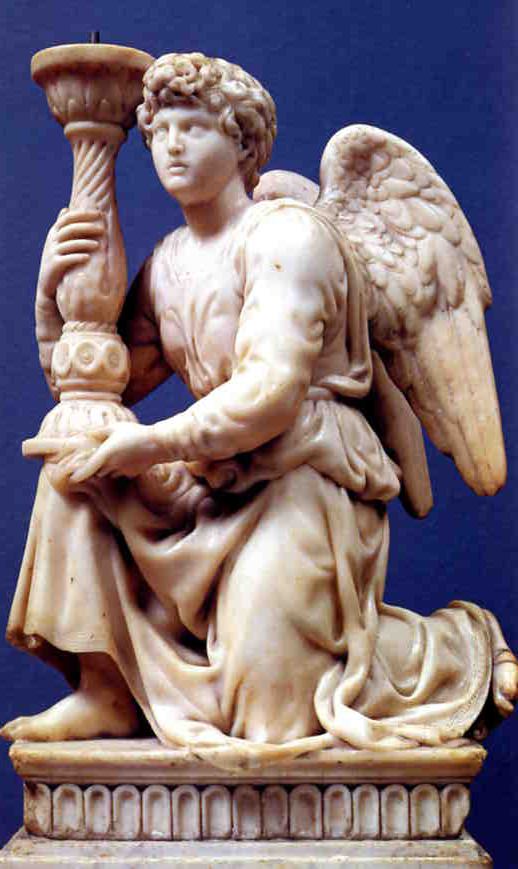
Angel

Michelangelo spent only a year at the workshop the moved into the palace of Florentine ruler Lorenzo the Magnificent, of the powerful Medici family, to study classical sculpture in the Medici gardens.

The Rebellious Slaves

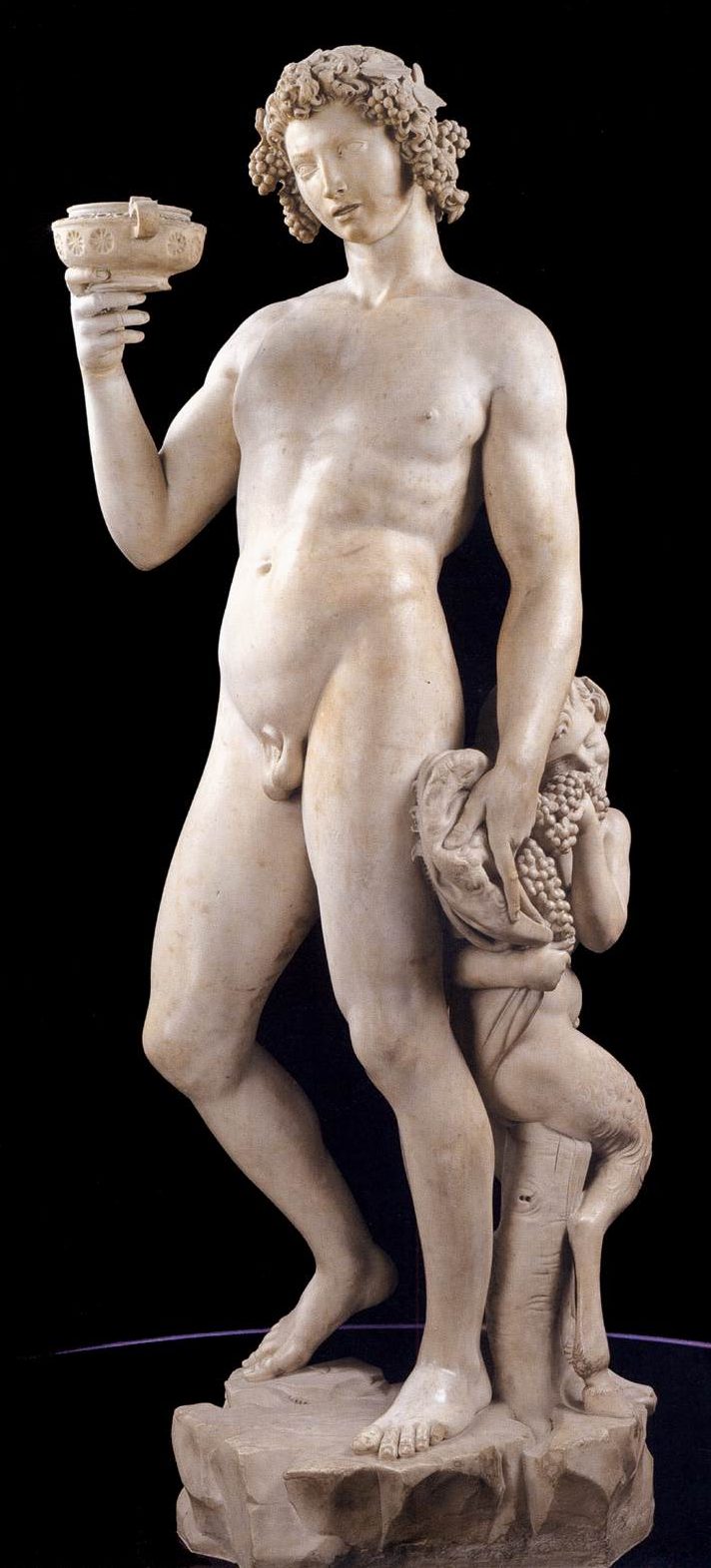
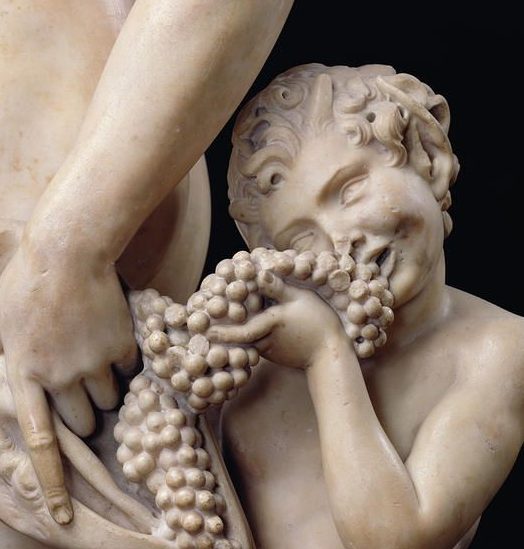
At the age of 22, Michelangelo moved to Rome and sold his first important work: the Bacchus and another Cupid, now lost.

Bacchus

 He was only 24 when he finished sculpting the Pieta for the French cardinal Jean de Billheres. Michelangelo went to the marble quarry and selected the marble for this exquisite piece himself.

Pieta

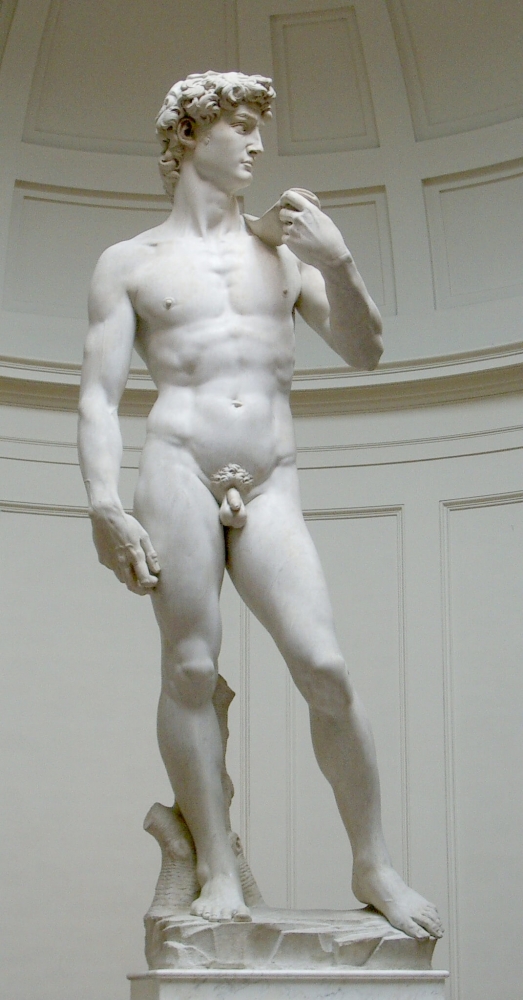
At age of 27 Michelangelo returned to Florence, which had become a republic, and received an order from the local authorities to sculpt a colossal marble statue of  David. 

David

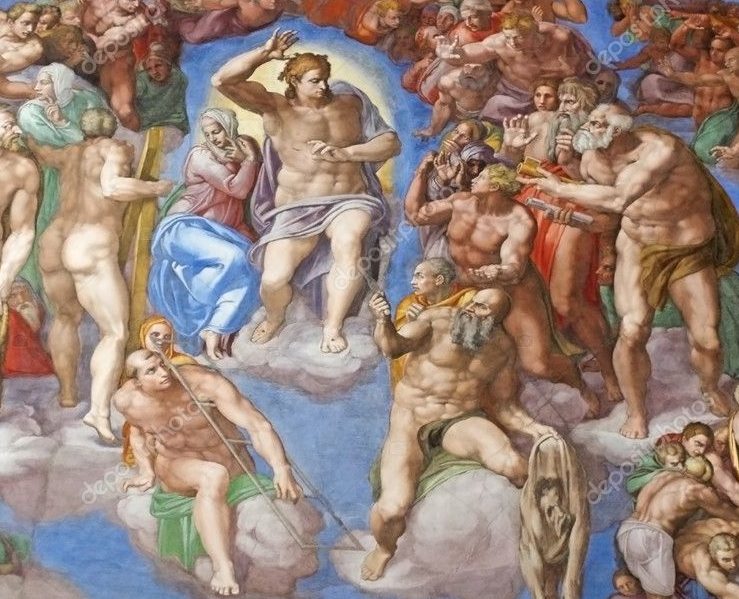
In 1508, when Michelangelo was 28, Pope Julius decided to decorate his uncle’s chapel  (called the Sistine, after Pope Sixtus IV) and ordered Michelangelo to fill the ceiling with frescoes.  He protested that he is no painter but the Pope insisted and Michelangelo began to work alone and in great discomfort. He finished the Sistine Chapel frescoes in 1512.

Sistine Chapel

His amazing work throughout his long life can be found on many sites on the Internet, especially https://www.michelangelo.org/..

Sunday Evening Art Gallery — Penny Hardy

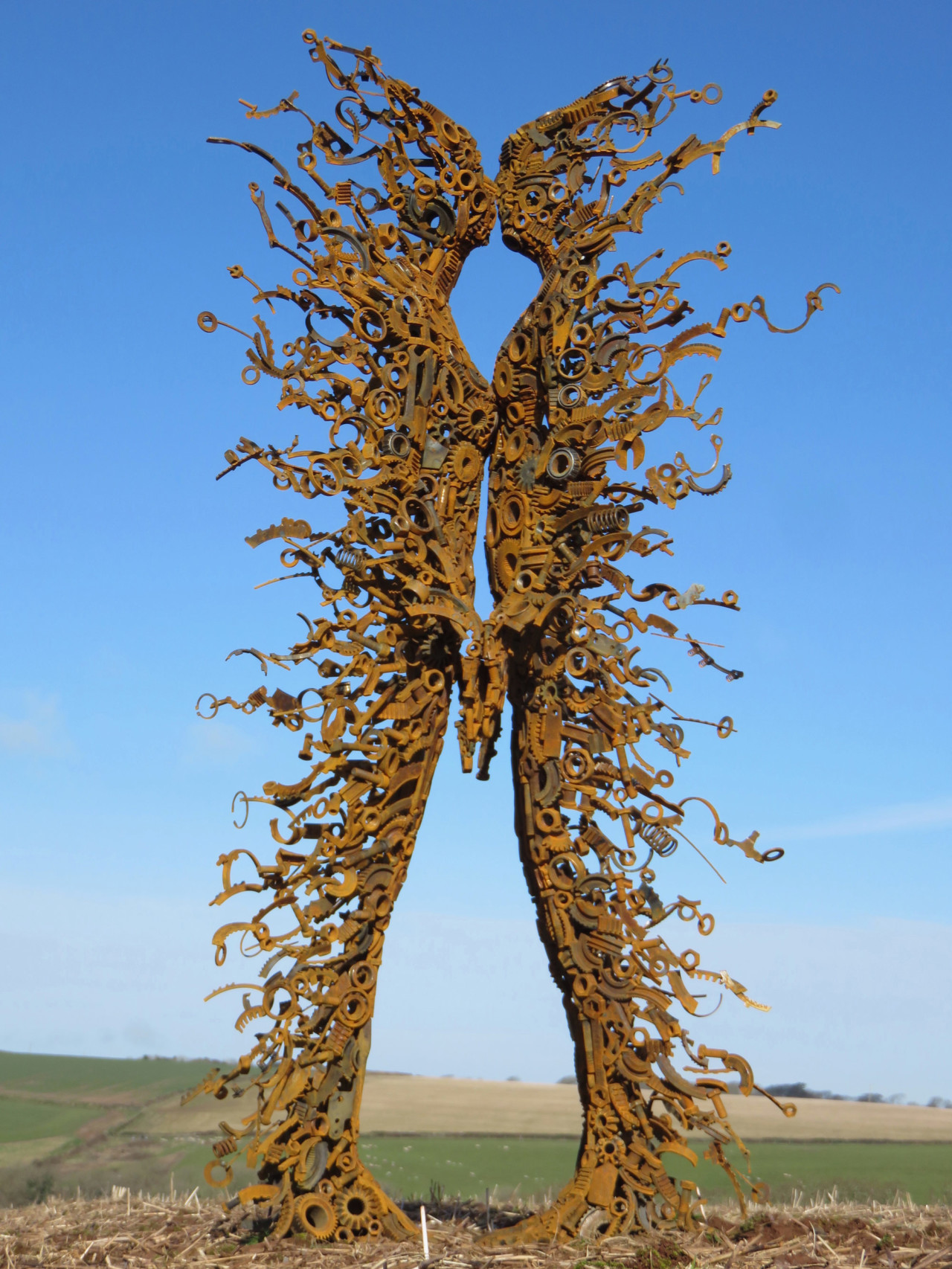
Sculptor Penny Hardy combines discarded metal items to create three-dimensional figures based on her body’s own dimensions.

Although the physique has the same core reference, each sculpture is a unique creation based on the varied assortment of rusted gears, bolts, and screws used in its composition.

In display, the works are either presented alone or in pairs of two, and express fundamental emotions through their relationship to the environment or each other.

By using discarded man-made metal items, which have been so skillfully made and used to create their own mechanical energy, she hopes to extend their life in another form,

re-use that energy for a different purpose, and exchange their function to create a new entity.

More of Penny Hardy‘s sculptures can be found at http://www.pennyhardysculpture.com/.

I saw the angel in the marble and carved until I set him free.

~Michelangelo

The elections are over, candidates came and some went, everyone believing they know what’s best for my/our community, our district, our state. One falls and the other takes up the march. In the end, the stalks of corn whistle and whine and sing the song of tomorrow.

I just started watching “The Agony and the Ecstasy” about Michelangelo. It begins by covering his amazing sculptures such at St. Matthew, the tomb of Juliano, and the Medici tombs, including the tomb of Lorenzo. He was 24 when he carved the magnificent Pietà of St. Peters, and 26 when he started to carve famous statue of David.

And he was 33 when he started painting the Sistine Chapel. That huge, vast, empty ceiling. 

33. What were you doing when you were 33? 

I was working in downtown Chicago and had been married for three years and had a two-year-old when I was 33. The little painting I did was more a passing fancy, and the writing I did would not explode in earnest until ten years later.

Some people are just gifted. Some people are just magic. Some people have something we will never have. 

I don’t think the competition back in 1508 was as extreme as it is these days. There was no Internet, no Facebook or no blogs. No telephones, no printing presses, no TV or Xeroxes. Oh, I’m sure there were many sculptors back then. Sculptors and painters. But to have your work noticed and remembered and studied and worshipped — that’s a totally different story.

I have no idea how to sculpt anything, no less chisel a man out of marble. I may paint my pithy version of an alien landscape, but I have no idea how to paint people and ceilings and landscapes.

He did.

He knew how to create art from blocks of stone and angels from paint at the same time people lived with thatched roofs and bathed once a year.

When you stop and take a look at the history of art — really take a look at how such marvelous creations were created in such sparse and simple times — you cannot help be be amazed. 

You don’t have to be “into” the arts to appreciate the talent and stories that echo through the hallways of time. A calling was all that was needed; a calling to an artist who had the talent, the patience, and the dream of making something bigger than themselves. 

You may not have the fame or endurance of the masters of old, but you do have the talent and the inspiration. Throw yourself into your art, and let it flow through you and onto your medium.

Don’t compare yourself to artists like Michelangelo di Ludovico Buonarroti Simoni or Rembrandt Harmenszoon van Rijn or Marc Zakharovich Chagall. You are your own magic, your own muse. You hear music others can’t hear. Follow that calling. 

And take a look at some of the artists of the past. Learn about their art, their history, their passions.

Maybe you will see yourself reflected in their creativity.
Sunday Evening Art Gallery on Friday — Guy Laramee

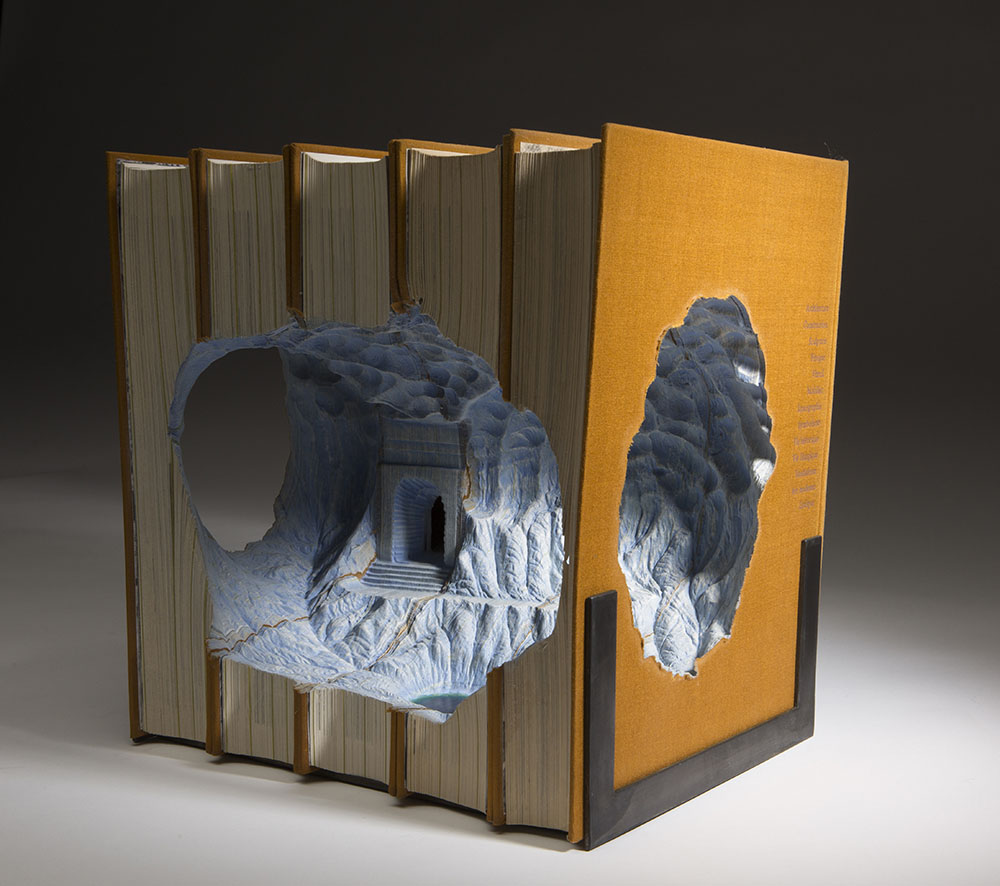
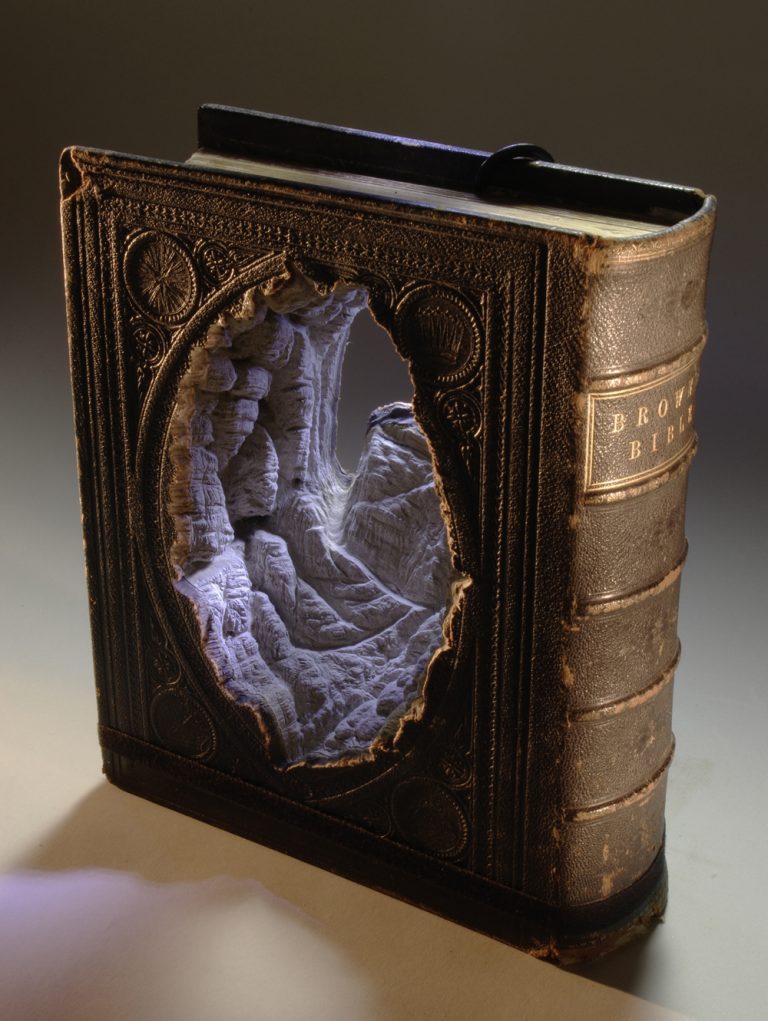
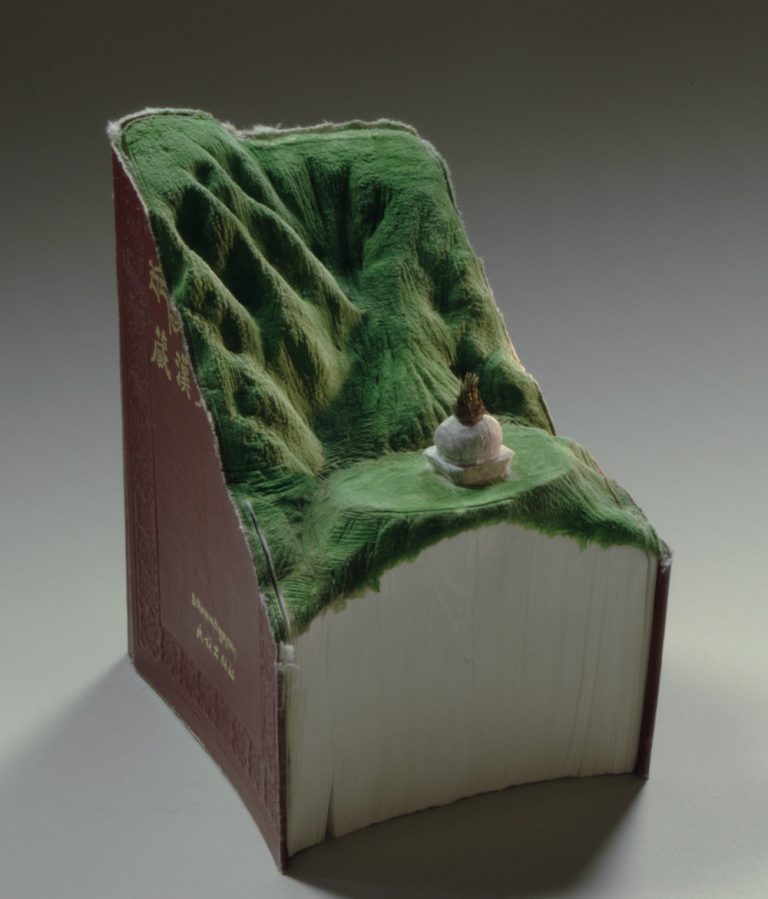
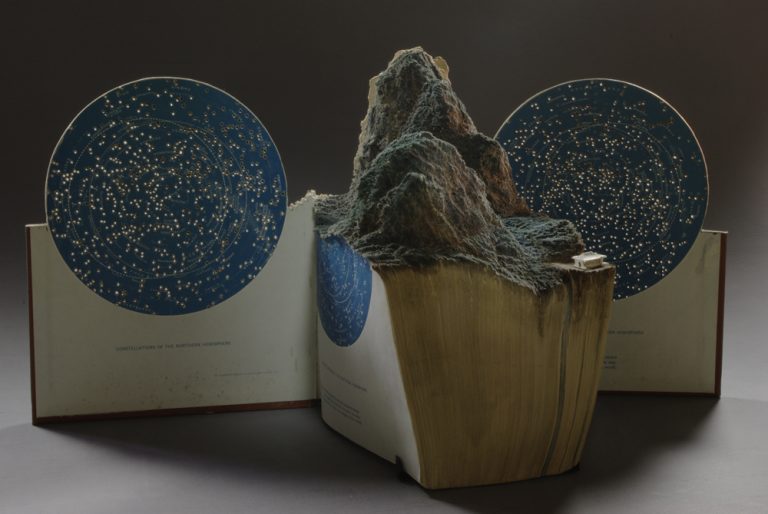
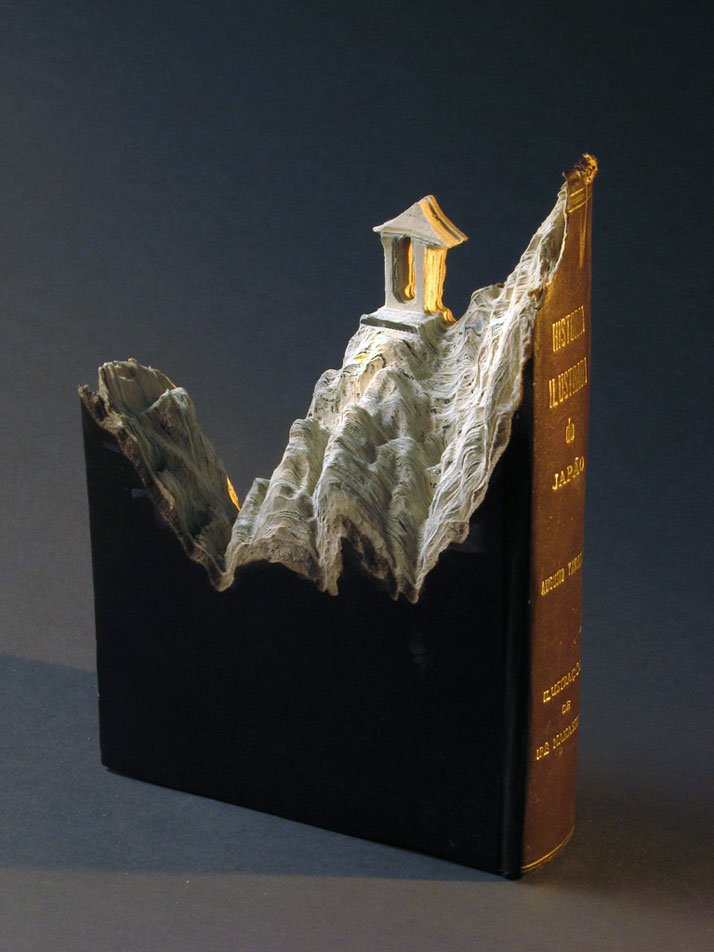
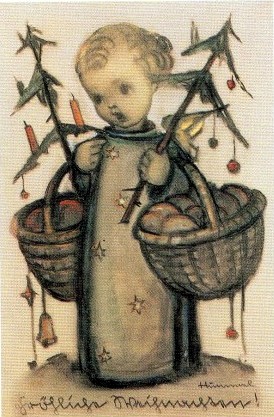
Montreal-based artist Guy Laramée created sculptural works, highlighting his evolving ability to excavate mountainous landscapes, cavernous hollows, and sloping watersheds from the dense pages of repurposed books.

One of his favorite mediums are bound stacks of old dictionaries and encyclopedias which he carves using a method of sandblasting to which he later applies oil paints, inks, pigments and dry pastels, crayon, adhesives, and beeswax.

When photographed up close the works appear almost realistic, as if the viewer is looking at aerial or satellite topographies of Earth

Among his sculptural works are two incredible series of carved book landscapes and structures entitled Biblios and The Great Wall, where the dense pages of old books are excavated to reveal serene mountains, plateaus, and ancient structures.

Laramee says, “I carve landscapes out of books and I paint Romntic landscapes. Mountains of disused knowledge return to what they really are: mountains.

They erode a bit more and they become hills. Then they flatten and become fields where apparently nothing is happening.  Piles of obsolete encyclopedias return to that which does not need to say anything, that which simply IS.”

More of Guy Laramée’s work can be found at http://www.guylaramee.com 

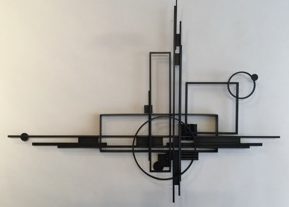
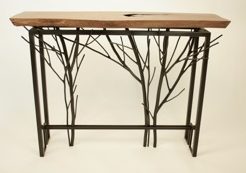
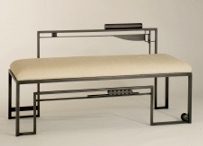
Sunday/Monday Evening Art Gallery Blog — Randall Henry Riemer

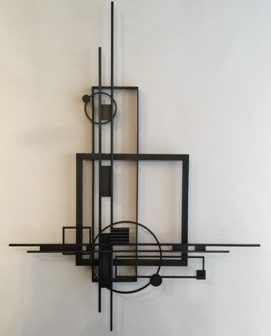
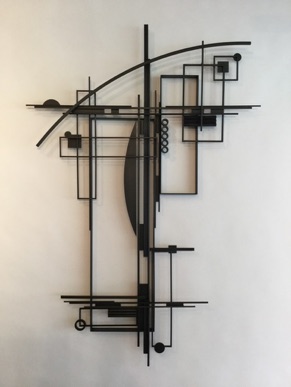
Randall Riemer is an award winning metal artist from Wisconsin.


His works include architecturally inspired sculptures and furnishings for residential and commercial environments.

His metalwork is modern, eclectic, and magical.

I found this marvelous artist at the Art Fair on the Square in Madison, Wisconsin. What a marvelous vendor.

More of Randall Henry Riemer‘s amazing work can be found at www.rhenrydesign.com


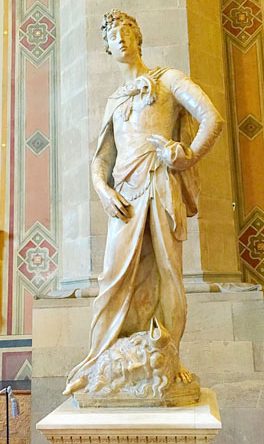
Sunday Evening Art Gallery Blog — Donatello

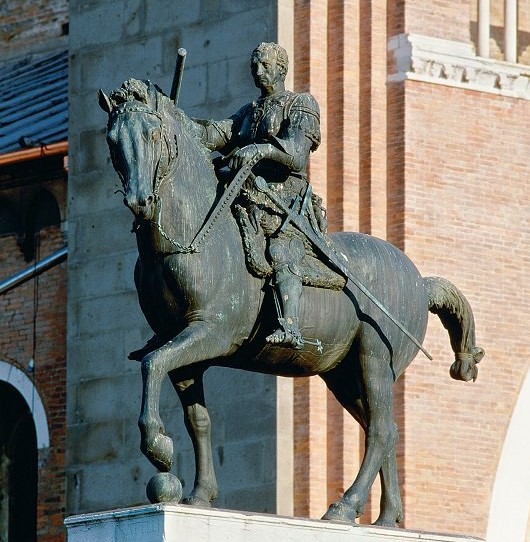
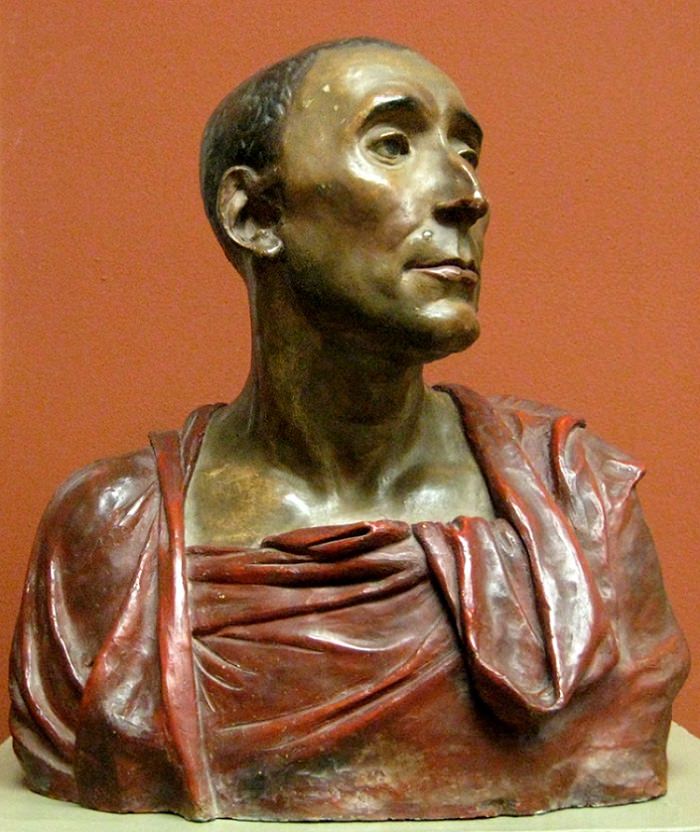
Italian sculptor Donato di Niccolò di Betto Bardi (c. 1386 -1466) , better known as Donatello, was the greatest Florentine sculptor before Michelangelo, and was the most influential individual artist of the 15th century in Italy.

He was one of the forerunners of Florentine Art, which also paved way for the age of Renaissance Art.

Donatello drew heavily from reality for inspiration in his sculptures, accurately showing suffering, joy and sorrow in his figures’ faces and body positions.

His fascination with many styles of ancient art and his ability to blend classical and medieval styles with his own new techniques led to hundreds of unique pieces in marble, wood, bronze, clay, stucco and wax.

Donatello’s legacy as the most accomplished sculptor of the early Renaissance is well deserved. With his work he ushered in an era where artists could feel free to interpret the emotion inherent in their subject matter without being tied to outdated legends.

More of Donatello’s history and works can be found at http://www.donatello.net/
Sunday Evening Art Gallery Blog — Anthony Howe

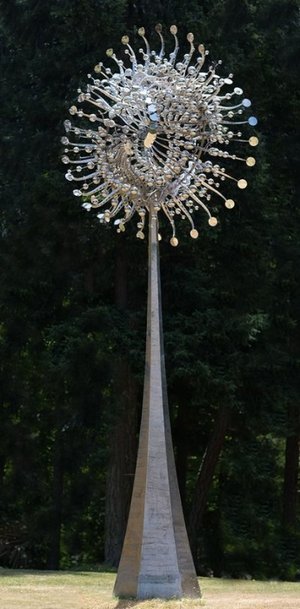
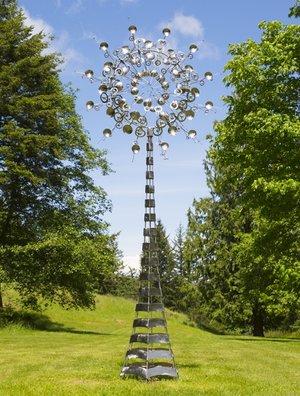
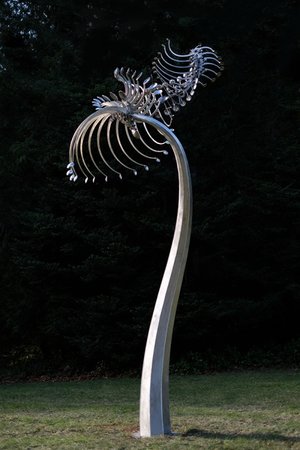
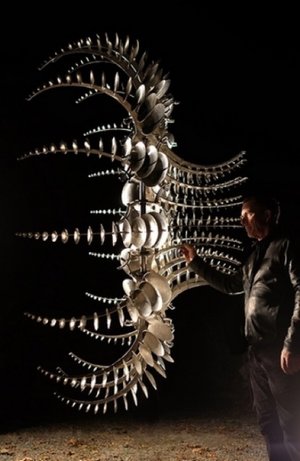
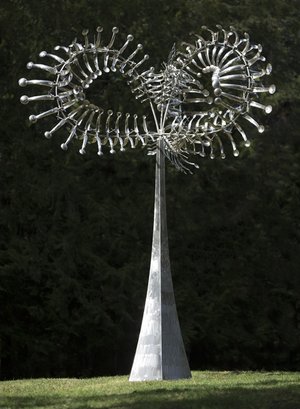
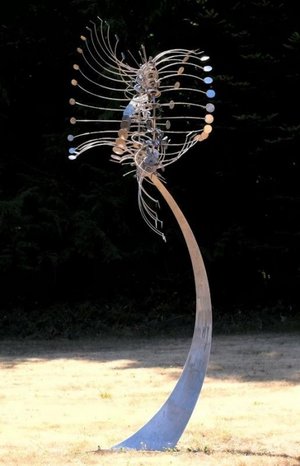
The first thing to do when viewing the work of Anthony Howe  is to CLICK ON EACH IMAGE.

That way you can see the fascinating movement of each wind sculpture..
In Cloud Light III

Oingo 2014


Sky Spiral or Leaving the Lollipops


Di Octo and Sculptor 2015


Kweebee


Azion Prototype

The movement of each of these sculptures is mesmerizing. The perfect balance, the perfect swirl, the perfect twirl.

More of Anthony Howe’s amazing wind sculptures can be found at his website, https://www.howeart.net.

Sunday Evening Art Gallery Blog — Michael Parkes

entry1_1006_large_fullsize

Born in 1944, Michael Parkes studied graphic art and painting at the University of Kansas, and then traveled for 3 years through Asia and Europe.

entry1_1001_large_fullsize

Parkes is both a uniquely talented painter and master of the art of original stone lithography.

He is a painter, sculptor, and stone lithographer.

But more so he has been called the world’s leading Magical Realist.

entry1_1049_large_fullsize

It has been said of Parkes, “His work evokes a mysterious atmosphere, which can often only be deciphered with the help of ancient mythology and eastern philosophy.”

entry1_467_large_fullsize

More of Michael Parkes‘ striking work — sculpture, painting and lithographs — can be found at Michael Parkes.

Sunday Evening Art Gallery Blog — Bathsheba Sculpture

I saw the angel in the marble and carved until I set him free.  ~Michelangelo Buonarroti

g-doublesquares_a

crosstalk_a

math-600cell_a

prototype-g-holly_a

math-borromean_a

classic-design-hyperwine_a

math-gyroid_ahex

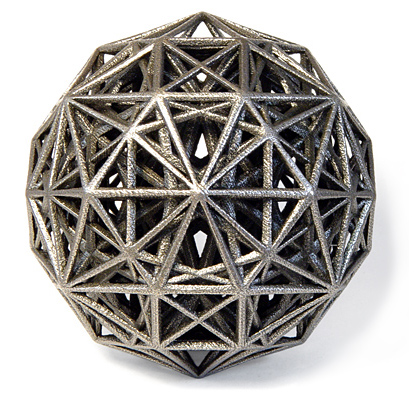
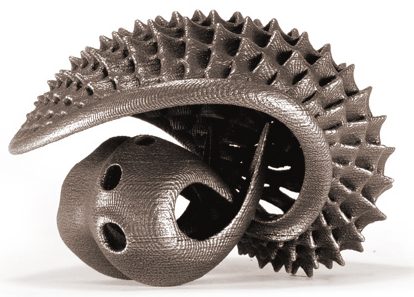
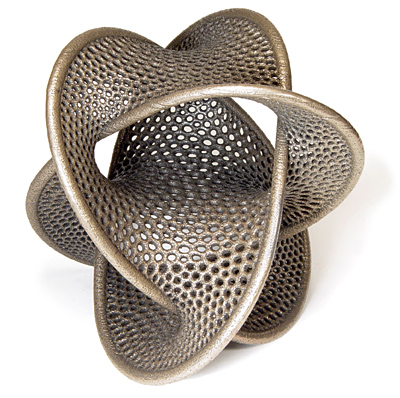
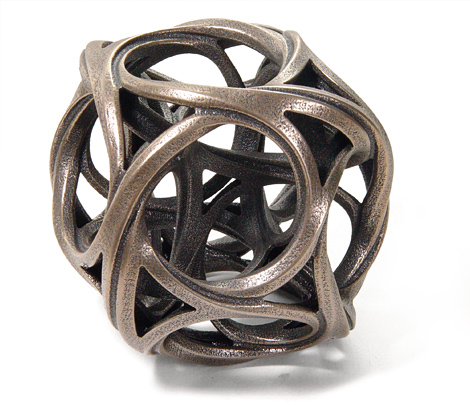
More of Bathsheba’s fantastic steel sculptures can be found at http://www.bathsheba.com/
Sunday Evening Art Gallery Blog — Richard Stainthorp

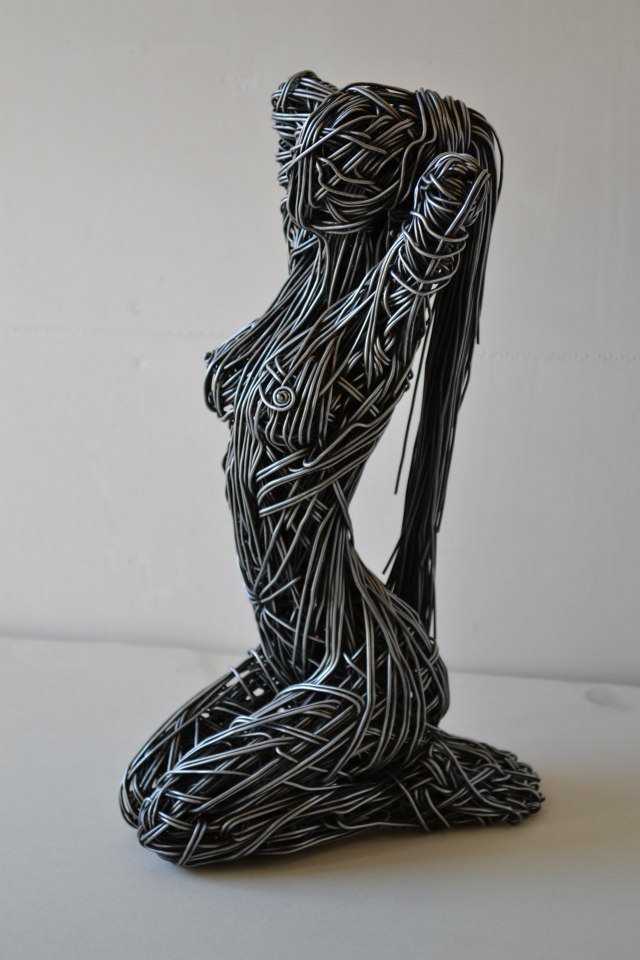
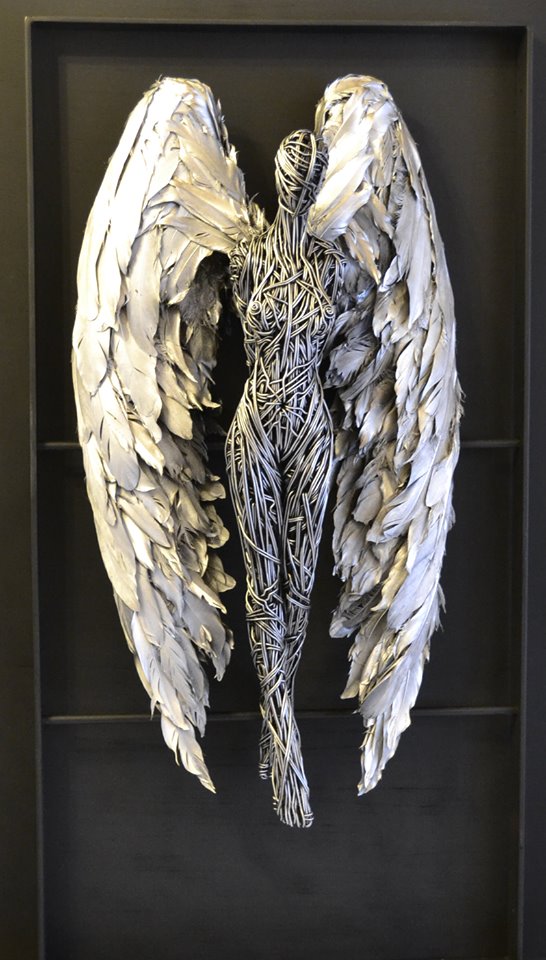
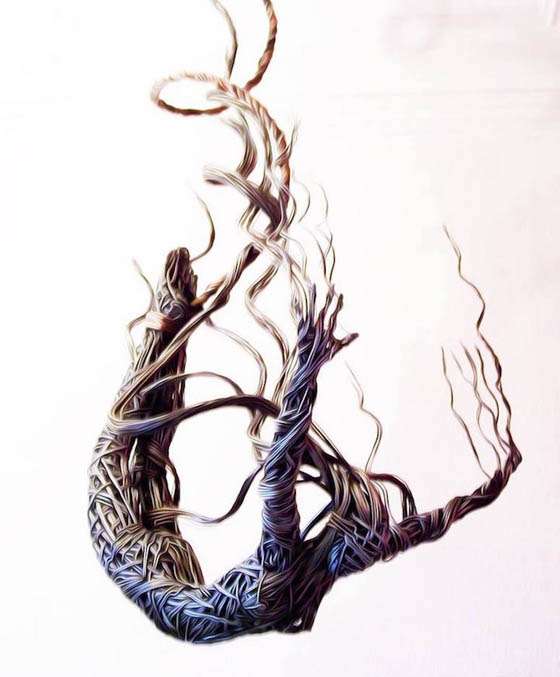
English artist Richard Stainthorp captures the beautiful energy and fluidity of the human body using wire.

10563022_761002527275365_2011510321850745446_n

Wire is not automatically what one would consider as a ‘material’ for creating solid, three dimensional sculptures.

wire sculpture1

But Stainthorp has been making wire sculptures since 1996.

RichardStainthorp2

The life-sized sculptures feature both figures in motion and at rest, expressed in the form of large-gauged strands that are densely wrapped around and through one another.

RichardStainthorp7

Stainthorp also allows the bent wires to shine by keeping their metallic appearance free from any obvious painting or additions.

1620528_763098253732459_8972868847712495561_n

The breathtaking spirals add a depth to these structures made of thick-gauged strands that are densely wrapped around and through one another.

4

More of Richard Stainthorp’s wonderful wire sculptures can be found at

http://www.stainthorp-sculpture.com/,   and  http://www.mymodernmet.com/profiles/blogs/richard-stainthorp-wire-sculptures

Sunday Evening Art Gallery Blog — Jennifer Maestre

A #2 pencil and a dream can take you anywhere  ~~ Joyce A. Myers

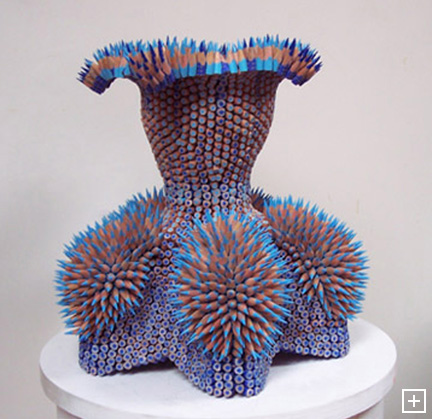
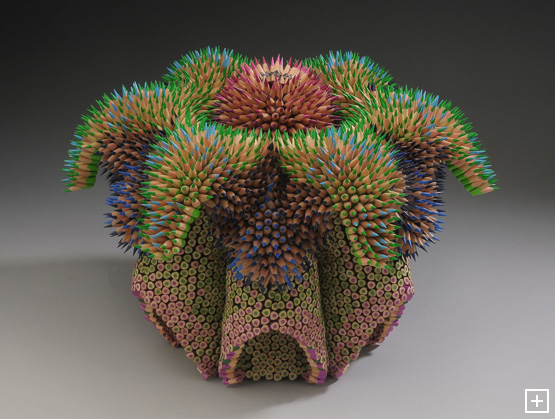
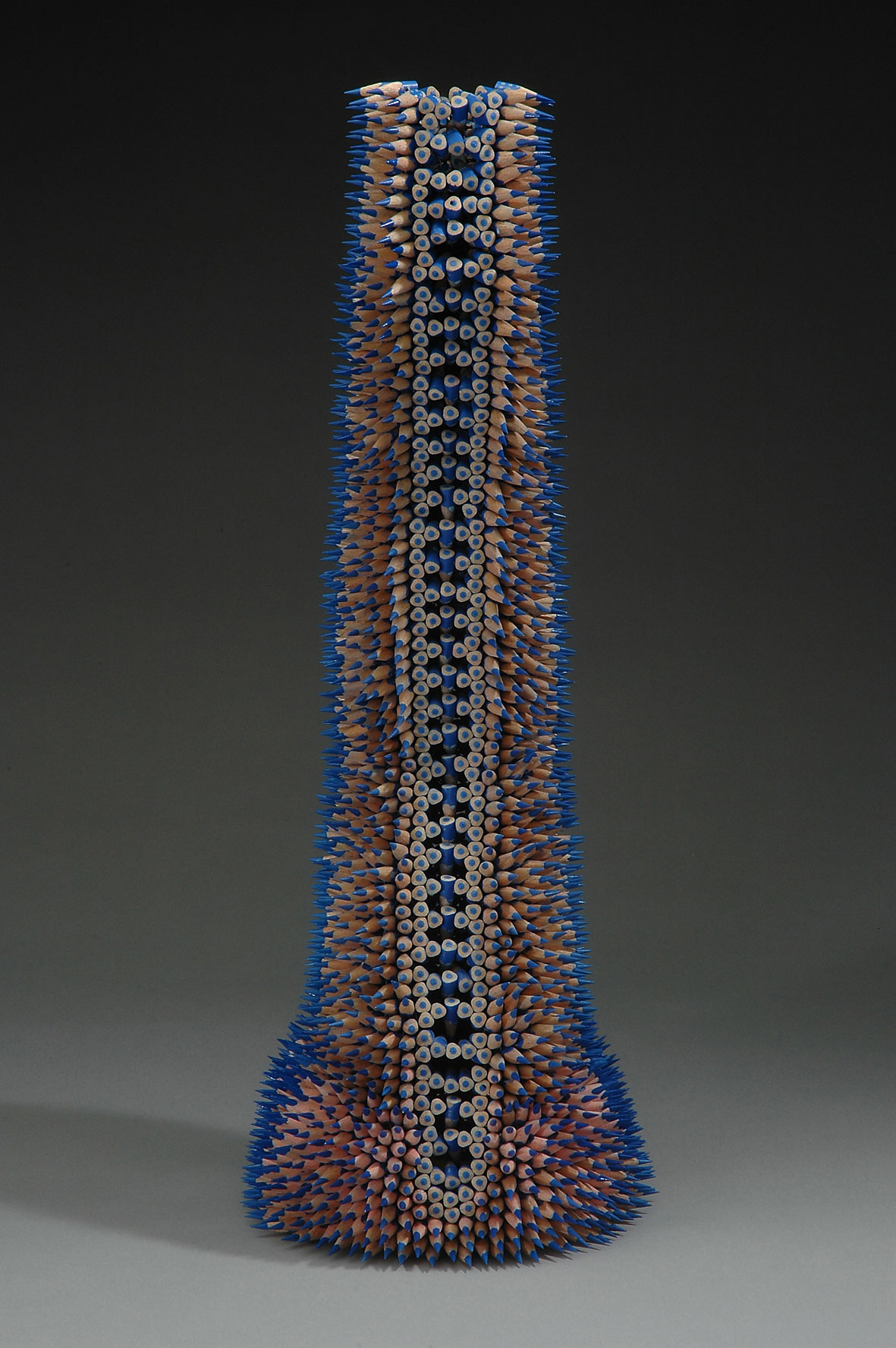
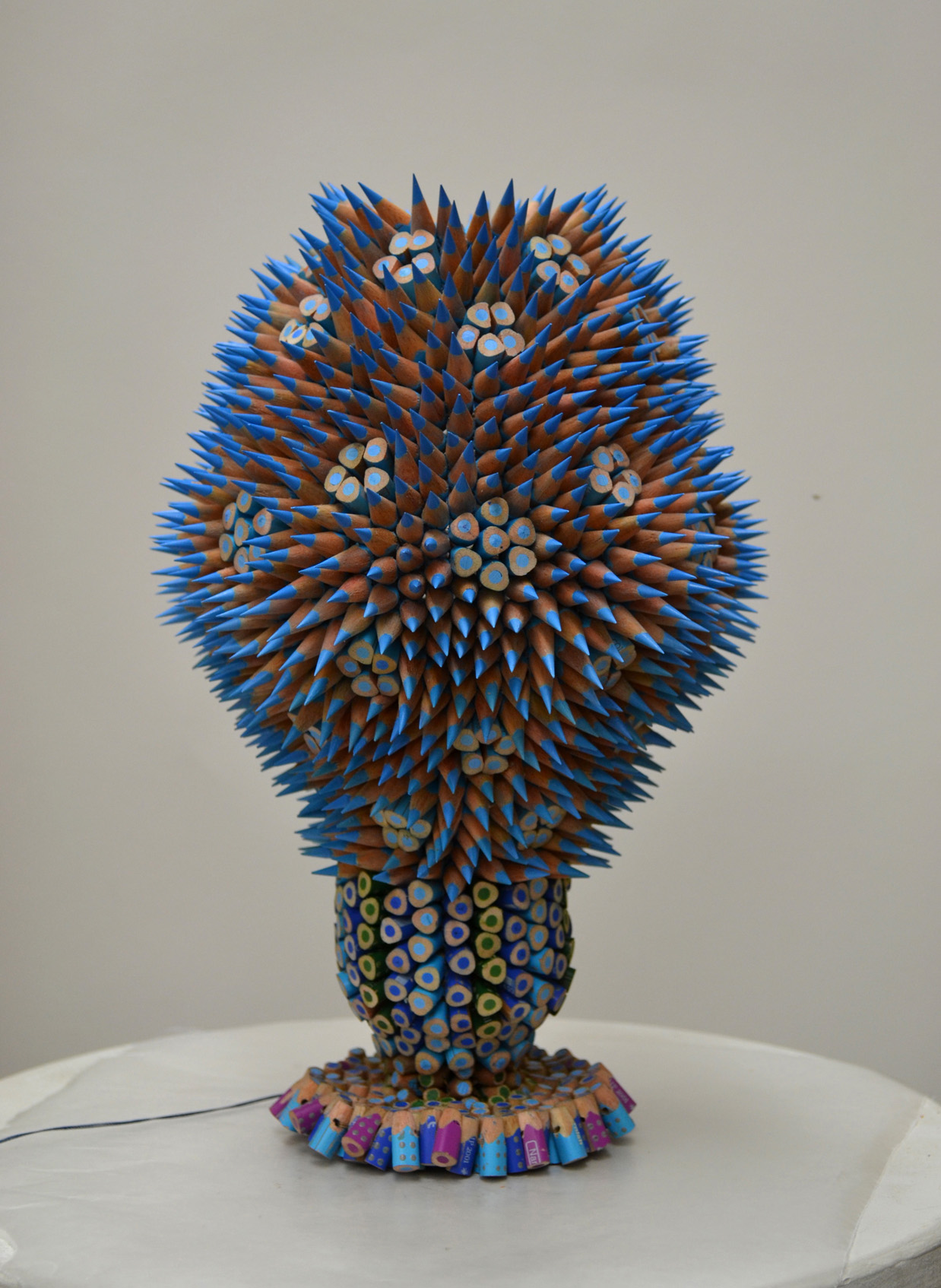
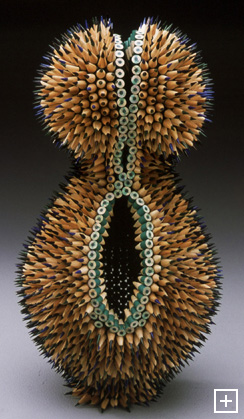
Sculpture artist Jennifer Maestre, born 1959 in Johannesburg, South Africa, is a Massachusetts-based artist, internationally known for her unique pencil sculptures.

2011_maestre_cycad_front

Her sculptures were originally inspired by the form and function of the sea urchin.

2006_maestre_seethe_top

The spines of the urchin, so dangerous yet beautiful, serve as an explicit warning against contact.

2008_maestre_blue_spine_large

According to Maestre, there is true a fragility to the sometimes brutal aspect of the sculptures, vulnerability that is belied by the fearsome texture.

2013_maestre_chalice_large

To make the pencil sculptures, Jennifer take hundreds of pencils, cut them into 1-inch sections, drills a hole in each section (to turn them into beads), sharpens them all and sews them together.

2003_maestre_shabti_front

Jennifer Meastre’s fantastic art is a tribute to her eye for nature, its fragile state, and the magical way it protects itself.

2005_maestre_aurora_top_large

Jennifer Maestre’s sculptures can be found at http://www.jennifermaestre.com/.

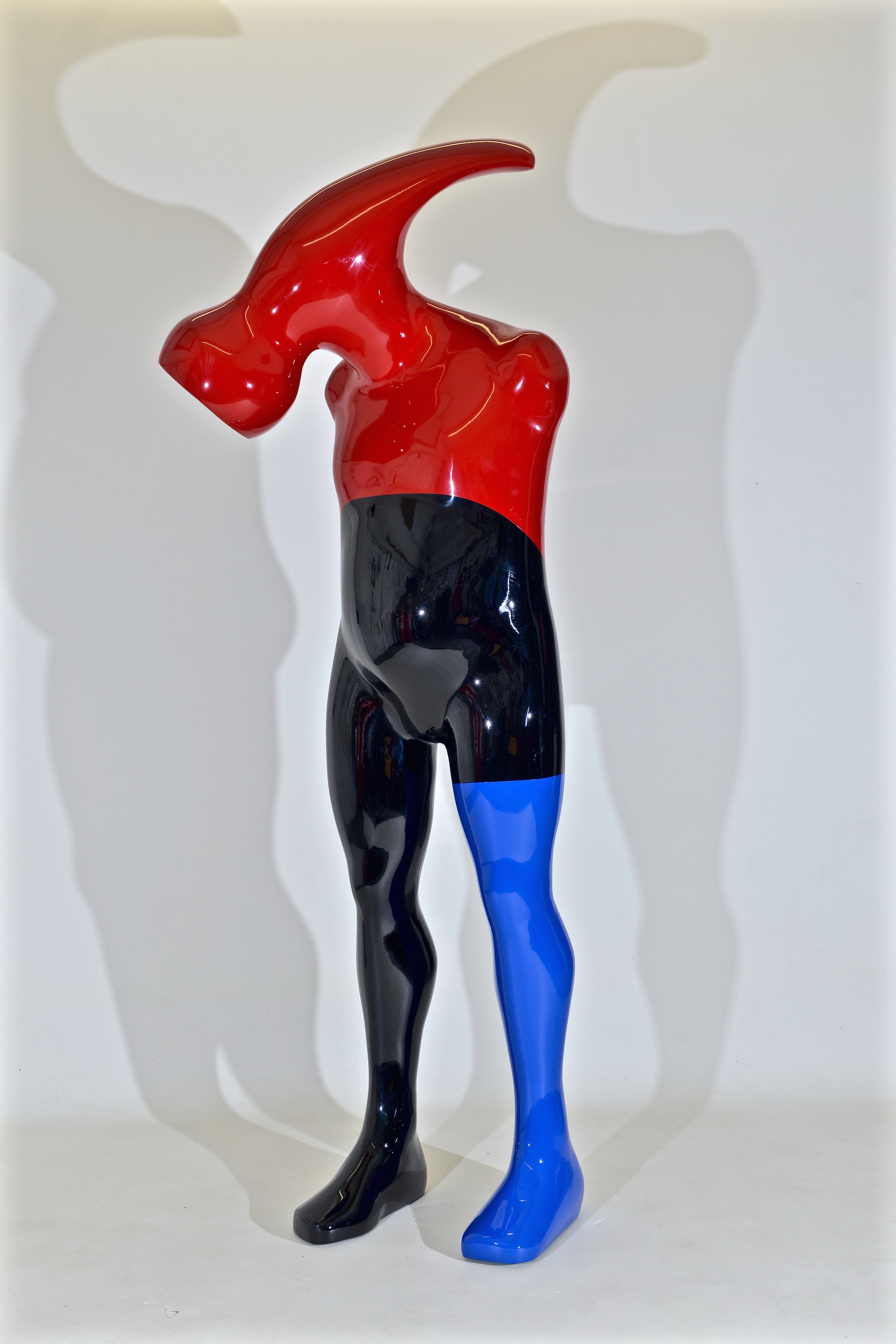
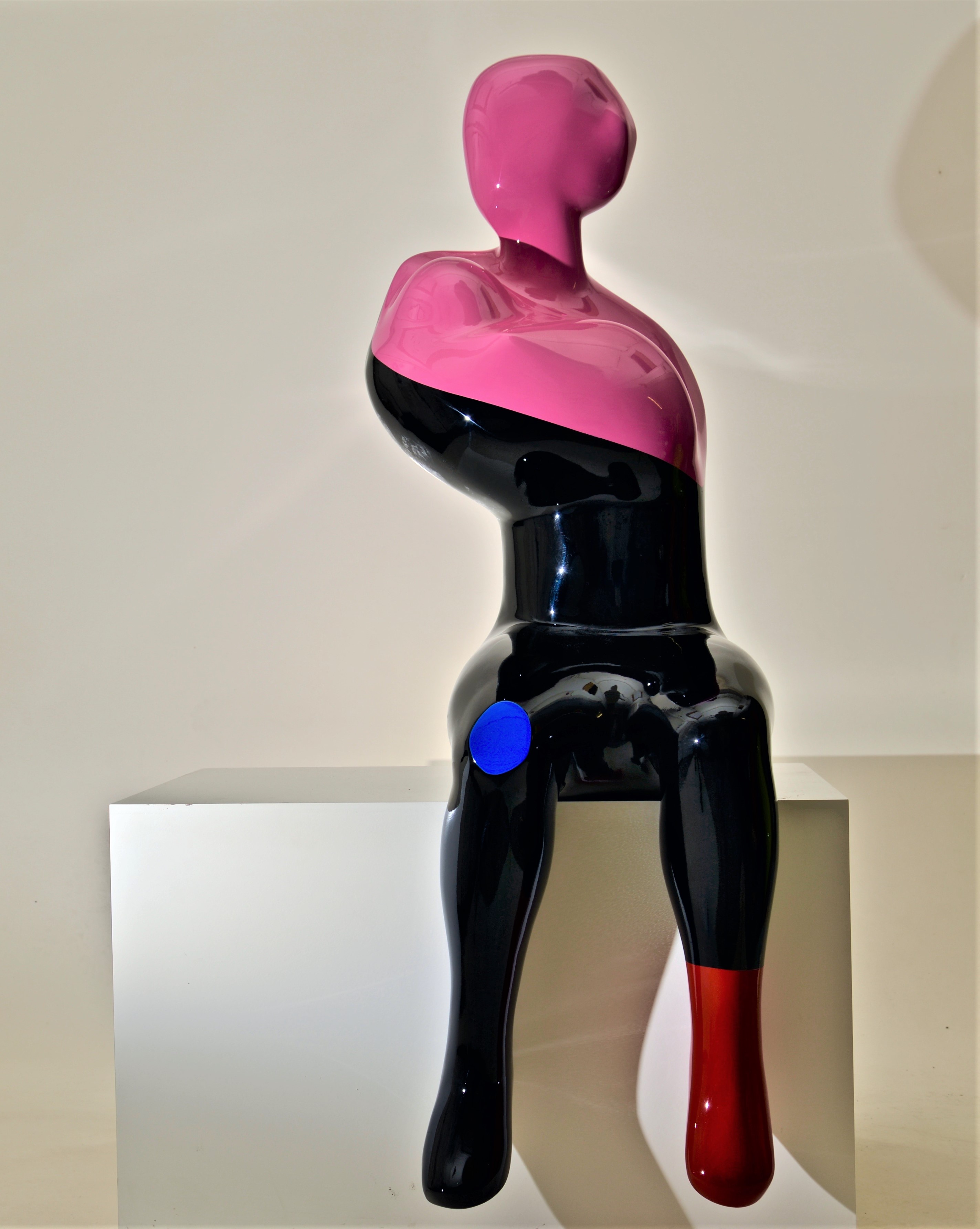
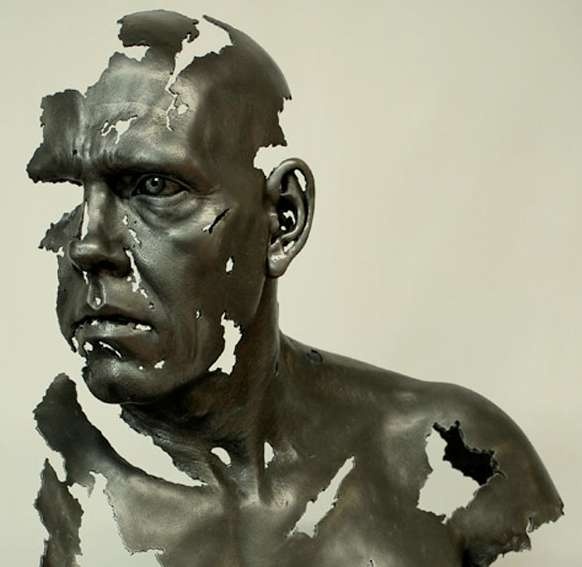
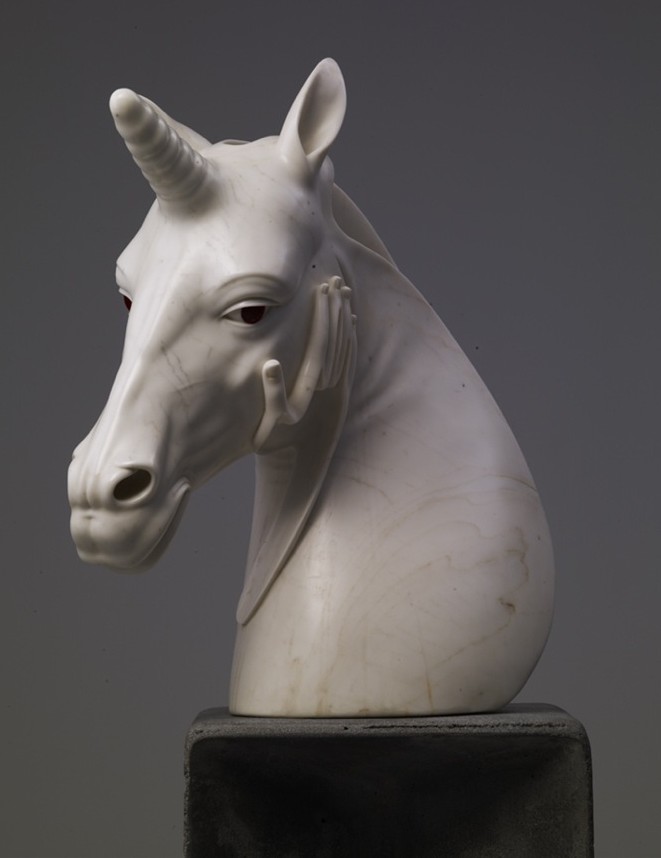
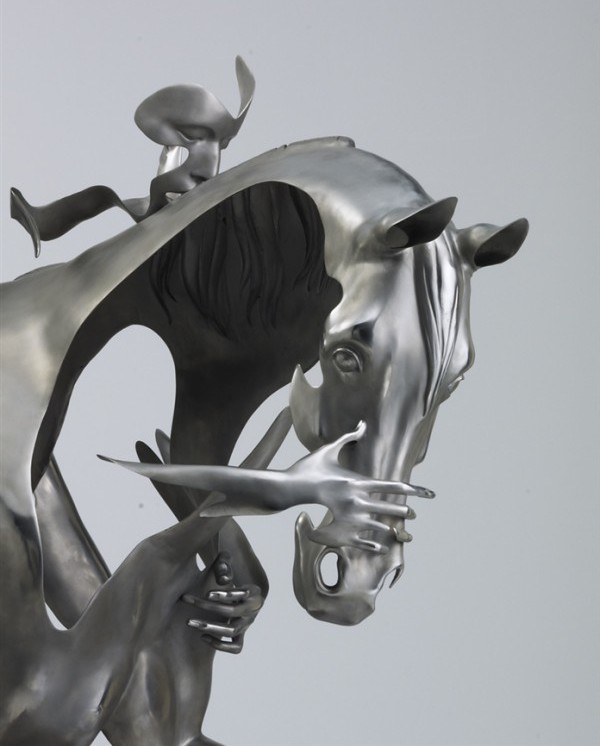
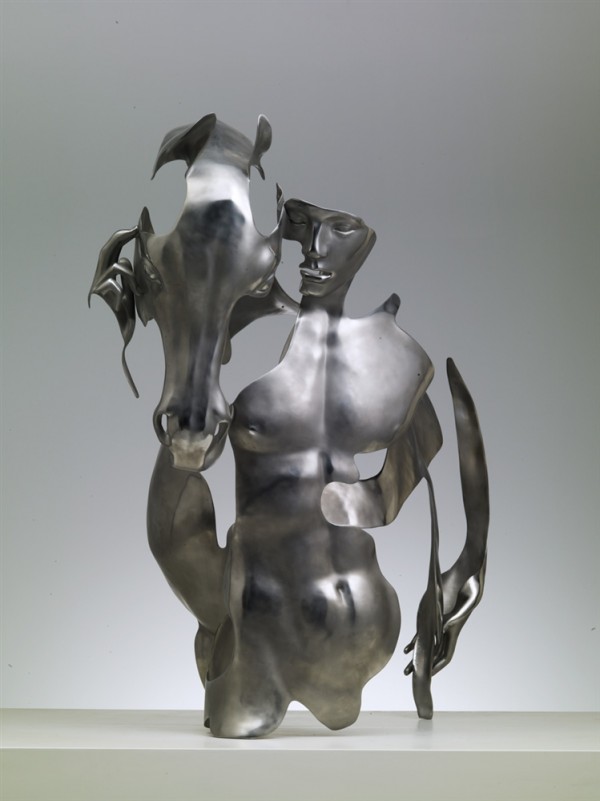
Sunday Evening Art Gallery — Unmask Group

Photographs and paintings often give us a full representation of the subject.


unmask 9


If we are all more than the sum of our parts, what are we if parts of us are missing?


sculpture-unmask-7-620x465


Can we be ever-so-much-more by showing ever-so-much-less?


Unmask Group8


Or, more likely, what if we are more than just one thing?


horse-21-600x861 (1)


The Beijing-based group known as Unmask Group has managed to not only honor the human form through sculpture, but added a new twist to its visual appeal by subtracting redundant parts from the sculptures.


74


I am amazed that so much can be said with so little.


Unmask Group4


Liu Zhan, Kuang Jun and Tan Tianwei met while at the Central Academy of Fine Arts and have been producing sculptural work together since 2001.


unmaskgroup3a


More wonderful art from the Masked Group can be found at

http://designcollector.net/sculptures-by-unmask/ and http://www.thisiscolossal.com/2012/01/dissolving-figurative-sculptures-by-unmask/.

See if you can decide which parts of you are shown, which parts have been cut away, and which parts have been melded with someone or something else.