Rock My World

Croning My Way Through Life
Helen Gordon is a sculptor living in Bristol, England.

 Having always led a creative life, whether painting in water colors, interior design or garden design, Gordon took a ceramics course at The Bristol School of Art, changing her focus more on sculpting.
 Creating both animal and figurative sculpture, her pieces tend towards being quirky and amusing and certainly eclectic.
 The artist works primarily in wax and clay and are cast in bronze or cold cast bronze resin.
 “I like to put a new spin on my work to make it my own,” the artist shares.

“If a viewer stops for just one moment to view, reflect and, above all, smile at a piece I have created, then I feel I have succeeded in my work.”
More of Helen Gordon’s whimsical sculptures can be found at https://www.helengordonsculpture.co.uk/.
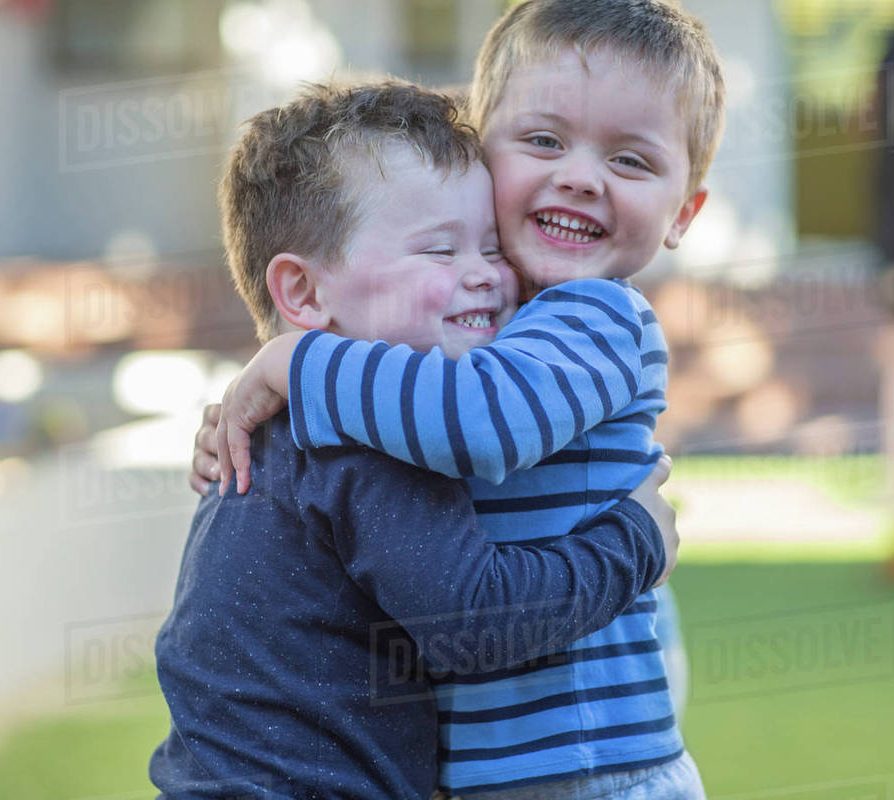 “Give Grandpa a 20-second hug.” my son said.
His son obliged. Arms around each other, grandpa and grandson stood and hugged for 20 seconds. That’s a record for most huggers.
“It’s a game changer,” my son said.
Hugs are hugs. Most of the time they take place when you enter a room and greet people you haven’t seen in a while. Hugs takes the place of thank you’s, love you’s, and congratulation you’s. It’s usually a squeeze-and-go kind of move. Don’t get too body to body — just enough to give them an extra physical sign of affection.
Grandpa hugged and hugged. And hugged some more. Grandson happily obliged. I watched their faces melt with delight the longer they stood hugging.
“It’s a game changer,” my son said. “We 20-second hug every night before we go to bed. Something about sharing the extended squeezing, blissful seconds transforms the moment.”
I have not always been a hugger. Always felt awkward being so close to family and friends for too long. Afraid my boobs were pushing into others’ sides, little kids’ hugs pushing into my chubby belly, crossing someone’s personal space boundaries.
We started hugging others around the time I got married. We also started saying “Love You” at the end of every phone call.
That wasn’t easy, either. More pushing into personal spaces.
Neither grandpa or grandson wanted to stop at 20. Grandpa kept counting to 19 then start the next number as 16. Big smiles all around when they were done.
“Give granny a 20-second hug,” my son said to my granddaughter. We linked up together and I got my 20-second continuous hug too.
It was amazing.
Those extra 10 seconds thrown in at the end transform the casual squeeze into something deeper and more magical. It was like electricity was softly running through and heating my veins. All that mattered in those last 10 seconds was the feeling of pressure and electricity and positive ions running between the two of us.
Identical twin sisters Emily Nagoski, Ph.D., and Amelia Nagoski, D.M.A, authors of the book Burnout: The Secret to Unlocking the Stress Cycle. reads, “… research suggests a 20-second hug can change your hormones, lower your blood pressure and heart rate, and improve mood, all of which are reflected in the post-hug increase in the social bonding hormone, oxytocin.”
That — and so much more.
I’m going to try and 20-second hug more people in the future. I want to connect with those I love in a more physical/cosmic way. To share my affection and trust and blessings with my hug partner.
How about you? Are you a hugger? You should be! Work through the uncomfortableness and time restrictions and just do it!
Start a trend! You never know what you’ll get back!
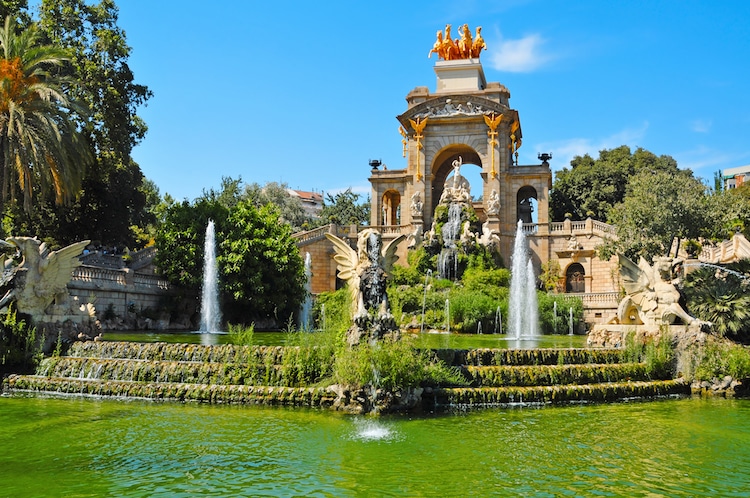
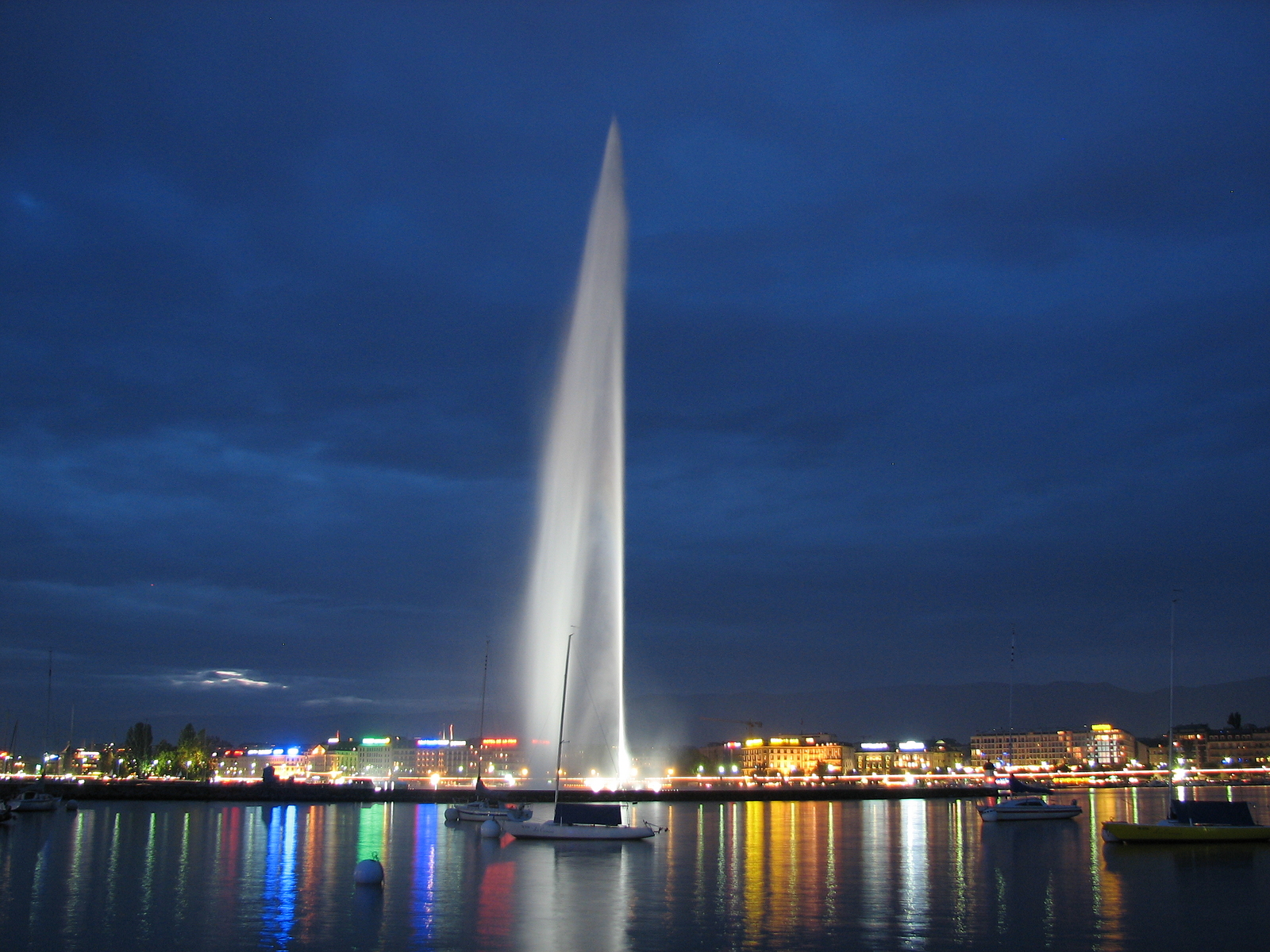
We all flow from one fountain.
~ John Muir










I started several blogs in the past few days but all that seems to come out is babble.
Do you post when there’s really nothing to say?
Do you talk to others when you really have nothing to say?
Does silence make you uncomfortable?
I used to be one who couldn’t stand silent air between two people for too long. When my hubby talks to his friends on the phone there are often long pauses where no one speaks. I’m like “Say something for Pete’s sake!”
Like silence is a bad thing.
I suppose that’s a holdover from some long-forgotten teen or young adult moment. Who knows.
But lately I’m finding a comfortable alliance between too much talking and too little.
Nothing is worse than sitting listening to someone babble on and on. Except maybe stone dead silence.
Maybe we all talk to reassure ourselves that we’re alive. That what we think and feel and say matters.
But a comfortable silence between friends and/or family matters too.
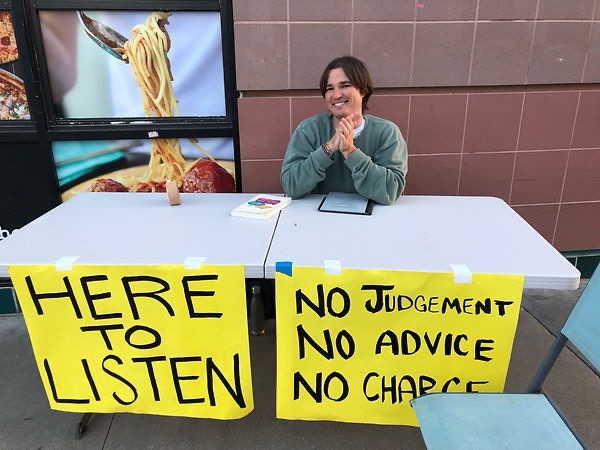
Maybe others don’t want a solution or an opinion but merely someone to listen. That’s how many work out their confusions or insecurities.
So learn to just listen. And be comfortable within the walls of silence.
Sometimes just a nod is all that matters. Even if you’re just nodding to yourself.
Freya Jobbins is a contemporary German/Australian multidisciplinary artist based near Sydney where her practice includes assemblage, installation, video, collage and printmaking.
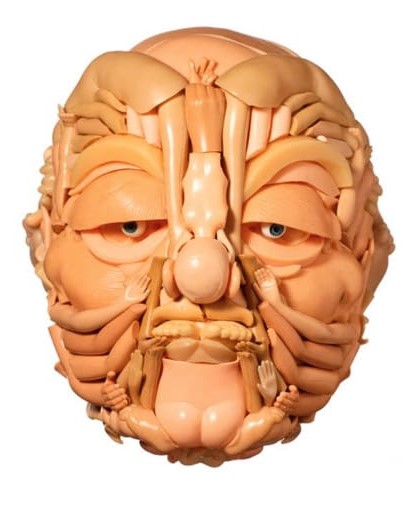 Jobbins is a South African born, Australian artist whose life reads like a classic fantasy tale – albeit with distinctively modern twists.
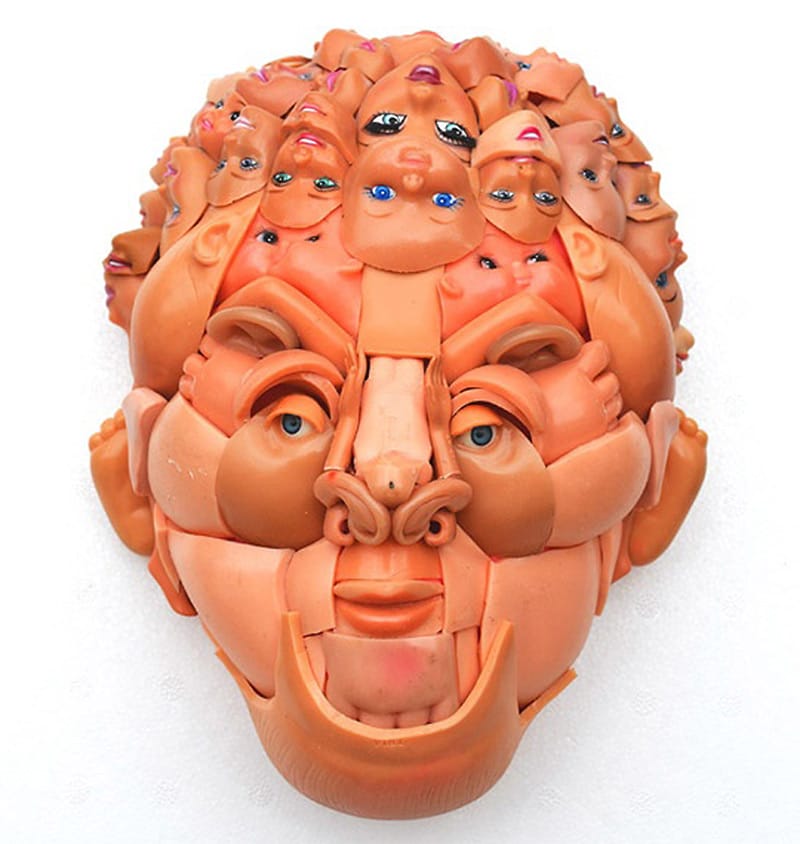 Jobbins’ detailed sculptures uses the dismembered body pieces of dolls and toys as parts to create humanoid assemblages of faces, heads and larger busts.
 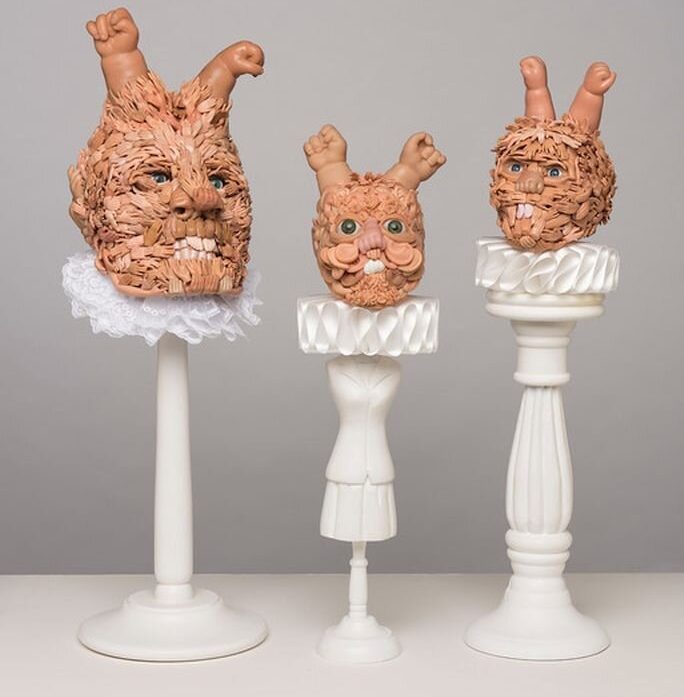 An incredible amount of labor goes into each piece, from the exploration of form and the use of color to make each anatomical amalgamation.
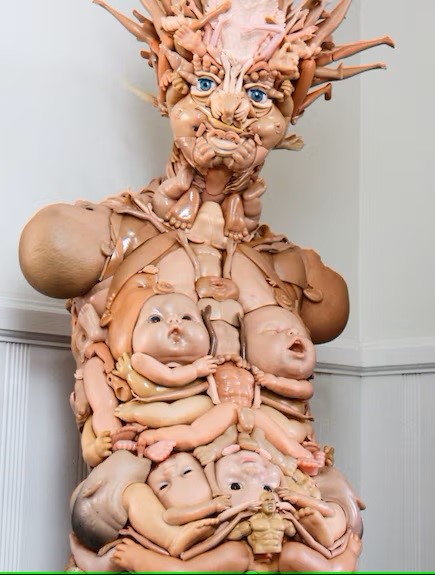 Jobbins describes this process as, an artistic exploration of the relationship between consumerism and the culture of up-cycling and recycling.
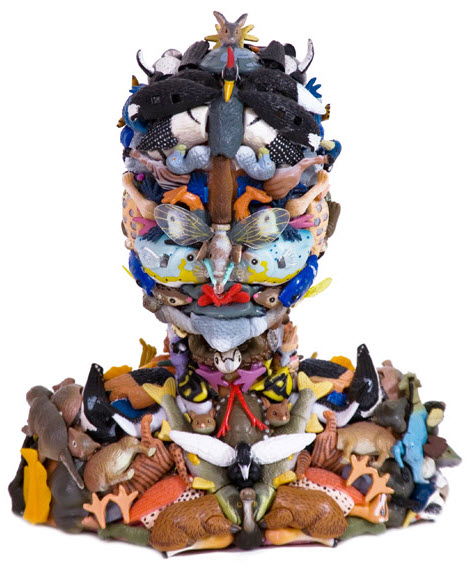 “Nowadays, children ‘need’ the latest toys, discarding last week’s fads to start collecting another line of toys. This leads to me finding more and more toys that are in perfect condition available to me to create even more work,” Jobbins says.
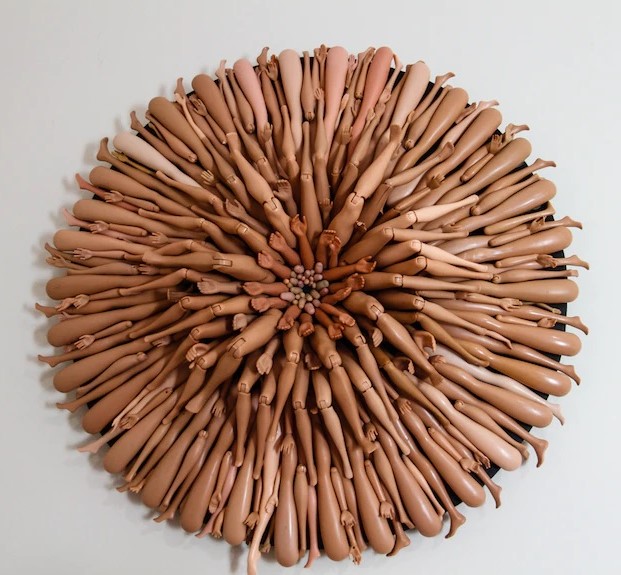 More of Freya Jobbins‘ extremely unique artwork can be found at https://www.freyajobbins.com/.
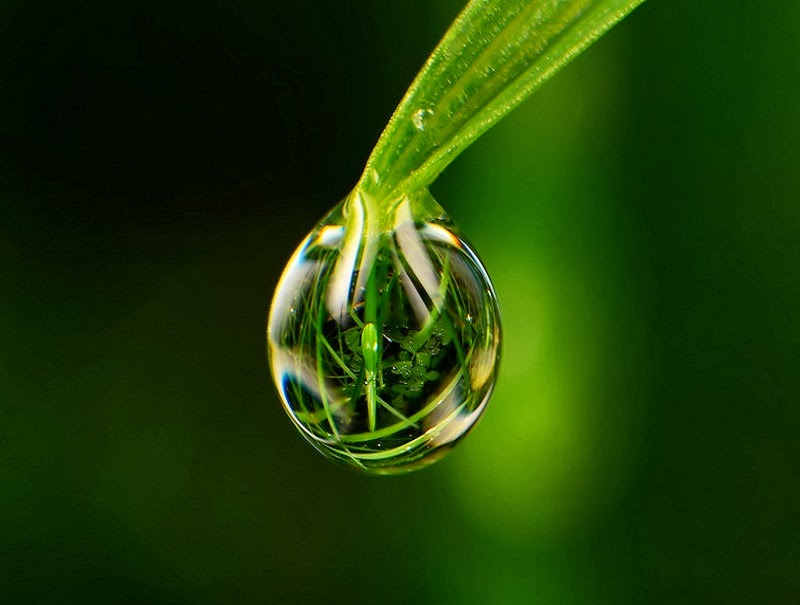
Let your life lightly dance on the edges of time like dew on the tip of a leaf.
~ Rabindranath Tagore
Tali Weinberg (b.1982) is an American artist based in Champaign, Illinois. Weinberg graduated from both New York University and California College of the Arts.
 Using sculpture, drawing, and textiles, Weinberg translates climate data into abstracted landscapes and waterscapes.
 Weinberg combines plant-derived fibers and dyes, petrochemical-derived medical materials, climate data, and abstracted landscape imagery to explore the inextricability of ecological and human health.
 With series’ names such as Heat Waves, Drainage Studies, Fault Lines, and Fractures and Fissures, Weinberg’s works draw out connections between extraction, rising temperatures, species loss, and the buildup of plastics in our bodies and ecosystems.
Her most recent research focuses on relationships between people and plants and the interconnections between circulatory systems inside and outside the human body—from lungs and arteries to forests and watersheds.
“I employ textile strategies to turn expired plastic medical waste into sculptures that allude to the more-than-human world…and I transform photos I took of trees in a fire-scarred landscape into woven, plant-plastic forms that allude to human anatomy,” the artist shares. “Together, these works trace relationships between extraction and illness, between personal and communal loss, and between corporeal and ecological bodies.”
More of Tali Weinberg’s thought provoking and creative textiles can be found at https://www.taliweinberg.com/.

Sign, sign, everywhere a sign
Blockin’ out the scenery, breakin’ my mind
Do this, don’t do that, can’t you read the sign?
~ Five Man Electrical Band
no….
Born under a bad sign
Been down since I began to crawl
If it wasn’t for bad luck
You know, I wouldn’t have no luck at all
~Albert King
nope….
Suspicious signs
Within your mind
Will make this jinx complete
And now you find
The end of times
When the black cat crossed your feet
~ Paraskavedekatriaphobia (Friday The 13th)”, Fozzy
who???
Had a strange experience the other day with my alarm clock. Thought maybe some of the above music lyrics would make sense of it all.
But they really don’t.
Going to bed the other night, my hubby looked at our little square alarm clock (that everyone has owned from the beginning of time) and said “Am I drunk? Look at the clock!” Since we both just had chocolate milk, I doubted that was the case. I turned around and looked at the clock on my headboard and it said:
18:88.
We hadn’t had a power outage lately, so I figured it was just stuck. Plugged into the wall, so it wasn’t dying batteries either.
Pushed the clock button. 18:88. Pushed more buttons. 999. Okay. A different button. 666. “Isn’t that the devil’s number?” I asked. No response. My last attempt produced a 999 backwards.
I unplugged the clock and tossed it in the garbage.
Now. Wackier minds than mine might take those numbers as a “sign.” From whom I haven’t a clue.
But just as there is supposedly signs from the Goddess and God everywhere you look, signs are hard to interpret. Since all interpretation is in your head, it’s easy to make a sign say anything you want.
18:88 interpreted by the Five Man Electrical Band would tilt to the hippy version; long haired hippy freaks dancing to a psychedelic number in the sky. To Albert King, 18:88 is just another depressing number in a long line of depressing numbers. Paraskavedekatriaphobia (the fear of Friday the 13th) as sung by Fozzy (whomever he is) could lead to frozen moments of jinxes and black cats.
Signs can — and are — interpreted by everyone differently. If finding an upside down pineapple on your walk through through the woods means the end of the world to you, you might need to start preparing for it. If your find four peas in a two-pea pod, something big might be in your future. If you find a cardinal feather by your bird feeder your deceased friend may have been by and left you a note.
You can also choose to see things as they are.
An upside down pineapple.
Four peas in a two-pea pod,
A Cardinal feather.
Don’t spend your life looking for signs to guide you. Note such anomalies, marvel at them, take what you can from them, and keep moving. The world doesn’t slow down just because you’re trying to interpret it’s quirks and droppings.
Sometimes weird numbers on a clock are just that. Weird numbers on a clock.
Ran Hwang is a sculptural artist primarily known for her mixed-media work with buttons, beads, pins, and thread.
 Born in the Republic of Korea in 1960, Hwang currently lives and works in both Seoul and New York City.

Hwang creates large iconic figures that embody her preoccupation with the nature of cyclical life, non-visibility and the beauty of a transient moment. 
 The artist creates iconic figures that embody her preoccupation with the nature of cyclical life, non-visibility and the beauty of transient glamor.
 Her installation works often crosses three-dimensional boundaries.
 Although her work often references classical Asian motifs, Hwang reinterprets these images through her medium, redefining her cultural heritage.
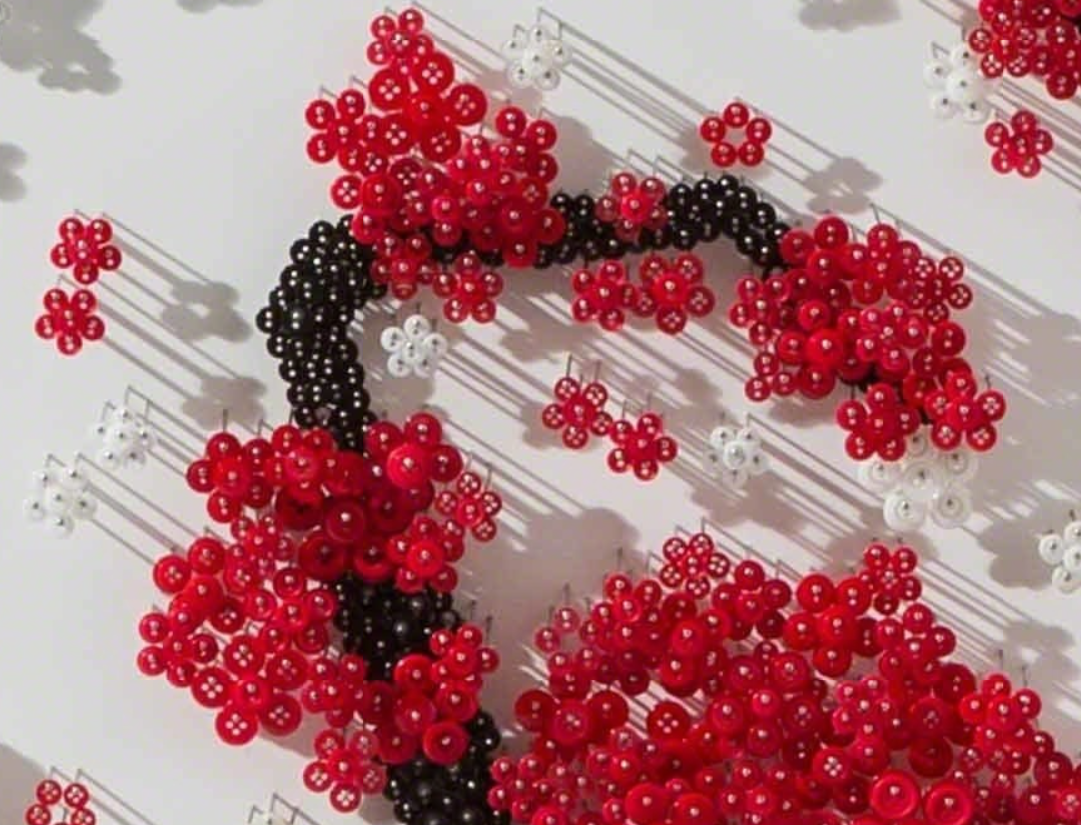 Hwang is best known for her large-scale wall installations in which buttons, beads, pins, and threads on wood panels form images of falling blossoms, vases, Buddhas, and birds.
 To construct much of her work, Hwang creates paper buttons by hand, hammering each one approximately twenty-five times until it is secure.
 Her process requires the utmost concentration and discipline, recalling the meditative state practiced by Zen masters.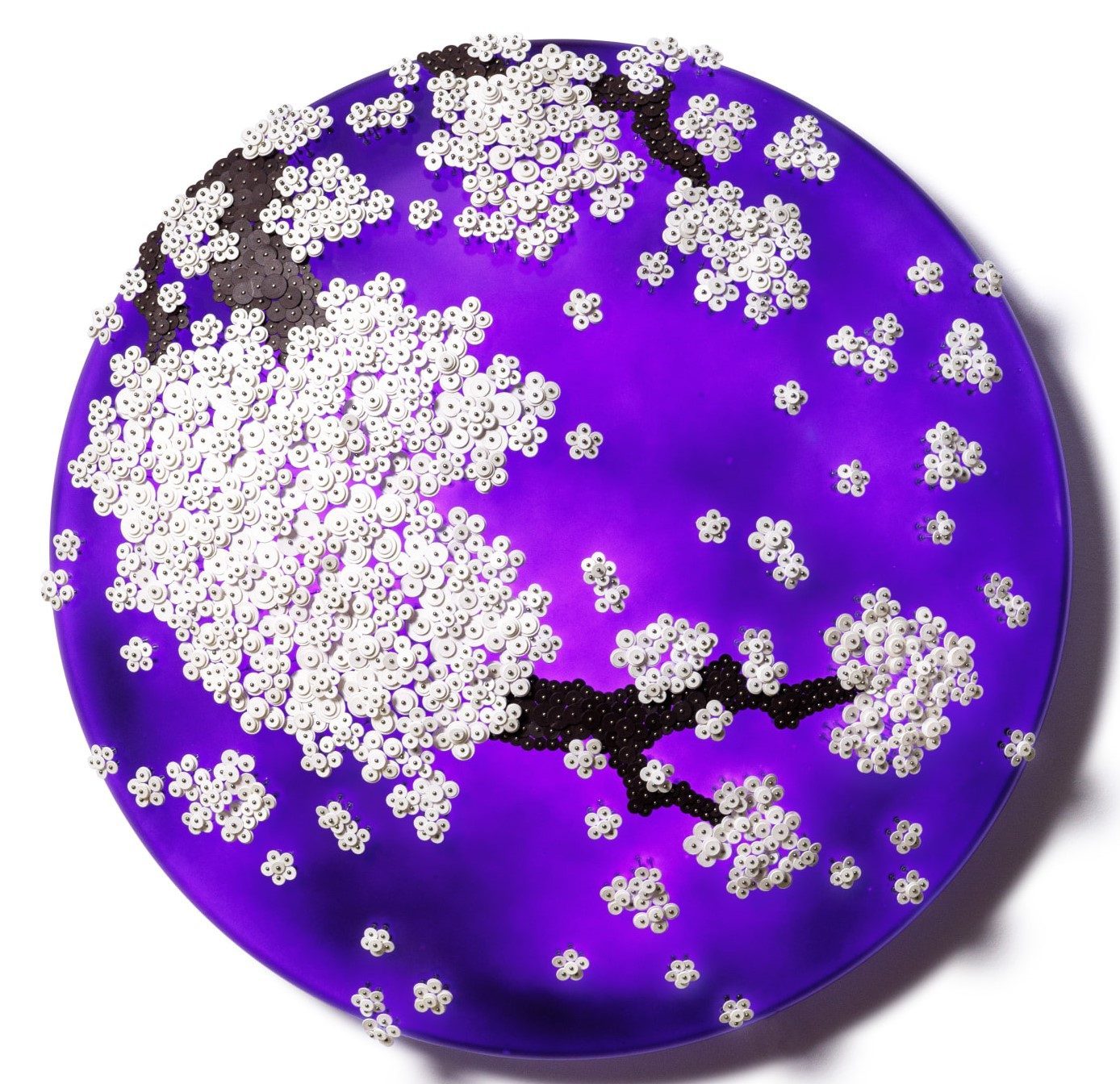

More of Ran Hwang‘s amazing work can be found at https://www.ranhwang.com/ and http://www.leilahellergallery.com/artists/ran-hwang.
 Getting ready for another running-around weekend — soccer, trap shooting, putting in an alarm system. I will never be one who says retirement is boring.
So to bring you into your own wild weekend, here are 10 cosmic questions for you to ponder at your leisure:
And the biggest, hardest question for last —
10. Which came first, the fruit called “orange” or the color?
Have a great weekend!
Michael Boroniec (b. 1983) is an American sculptor who resides and works in Berkshire County, Massachusetts.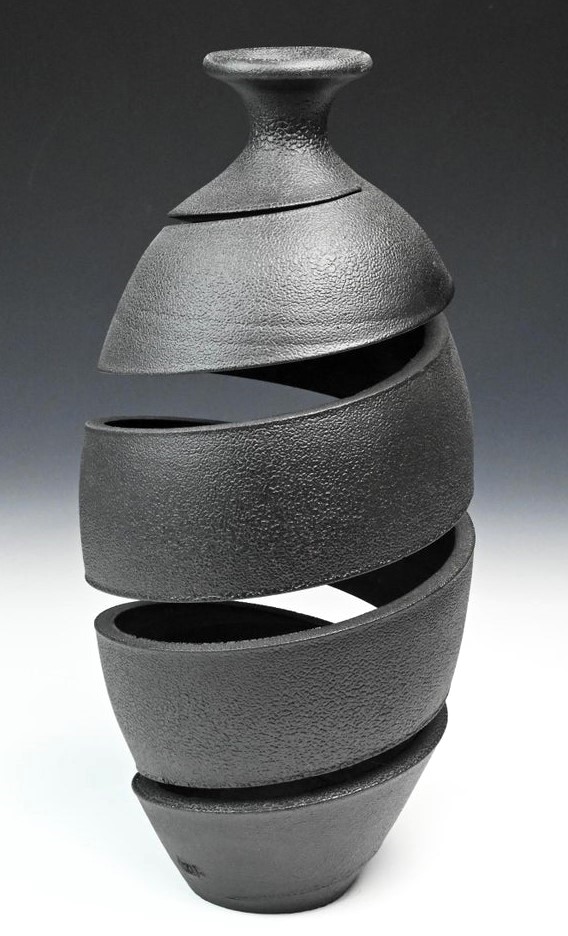 Boroniec received a BFA from Rhode Island School of Design in 2006 with a concentration in ceramic material.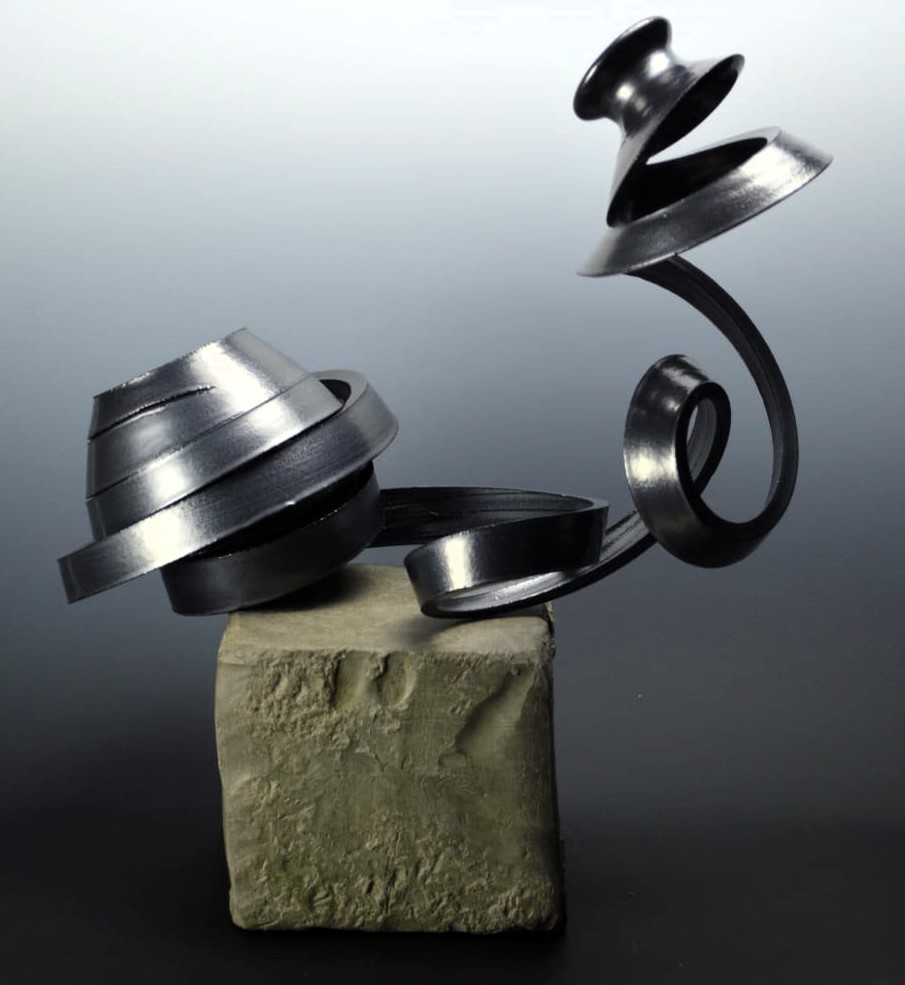
What began with teapots and a single spiral has evolved into a series of vases that vary in form, degree of expansion, and number of coils.
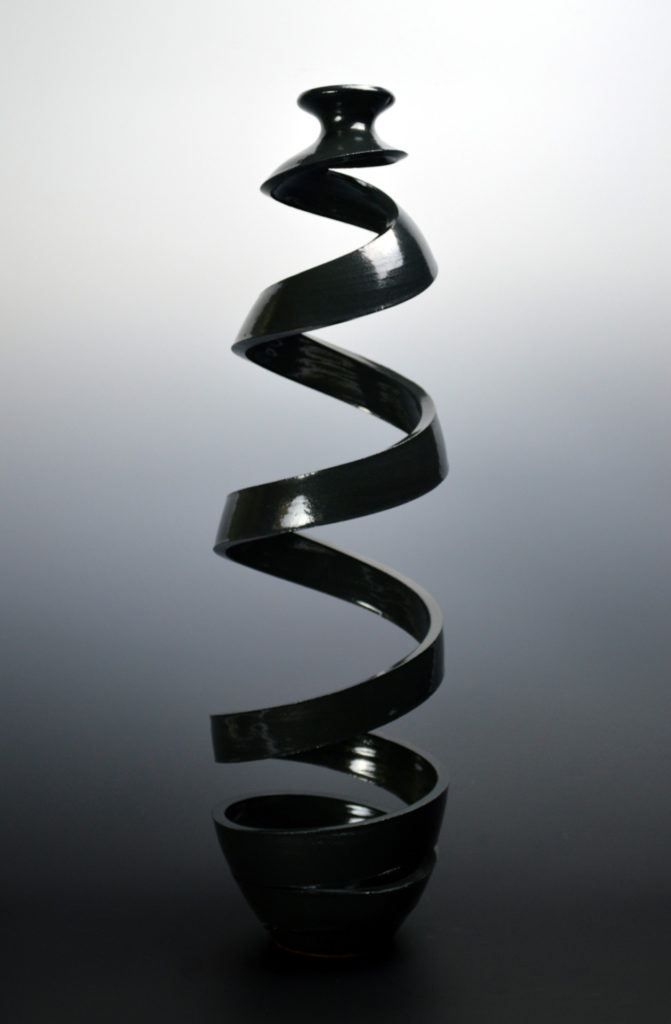 Each vessel is wheel thrown then deconstructed.
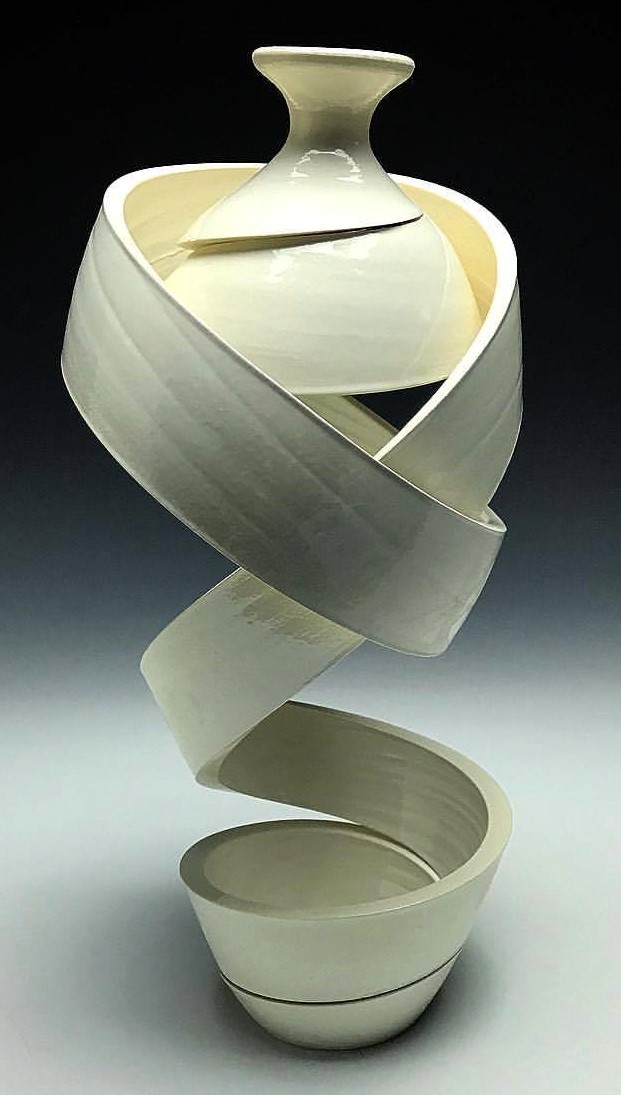 This process reveals aspects of the vase that most rarely encounter. Within the walls, maker’s marks become evident and contribute to the texture.
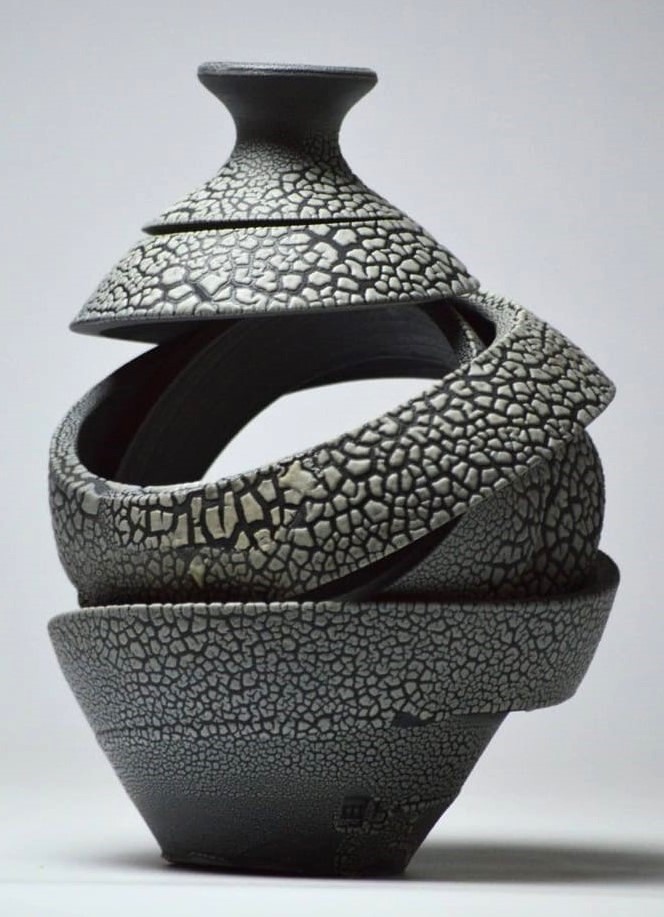 The resultant ribbon effect, reminiscent of a wheel trimming, lends fragility, elegance, and motion to a medium generally perceived as hard and heavy.
 “Art is not just an object or a concept,” Boroniec explains.
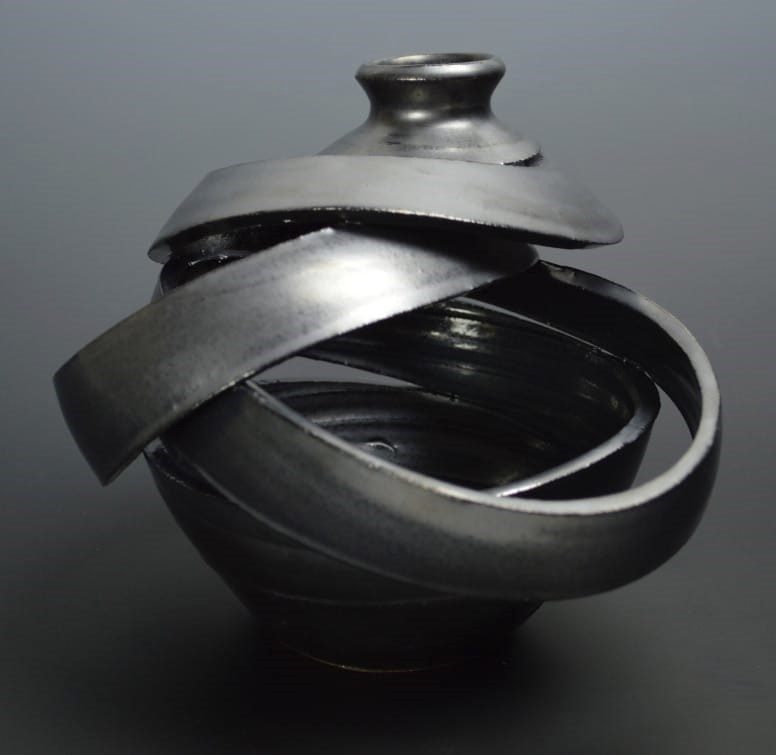 “It is a conversation between a being, an idea, a spectator and a creator, as if it were a universal language that we all speak.”
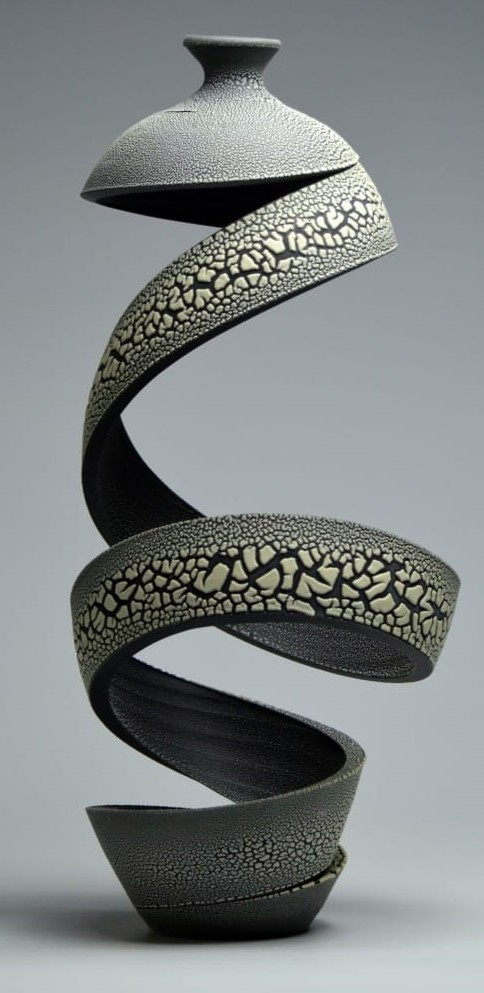 More of Michael Boroniec’s unique pottery can be found at https://mboroniec.com/.

Faeries are seen through the heart, not through the eyes. Remember that faeries inhabit the interior of the earth and the interior of all things, so look, in the first place, in the interior of yourself.
~ Brian Froud
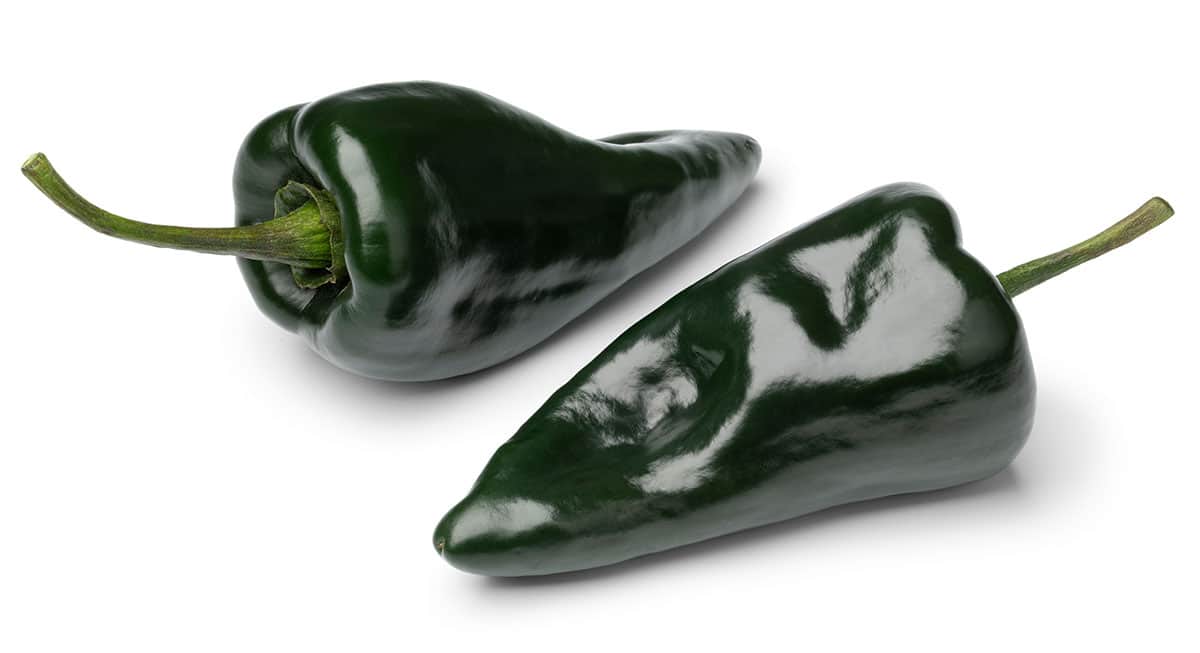
The Scoville Scale is a measurement of pungency (spiciness or “heat”) of chili peppers and other substances, recorded in Scoville heat units (SHU). It is based on the concentration of capsaicinoids, among which capsaicin is the predominant component.








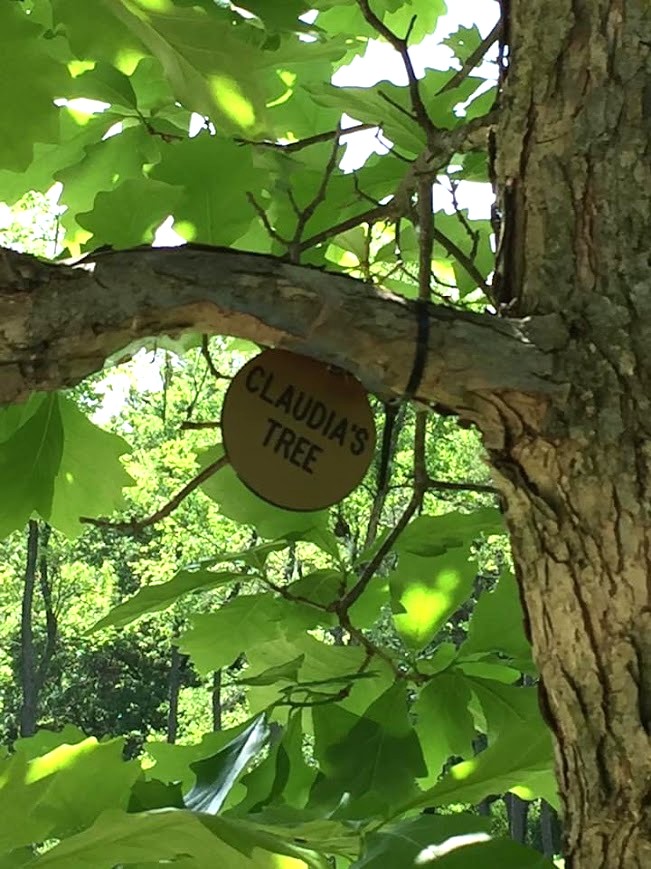
Planting a tree is the easiest way to align yourself with the cosmic rhythm.
~ Amit Ray
Leonora Carrington (1917–2011) was an English artist, novelist, and activist.

She was part of the Surrealist movement of the 1930s and, after moving to Mexico City as an adult, became a founding member of Mexico’s women’s liberation movement. Carrington shared the Surrealists’ keen interest in the unconscious mind and dream imagery.
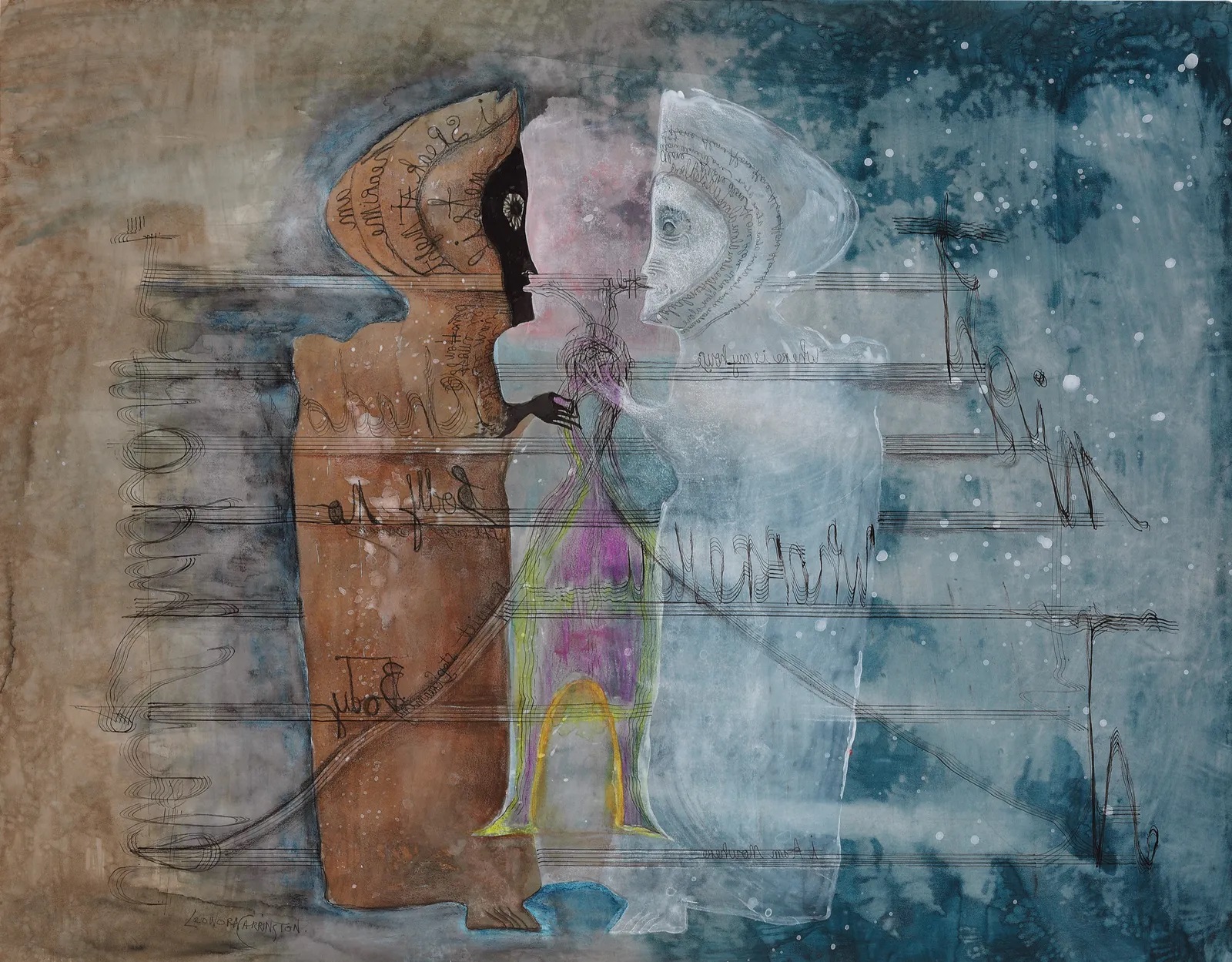 To these ideas she added her own unique blend of cultural influences, including Celtic literature, Renaissance painting, Central American folk art, medieval alchemy, and Jungian psychology.
 She sought to capture fleeting scenes of the subconscious where real memories and imagined visions mingle.
 In Carrington’s rich universe, ethereal beings enact rituals with unknown purposes; these creatures have characteristics of women and animals, and seem to be somewhere between humans and beasts.
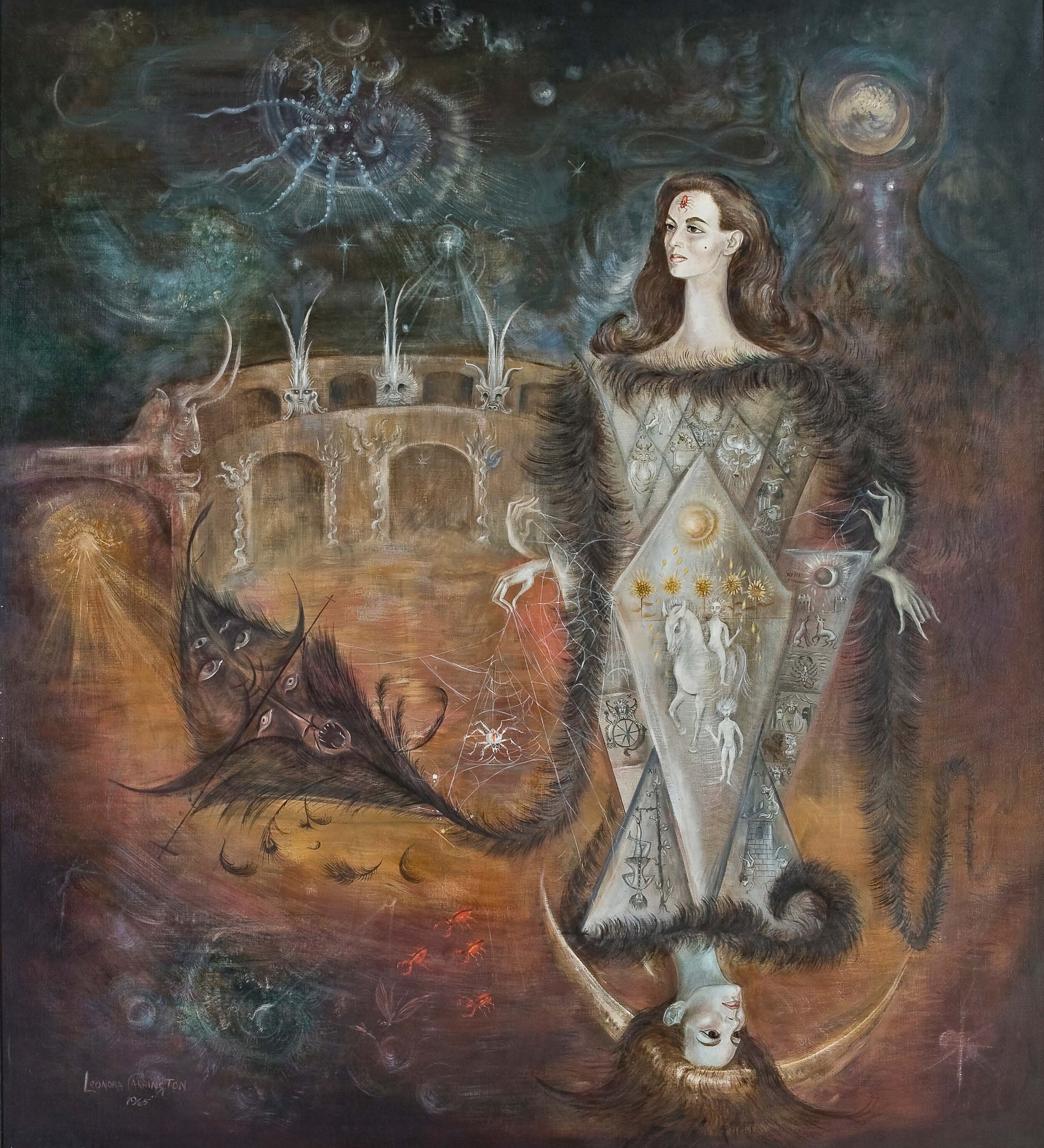 There’s a soft glow and sensuality to her paintings, and some critics have said that this emphasizes Carrington’s femininity, not as a crutch but as a gift.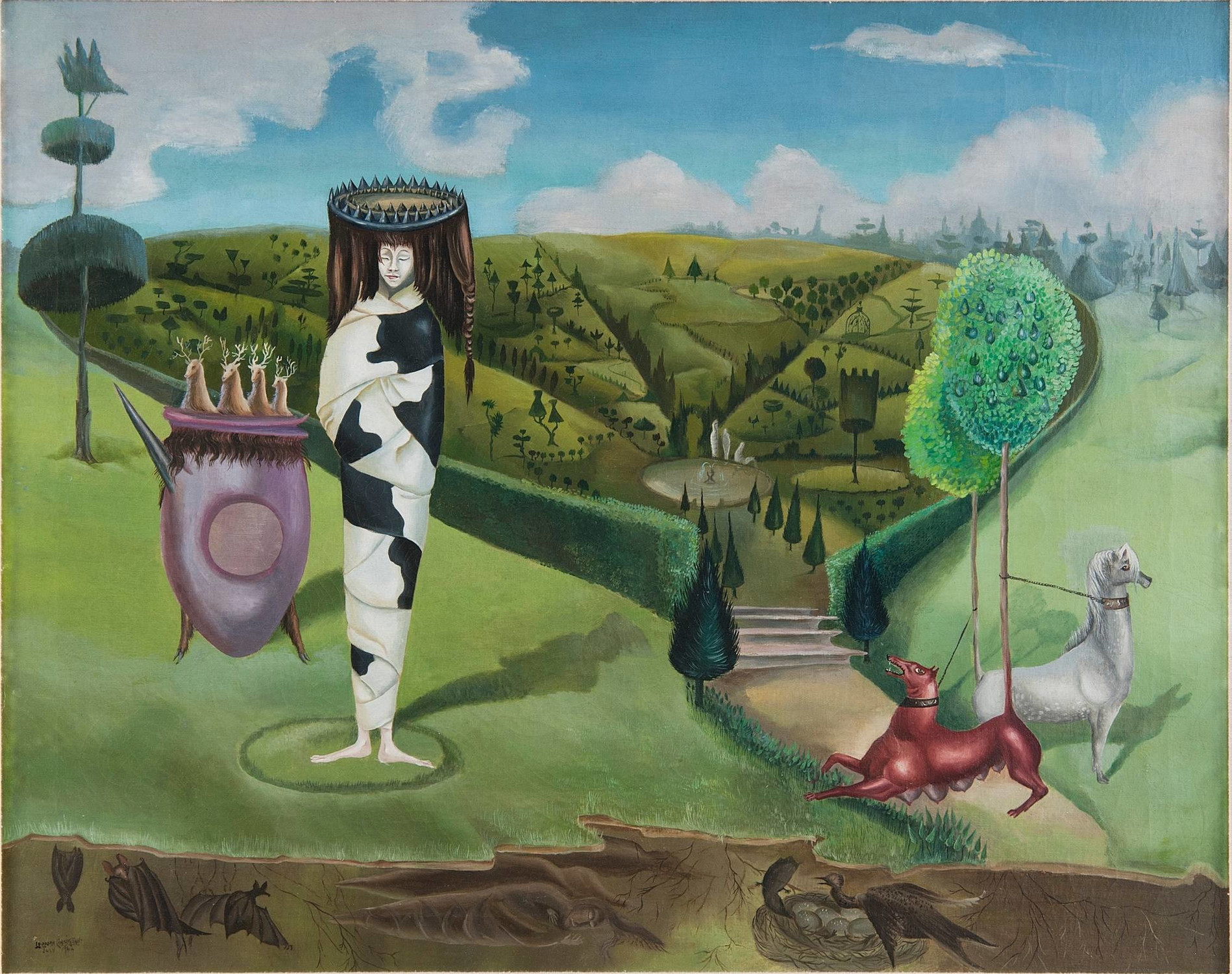
More of Leonora Carrington‘s marvelous surreal art can be found at https://www.wikiart.org/en/leonora-carrington and https://www.theartstory.org/artist/carrington-leonora/..

Leave your home, O youth, and seek out alien shores. A wider range of life has been ordained for you.
~ Petronius

I happened to talk with a family friend’s daughter who just graduated from college with an English and/or Communications degree. She was bright and excited to find a job doing something she loved — writing — and something she undoubtedly was good at.
So different a start from many of us. No?
I always loved to write — my first “longer” story was about me and Dennis Payton of the Dave Clark Five. I also get a feeling there was one with Paul McCartney of the Beatles, too, although I struggle to remember.
But I digress.
As I’ve probably said before, I was a secretary all my life in one form or another, which led to being a proofreader and a strange final turn to a data analyst specialist (data input). It was only at my final job that I asserted my writing and proofreading skills and took over the company blog.
I often wonder if I would have gone to college for English or Communications what sort of job I would have wound up with.
My problem was I didn’t know what I wanted to do at 17 years old.
Some went to college, most went into the workforce. I started off as a linofilm typist for ads for the telephone book. So strange to look back on that obscure craft these days. I mean, who even knows what a linofilm machine was these days?
Again I digress. So easy to do on a Monday morning.
I started off talking about this bright young college graduate who (hopefully) will find a rewarding career in the field she loves.
We talked a little about blogging and I gave her my blog addy. She wants to create her own website and start writing for herself and for corporate America. I think she’s talented enough to do just that, too.
The career choices today’s kids have are a lot different than they were in the 1970s. 1980s. And so on. Today kids have to be tech savvy and watch out for trends and digital development and social prejudices and the dark side of the internet. They have to keep an eye out for trollers and spyware and technology systems that become outdated as quickly as they are developed.
I’m not even certain the importance of blogging these days. Social media has moved upwards or backwards into worlds I’ll never grok. It is obvious I could never get a job writing for a living now. Not just my age but my limited knowledge and resources and even energy would come into play.
Thank goodness younger people don’t lack in all of the above.
I’m not saying you need a college degree these days to get ahead. There are tech schools and specialty schools and special classes to hone your skills no matter what you’re interested in. There are mentors to teach you the ropes and entry levels that promote from within.
What today’s kids need to hold onto, though, is their passion. Find a way to hone it, advance it, work with it and develop it.
Both my cousin’s high school graduate and her friend’s daughter are starting out in careers and worlds I’ll never know. They are the future. And I’m so proud of both of them.
Be proud of today’s generation, too. No matter what they choose to do.
Tomás Barceló Castelá is a French-Spanish sculptor whose unique work combines a classical style with 19th-century industrial steampunk-style elements to produce unique pieces.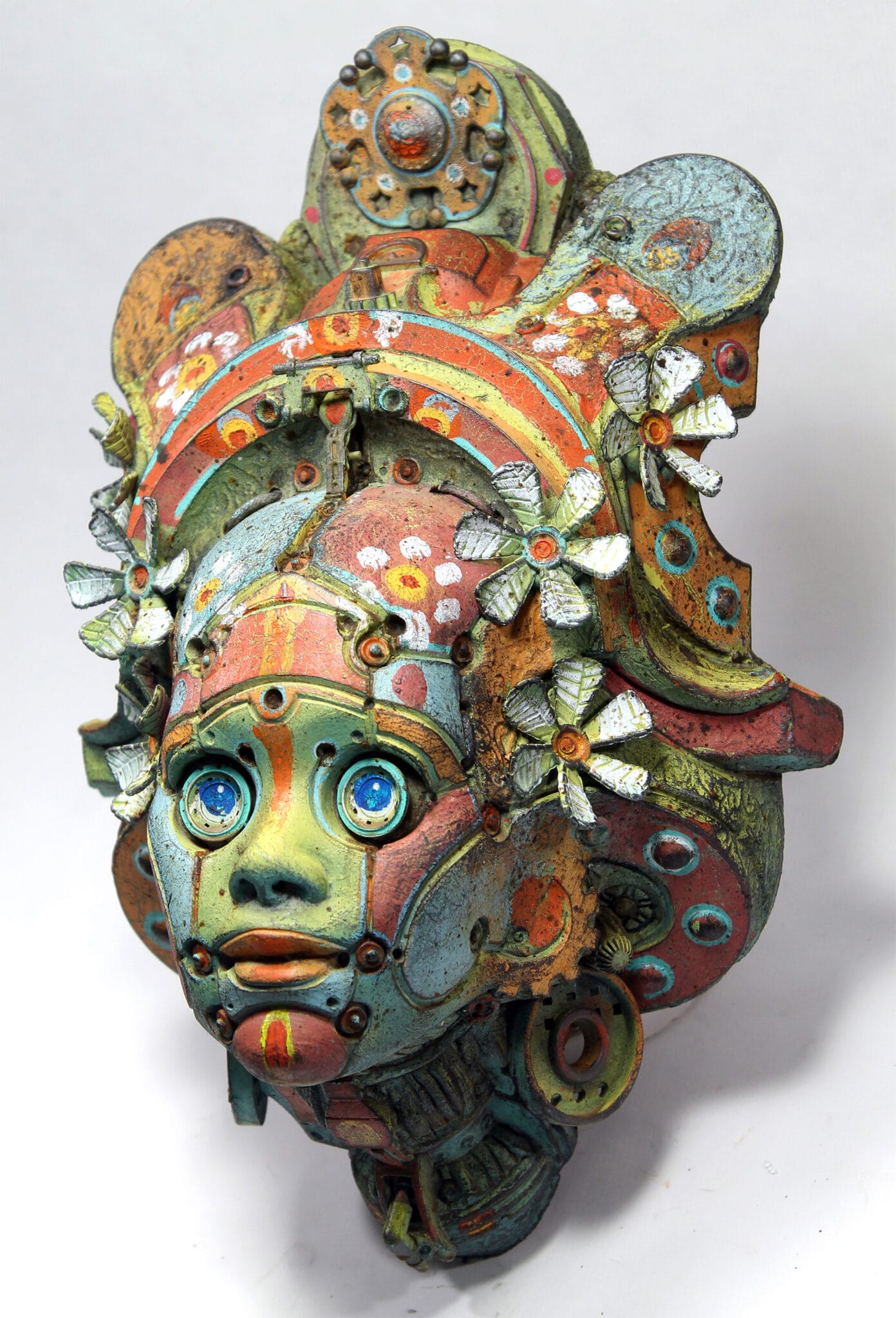 Based out of Cala Millor, Mallorca, Castelá casts steampunk-style figures that resemble ancient art while evoking otherworldly relics of an alternate reality.
 Using a combination of materials like resin, acrylics, and metallic paint, his sculptures are a combination of the future and the past, each one a unique and different character.
  Castelá strives to endow each piece with its own identity, while imagining them as fleshed-out characters starring in their own stories.
 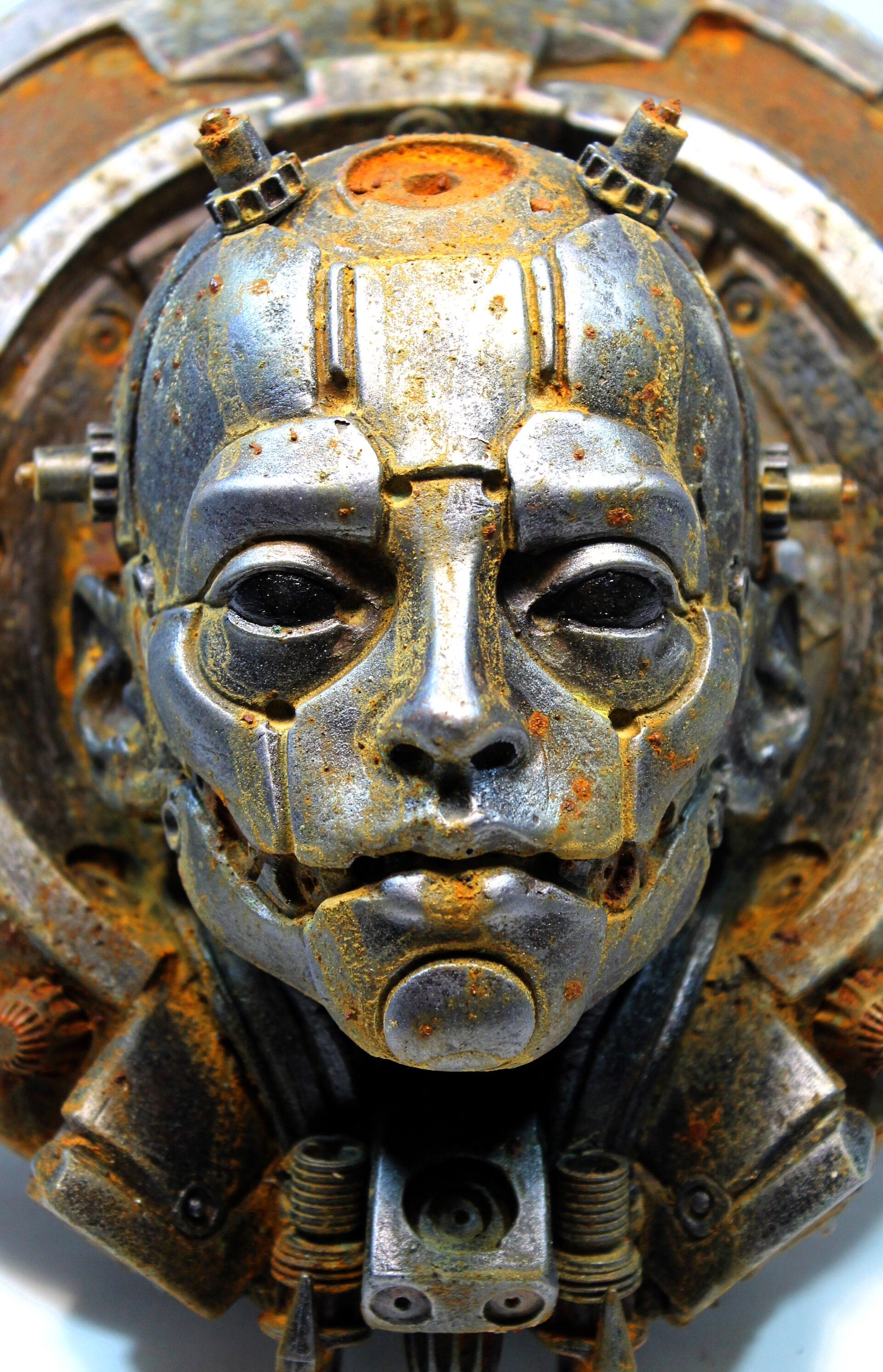 Looking quite fantastical and yet calling upon the classical tradition of sculpture of the ancient world, his work has found a place in the modern world.
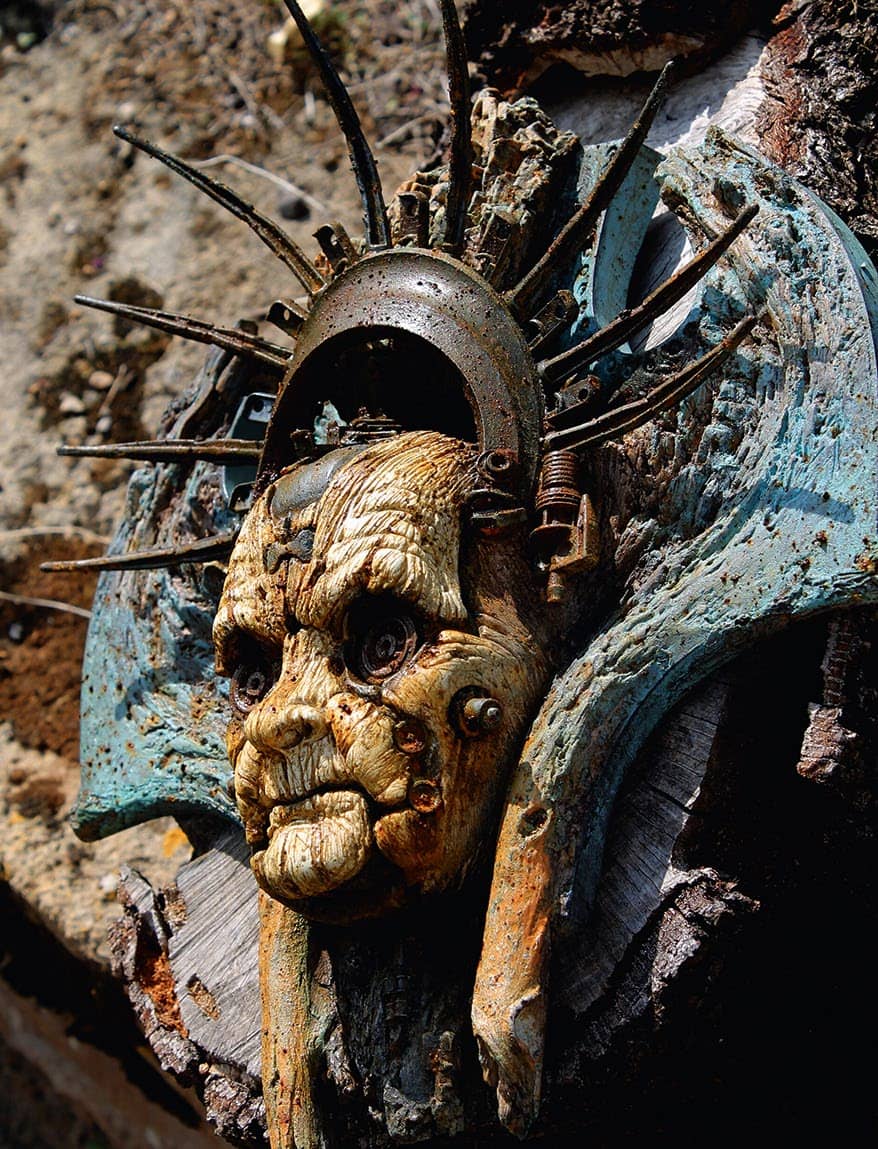 “I believe that sculpture is the art of presence,” Castelá shares.
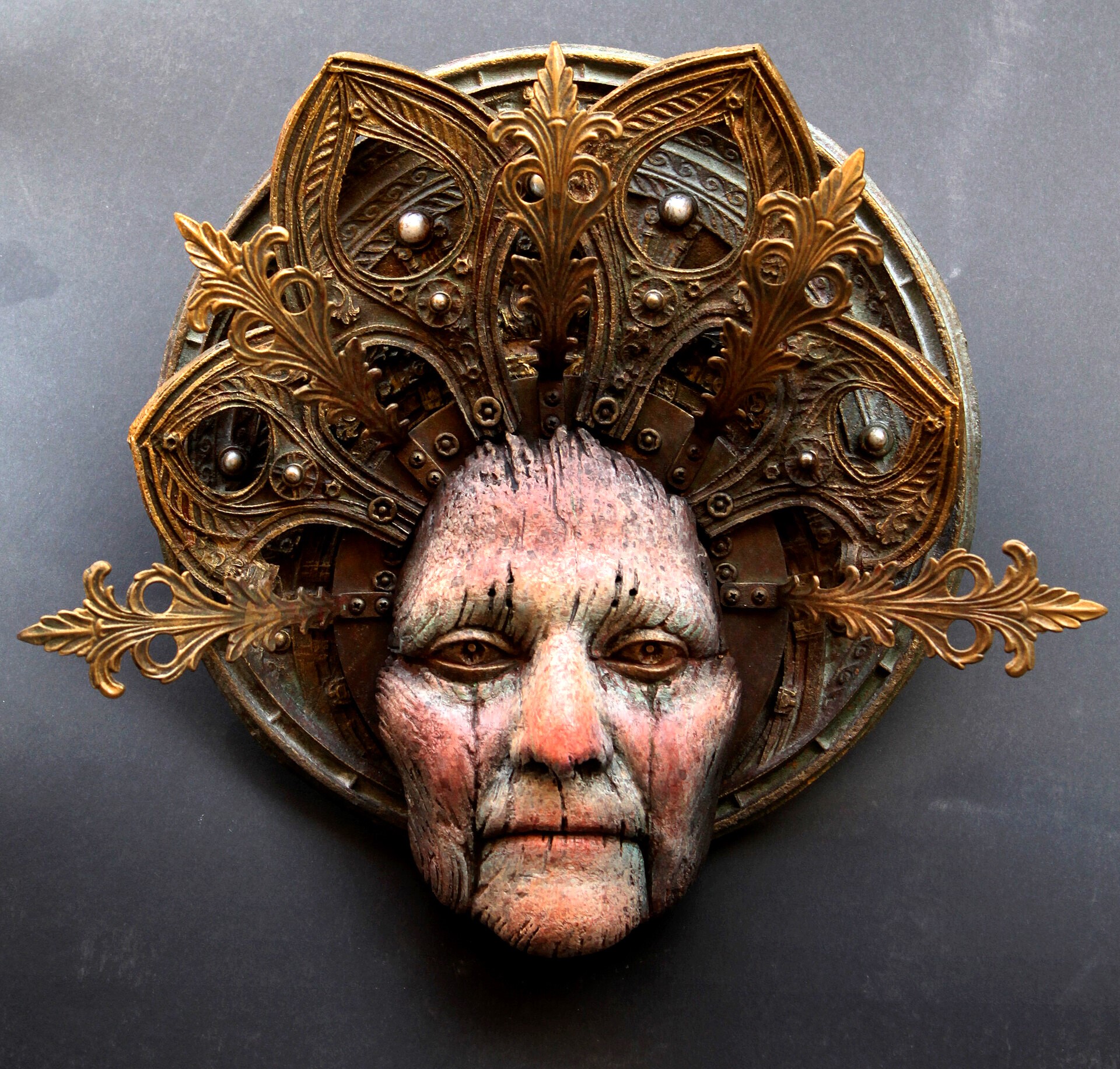 “Sculpture shares space and time with the viewer, and that is what makes it so powerful. That’s why I don’t try so much to tell stories as I try to create powerful presences, each in its own way.”
More of Tomás Barceló Castelá‘s wonderfully unique work can be found at https://tomasbarcelo.artstation.com/ and https://www.instagram.com/tomasbarcelocastela/.
 I have to have a talk with Mother Nature. Her timing is atrocious.
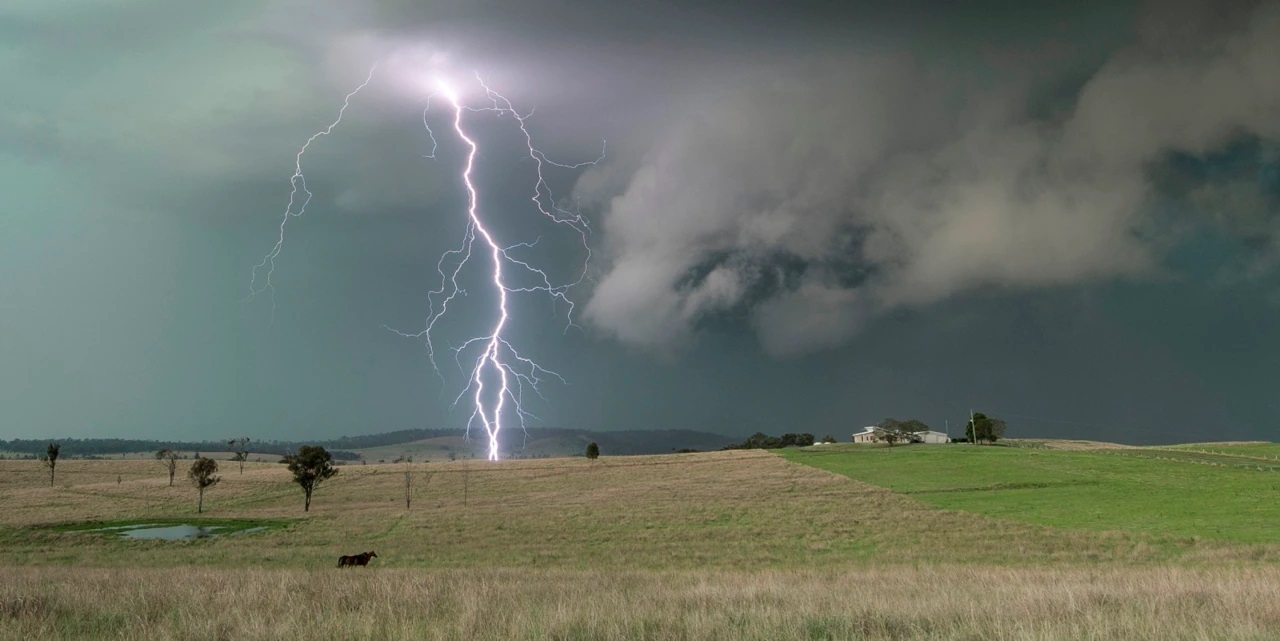
Rain, threats of rain, and talk of rain did affect my craft show up north. It’s not the first time that I’ve taken on Mama and come out in second place. But to be honest it was nice being outside (be it under a canopy) for the day, making small talk to friendly craft show wanderers, breaking even money-wise for my time.
It’s just that Mother Nature has bad timing.
Rain that day, sunny the next. Yesterday it rained all day, cancelling an 8-year-old’s baseball practice, today it’s sunny and cool and beautiful.
Her timing seems to reflect mine most of the time. I’m ready one day, out of sync the next. It’s like I’ve found energy too early or too late to really connect to the world.
The days I have a lot planned inside there’s plans being made for me outside. The days I really want to sleep in I have to get up early, and the lazy mornings I could catch a few extra Zzzzs I’m wide awake. I have shown up for events on the wrong day and missed others by not checking the calendar.
I think as you get older your inner clock gets more and more out of sync.
How many times a day do you get sidetracked, waylaid, and misdirected without intention? I have to laugh — for me it’s more than I care to admit.
I might have to schedule a conversation with Mother Nature in the future to talk about our timing. Try and get on the same page. After all, she is beautiful and magnificent and not always in control, either.
I don’t really feel like talking to Time — he can stay in the future as long as possible.
He moves too fast, anyway.

Life isn’t about waiting for the storm to pass. It’s about learning to dance in the rain.
~Vivian Greene

Never was so much owed by so many to so few.
~ Winston Churchill
Kimika Hara is an Embroidery artist and illustrator from Kyoto, Japan.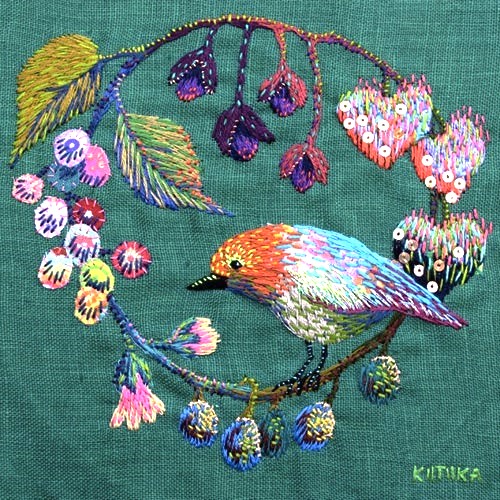 Hara’s style of needlework highlights the culture of Kawaii, a style that celebrates all things adorable and embraces fictional characters as the embodiment of positivity.
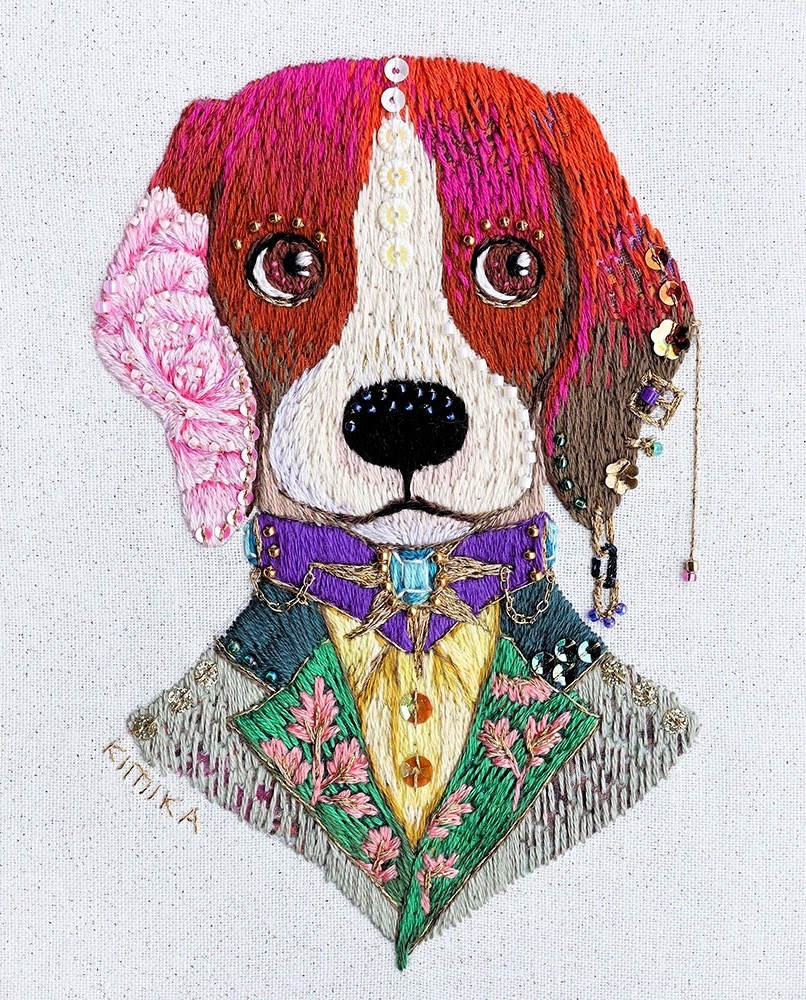 The artist uses fabric, thread, acrylic paint, and beads to create colorful, free-stitch embroideries.
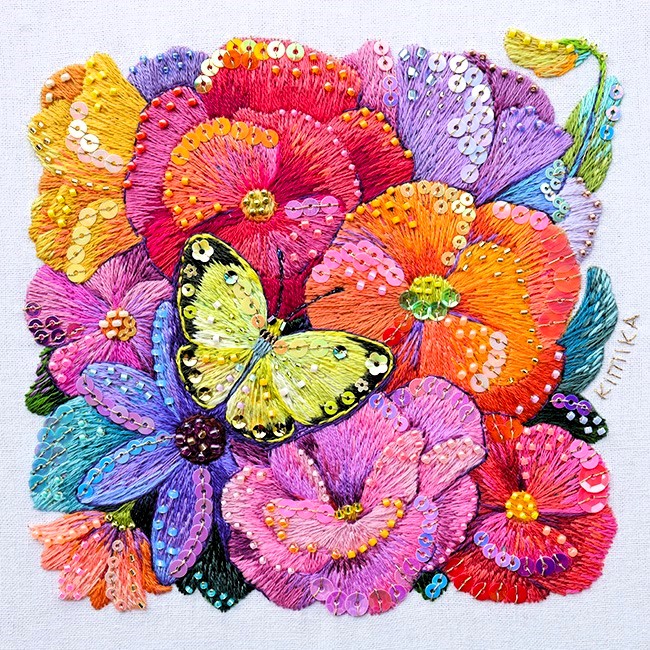 Her designs embrace subjects such as dogs, flowers, and even insects, her color choices bringing light and depth to her Kawaiian figures.
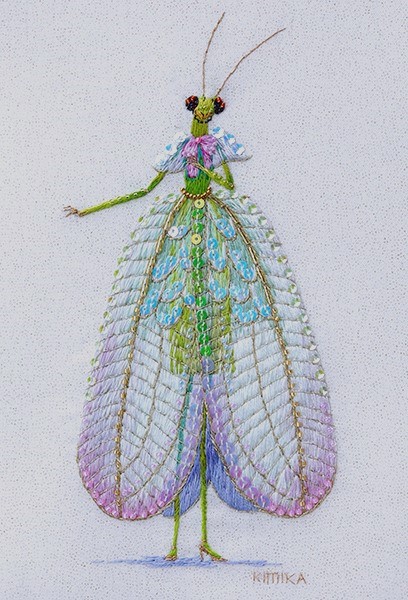 Her technique includes combining loose satin stitching embroidery with painted, appliqued, patched and corded pieces.
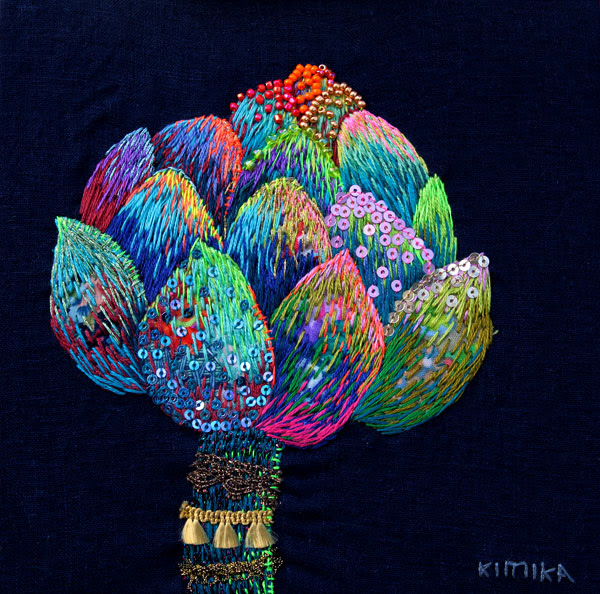 A lot of work goes into each one of Hara’s embroideries, which can be seen on closer inspection.
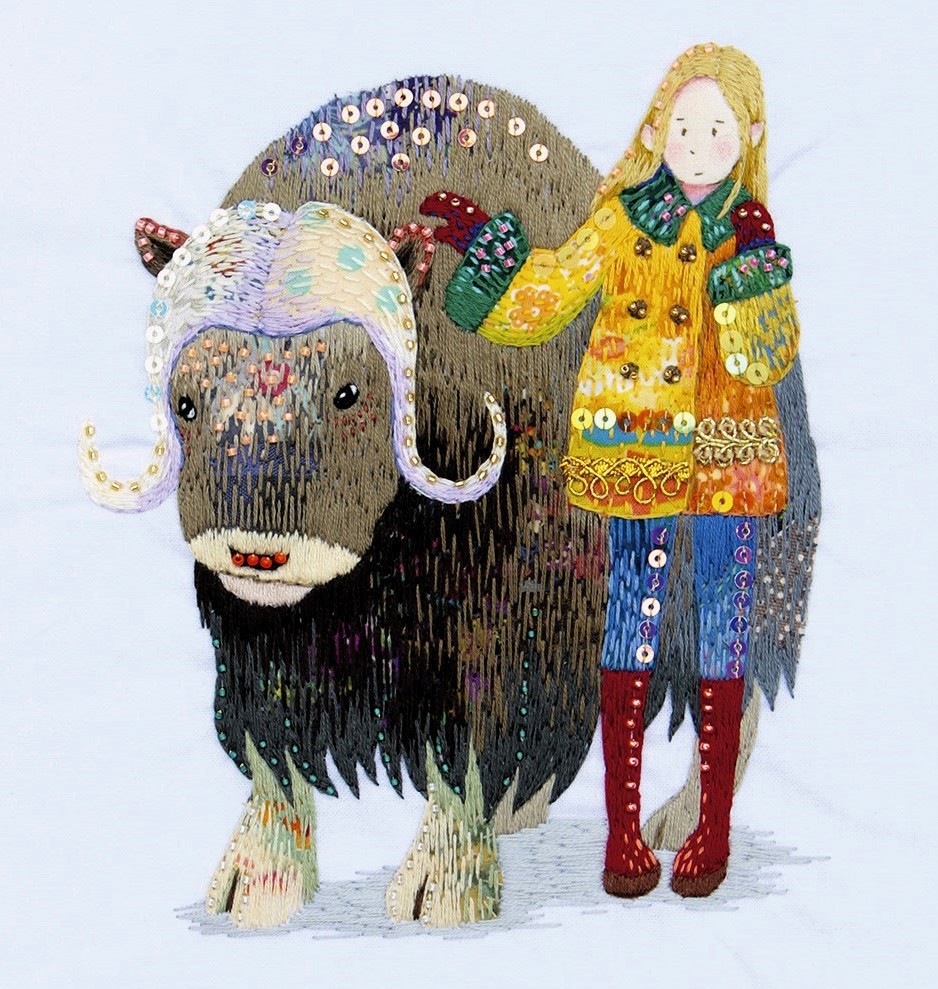 The themes are fun, cute, and something that makes you feel a little happy when you look at it.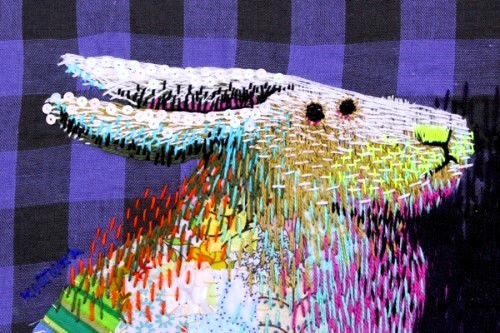
You can find more of Kimika Hara’s delightful embroideries at https://www.kimikahara.com// and https://kimikahara.blogspot.com/

The music is not in the notes, but in the silence between.
~ Wolfgang Amadeus Mozart








Finally taking time this quiet morning to read all of my friends’ blogs, and the first one I open is Ivor’s. I just love his verbiage and his imagination.
Try this one on for size:
The luminous moon
Glissades across the cosmos
Cannily beckoned
By twilight’s pink horizon
Where time’s a chameleon
Do check out his poetry world when you have time. An enchanting visit!
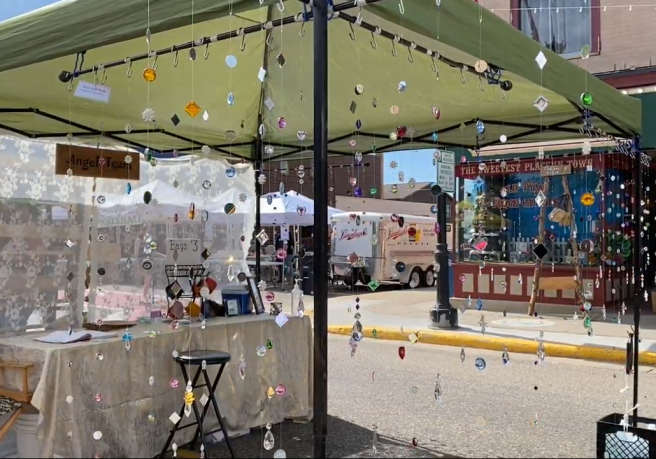 This Memorial Day Weekend will be my third annual Arts and Crafts Show up in Eagle River, Wisconsin, a small northern town set up mostly for fishing and snowmobiling.
I’d like to think my wares this year are better than they were the past few years. That doesn’t mean my first year was rank — rather I feel I’ve “refined” my talents through the years.
My Angel Tears aren’t quite art; not as sophisticated as those I highlight in my Galleries. But they seem to hit the spot with shoppers, especially on bright, sunny days.
I sometimes think about changing craft fields as I always want to learn something new. Painting comes to mind; so does sketching and creating abstract designs out of wood pieces. But I find I don’t have the fortitude I had twenty years ago — heck, three years ago — when I decided to start my retirement off making sparkling suncatchers.
The start of creating something new takes a bit of planning. Time is the first stop. Can you make enough time in your day to start a new craft? Do you have time to do a little research? Buy crafting supplies?
Do you have the patience to hone a new craft? How important is perfection to you?
Is the direction of your new endeavor for fun or profit?
How long will it take to move from apprentice to full fledged artist?
I have learned not to take my crafting too seriously. I am serious about doing things the right way, keeping things clean and organized, and to enjoy every minute of learning. For me, crafting is an extension of that magical energy many rarely tap into.
But I don’t take it so seriously that I can’t eat or sleep or find anything else in my life that makes me happy.
Pleasure should be first in everyone’s life. Especially in Art. Feeling good about your first sketch, your first row of crocheting. Being happy about finding just the right color for your painting or the dress you’re making.
Angel Tears are my happy spot for now.
And if they hit someone else’s happy spot, that’s even better!
Agata Oleksiak (1978-), professionally known as Crocheted Olek, or Olek, was born in Ruda Śląska, Poland. Olek graduated from Adam Mickiewicz University in Poland with a degree in cultural studies.
 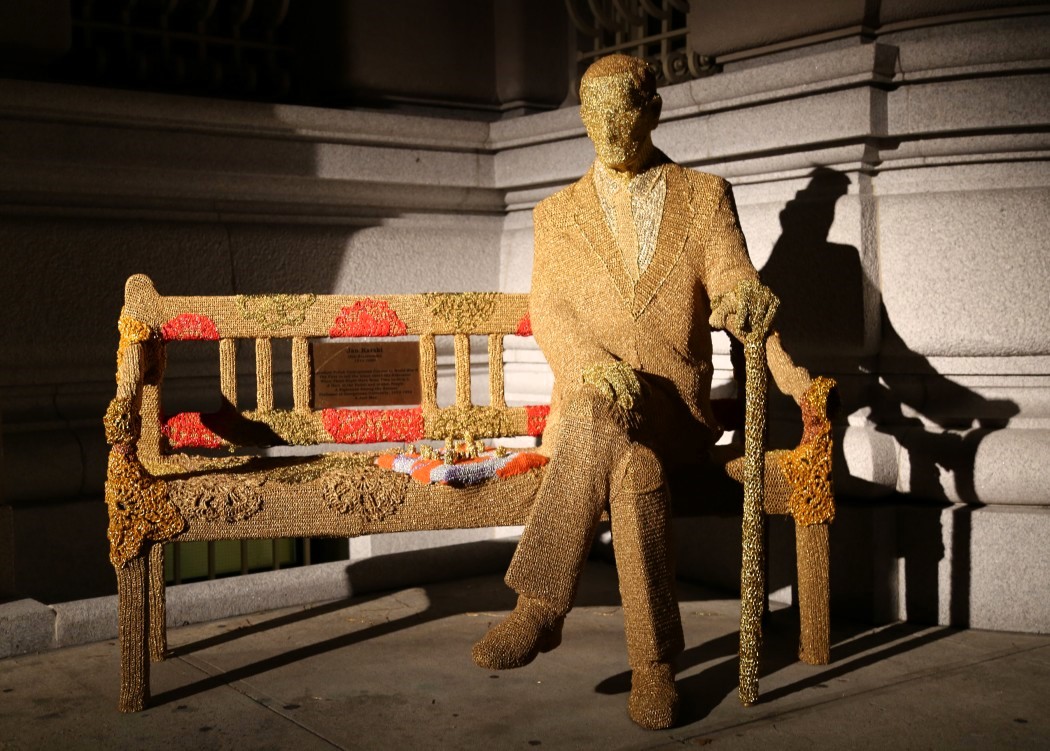 Based in New York City, her works include sculptures, and installations such as crocheted bicycles, inflatables, performance pieces, and fiber art.
 Olek is an artist who bases her practice on covering people and objects in crocheted covers; as the artist puts it, “my madness becomes crochet.”
 The artist is internationally acclaimed for her large-scale artworks and is most notable for crocheting her entire studio apartment, her full-body yarn suits, and for stitching a colorful woolly coat over New York City’s landmarks.
 She’s also known as one of the pioneers of urban art in Europe. Her unique artworks incorporate people, buildings, and various street objects, for example, crocheted bikes.
 “Crocheting is a metaphor for the complexity and interconnectedness of our body and its systems and psychology,” Olek shares.
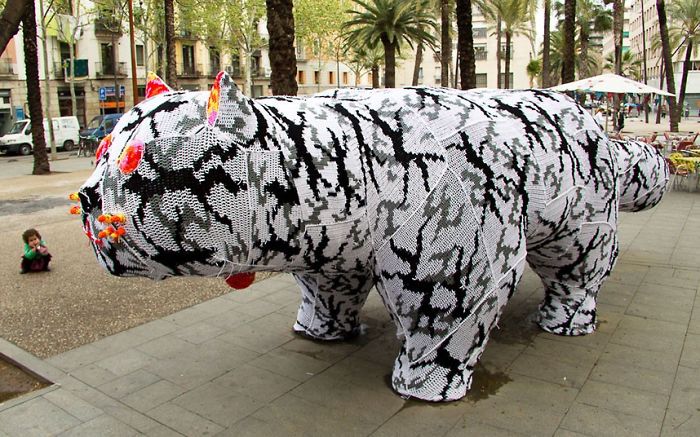 “The connections are stronger as one fabric as opposed to separate strands, but, if you cut one, the whole thing will fall apart.”
More of Olek‘s amazing crocheting can be found at https://www.olex.space/.

“A spider lives inside my head
Who weaves a strange and wondrous web
Of silken threads and silver strings
To catch all sorts of flying things,
Like crumbs of thoughts and bits of smiles
And specks of dried-up tears,
And dust of dreams that catch and cling
For years and years and years…”
― Every Thing on It
George Inaki Root, who is of Spanish-Filipino and Japanese descent, finds inspiration from his multicultural background and a passion for Japanese culture.
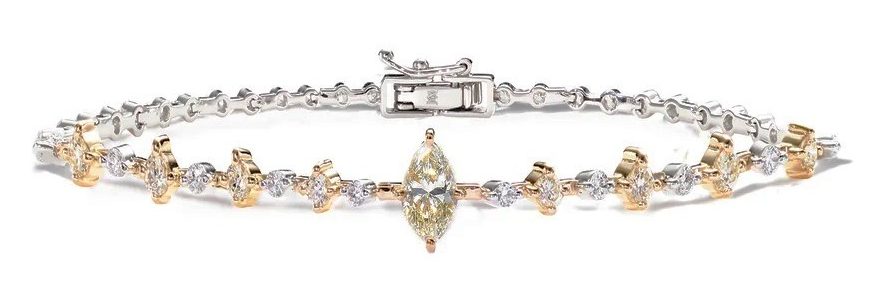
Root named the brand Milamore after his grandmother, Milagros, which means “miracle” in Spanish. The brand combines her name with the Italian word for “love” as a tribute to Milagros and the bond she nurtured with Root.

Milamore is built on the principles of reinventing stories from culture and nature through the art of jewelry design.
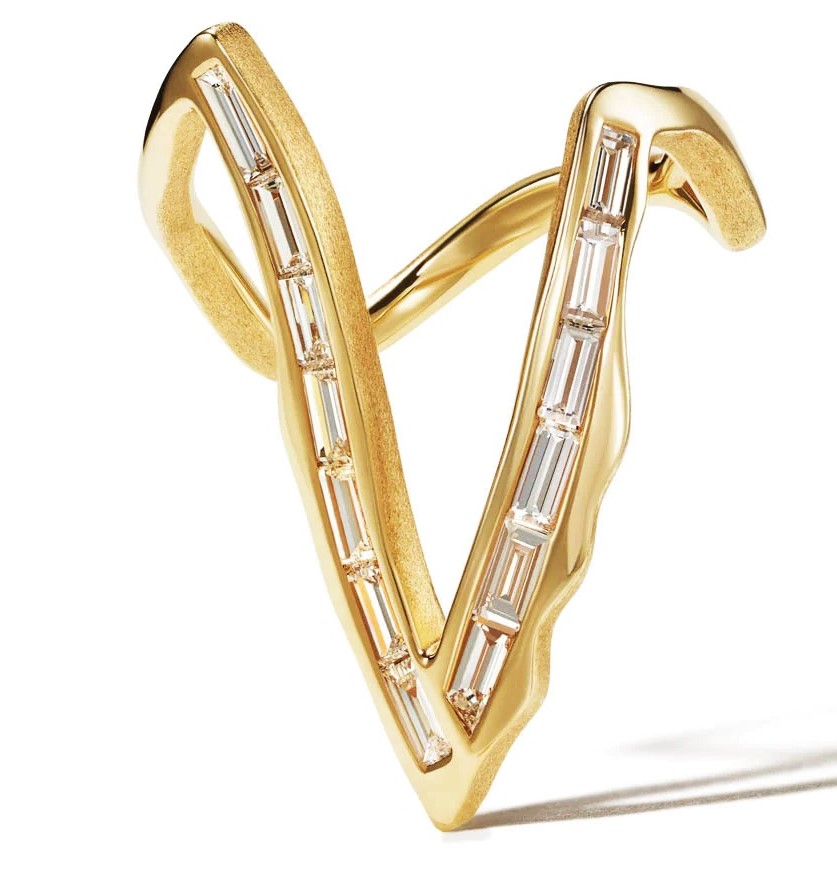
Every piece designed is unique, inclusive, and for no specific gender or persons.
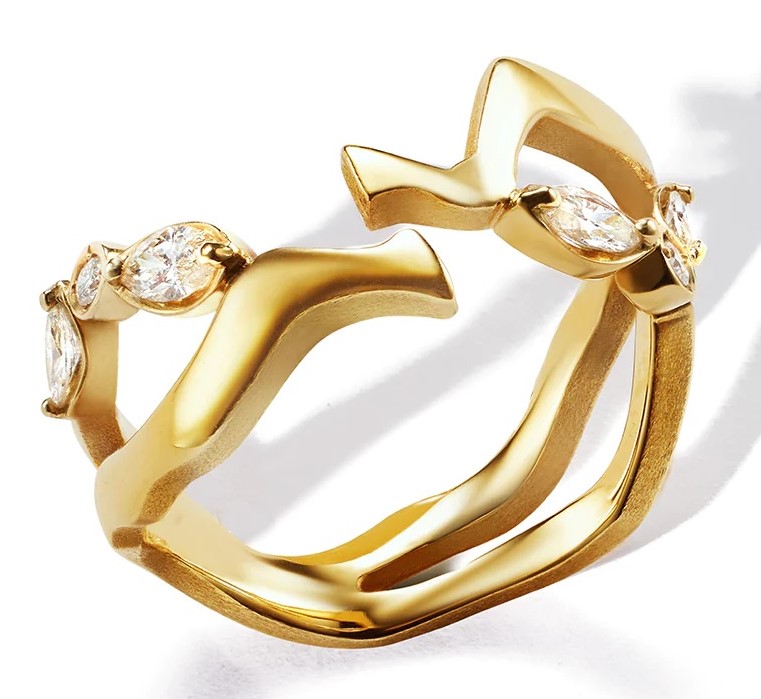
Root’s designs balance bold and edgy elements with sophistication, creating androgynous pieces that celebrate colorful individuality.
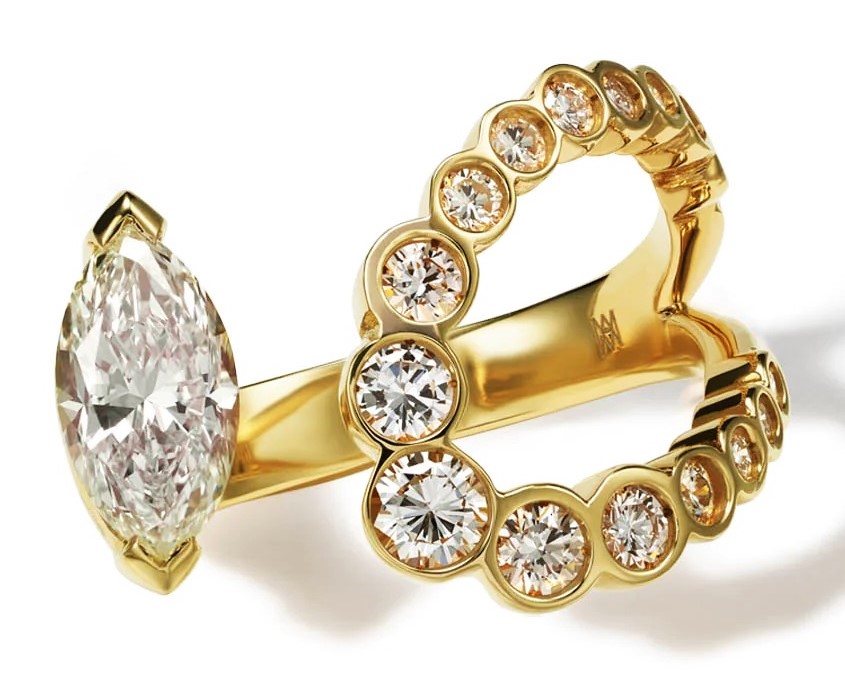
The jewelry artist’s philosophy, rooted in the concept of wabi-sabi and yin-yang, emphasizes the beauty in imperfection and the importance of finding balance in life and being deeply connected with yourself.

Through his art, Root invites us on a journey of self-discovery, reminding us to embrace the beauty that surrounds us, even in times of uncertainty.
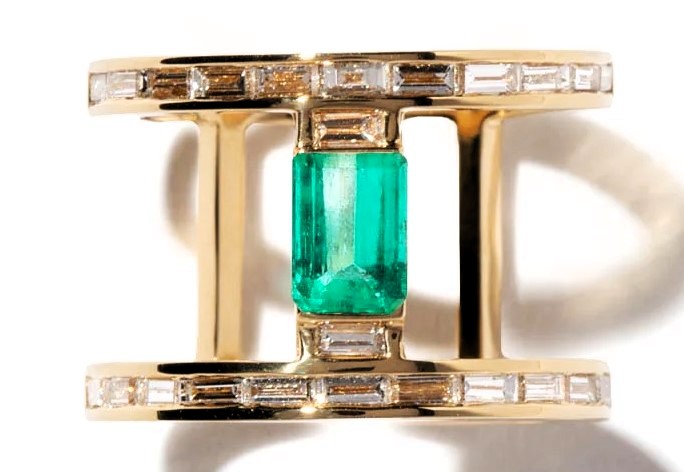
More of George Inaki Root‘s simple, distinct jewelry can be found at https://en.milamorejewelry.com/.

Had a marvelous time camping … excelled at doing not a whole lot of anything for five days. Went the touristy route one day, walking through the woods/campground one day, solidifying a relationship with friends we’ve had for over 20 years every day.
Now I’m back to reality, and things are already moving too fast.
I remember when I was younger and thought the day would never end. Of course, many of those days were work days. And I had 50 years of those five-day-a-week days. Now that I am retired I am doing more in one day than I did in several.
I’m not sure I want to be this busy.
I have to admit I’m having a ball being retired. Getting up when I want to instead of when I have to has changed my attitude for the better.
But now I’ve got mowing duties and a craft show in 10 days and my granddaughter’s concert and soccer games and baseball practice and plants to take outside for the spring and tons of laundry to do and I’m already tired thinking about it all.
It’s easy to complain about where you are in life. You’d rather be there than here. You’d rather your kids be self-sufficient instead of clingy all the time. You’d rather sit and read a book than do a sink full of dishes.
Then one day a very good friend finds cancer in their lungs or needs shoulder surgery and you realize all your complaining means nothing.
Life will go on as it always has. It will always be full of ups and downs and boredom and flash moments and there is nothing you can do about them except hold on.
Today I wish all of you bright hopes and peaceful days. Learn what you can from your experiences and help others going through theirs.
Sitting around the fire and talking with good friends was the therapy I needed to embrace the world and what little time we have left to do what we want to do.
Find your fire and sit around it when you can.
To all the mothers of all shapes and sizes and relationships — YOU ROCK!










I was wise enough never to grow up, while fooling people into believing I had.
―
By the time you read this I (hopefully) will be camping with some friends in the great state of Tennessee. I love “philosophical” discussions… ones that seem to come from my ever wandering brain. So here is a repost from Dec 2, 2020. (we were such babies back then!)
 Burning Philosophical Questions
Every now and then my mind tries to tackle the bigger questions in life. Questions that don’t have exact answers. Some are humorous, some are disturbing. How I get off on these tangents I’ll never know. But did you ever wonder ….
The Great Pyramid took about 20 years to build. A study calculated how many men would be needed daily to deliver “340 stones each day” and determined there were likely 1,200 people in the quarry and 2,000 transporting the stones, while others must have cut stones and set them into place. There were also cooks, cleaners, and caretakers for the equipment. Assuming one bowel movement per day, where did all of these people go to the bathroom every day?
On a more sobering note, the Battle of Cannae (where Hannibal crushed the Romans) in 216 BC, the battle cost the lives of almost all of the Romans involved – nearly 90,000 — in one day. Even if the numbers are skewered a bit, what did that battlefield look like in the end? What happened to the bodies?
Did toddler Jesus throw tantrums and curl up in a ball or scream for 10 minutes when he didn’t get his way? Did he write on Mary’s walls with mud or play fetch with a dog or yell at Joseph “Weave me awone!” ?
The world now has an idea of the construction of Stonehenge: the first phase around 3000 BC was little more than a circular bank and ditch with the main structure built of wood; the second phase began about 2150 BC and continued for 150 years (when the first of the bluestones were moved into place); then the early Bronze Age, between 2100 to 1500 BC, which brought the outer circle and trilithons (the ruins we see today). Fine. But how did they lay those humongous lintels (cross stones) across the tops of those pillars?
The first person in history whose name we know is Kushim, an accountant from Mesopotamia from around 3200 BC, 33 centuries before Christ, who chiseled his name on a tablet. Who gave him his name? Did they have a name?
And a few still unanswered questions from my Cosmic Questions quest back in February of 2016:
It is a fact that the closer you get to the speed of light, the more time slows down. So isn’t a moot point to drive faster, when you actually arrive at your destination later?
and ….
If infinity is infinite, and we can see no end to it, how do we know it’s even there?
Whew! I feel so much better that I got all these questions out of my head ….
British artist Helen Ahpornsiri grows and collects flora, foliage, and seaweeds which she preserves with traditional flower pressing methods before delicately re-imagining them into artworks.
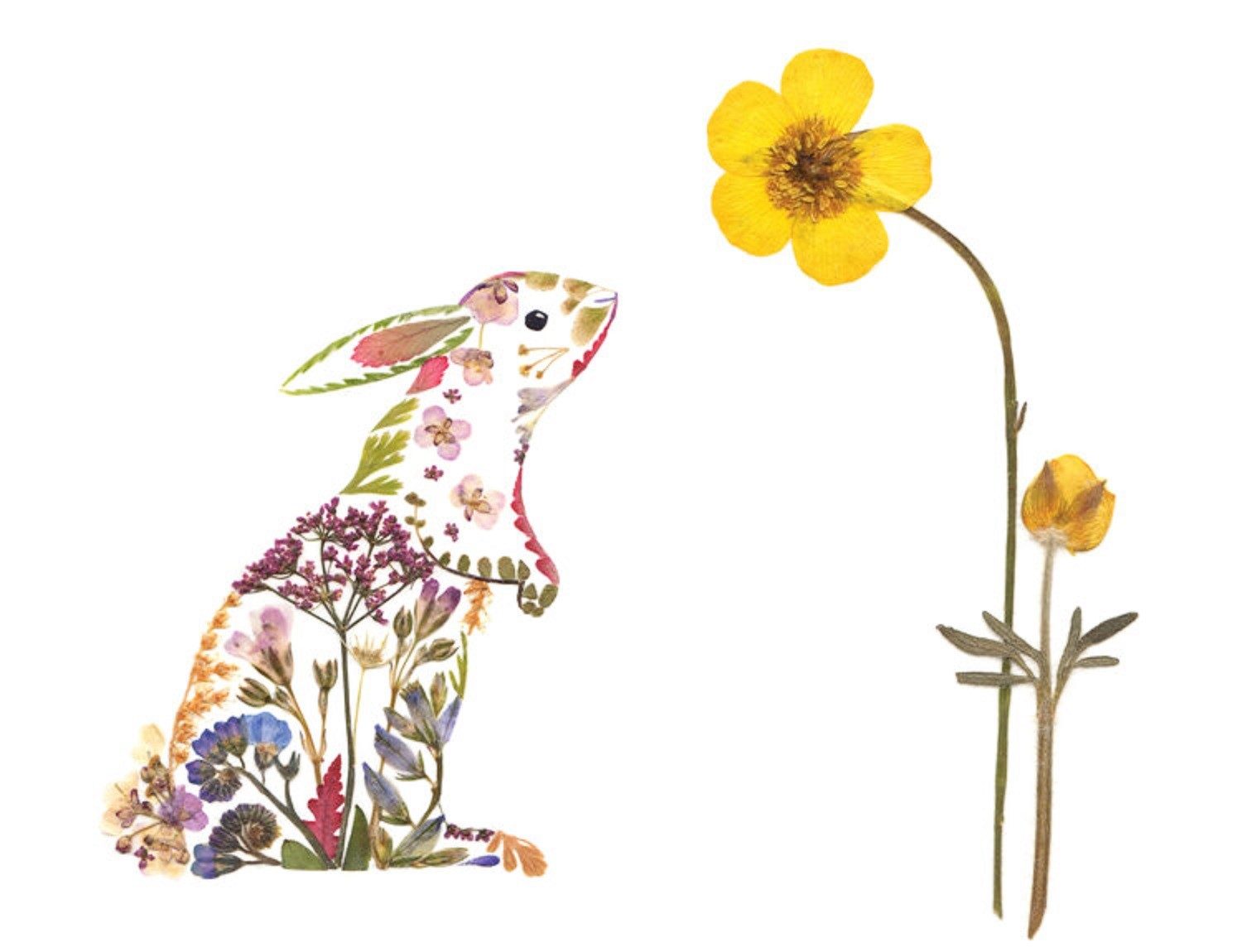
Her delicate compositions depict the diversity of the natural world, from mammals and birds to insects and sea creatures.
 All of Ahpornsiri’s uniquely beautiful images are made using only real flowers, petals, leaves and stems.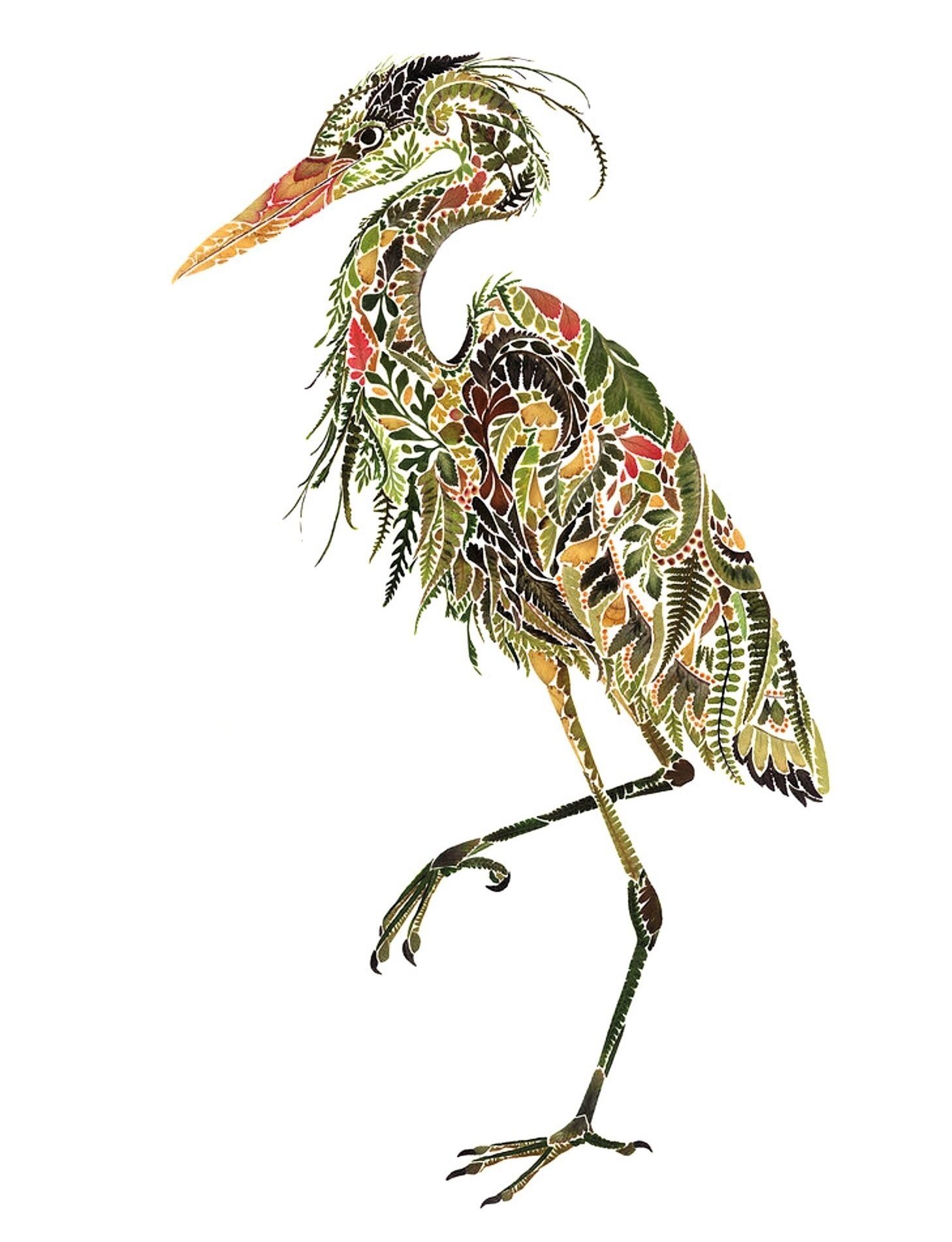
The majority of the plants she uses are grown in her small garden, cut for pressing, leaving the rest of the plant to continue growing and providing for the local wildlife.  These are all grown or foraged responsibly before being placed in a flower press.

After one to six weeks, the flora and foliage are flat and ready to use, their natural colors preserved, with no dyes or paints. Each piece is then cut and delicately positioned to form detailed designs, brimming with the intricate twists and tangles of plant life.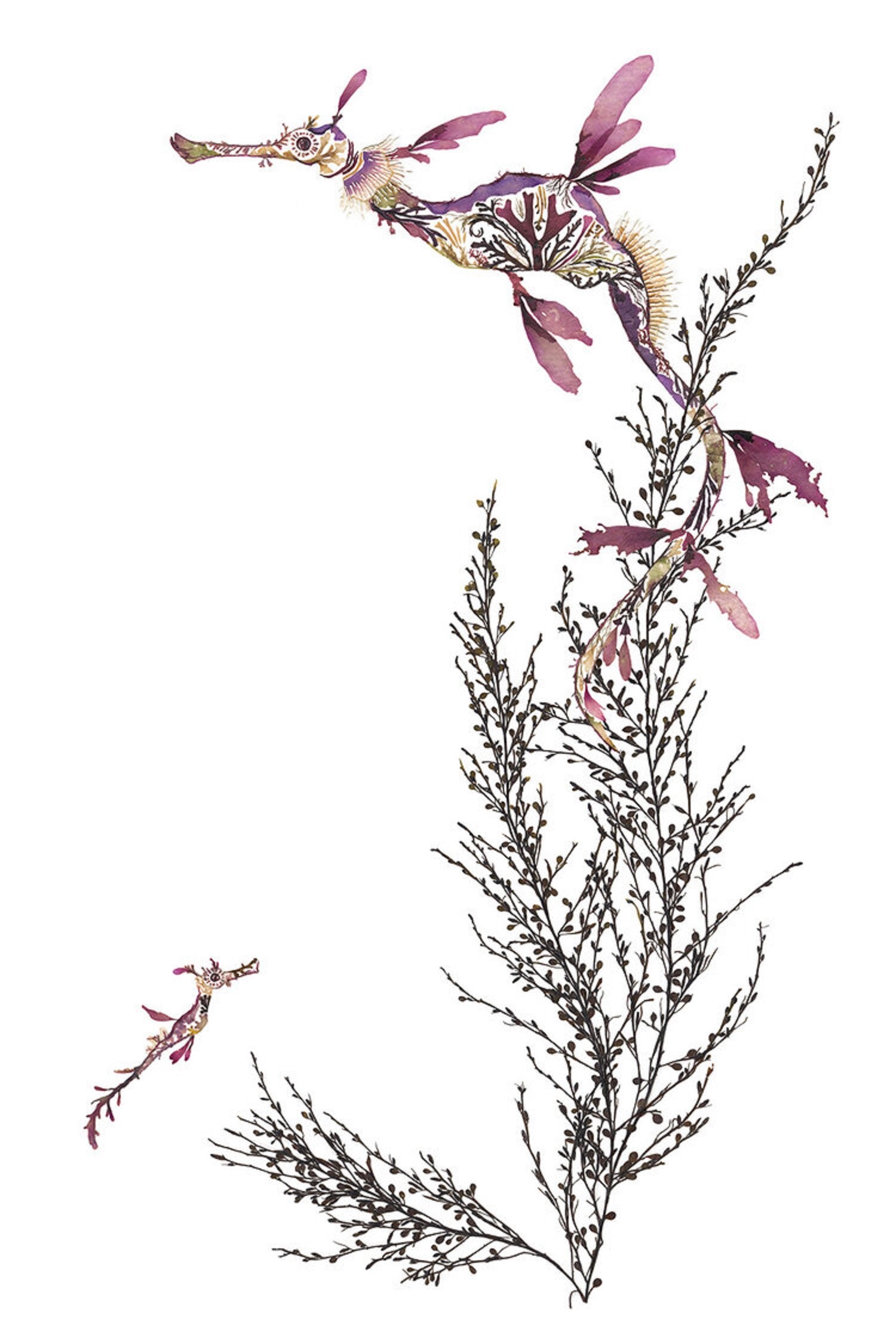
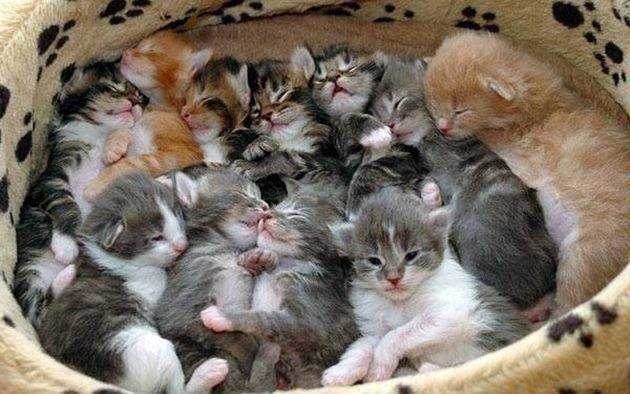
“I
think that the
world should be full of cats and full of rain, that’s all, just
cats and
rain, rain and cats, very nice, good
night.”
― Charles Bukowski, Betting on the Muse: Poems & Stories
Jesse Lane an American artist who works of hyper-realistic portraits with colored pencils on bristol boards, and is known as one of the world’s finest colored-pencil artists.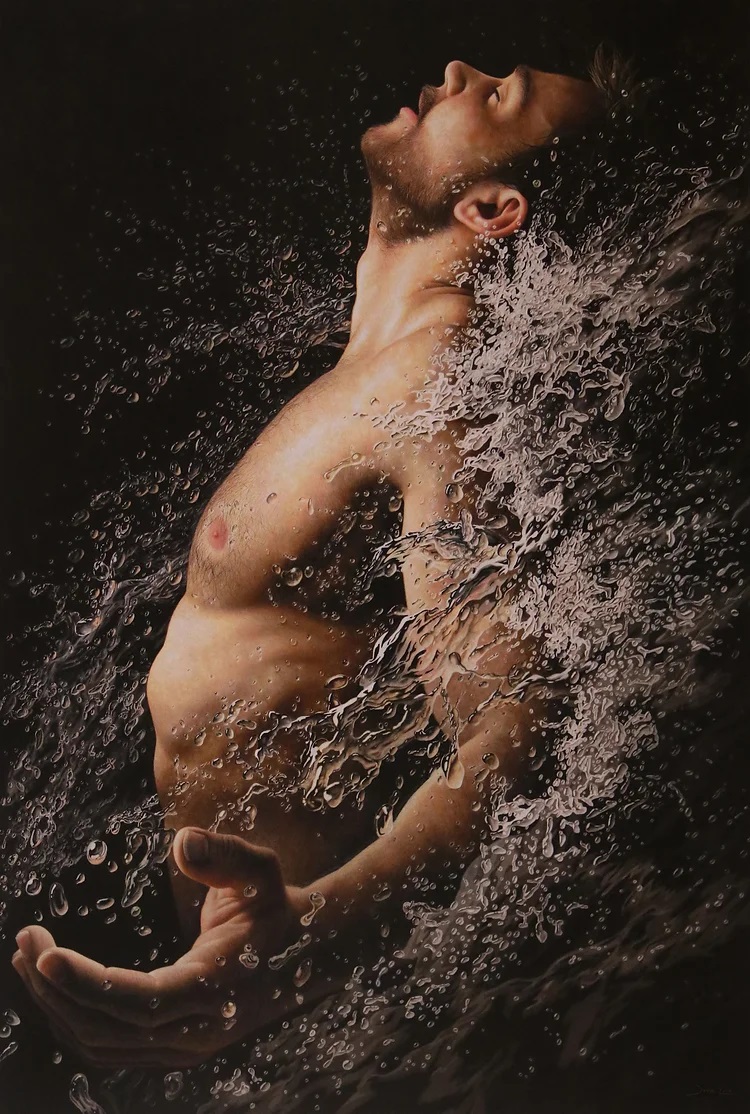 Lane is a graduate of Texas A&M University, and studied art in Italy. He also has a teaching credential from Sam Houston University.
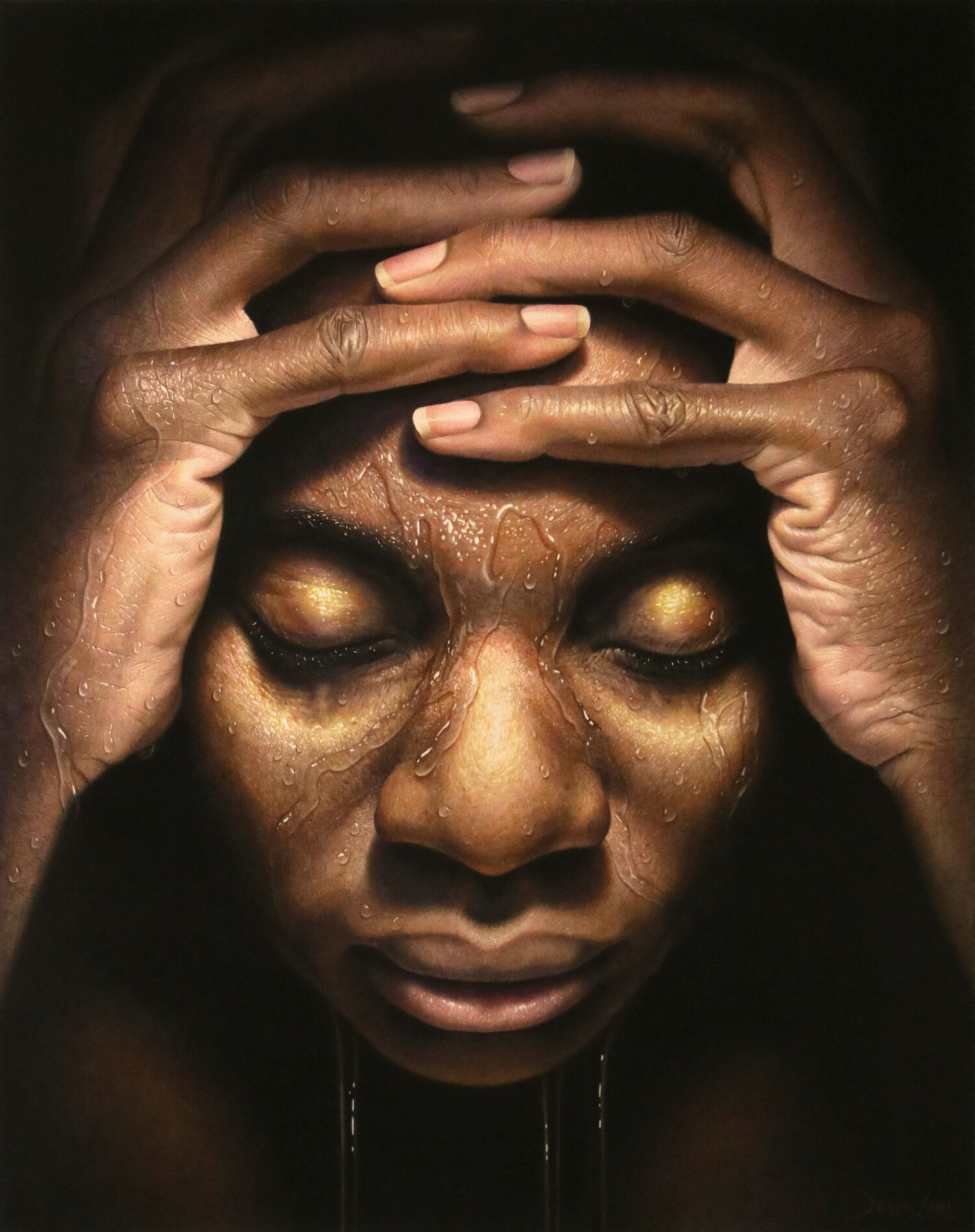 Lane discovered colored pencils while struggling in school with the challenges of dyslexia.
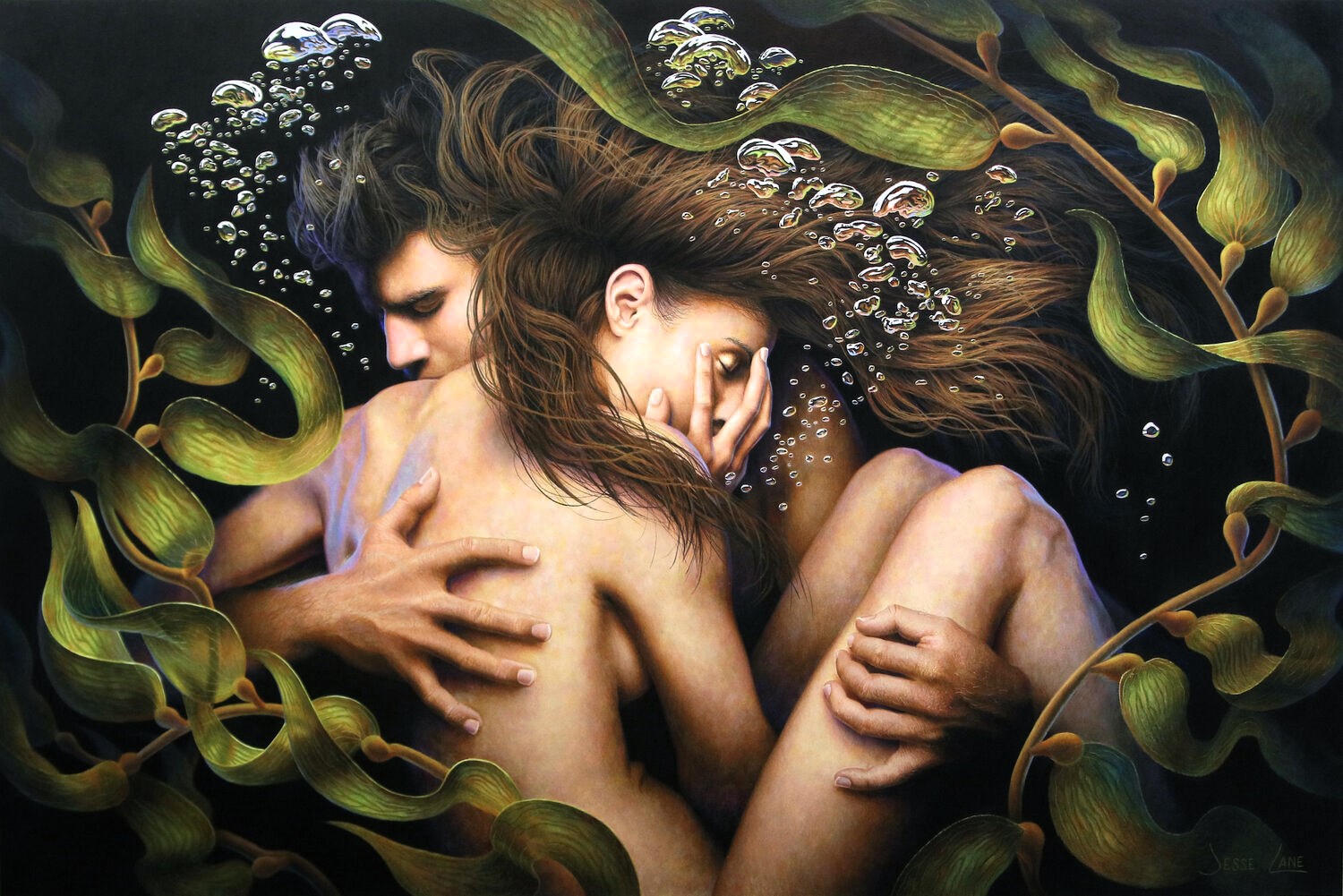 “Growing up, I often felt alone,” the artist says. “I desperately wanted to find a place in life where I didn’t feel inferior. For years, I bottled up my feelings.
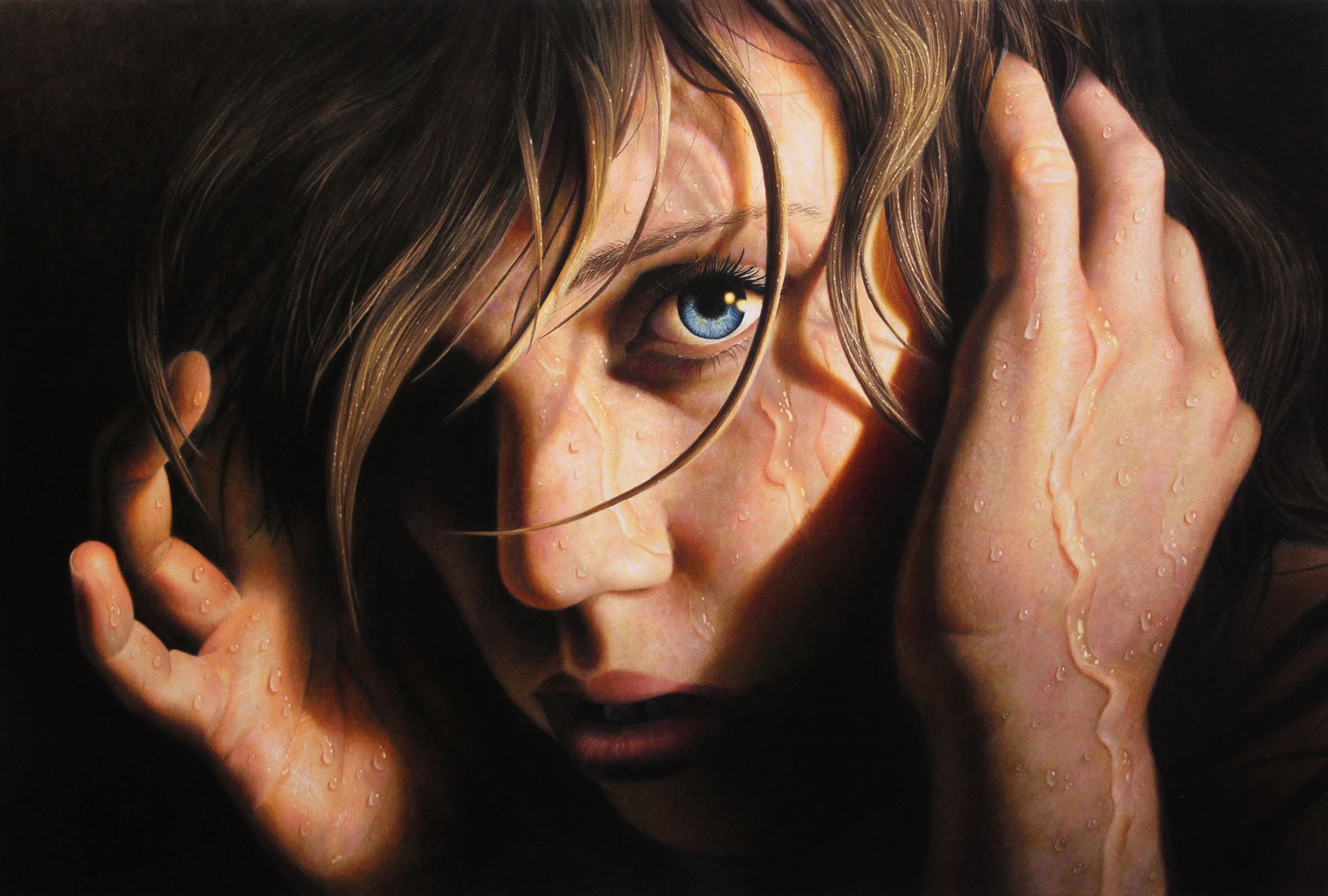 “Then I realized they could be a source of inspiration. I began creating images of personal struggle and intimate emotion.”
 Each of his rich, detailed portraits takes 300 to 1,000 hours to complete.

“The theme of my work is our common odyssey of personal struggle. This struggle is universal, but unique to each of us. “Every image I create has a story.”
You can see more of Jesse Lane’s amazing drawings at https://www.jesselaneart.com/. You can also check into his online video courses available at https://jesse-lane-art.teachable.com/.

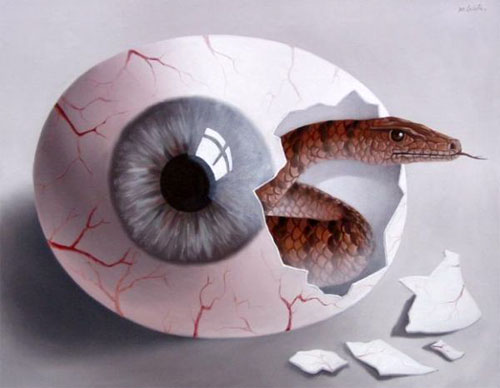
The Eyes are the window to your soul.
~ William Shakespeare
Philip Kupferschmidt is a ceramic artist based out of San Bernardino county, California.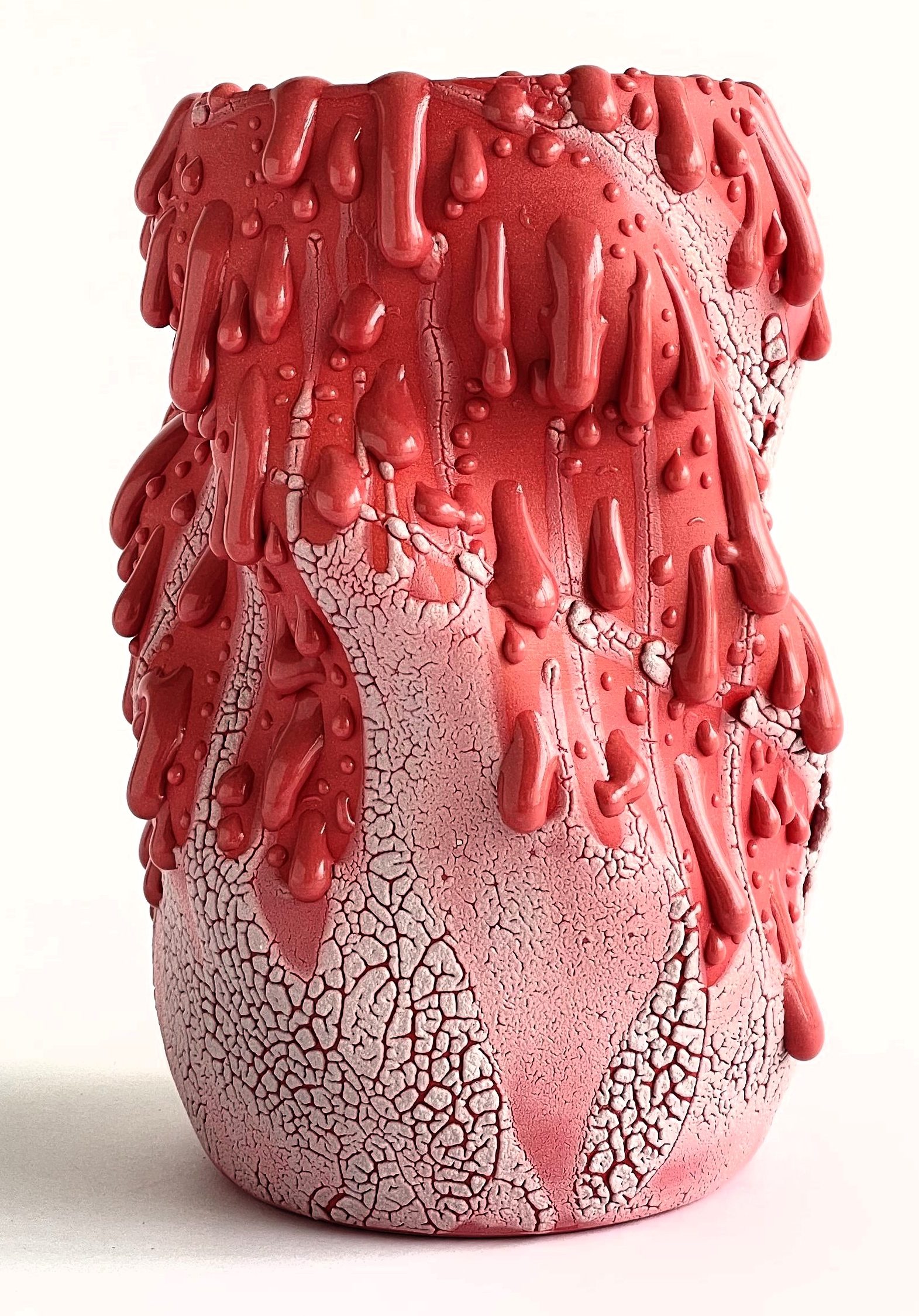
Kupferschmidt received an MFA in ceramics and BFA in creative photography from California State University, Fullerton.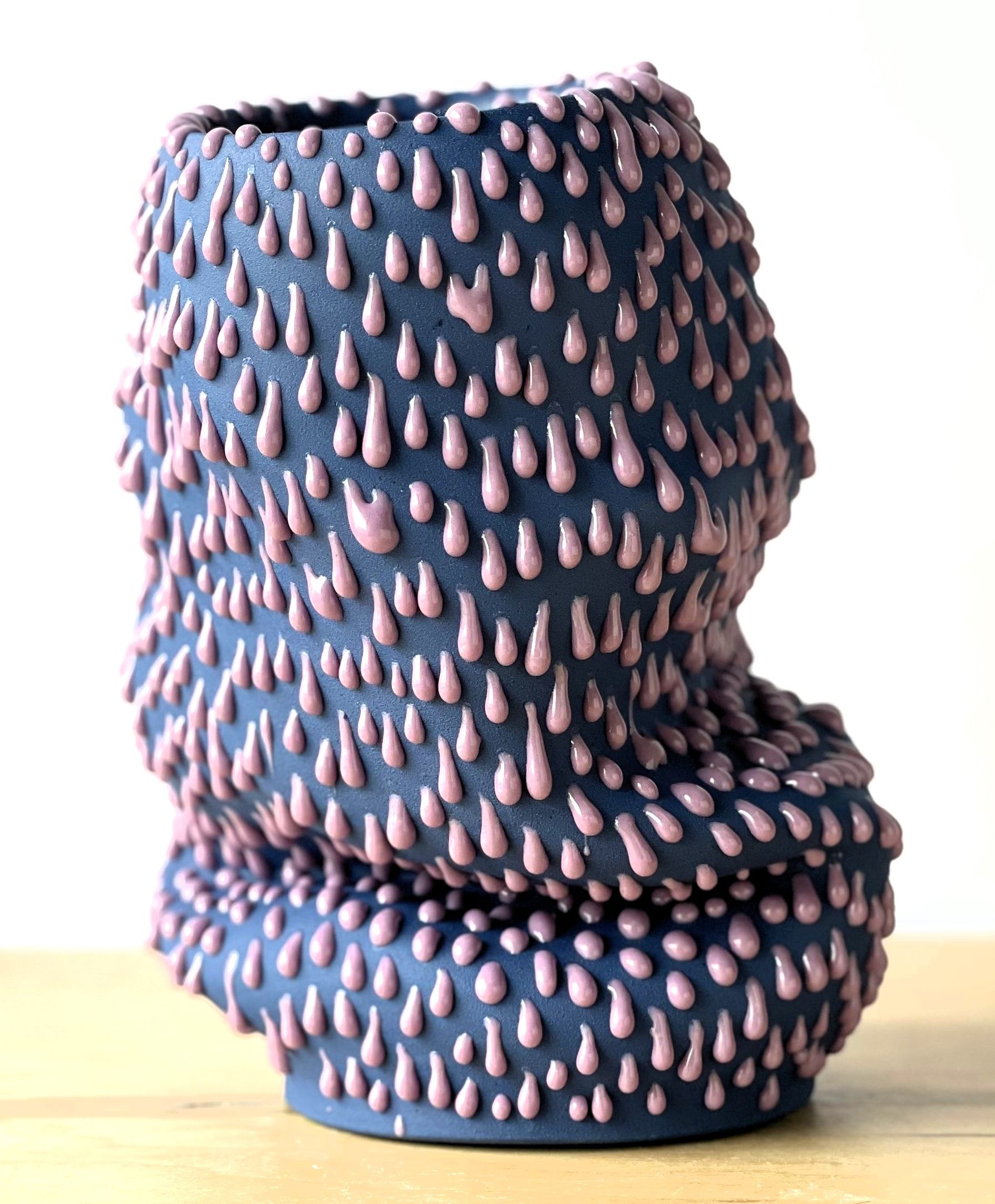 His ceramics are formed by hand on the wheel, and while following a general series of themes, no two pieces are identical, nor surface exactly alike.
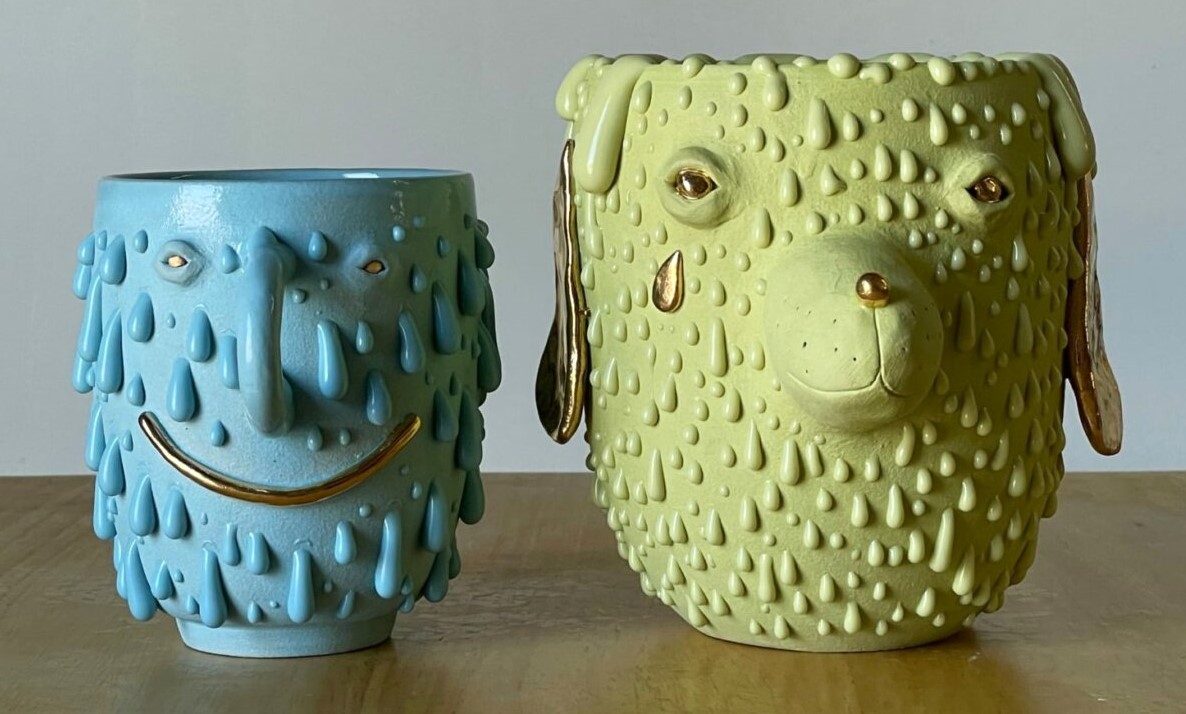 Kupferschmidt is interested in exploring unique approaches decorative and functional ceramics through design, color and glaze experimentation.
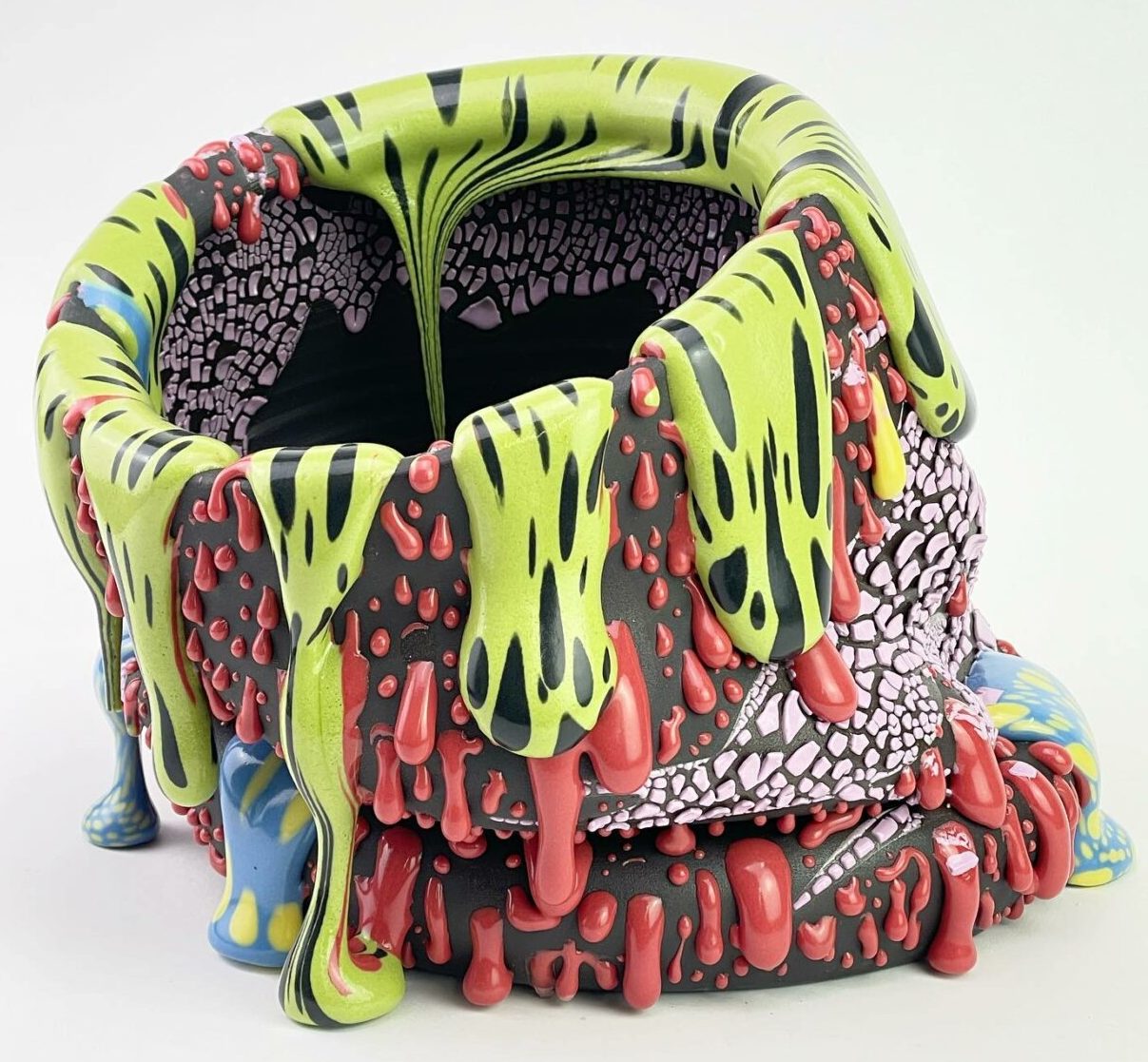 The defining moment of his ceramics journey was seeing the potential in a glaze that preserved the intense colors and textures he sought, making endless iterations and perfecting the glazing technique through experimentation.
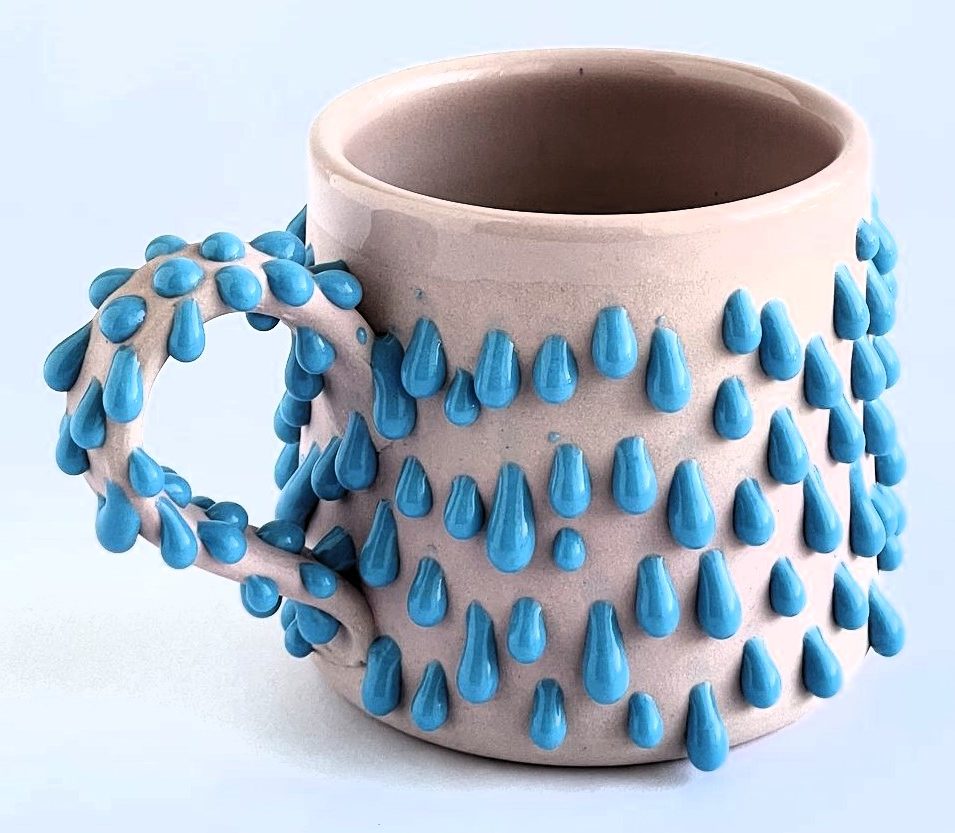 Because no two pieces are identical, no surface alike, his art is in the approach of creation —communicating degrees of confidence, playfulness and satisfaction.
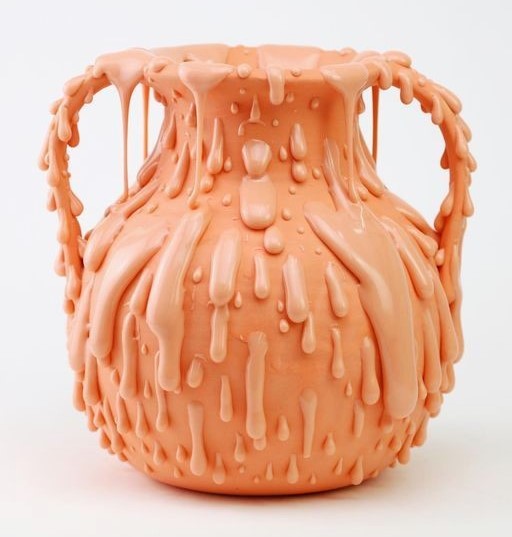 More of Philip Kupferschmidt‘s amazing ceramics can be found at https://www.philipkupferschmidt.com/.
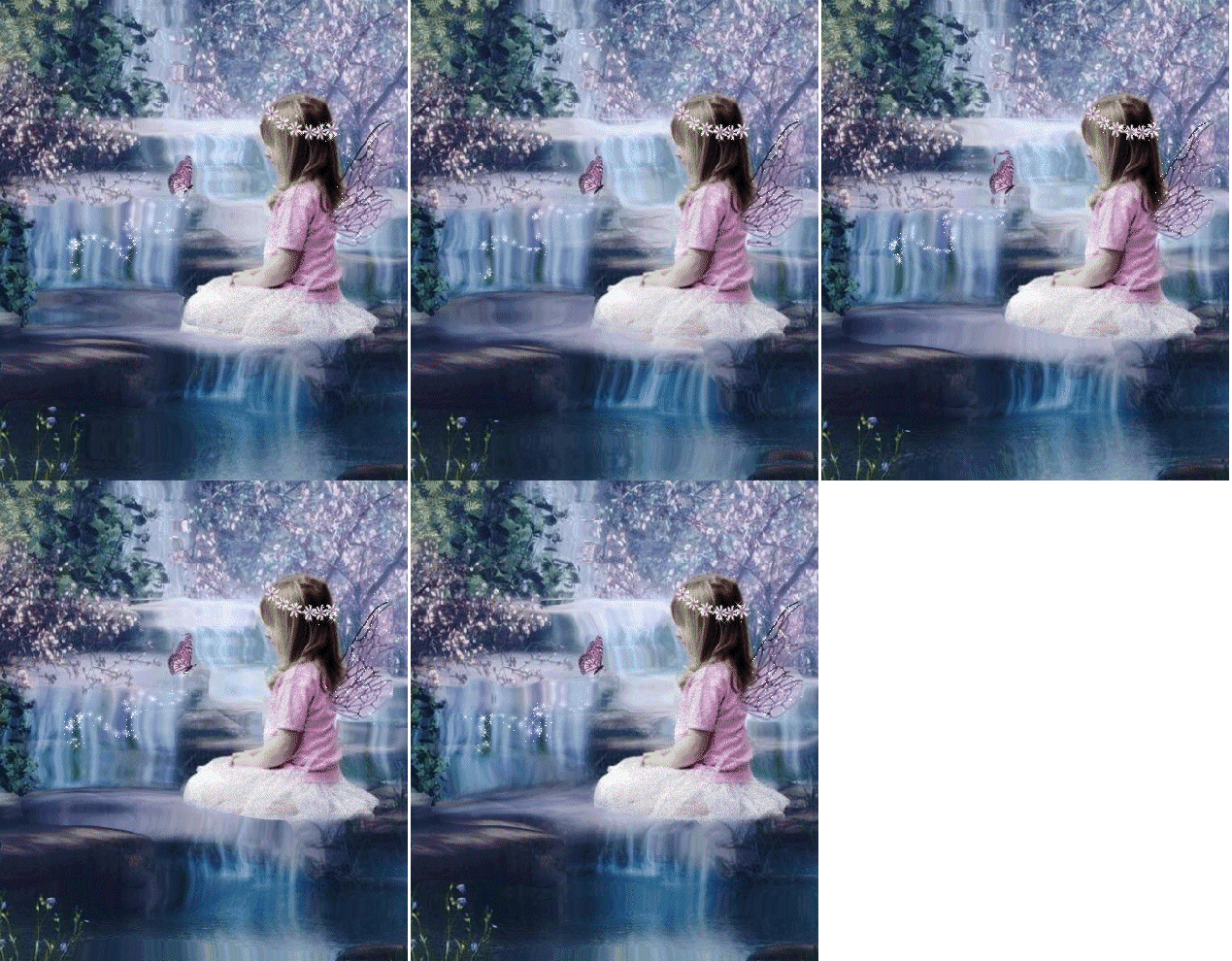
At the edge of our world, at the edge of the otherworld, the beautiful and mysterious faeries stand, watching and waiting to greet us, inviting us to journey with them as our guides while we walk the infinite paths of the Fae.
~Brian Fround
 First off, this is not a self-depreciating blog. I’m not cutting myself down, nor living in the coulda/woulda world.
But the other evening my mind drifted off into wondering what I would have done with my life if I were just a little smarter. Had a little bit more memory control. It’s not a coulda/woulda _______ (loved more, communicated more) overly emotional yadda yadda offering.
If I were a bit smarter I would have:
I wouldn’t want to change my choices in life — those are what they are. And, knowing me, I would have chosen the same path. But it’s the extra-curricular thoughts that I wonder about. If these things would have added anything to my life.
What about you? Any bullet points in your life you wish you could have added to your life? Even one?
Have fun and don’t be hard on yourself!
Thandiwe Muriu‘s work takes you on a colorful, reflective journey through her world as a woman living in modern Kenya, as she reinterprets contemporary African portraiture, and presents a bold new vision of a woman and her autonomy.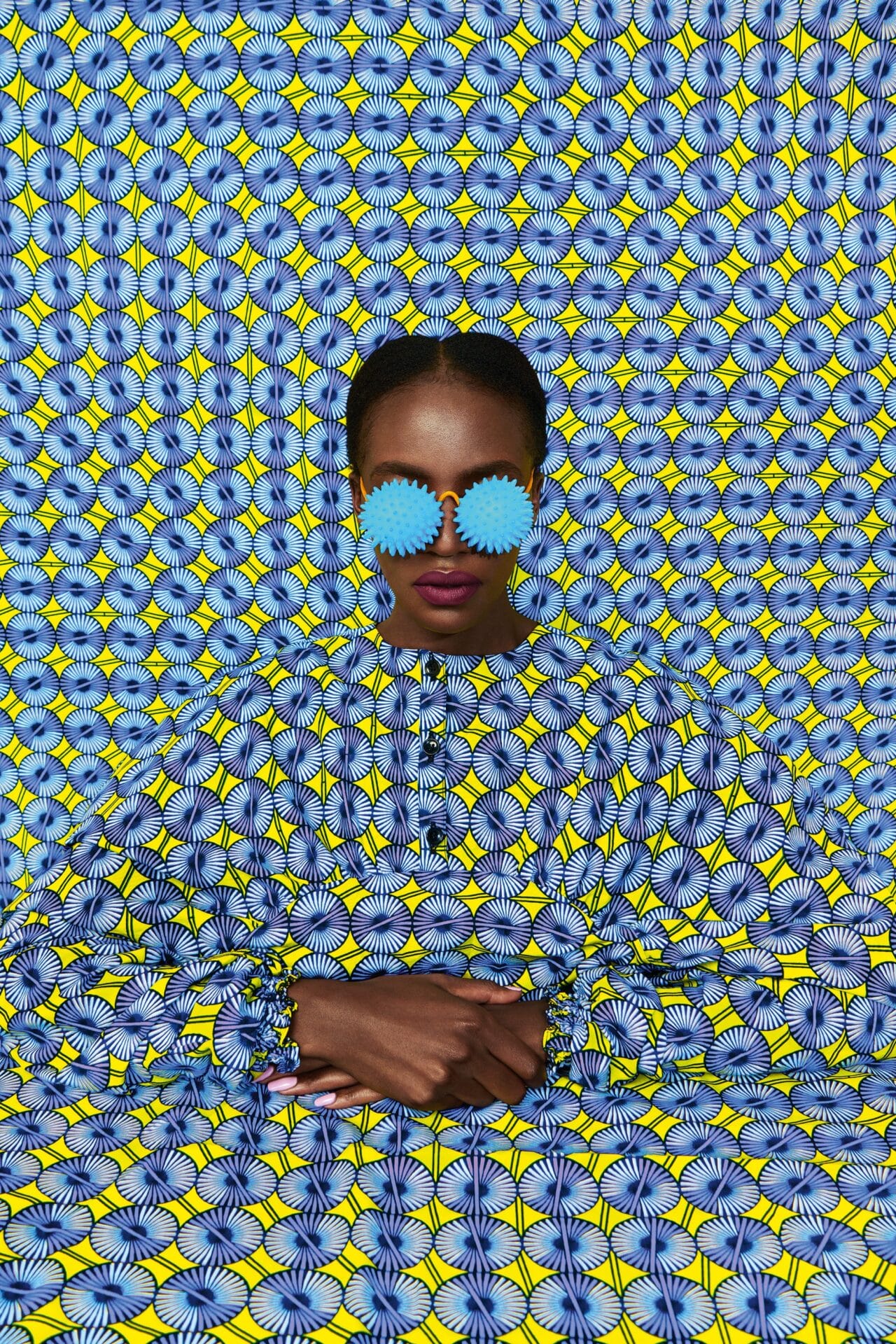 Born and raised in Nairobi, Kenya, Muriu discovered photography at age 14.
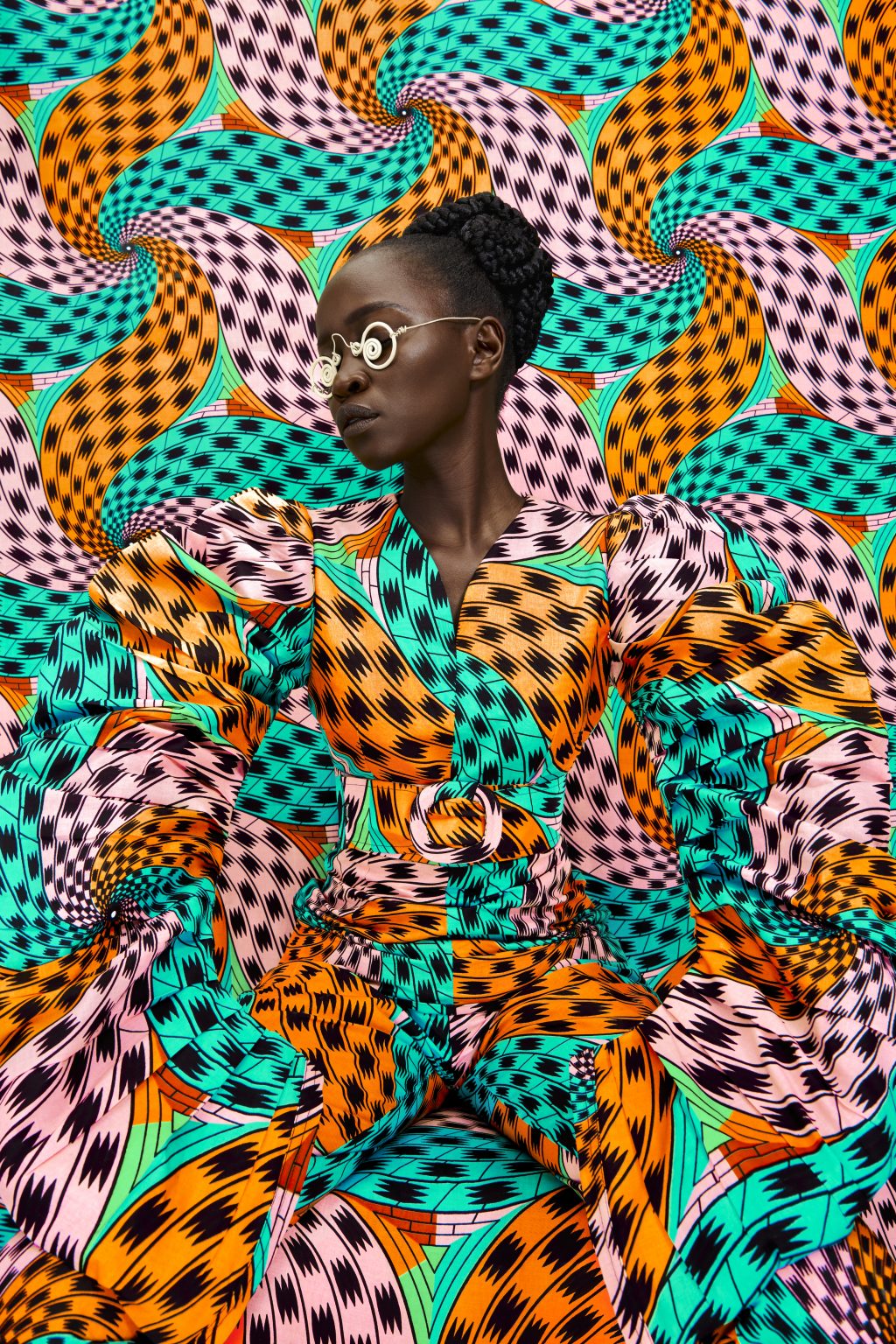 Self-taught, she immersed herself in books and video tutorials, learning from every resource she could find, as Kenya did not have any formal photography schools.
 By age 17, she was working professionally, and by 23 had shot her first solo advertising campaign. By 2019, she was photographing campaigns for some of the largest companies in East Africa.
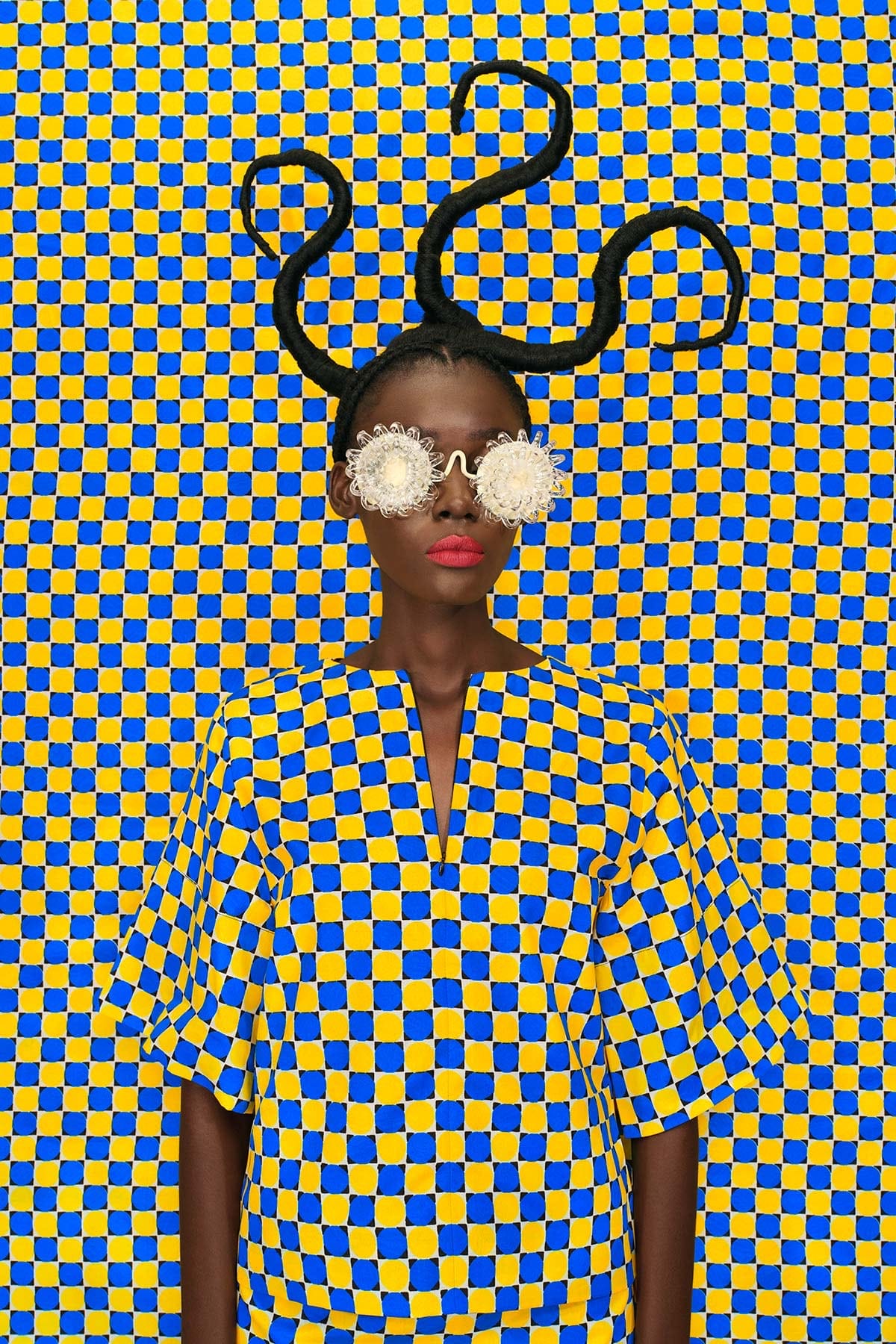 Muriu draws on the slick aesthetics of fashion photography to reinterpret contemporary African portraiture.
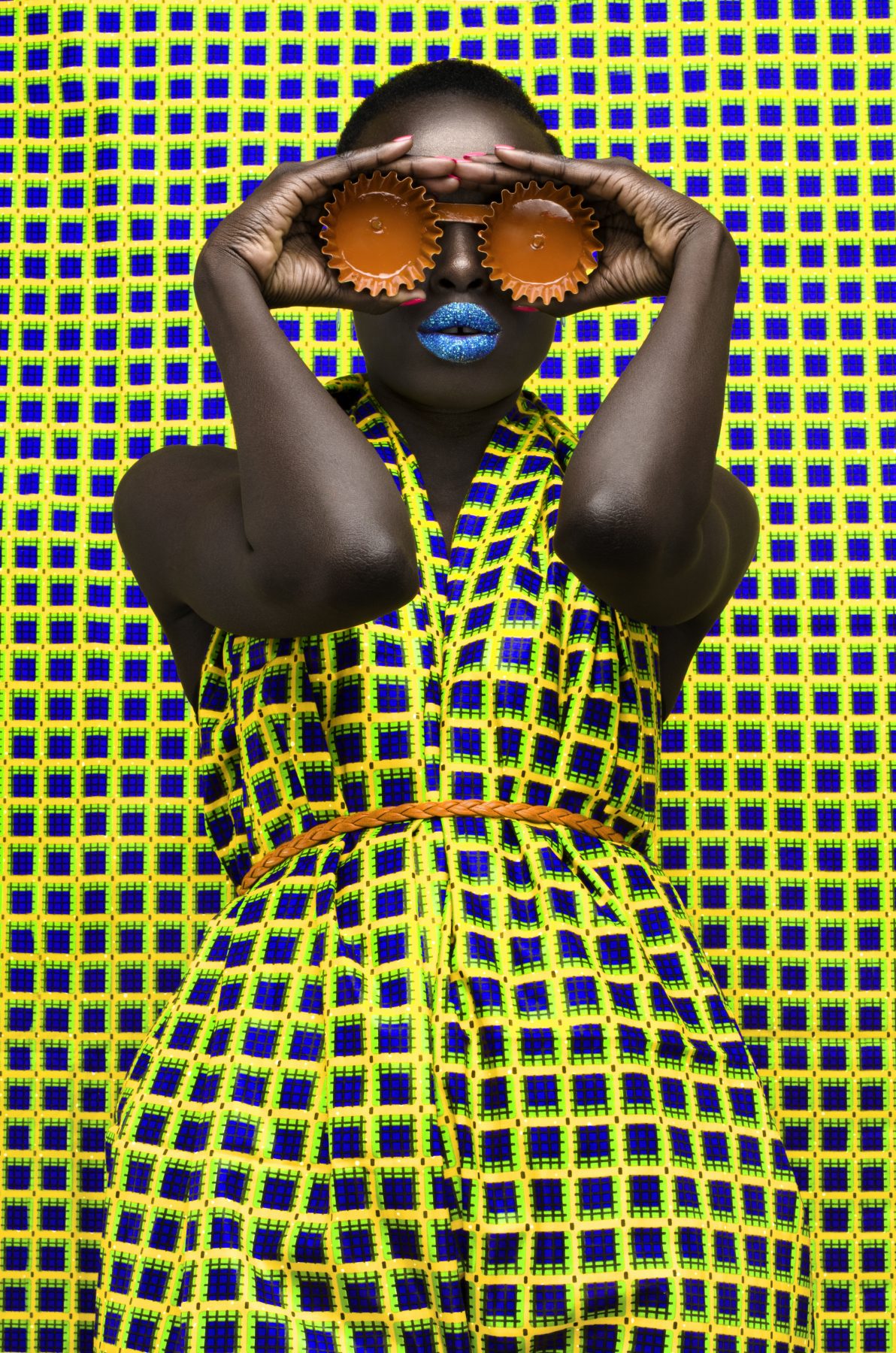 These bright, playful images immerse her models in colorful textures until they simultaneously disappear into the background and burst from the frame.
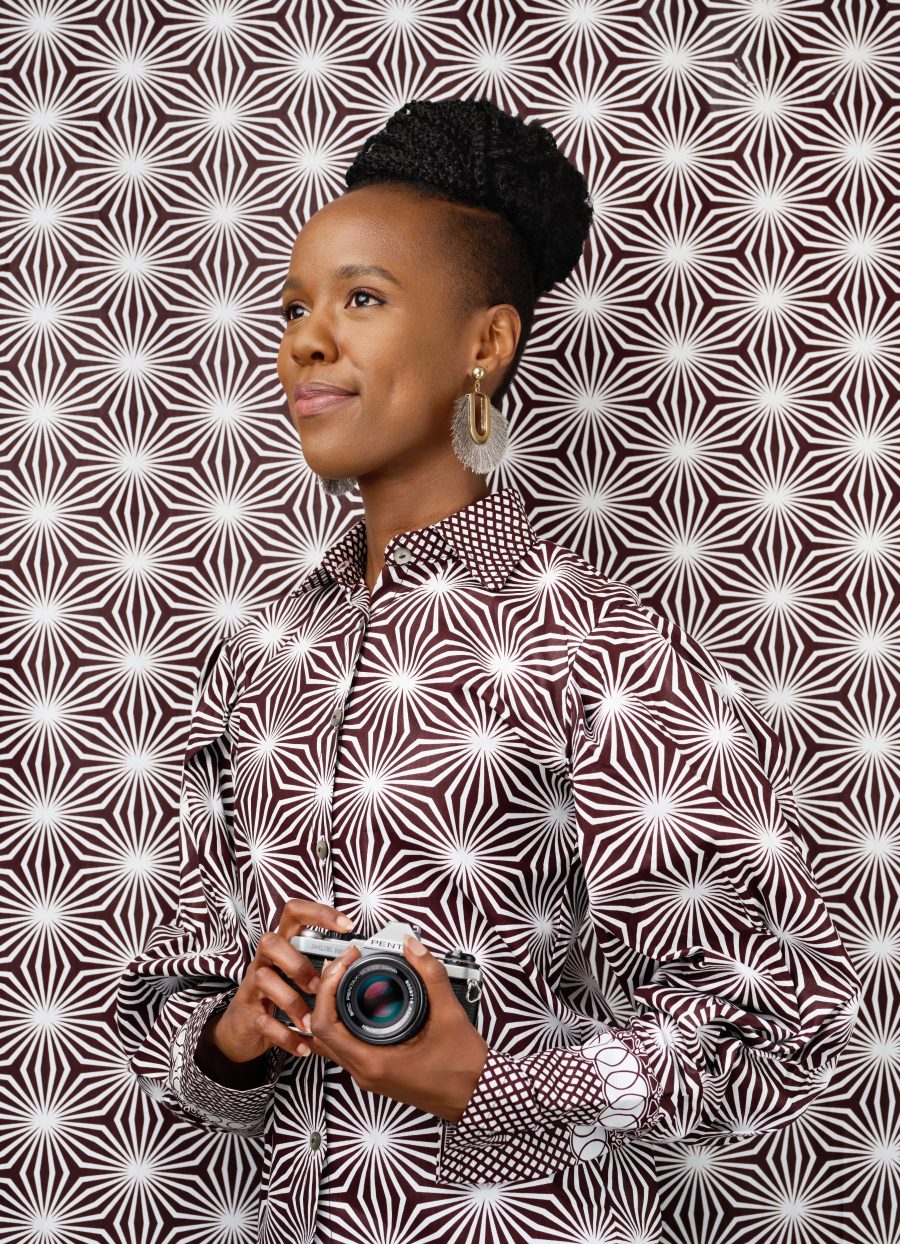 Exploring how individuals lose their identities to culture, Muriu’s work interrogates contemporary self-image and brings aspects of Kenyan tradition to the fore, from reappropriation of everyday objects to traditional architectural hairstyles.
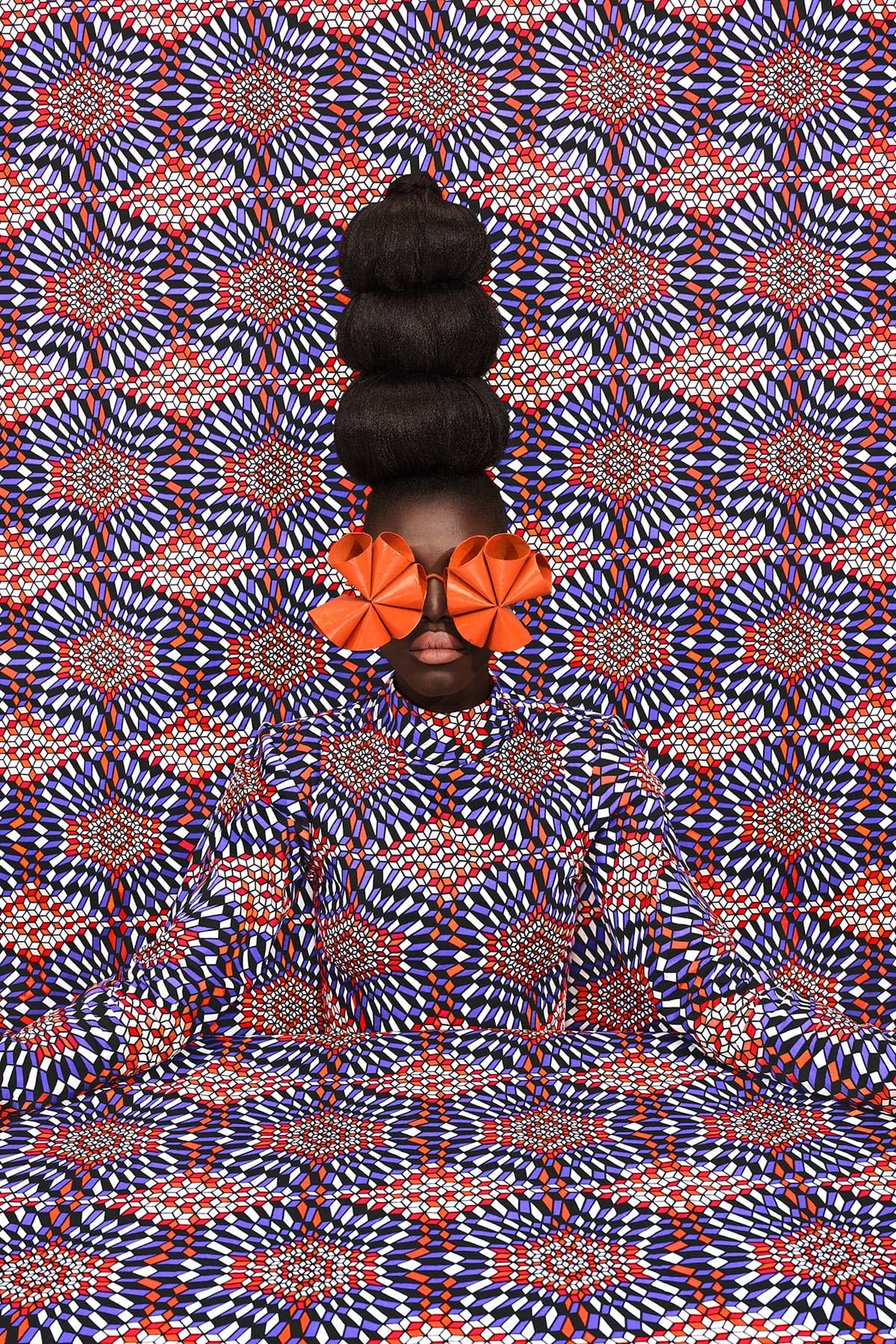 Muriu aims to reclaim the self love of the African woman, who is often excluded from beauty standards in her own country.
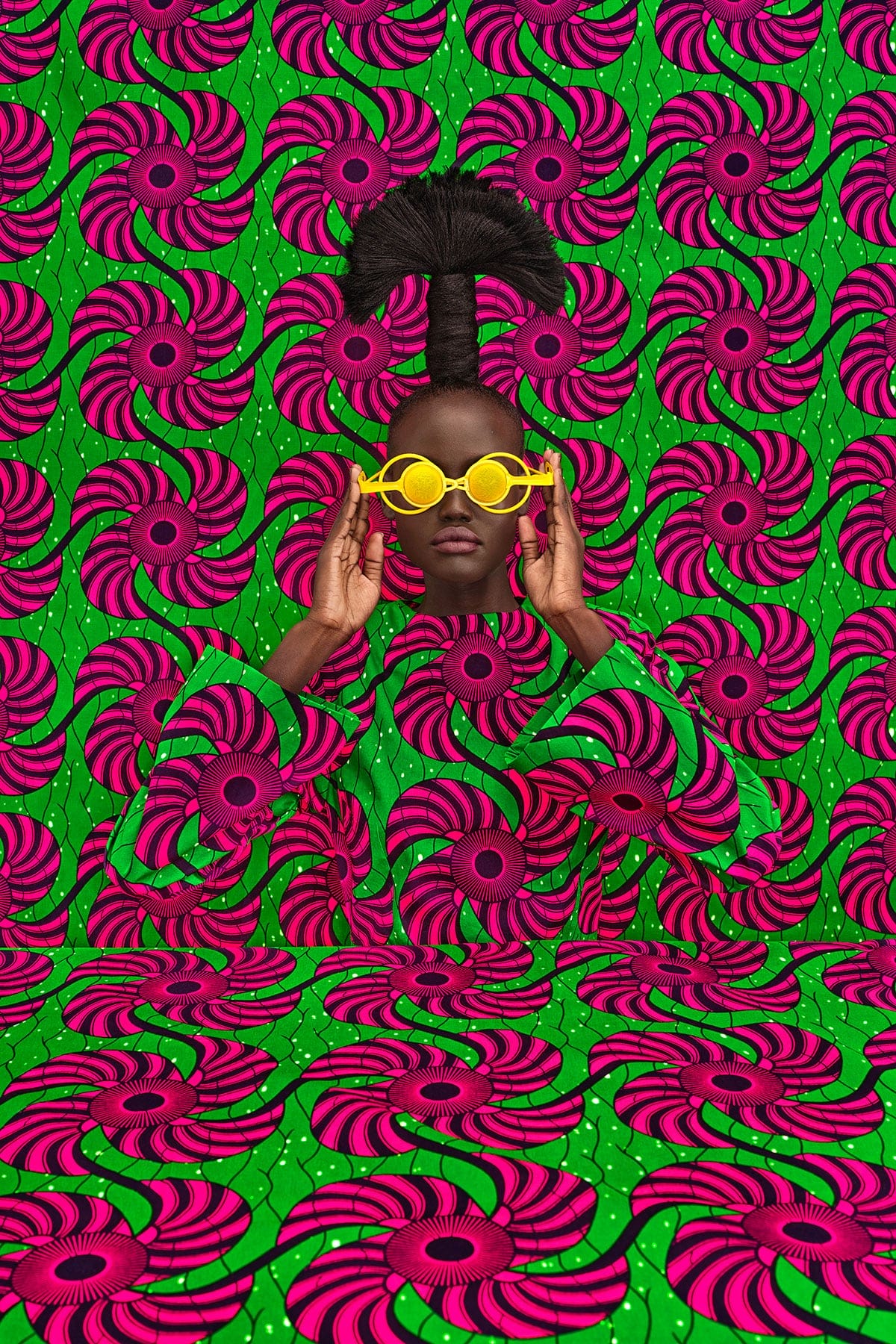 More of Thandiwe Muriu’s photography can be found at https://thandiwemuriu.com/.
Jim Croce sang about time in a bottle, keeping every moment he spent with his love in it.
Time is one of those haunting things that can never be saved nor repeated. It can be savored only at the moment of its existence, its replay often embellished or altered within the human mind.
I am thinking, too, that time only becomes important once it has passed.
Sitting outside this morning, the songs of birds dancing all around me, the wind gently tinkling the wind chimes, I found the perfect moment. No promises of tomorrow, no memories of the past, only the wind chimes and birds and sunshine in my private space.
It was perfect.
Why can’t we create an extended version of this ecstasy? Why can’t we have extended periods of bliss?
Perhaps the gods think that eternal bliss would eventually burn us out. That we’d short circuit after about 10 minutes of eternal highness. Perhaps the human brain is not capable of holding onto nirvana. That there is no evolution in endless nirvana. No moving forward.
After all, who would finish washing the dishes or go grocery shopping for the family?
Time is precious simply because is it is fleeting. Time exists to enlighten and connect for mere moments before changing its shape and color and state of being.
Human beings grasp onto these moments because they want to connect with their inner vibration. A vibration that can only exist in the Now. Like a bubble, sparking and lighter than air, floating up and up for a fraction of a second before bursting into never more.
Think about all the moments you haven’t thought about. Haven’t let touch you. Life is full of those moments. Many moments are just that… a flash of something you’d rather not deal with or are a result of everyday mundane actions. Moments that don’t really matter for they are just like the moments before and after.
But once in a while we pause. We connect. And remember.
There are millions of memorable moments every day. All we need to do is stop and savor them when they connect.
As you get older you realize that your special moments will be coming to an end. No birds chirping in the trees, no grandchild giggling, no quiet pets with your dogs.
Start savoring those moments today. Take time to get high on life. It is beautiful and magical and changes every moment, whether you can sense it or not.
There is no way to capture time in a bottle.
The only capturing can be in your heart.
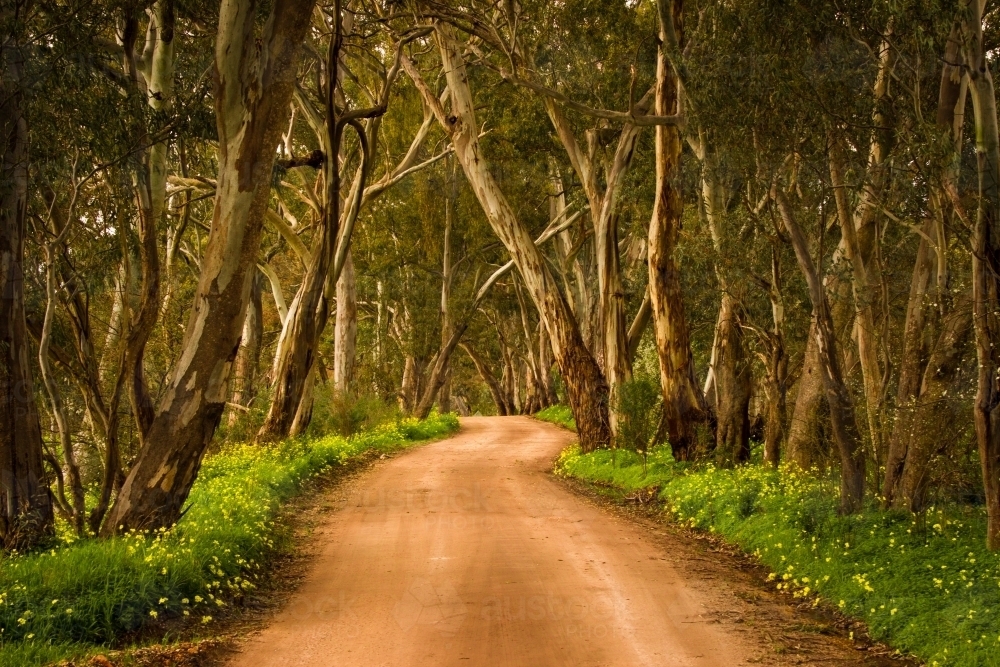
A man travels the world over in search of what he needs and returns home to find it.
~George A. Moore
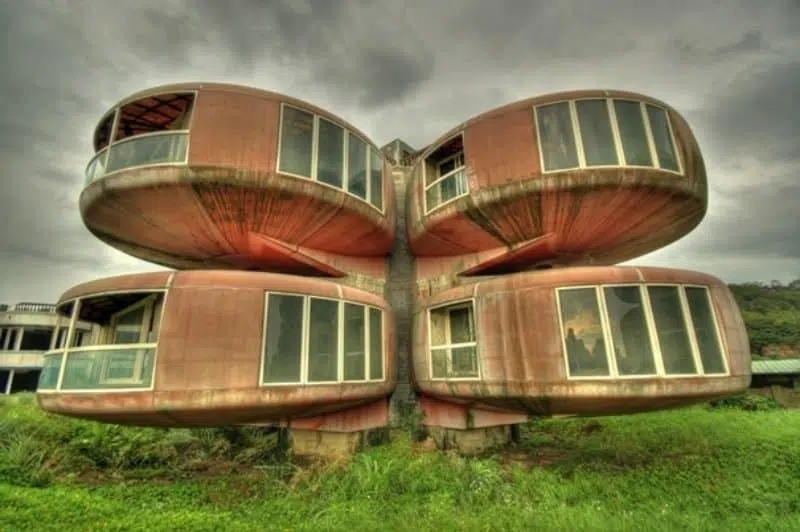
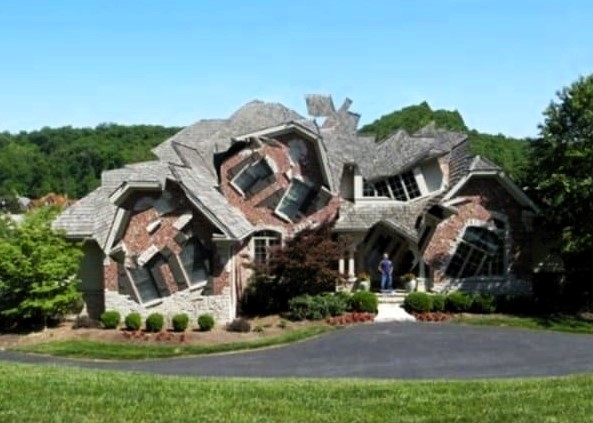
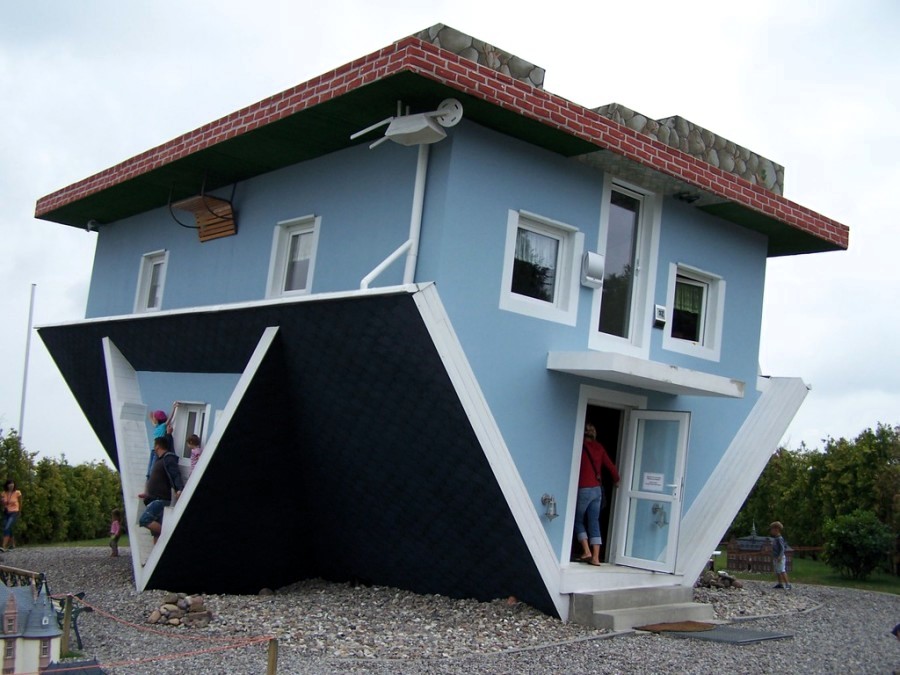
Odd is all in a person’s point of view, isn’t it? What I perceive as odd you may think of as quaint. Or asymmetrical. Or idiosyncratic.
Or just plain odd.
Obviously the following homeowners took “odd” to mean unique, different, and cutting edge (among other positive adjectives), and used that meaning to create yet another wonderful form of Art.







Dame Maria Paula Figueiroa Rego (1935 – 2022) was a Portuguese-British visual artist, widely considered the pre-eminent woman artist of the late 20th and early 21st century, known particularly for her paintings and prints based on storybooks.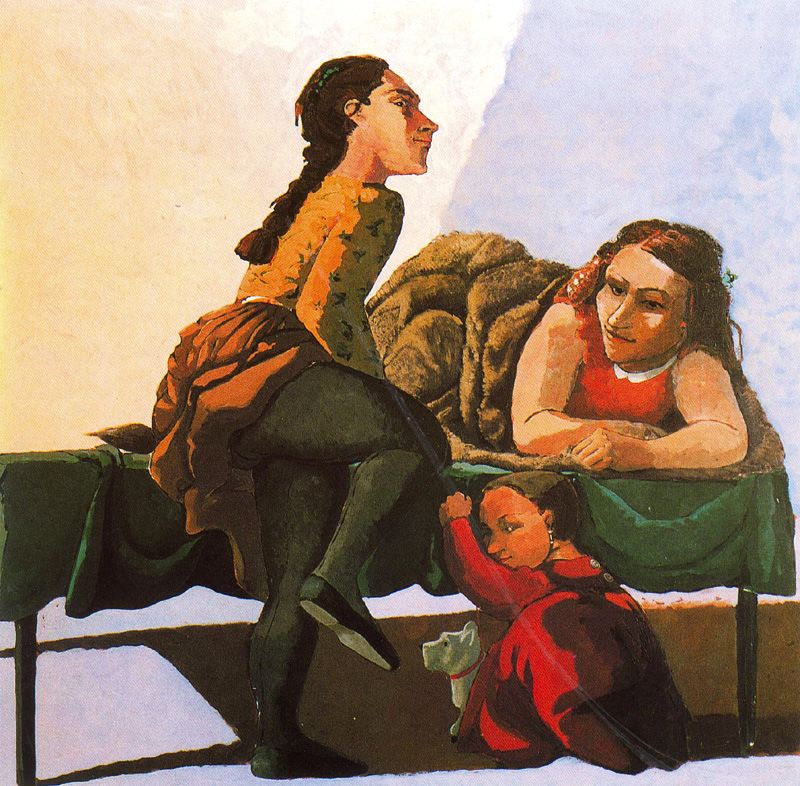 Rego studied at the Slade School of Fine Art, University College London.
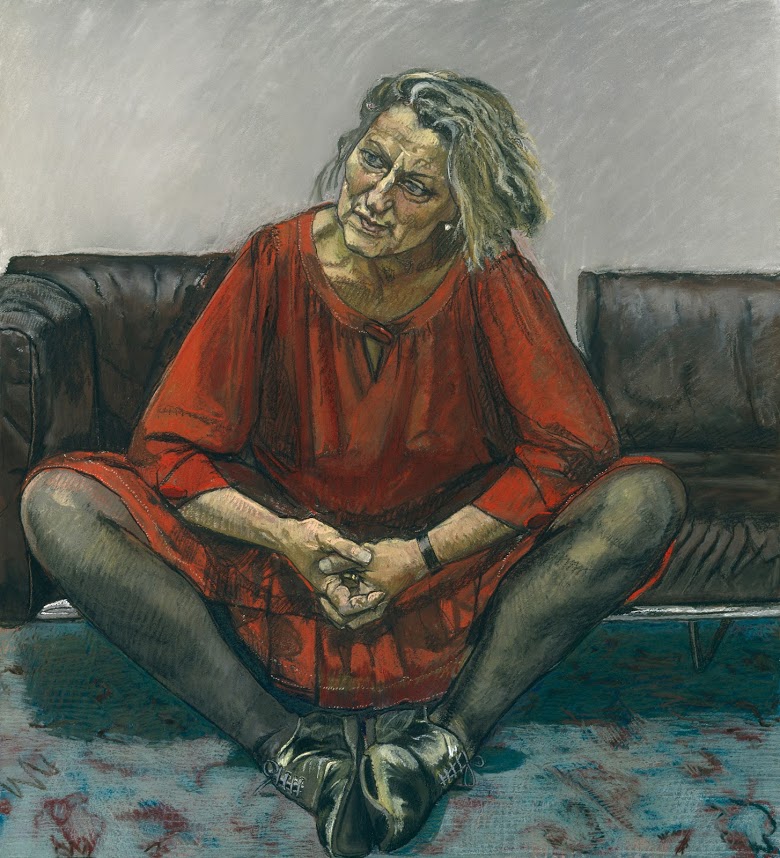 Her style has evolved from abstract towards representational, and she has favored pastels over oils for much of her career.
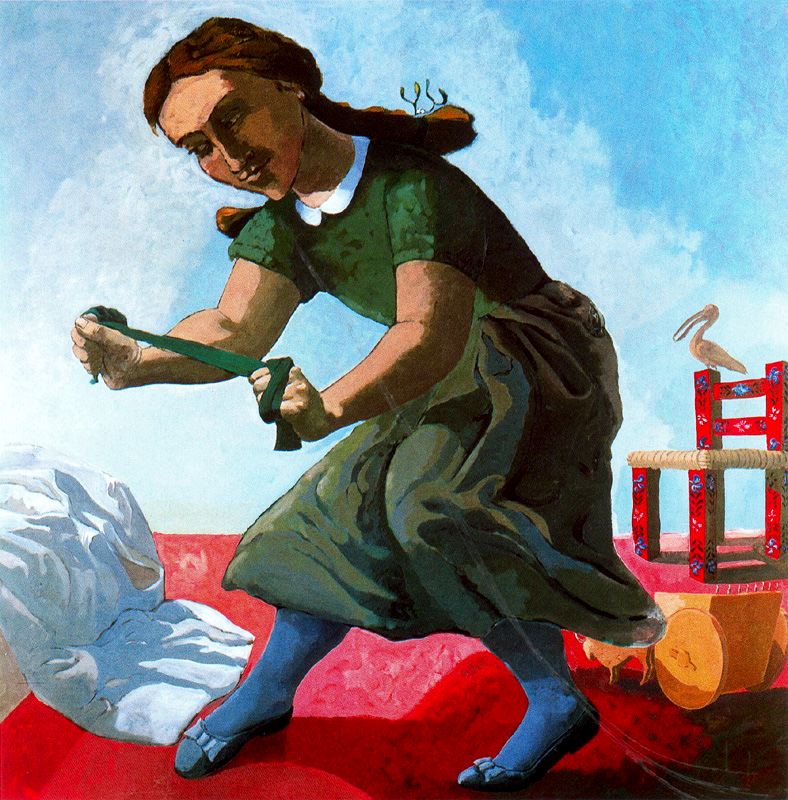 Having grown up in Portugal under António de Oliveira Salazar’s fascist dictatorship, Rego was fascinated by fairytales, and her political paintings span themes of power, possession, childhood and sexual transgression.
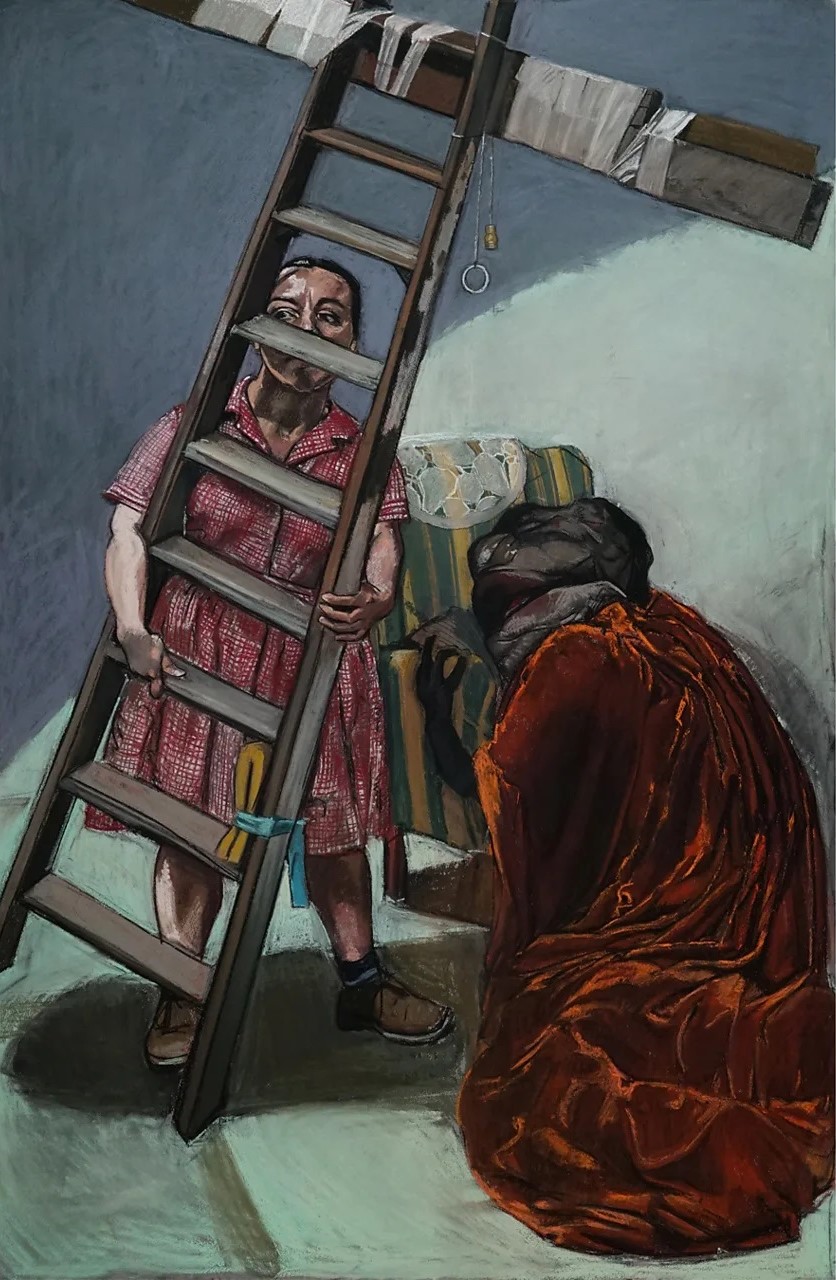 Her work often reflects stories colored by folk-themes from her native Portugal.
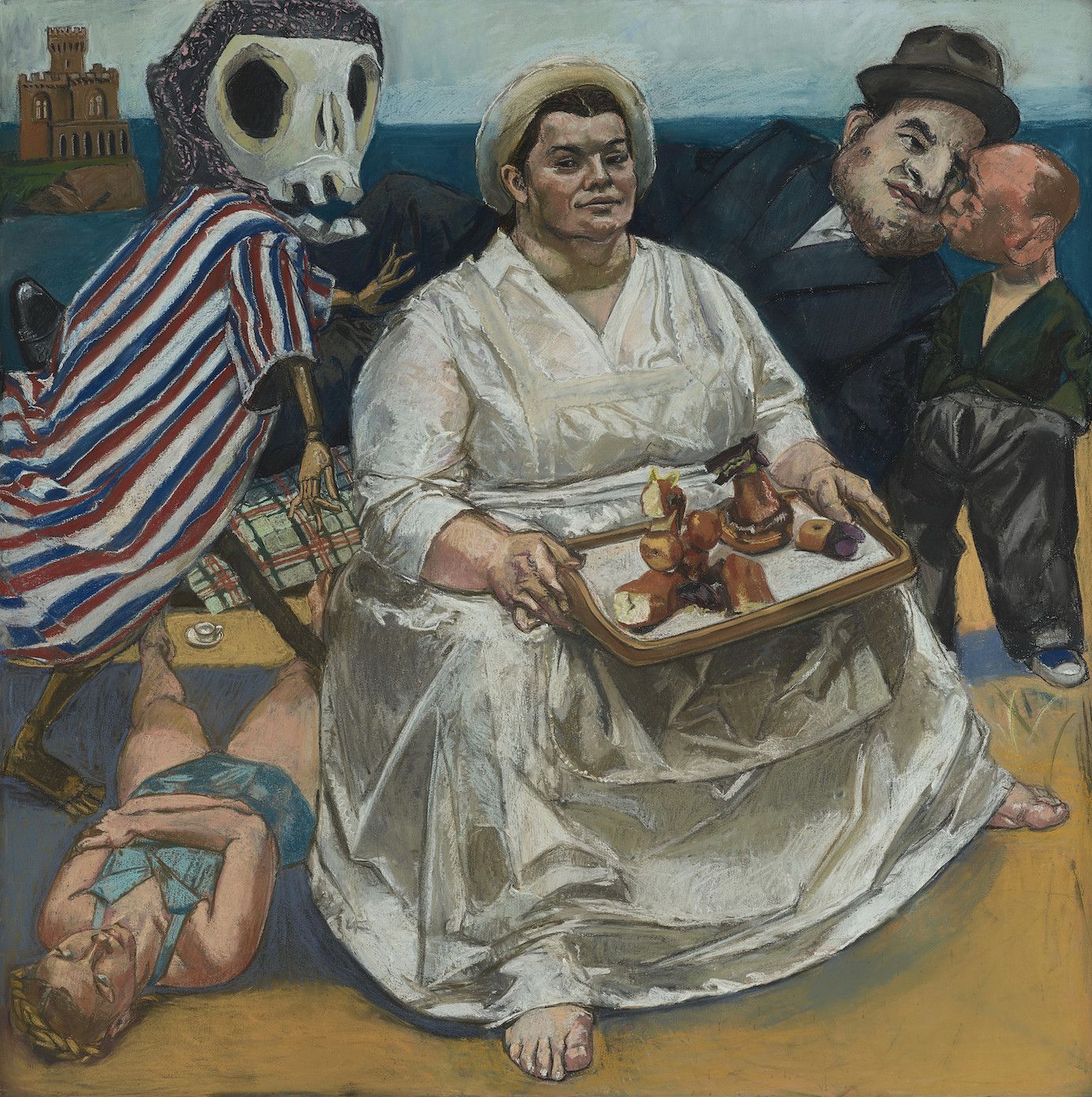 Rego challenges traditional female depictions by illustrating women in their natural state of strength and power, showing the reality of womanhood rather than trying to satisfy the gaze of the viewer.
 Her paintings are strong and emotional, addressing human experiences that were powerful in their own way.
 Rego successfully addressed human experiences through her art that were often unrepresented: abortion and depression.
 More of Dame Maria Paula Figueiroa Rego‘s work can be found at https://www.theartstory.org/artist/rego-paula and https://www.wikiart.org/en/paula-rego/.
 I’m back!
For those of you who never really noticed, I’m back from two weeks in the beautiful European cities of Paris Rome, and Florence.
A bucket list item to be sure.
I’m full of culture, statues and gelato.
Have I changed?
How can one not change walking through the Villa d’Este, a 16th-century villa near Rome, famous for its terraced hillside Italian Renaissance garden and its profusion of fountains?
How can one not change eating dinner on a cruise ship while watching the Eiffel Tower make it’s sparkling sky show once an hour?
I worked all my life to get to this point in my life. I’ve been through raising two children, taking low-paying jobs so I could be home with my kids, working everything from a hosiery saleswoman to a bed and breakfast owner.
It was wonderful to see the work of Michelangelo and Galileo and Gustave Eiffel up close and personal. To see the sweat and heartache and brilliance of artists of all kinds.
It also was wonderful to see people in other countries living their lives like you and me, too. The little old man who owned the small store-front restaurant in Florence who served us dinner one night. The young, bright tour guide who shared his enthusiasm and knowledge and back stories about pieces in the Louvre. The crazy cab driver who slipped up and down the narrow streets of Florence so fast I thought I might be in the middle of a video game.
These were real people doing real things.
Maybe it wasn’t as big of a deal as sculpting a body out of marble of painting a ceiling, but their attitudes and contributions made for a wonderful memory in the lives of two seniors living in the Midwest.
The only thing is that you might have to endure occasional sharing of 1,262 (give or take) photos I took in two weeks. Blog-worthy pics, I must say.
What would you enjoy? Doors? Weird statues? Painted ceilings? Marble statues?
The world is endless …….
Caroline Dewison is an artist from Warrington, England, whose love of nature has culminated into a world of small miniatures. In the realm of craft and design, Dewison pushes boundaries and create extraordinary pieces that captivate the imagination.
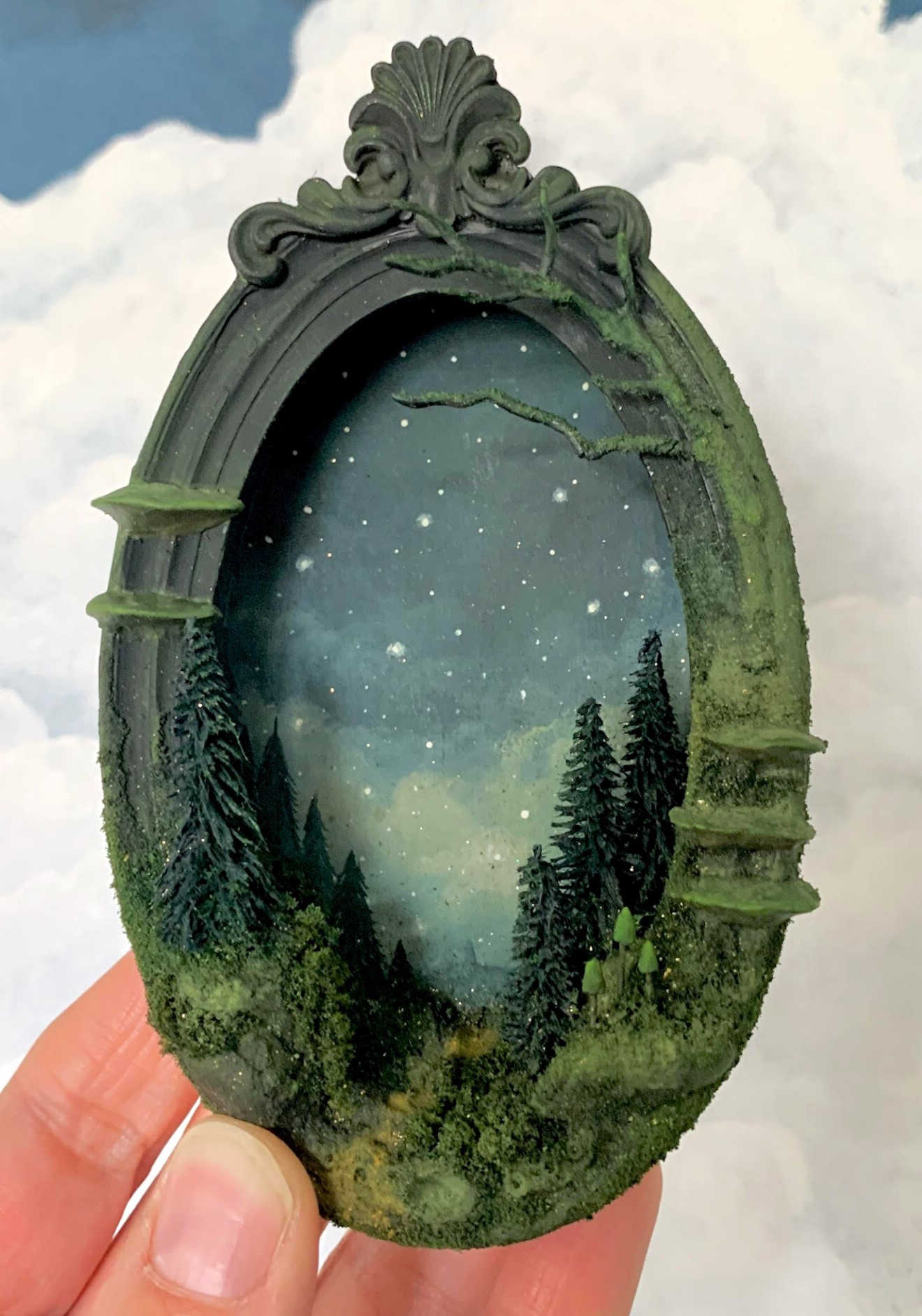 For several years, the Warrington-based artist experimented with beads and clay to make small sculptures, but she was never quite satisfied.
 Inspired by the woodlands around her home and holiday walks through the Lake District,Dewison began to recreate mystical scenes of streams, shorelines, and hills in miniature.
 Using Jesmonite — a mixture of gypsum and water-based acrylic resin — to fashion frames, plus a lightweight MDF for the backgrounds, Dewison sources a range of small boxes, model-making supplies, and acrylic paints to create each intricate scene.
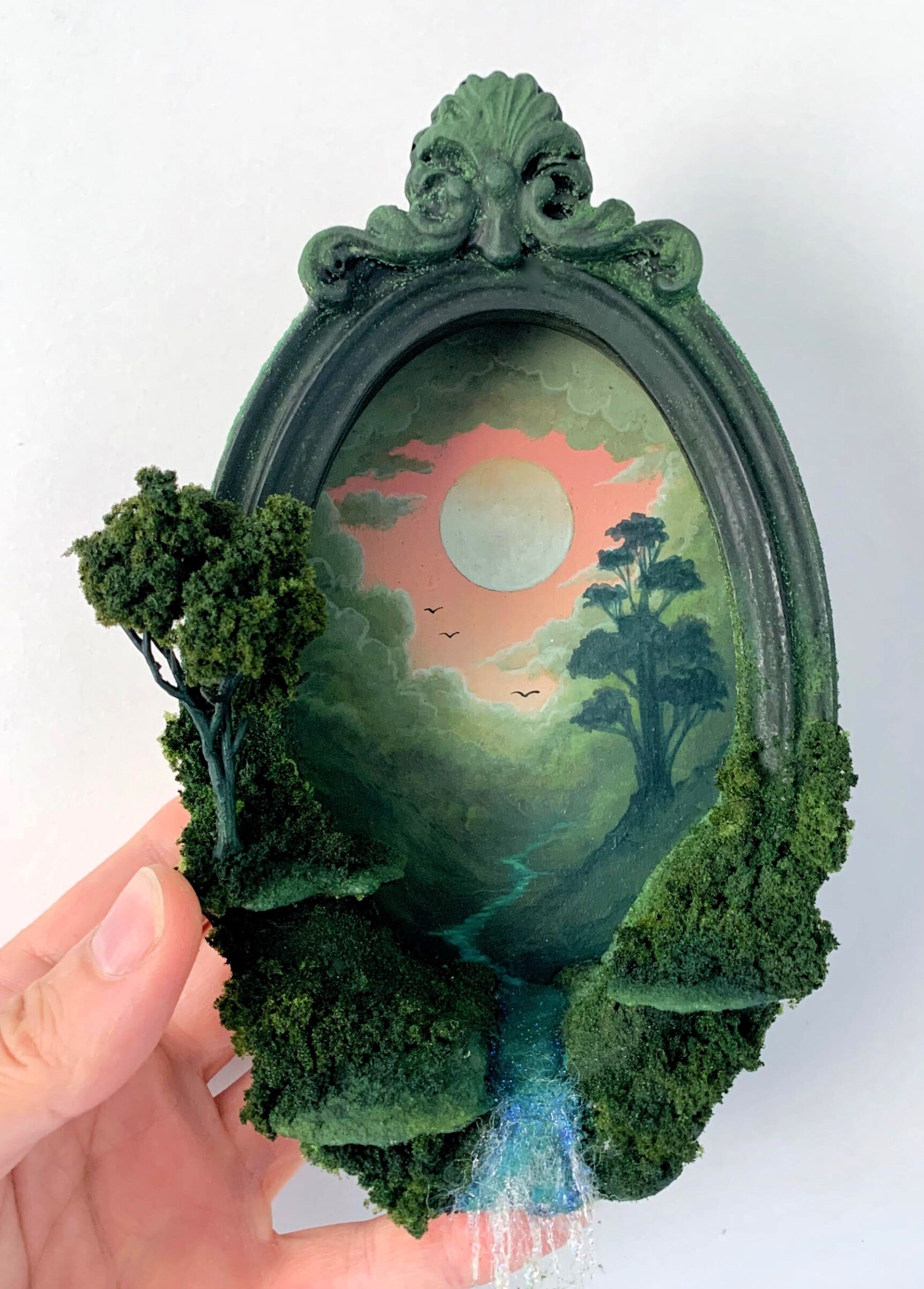 For landscapes, she particularly enjoys using a type of clay that melds the malleability of clay with the strength of epoxy, plus a favorite 3D-printing pen.
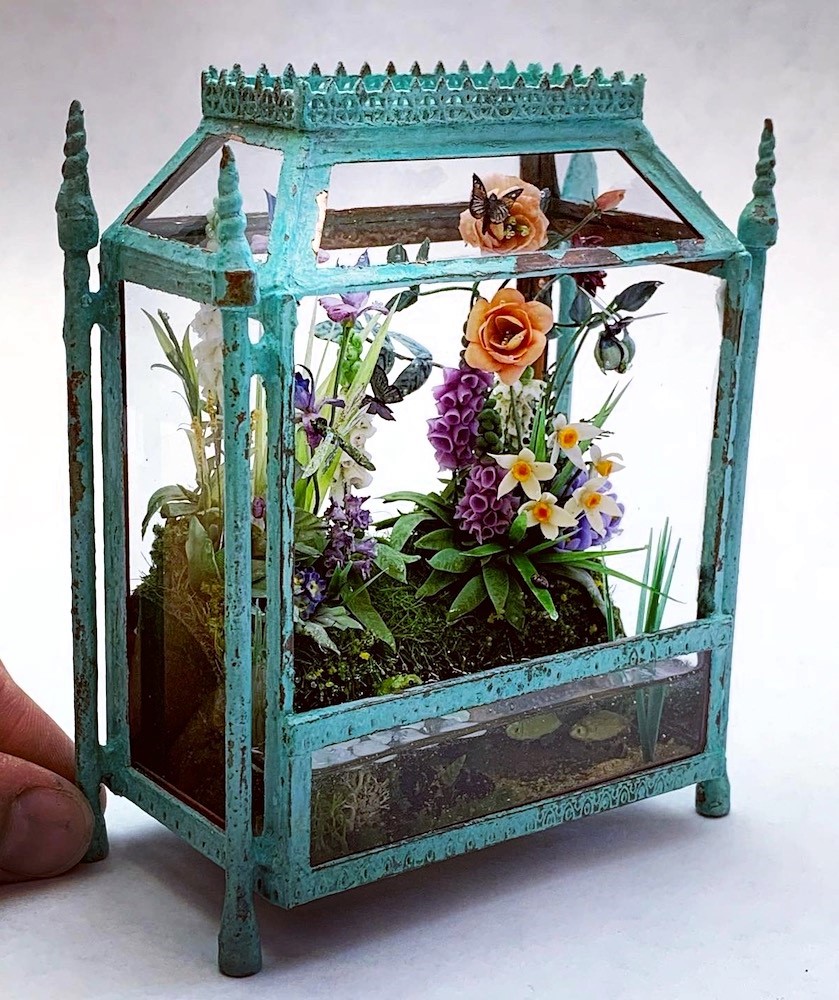 Dewison brings imagination, reality, and a certain finesse to her miniatures,
 “I didn’t really set out with the intention of making miniatures,” the artist shares.
 “They just turned out that way.”
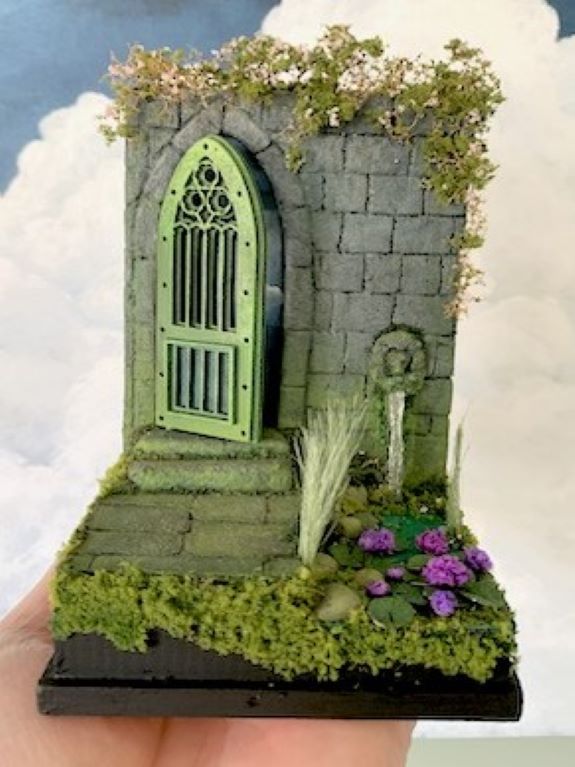 More of Caroline Dewison‘s magical miniatures can be found at https://www.ahouseofwonders.co.uk/.

Every action of our lives touches on some chord that will vibrate in eternity.
~ Edwin Hubbel Chapin
Wilhelm Heinrich Otto Dix (1891 – 1969) was a German painter and printmaker noted for his ruthless and harshly realistic depictions of German society during the Weimar Republic and the brutality of war. Dix has been perhaps more influential than any other German painter in shaping the popular image of the Weimar Republic of the 1920s.
 A veteran haunted by his experiences of WWI, his first great subjects were crippled soldiers, but during the height of his career he also painted nudes, prostitutes, and often savagely satirical portraits of celebrities from Germany’s intellectual circles.
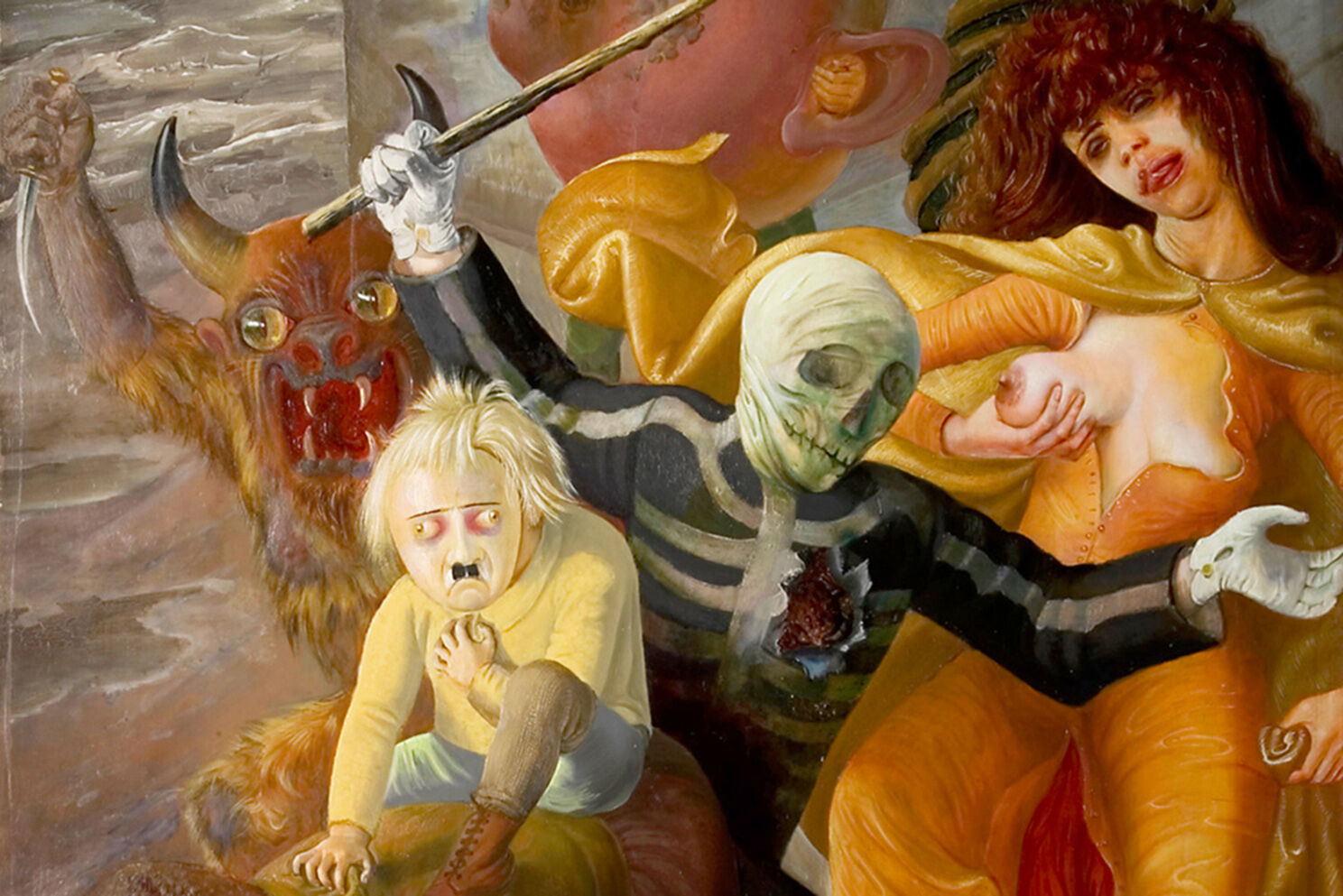 His work became even darker and more allegorical in the early 1930s, where he became a target of the Nazis.
 No fewer than 200 of his works were seized by the Nazis, and eight of his paintings were in the “Degenerate Art” show in Munich in 1937.
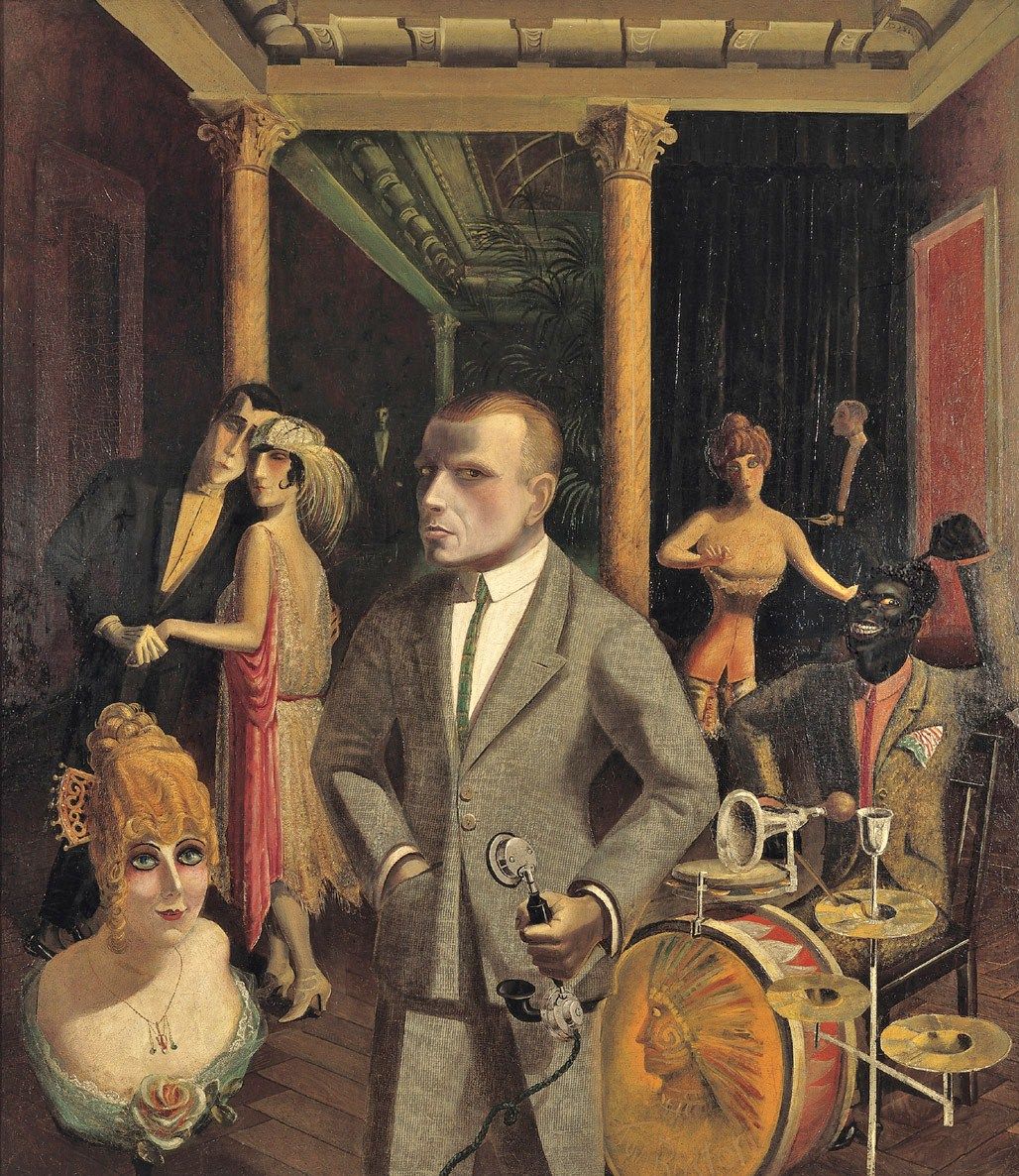 His views were at odds with the regime but he chose to remain in Germany after 1933, so in order to avoid confrontation, he conformed outwardly with the regime.
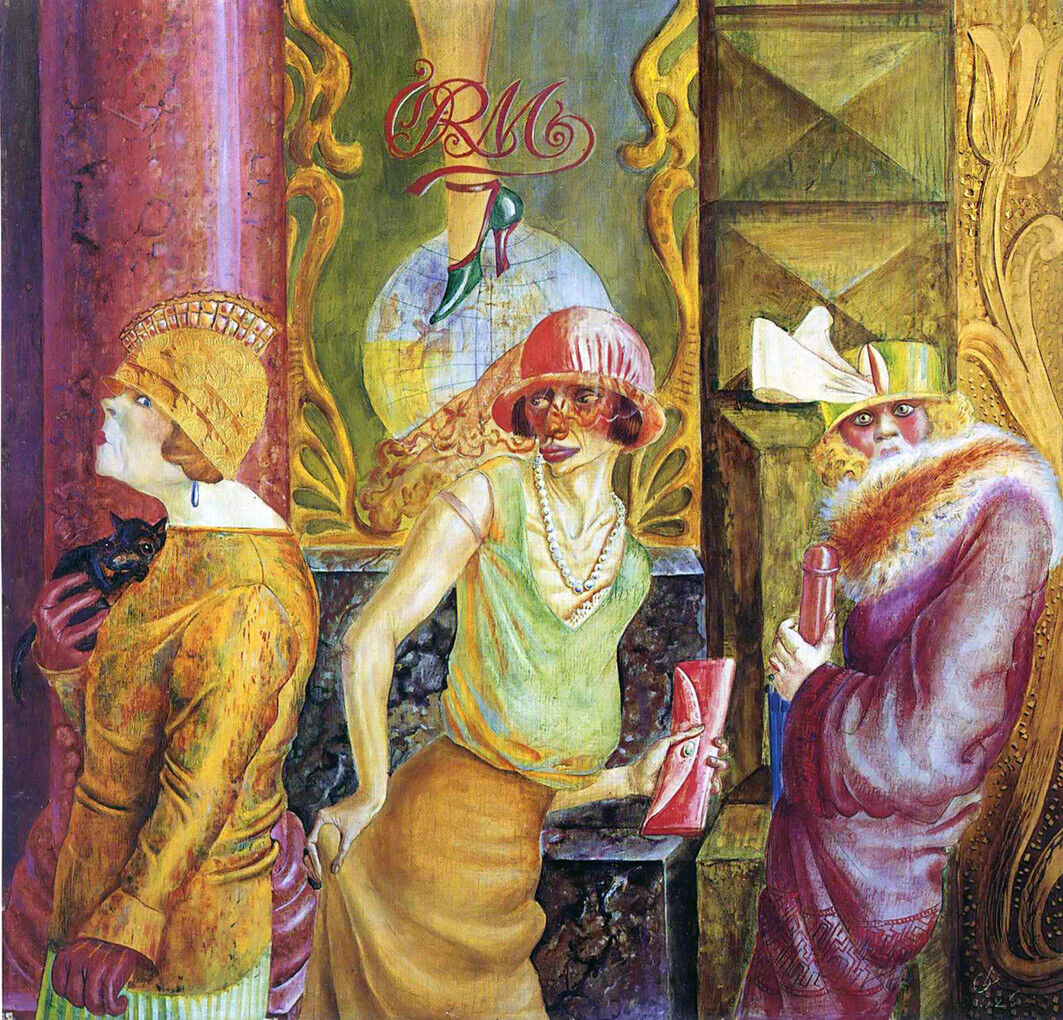 When the Third Reich fell at the end of the Second World War, Dix was freed from the Nazi’s artistic oppression yet his style never regained its Interwar edge.
 After the war most of his paintings became religious allegories or depictions of post-war suffering.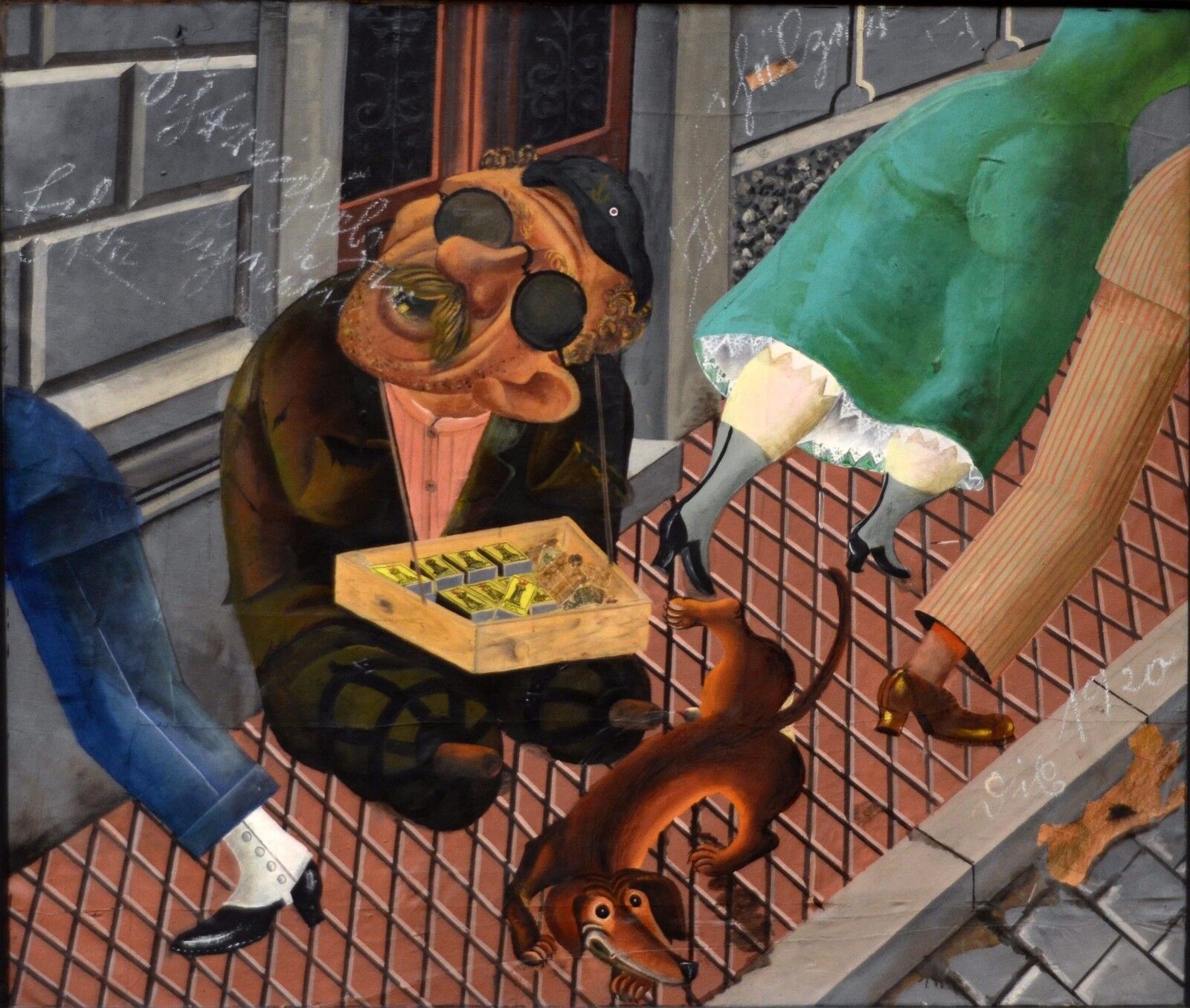
More of Otto Dix‘s inspirational paintings can be found at https://www.ottodix.org/ and https://www.theartstory.org/artist/dix-otto/.

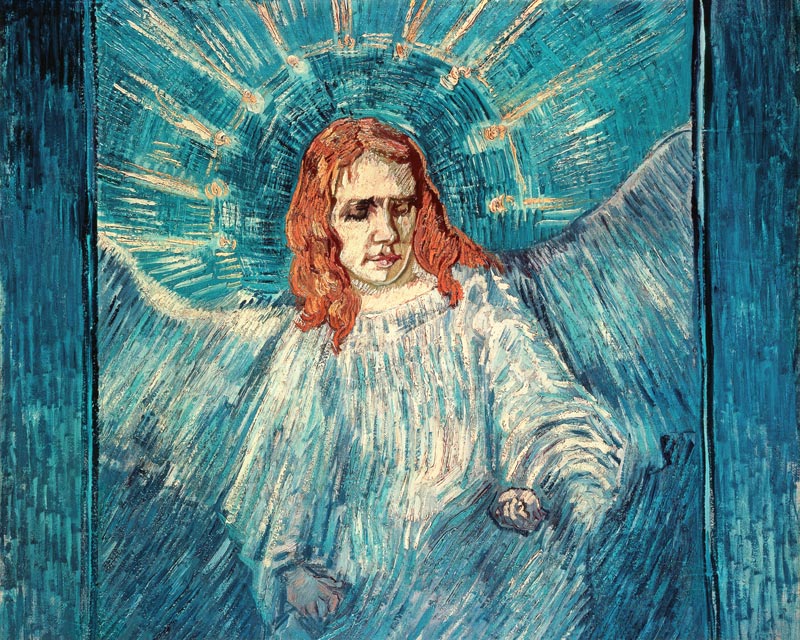
Fairies are invisible and inaudible like angels but their magic sparkles in nature.
~ Lynn Holland

They say that oft at Easter dawn
When all the world is fair,
God’s angels out of heaven are drawn
To list the music there.
~ Edna Dean Proctor, “Moscow Bells”






I am running around like a BoHo madwoman trying to get ready for vacation next week, so my conversations with you will be limited to “Lei parla inglese?” or “Parles-tu anglais?” So I thought it would be fun to share some weirdly wild (and wonderful) past Galleries.
You’ve got time to visit a few Galleries, don’t you?




Hope you had fun!!

The formula of happiness and success is just being actually yourself, in the most vivid possible way you can.
~ Meryl Streep

I love people who can multi-task.
I mean full up, full attention multi-taskings. Feed babies and do someone’s taxes and wash laundry at the same time. Someone who can use three full-sized computer screens at one time. Someone who walks the dog and listens to “Learn French in Three Days” on headphones while running through the IMDB movie database on their phone for a Japanese foreign film to watch when they get home.
Most of us do a fairly good job at multi-tasking. Cooking dinner while thumbing through an iPad while holding a conversation with someone in the next room is my idea of tasking to the N-th degree.
But more often I multi-task by accident. And it happens all the time.
Start working on a craft. Run upstairs to get some sort of supply. Notice the dryer is finished. Switch the laundry. Pull out the kitchen towels from the dry pile because the kitchen drawer is empty. Find the part for the craft. Answer the phone. Talk for 20 minutes. Pull out the embroidery kit you told your caller they could borrow so you don’t forget. Go into the frig for a soda. Eyeball yesterday’s leftover pizza. Heat it up in the micro. Let the dog out. Go to the bathroom. Notice you are low on toilet paper. Add it to the grocery list whiteboard. Grab the part you needed for your craft and take it back downstairs where this whole thing started.
Is this multi-tasking? Or is it A.D.D.?
I can’t tell you how many times I find myself swirling down this whirlpool. I do it all the time. I make my husband nuts.
~I~ see it as getting multi things done in one fine sweep. ~He~ considers it distracted and unproductive movements. That I’d get so much more done if I finished what I started when I start it.
Who wants to do laundry all day one day? Who can sit for eight hours and do one craft? I mean, even ~I~ have a hard time power watching more than six or seven TV episodes in one sitting.
I believe I do multi-task. I watch TV while I work on the computer. Listen to music while I balance my checkbook. Talk on the phone and sew buttons on shirts at the same time.
I think my husband just doesn’t get what multi-tasking really is.
Jason Boyd Kinsella is an artist from Norway whose paintings play off the ‘Old Masters’ approach to portraiture by presenting abstract geometric depictions that carry existential undertones. Born in 1969 in Toronto, Canada, Kinsella received an arts degree from Bishop’s University in Quebec, studying painting and sculpture before heading into the advertising industry for the next 30 years.
  But around his 50th birthday in 2019, he decided to quit advertising to pursue art full-time.
 Kinsella breaks down the personality traits of his characters into distinct geometric units whose shape, color and size define their individuality based on the Myers-Briggs personality test, anchoring his subjects in the essence of their psychological attributes.
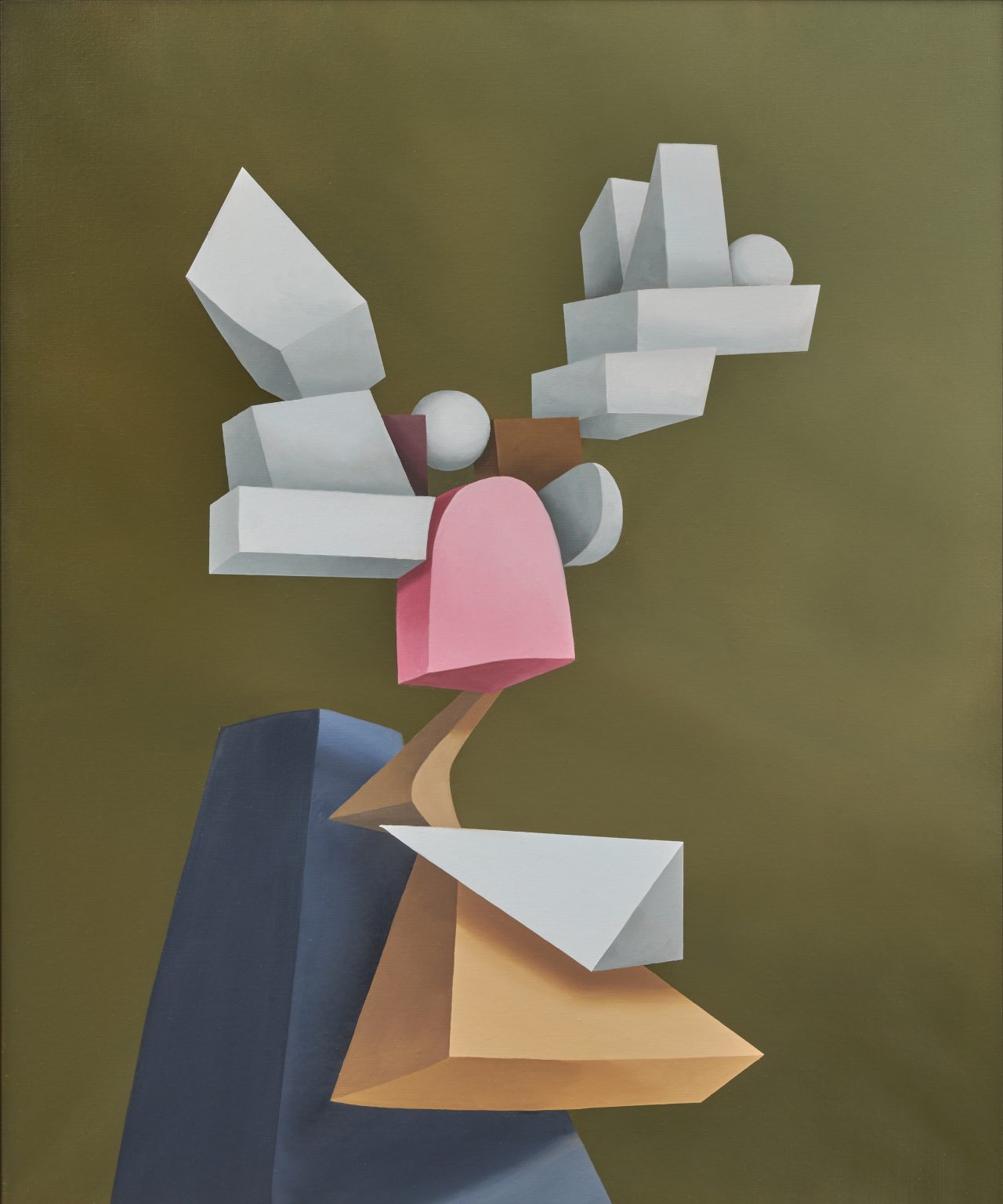 On a technical level, Kinsella’s masterful oil paintings are created using a mix of traditional methods and modern tools.
 Starting off with a drawing, Kinsella proceeds by finessing his concepts with 3D software, playing with the way that the light interacts with each block.
 Once he achieves a format that recalls the human face or the bone structure, he proceeds to render the image in oil on canvas.
 More of Jason Kinsella‘s marvelous art can be found at https://www.jasonboydkinsella.com/.
Saturday!
Time to dance with faeries
And sing to the trees
Time to shop
Time to dine
A Day to Share with Friends
People’s creativity comes out in many ways. Swinging a hammer, melting gold or glass, shoving a needle in and out of fabric — so many ways to share your magic and your way of thinking!
Even if you are thinking in an out-of-the-box way.
Flipping through past galleries, I thought I’d bring back a few artists whose pen was mightier than their sword — or their hammer. “Pencil in” some time to go back and wander!
Adolf Wölfli
https://sundayeveningartgallery.com/2023/05/23/adolf-wolfli/


DZO Oliver
https://sundayeveningartgallery.com/2022/09/03/dzo-olivier/


Zinovii Tolkatchev
https://sundayeveningartgallery.com/2021/05/31/zinovii-shenderovich-tolkatchev/


Benjamin Sack
https://sundayeveningartgallery.com/2020/10/15/benjamin-sack/


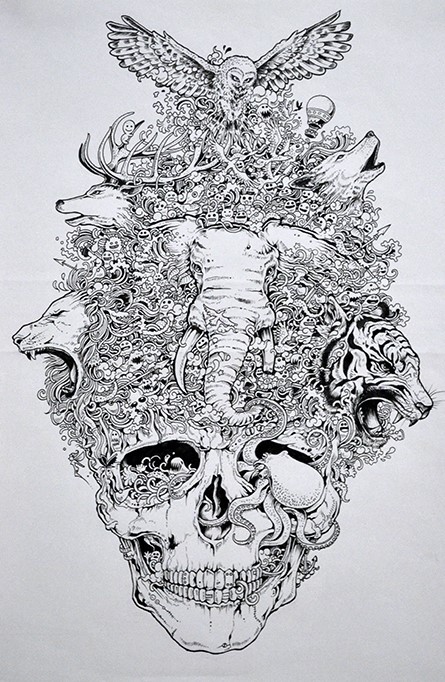
Kerby Rosanes
https://sundayeveningartgallery.com/2018/05/01/kerby-rosanes/

Arabic Calligraphy
https://sundayeveningartgallery.com/2017/12/13/arabic-calligraphy/..


Glass Insulators were used for telegraph and telephone lines to aid communication between states and prevent wires from touching wooden poles. Insulators are non-electrical conducting objects, usually made of glass or porcelain, intended to insulate the current running in a wire from grounding out, especially in fog or rain.
  In conjunction with the expansion of rural electrification in the early 20th century, there was a major boom in the manufacturing of insulators, with production peaking from the 1920s through the 1940s.
 The rarest glass insulators are generally either the oldest types or the ones with the fewest remaining examples.
 Ramshorn, block, and other early threadless types are all considered rare, with some insulator collections being focused solely on these initial renditions.
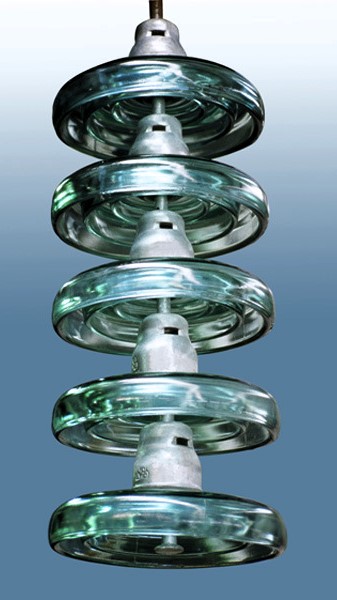 Among the more common threaded styles, rarity can be based off style, manufacturer, color—really any of the aspects that determine an insulator’s value.
Commonly made from glass, in a dazzling array of shapes and colors, antique insulators are prized for their rarity and physical beauty. Use of porcelain and ceramic insulators spread during the late 19th century alongside higher-voltage electrical wires, like those required for home power lines, because the protective properties of porcelain proved superior to glass.
So whether you are a historical buff or glass collector, glass insulators certainly are their own form of art!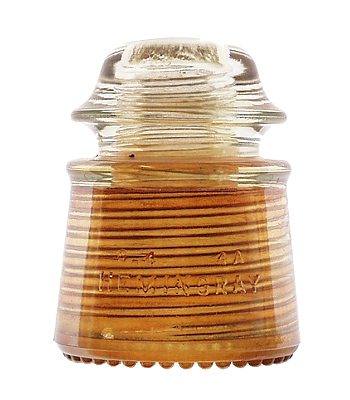

Every adventure requires a first step.
~ Cheshire Cat, Alice in Wonderland
 It is a good thing the TSA (Transportation Safety Administration) has a list of everything you CAN and CANNOT bring on a plane. They do differentiate between carry on and checked luggage, but still there are quite a few items on their list.
They obviously had to write (and rewrite) the rules because someone HAS tried to bring something that dares definition. All of these items are on the TSA manifest.
What you CAN bring on the plane (both checked and carry-on unless noted):
What you CANNOT bring on the plane (besides the obvious):
And to think…. all I was looking for was to see if I can pack sandwiches in my carry on (yes in both columns)….
Dariusz Zawadzki is a surrealistic painter from Szczecin in the northwest of Poland. He excels as a painter of often disturbing dramatic dark fantasy and surreal art.
 Since childhood, Zawadzki has built surreal worlds; his imagination, dreams and visions the source for his inspiration.
 Growing up, Zawadzki wanted to attend an artistic secondary school, but was told his eyesight was too poor. Refusing to let others stymie his artistic development, the artist taught himself the ins and outs of painting, and developed his own techniques.
 As a result, his paintings are known for their classical facture, incredible detail, and intense color palette, using an oil technique on fiberboard.
 His paintings make me think of survival in its most basic and elaborate forms.
 “I never use a sketchbook, because I don’t want to force myself to paint something I’ve already drawn on paper.” Zawadzki explains.
 “My favorite moment is when I stand before a white, blank board. Then I simultaneously know and wonder what will emerge from this blankness.
More of Dariusz Zawadzki‘s remarkable art can be found at https://zawadzkiart.pl/ and https://morpheusgallery.com/Dariusz+Zawadzki/#cnt.
Glow Up: Britain’s Next Make-Up Star (often shortened to Glow Up) is a British reality television competition on BBC Three devised to find new makeup artists. Ten aspiring make-up artists live and work together while they compete in a series of challenges to prove their skills to the judges.
 The contestants take part in weekly challenges to progress through the competition, which are judged by industry professionals as well as weekly guest stars.
 What connects this reality tv show to our lives is the amazing creativity these artists bring to the human face.
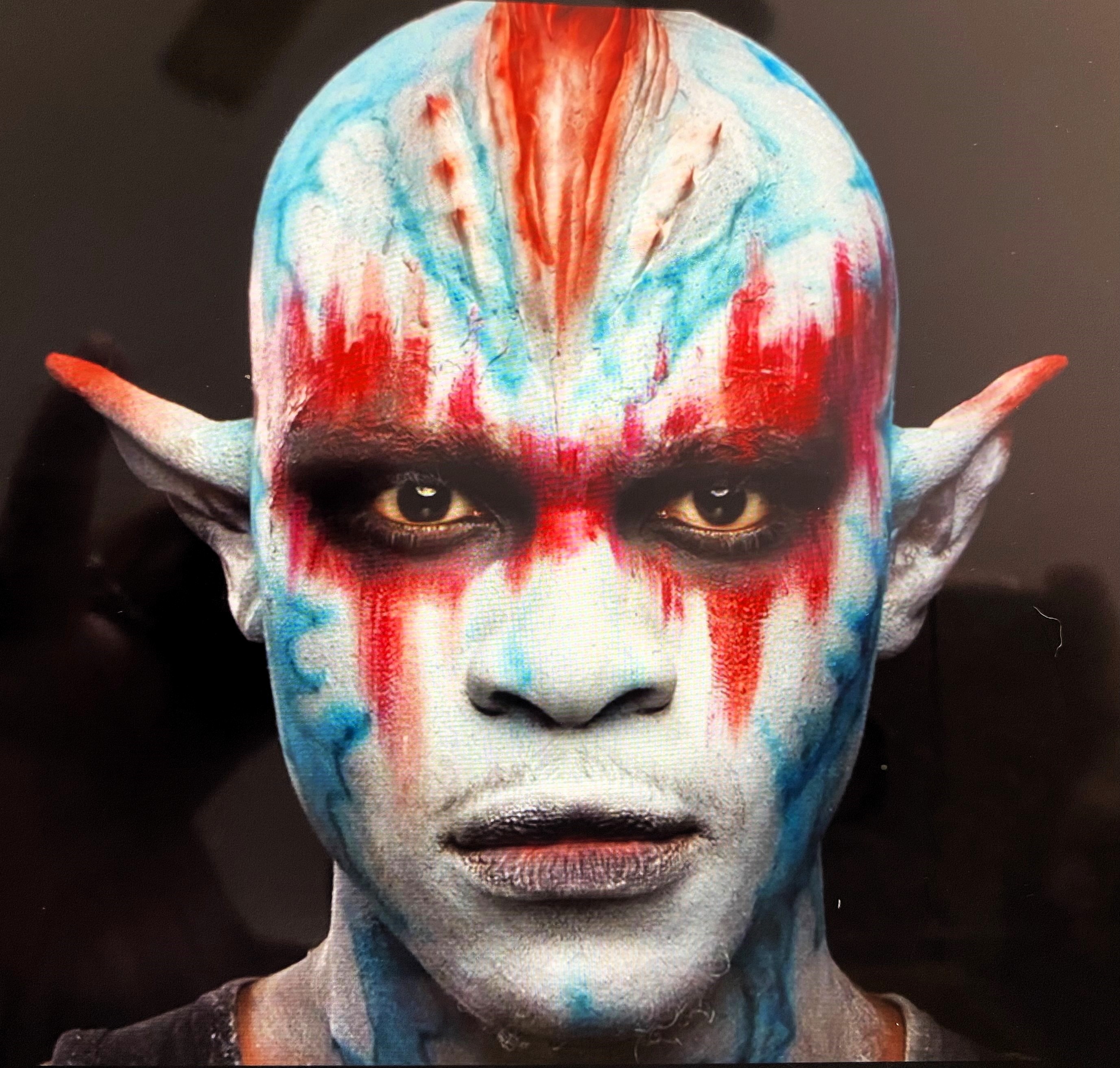 The competitors are a melting pot of characters, personalities, and talents who deftly create new faces based on a weekly theme, and their work is amazing.
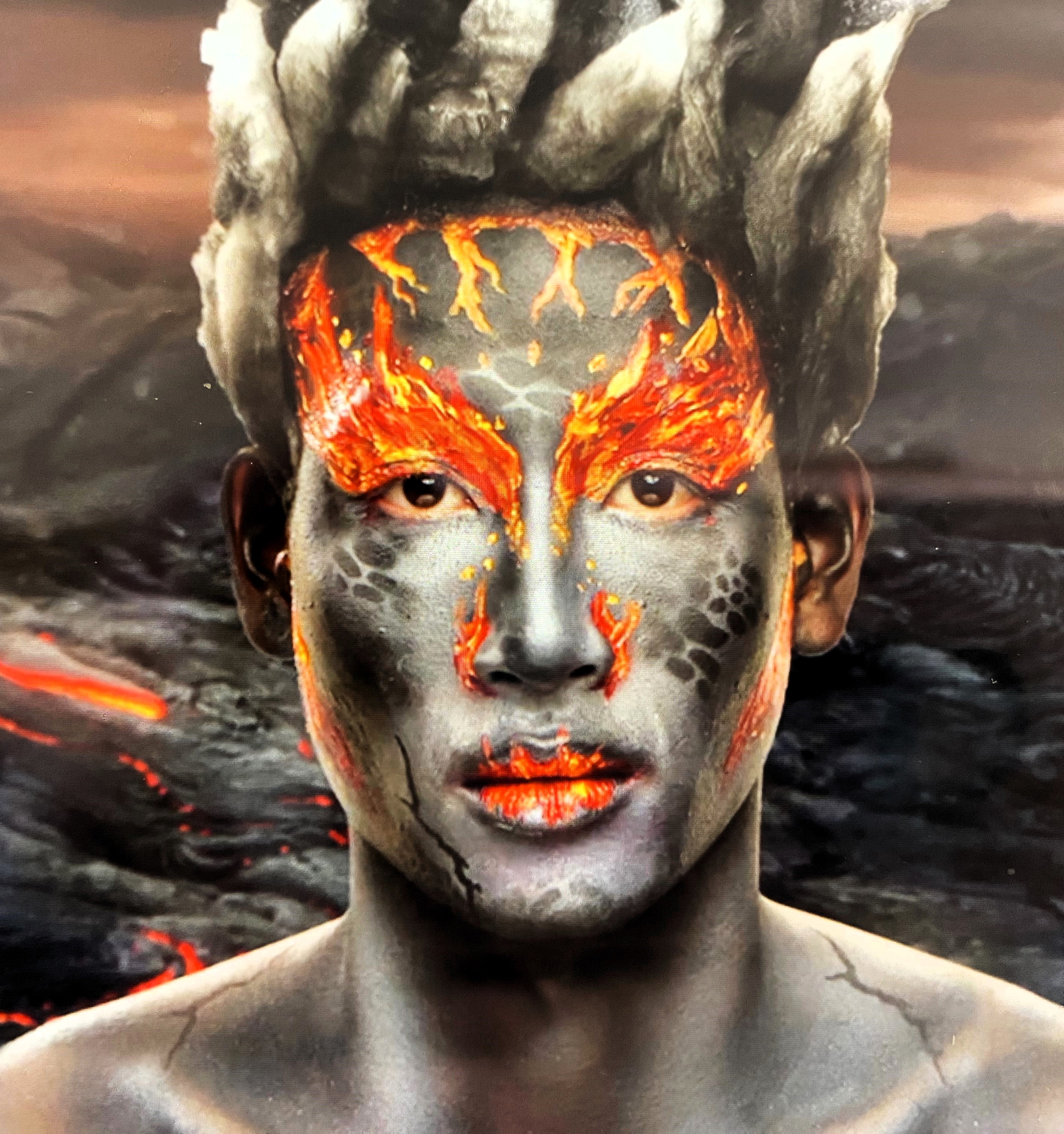 The choices of subjects and expressions carried out in face painting is amazingly expressive.
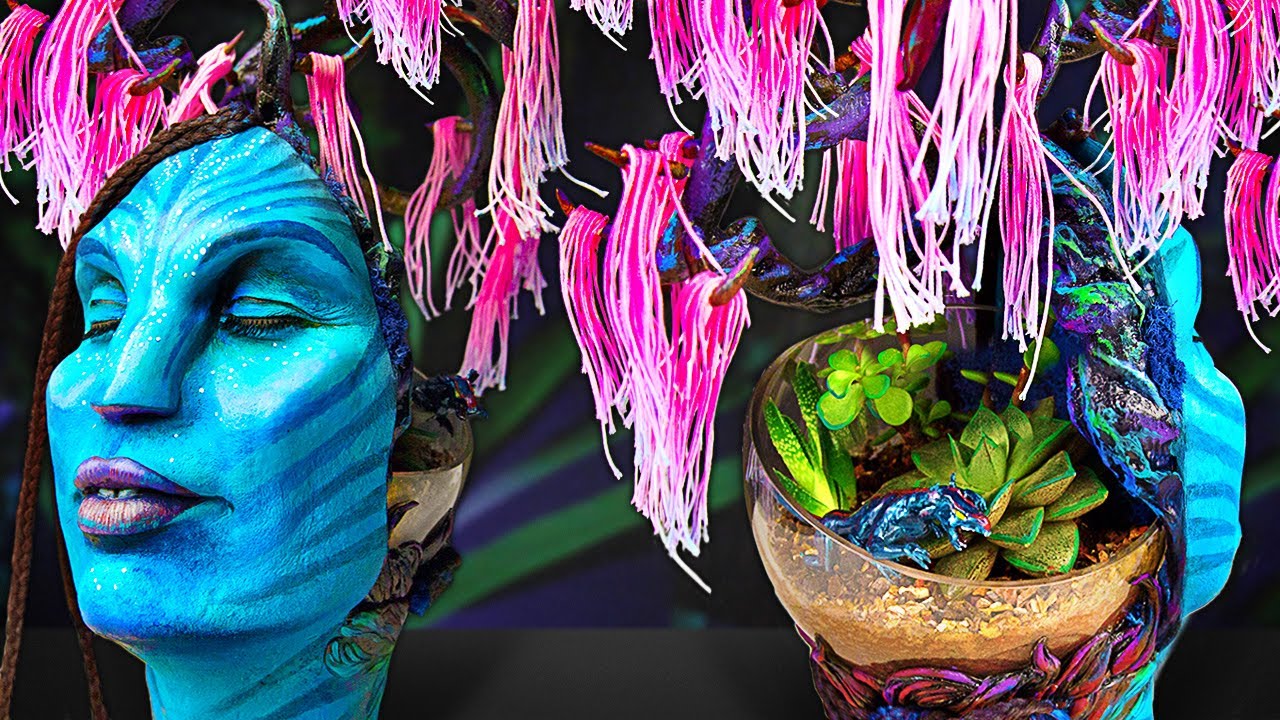 Not only does this program encourage you to watch Art at work but expands your horizons on your definition of art and how far out its tendrils actually reach.
Glow Up: Britain’s Next Make-Up Star can be found on Netflix.
I have reposted Anne Fisher’s delightful posts from eat with an artist: fact, and fiction before. As I noted in my recent comment on her site, “I read them, follow links, and just sit and look at the combinations and try to find the connections between them all. They are wonderful!”
And they are! Thoughtful images and whimsical combinations. Do check her out!

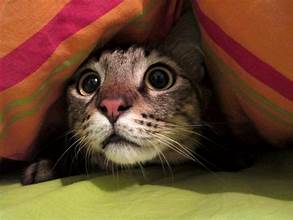 I kinda feel like a scaredy cat.
Three weeks from today I’ll be on a plane to Paris. Me. Simple Midwesterner. Former bed and breakfast owner, linofilm typist and hosiery salesperson. Mother of two, grandmother of three, blogger, crafter, and writer.
Not only am I a bit weary of air travel, but eight hours over land AND sea kinda gets to me. As does not speaking the language, having no sense of direction, having a weird food reaction, the Eiffel Tower being closed because of protesters …
The list is endless.
Of course, I’m not going to let that all stop me. Adventure is the name of the game. Adventure, along with common sense.
Of course, my husband says this will be nothing new. That I get sick every time we go somewhere new. Am I that predictable?
I am hoping that this time around I am whimsical, scattered, amazed, otherworldly, and grounded. All at the same time.
I try to make every place I land one of mystery and entertainment. This includes campgrounds, neighborhood restaurants, friends’ houses, and walking in my own woods. Rome should be a breeze.
I truly believe we should strive to make every day out-of-the-ordinary.
I know most days we are doing a thousand things that are not high on our out-of-the-ordinary list. But there are in-between times like riding as a passenger in the car or drinking morning coffee or walking the dog that can offer worlds of enchantment, too. Free time where we can think and plan just about anything we want. Including vacations.
Use them. As often as you can.
Now I just have to keep that magic in mind when I climb up the final stairs of the Eiffel Tower — huff and puff, y’all.
Maybe I can find a “magic” pair of wings around somewhere to help me out.

Do not forget that true love sets no conditions; it does not calculate or complain, but simply loves.
~ Pope John Paul II
Japanese artist Kaori Kurihara sculpts fanciful ceramic sculptures of lusciously textured exotic fruits and vegetation, both real and imagined. Born in Osaka, Japan. Kurihana graduated from Seika University of Kyoto with a degree in Fine Arts specializing in Artistic Ceramics.
 Following graduation, she garnered additional experience studying jewelry-making in France, where she learned the technique of enameling which she now uses to accessorize her sculptures.
Kurihara’s exquisite pieces are heavily inspired by the plant world, especially the shapes and natural geometric repetition of forms in nature, which lend themselves to captivating motifs while also allowing for infinite diversity. She incorporates delicate botanical details with eccentric forms, melding realism with fiction.
It’s difficult not to become mesmerized by the luscious textures and nuanced tones that grace the surface of her strange and enchanting fruits. “I take inspiration from the plant world with particular attention to forms and their geometric repetition,” Kurihara says.
 “Every element of nature seems to repeat itself, but in fact there is an infinite variety of it. I have the deep desire to make concrete the fruits represented in my mind and to be able to contemplate them through my own eyes.”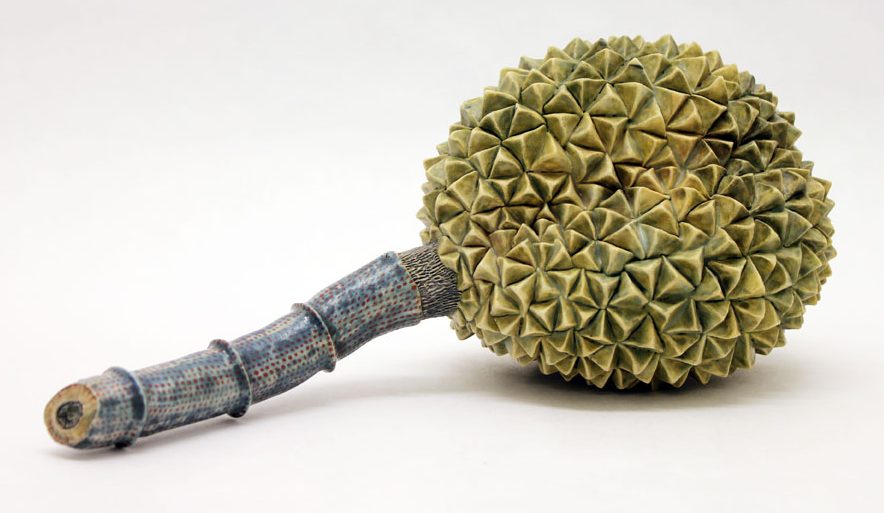
More of Kaori Kurihara‘s whimsical ceramics can be found at .https://mymodernmet.com/kaori-kurihara-ceramic-sculptures/ and https://www.thisiscolossal.com/2022/01/kaori-kurihara-fruit-ceramics/.

 I am one of those weird people. (You are surprised?)
While I am often reminded not to cross the personal/professional line, I often blog and share art from my heart, not my bullet points.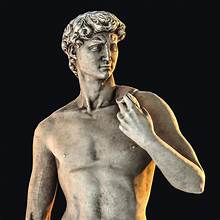
I wanted to share that I am hitting one of my bucket list bullet points, though.
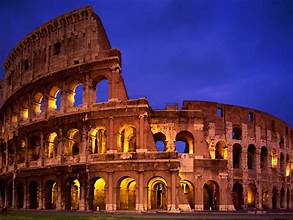
Next month I will be visiting Paris, Rome, and Florence with my significant other.
Two weeks.
Two weeks of total culture shock. Two weeks of not understanding the language. Two weeks of discovering parts of the world that were alive and thriving when the United States was not even a twinkle in the eye. Two weeks of exploring, discovering, and cosmically interacting with lives that walked down those stone streets eons ago.
I always fear someone will think I’m boasting or showing off or digging into other’s limitations, so I haven’t been sharing much. I’m a nagging self consciousness-er. And I hate it.
So, just like the other day when I wore grey and white horizontal stripes with black and white leggings with Chinese dragons, I’m ready to cough up something personal.
I cannot wait.
One positive thing about being retired is you can finally dip into the savings you’ve been building up for 55 years.
So!
Part of my dilemma is what to do while I am gone.
Part of me wants to prepare blogs ahead of time and schedule them now and then.
Part of me thinks I should just take off for a couple of weeks.
The other part of me wants to engage in frequent reports of ~all~ the magic. Unusual takes on traditional views. A homage to my theme of unusual art — Creativity in ~all~ its forms.
I follow a few blogs of those that travel and take remarkable pictures. I can never do their gloss justice.
But then, I’m not quite like them. I’d take pictures of doorknobs and public restrooms in museums and chapels and legs standing in line to see the Mona Lisa and views of buildings through water fountains.
Everyone can take a picture of the Louvre or Saint Peter’s Basilica.
Not everyone can (try) and take pictures of the Vatican from the back door.
But should I?
Alma Nungarrayi Granites (1955-2017), a Warlpiri woman, was an artist from Yuendumu, Australia.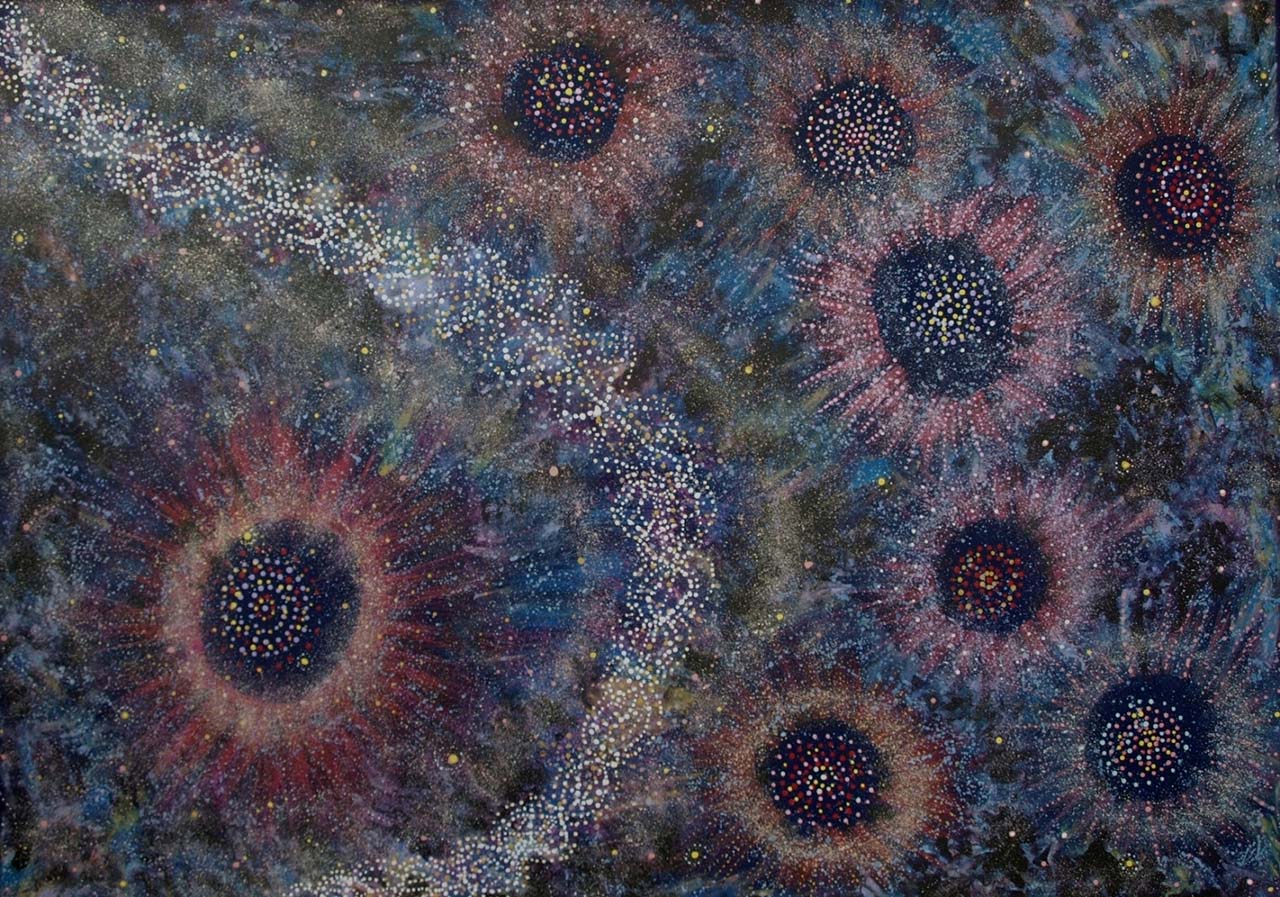 Nungarrayi Granites worked as a staff member at the local school and attended the Bachelor College, studying to become an accredited teacher assistant for both Warlpiri and English.
 Once she graduated, Nungarrayi Granites worked at the Yuendumu School assisting the Warlpiri classes.
 While working at the school, the artist became aware of the great efforts to maintain, share and preserve Warlpiri culture and traditions.
 Nungarrayi Granites herself became aware of the great efforts to maintain, share and preserve Warlpiri culture and traditions, and decided to attended courses run by the Old Peoples Program and Adult Education Centre.
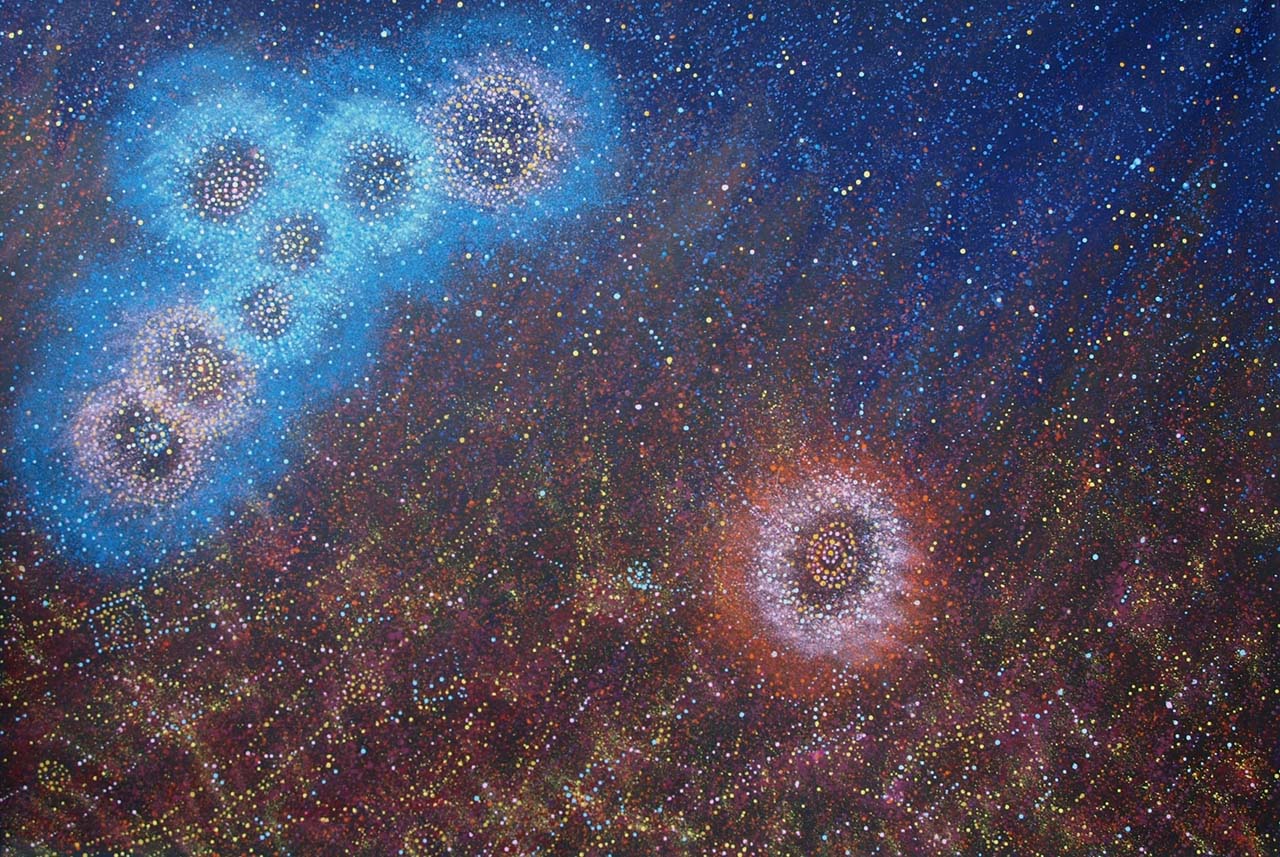 It was not until 2007 that the artist started to paint in earnest. Nungarrayi Granites applied herself and experimented with composition and artistic techniques, while still remaining true and respectful to her Warlpiri culture.
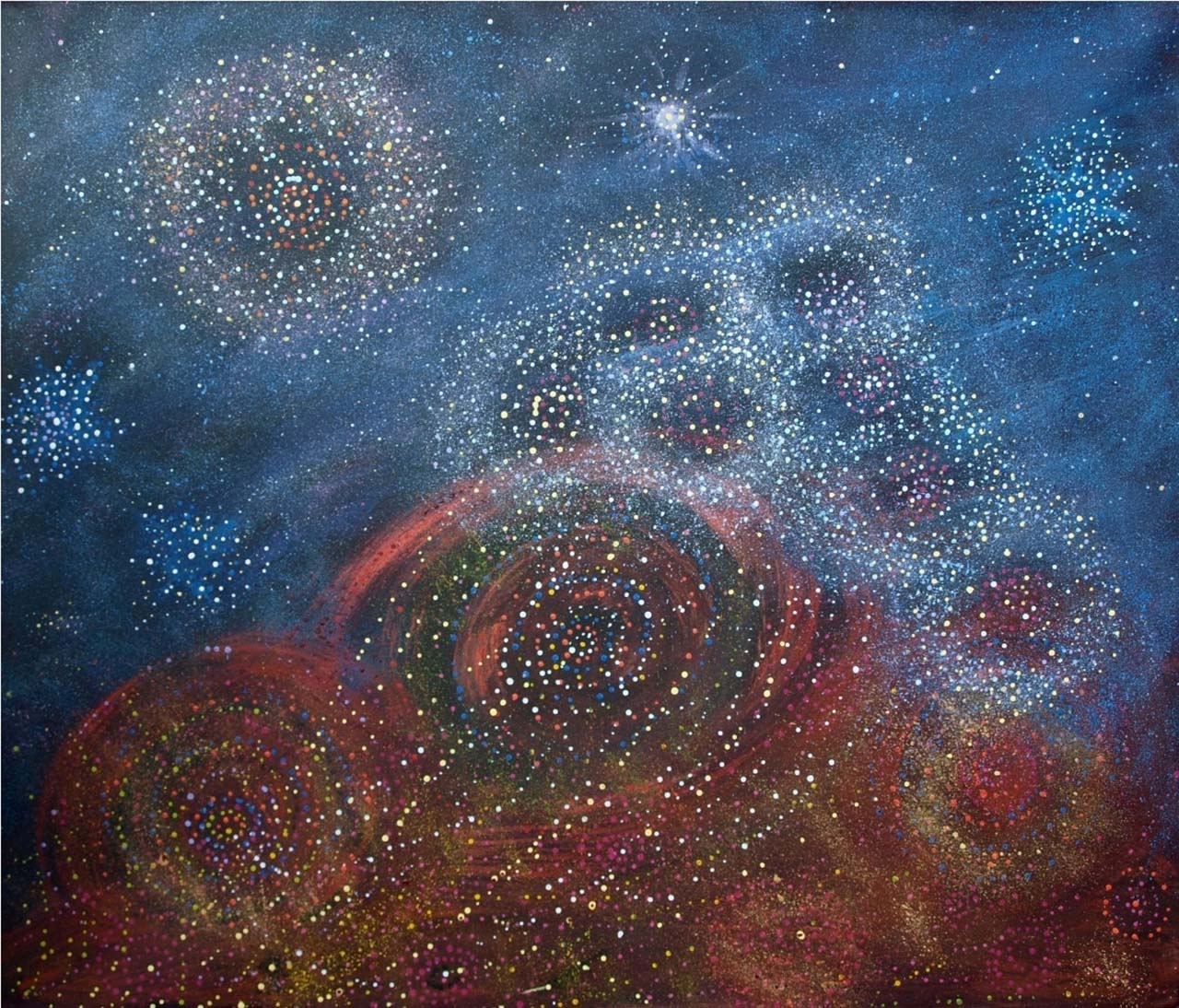 She is known for painting the great Warlpiri story of the Seven Sisters Dreaming, which tells the narrative of the ancestral Napaljarri sisters who are found in the night sky in the star cluster known as the Pleiades, in the constellation Taurus.
 More of Alma Nungarrayi Granites’ wonderful paintings can be found at https://japingkaaboriginalart.com/collections/102-alma-granites-night-sky-2012 and https://maliyaa.com/alma-nungarrayi-granites/.
 Humoring the Goddess