Sunday Evening Art Gallery — Richard Mayhew

Richard Mayhew (1924 – 2024) was an American landscape painter, illustrator, and arts educator of Native and African American descent.Mayhew studied at the Brooklyn Museum Art School, the Art Students League of New York, and Columbia University. His abstract landscapes, which he called mindscapes, convey inner states and feelings through evocative color, diffused forms, and atmospheric space.These mindscape paintings have an ethereal quality to them, in which swaths of color blend into each other.At times, they are electric shocks of violet, magenta, neon green, pink, and goldenrod, resembling negatives for color photographs. In other canvases, they are hazier tones of the same shade that bleed into each other.Mayhew intersected with two midcentury art movements: Abstract Expressionism, which upended the very concept of what a painting could be, and the creation of the Spiral Group, a small but influential New York collective of African American artists that sought a new Black aesthetic.These dialogues solidified his commitment to exploring abstraction and landscape painting in conjunction with race and identity.In the decades since, Mayhew lived, painted, and taught throughout the country including in New York, Pennsylvania and California.
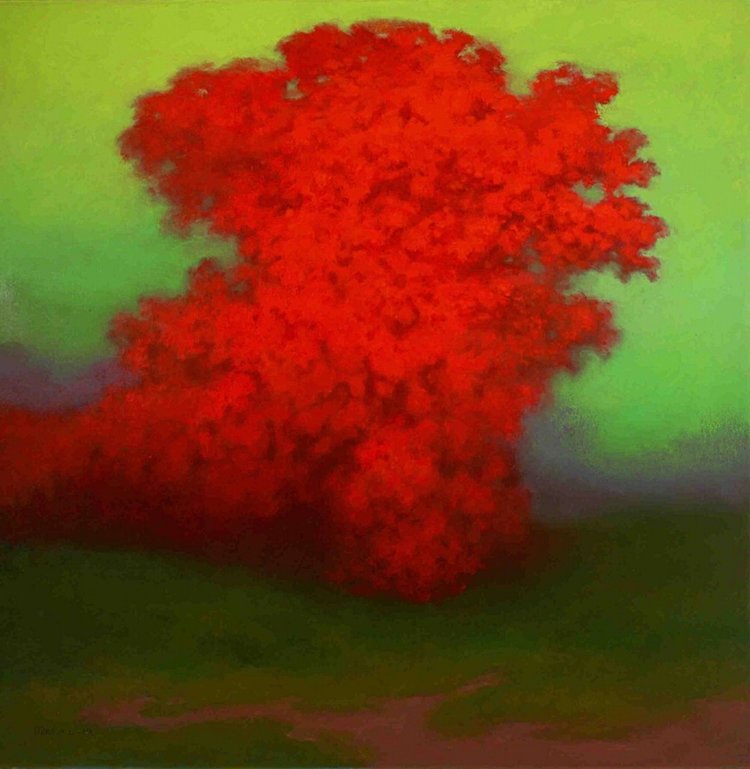
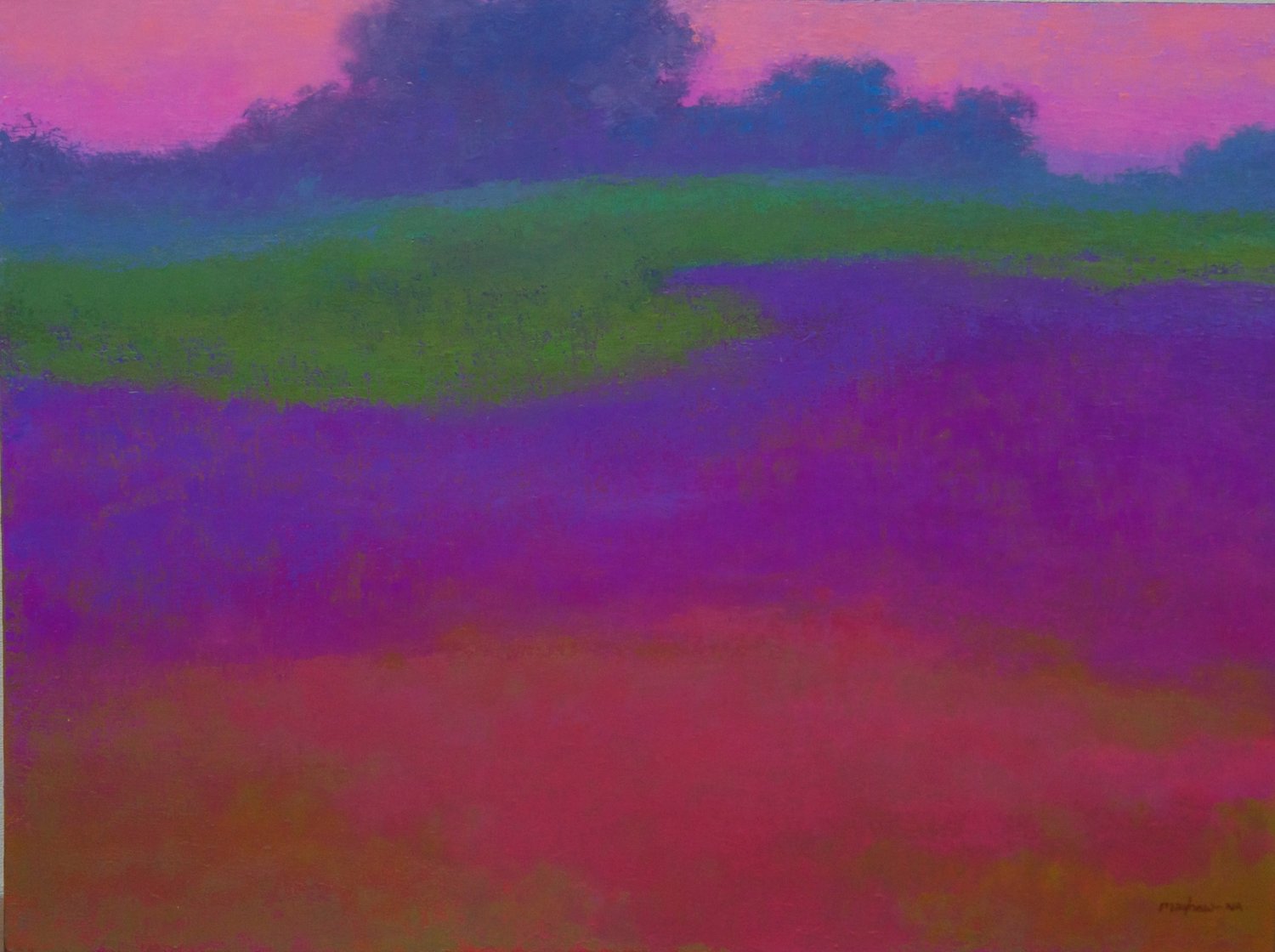
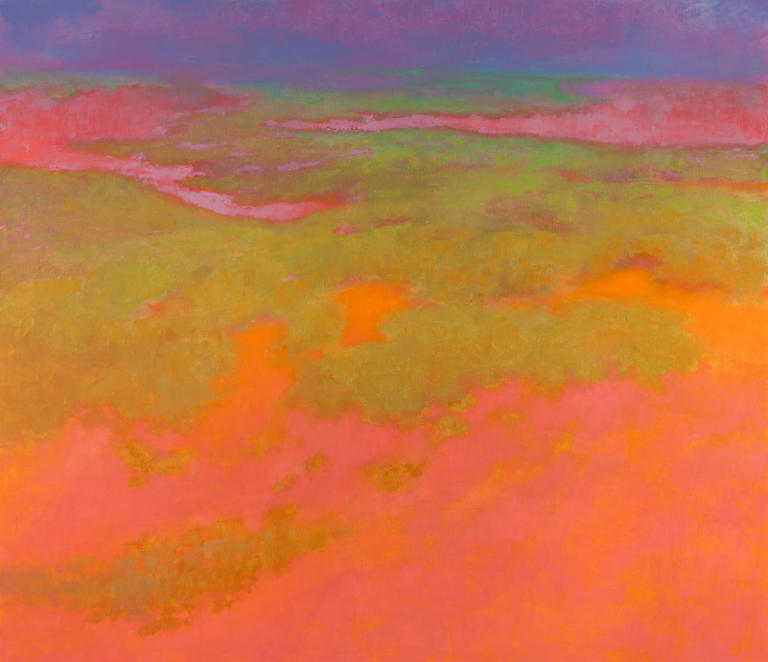
More of Richard Mayhew’s colorful paintings can be found at https://www.richardmayhew.net/.


Sunday Evening Art Gallery — George Inness

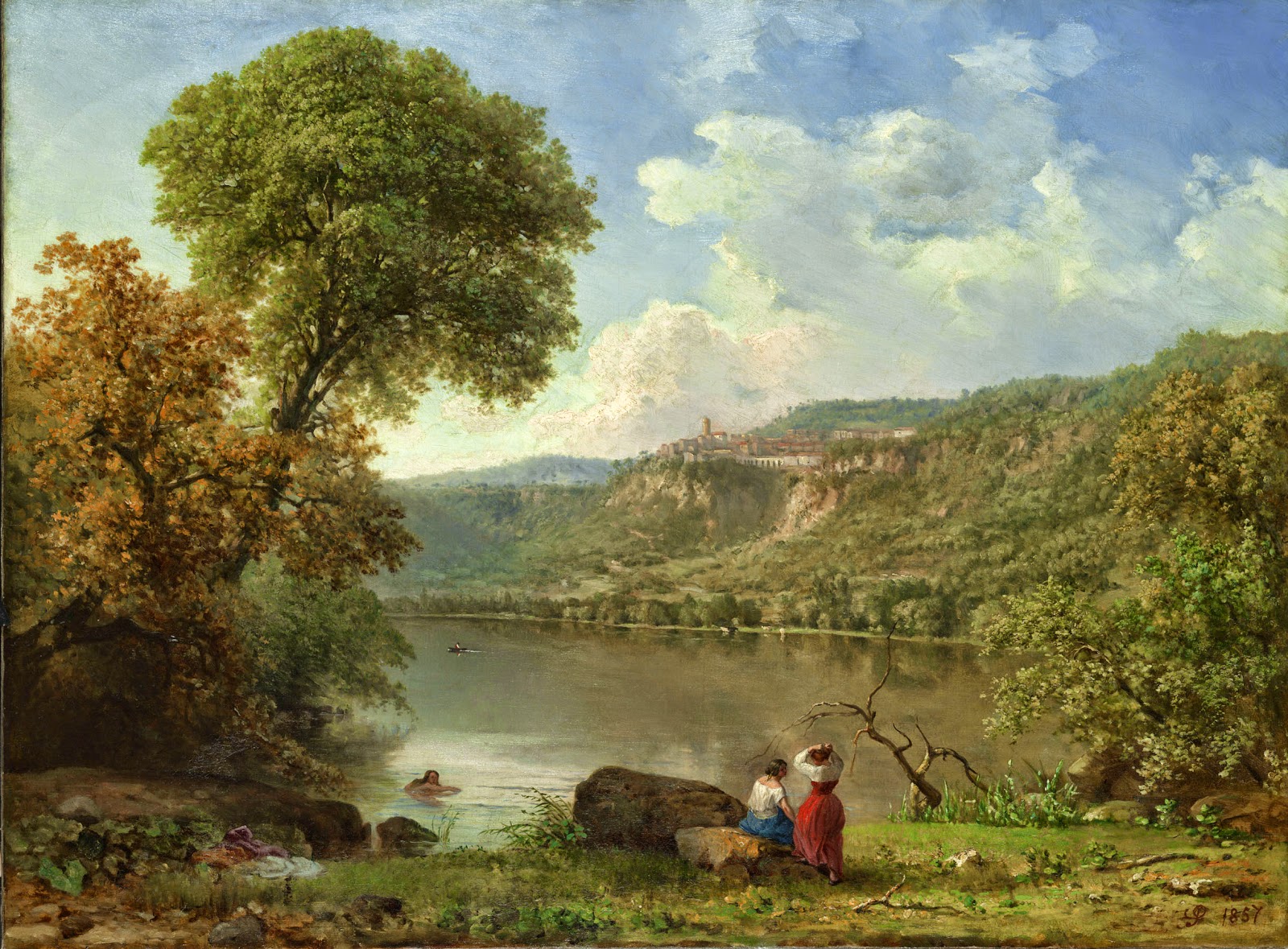
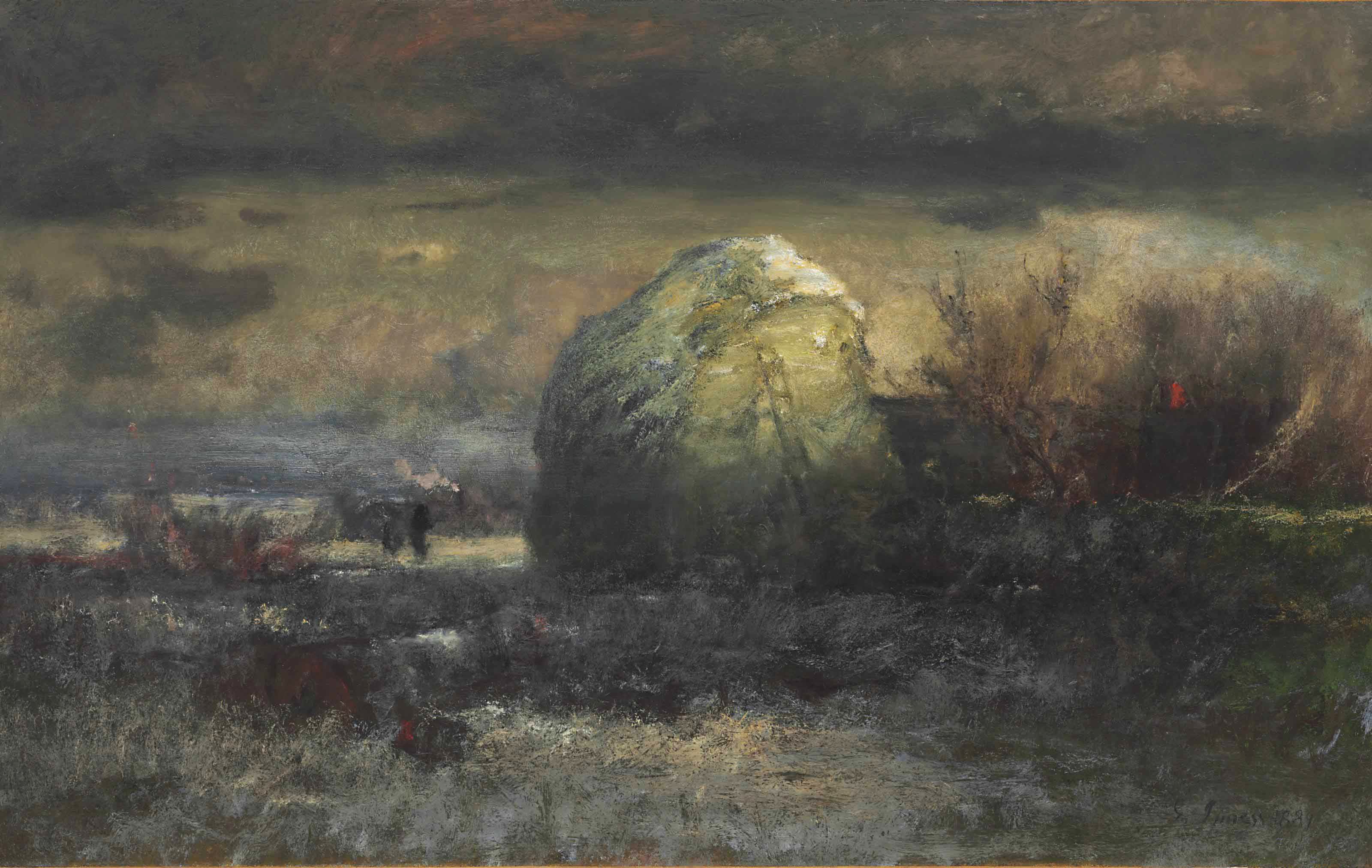
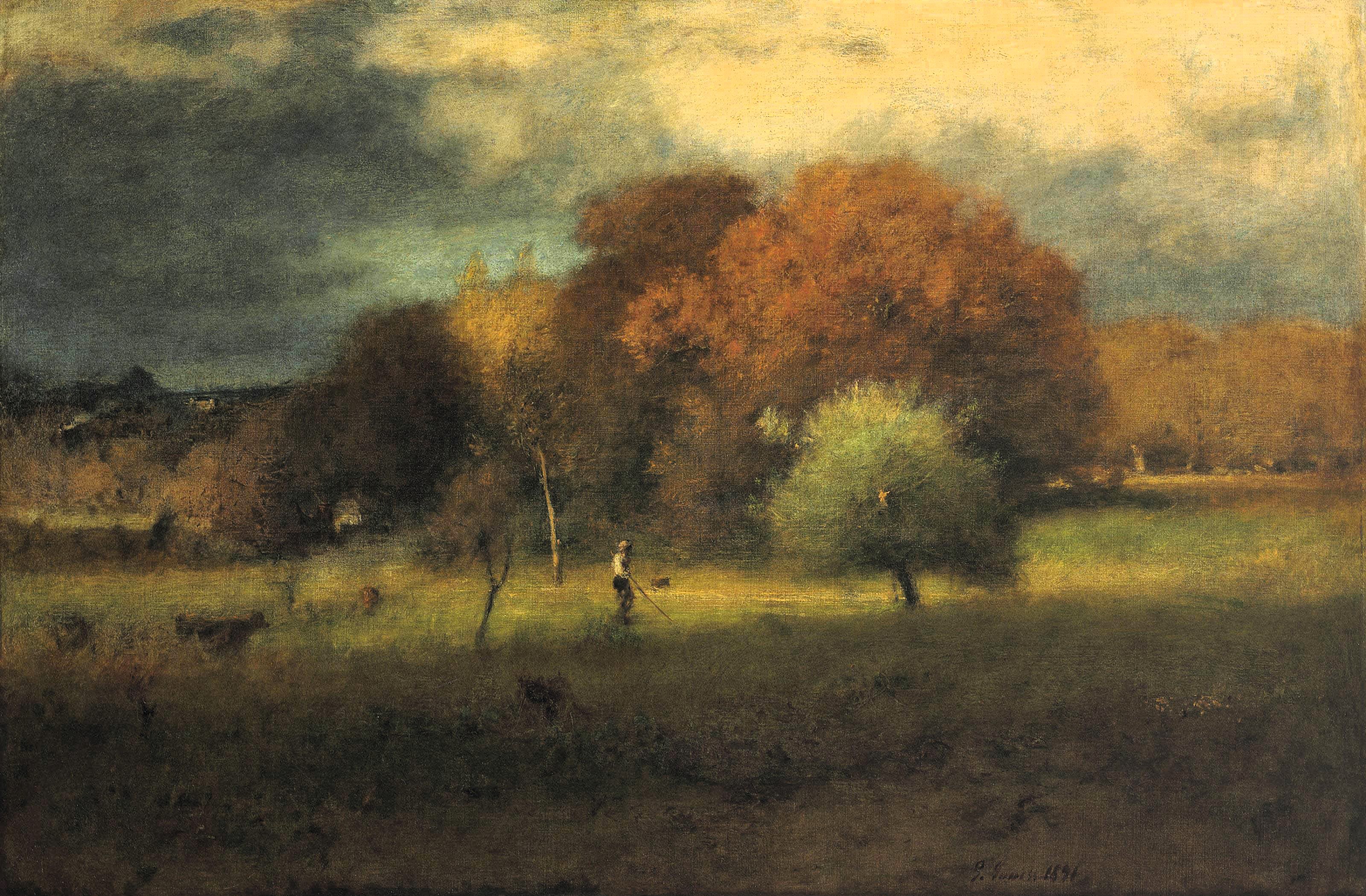
George Inness (1825 -1894)  was an American painter known especially for the luminous, atmospheric quality of his late landscapes.His work was influenced by that of the old masters, the Hudson River school, the Barbizon school, and, finally, by the theology of Emanuel Swedenborg, whose spiritualism found vivid expression in the work of Inness’ maturity.Often called “the father of American landscape painting,” Inness is best known for these mature works that not only exemplified the Tonalist movement but also displayed an original and uniquely American style.Inness’ landscape paintings offer a cultural space as much as a natural space.The vogue in nineteenth-century American painting was for vast canvases in which all human activity was excised from the scene to suggest an untamed wilderness.But Inness was more concerned with expressing the interaction of humankind with the landscapes which they made their own.In this sense, his paintings represent a uniquely optimistic view of social progress in the nineteenth century, which might bring about a new era of harmony between humanity and nature.

More of George Inness’ landscapes can be found at  https://www.theartstory.org/artist/inness-george/ and https://www.wikiart.org/en/george-inness/.


Sunday Evening Art Gallery — Fred Danziger

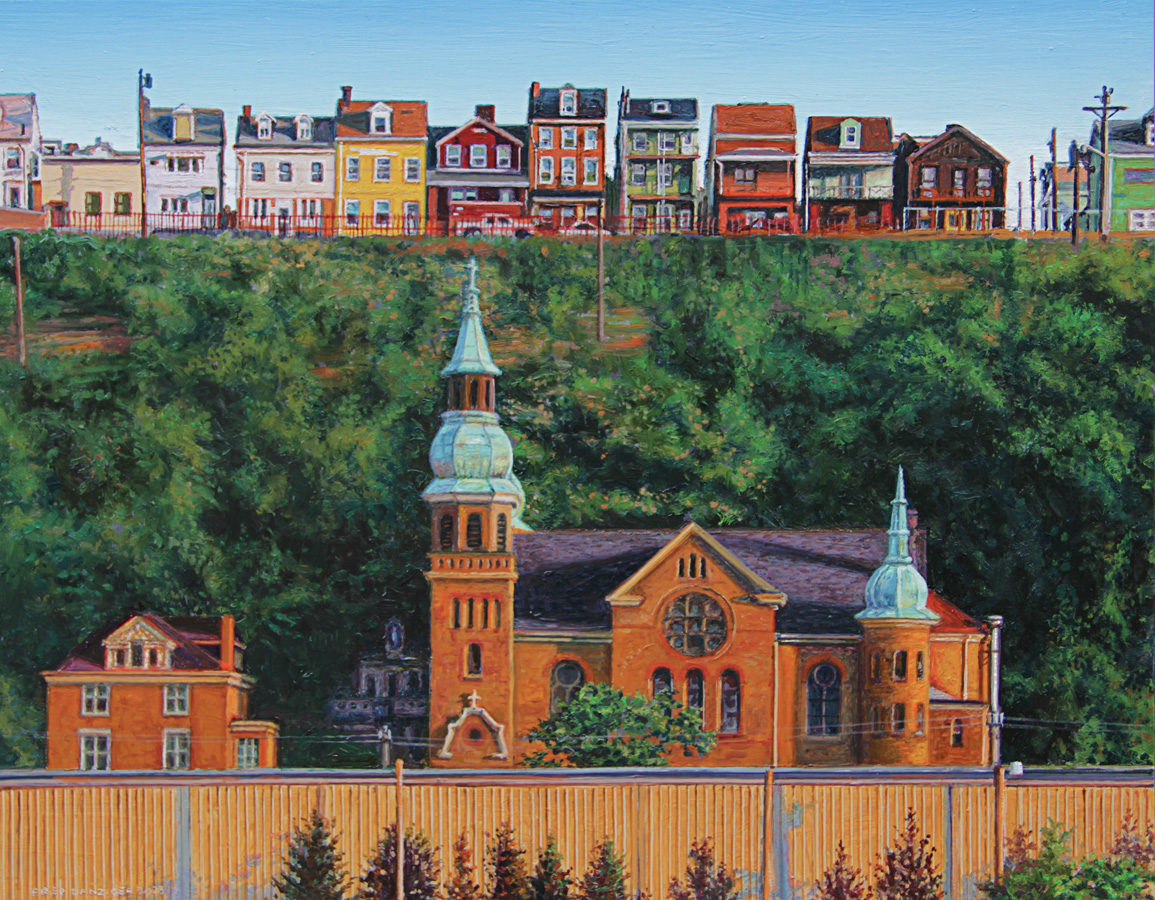
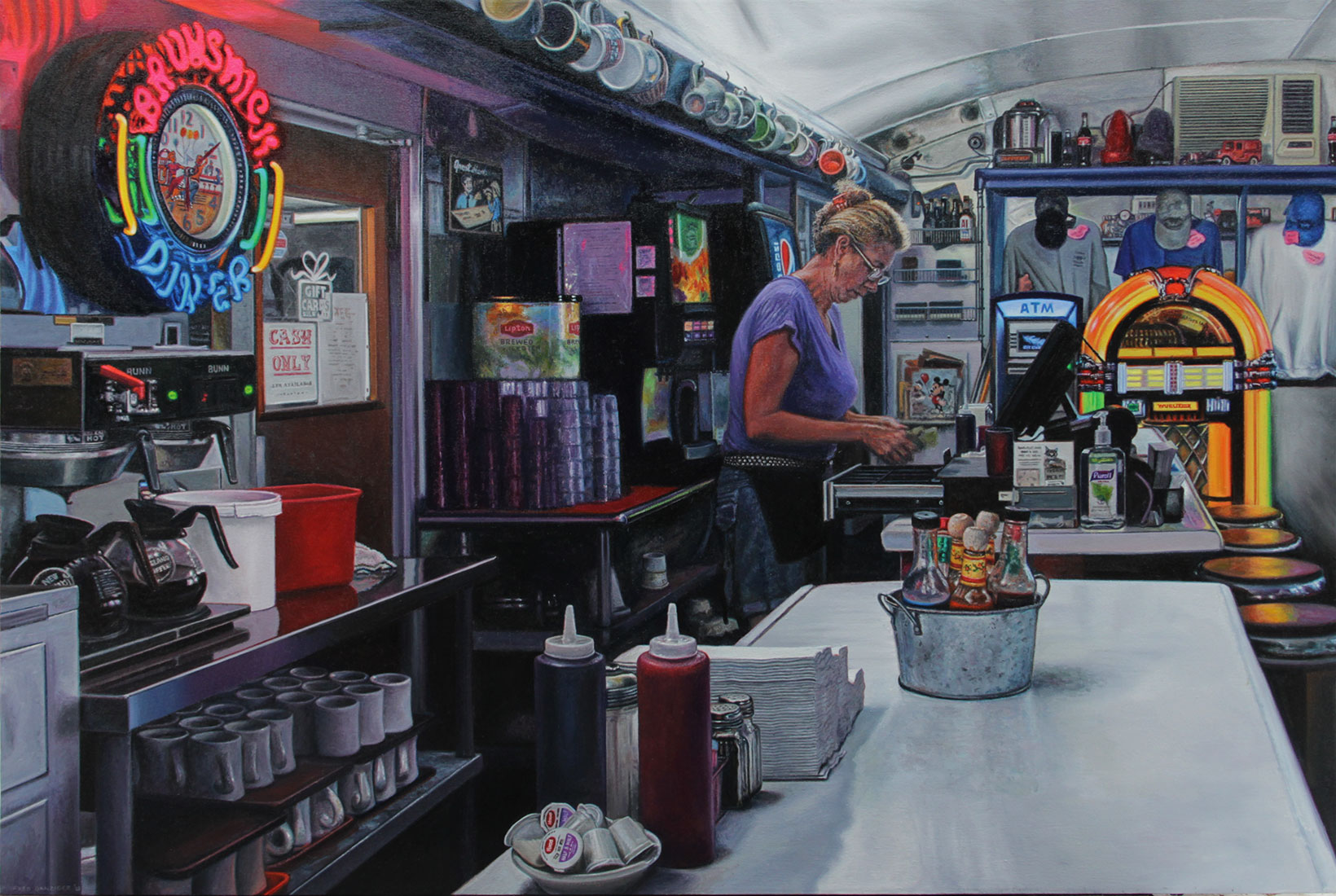
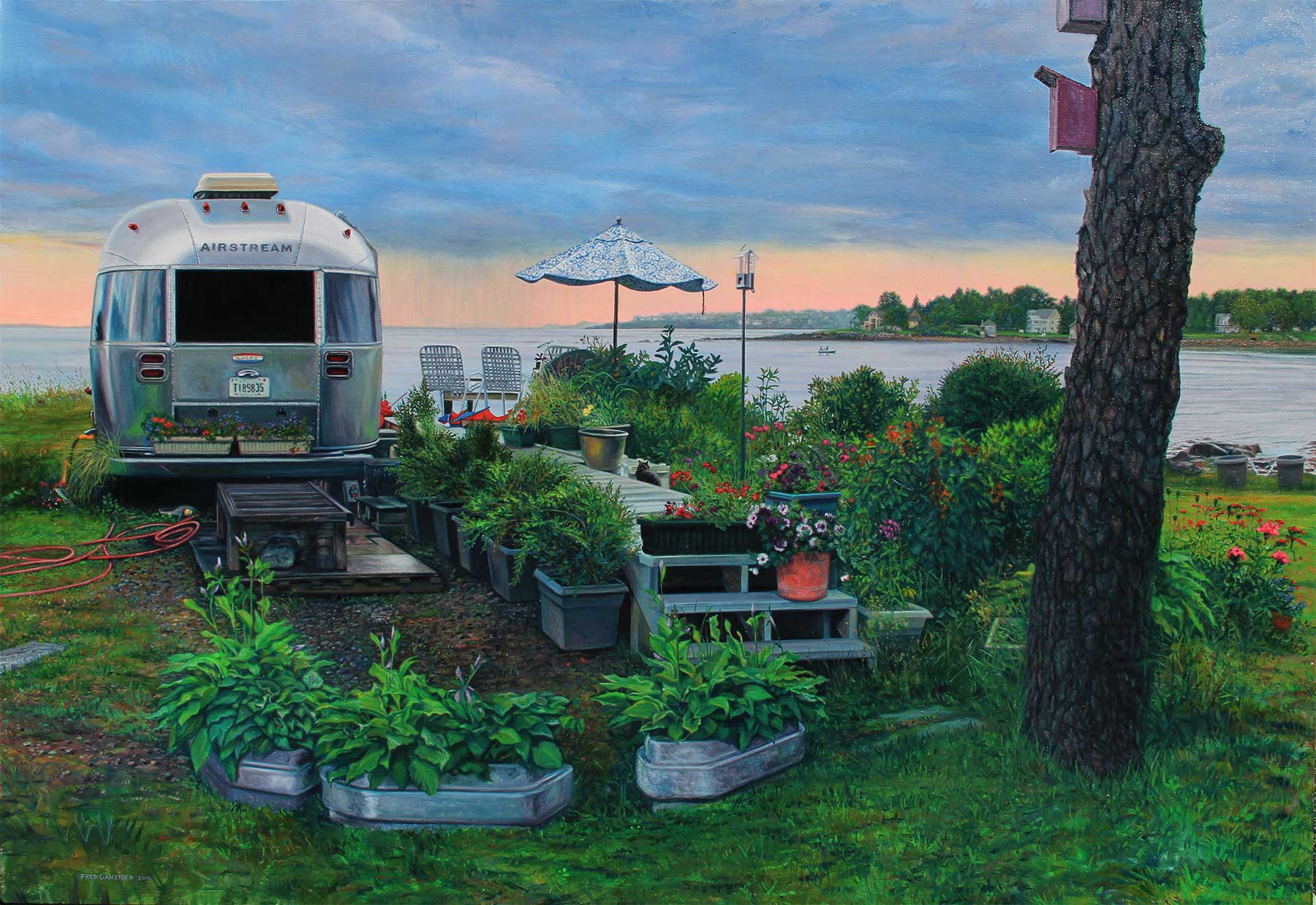
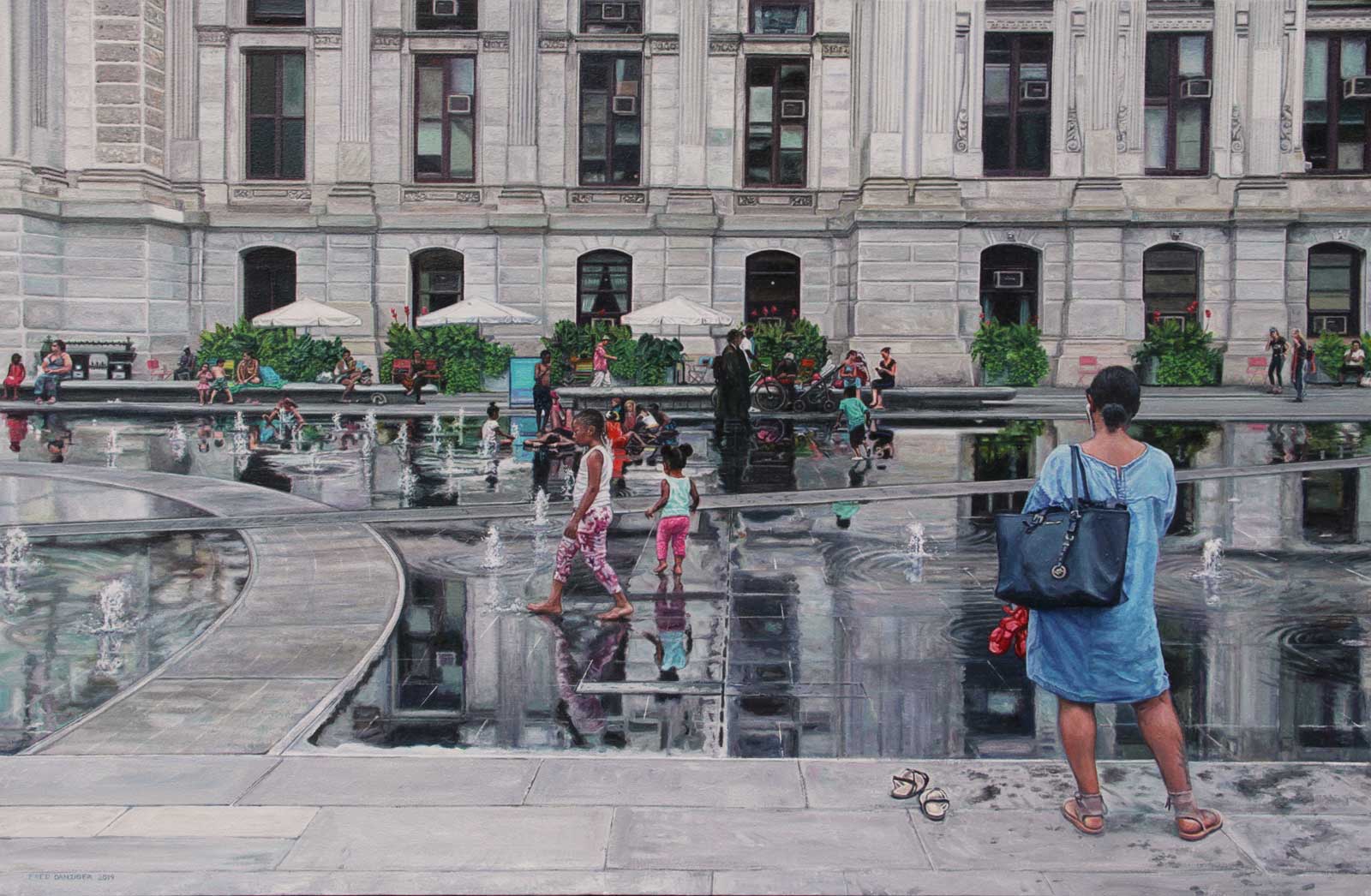
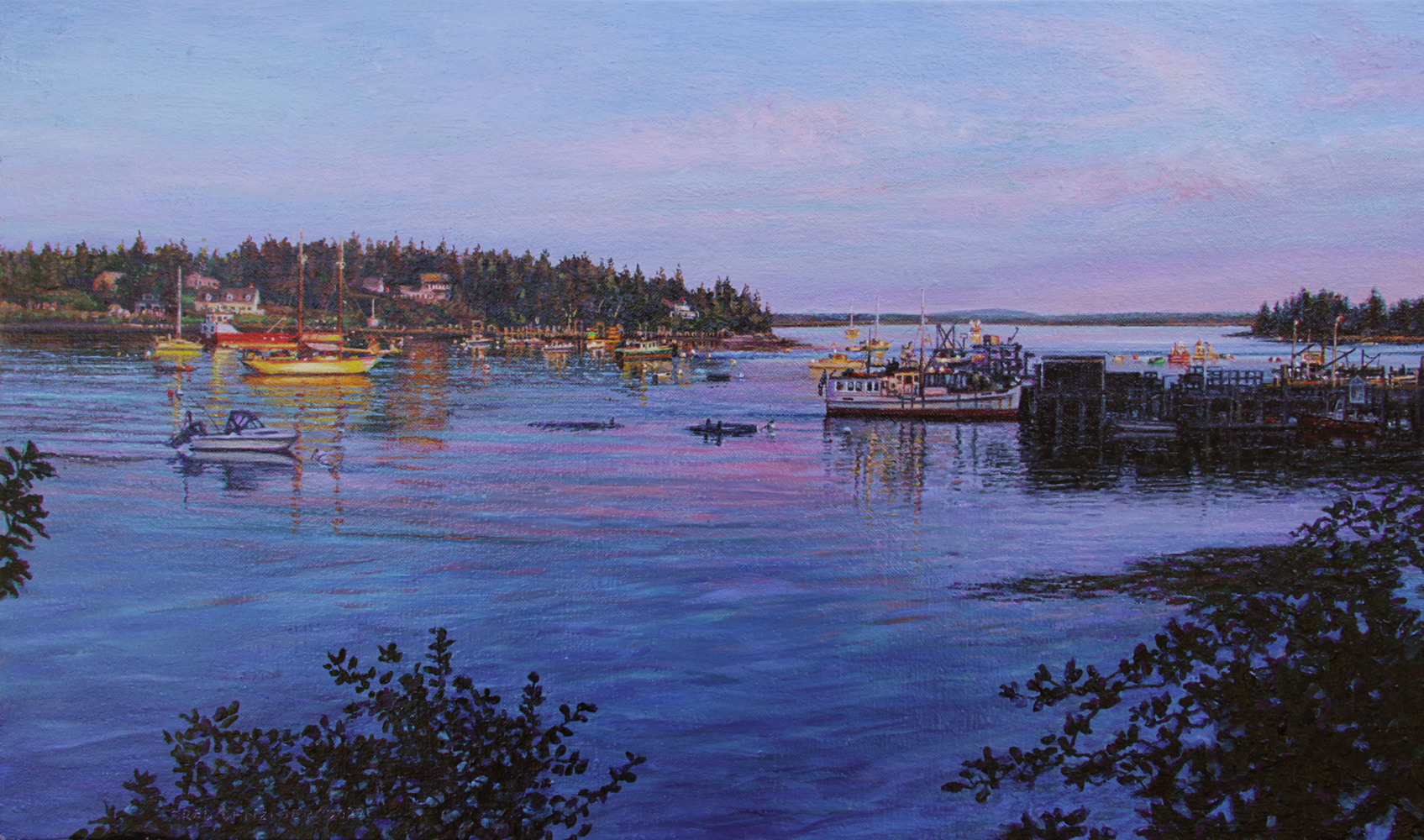
Fred Danziger is a painter, art collector, and at times, instructor at the Pennsylvania Academy of the Fine Arts.At first glance, his intricately detailed paintings look more like landscape photographs.They bring a photorealistic quality, intensified with brilliant tones and lifelike depth of color, to the forefront.Upon closer examination, you see the work of a master.Danziger paints with infinite detail, capturing color, light, and texture to express his love of peaceful moments — often streamside or surrounded by environments that speak to the beauty of Pennsylvania woodlands.He also  draws inspiration from walks in the woods, working to depict three-dimensional form as accurately as possible and achieving near photorealism with broad landscapes and up-close depictions of the natural environment.A master of details, his paintings of leaves, water — even dew-dappled blades of grass — become almost abstract compositions that combine nuances of light, texture and color to give the sense of being present in the scene.“I don’t try to emulate photography in my paintings; I try to go way beyond what a camera sees,” Danziger shares.“A lot of it is just a feeling you get. You’re trying to express that sense of air and light and sunlight, just letting nature wash over you.”
More of Fred Danziger‘s amazingly realistic paintings can be found at https://freddanziger.com/.


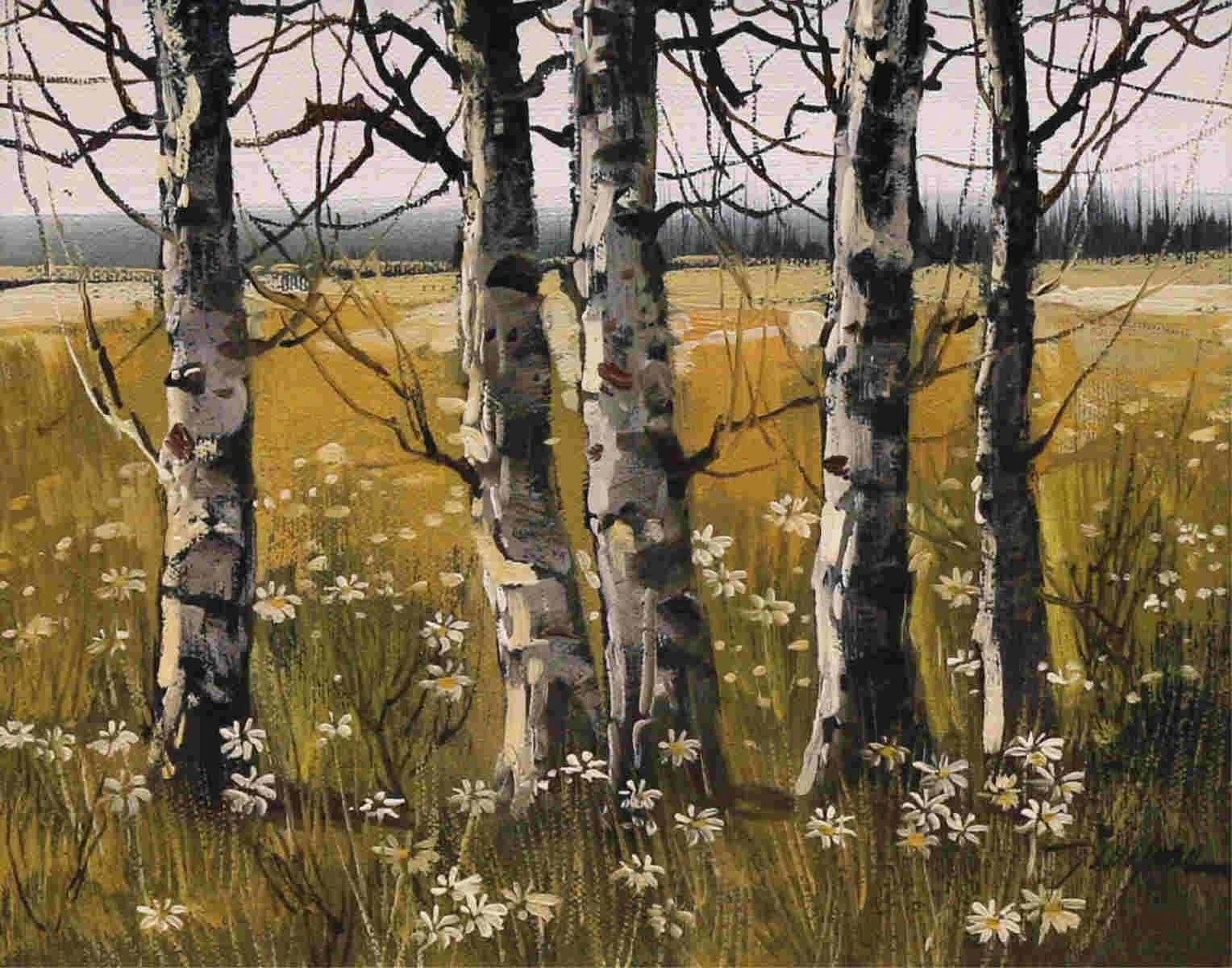
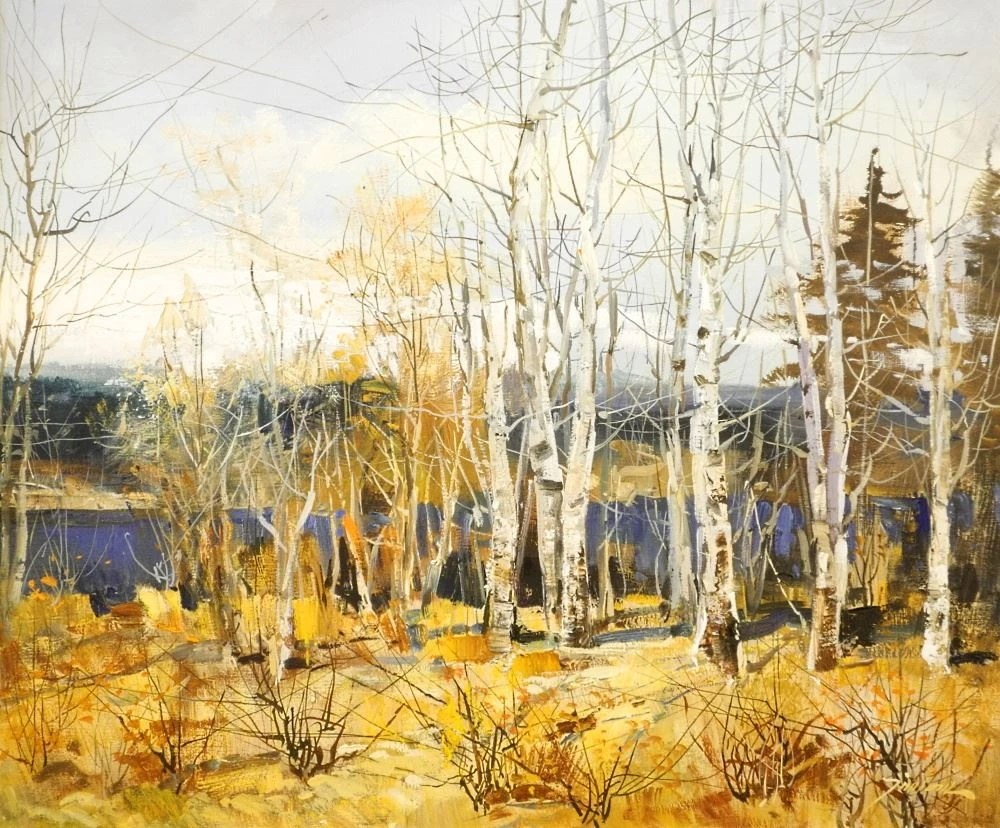
Sunday Evening Art Gallery — Tin Yan Chan

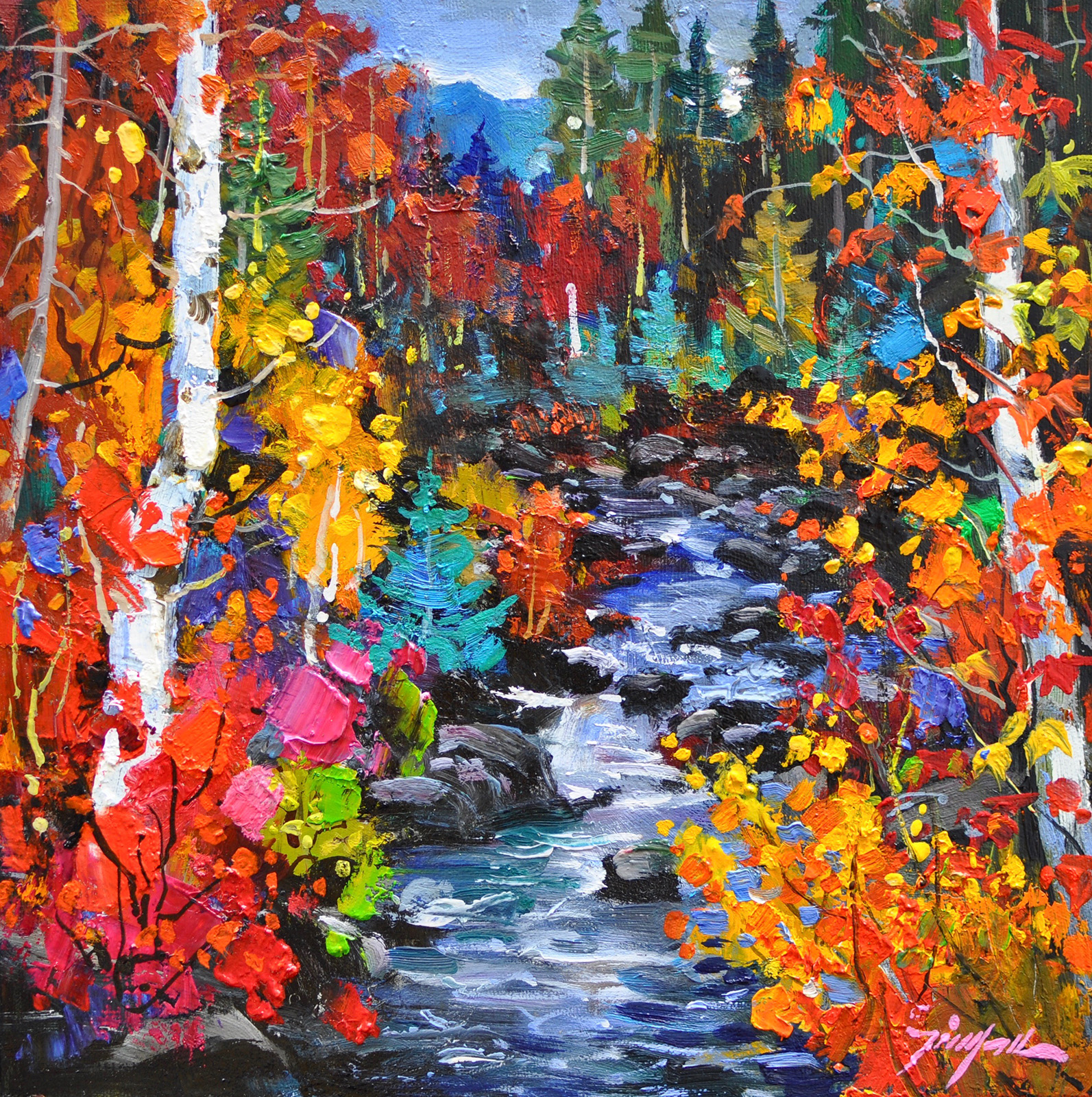
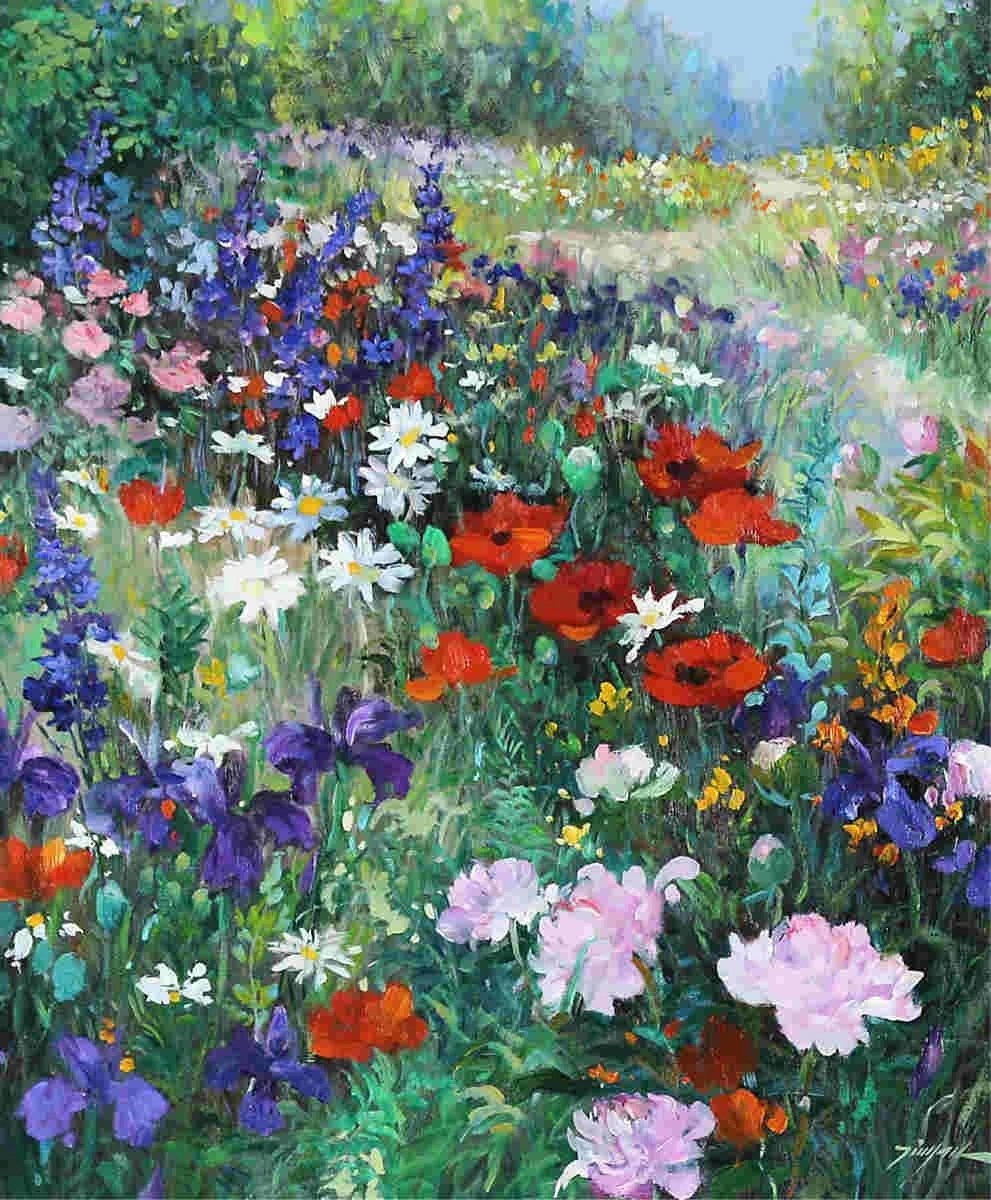
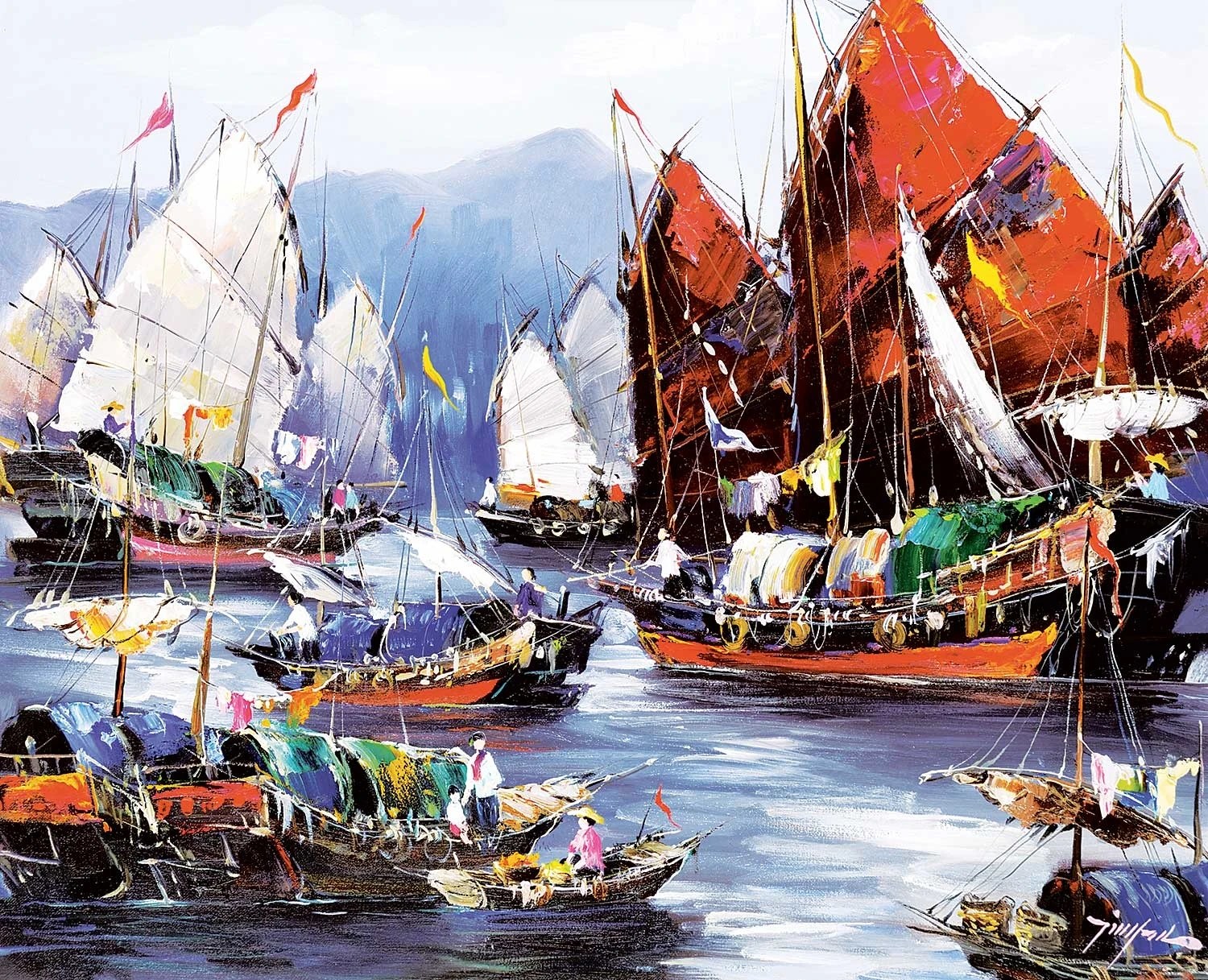
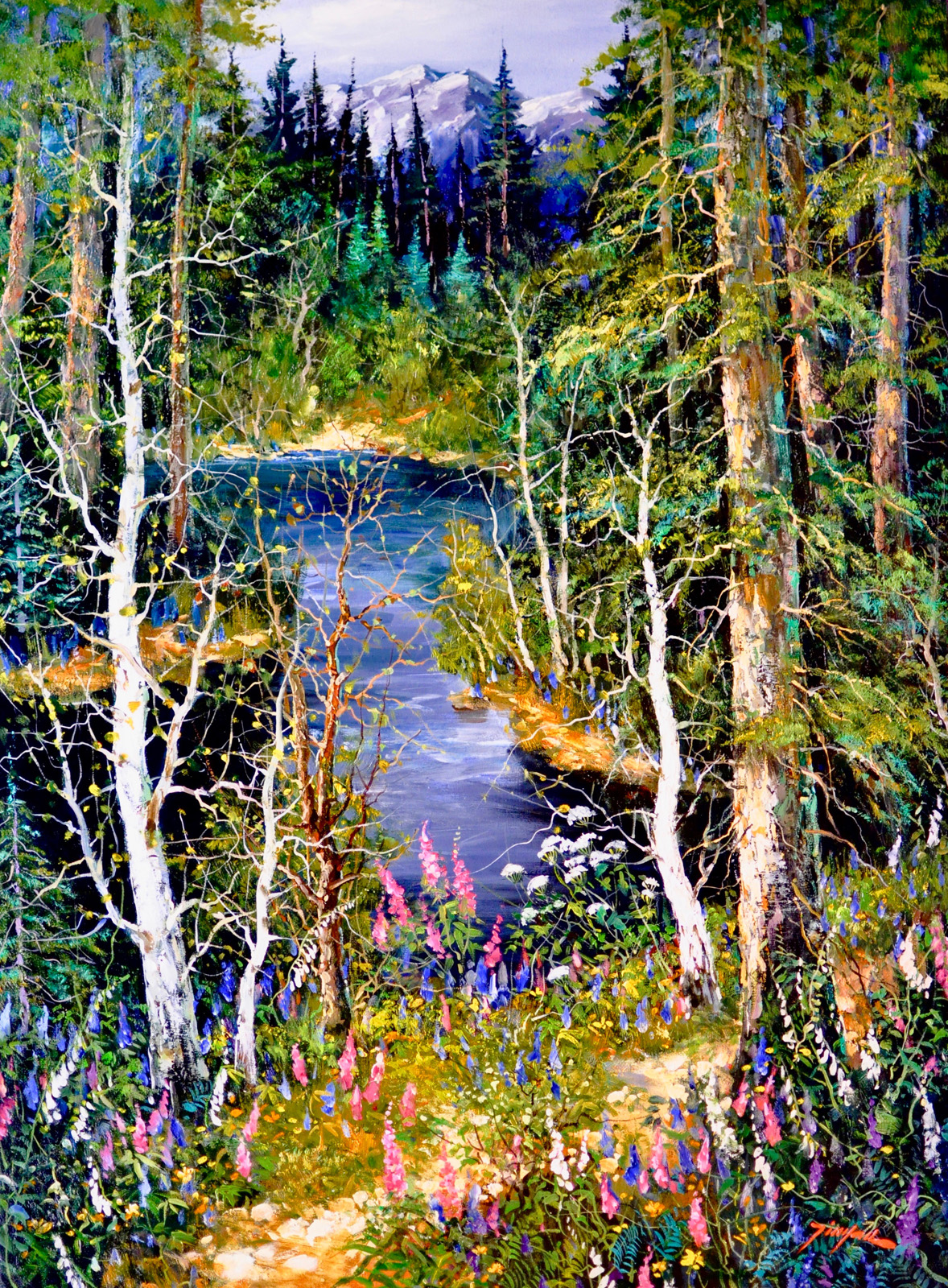
Born in Hin Kwong Village of Kwangtung, China to a family of artists in 1942, Tin Yan Chan became a popular floral and landscape artist in Canada in the late 20th century.Deeply moved by his first encounter with the western work of art, Chan found himself filled with inspiration and imagination.At 16 he was admitted to the Wuhan South Central China Academy of Fine Arts.Chan attended the Guangzhou Academy of Fine Arts where he began to realize the joy of creating bold compositions and expressions.In 1968, the artist immigrated to Canada and started his career as a professional artist. With his experience in China and France, which embraced both ancient and modern Impressionist abstract and contemporary works of arts, he became confident in creating his own style of art work. Chan creates a compelling blend of Asian and Western aesthetics in his snowscapes and floral scenes, producing  works in both watercolor and oil.Delineation of tree branches recalls the curves and strokes of Chinese calligraphy, as does his subject choice of serene natural scenes.Even when working in the strict discipline of the Chinese brush painting tradition, he  scatters exuberant and undisciplined patches of brilliant color throughout his compositions.More of Tin Yan Chan’s colorful art can be found at https://koymangalleries.com/artist/tin-yan-chan/.


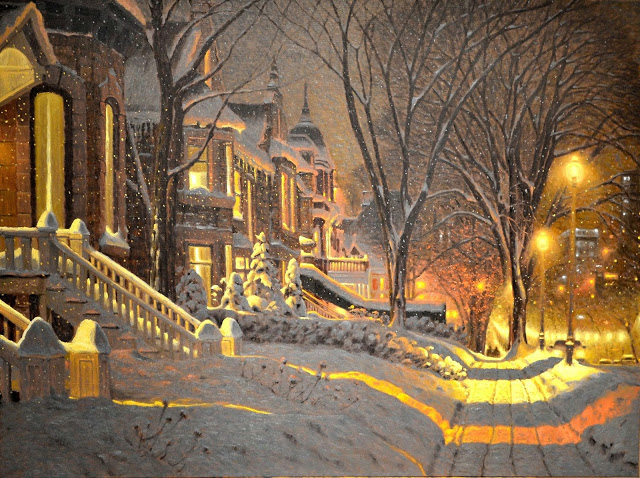
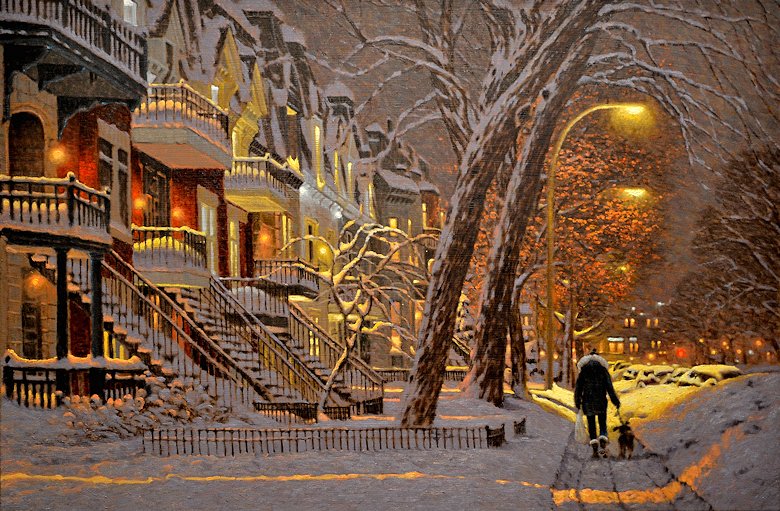
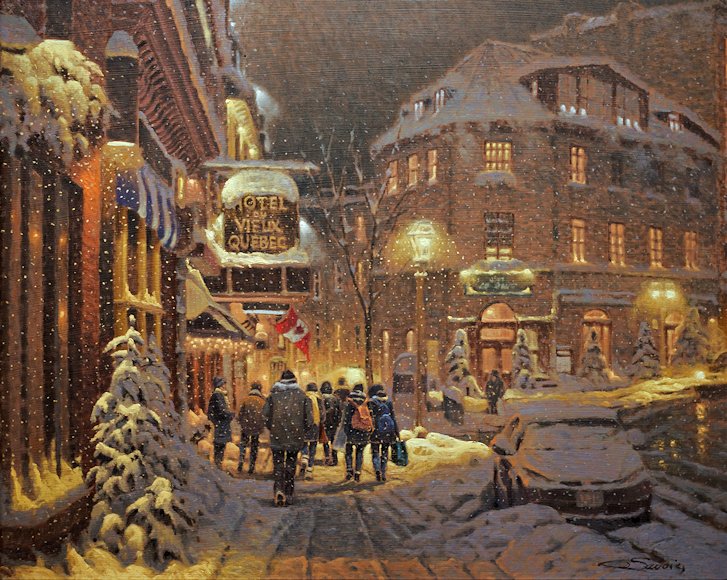
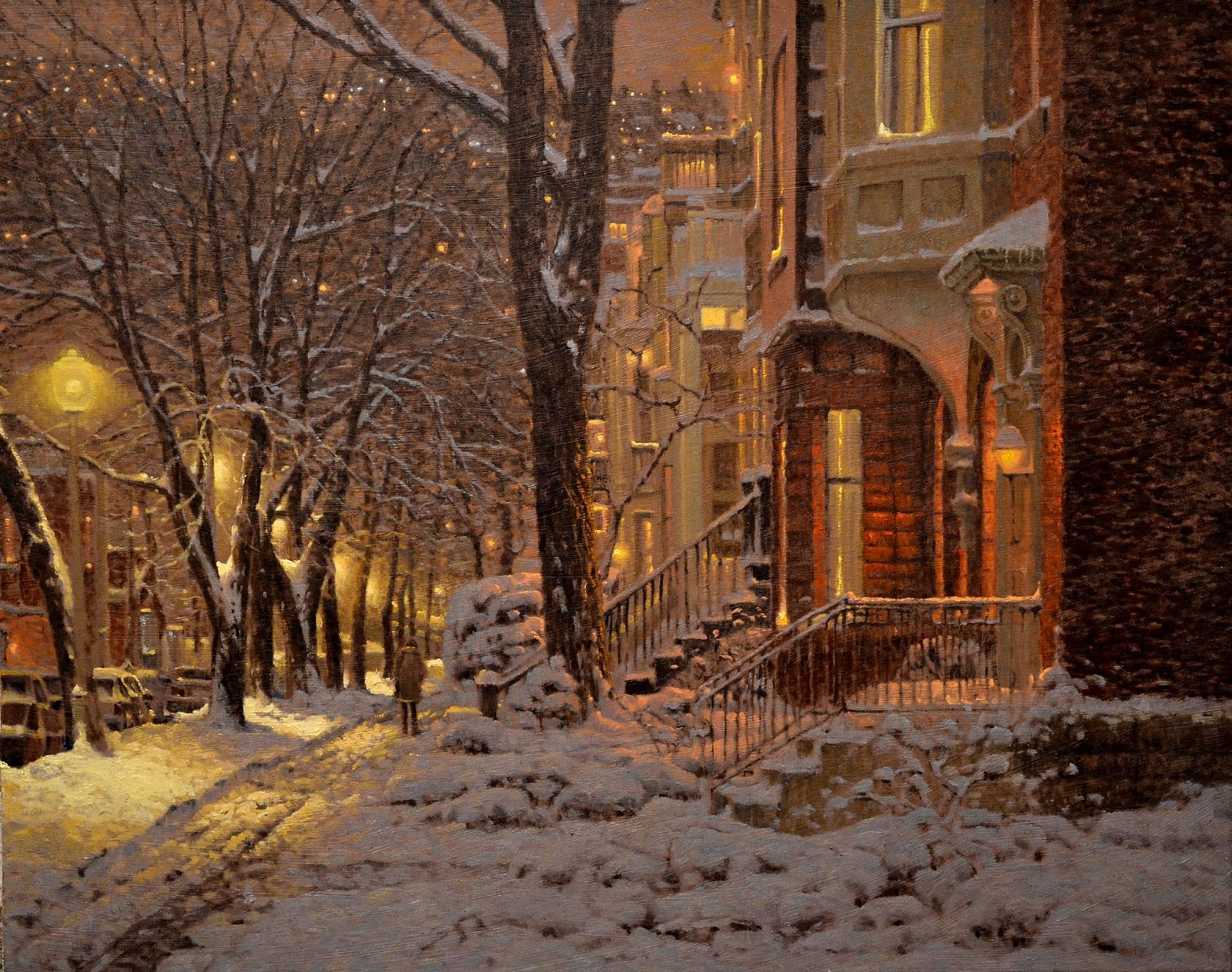
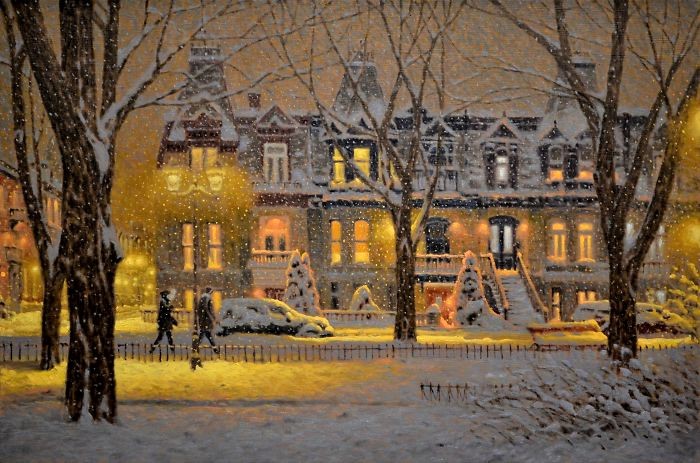
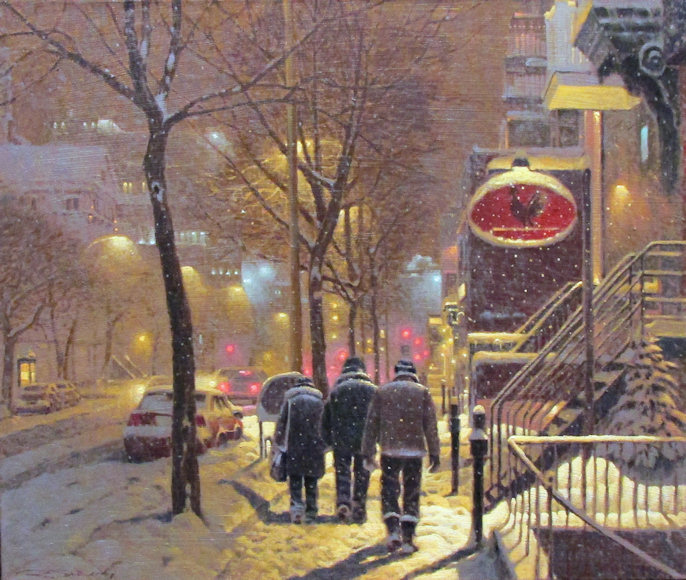
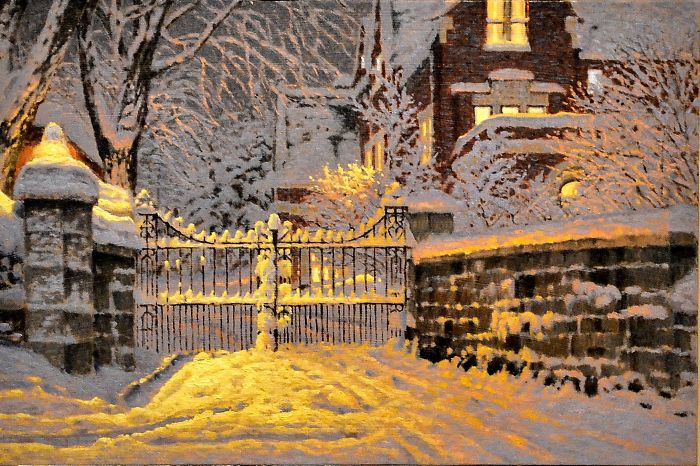
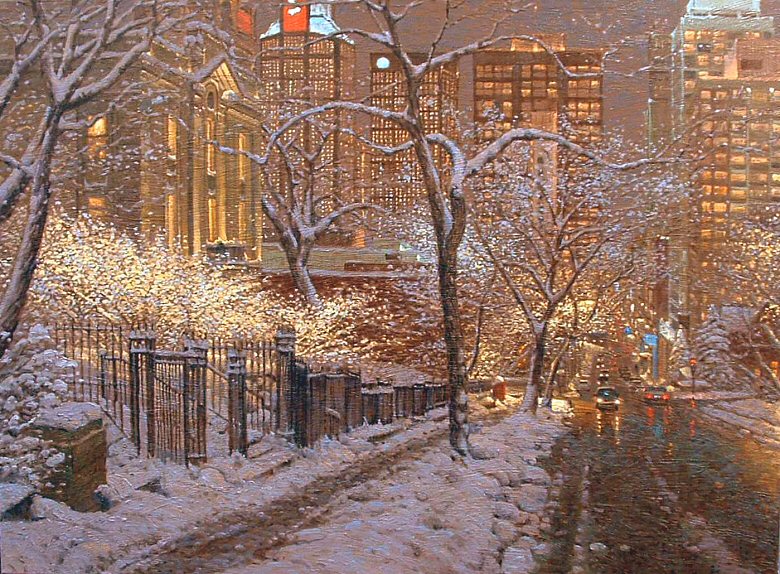
Sunday Evening Art Gallery — Richard Savoie

Richard Savoie is a Quebec painter born in Moncton New Brunswick.

Savoie comes from a family of artists, including an uncle who is part of Canada’s National Gallery.

Savoie is known for his beautiful oil paintings of winter landscapes and urban environments.

The subjects of his paintings become part of the mystery as they slowly walk further into the distance with their back turned on the narrator.

Many of his works specializes in frosty winters bursting with light, even if depicted in the middle of the night.

Savoie astonishes with an impeccable visual memory, a skill with which he paints and, in turn, places the viewer at the exact place and time as experienced by the artist himself.

Each work reveals another fragment of the universe in a tapestry of light and color that allows viewers to savor the finesse of his fresh and spontaneous approach.

Richard Savoie‘s work can be found in major galleries throughout Canada and is also part of some of the country’s most important collections.

You can also find his work at https://balcondart.com/en/savoie-richard/.


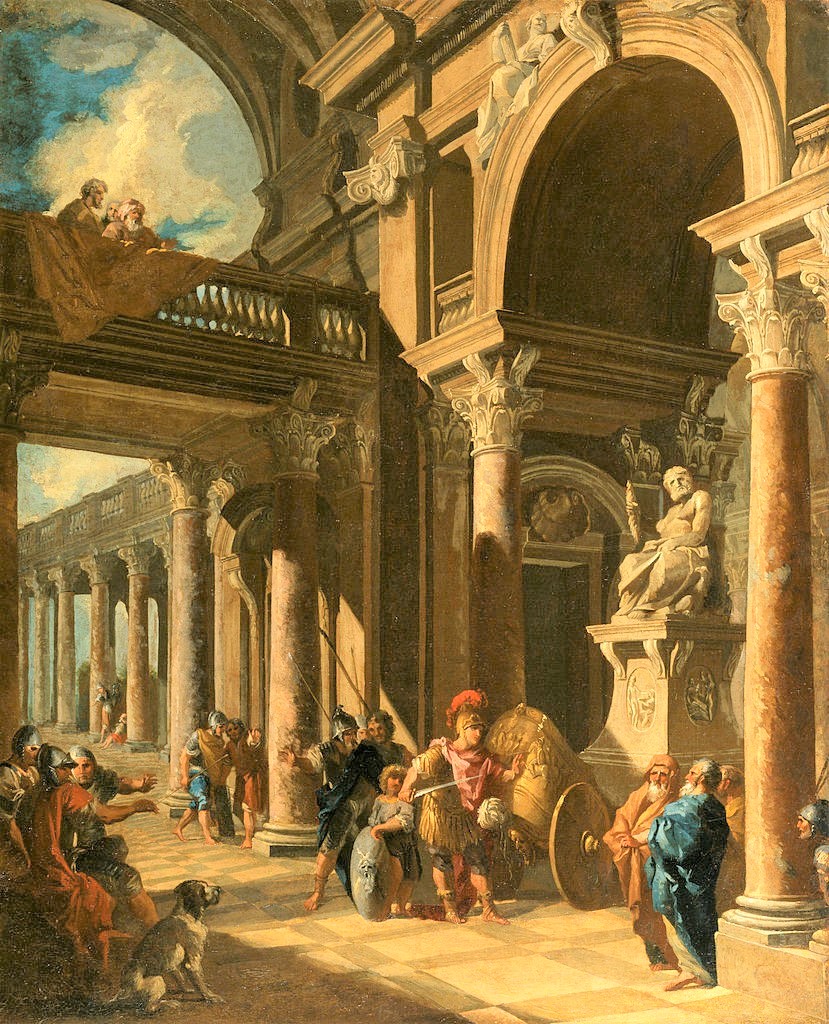
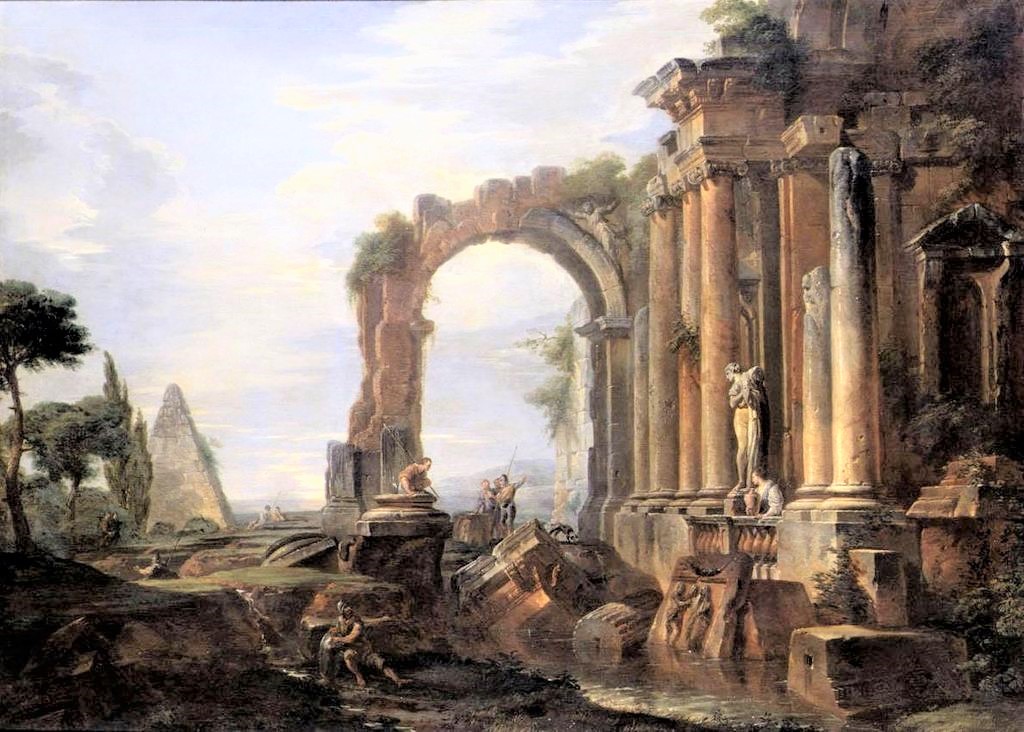
Sunday Evening Art Gallery — Giovanni Paolo Panini

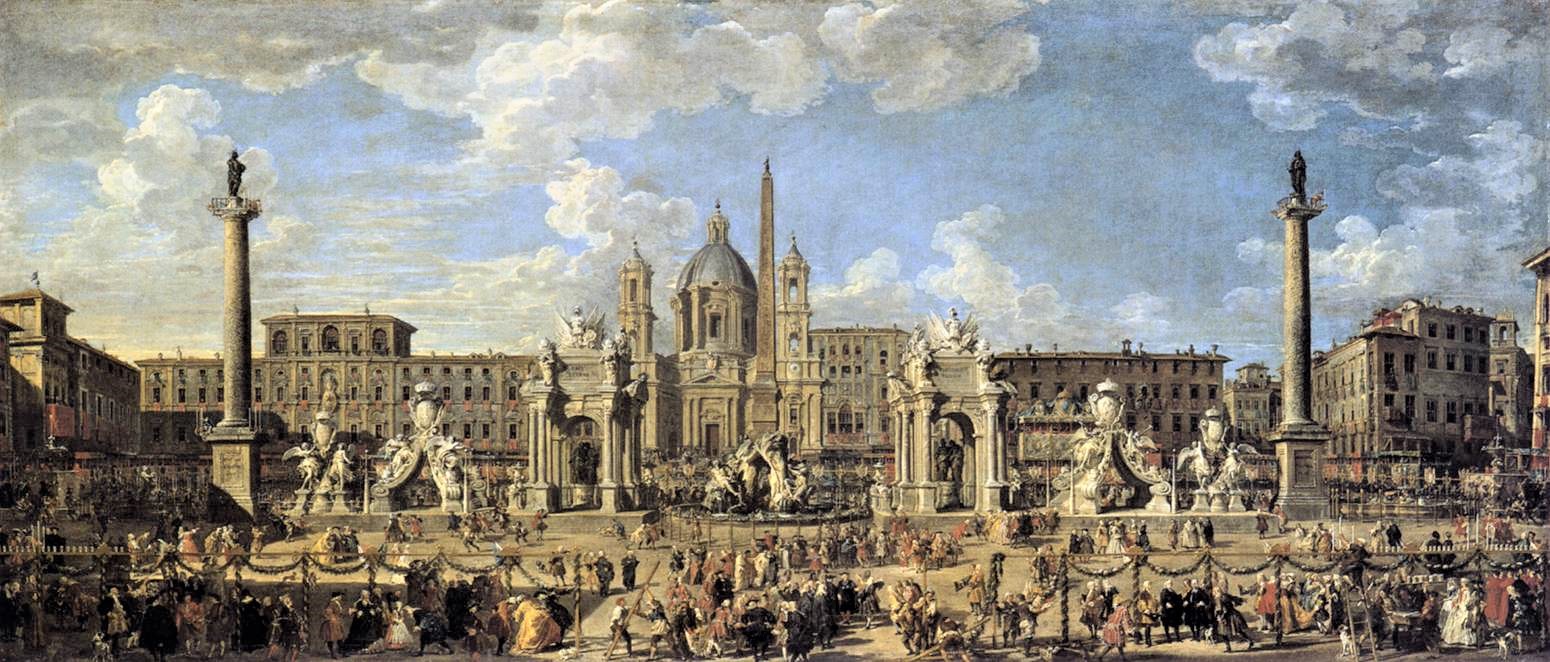
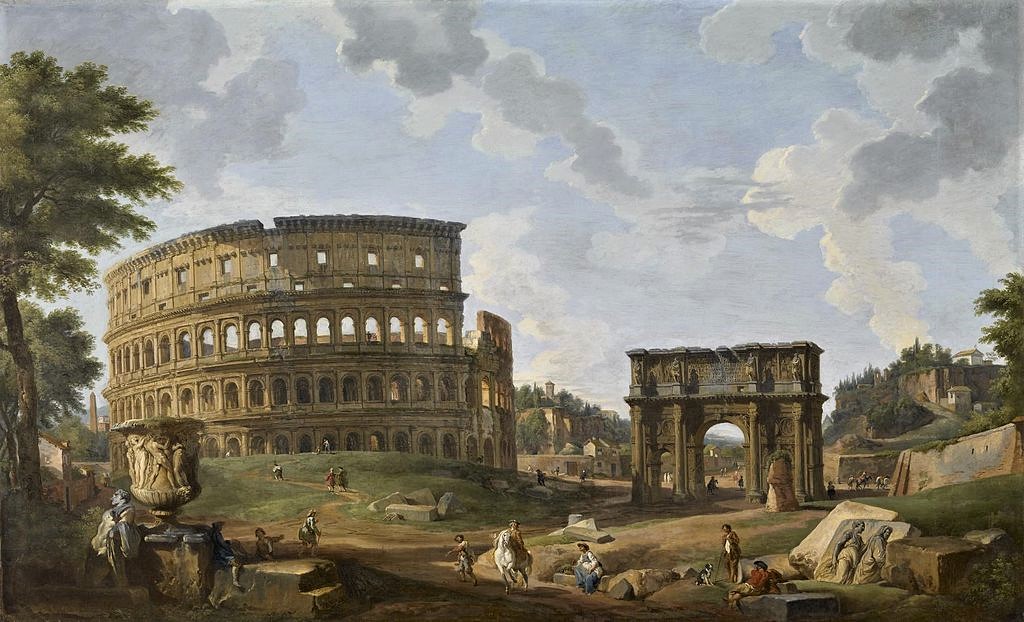
Giovanni Paolo Panini (1691-1765), a Piacenza-born artist, was a celebrated painter of views of modern and ancient Rome and a prolific architect and draftsman during the eighteenth century.As both painter and teacher, Panini was versatile in his craft and, accordingly, was highly respected for his contribution to the art scene in Italy.Although Panini worked as an architect, designing Cardinal Valenti’s villa and the chapel in Santa Maria della Scala (1728), and produced fireworks, festival apparatuses, and other ephemeral architectural decorations (and painted magnificent records of them), in the last thirty years of his life he specialized in painting the views of Rome that secured his lasting reputation.These were of two main types, vedute prese da i luoghi (carefully and accurately rendered views of actual places) and vedute ideate (imaginary views and combinations of particular buildings and monuments).His views of ancient and modern Rome encompassed practically everything worth noting in the eighteenth-century guidebooks to the Eternal City.

These paintings were not idealized or symbolic representations of Rome’s past and present grandeur, but accurate and objective portrayals of the most famous, most picturesque, or most memorable sights of the city.

More of Giovanni Paolo Panini‘s amazing paintings can be found at museums and websites around the Internet.

Sunday Evening Art Gallery — Santiago Rusiñol

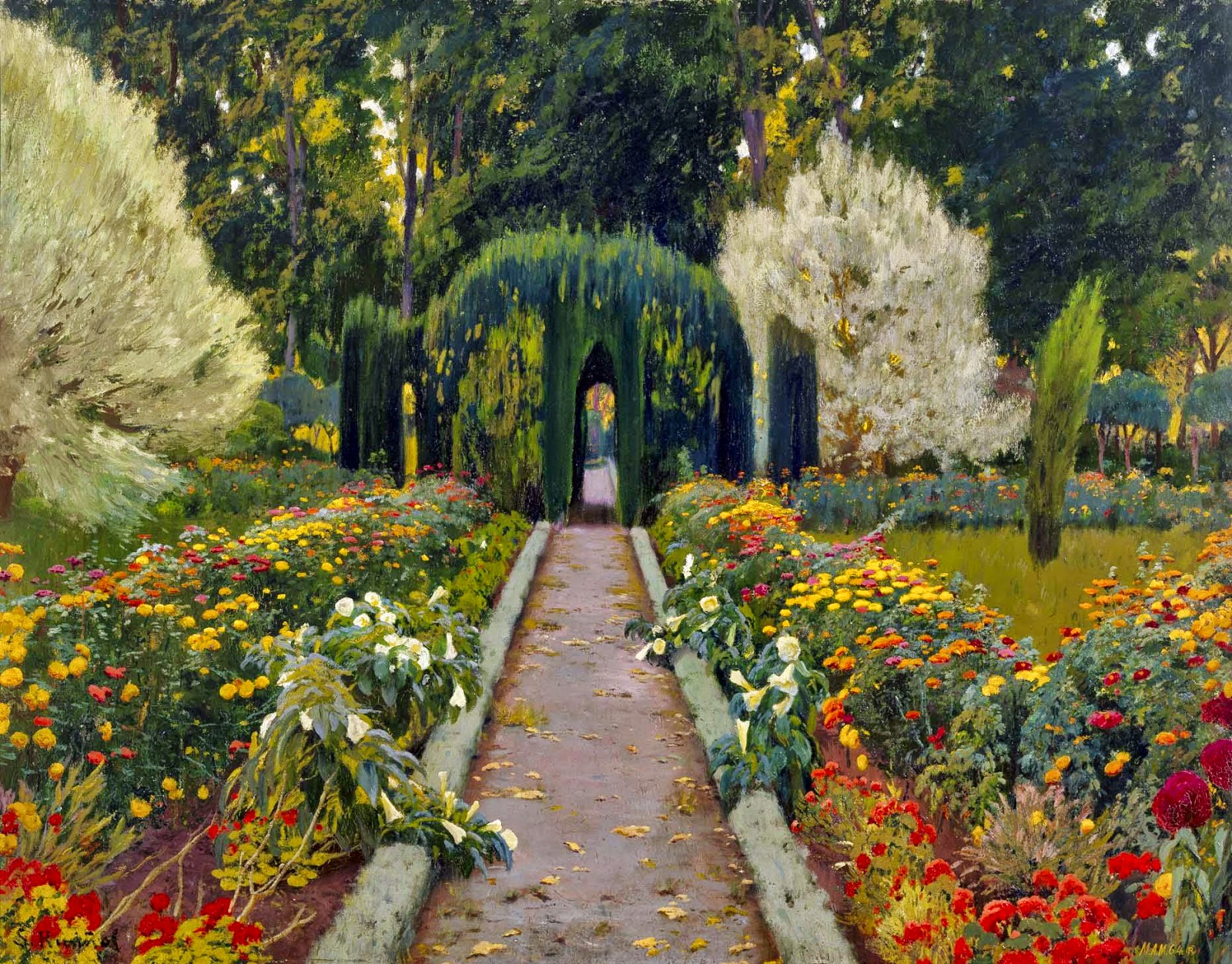
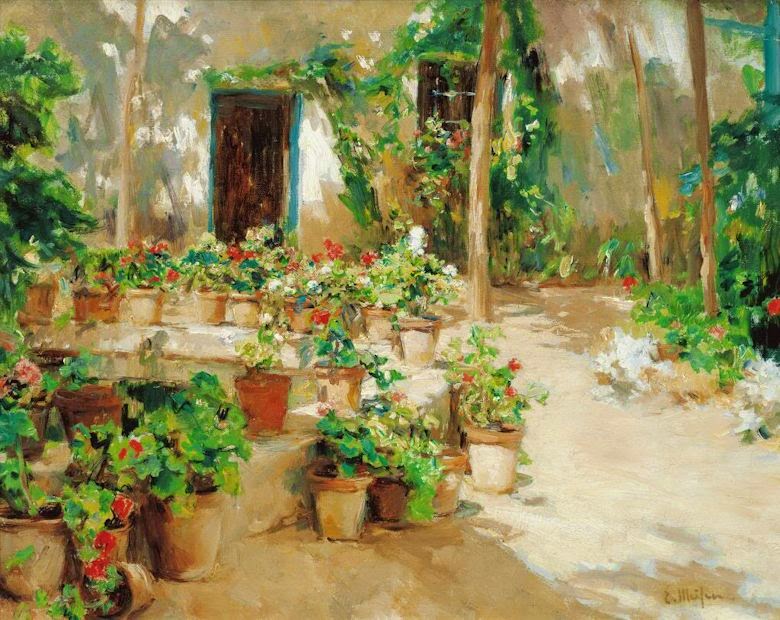
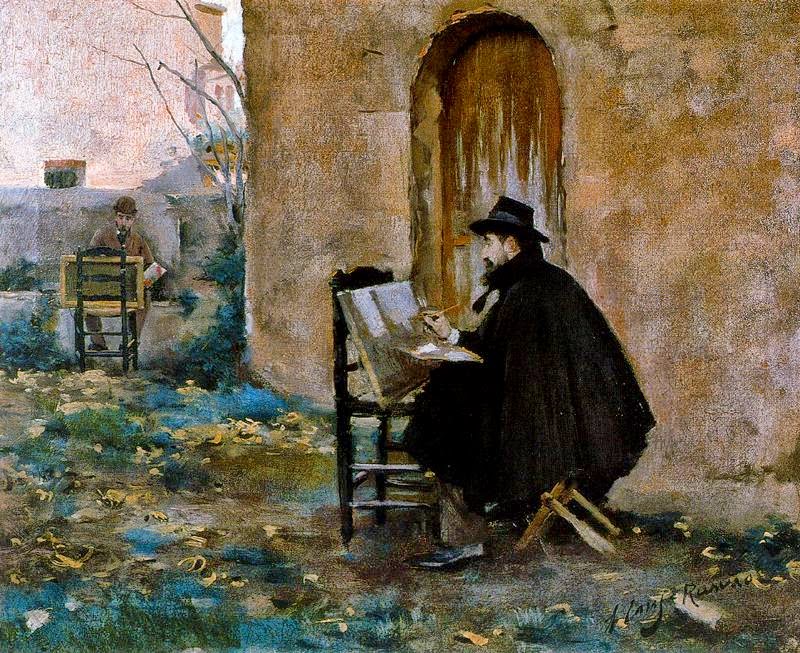
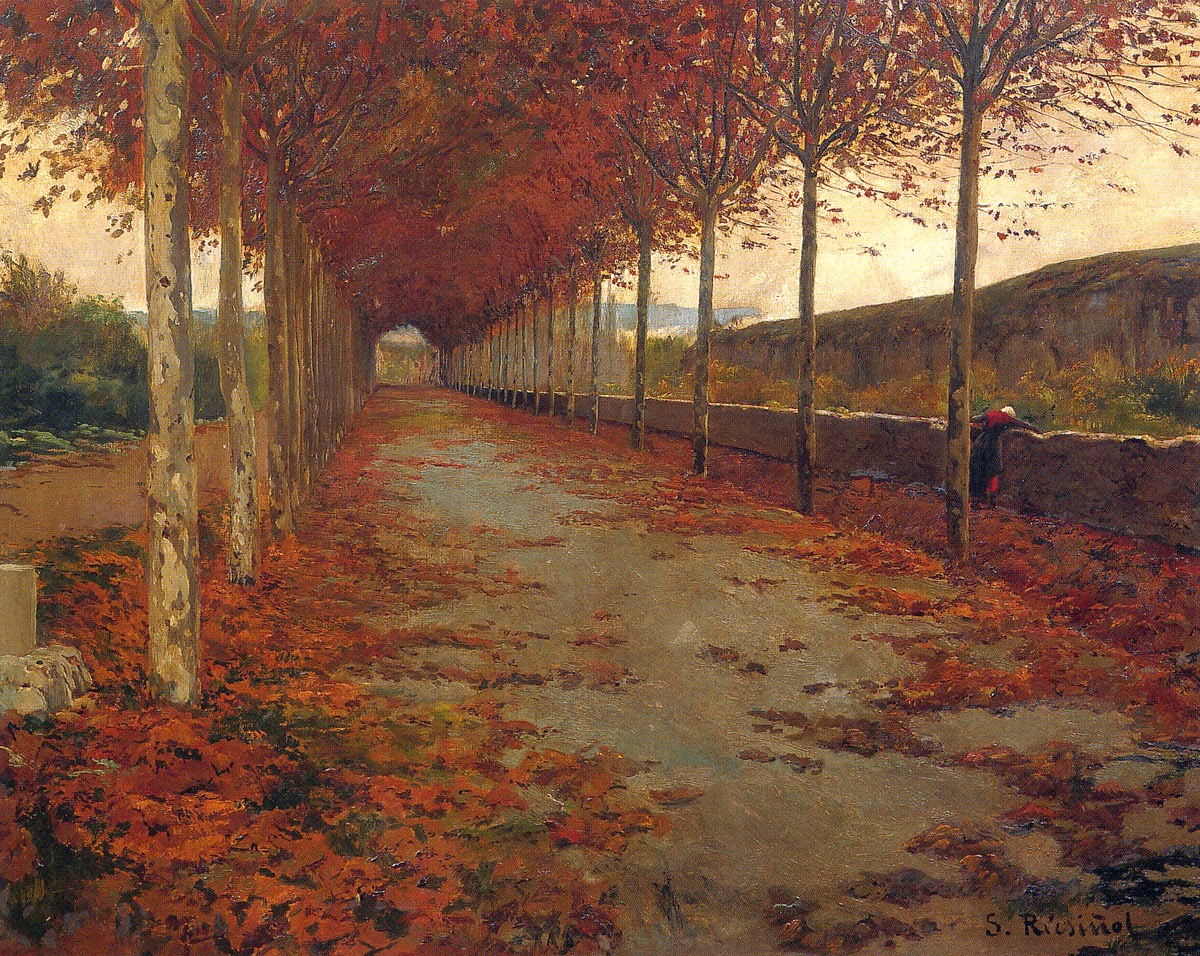
Santiago Rusiñol i Prats (25 February 1861 – 13 June 1931) was a Spanish painter, poet and playwright. He was one of the leaders of the Catalan Modernism movement.His training as painter started at Centro de Acuarelistas de Barcelona under the direction of Tomás Moragas. Like so many artists of the day, he travelled to Paris in 1889, living in Montmartre with Ramon Casas and Ignacio Zuloaga.It is said that much of his work in Paris belonged to the Symbolism painting style, although most of his work reflected the Art Noveau style of swirling lines and often ethereal nature.Rusiñol is best known as a painter of Spanish gardens.His paintings have a surrealistic tinge to them, making you want to step right through them and see the landscape for yourself.The ancestral home  in Sitges Santiago Rusiñol inherited was converted by the painter into a Museum. He showcased the fruit of his work as collector throughout his life, which included irons and Catalan glasses and antique ebusitas Cau Ferrat alongside his own paintings.When a Madrid-born journalist interviewed Rusiñol at the end of his life, he asked: “Why have you painted gardens preferably?” The artist replied: “Because with the gardens I had my first success in Paris, and then, for having felt this modality (sensation) more than the others.”

More of Santiago Rusiñol‘s beautiful paintings can be found http://www.santiagorusinol.com/ along with other sites across the Internet.

Sunday Evening Art Gallery — Caspar David Friedrich

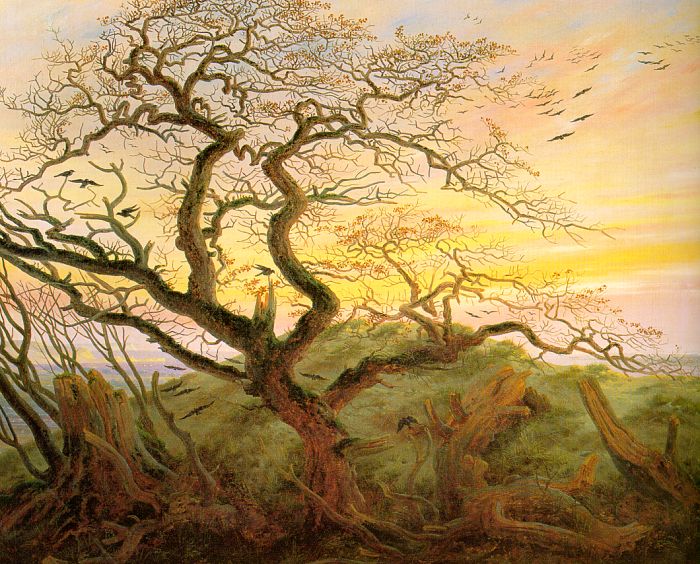
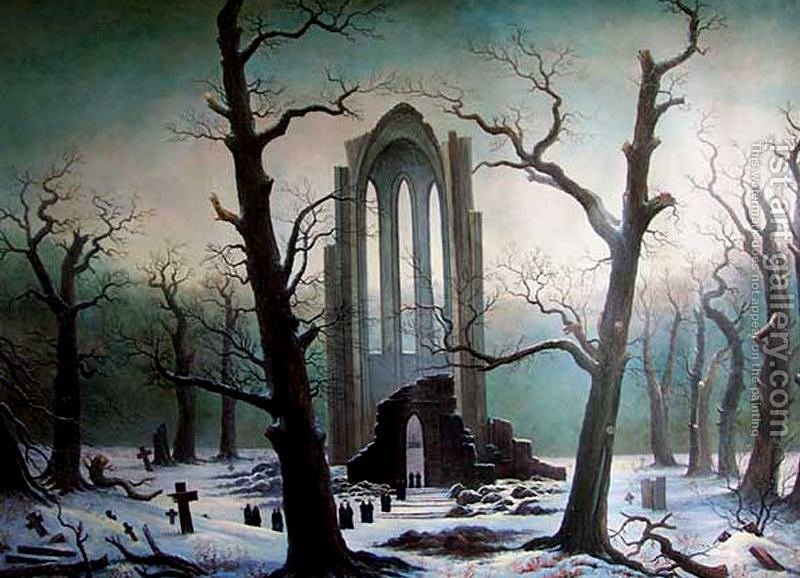
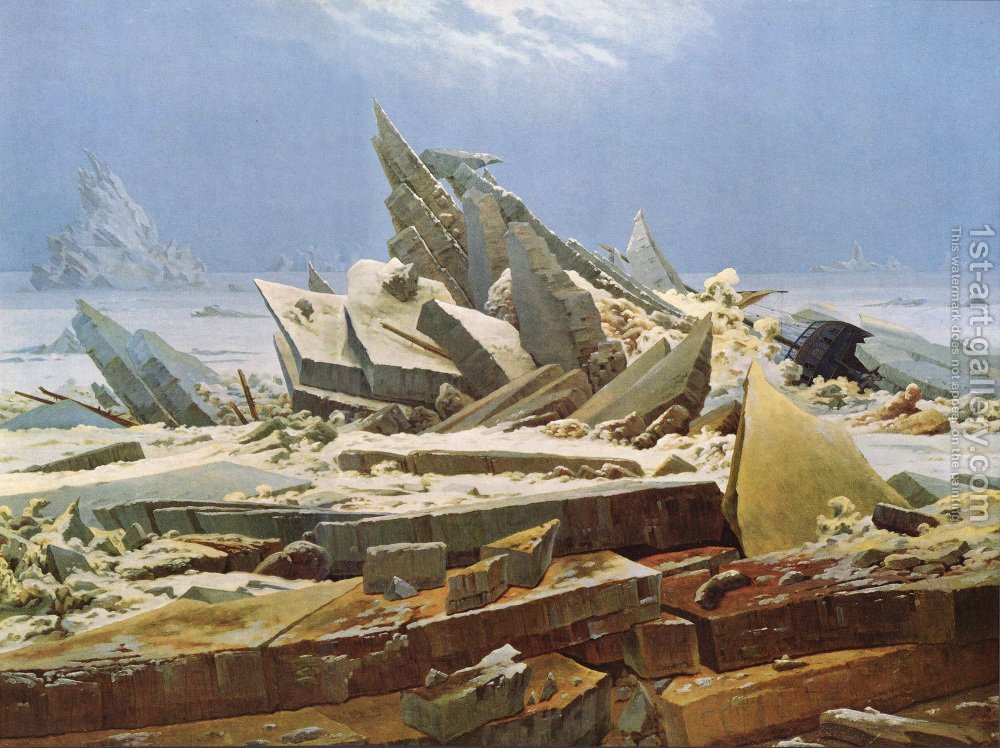
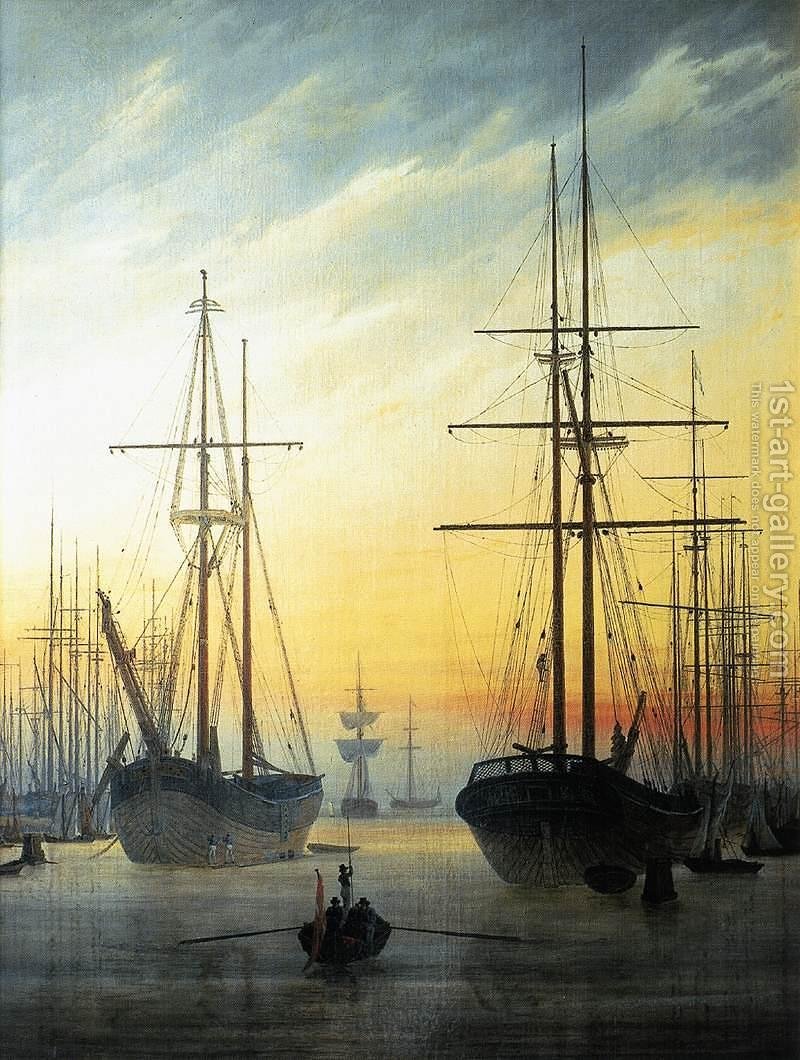
Caspar David Friedrich (September 5, 1774 – May 7, 1840) was a landscape painter of the nineteenth-century German Romantic movement, of which he is now considered the most important painter.

A painter and draughtman, Friedrich is best known for his later allegorical landscapes, which feature contemplative figures silhouetted against night skies, morning mists, barren trees, and Gothic ruins.

His primary interest as an artist was the contemplation of nature, and his often symbolic and anti-classical work seeks to convey the spiritual experiences of life.

Friedrich came of age during a period when, across Europe, a growing disillusionment with an over-materialistic society led to a new appreciation for spiritualism.

This was often expressed through a reevaluation of the natural world, as Friedrich sought to depict nature as a “divine creation, to be set against the artifice of human civilization.”

Today he is seen as an icon of the German Romantic movement, and a painter of international importance.

More of  Caspar David Friedrich‘s wonderful paintings can be found at https://www.caspardavidfriedrich.org/