Sunday Evening Art Gallery — eL Seed

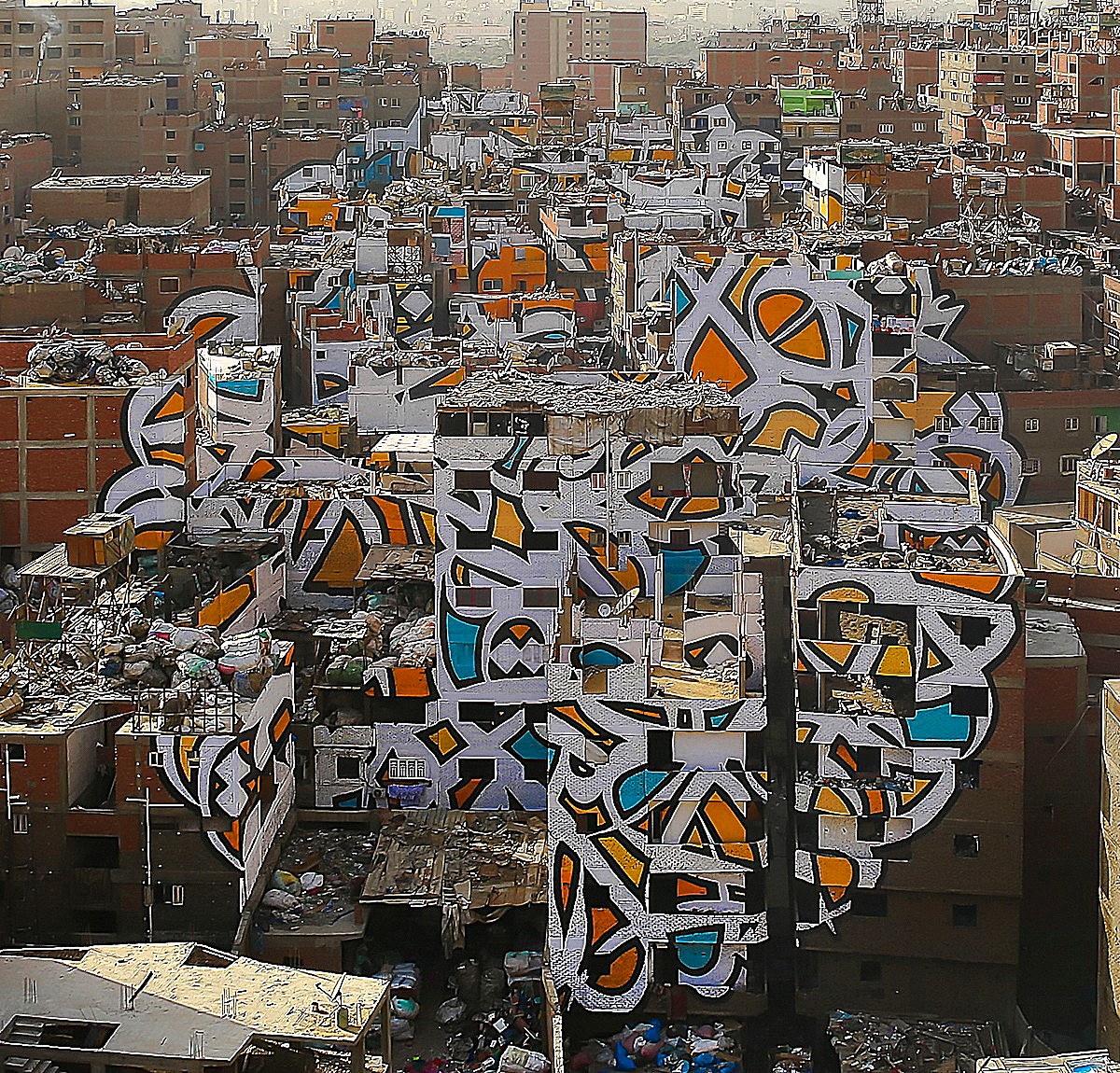
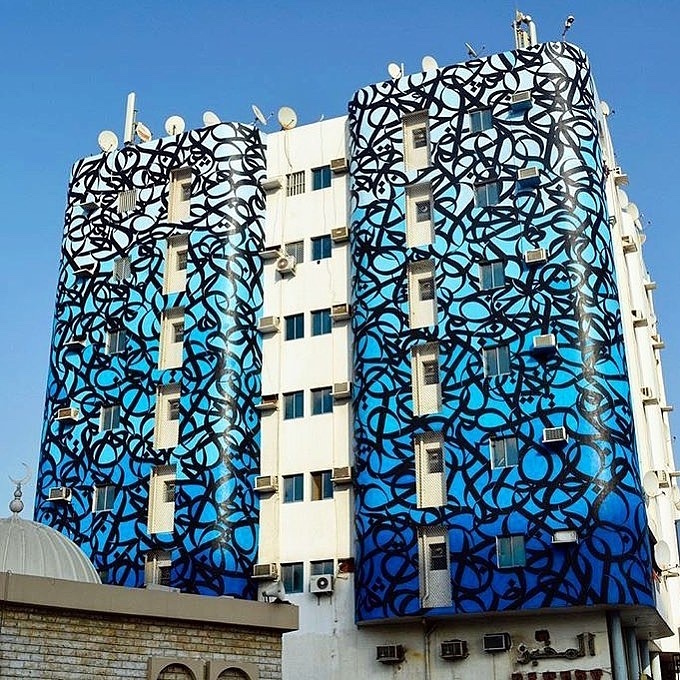
eL Seed is a Tunisian artist, born in France and now living in Canada.His distinguished fusion of Arabic Calligraphy and Graffiti has made him an important influence for graffiti artists throughout the Arab world.eL Seed works in the public sphere. His work is not signed and he doesn’t claim ownership upon them. His work is characterized by intricate layers of color, symbols and letters that convey universal messages about coexistence, peace and freedom.Through his art, eL Seed amplifies the voices of the communities he encounters, using language as a tool to create connections and inspire ideas of unity.He celebrates the beauty and uniqueness of cultural heritage and draws inspiration from local writers, poets and philosophers he meets on his travels.Sometimes, eL Seed has a particular theme in mind that he wants to raise so he will search for the appropriate place and quote.In other circumstances, a community will reach out to him first, so he will look for the most appropriate issue to address with his art.You can find more of eL Seed’s amazing murals at https://elseed-art.com/ and https://elseedrelated.com/.
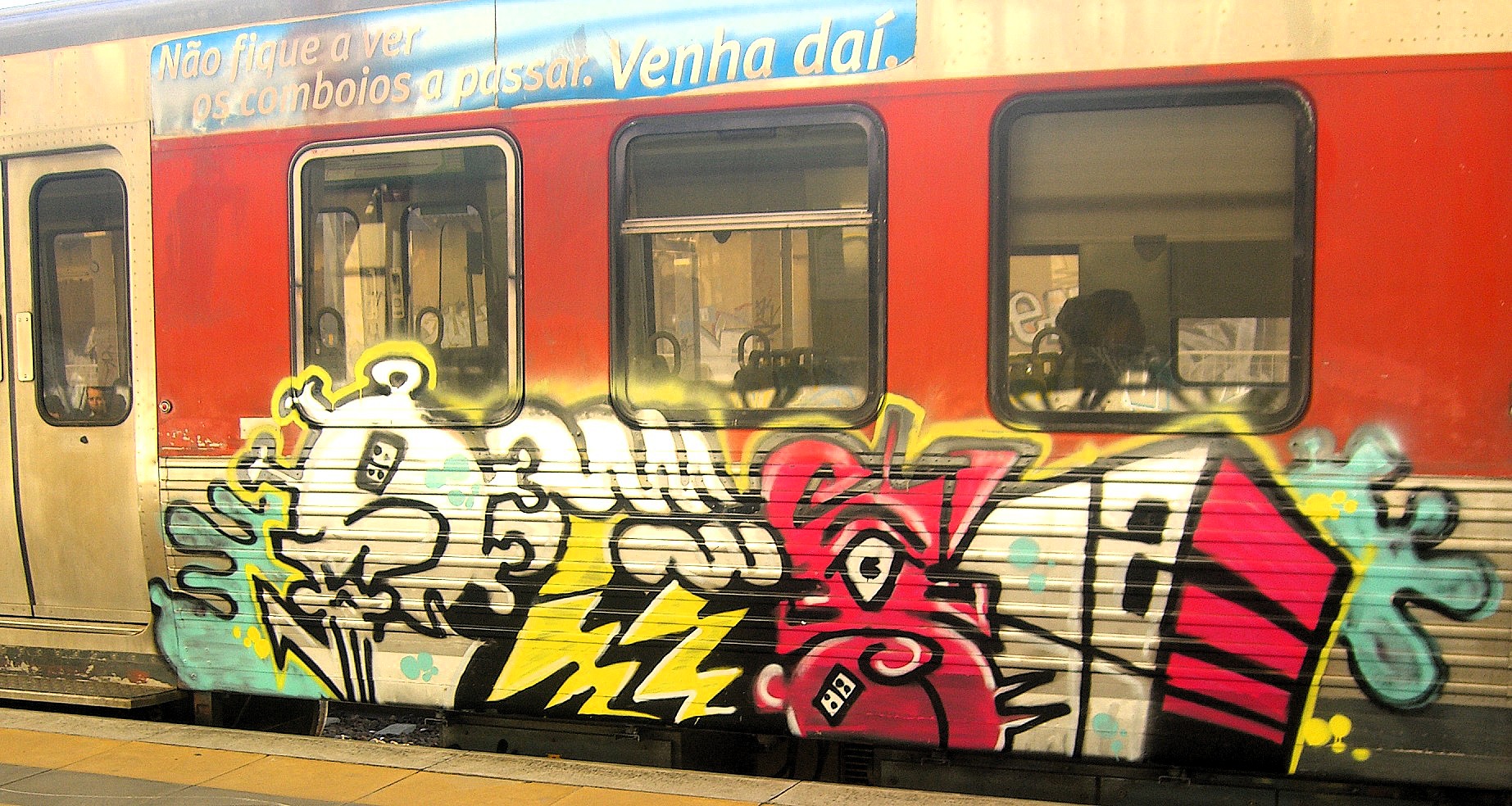


Sunday Evening Art Gallery — Train Graffiti

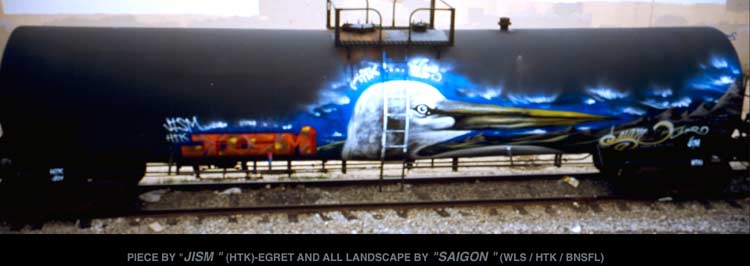
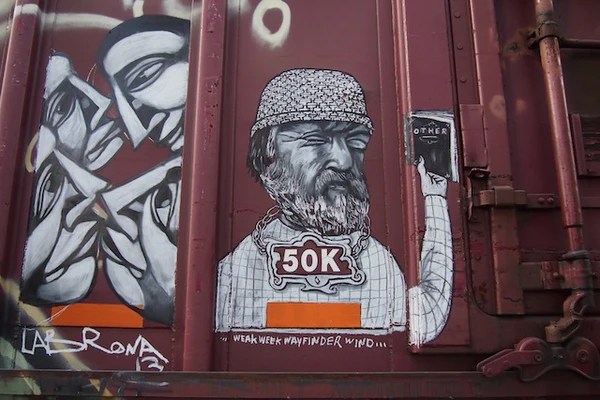
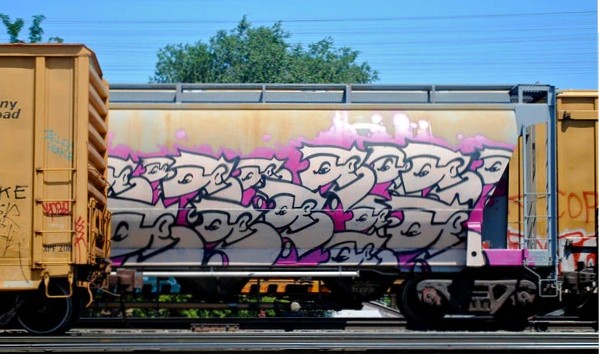
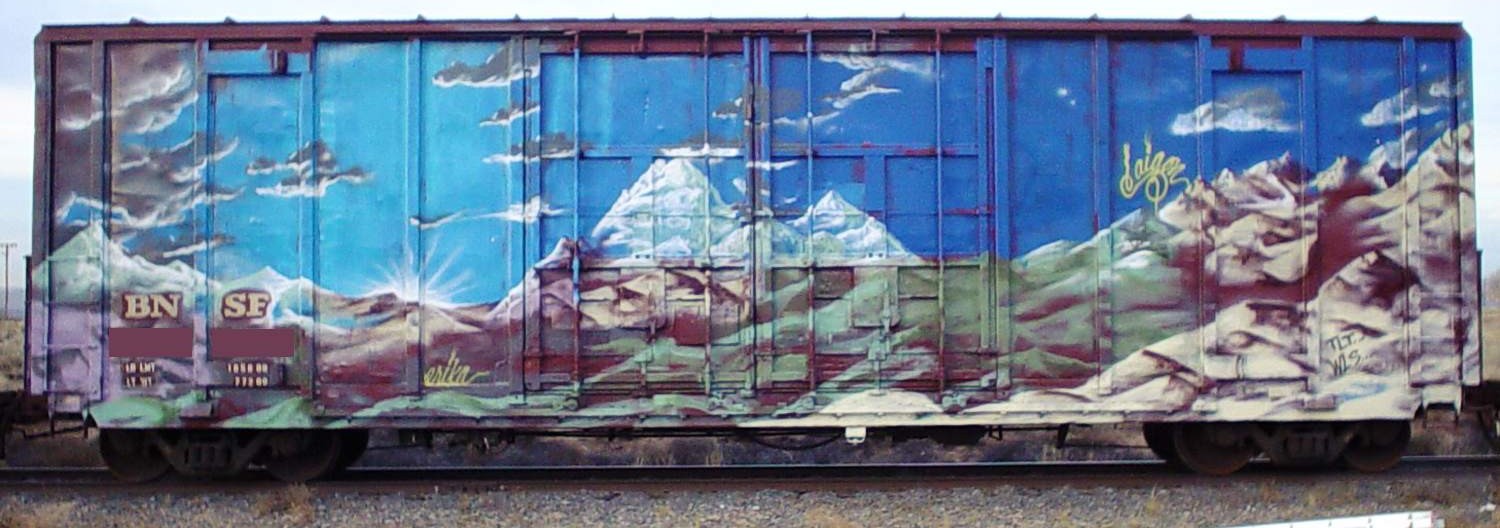
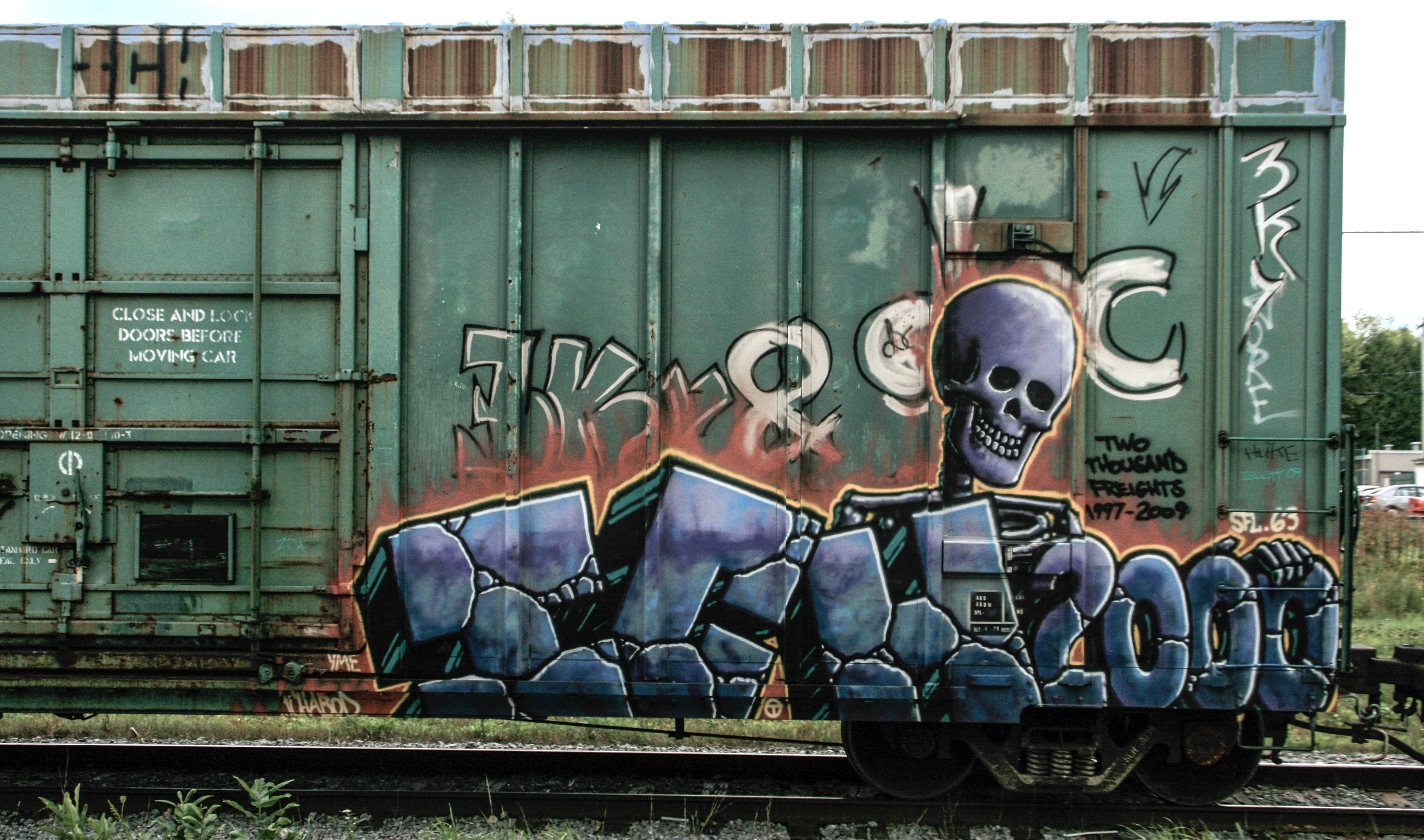
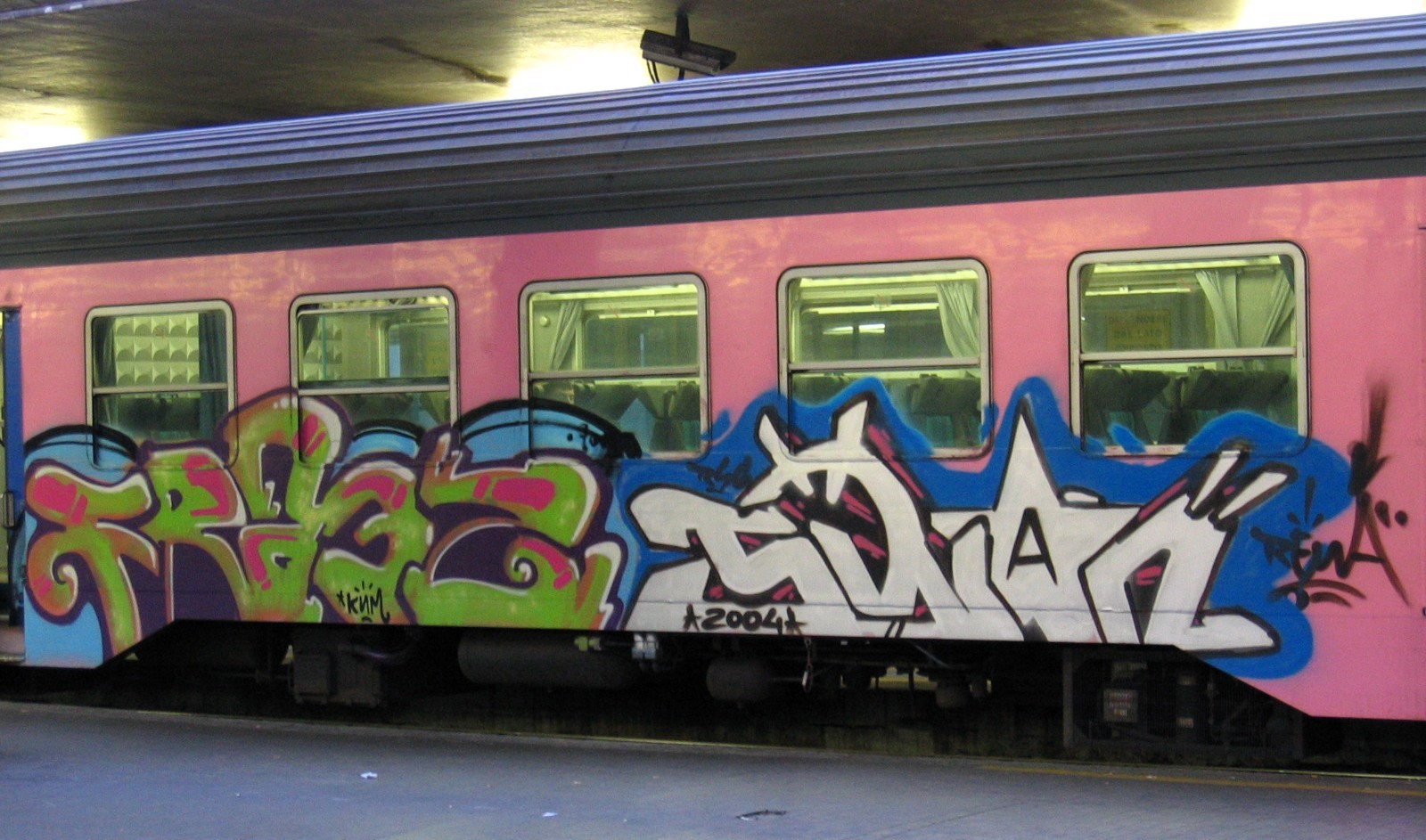
Originating from the Italian word “graffiato” (scratched), graffiti is writing or drawings made on a wall or other surface, usually without permission and within public view.Train graffiti can be traced back to the 1970s when young people in New York City began using spray paint to tag subway trains with their names or other graffiti art.In the 1980s and 1990s, train graffiti spread to other cities around the world. In some countries, train graffiti was embraced as a legitimate form of street art, while in others it was met with resistance and seen as a form of vandalism.Over the years, disparate styles such as  rural hobo markings, gang symbology, and bold, colorful urban spray-painted vistas have fused into a contemporary style that seems to draw equally from each tradition.The sides of train cars today run the gamut from sloppy gang-style tags and idle signatures to line drawings, stenciled imagery, and enormously complex color fields.While train graffiti is often viewed as a form of vandalism, it has also had a significant impact on the world of art and culture.The world of train graffiti exists in a gray world: amazing, creative art on one hand, vandalism and destruction of private property on the other.It is up to you to find a comfortable ground between the two.

More train graffiti can be found at websites such as https://www.graffiti.org/trains/ and https://www.graffiti-unlimited.com/.


Sunday Evening Art Gallery — Lady Pink

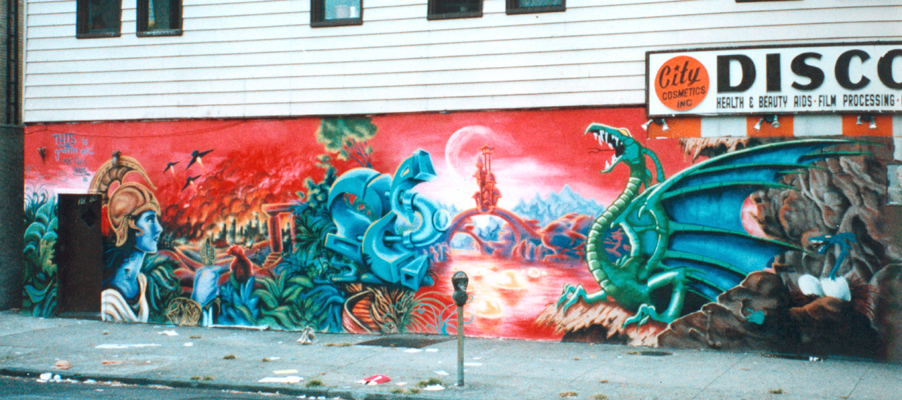
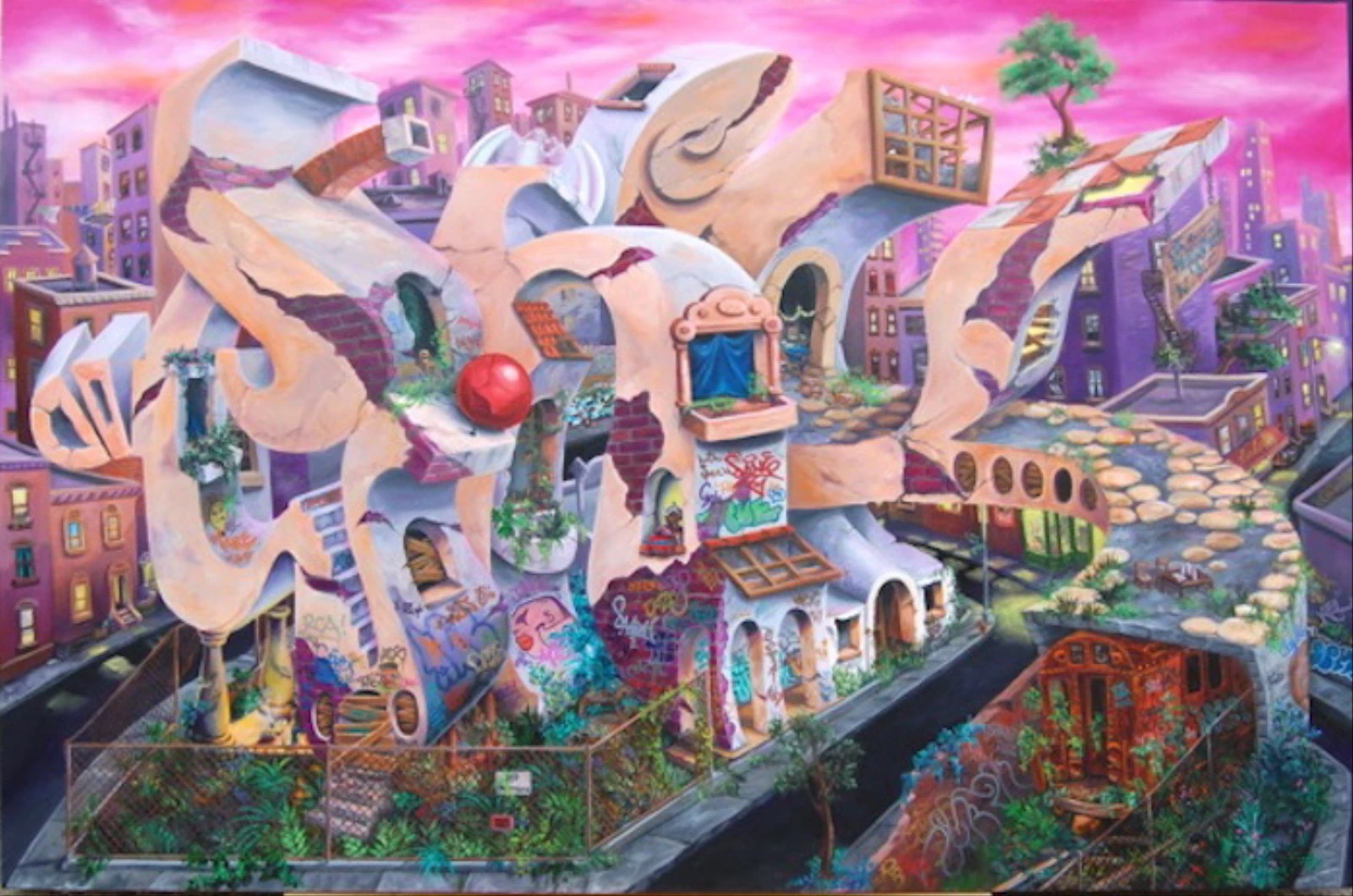
Whether portraying women as provocative street warriors in the concrete jungle or as mythical goddesses placed in surrealist environments, Lady Pink, the long-reigning queen of graffiti, consistently elevates the female figure through her murals and paintings by incorporating themes of fantasy, spiritualism, her South American heritage, and indigenous iconography.Lady Pink was born Sandra Fabara in Ecuador in 1964 and raised in New York City.She started making graffiti at the age of 15 and quickly became well known as the only prominent female in the graffiti subculture.Pink’s beginning focus was on painting subway trains.She had first solo exhibition at 21 and her paintings are included in important collections like the MET, The Whitney Museum, The Museum of the City of N.Y. and others.Pink has gone great lengths to fight for equality, justice, and women’s rights.She expresses her private opinion to public work, without any censors, although she never reveals the idea in fullness.She cleverly states out what is important, and warmly put her artwork open to interpretation.Pink’s  tradition is to practice mindfulness and to be as sensible as possible to the community.“Art is about a binary relationship, and the audience is free to make assumptions and interpretations as they like,” she says about her work.More of Lady Pink‘s murals and paintings can be found at https://www.ladypinknyc.com/.


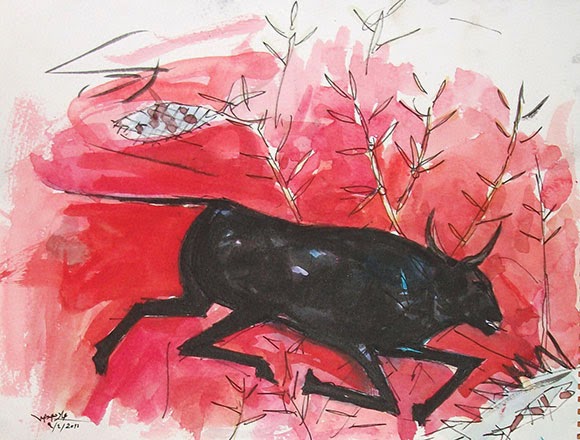
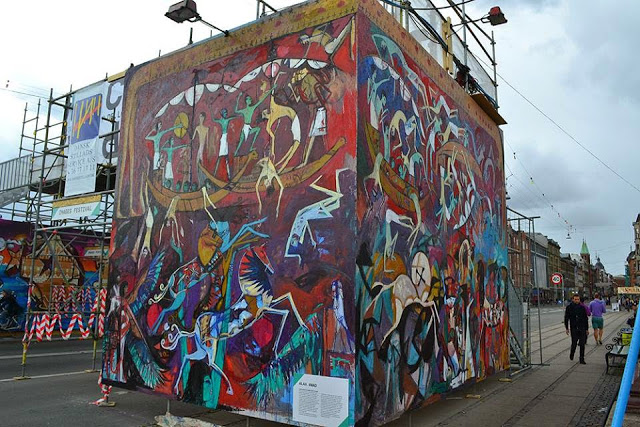
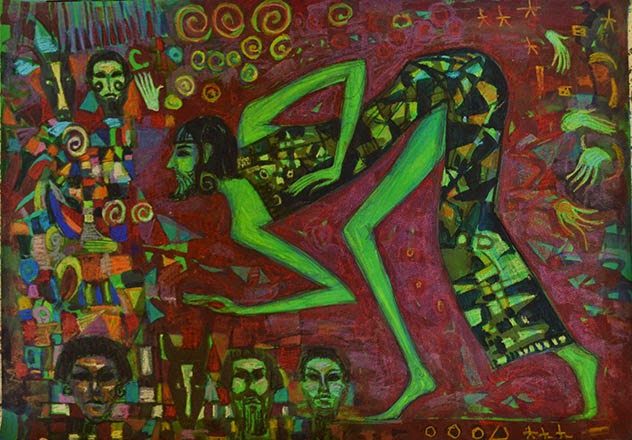
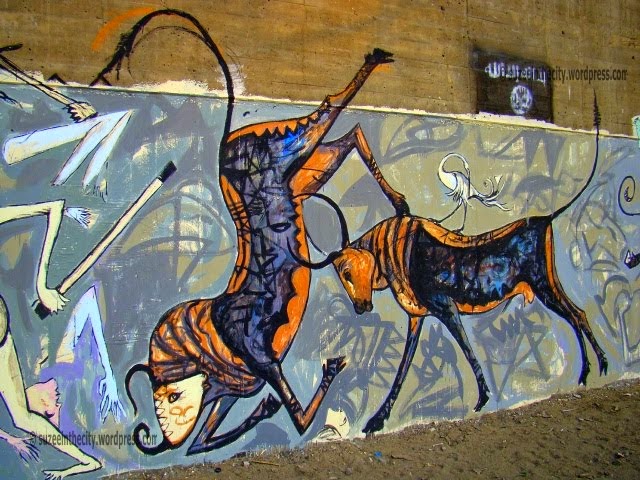
Sunday Evening Art Gallery Blog — Alaa Awad

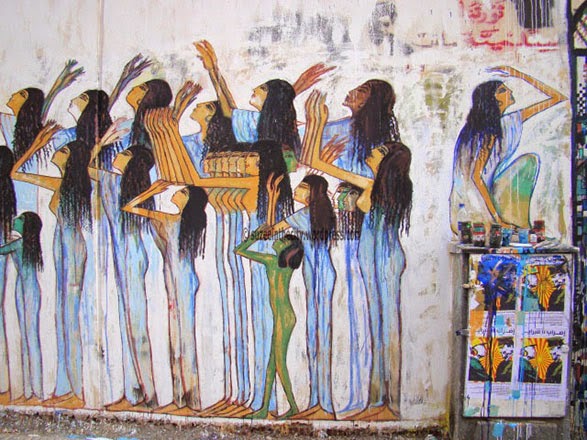
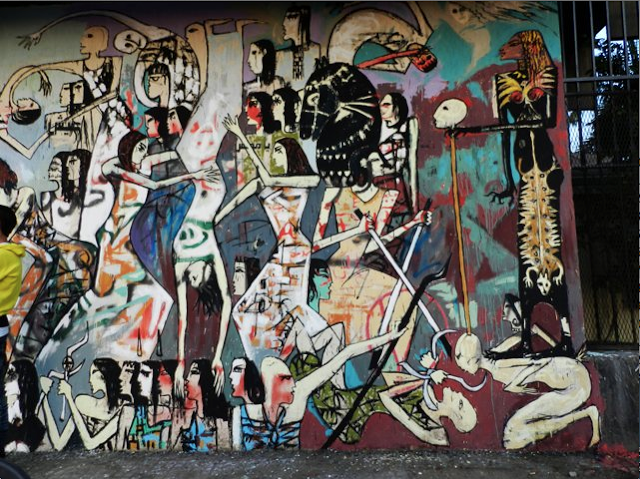
Alaa Awad is an Egyptian-based graffiti artist, and painter known for his graffiti in Cairo and Luxor.

He is best known for his mural paintings created on Mohamed Mahmoud Street in Cairo.

Awad studied at the South Valley University Faculty of Fine Arts in Luxor and graduated in 2004.

Since then he has served as a member of the faculty at the Faculty of Fine Arts as a professor in the Department of Mural Painting.

Unlike other graffiti artists, Awad chooses to paint with a brush and uses acrylic paints rather than using stencils and spray paints.

His intricate paintings can sometimes take up to a week to make not only because of the materials he uses, but because of the complexity of his designs.

Awad’s style aims to remind people of their heritage and past to help them stay true to their Egyptian identity.

His murals are typically multifaceted and multi-layered with each telling a different story.

More of Alaa Awad’s marvelous artwork can be found at http://alaa-awad.com/ and at http://artitssymbolsandmeanings.blogspot.com/2015/05/alaa-awad-power-of-mural-art-of-urban.html