Galileo Galilei (1564-1642) was an Italian natural philosopher, astronomer, and mathematician who made fundamental contributions to the sciences of motion, astronomy, and strength of materials and to the development of the scientific method.
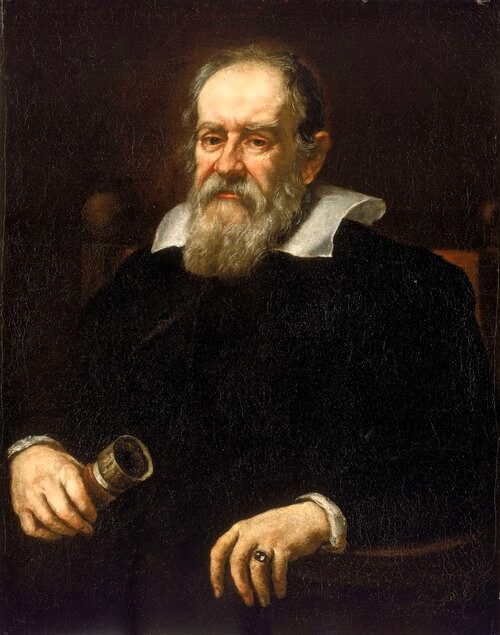
Galileo was educated at the Camaldolese Monastery at Vallombrosa. In 1581 was sent by his father to enroll for a medical degree at the University of Pisa.
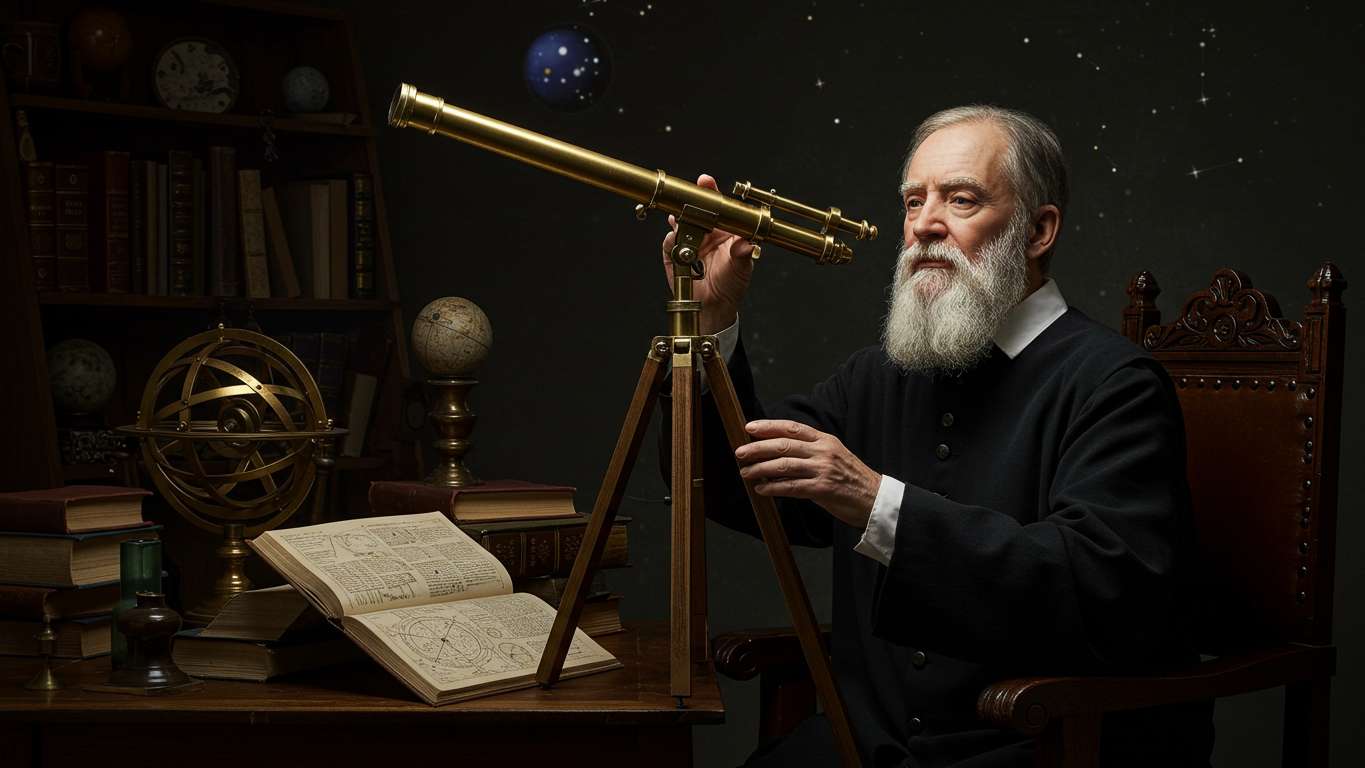
He is renowned for his discoveries: he was the first to report telescopic observations of lunar mountains, the moons of Jupiter, the phases of Venus, and the rings of Saturn.
He invented an early microscope and a predecessor to the thermometer.
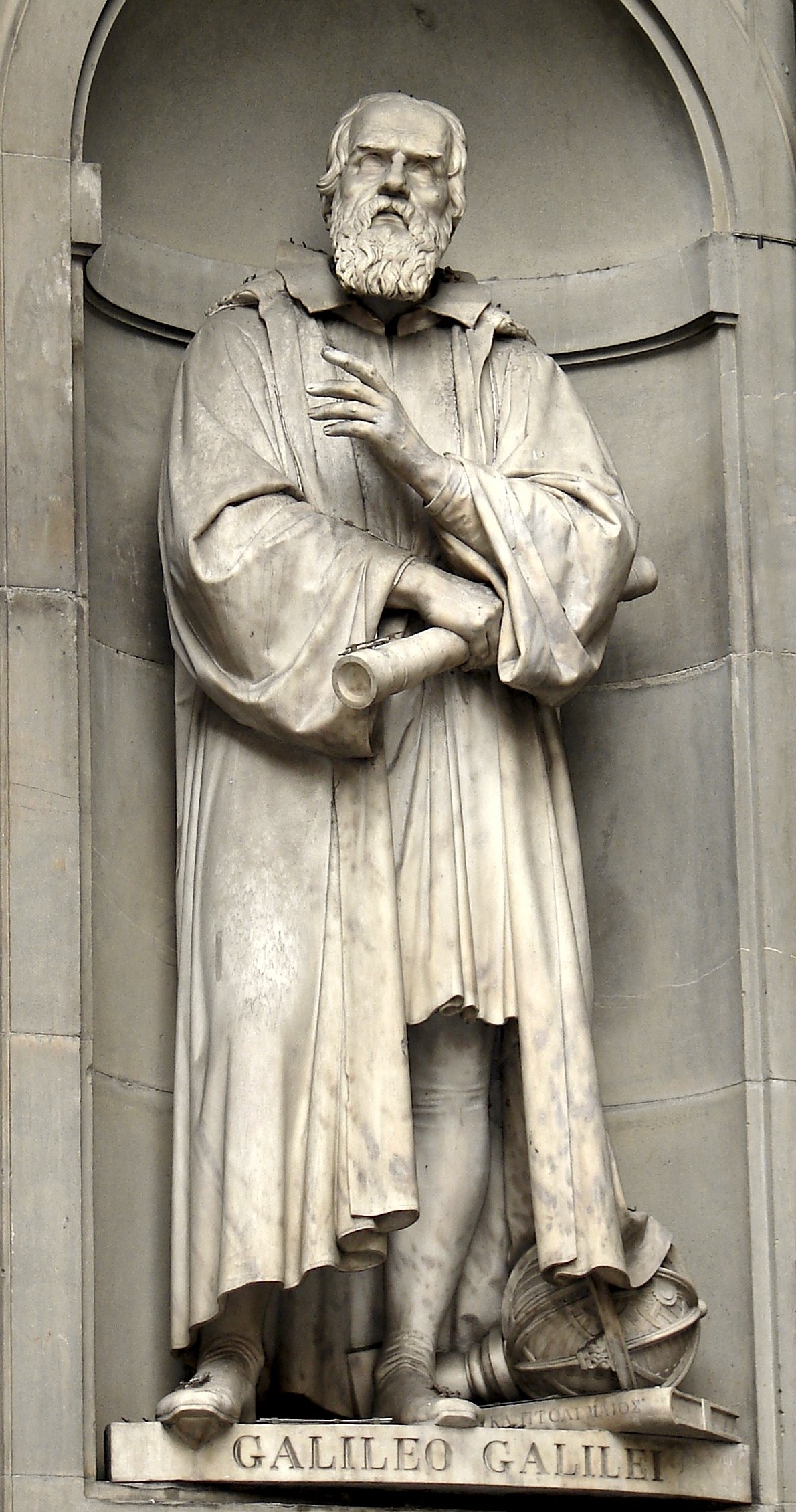
In mathematical physics — a discipline he helped create — Galileo calculated the law of free fall, conceived of an inertial principle, determined the parabolic trajectory of projectiles, and recognized the relativity of motion.
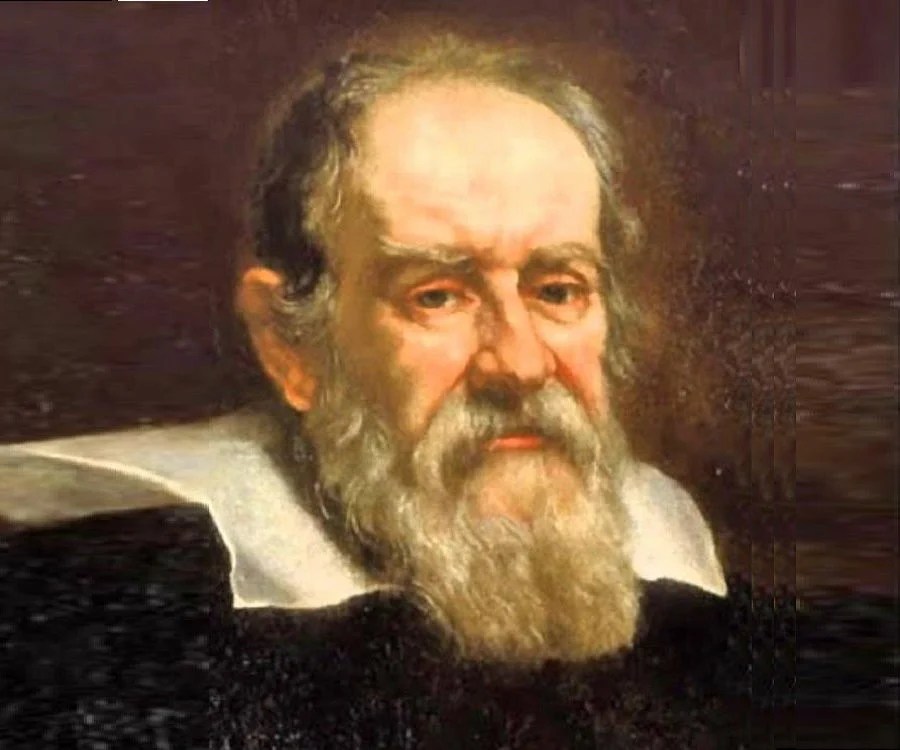
Galileo is sometimes described as the first “real” experimental scientist, who dropped stones from towers and ships’ masts, and played with magnets, clocks, and pendulums.
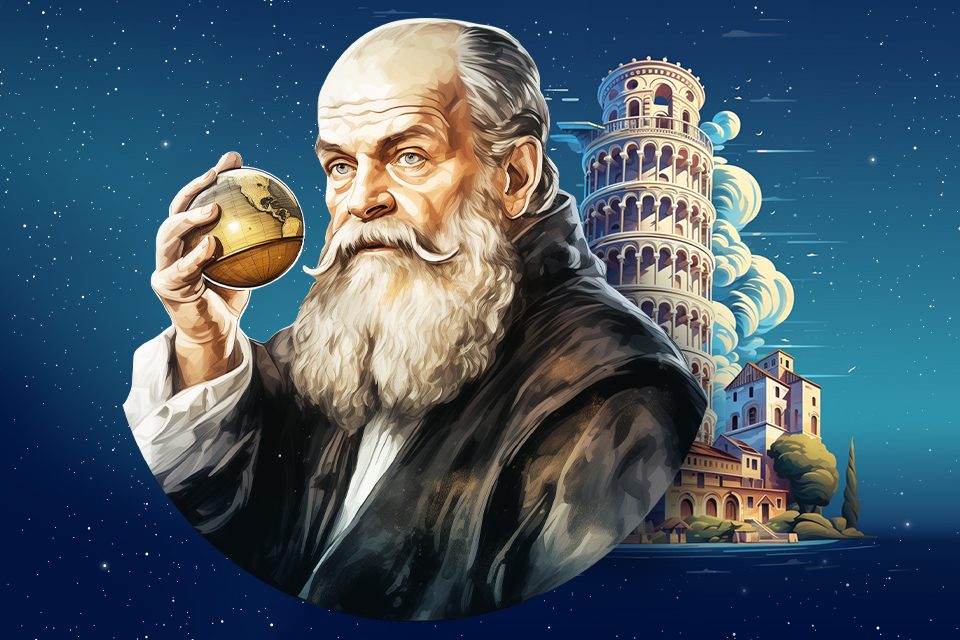
Galileo’s advocacy of a heliocentric universe brought him before religious authorities in 1616 and again in 1633, when he was forced to recant and placed under house arrest for the rest of his life.
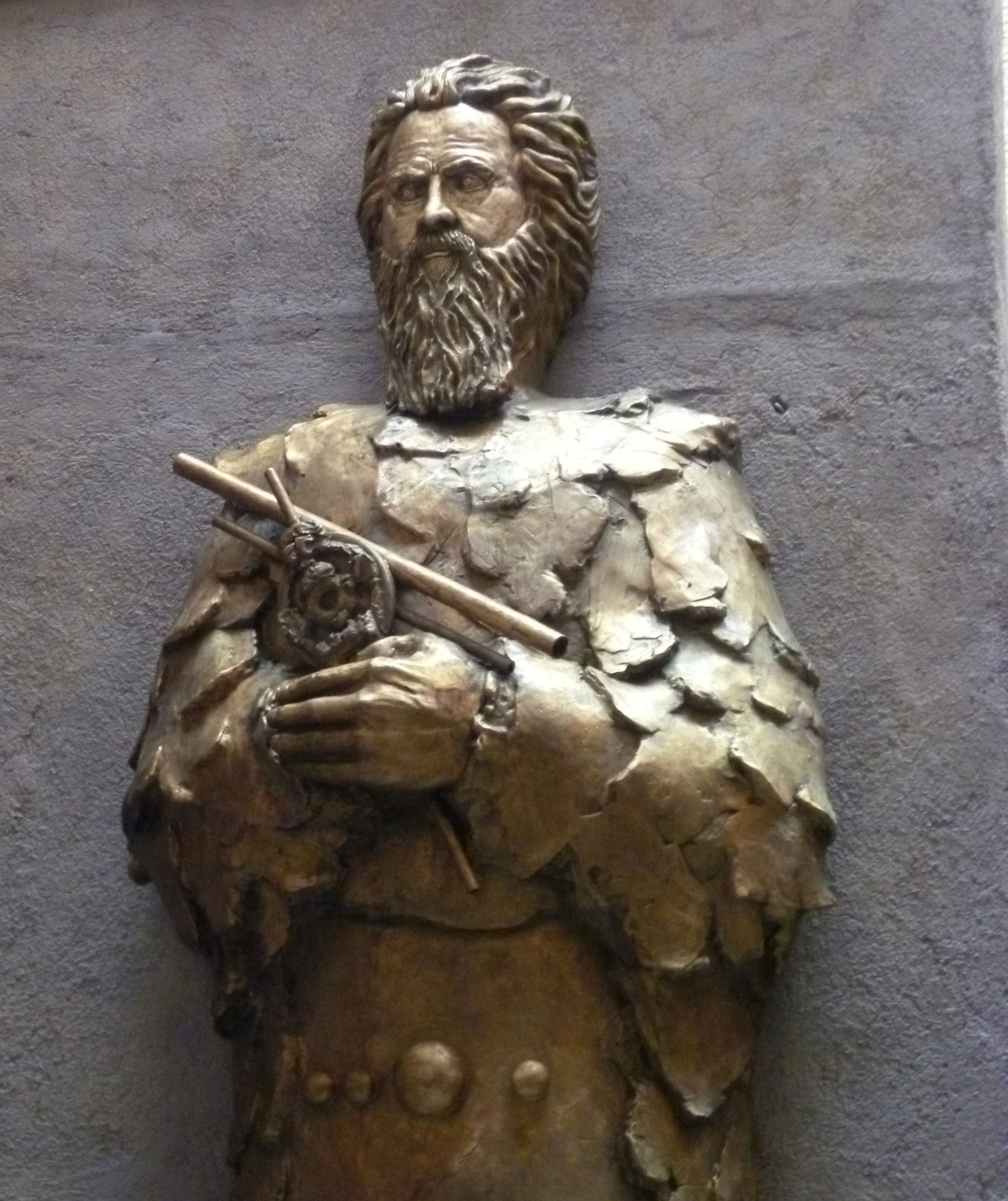
More of Galileo Galilei’s amazing life can be found at https://www.worldhistory.org/Galileo_Galilei/.
.
.
.
.


The book Galileo’s Daughter is an excellent book that reflects on the times they lived in and family relationships and the limits the world put on women.
LikeLike
I would love to read this. I’ll take a look for it.
LikeLike
a most remarkable chap.. someone I wish I could have met
LikeLike
I don’t understand a lot of physics with today’s level of knowledge to begin with; I could just imagine listening to this man and his ideas way back then!
LikeLiked by 1 person