Peter Callesen (-1967) is a Danish visual artist and writer. Callesen began studies in architecture, then switched to art, attending the Goldsmiths College, London and The Art Academy of Jutland, Aarhus, Denmark.
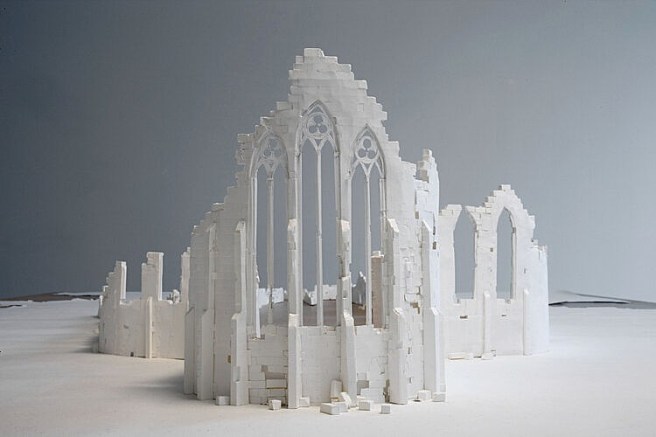 Callesen works with A4 white paper, transforming it into playful sculptures, people, animals or nature motifs.
 The artist crafts each of his sculptures to closely resemble their real-life counterparts and also utilizes the space below his creations to tell the story.
 His sculptures explore the probable and magical transformation of the flat sheet of paper into figures that expand into the space surrounding them.
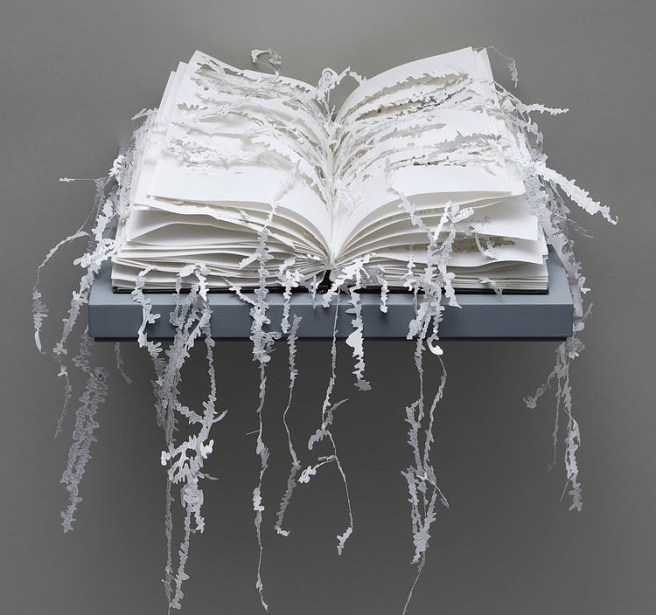 Many of his artworks play with depth, and one of the ways he does this is by cutting up a sheet of paper in order to make the ground beneath a sculpture look cracked or textured.
 More of Peter Callesen’s creative papercutting can be found at https://www.petercallesen.com/.

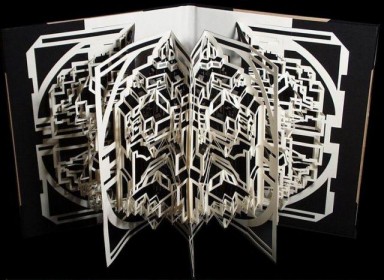
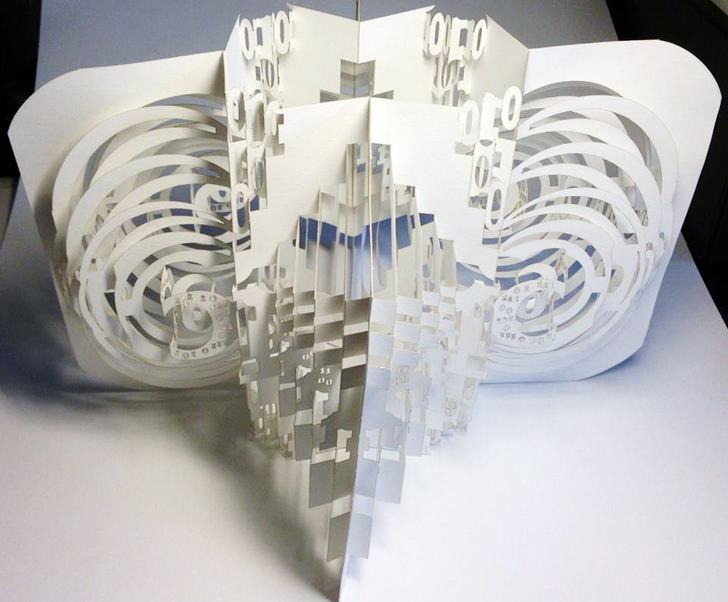


 Humoring the Goddess