Louis Daniel Armstrong (1901 –1971), nicknamed “Satchmo”, was an American trumpeter and vocalist.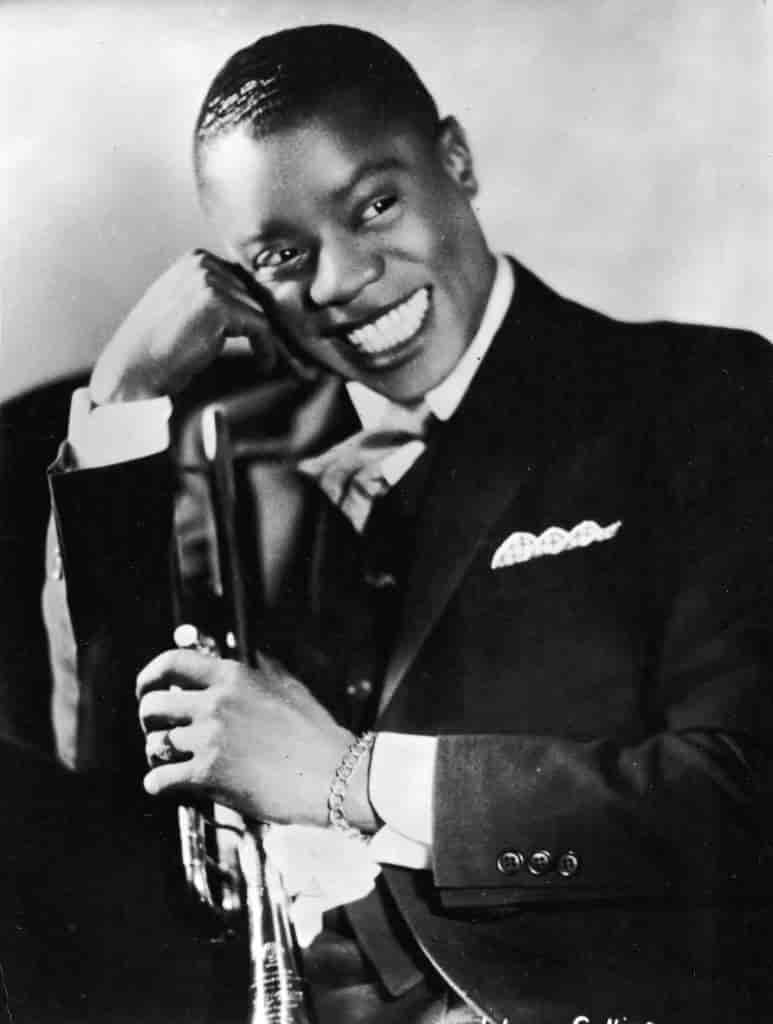
He is among the most influential figures in jazz. His career spanned five decades and several eras in the history of jazz.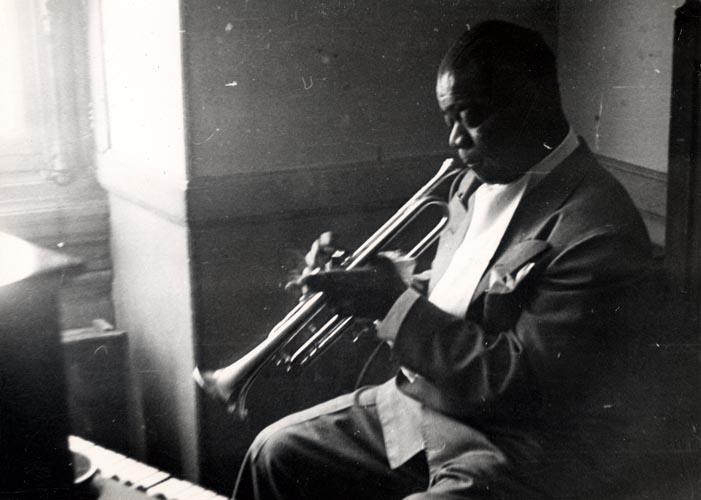 Armstrong grew up in dire poverty in New Orleans, Louisiana, when jazz was very young.
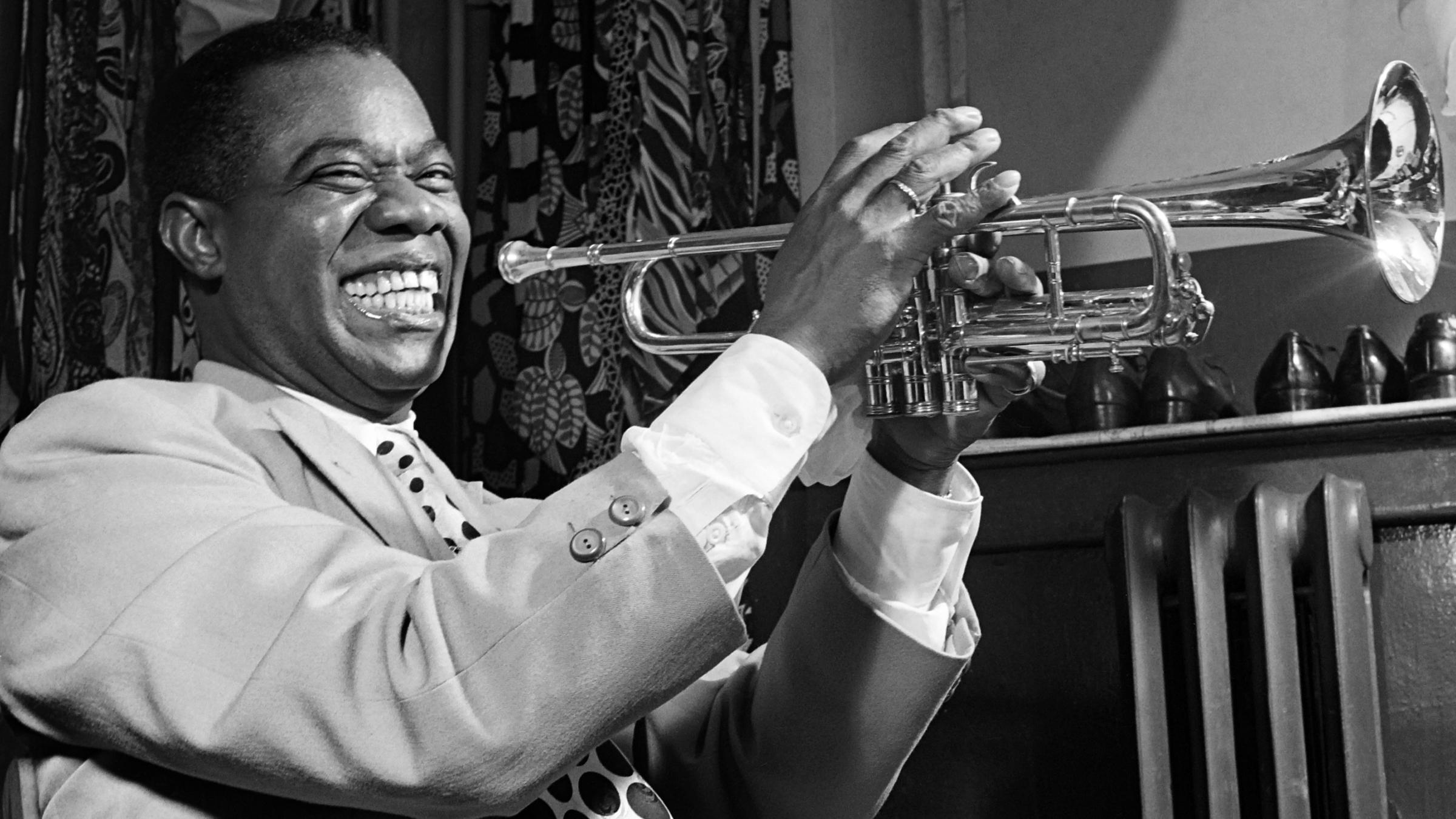 As a child he worked at odd jobs and sang in a boys’ quartet. He was sent to the Colored Waifs Home as a juvenile delinquent, and it was there he learned to play cornet in the home’s band.
 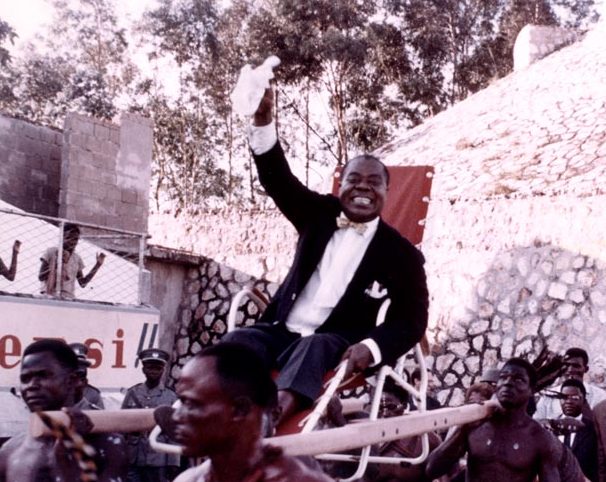 Playing music quickly became a passion; in his teens he learned music by listening to the pioneer jazz artists of the day.
 Armstrong advanced rapidly: he played in marching and jazz bands, and in the early 1920s he played in Mississippi riverboat dance bands.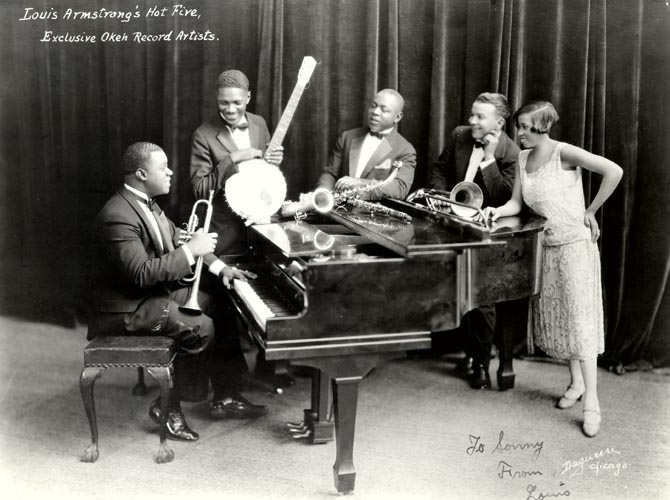
The young Armstrong became popular through his ingenious ensemble lead and second cornet lines, his cornet duet passages (called “breaks”) and his solos.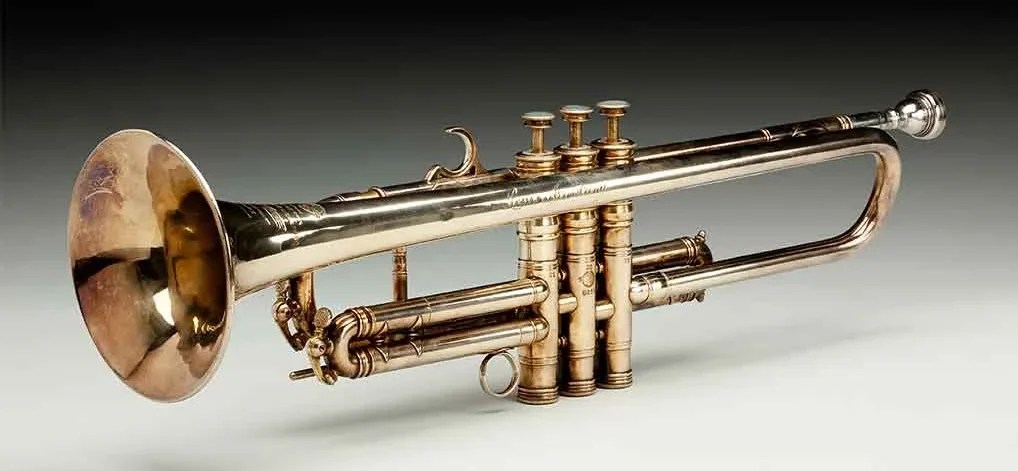 Armstrong developed a way of playing jazz, as an instrumentalist and a vocalist, which has had an impact on all musicians to follow.
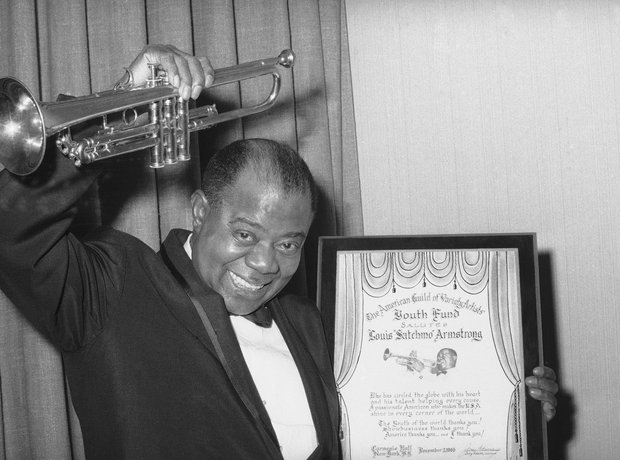 He made his greatest impact on the evolution of jazz itself, which at the start of his career was popularly considered to be little more than a novelty.
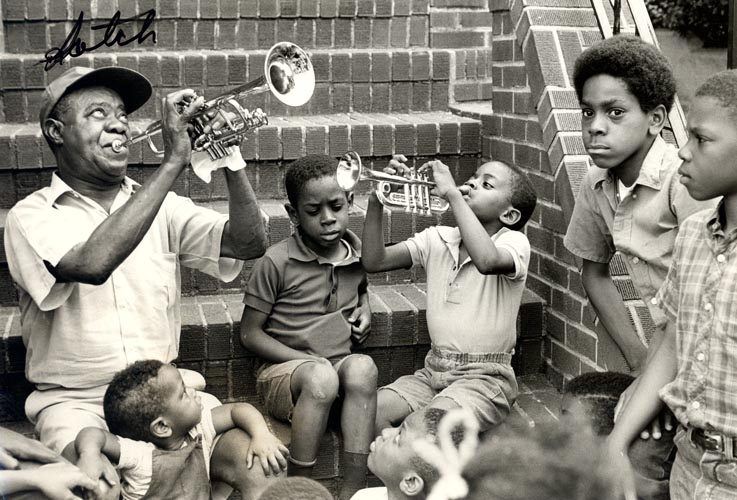 With his great sensitivity, technique, and capacity to express emotion, Armstrong not only ensured the survival of jazz but led in its development into a fine art.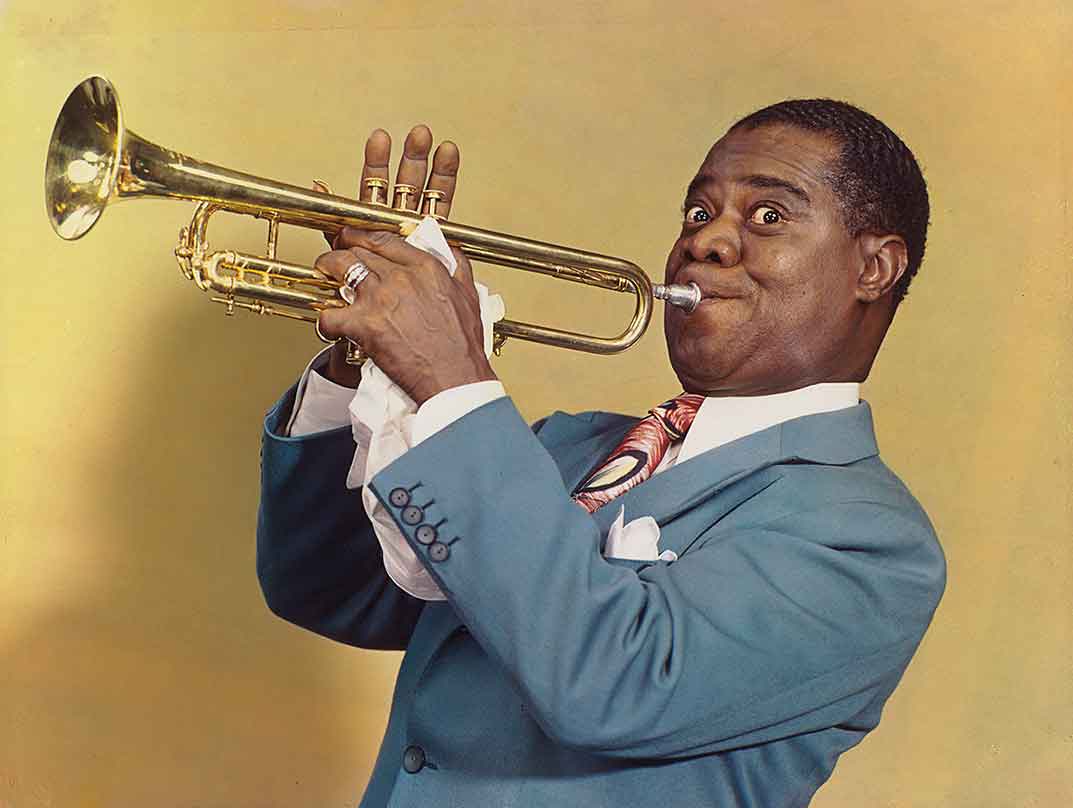
More of Louie Armstrong’ s history and music can be found at https://louisarmstrongfoundation.org/ and https://www.mosaicrecords.com/best-jazz-recordings-louis-armstrong/.
 Humoring the Goddess