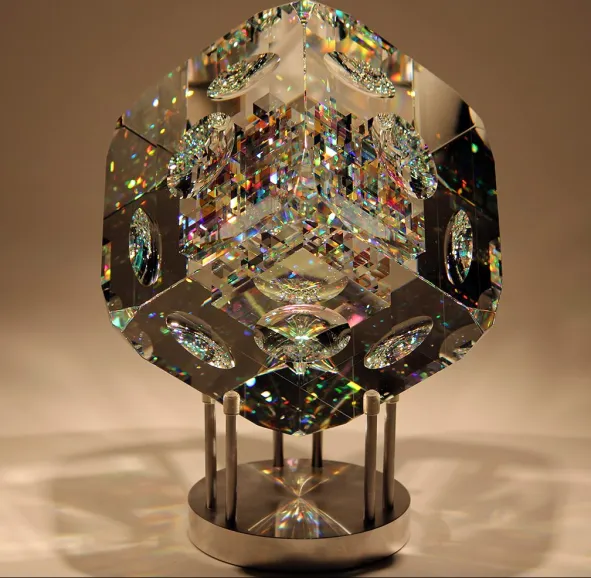
I was thinking of past glass artists this morning and Jack Storms popped into my head. Thought you would enjoy seeing his work again.
https://sundayeveningartgallery.com/2018/03/03/jack-storms/

.
.

.
.

.
.
.
.

.
.

.
.

.
.

.
.

,
,

.
.

.
.
Croning My Way Through Life
I was thinking of past glass artists this morning and Jack Storms popped into my head. Thought you would enjoy seeing his work again.
https://sundayeveningartgallery.com/2018/03/03/jack-storms/
.
.
.
.
.
.
.
.
.
.
.
.
.
.
.
.
,
,
.
.
.
.
Here is a repeat of a fun Gallery — George Rodrigue
.Meet Blue Dog. Possibly one of the most iconic pop art figures created by artist George Rodrigue.


Blue Dog has been everywhere from the permanent collection of the Smithsonian to the White House and all over the world.


A Faster Breed
Born and raised in New Iberia, Louisiana, Rodrigue began painting during the third grade while bedridden with polio.

.

Later in life, his art studies at the University of Louisiana at Lafayette followed by the Art Center College of Design in Pasadena gave him a foundation that spawned one of the greatest success stories in southern art.

Rodrigue was a gifted artist who started out painting the landscape and the rich history of Louisiana and the Cajun people. But that all changed when he found his model in his studio: a photograph of his dog, Tiffany, who had died.


“I’m expressing the feelings of mankind today through the Blue Dog,” Rodrigue said. “The dog is always having problems of the heart, of growing up, the problems of life.”


His heart was in his work, in his love of his blue dog and his beautiful wife and loving kids.


.
More of George Rodigue’s amazing blue dogs can be found at https://georgerodrigue.com/.
.
.
José María Velasco (1840 – 1912) was a 19th-century Mexican polymath, most famous as a painter who made Mexican geography a symbol of national identity through his paintings. He completed his initial studies at the schools of the Santa Catarina Quadrant and Lancasterian School of Salto del Agua and the College of San Miguel, then obtained a scholarship to the Academy of Fine Arts of San Carlos.
 While his contemporaries drew inspiration from religious, mythological, or folkloric themes, Velasco made the Mexican landscape the symbol of national identity.
 An exceptional draftsman with a refined technique, precise lines, and sophisticated use of color, Velasco’s artistic virtues flourished in his monumental visions of the Valley of Mexico.
 During the period from the mid-1870s to the end of the 19th century, Velasco established himself as the undisputed master of Mexican landscape painting.
 His paintings reached a new level of refinement while reflecting broader ideas shaping Mexican society at the time.
 More of José María Velasco’s amazing paintings can be found at https://www.dailyartmagazine.com/jose-maria-velascos-landscapes/ and https://smarthistory.org/velasco-the-valley-of-mexico/.

