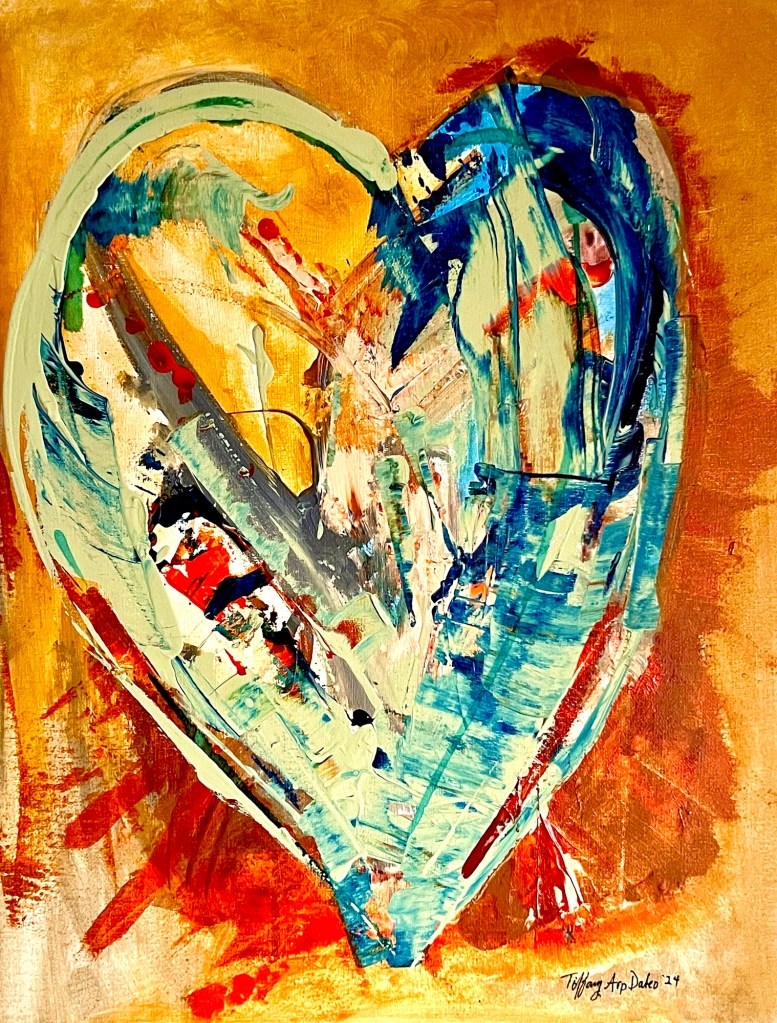
A heart is not judged by how much you love, but how much you are loved by others.
~L. Frank Baum, Wizard of Oz











Croning My Way Through Life
A heart is not judged by how much you love, but how much you are loved by others.
~L. Frank Baum, Wizard of Oz
Stan Lee (born Stanley Martin Lieber), 1922 –2018, was an American comic book writer, editor, publisher, and producer. Lee rose through the ranks of a family-run business called Timely Comics which later became Marvel Comics.
 He was Marvel’s primary creative leader for two decades, expanding it from a small publishing house division to a multimedia corporation that dominated the comics and film industries.
 Lee created a rich collection of characters out of his nonstop plotting sessions with his artists, including the Fantastic Four, Spider-Man, Thor, Iron Man, the Hulk, the X-Men, and more.
 These and other characters’ introductions in the 1960s pioneered a more naturalistic approach in superhero comics.
 Lee was particularly known for his dynamism with copy and for imbuing his characters with a sense of humanity, tackling real-world issues like bigotry and drug use, which would influence comics for decades.
 He created a revolution in the comic world through his satirical writing, bringing the elements of the real world into the world of superheroes, making his superheroes viable and responsible.
More about Stan Lee’s remarkable career can be found at https://therealstanlee.com/..
Kazimir Severinovich Malevich (February 23, 1878 – May 15, 1935) was a painter and art theoretician, pioneer of geometric abstract art and the originator of the Avant-garde Suprematist movement.
 Malevich, who was born to parents of Polish origin, studied drawing in Kyiv and then attended the Stroganov School in Moscow and the Moscow School of Painting, Sculpture, and Architecture.
 Malevich was the founder of the artistic and philosophical school of Suprematism, and his ideas about forms and meaning in art would eventually constitute the theoretical underpinnings of non-objective, or abstract, art.
 He worked in a variety of styles, but his most important and famous works concentrated on the exploration of pure geometric forms (squares, triangles, and circles) and their relationships to each other and within the pictorial space.
 Because of his contacts in the West, Malevich was able to transmit his ideas about painting to his fellow artists in Europe and the United States, thus profoundly influencing the evolution of modern art.
 Malevich worked in a variety of styles, but he is mostly known for his contribution to the formation of a true Russian avant-garde post-World War I through his own unique philosophy of perception and painting, which he termed Suprematism.
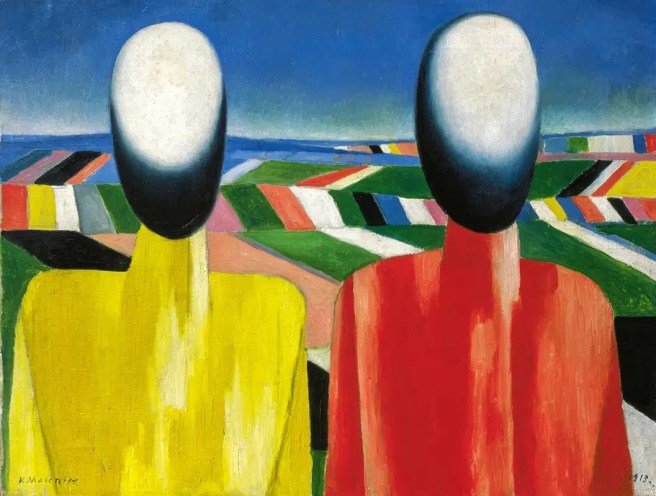 He invented this term because, ultimately, he believed that art should transcend subject matter — the truth of shape and color should reign ‘supreme’ over the image or narrative.
 The term suprematism refers to an abstract art based upon “the supremacy of pure artistic feeling” rather than on the figurative depiction of real-life subjects.
 More radical than the Cubists or Futurists, at the same time that his Suprematist compositions proclaimed that paintings were composed of flat, abstract areas of paint, they also served up powerful and multi-layered symbols and mystical feelings of time and space.
 More of Malevich’s wonderful abstract paintings can be found at Kazimi https://kazimir-malevich.org/,
Jeremy Anderson is a New York City based ceramic artist and designer known for his sculptural approach to lighting, furniture, and object-making. Anderson was born in Minneapolis, Minnesota and has been working with clay for over 25 years.
 From the beginning of his work with ceramics, the act of creating has served Anderson as a conduit to tap into childlike play: the process of throwing, assembling, and painting built around meditative make-believe.
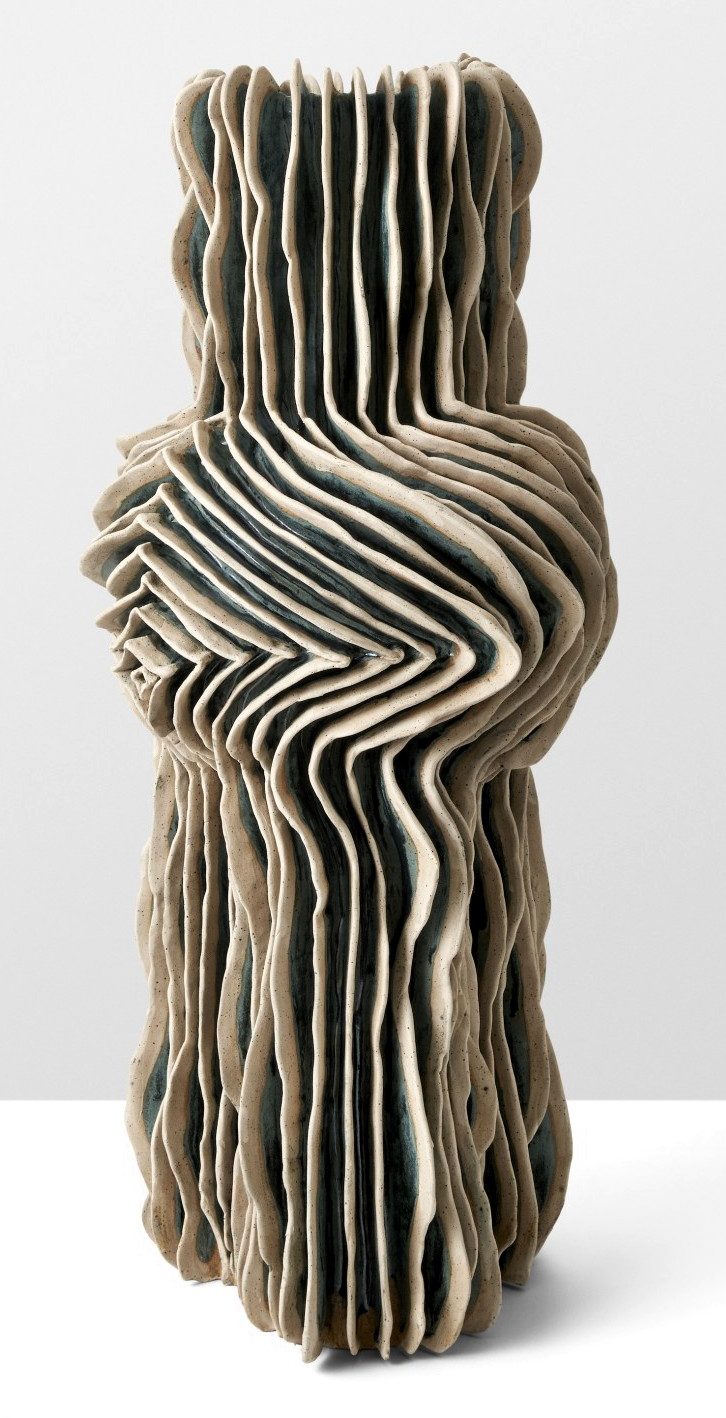 His work explores form, texture, and surface, drawing inspiration from a wide range of sources, including natural landscapes, architecture, and the raw, elemental qualities of materials.
Anderson creates the pieces by throwing the cylindrical components, before cutting, stacking and blending them. The mesmerizing patterns and textural quality of the porcelain and stoneware vessels are a result of a meticulous process.  Blending traditional wheel-throwing, hand-building, and casting techniques, Anderson creates pieces that challenge the boundaries between function and sculpture.
 “People use the surface of a vessel to tell a story,” Anderson adds.
 “For me, these are more like characters. It was really about dressing them up. They take on individual personalities.”
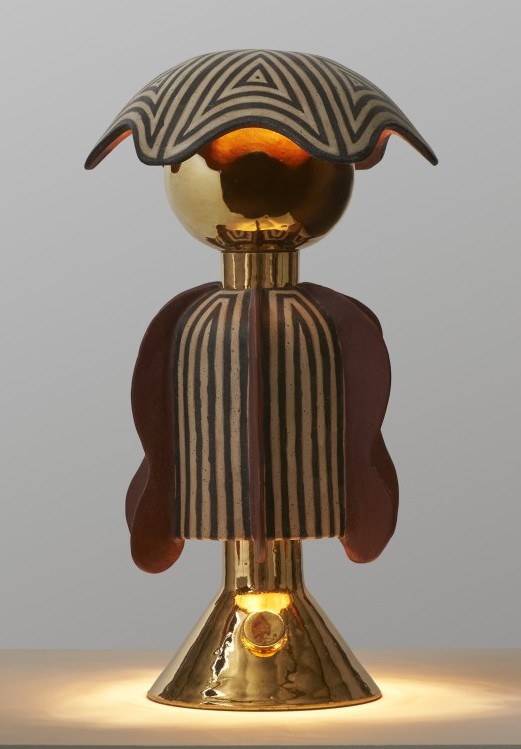 More of Jeremy Anderson’s unique creations can be found at https://www.jeremy-anderson.com/ and https://galleryfumi.com/artists/jeremy-anderson.
 Humoring the Goddess