Jan van Eyck (before 1390 – July 9, 1441) was a painter active in Bruges who was one of the early innovators of what became known as Early Netherlandish painting.

van Eyck must have been born before 1395, for in October 1422 he is recorded as the varlet de chambre et peintre (“honorary equerry and painter”) of John of Bavaria, count of Holland.

van Eyck was one of the most significant representatives of Early Northern Renaissance art who perfected the newly developed technique of oil painting.

His naturalistic panel paintings, mostly portraits and religious subjects, made extensive use of disguised religious symbols.

His artistic prestige rests partly on his unrivaled skill in pictorial illusionism.
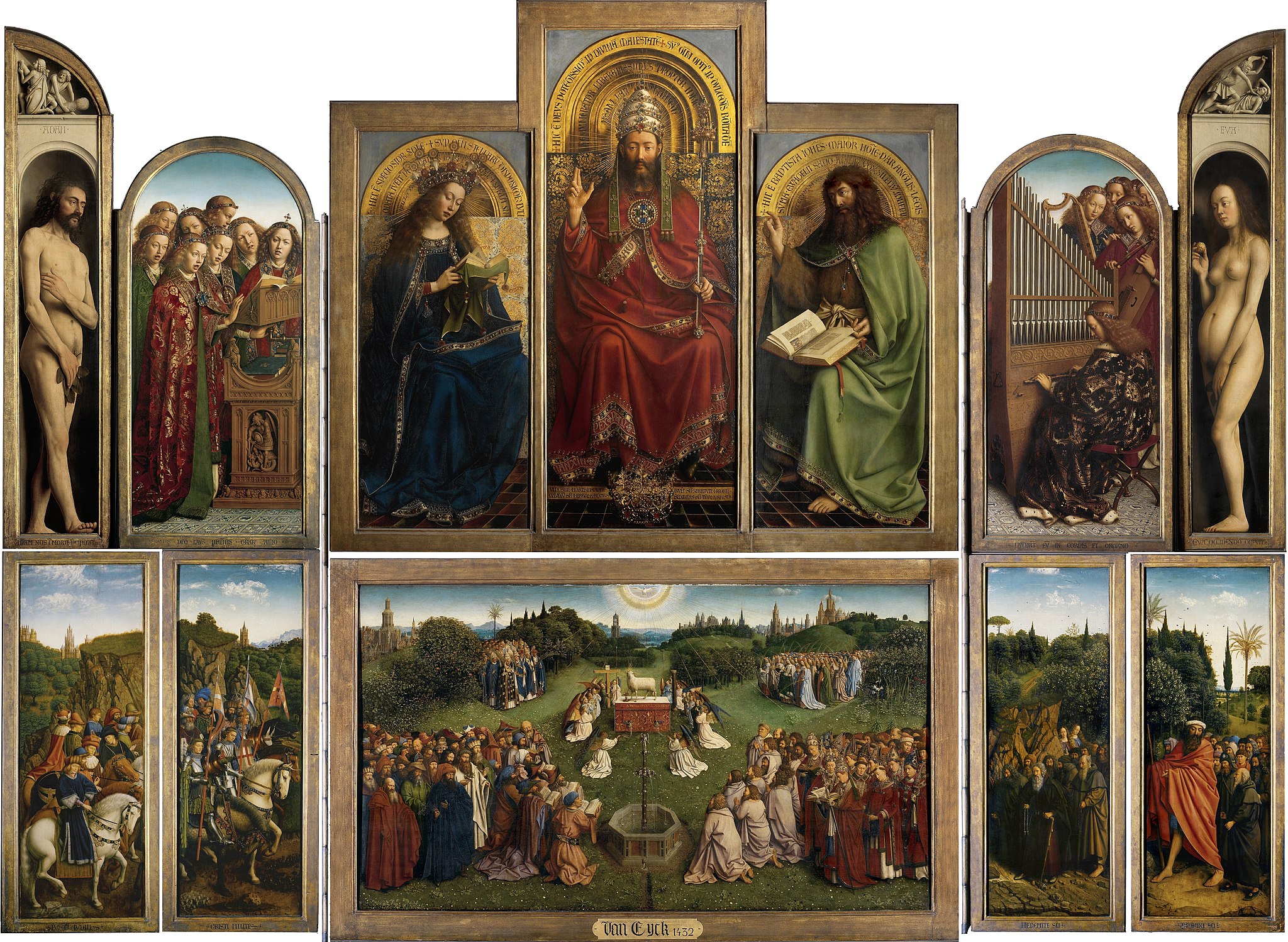
Securely attributed paintings survive only from the last decade of van Eyck career; therefore, his artistic origins and early development must be deduced from his mature work.

The artist’s paintings achieved an astonishingly sophisticated level of realism, heretofore unknown in the art of painting.

Glimmering jewels, reflective metals, lush satins and velvets, and even human flesh were each rendered with their own distinctive qualities with such a high degree of naturalism it seemed he had conjured a new artistic medium.

More of Jan van Eyck‘s amazing oil paintings can be found at https://www.britannica.com/biography/Jan-van-Eyck and https://www.theartstory.org/artist/van-eyck-jan/.
 Humoring the Goddess