Am I/I Am Overthinking

Sometimes I wonder just what kind of writer I am. I make myself laugh. In weird ways.

I’ve been writing all my life. I’ve written mostly fiction, although there have been a few non-fictions along the way. I have no problem inventing people, places, and situations in the fictional world. Even fiction in a non-fiction real world don’t hold me back.

Except this stupid novel I’m still trying to get off the ground.

I have actually started writing, having done a lot of basic research, and using everything from Google Maps to traveler’s websites to be as accurate as possible.

The story is fiction. About a non-fiction person. Me. Going on a vacation. Fiction. To a real place — Paris. Non-fiction. Visiting romantic restaurants and museums that really exist. Non-fiction. Running into manifestations of people who have passed on. Fiction.

In the past I have written about not being able to kill off people in my novels. I dunno — it’s just not me. Fine. Now I have to write a fiction book about things that never really happened as though they really did happen. But I want them to sound real.

Somewhere I’ve gotten lost between fiction and non-fiction.

I have no problem making things up if my work is considered fiction. The sky’s the limit. Right?

But when I really want to be as truthful as can be, I feel like I’m fibbing if I don’t exactly explain what this museum looks like or that restaurant feels like.

Why can’t I just pretend and be done with it?

Does it really matter in the story if Rue Saint-Guillaume actually intersects with Rue Perronet? I mean, I have one story about a woman being transported from Earth to a different part of the galaxy, for Pete’s Sake! Why does it matter if my character goes to a real live close restaurant or happens to walk a block or two to a place that, on a map, is three miles away?

I think I’ve got to get back to the basics of fiction vs non-fiction. That one is one and the other is another and you are either/or. That unless it’s 100% true it’s fiction. And no one cares.

As long as it’s readable and enjoyable, no one is going to care. After all, that’s how ~I~ read books. How do I know if the Barrymore Theater on Broadway is on 47th Street or 45th Street? Do I care, when the heroine is kidnapped by a Phantom of the Opera wannabe?

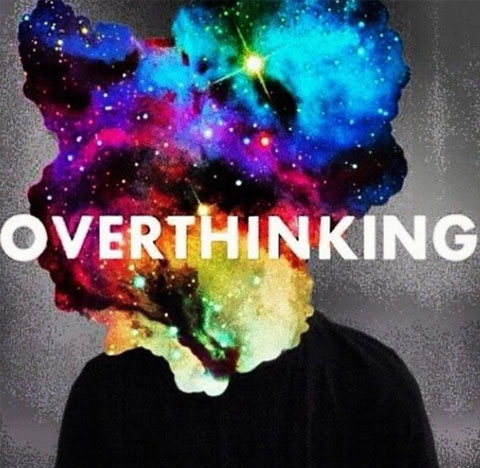
I know I overthink everything. I think many of you do, too. Not on purpose — it’s just that you want whatever you’re working on to be as perfect and “right” as it can be. Are you cheating on your stitching? Are you calling your work one thing when it technically should be something else?

Let it go. I have to just stop thinking and start writing. And you have to do the same thing. Stop overthinking everything. As long as you finish what you started, no one will know — or care.

And even if YOU do care, don’t. Don’t they say the best non-fiction is usually fiction anyhow?



the beginning is the most important part of the work…

questionmark

…Plato

I don’t often get many responses to my blogs, as most of my readers are very busy and read on the run. For those of you who do like to drop a word or six (for which I am eternally grateful), I have a question for you.

Would the following prologue make you want to read more?


       “You cannot live in both worlds.”

      The words echoed in the back of Anna’s mind like waves hitting the breakwater. Soft, rhythmic. They made no sense, at least not in their current context. She tried to hold onto the silver threads, but they slowly faded into meaningless whispers. All her mind could focus on was the slow, continuous beeping that radiated from some distant point.

      Beeping. Then silence. More beeping. More silence.

      God, she wished her mind would clear. That her eyes would open. That the throbbing in her head would stop. A lot of demands for a brain floating in a pool of thick, cold porridge. Anna thought about sitting up, getting up, but her body wouldn’t respond. More pain, more porridge. More voices, more beeping. Red flags were popping up throughout her consciousness — something was wrong. Too many mumblings, too many voices at the edge of her hearing. Voices that had no business being in her bedroom.

      “Anna, can you hear me?”

      Hear you? You are right here in bed next to me, Adam. Of course I can hear you.

      But her husband’s voice had a disquieting tenor she’d never quite heard before. His muffled words echoed in her ears, softly insulating her against the harsh beeping that tried to distort her every thought.

      A different voice followed. A deep, dark, musical voice — a voice rich with temptation.

      Do not close this door we have opened.

      Suddenly a swell of emotions overwhelmed her senses. It was as if the dam had burst; the dam that held back her energy, her very soul, releasing a flood of wordless images that pulsed to the beat of her heart. Anna felt a smile spread across her lips, even though the rest of her body refused to respond. How she wanted to linger in the warmth the memories promised. But the voice, the melody, disappeared as the scent of antiseptics whiffed across her nose. Bleach, perhaps. Or ammonia. What happened to the cinnamon potpourri in the crystal bowl on her nightstand?

      Anna’s head hurt just putting sentences together, and she still couldn’t open her eyes. So willful her thoughts, so unwilling her body. She could feel her pulse rise, her heart beating faster, her automatic fright/flight instinct taking over.

      “She is coming around, Mr. Powers.”

      Whose voice is that? In my bedroom? Who in the world would be calling Adam “Mr. Powers” anyway?

      More voices now. Closer. Louder. A squeaky high-pitched one and another with a sweet southern drawl. A shadow blurred the indirect light that fell upon her unopened eyes as she heard Adam’s voice echo from a tunnel off to her left somewhere.

      Damn, Adam. Speak up! Quit mumbling. And what are all these people doing in our bedroom?

      A moment of silence, an eternal moment, until suddenly a soothing sensation danced across her mind, melting her thoughts into puddles of warm milk. Anna thought she heard Adam say something about dying, but perhaps the word was “crying”.

      Either way, she decided she would try and open her eyes later. Yes, later. She was so sleepy, so content, that she’d rather follow the whispers that called her name.

Frivolous Facts and Falderal

Why not fill your head with useless — but amusing — information? Here’s a few facts that you can toss around with friends and family.


In the Lord of the Rings, although Bill the Pony is a feature of the novel, the writers initially decided not to include him as the Fellowship make their journey for the simple logistical reason of transporting a horse deep into the mountains.  The problem was solved in the more difficult shots by using the classic pantomime trick of dressing two people up as a horse, one at the front and one at the back.                                                                                                                                                                                              

The average American’s vocabulary is around 10,000 words — 15,000 if you are really smart.  Shakespeare had a vocabulary of over 29,000 words.                                                                                                                                                                                                                                                                  

47 elephants and dancing bears survived the sinking of the Titanic and got jobs in New York thereafter.

In the movie Carrie, the slow motion scene at the end of the movie was filmed in reverse to simulate ghostlike movement effects. If watched vigilantly, cars can be seen driving backwards in the upper left hand corner of the screen.

For the movie The Wizard of Oz, Judy Garland got paid $35 a week, while Toto got paid $125.

The national anthem of Greece has 158 verses. No one in Greece has memorized all 158 verses.

Almonds are a member of the peach family.