Dominick Labino (1910 – 1987) was an American internationally known scientist, inventor, artist and master craftsman in glass.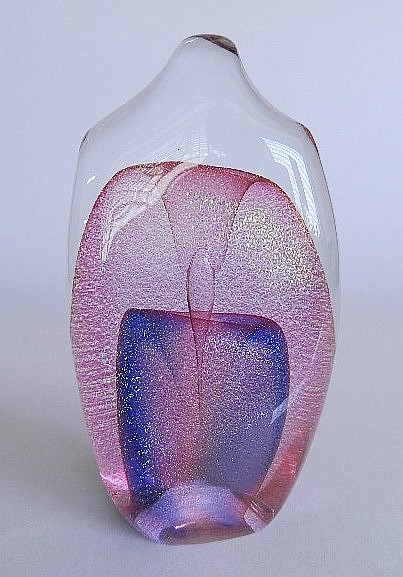 He is responsible for sixty patents in the U.S. and hundreds in foreign countries, and is particularly remembered for his development of glass fibers, glass papers, and furnace designs.
 He invented a formula that allowed glass to melt at low temperatures in small furnaces suitable for the needs of individual glassblowers, and thus, the international studio glass movement was begun.
 Labino was trained as an engineer at the Carnegie Institute of Technology and began his professional career at Owens-Illinois, Inc., a glass manufacturing plant in Clarion, Pennsylvania.
 Labino’s technical training facilitated his work as a glass innovator.
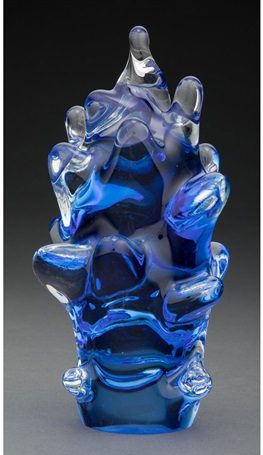
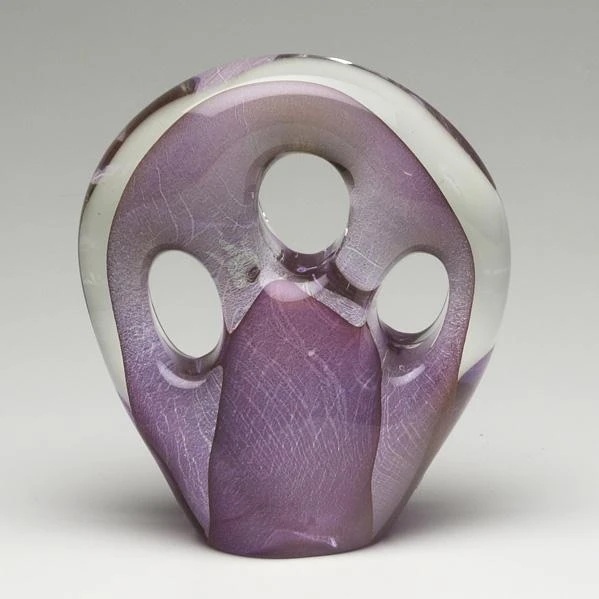
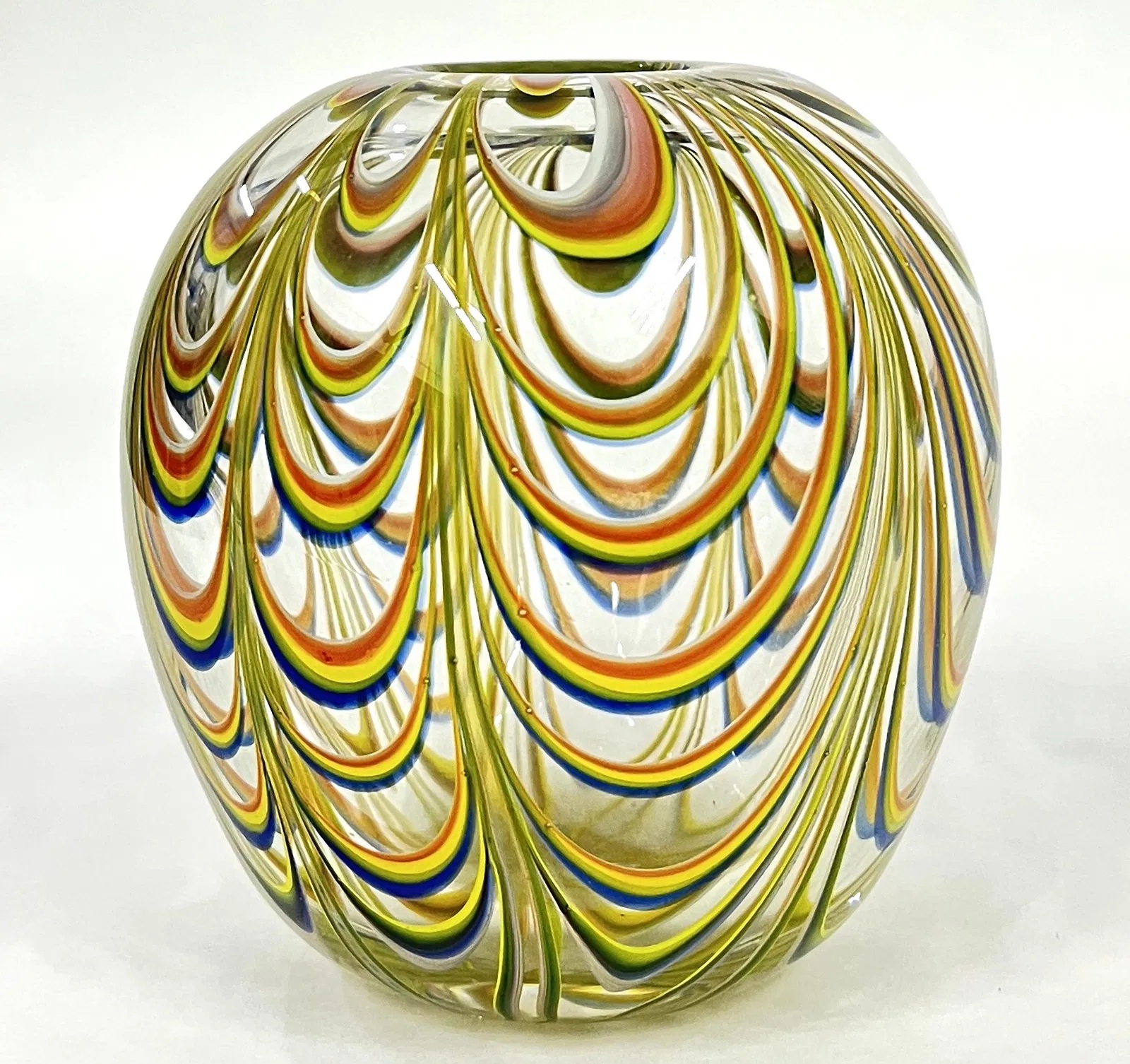 The unique combination of scientific knowledge and aesthetic inventiveness give the artist the ability to create extraordinary shapes, which give flashing light to his pieces.
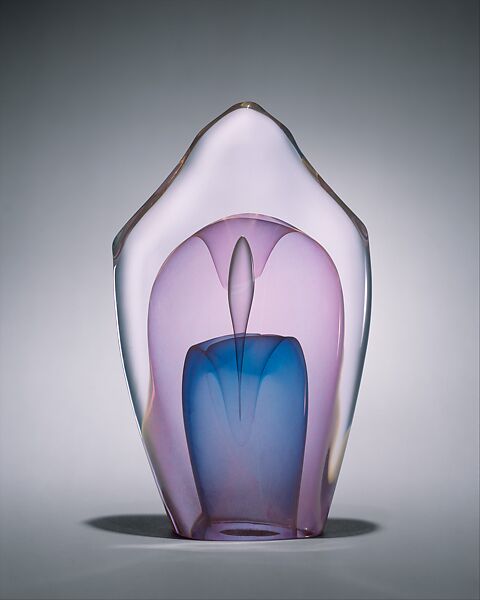
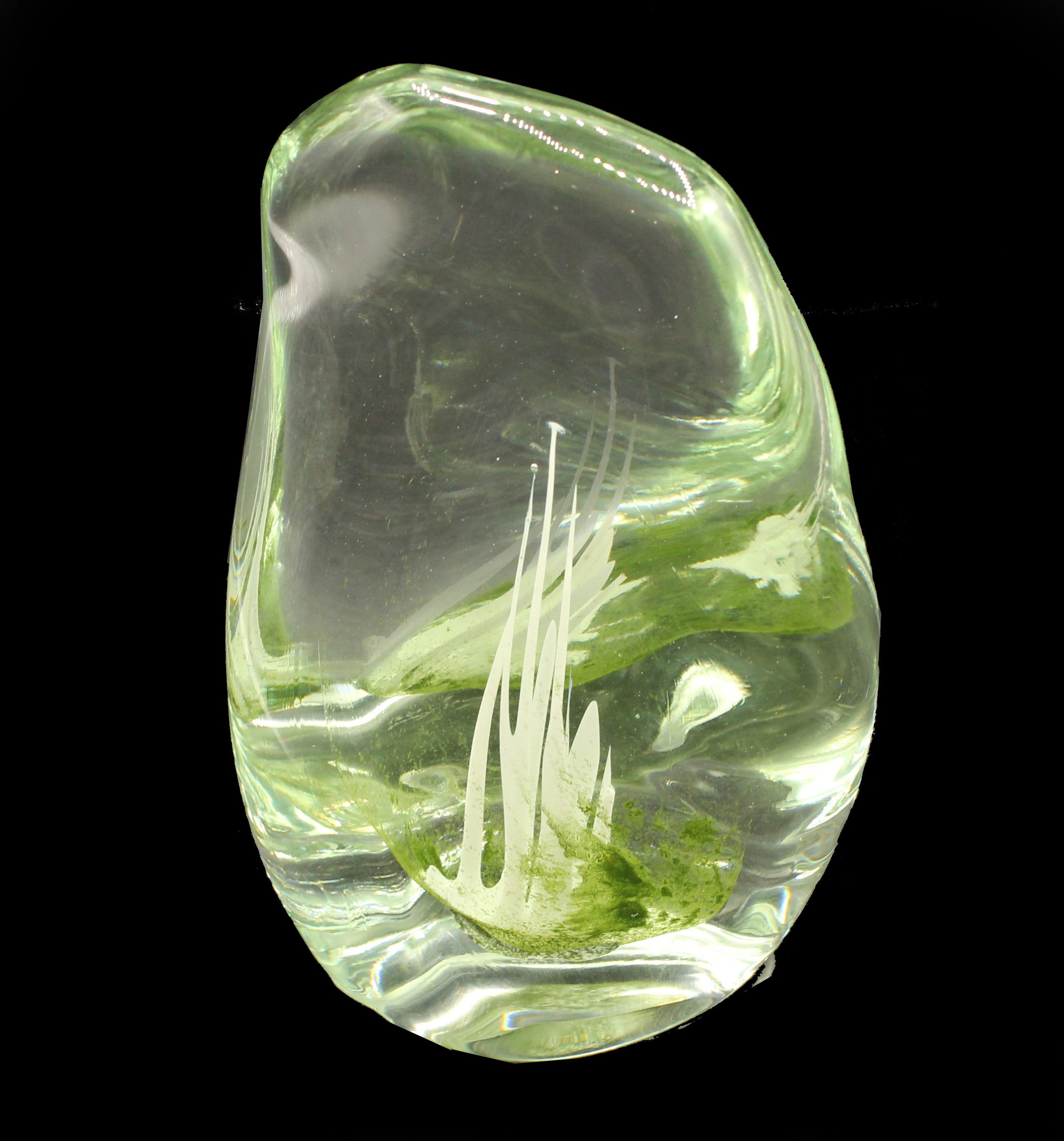 The range of intensities of color in his fused multicolored forms, often contained in clear glass casing, along with the varied surface qualities, create broken reflective lights or light-absorbing matte textures.
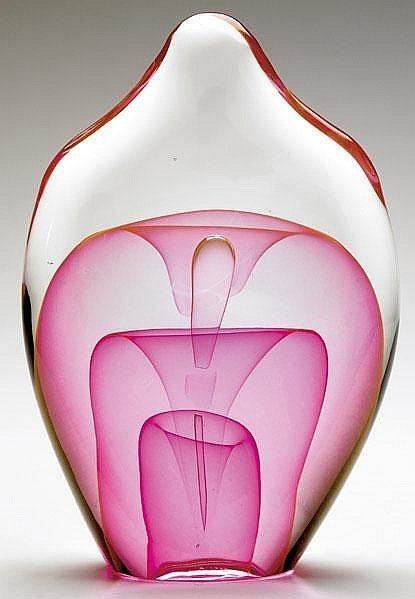 Although an innovator in form, Labino is probably best known for his use of color.
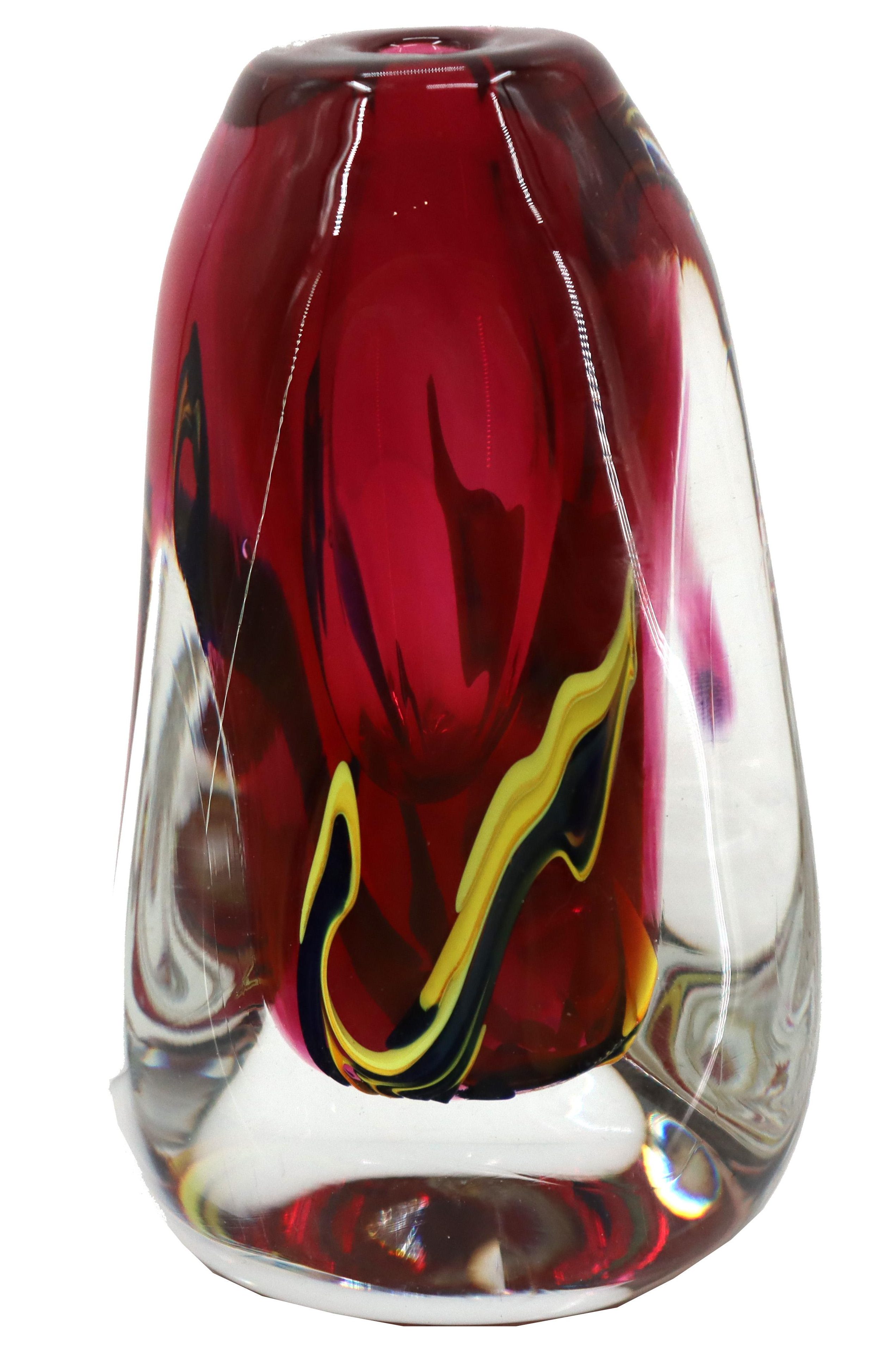 The colorless glass encases interior veils of “dichroic” color, causing the hues to change as light strikes the piece from different angles.
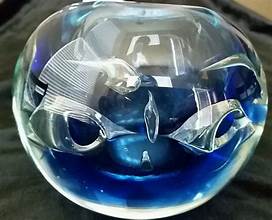
The graceful, fluid form of Labino’s sculpture complements the special nature of the material, but it is his extraordinary sense of color and his ability to create color relationships through technical expertise that made him a master of twentieth-century glassmaking.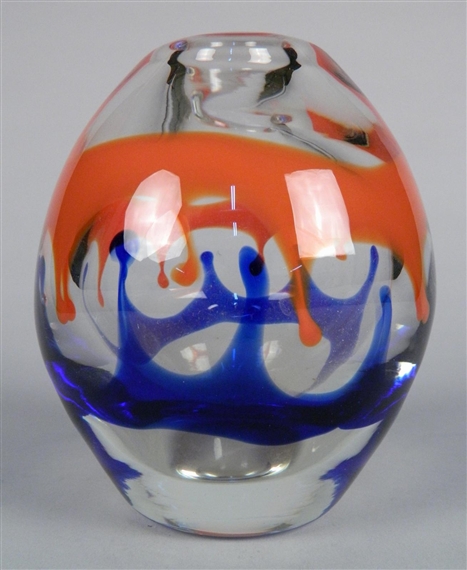 More of Dominick Labrino’s amazing glasswork can be found at https://hudsongallery.net/artist/dominick-labino/ and https://www.artnet.com/artists/dominick-labino/.
 Humoring the Goddess