
Maria Sibylla Merian (1647–1717), a German-born naturalist and scientific illustrator living in the Netherlands, was an extremely enterprising and independent woman who managed a successful career as an artist, botanist, naturalist and entomologist.

At a time when natural history was a valuable tool for discovery, Merian discovered facts about plants and insects that were not previously known, such as insects did not spontaneously emerge from mud.

Merian was the first to bring together insects and their habitats, including food they ate, into a single ecological composition.
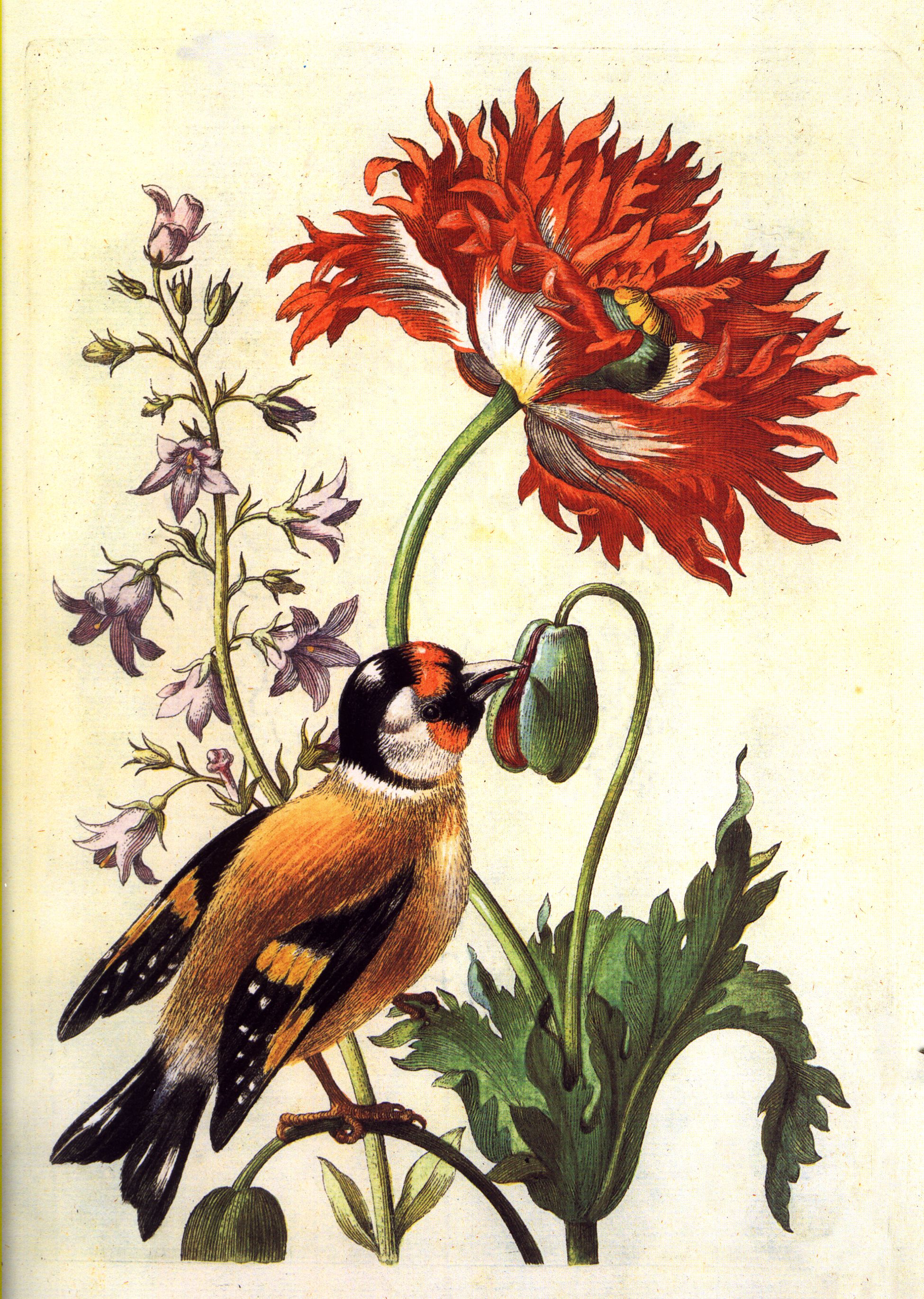
Merian published her first book of natural illustrations, titled Neues Blumenbuch, in 1675.

In 1699, following eight years of painting and studying, and on the encouragement of the governor of the Dutch colony of Surinam, the city of Amsterdam awarded Merian a grant to travel to South America with her daughter Dorothea. Her trip, designed as a scientific expedition makes Merian perhaps the first person to plan a journey rooted solely in science.
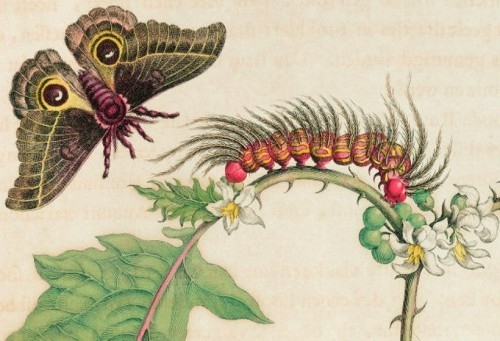
She then proceeded to publish her major work, Metamorphosis insectorum Surinamensium (de), in 1705, for which she became famous.
 Merian is considered to be among the most significant contributors to the field of entomology — an amazing journey for an 18th Century woman.
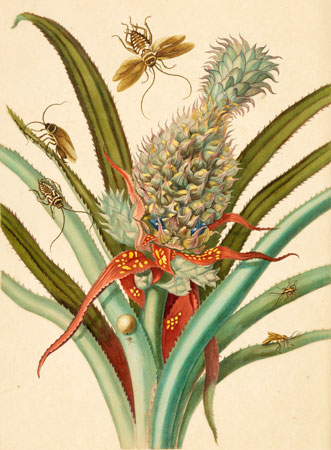
More of Maria Sibylla Merian‘s amazing story and images can be found at https://www.britannica.com/biography/Maria-Sibylla-Merian and https://www.theatlantic.com/science/archive/2016/01/the-woman-who-made-science-beautiful/424620/.
 Humoring the Goddess