Degenerate Art was a term adopted in the 1920s by the Nazi Party in Germany to describe modern art.
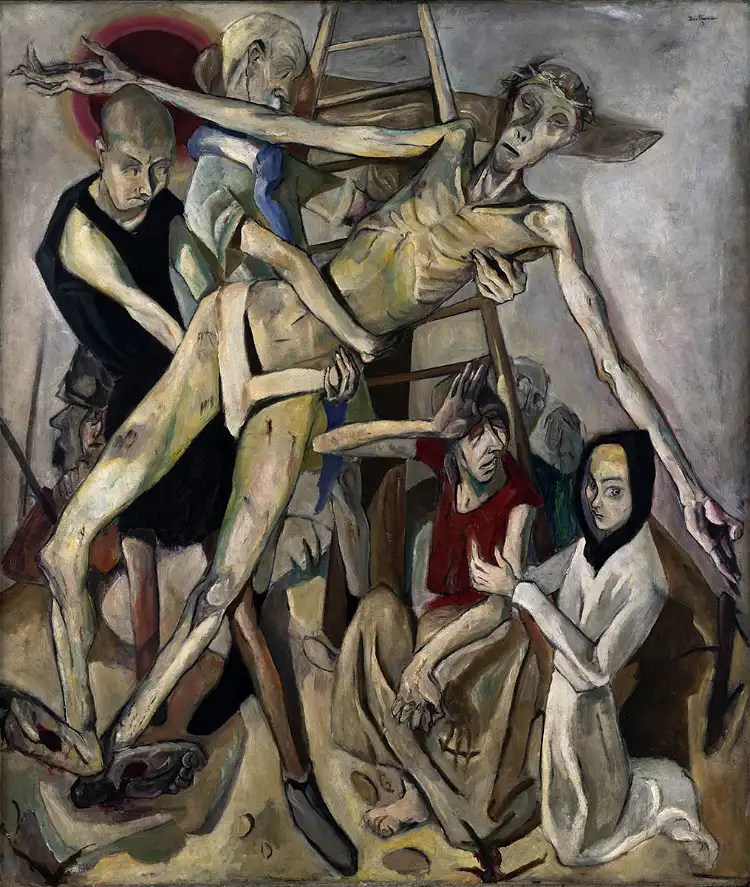 Descent from the Cross, Max Beckmann
During the dictatorship of Adolf Hitler, German modernist art, including many works of internationally renowned artists, was removed from state-owned museums and banned in Nazi Germany on the grounds that such art was an “insult to German feeling”, un-German, Freemasonic, Jewish, or Communist in nature.
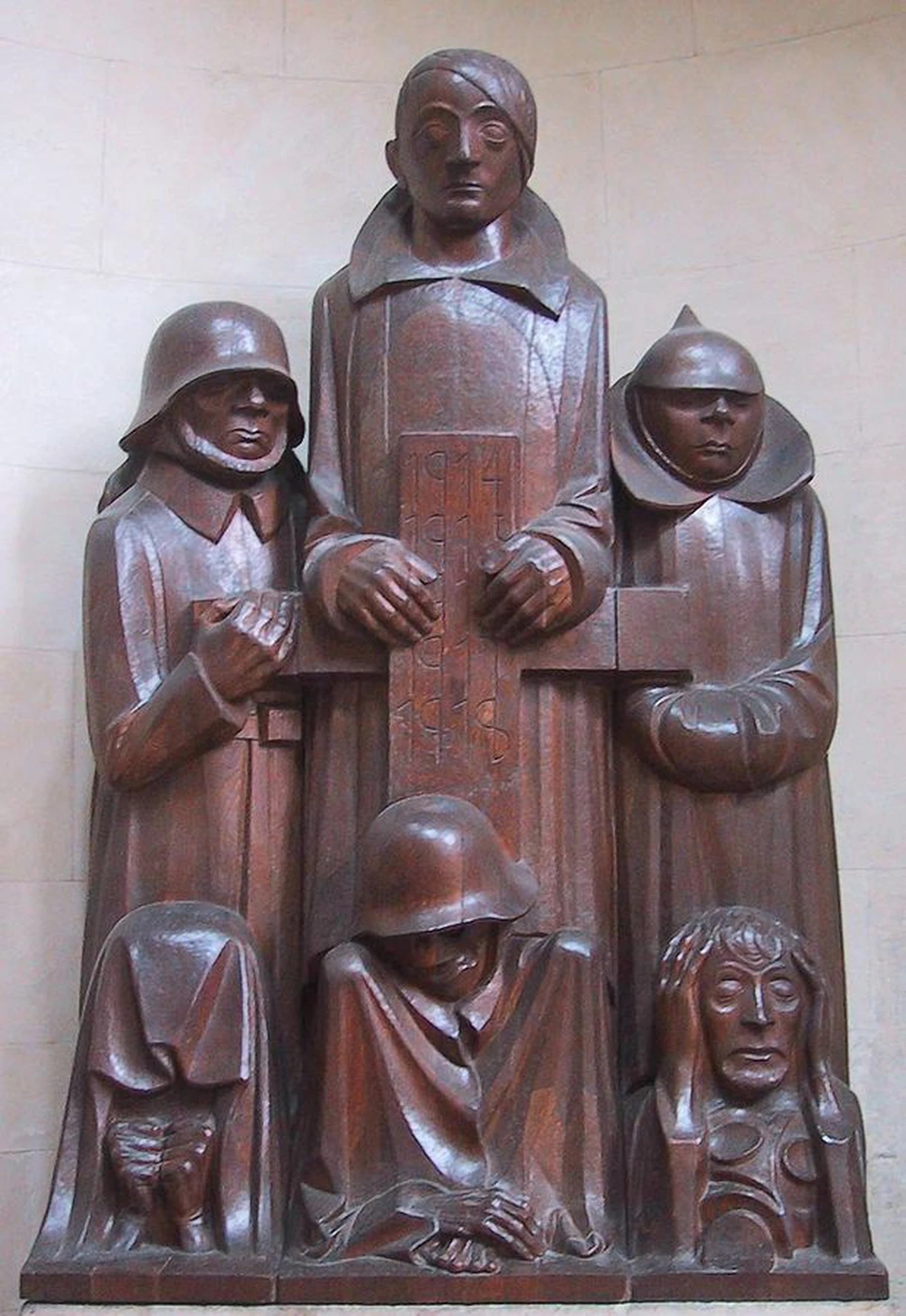 Magdeburger Ehrenmal, Ernst Barlac
Hitler’s rise to power in 1933 was quickly followed by actions intended to cleanse the culture of degeneracy: book burnings were organized, artists and musicians were dismissed from teaching positions, and curators who had shown a partiality for modern art were replaced by Party members.
 Portrait of a Man, Erich Heckel
Those identified as degenerate artists were subjected to sanctions that included being dismissed from teaching positions, being forbidden to exhibit or to sell their art, and in some cases being forbidden to produce art.
 Street Berlin, Ernst Ludwig Kirchner
The head of Reichskammer der Bildenden Künste (Reich Chamber of Visual Art), and his commission were authorized to confiscate from museums and art collections throughout the Reich any remaining art deemed modern, degenerate, or subversive.
 Kneeling Woman, Wilhelm Lehmbruck
All the works that were a part of Bauhaus, Cubist, Dada, Expressionist, Fauvist, Impressionist, New Objectivity and Surrealist style were labeled as sick.
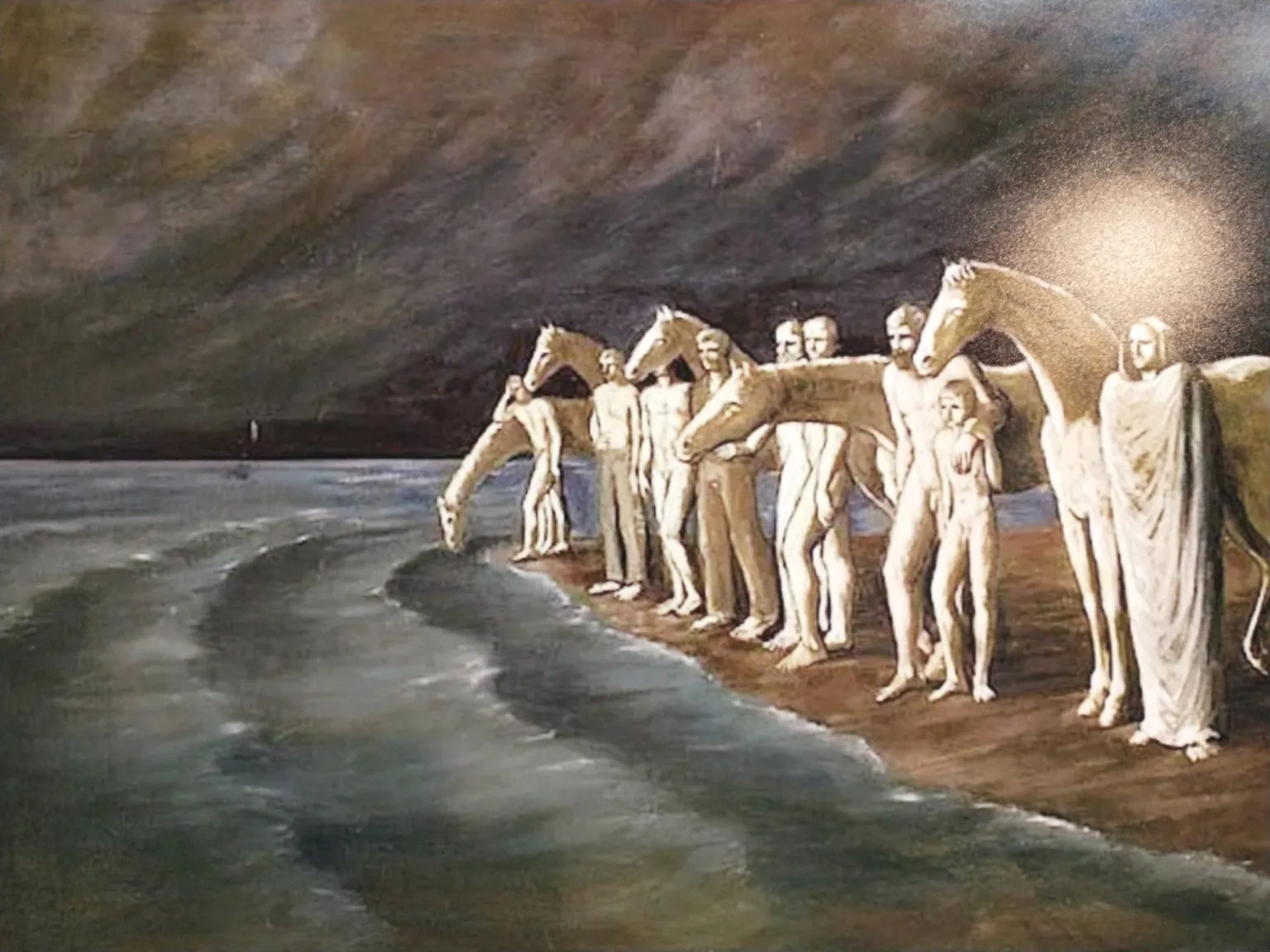 At the Shore, Edgar Ende
These works were then to be presented to the public in an exhibit intended to incite further revulsion against the “perverse Jewish spirit” penetrating German culture.
 Pharisees, Karl Schmidt-Rottluff
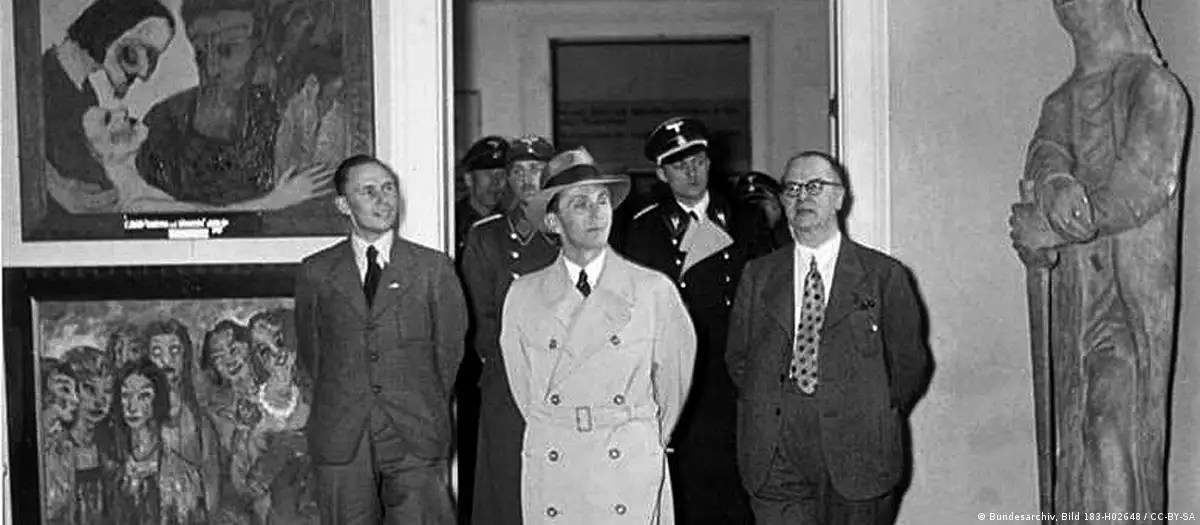
In July 1937, the German Nazi regime sponsored the Entartete Kunst (Degenerate Art) exhibition in Munich.

The exhibition’s central theme was to “educate” the public on the “art of decay.”
 The Blue Window, Henri Matisse
The exhibition featured over 650 paintings, sculptures, prints and books from the collections of 32 German museums.

The artworks were placed next to insulting texts which were supposed to prove how depraved the artists were and ridiculed by being juxtaposed with other works by the inmates of German lunatic asylums.
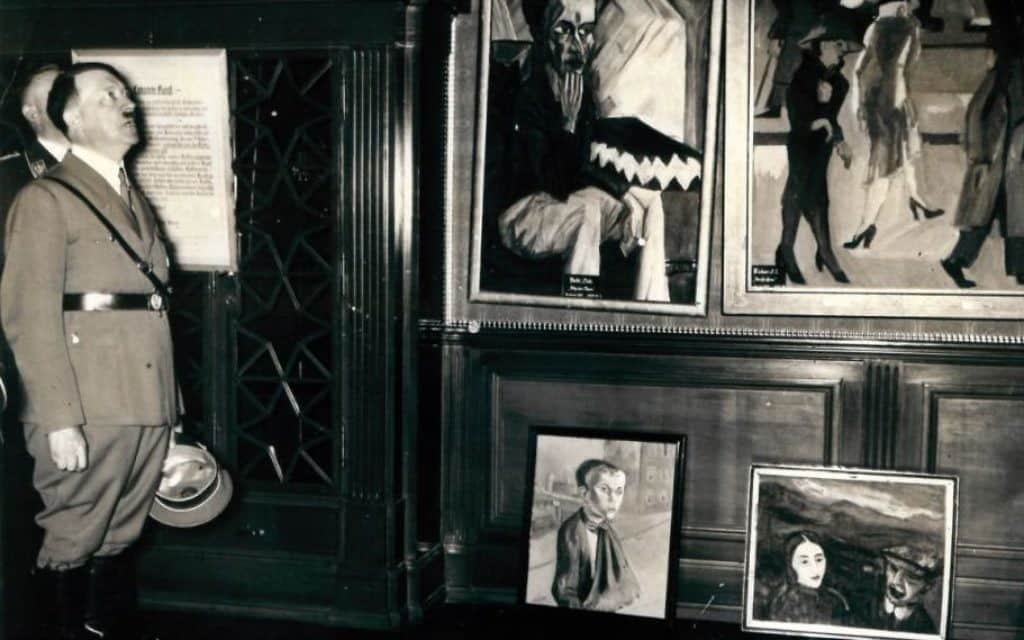
Despite this, public attendance exceeded all expectations. It is estimated that more than 2 million people passed through the cramped space in 1937.
During this period, over 5,000 artworks were seized, including 1,052 pieces by Emil Nolde (who was ironically a racially pure Aryan and a member of the Nazi Party), 759 by M.C. Escher, 639 by Ernst Ludwig Kirchner, 508 by Max Beckmann, and smaller numbers of artworks by such artists as Alexander Archipenko, Marc Chagall, Wassily Kandinsky, Henri Matisse, Pablo Picasso, Vincent Van Gogh and hundreds of others.
 Bildnis des Malers, Franz Radziwill
In March 1939, the Berlin Fire Brigade burned about 4000 paintings, drawings and prints that had apparently little value on the international market.
 Die großen blauen Pferde, Franz Marc
A similar act was conducted in the summer of 1942, in the gardens of the Galerie Nationale du Jeu de Paume in Paris, in a bonfire which burned important pieces by Pablo Picasso, Salvador Dalí, Paul Klee, Fernand Léger and Joan Miró.
 Les Demoiselles d’Avignon, Pablo Picasso
In this way, Germany began the confiscation of artworks deemed degenerate from a variety of museums throughout the Reich and combined the taken works into one single, coherent exhibition for their further ridicule and mockery.
 En Canot, Jean Metzinger
The V&A holds the only known copy of a complete inventory of Entartete Kunst confiscated by the Nazi regime from public institutions in Germany, mostly during 1937 and 1938. The list of more than 16,000 artworks was produced by the Reichsministerium für Volksaufklärung und Propaganda (Reich Ministry for Public Enlightenment and Propaganda) in 1942
The UMMA Exchange has a list with pictures of all artists in the Degenerate Art Show.
 Humoring the Goddess