Beate Kuhn (1927–2015) was German ceramicist who created sculptural objects from wheel-thrown elements and glazed stoneware.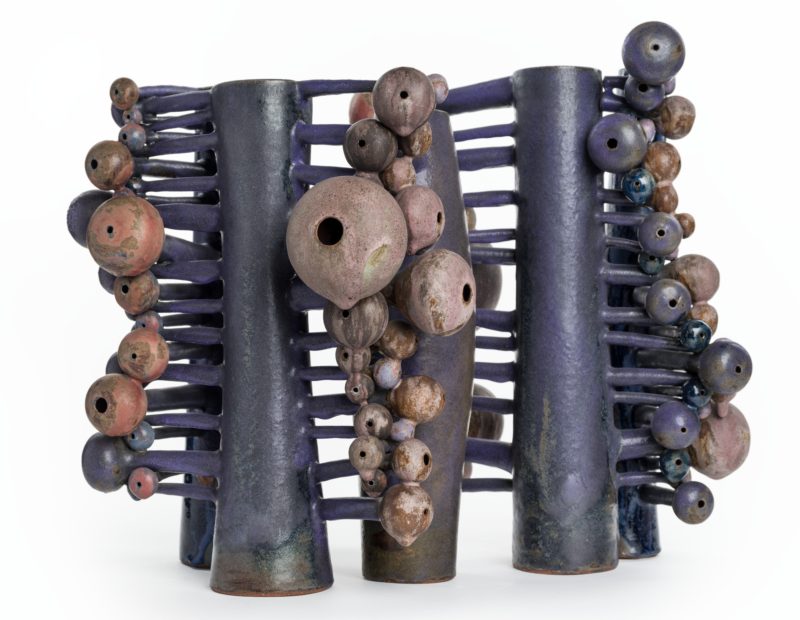 Over the course of a more than a 60-year career, Kuhn created profound and extraordinarily well-crafted ceramic objects, beginning with functional ceramics, moving to sculpted vessels, and then to sculpture itself.
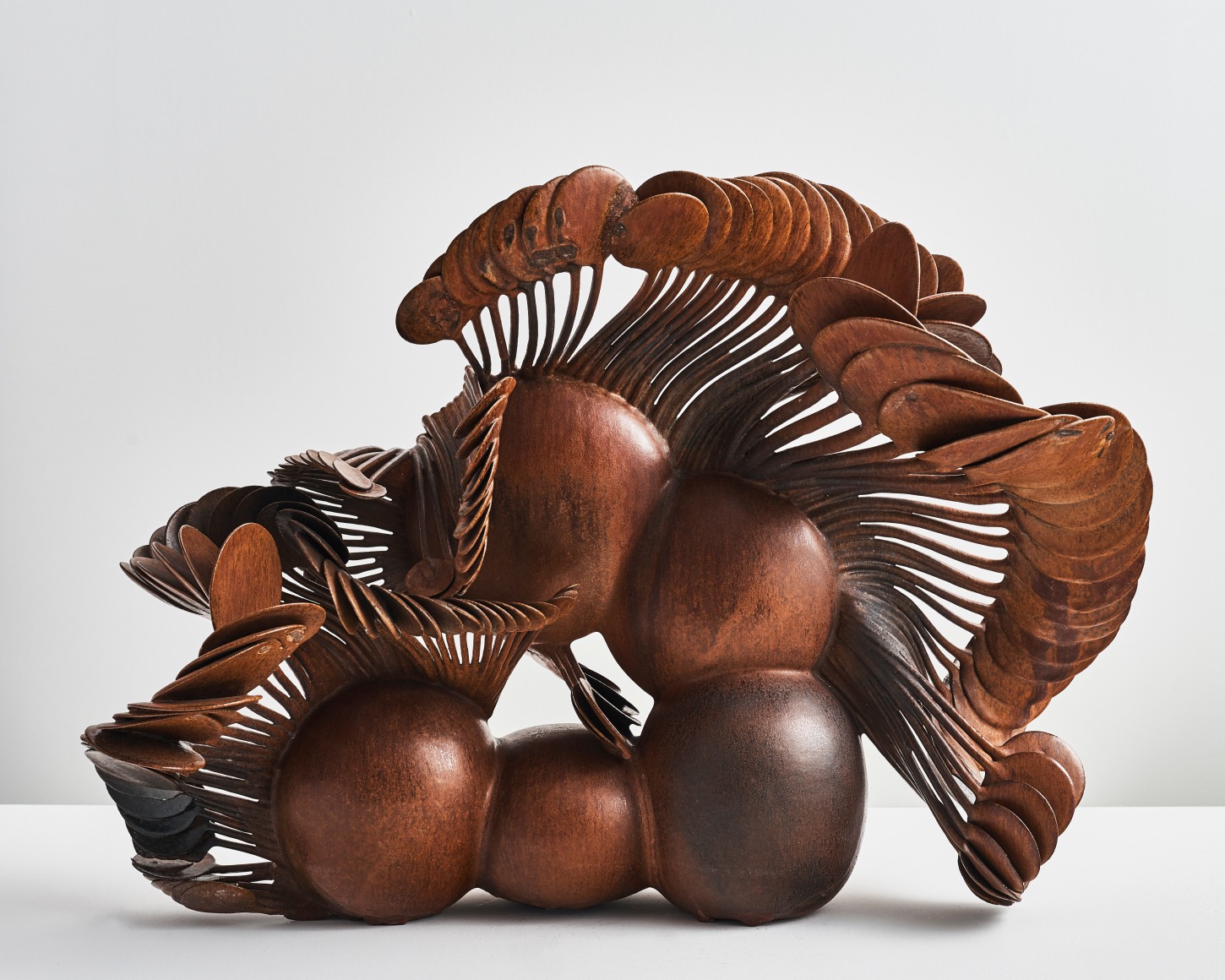 Kuhn learned to throw on the potter’s wheel at the Werkkunstschule (School of Applied Arts) Wiesbaden, then furthered her ceramic education at the Werkkunstschule Darmstadt, where she perfected techniques for mixing and applying clay slips, engobes, and glazes.
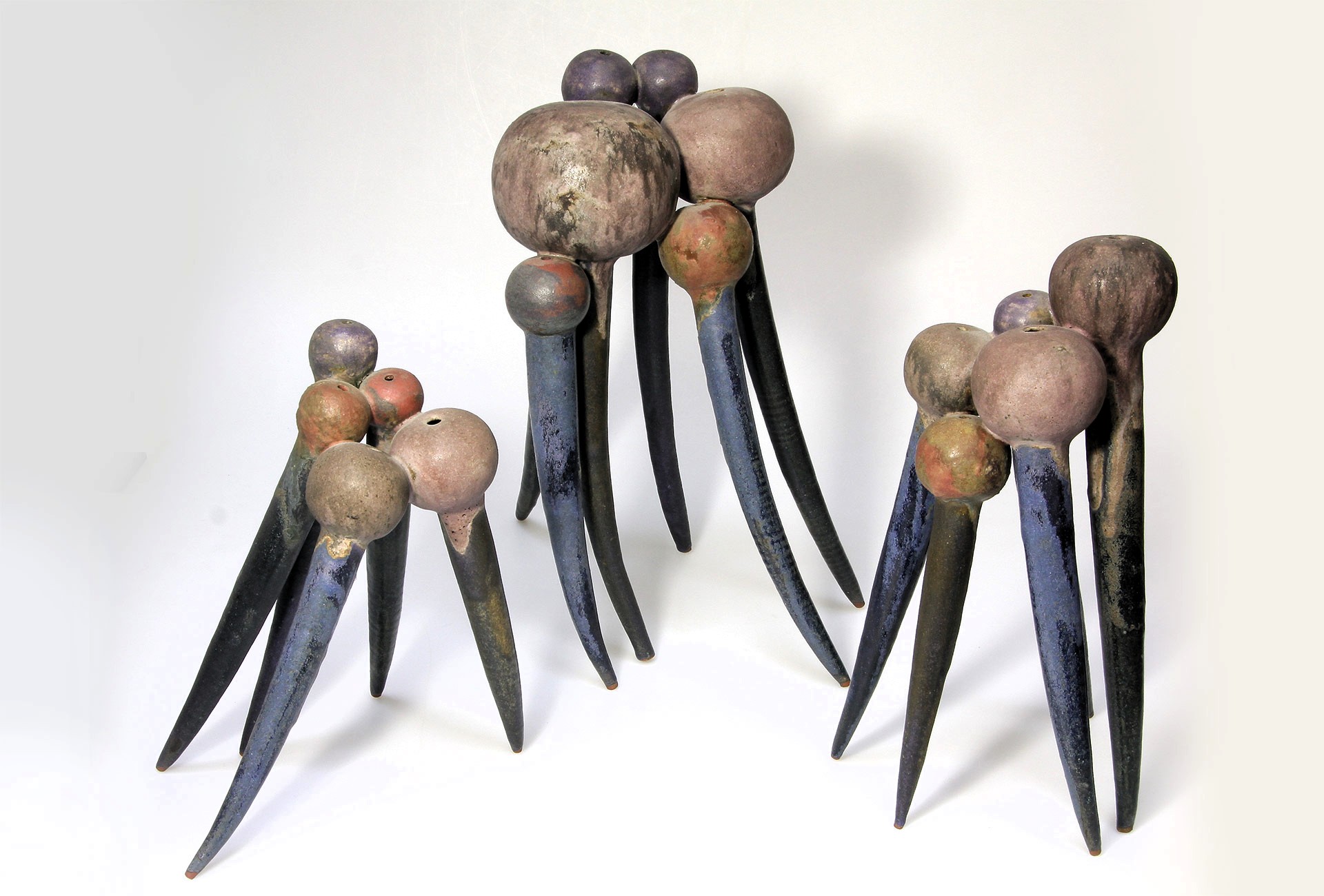 At the intersection of Modernist painting, sculpture, and studio pottery, Kuhn found creative resonance for her practice.
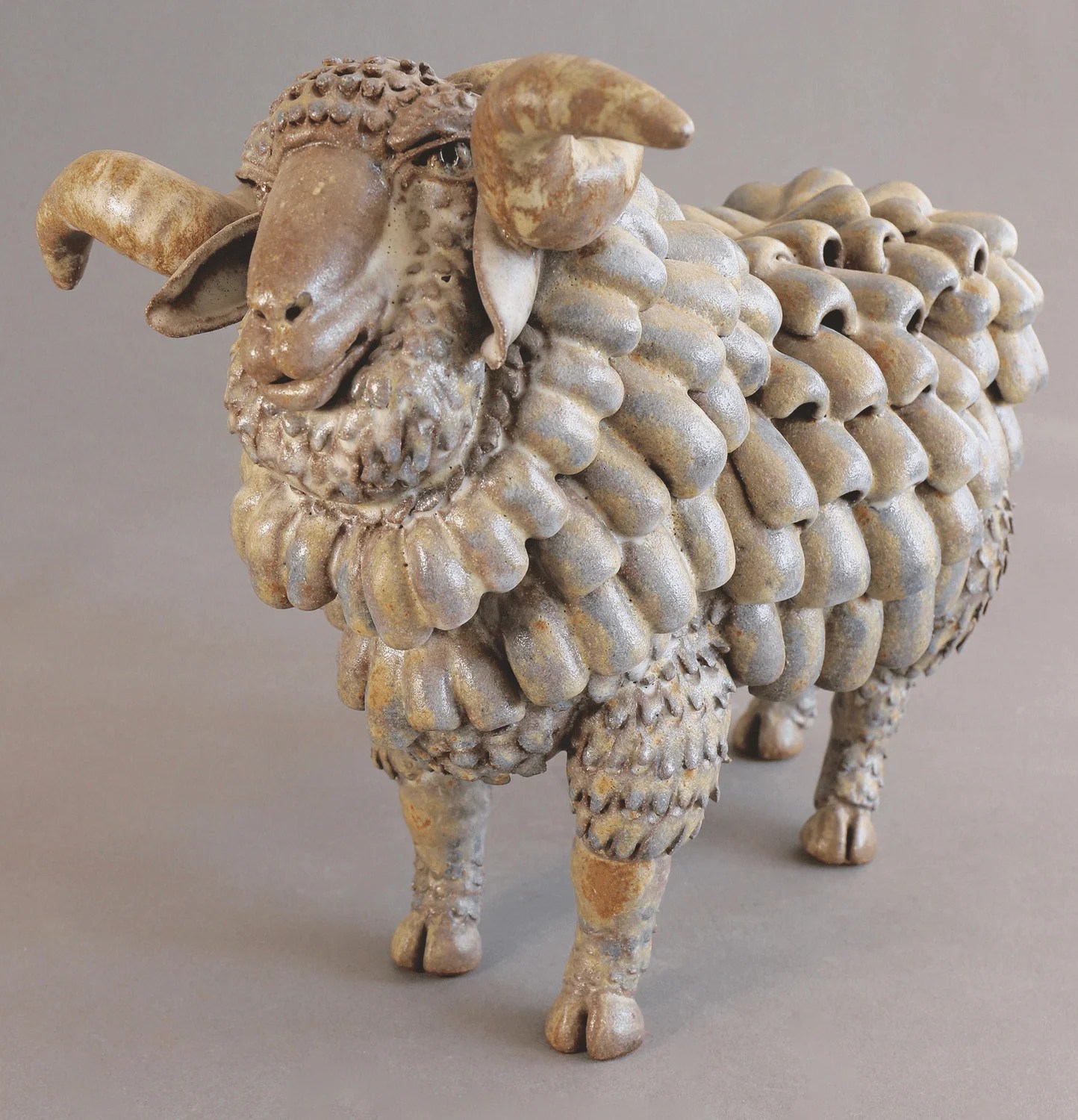 The beautiful and sublime aspects of nature were another muse as she channeled brilliant assemblages of parts: seed pods, succulents, exoskeletons, fungi, and shells.
 Throughout her career, Kuhn skillfully played with contrasts in her artworks: shiny and matte, light and dark, convex and concave, stillness and movement, individual and collective, birth, death, and decay.
 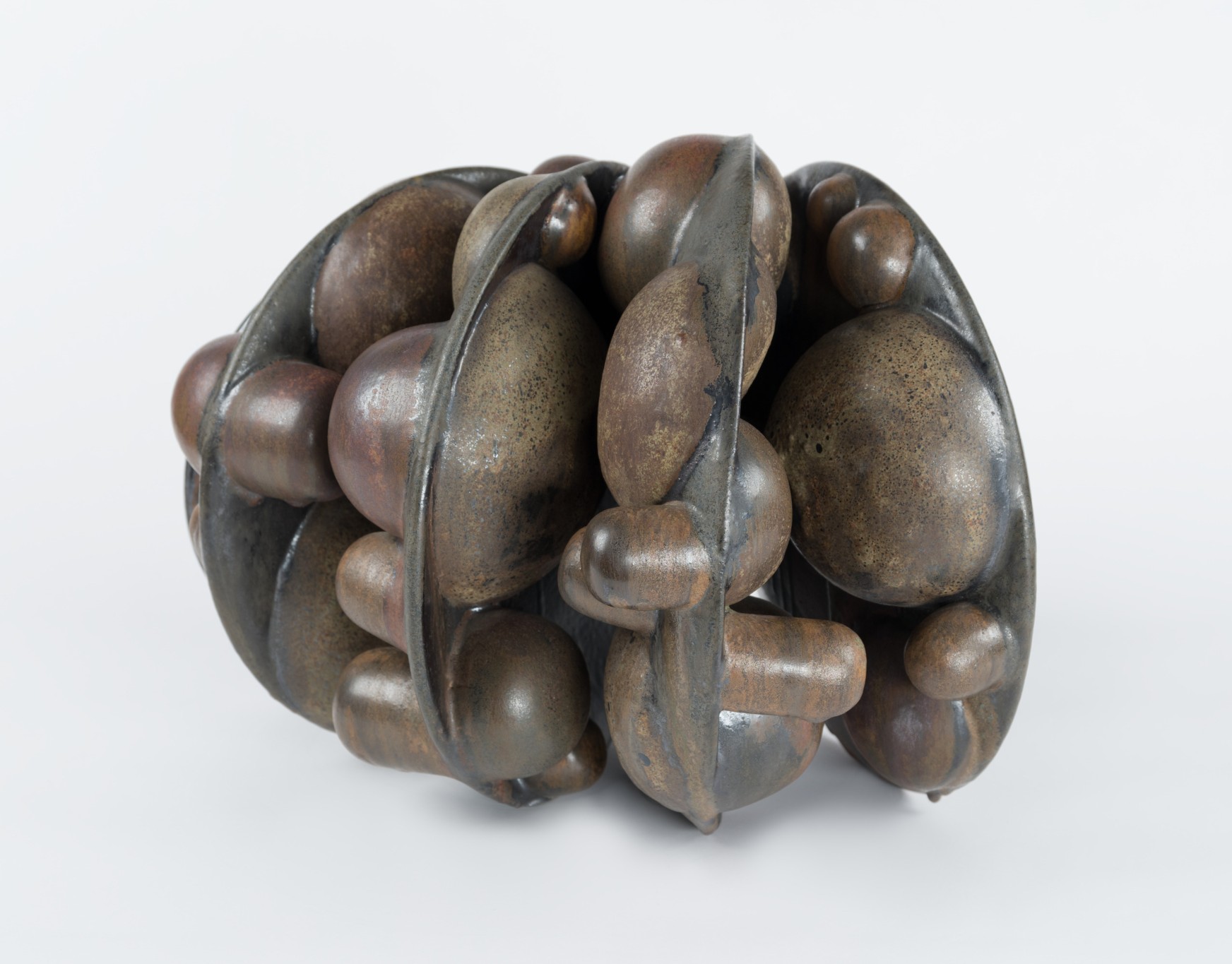 Her free sculptures were created from single hand-thrown and cut elements, which she assembled into a whole.
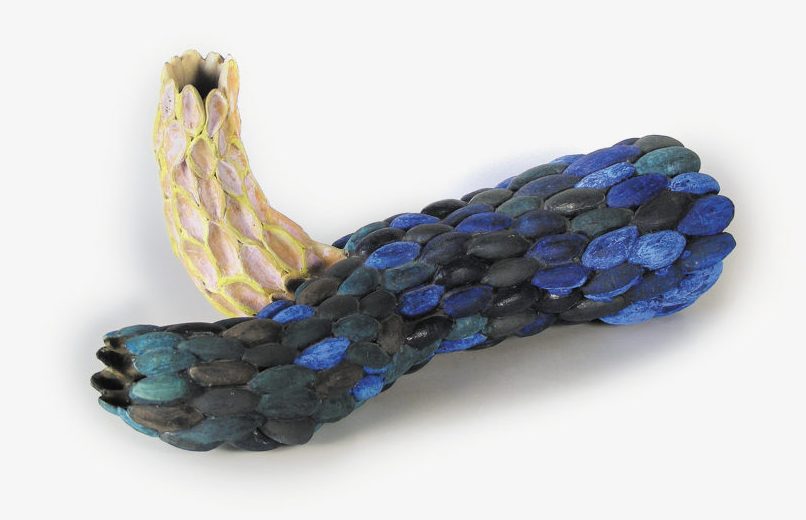 She transferred this style principle of stringing together geometrical bodies to her designs of large-scale ceramic fountains.
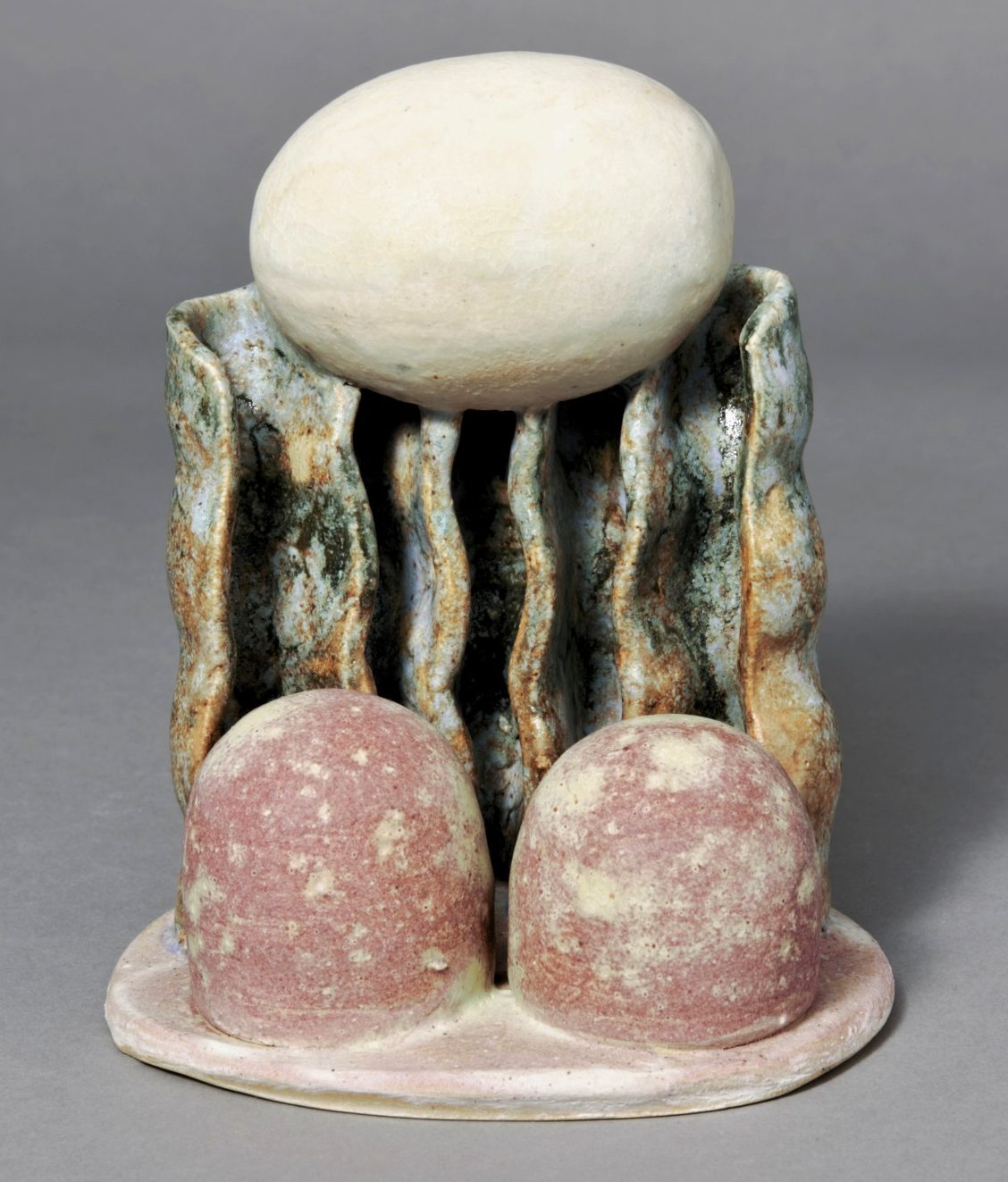 More of Beate Kuhn’s amazing sculptures can be found at https://carnegieart.org/exhibition/beate-kuhn/ and Ceramics Monthly.
 Humoring the Goddess