Adel Abdessemed (-1971) is an Algerian-French contemporary artist. He fled Algeria after the beginning of the 1992 civil war, taking with him the memory of the war and the range of atrocities.
 The artist has been educated at the International City of Arts, Paris, National School of Fine Arts of Lyon, France, the higher School of Fine Arts of Algiers, and Regional School of Fine Arts of Batna, Algeria.
 Abdessemed embraces a wide variety of media, including drawing, sculpture, performance, video and installation.
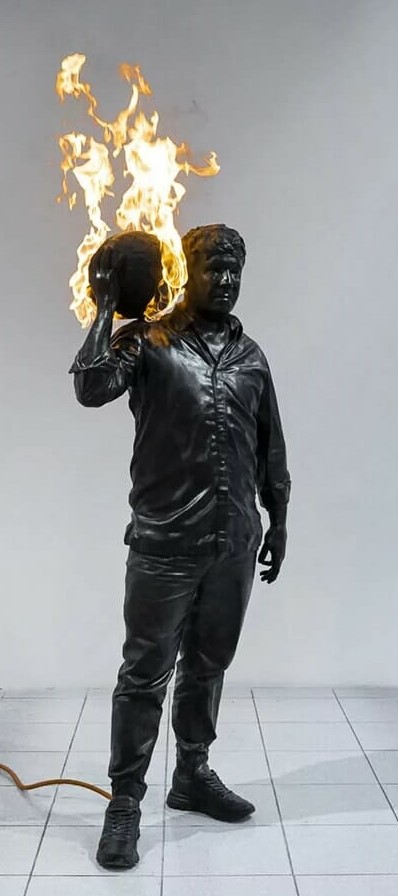 His work often deals with the themes of war, violence and religion and is characterized by brutal imagery that attempts to depict the inherent violence of the contemporary world.
He is known for his strong works, breaking and transforming the flow of images and the tension of today’s world. Abdessemed manipulates familiar materials and images to create provocative and often violent works influenced by his exposure to the Gulf War and its global impact.
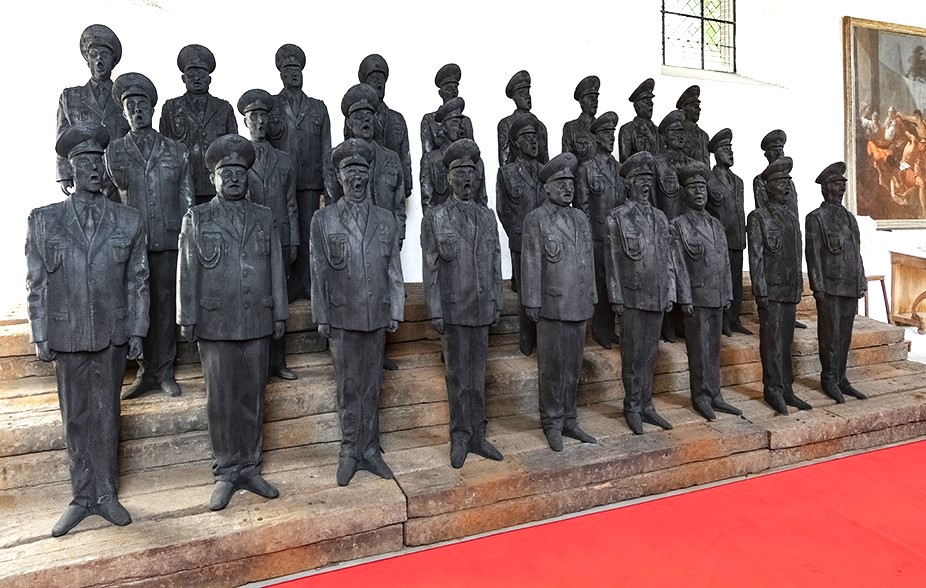
More of Adel Abdessemed’s heartfelt artworks can be found at https://www.adelabdessemed.com/.




 Humoring the Goddess