Ran Hwang is a sculptural artist primarily known for her mixed-media work with buttons, beads, pins, and thread.
 Born in the Republic of Korea in 1960, Hwang currently lives and works in both Seoul and New York City.

Hwang creates large iconic figures that embody her preoccupation with the nature of cyclical life, non-visibility and the beauty of a transient moment. 
 The artist creates iconic figures that embody her preoccupation with the nature of cyclical life, non-visibility and the beauty of transient glamor.
 Her installation works often crosses three-dimensional boundaries.
 Although her work often references classical Asian motifs, Hwang reinterprets these images through her medium, redefining her cultural heritage.
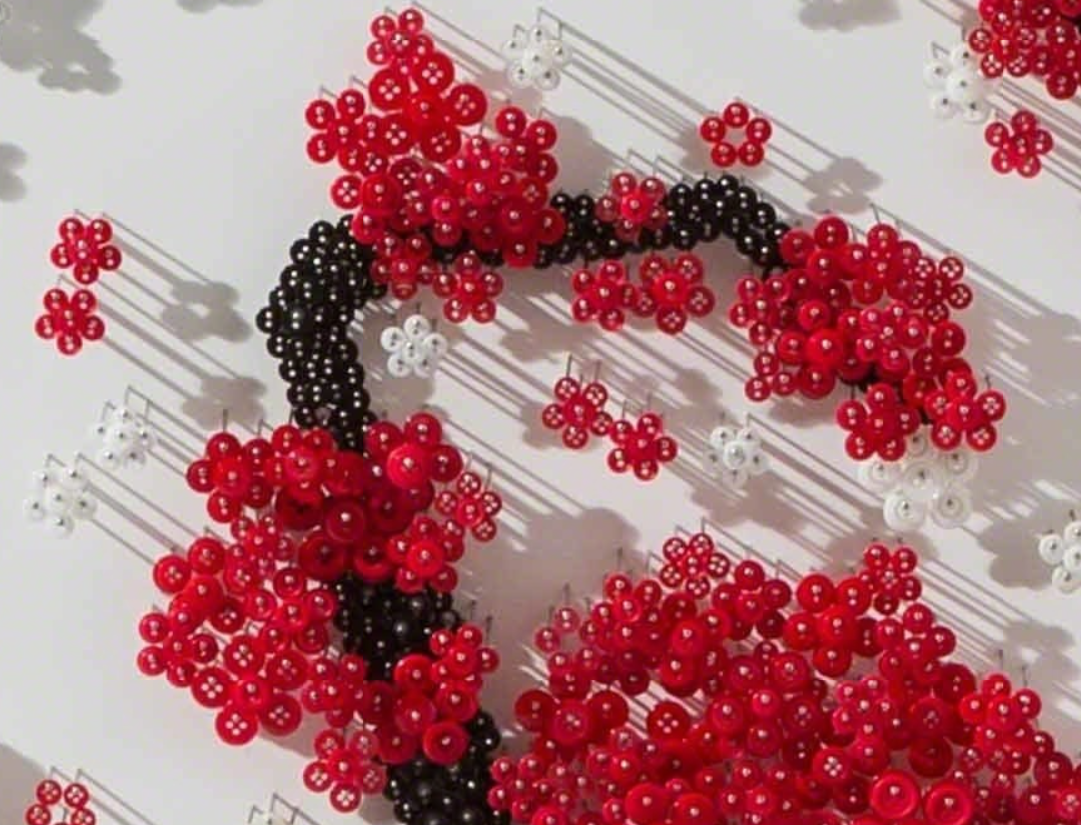 Hwang is best known for her large-scale wall installations in which buttons, beads, pins, and threads on wood panels form images of falling blossoms, vases, Buddhas, and birds.
 To construct much of her work, Hwang creates paper buttons by hand, hammering each one approximately twenty-five times until it is secure.
 Her process requires the utmost concentration and discipline, recalling the meditative state practiced by Zen masters.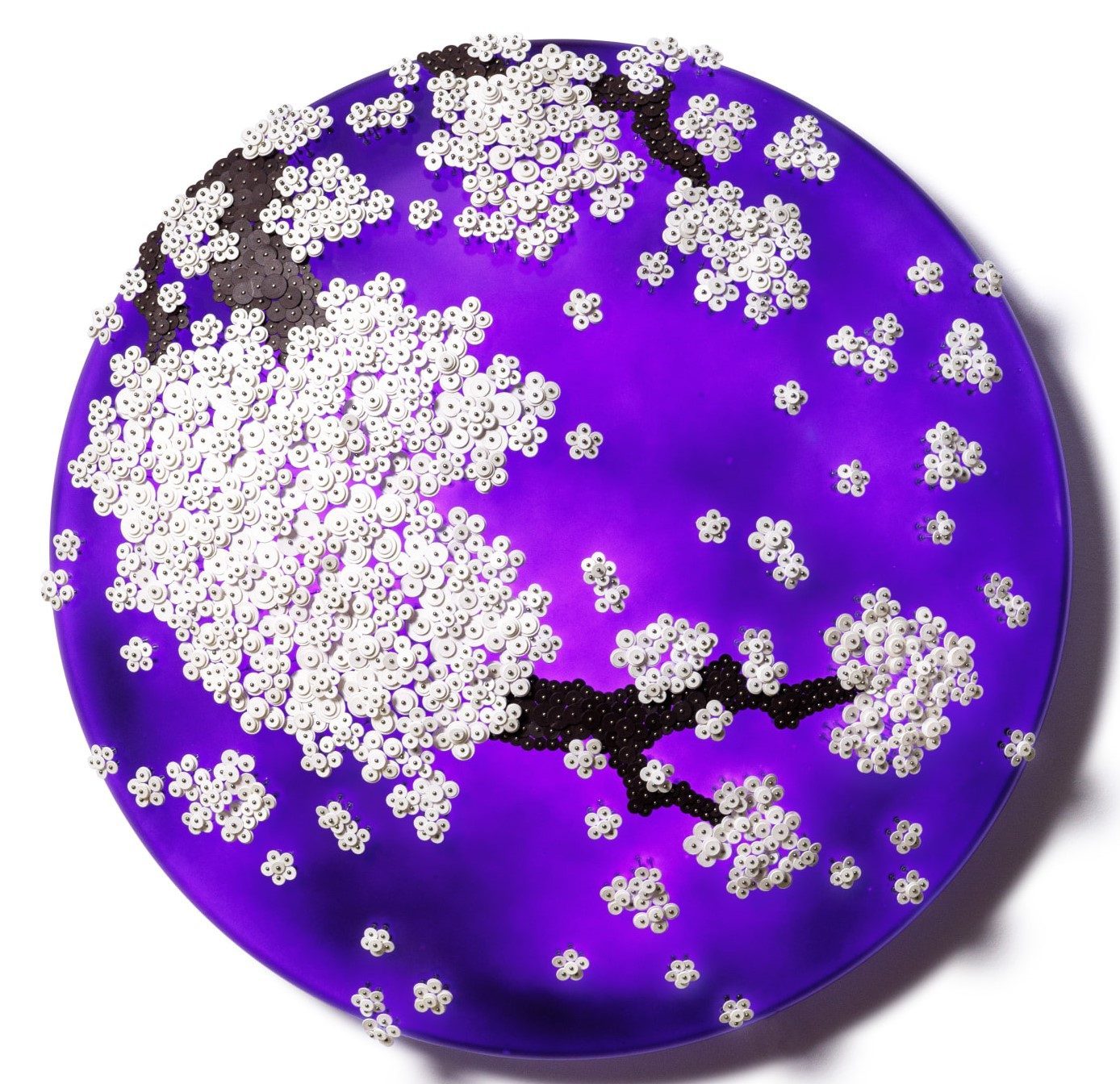

More of Ran Hwang‘s amazing work can be found at https://www.ranhwang.com/ and http://www.leilahellergallery.com/artists/ran-hwang.
 Humoring the Goddess