Koos Van Den Akker (1939 – 2015) was a Dutch-born fashion designer who lived and worked in New York City.
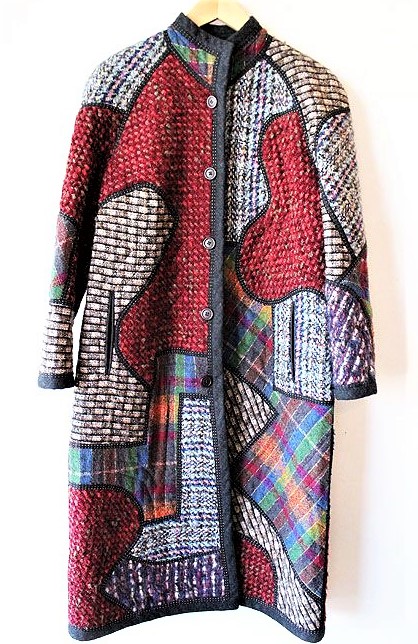
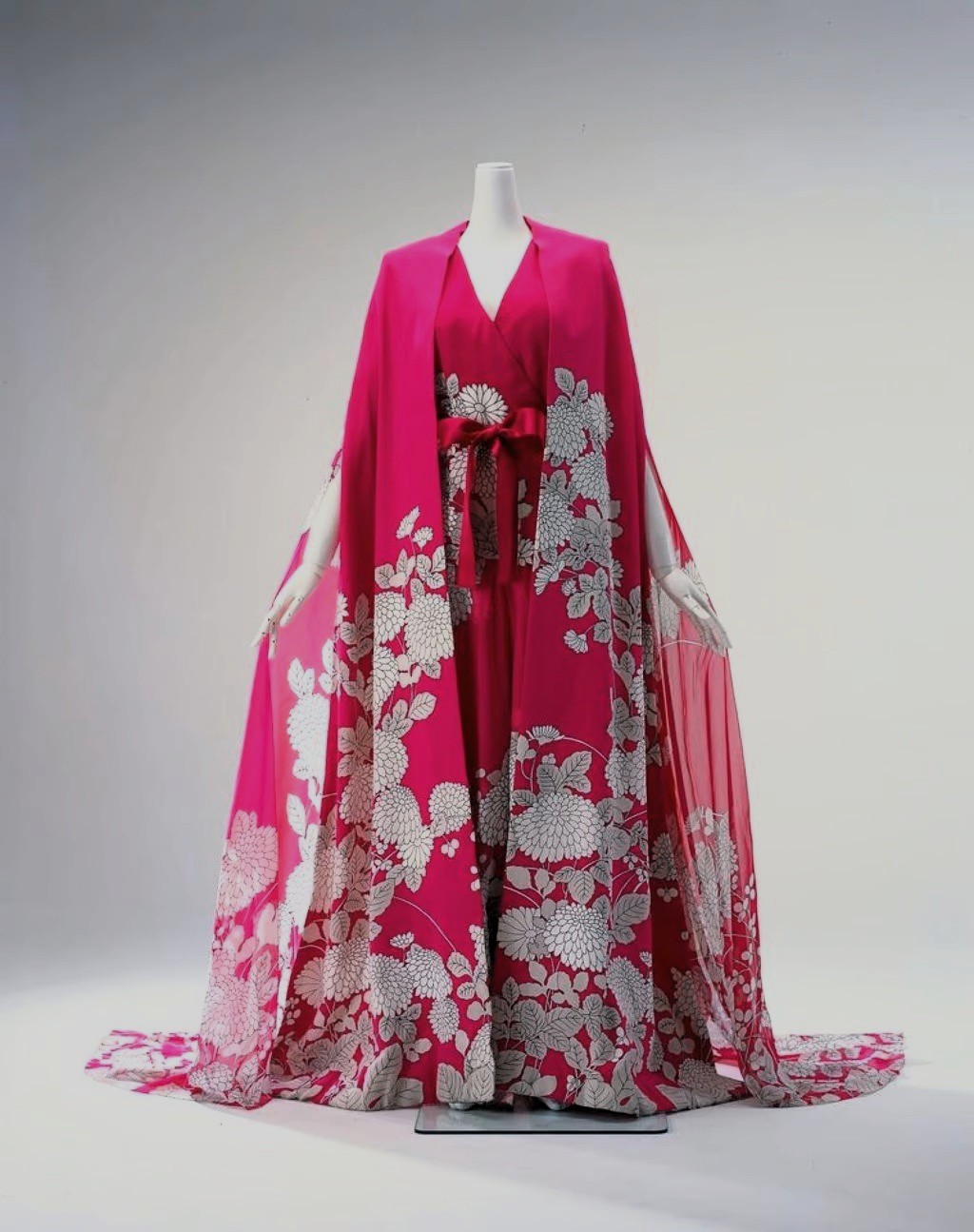
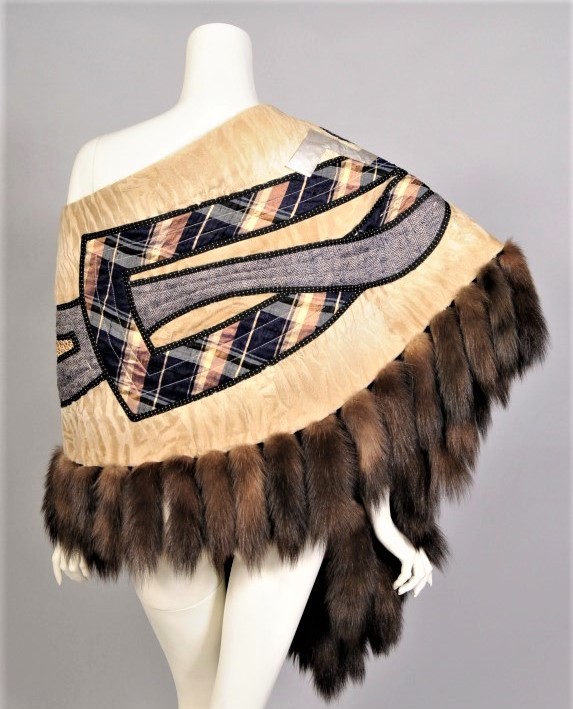
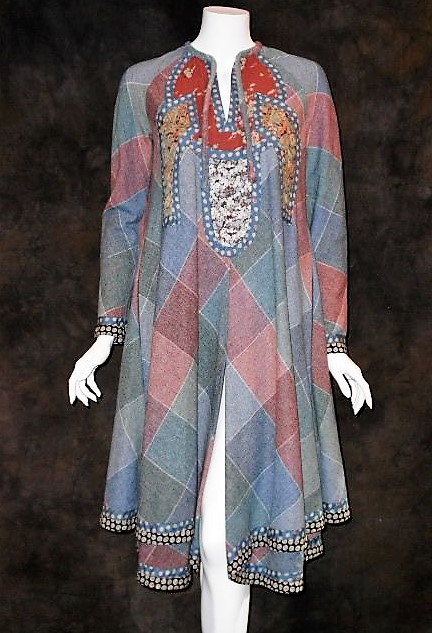
Van Den Akker was recognized for his Koos fashion label (1969-2015) which featured flamboyant idiosyncratic garments adorned with Koos’ unique collage work and cuts.
Born Koos Van Den Akker in The Hague, the Netherlands, Koos taught himself to sew using a simple sewing machine and his first creation was a dress made from a white bed sheet for his sister. At just age 15, Van Den Akker bypassed the 18-year-old requirement age to attend the Royal Academy of Art where he studied fashion and made window displays for a department store until he was 18.
After two years, Van Den Akker voyaged to Paris to design window displays for the renowned Galeries Lafayette, but realizing he needed more formal training, enrolled in L’Ecole Guerre Lavigne (l’Ecole Supérieure des Arts et techniques de la Mode, Esmod) which was located in the same building as the Christian Dior workrooms.

Christian Dior picked Van Den Akker as an apprentice, and, after three years, Van Den Akker moved back to the Netherlands and started his own business in The Hague where he slept in a small room in the back.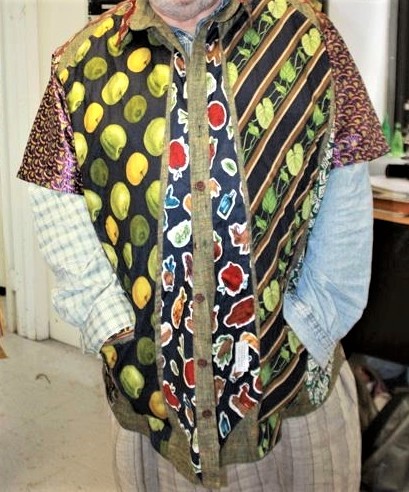 For Van Den Akker, fabric was always the focal point. Not just a single luxury fabric, but a riotous mix of fabric patches and panels combined into a surprisingly unified whole.
 Though the designer rejected the haute couture emphasis on the relationship between the body and garment, his painstaking and detail-oriented design process revealed his training in the haute couture.
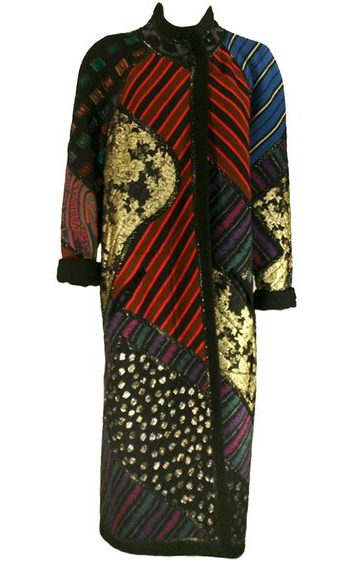 Each piece was hand-cut and manipulated on the foundation until the desired effect was achieved, and after each element of the collage was basted to the foundation, applique, quilting, slashing, bias tape and other techniques or embellishments were used to create additional texture and visual appeal.
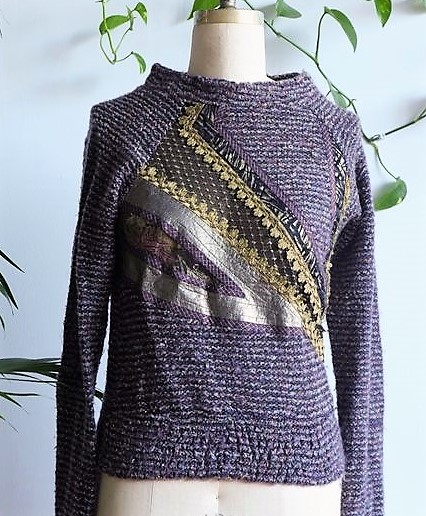 By his obvious love of fabric, color, and form, Van Den Akker was able to translate those emotions into incredible and breathtaking garments.
More of Koos Van Den Akker’s creations can be found at https://www.threadsmagazine.com/2015/02/05/tribute-to-koos-van-den-akker and http://www.fashionencyclopedia.com/To-Vi/Van-Den-Akker-Koos.html.
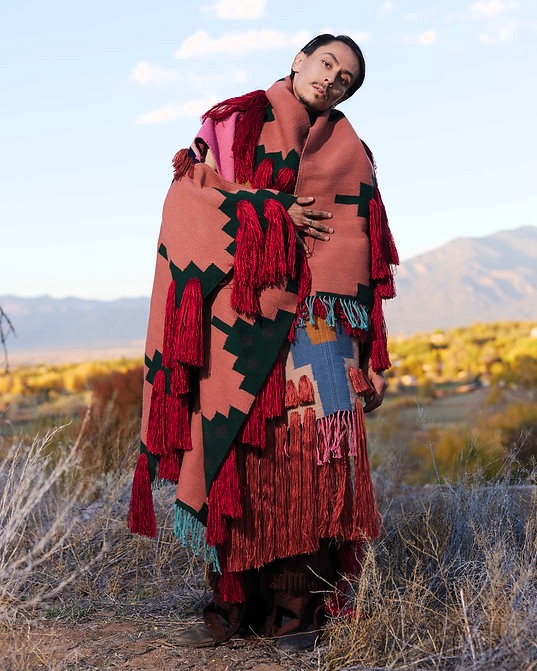 Tafoya is a reflection of his New Mexican home’s rich textile history.
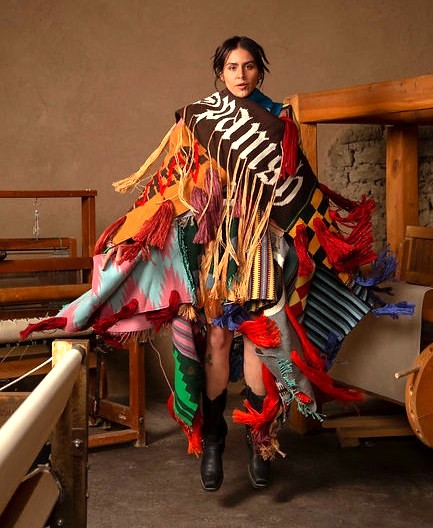 He studied fashion at New York City’s Parsons School of Design before working with designers like Charles Youssef.
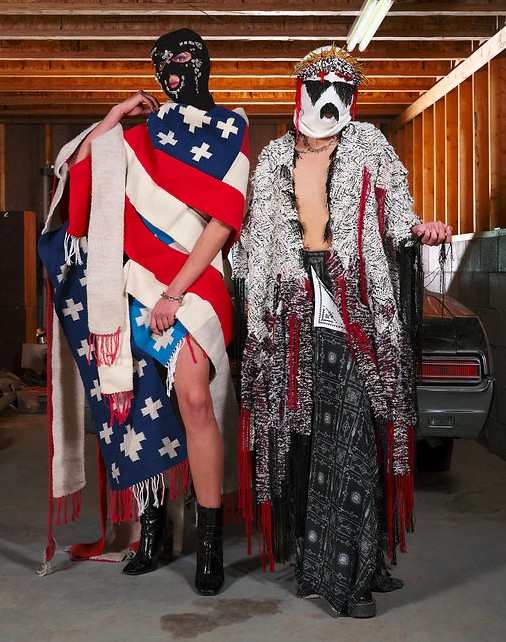 Tafoya is mostly self-taught, reading books and employing techniques he learned at Parsons to master the medium.
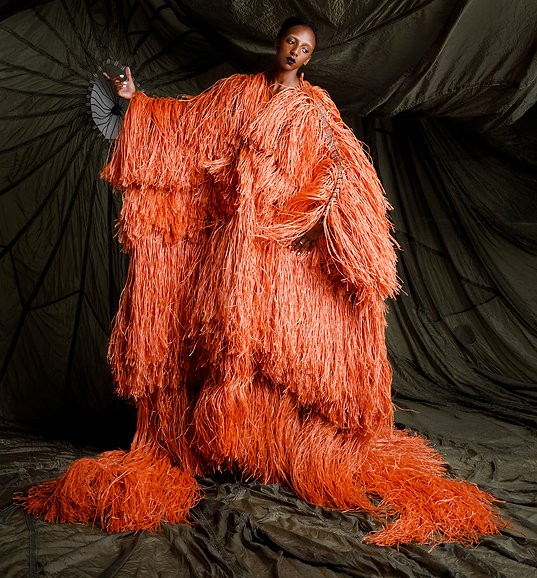 Coming from a ranching grandfather and a weaving grandmother, Tafoya infuses his knowledge of traditional Spanish loom weaving with his experience in New York Fashion.
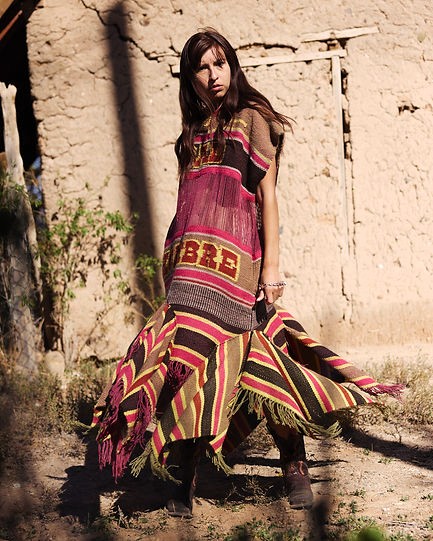 He weaves boisterous shapes with bright colors, clashing-yet-complimentary patterns and fringe details that inspire movement.
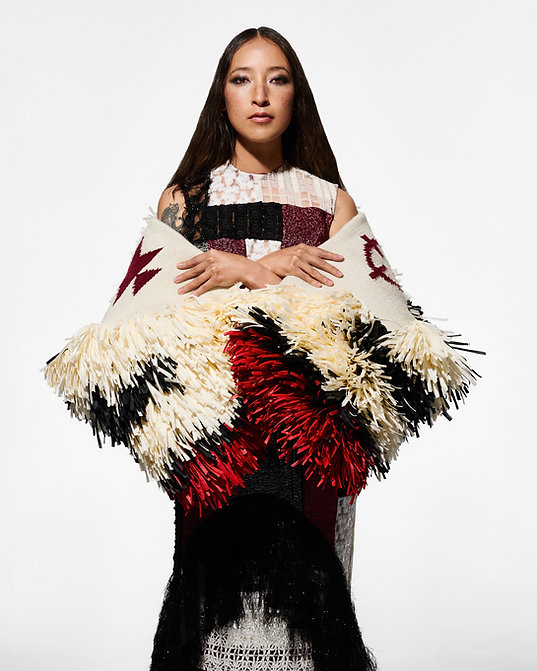 Tafoya always infuses old and new techniques into his weaving’s and garments, each taking ideas from the other influencing the process.
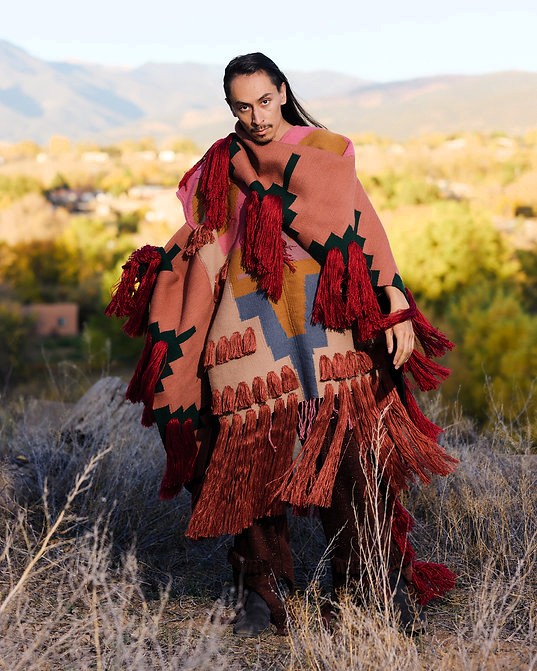 More of Josh Tafoya’s weavings can be found at https://www.joshtafoya.com/.















 Humoring the Goddess