
Next time a sunrise steals your breath or a meadow of flowers leave you speechless, remain that way. Say nothing, and listen as Heaven whispers, “Do you like it? I did it just for you.”
~Max Lucado
Croning My Way Through Life
Next time a sunrise steals your breath or a meadow of flowers leave you speechless, remain that way. Say nothing, and listen as Heaven whispers, “Do you like it? I did it just for you.”
~Max Lucado
Carol Emarthle-Douglas considers herself a traditional and contemporary basket weaver.
Emarthle-Douglas’ training and experience came from the Basket Weaving School in Seattle along with native elders from the Northwest Native Basketweavers Association at their yearly gathering.
The artist’s inspiration is taken from her Northern Arapaho and Seminole heritage.
She bases her designs on the Plains style beadwork, ledger art, and parfleche designs from her mother’s tribe and the Seminole Nation of Oklahoma on her father’s side.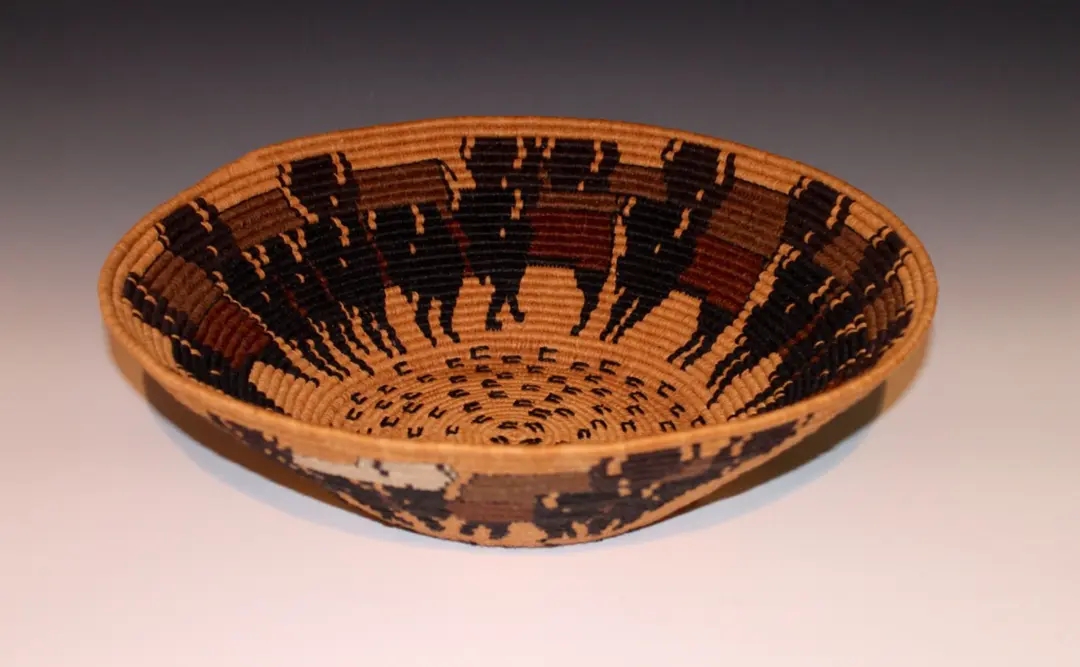 “It is very important to me to pour a lot of love, respect, and careful attention to details in my work,” the artist explains.
 “I aim to produce strong baskets and other artwork that are able to stand the test of time.”
More of Carol Emarthle-Douglas‘ amazing hand-crafted baskets can be found at https://www.cemarthleart.com/.

Some people — rather, some bloggers — have a lot to say. And they say it many ways. In many forms.
I suppose that’s why we all blog.
We start blogging to share. Thoughts, poetry, opinions. According to First Site Guide, the estimated global number of blogs is over 600 million.
Think about that. 600 million.
First Site also says 7 million blog posts are published per day.
Seven Million. Seven Milll – yon.
That’s a lot of emoting going around and through the aura of the Earth.
Any opinion you have, any thought, any recipe for success or spiritual growth or even lasagna is being mirrored by millions every day.
It is an easy way to get gratification. To feel that you’re not alone. That someone understand you and shares your passions. Feels you. Gets you.
Now, seven million people post every day, but how many of their postings do you read?
The number dwindles significantly.
Should that matter to you?
I guess it turns into a question: Why do you blog?
There are the standard answers: to share, to grow, to vent. To experiment. To inflame. To soothe. To teach. It’s a way to connect your inner thoughts and outer words with the Earth’s energy level.
What ever your reason, it’s the mere fact that you do write that sets you apart from those around you. Not a big separation, mind you — just a crack in the consciousness of the space around you that takes your inspirations and experiences one step further.
I guess the purpose of this blog this morning is to tell you not to get disappointed if few read what you have to say. 10,000 followers does NOT mean that 10,000 people wake up and read you every day.
It just means you’ve become an outlet to someone else’s plug into the world.
I truly believe that if you can encourage one person, give an invisible hug to one person, your purpose has been fulfilled.
And that should make you feel better as a human being.
Don’t be afraid to share yourself. Someone may need you!

Sadness is but a wall between two gardens.
~ Kahlil Gibran
Joana Vasconcelos is a French-Portuguese sculptor and multimedia artist known for her large-scale installations that demonstrate a feminist perspective and comment on cultural tradition and consumerism.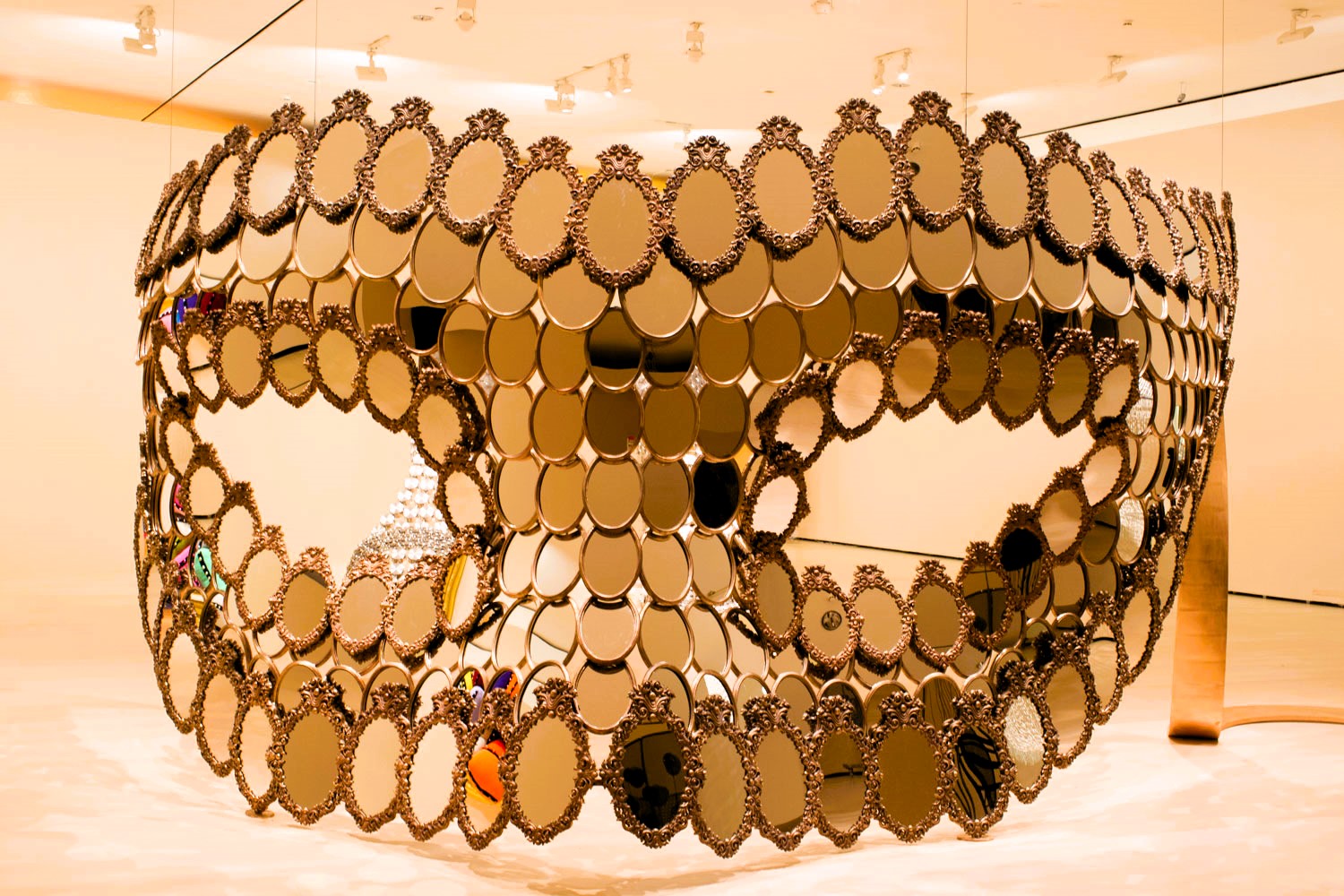 Vasconcelos studied at the Centro de Arte & Comunicação Visual in Lisbon.
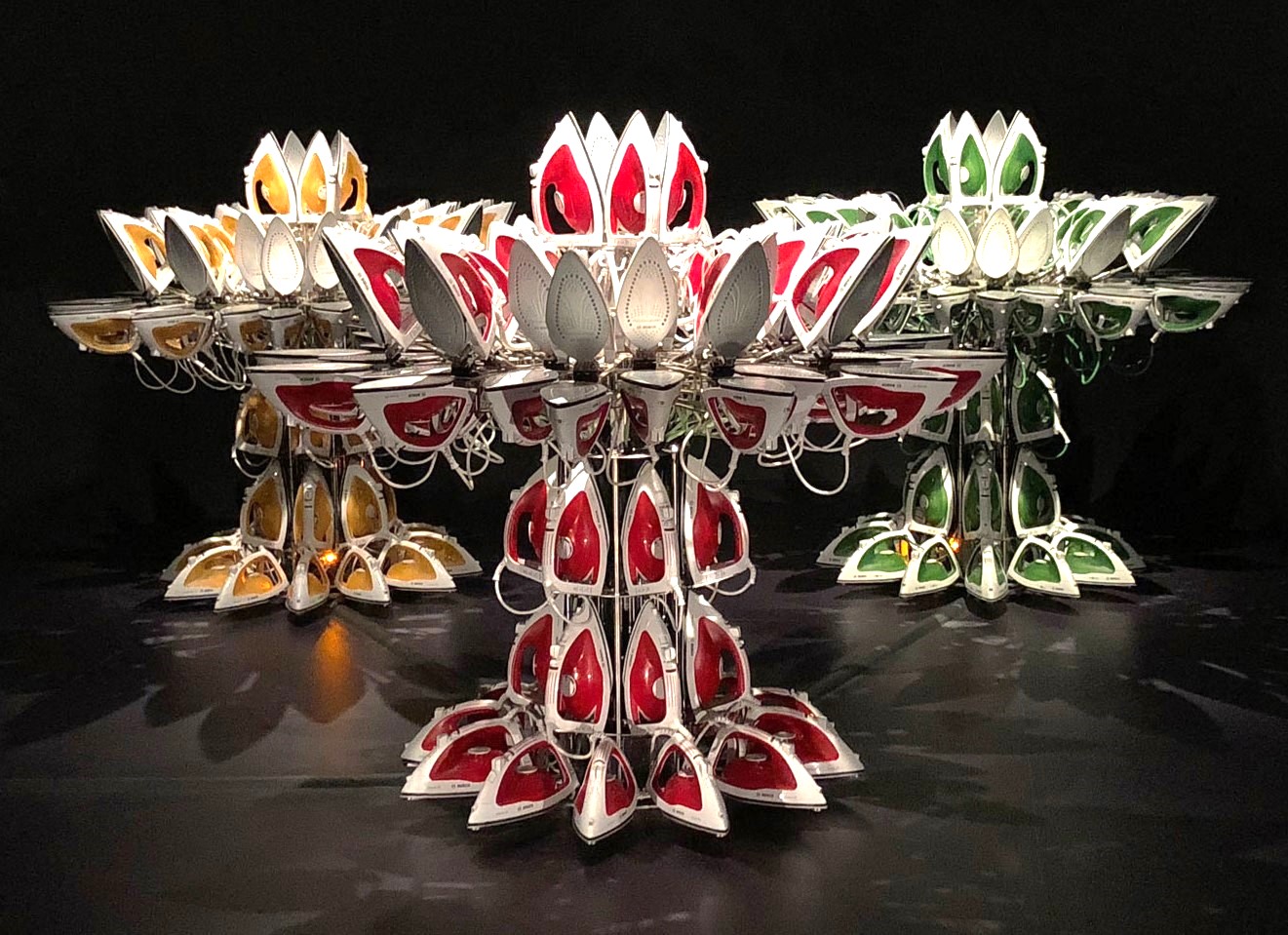 The artist plucks basic items from reality and repeats them on an unprecedented scale to form the bones of something utterly different.
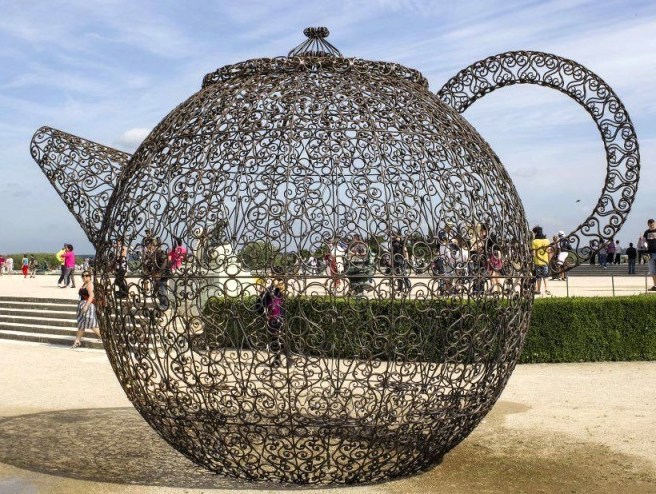 She sees our belongings — everything from pots and pans to wheel rims and fabrics to pianos and laptops —as personal, ready-made building blocks for publicly-attuned art.
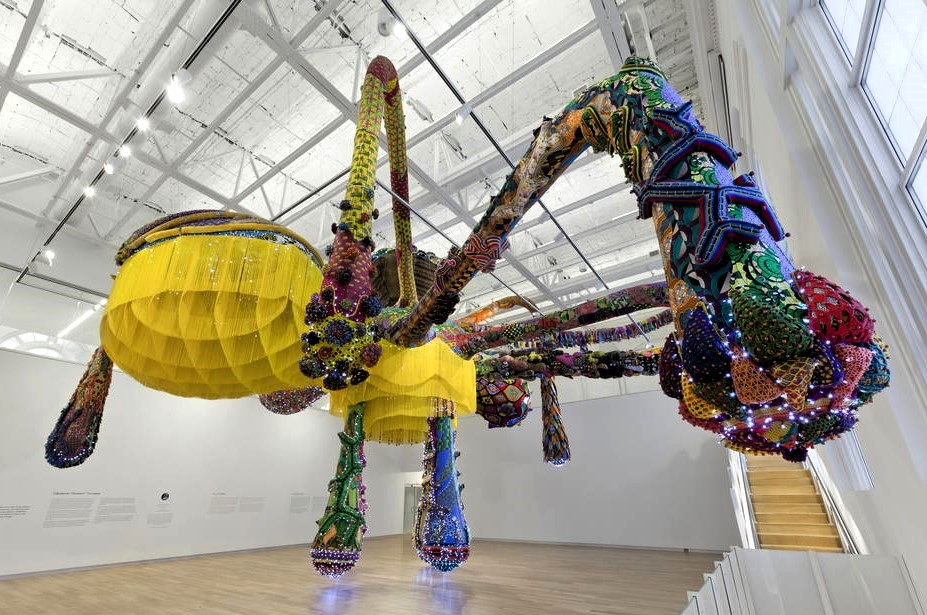 Best known for her outsized, tongue-in-cheek sculptural installations, Vasconcelos often humorously takes on issues ranging from gender identity to consumerism.
 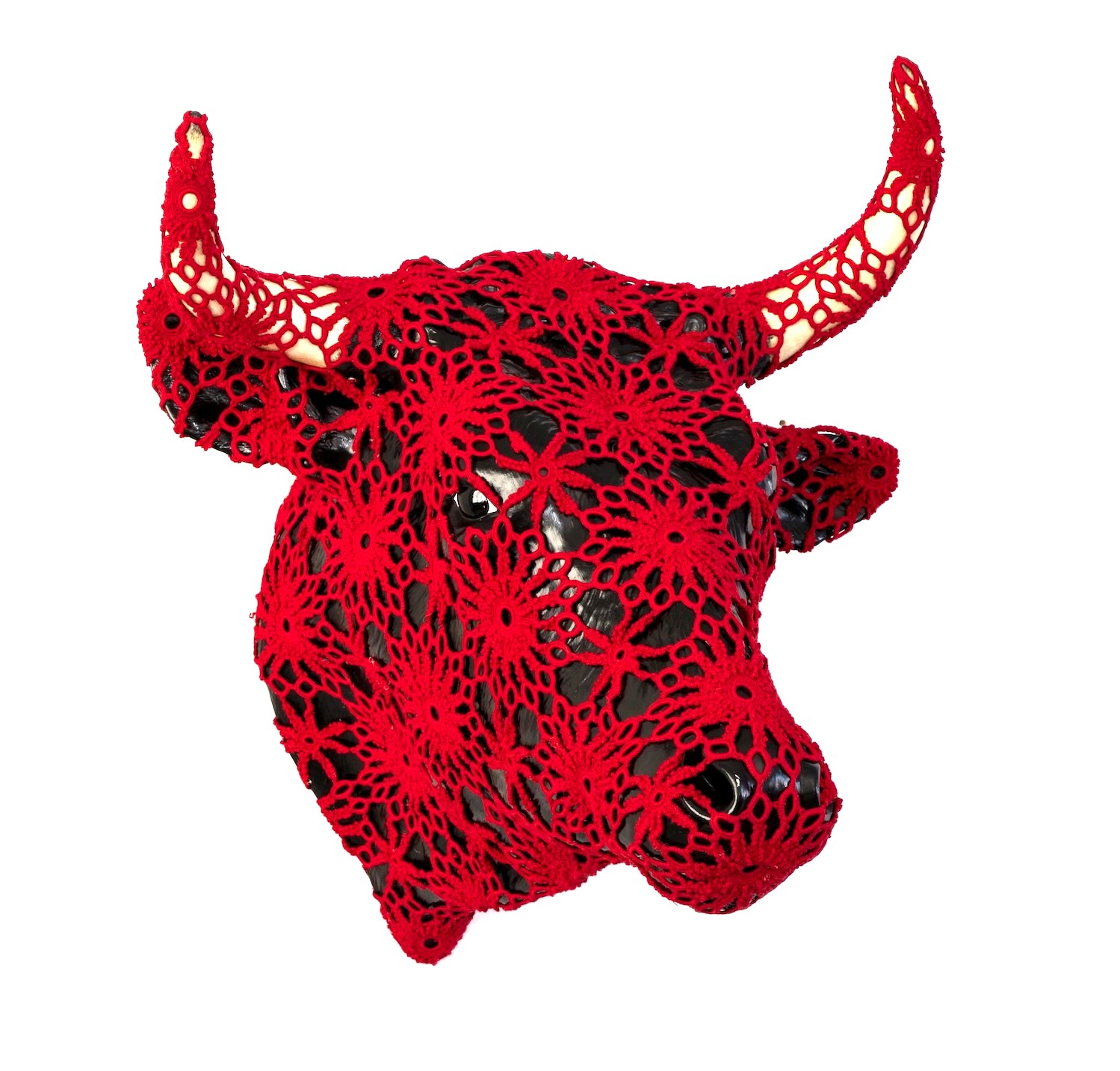 Her artwork assaults the senses with luxurious gigantism and operatic overtones, but they also resonate with something deeper than contemporary culture.
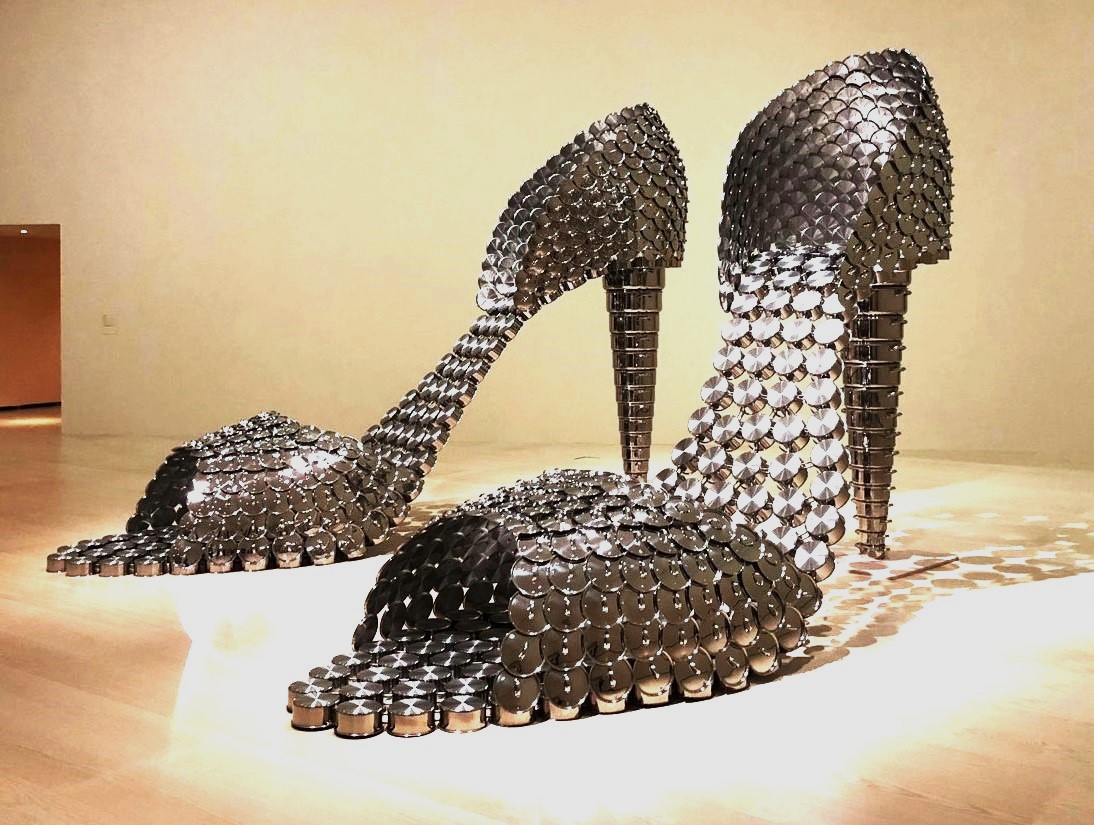 Asked for advice for young artists, Vasconcelos says, “Never give up. Every time someone tells you to give up, just carry on.”
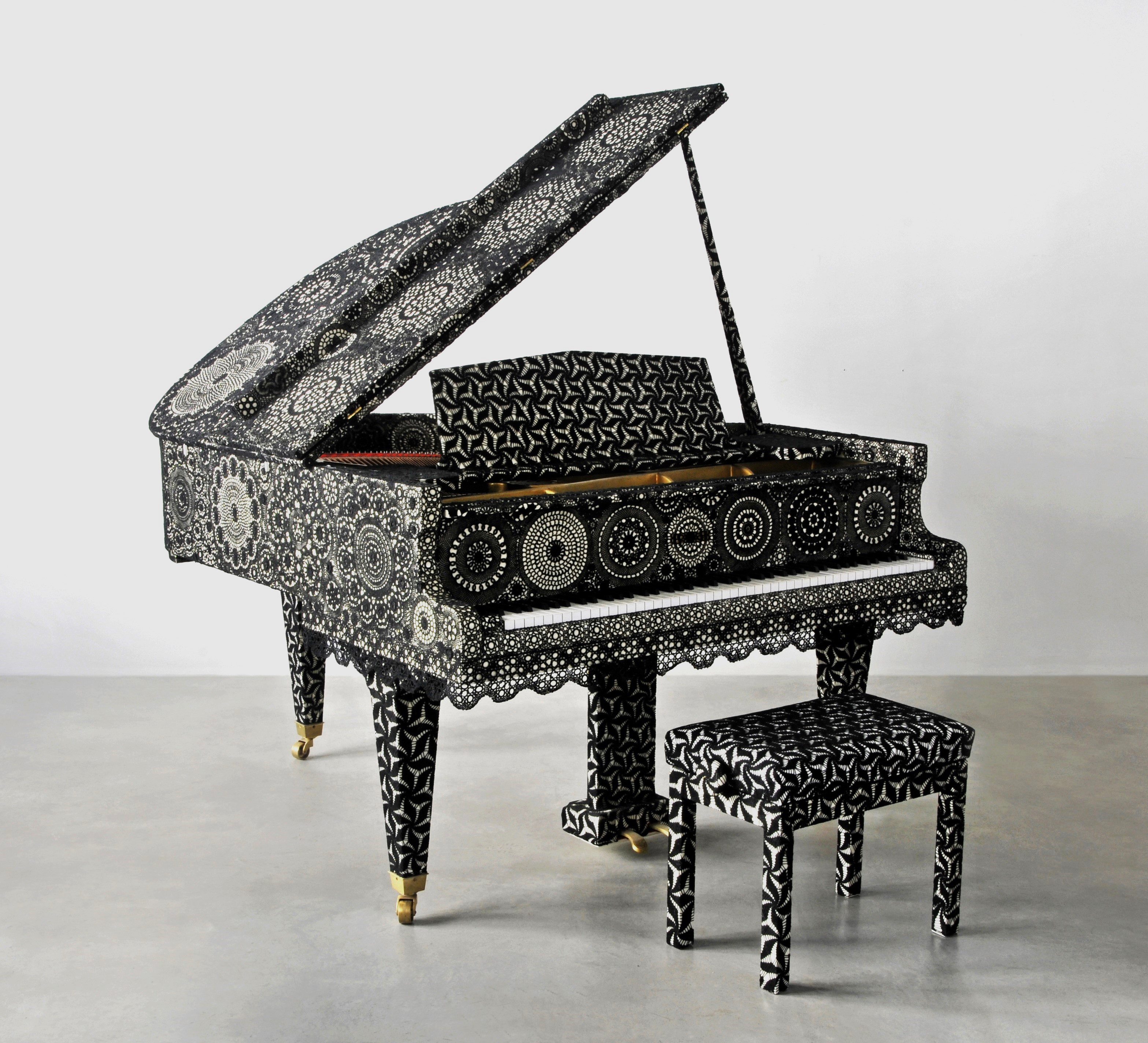 More of Joana Vasconcelos‘ incredible installations can be found at www.joanavasconcelos.com
What do you think when you view this Photo?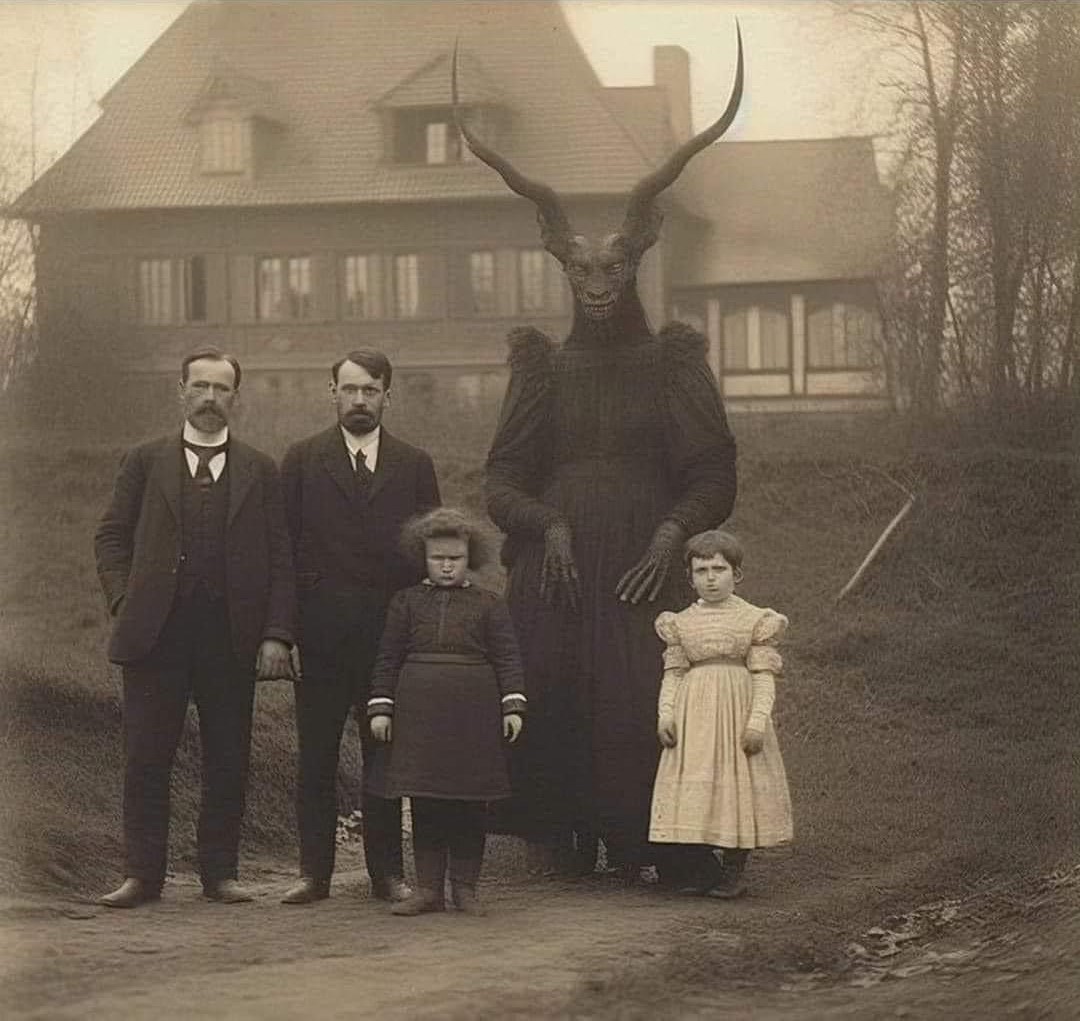 Or this one?
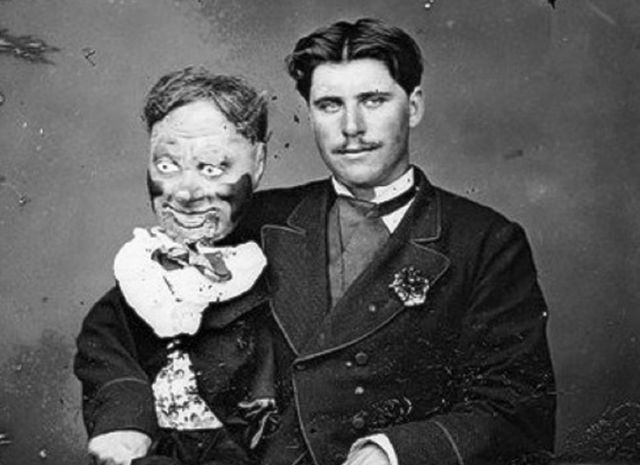 This one?
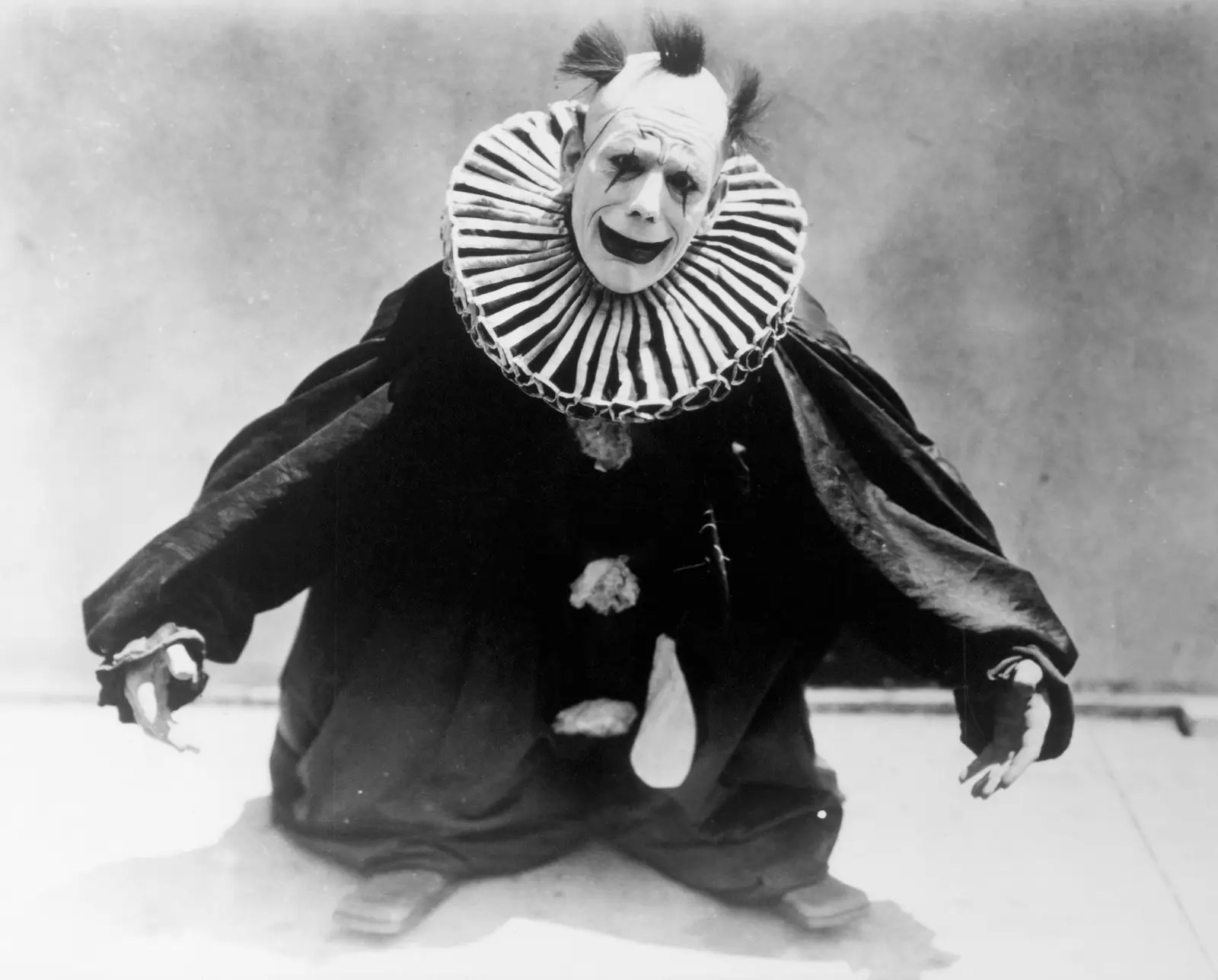 Or how about this one?

Or this one?
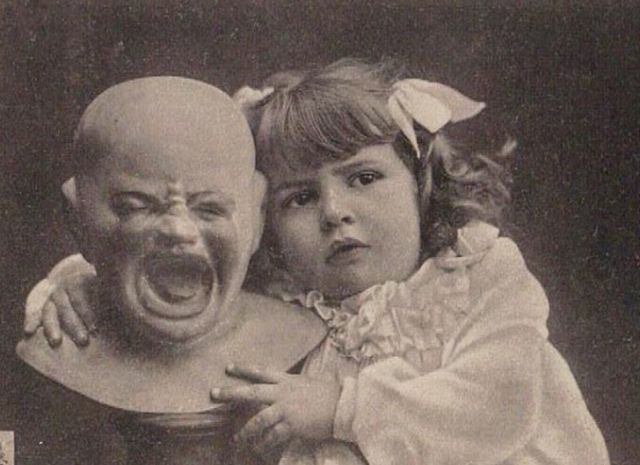
To those who lived in the early 1900s, these pictures were merely reflections of the times. Halloween. A circus. People having fun.
But to us imaginative people of the 2023s, these images are downright creepy.
Take the first picture.. This pic showed up on a Facebook feed, and I couldn’t help but do a double take. Is this a mom in a Halloween costume? A nod to the goat/deer goddess of the woods? Do they even know the antlered dudette is there?
Selection number two: a ventriloquist. Simple throw-your-voice entertainment. But what kind of dummy is this dummy? Was the dummy supposed to have a clown face? A kinda beat up one at that?
The third one. Clowns were a big thing at the turn of the century. This is the famous Lon Chaney posing for a picture from 1924. This is supposed to be a friendly clown. Really? With that hair? That squished body? Would you want your kids to go up and hug him?
The fourth one. Innocent trick-or-treaters. Wearing tightly pulled rubber masks. Just hanging around. Do they look adorable to you? Loveable? Innocent? Do they even know what they look like?
The fifth one. A crying baby head with a mouth bigger than Lake Michigan. Who would traumatize their kid making them hug something like that?
We are all victims of our own generation. What was normal a hundred years ago is often unfathomable to those of us in the 2023s. Who would dress their kids like that? Think that the uglier the better? Of the photos I didn’t post, why did the whole community wear gas masks? Take pictures with their dead relatives? Crucify someone to the wall to help them overcome mental illness?
I know we do the same these days. With monster movies and CGI and special effects, the past can’t hold a candle to modern imaginations. War, shootings, starvation, all carry over generation to generation. Our ability to scare, terrorize, mind-fu%k and destroy people and the planet has never been easier.
But that’s not the point.
What we think creepy they thought funny. Or normal. I imagine they would feel the same way about today’s pierced eyebrows or stiletto heels.
You think our world is weird?
The world has always been weird.
Larysa Bernhardt, an artist based in Missouri, creates brilliant colorful moths by using old tapestries. The moths often showcase beautiful images of historical people, birds, animals, and flowers on their wings.
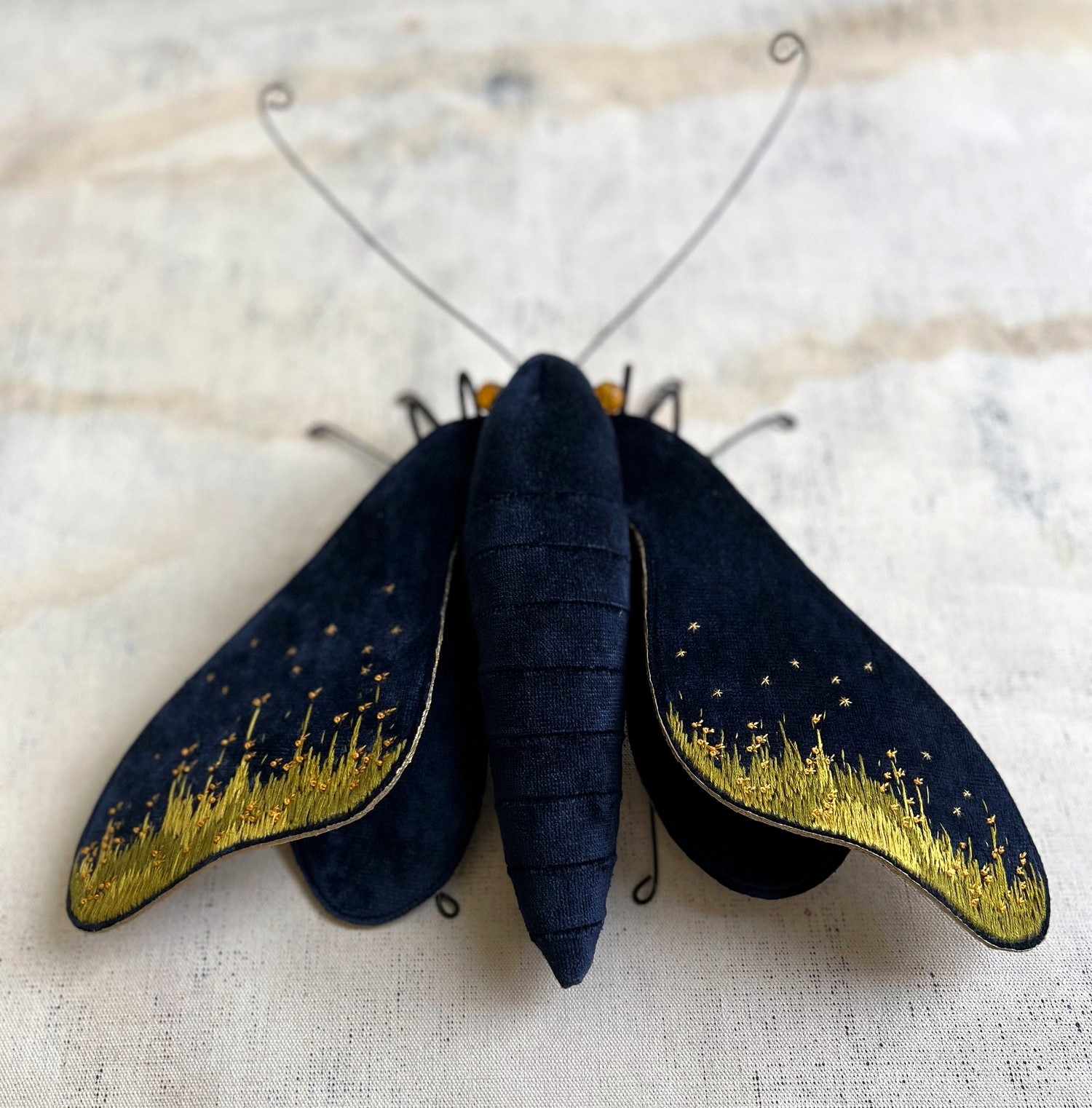 The idea for this unlikely art form came from Bernhardt’s longtime fascination with nostalgic textiles.
  The artist began by collecting vintage textiles, including silk tapestries and wool, and was interested in analyzing and unraveling their histories, taking an interest in how creatures, such as moths, often inhabit such materials.
 To ensure they stayed in good condition, she habitually checked for moth larvae in the folds of the cloth.
 This ritual triggered the idea of merging the delicate cloth fabric with its natural “enemy.”
 As a result, the artist also discovered a new love and appreciation for the winged insect and says she is inspired by the way moths tirelessly and fearlessly reach for the light.
  Bernhardt learned the skill of turning tapestries into art works from her mother, just like she learned it from hers.
More of Larysa Bernhardt‘s fascinating tapestry moths can be found at https://www.larysabernhardt.com/.
Watching it snow outside my front window, readjusting my snuggly grey blankie on my lap, I’m wondering where this blog entry should go.
I really DO want to write something, but it’s bleak and depressing outside, leaving very little room for ambition or creativity.
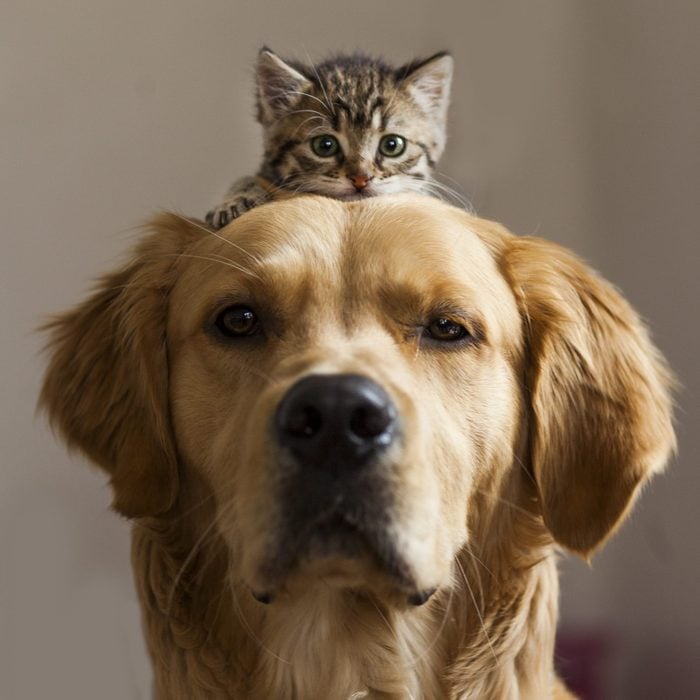
Bring in the Kitties and Puppies.
These two staples never fail to bring a smile to grumpy faces, including mine. There are plenty of other days to be creative, artistic, and cosmic — today is more of a reflective, movie, good book, pet-your-pet kinda day.
I hope you have one of these days soon. They really do recenter you.






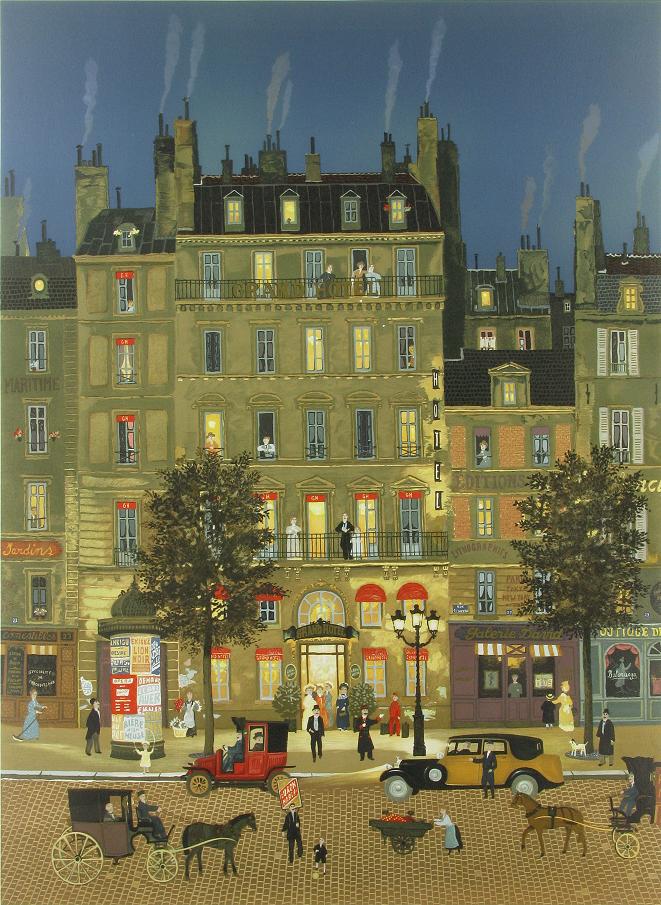
Born in 1933 in Paris, Michel Delacroix is a prominent French painter known for his naïf art style (art created by a person who lacks formal education and training), often depicting scenes of Paris in a whimsical and childlike manner.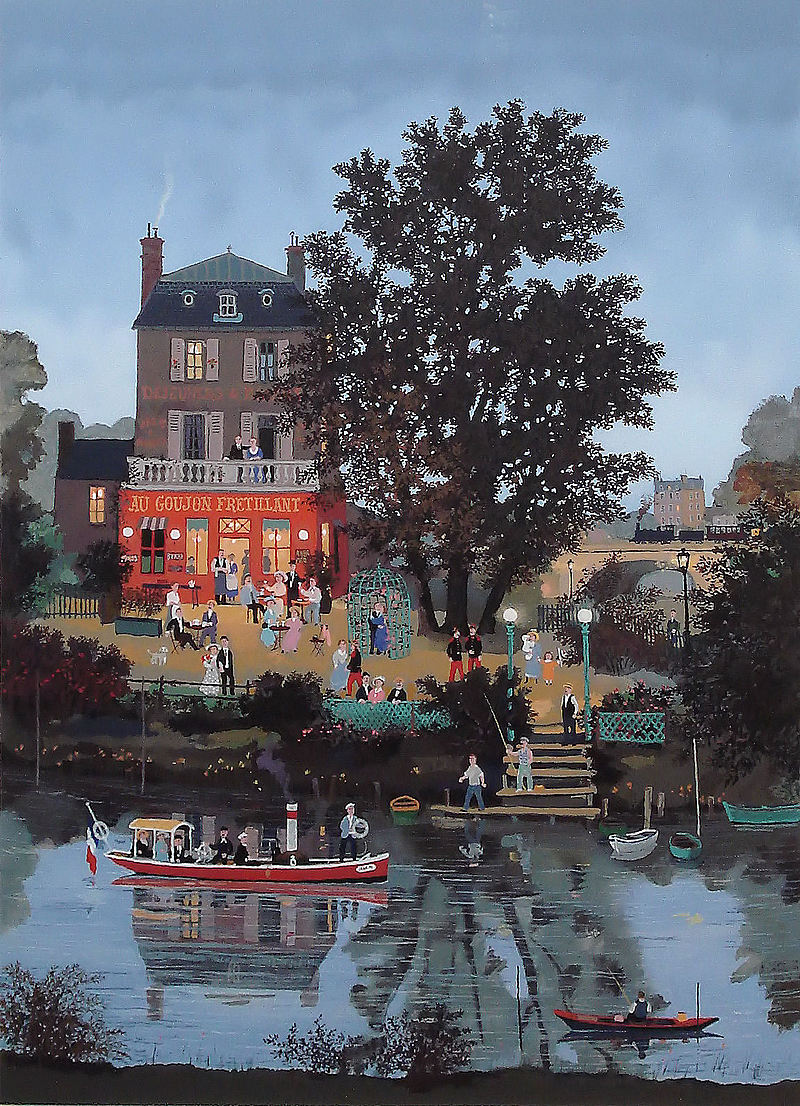 Delacroix’s subjects include street scenes of Paris and other nearby areas of France set during his childhood during the Nazi occupation.
 Delacroix began his artistic career by studying at the Ecole des Beaux-Arts in Paris.
 Later, he worked in various artistic fields including graphic design before dedicating himself fully to painting.
 Delacroix has created a Paris full of magic and atmosphere that holds one’s imagination as it travels back in time.
 The works are renowned for their graceful balance of the earthy and the urban, the cosmic and the ordinary.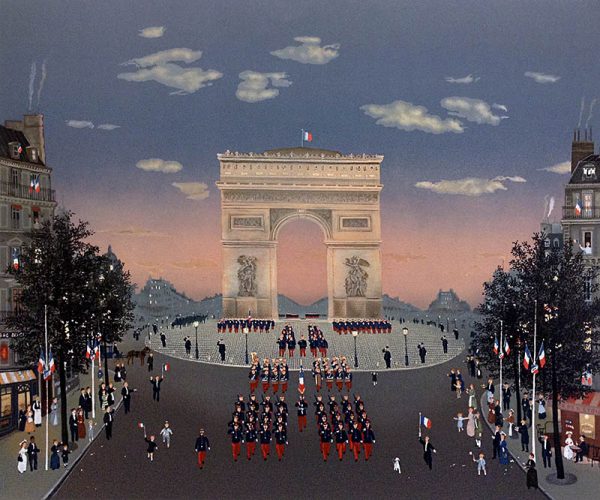
In 1994, Delacroix was named an Official Artist of the Atlanta Committee for the Olympic Games and commissioned to celebrate the 1996 Games in an oil painting Titled “Atlanta 1886-1996.”
More of Michel Delacroix’s lovely paintings can be found at https://www.artlex.com/artists/michel-delacroix/ and https://www.artnet.com/artists/michel-delacroix/.

I have seen the dark universe yawning
Where the black planets roll without aim—
Where they roll in their horror unheeded,
Without knowledge or lustre or name.
The Haunter of the Dark
H.P. Lovecraft
 Don’t go there.
That can be said of many things. Standing water during a flood. Desolate houses in the dark woods. Do not cross yellow warning tape.
I also use that phrase for memories that like to hang around in my head too long.
It’s not that I have not acknowledged these experiences — as a matter of fact, I think I’ve over-felt and over-thought many things in my life.
But I find that, on a day to day basis, I am better off closing those doors more often than not.
If you have a wandering mind like I do, it’s easy to start with one thought, one emotion, then, instead of acknowledging and letting it go, you let it sit and simmer and steam and overcook in your psyche until you are sick to your stomach.
I think that’s what anxiety attacks are all about.
Thinking and over-thinking doesn’t work at all. We all know that. Past events are just that. In the past. You can’t change one damn thing.
But still, it’s like opening that big oak door just a little. Not much — just a crack. Just so you can get a little peek, hold onto just a little memory.
Some of us handle that little peek just fine. But for others, all you need to do is open the door a crack and, like a raging flood, everything comes pushing through at one time, and before you know it you’re dealing with pain and angst and confusion you already thought you’d handled.
So for me, the smart thing to do is to say Don’t Go There.
I say it in a nice way. Not a nasty, told-you-so way, but in an easy, best-friend-and-protector kind of way. I find a way to distract my thoughts and funnel them into more of a “today” moment or a “tomorrow” moment.
The forces that be understand that. They have no problem with acceptance and distraction. They know I’ve learned. I’ve grown. I’ve survived. I don’t need a constant reminder.
My age is a constant reminder of the long path I’ve left behind.
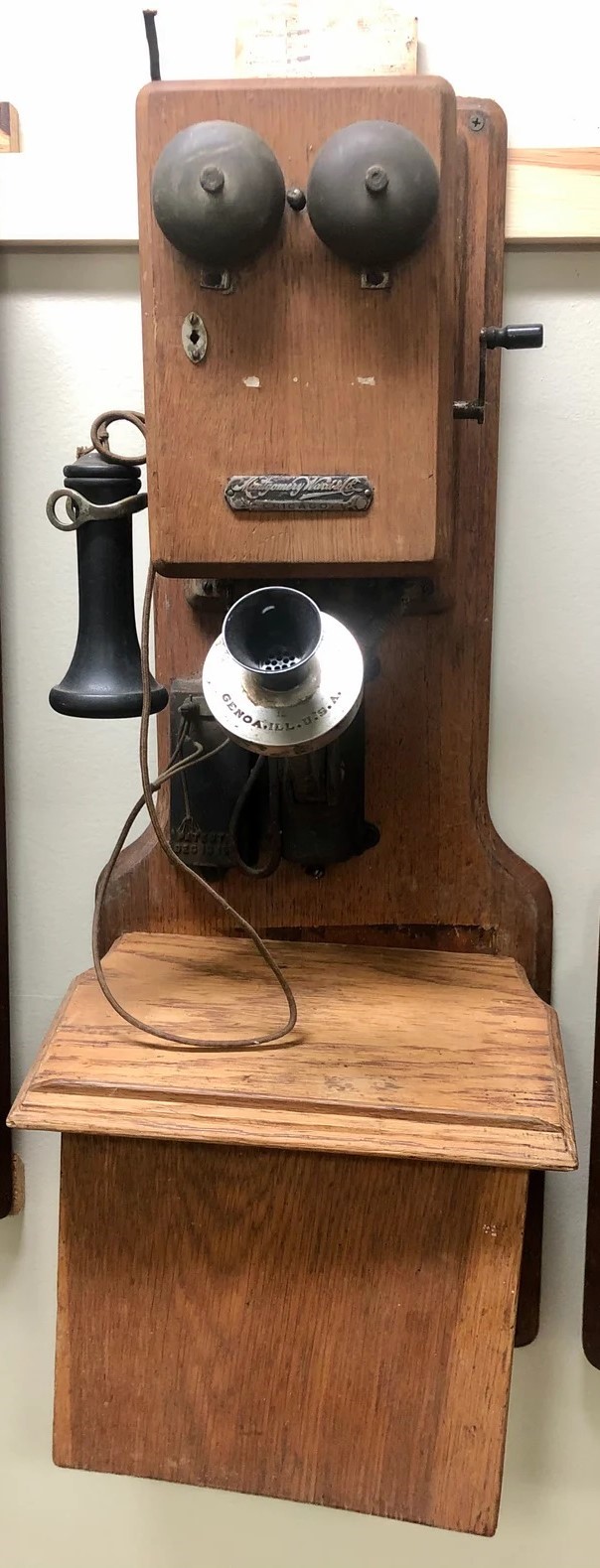
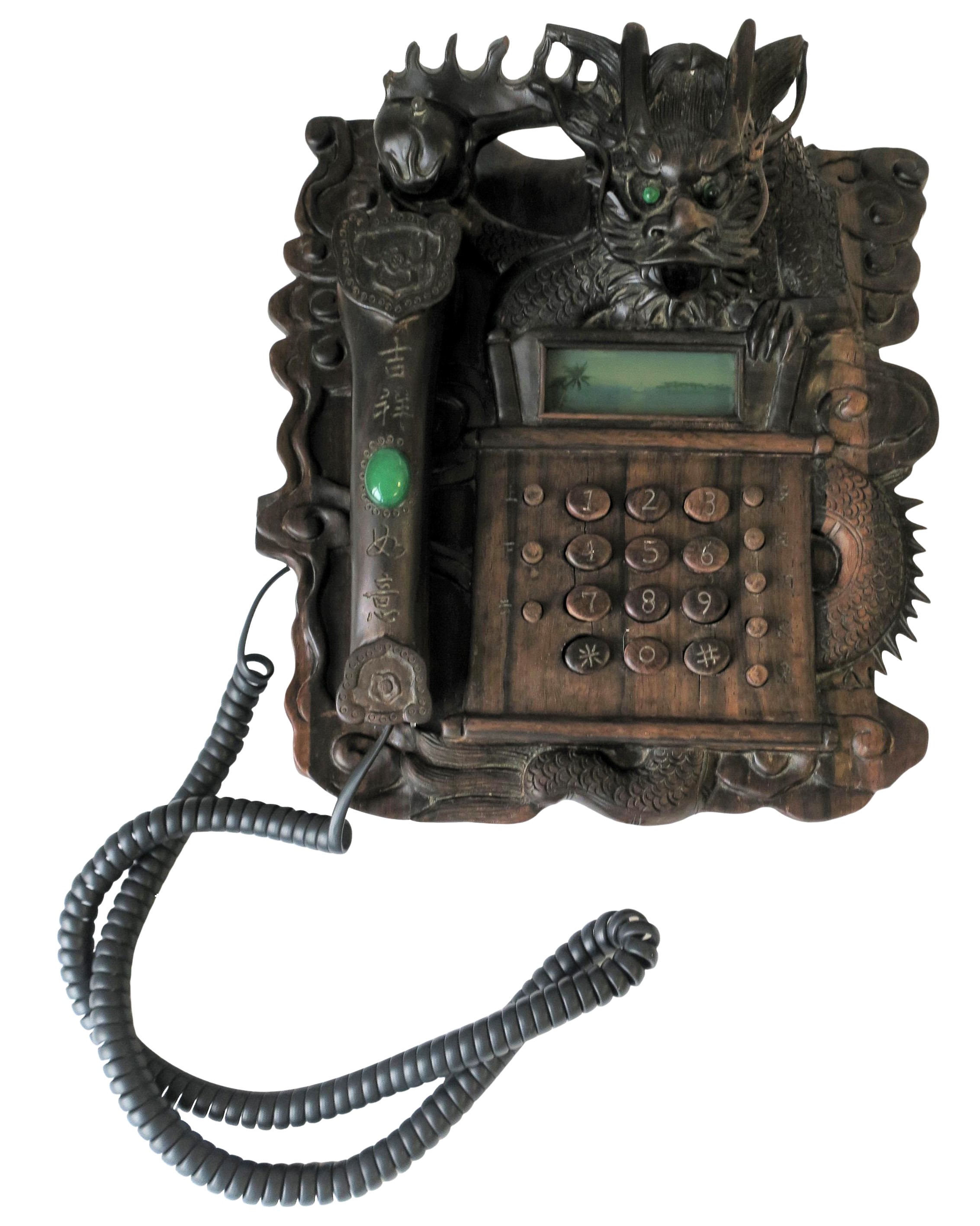
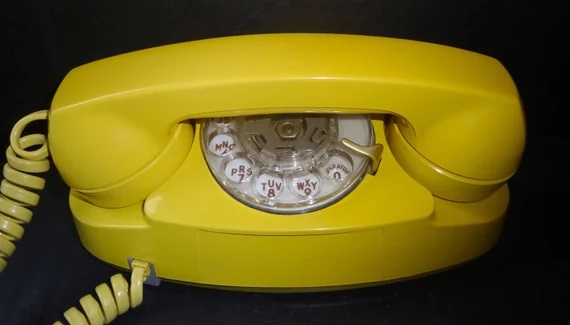
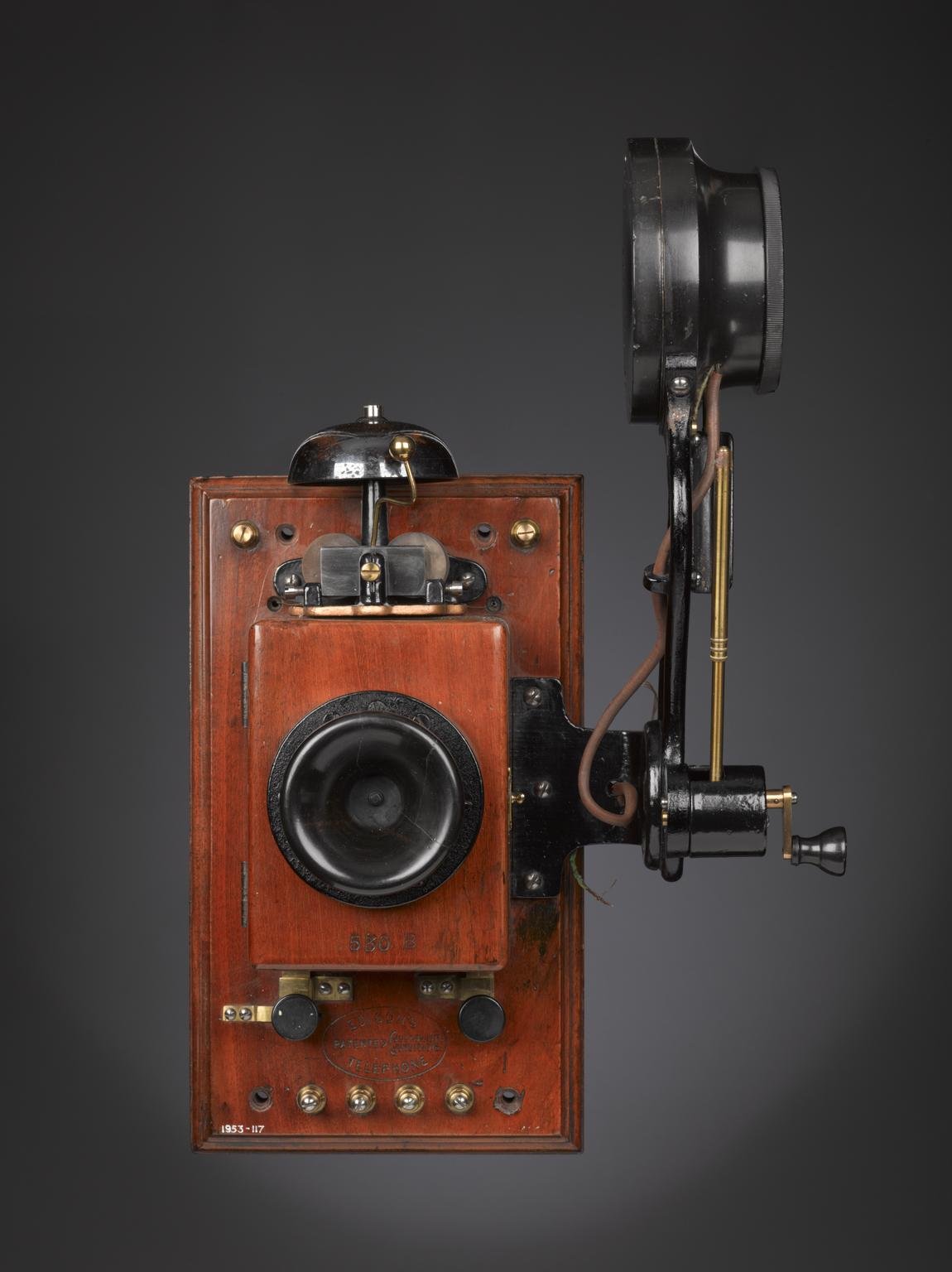
Mr. Watson – come here – I want to see you.”









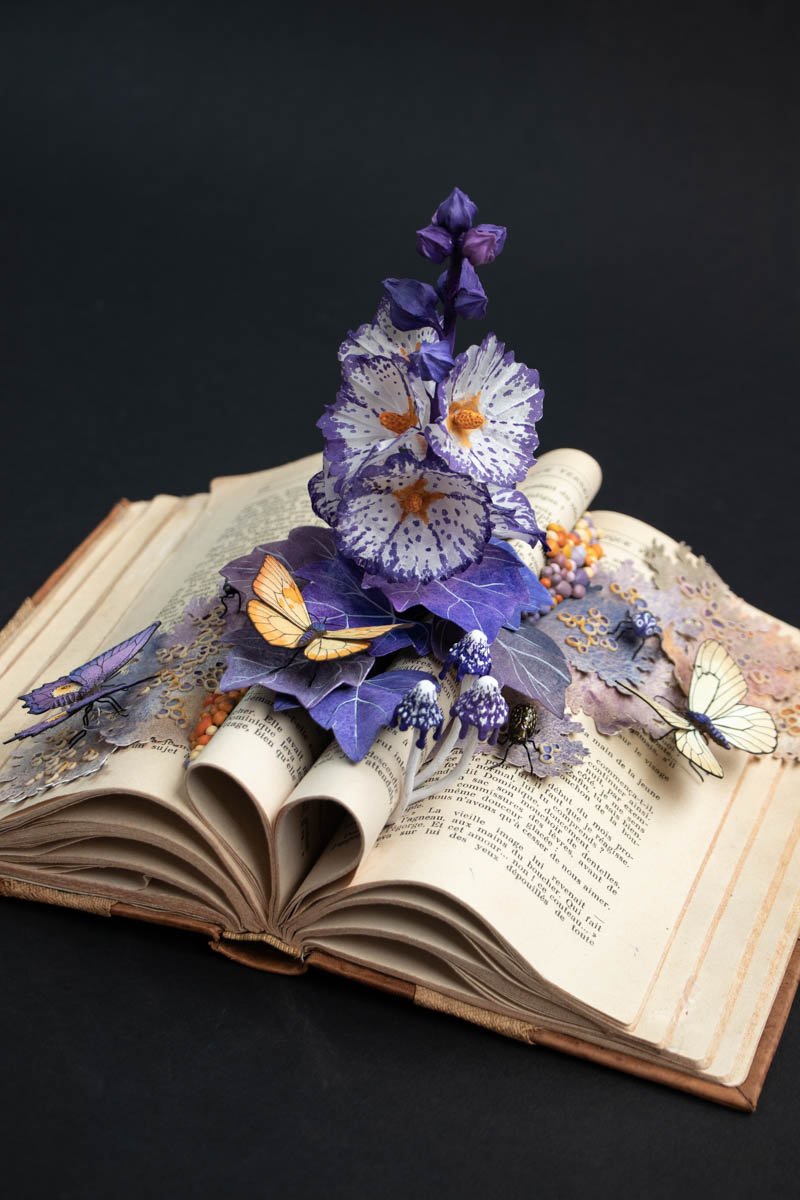
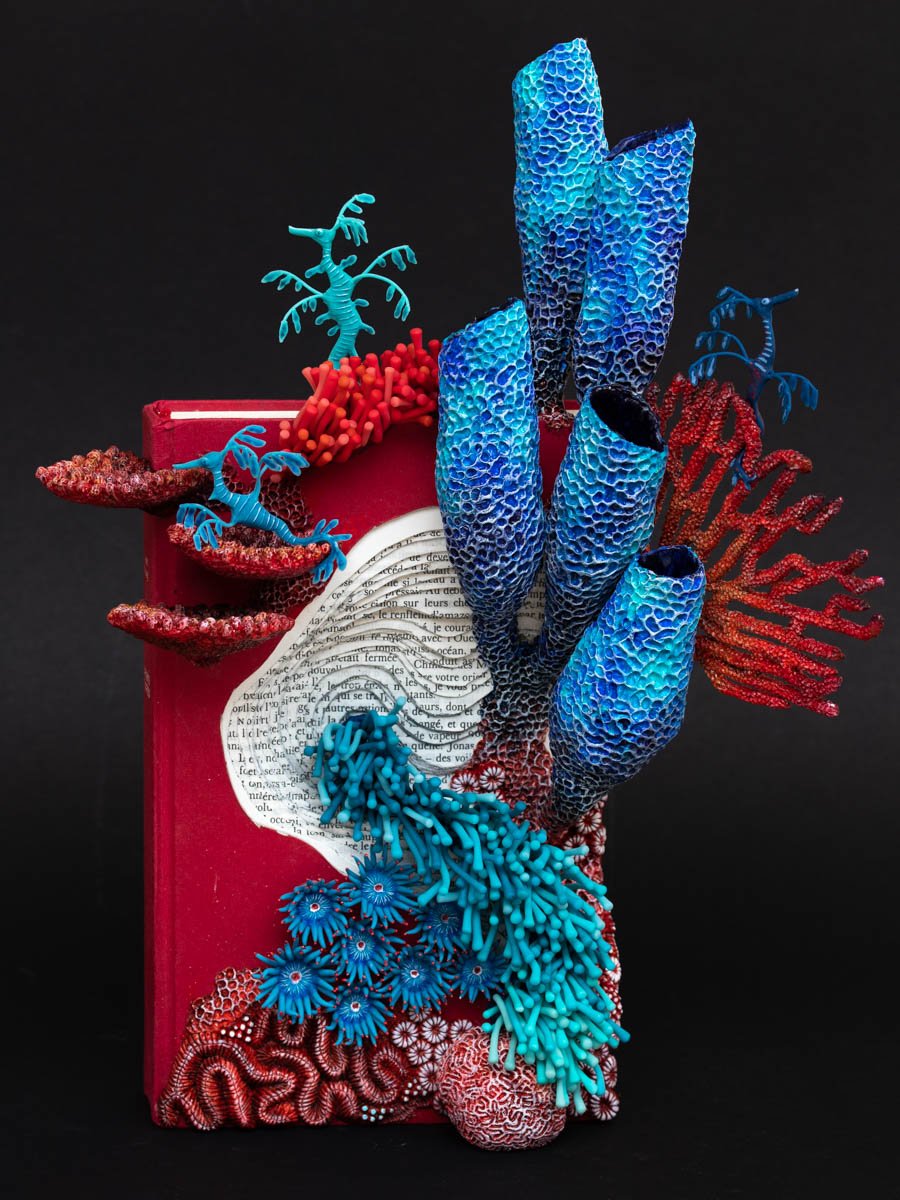
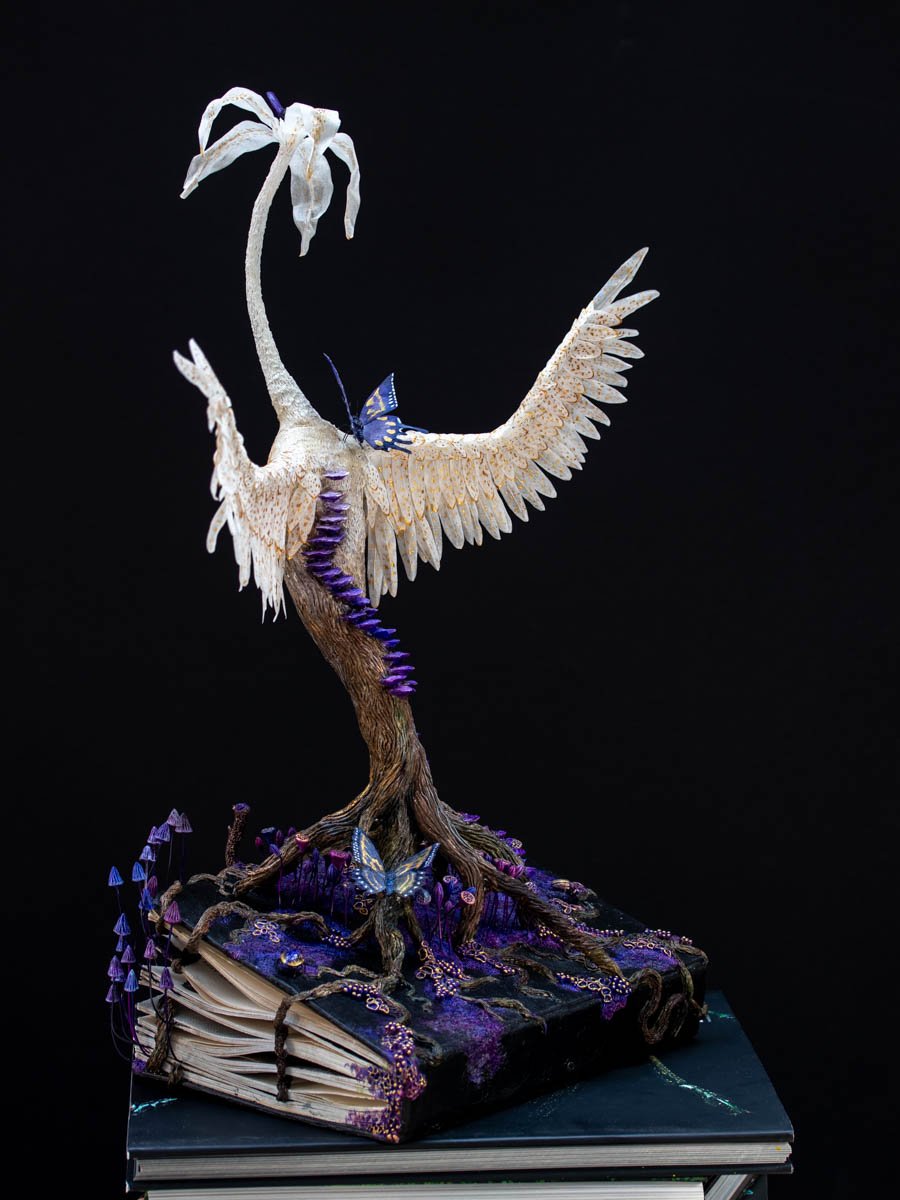
Stéphanie Kilgast is a contemporary French artist known for her intricately detailed works using discarded materials, trash, and, recently books.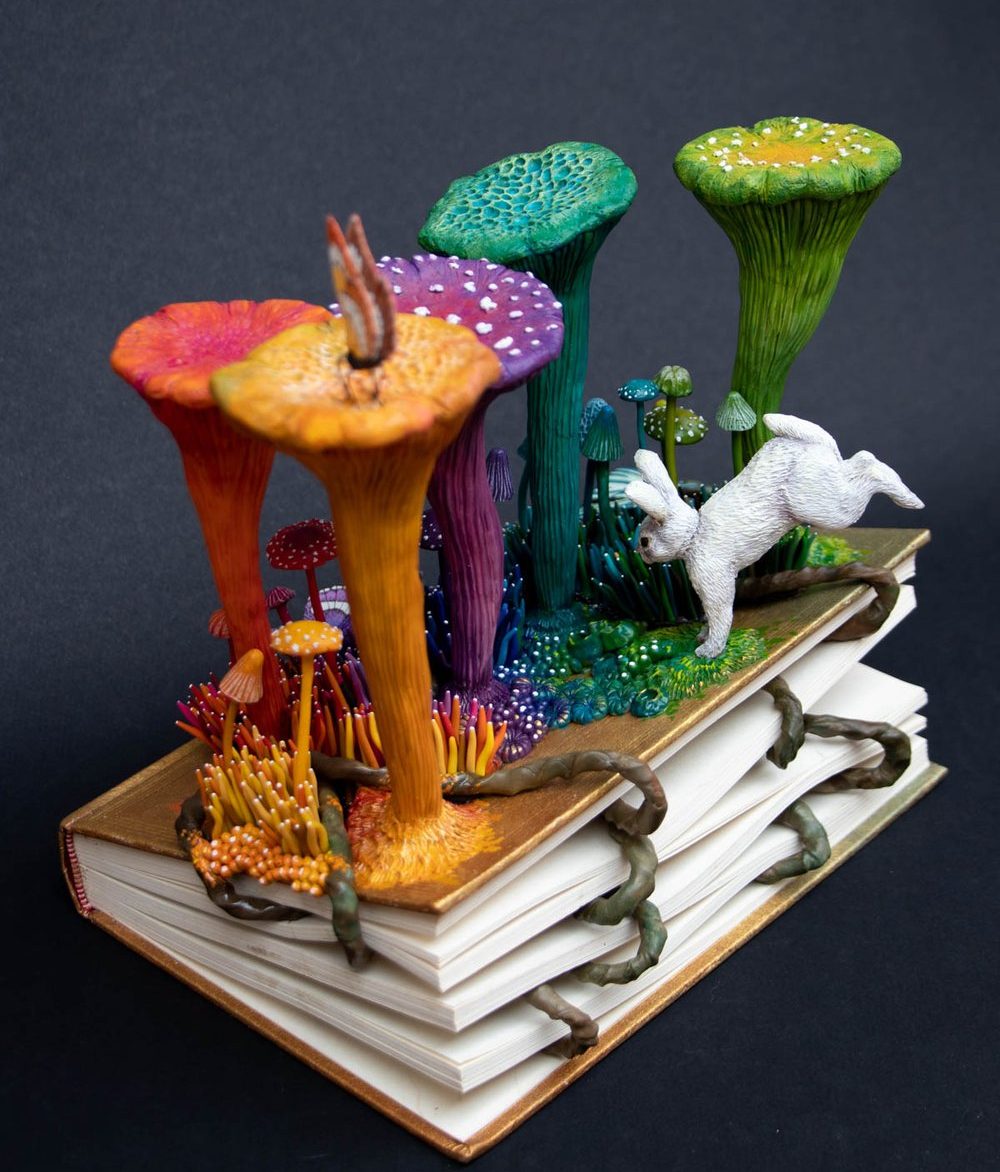 Born in 1985 in Frankfurt am Main, Germany, the artist currently resides in Vannes, France.
 Her recent pieces explore incredible biodiversity utilizing books as her canvas.
 She constructs delicate mushrooms, blooming flowers, and colorful coral in painstakingly detailed miniature environments as a vivid reminder of the impact humans have on the environment and the tenacity of nature.
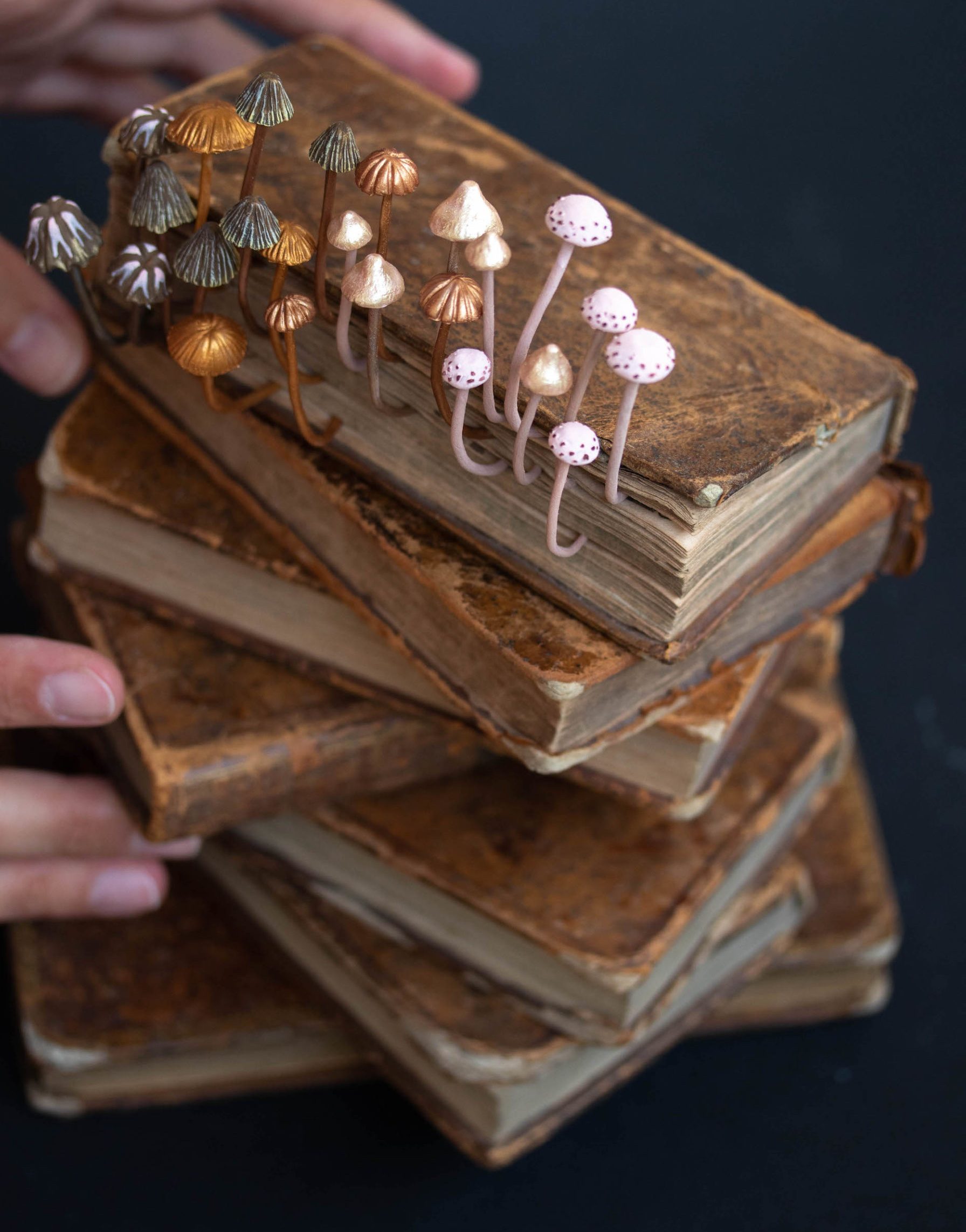 Millions of titles are published each year in the U.S. alone, meaning billions of individual copies—a vast number of which eventually end up in landfills.
 Kilgast draws attention to these discarded objects by giving vintage editions new life.
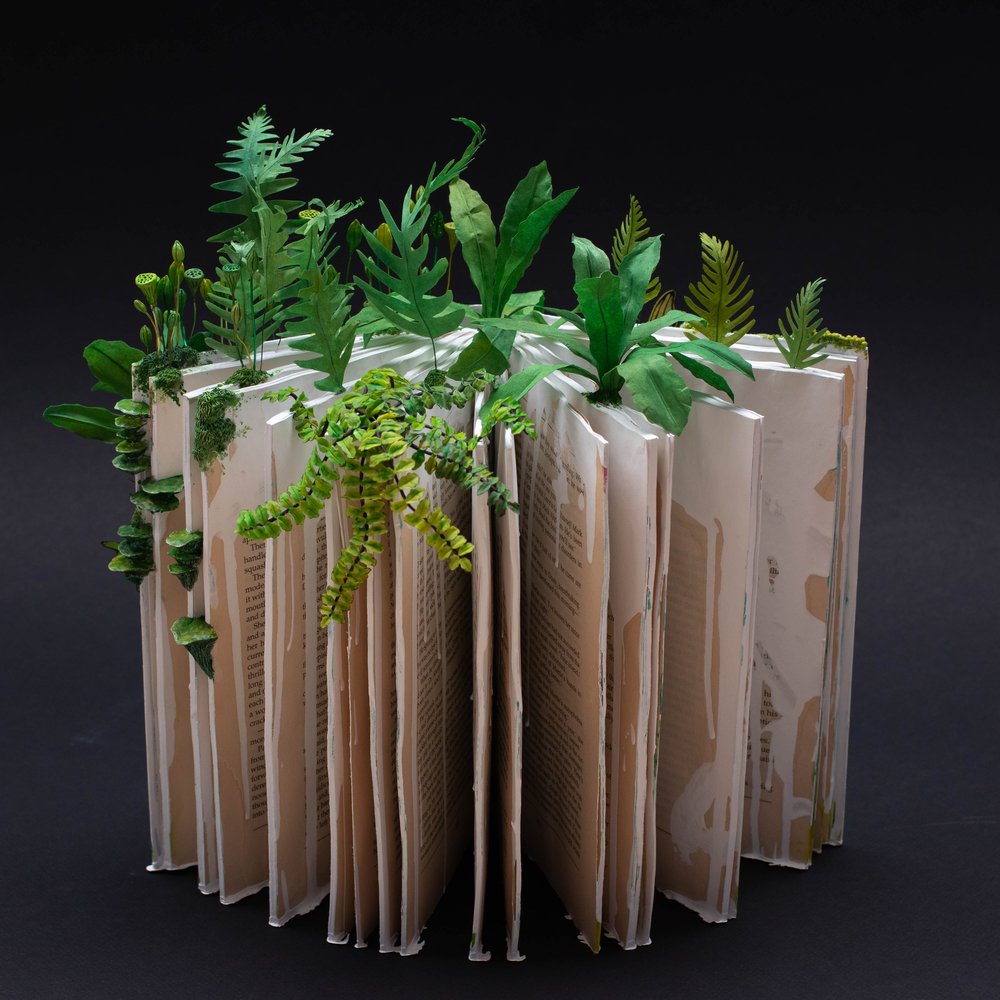 Inspired by natural forms, Stéphanie Kilgast’s artwork is an ode to nature and its current biodiversity.
 “With my choice of bold and vibrant colors, I offer a cheerful post-apocalyptic world,” the artist shares.
 “While I talk about a heavy subject, the disastrous impact of human activities, I also wish that people leave my work with a feeling of happiness and hope, and keep fighting.”
 More of Stéphanie Kilgast’s delightful creations can be found at https://www.stephaniekilgast.com/.
 Many of us carry around a lot of pain inside.
Some of it physical: our bodies have started acting up and there is not much we can do to stop it.
A lot of it is internal: we have lost loved ones, family members and friends.
We suffer emotional pain from war, hatred, and famine. It hurts even more because most times there’s nothing we can do about it.
It never seems to stop.
But there is always room to be thankful.
Today — and every day.
Our blessings really outweigh our pains, even if we fail to see that on a daily basis.
This Thanksgiving, don’t underestimate the amount of your burdens. But don’t let them turn you away from the hope and beauty around you.
Somewhere a happy baby is being played with. Somewhere there is sunset on a lake and snow on the slopes. Someone somewhere is falling in love, getting married, saying “I love you.” Someone is growing old with someone else, dancing to Glenn Miller or Sting or Alan Jackson.
Someone is giving a hug to someone who needs one, someone is getting rocked to sleep, someone is wishing on a star.
There is a lot to be thankful for. This Thanksgiving, next Thanksgiving, and every day in between.
Find a way to be happy this wonderful day.
No one deserves it more than you.
Alex Pardee is an Illustrator, freelance artist, apparel designer, and comics creator / writer based in Los Angeles.

Pardee is probably best known for his work on a number of stunning album covers, although he has also designed and created comic books, and launched a web store.

Early in his life, Pardee suffered from depression and anxiety. After being hospitalized, Pardee tried different activities to feel better.

That’s when he picked up a pencil and started to draw. The rest is history.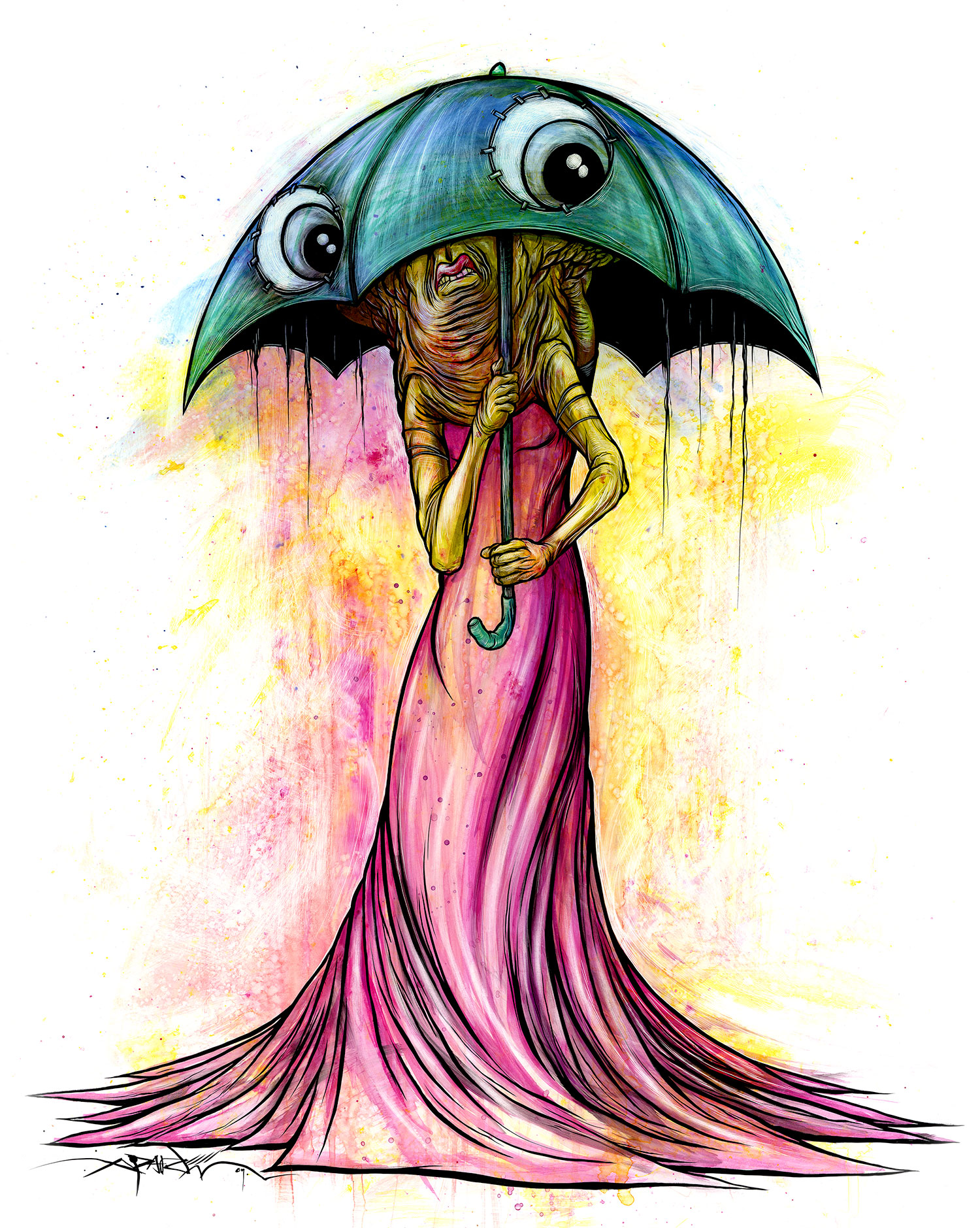
Pardee’s happy nightmares, or Brightmares, bring attention to the complex interaction between the opposing forces in our lives — the good and the bad, the heartwarming and the horrific — by delivering scary subject matter in bright and playful, even cute, packages.
 His creations often consist of gnarling monsters or creepy creatures that are injected with a dose of delight, usually containing a strong sense of humor and irony; vibrant, pleasant colors; and large, anime eyes.

“Jumping on social networking sites as they appeared, and disciplining myself to actually UTILIZE them was, for me, the most important thing I did in establishing the art career that I have now,” Pardee shared.

More of Alex Pardee’s amazing drawings can be found at http://www.alexpardee.com/ and https://www.instagram.com/alexpardee/.
 This title could mean anything — sex, hug my kids, save the Pope’s Nose on Thanksgiving for Uncle Scott.
No — this “can’t believe” is more inline with the younger generation. Those with kids and long Christmas lists and money to spend on baubles.
I can’t believe that I still go to the gas station Thanksgiving morning and get the newspaper and check for the Black Friday sales.
Who goes to those these days?
Remember the days when there were lines out to the parking lot just to be able to be the first one to buy a computer or Barbie doll? The days when the checkout line in the big department stores went all the way around the main floor?
I participated in only one of those “old” days before-dawn shopping excursions. Once was enough.
But there is always something fun about going through the sale flyers from the newspaper with friends and family, making lists, listening to what other’s are looking for. Everyone scrutinizes the paper for the best deals, especially ones that have unlimited quantities.
We still go out on Black Friday. Usually we keep the grandkids overnight and go out to breakfast first. Then we meet mom and dad and spend half the day walking the aisles in Menards.
The maddening crowd (if there ever was one) has thinned, and there are still plenty of Christmas Houses and throw rugs to put into your cart.
It’s more a fun family time. Like a game of Trivial Pursuit, everybody laughs at what they think their parents or their kids need or if they could use a second of the whatsa-ma-jigits. It’s taking the grandkids out for breakfast and hiding toys in the bottom of the cart or throwing in Christmas candy for yourself for later.
I don’t usually come out with a cartful of needless things — I leave that for those with longer lists and bigger pockets.
Guess I’m just a sucker looking for a good time!
This will be a busy week for me, as I’m sure it will be for you. Besides the big “T” day, I’ve got lots of things to do between today and next Sunday. Which, except for the cleaning, is good.
But I wanted to give you a sneak peek at what’s in store for you in the Gallery in coming weeks!


Hope these pique your interest and love of Creativity in ALL its forms!
Love you ALL!
Illustrator Graham Franciose was born and raised in the forests of rural Massachusetts to a very loving and creative family.
Trained in photorealism in a variety of mediums, Franciose studied Illustration at the Hartford Art School, and graduated with a BFA in Illustration in 2005.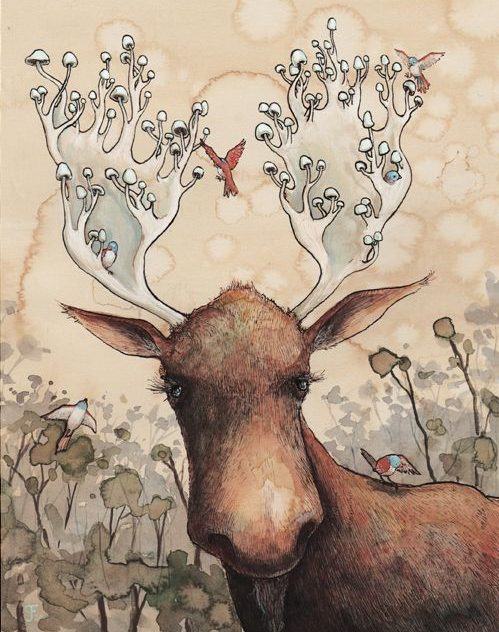 Franciose often sits down with watercolor, gouache, and a small sheet of cotton paper to paint a whimsical scene or surreal moment.
 Dreamlike in style and subject matter, the works are part of an ongoing series simply titled ‘Morning Coffee Paintings.’
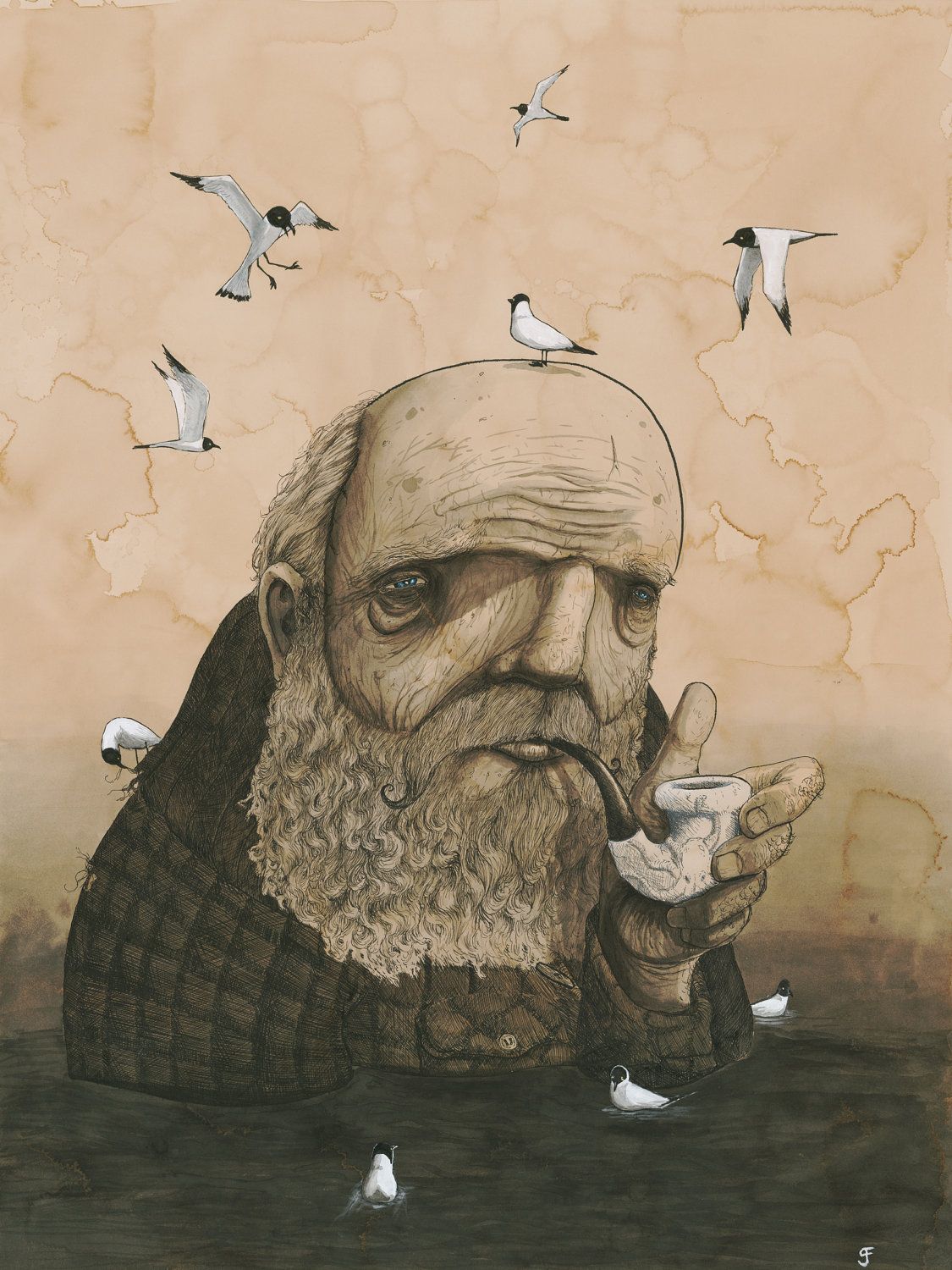 An exercise in experimentation and releasing perfectionism, the paintings reflect a range of moods through mysterious scenarios and quiet, contemplative figures.
 His imaginative illustrative paintings are small in size and big on emotion, each depicting its own little narrative, often dreamily reminiscent, reaching deep into the human condition and showing us all little pieces of ourselves along the way.
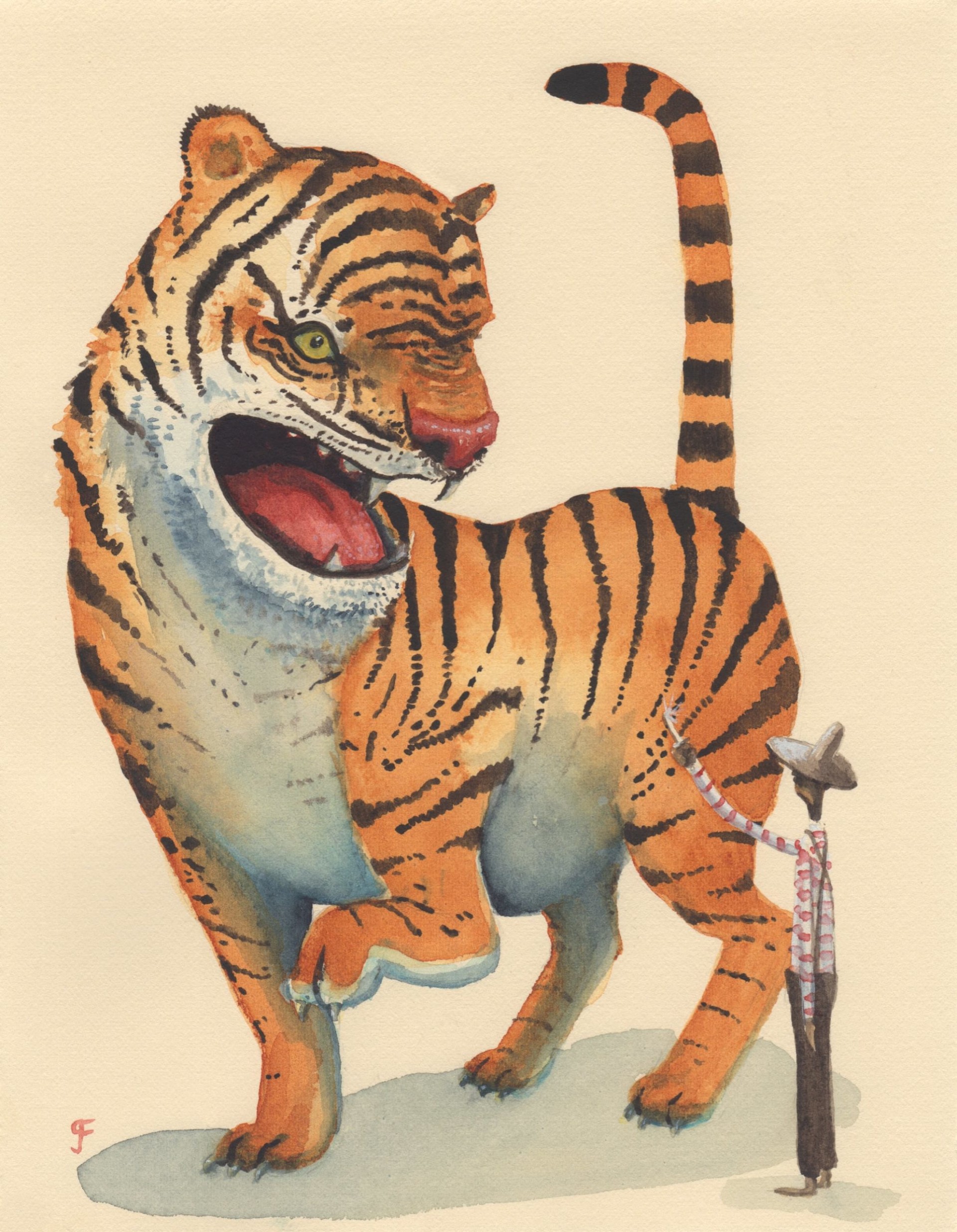 Franciose’s work deals with the quiet moments in a story, between the excitement and action where characters deal with internal conflicts, doubt, loneliness, wonder, and apprehension.
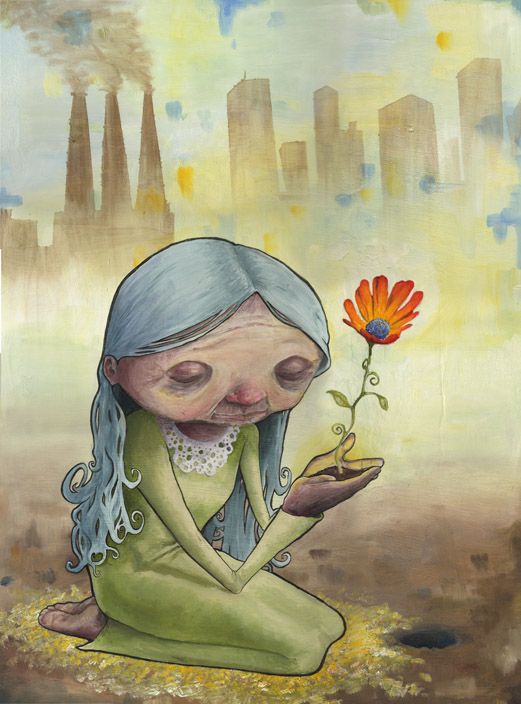 “My work often comes across as sad and melancholy, but there is always a sense of hope that I am trying to portray,” the artist shares.
 “I try to keep the meaning and scenario of my work open ended so each viewer can interpret the narrative in their own way.
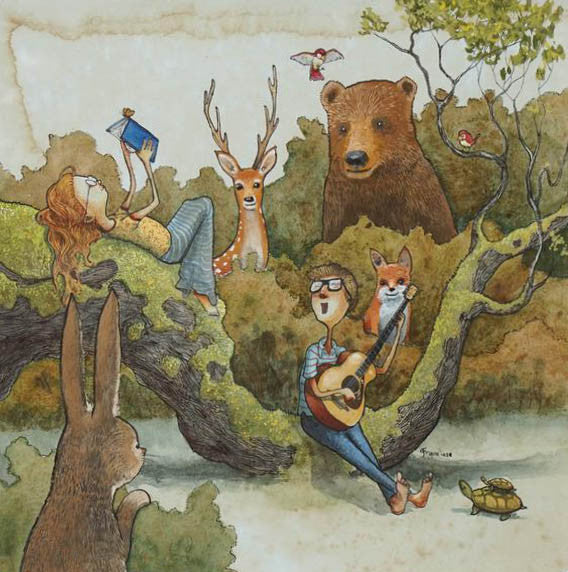 “There is a story in there, but it’s up to you to decide what it is.”
More of Graham Franciose‘s enchanting art can be found at https://gfranciose.com/ and https://gfranciose.com/2020-morning-coffee-paintings.
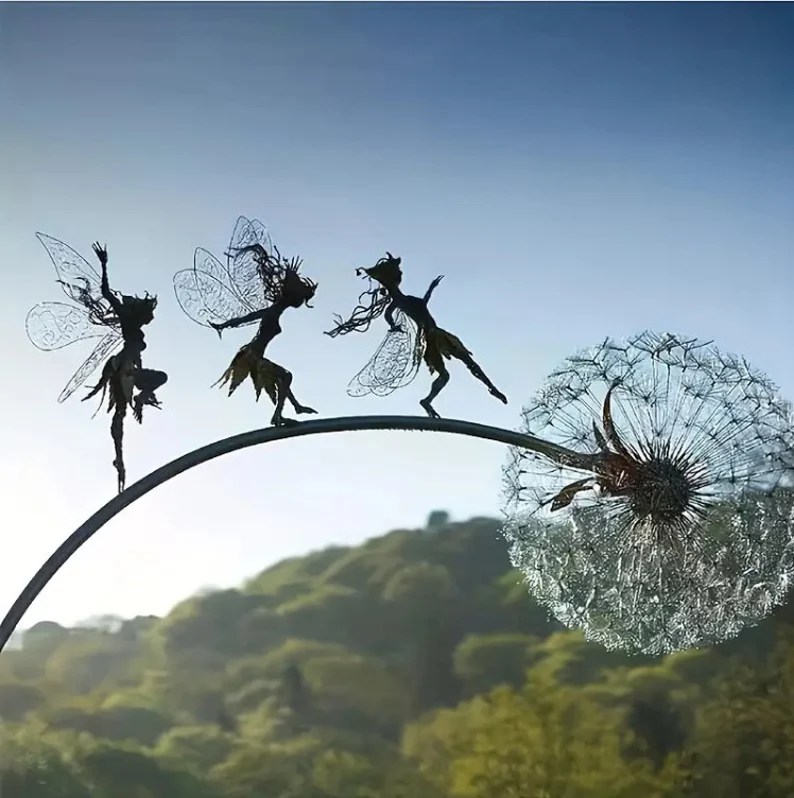
Softly in the gloaming
Flitting through the vale,
Fairy folk are roaming
Over hill and dale.
Pixies in the hollow,
Elves upon the height,
Let us follow, follow
Through the paling light.
Follow, all unbidden,
To the grassy glade
Wrapped around and hidden
In the forest shade.
Hark the elfin tinkle
Of their little lutes!
Mark the golden twinkle
Of their fairy flutes!
~ Evelyn Stein
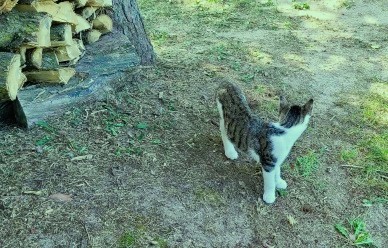 I don’t know if you remember, but last September I wrote a blog called “The Cat” which was about a cat showing up out of nowhere on the day we had a memorial get-together for the son I had lost in February — a cat we call Mikey.
The second time was at Thanksgiving (The Cat Part 2). He also showed up on Christmas morning, but I didn’t write about that visit.
This morning my husband left to go deer hunting for a few days with my other son, and guess who was sitting on the steps going up to our deck.
Mikey.
As I’ve said before, I don’t know whose cat this is. Every now and then I see him wandering through the grass around our garage/barn, but he’s usually so far away we can’t connect.
But there the kitty was this morning. I didn’t see him — he wasn’t there for me. He was there for my husband, watching him pack, waiting to go off to the North Woods. Just like Mikey used to.
He was calm and alert, sitting on the step, as if to say, “Hey! Let’s go!”
I have said a thousand times I don’t believe in signals from another world. I’m not even sure I believe in God. Not after taking my son.
But every now and then something spiritual takes place, and I start to believe.
Thanks for letting me know everything is okay, Mikey.
I’m hanging in there, too.

Stones are mute teachers; they silence the observer, and the most valuable lesson we learn from them we cannot communicate.
~ Johann Wolfgang von Goethe
Jennifer Latour was born in Seven Islands, Quebec, but now calls Vancouver, Canada, home. Latour is a self-taught artist who has moved into the world of nature to create delicate, unusual art.
She has developed her love for character creation, sculpture, photography, and cinema into a series that combines a wide variety of fruits and flora into a strange and beautiful real sculpture.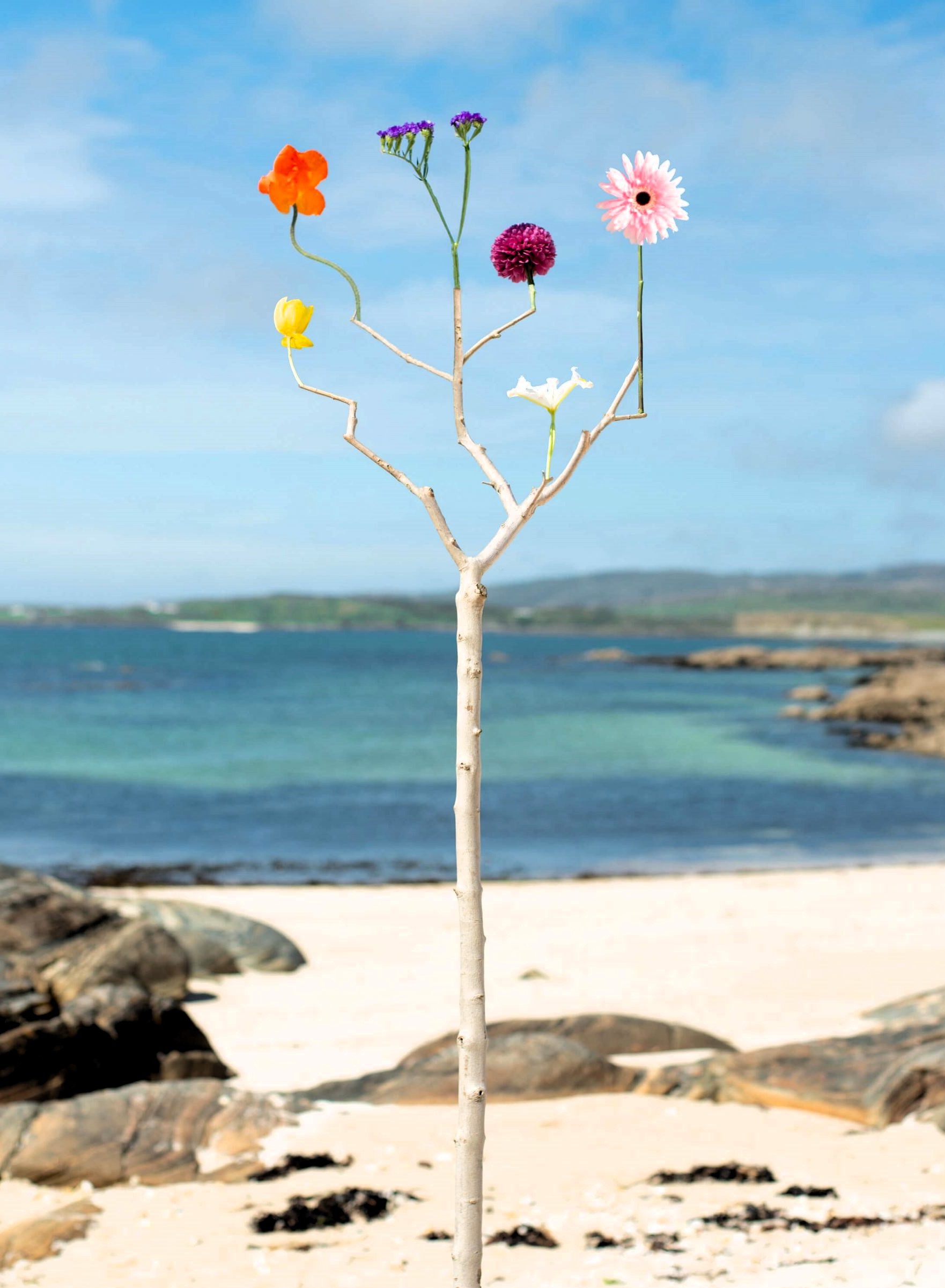
She then photographs these temporary organic sculptures, sometimes even releasing her creations back into the wild.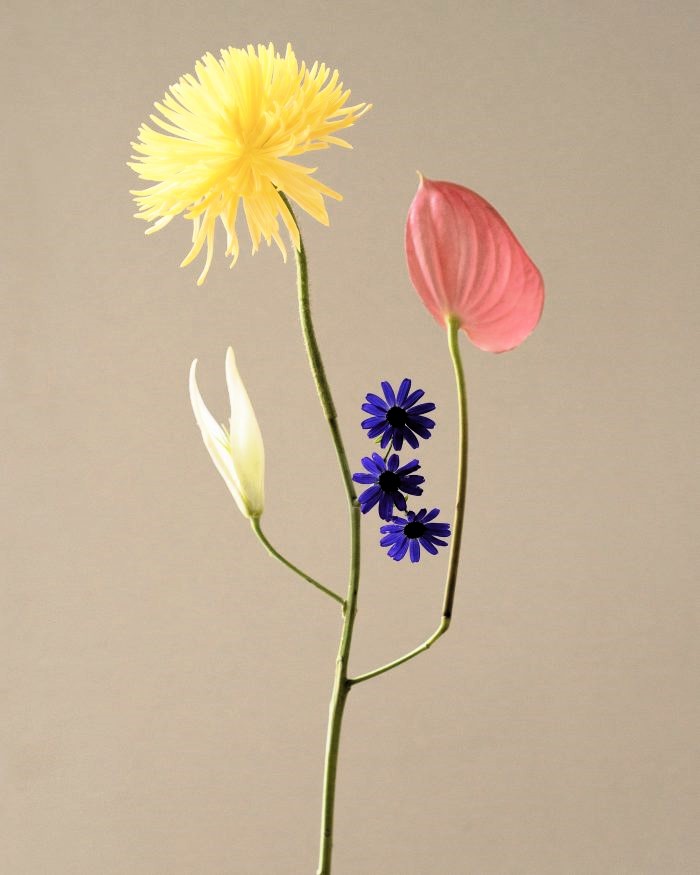 Latour’s eye for color and the allurement of the natural world imprints her photos with a distinct, delicate, and ethereal aesthetic.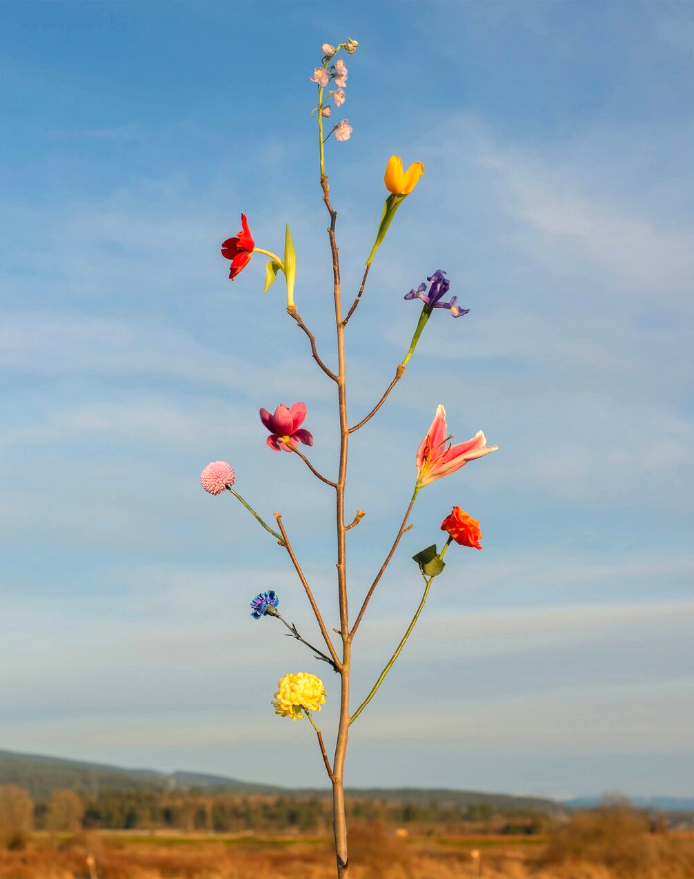
While each piece has a unique character and stands on its own, the series as a whole is evocative of the interconnectedness found in nature, and serves as a reminder that all creatures are bound simultaneously by both their similarities and their differences. More of Jennifer Latour’s creative work can be found at https://opendoors.gallery/artists/jennifer-latour.

 On my way to something else….
In tying up my Gallery blog on Degenerate Art, I came across a biography of Elfriede Lohse-Wächtler, a German Expressionist:
Can you imagine — an artist of high caliber, suffering already from a mental illness, being gassed because a government deemed her “not worthy”?
Hope this makes you stop and think. I know my heart is still hurting.
The Lady and the Unicorn (La Dame à la licorne) is the modern title given to a series of six tapestries created in the style of mille-fleurs and woven in Flanders from wool and silk, from designs drawn in Paris around 1500.
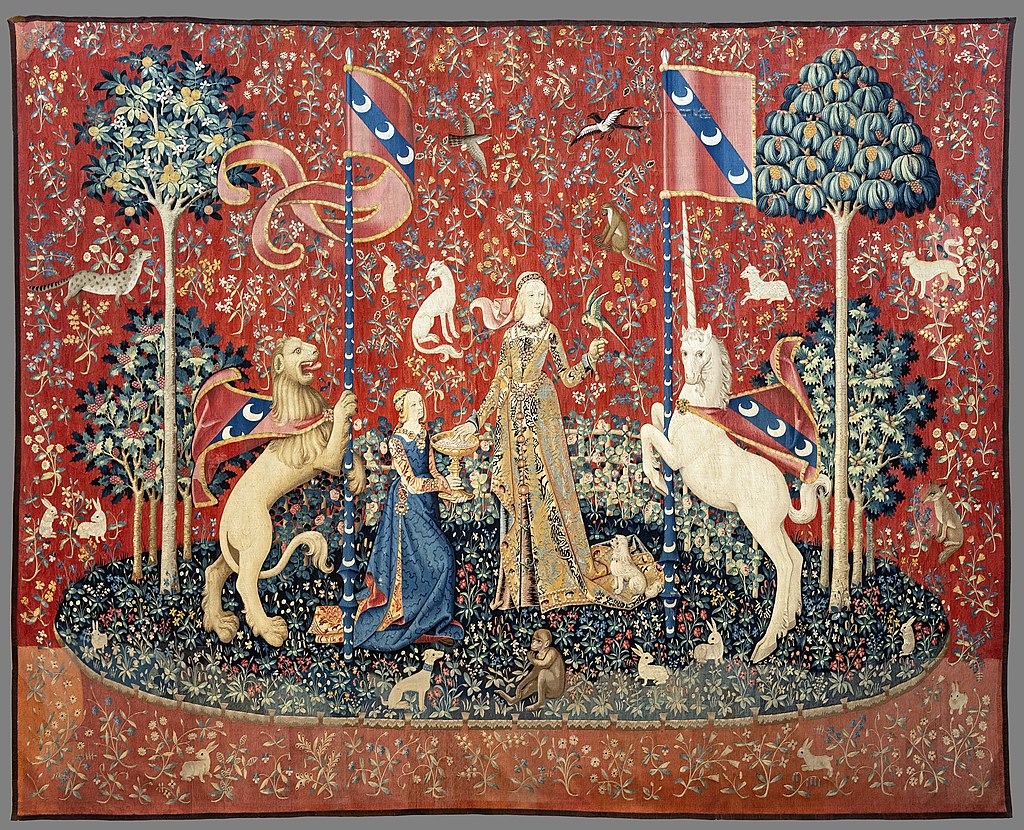
Five of the tapestries are commonly interpreted as depicting the five senses – taste, hearing, sight, smell, and touch.

The sixth displays the words “À mon seul désir”. The tapestry’s intended meaning is obscure, but has been interpreted as representing love or understanding.

Each tapestry depicts a noble lady with the unicorn on her left and a lion on her right; some include a monkey in the scene.
Each work of art depicts one of the senses performing some action intended to exemplify the sense in question.
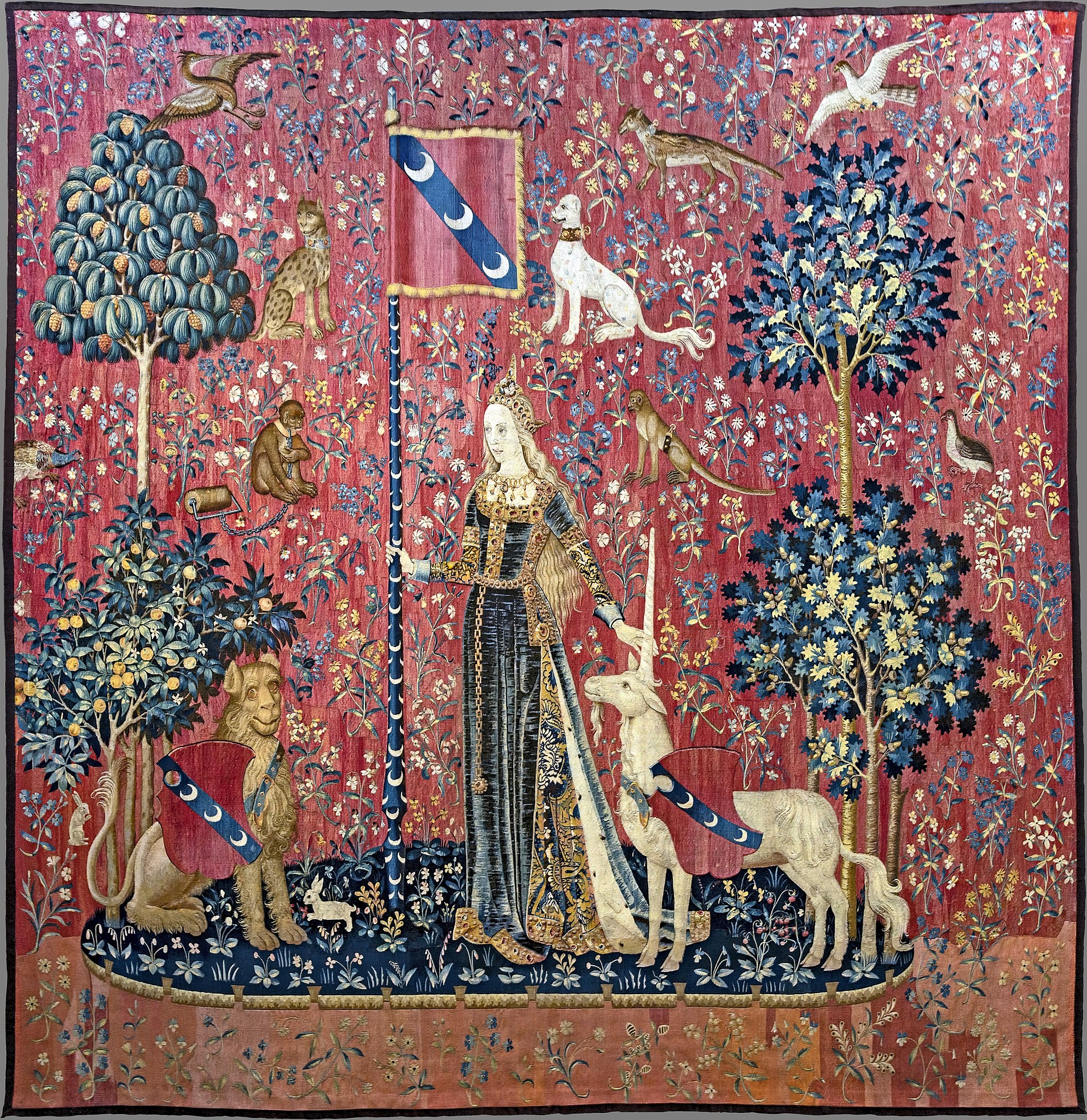
A sixth sense is represented in the sixth tapestry, which presents a further way of knowing the world. Scholars now generally agree that À Mon Seul Désir presents a meditation on earthly pleasures and courtly culture, offered through an allegory of the senses.

More on the magical Lady and the Unicorn Tapestries can be found at Musee-moyenage and The Conversation.
A bright beautiful Saturday! Hope you are enjoying yours!
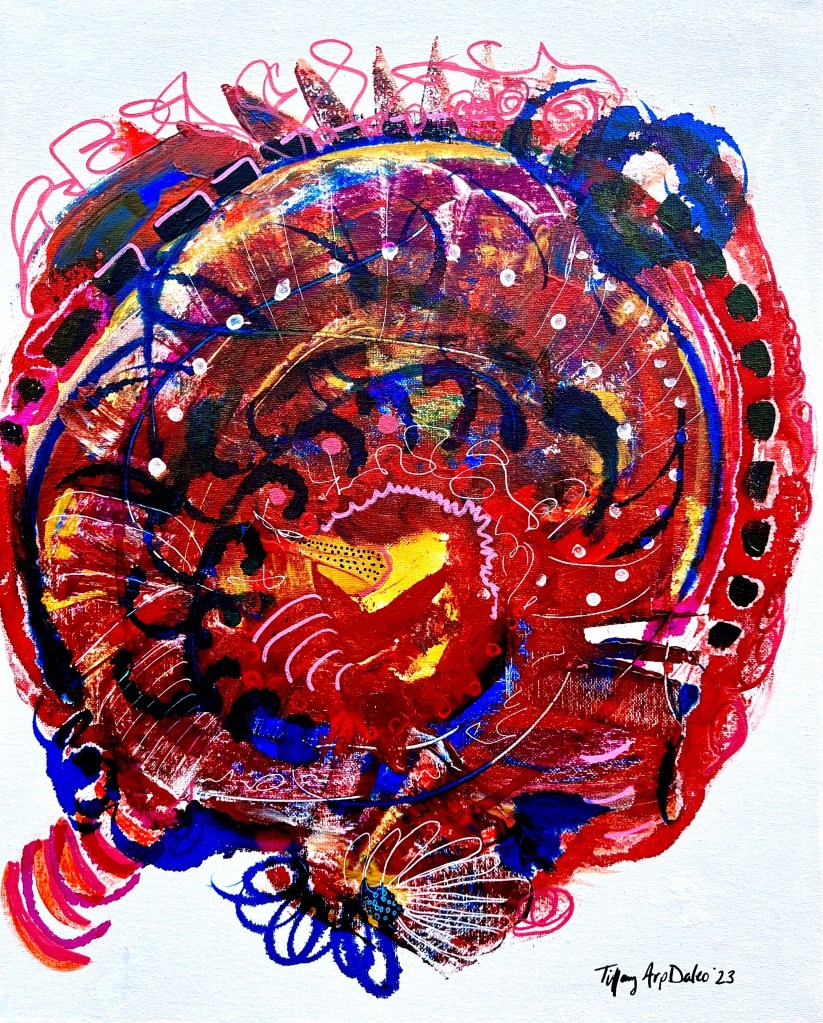
Today is my “Creativity” Day,” I wanted to share one of my favorite “modern day” (today!) artists — Tiffany Arp-Daleo.
Her art is modern, bright, and full of half-hidden delights in her paintings. I just went through her blog and caught up on what I’ve missed, and found this one.
Do pop over and check her out!
 To those of you who pop in now and then, I thank you. For those of you who take moments to talk to me in comments, I double thank you.
What I wanted to do on this rainy day, though, is introduce those of you who love art (and have never visited online galleries much) to come on over and check out my sister site: SUNDAY EVENING ART GALLERY.
If you love art — especially unique art — this is the place to wander.
The front page is one long front array of boxes filled with pictures from individual artists. Click on the picture and it takes you to at least a dozen more from the artist.
The gallery covers all sorts of artists: painters, photographers, graphic designers, ceramics artists, jewelers, quilters, glass artists, designers — any artist that creates something different.
Something that makes you say — WOW.
The art could be centuries old (Michelangelo) to general Earthly wonders (Cloud Formations) to modern sculptures (Wenqin Chen).
Its all amazing and all free.
I’m not promoting my blog just because it’s my blog — I’m promoting my blog because there’s soooo much great art! Share the pure beauty of such incredible imaginations.
It will make you happy and your friend happy!
Nikki Root has custom designed and handcrafted stained glass windows in Cache Valley and surrounding areas of Utah since 1994.
 In addition to her beautiful traditional stained glass, Root now specializes in one of-a-kind, 3-dimensional glass creations which are skillfully crafted from a variety of individually hand-cut vintage bottle and glassware bottoms.
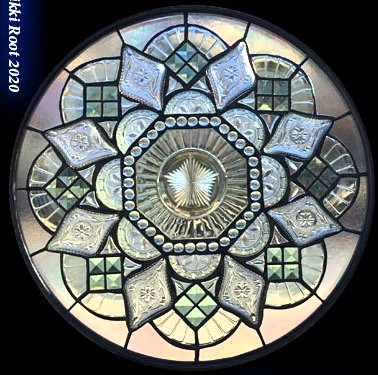 Root collects Depression glassware and any interesting glass she can get her hands on to transform into windows, framed pieces and many other things.
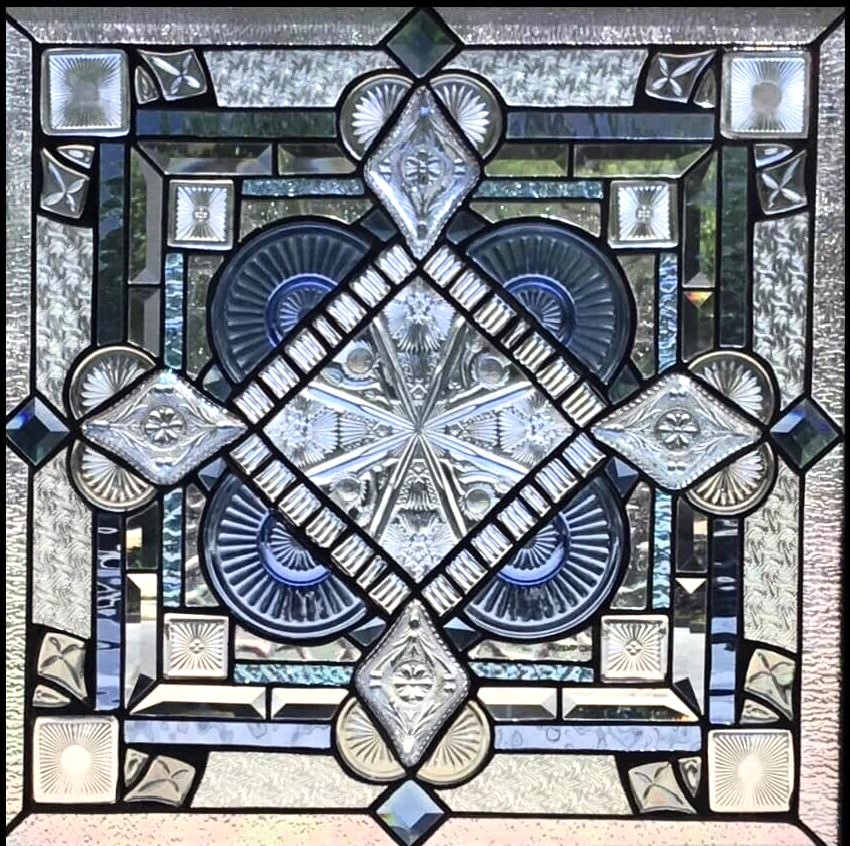 Root’s passion for glass work began 20 years ago when her family moved from Atlanta, Ga. to build a home in Providence.
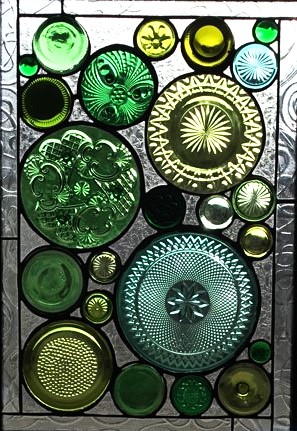 Their Atlanta home had stained glass windows, a comfort she insisted on having in Utah.
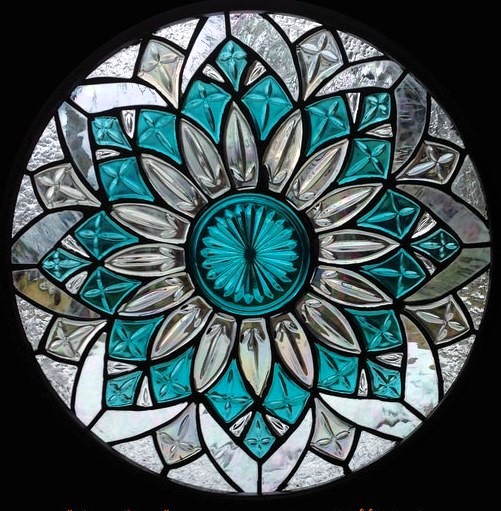 To avoid the high cost of purchasing custom designs from a glass company, Root decided to try making it herself..
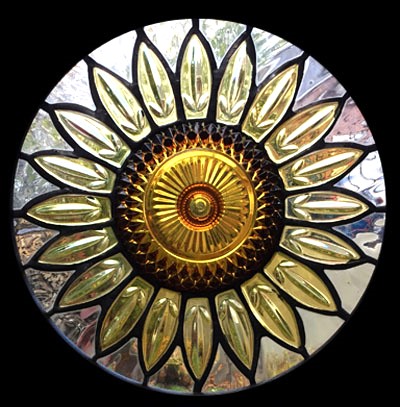 This rest is stained glass history.
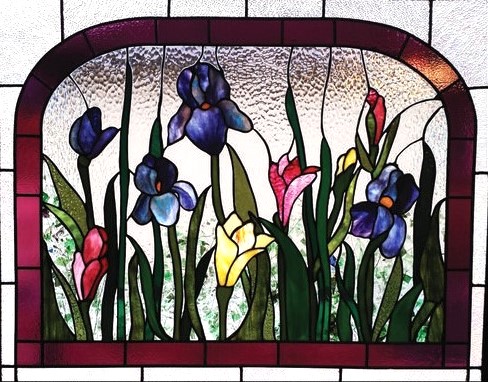 “Stained glass speaks,” Root shares.
 “Once you have it in your home, it’s really hard to live without it.”
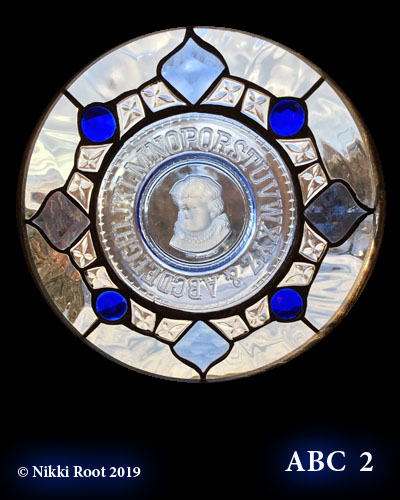 “So I took a class and learned how to cut and solder, and then I took off from there.”
More of Nikki Root‘s beautiful stained glass can be found at https://www.bottomsupglass.com/.
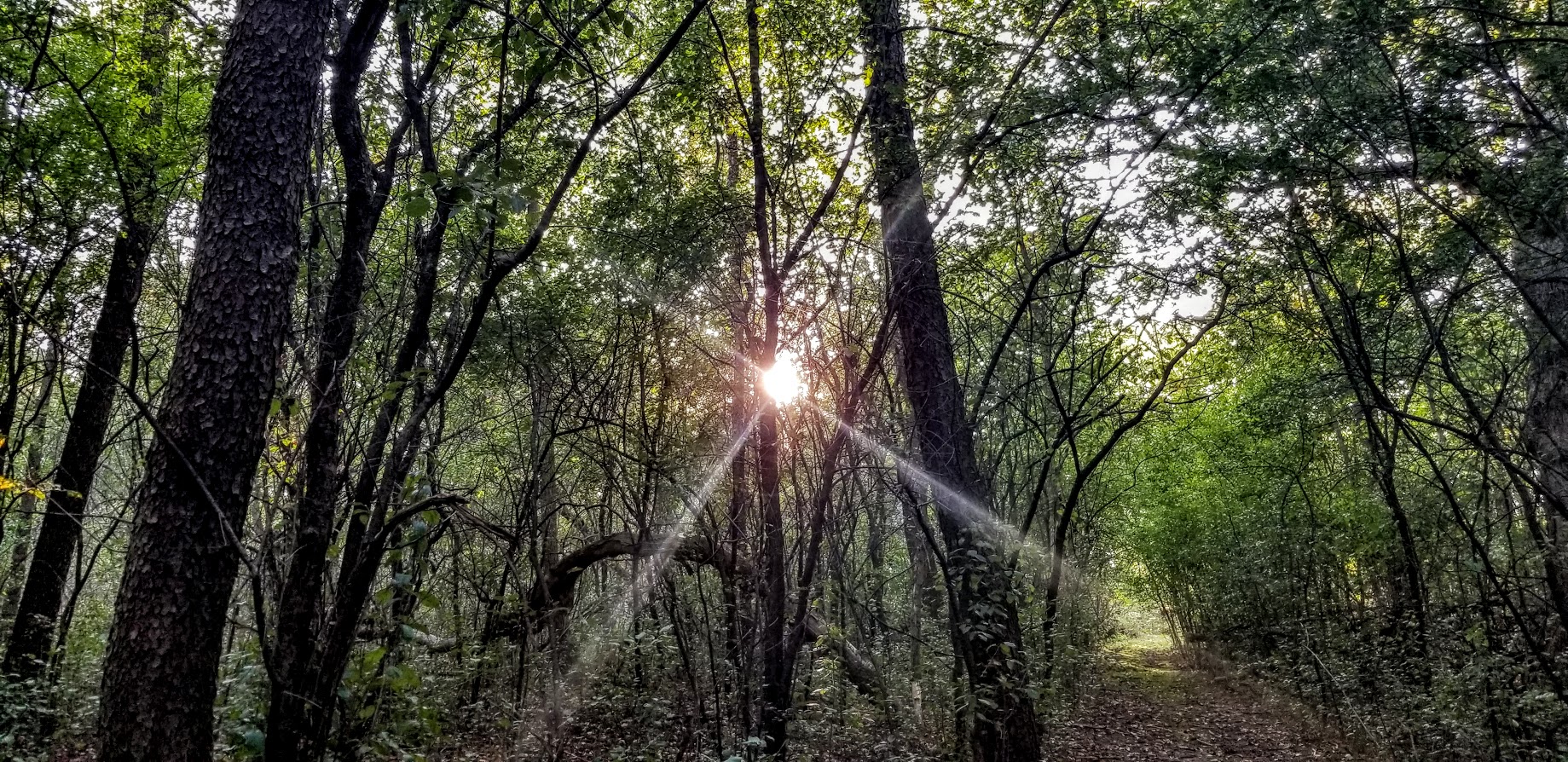
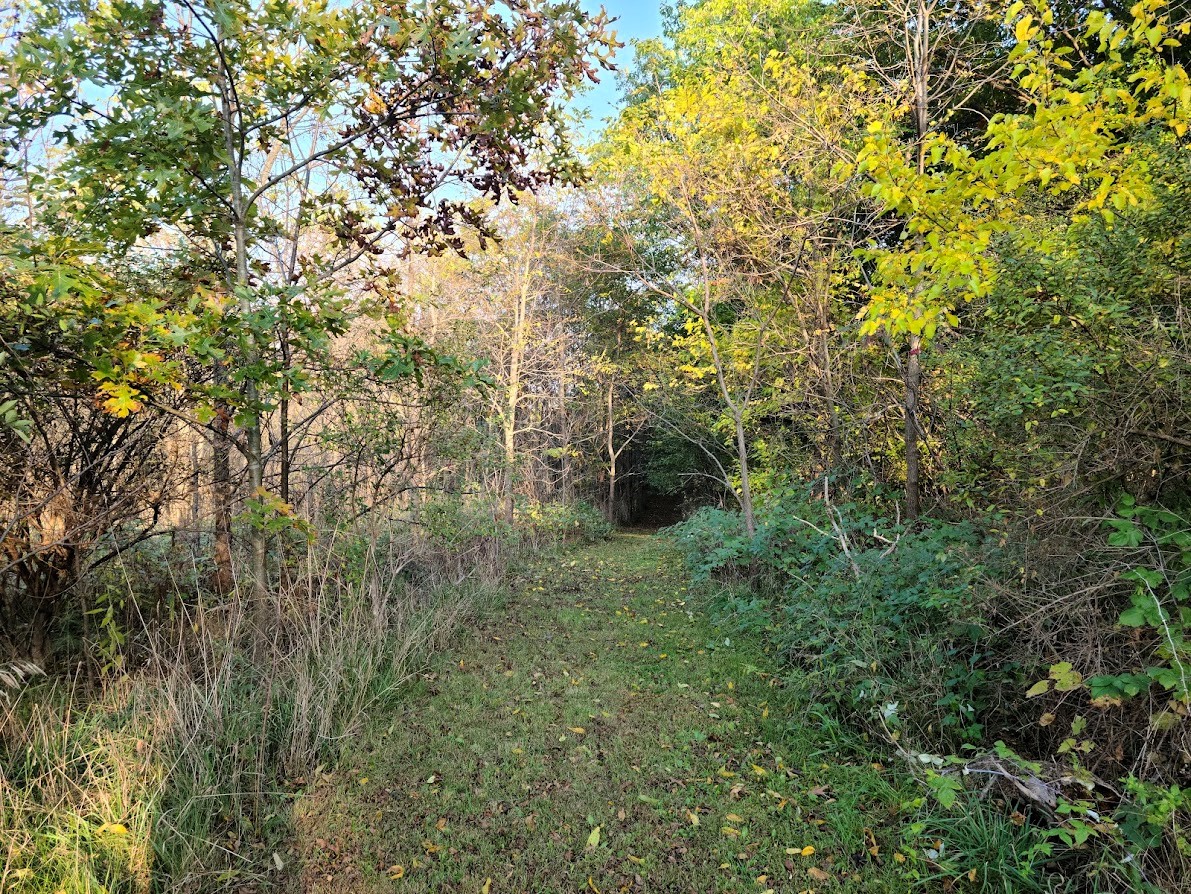
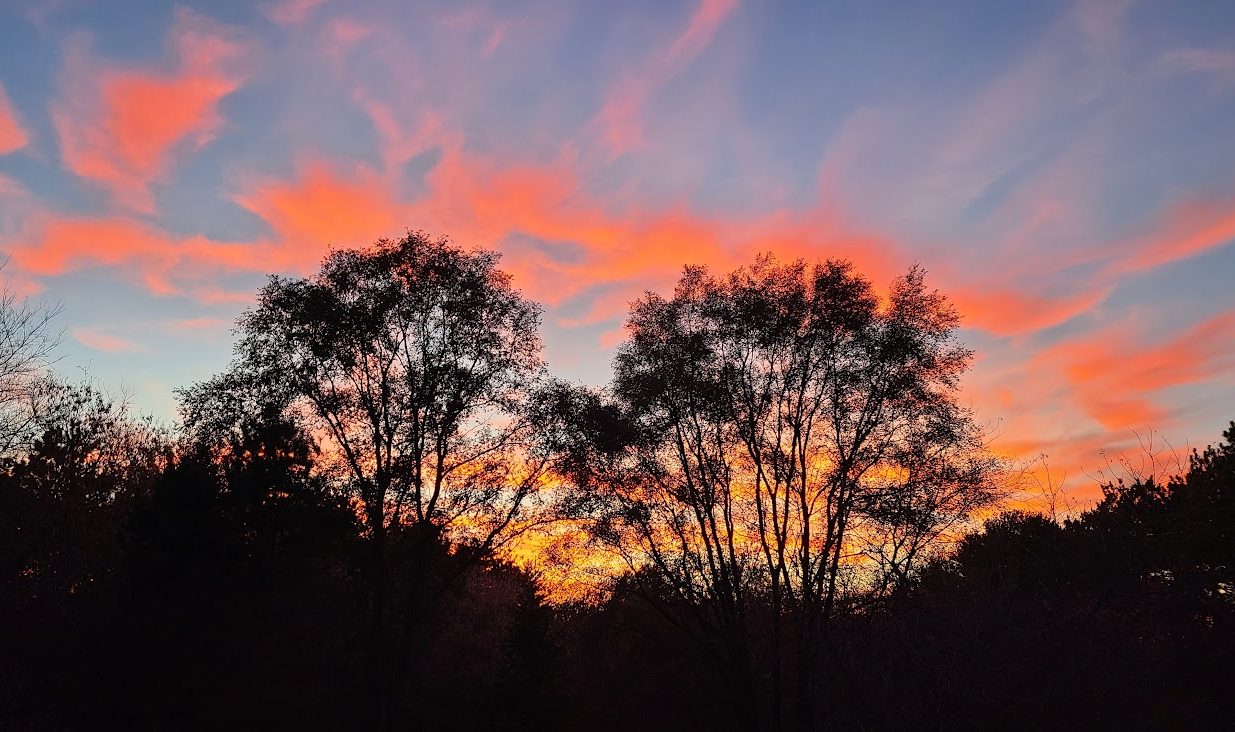
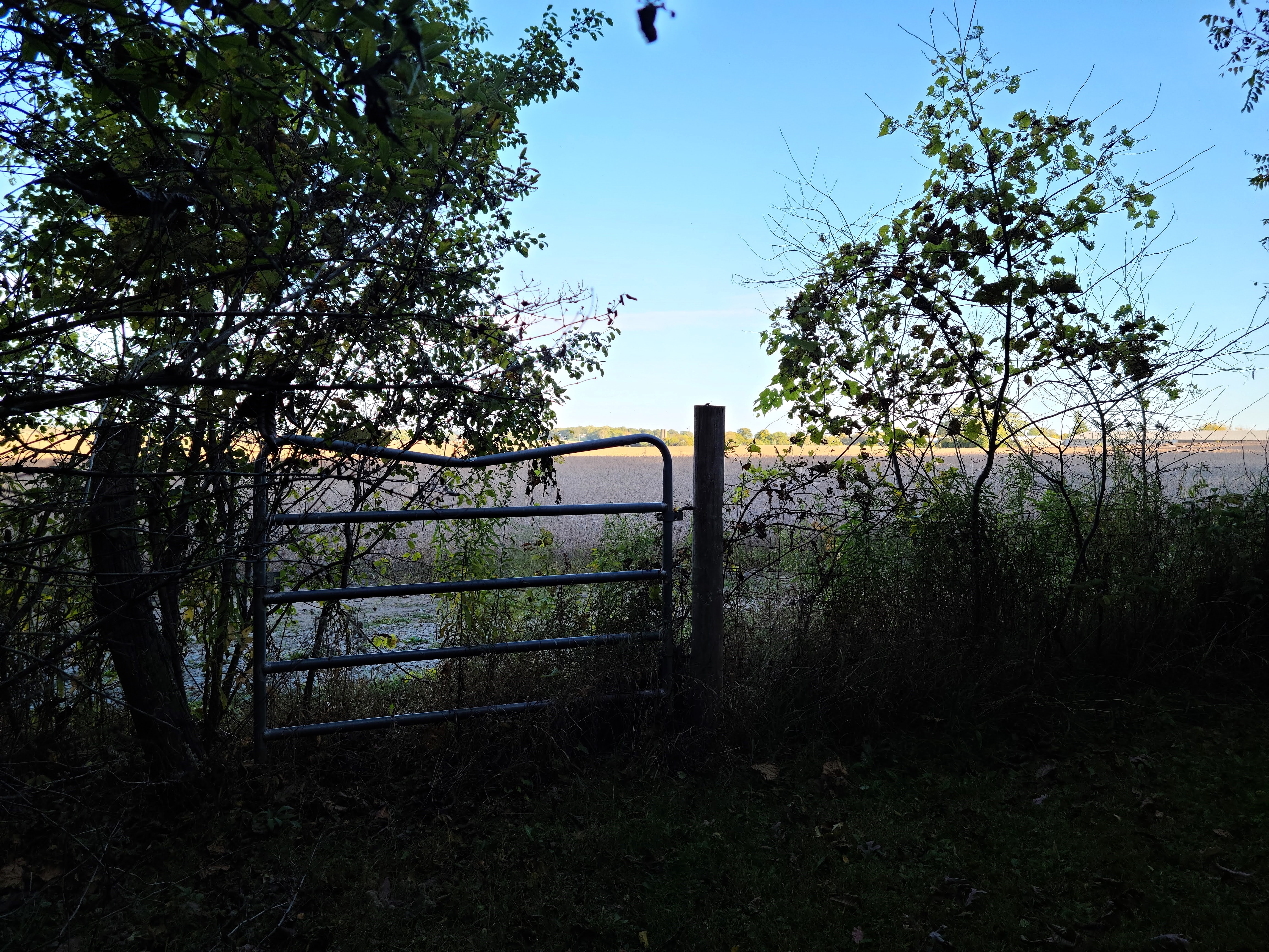
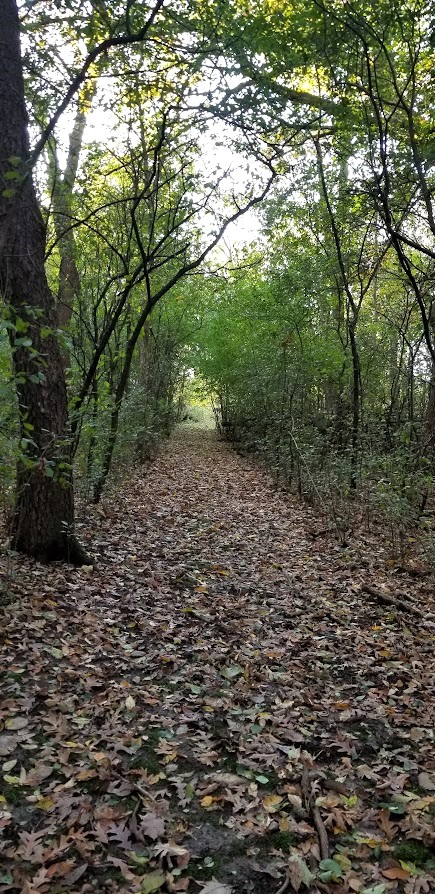
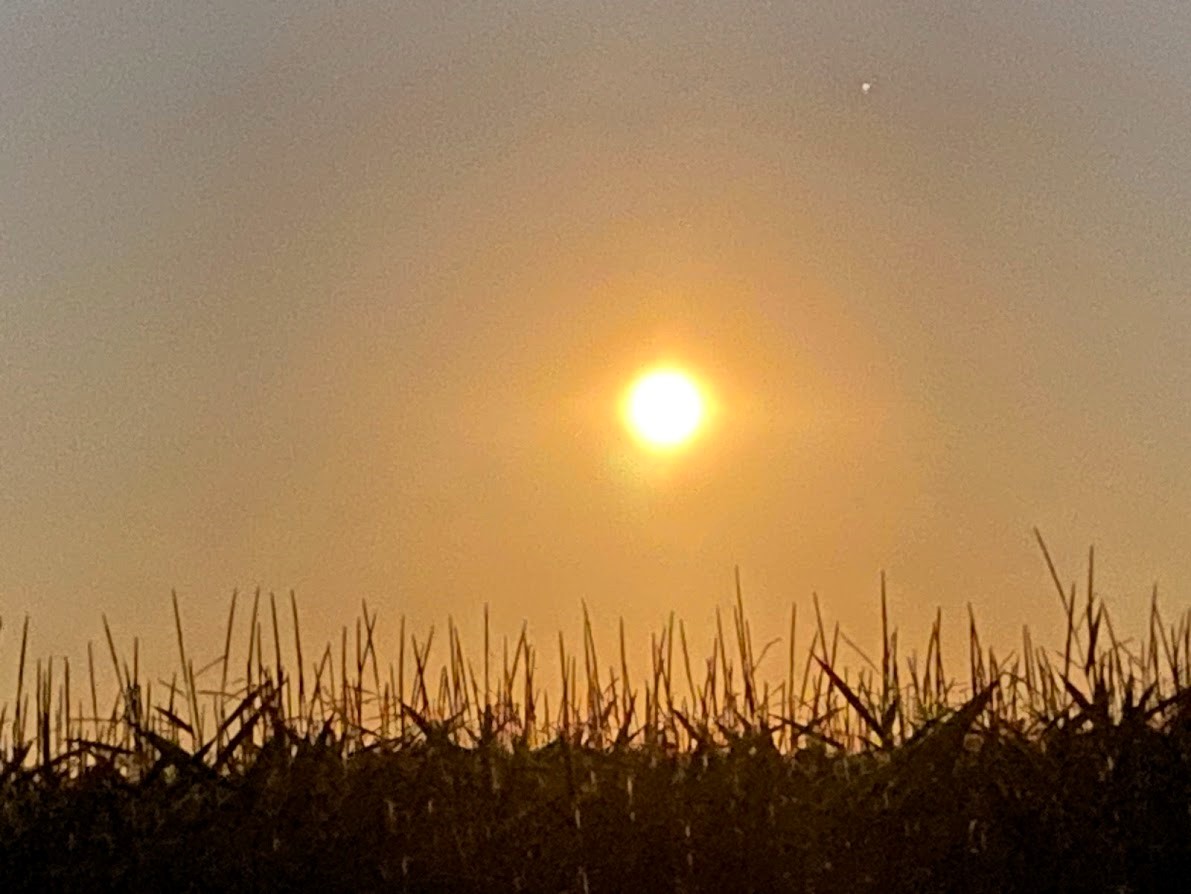
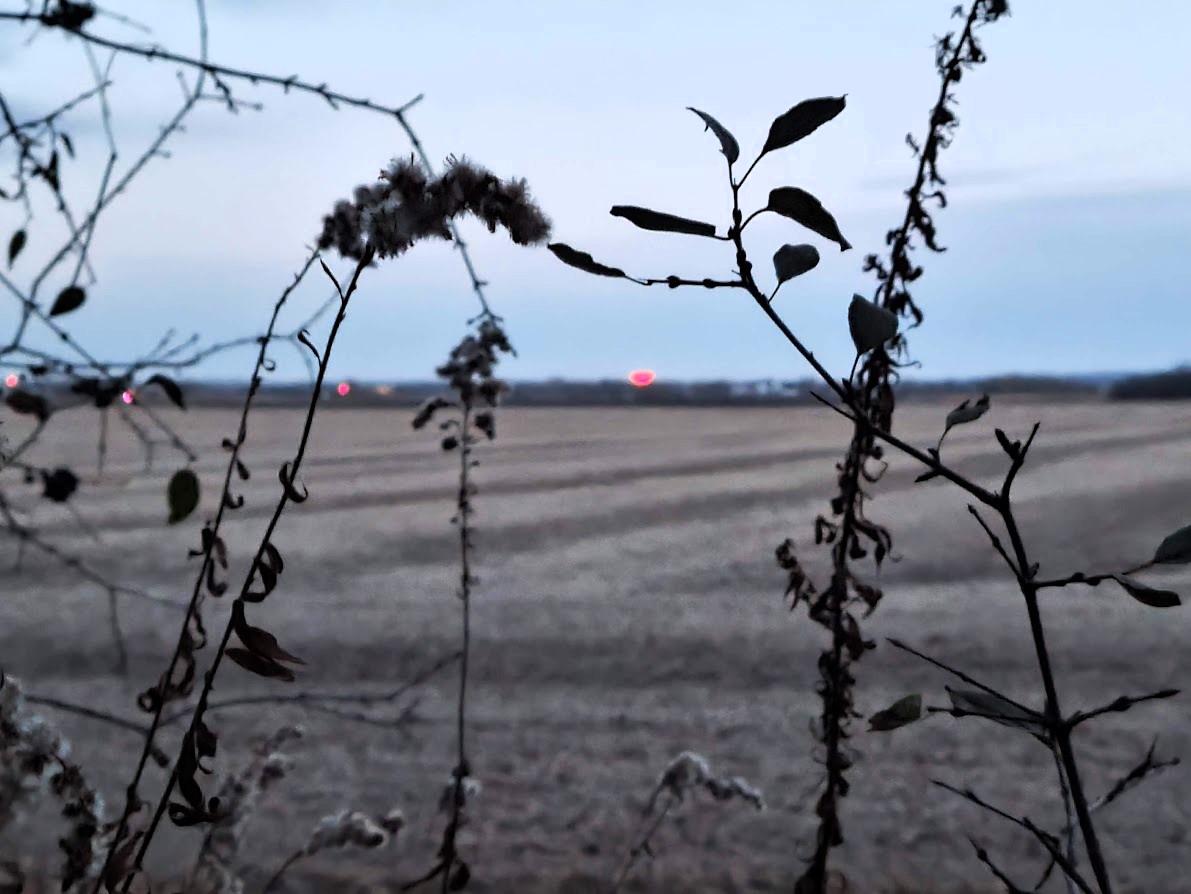
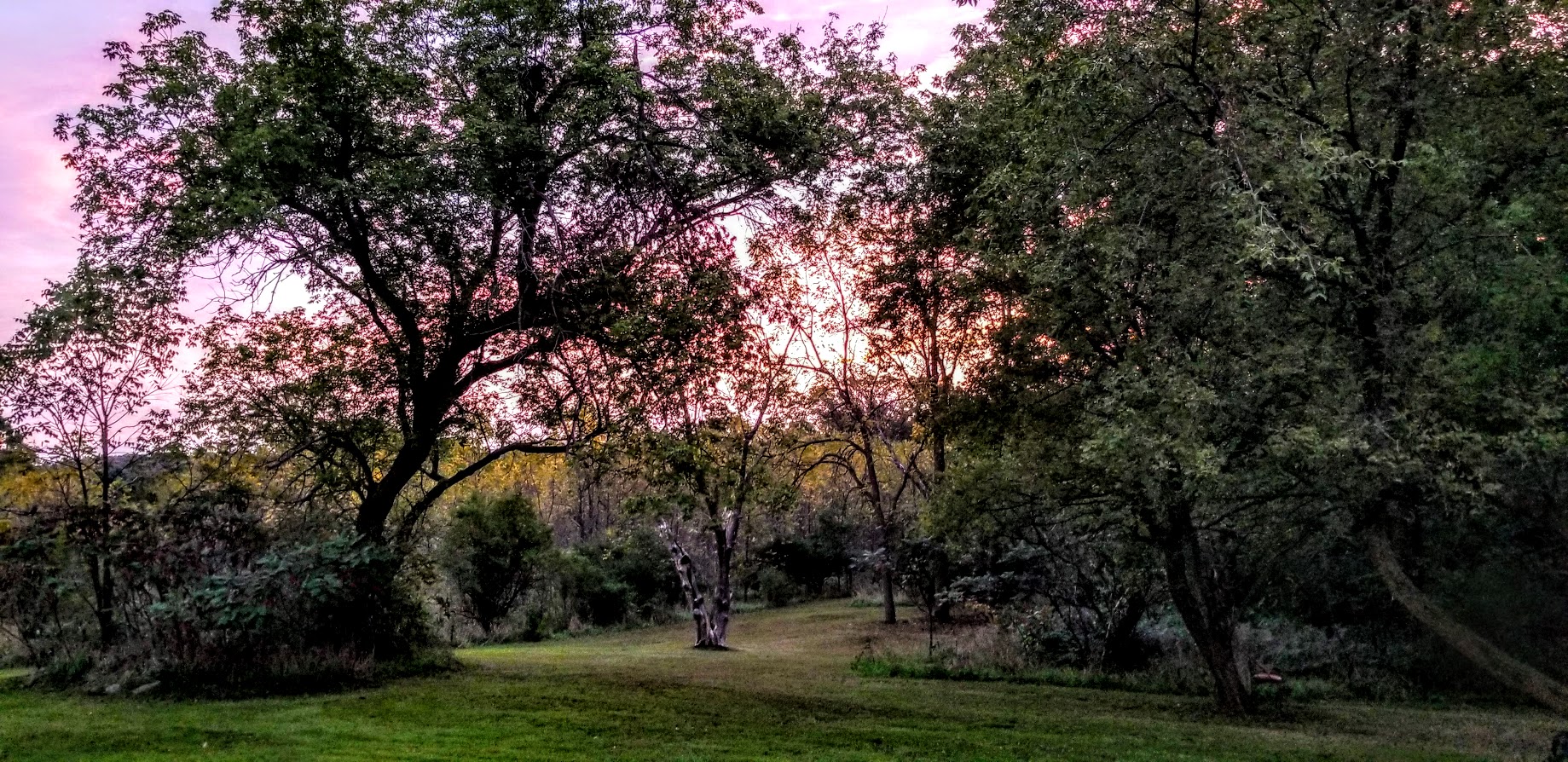
The chill in the air can’t keep creativity away! Here are some photographs I’ve taken through the years of the beautiful world I am lucky enough to call home. Have a beautiful week.

Jon Juarez is an artist, author, and illustrator from San Sebastián, Spain.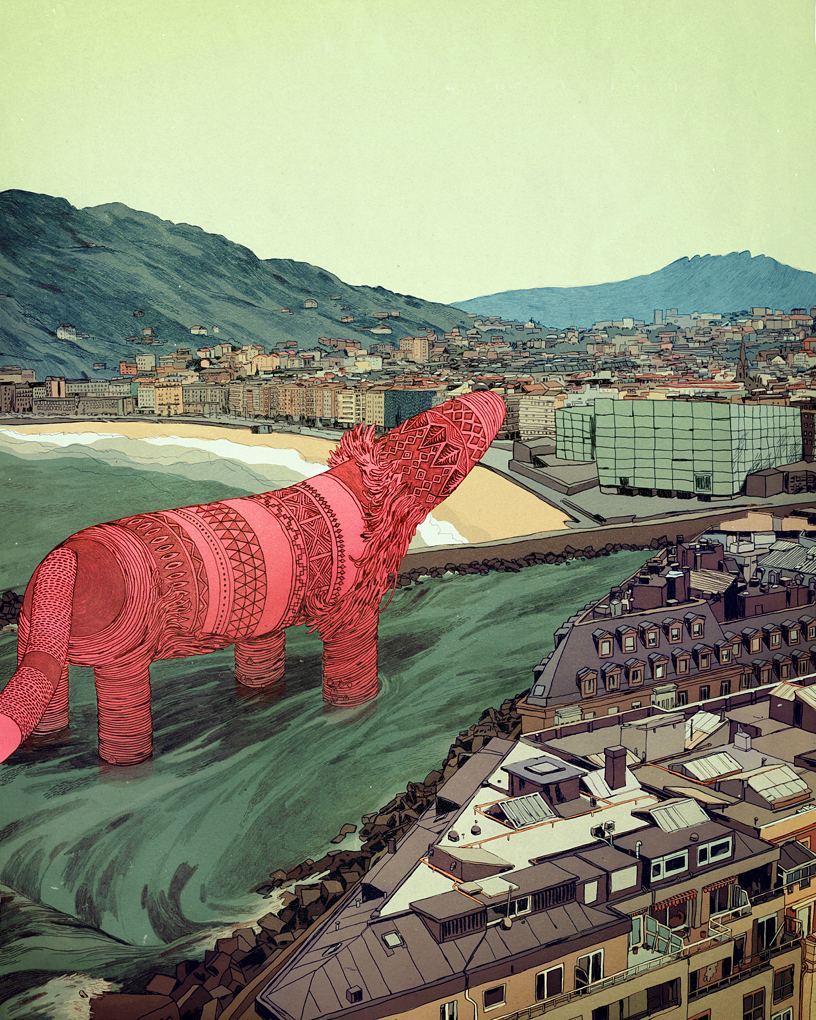 He spent over a decade learning and refining his technique before beginning to work on commissioned projects.
 He is known for creating beautiful sketches and drawings with bright colors and a surrealist touch.
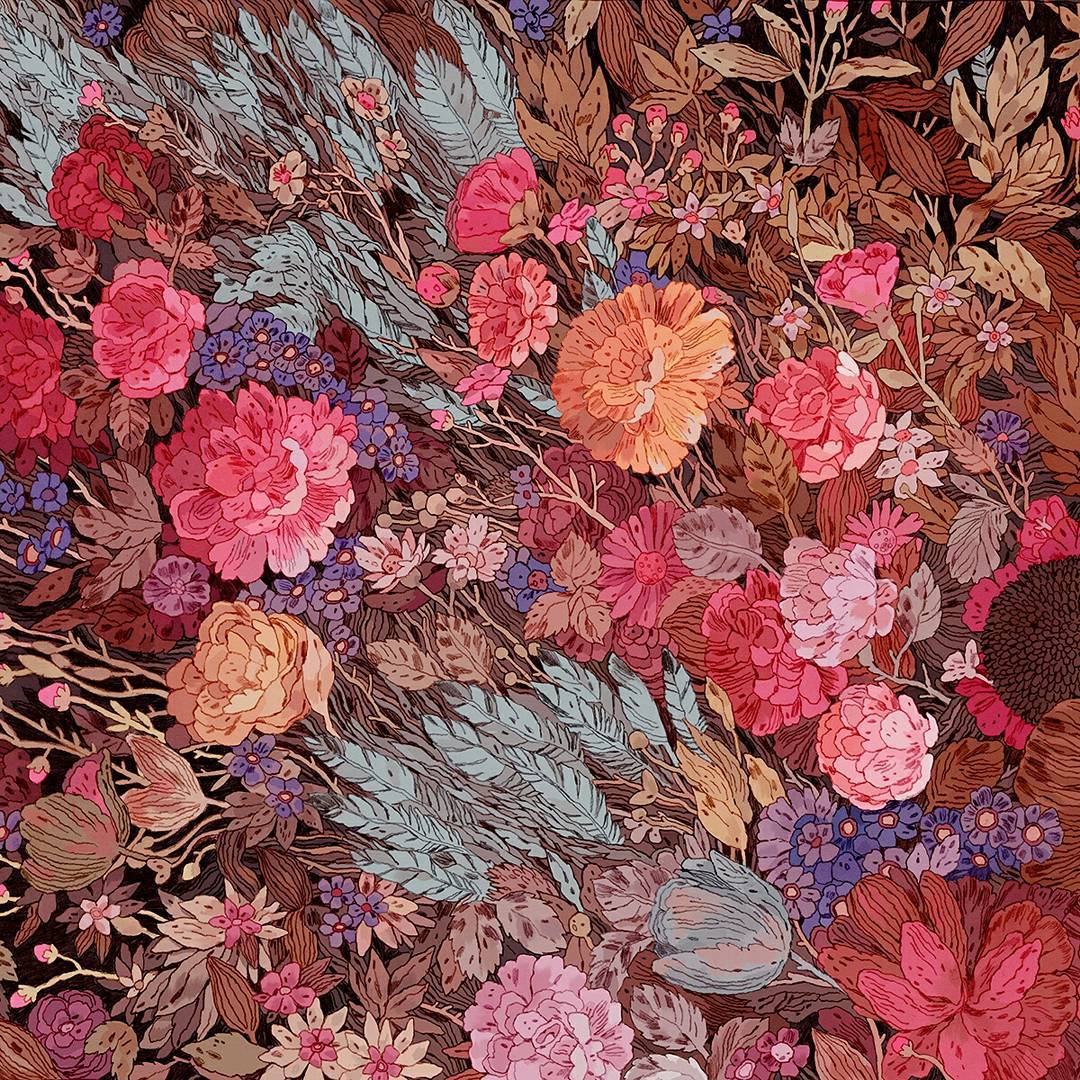 Juarez’s fantastical illustrations of locales, which sometimes appear familiar and other times foreign, come from thoughts that were once only in his head.
 Through years of practice and honing his craft, he has learned to express his creative visions, and they now take the form of elaborate compositions that boast meticulous details.
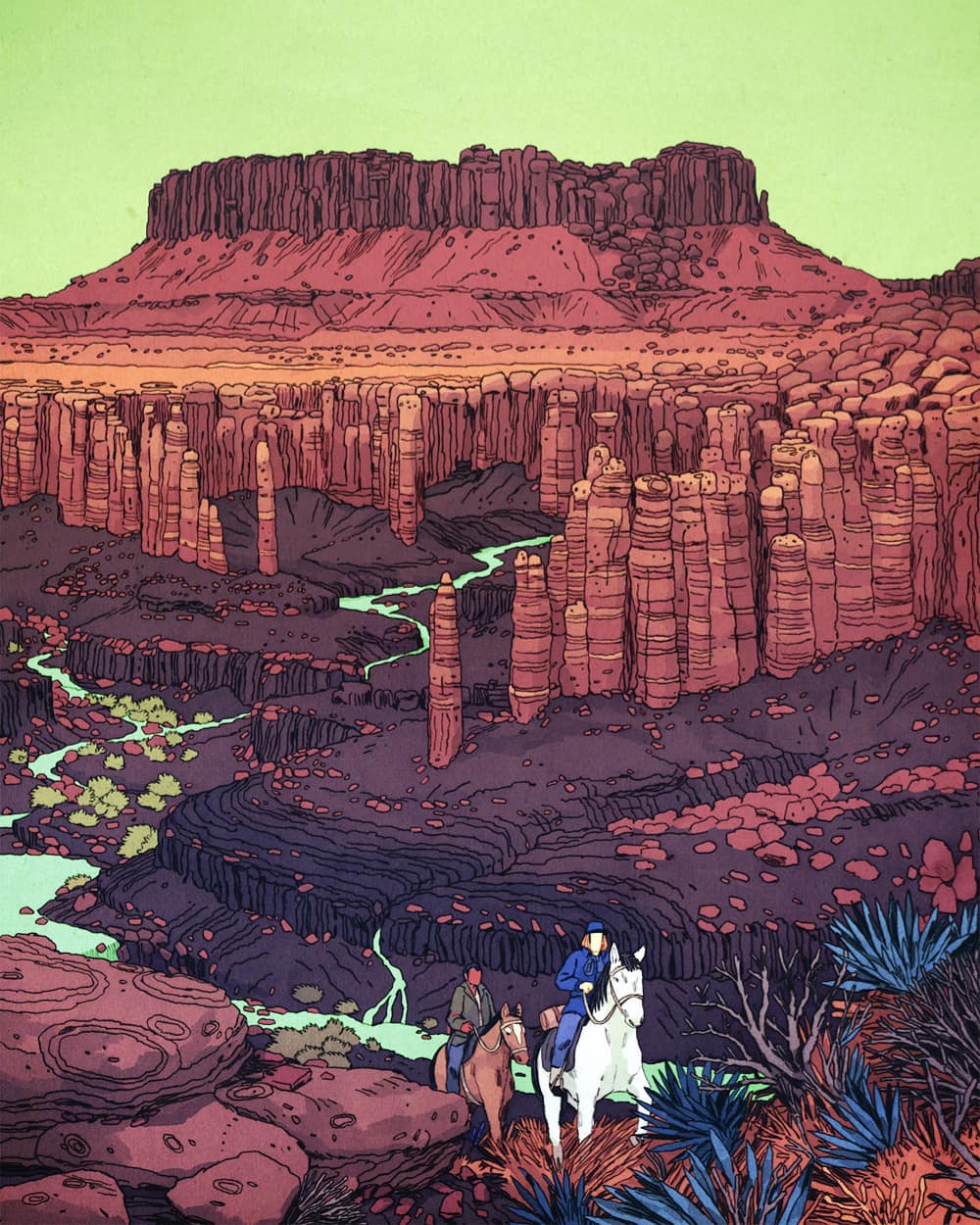 Many of Juarez’s works are based on real places, but they always have a surreal twist that takes them out of the realm of possibility.
 More of Jon Juaraz‘s wonderful paintings can be found at https://www.artstation.com/harriorrihar and https://designyoutrust.com/2022/12/the-superb-hand-drawn-illustrations-by-jon-juarez/.
 Another Saturday morning — another chance to dip into the Creativity well. Although these past few weeks the well has run dry.
I know that inspiration is a circular thing. Kind of like mood swings. Or menopause.
I digress.
Do you ever get into a creative lull? A gap in energy, insight and enthusiasm? I’m certain many of us do. One time or another. And with Thanksgiving and Christmas just around the corner, there is often more important things to “get creative” with.
I’ve been on the slow-moving-switch-to-Christmas-decorating bandwagon lately. I have been sending messages to my subconscious asking it to start working on a Christmas decorating theme for this year.
Nowhere in my chilly outside future are there thoughts of painting, Angel Tears, or coloring Mandalas with fine tipped pens.
Yet, cleaning up and out my library/craft room, I felt a tingle of excitement putting away my coloring books and crystal tear drops.
That’s why I know that it won’t be long until I undertake my Creativity journey once again.
Perhaps we all need time off for side trips — Thanksgiving, Black Friday, Christmas concerts. Visiting family members and friends. Having a hot chocolate with exercise buddies or brunch with cousins. Spending a quiet evening with someone special.
If you feel like you’ve lost it, you haven’t. Not in the least.
Take a bit of time to re-energize your aura.
Creative people are so from birth. You can never lose what will always be a part of you.
This post from July 1, 2015, popped up the other day at the bottom of one of my more recent posts. Curious unicorn that I am, I clicked on in and reread it, and laughed to myself. Not much had changed in eight years. So, for your reading amusement, here is a repost of Computer Hoarder or Zen Master …
 Considering how haphazardly I live, organization is not a word that frequently passes my lips. I just have too much information, and not enough room/time/energy to organize it all. But then last week my Irish Muse stopped by, and I’ve been working on Big O 101. Most things around me are falling more-or-less in place.
One place I haven’t had much of a problem, though, is my laptop.
I used to fill notebooks with thoughts, ideas, research, menus for the week. The old-old ones were more like journals, full of angst and awakenings, blah blah blah. Necessary but over.
The newer notebooks, though, are a different animal. They are full of things I don’t recognize. Names. Lots of numbers that don’t mean a thing. Notebooks became jotting books. Need a piece of paper to write down that stupid email address? Write it in the middle of a notebook. Need to add something to the grocery list but don’t have a piece of paper handy? Write it in the middle of the notebook.
I now prefer to document my writing, research, images, and ideas on my laptop.
I must admit I have kept things in much better order than the days of pen and paper. I keep/download too many things on my desktop, but they all eventually find a folder home of their own. I have folders for Stories, Chapters, Essays – Finished, and Stories, Chapters, Essays – Unfinished. I have a Humoring the Goddess folder with dozens of sub-folders.
I have a folder called Recipes, one called Resumes, and one called Research (which, btw, has the largest, oddest assortment of information I’ve ever seen). Novels have their own folder; inside those are sub-folders of character backgrounds, copy I’ve cut and couldn’t part with, earlier versions from cavemen days, maps of ancient landscapes that may or may not be relevant – all kinds of weird stuff.
I have folders with images — with my downloading prowess I’ve no doubt got three copies of every photo I’ve ever downloaded from my phone. I’ve got family photos, photos I’ve used in blogs, photos I think are cool, photos that are inspiration for other projects, and photos that are … just photos.
I’ve got folders with names of novels I’ve never finished, folders of novels I have finished, and books I’ve downloaded and have yet to read. I’ve got cute little folders such as Girl Things, Books-Music-Words, and Family Cards and Art, and boring ones like Taxes and Passwords.
The cool thing about keeping all those folders and documents around is once I open them it’s like time-traveling through the galaxy. Where did I get these things? Why were they important to me at the time? What did I want to do with these things?
It’s like a long, long trip through the past.
And although I don’t keep as much falderal as years past, there’s something satisfying about opening a pretzel logic database and actually being able to find something. There’s something fun about thumbing through my Research folder and perusing auras, Rite of Pan, Medieval words, wormholes, and clichés.
What a weirdo! And what a galaxy to explore!
Tell me about YOUR computer. Are you organized? Do you have more ideas than gigabytes? Or are you a catcher-catch-can kinda laptopper?
Sometimes I come across an amazing artist who barely leaves a mark across the Internet.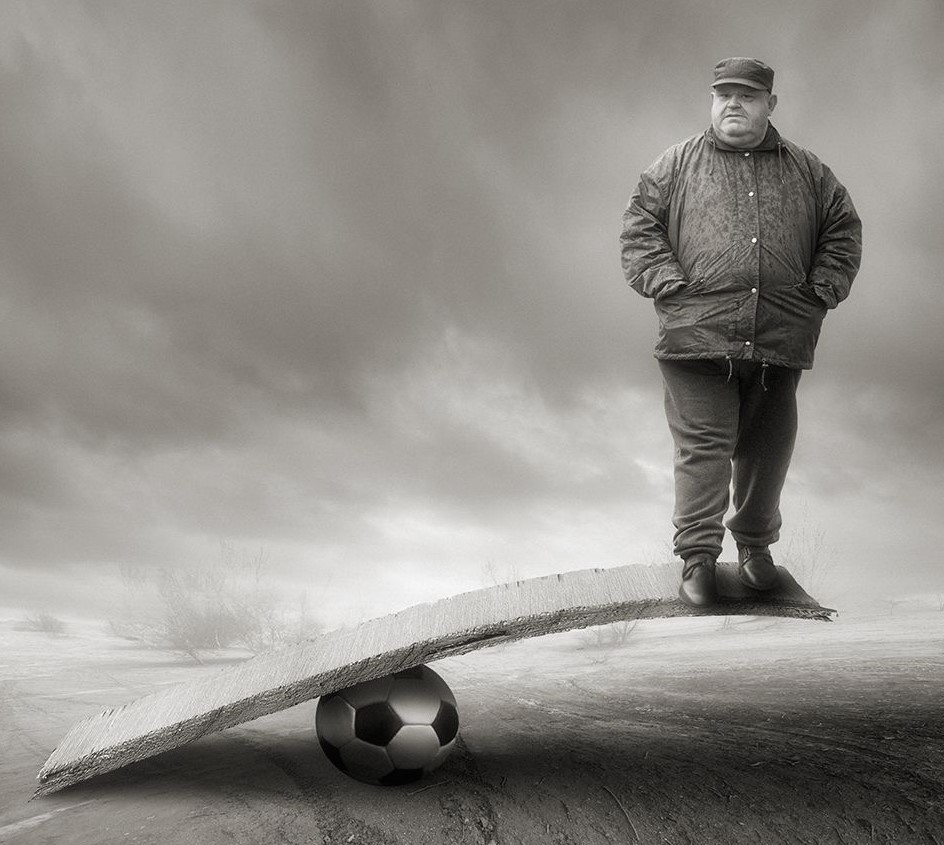 So it is with Yves Lecoq.
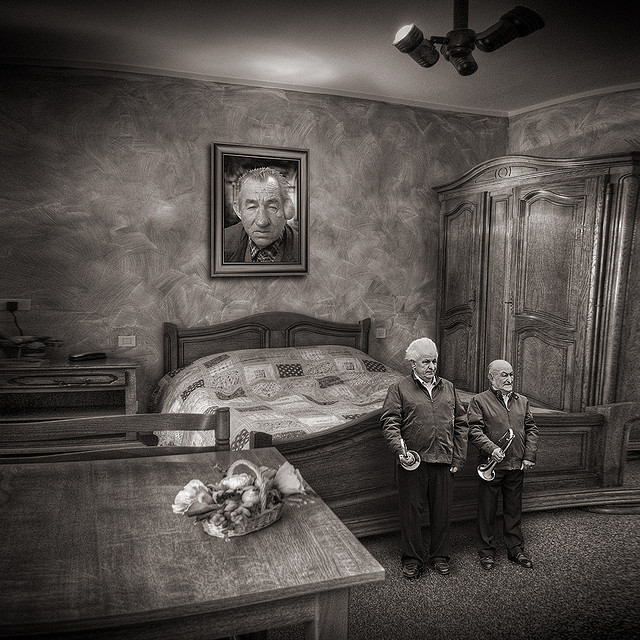 Lecoq is considered a neo-surrealist photographer who currently resides in Entre Angers et Nantes, France.
 Combining dreams, fantasies, and the subconscious mind, his work pushes artistic boundaries.
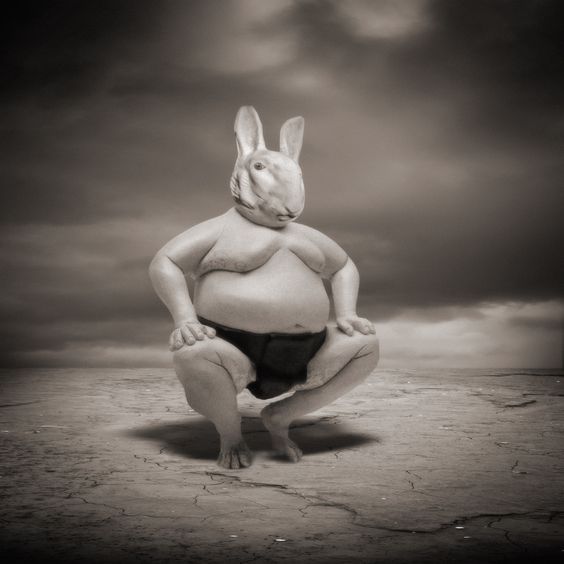 His photographs are surrealistic, as if composed of several different ideas melded into one.
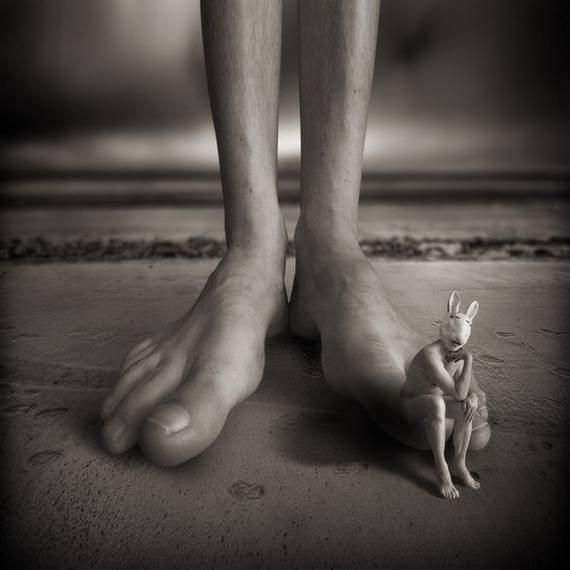 Many of these photographs are composites — perhaps combinations of several of his own photographs.
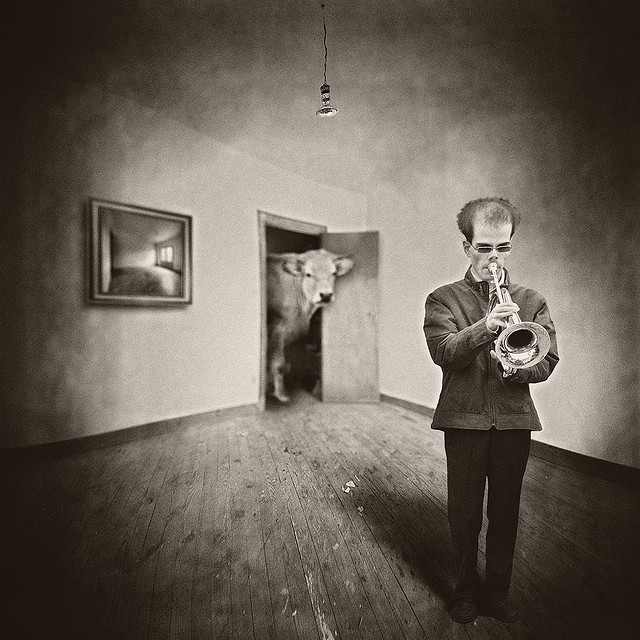 There is a surreal feeling emanating from these odd versions of life, strange faces and bodies more at home in a nightmare than in every day life.
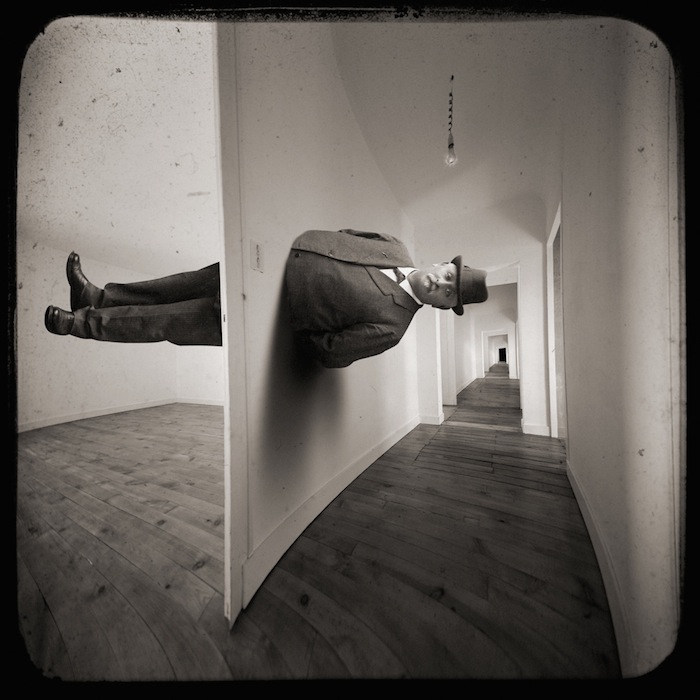 Lecoq’s work is strange and perfect, a reflection of someone who knows and appreciates the world of photography.
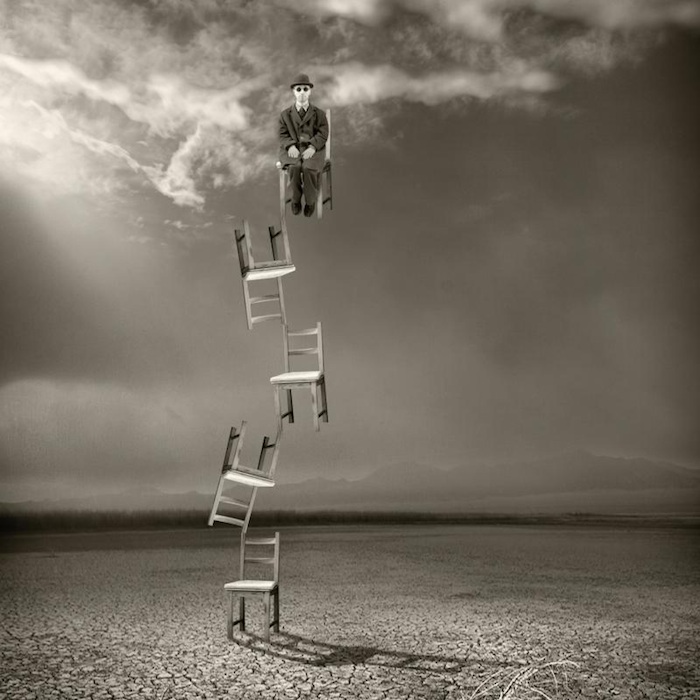 More of Yves Lecoq‘s photography can be found at https://www.flickr.com/photos/yveslecoq.

You can’t change the music of your soul.
~ Katharine Hepburn
Diana Kersey is a visual artist who works in clay, creating both studio pottery and architectural ceramics. Kersey earned a MFA in ceramics from Washington State University in 1997, and a BFA in drawing from Texas Tech University in 1994.
 Kersey exclusively works in ceramics, creating everything from small studio pieces to large architectural installations.
 Her work is instantly recognizable due to the muscular and spontaneous qualities of the clay, which she enhances with colorful and translucent glazes.
 The birds, insects, fish, and flowers present in her work suggest a primordial narrative, while the underlying decorative grids and motifs capture the relentless energy, complexity, and contradictions that pulse through our contemporary society.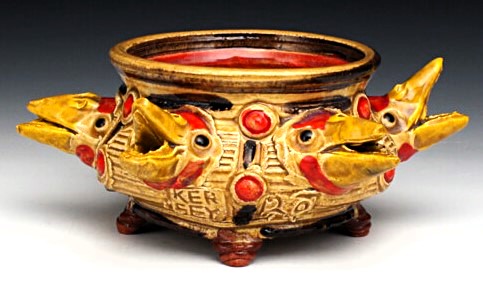
“My making process reflects and informs how I wish to live my life. I spend very little time on regrets or changing my mind,” Kersey shared.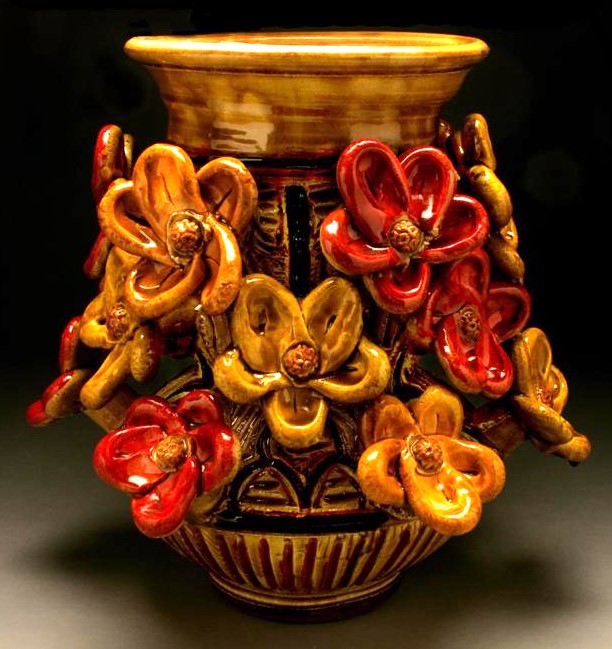 “I trust that I make the best decisions I can, relying on the information at hand. So my pots, basically, represent my philosophy about how to live a happy life with no room for regrets.”
 More of Diana Kersey‘s whimsical ceramics can be found at https://www.dianakersey.com/.
Chicago artist Thomas Fedro creates abstract art with zing and boundless humor.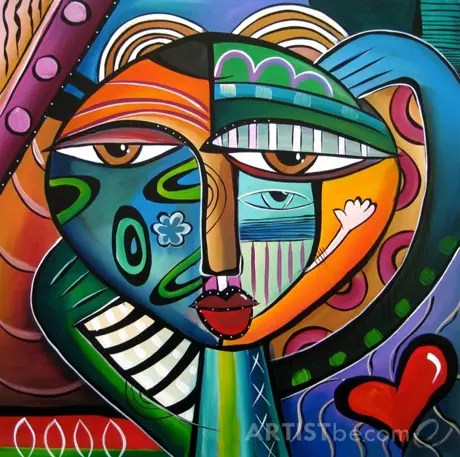 After attending Valparaiso University on a music scholarship and studying at the Illinois Institute of Art, Fedro began pursuing a career as a professional artist.
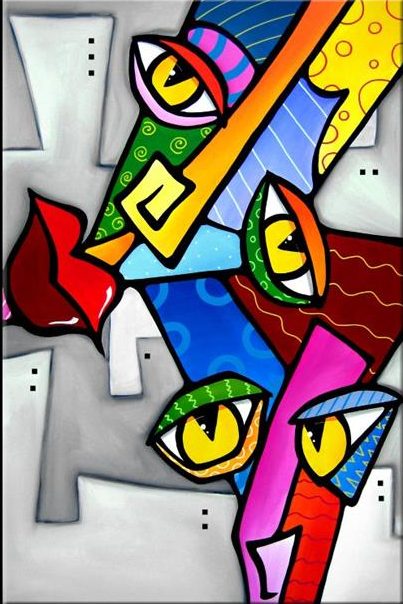 His original innovations incorporate a combination of cubist collage and whimsical pop art that have an addictive rhythm all their own.
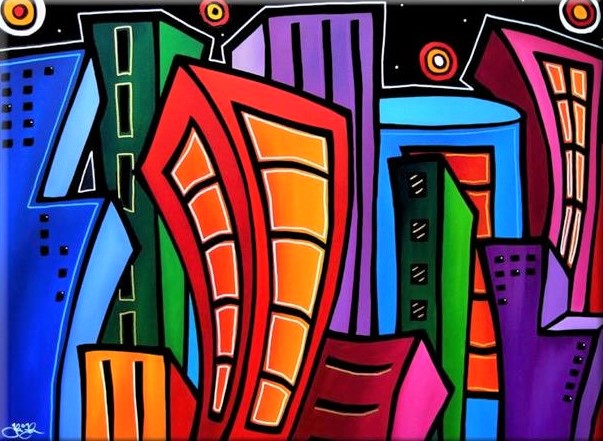 Large paintings, deep colors, big features and bold lines seem to be electrically charged.
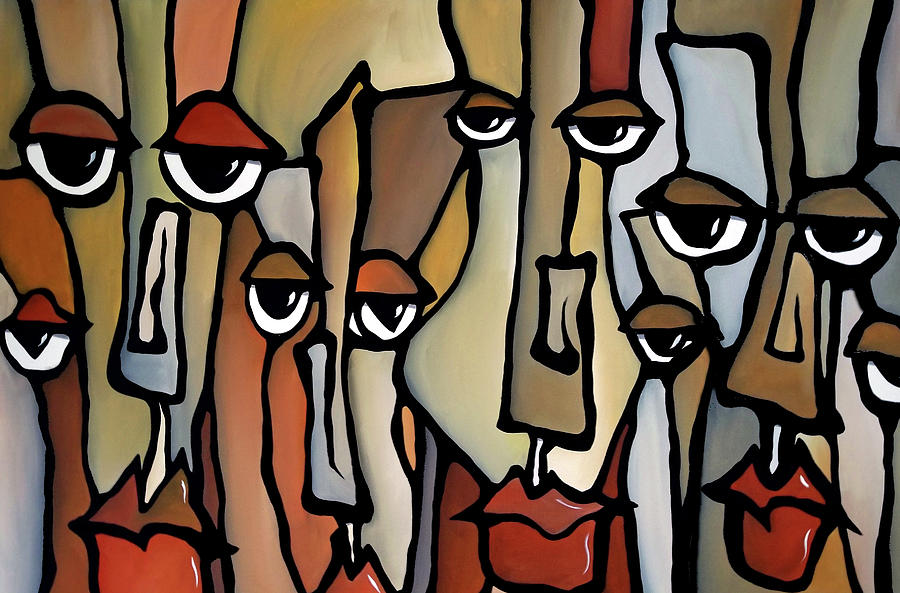 With bright, vibrant hues and vivid, exciting shapes, Fedro paints in a variety of styles, although he prefers urban landscapes and pop art faces.
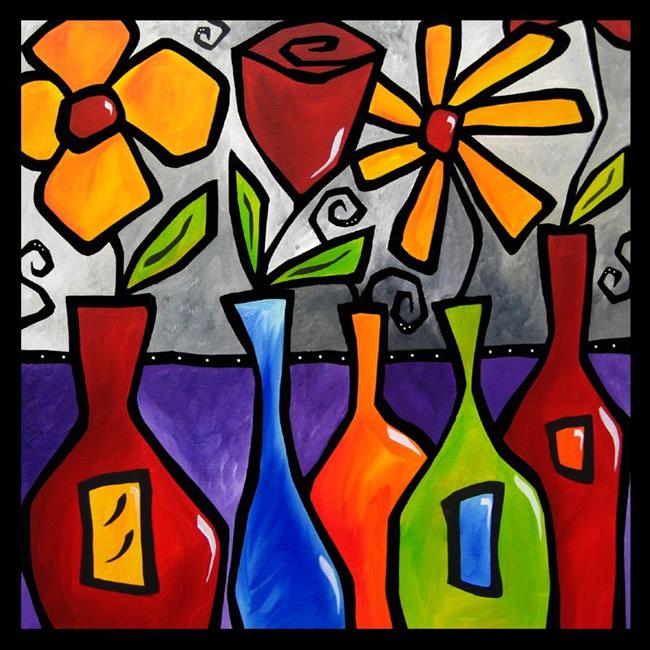 The artist uses his art to make the work of the soul more visible and real.
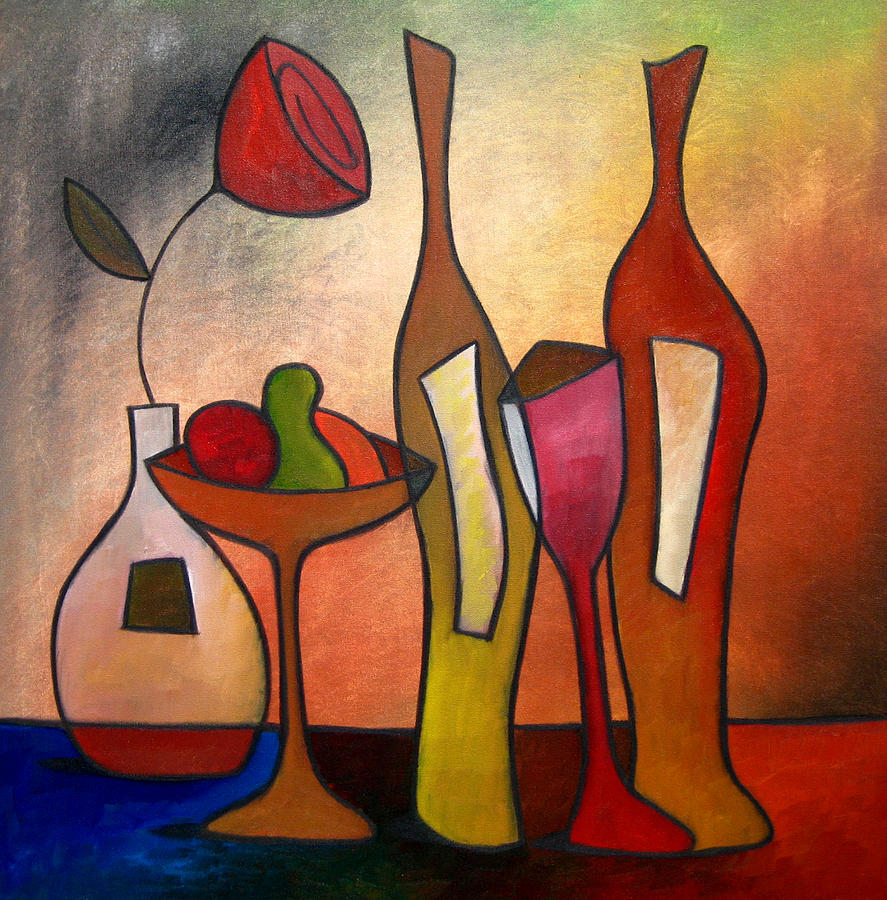 “Ultimately,” Fedro believes, “art acts as both a mirror and a lens that gives presence and visibility to that which previously was unseen, unknown and not understood, often residing in the underground of the conscious.”
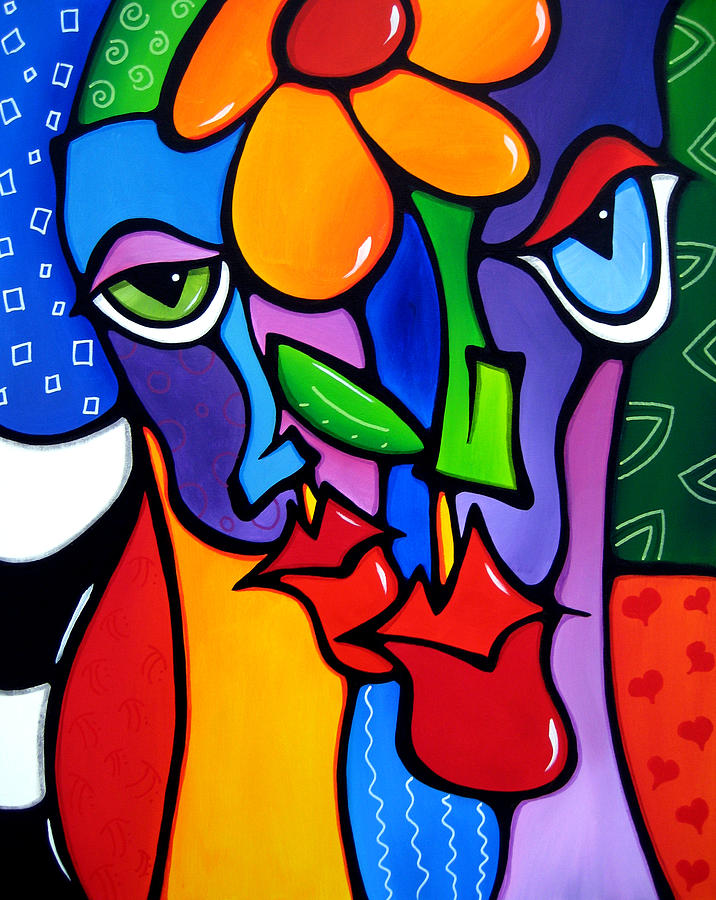 More of Thomas Fedro ‘s bright pop art can be found at https://tom-fedro.pixels.com/ and https://www.saatchiart.com/Fidostudio.
I’d love to be Jan Beek’s neighbor! What earthly beauty, what magical poetry, what a wonderful outlook!
Do check out her love for life out at her Jan Beek …
A short story is what you see when you look out of the window.
~ Mavis Gallant




There is no beauty without some strangeness.
~ Edgar Allan Poe
 I love big words.
Especially when I know what they mean.
Years ago I used to work with a woman who
always used the word “copacetic.” It always sounded out of place in daily conversation, but I loved the complexity of its intended usage.
I used to use big and big-ger words back when I was a full fledged writer. Nothing as big as copacetic, mind you— but more intricately designed words that lifted both the vernacular and the swirl of the language. I based a lot of my stories on the gap between verbal eloquence and high school level rag tag jargon, so the creative lingo actually worked.
I don’t write stories and novels much anymore. I don’t have the patience for detailing a longish plot nor an attention span for any length of time. Plus I get more pleasure reading about others’ worlds these days.
I remember the days of dreaming and writing at the same time. Of exploring while I was describing. Of knowing the entire story before I wrote the opening paragraph yet watching my story take creative turns I never initially thought of.
Yet … (I love the dramatic pause)
My sleeping habits have changed through the years, adjusting to my hubby’s work schedule (nights), my retirement, HIS retirement, and my medications. Not being able to fall asleep quickly takes away my dream time.
You see, I have a lot of creative dreams, wild dreams, an occasional nightmare, and pure nonsensical experiences. I believe these nightly escapes are a different side of my Creativity.
And not being able to get there quickly enough bugs me.
I feel like I’m behind one of those clear, slightly wavy barriers, looking at paths and buildings and people I haven’t thought about in 20 years and those I have never forgotten, right on the other side. There are sidewalks that lead to my old high school, jobs and bosses and offices that are always distorted one way or another, never-ending warehouses, my long gone parents — all sorts of interesting scenarios that are waiting for me to explore.
If I’d only fall asleep.
My dreams are a different experience than my writing. They feel … free.. Unpredictable. Like “Hey! where are we going tonight?”
And I love that .
Yet …
Instead of relaxing and meditating or listening to sleep music or reading a book to get sleepy, here I am at 2:46 am, writing a 409-word blog.
I seem to always acerbate my problem …..
Fabio Gomes Trindade, a talented Brazilian street artist, creates stunning graffiti masterpieces by combining his detailed portraits with branches of trees and flowering bushes.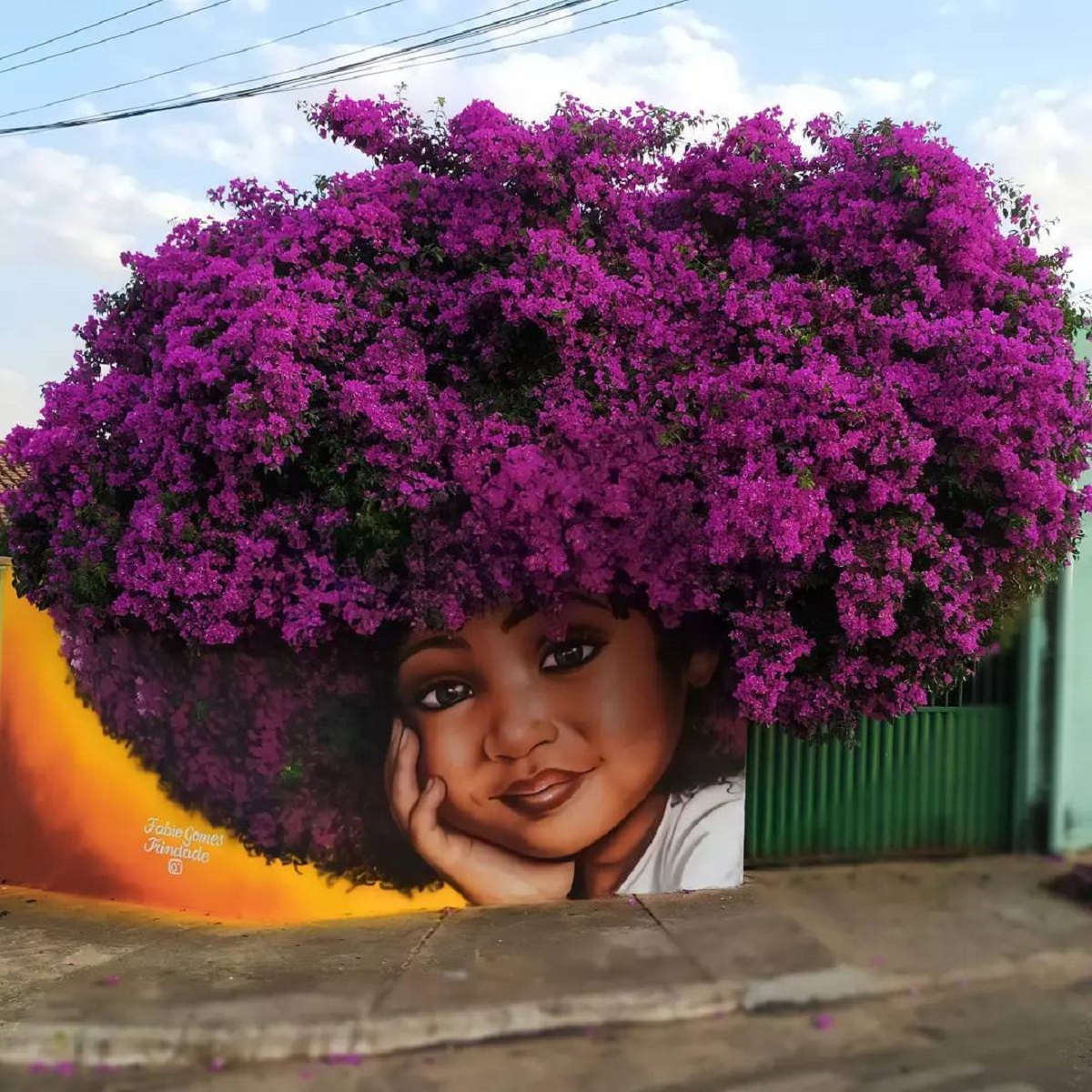 The artist reportedly came up with the idea for this blend of street art and nature 10 years ago when he saw an acerola tree planted in the backyard of a humble house in the city. Interestingly, that same tree eventually became part of one of his most popular artworks.
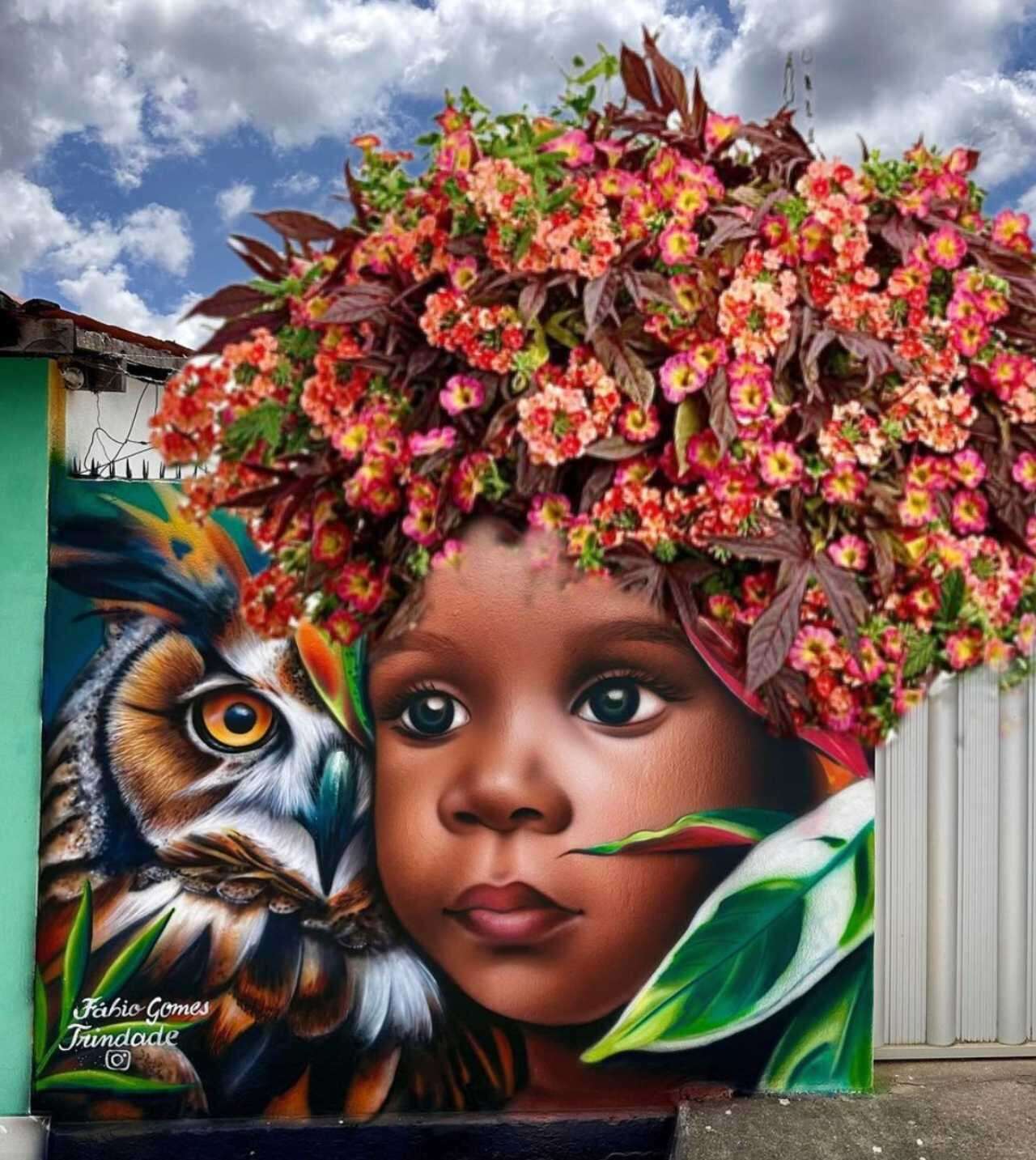 Whenever he starts work on a new project, Trindade first chooses the location of the artwork.
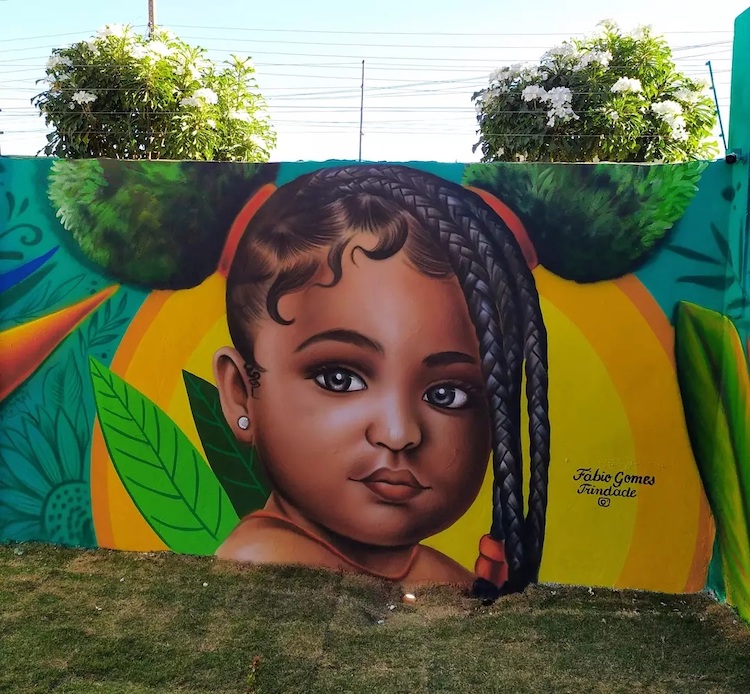 The presence of lunch trees or flowering bushes is critical, as they basically make up about half of the mural.
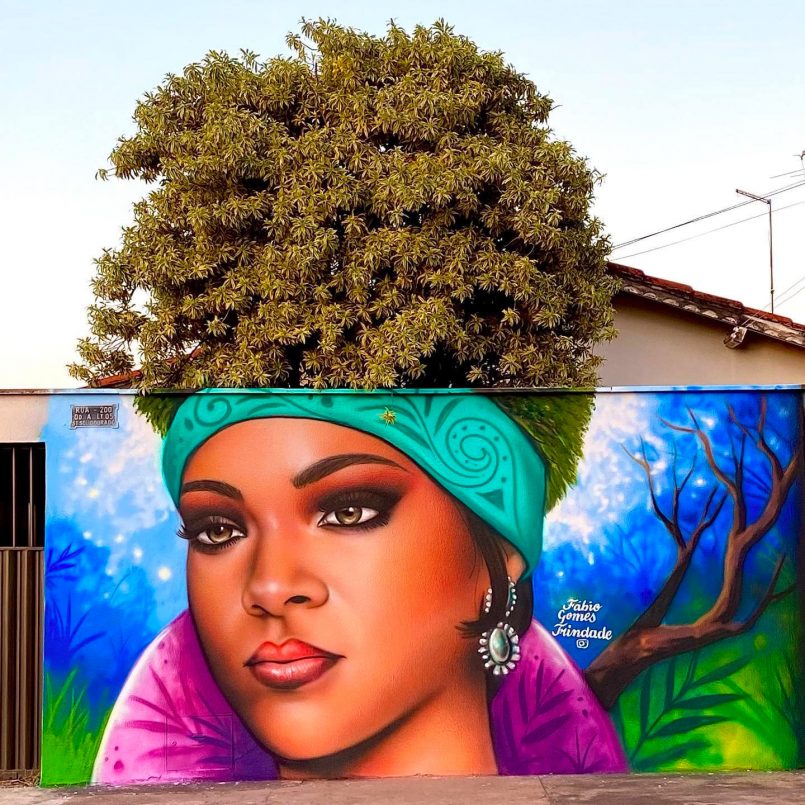 The Brazilian artist uses graffiti to depict the faces and part of the hair of the portraits he creates, letting nature take care of the rest.
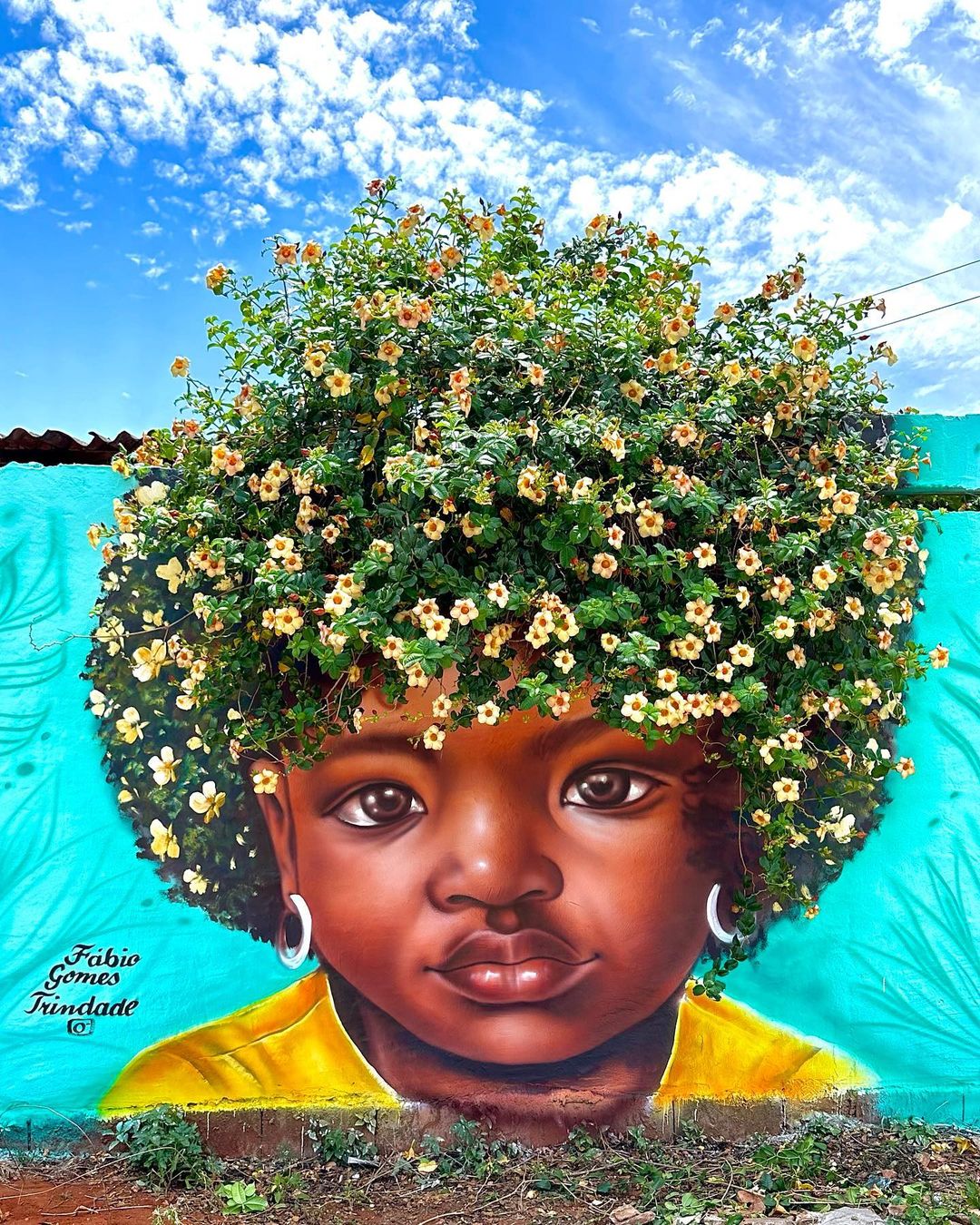 When paired with colorful flowering trees and green leaves, the portrait has a full, beautiful coif. It’s a clever and charming way to combine elements of the urban environment with the natural one.
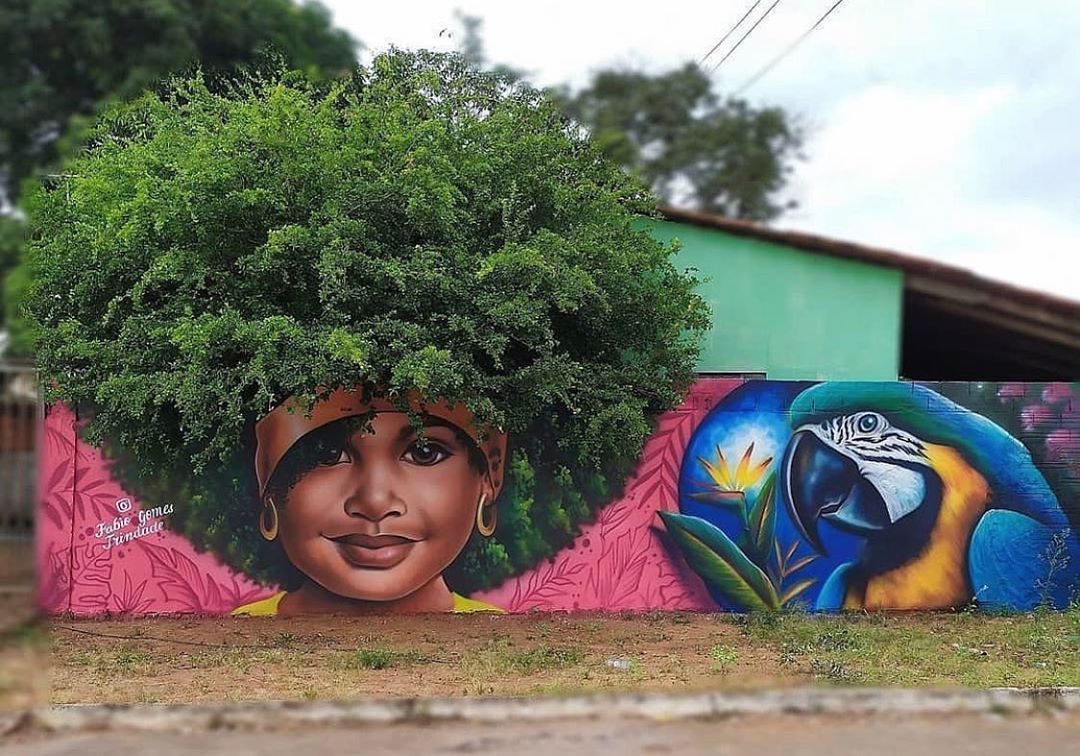 More of Fabio Gomes Trindade’s marvelous wall murals can be found at https://www.instagram.com/fabiogomestrindade/.
 There are as many forms and styles of music as there are bricks in the Yellow Brick Road. And, depending upon our lives and histories and happenchance moments we have been exposed to quite a few of them.
Pop, Heavy Metal Rock, Oldies Rock, British Rock (and a dozen more), Country, Alternative, Jazz, Smooth Jazz, Big Band, Hip Hop, Rap — the list goes on and on. We may overdose on modern country (Toby Keith), vintage country (Hank Williams), Big Band (Artie Shaw), Bluegrass (Lester Flatt & Earl Scruggs) — all have music that thrill the souls of any and all of us.
Having said that (along with mentioning a half dozen times which music I usually listen to), I have been listening to slow, soft, rhythmic music to help me fall asleep. I don’t have headphones or ear buds (yet), but having my iPad near my head or right under my pillow works quite well.
I was listening to “Classical for Sleep” the other night, and I listened — really listened — to a couple of masterpieces on piano. Songs you’ve heard a dozen times, through movies or as background elevator music, and most likely don’t pay attention to.
I listened to “Moonlight Sonata” by Beethoven the other night. Everyone knows that slow, sleepy beginning, and the sped up middle and end, and this time I really listened. To every individual note. And as the piece unfurled before me I was amazed that the artist could play that fast that well. It was amazing.
I also listened to Debussy’s “Clair de Lune.” Wasted as the ending song of Ocean’s 11 movie (and overused in movies in general), the piano work was amazing. Each note individually wrapped around the next, listening to it in the dark of night brought an even deeper appreciation of classical music in general and piano music specifically.
Do you ever turn out the lights and listen to your favorite slow, creative, relaxing music favorites? Maybe it’s smooth jazz or Christian hymns or Christmas music or astral travelling serenades.
Listening to music right before you fall asleep relaxes your mind as well as your body. And that’s when you get to really appreciate the talent of the musician, the composer, and the universe. You can appreciate the individual notes, the intricate finger work of violins or cellos or pianos, and feel the atmosphere the composer was creating.
Music is so different at night.
Try it. Let me know what you think.
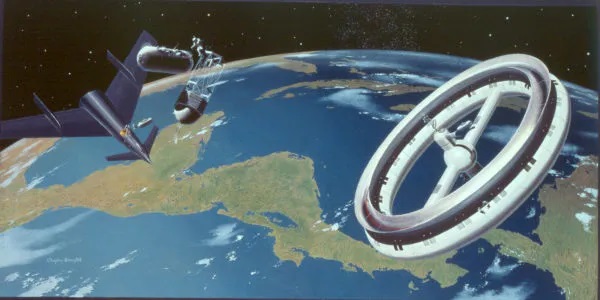
Chesley Knight Bonestell Jr. (1888 –1986) was an American painter, designer, and illustrator. His paintings inspired the American space program, and they have been (and remain) influential in science fiction art and illustration.
 Bonestell was born in San Francisco in 1888, and as a teenager survived the 1906 earthquake that leveled the city.
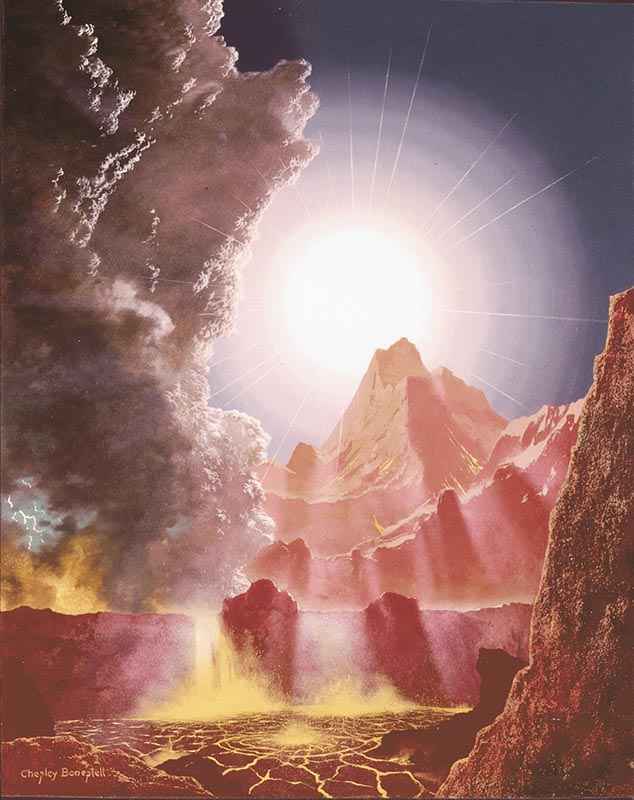 A pioneering creator of astronomical art, along with the French astronomer-artist Lucien Rudaux, Bonestell has been dubbed the “Father of Modern Space Art”.
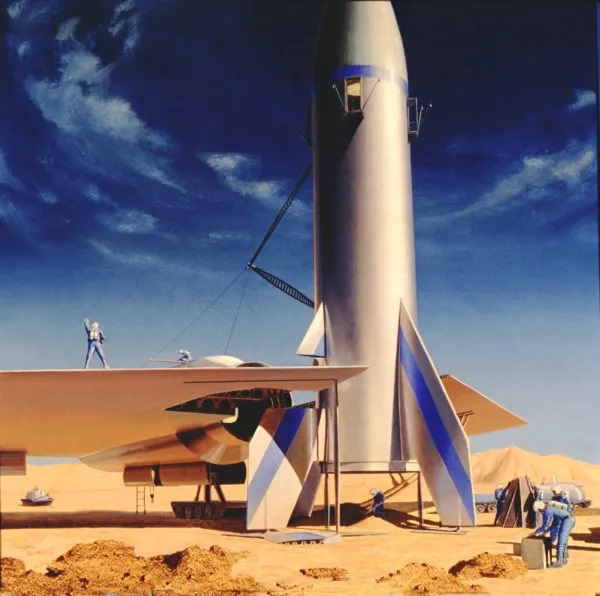 His first astronomical painting was done in 1905. After seeing Saturn through the 12-inch (300 mm) telescope at San Jose’s Lick Observatory, he rushed home to paint what he had seen.
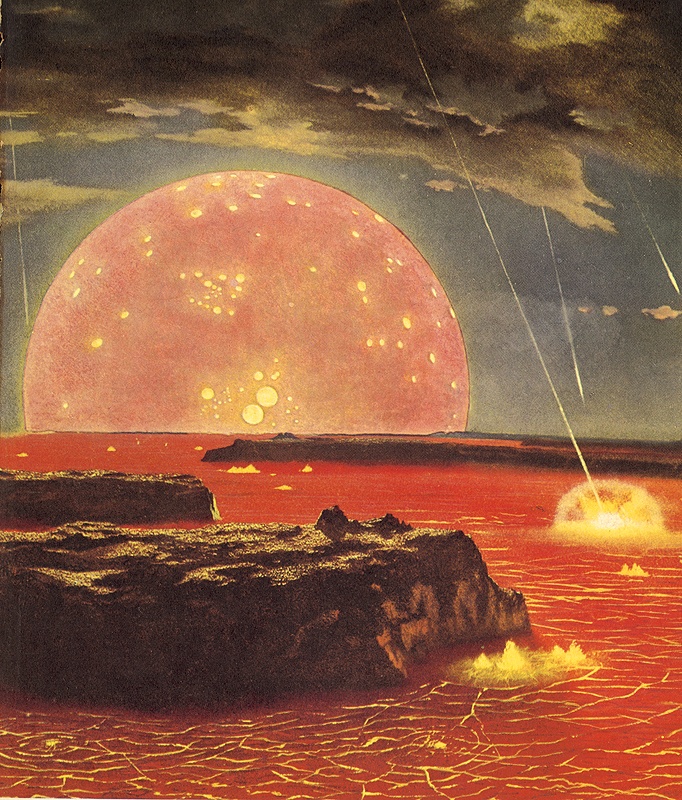 Bonestell created paintings depicting astronomical scenes and space flight explorations decades before the first manned missions.
 His paintings electrified generations of space enthusiasts: aspiring writers, astronomers, physicists, artists, engineers, and others.
 For his realistic portrayals of space exploration, the solar system, and the far off galaxies, Chesley Bonestell became known as the “Dean of Astronomical Artists.”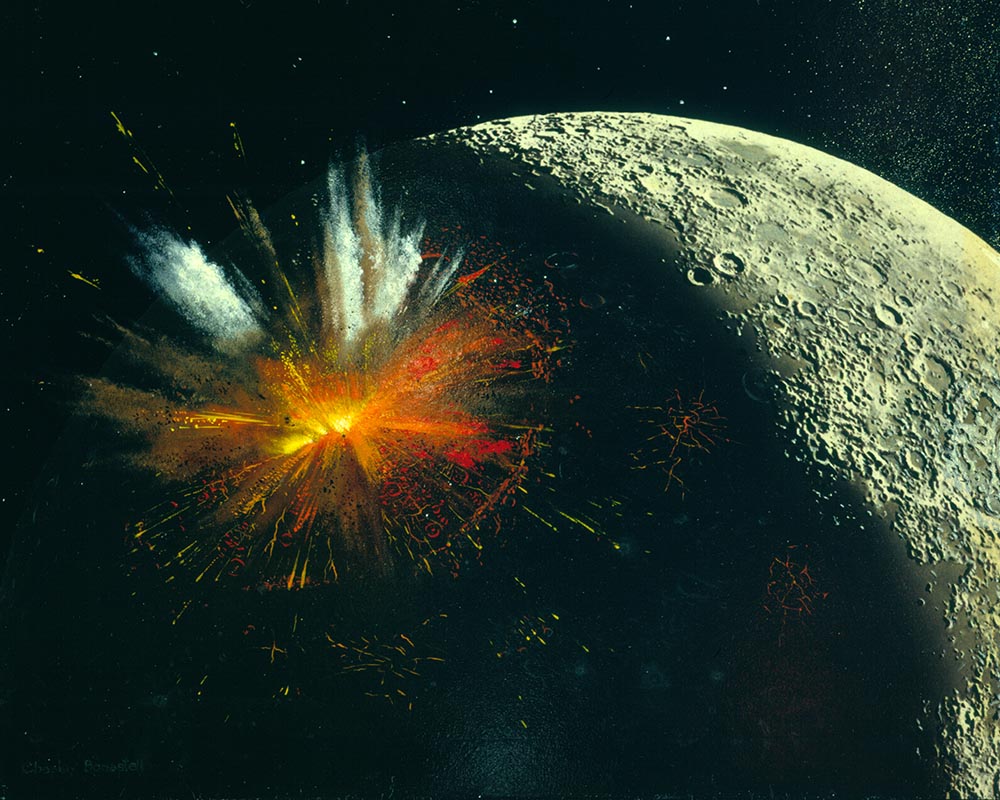
More of Chesley Bonestell’s fantastic art can be found at https://bonestell.org/.
 You know me — I am a texture junkie at times. Although I appreciate crafts of ALL kinds, there’s something about a 3D creation — slightly or overtly — that makes me stop and look a little longer.
Mary Gregory Glass is a variety of glass produced in the United States toward the end of the 19th century in imitation of the then popular English cameo glass. Although “Mary Gregory” glassware was primarily a Czech product, it was not entirely limited to the Bor Region of Czechoslovakia. Switzerland, Holland and Germany also produced glassware of this type.
 Both transparent and colored, the glass is decorated with white enamel designs that are painted on the surface instead of being carved, as the genuine cameo glass was.
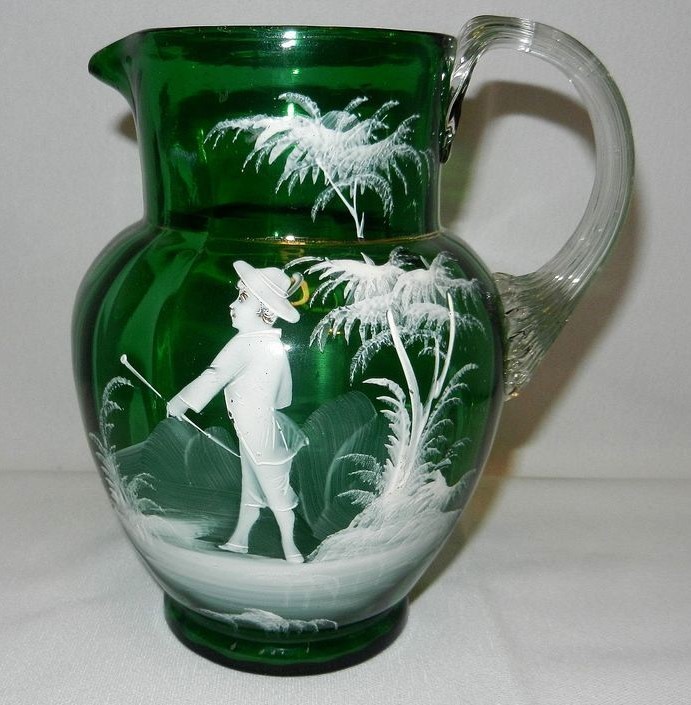 The distinctive feature of this style of glass are scenes of Victorian children in silhouette, dressed in their best clothes, playing games and having fun.
The term ‘Mary Gregory’ indicates a style of glass rather than a manufacturer. It originates from the myth that a lady in USA named Mary Gregory painted scenes of children on thousands of items of glassware.
 Miss Mary Gregory (1856-1908) was an enameller working in the 1870s and 1880s who decorated glass for the Boston and Sandwich Glass Company in Sandwich, Mass., but it is believed she painted landscapes, not children.
 Regardless of the truth that is now known, the name has stuck, and this style of glassware is still defined as Mary Gregory Glass.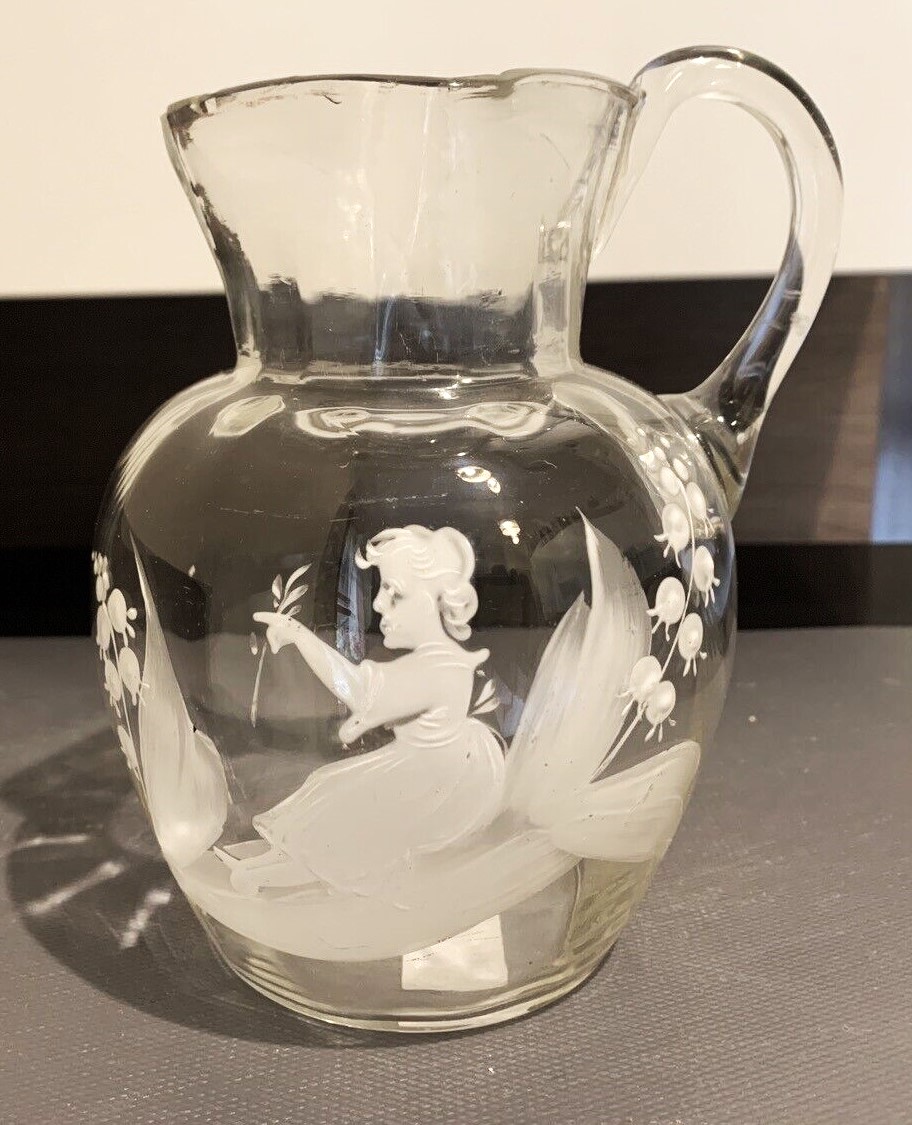
More of Mary Gregory Glass can be found at 20th Century Glass and World Collector.
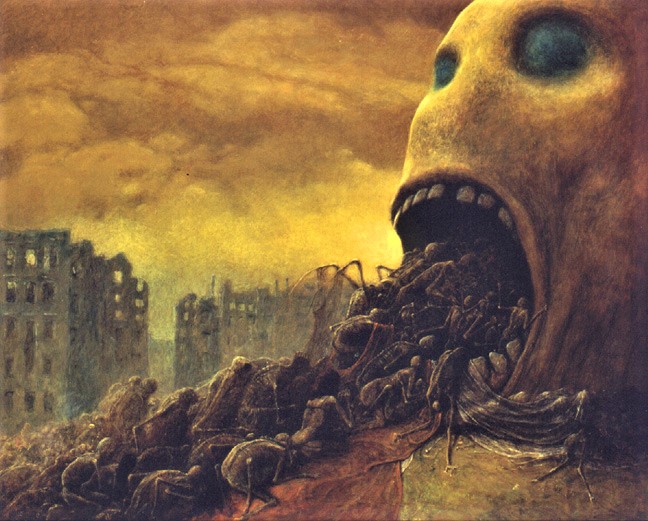
 Actually October is for all kinds of things: blankets, yellow and red leaves, fires, nippy morning breezes, apple pies and football.
But for me October is for poetry as well.
I happened to come across a plethora of wonderful poetry the other week by those blogs I follow, and can’t help but want to share their musical words with you. So here is my first offering to you wonderful readers.
Blogger Michael Erickson is a writer, husband, father, dinosaur enthusiast, future science educator, and, from his blog, The Ink Owl, a poet. What caught my eye this October was his series A Sinister Countdown.
It is a delightful collection of daily poems that touch on the melancholy, the macabre, the ambience of the Halloween season. I suggest you check out his blog and enjoy the ride!
Sinister Countdown – Where Darkness Lies
The sky warns of something coming,
Upon reality’s edge just beyond where darkness lies.
‘Tis risky for one as mortal as I,
To run a gauntlet of light as this.
Unseen beings prowl at a thinning gate,
As day gives way to night.
Soon my steps will be determined,
By an unforgiving monster.
One can only pray that this errand won’t fail,
Let me not stray into waiting jaws.
Let there still be hope in this world,
For a new day to dawn bright.
In the mean time I dodge and weave,
Braving a shattering path alone.
Pejac (Silvestre Santago) is a Spanish painter whose works include outdoor murals, often utilizing trompe-l’œil techniques. Born in Santander, Cantabria, Spain in 1977, Pejac studied fine art first at Salamanca, then Barcelona, and finally at Accademia di Belle Arti di Milano “Brera”.
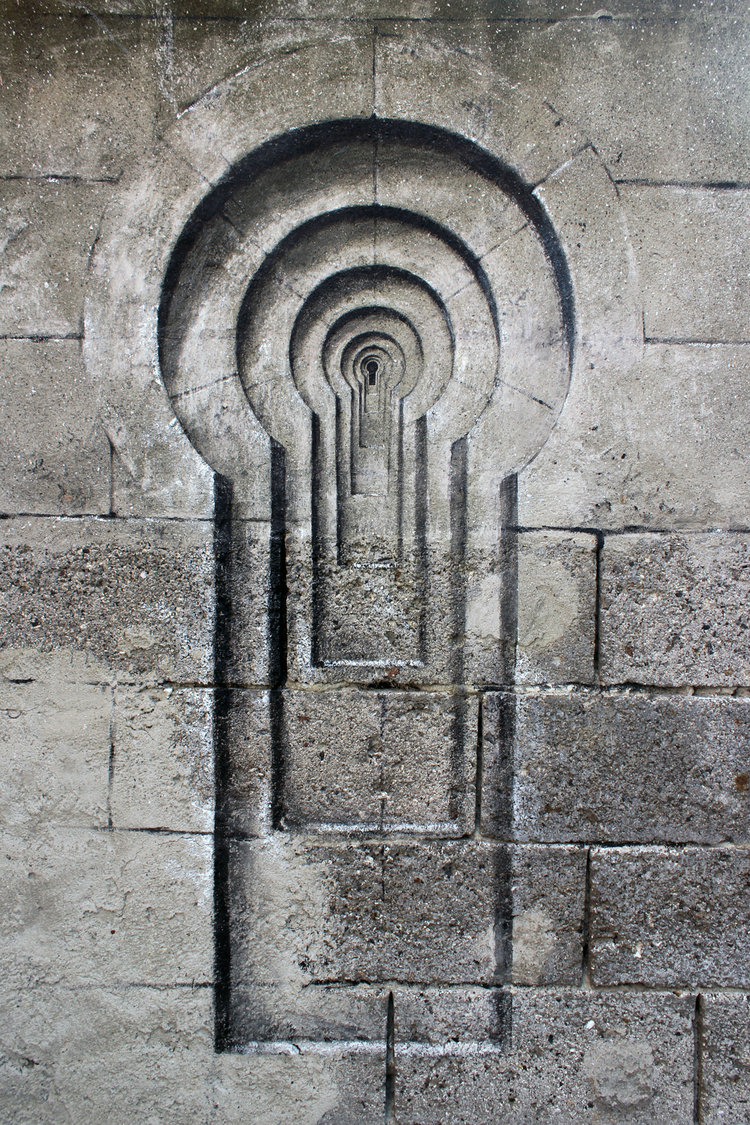 Pejac’s first steps towards street art happened while at university in Italy when he became disillusioned with the attitudes of his art teachers.
 As a reaction to their elitist values, he decided he would create art for everybody.
 Around 2000, Pejac started working in the streets of Milan to bring art to those who would never visit a museum.
 Pejac is familiar with different styles, techniques, formats and mediums, from miniature window drawings to striking site-specific interventions to elaborate replicas of classic masterpieces.
 Like the installations of street artist Banksy, Pejac’s irreverent site-specific works often employ trompe-l’œil techniques and clever twists on familiar imagery to communicate powerful messages regarding social and environmental issues.
 “I prefer to speak with a soft voice,” Pejac stated in one of his rare interviews, metaphorically describing his poetic approach to creating subtle, yet impactful studio pieces and urban interventions.
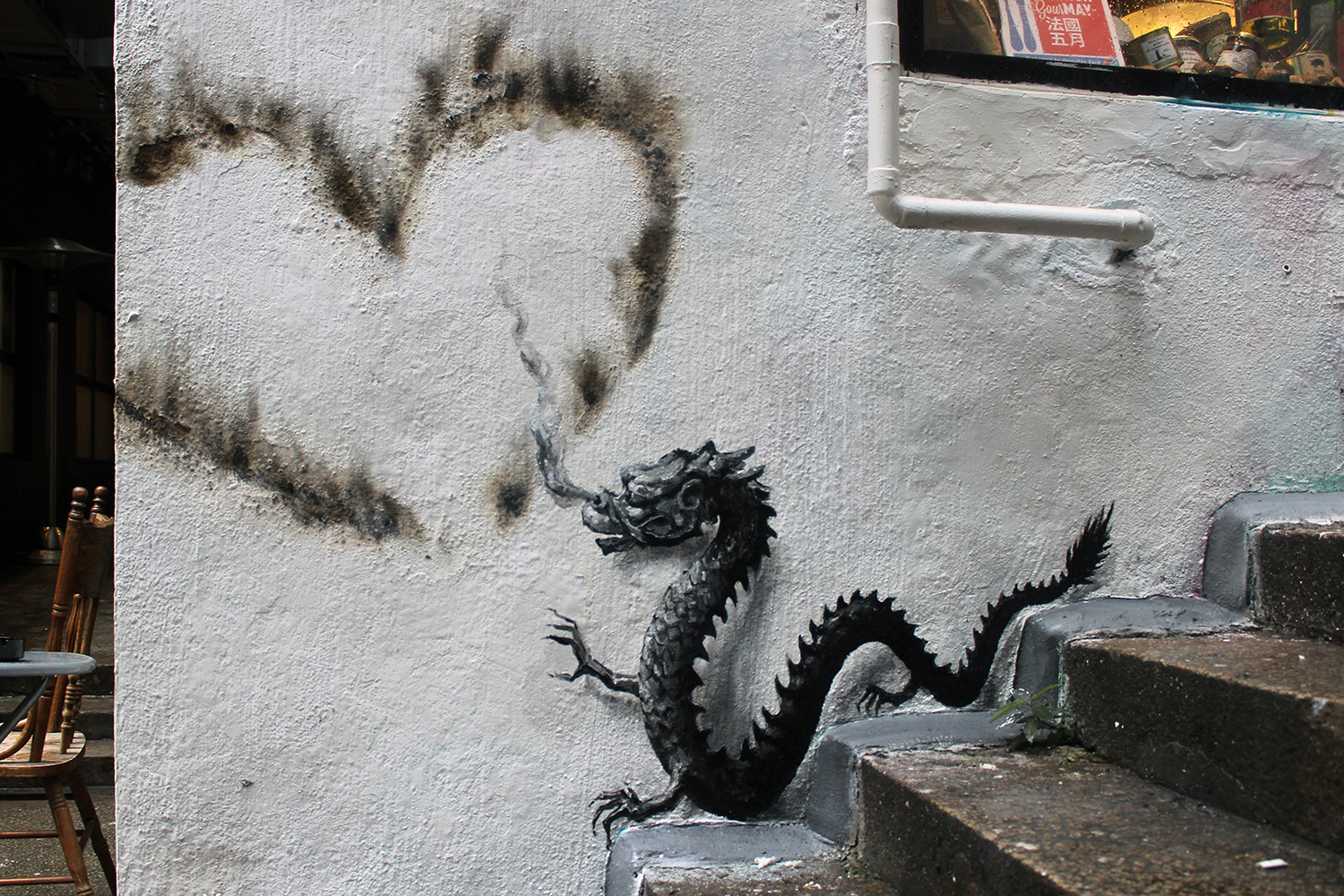 “When people speak with a soft voice, others draw closer to listen.”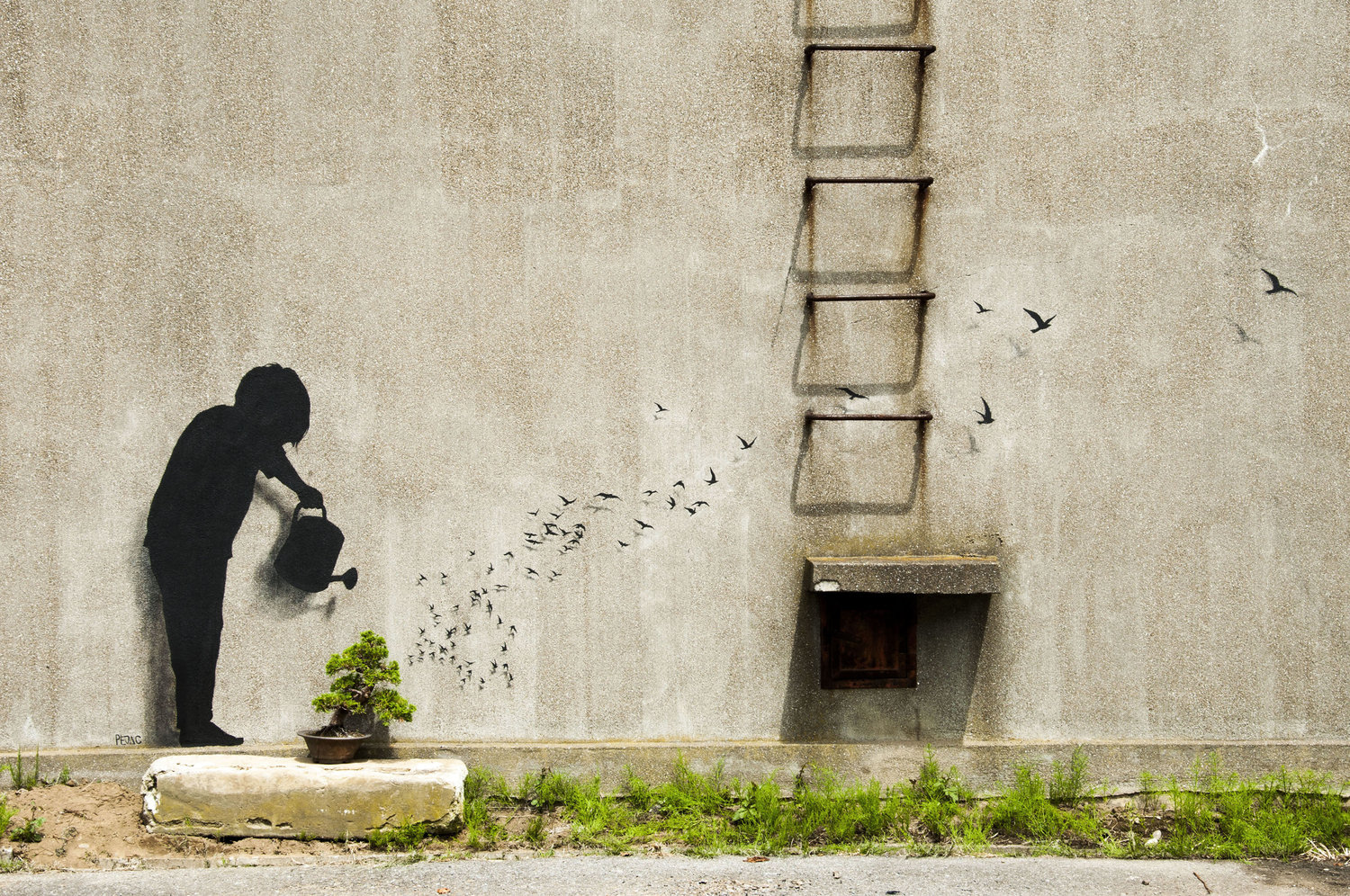
More of Pejac‘s amazing work can be found at https://www.pejac.es/ and https://www.streetartbio.com/artists/pejac-biography/.
Siew Heng Boon is a jelly artist and the owner of Jelly Alchemy in Sydney, Australia. Heng Boon uses seaweed jelly and natural coloring to create mesmerizing 3D jelly cakes which are infused with flavors like lychee, coconut, peach, and rose.
 The artist discovered the art of 3D jelly cakes in 2016 while spending some time in Malaysia. Intrigued by the unique food art, she undertook a 3D jelly class that same year, where she learned all the basics about design, coloring and taste.
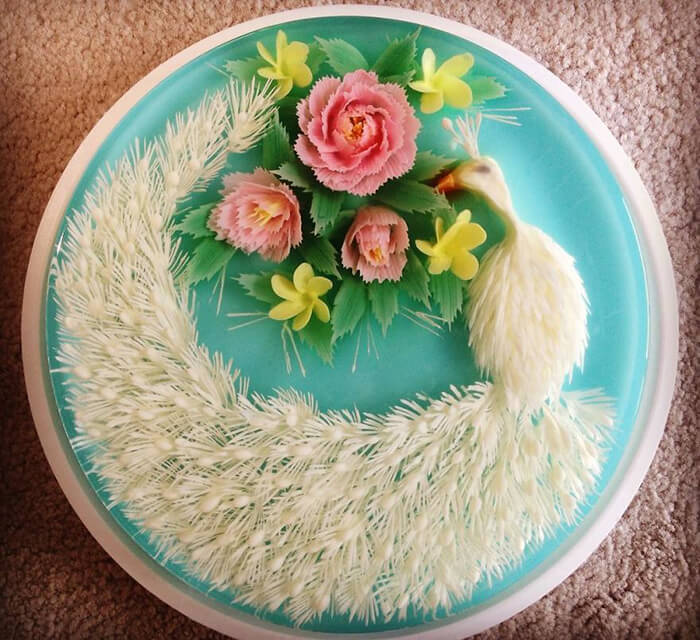 In 2019, Siew Heng Boon of Jelly Alchemy was invited to teach in Shanghai, China. Later that year, she became a 3D jelly art instructor at The Australian Patisserie Academy.
 What is amazing about this impressive food art is that everything has to be done upside down, in layers, and can take up to 4 hours to complete.
 It all starts with a clean canvas – the clear jelly. Once hardened, the artist will use a syringe to inject edible dyes into the jelly, sometimes using various accessories to create different shapes.
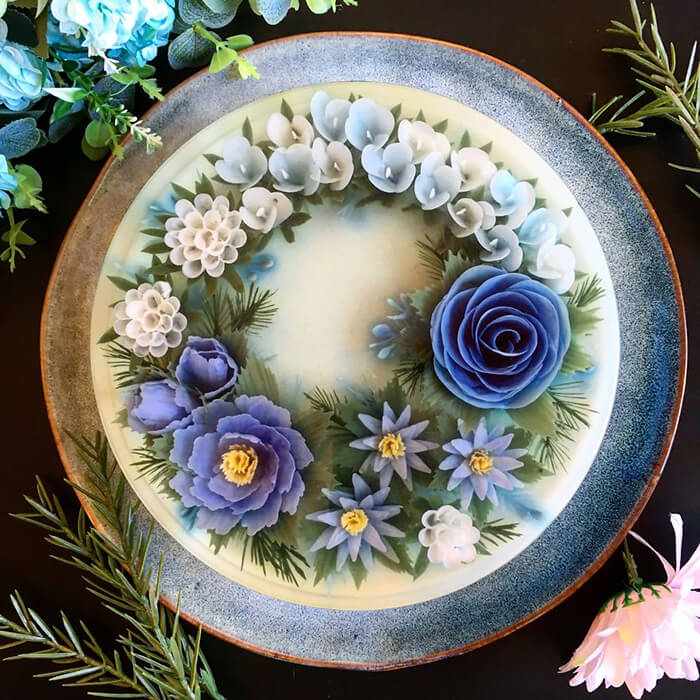 The artist starts with the petals, then adds the leaves and any other design elements she has in mind.
 Once the design is completed, a hot layer of jelly is poured over the cake to seal it. The fruits of the artist’s labor can only be admired when the cake is flipped over.
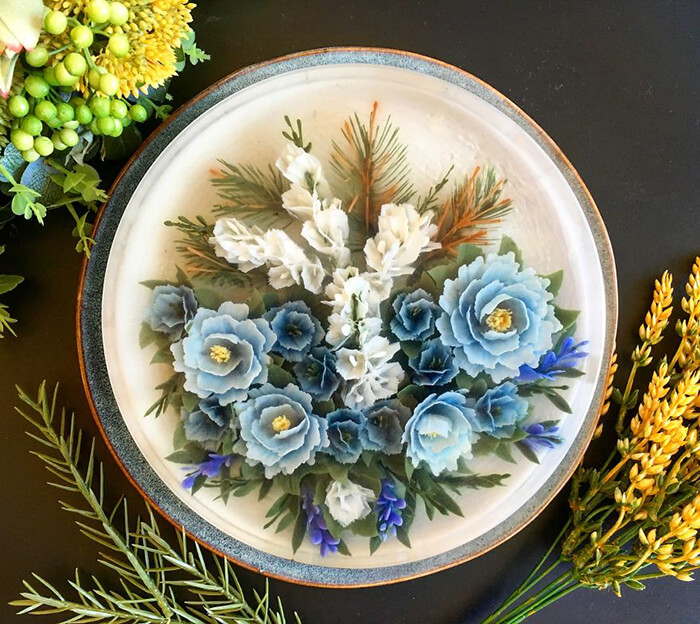 More of Siew Heng Boon’s marvelous cakes can be found at https://jellyalchemy.com/ and https://www.instagram.com/siewheng83/.
It looked like the world was covered in a cobbler crust of brown sugar and cinnamon.
— Sarah Addison Allen, First Frost
Artist Catrin Welz-Stein was born in Weinheim, Germany. During her studies in Graphic Design in Darmstadt, Germany, Welz-Stein was introduced to the fields of photography, illustration and digital image processing.
 These gave her a new perspective on the possibilities to visualize ideas and to transport them into images.
 Welz-Stein started to create digital art by combining historical paintings, curiosities and fairytale-like illustrations into surreal and sensual images that are both familiar and alien at the same time.
 The artist tears apart old photos, pictures and illustrations, then meticulously combines them in Photoshop to create her own unique image.
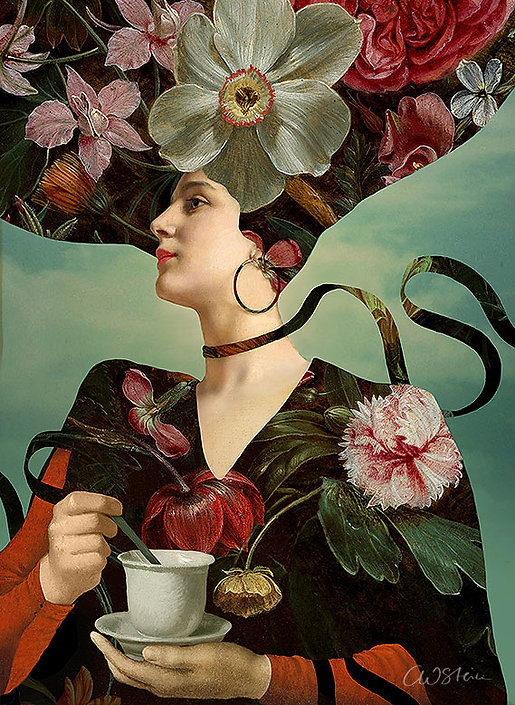 Although some conservative art critics may turn up their noses on digital art, Welz-Stein defends her craft with passion.
 “Yes, of course it is art even if it is done on a computer. There are so man more possibilities to be creative nowadays and the use of modern technologies should be seen as an enrichment to the arts,” the artist shares.
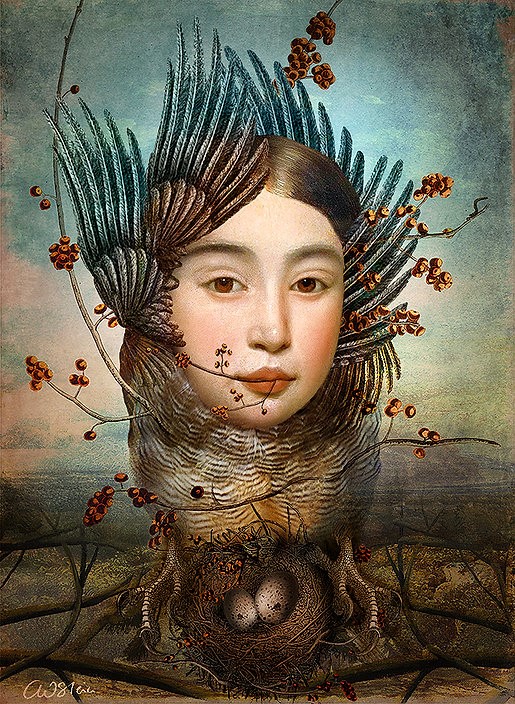 “Regardless of the medium you choose to create art—creativity comes within yourself, not from the computer or the brushes you use to paint.”
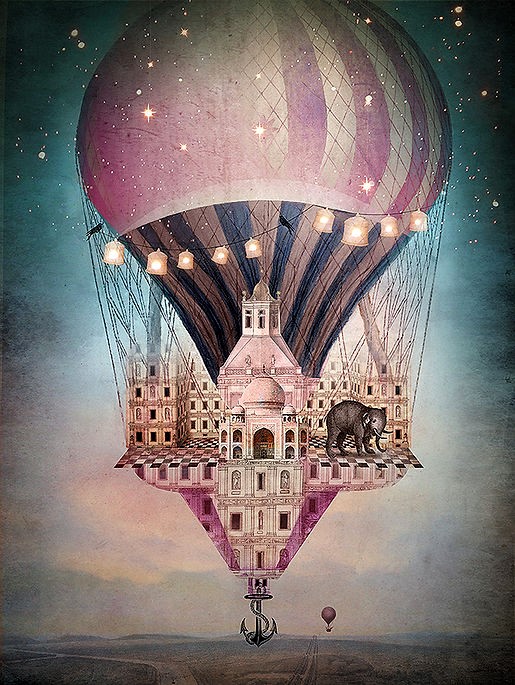 More of Catrin Welz-Stein’s magical work can be found at https://www.catrinwelzstein.com/.
A poem I wrote many moons ago at a Wisconsin Writers Conference….
Pesky fly lands on my foot
A most major distraction
I glance towards colleagues
Mismatched socks
Writer’s idea of humor
Creative jokesters, these bards be
Fly lands in someone’s hair
Restless in its annoyance
Won’t someone give him a sugar cube?
Lots of people with no socks
End of summer, end of sandals
Autumn nips of cold and gold
Summer Solstice come and gone
The robes of Fall begin to unfurl
Protect us from Winter’s breath
Soon the fly will hear the call
Change of seasons
Taking its sugar cube along
On its never ending journey south
Hope he wears mismatched socks, too
(c) Claudia Anderson
 I hope you all enjoyed the past week of highlighted past Sunday Evening Art Galleries. There were, as you can imagine, way too many artists to choose from, but the tours were free and full of color and imagination.
I also hope you took time to click on the artists’ links and check out even more art in the galleries themselves. Each artist is wonderfully unique, often in more ways than one, and hopefully you got a fuller picture of their magic.
I myself was up in a cabin in northern Wisconsin for a week, acting more as background noise to a group of fishermen. In hindsight I could have/should have stayed home – at least I’d have had a car to bop around in and full-fledged internet to access. But it was fun, as I did get (again) yet another glimpse into the minds of boys and their (minimal) toys and hobbies.
(Made me appreciate the world of writing and sketching and cooking and knitting and quilting and scrapbooking all the more.)
But I digress.
In my wanderings through my WP Reader, I came across (again) some fantastic poetry. I have saved those poems and artists and hope to have a week of poetry sometime in the future.
But now it’s October.
I once dedicated a whole month of blogs to the beauty of Fall … poetry, paintings, photography, gatherings, the whole spectrum.
Hopefully it’s not too late to do that again.
So starting tomorrow I hope to spice up your autumn with a variety of Creativity that highlights autumn and the turning of the leaves and the dropping of the temperatures.
Again – please feel free to send me hints of where to go and what to publish and your feelings about the world of golden colors and extra blankets.
For those of you who are just coming into summer (Ivor) I know you are experiencing cool days and budding trees – feel free to offer your thoughts on Fall, too!
Voici l’automne! (French)
Ecco l’auatumno (Italian)
Ma’avtaHvIS naDev jlH! (Klingon)
Here’s to Autumn!
https://sundayeveningartgallery.com/2016/05/17/jennifer-maestre/


https://sundayeveningartgallery.com/2016/10/23/harps/

https://sundayeveningartgallery.com/2016/12/21/bathsheba-metal/

https://sundayeveningartgallery.com/2017/01/10/ray-villafane/

https://sundayeveningartgallery.com/2017/03/15/dreamcatchers/

https://sundayeveningartgallery.com/2017/04/27/hair/

https://sundayeveningartgallery.com/2017/10/12/quilts/

https://sundayeveningartgallery.com/2018/05/19/snowglobes/


https://sundayeveningartgallery.com/2019/05/29/rings/

https://sundayeveningartgallery.com/2022/03/07/chris-campbell/


https://sundayeveningartgallery.com/2017/02/01/anton-semenov/
https://sundayeveningartgallery.com/2017/05/23/h-r-giger/


https://sundayeveningartgallery.com/2017/12/31/colin-batty/


https://sundayeveningartgallery.com/2018/05/05/hieronymus-bosch/

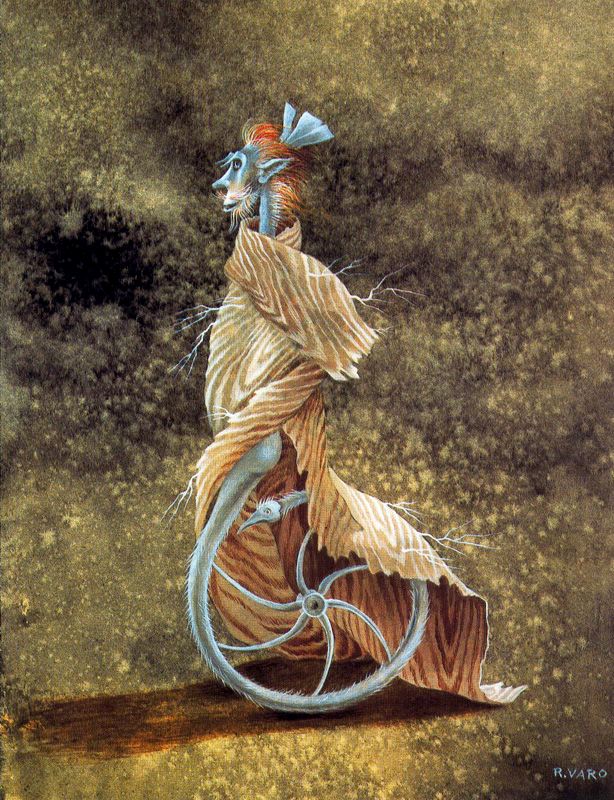
https://sundayeveningartgallery.com/2019/09/24/remedios-varos/
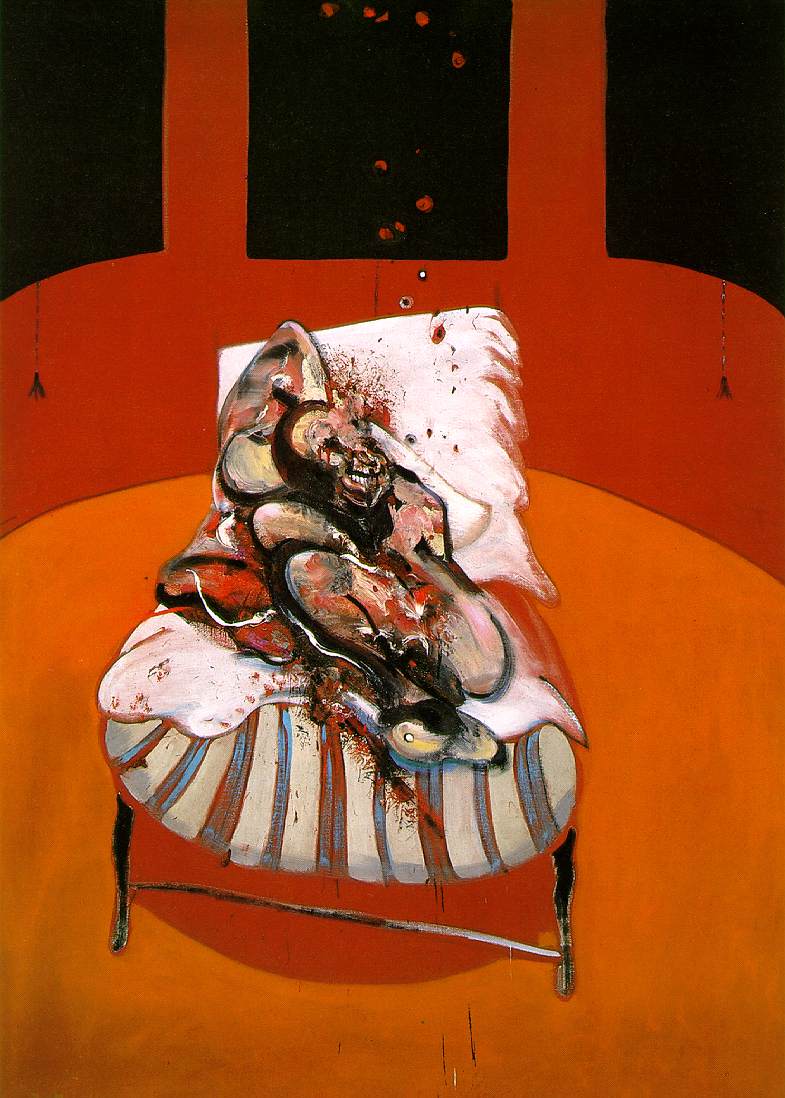
https://sundayeveningartgallery.com/2022/09/07/francis-bacon/

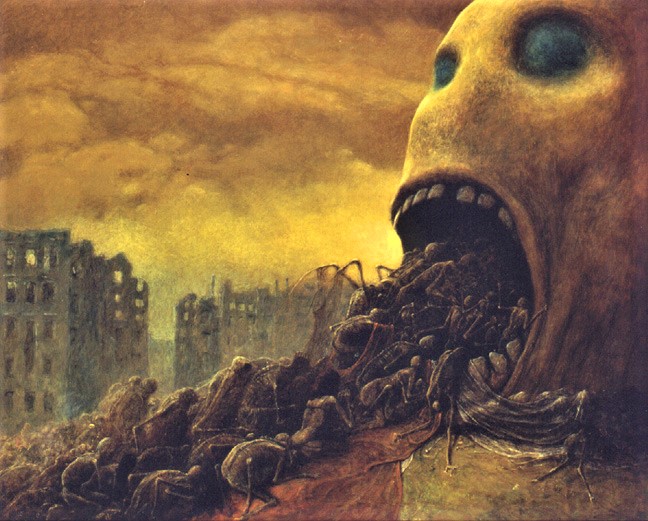
https://sundayeveningartgallery.com/2019/11/04/zdzislaw-beksinski/
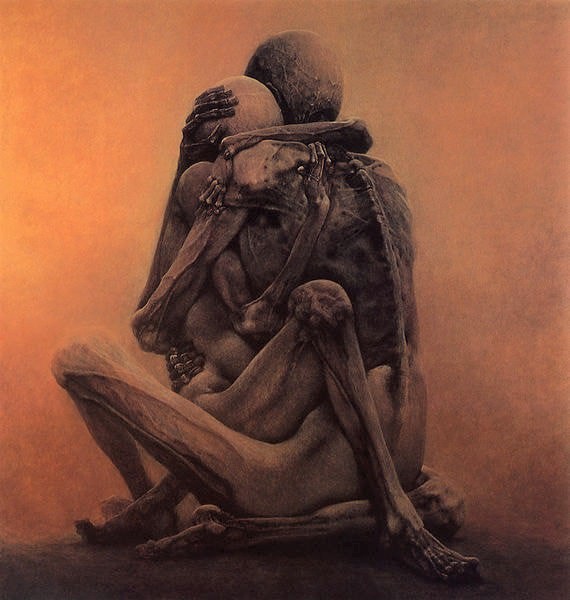
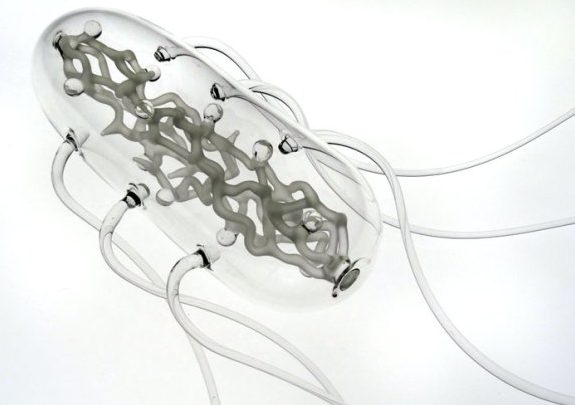
https://sundayeveningartgallery.com/2015/08/04/luke-jerram/

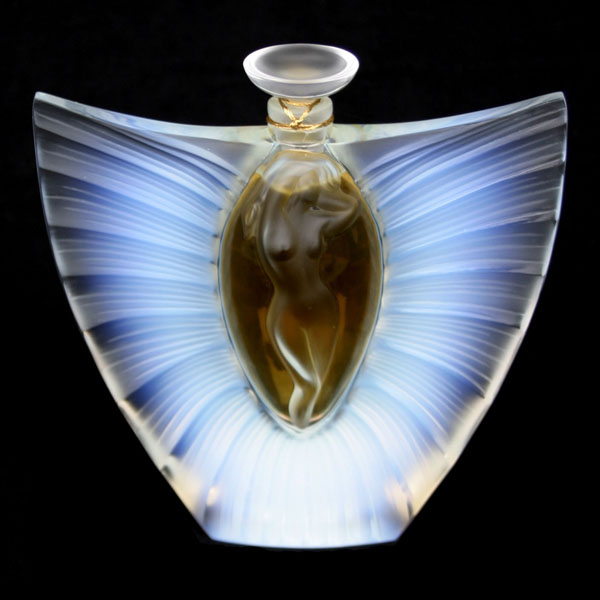
https://sundayeveningartgallery.com/2016/07/31/rene-lalique/

https://sundayeveningartgallery.com/2018/05/19/snowglobes/
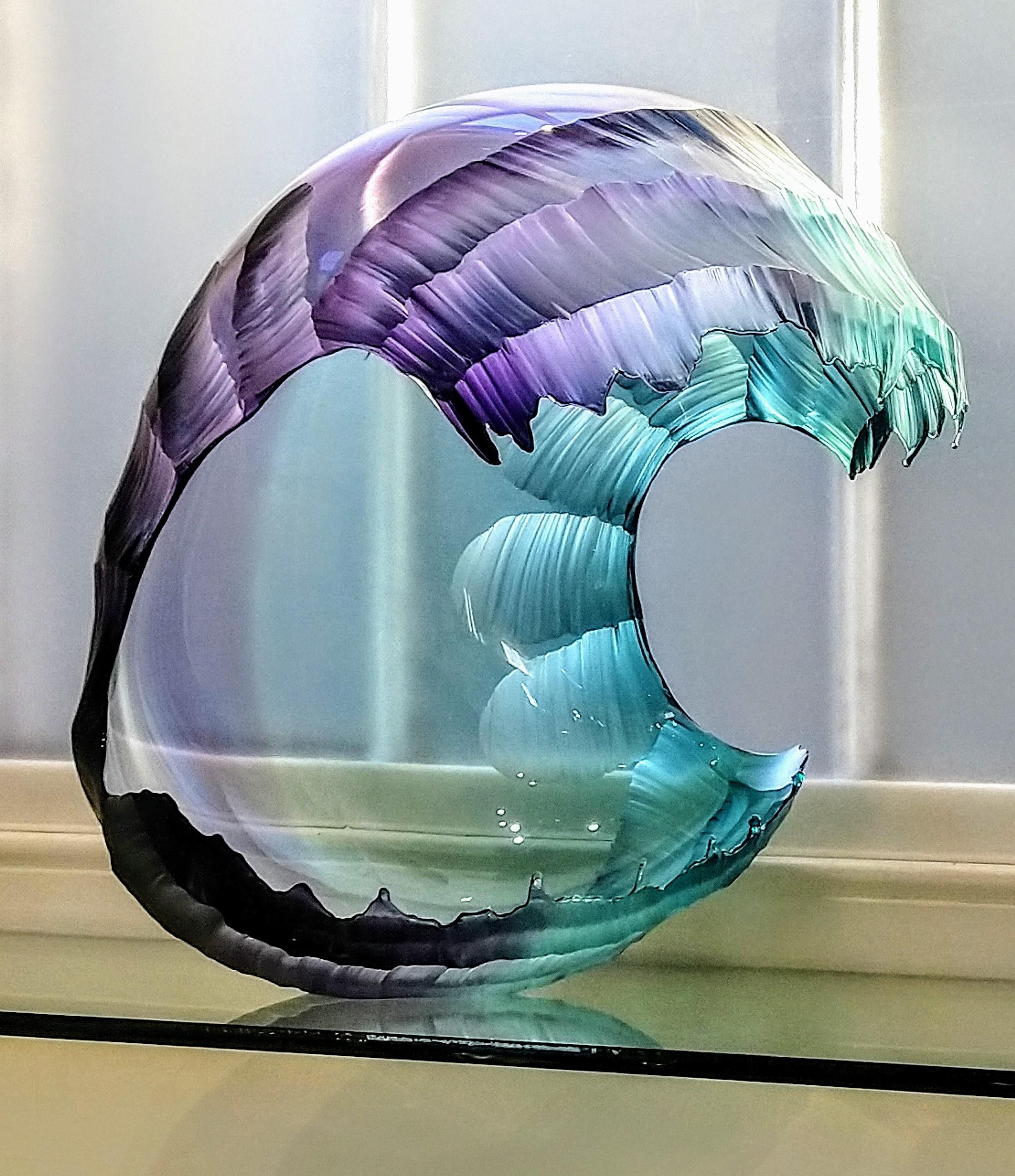
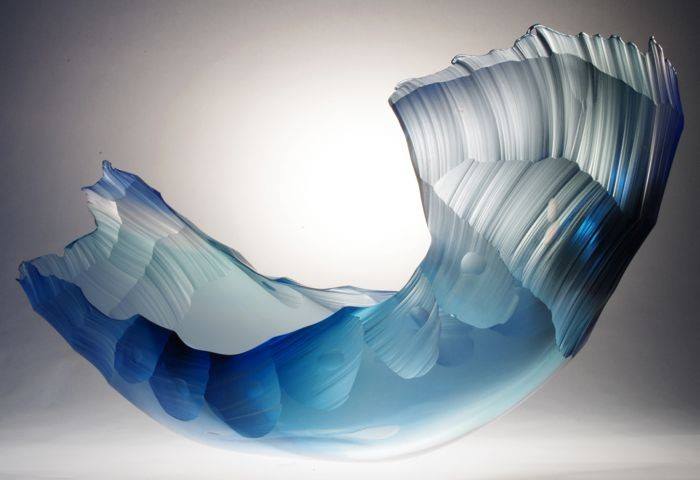
https://sundayeveningartgallery.com/2017/03/22/ercole-barovier/


https://sundayeveningartgallery.com/2017/10/24/daniela-forti/4

https://sundayeveningartgallery.com/2018/03/03/jack-storms/


https://sundayeveningartgallery.com/2020/03/24/ronnie-hughes/
https://sundayeveningartgallery.com/2015/08/03/trees/

https://sundayeveningartgallery.com/2015/09/24/star-stuff/

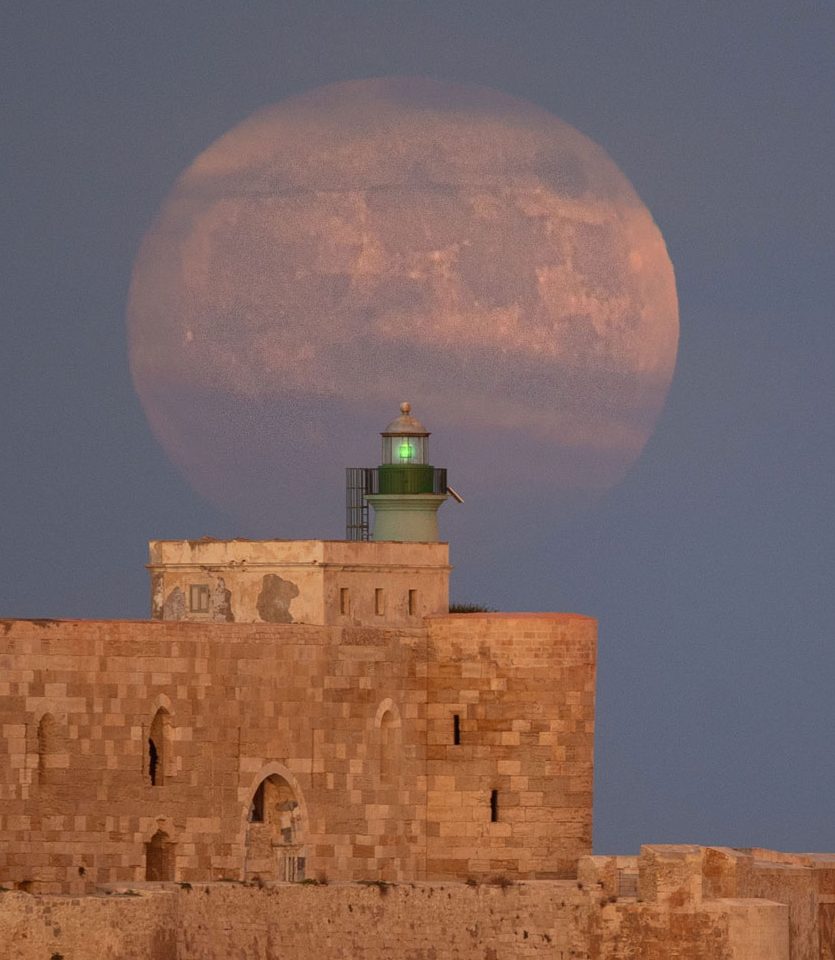
https://sundayeveningartgallery.com/2016/02/07/minerals/
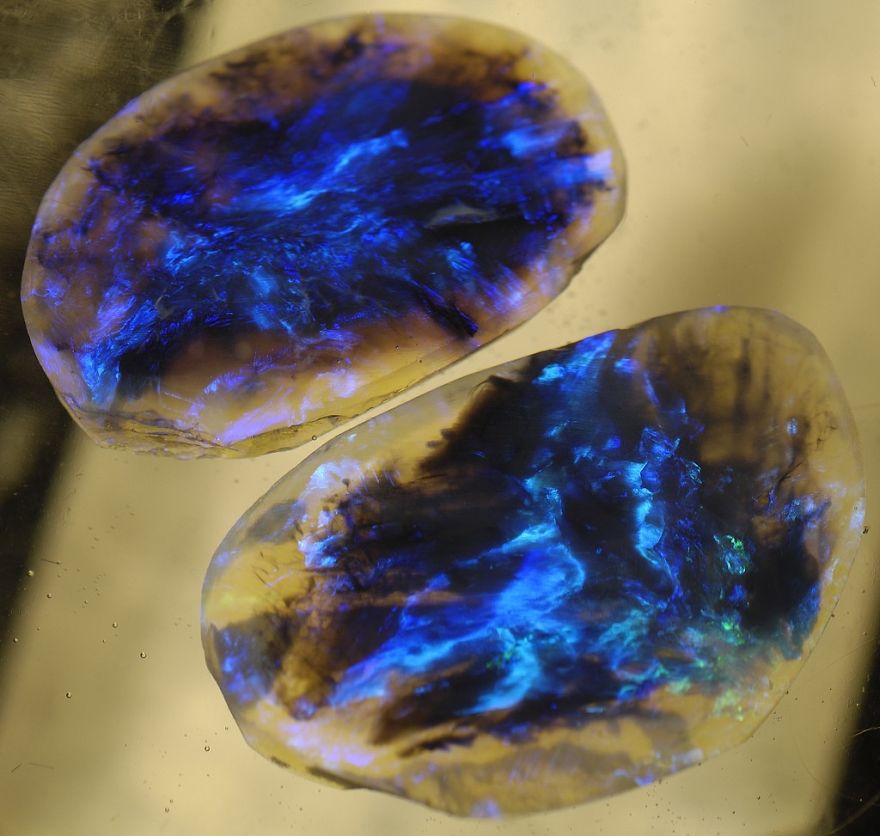
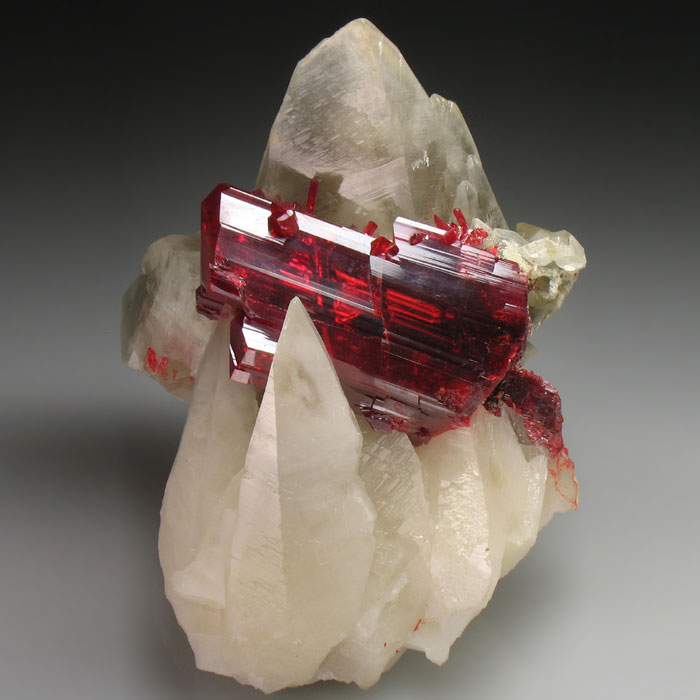
https://sundayeveningartgallery.com/2017/06/08/steve-axford/ ..
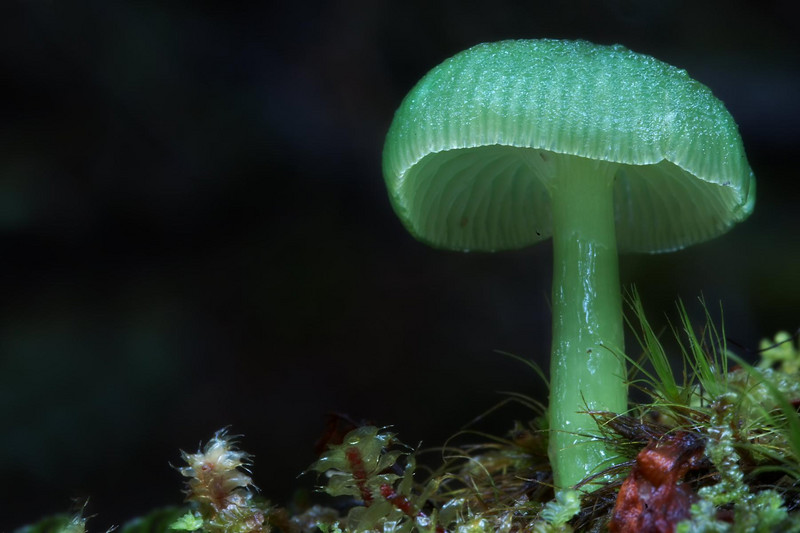
https://sundayeveningartgallery.com/2019/11/27/matt-molloy/


https://sundayeveningartgallery.com/2021/05/16/rock-formations/


https://sundayeveningartgallery.com/2016/02/18/ice-sculptures/

https://sundayeveningartgallery.com/2015/05/26/guido-daniele/

https://sundayeveningartgallery.com/2016/08/31/face-off/


https://sundayeveningartgallery.com/2017/09/08/cecelia-webber/

https://sundayeveningartgallery.com/2017/11/28/johannes-stoetter/
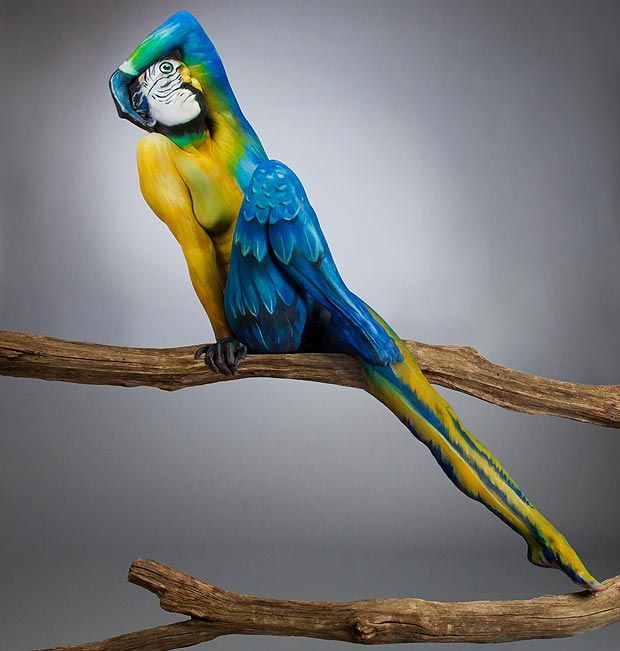

https://burlexe.com/archive/just-because-valeriya-kutsan-and-alexander-khokhlov/ ..
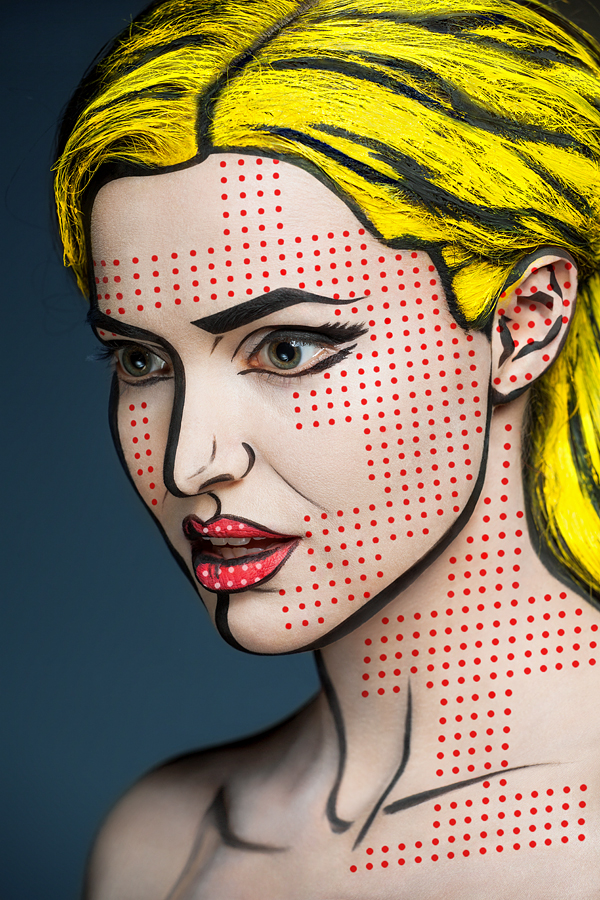
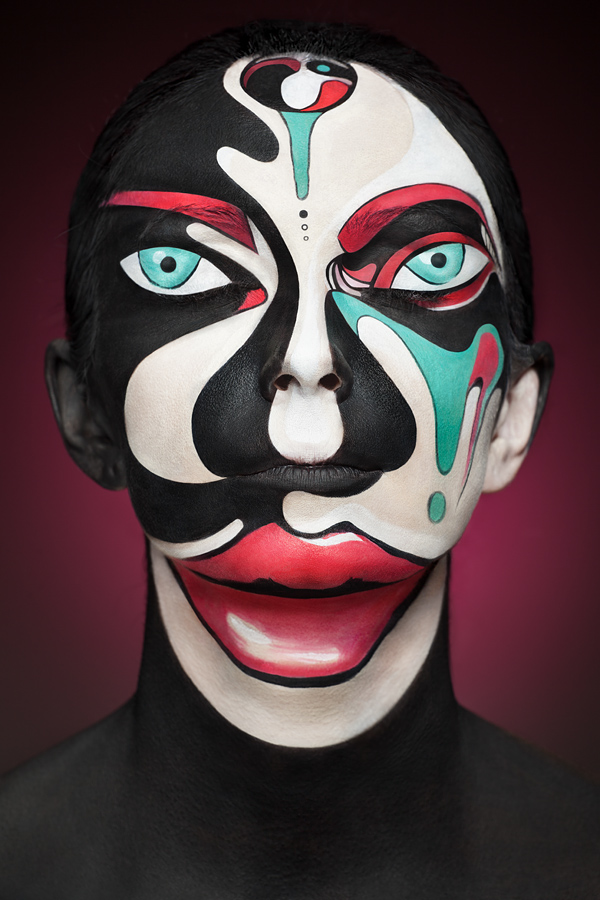
https://sundayeveningartgallery.com/2021/05/24/luke-nugent/


https://sundayeveningartgallery.com/2020/07/18/girl-grey-beauty/


https://sundayeveningartgallery.com/2017/03/30/lois-mailou-jones/


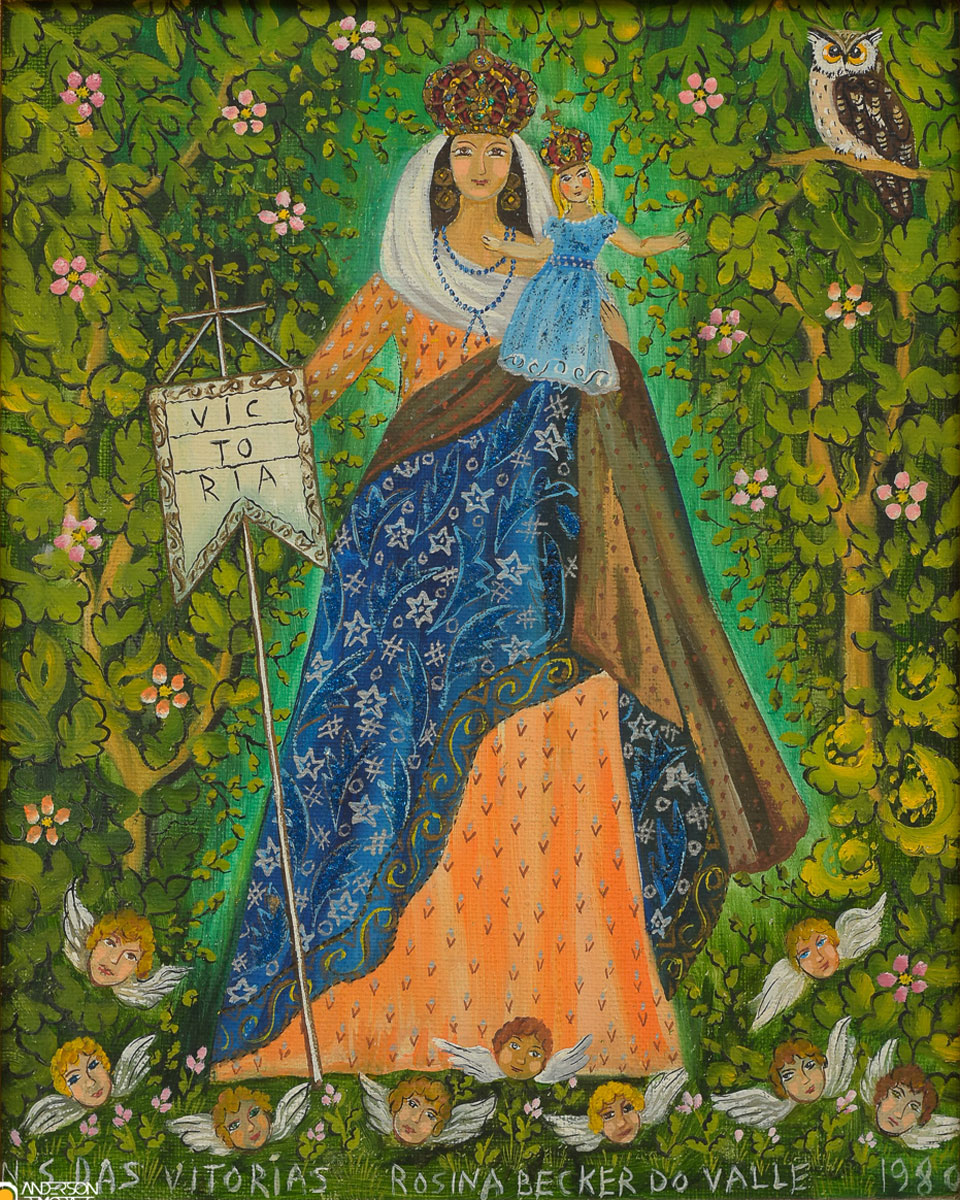
https://sundayeveningartgallery.com/2018/08/06/rosina-becker-do-valle/

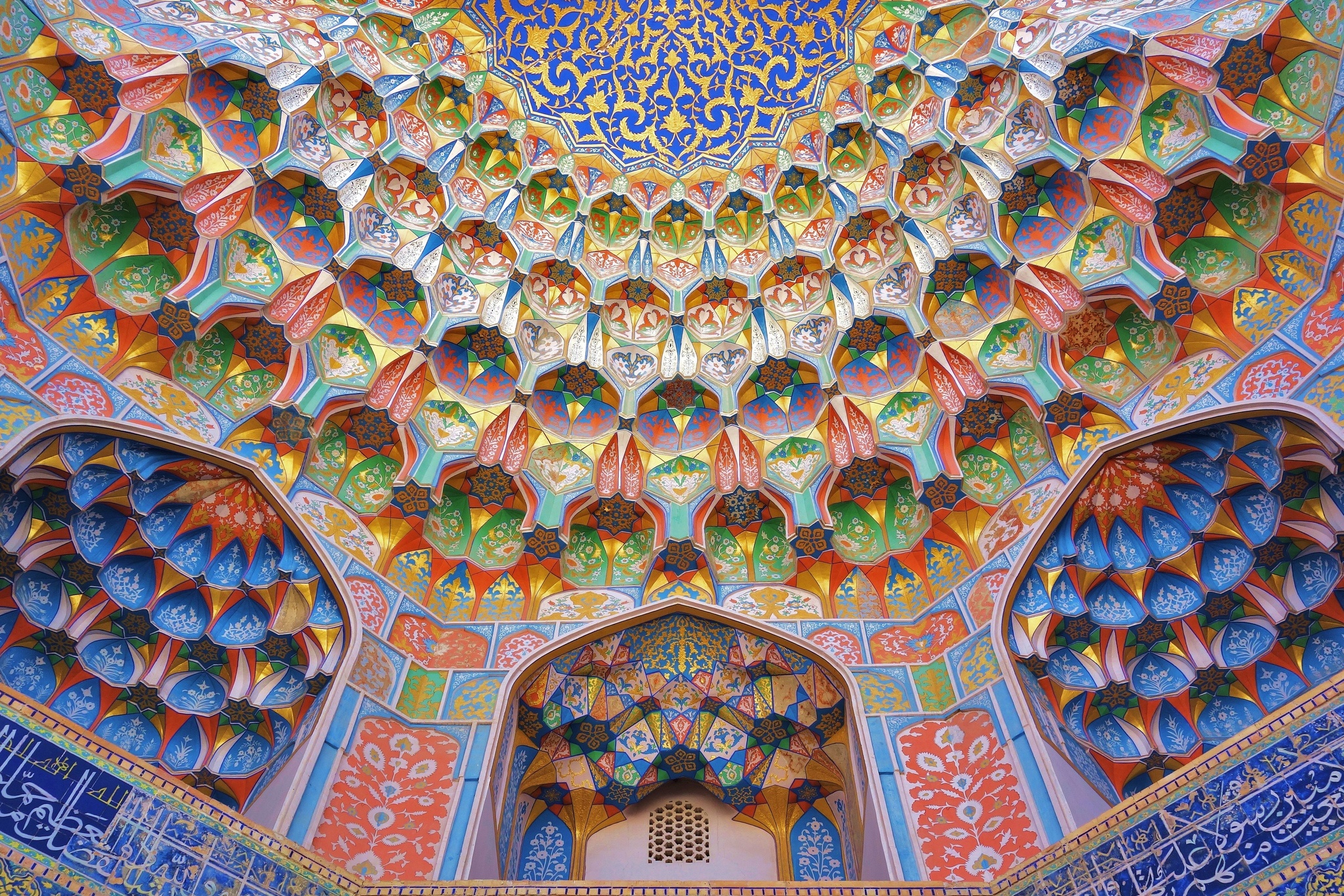
https://sundayeveningartgallery.com/2019/06/23/islamic-mosiac-art/

https://sundayeveningartgallery.com/2019/10/31/raja-ravi-varma/


https://sundayeveningartgallery.com/2022/03/16/dr-carolyn-mazloomi/


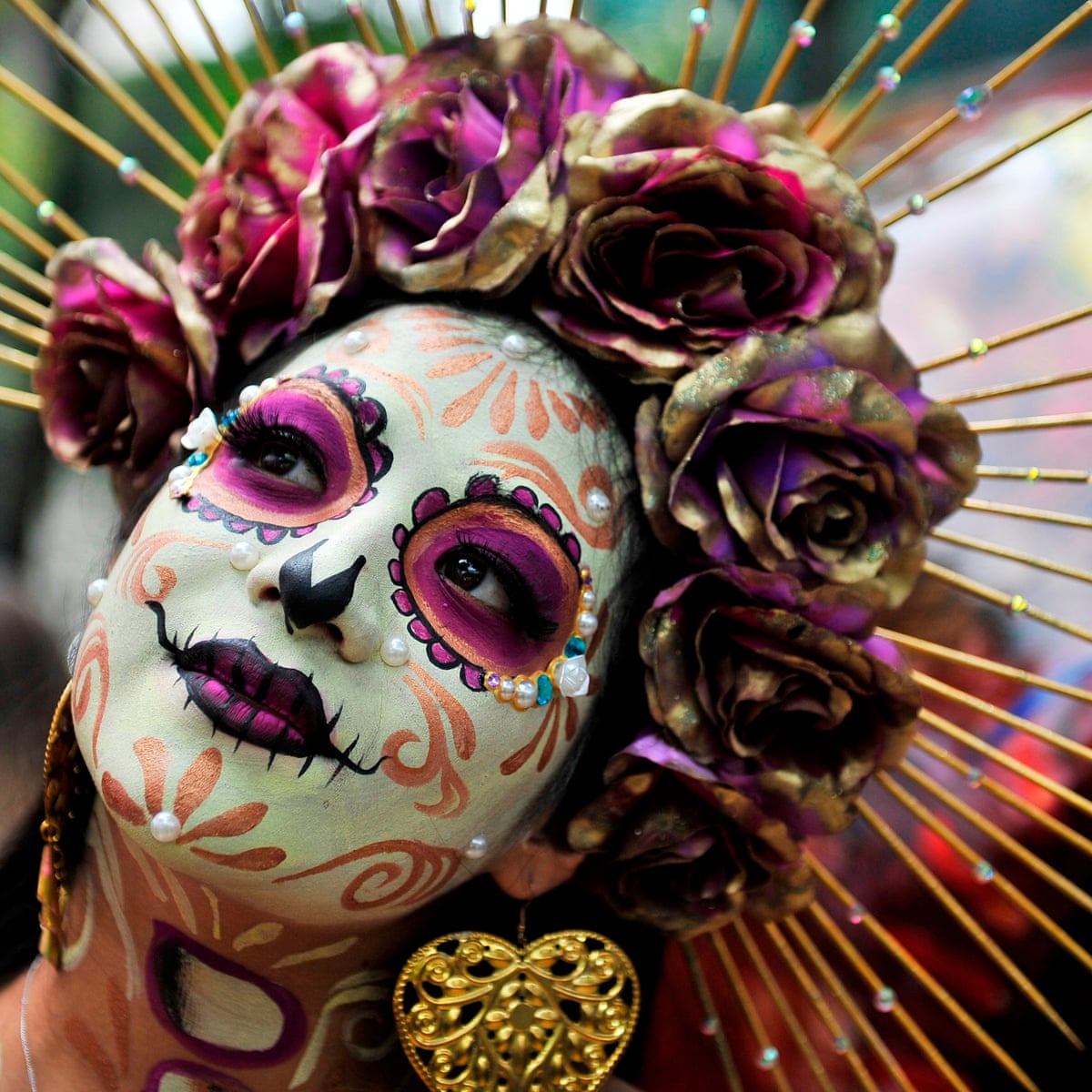
https://sundayeveningartgallery.com/2022/01/05/day-of-the-dead/

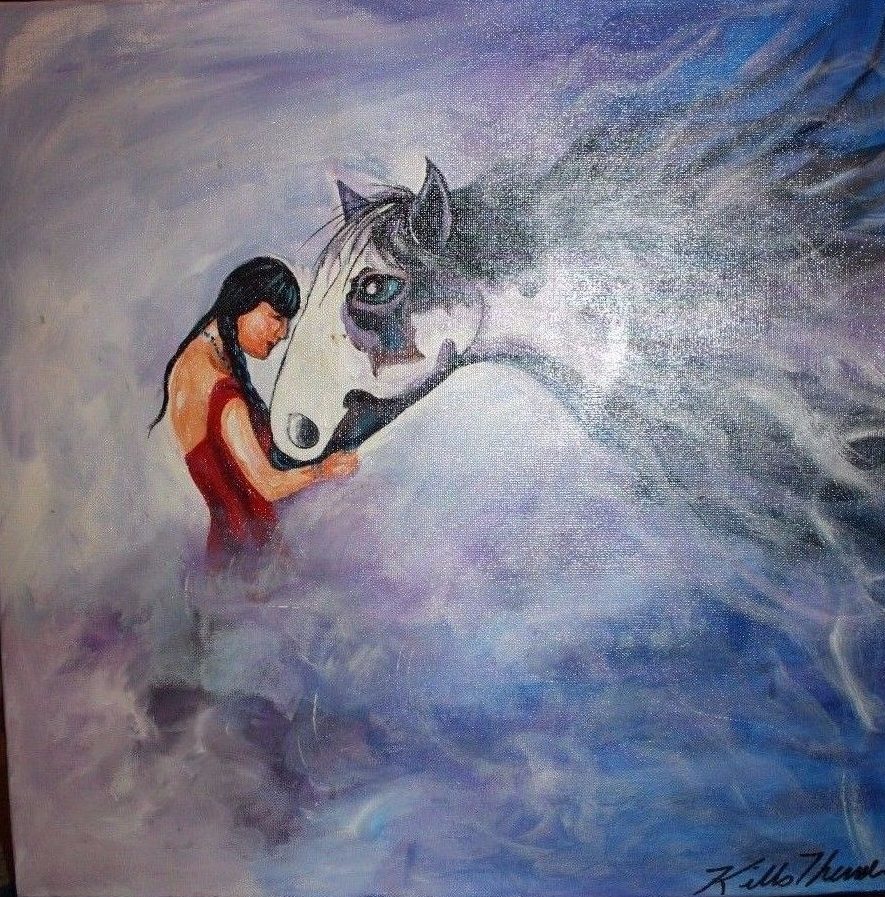
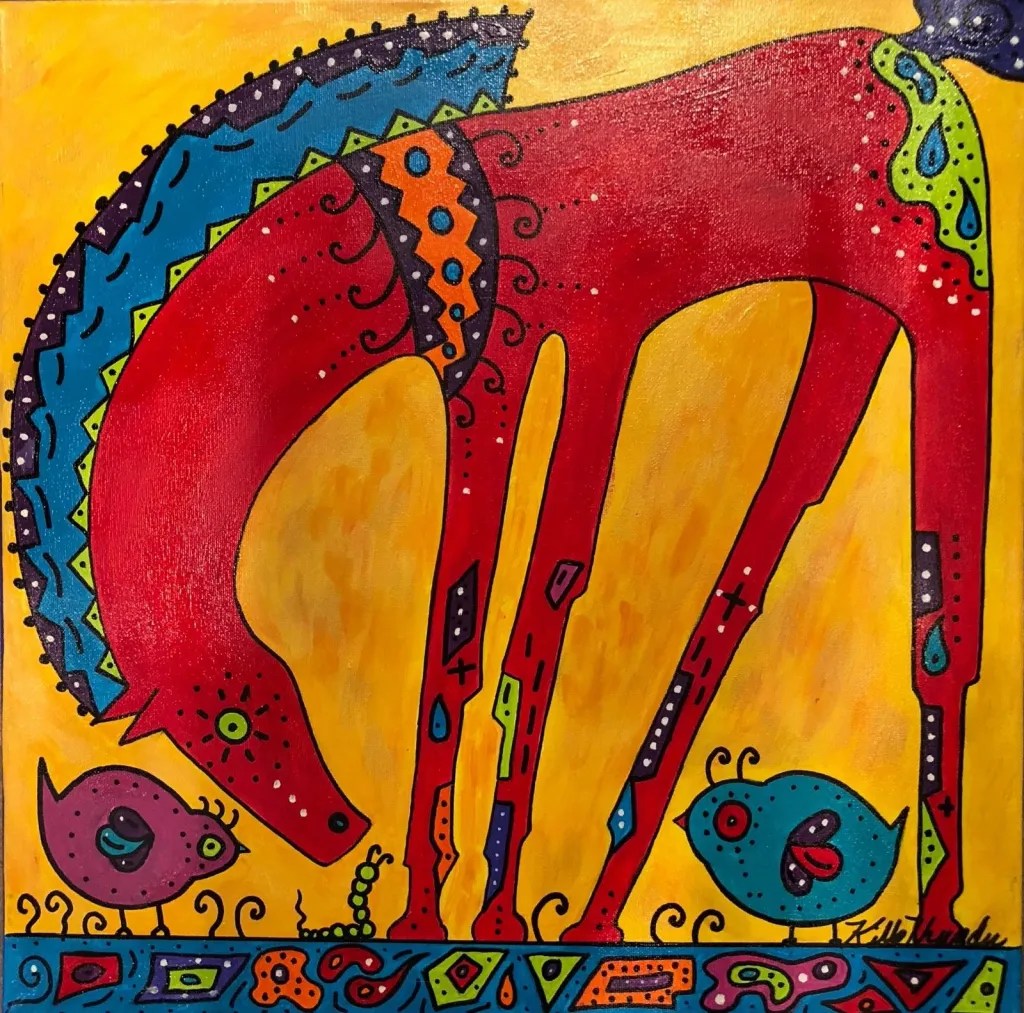
https://sundayeveningartgallery.com/2020/09/15/kathleen-kills-thunder/
https://sundayeveningartgallery.com/2016/01/22/rene-magritte/

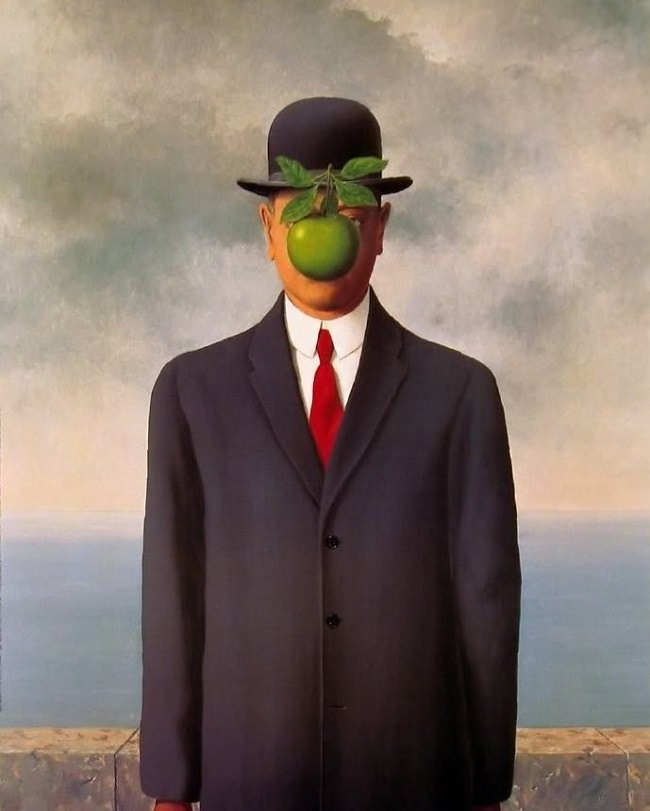
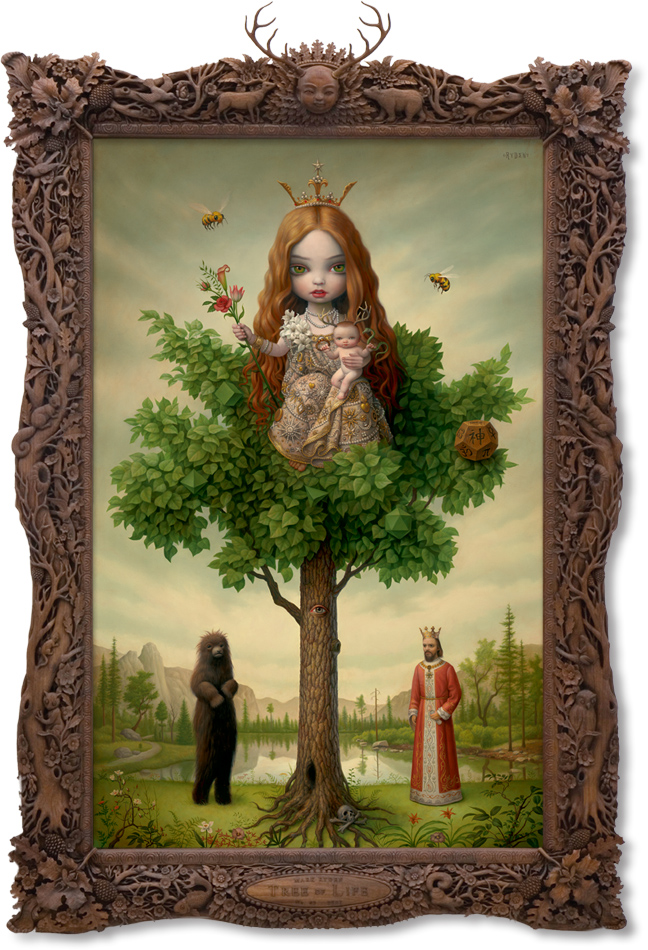
https://sundayeveningartgallery.com/2018/10/20/mark-ryden/

https://sundayeveningartgallery.com/2019/01/08/salvador-dali/


https://sundayeveningartgallery.com/2022/12/23/michal-trpak/
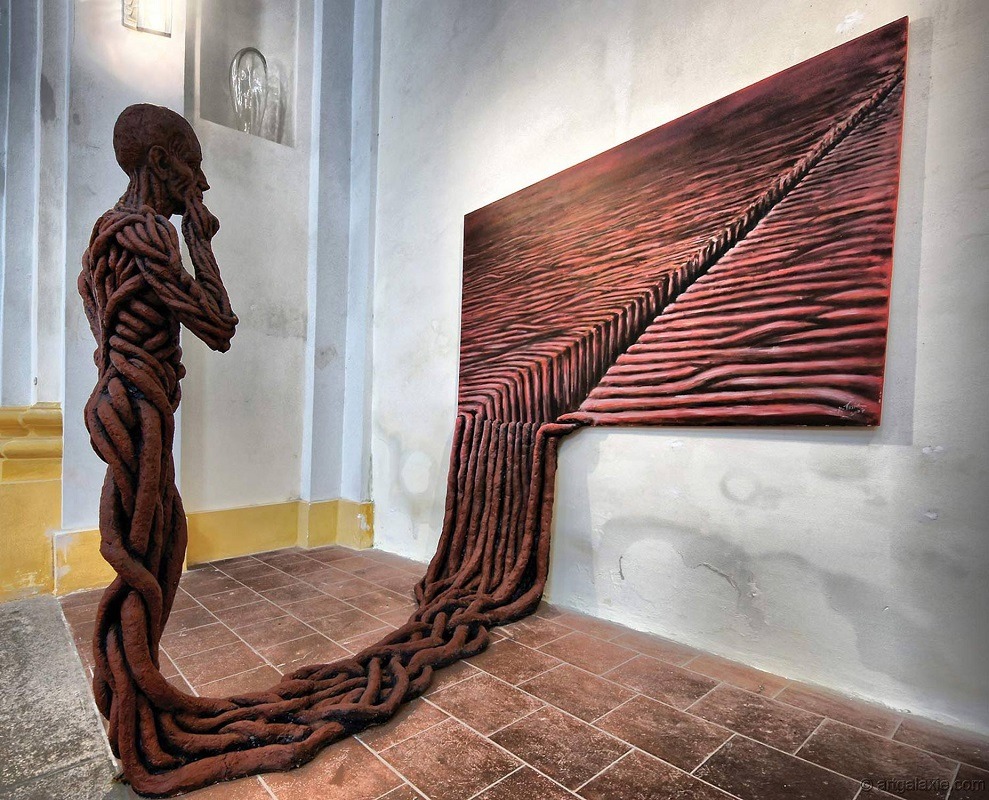
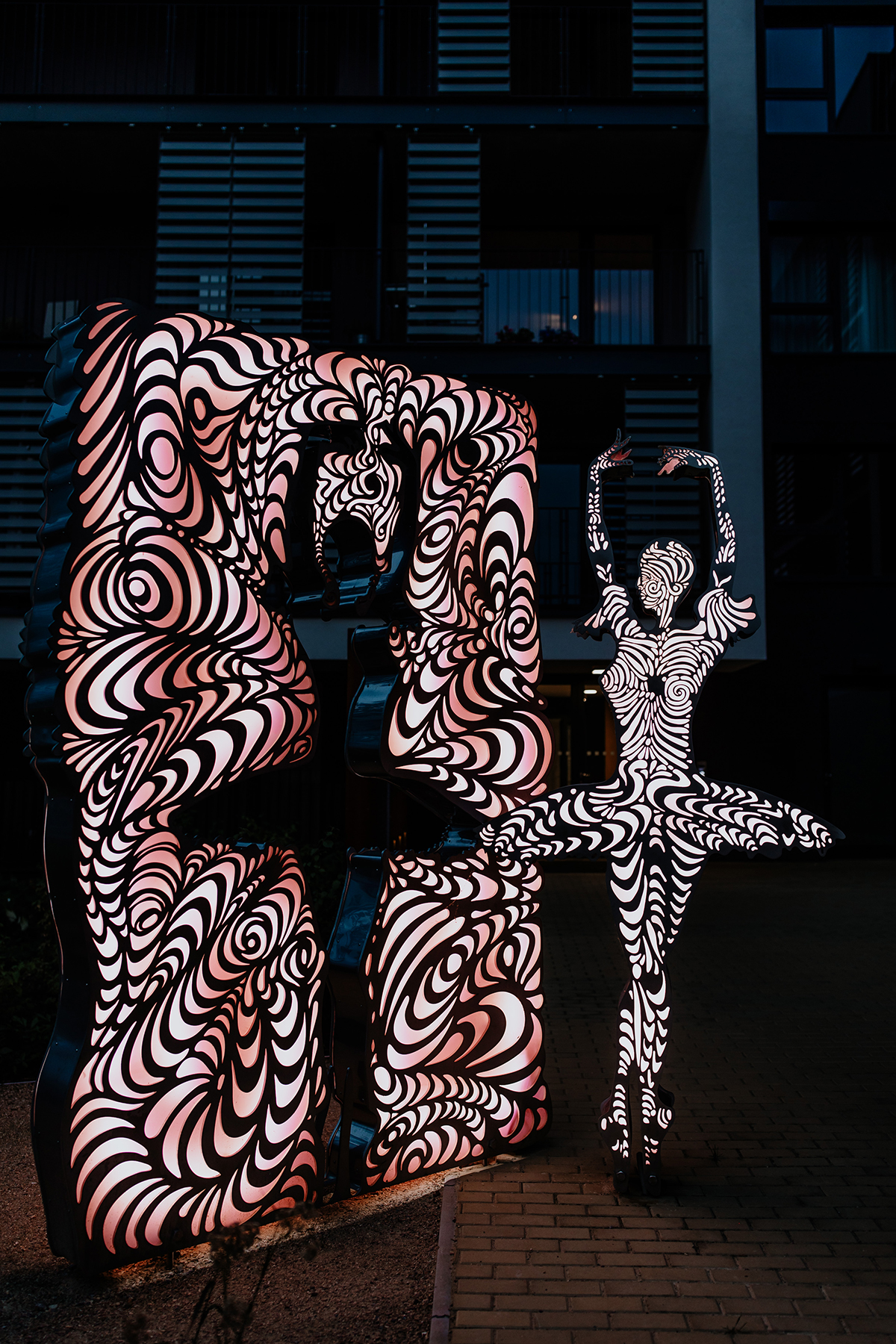
https://sundayevenngartgallery.com/2022/11/20/jennybird-alcantara/


https://sundayeveningartgallery.com/2022/01/21/igor-morski/


https://sundayeveningartgallery.com/2021/06/14/miles-johnston/

Johann Sebastian Bach, (1685 – 1750), composer of the Baroque era, the most celebrated member of a large family of north German musicians.
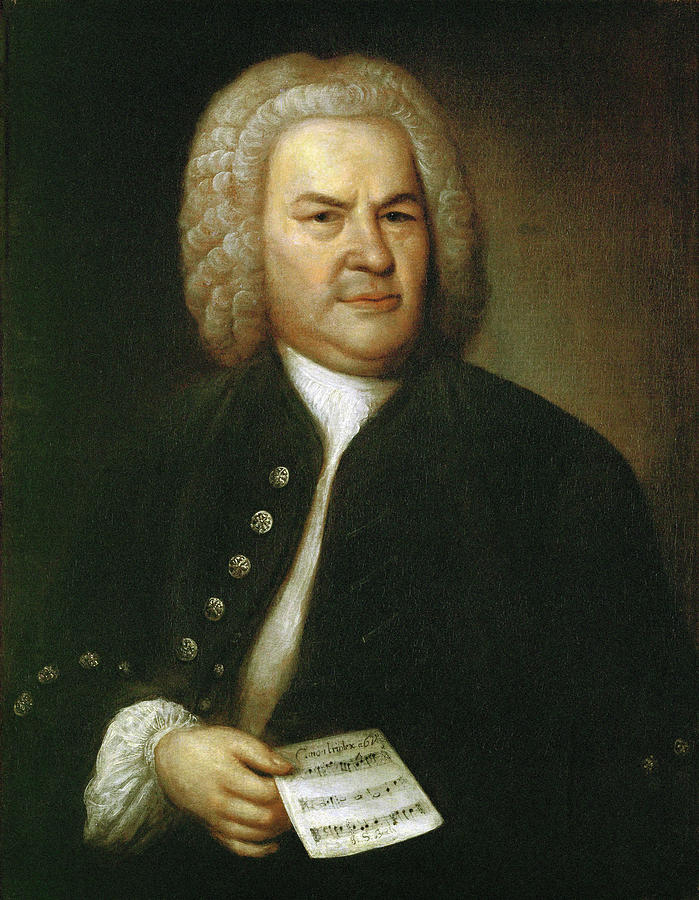
Although he was admired by his contemporaries primarily as an outstanding harpsichordist, organist, and expert on organ building, Bach is now generally regarded as one of the greatest composers of all time.
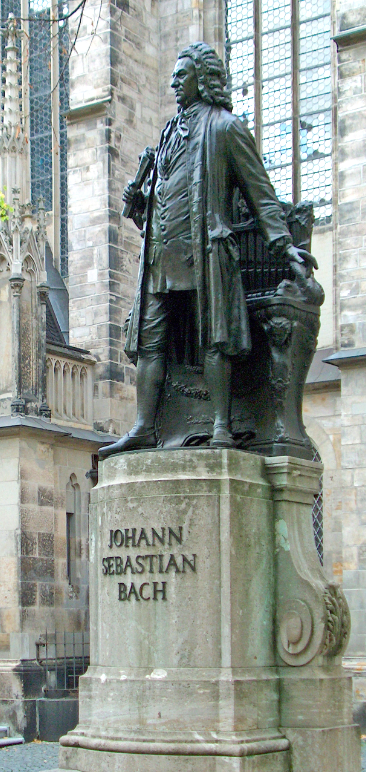
Bach become the organist at St Boniface’s Church in Arnstadt – a role that saw him on a regular salary and expanding his skills at the keyboard.
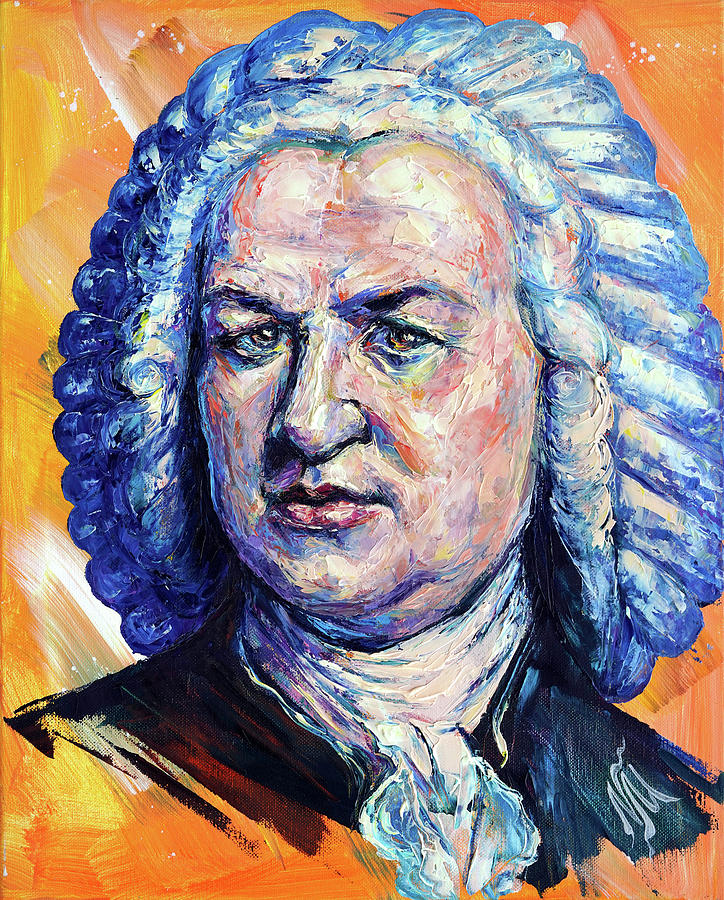
The Brandenburg Concertos were composed in 1721 as a sort-of musical job application for the Margrave Ludwig of Brandenburg – it was unsuccessful.
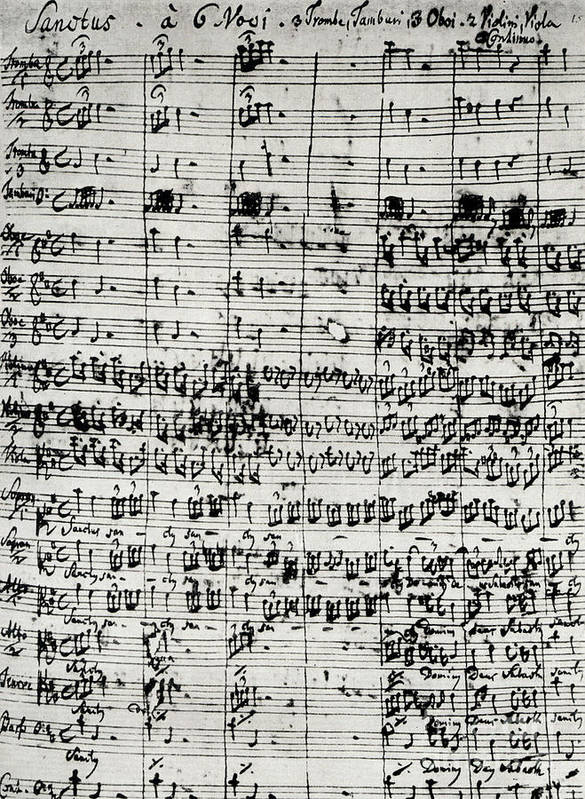
During the 1720s and 1730s Bach faced harsh criticism when he was composing his most important works (the Passions and the Goldberg Variations among them) because a new Italian “style” invaded Germany, making his work appear outdated.
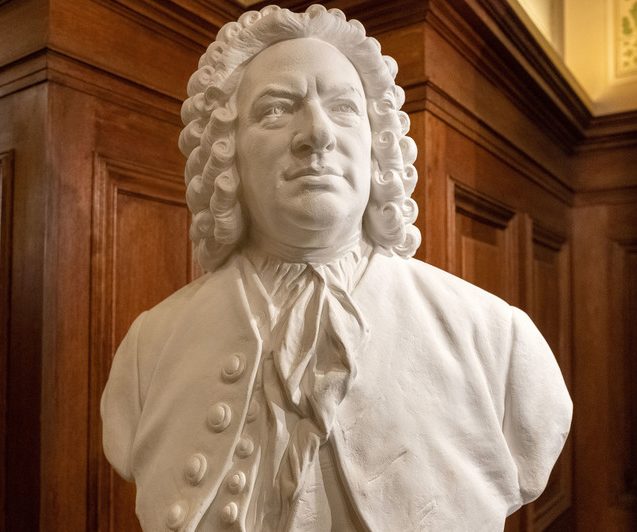
With the notable exception of opera, Bach composed towering masterpieces in every major Baroque genre: sonatas, concertos, suites and cantatas, as well as innumerable keyboard, organ and choral works.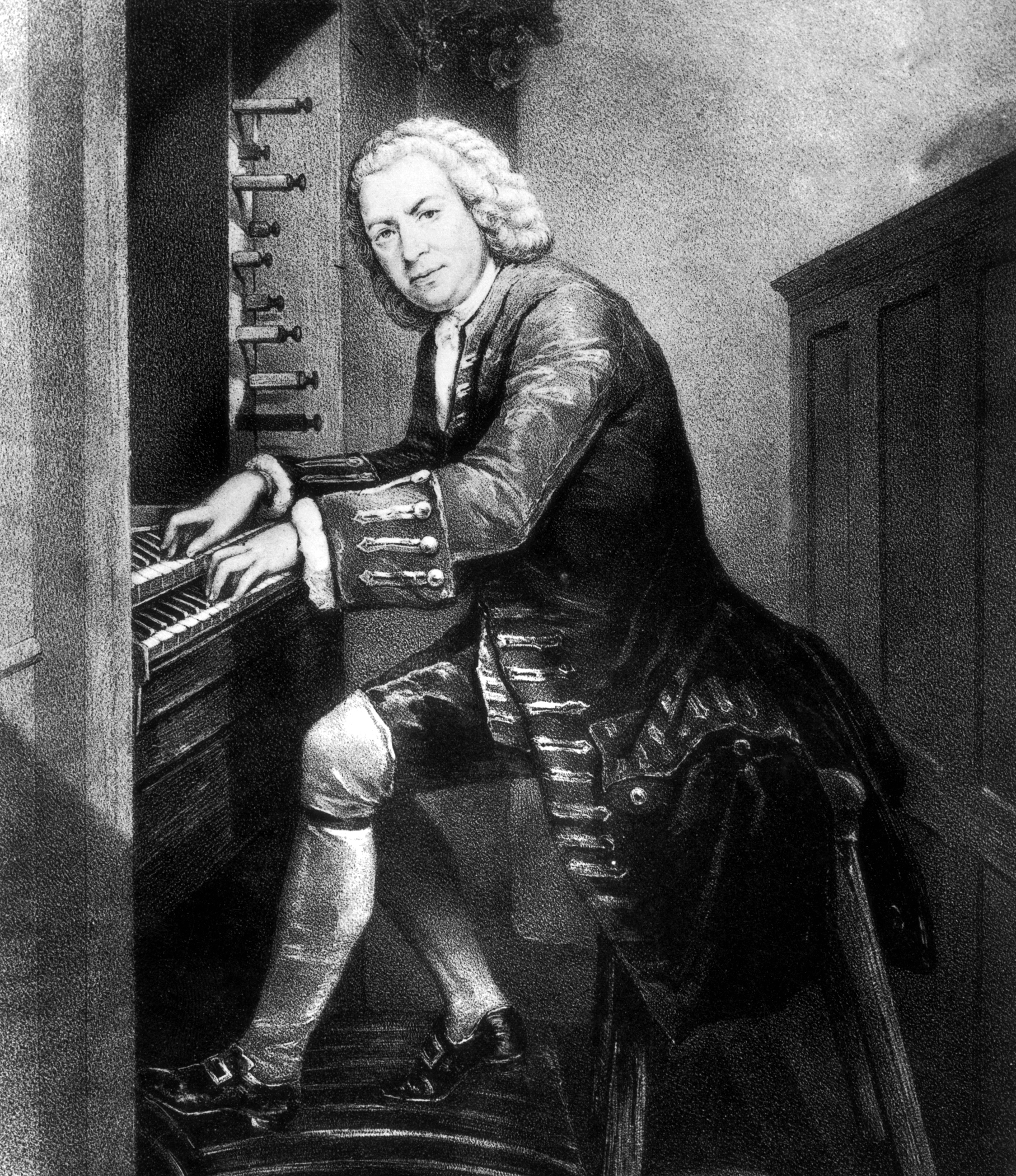 Rischgitz/Getty Images
During the 1720s and 1730s Bach faced hard criticism when he was composing his most important works – the Passions and the Goldberg Variations among them – a new Italian style invaded Germany, making his work appear outdated.
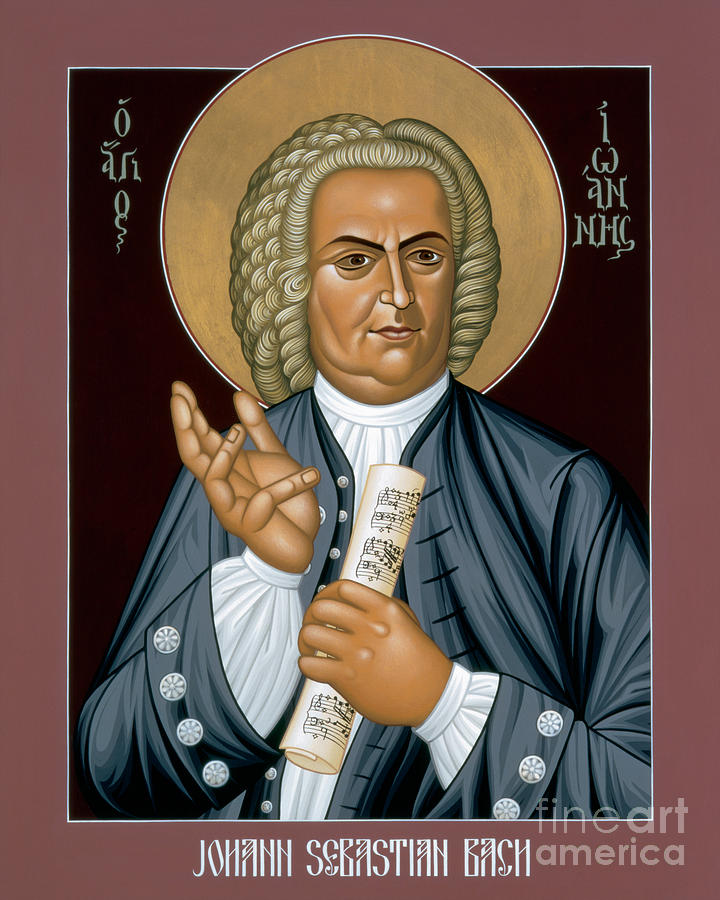
Appearing at a propitious moment in the history of music, Bach was able to survey and bring together the principal styles, forms, and national traditions that had developed during preceding generations and, by virtue of his synthesis, enrich them all.
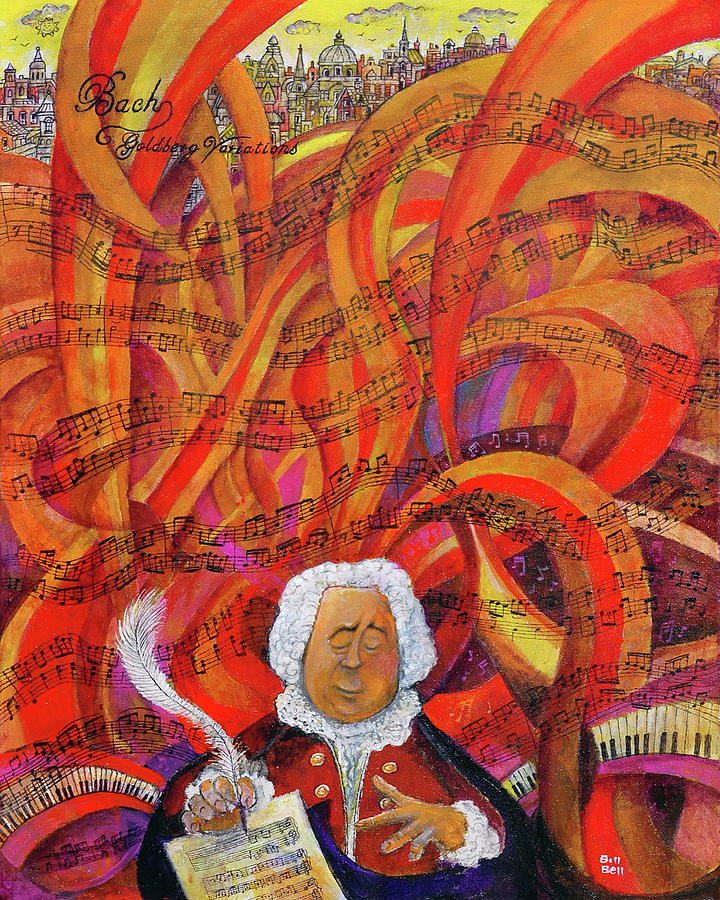
More information on the work of Johann Sebastian Bach can be found at https://www.biography.com/musicians/johann-sebastian-bach and https://www.classicfm.com/composers/bach/all-time-best-pieces-music/.
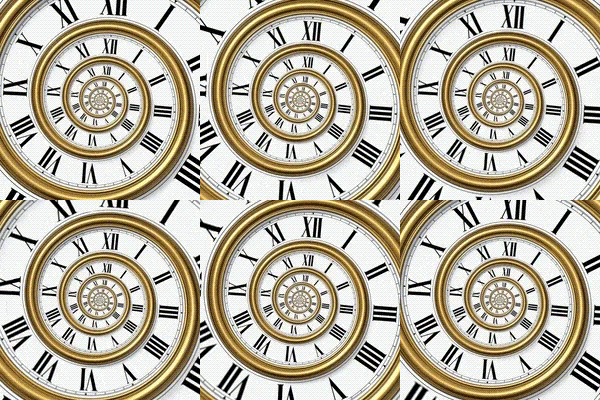 Every once in a while I like to devote a week to highlighting some of my Sunday Evening Art Gallery galleries. There are so many unique artists and galleries at my other website … 618 so far.
618 individuals taking Creativity to the next level.
To me, there’s nothing better.
So next week, for seven days, I’m going to highlight art in several different categories:
I realize that’s eight categories and there’s only seven days in a week, but, hey — I’ll adjust.
There are beautiful and bizarre and amazing artworks in each one of these broad areas — I’m sure you’ll find something you like! They are all so much fun!
If you ever have suggestions for artists for me to research and include, just let me know — through this post or any post.
Your input is always welcome. Always!
I have always loved the lightness, the inspiration, that comes from Michelle Lee’s blog, My Inspired Life. 
In this repost, she shares the magic and the melancholy of the end of summer.
Feel free to visit Michelle at My Inspired Life and become inspired yourself!
Matthew Simmonds is a British sculptor graduated with an honors degree in history of art from the University of East Anglia in 1984, specializing in the art and architecture of the medieval period.
After working for several years as an illustrator, Simmonds studied architectural stone carving at Weymouth Technical College.
He moved to the artist town of Pietrasanta in Italy six years later, to hone in his skills in classical marble ornament, before going on to apply them as an artist. The result of a lifelong interest in stone architecture, Simmonds’ portfolio explores the characteristics of ancient and medieval buildings.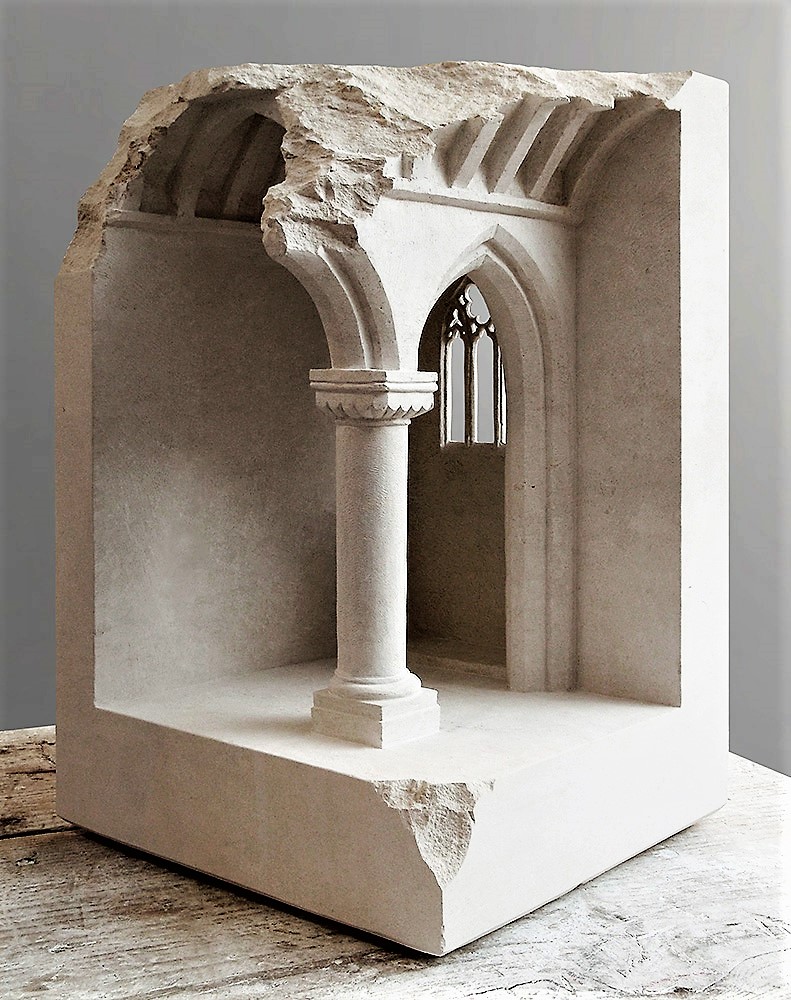
Making a play of architectural spaces on a small scale, the solid stone into which the sculptures are carved is opened up to reveal intricate internal worlds in which the changing viewpoint and light play a strong role.
Each piece is intricately hand carved into a single block of marble or limestone, and designed to evoke the feeling of a larger space.
“The world of historical architecture, particularly that of religious buildings, offers an unlimited language of expression to be inspired by,” Denmark-based Simmonds shared.
“While I often make works that are historically very specific to just one time and culture, I also try to balance this with less specific and more abstract works that draw on the use of space and light.”
More of Matthew Simmonds‘ remarkable sculptures can be found at http://mattsimmonds.com/.

The Cosmos is all that is or was or ever will be. Our feeblest contemplations of the Cosmos stir us — there is a tingling in the spine, a catch in the voice, a faint sensation, as if a distant memory, of falling from a height. We know we are approaching the greatest of mysteries.
~ Carl Sagan
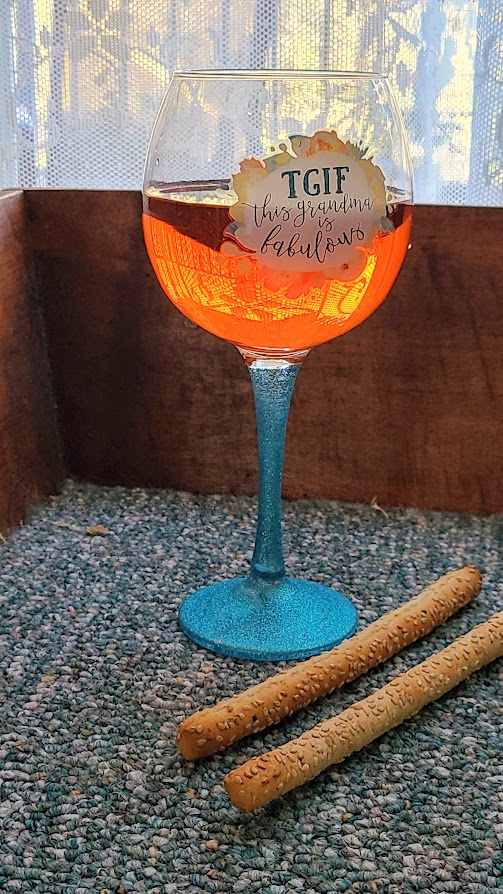 This afternoon I plan to sit out on my back deck with a glass of wine and toast the end of another chapter of my life.
Today is my husband’s last day of employment.
Most relationships have the male retiring before the female; in my case, I enchanted (and married) a younger male.
But I digress.
The moment in time that I’m referring to is that this is the last evening I will have totally to myself.
Oh, my mate will be sure to keep himself busy hunting, fishing, and whatever else retired males like to do. I’ll be joining many of his activities (like grandkids, traveling, bike riding, shopping, and live music concerts), along with doing “my own thing” while he does his.
Yet I will miss the few evenings a week that I had to myself.
My husband worked nights, so three evenings a week I did all kinds of things with no one to watch or care.
Not that anyone would watch or care.
But again I digress.
I will be raising my glass of wine to evenings wasted watching TV, fine tuning my crafts to backgrounds of 40s crooners or 80s pop hits, walking through my woods to the back gate yelling at my dogs, pretending my way through H.P. Lovecraft, eating a bowl of cereal before bed, or writing in a journal or on a computer with just my thoughts for company.
I’m not saying I won’t continue any and all of the above … there’s so much more I want to explore and do.
So much more I want to dream about.
And although my husband is my love and life and soulie and all that good stuff, we are still two different people, and take two different approaches to many things.
That includes time alone. “Me” time. “Soul” time. “Dream” time.
With this glass of wine I toast to all the time I’ve spent alone dreaming and all the times yet to come that I’ll be able to dream along side someone else.
Even if we are astral traveling in two separate directions …
Elena Dmitreko is a Ukrainian painter now living in the United States. She identifies herself as a photo-realist and impressionist painter, covering subjects such as food, animals, and landscapes.
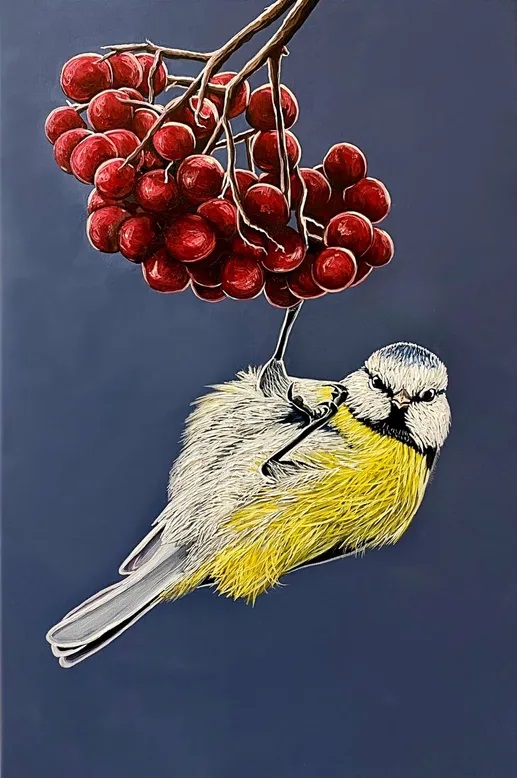 Dmitreko’s work focuses on capturing the smallest details of recognizable experiences, settings, and objects.
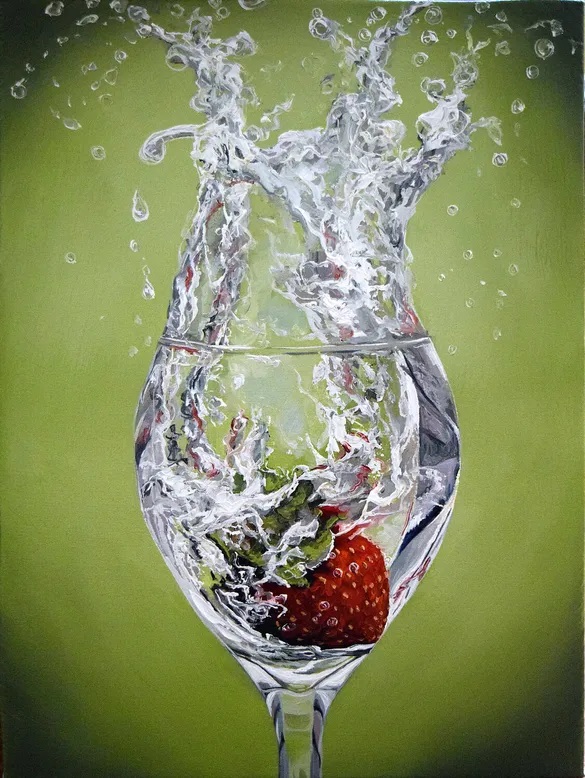 From hyper-realistic animal paintings to serene ocean scenes, the artist retains an expert sense of light, color balance, and proportion.
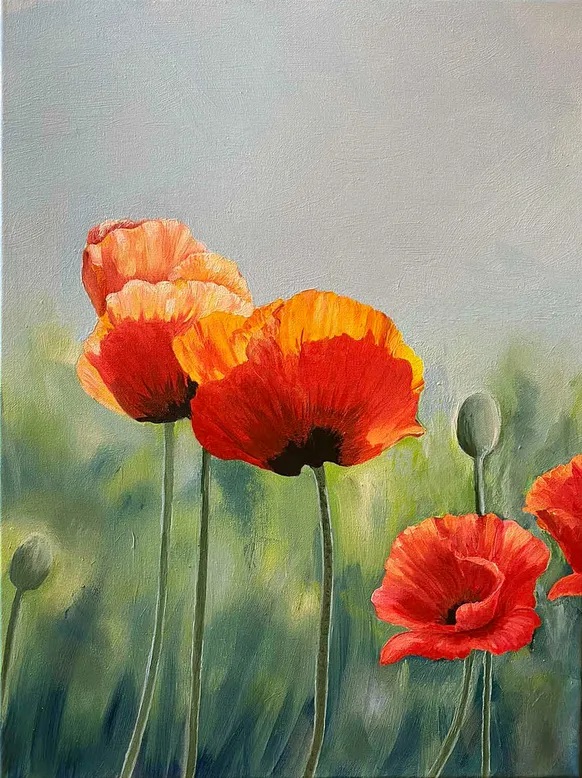 Her reproductions of food in particular often have the added benefit of glistening water drops or submersive fluids, adding yet another intriguing layer to her interpretation.
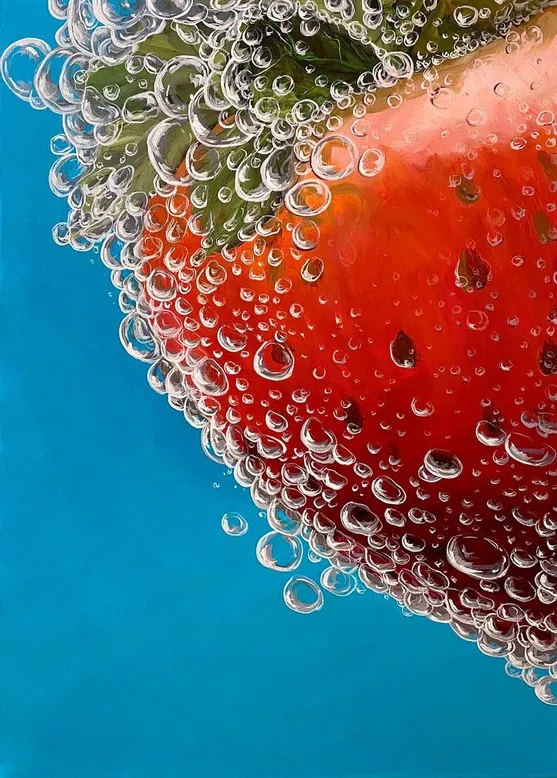 “Our world is a huge generator of energies and vibrations. I grab hold of this living force and transfer it to the canvas with a brush,” Dmitreko shares.
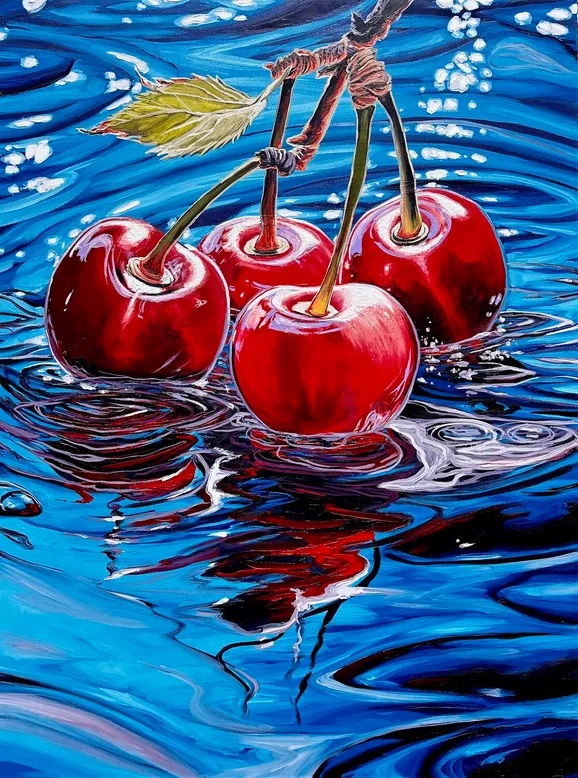 “Painting is a part of the living. it carries a message from the depths of the soul and we, who are touching and drowning in them, are fulfilled.”
More of Elena Dmitreko‘s realistic paintings can be found at Singular Art and on Instagram.
Hilma af Klint (1862 – 1944) was a Swedish artist and mystic whose paintings are considered among the first abstract works known in Western art history.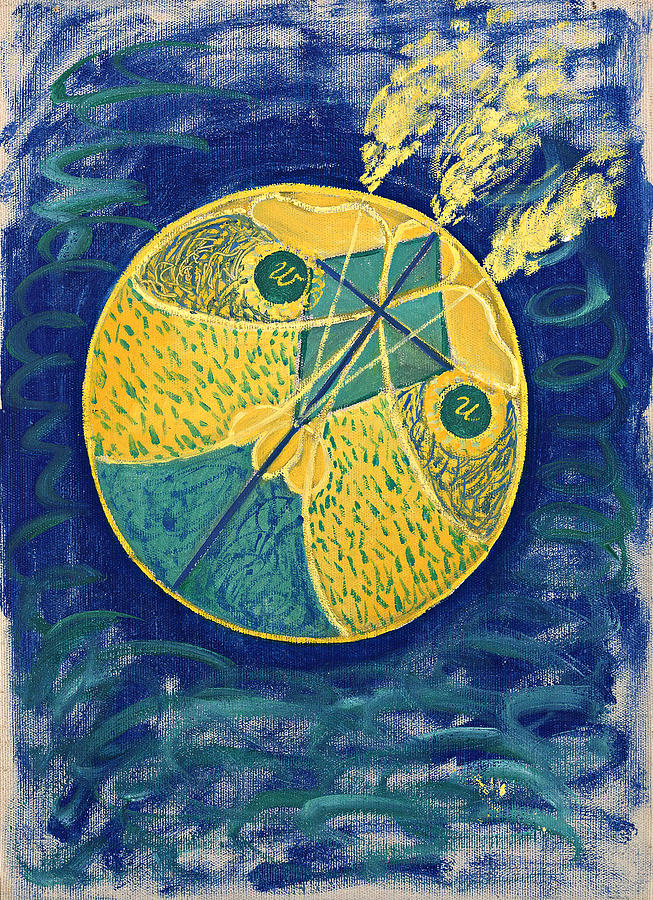 Af Klint studied at the city’s Royal Academy of Fine Arts, graduating with honors in 1887.
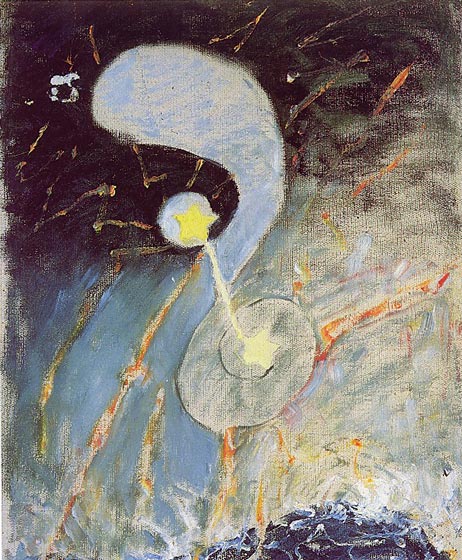 She soon established herself as a respected painter in Stockholm, exhibiting deftly rendered figurative paintings and serving briefly as secretary of the Association of Swedish Women Artists.
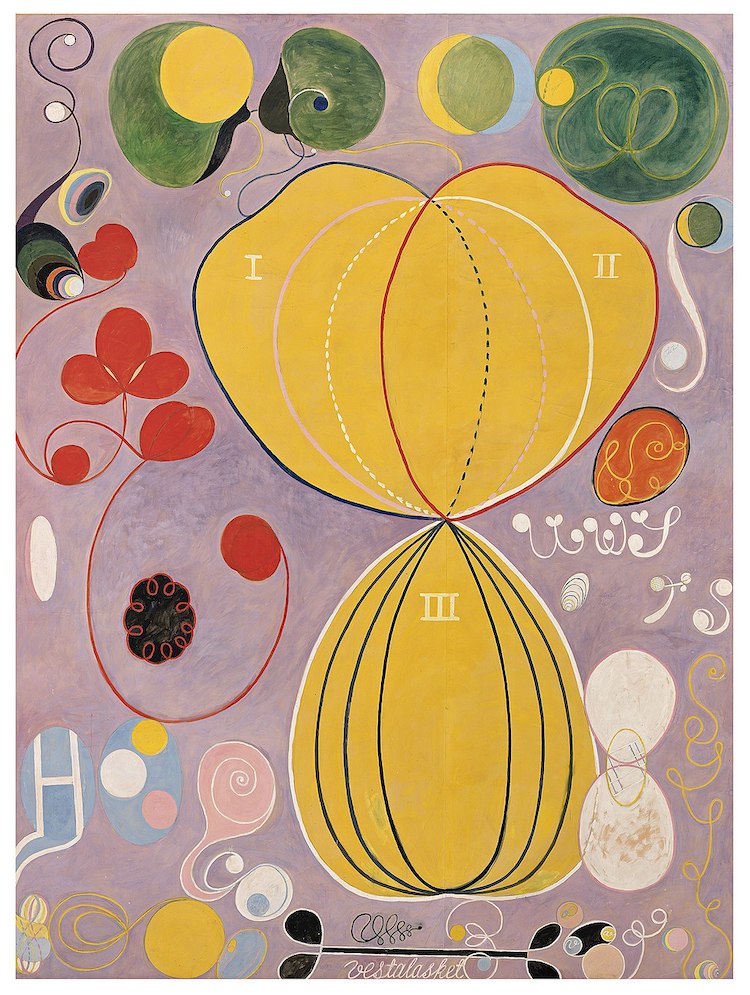 She showed an early ability in visual art, and after the family had moved to Stockholm, she studied at the Academy of Fine Arts for five years during which time she learned portraiture and landscape painting.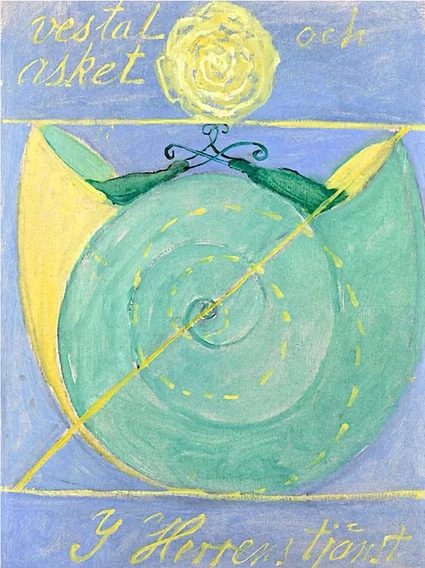
Starting in 1896, af Klint and four of her female artist friends formed a cadre known as the Friday Group, which was dedicated to the study of Judeo-Christian scripture, followed by séances intended to reach beings that existed beyond the visible world.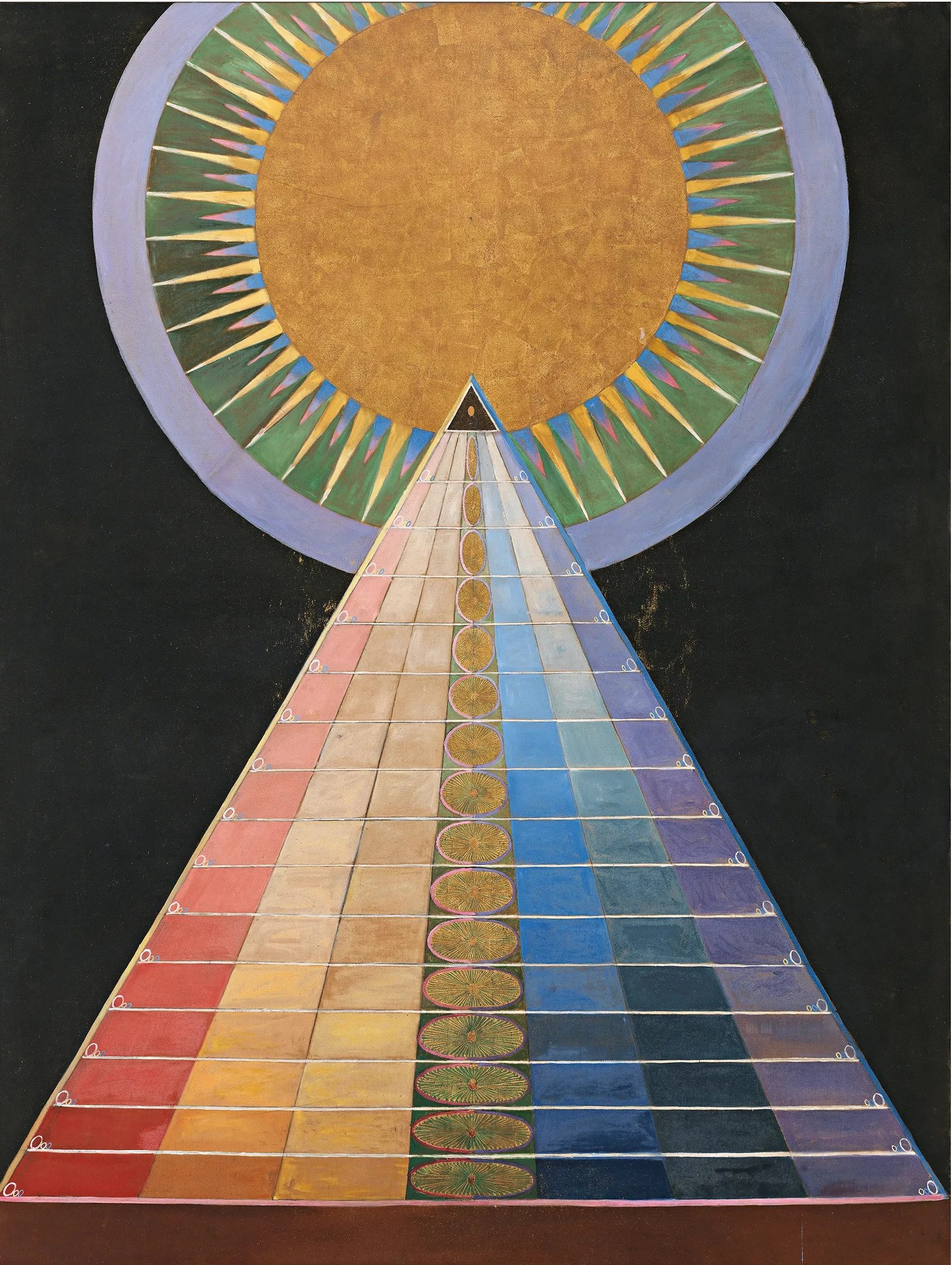 By 1904, she was claiming that she’d been commanded to do artworks by these beings, and working under the sign of one such deity named Amaliel, she undertook a full year of preparation to create what would become some of her most famous works.
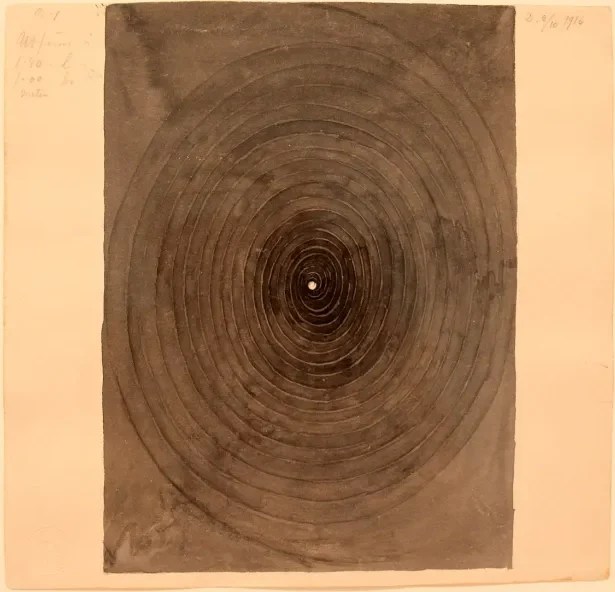 Af Klint created experimental automatic drawing as early as 1896, leading towards an inventive geometric visual language capable of conceptualizing invisible forces both of the inner and outer worlds.
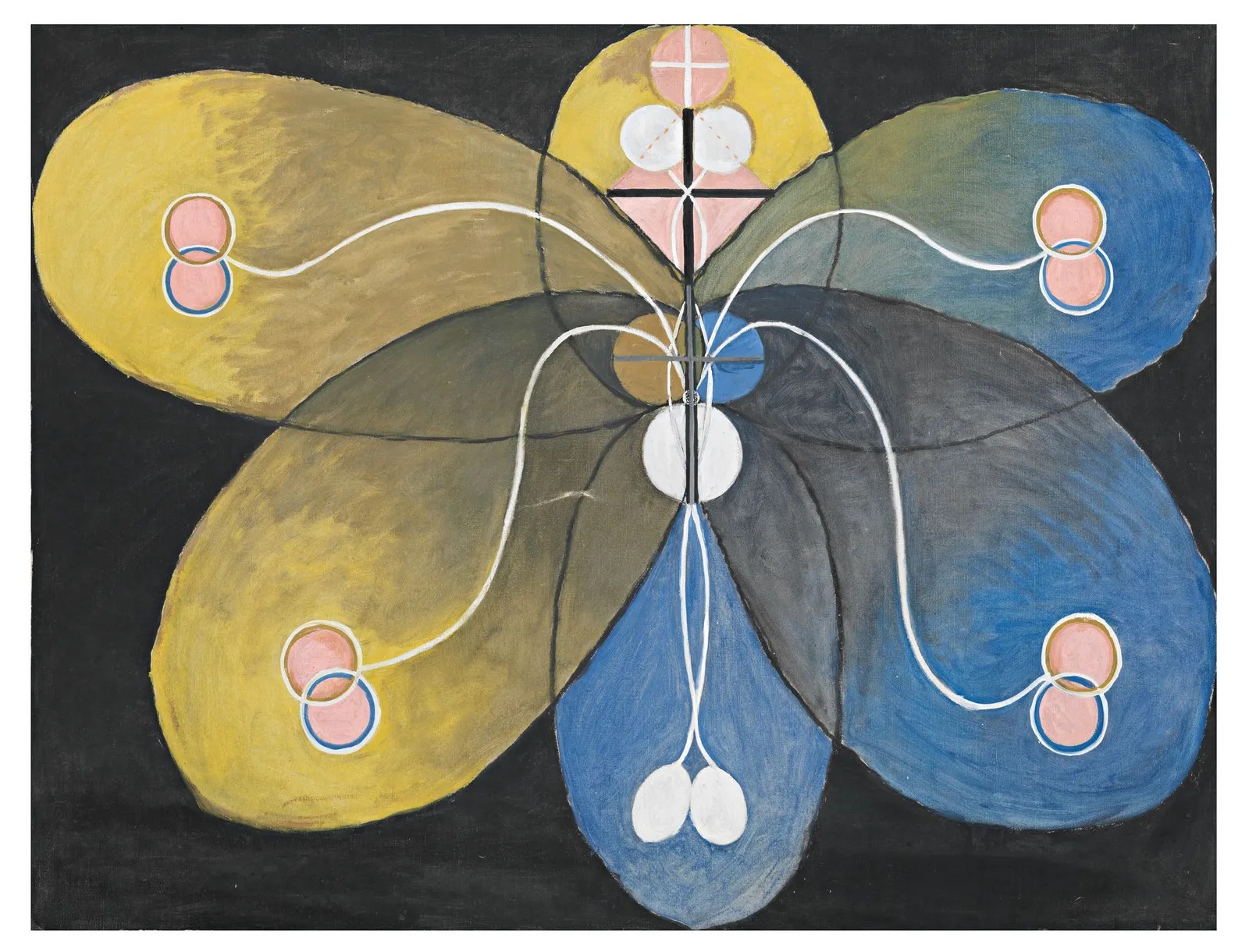 The artist’s later period abstract art (1906-1920) delved into symbolism with a combination of geometry, figuration, scientific research and religious practices.
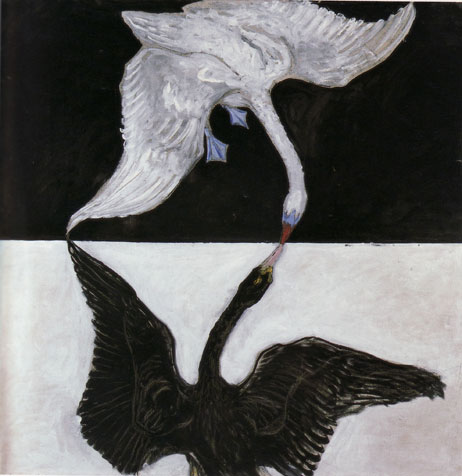 With unsurpassed wisdom and in anticipation of human foolishness, not only did af Klint state that her work was not to be shown for 20 years following her death, but she also stipulated that no work could be sold separately, ensuring that her artworks could not become misunderstood commodities.
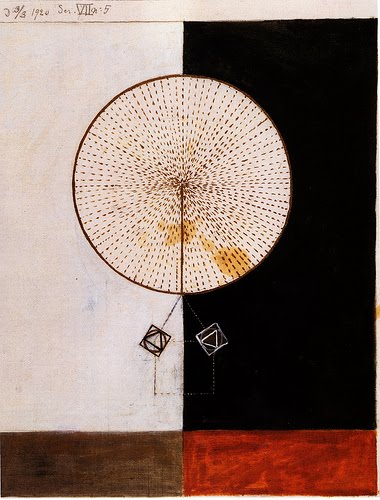 More of Hilma af Klint‘s spiritual artwork can be found at https://www.theartstory.org/artist/af-klint-hilma/ and at the Guardian.
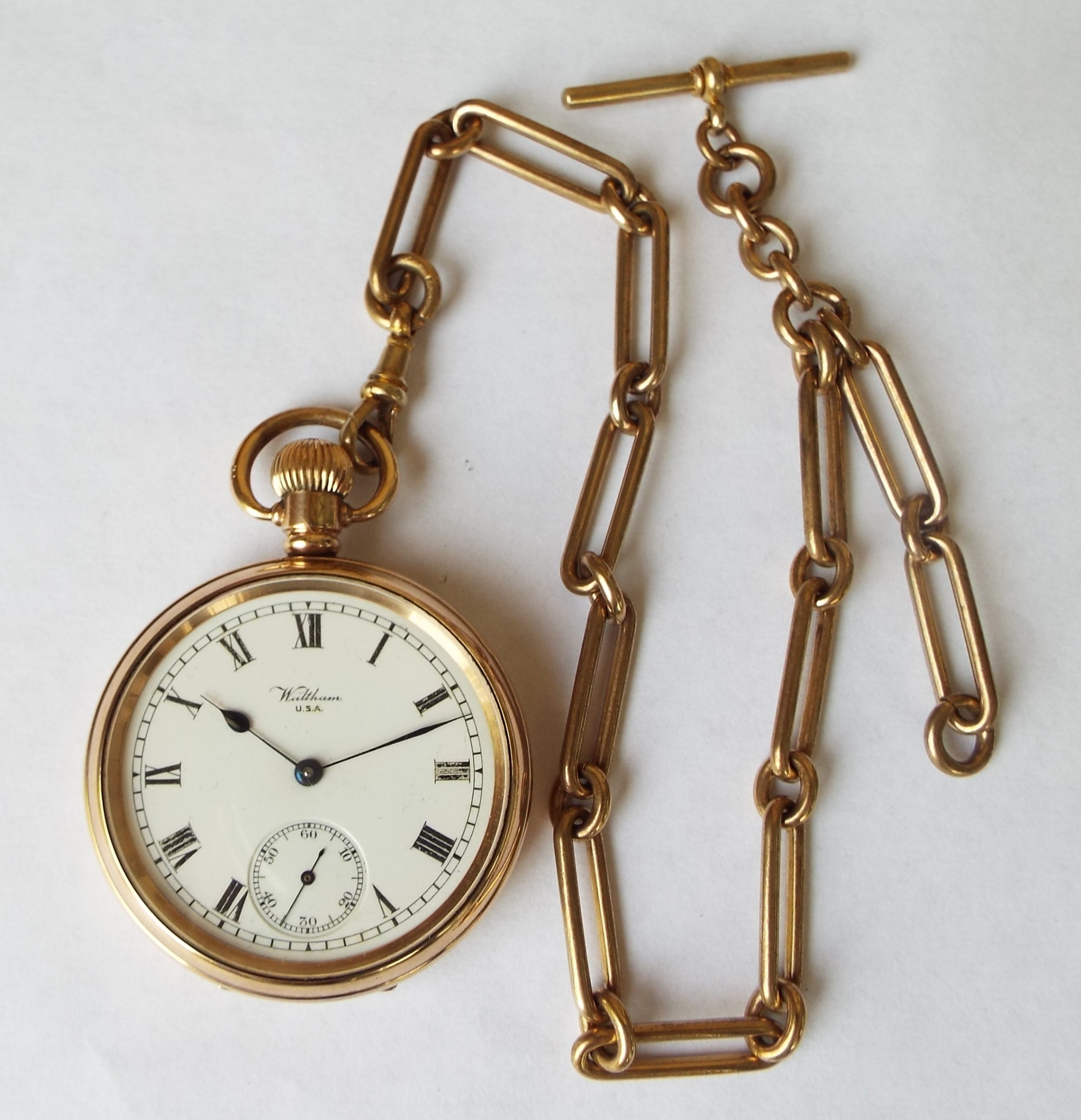
Messy room
sorting through piles
Jeremy found
long lost pocket watch
remembers playing lawyer
or was it president
needed the stopwatch
to start the war
or was it the race
Putting more clothes away
trying not to feel guilty
should he confess?
Or should he slip it under
little brother’s mattress?
Angels and devils
and Father Ryan’s face
turn into his history teacher
the lady with the almost
visible mustache.
What should he do?
Dad was so angry
That made him afraid
Dad was so sad
That made him guilty
Put away the last micro machines
And the Power Ranger wristband
With triple light cuffs
What was the word mom used?
Compromise.
Yes, that was the word.
Find the middle
like the filling of the Oreo
Half and half. In and out.
Compromise.
Jeremy took the watch
sneaking into dad’s room
hid it between the mattresses
leaving the chain dangle
just a little
so mom would find it
when she made the bed.
Then it wasn’t really lost.
It never was
The lawyer had it all the time.
~Claudia Anderson, 2011~
Eva Jospin is a French artist known for her elaborate cardboard sculptures. Born in Paris, Jospin graduated from the École Nationale Supérieure des BeauxArts de Paris.
 The artist cuts and gules cardboard to craft dense, multi-layered and highly detailed forests with stunning depth of field.
 For more than a decade, Jospin has explored the possibilities of the corrugated material, layering it to create solid pieces that can be carved to reveal detailed landscapes and interiors.
 Using cardboard, Jospin crafts detailed architectural sculptures and immersive sets that explore the connection between the natural and built environments.
 Within her works, gothic towers, arches, and columns blend with cardboard-created geological formations, caves, and vines.
  Jospin’s sculptures often aim to explore the relationship between nature and culture while challenging our perceptions of materiality.
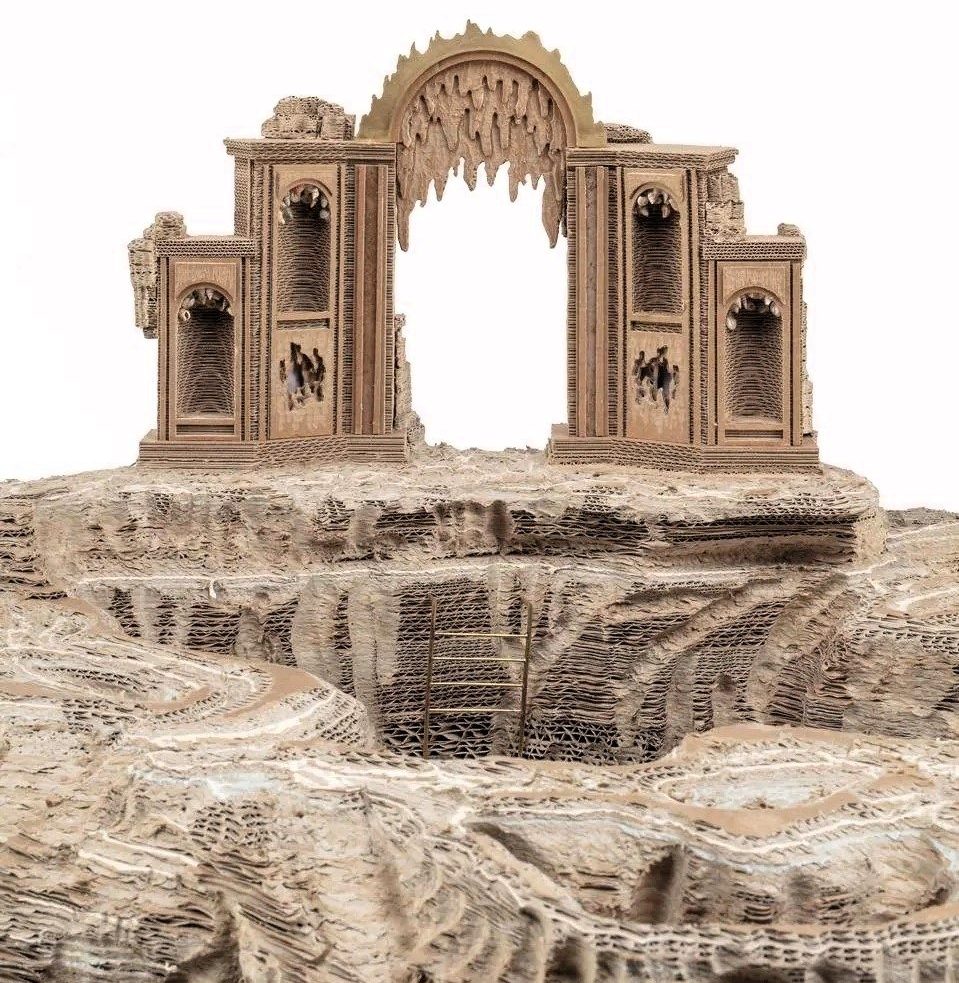 They are displayed in a way that invites the viewer to give them a closer inspection, either by passing through them or by getting close enough to be able to fully appreciate the artist’s craftsmanship.
 More of Eva Jospin‘s architectural structures can be found at https://www.artsy.net/artist/eva-jospin and https://www.galleriacontinua.com/artists/eva-jospin-320.
 Humoring the Goddess