
Literature is the most agreeable way of ignoring Life.
~ Fernando Pessoa
Croning My Way Through Life
Literature is the most agreeable way of ignoring Life.
~ Fernando Pessoa
 Don’t get me wrong.
I love being retired. I worked 50 long years to earn this measly social security check. I paid my dues, putting up with chitty bosses and second jobs and downtown Chicago just so I could sleep past 5:30 a.m. most mornings.
But these days I’m busier than I ever was — even when we had babies.
My dreams of retirement included quiet mornings, coffee on the deck, playing gently with my dog, crafting and reading and filling the dishwasher after every meal.
I’ve been retired for four years, and every year seems to get busier and crazier.
I need a vacation from my retirement.
We recently got a second Labrador who endlessly wrestles with the older one, knocking into tables and human legs with ferocity. We have soccer games and shooting tournaments and camping and baby showers and mowing the field we call a lawn and I’m way behind in making purse charms for the craft fair in August and paying bills and I just can’t keep up with it all.
Dare I say it’s starting to take a mental and physical toll on my airy fairy psyche?
Don’t misunderstand — I enjoy being busy. Too many times I’ve heard retirees complain about being bored or ignored or losing interest in doing things that bring them pleasure. I don’t want to fall into that shadow.
Yet I can’t keep up with the constant running around my current lifestyle dictates.
My husband is on his second year of retirement, which had led to him finally being able to do things he’s always wanted to do but had no time to do — volunteering as a baseball or shooting coach, fishing, disappearing into the garage/barn to work on who-knows-what.
I should be able to do the same thing.
Yet I want to go with him to all the grandkids games and grade school performances, work to help my brother-in-law with whatever rehab I can, clean the house, feed the birds, cook new recipes from scratch, fetch the dogs, plant a garden, grocery shop, yadda yadda yadda.
I know you didn’t come here today just to listen to me whine. I didn’t know ~I~ was going to do this much whining.
So I ask you — do you have any tips for slowing down?
Do I just say “no”? Do I put my daily life on a schedule? Do I learn how to prioritize?
Maybe it’s just that I have fewer years ahead of me than behind, and I want to take advantage of every spare minute I can. I’d rather spend time with friends and family than do laundry, or sit and listen to smooth jazz while I craft rather than vacuum and dust.
Be prepared for retirement. You’ll have to put on your running shoes to keep up!
Felicity Aylieff has an established reputation as a maker of large-scale, sculptural ceramics.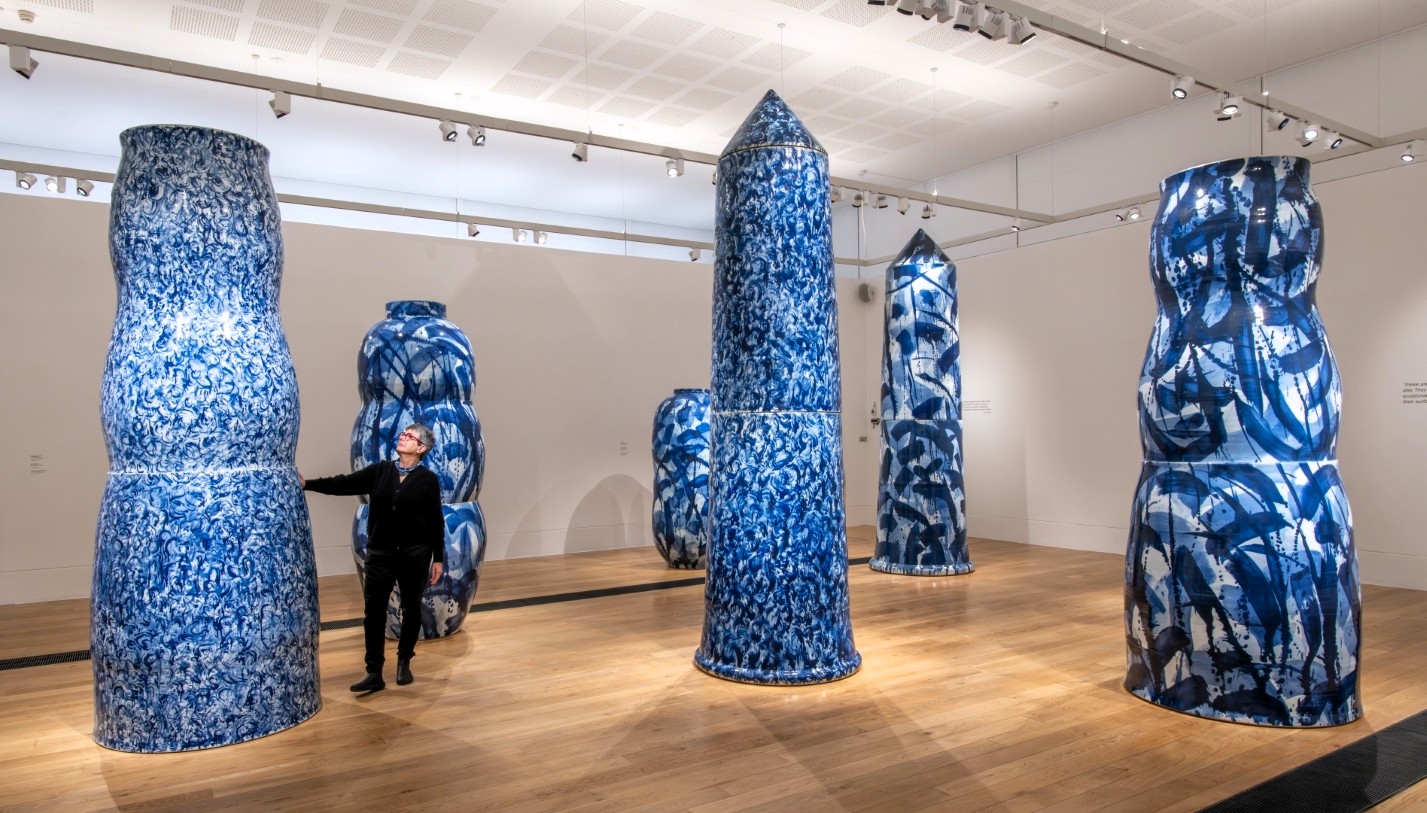 Her large-scale works, all hand-thrown and hand painted, are a towering testament to the centuries-old traditions which established Jingdezhen as the “Porcelain Capital” of the world.
 Born in Edlesborough, Bedfordshire, in 1954, Aylieff studied at Bath Academy of Art, gaining a first-class Honors degree in ceramics and textiles, followed by a teaching postgraduate year at Goldsmiths College in 1978.
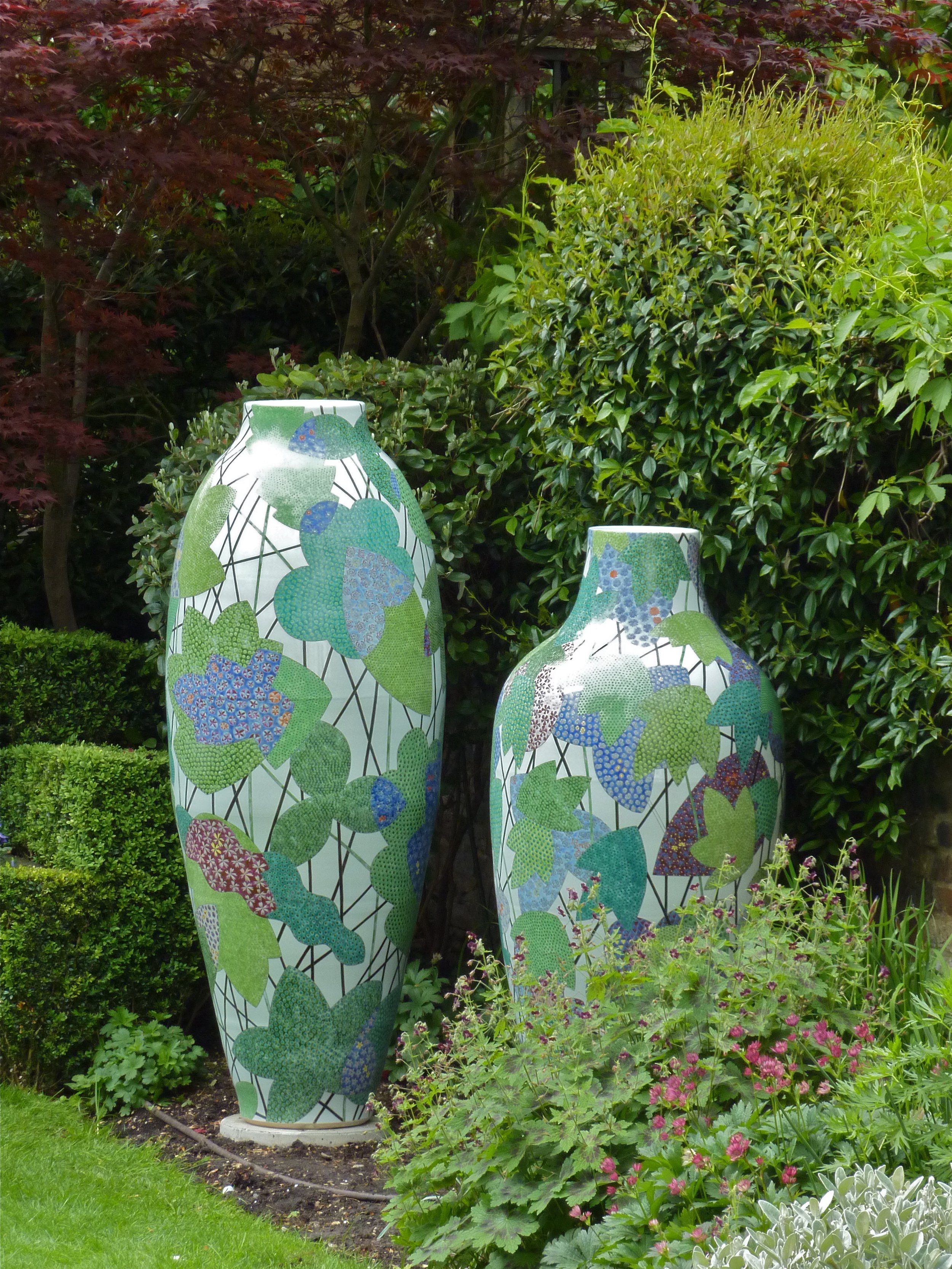 An ‘incredibly liberating’ artist residency in Jingdezhen, China, the historic home of Chinese porcelain production, saw the beginning of a series of monumental pots, the largest of which stands five meters (16 feet) high.
 Aylieff works at the ‘big ware’ factory — a family business which specializes in making large-scale pots up to three meters in height.
 It takes three throwers working in tandem to throw a big pot, and then, under her instruction, a team of ‘master throwers’ finishes her designs for monumental forms.
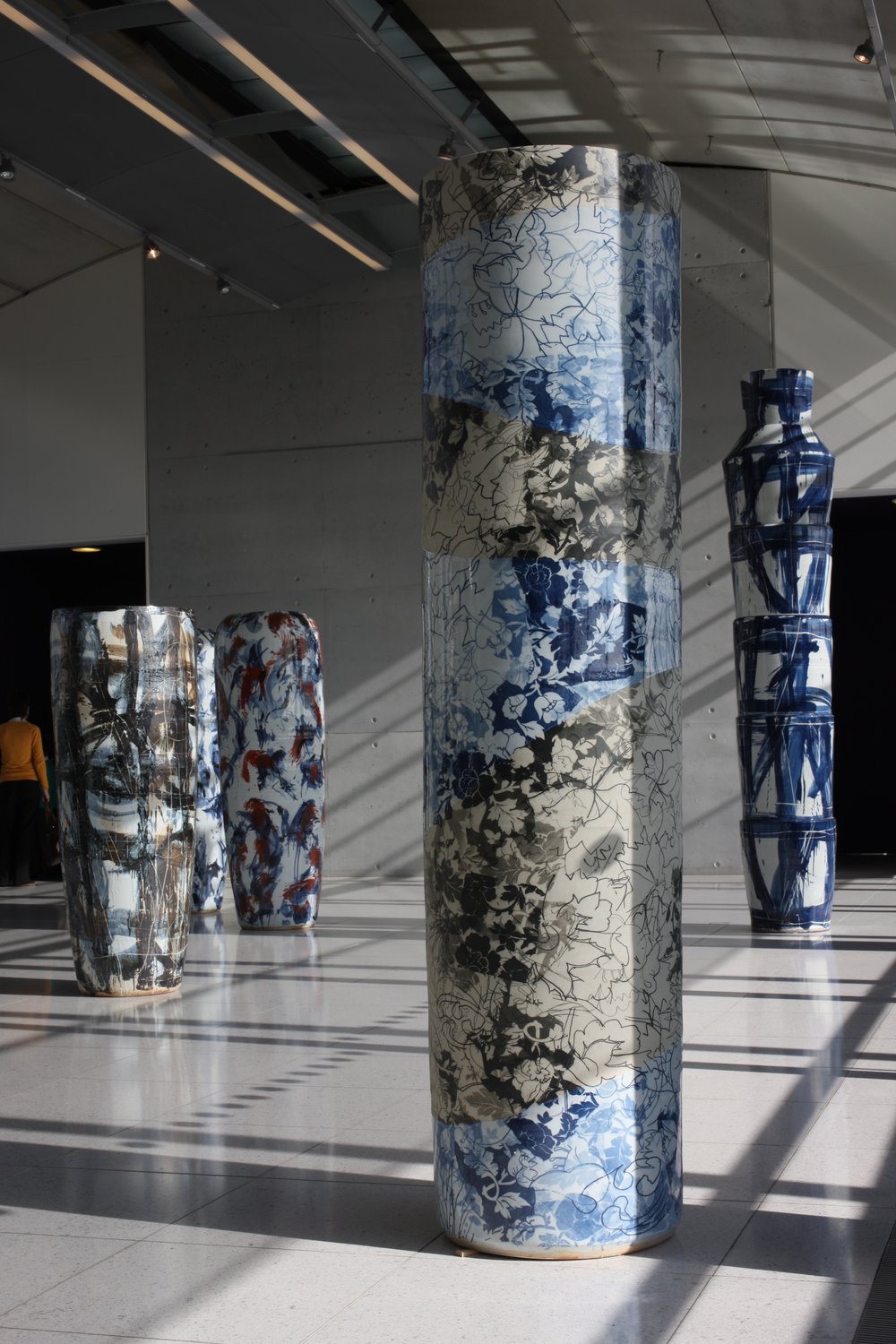
 Aylieff decorates in detail with fencai colored enamels, painting abstract marks in cobalt pigment with huge Chinese calligraphy brushes. Fencai is an over-glaze enamel technique that dates back to the 18th century used to decorate with color and pattern, porcelain pots made at the Imperial Kilns of Jingdezhen but painted at the Palace workshops in Beijing .
 Her work shows her passion for material and process through its use of color, pattern, and historically informed decorative techniques.
 More of Felicity Aylieff’s amazing ceramics can be found at https://www.felicityaylieff.com/ and https://www.rca.ac.uk/more/staff/felicity-aylieff/.

If you are always trying to be normal, you will never know how amazing you can be.
―
 Last Monday I wrote a blog on Friends I’ve Never Met and the influence they’ve had on my life in one way or another.
To repeat, in the blogging world, a good friend is not always what the world perceives. We don’t get together for coffee or dinner; we don’t visit each other’s houses or get into big deep conversations. We know very little about each other and probably never will; our connection is with words and images and responses and smiles we can feel over the Internet Airwaves.
Another good friend of mine is Darlene Foster at Darlene Foster’s Blog.
Darlene lives in Spain and is a prolific writer, especially in children’s adventure books. She is a delight because she has visited so many places and experienced so many creative things and shares them all on her blog.
One of her favorite places to visit on Costa Blanca in Spain is Altea, a charming fishing village north of Alicante with a blue-domed church overlooking the harbor. Her pictures made me want to go there and see this town for myself.
She is the kind of personality you love to love, even if you’ve never met her. Her travels, her books, inspire me to open my mind and explore the world and writing and see what I can contribute to it.
I hope you have good friends that you can share with us on YOUR blogs!
The World Under Glass Still Shines











Wolfgang Amadeus Mozart (1756 –1791) was a prolific and influential composer of the Classical period.

Born in Salzburg, Austria, Mozart was a child prodigy capable of playing multiple instruments. At age five he began to compose and gave his first public performance at age six.

Through the years Mozart aligned himself with a variety of European venues and patrons, composing hundreds of works that included sonatas, symphonies, masses, chamber music, concertos and operas, all marked by vivid emotion and sophisticated textures.

The central traits of the Classical style are all present in Mozart’s music: clarity, balance, and transparency, yet simplistic notions of its delicacy mask the exceptional power of his finest masterpieces, including Symphony No. 41 “Jupiter” in C Major, K. 551, Symphony No. 40 in G Minor, K. 550, Symphony No. 36 “Linz” in C Major, K. 425, and Serenade No. 13 in G Major, K 525.
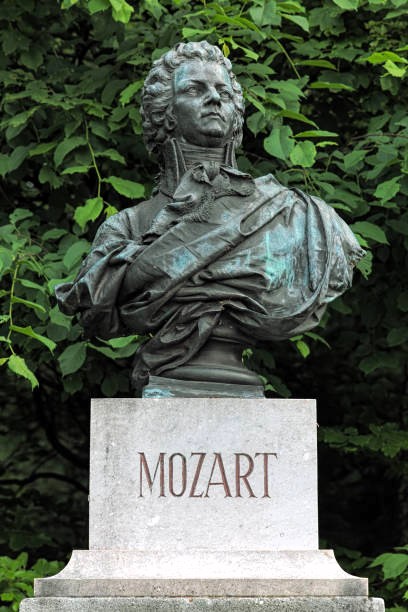
Over the course of his working life, Mozart switched his focus from instrumental music to operas, and back again.

Mozart excelled in the field of opera, including Le nozze di Figaro (The Marriage of Figaro) in 1786, Don Giovanni, 1787, and Die Zauberflöte or The Magic Flute in 1791.

Mozart developed the use of subtle changes in instrumentation, orchestration, and tone color to express or highlight psychological or emotional states and dramatic shifts.

His increasingly sophisticated use of the orchestra in the symphonies and concerti served as a resource in his operatic orchestration, and his developing subtlety in using the orchestra to psychological effect in his operas was reflected in his later non-operatic compositions.

His death at age 35 may have resulted from a number of illnesses. Yet Mozart died penniless and was buried in an unmarked grave.

Despite his short life, his rapid pace of composition and proficiency from an early age resulted in more than 800 works representing virtually every Western classical genre of his time.

More of Wolfgang Amadeus Mozart’s amazing life and music can be found all through the Internet, including https://www.wolfgang-amadeus.at/en/ and https://www.worldhistory.org/Wolfgang_Amadeus_Mozart/.

.
During my last, what — 11 years — as a blogger, I’ve made many casual friends and fewer good friends.
In the blogging world, a good friend is not always what the world perceives. We don’t get together for coffee or dinner; we don’t visit each other’s houses or get into big deep conversations. We know very little about each other and probably never will; our connection is with words and images and responses and smiles we can feel over the Internet Airwaves.
One of these good friends is my good friend Ivor at Ivor.Plumber/Poet.
Ivor lives in Australia, and to me is a master poet and friendly presence. I am guessing he is in my age bracket and has had a past rich in love and memories.
Ivor wrote this poem for me the other day as a response to my Camping, Sofa and a Sword post. Go visit his world and enjoy the friendship.
Dreams of the Heart
I cannot walk the continents
Like the intrepid Marco Polo
But my feet have felt the sands of time
Pass between my toes
I have not sailed the high seas
Like the courageous Christopher Columbus
But my body has bathed
In an ocean full of kind hearts
I am yet to fly in space
Like the brave Neil Armstrong
But I have reached for the stars
And touched my soul’s dreams
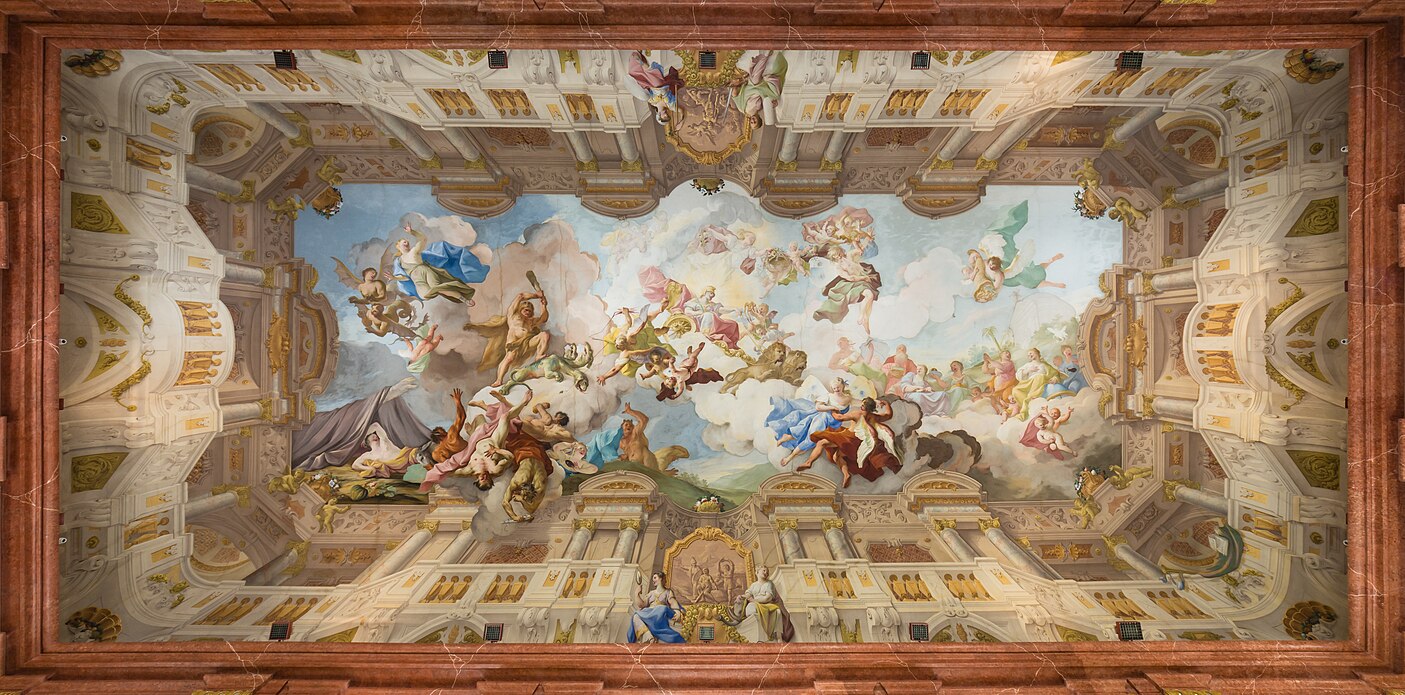
Paul Troger (1698-1762) was an Austrian painter, draughtsman and printmaker of the late Baroque period.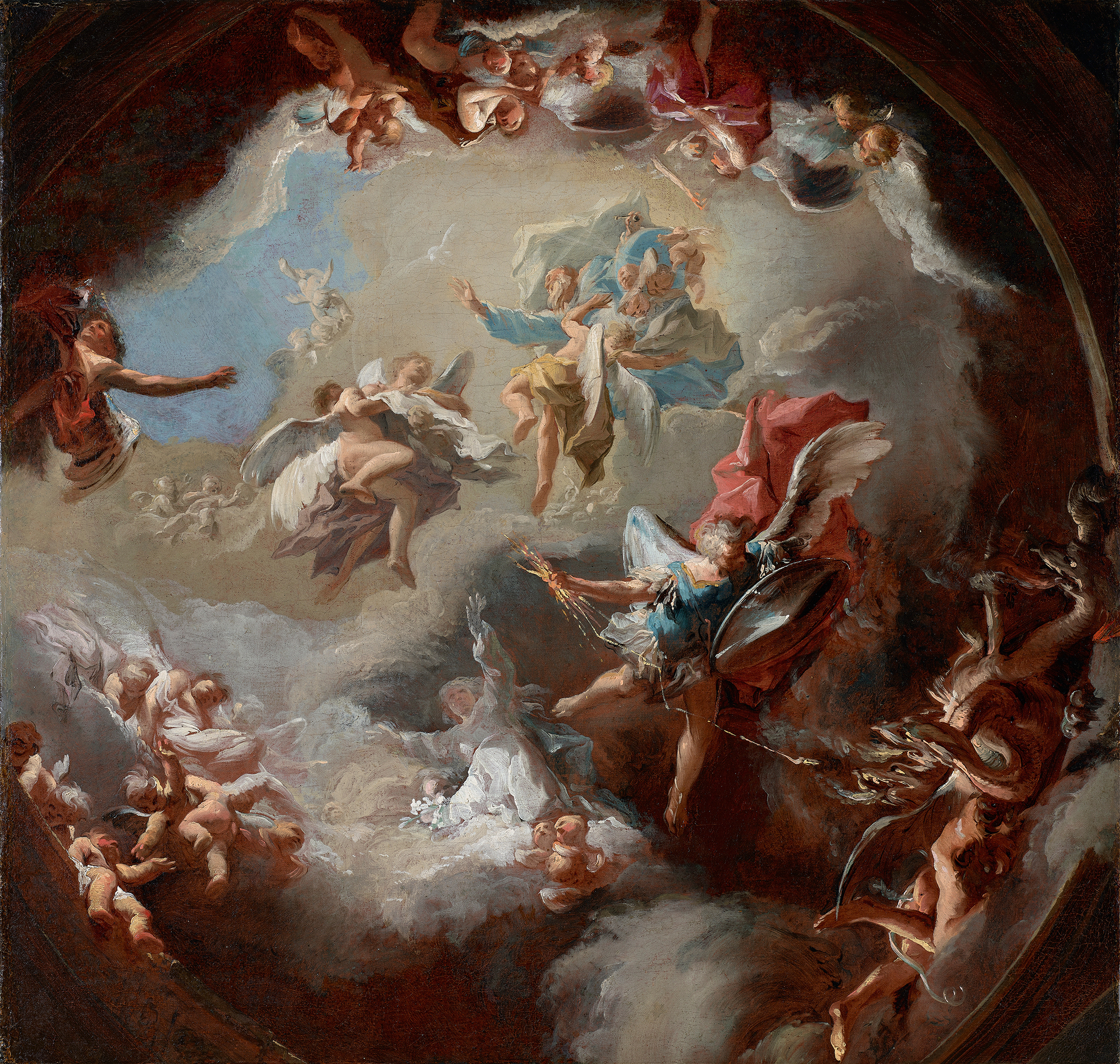 Troger’s style, particularly in his frescoes, dominated Austrian painting until the end of the 18th century and profoundly influenced significant artists of the next generation.
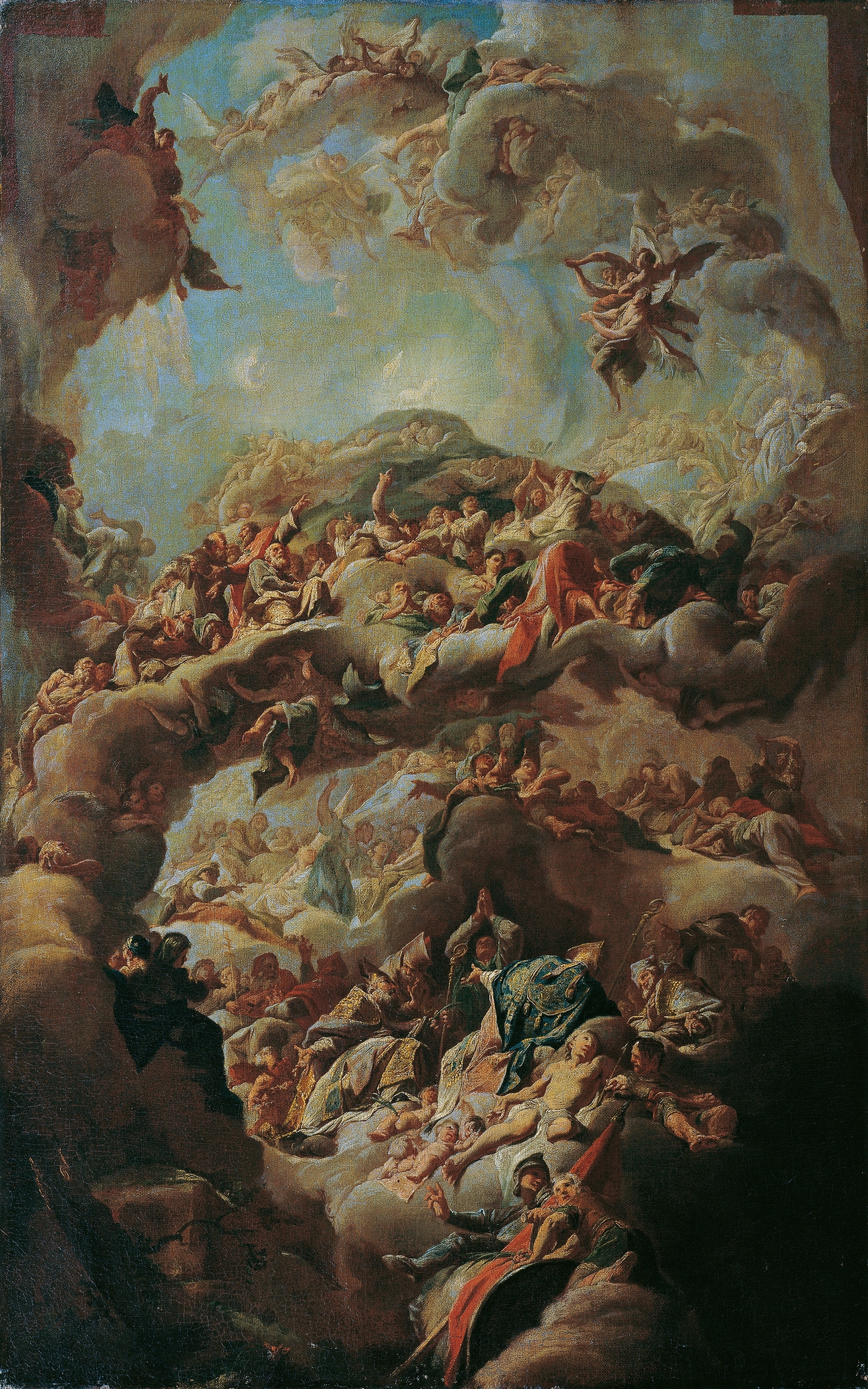 His illusionistic ceiling paintings in fresco are notable for their dramatic vitality of movement and their palette of light colors.
Originally from the Puster Valley in Tyrol, Troger studied in Italy for ten years and moved from Salzburg to Vienna in 1729.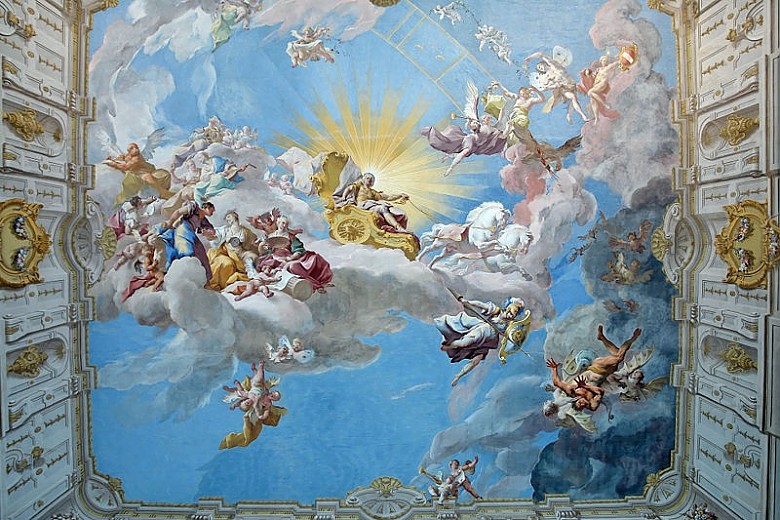 Troger became the favourite fresco painter in Lower Austrian monasteries in collaboration with the architect Josef Munggenast.
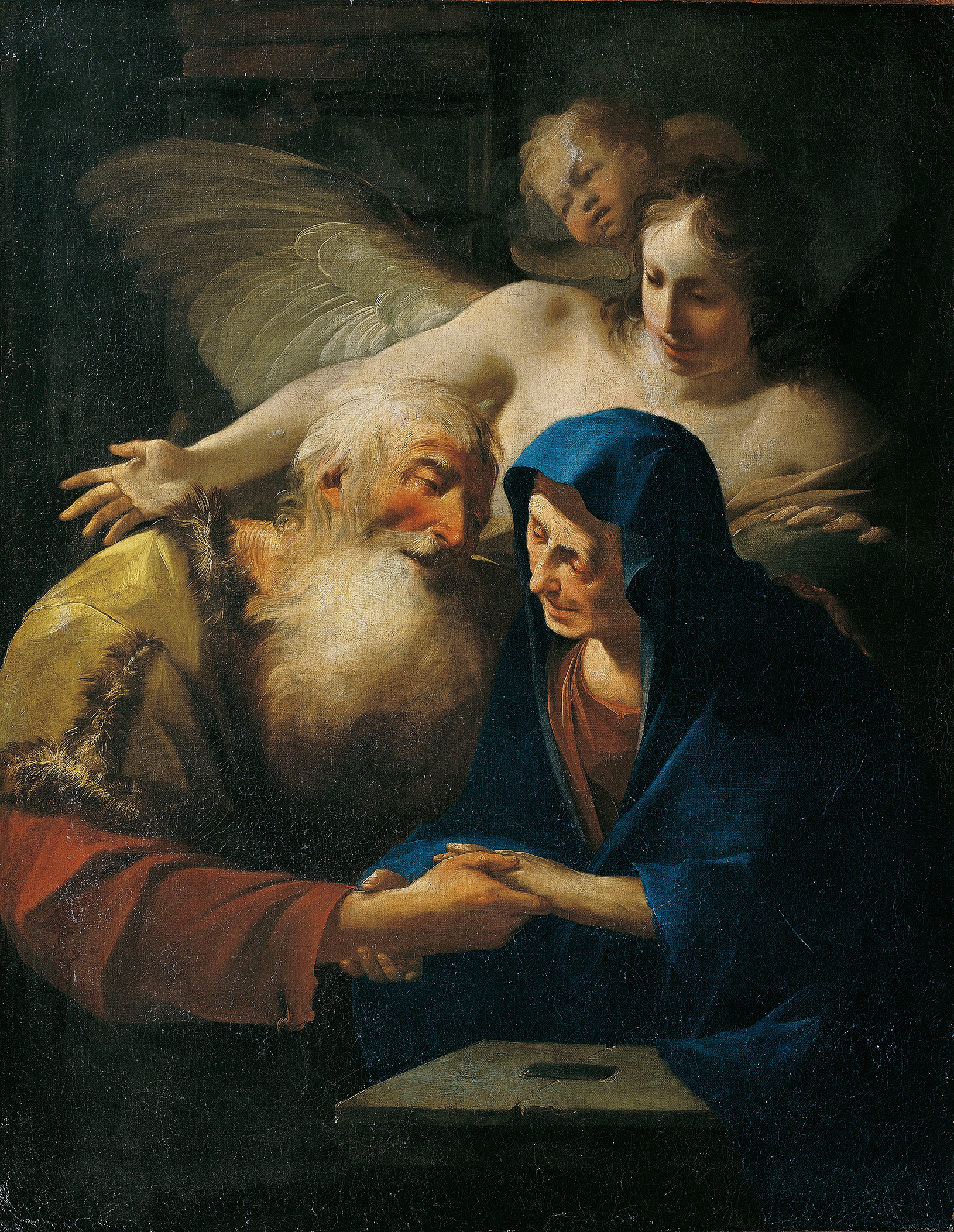 In 1753, he joined the Imperial Academy of Fine Arts and became its director in 1754.
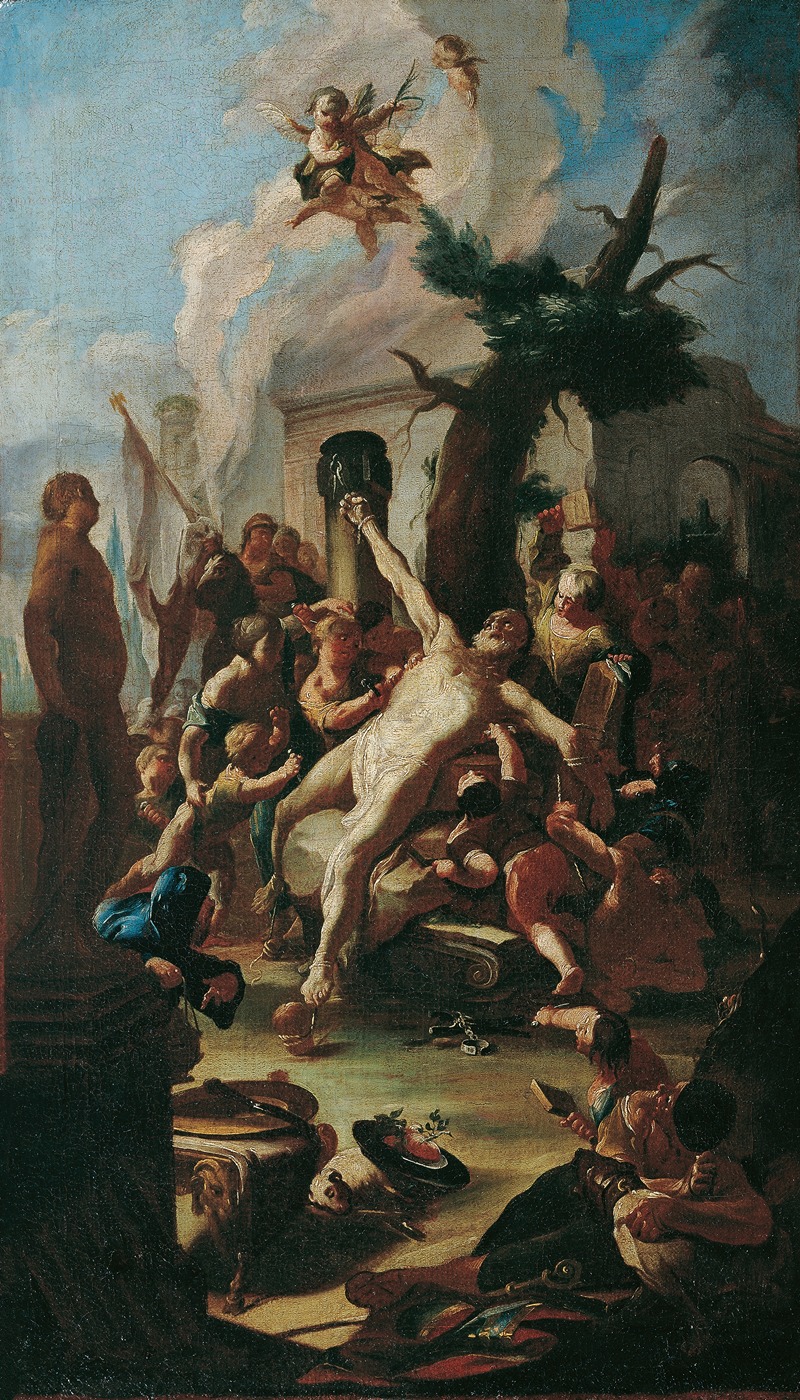 His most important contribution to Austrian painting was to reject the strong dark palette, typical of the beginning of the 18th century, in favor of an increasingly lighter palette, typical of the new Rococo taste.
 More of Paul Troger’s magnificent art can be found at https://www.paultroger.it and https://artvee.com/artist/paul-troger/.
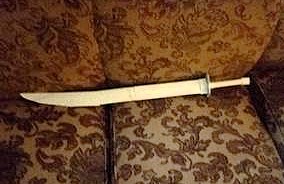 I have to say I’m a bit old fashioned, but after visiting another place for a couple of days, there’s no place like home.
We just spent five days camping with two of our best friends and 3 dogs, and, except for the huge thunderstorm that came through last night, it was a great time.
But I am now home, bags and coolers unpacked, and I’m loving digging down into my comfy sofa. Last week I was bored sitting on this same sofa.
Aren’t we all just the funniest things?
We love where we are, we long to be someplace else. We make our surroundings as comfortable and magical as we can, yet we dream of experiencing the magic of other places, other experiences.
It’s like we’re happy we ordered lasagna but wish we would have ordered someone else’s steak too.
I think it’s so important to explore other worlds, other foods, other experiences. It doesn’t matter if you can’t actually go to the places you dream about — you can still take that next step and explore it your way. Cook a cuisine you’ve always wondered about; take a virtual tour of your dream vacation; read a book written by someone who sat right in the middle of your travel destination.
At the moment I’m watching Forged in Fire, a reality TV series on the History Channel where bladesmiths make and test bladed weapons. There have been some fine and amazing swords, knives, and other bladed weapons made on that show… a creative world I know nothing about. But it’s so fun to watch artists who DO know about it!
I encourage you to try new recipes, new forms of poetry, and new creative skills. Let me know what you’ve explored, what you’ve enjoyed, what you’ll never try again.
As I always say, life’s too short.
Don’t waste it digging too far into your sofa.
It’s the beginning of a Glorious Day here in the Midwest.
Being alone with my dogs and cat and fish and computer and crafts room and my messy closet floor, there will be a lot of things I’ll want to accomplish that I can’t always accomplish with company around.
But you know me. That’s not what this particular blog is about.
I had an idea in the shower this morning, and I’d LOVE to hear back from all of you. The more the merrier.
I really enjoyed the end scene in the movie “The Time Machine” with Rod Taylor, where George comes back from the future to grab three books to take back with him. It goes something like this:
Filby: He must have taken something with him.
Mrs. Watchett: Nothing, except three books.
Filby: Which three books?
Mrs. Watchett: I don’t know. Is it important?
Filby: No, I suppose not. Only – what three books would you have taken?
I thought about throwing you/us onto a deserted island or in an isolated cabin in the woods, but then you/we would have more to worry about than what books to read. Food, tools, medicine, is all too much to think about on this beautiful morning.
So here is the question:
If you time traveled into the future (or into the past), which three books would you take?
This time around I’m going to put restrictions on the question. Like being specific on the time period, (forward OR past), what you have in YOUR library (vs. stopping at the bookstore first), and only three books.
After all, those are the choices George had.
And, as a side, if you feel like it, are the three books the first three that came to mind, or did you think about it for a bit first?
I’ll go first. And it’s really hard.
I ran downstairs, tripping over my Tears crafts bins, and looked at my shelves. Ack! An eclectic mix, for sure. Seeing as they have to be books from MY library, for reading I’d take Lord of the Rings Trilogy by J.R.R. Tolkien; for art, the History of Art (1st Edition) by H.W. Janson (1982); and for poetry, The Illustrated Household Book of Poetry Charles A Dana 11th Edition, 1868.
None of these books are “modern” in the sense of the word; I’m ashamed I don’t have any current poetry or updated art books. I tossed around bringing a book of Shakespeare or Edgar Allen Poe stories and poems, but their rhetoric might not be as entertaining after the 375th read.
If I had time to think about it, or had time to run to the bookstore or library, my choices may have been different. But, for what I have, for what I would have to share with others for eternity, would be a little bit of entertainment through the ages.
After all, how could you not enjoy a happy ending?

Each time a woman stands up for herself, without knowing it possibly, without claiming it, she stands up for all women.
~ Maya Angelou
 I just happened to come across a documentary about Art Thefts and how famous works were recovered. Called “Raiders of the Lost Art” (how cute) on Amazon Prime, the first episode was about all the Hildebrand Gurlitt, a German art historian and art gallery director who dealt in Nazi-looted art as one of Hitler’s and Goering’s four authorized dealers for “degenerate art”.
Hildebrand Gurlitt’s personal collection of over 1,500 artworks by Impressionist, Cubist, and Expressionist artists and Old Masters remained virtually unknown until it was brought to public attention in 2013 following its confiscation from the possession of his son, Cornelius Gurlitt
I was extra excited about this episode because of what I learned and blogged about back in
Hatred and destruction of things you don’t like or understand has been around for centuries. Think of how many books were burned, buildings were bombed, and lives were destroyed by closed minded fools.
The world in general and the art world in particular is fortunate that so many works by now-famous modern artists had been stolen and hidden from sight instead of burned during that horrid movement.
I’m going to repost the Degenerate Art blog and add a few more degenerate art and artists at the end.
Don’t ever let the world tell you what to paint and what to create.
Degenerate Art was a term adopted in the 1920s by the Nazi Party in Germany to describe modern art.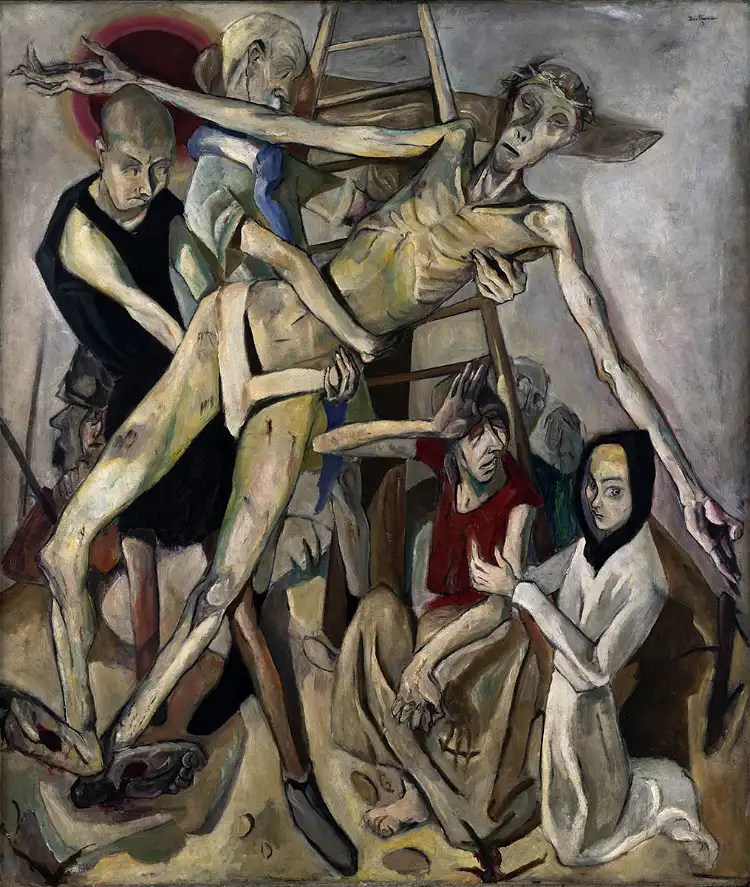 Descent from the Cross, Max Beckmann
During the dictatorship of Adolf Hitler, German modernist art, including many works of internationally renowned artists, was removed from state-owned museums and banned in Nazi Germany on the grounds that such art was an “insult to German feeling”, un-German, Freemasonic, Jewish, or Communist in nature.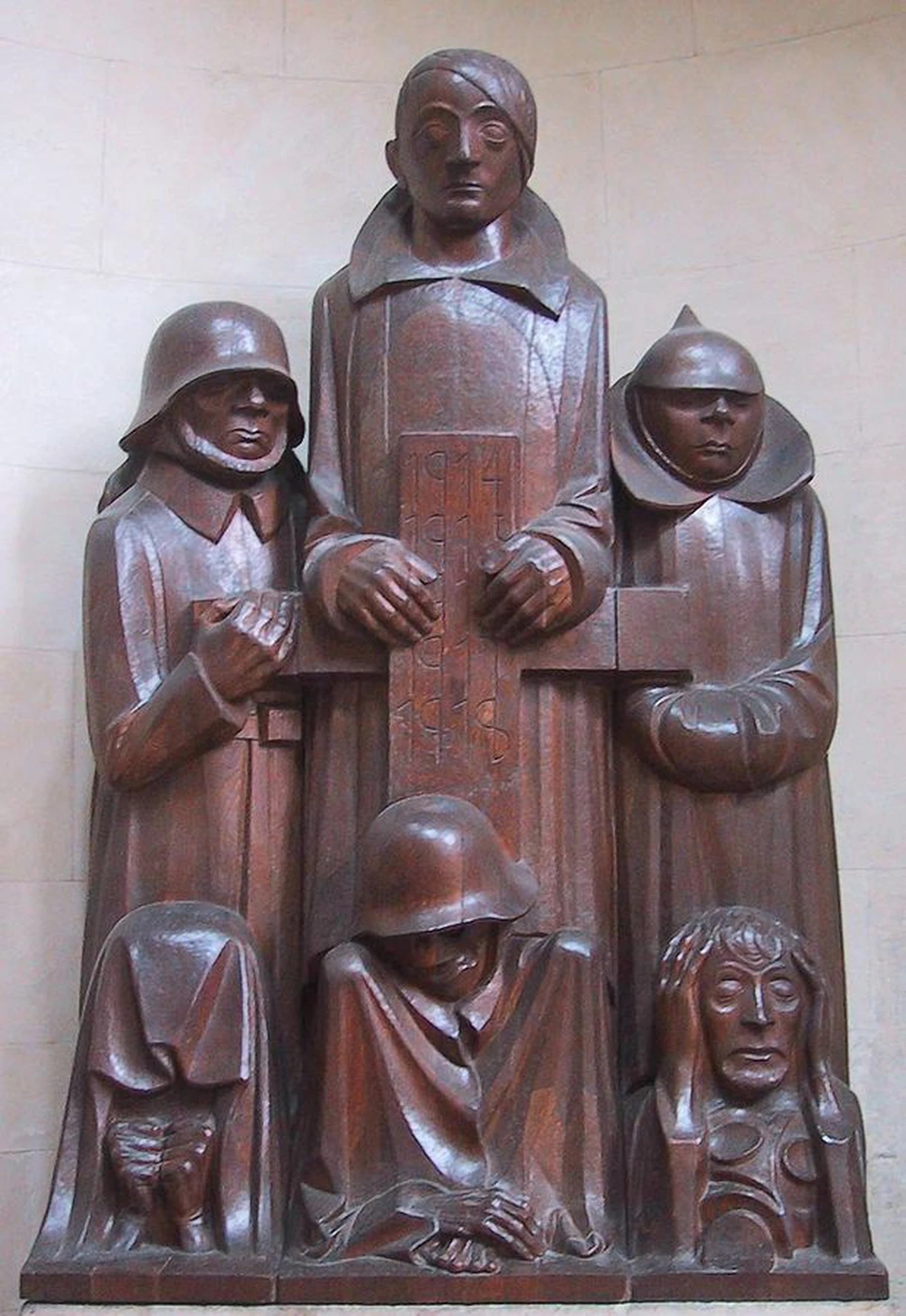 Magdeburger Ehrenmal, Ernst Barlac
Hitler’s rise to power in 1933 was quickly followed by actions intended to cleanse the culture of degeneracy: book burnings were organized, artists and musicians were dismissed from teaching positions, and curators who had shown a partiality for modern art were replaced by Party members. Portrait of a Man, Erich Heckel
Those identified as degenerate artists were subjected to sanctions that included being dismissed from teaching positions, being forbidden to exhibit or to sell their art, and in some cases being forbidden to produce art. Street Berlin, Ernst Ludwig Kirchner
The head of Reichskammer der Bildenden Künste (Reich Chamber of Visual Art), and his commission were authorized to confiscate from museums and art collections throughout the Reich any remaining art deemed modern, degenerate, or subversive. Kneeling Woman, Wilhelm Lehmbruck
All the works that were a part of Bauhaus, Cubist, Dada, Expressionist, Fauvist, Impressionist, New Objectivity and Surrealist style were labeled as sick.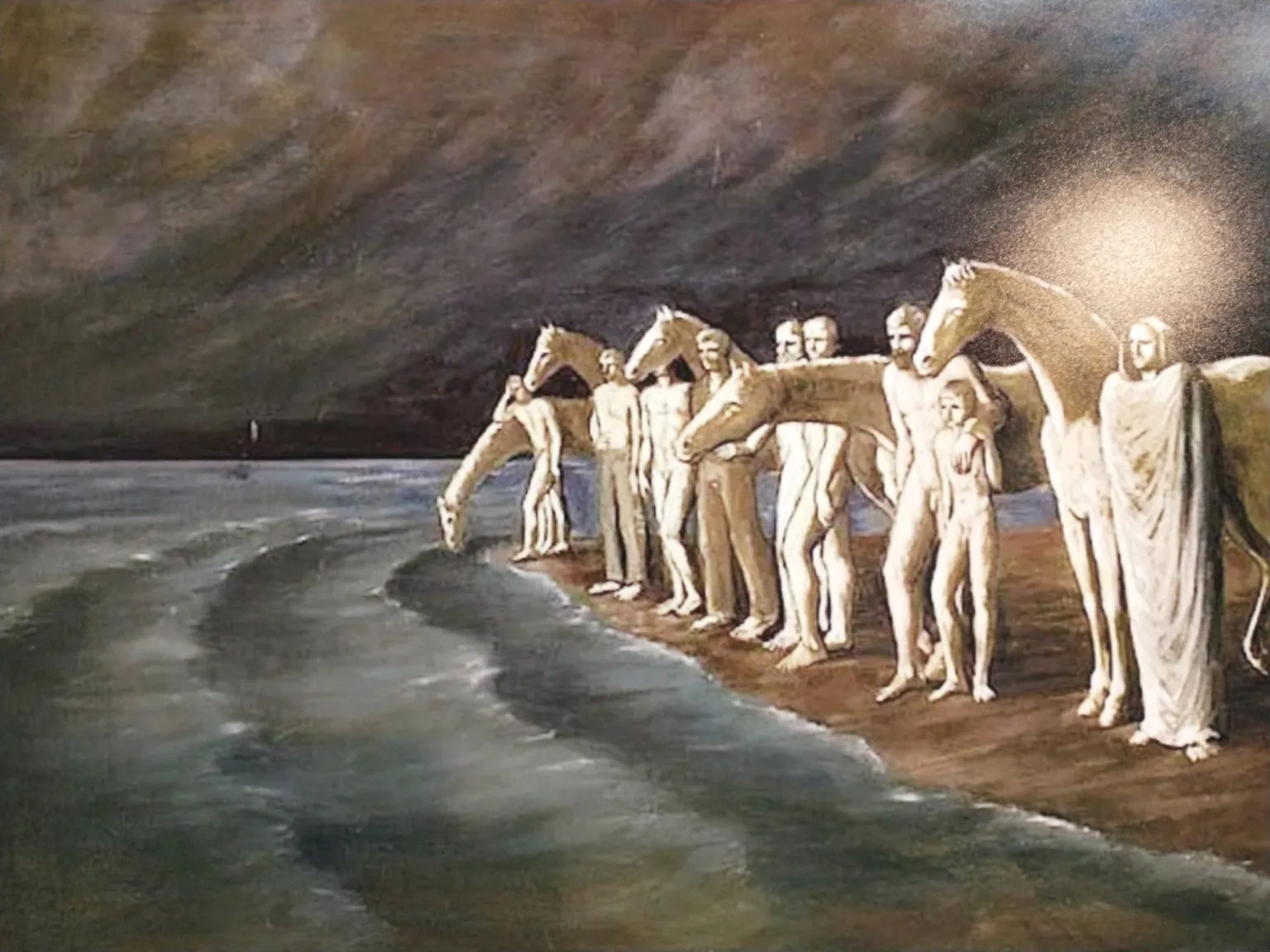 At the Shore, Edgar Ende
These works were then to be presented to the public in an exhibit intended to incite further revulsion against the “perverse Jewish spirit” penetrating German culture. Pharisees, Karl Schmidt-Rottluff
In July 1937, the German Nazi regime sponsored the Entartete Kunst (Degenerate Art) exhibition in Munich.
The exhibition’s central theme was to “educate” the public on the “art of decay.” The Blue Window, Henri Matisse
The exhibition featured over 650 paintings, sculptures, prints and books from the collections of 32 German museums.
The artworks were placed next to insulting texts which were supposed to prove how depraved the artists were and ridiculed by being juxtaposed with other works by the inmates of German lunatic asylums.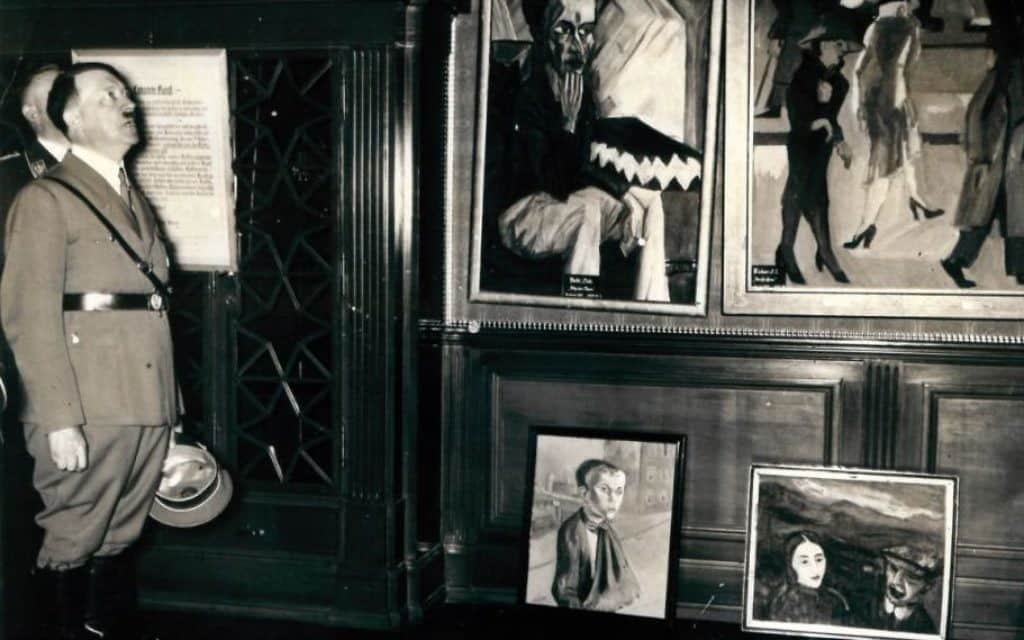 Despite this, public attendance exceeded all expectations. It is estimated that more than 2 million people passed through the cramped space in 1937.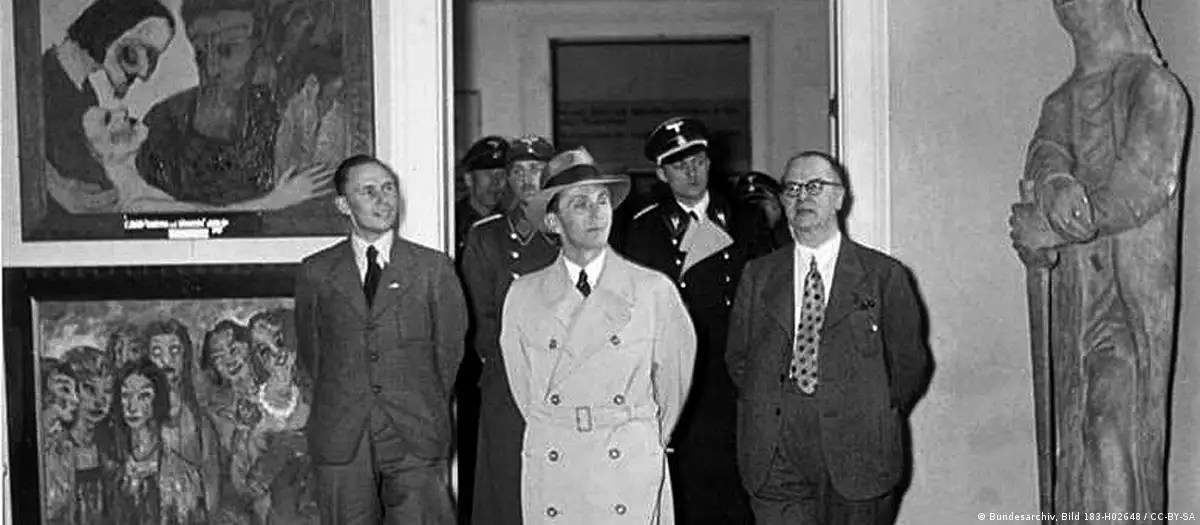
During this period, over 5,000 artworks were seized, including 1,052 pieces by Emil Nolde (who was ironically a racially pure Aryan and a member of the Nazi Party), 759 by M.C. Escher, 639 by Ernst Ludwig Kirchner, 508 by Max Beckmann, and smaller numbers of artworks by such artists as Alexander Archipenko, Marc Chagall, Wassily Kandinsky, Henri Matisse, Pablo Picasso, Vincent Van Gogh and hundreds of others. Bildnis des Malers, Franz Radziwill
In March 1939, the Berlin Fire Brigade burned about 4000 paintings, drawings and prints that had apparently little value on the international market.
 Die großen blauen Pferde, Franz Marc
A similar act was conducted in the summer of 1942, in the gardens of the Galerie Nationale du Jeu de Paume in Paris, in a bonfire which burned important pieces by Pablo Picasso, Salvador Dalí, Paul Klee, Fernand Léger and Joan Miró. Les Demoiselles d’Avignon, Pablo Picasso
In this way, Germany began the confiscation of artworks deemed degenerate from a variety of museums throughout the Reich and combined the taken works into one single, coherent exhibition for their further ridicule and mockery. En Canot, Jean Metzinger
The V&A holds the only known copy of a complete inventory of Entartete Kunst confiscated by the Nazi regime from public institutions in Germany, mostly during 1937 and 1938. The list of more than 16,000 artworks was produced by the Reichsministerium für Volksaufklärung und Propaganda (Reich Ministry for Public Enlightenment and Propaganda) in 1942
The UMMA Exchange has a list with pictures of all artists in the Degenerate Art Show.
A few more:
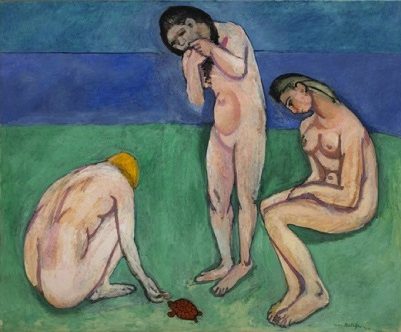 Bathers With A Turtle, Henri Matisse
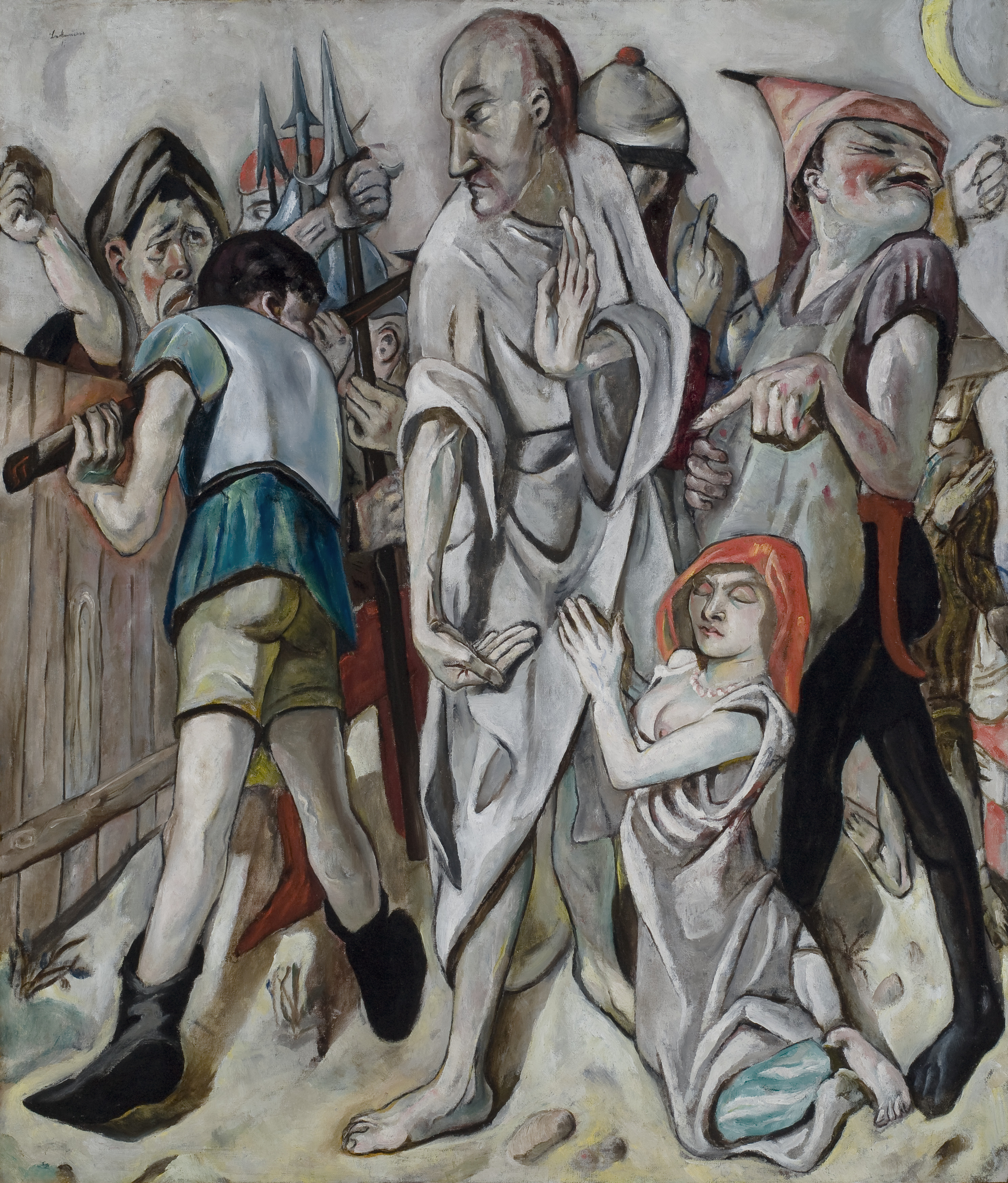 Christ and the Sinner, Max Beckmann
 ‘Three Bathers, Ernst Ludwig Kirchner
 Self-Portrait Dedicated To Paul Gaugin, Vincent van Gogh
 T
T
The Absinthe Drinker, Pablo Picasso
Ernst Barlach (1870 -1938) was a prominent German sculptor, printmaker, and writer, best known for his expressive works that poignantly captured the human condition. Barlach studied art in Hamburg, Germany, and later in Dresden and Paris.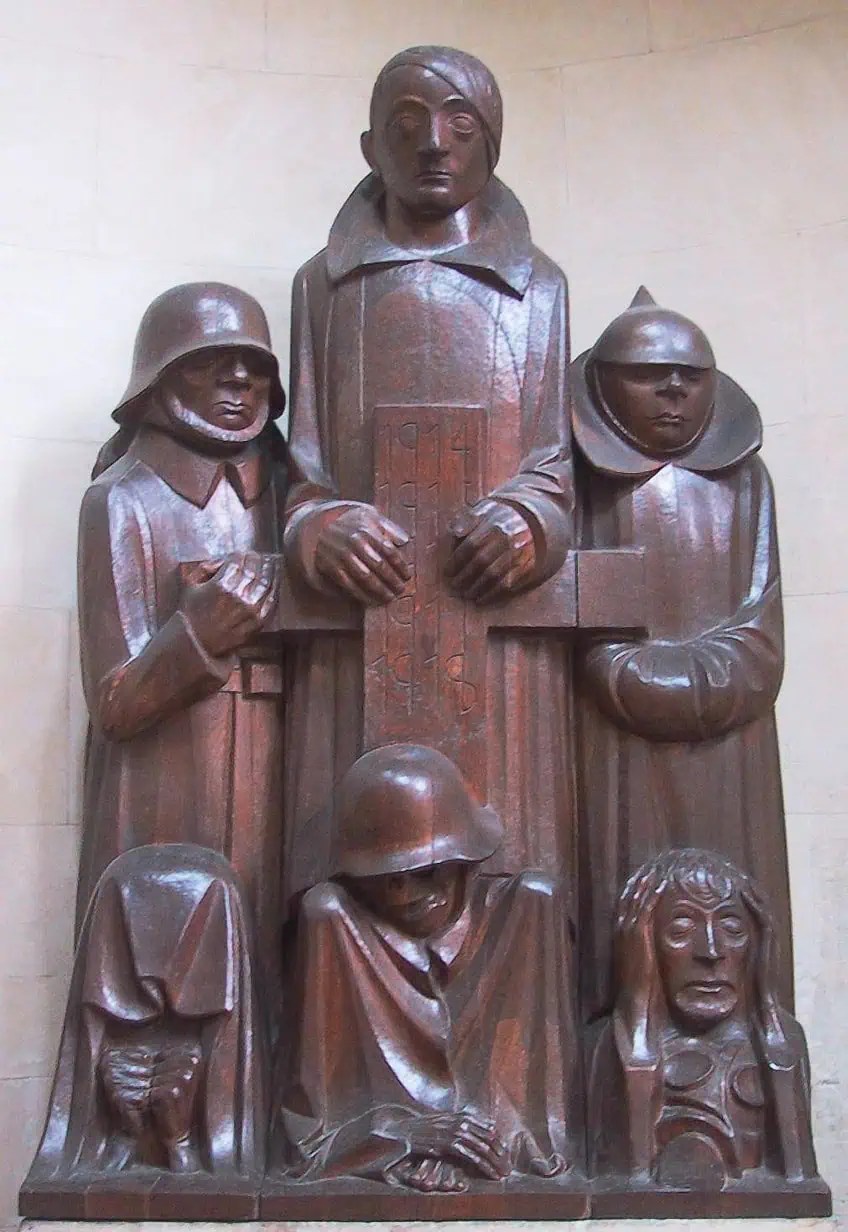
His sculptures, often characterized by their simplified forms and emotional depth, reflect the hardships and spiritual struggles of the early 20th century, particularly in the context of war and social upheaval.
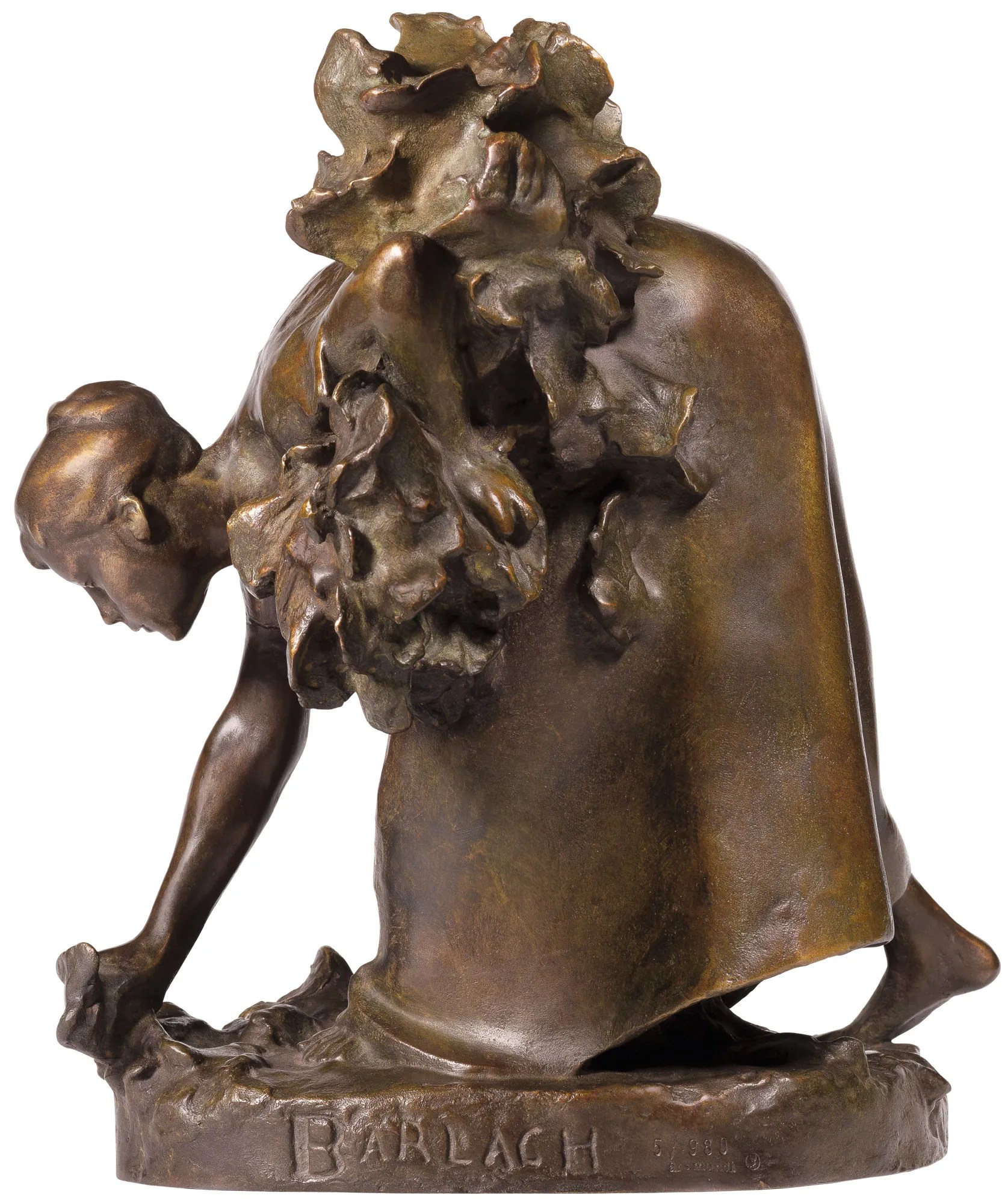 Barlach’s work, influenced by both medieval German art and the modernist movement, frequently explored themes of suffering, compassion, and the search for meaning, making him a significant figure in the expressionist art movement.
 Stylistically, his literary and artistic work would fall between the categories of twentieth-century Realism and Expressionism.
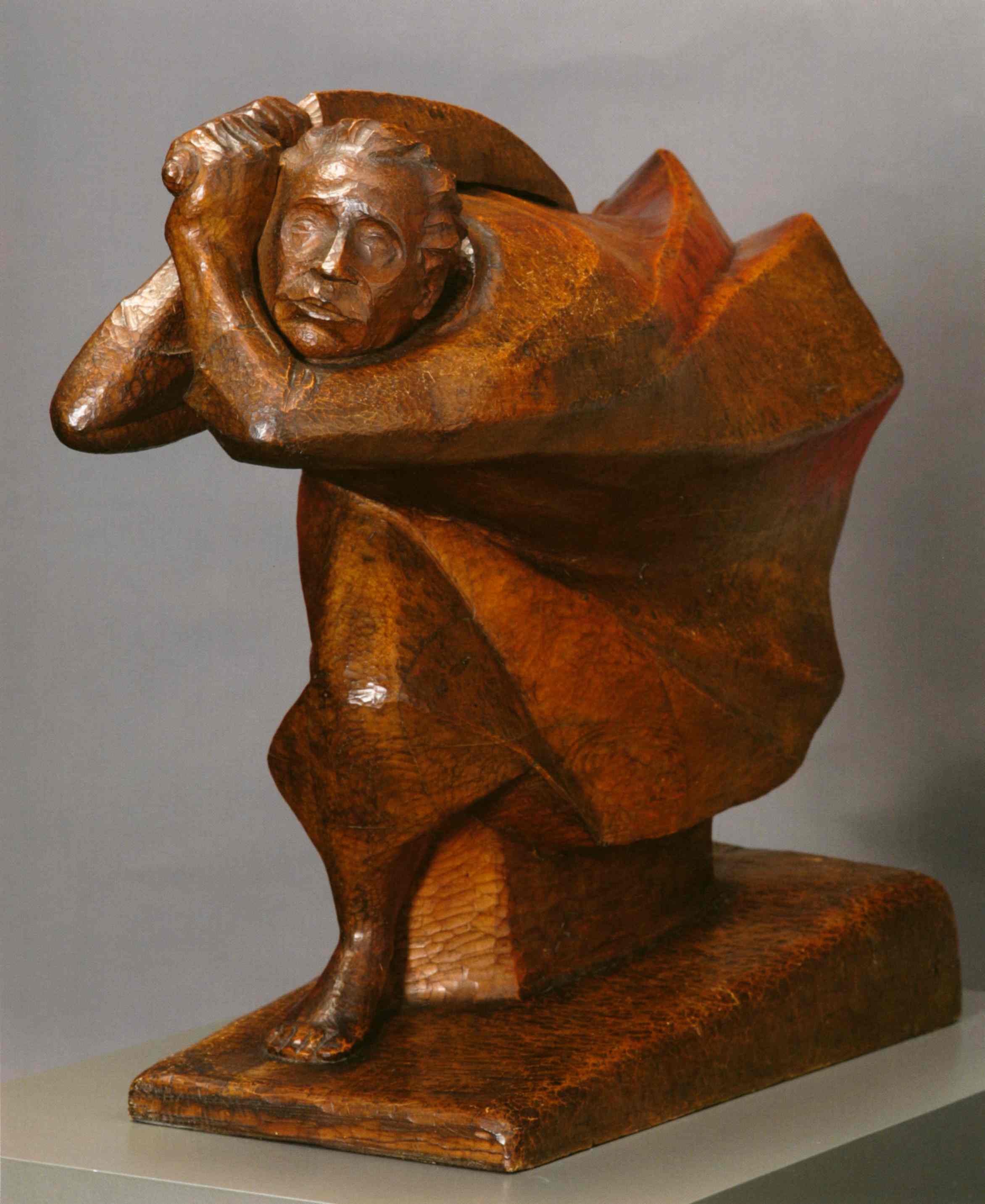 In the years before World War I, Barlach was a patriotic and enthusiastic supporter of the war, awaiting a new artistic age from the war.
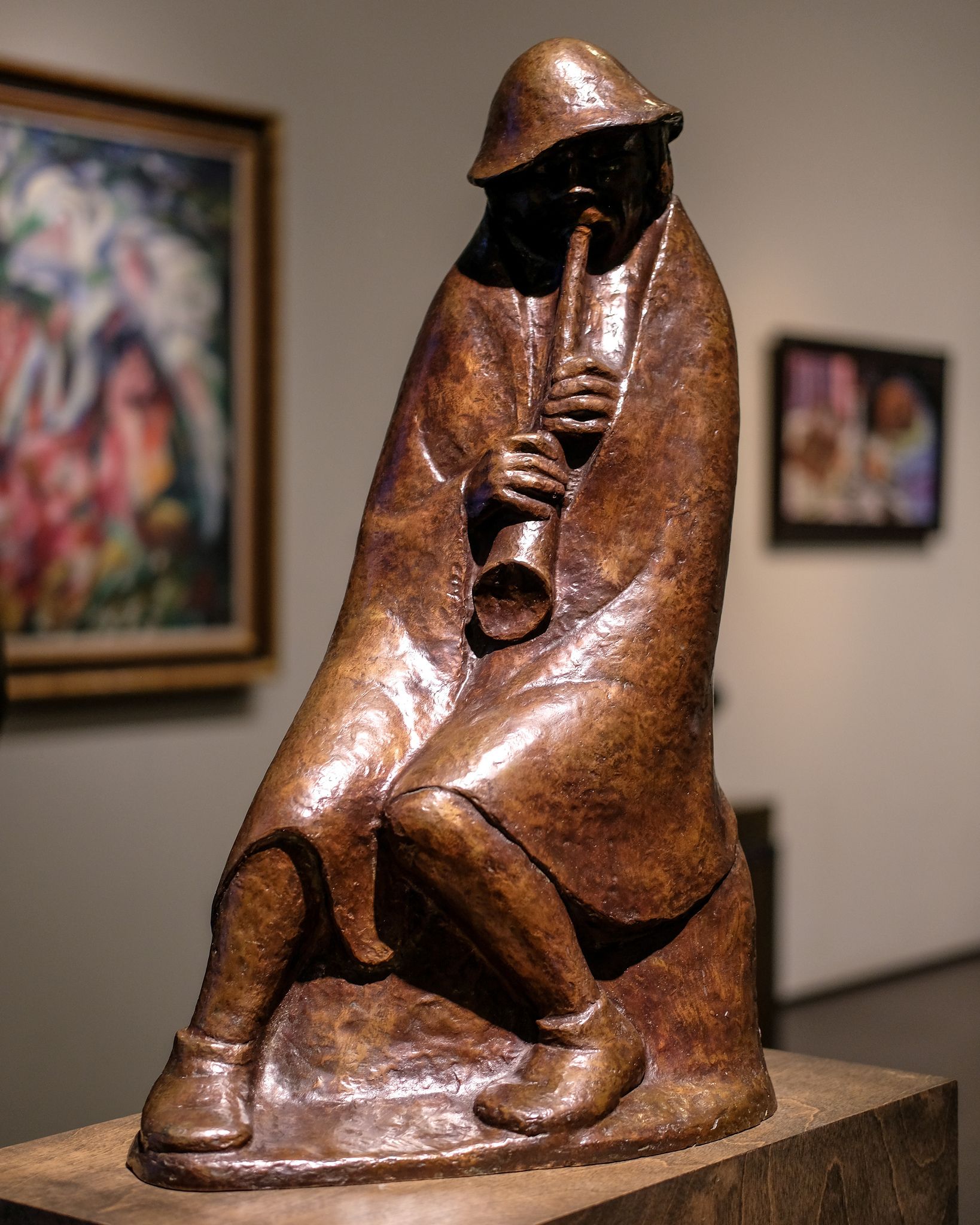 His awaited new artistic age came for him when he volunteered to join the war between 1915 and 1916 as an infantry soldier. After three months of service he was discharged due to a heart ailment, returning as a pacifist and a staunch opponent of war, the horror of the war influencing all of his subsequent works.
 Although his work was removed from German museums under the Nazi regime and categorized as “degenerate art,” after World War II his talent was once again recognized.
 Despite facing persecution during the Nazi regime, which deemed his art “degenerate,” Barlach’s legacy endures through his deeply moving and introspective works that continue to resonate with audiences today.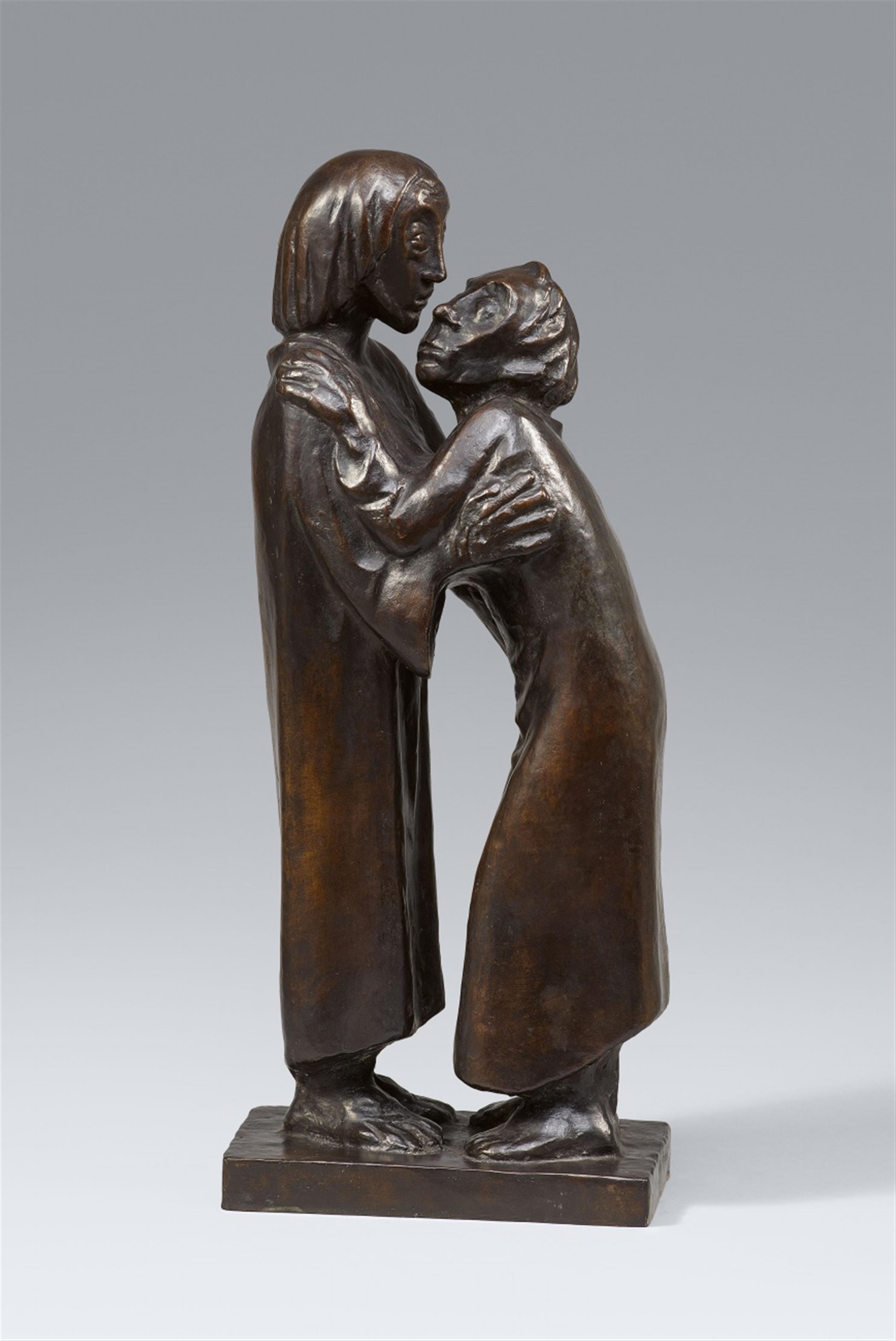
More of Ernest Barlach’s body of inspirational works can be found at https://artincontext.org/ernst-barlach/… and https://www.barlach-haus.de/.

On a lazy Saturday morning when you’re lying in bed, drifting in and out of sleep, there is a space where fantasy and reality become one.
~ Lynn Johnston

When the sun goes down, and the clouds all frown
Night has begun for the sunset
See it with your eyes, Earth’s re-energized
By the sun’s rays everyday
Take a look out there, planets everywhere
When the sun goes down, and the clouds all frown
Night has begun for the sunset
Shadows on the ground, never make a sound
Fading away in the sunset
Night has now become day for everyone
I can see it all, from this great height
I can feel the sun, slipping out of sight
And the world still goes on through the night……..
Mike Pinder, Moody Blues
BOND Hardware is a sustainable jewelry and accessories label, designed and handmade in New York. Founded in 2012, designer and stylist Dana Hurwitz started the brand as an experimental project, locally sourcing scrap metal and found industrial objects to adorn looks for New York club kids.
 Later joined by creative partner and photographer Mariah Pershadsingh, the duo continues to develop the brand with a focus on innovation and craftsmanship.
 BOND Hardware is a forward-thinking jewelry brand known for its sharp silhouettes, fetishistic look and feel, inclusive ethos, and use of stark, industrial materials.
In their jewelry and accessories lines, nuts and bolts become rings, buzzsaws become bangles, and screws become pendant charms. Unlike most costume jewelry, BOND does not use traditionally plated metals. They instead use PVD Stainless Steel.
 Refined from industrial shapes, BOND Hardware forms are made to adorn spaces or the body using materials that are sustainably acquired for the longest and least destructive lifespan possible.
More of BOND Hardware‘s jewelry can be found at https://bond-hardware.com/ and https://www.surfacemag.com/articles/bond-hardware-designer-day/#.

Every new beginning comes from some other beginning’s end.
~ Marcus Annaeus Seneca (54 BC – 39 AD)
 Everyone loves puppies.
They are sweet, adorable, inquisitive, cuddly, and innocent. They are loyal companions, full of fun and energy and devotion.
They are also a pain in the _______.
Our new puppy makes me feel like a crabby old lady. Maybe I ~am~ a crabby old lady.
But I’m just not up to the 24/7 madness a toddler dog brings.
Our other Labrador is getting on in age, and hubby thought it a good idea to introduce a new pup to the family circle. Past experience has shown that a young dog really does bring some life and spark into your old dog’s life. Adds a few years, as they say.
I’m not sure my older dog is up on all that. She probably wishes she’d run away and not come back.
As for this senior citizen, a new puppy means inside accidents, chewed shoes, 3 a.m. outside pee breaks, underfoot traffic, and more.
She’s in my way. She’s underfoot. She needs letting out every hour and a half. She chews everything. She eats everything.
Oh, you’re retired, some say. You’ve got plenty of time to keep up with a youngster. She’ll add youth to your life.
Well, crabby patty Granny says she’s earned her retirement, and running around keeping up with a puppy is not her idea of fun. It would be like inheriting your grandkids. You love them to death but the younger ones would run you ragged in a matter of days.
Don’t get me wrong. My new puppy is just that — a puppy. She’ll learn. She’ll behave. She will bring all of us years of happiness, friendship, and love. She’s as cute as a button and smart as a whip.
It’s just that these days I don’t have the energy or mental sharpness of a whip.
I’m more like a well-used broom who’s losing some of its bristles.
Yet we all find a way to survive….
Joris Hoefnagel or Georg Hoefnagel (1542 – 1601) was a Flemish painter, printmaker, miniaturist, draftsman and merchant. He is noted for his illustrations of natural history subjects, topographical views, illuminations and mythological works.
 Hoefnagel was one of the last manuscript illuminators and made a major contribution to the development of topographical drawing.
 His manuscript illuminations and ornamental designs played an important role in the emergence of floral still-life painting as an independent genre in northern Europe at the end of the 16th century.
 Working before the invention of the microscope and long before etymology was an established field of study, Hoefnagel produced images that are much more than the sum of his empirical observations.
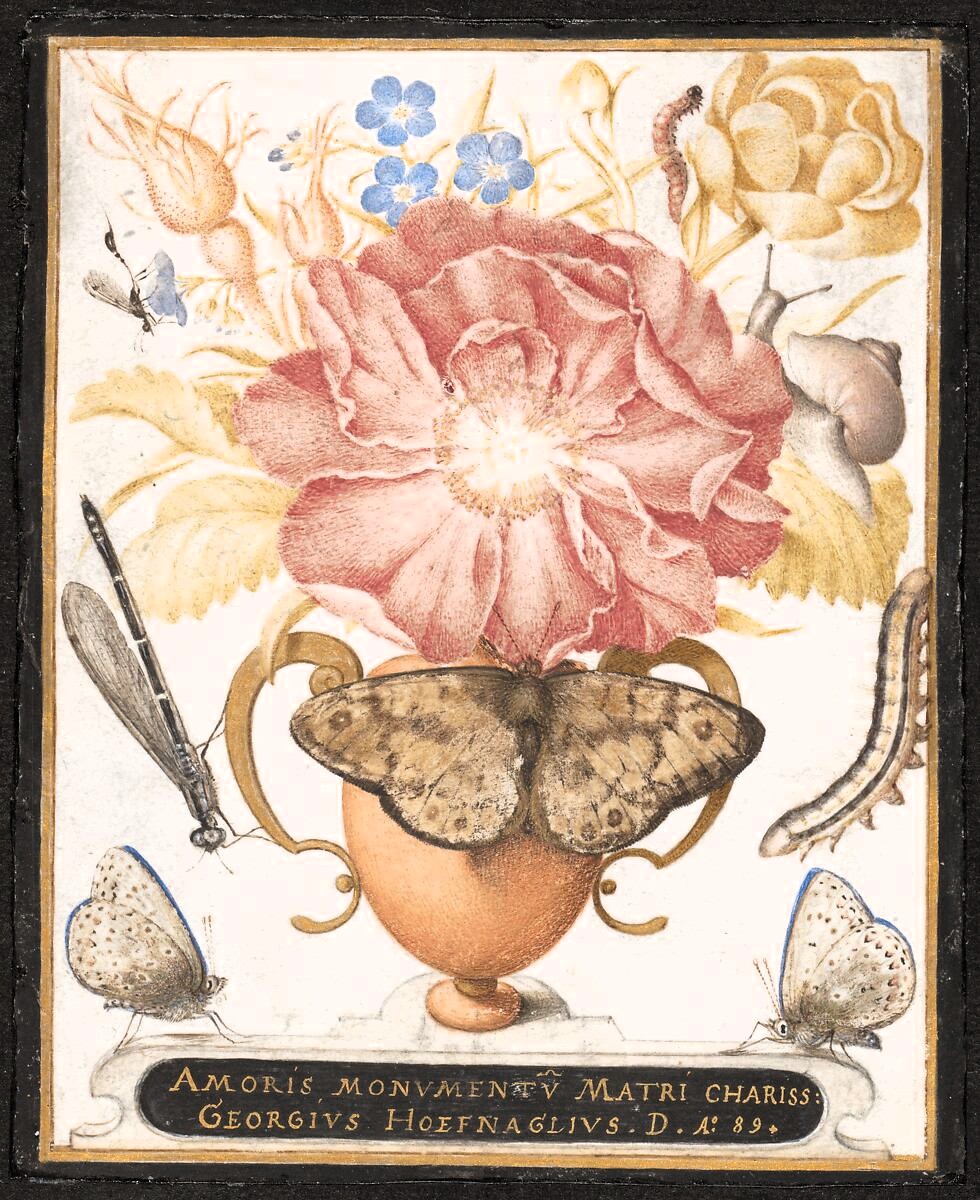 He created his manuscripts not for a wide scientific public but instead for himself and his small circle of friends.
 The almost scientific naturalism of his botanical and animal drawings served as a model for a later generation of Netherlandish artists.
 Through these nature studies Hoefnagel also contributed to the development of natural history and he was thus a founder of proto-scientific inquiry.
 More of Joris Hoefnagel’s work can be found at https://www.nga.gov/collection/artist-info.2569.html.
I was posting images on my Instagram account and came across this blog — you’ve GOT to check it out!
LOOK AT THESE FLOWERS!
(okay… I’ll cut back on the caffeine now…)










More in the Gallery! See you over there!

Tra la! It’s May!
The lusty month of May!
That lovely month when ev’ryone goes
Blissfully astray.
Tra la! It’s here!
That shocking time of year
When tons of wicked little thoughts
Merrily appear!
It’s May! It’s May!
That gorgeous holiday
When ev’ry maiden prays that her lad
Will be a cad!
It’s mad! It’s gay!
A libelous display!
Those dreary vows that ev’ryone takes,
Ev’ryone breaks.
Ev’ryone makes divine mistakes
The lusty month of May!
Alan Jay Lerner & Frederick Loewe
 Humoring the Goddess