Shangri-La is a fictional place described in the 1933 novel Lost Horizon by English author James Hilton.
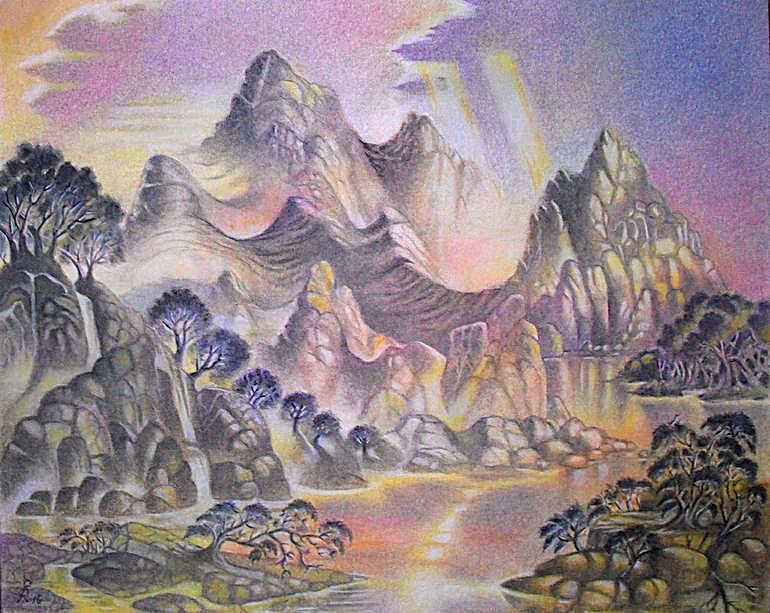
Hilton portrays Shangri-La as a mystical, harmonious valley enclosed in the western end of the Kunlun Mountains.
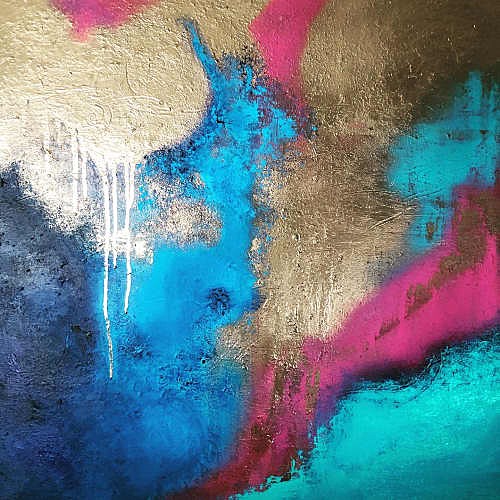
Set in the troubled years before World War Two, the book tells of a community in a lamasery (a monastery for Tibetan lamas), in the lost Tibetan valley of Shangri-La, cut off from the world and from time.

All the wisdom of the human race is contained in this place, in the cultural treasures stored, and in the minds of the people who have gathered here in the face of an imminent catastrophe.
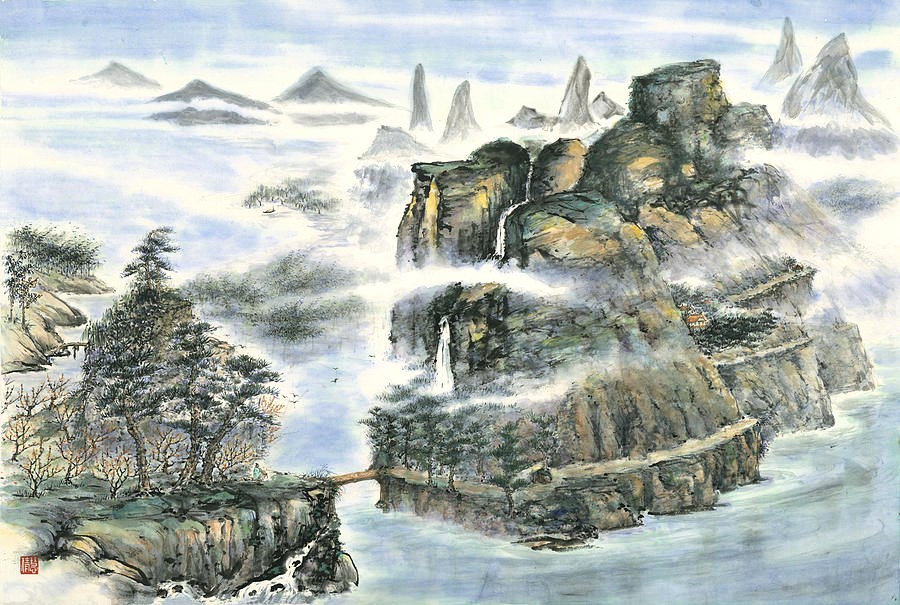
Hilton visited the Hunza Valley, located in Gilgit−Baltistan, close to the China–Pakistan border, a few years before Lost Horizon was published.
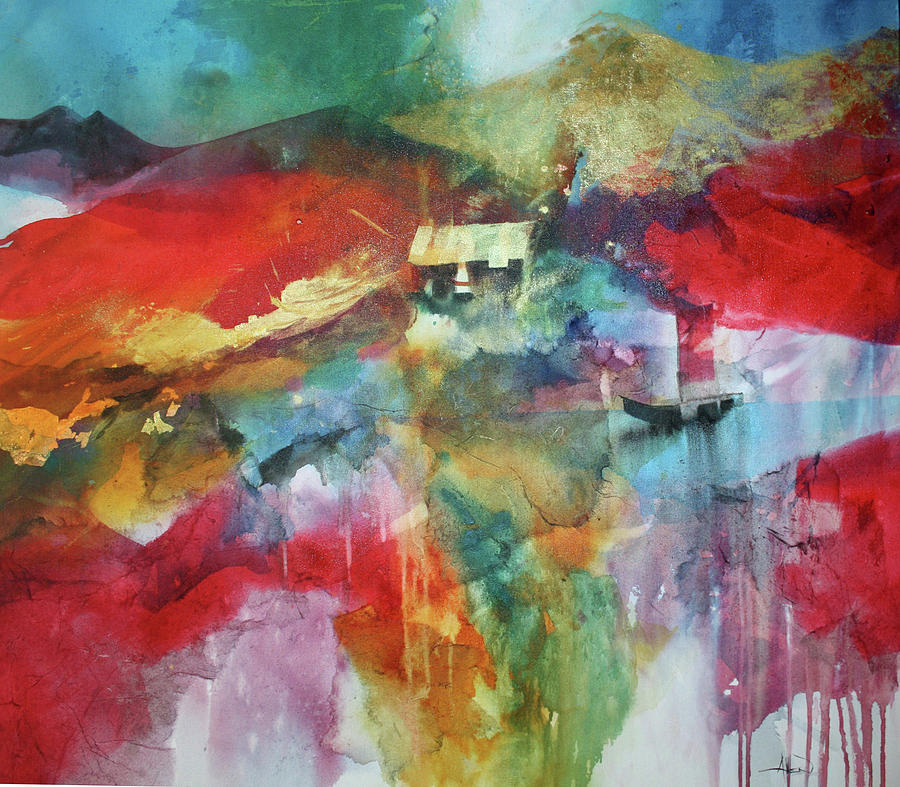
Being an isolated green valley surrounded by mountains, enclosed on the western end of the Himalayas, it closely matches the description in the novel, and is believed to have inspired Hilton’s physical description of Shangri-La.
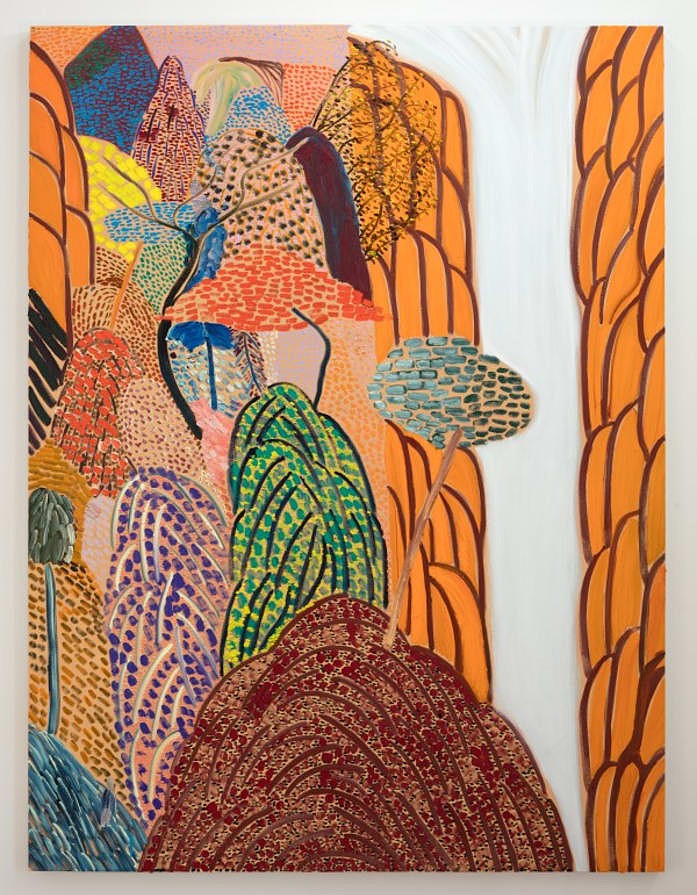
Shangri-La has become synonymous with any earthly paradise, particularly a mythical Himalayan utopia – an enduringly happy land, isolated from the world.
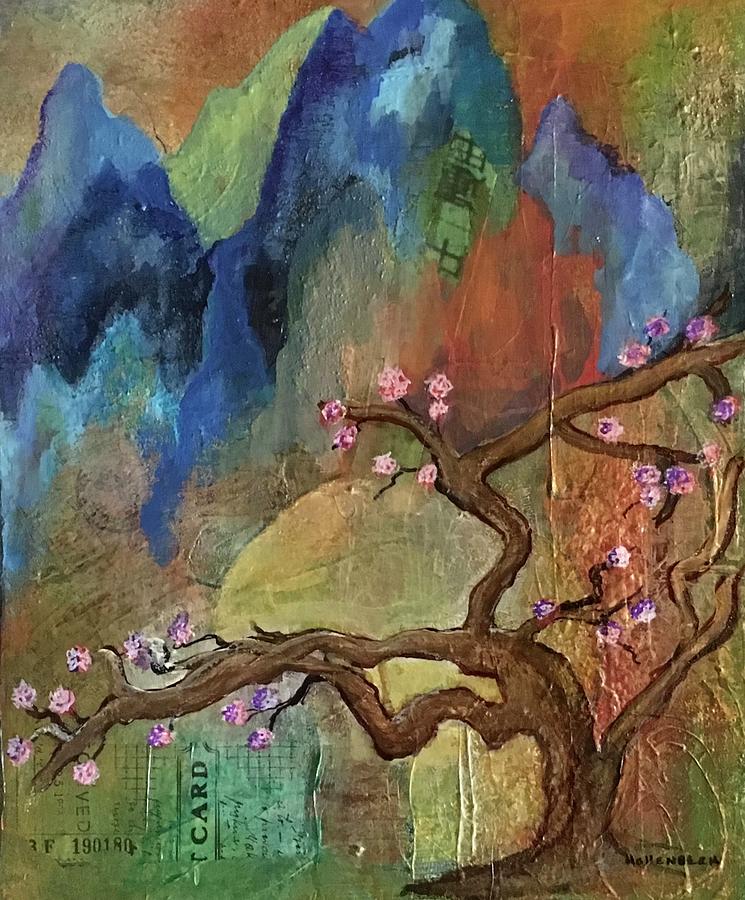
It is obvious that Shangi-La did not exist as an inspiration to past Masters until 1933, but there are modern artists that share the dream of the mystical world through their work.

 Humoring the Goddess
Absolutely loved the original black and white film of Lost Horizon.
LikeLike
I really enjoyed the book, too!
LikeLike
These were beautiful interpretations. Nicely put together, Claudia.
LikeLiked by 1 person
Thank you so much. I do have fun researching art for particular words — the world is soooo unique!
LikeLiked by 1 person
That was lovely. Thank you.
LikeLike
You are sweet. Thank you.
LikeLike