Elfriede Lohse-Wächtler (1899 – 1940) was a German painter of the avant-garde whose works were banned as “degenerate art” and in some cases destroyed. Lohse-Wächtler grew up in a middle-class family, but left at the age of 16 to study at the Royal Arts School Dresden. From 1916 to 1919, she also attended drawing and painting courses at the Dresden Art Academy.
 In June 1921, she married the painter and opera singer Kurt Lohse, following him to Görlitz in 1922 and then to Hamburg. The marriage was a difficult one and the couple separated several times in the following years.
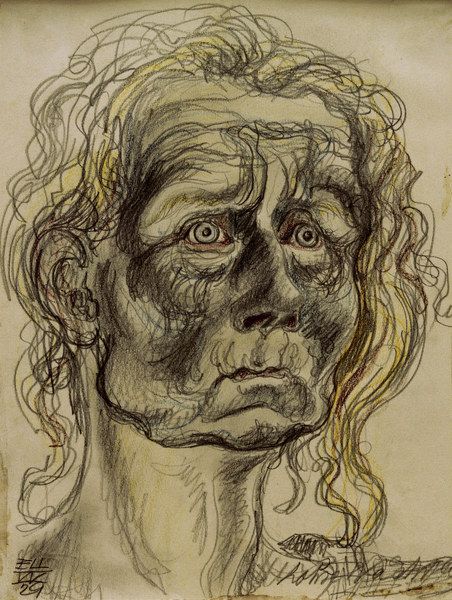 In 1929, she had a nervous breakdown because of financial and partnership difficulties and was committed to a psychiatric institution in Hamburg-Friedrichsberg.
 During her two months’ stay, Lohse-Wächtler painted the Friedrichsberg heads, a piece of work consisting of about 60 drawings and pastels, mainly portraits of fellow patients.
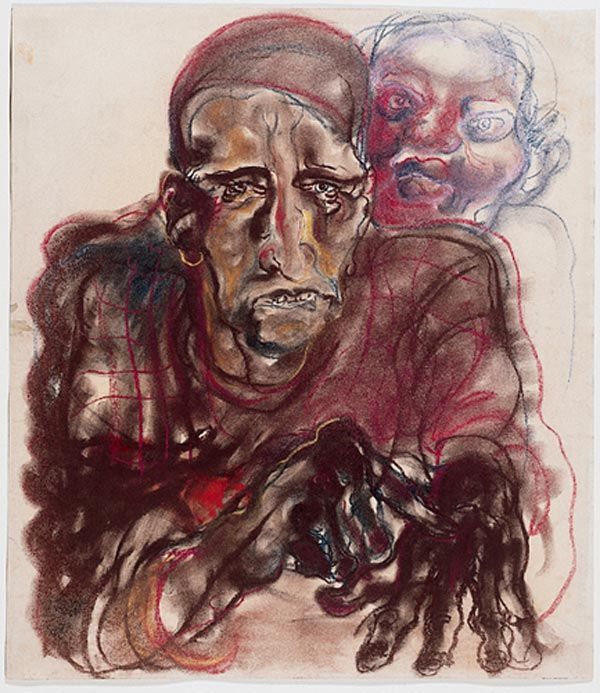 After her recovery and a final separation from Kurt Lohse, she had a very creative phase, painting numerous pieces of Hamburg’s harbor, scenes from the life of workers, prostitutes, and pitiless self-portraits.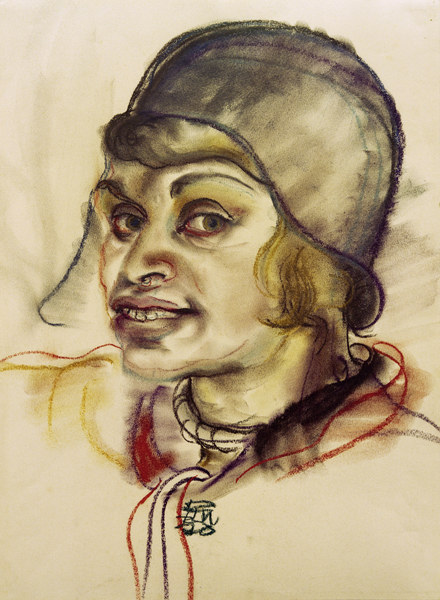
After refusing to consent to a sterilization, Lohse-Wächtler was denied the permission to leave the hospital, and eventually was forced to undergo the surgical procedure on the grounds of Nazi eugenicist policies. In 1940 she was deported to the former psychiatric institution at Pirna-Sonnenstein where, on 31 July, she was murdered along with the majority of the other residents as part of the Nazi “euthanasia” program, Action T4.
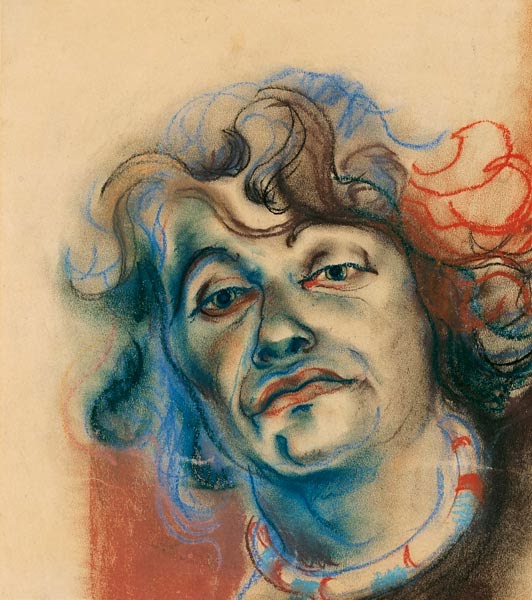 In 1999, there was a stele (stone or wooden slab) erected in her memory, along with a ward house named after, at the Saxon Hospital in Arnsdorf, and in 2005 a street was also dedicated to her in Pirna-Sonnenstein.
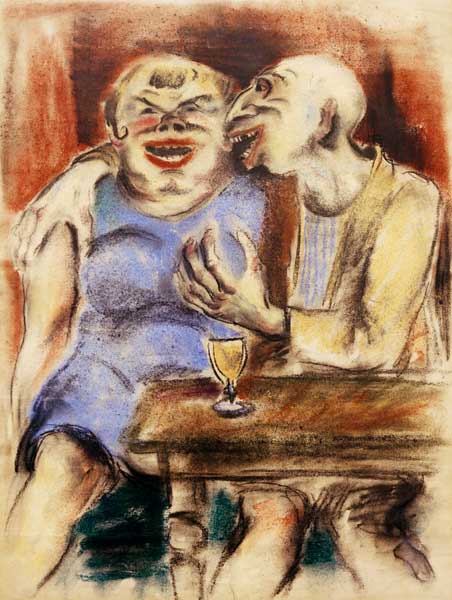 More of Elfriede Lohse-Wächtler‘s work can be found at https://www.lostwomenart.de/en/artist/elfriede-lohse-wachtler/ and biografie/Elfriede_Lohse-Wächtler.

 Humoring the Goddess
Lovely artwork, but sad to know about atrocities on Lohse-Wächtler.
LikeLike
So true. I am ashamed to admit I never heard of “Degenerate Art” until i did some research. Shamey on me. Effriede’s story was on one of the pages I read, so I felt what better tribute to her memory than sharing her art.
LikeLiked by 1 person
You’re welcome, always 🙏
LikeLike
Very creepy and so apropos to the art and time from which it sprang.
LikeLike
I am still taken back that the government decided her life wasn’t worth it and put her to death. That wasn’t that long ago, either. I’m happy the art community — really the whole community — didn’t forget her contributions to the world of art and memorialized her and her work.
LikeLiked by 1 person
Given the times and politics of Germany at the time, her art and mental health were two things the Nazis got rid of to purify their state. Eugenics, too, probably played into that as well. For the Nazis, this was perfectly acceptable . . . .
LikeLike
And absolutely horrible. We could get into quite a discussion about the atrocities of war — I’m happy they were able to save some of her paintings.
LikeLiked by 1 person
War is dreadful, no matter the reason. And you are right – it is good we have some of her paintings. She must have been so troubled, just based on the emotional expressions of her portraits.
LikeLike
I can’t imagine. And won’t pretend I do. I see pain in every face she drew.
LikeLiked by 1 person
I agree – I see the pain, too, and it is so disconcerting.
LikeLike