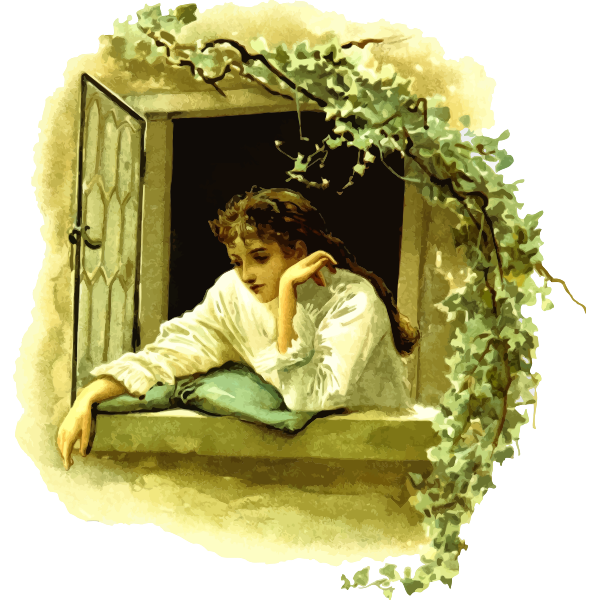
What Do You Daydream About?

daydream      noun
day·​dream ˈdā-ˌdrēm

a pleasant visionary usually wishful creation of the imagination

How often do you daydream? How far do your daydreams take you?

I believe we all escape our reality now and then. Whether it’s by thinking of days gone by or stopping at the grocery store on the way home, our thoughts often wander helter skelter away from our current activity and into a pretend world of coulda and shoulda and what if.

There are books and movies about daydreams: song lyrics, names of paintings, and even sites on Google that tell you how to do it.

Why does our mind want to wander around the planet so often?

Facebook likes to pop up memories from “this day” one or 10 years ago, and a lot of my posts were about wishing I were retired or sitting by a lake or in a café in Paris. Seems like I was proficient in daydreams time even back then.

Well, here I am, 70 and retired, and still wasting moments  talking to Claude Monet about his gardens in Giverny or flirting with Antonio Banderas or hosting an elegant garden party for 18. Silly stuff I’d never do in real life.

I mean, what’s the point?

Is this dreaming about changing choices you’ve made? Forgetting painful parts of your life? Is it about pretending and wishing some things were different? Is it fantasizing about some other life style, some other place or moment in time other than the one you’re stuck in?

I think daydreaming is just a part of your genetic make up. A pressure valve that let’s off emotional steam. A chance to relate to people and places that are not part of your world. A chance to work out ‘what if’ from a different perspective.

Those of you who are artists (and I’m sure that’s most of you!) know that daydreaming is healthy for your creativity. The imagination is as solid a part of you as drinking water, and it needs exercise as well to keep it going. It’s an extension of your physical world. 

You  may think that once you’re older or retired you’ll have more time to daydream. To wander through enchanted woods or have a high powered job in Manhattan or be noticed by those whose attention you crave.

Let me tell you. You will be just as busy being retired than you ever could be working. And not just because you finally don’t have to punch a time clock or put up with obnoxious co workers or attend weekly unproductive meetings.

You will be busier because your daydream door is finally open, giving you a chance to read, to research, to experiment with your own and others daydreams. The more you learn, the finer tuned your thoughts will be.

Don’t wait for this day to come — come on in today! The water’s warm, the beach is open, and I’ve got that umbrella table over there where we can have lunch together!
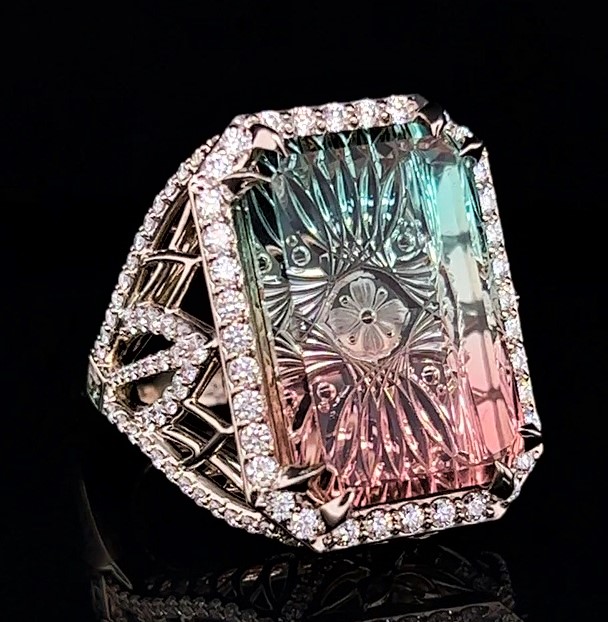


Sunday Evening Art Gallery — Robin Callahan

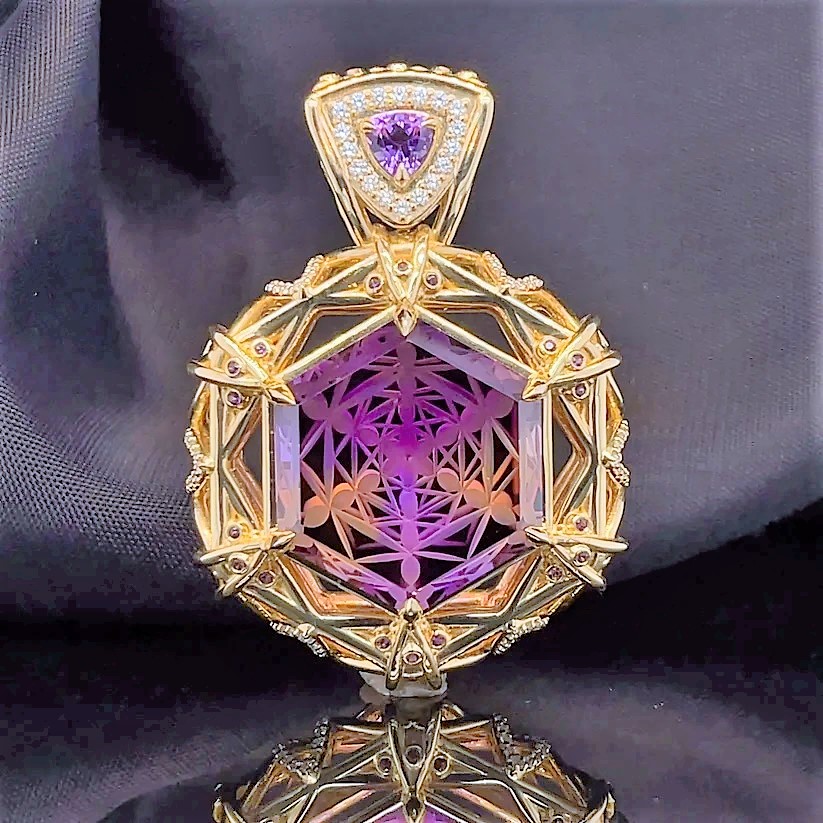
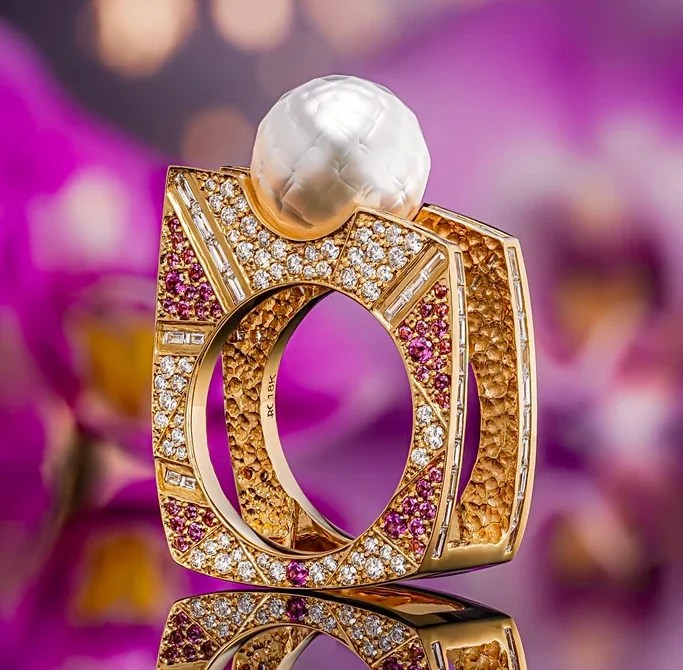
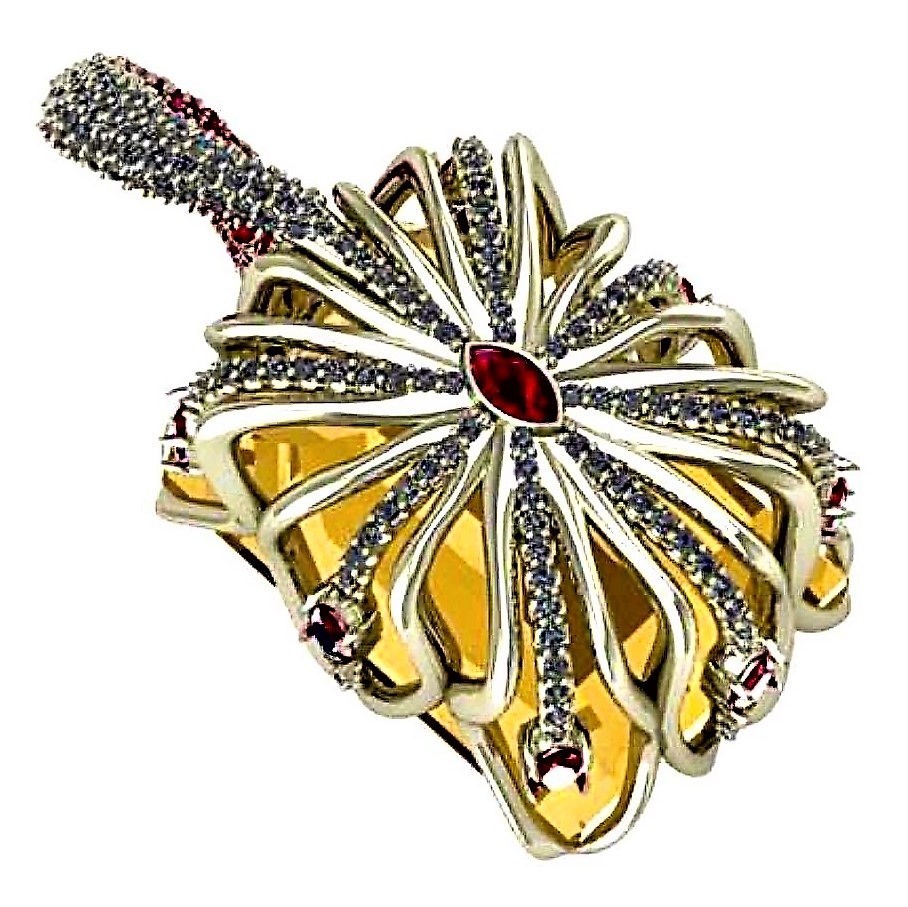
Robin Callahan is a custom jewelry designer, metalsmith and lapidary artist with her own company, Robin Callahan Designs, LLC.The artist often sources rough gems directly from mines and specialty dealers, custom cuts gems, or has the best lapidary artists in the world facet/carve the gems, then designs and creates one of a kind heirloom-worthy jewelry.Callahan studied with masters in the industry to learn how to cut and facet her own gems, and was soon invited to show her lapidary work in prestigious museums and private collections.All her pieces are unique, featuring beautiful gemstones and pearls, in breathtaking settings.Callahan’s work is bold and creative, her finely crafted pieces the perfect showcase for her love of color and light, making custom- as well as fantasy-cut jewelry designs.She works mostly by commission, creating custom pieces for clients around the world.The artist is fortunate enough to work with the industry’s most talented and award-winning lapidaries, but on occasion and when time allows, enjoys cutting the gemstones herself.

Callahan considers herself brave, determined and a perfectionist. “This is beyond things like being creative and artistic, because you need those to be a jewelry designer and maker,” she explains.More of Robin Callahan‘s amazing jewelry can be found at https://shop.robincallahandesigns.com/


Pretzel Dawn (repost)

I was wandering through my past posts, looking to see how many posts I labeled “Faerie Paths — Dreams” and came across this little short snippet I wrote some time ago. This flash fiction piece was inspired by my first novel (yet to be published), about a woman who drives through a cornfield, crashes into an old oak tree, and wakes up in small town 1880.

I still remember the passion and emotions that electrified me as I wrote my first novel. It was magical.

Any of your past works still stir your passions?


Pretzel Dawn

Her car streaks down the highway in the granite dawn, her heartbeat matching the thrum of the tires. Fluorescent pinpoints from distant skyscrapers become nothing more than blurred starlight as she madly races towards her destiny…a destiny she has waited to fill longer than she can remember.

A sliver of apprehension cuts into her thoughts. A foreboding, like a ghost crossing her path.  Why is it an effort to remember the number of the exit? Why does the city in the distance waver as if seen through crackled glass?

Metropolis turns into suburbia and then into country, yet she cannot slow down. Eventually the Buick veers from the concrete onto the tarmac of some long forgotten road lined with the skeletal remains of fall. Her window is open, the last breath of night air chilling her, thrilling her. It’s not far now. 

Instinct drives her forward ― instinct and desire. He is somewhere ahead, pacing on the dew-covered grass beneath the maple archway. Watching. Waiting. She senses the sparkle of his chocolate eyes, his scent of sweat and hay and the muskiness from his turn-of-the-century charm.

The road ahead is shadowed. She doesn’t remember the giant oak tree on her last drive through this part of the countryside, nor the weathered barn in the distance.  She cannot remember many details of her last visit — but it doesn’t matter. Her heart pounds faster as crimson streaks highlight the horizon. 

She cannot bear to let him slip away again. Not without a word, without a touch. He is dark and deep, passion and fury, a flicker of days gone by. He said he would wait for her, and she promised to return.

The car’s acceleration slows, and tears of frustration well in her blue eyes. She is lost. Too many turns. Too many distractions. She cannot tell cliffs from moors, fields from meadows. The dark crimson glow over her shoulder is now a soft magenta ribboned with blue. She is running out of time. Hills to mountains to boulders along the side of the crushed gravel road, yet this has to be the way. The road twists in a pretzel design, dead-ending at a forest dark and primeval.  She drives to the maple archway at the edge of the wooded glen and stops.

He stands at the hedgerow, a masculine glow in the twinkling dawn. She fumbles and stumbles through the tall brown grass and into his arms. She has made her way back through time.

Her need reaches out to him in the pale light of morning, his response soothing and gentle. His loving words curve and twist around her soul and down into the abyss of her dreams, curving and twirling and tumbling and swirling until they slowly turn into echoes from a conch shell. Eternity disappears in a starburst of angel wings, only to reappear as the soft drone of the morning alarm.

 Once again, she has returned. Awake. And alone.


Sunday Evening Art Gallery — Degenerate Art

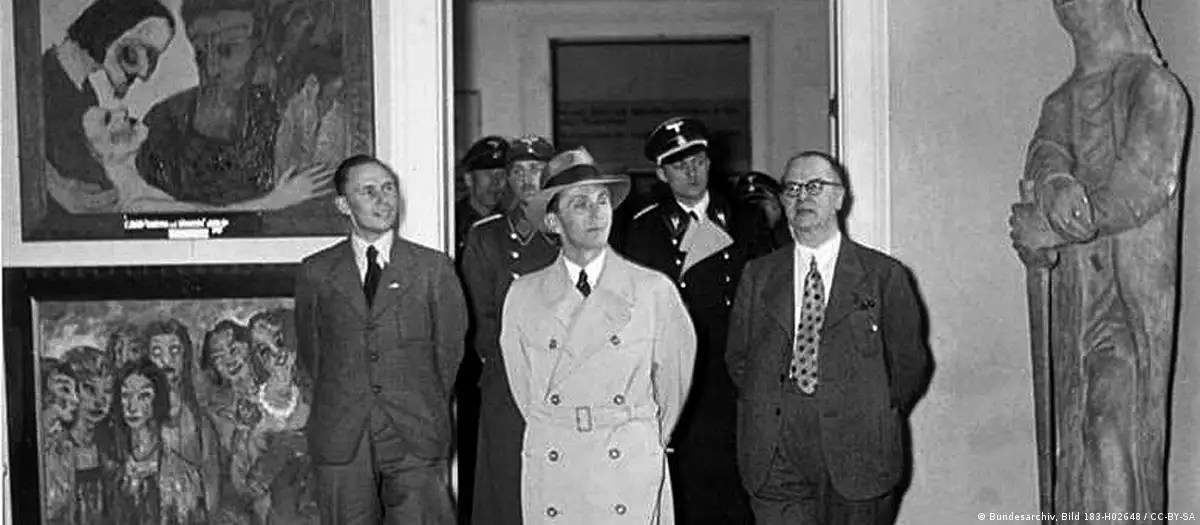
Degenerate Art was a term adopted in the 1920s by the Nazi Party in Germany to describe modern art.

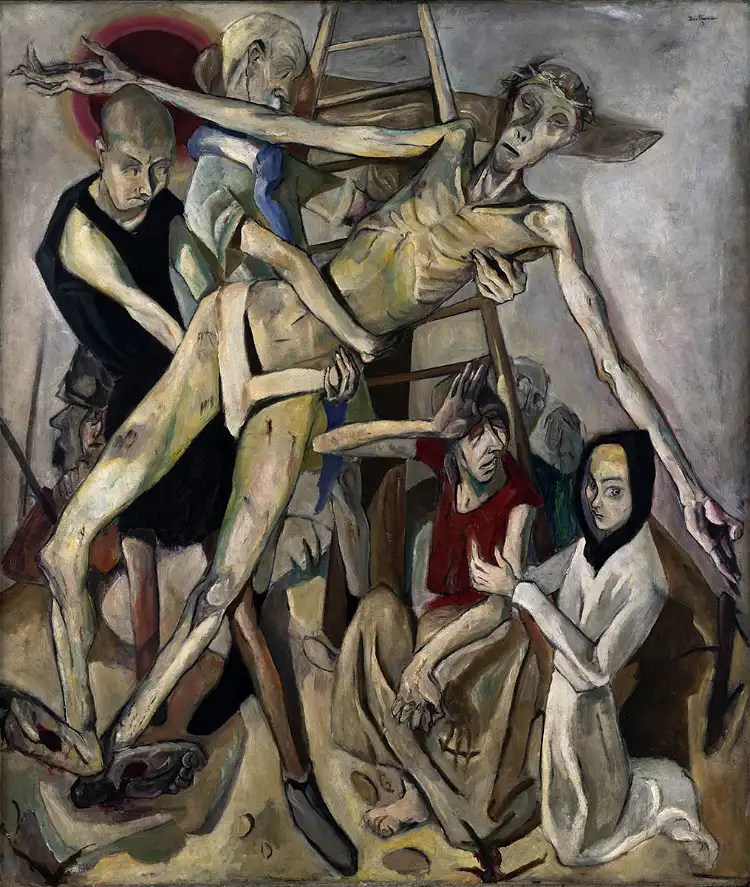
Descent from the Cross, Max Beckmann


During the dictatorship of Adolf Hitler, German modernist art, including many works of internationally renowned artists, was removed from state-owned museums and banned in Nazi Germany on the grounds that such art was an “insult to German feeling”, un-German, Freemasonic, Jewish, or Communist in nature.

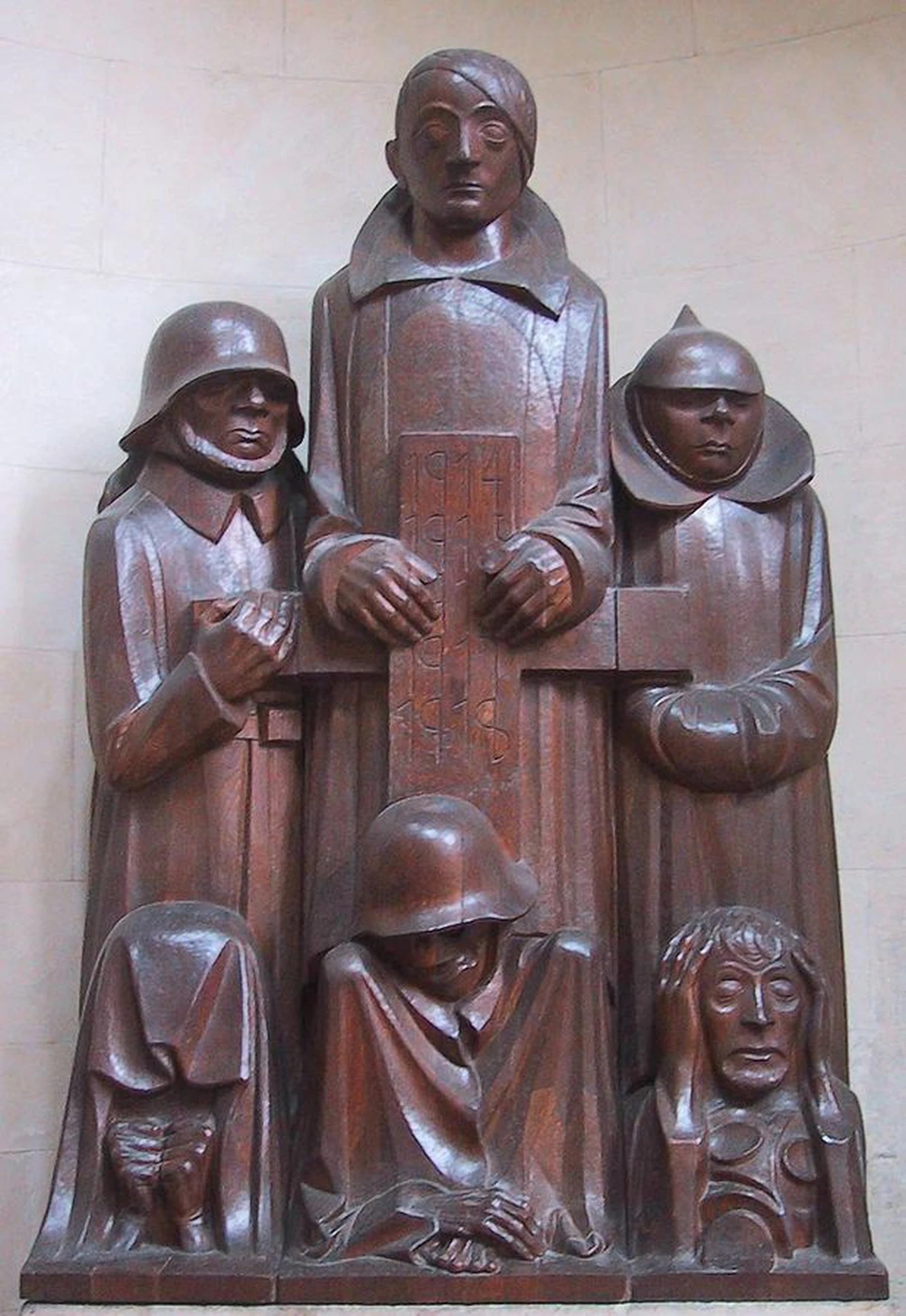
Magdeburger Ehrenmal, Ernst Barlac


Hitler’s rise to power in 1933 was quickly followed by actions intended to cleanse the culture of degeneracy: book burnings were organized, artists and musicians were dismissed from teaching positions, and curators who had shown a partiality for modern art were replaced by Party members.

Portrait of a Man, Erich Heckel


Those identified as degenerate artists were subjected to sanctions that included being dismissed from teaching positions, being forbidden to exhibit or to sell their art, and in some cases being forbidden to produce art.

Street Berlin, Ernst Ludwig Kirchner


The head of Reichskammer der Bildenden Künste (Reich Chamber of Visual Art), and his commission were authorized to confiscate from museums and art collections throughout the Reich any remaining art deemed modern, degenerate, or subversive.

Kneeling Woman, Wilhelm Lehmbruck


All the works that were a part of Bauhaus, CubistDada, Expressionist, FauvistImpressionist, New Objectivity and Surrealist style were labeled as sick.

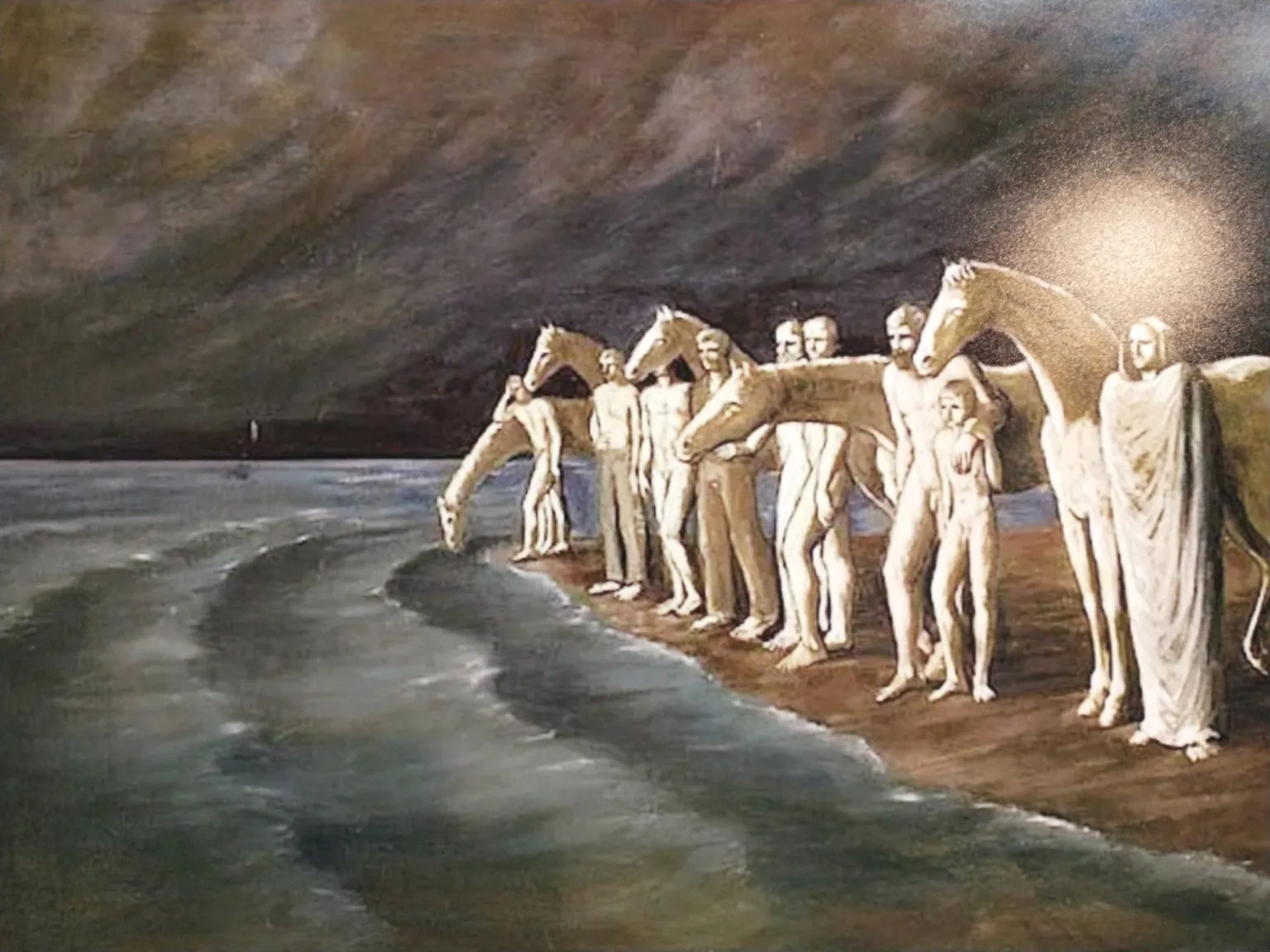
At the Shore, Edgar Ende


These works were then to be presented to the public in an exhibit intended to incite further revulsion against the “perverse Jewish spirit” penetrating German culture.

Pharisees, Karl Schmidt-Rottluff


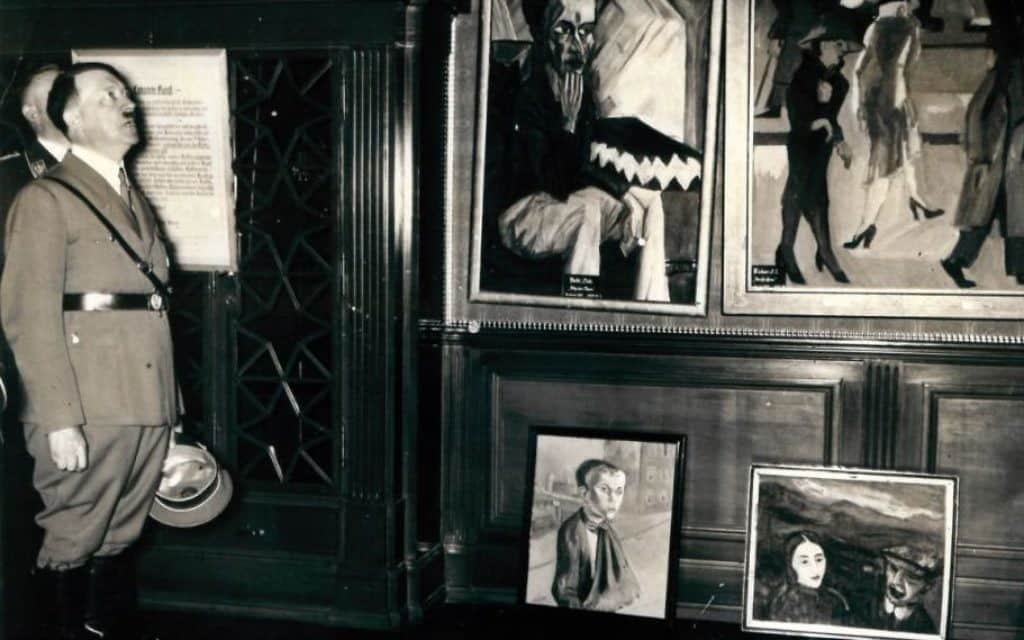
In July 1937, the German Nazi regime sponsored the Entartete Kunst (Degenerate Art) exhibition in Munich.

The exhibition’s central theme was to “educate” the public on the “art of decay.”

The Blue Window, Henri Matisse


The exhibition featured over 650 paintings, sculpturesprints and books from the collections of 32 German museums.

The artworks were placed next to insulting texts which were supposed to prove how depraved the artists were and ridiculed by being juxtaposed with other works by the inmates of German lunatic asylums.

Despite this, public attendance exceeded all expectations. It is estimated that more than 2 million people passed through the cramped space in 1937.

During this period, over 5,000 artworks were seized, including 1,052 pieces by Emil Nolde (who was ironically a racially pure Aryan and a member of the Nazi Party), 759 by M.C. Escher, 639 by Ernst Ludwig Kirchner, 508 by Max Beckmann, and smaller numbers of artworks by such artists as Alexander ArchipenkoMarc ChagallWassily KandinskyHenri MatissePablo PicassoVincent Van Gogh and hundreds of others.

Bildnis des Malers, Franz Radziwill


In March 1939, the Berlin Fire Brigade burned about 4000 paintings, drawings and prints that had apparently little value on the international market.

Die großen blauen Pferde, Franz Marc


A similar act was conducted in the summer of 1942, in the gardens of the Galerie Nationale du Jeu de Paume in Paris, in a bonfire which burned important pieces by Pablo Picasso, Salvador Dalí, Paul Klee, Fernand Léger and Joan Miró.

Les Demoiselles d’Avignon, Pablo Picasso


In this way, Germany began the confiscation of artworks deemed degenerate from a variety of museums throughout the Reich and combined the taken works into one single, coherent exhibition for their further ridicule and mockery.

En Canot, Jean Metzinger


The V&A holds the only known copy of a complete inventory of Entartete Kunst confiscated by the Nazi regime from public institutions in Germany, mostly during 1937 and 1938. The list of more than 16,000 artworks was produced by the Reichsministerium für Volksaufklärung und Propaganda (Reich Ministry for Public Enlightenment and Propaganda) in 1942

The UMMA Exchange has a list with pictures of all artists in the Degenerate Art Show.


Sometimes I Feel So Upside Down

Nora Kate

On my way to doing something totally different …

I know baby boomers are two generations removed from today’s music, our kids and their contemporaries filling the gap between the two of us.

I know today’s music is supposed to be different than “Do Wha Diddy Diddy Dum Diddy Doo,” and I respect that.

I also know music is music, that music is a universal expression of the soul, blah blah blah.

I just have to laugh, though, at the thought that no matter how much I adore music, how disconnected I am from “today’s” music.   I mean — really disconnected. And how long I’ve been disconnected.

Trying to keep this all brief, here are the top 10 of Billboard’s Year-End Hot 100 singles of 1965 (I was in 7th grade) … 

1 . “Wooly Bully” Sam the Sham and the Pharaohs
2.  “I Can’t Help Myself (Sugar Pie Honey Bunch)” Four Tops
3. “(I Can’t Get No) Satisfaction” The Rolling Stones
4 .”You Were on My Mind” We Five
5. “You’ve Lost That Lovin’ Feelin'” The Righteous Brothers
6. “Downtown” Petula Clark
7 . “Help!” The Beatles
8.  “Can’t You Hear My Heartbeat” Herman’s Hermits
9 .”Crying in the Chapel” Elvis Presley
10. “My Girl” The Temptations

I probably could sing along with every song up there. I sense a  few younger eyeballs rolling up in the head. Understood.

Then let’s move up to the top 10 of Billboard’s Year-End Top 100 Singles of 2000. 35 years later. I was married and had an 18 year old son by then.

1. “Breathe” Faith Hill
2.  “Smooth” Santana featuring Rob Thomas
3.  “Maria Maria” Santana featuring The Product G&B
4. “I Wanna Know” Joe
5. “Everything You Want” Vertical Horizon
6. “Say My Name” Destiny’s Child
7. “I Knew I Loved You” Savage Garden
8.  “Amazed” Lonestar
9.  “Bent” Matchbox Twenty
10 . “He Wasn’t Man Enough” Toni Braxton

Okay. I love the two Santana songs. I’ve heard of most of the other artists but had to Google some to see if I remembered those songs. I didn’t.

Compare these great songs and artists to the top 10 of Billboard’s Year-End Top 10 Singles of 2002:

1. “Heat Waves” Glass Animals
2.  “As It Was” Harry Styles
3 . “Stay” The Kid Laroi and Justin Bieber
4.  “Easy on Me” Adele
5. “Shivers” Ed Sheeran
6. “First Class” Jack Harlow
7.  “Big Energy” Latto
8.  “Ghost” Justin Bieber
9. “Super Gremlin” Kodak Black
10. “Cold Heart (Pnau remix)” Elton John and Dua Lipa

Oh man, where have I been? Latto? Dua Lipa? What is a Pnau mix?  I recognize Sheeran and Bieber’s names, but not their music.

I know I should be keeping up with today’s music, seeing as how I’m a  cheering squad for Creativity in ALL its forms, which includes music.

But somehow I find myself getting excited more about an Artie Shaw Big Band hit I’ve recently discovered than any (if not all) the top 100 from 2022.

Sometimes I feel so upside down …


Sunday Evening Art Gallery — David Zinn

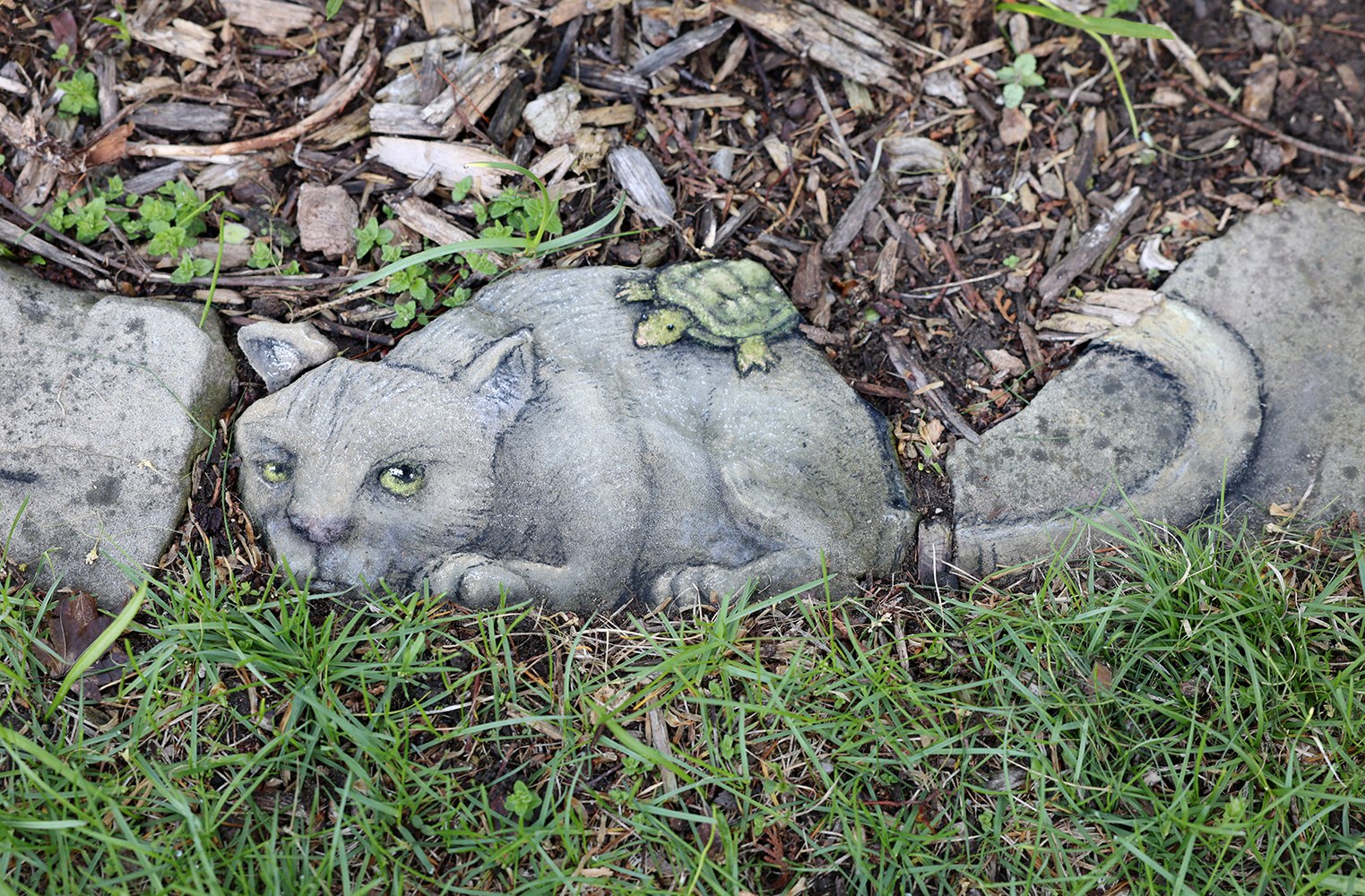
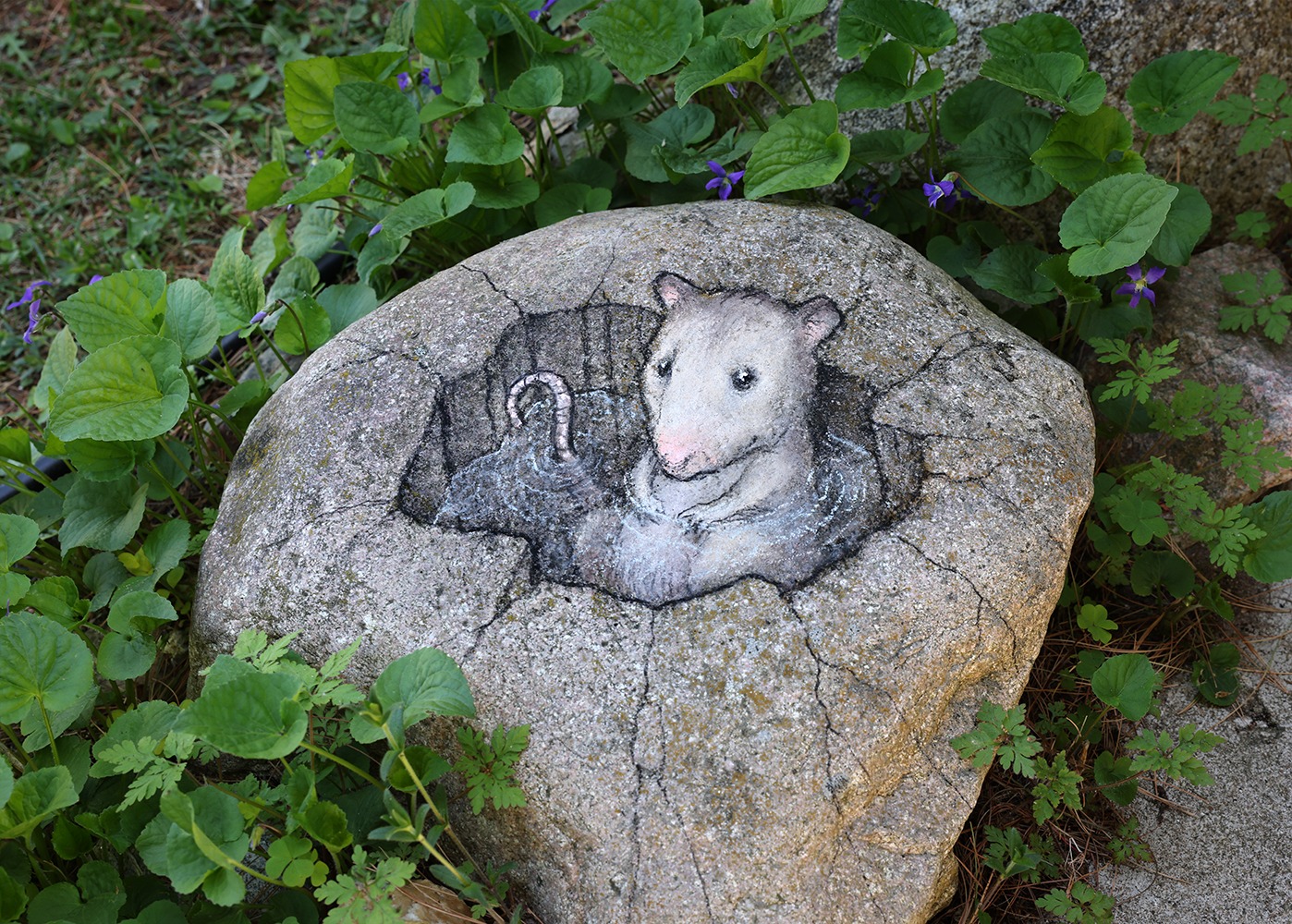
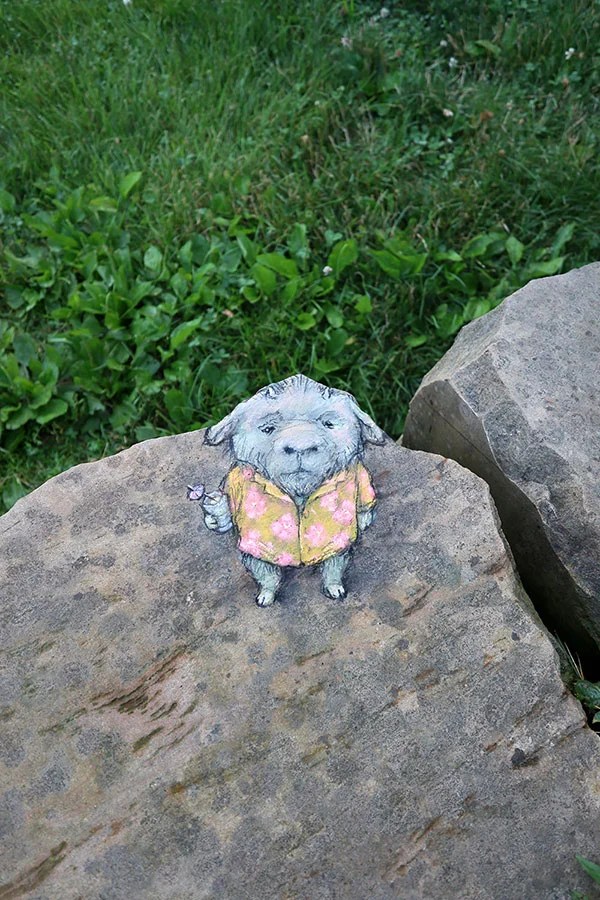
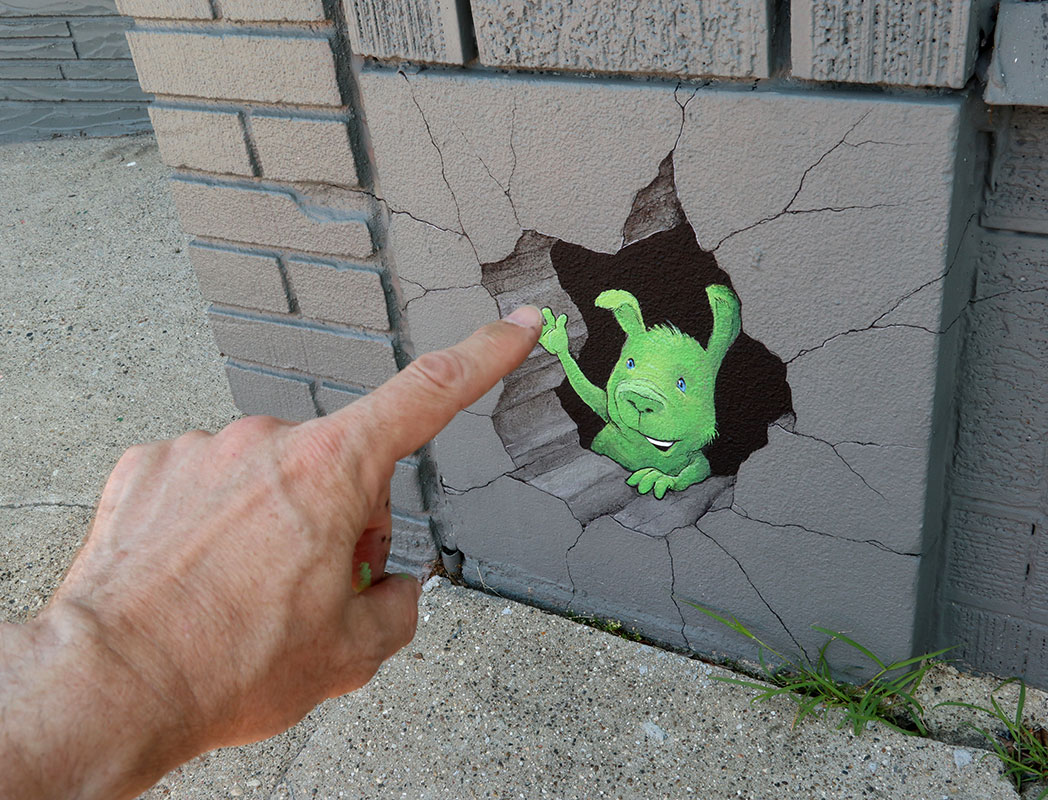
David Zinn has been creating original artwork in and around Ann Arbor, Michigan since 1987.For more than twenty years, he freelanced for a wide variety of commercial clients while simultaneously sneaking “pointless” art into the world at large.Now, thanks to the temptations of a box of sidewalk chalk on an unusually sunny day, Zinn is known all over the world for the art he creates under his feet.

Zinn draws a range of quirky animal characters in his distinct, cartoon-like style. Each one is cleverly rendered to look as though it is interacting with the surrounding environment.His delightful chalk art features affable aliens, winged pigs, cute tiny dragons, and other wondrous creatures emerging from the ground, peeking through a crack on the wall, or just sitting on the sidewalk.Zinn’s temporary street drawings are composed entirely of chalk, charcoal and found objects, and are always improvised on location through a process known as “pareidolic anamorphosis” or “anamorphic pareidolia.”Most of his creatures appear on sidewalks in Michigan, but many have surfaced as far away as subway platforms in Manhattan, village squares in Sweden and street corners in Taiwan.Zinn’s creations are ephemeral as each piece can only last up to 10 days if left untouched onto sidewalks. Furthermore, the drawings can immediately be washed away in the rain, making their short-lived existence even more appreciated.More of David Zinn‘s magical chalk drawings can be found at https://zinnart.com/ and https://www.facebook.com/DavidZinnIllustration.


What Color Are the Sun’s Eyes?

What color are the sun’s eyes?
~ anonymous


I wrote anonymous because I have no idea if anyone asked that in some poem or short story somewhere.

But the question really came from me.

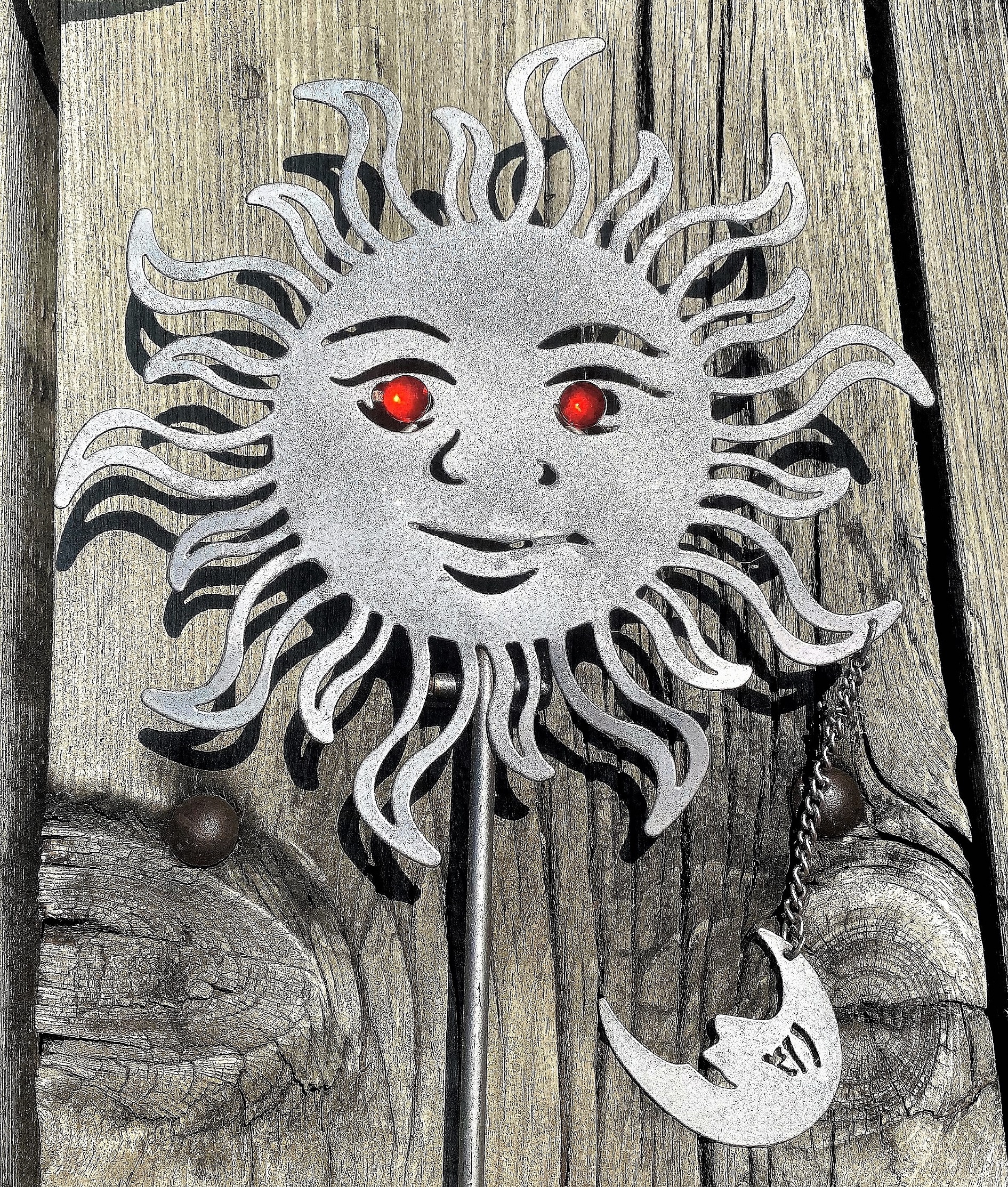
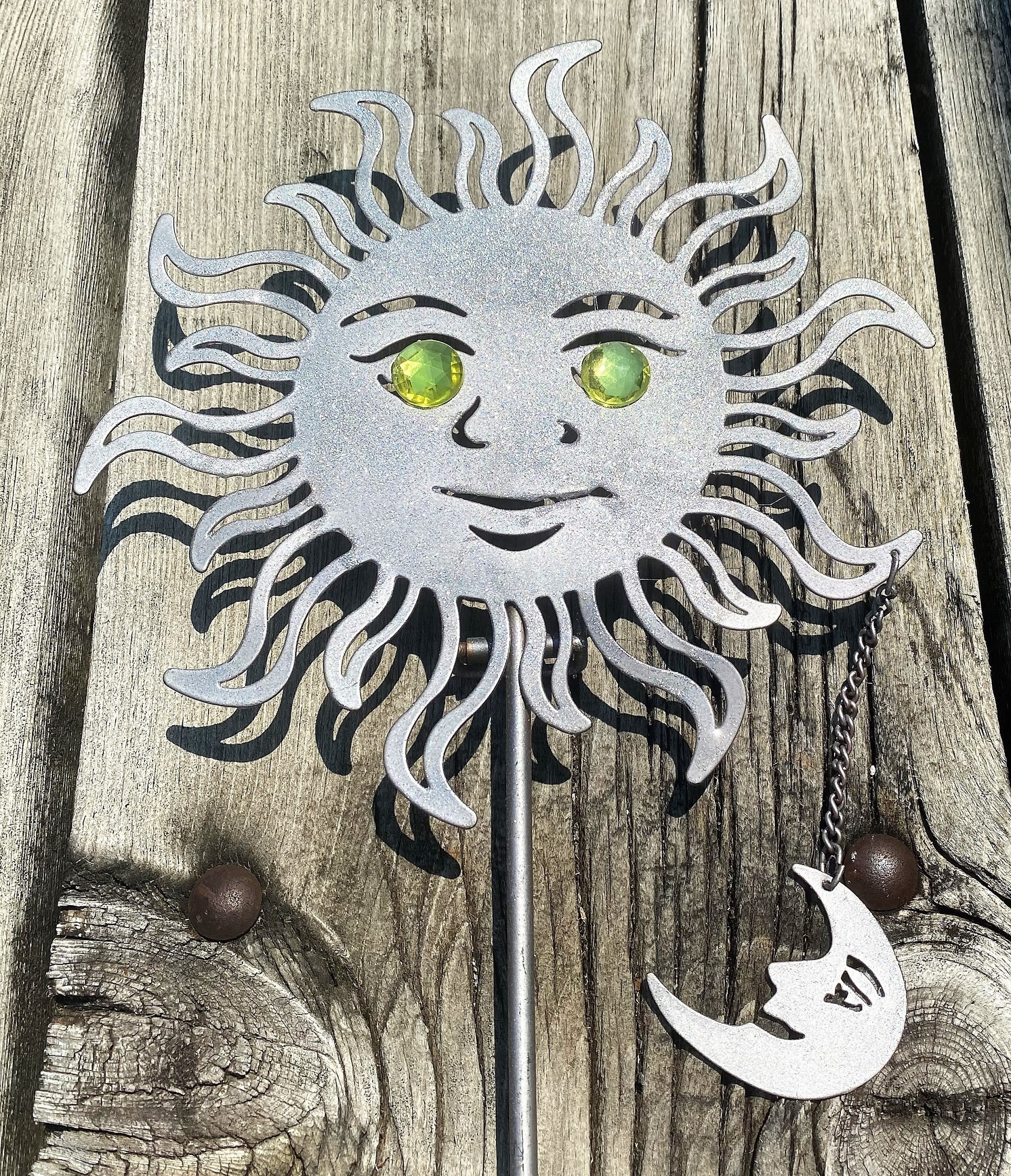
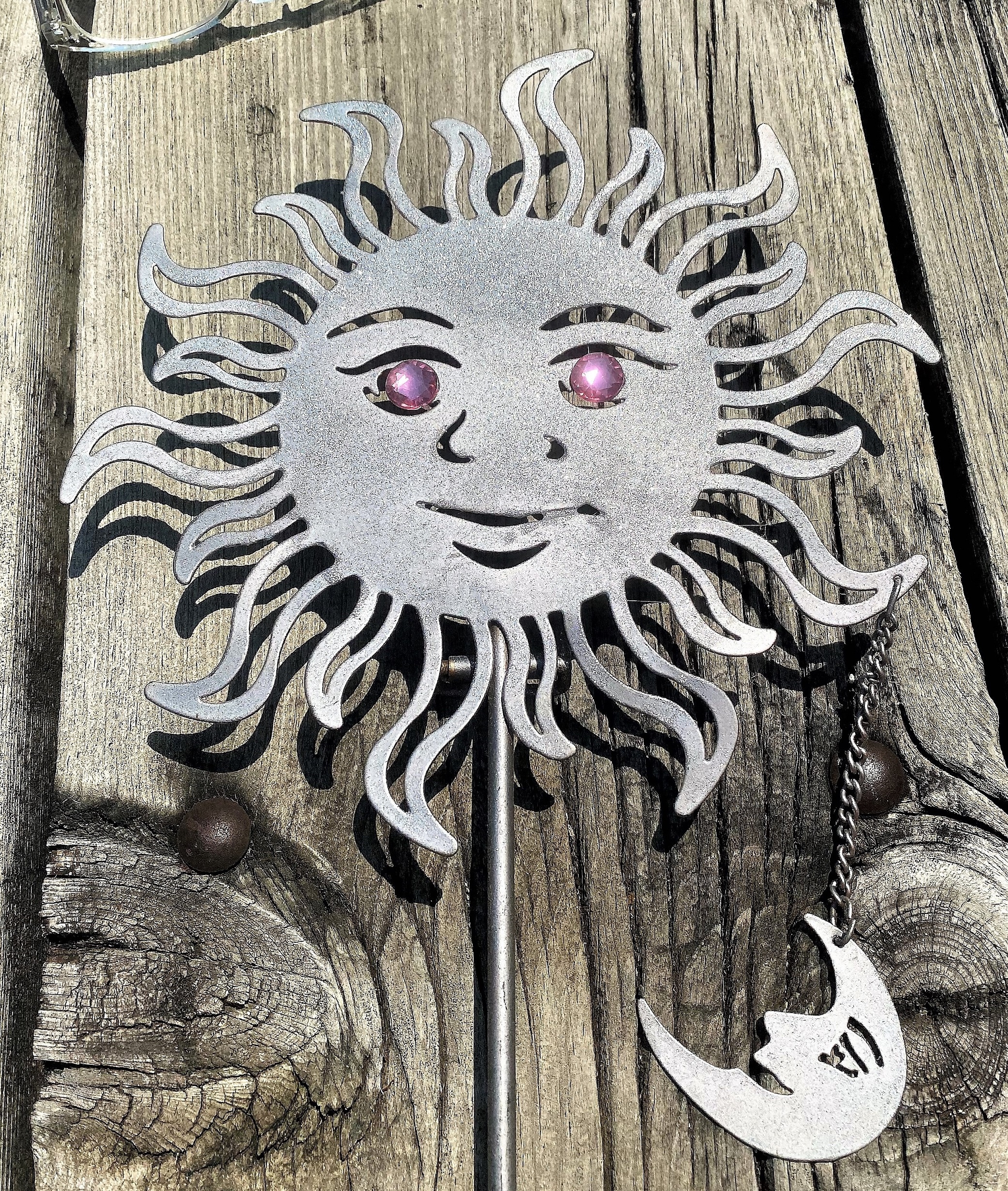
Fooling around with garden implements, never content with leaving things as they are, I decided to brighten up one of my lawn ornaments with a bit of sparkly silver spray paint and, perhaps, some colorful eyes to reflect the sun.

What color are the sun’s eyes?

So I experimented. 

The radiant golden color of sunshine itself: yellow...

The soft blush of a baby’s breath:  pink

The pure beauty of a summer sky:  blue …

or the fertile fields of Earth’s cover:  green …

Then I tried my last color set of eyes …
and somehow they turned demon-like …

Sooooooo…. I did whatever a normal, shoulda-done-in-the-first-place artist would do …

Leave … the eyes … alone …


Your True Beauty — Rainbow Wave of Light (repost)

Short, sweet, and inspirational. Just like I like them. Thank you, Denise.


Your True Beauty | The Creator


Go To a Fair!
Summer means barbeques, camping, beaches,  mosquitoes, and art fairs.

For someone like me who partakes in two arts and crafts shows per summer, I am quite caught up in the hullaballoo of it all.

But more importantly (and wonderfully!), when it comes to art appreciation, summer is also the time to take advantage of your local fairs. County fairs, state fairs, city and town fairs are all places to really get into the heart and mind and pride of artists of all sizes and ages.There is indeed a ton of impressive art at, say, the Louvre or Metropolitan Museum of Art — but there is a ton of impressive art right out your back door, too.

Last week I went to our local county fair, jammed packed with familiarities such as funnel cakes, wild rides, and livestock competitions. It was also a showcase for local artists of all ages.

I happened to walk through the Open (exhibitors must be from the county and adjoining counties) and Senior (exhibitors must be age 62 and older) Exhibit, and was knocked out by the ribbon winners.There was also a Junior Exhibitors Art Competition [8 – 19 years of age and in good standing with the youth organization they represent],  but there was something going on in their display barn.
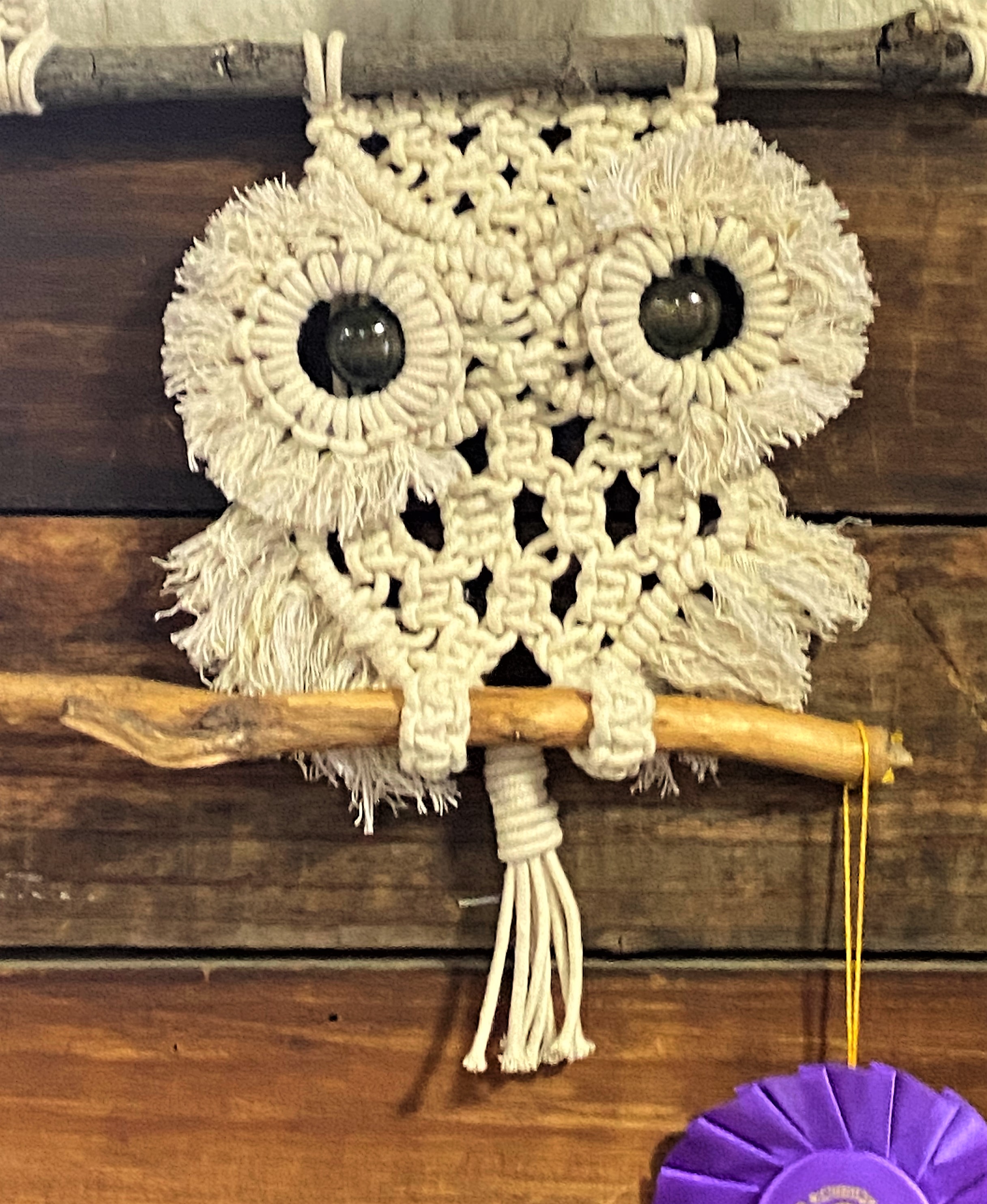
You could feel the passion that went into a painting or crocheted offering or a wirework necklace.The work was as impressive as any visit to a local art gallery.

So give up some of your free time and wander the barns and stalls and booths of your local art festivals.  You’ll not regret it.


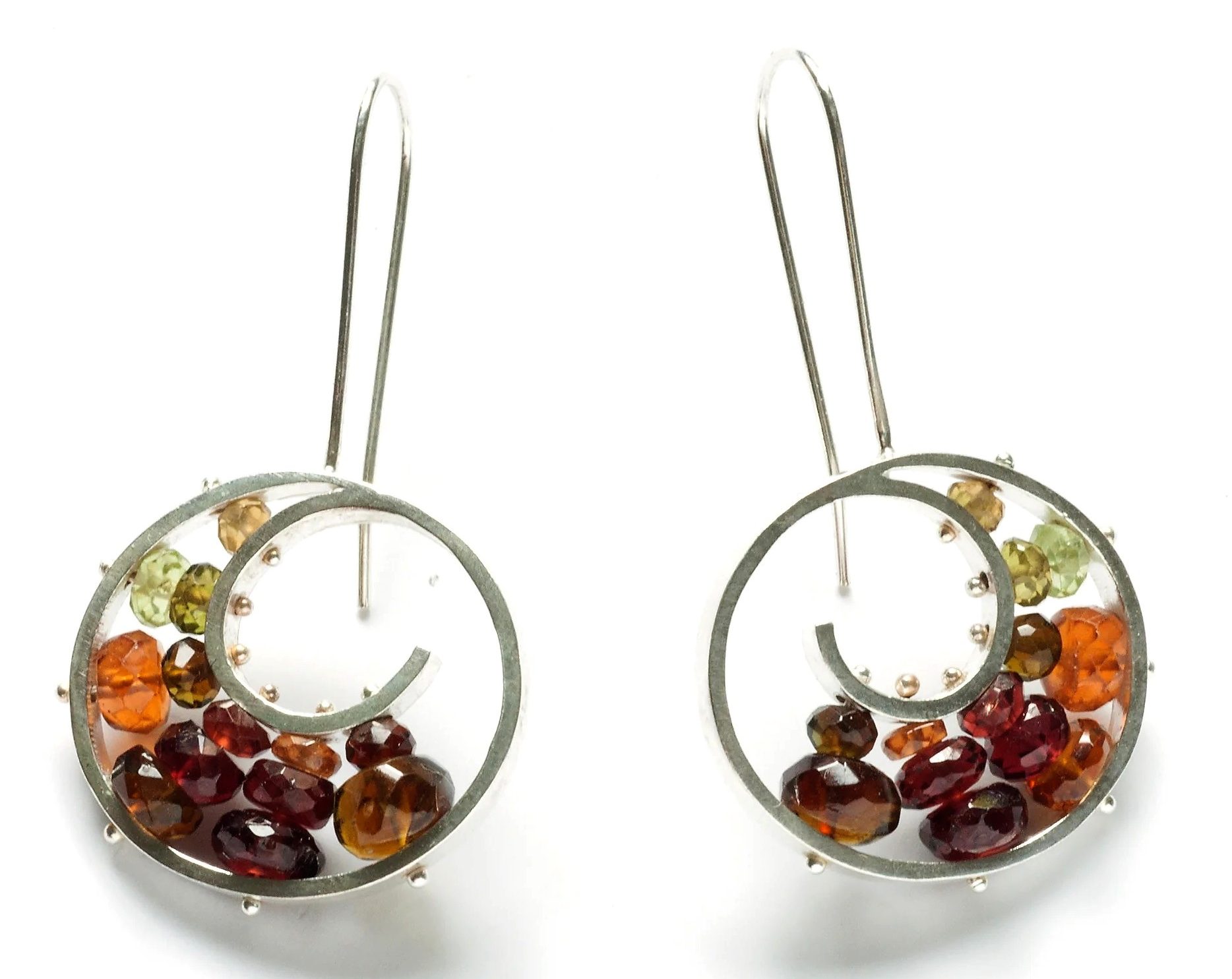
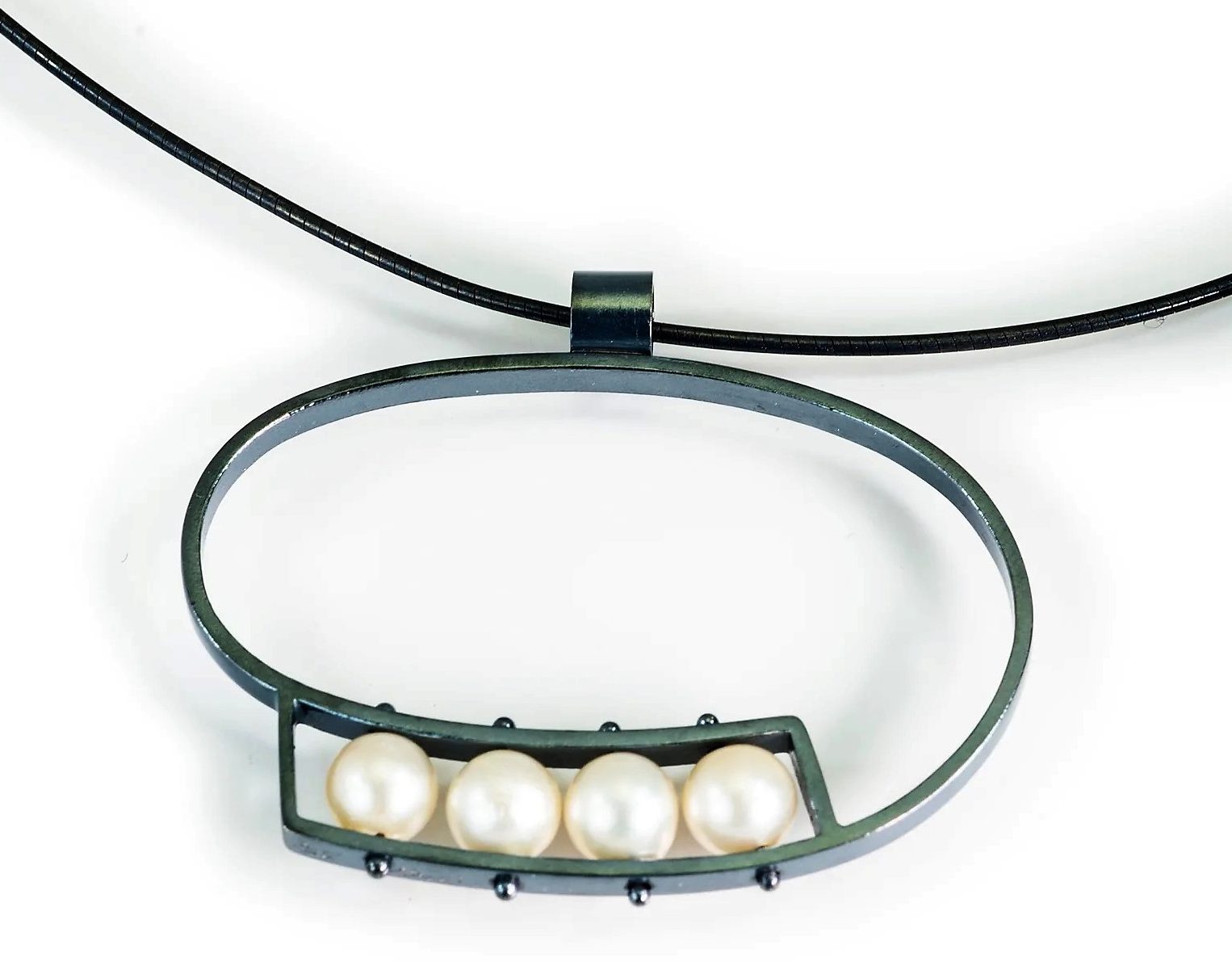
Sunday Evening Art Gallery — Ashka Dymel


Jewelry artist Ashka Dymel was born in Warsaw, Poland.

After studies in liberal arts and foreign languages in Poland and Czechoslovakia, Dymel moved to the United States where she earned a Bachelor of Fine Arts degree in Environmental Design from Parsons School of Design in New York City.

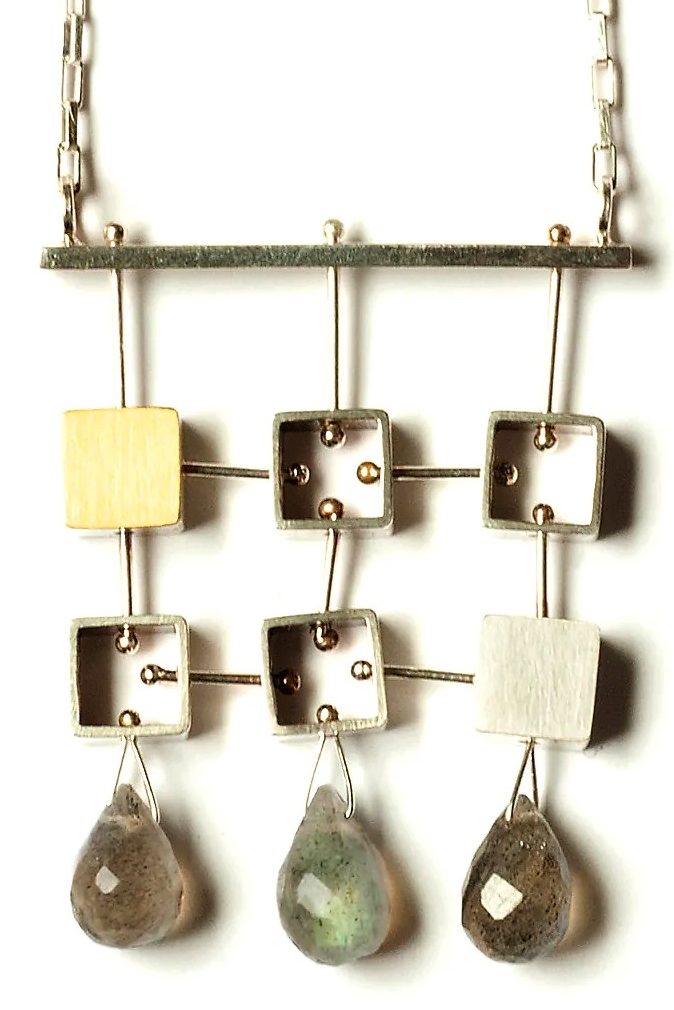
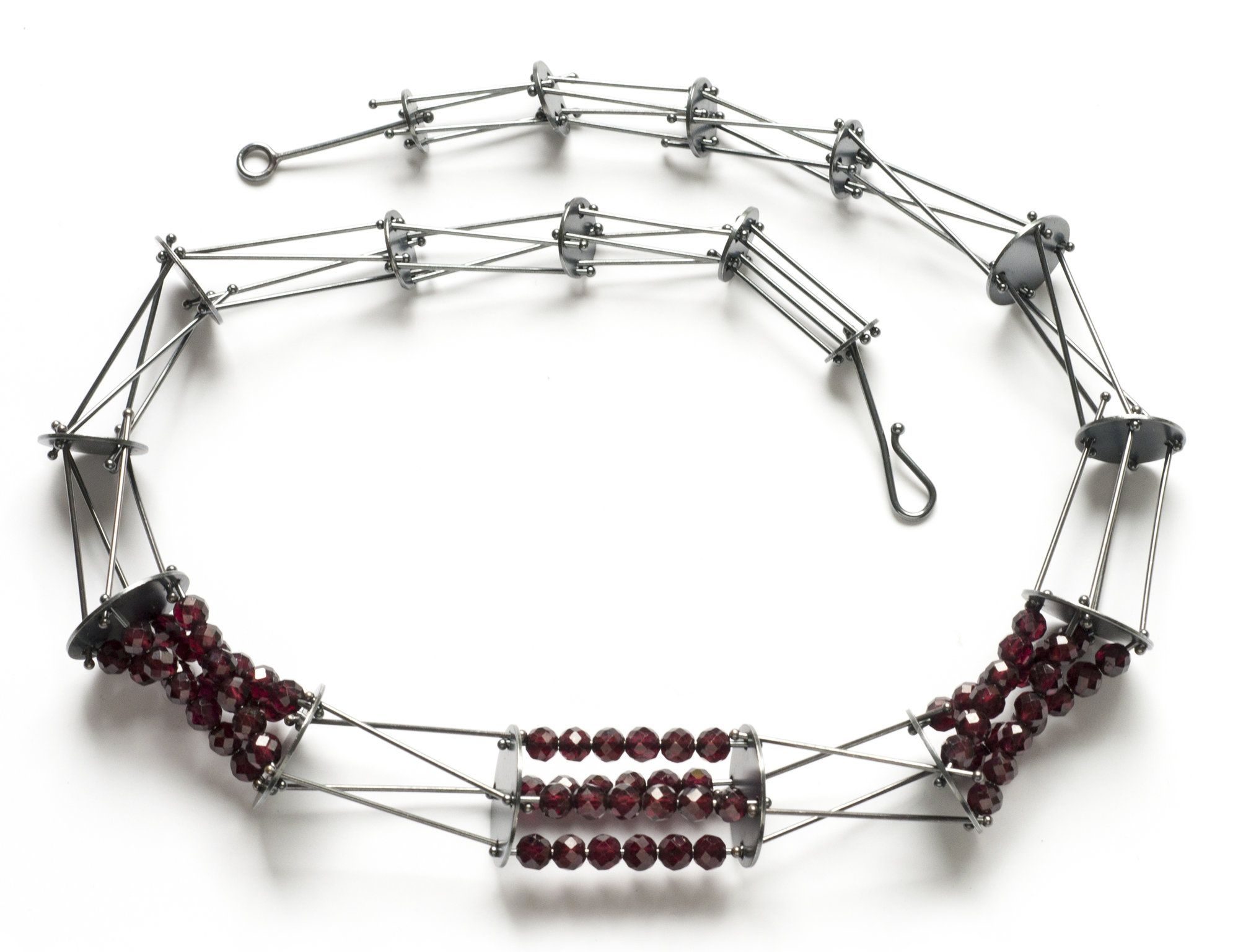
All the jewelry is handmade in Brooklyn using sterling silver, 18k gold bimetal, and semi precious stones and minerals.


Dymel’s goal is to achieve harmony in modular repetitions and variations on geometric forms.

Her work is recognized by her unique method of capturing stones within metal frames creating negative space as an integral part of composition.

Use of thin wires to hold the elements together is another non-traditional technique allowing for movement and structural flexibility.

The combination of unique materials and methods results in joyful pieces of wearable art.

More of Ashka Dymel’s jewelry can be found at https://ashkadymel.com/.


Sunday Evening Art Gallery — Jon Ching

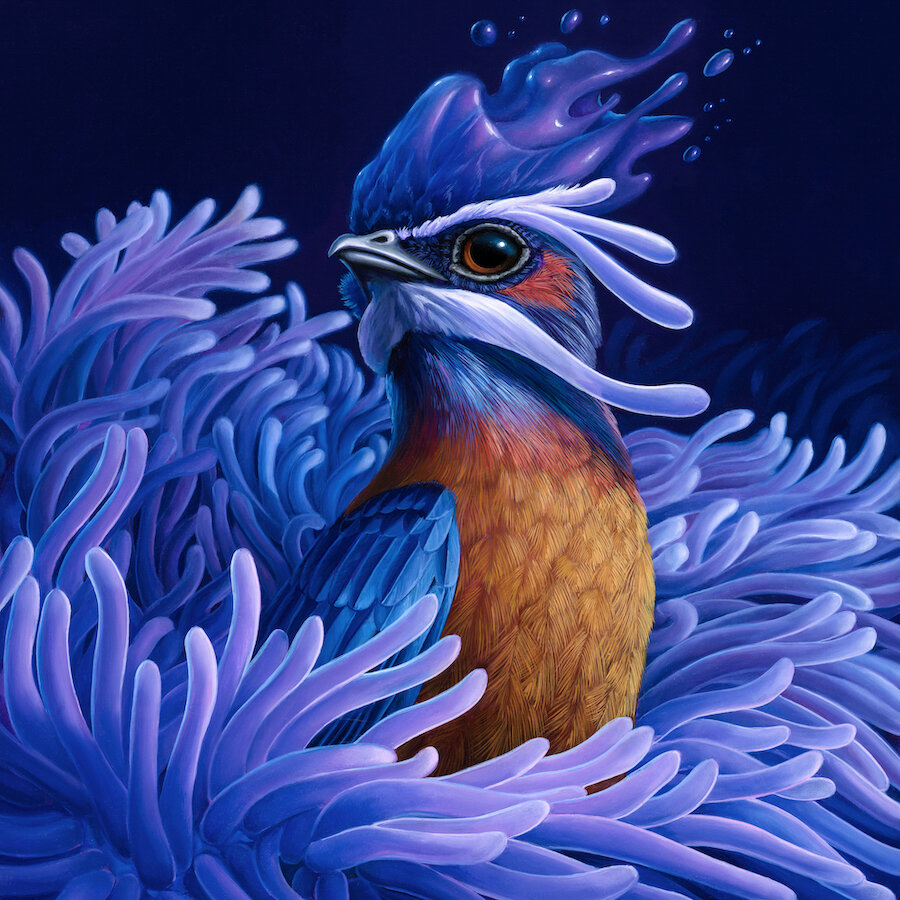
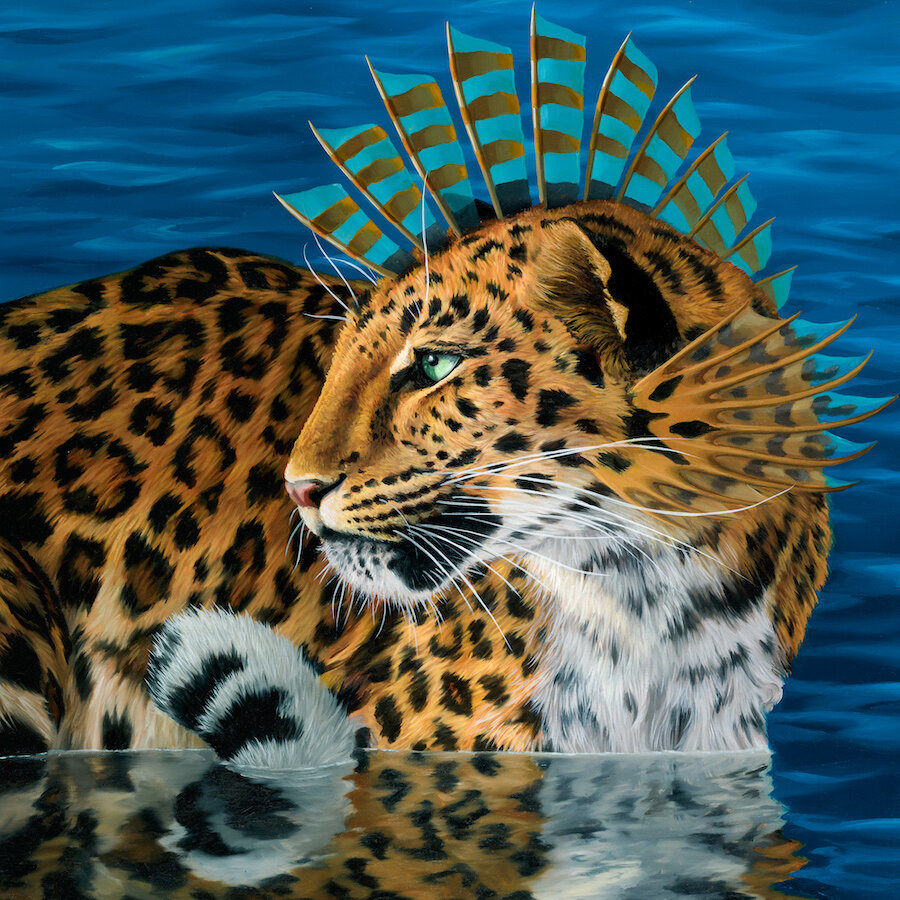
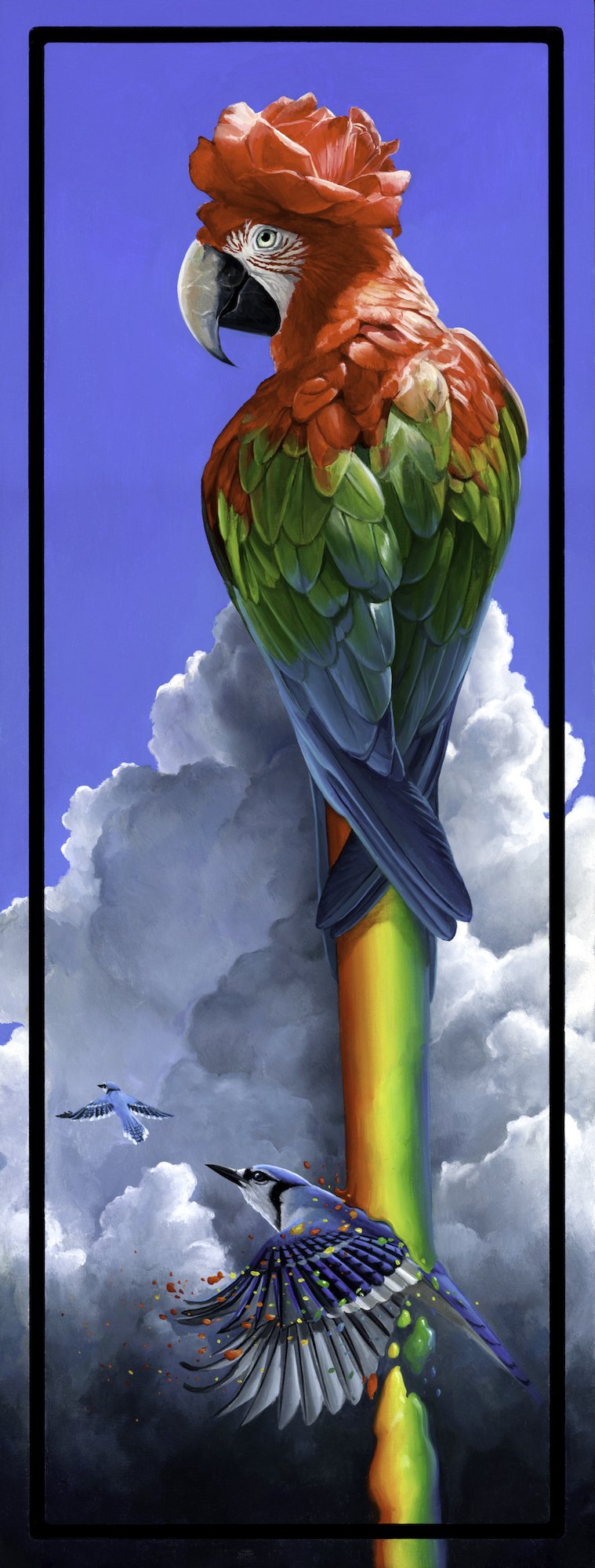
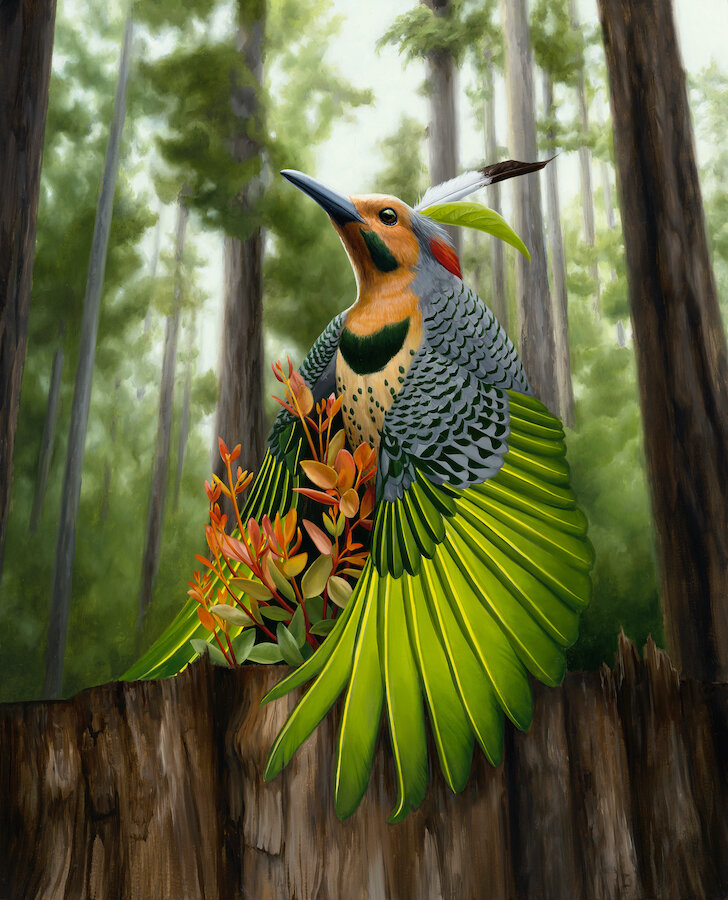
Jon Ching is a self-trained artist originally from Kaneohe, Hawaii and currently lives and works in Los Angeles, California.Steeped in the natural beauty of O’ahu, Hawai’i, his island upbringing instilled in him indigenous lessons of appreciation and respect for nature, forming the foundation of his fascination with the natural and wild world, which deeply influences and drives his work.Jon’s devoted art practice and detailed realism is inspired by the interconnectedness of nature.His work is a surreal imagining of what limitless wonders and combinations nature can produce.New creatures and symbioses emerge in his meticulously rendered oil paintings, exemplifying the endless potential of life on Earth through metaphor and allegory.Filled with vibrant images of flora and wildlife merging together to create new imaginary figures, Ching’s work invites us to recognize the “unseen magic” of nature..Jon’s ultimate hope is to inspire love and admiration for the universally unique beauty and intrigue of our planet.“One major concept I’m always trying to express in my work is the interconnectedness of everything.

“I think that seeing similarities in shapes and patterns across the natural world is a way to explore our connectedness, and once I started looking at things that way, I started to see it everywhere.”

More of Jon Ching’s enchanting art can be found at https://jonchingart.com/.


In My Life

Alan Aldridge

Reflections written on the 4th of July …. No drinking, no drugs. Just reflecting…


July 4th evening.

Here’s this old lady in a boho dress, matching pink crystal dangle earrings, sitting at a picnic bench all by herself, listening to a Beatles cover band playing in the park, all alone in my corner, singing along with every song, looking (and no doubt sounding) like a dork.

And, finally, after ALL these years, not caring.

Why did it take over 60 years to get to this place?

I’m not a pretty 70 year old. The willowy, fragile, blowing kind of older beauty groupie that could get away with singing with the band I’m not. This 70 year old is a bit scary if you ask me. There are big bags under my eyes, sagging skin, too many pounds — the whole kit n’ caboodle. 

But I’m one of those baby boomers whose life started with the Beatles. And whose life will most likely end with the Beatles.

It started many years ago with a state of mind not found in the world of 12-year-olds these days. A time when songs reflected the singers who projected themselves as innocent as they shared their hearts with innocent girls of the world.  The circle of love was pure, simple, and forever.

We didn’t know any better.

And that was okay.

I have tears in my eyes as I belt out the words to PS I Love You  and I’m Happy Just to Dance With You. At this very moment my heart hurts and I am short of breath. I am standing here by myself feeling 12 again. 

Now that there’s a break in the presentation I wonder why these days gone by mean so much to me. Why do I feel so much more of a reaction to the Beatle’s A Hard Day’s Night than I do to Purple Rain by Prince (or whatever popular song of the past 50 years comes to mind)?

Why did I come by myself?

At first I thought coming to this fun performance alone was a bad idea. Concerts are better shared with others.

Yet I am so glad I came alone. I travelled back in time, running all over the place, remembering duck taping empty album covers all over my bedroom walls and writing my first ever story about me and Paul McCartney and the Beatles concert I went to at Comiskey Park in Illinois when I was 12.

No one can hold a candle to memories like that.

And that’s why I came.


Fresh Fruit with Suzie Zuzek (repost)

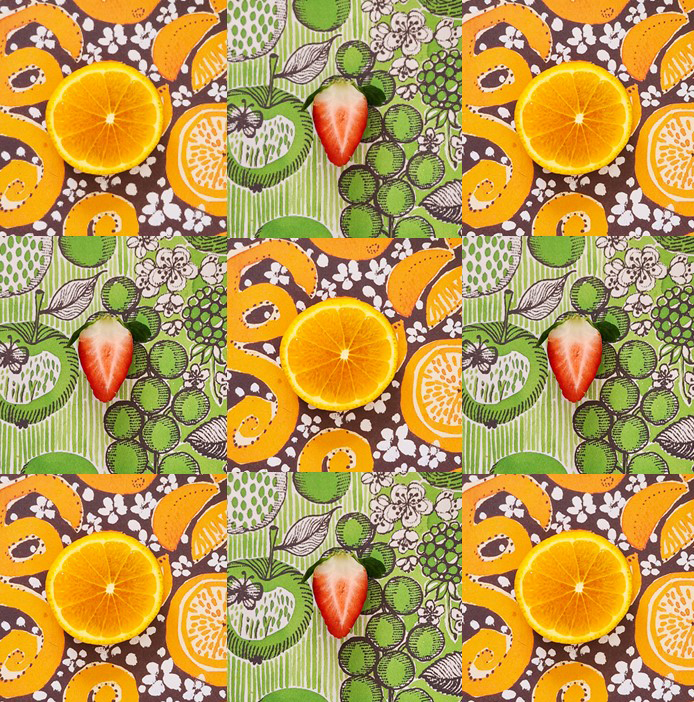
What I love about Annie Fisher‘s quirky blog eat with an artist: fact, and fiction is that her incredible sense of art and collages and others’ creative artwork always combine into one fun, beautiful experience. Check her out!
Fresh fruit with Suzie Zuzek


Sunday Evening Art Gallery — David Hockney

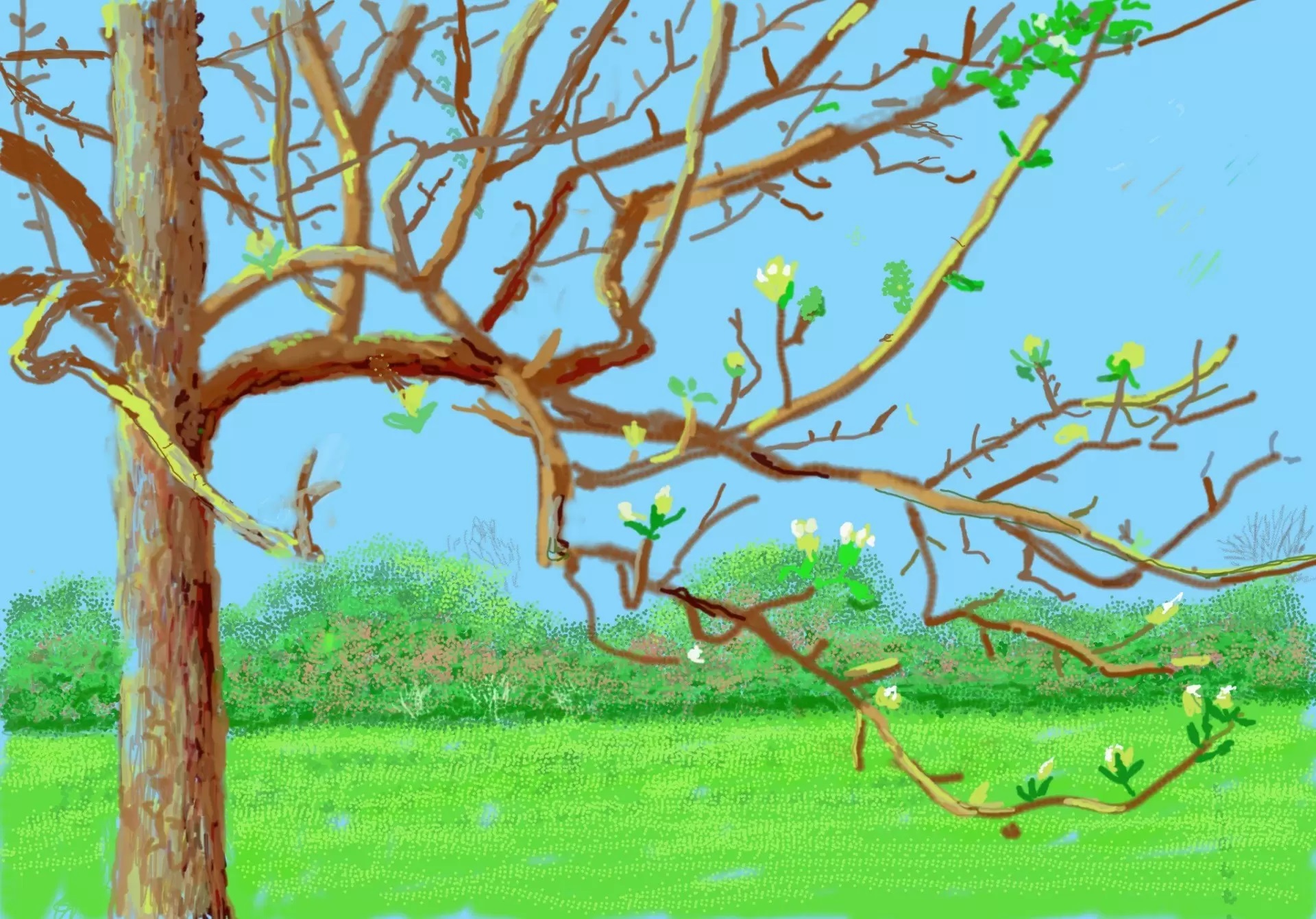
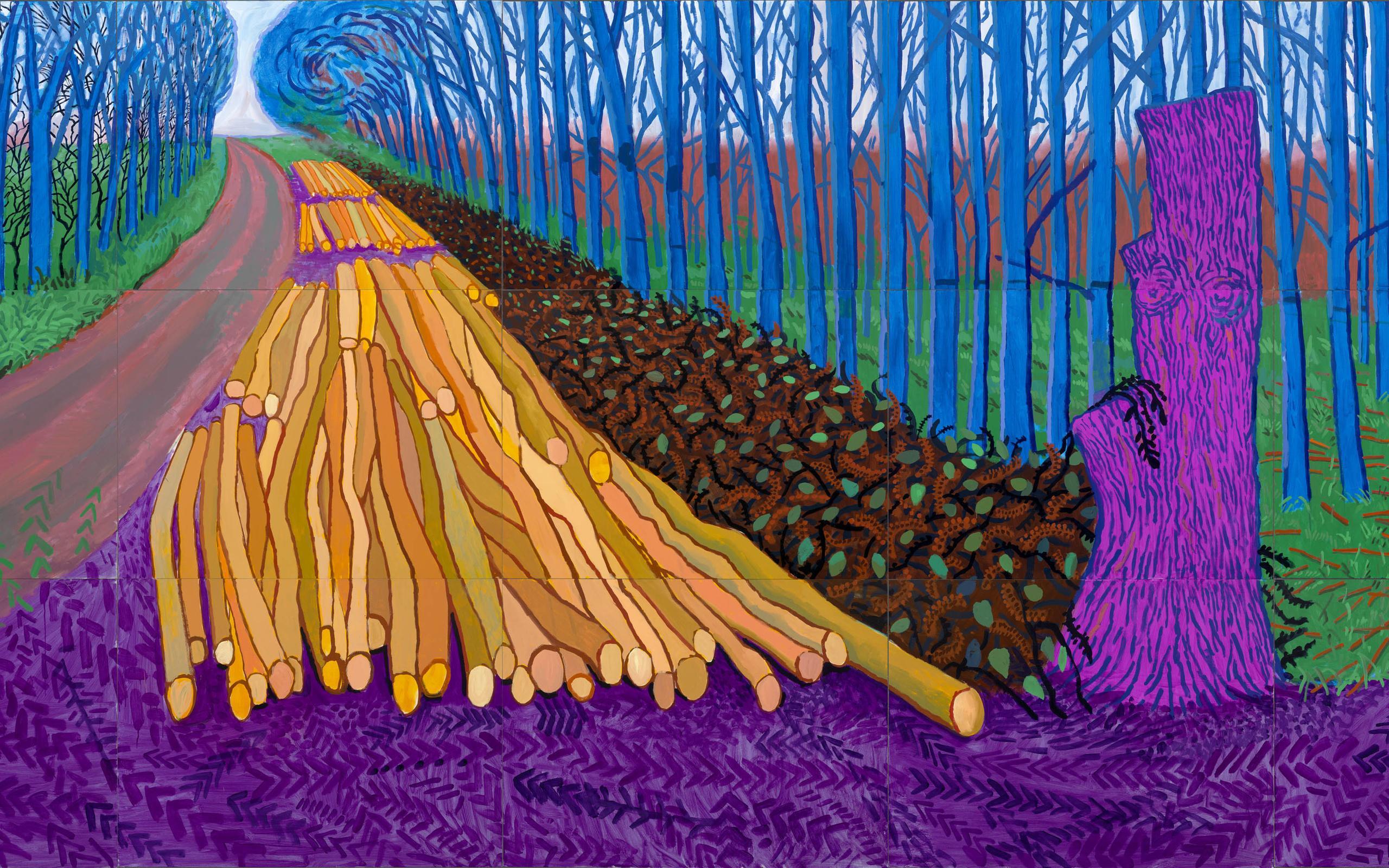
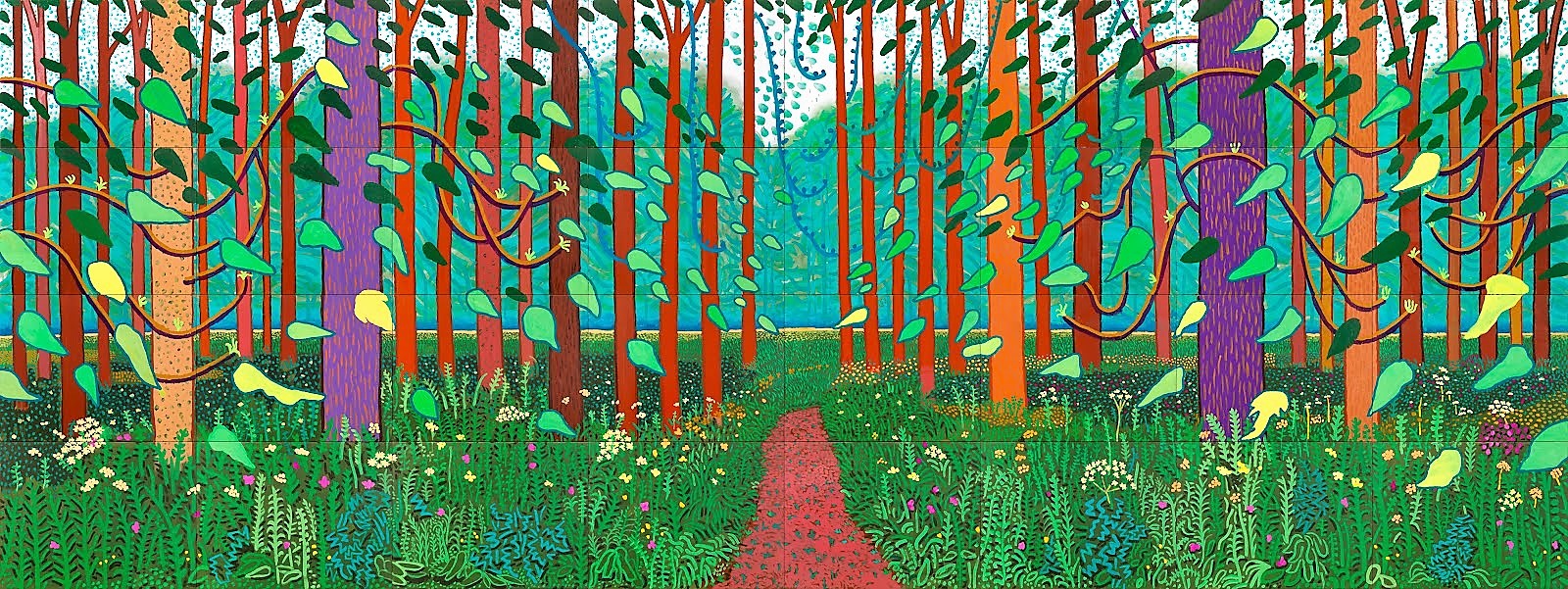
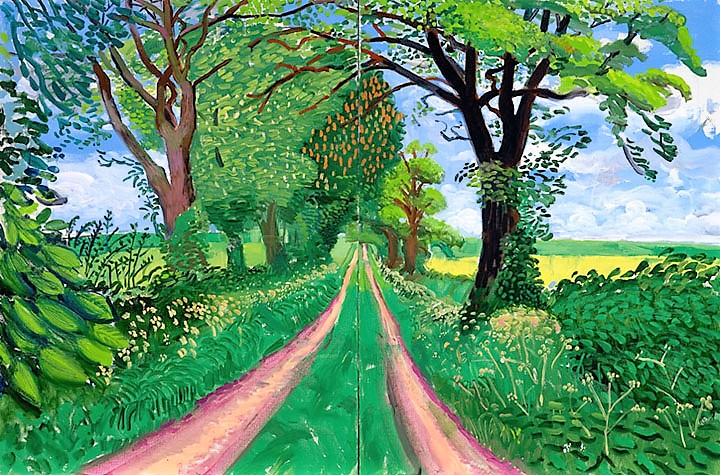
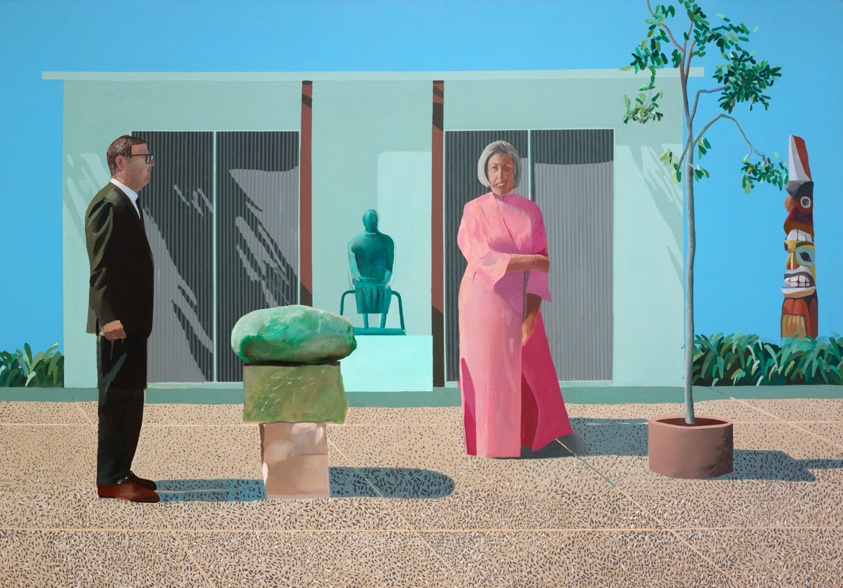
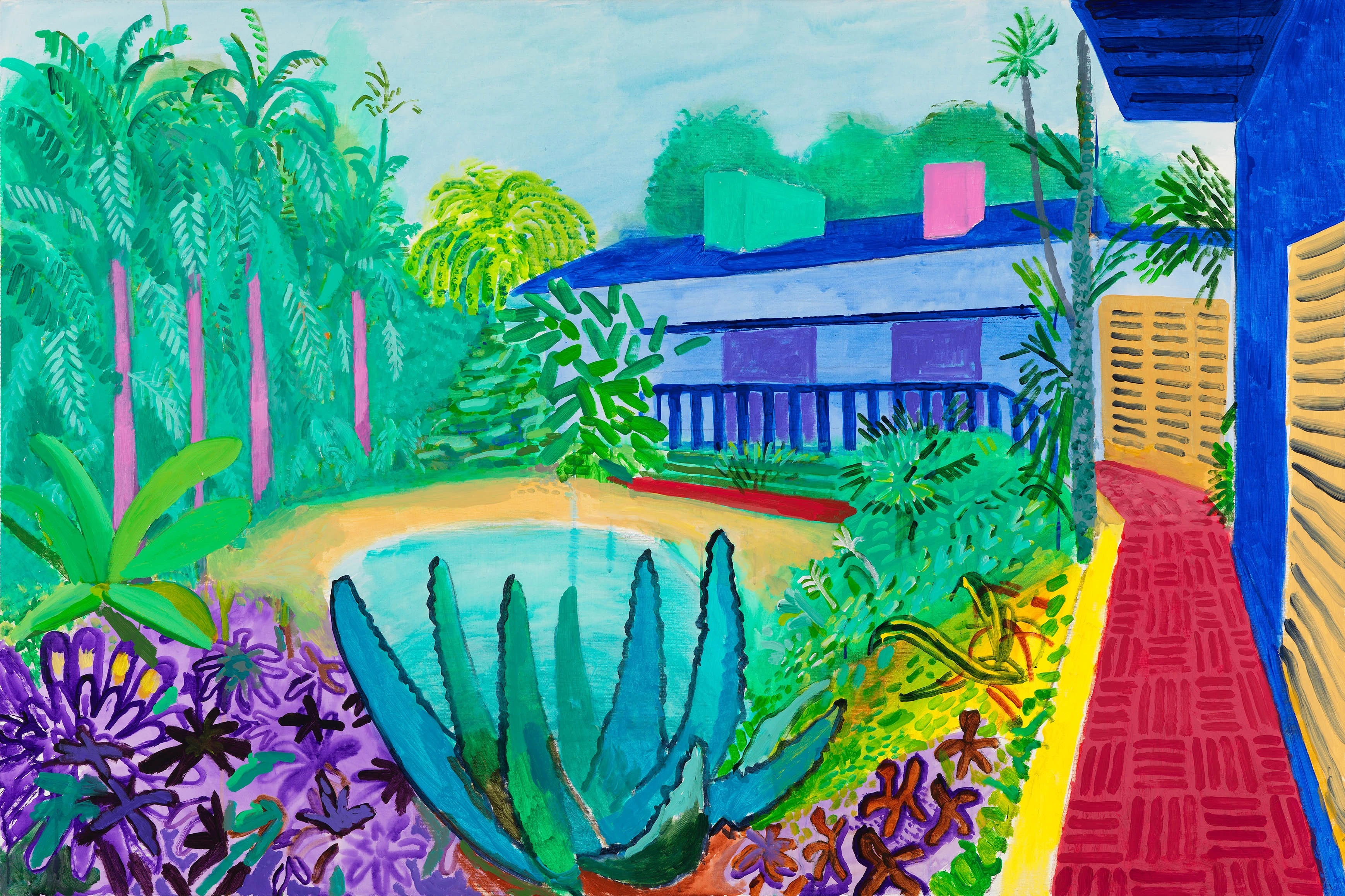
David Hockney (1937- ) is an English painter, draftsman, printmaker, stage designer, and photographer.The artist studied at the Bradford College of Art (1953–57) and the Royal College of Art, London (1959–62), where he received a gold medal in the graduate competition. As an important contributor to the pop art movement of the 1960s, Hockney is considered one of the most influential British artists of the 20th century.His unmistakable style incorporates a broad range of sources from Baroque to Cubism and, most recently, computer graphics.Perhaps best known for his serial paintings of swimming pools, portraits of friends, and verdant landscapes, the artist’s oeuvre ranges from collaged photography and opera posters to Cubist-inspired abstractions and plein-air paintings of the English countryside.In the spirit of the Cubists, Hockney combines several scenes to create a composite view, choosing tricky spaces, like split-level homes in California and the Grand Canyon, where depth perception is already a challenge.In actively seeking to imitate photographic effects in his work, Hockney is a forerunner of the Photorealists.Hockney’s work transcends expressionism, modernism, and even pop art aesthetics.His colors, subjects, and expressive nature have contributed works that have continued to evolve and expand to this day.More of David Hockney‘s bright art can be found at https://www.hockney.com/ and the culture trip.


Faerie Paths — Writing

Writing ideas travel from the head, where they are born, to the heart, where they are felt, through the soul, where they are understood, and out through the fingertips where they are reborn.

~ The Writing Unicorn


Being a Goddess is Hard Work!

Tymber’s Thyngs

Being a Goddess is more than a full time gig, let me tell you.

Although we are all knowing, all understanding, and all accepting, when we take on our human guise we realize we ain’t got ### on those who make a living living life.

I am of the older, wiser Goddess group. Which just means I’ve made more mistakes, wrong turns, and embarrassing utterances than those younger in age. I may “intellectually” know and sense that love is all, live each day fully,  and each person interprets the world and those in it (and beyond it) in their own way, but I’m still a working girl at heart.

Having just come back from four days with kids and Gkids over the 4th,  I haven’t stopped running. Between time travelling at an outdoor concert with a Beatles cover band to initiating a “July 4th Independence” movement to improve my health, I often wonder if the human way is worth the energy.

In the swing of my new “glamgardening ” experiment, I was out watering, inspecting, clipping, clamping, and wondering. (When do you pick baby eggplants from the houseplant bush? Am I supposed to cut back the heads of these spent flowers whose species I don’t remember? What are those symmetric black globs by each leaf of my day lilies? Should I let that Russian Sage that snuck back into the side garden stay?)

The other night I watched 13 Hours: the Secret Soldiers of Benghazi (fascinatin, true story of elite ex-military operators vs terrorists in Benghazi 2012),  I began wondering, “how much of this true story is true?” 

Also, I recently stopped taking anti depressants (with the support of my doctor), and am finding that I am crankier and crisper than ever. I don’t know if I will have sharp edged impressions and thoughts about the world forever, or if they will eventually mellow into highs and lows that are easier to ignore.

A lot of things to look up.

Now, you would think being the Goddess that I am I would know everything —  the name of the plant that needs de-heading, percentage of truth in ‘based on a true story’ movies — and I suppose way back in the shadowed recesses of my mind I do.

But what fun is just knowing?

Half the fun of being a Goddess is re-experiencing things for myself. Discovering things I already knew. Researching things I’ve already researched. Realizing that the moment of discovery is really a moment of rediscovery.

That is what being a Goddess is all about. Constant rearranging. It’s what a God needs to do too, if your sex demands it. You already are there! Just acknowledge it! Relearn it! Enjoy it!

After all, I need to always Humor myself.


July 4th Is Many Things

Happy Fourth of July!


…………………………….Never Forget……………………………


and…..

for fun……


Show off your colors!


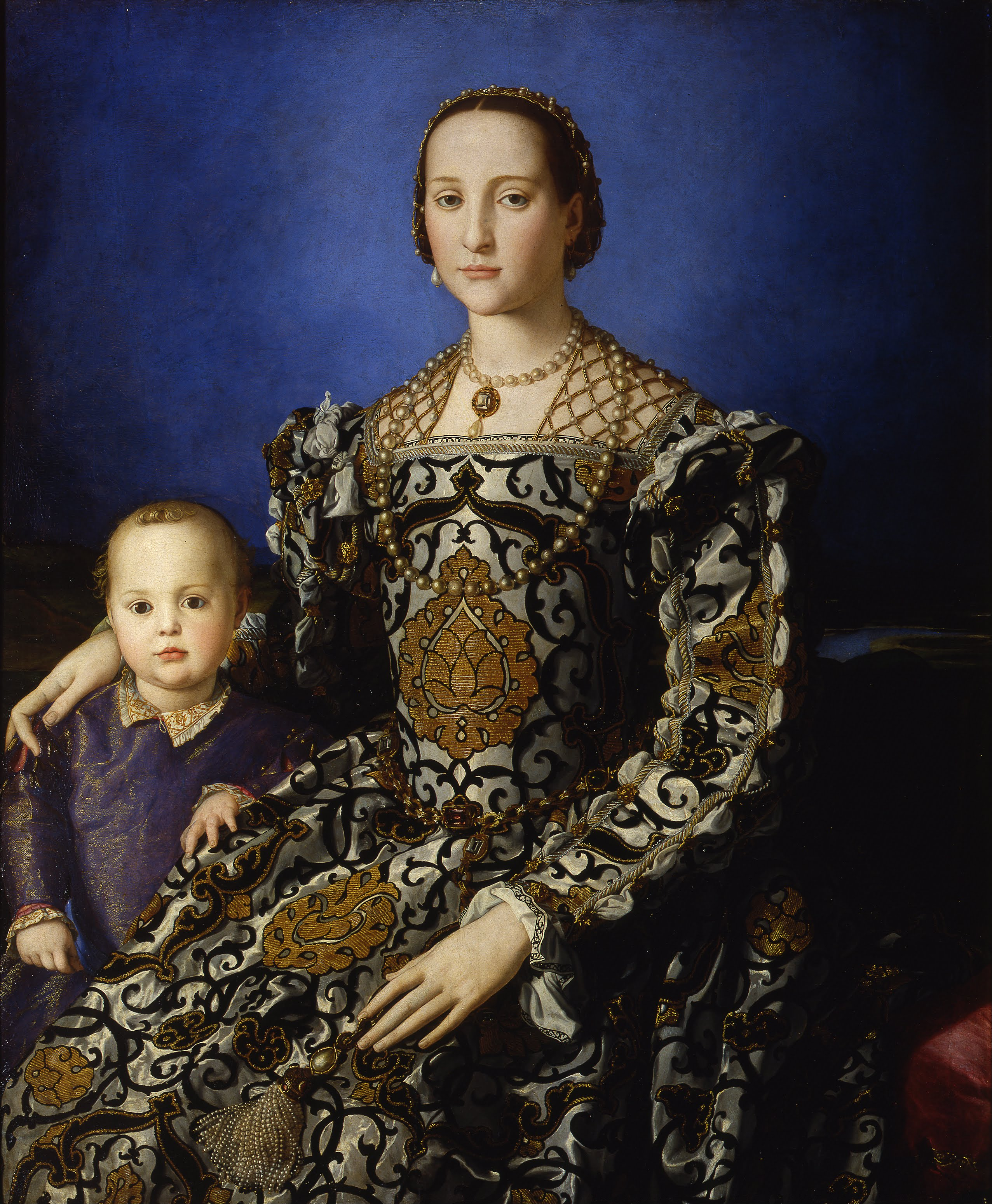
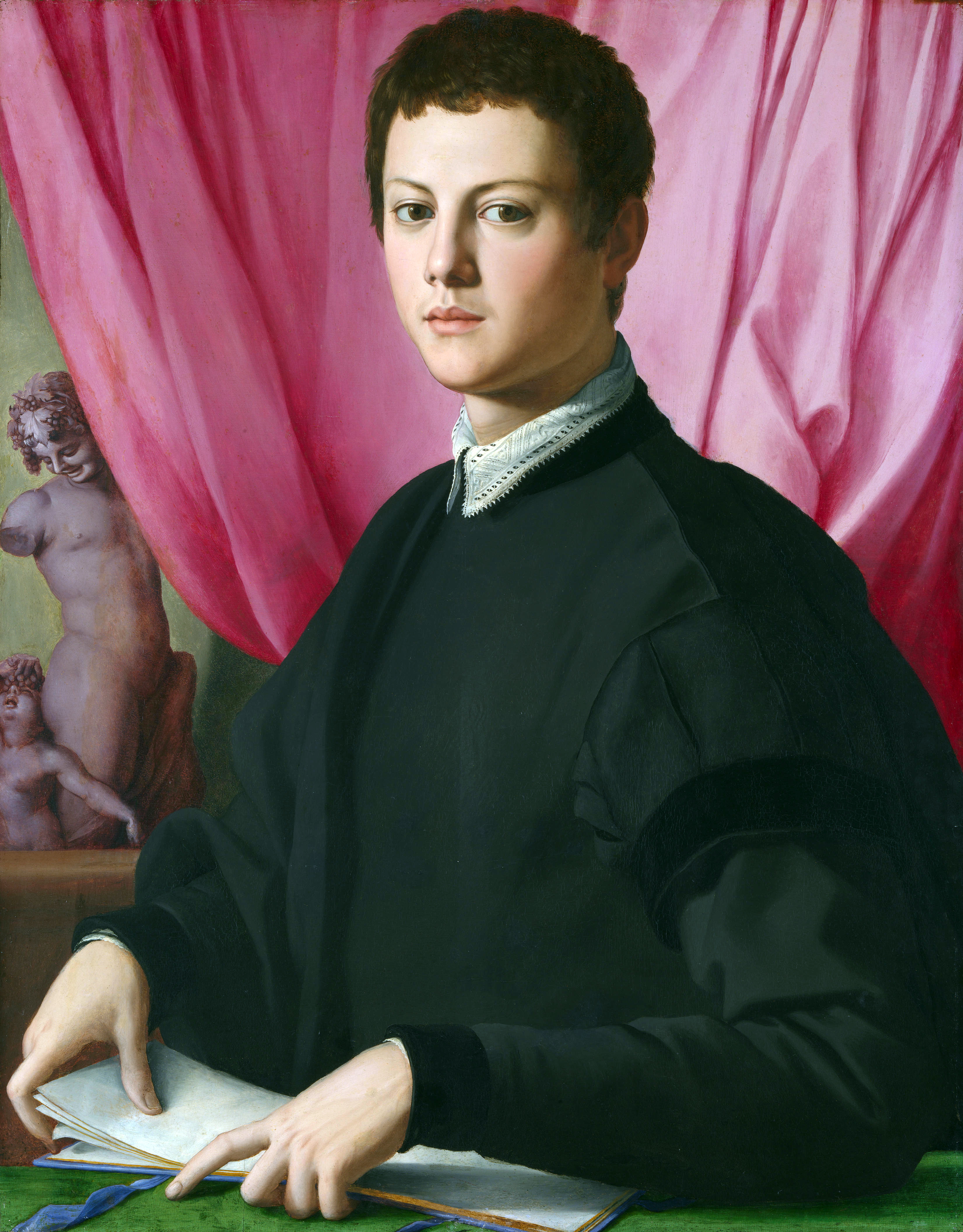
Sunday Evening Art Gallery — Il Bronzino

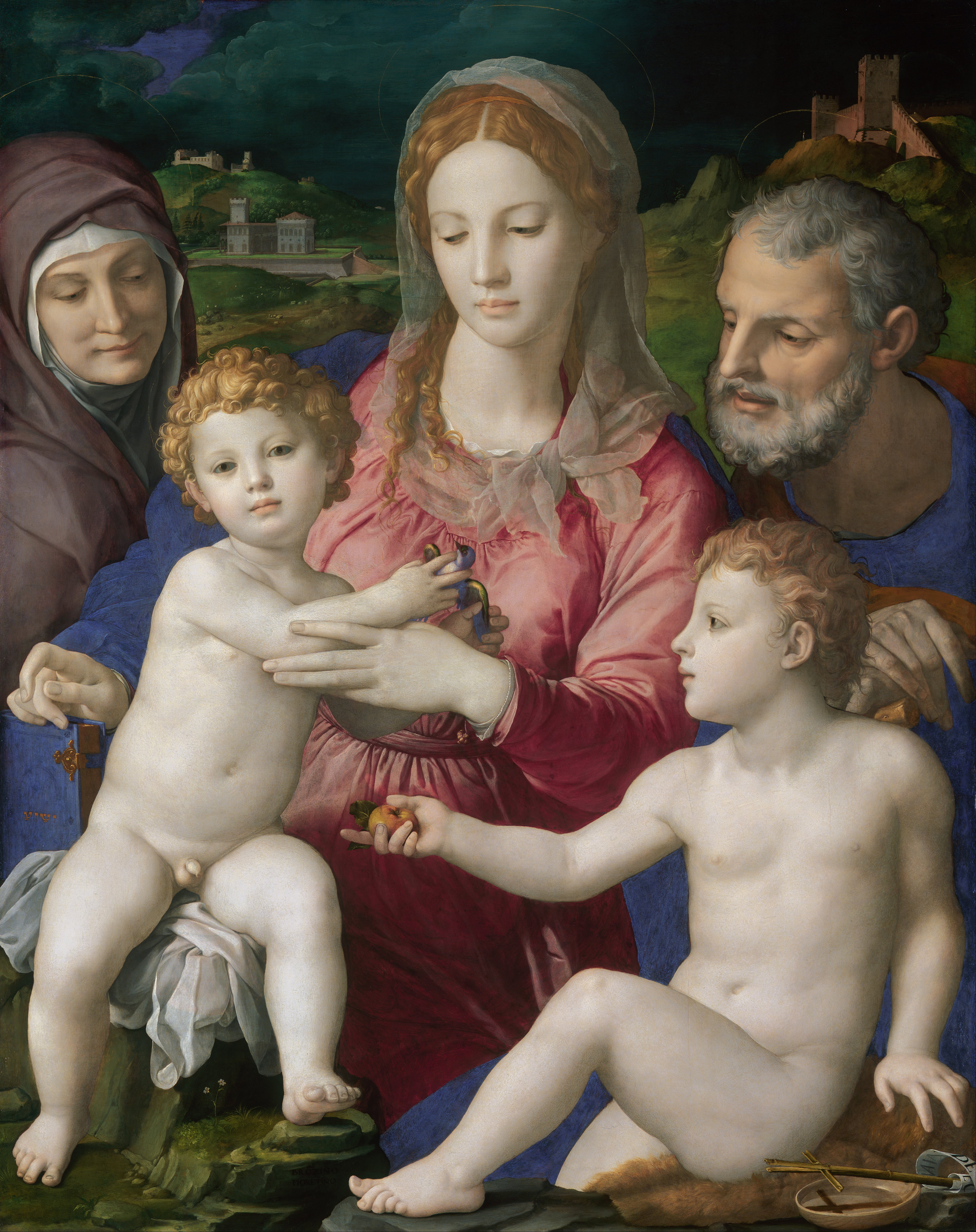
Agnolo di Cosimo ( Agnolo di Cosimo di Mariano Tori, 1503-1572),  more popularly known as Bronzino, was a Florentine painter whose polished and elegant portraits are outstanding examples of the Mannerist style in the middle of the 16th century.Holy Family with St. Anne and the infant St. John


An Italian Mannerist painter from Florence, his classic embodiments of the courtly ideal under the Medici dynasty, influenced European court portraiture for the next century.Portrait of Bartolomeo Panciatichi


He trained with Pontormo, the leading Florentine painter of the first generation of Mannerism.Chapel of Eleonora da Toledo


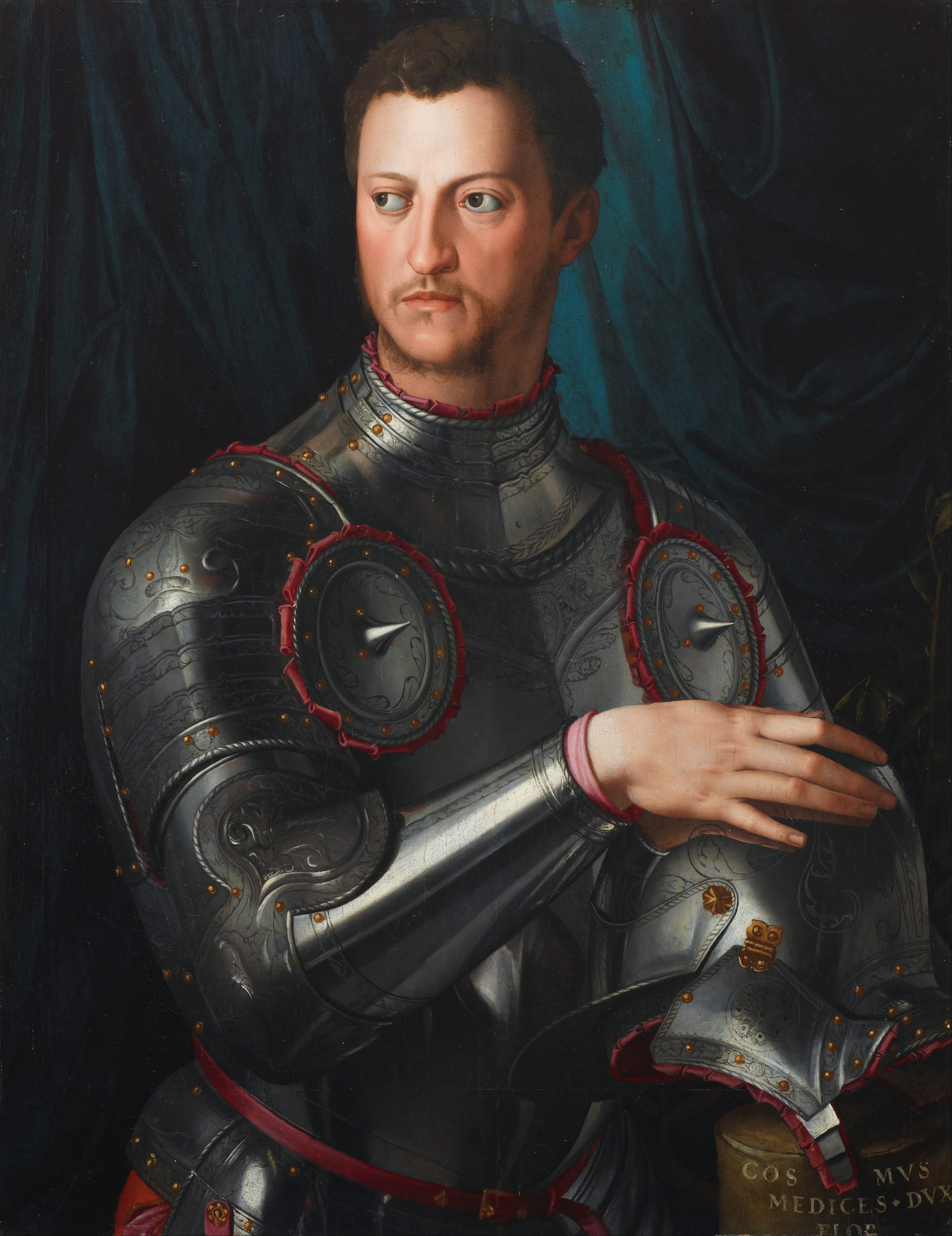
Bronzino lived all his life in Florence, and from his late 30s was kept busy as the court painter of Cosimo I de’ Medici, Grand Duke of Tuscany.Cosimo de Medici in Armour


He became the official portraitist for the Medici dynasty and soon went to work painting the portraits of the ruling family members, which he is largely known for, and which is Bronzino’s greatest contribution to Mannerism.The Holy Family with the Infant Saint John the Baptist


His portrait figures – often read as static, elegant, and stylish exemplars of unemotional haughtiness and assurance – influenced the course of European court portraiture for a century.Eleanor of Toledo and her son Giovanni de’ Medici


These paintings, especially those of the duchess, are known for their minute attention to the detail of her costumes, which almost takes on a personality of its own.Portrait of a Young Man


His work is clean and crisp, a major accomplishment for his time.Venus, Cupid, Folly, and Time


More of Agnolo Bronzino‘s amazing paintings can be found at https://en.wikipedia.org/wiki/Bronzino and https://www.britannica.com/biography/Il-Bronzino.