Real Lists vs Fantasy Lists

            Everybody makes to-do lists now and then.  As we get older, our nows seem further back in history, and our thens become obsolete.  So to keep track of the void between the two we need a list to keep things straight. But what kind of list do you make?

            My husband is very fond of making lists.  When he gets ready to go fishing or hunting, his list fills up two pages of college-lined paper.  There are things to bring, things to pack, things to sort, things to find.  I must admit that part of the length of his list includes things to bring/pack/sort/find for everyone else, too. But that is another story.  His real “to-do” list reads more like an instruction manual, all bullet points being checked off before he takes off to the wild blue yonder.

            I make my share of “to-do” lists as well.  Mine usually consist of mundane things to remember:  take ground beef out of the freezer for dinner, call Teresa tonight, write a check for my son’s lunch fund.  Practical, important things that I need to remember to do so that my day — and life — runs smoother.  My real list also extends to calling work or home and leaving voice reminders to myself in case I misplace my physical list.  I can’t help it if my list barely fits on the back of a sticky note; my real list is limited by energy and time and the phases of the moon and how many sticky notes I have.

            But what exactly is a fantasy list?  How is it different from a reality list?

            A real to-do list has tangible edges.  They have beginning bullets and ending periods.  Real lists can be scratched off one line at a time.  Progress can be made and seen through ledgers and spreadsheets and check marks on college-ruled paper.  Real “to-do” lists create deadlines and goals, culminating in that “feel good” sensation when you cross off a task that has been completed.

            A fantasy list, on the other hand, is as wild as clover in the field.  Each task reproduces itself every time you turn your back, manifesting into a half dozen more fuzzy bullet points on your list.  Fantasy lists are things you dream about, things that may or may not come to fruition.  Fantasy lists may have a foot in reality, but often it’s a child’s size 2 shoe, something that, for all practical purposes, couldn’t hold you in a mud hole if you tried. If you are able to check off one line on your dream list you are doing good.

            Fantasy lists can include a wide diversity of ideas and ideals.  Lose weight often tops a lot of lists.  Variations of this task are:  lose five pounds in three weeks so that you fit into your jeans, or lose 25 pounds by next summer so that you can fit into a bathing suit.  Pull weeds is often another chart topper.  It doesn’t matter if you have mums in a pot or a vegetable garden on the hill; weed pulling is often an arduous task that takes forever and seems to produce no long-lasting results.  Fix the squeak in the (fill in the blank) is a good one, too.  How long has that lid or chair or washing machine door made that high-pitched, irritating noise?  How much longer can you endure it before you finally take care of it?

            There are other bullet points on a fantasy list that are full of good intentions but most times get lost on the sidelines:  sew the falling hem on your pair of brown pants; give the dog a bath; call your sister.  Sometimes the list is full of ideas triggered by others:  find a recipe for a spaghetti squash, something like Emeril’s but with not as much garlic; look up how many Academy Awards Tom Hanks has won; call Jill to see if she wants to go to the café for coffee or to the pub for a burger, and if she wants to do it next Thursday instead of tonight because your son has baseball practice at five and the café doesn’t serve alcohol and a beer would really go great with that cheeseburger.  These are innocuous-looking thoughts that have the intention of being done, but somehow never get checked off the list.  This is most likely because a few points from the “real” list sneak onto the list, taking precedence over the more drawn-out ones, and we never seem to get back to the ones that were triggered by our wandering mind.

            Once we step up to the next level of a fantasy list, the bullet points look more like a doodle than a black dot.  The list gets more complicated in an ethereal sort of way: find out how much a flight to Cancun would be in February versus July; check out the price of cottages in the North Woods, say Eagle River or Sturgeon Bay; research the difference between inter-galactic space flight by nuclear fusion and nebula-to-nebula propelled travel for that science fiction story you are writing.

            The edges of the “to-do” list may get a little fuzzy, but that doesn’t mean that these ideas aren’t earnest.  These tasks are just as important as calling for a dentist appointment or making sure we pack aspirin for the trip.  They are just a little harder to maneuver; they are not weighed as heavily as the ones on the “real” list, and are scoffed at by those whose bullet points are five words or less.

            I just don’t get it.  Fantasy lists are just as important as real lists.  And I’m sure that if my husband sat down and made a fantasy list with me, he would be able to move that hunting trip to Alaska right up there to the top of the list.
Paint Who’s Wagon?

What does it mean to be middle-aged? Is there a line drawn across the cosmic playfield that says on this side, you are old, on this side, young? If you love Big Band and Glen Miller, are you old? If you like Rhianna or Jay-Z are you young? If you like InSync or Boy George, are you just … weird?

The older I get, the fuzzier the line gets. I have friends on the 40/70-year-old line that lead fairly “normal” lives:  Dancing with the Stars, American Idol, Oprah. Then there are those who are a little more wild: The Shield, Sons of Anarchy, AC/DC. Where do most of us fit? How do we know where the line is between antique and hip hop? Between dancing and throwing our back out?

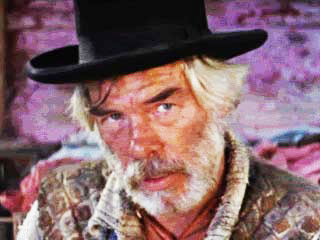
The trigger mechanism tonight was Paint Your Wagon, a musical made 40 years ago. Imagine:  Clint Eastwood singing. Lee Marvin dancing and singing about beans. This movie is 40 years old; twice as old as my youngest son. Yet there are some of us who sit around, laughing and singing the songs as if they were still on the top of the charts. When I watch musicals like Brigadoon and Sound of Music and Camelot, my kid looks at me like I’ve grown a second nose. Musicals give most teenagers the willies. If it’s not High School Musical or Glee, it’s not a musical. He shakes his head and goes to watch movies where people get their limbs cut off or that showcase breasts that hang out like watermelons in the summer sun or guys sitting around smoking weed and talking about getting laid. It’s at these times that I feel so disconnected. So…old.

I know that every generation has to evolve. What was fascinating, entertaining or daring to one group is not necessarily to the next. I find myself cringing at songs like Itsy Bitsy Teeny Weeny Yellow Polka Dot Bikini and The Bird is the Word. And those were from the generation right before me. I’m sure that same generation shivered at songs like Transylvania 6500 and Don’t Sit Under the Apple Tree. Even my parent’s generation had dissenters: I have a song in my collection called If Swing Goes I Go Too by Fred Astaire, singing about “some old fogey wants to ration swing.” Imagine! Our parents being rebels!

Of course, there are many other reflections of generation gaps, many other blank looks from both sides of the fence when music and movies and clothes come to the forefront. I am not the first to discover that there are a number of meanings for the same word, and not everyone is on the same page of the dictionary. My son is fond of chillin’ and hangin’; I can imagine what that would mean to my grandfather’s generation. While I try not to use phrases that date me like groovy and far-out, I can’t help but fall back on standbys like cool and hunky dory, words that dance on the edge of fogey-ism.

I think alot about the generation gap. Not so much how I am on one side or another, but how I can bridge that gap. Sooner or later everything revolves back onto itself. Not back to exactly the same spot; not to the same beat (eight-to-the-bar, jive, waltz), nor to the same words (commie, greaser, beatnik), but to explanations for the same situations that haunt all human beings. As much as underwear sticking out from atop blue jeans and skull caps shake our interpretation of fashion, I imagine mini-skirts and go-go boots did the same for those who wore spats and garters.

All generations wander through the fog; some with purpose, others just along for the ride. All generations start out with a dream, a hope that they will somehow make a difference in their world. One way or another everyone wants to be noticed; everyone wants to be remembered. Some make slasher movies; others cures for diseases. Some climb Mt. Everest, others walk the track for Breast Cancer. For some of us the best we can do is pass along our lasagna or apple pie receipe. We all contribute in our own way.

But back to the over-the-top musical from 1969. Listen to the words to the title song:

Where am I goin?  I don’t know

Where am I headin’? I ain’t certain

All I know is I am on my way…

When will I be there? I don’t know

When will I get there?  I ain’t certain

All I know is I am on my way

We are all wanderin’, we are all goin’ somewhere. And few of us know when we’ll get there. And yes, we are all chillin’ and hangin’. We are all part of the same cycle, mixing and blending and blurring the lines of old AND new. Amazing what happens when all generations fall into the same pot — we become one amazingly flavorful stew.

Groovy.

Feng Shui in the Cubicle

           One day I was sitting at my desk at work, green computer screen glowing, honky-tonk music spurting out from a speaker not far above my head, trying to concentrate on a long list of numbers that needed to be entered into the computer, glancing at pages waiting to be proofread and images to be downloaded, when a word drifted across my consciousness – Feng Shui.

            For those who need a bit of a refresher course, feng shui is the ancient Chinese practice of arranging one’s personal space in order to achieve harmony with the environment.  This harmony is known as chi, the “life force” or energy that exists in human beings, nature, and all animate and inanimate objects. It is everywhere.  There are books and classes and consultants and everything in between to help us stressed-out people calm the flowing water of our psyche.  Of course, people like me who jam ten pounds of sugar (daily duties) into a five pound bag (24 hours), rarely have time to read the back of the brownie mix box, let alone sit down and read a book about harmony and the environment.

            But I wanted to learn about feng shui so I could bring a little bit of peace to my corner of the office.  With indigestion and carpel tunnel threatening every turn, there had to be a way I could tap into my calm center somewhere between 7:30 a.m. and 4:00 p.m.  So I called a friend of mine who is into energy and higher levels of vibrations to see if she could give me a crash course on harmony and flowing water.  She told me feng shui was not something you can learn overnight; it is a gradual meeting of mind and space, of openness and channeling.  Wanting to know more, we scheduled coffee and chi for the next night.

            She talked, I talked, we drank coffee and ate chocolate cream pie and I brought out a pen to take notes.  But we never really got around to talking about feng shui, because we talked about kids and sushi and Nicholas Cage instead. Still wanting to open my pathways just in case chi came by, later that night I went online and Googled the term, and came across a few guidelines to bring harmony to my cubicle.

            When sitting at a desk, the entrance door should be in a clear line of sight, and you should have a view of as much of the room as possible.  Well, I struck out before I even got up to the plate.  My desk faces the wall — worse, it is a corner unit, so it faces two walls.  The only line of sight I have is where the two walls meet.  That, and an oversized computer screen. Hopefully everyone else’s clear view of my back is enough of an opening to get the energy flowing.

            When lying in bed … well, I stopped reading that suggestion.  If I was found lying down at my desk, my chi would not only flow but be flushed down the toilet.

            Straight lines and sharp corners are to be avoided, and especially should not point where people tend to sit, stand, or sleep.  See interpretation and explanation for point number one.

            Avoid clutter.  How can anyone who works in an office not have clutter?  How can a spiffy multi-tasker like myself give up piles of paper or a dozen catalogs within arm’s reach or stacks of manila flats or thirty CDs with images or weekly bulletins from Human Resources?  Oh, and don’t forget the pictures of my kids and my stapler and tape dispenser and staple remover and yellow highlighter and white-out and my pink pen for corrections and stickies for emergency notes.  Strike two.

            Roads to and from ancient towns were often curved and winding, an attempt to disorient and keep away evil spirits, who were believed to travel in straight lines.  Now, I admit I have to maneuver through hallways and around cubicles just to get to my desk, so I wondered — if I circled the halls long enough, would I be able to ditch the bad spirits and run into feng shui?  This wasn’t quite a strike, but more like a ball. 

            Some objects are believed to have the power of redirecting, reflecting, or shifting energy in a space. These include mirrors, crystals, wind chimes, and pools of flowing or standing water. This suggestion is a cousin of the “lying in bed” dilemma. I didn’t think my boss would let me bring in a water fountain, and, although there is enough hot air coming and going around here to tinkle a dozen wind chimes … mmmm, no.

            So I sat and pouted in front of my computer, realizing that there was no way I could rearrange my daily grind and surroundings to let the energy flow freely.  Feng Shui would have to wait until I got home.  I knew that at least there I would be able to rearrange chairs and hang mirrors and listen to the wind chimes that hang on my balcony.

            But wait!  There was one more point — not really a point, but a closing statement.  Every environment is unique with its own energy, challenges, and possibilities. By becoming aware of your surroundings, connecting to its energy, and using the inherent wisdom and inspiration of nature, you can create surroundings that reflect your highest potential and support your personal and professional goals.   Let’s dissect that for a moment.  I am aware of my surroundings.  I can feel the energy that flows through my body, through the pen and onto the paper.  I can gaze at the fields of Ireland through my screen saver, I can listen to Mozart while I type, and I can read about astronomy during my breaks.  Becoming aware of one’s surroundings is nothing more than living in the here and now, taking what you can and making the most of it.

            For all the hoopla, I think I have finally found the secret of feng shui.  I finally know how to arrange my space in order to achieve cosmic harmony: keep my kids’ picture in sight, eat lunch outside when the weather is nice, and make sure my M&M dish is always full.